by: Romeo D. Fortes 
Geronimo T. Silvestre
What is RESOURCE MANAGEMENT./ 
-is concerned with ASSESMENT, 
UTILIZATION, and 
CONSERVATION of a resource (water 
resource e.g., lakes, rivers, swamps, etc.) 
with the objectives of maintaining the 
resource to provide the maximum 
sustainable yield.
ASSESMENT 
- it includes the collection and evaluation of facts 
concerning the resource, based on basic statistics 
on the physical to chemical and biological aspects 
of the resource. This may also included the 
socioeconomics, marketing and utilization aspects.
UTILIZATION 
WATER RESOURCE
water supply
power sources
irrigation
recreation
fishing for 
human 
consumption
CONSERVATION 
- includes the aggregate of the measures rendering 
possible of optimum sustainable yield from those 
resources so as to secure a maximum supply of food and 
other fishery products.
1. Describing stocks of wild animals and plants with respect 
to their abundance migration, distribution, behavior, size, 
age, composition, rate of growth, and rate of mortality. 
2. Describing the environmental factors that limit the stocks. 
3. Describing kind distribution, and cost of fishing. 
4. Protecting and enhancing the environment.
-each stocks mentioned, contributes to vital information 
needed to estimate the yield from the stocks from natural 
events and amount of fishing. The findings are used for 
decisions either to encourage harvest of underscored 
resources or restrain harvest of over-used resources. Data 
collected may provide information for planning, in order to 
maximize the utility of the resource. Some environmental 
changes can be made to enhance the production and evaluate 
the benefits of environmental changes. 
(reference:Royce, W. 1972)
- it includes all physical, chemical, and 
biological characteristics of water.
1. TEMPERATURE – is a property that measures the 
amount of heat absorb by water. 
2. DENSITY – is mass of water per unit volume. 
3. COLOR – result from the unabsorbed light rays 
remaining from incident light. 
(a.) TRUE COLOR – is caused by substances in 
the solution or in colloidal suspension. 
(b.) APPARENT COLOR – is caused by suspended 
particulate matter. 
4. TURBIDITY – refers to decreased ability of water to 
transmit light. It measure the transparency of water.
1. The amount of gases dissolved in water such as oxygen, 
and carbon dioxide. 
2. ph - the amount of hydrogen-ion concentration or it is 
a measure of acidity and basicity of water. 
3. SALINITY – the total concentration of a ionic 
constituents present in a water sample. 
4. Amount of nutrients dissolved in water e.g. phosphorus, 
nitrogen, potassium, and other minor nutrients. 
5. TOTAL ALKALINITY – he total concentration of bases in 
water expressed as mg/1 as CaCO3. 
6. TOTAL HARDNESS – total concentration of alkaline 
earth ions expressed as mg/1 as CaCO3. 
7. TOTAL SOLIDS – the amount of total residue left upon 
evaporation.
The most critical aspects of biological of water 
quality is the ecology of phytoplankton and 
aquatic macrophytes.
PHYTOPLANKTON 
.– are minute 
plants 
suspended in 
the water 
column.
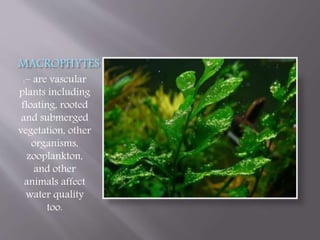
MACROPHYTES 
.– are vascular 
plants including 
floating, rooted 
and submerged 
vegetation, other 
organisms, 
zooplankton, 
and other 
animals affect 
water quality 
too.
- is the end result of interaction of the organism and its 
environment. 
- it is the outcome of the struggle of the organisms to 
exist against the pressures exerted by the environment. 
- it is measured in terms of biomass and standing crop 
per unit of time.
1. POLLUTION
2. DISEASE 
PROBLEM
3. 
MORTALITY 
OF AUATIC 
ORGANISMS
4. AGING OF 
LAKE
1. Controlling 
of stocking 
rate of 
natural 
body of 
water.
2. Dumping of 
domestic and 
industrial waste 
into the river or 
lake should be 
avoided.
3. Grasses or 
trees should be 
planted in the 
vicinity or 
watershed to 
avoid soil 
erosion.
4. Proper exploitation of resources should be 
done to ensure a balance of population. 
(reference: Boyd, c. 1979)
SAING, JEAN KIMBERLY 
A. 
(BSFI III)

Humanajd!!!!!

  • 1.
    by: Romeo D.Fortes Geronimo T. Silvestre
  • 4.
    What is RESOURCEMANAGEMENT./ -is concerned with ASSESMENT, UTILIZATION, and CONSERVATION of a resource (water resource e.g., lakes, rivers, swamps, etc.) with the objectives of maintaining the resource to provide the maximum sustainable yield.
  • 5.
    ASSESMENT - itincludes the collection and evaluation of facts concerning the resource, based on basic statistics on the physical to chemical and biological aspects of the resource. This may also included the socioeconomics, marketing and utilization aspects.
  • 6.
  • 7.
  • 8.
  • 9.
  • 10.
  • 11.
    fishing for human consumption
  • 13.
    CONSERVATION - includesthe aggregate of the measures rendering possible of optimum sustainable yield from those resources so as to secure a maximum supply of food and other fishery products.
  • 15.
    1. Describing stocksof wild animals and plants with respect to their abundance migration, distribution, behavior, size, age, composition, rate of growth, and rate of mortality. 2. Describing the environmental factors that limit the stocks. 3. Describing kind distribution, and cost of fishing. 4. Protecting and enhancing the environment.
  • 16.
    -each stocks mentioned,contributes to vital information needed to estimate the yield from the stocks from natural events and amount of fishing. The findings are used for decisions either to encourage harvest of underscored resources or restrain harvest of over-used resources. Data collected may provide information for planning, in order to maximize the utility of the resource. Some environmental changes can be made to enhance the production and evaluate the benefits of environmental changes. (reference:Royce, W. 1972)
  • 18.
    - it includesall physical, chemical, and biological characteristics of water.
  • 19.
    1. TEMPERATURE –is a property that measures the amount of heat absorb by water. 2. DENSITY – is mass of water per unit volume. 3. COLOR – result from the unabsorbed light rays remaining from incident light. (a.) TRUE COLOR – is caused by substances in the solution or in colloidal suspension. (b.) APPARENT COLOR – is caused by suspended particulate matter. 4. TURBIDITY – refers to decreased ability of water to transmit light. It measure the transparency of water.
  • 20.
    1. The amountof gases dissolved in water such as oxygen, and carbon dioxide. 2. ph - the amount of hydrogen-ion concentration or it is a measure of acidity and basicity of water. 3. SALINITY – the total concentration of a ionic constituents present in a water sample. 4. Amount of nutrients dissolved in water e.g. phosphorus, nitrogen, potassium, and other minor nutrients. 5. TOTAL ALKALINITY – he total concentration of bases in water expressed as mg/1 as CaCO3. 6. TOTAL HARDNESS – total concentration of alkaline earth ions expressed as mg/1 as CaCO3. 7. TOTAL SOLIDS – the amount of total residue left upon evaporation.
  • 21.
    The most criticalaspects of biological of water quality is the ecology of phytoplankton and aquatic macrophytes.
  • 22.
    PHYTOPLANKTON .– areminute plants suspended in the water column.
  • 23.
    MACROPHYTES .– arevascular plants including floating, rooted and submerged vegetation, other organisms, zooplankton, and other animals affect water quality too.
  • 24.
    - is theend result of interaction of the organism and its environment. - it is the outcome of the struggle of the organisms to exist against the pressures exerted by the environment. - it is measured in terms of biomass and standing crop per unit of time.
  • 26.
  • 27.
  • 28.
    3. MORTALITY OFAUATIC ORGANISMS
  • 29.
  • 31.
    1. Controlling ofstocking rate of natural body of water.
  • 32.
    2. Dumping of domestic and industrial waste into the river or lake should be avoided.
  • 33.
    3. Grasses or trees should be planted in the vicinity or watershed to avoid soil erosion.
  • 34.
    4. Proper exploitationof resources should be done to ensure a balance of population. (reference: Boyd, c. 1979)
  • 35.
    SAING, JEAN KIMBERLY A. (BSFI III)