Unit 3
MBA/BBA/B.com /M.Com /UGC Net
By
Dr. Anand Vyas
Employee Training & Development
Meaning and Importance of Training
The importance of training lies in the opportunity
to strengthen your employees' existing skills and
learn new ones, helping to boost individual and
organizational performance. Training allows
employees to become more effective while also
increasing job satisfaction and reducing employee
turnover
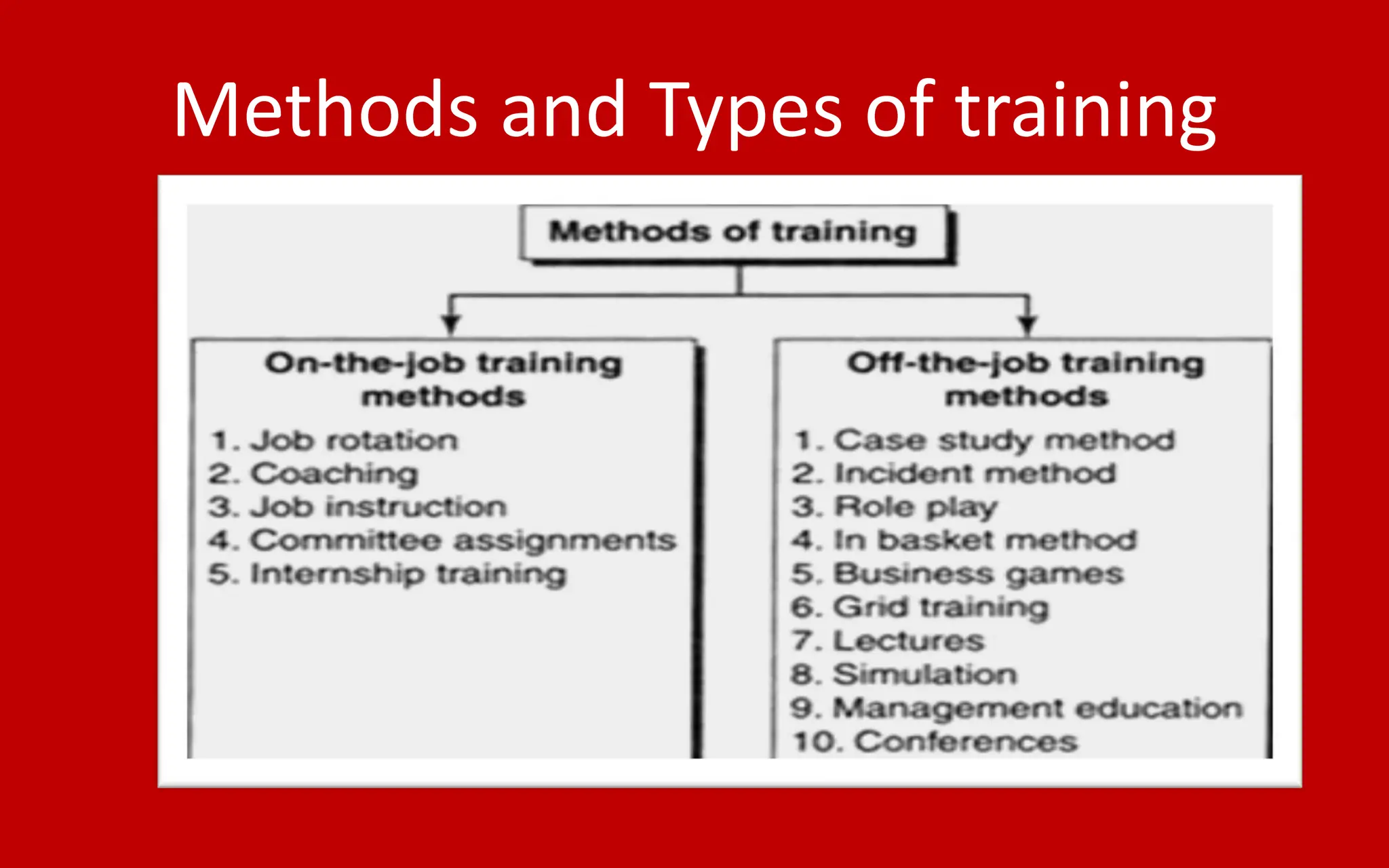
Methods and Types of training
Career planning, promotion, transfer,
demotion and separation,
• Other Training Types
Performance Appraisal: Meaning and
Types of appraisal
A performance appraisal is a
regular review of an
employee's job performance
and contribution to a
company. Companies use
performance appraisals to
determine which employees
have contributed the most to
the company's growth,
review progress, and reward
high-achieving workers
Job Evaluation: Meaning
•A job evaluation is a systematic way of
determining the value/worth of a job in relation
to other jobs in an organization. It tries to make
a systematic comparison between jobs to assess
their relative worth for the purpose of
establishing a rational pay structure.
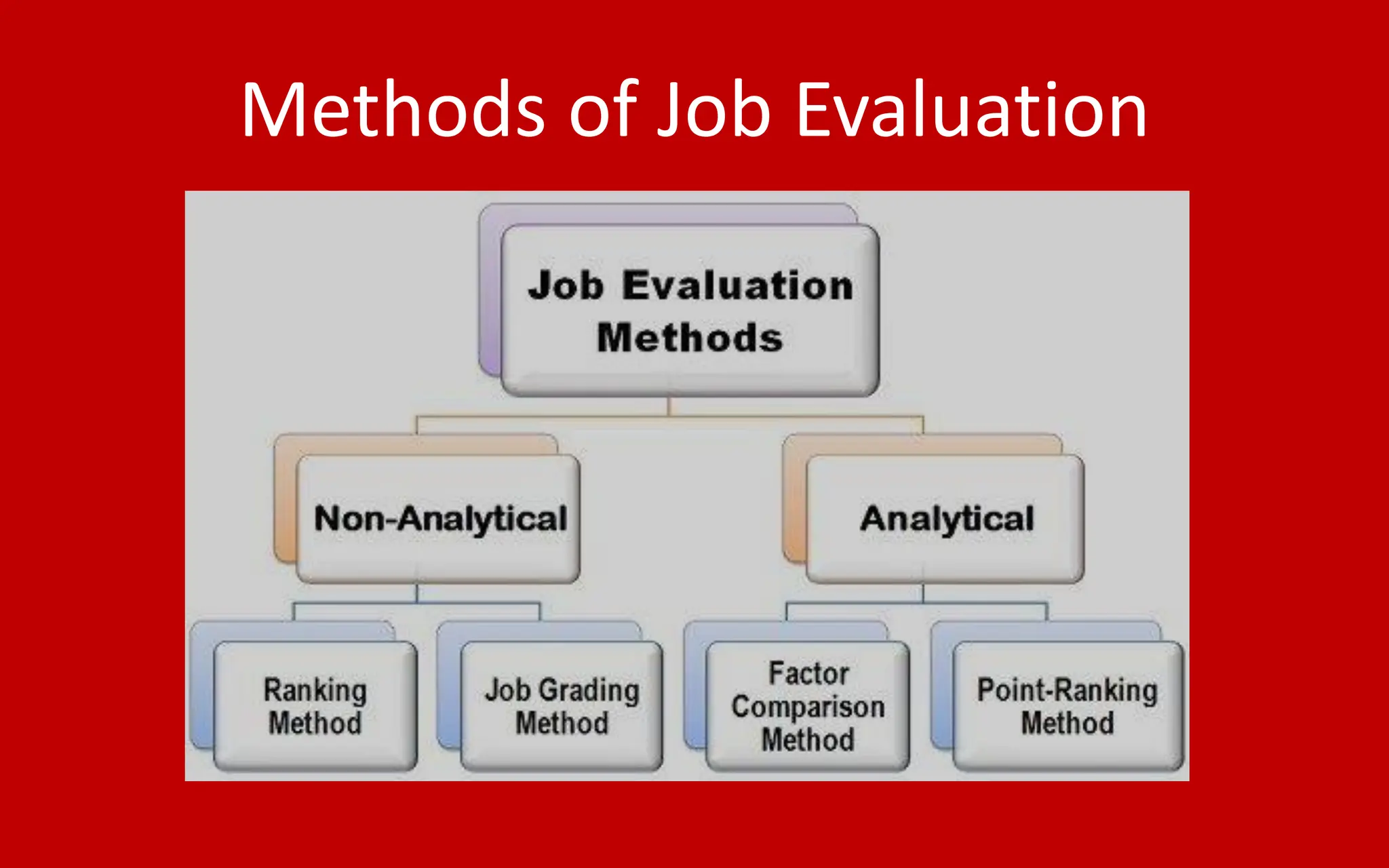
Methods of Job Evaluation
1 Ranking Method
• This method ranks jobs in order based on each
position’s perceived value in relation to others.
Although this method does not consider market
compensation rates, it may work well for smaller
companies. Larger companies employing this
method could be complex due to the larger
number of positions, but could still work if jobs
are grouped, for example by professional level.
2. Classification/Grading Method
In this job evaluation method, generic job characteristics are
grouped together to reflect their level of skill and responsibility
at several predetermined grade classifications. This method
tends to be straightforward and not as time-consuming as some
others.
For this, individual jobs are compared to groups of pre-
determined job characteristics, and then matched to a specific
grade classification based on the comparison. This can pose
some challenges, as one set of characteristics will not always fit
every job within an organization. This system is also subject to
grade inflation as jobs proceed to higher levels, which could lead
to ineffective evaluations.
Factor Comparison Method
Like the Point-Factor Method, this strategy has job
factors identified under primary groups, and each
factor is assigned a dollar value as opposed to a
point value. As this tends to be more complex, only
a few organizations employ this method. It can also
be hard to communicate to employees, and there is
an inherent degree of subjectivity involved in the
determination of the dollar values.
Point Ranking Method
•a method of evaluating jobs for the purpose of
setting wage or salary levels in which a number
of compensable job factors are identified, each
factor is divided into degrees or levels, and
points are assigned to each level; jobs can then
be rated according to their total point score.

Human resources management ppt. Master of business administration

  • 1.
    Unit 3 MBA/BBA/B.com /M.Com/UGC Net By Dr. Anand Vyas
  • 2.
    Employee Training &Development Meaning and Importance of Training The importance of training lies in the opportunity to strengthen your employees' existing skills and learn new ones, helping to boost individual and organizational performance. Training allows employees to become more effective while also increasing job satisfaction and reducing employee turnover
  • 3.
    Methods and Typesof training
  • 4.
    Career planning, promotion,transfer, demotion and separation, • Other Training Types
  • 5.
    Performance Appraisal: Meaningand Types of appraisal A performance appraisal is a regular review of an employee's job performance and contribution to a company. Companies use performance appraisals to determine which employees have contributed the most to the company's growth, review progress, and reward high-achieving workers
  • 6.
    Job Evaluation: Meaning •Ajob evaluation is a systematic way of determining the value/worth of a job in relation to other jobs in an organization. It tries to make a systematic comparison between jobs to assess their relative worth for the purpose of establishing a rational pay structure.
  • 7.
    Methods of JobEvaluation
  • 8.
    1 Ranking Method •This method ranks jobs in order based on each position’s perceived value in relation to others. Although this method does not consider market compensation rates, it may work well for smaller companies. Larger companies employing this method could be complex due to the larger number of positions, but could still work if jobs are grouped, for example by professional level.
  • 9.
    2. Classification/Grading Method Inthis job evaluation method, generic job characteristics are grouped together to reflect their level of skill and responsibility at several predetermined grade classifications. This method tends to be straightforward and not as time-consuming as some others. For this, individual jobs are compared to groups of pre- determined job characteristics, and then matched to a specific grade classification based on the comparison. This can pose some challenges, as one set of characteristics will not always fit every job within an organization. This system is also subject to grade inflation as jobs proceed to higher levels, which could lead to ineffective evaluations.
  • 10.
    Factor Comparison Method Likethe Point-Factor Method, this strategy has job factors identified under primary groups, and each factor is assigned a dollar value as opposed to a point value. As this tends to be more complex, only a few organizations employ this method. It can also be hard to communicate to employees, and there is an inherent degree of subjectivity involved in the determination of the dollar values.
  • 11.
    Point Ranking Method •amethod of evaluating jobs for the purpose of setting wage or salary levels in which a number of compensable job factors are identified, each factor is divided into degrees or levels, and points are assigned to each level; jobs can then be rated according to their total point score.