Human Resource Information
Systems: A Definition
• HRIS -- Systematic procedure for
collecting, storing, maintaining,
retrieving & validating date needed by
the organization about its human
resources.
HRIS Components
• Data collection:
– Payroll & benefits
– Performance appraisal
– Training & development
– Recruitment & selection
– Employment & job data
• Report generation
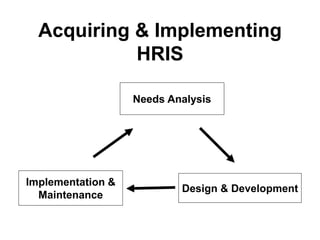
Acquiring & Implementing
HRIS
Needs Analysis
Design & Development
Implementation &
Maintenance
Needs Analysis
• Determine departmental needs for
data
• Determining needs for reports
• Analyze short and long term needs
• Determine system specifications
• Vendors bid or packages are
considered
• Make decision on system
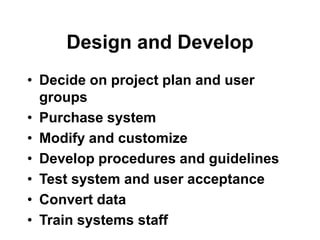
Design and Develop
• Decide on project plan and user
groups
• Purchase system
• Modify and customize
• Develop procedures and guidelines
• Test system and user acceptance
• Convert data
• Train systems staff
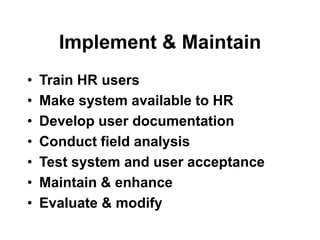
Implement & Maintain
• Train HR users
• Make system available to HR
• Develop user documentation
• Conduct field analysis
• Test system and user acceptance
• Maintain & enhance
• Evaluate & modify
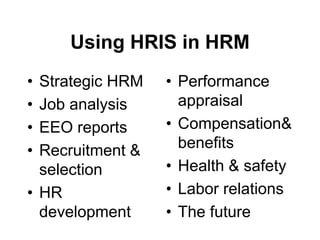
Using HRIS in HRM
• Strategic HRM
• Job analysis
• EEO reports
• Recruitment &
selection
• HR
development
• Performance
appraisal
• Compensation&
benefits
• Health & safety
• Labor relations
• The future
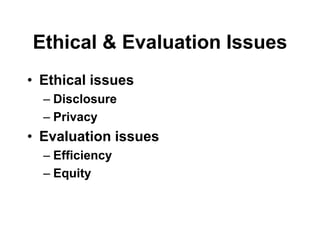
Ethical & Evaluation Issues
• Ethical issues
– Disclosure
– Privacy
• Evaluation issues
– Efficiency
– Equity
Backwards & Forwards
• Summing up. We review the components
of HRIS and its uses in HRM from strategic
HRM to reporting EEO data, linking
compensation and performance appraisal
and a look at expert systems. Finally,
ethical considerations were considered.
• Looking ahead: Next time we take up the
issue of job analysis, the foundation for
much of the work in human resource
management.

Human Resource and Management: Information System

  • 1.
    Human Resource Information Systems:A Definition • HRIS -- Systematic procedure for collecting, storing, maintaining, retrieving & validating date needed by the organization about its human resources.
  • 2.
    HRIS Components • Datacollection: – Payroll & benefits – Performance appraisal – Training & development – Recruitment & selection – Employment & job data • Report generation
  • 3.
    Acquiring & Implementing HRIS NeedsAnalysis Design & Development Implementation & Maintenance
  • 4.
    Needs Analysis • Determinedepartmental needs for data • Determining needs for reports • Analyze short and long term needs • Determine system specifications • Vendors bid or packages are considered • Make decision on system
  • 5.
    Design and Develop •Decide on project plan and user groups • Purchase system • Modify and customize • Develop procedures and guidelines • Test system and user acceptance • Convert data • Train systems staff
  • 6.
    Implement & Maintain •Train HR users • Make system available to HR • Develop user documentation • Conduct field analysis • Test system and user acceptance • Maintain & enhance • Evaluate & modify
  • 7.
    Using HRIS inHRM • Strategic HRM • Job analysis • EEO reports • Recruitment & selection • HR development • Performance appraisal • Compensation& benefits • Health & safety • Labor relations • The future
  • 8.
    Ethical & EvaluationIssues • Ethical issues – Disclosure – Privacy • Evaluation issues – Efficiency – Equity
  • 9.
    Backwards & Forwards •Summing up. We review the components of HRIS and its uses in HRM from strategic HRM to reporting EEO data, linking compensation and performance appraisal and a look at expert systems. Finally, ethical considerations were considered. • Looking ahead: Next time we take up the issue of job analysis, the foundation for much of the work in human resource management.