NINA MAUREEN PANIS
ACTIVITY 1
WHAT ARE HUMAN RESOURCES?
•The people an organization employs to
carry out various jobs, tasks, and functions
in exchange for wages, salaries, and other
rewards.
WHAT IS HUMAN RESOURCE
MANAGEMENT?
•The comprehensive set of managerial activities
and tasks concerned with developing and
maintaining a qualified workforce—human
resources—in ways that contribute to
organizational effectiveness.
1. DESCRIBE THE
CONTEMPORARY
HUMAN RESOURCE
PERSPECTIVE.
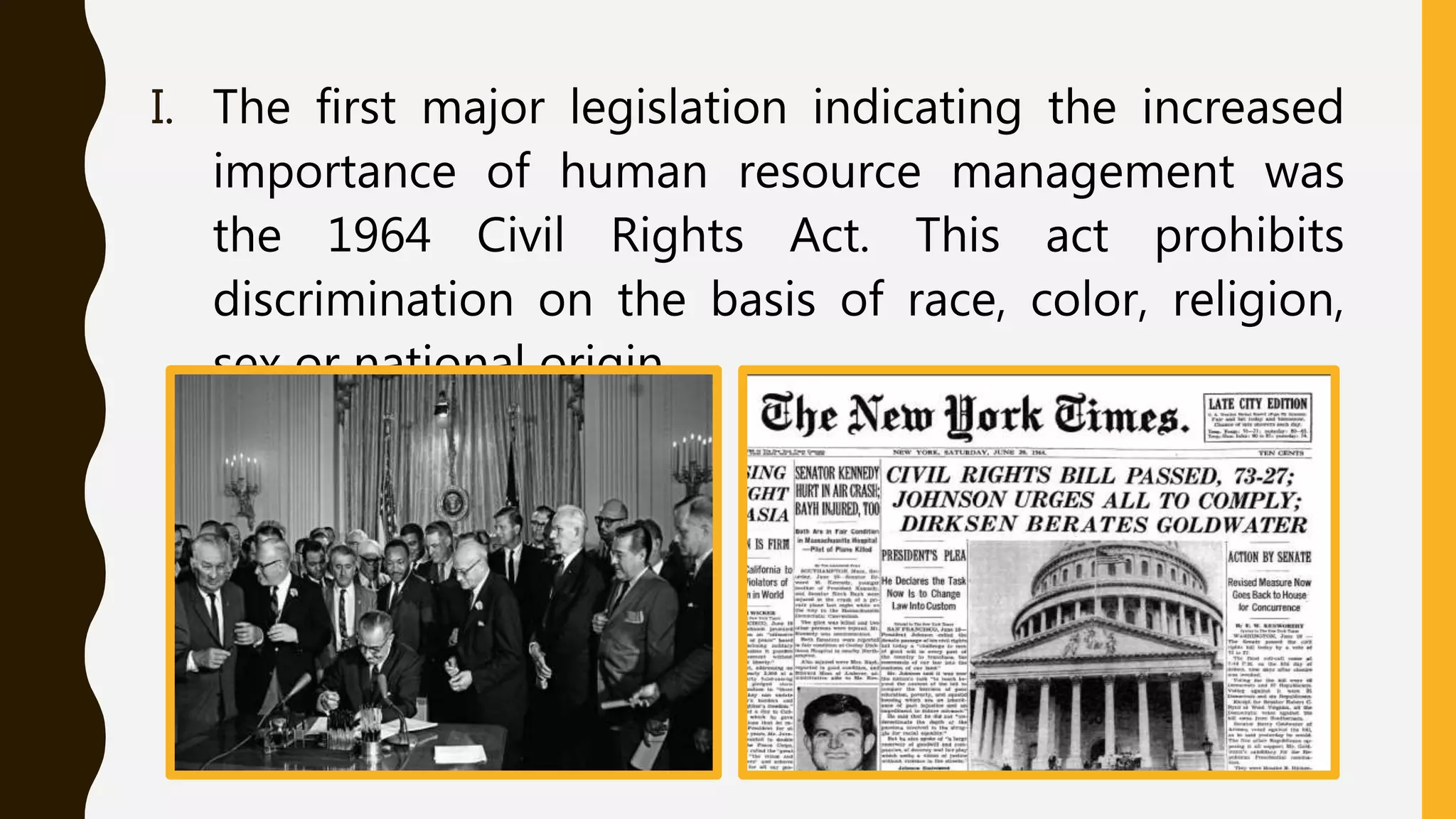
I. The first major legislation indicating the increased
importance of human resource management was
the 1964 Civil Rights Act. This act prohibits
discrimination on the basis of race, color, religion,
sex or national origin.
II. However, managers
realize that human
resource management
has a profound effect on
an organization’s
performance, and so the
function has grown to
have the importance as
other functions.
III. Most firms now use the
term human resource
management to better reflect
the strategic role of people
management in companies;
however some firms have
created unique titles for human
resource managers such as
chief knowledge officer.
IV. The 1980s and 1990s brought changes to the human resource
management function in response to firms’ going out of business, a wave
of mergers and acquisitions, and an era of downsizing, rightsizing, and
reengineering that caused worker displacement and increased the use
of outsourcing in human resource activities. Outsourcing is the process
of hiring outside firms to handle basic human resource management
functions, presumably more efficiently than the organization.
OTHER CONTEMPORARY HRM
PERSPECTIVES +
Recognizing the importance of people as a source
of competitive advantage
Hiring, rewarding, and managing people effectively
within the limits of the law
Balancing legal and ethical concerns with the
needs of the organization
2. TRACE THE EVOLUTION OF THE
HUMAN RESOURCE FUNCTION.
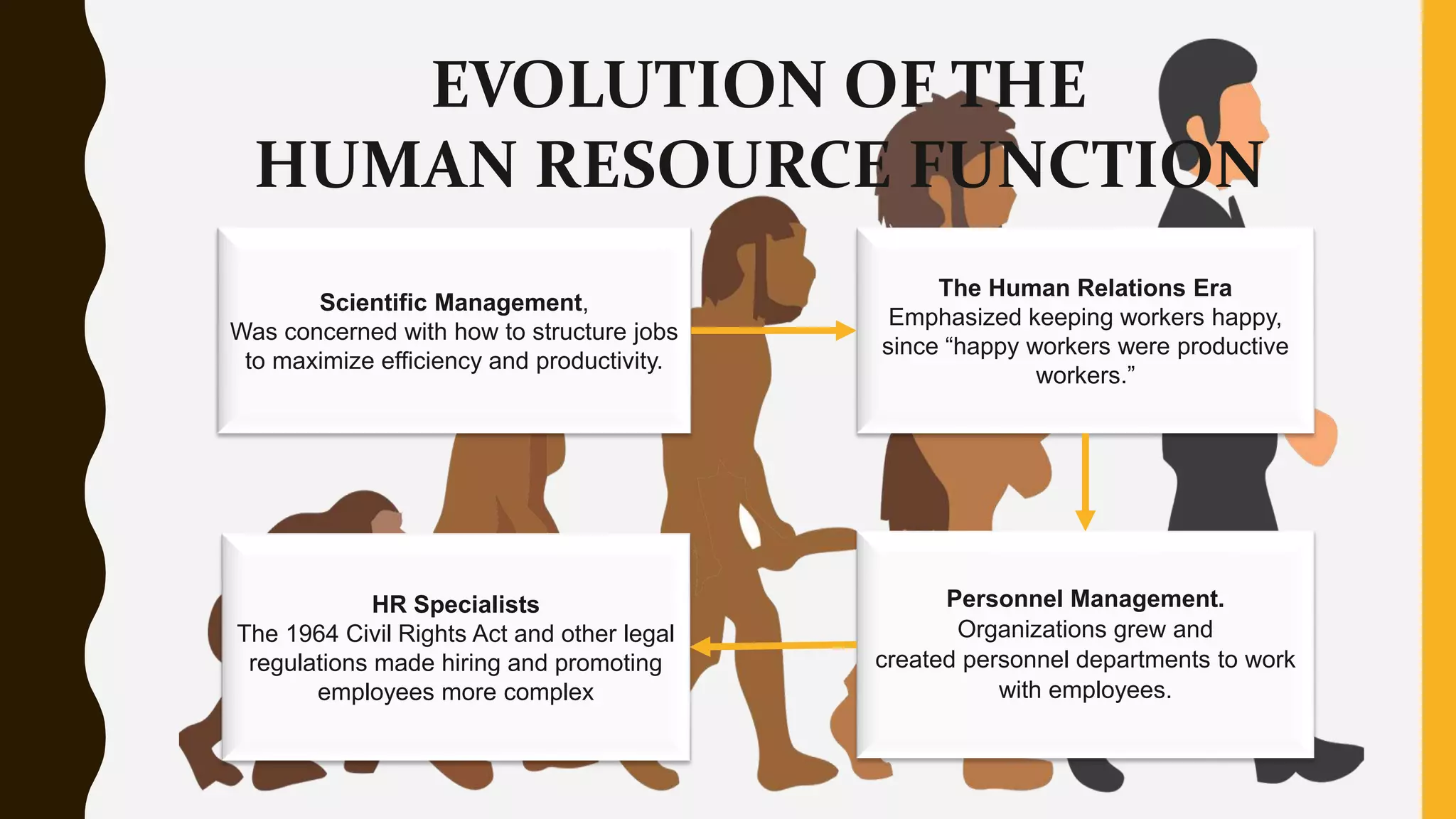
EVOLUTION OF THE
HUMAN RESOURCE FUNCTION
Scientific Management,
Was concerned with how to structure jobs
to maximize efficiency and productivity.
The Human Relations Era
Emphasized keeping workers happy,
since “happy workers were productive
workers.”
Personnel Management.
Organizations grew and
created personnel departments to work
with employees.
HR Specialists
The 1964 Civil Rights Act and other legal
regulations made hiring and promoting
employees more complex
WHAT IS HRM LIKE IN THE
ELECTRONIC AGE?
• The electronic age is what we currently live in. It can be
defined as the time between 1940 and right now. The ENIAC
was the first high-speed, digital computer capable of being
reprogrammed to solve a full range of computing problems.
• Electronic technology has not drastically
affected how human resources are managed,
but certainly is affecting on how
HRM systems are delivered.
WHAT ARE SOME EMERGING
HRM CHALLENGES?
 The economic downturn has generated some challenges such as job loss and
corporate reorganization.
HR professionals must determine how to effectively manage downsizing,
outplacement, and employee integration after mergers and acquisitions.
Other issues that challenge HR executives include managing employee stress
driven by workplace uncertainty, increased government oversight and
regulation, and the importance of social responsibility and environmental
awareness.
These changes will likely increase the degree to which HR professionals
influence the management of companies.
Facilitating
Organizational
Competitiveness
Enhancing
Productivity and
Quality
Complying with
Legal and Social
Obligations
Promoting
Individual
Growth and
development
“FACILITATING ORGANIZATIONAL
COMPETIVENESS”
• Firms gain competitive advantage by
effectively managing their human
resources.
• Competitive advantage is a status
achieved by a company when
gaining a superior marketplace
position relative to its competition.
• This is accomplished through cost
leadership or product differentiation.
“ENHANCING
PRODUCTIVITY
AND QUALITY”
Productivity is an economic measure of efficiency
that summarizes and reflects the value of outputs
created by an individual, organization, industry, or
economic system relative to the value of inputs used to create them.
Quality is the total set of features and characteristics of a product or
service that bears on its ability to satisfy stated or implied needs.
“Improving productivity and quality takes a major and
comprehensive approach that relies heavily on human
resource management in areas such as selection, training
and development, and rewards.”
“COMPLYING WITH LEGAL
AND SOCIAL OBLIGATIONS”
Organizations must stay within the relevant legal
boundaries in dealing with employees or risk huge
financial penalties, negative publicity, and damage to
internal corporate culture.
• Impact of anti-discrimination laws
• The impact of government intervention
• Impact of social obligations
“PROMOTING INDIVIDUAL
GROWTH AND DEVELOPMENT”
1. Many organizations go beyond offering basic job-related training
and development by offering basic English, mathematics, or science
courses as well as career development and mentoring programs.
2. Organizations may offer programs in areas that do not directly relate
to job responsibilities, such as stress management, wellness and fitness,
and personal financial planning.
EDUCATION
SKILLS
TRAINING
CAREER
DEVELOPMENT
4. DESCRIBE THE JOB OF HUMAN RESOURCE
MANAGERS FROM THE PERSPECTIVE OF
PROFESSIONALISM AND CAREERS
• Human resources managers plan, direct, and coordinate the administrative functions of an
organization. They oversee the recruiting, interviewing, and hiring of new staff; consult with top
executives on strategic planning; and serve as a link between an organization's management and its
employees.
• Human resources managers also consult with top executives regarding the organization’s strategic
planning and talent management issues. They identify ways to maximize the value of the
organization’s employees and ensure that they are used as efficiently as possible. For example, they
might assess worker productivity and recommend changes to the organization’s structure to help
organization meet budgetary goals.
• Human Resources managers also:
- Plan and coordinate the workforce to best use employees' talents
- Resolve issues between management and employees
- Advise managers on policies like equal employment opportunity and
sexual harassment
- Coordinate and supervise the work of specialists and staff
- Oversee recruitment and hiring process
- Direct disciplinary procedures

HUMAN RESOURCE AND DEVELOPMENT

  • 1.
  • 2.
    WHAT ARE HUMANRESOURCES? •The people an organization employs to carry out various jobs, tasks, and functions in exchange for wages, salaries, and other rewards.
  • 3.
    WHAT IS HUMANRESOURCE MANAGEMENT? •The comprehensive set of managerial activities and tasks concerned with developing and maintaining a qualified workforce—human resources—in ways that contribute to organizational effectiveness.
  • 4.
  • 5.
    I. The firstmajor legislation indicating the increased importance of human resource management was the 1964 Civil Rights Act. This act prohibits discrimination on the basis of race, color, religion, sex or national origin.
  • 6.
    II. However, managers realizethat human resource management has a profound effect on an organization’s performance, and so the function has grown to have the importance as other functions.
  • 7.
    III. Most firmsnow use the term human resource management to better reflect the strategic role of people management in companies; however some firms have created unique titles for human resource managers such as chief knowledge officer.
  • 8.
    IV. The 1980sand 1990s brought changes to the human resource management function in response to firms’ going out of business, a wave of mergers and acquisitions, and an era of downsizing, rightsizing, and reengineering that caused worker displacement and increased the use of outsourcing in human resource activities. Outsourcing is the process of hiring outside firms to handle basic human resource management functions, presumably more efficiently than the organization.
  • 9.
    OTHER CONTEMPORARY HRM PERSPECTIVES+ Recognizing the importance of people as a source of competitive advantage Hiring, rewarding, and managing people effectively within the limits of the law Balancing legal and ethical concerns with the needs of the organization
  • 10.
    2. TRACE THEEVOLUTION OF THE HUMAN RESOURCE FUNCTION.
  • 11.
    EVOLUTION OF THE HUMANRESOURCE FUNCTION Scientific Management, Was concerned with how to structure jobs to maximize efficiency and productivity. The Human Relations Era Emphasized keeping workers happy, since “happy workers were productive workers.” Personnel Management. Organizations grew and created personnel departments to work with employees. HR Specialists The 1964 Civil Rights Act and other legal regulations made hiring and promoting employees more complex
  • 12.
    WHAT IS HRMLIKE IN THE ELECTRONIC AGE? • The electronic age is what we currently live in. It can be defined as the time between 1940 and right now. The ENIAC was the first high-speed, digital computer capable of being reprogrammed to solve a full range of computing problems. • Electronic technology has not drastically affected how human resources are managed, but certainly is affecting on how HRM systems are delivered.
  • 13.
    WHAT ARE SOMEEMERGING HRM CHALLENGES?  The economic downturn has generated some challenges such as job loss and corporate reorganization. HR professionals must determine how to effectively manage downsizing, outplacement, and employee integration after mergers and acquisitions. Other issues that challenge HR executives include managing employee stress driven by workplace uncertainty, increased government oversight and regulation, and the importance of social responsibility and environmental awareness. These changes will likely increase the degree to which HR professionals influence the management of companies.
  • 14.
    Facilitating Organizational Competitiveness Enhancing Productivity and Quality Complying with Legaland Social Obligations Promoting Individual Growth and development
  • 15.
    “FACILITATING ORGANIZATIONAL COMPETIVENESS” • Firmsgain competitive advantage by effectively managing their human resources. • Competitive advantage is a status achieved by a company when gaining a superior marketplace position relative to its competition. • This is accomplished through cost leadership or product differentiation.
  • 16.
    “ENHANCING PRODUCTIVITY AND QUALITY” Productivity isan economic measure of efficiency that summarizes and reflects the value of outputs created by an individual, organization, industry, or economic system relative to the value of inputs used to create them. Quality is the total set of features and characteristics of a product or service that bears on its ability to satisfy stated or implied needs.
  • 17.
    “Improving productivity andquality takes a major and comprehensive approach that relies heavily on human resource management in areas such as selection, training and development, and rewards.”
  • 18.
    “COMPLYING WITH LEGAL ANDSOCIAL OBLIGATIONS” Organizations must stay within the relevant legal boundaries in dealing with employees or risk huge financial penalties, negative publicity, and damage to internal corporate culture. • Impact of anti-discrimination laws • The impact of government intervention • Impact of social obligations
  • 19.
    “PROMOTING INDIVIDUAL GROWTH ANDDEVELOPMENT” 1. Many organizations go beyond offering basic job-related training and development by offering basic English, mathematics, or science courses as well as career development and mentoring programs. 2. Organizations may offer programs in areas that do not directly relate to job responsibilities, such as stress management, wellness and fitness, and personal financial planning. EDUCATION SKILLS TRAINING CAREER DEVELOPMENT
  • 20.
    4. DESCRIBE THEJOB OF HUMAN RESOURCE MANAGERS FROM THE PERSPECTIVE OF PROFESSIONALISM AND CAREERS • Human resources managers plan, direct, and coordinate the administrative functions of an organization. They oversee the recruiting, interviewing, and hiring of new staff; consult with top executives on strategic planning; and serve as a link between an organization's management and its employees. • Human resources managers also consult with top executives regarding the organization’s strategic planning and talent management issues. They identify ways to maximize the value of the organization’s employees and ensure that they are used as efficiently as possible. For example, they might assess worker productivity and recommend changes to the organization’s structure to help organization meet budgetary goals. • Human Resources managers also: - Plan and coordinate the workforce to best use employees' talents - Resolve issues between management and employees - Advise managers on policies like equal employment opportunity and sexual harassment - Coordinate and supervise the work of specialists and staff - Oversee recruitment and hiring process - Direct disciplinary procedures