Human Factors in Maritime Accidents; Lessons Learned.
Name: Chinazor Henry, Mmeje
Matric No: 5311721
Course: ISSC
Academic Session: WS2023/2024
Date: 15.01.2024
15.01.2024
Human Factors in Maritime Accidents; Lessons Learned ©HSB c.hmmeje WS23/24 2
Contents
1. Introduction
2. Crew Training
3. Communication Protocols
4. Decision-Making Processes
5. Crew Fatigue Management
6. General recommendations/Conclusion
7. References
Plus recommendations
15.01.2024 3
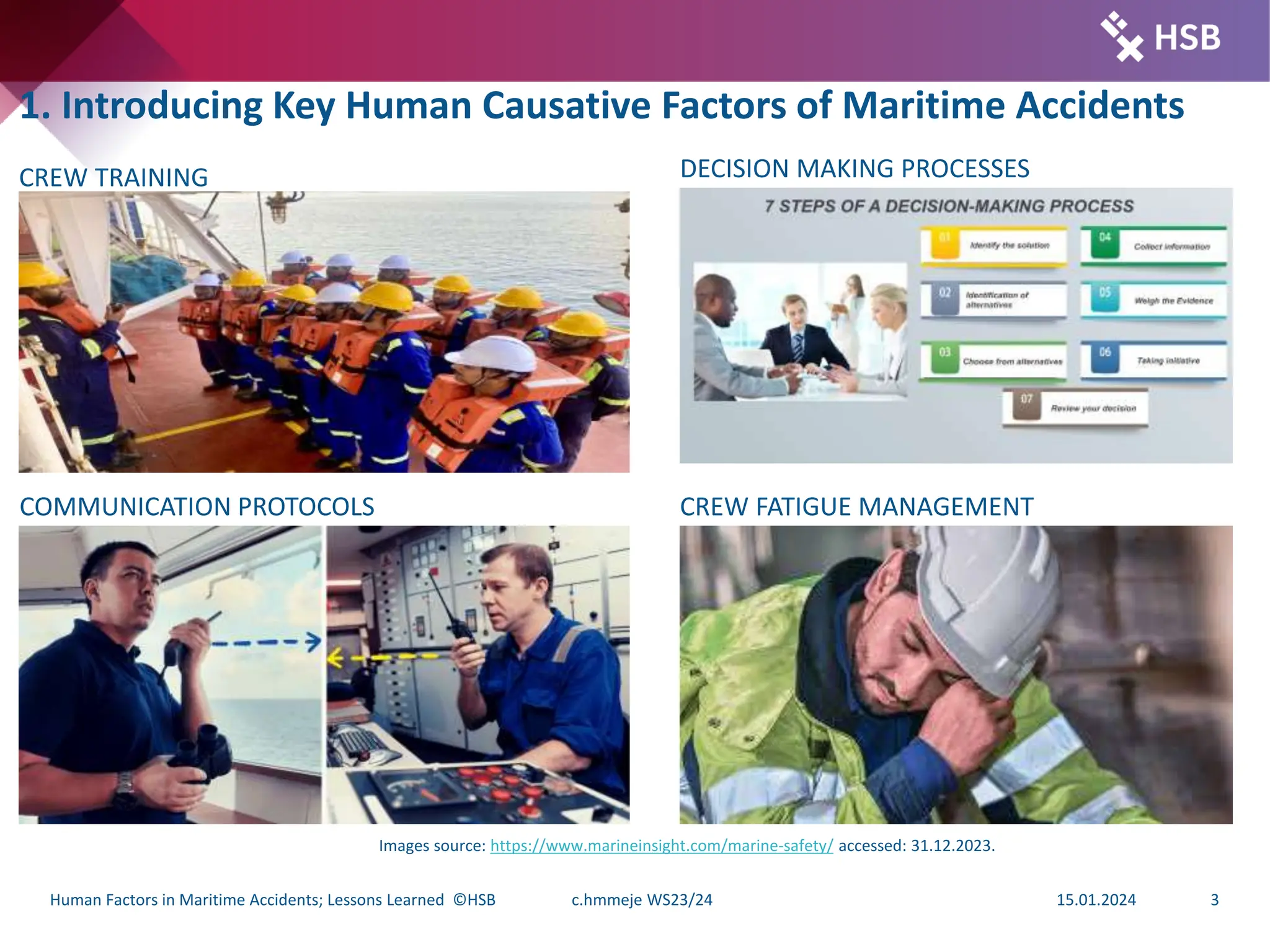
1. Introducing Key Human Causative Factors of Maritime Accidents
Human Factors in Maritime Accidents; Lessons Learned ©HSB c.hmmeje WS23/24
CREW TRAINING
COMMUNICATION PROTOCOLS
DECISION MAKING PROCESSES
CREW FATIGUE MANAGEMENT
Images source: https://www.marineinsight.com/marine-safety/ accessed: 31.12.2023.
15.01.2024 4
2. CREW TRAINING
Human Factors in Maritime Accidents; Lessons Learned ©HSB c.hmmeje WS23/24
 Inadequacy of crew training
1. Incompetence to safety and efficiency
2. Poor emergency handling
3. Navigation systems management illiteracy
4. Poor equipment operations
Recommendations: Regular and realistic training exercises, simulator-based scenarios,
and continuous education are recommended to ensure crews stay updated on evolving
technics and technologies.
15.01.2024 5
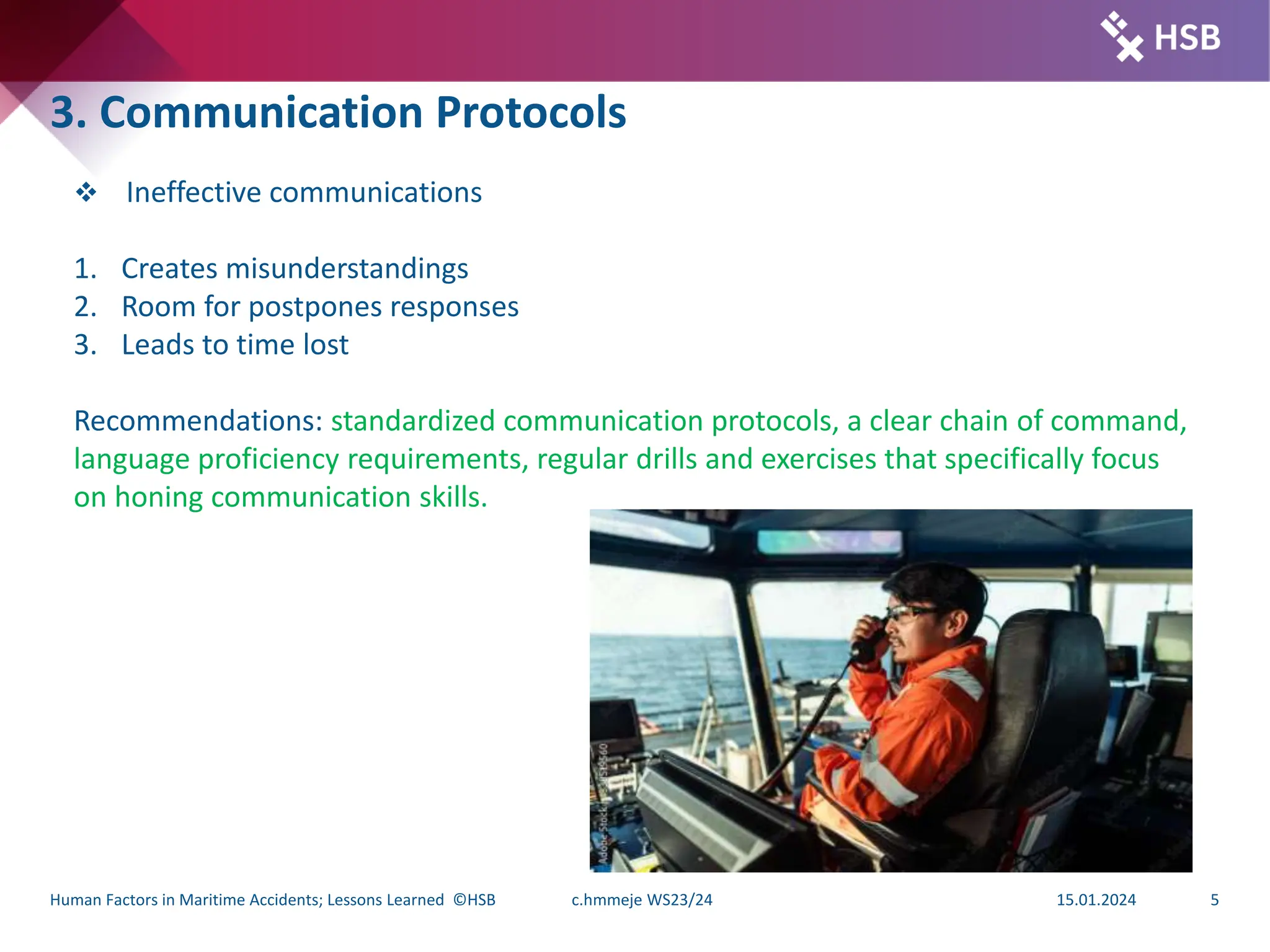
3. Communication Protocols
 ​Ineffective communications
1. Creates misunderstandings
2. Room for postpones responses
3. Leads to time lost
Recommendations: standardized communication protocols, a clear chain of command,
language proficiency requirements, regular drills and exercises that specifically focus
on honing communication skills.
Human Factors in Maritime Accidents; Lessons Learned ©HSB c.hmmeje WS23/24
15.01.2024 6
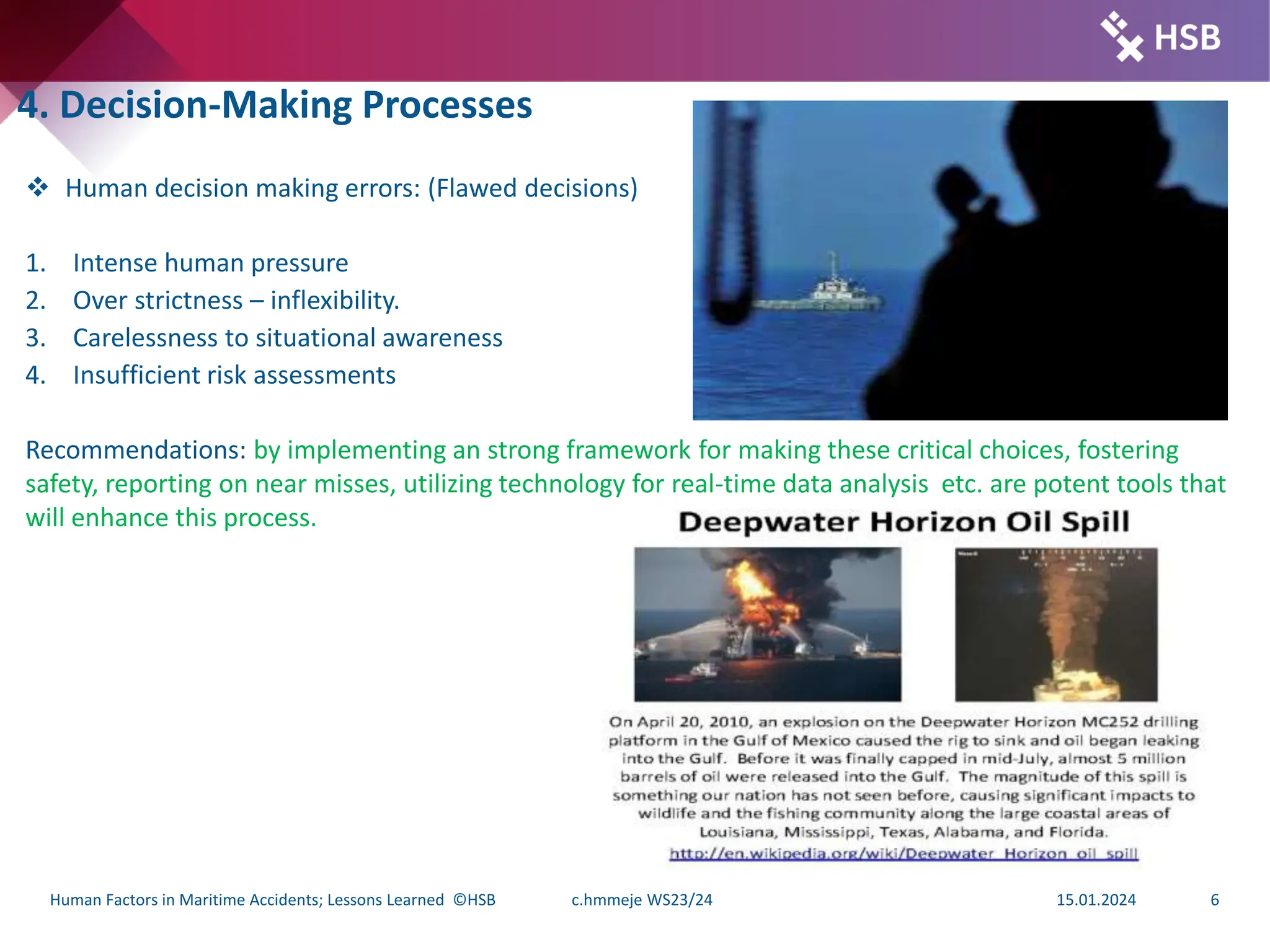
4. Decision-Making Processes
Human Factors in Maritime Accidents; Lessons Learned ©HSB c.hmmeje WS23/24
 Human decision making errors: (Flawed decisions)
1. Intense human pressure
2. Over strictness – inflexibility.
3. Carelessness to situational awareness
4. Insufficient risk assessments
Recommendations: by implementing an strong framework for making these critical choices, fostering
safety, reporting on near misses, utilizing technology for real-time data analysis etc. are potent tools that
will enhance this process.
15.01.2024 7
 Maritime safety persistently faces the threat of fatigue due to:
1. Long duty hours
2. Irregular schedules
3. Monotonous tasks (tedious, uninteresting, boring tasks)
Recommendations: adequate rest periods, well-designed duty schedules, sleep
hygiene awareness programs, open communication regarding fatigue concerns are
essential in combating this issue.
Human Factors in Maritime Accidents; Lessons Learned ©HSB c.hmmeje WS23/24
5. Crew Fatigue Management
15.01.2024 8
 maritime accidents teach us some crucial lessons, we must keep addressing
human factors to bolster sea safety.
 If crew training takes priority, alongside communication protocols, decision-
making processes and fatigue management; we can substantially decrease
accident likelihood while fostering a robust culture of safety.
 To guarantee a comprehensive approach to maritime safety, regulatory bodies;
industry stakeholders; and training institutions need to collaborate in
implementing these recommended measures.
6. General Recommendations/Conclusion
Human Factors in Maritime Accidents; Lessons Learned ©HSB c.hmmeje WS23/24
15.01.2024
Human Factors in Maritime Accidents; Lessons Learned ©HSB c.hmmeje WS23/24 9
1. Helmreich, R. L., Merritt, A. C., & Wilhelm, J. A. (1999). The evolution of crew resource
management training in commercial aviation. International Journal of Aviation
Psychology, 9(1), 19-32.
2. International Chamber of Shipping. (2019). Bridge Procedures Guide, 5th Edition.
3. International Maritime Organization. (2017). International Safety Management (ISM)
Code.
4. CHIRP-Making-critical-decisions-at-sea-2019_09.pdf. weblink:
https://safety4sea.com/wp-content/uploads/2019/09/CHIRP-Making-critical-decisions-
at-sea-2019_09.pdf. Accessed 31.12.2023.
5. https://www.marineinsight.com/marine-safety/ accessed: 31.12.2023
6. Highest Oil spillage and maritime accident in human history.
https://en.wikipedia.org/wiki/Deepwater_Horizon Accessed 13.01.2024.
7. References/Sources
Human Factors in Maritime Accidents - Lessons Learned. by Chinazor Henry Mmeje.pptx

Human Factors in Maritime Accidents - Lessons Learned. by Chinazor Henry Mmeje.pptx

  • 1.
    Human Factors inMaritime Accidents; Lessons Learned. Name: Chinazor Henry, Mmeje Matric No: 5311721 Course: ISSC Academic Session: WS2023/2024 Date: 15.01.2024
  • 2.
    15.01.2024 Human Factors inMaritime Accidents; Lessons Learned ©HSB c.hmmeje WS23/24 2 Contents 1. Introduction 2. Crew Training 3. Communication Protocols 4. Decision-Making Processes 5. Crew Fatigue Management 6. General recommendations/Conclusion 7. References Plus recommendations
  • 3.
    15.01.2024 3 1. IntroducingKey Human Causative Factors of Maritime Accidents Human Factors in Maritime Accidents; Lessons Learned ©HSB c.hmmeje WS23/24 CREW TRAINING COMMUNICATION PROTOCOLS DECISION MAKING PROCESSES CREW FATIGUE MANAGEMENT Images source: https://www.marineinsight.com/marine-safety/ accessed: 31.12.2023.
  • 4.
    15.01.2024 4 2. CREWTRAINING Human Factors in Maritime Accidents; Lessons Learned ©HSB c.hmmeje WS23/24  Inadequacy of crew training 1. Incompetence to safety and efficiency 2. Poor emergency handling 3. Navigation systems management illiteracy 4. Poor equipment operations Recommendations: Regular and realistic training exercises, simulator-based scenarios, and continuous education are recommended to ensure crews stay updated on evolving technics and technologies.
  • 5.
    15.01.2024 5 3. CommunicationProtocols  ​Ineffective communications 1. Creates misunderstandings 2. Room for postpones responses 3. Leads to time lost Recommendations: standardized communication protocols, a clear chain of command, language proficiency requirements, regular drills and exercises that specifically focus on honing communication skills. Human Factors in Maritime Accidents; Lessons Learned ©HSB c.hmmeje WS23/24
  • 6.
    15.01.2024 6 4. Decision-MakingProcesses Human Factors in Maritime Accidents; Lessons Learned ©HSB c.hmmeje WS23/24  Human decision making errors: (Flawed decisions) 1. Intense human pressure 2. Over strictness – inflexibility. 3. Carelessness to situational awareness 4. Insufficient risk assessments Recommendations: by implementing an strong framework for making these critical choices, fostering safety, reporting on near misses, utilizing technology for real-time data analysis etc. are potent tools that will enhance this process.
  • 7.
    15.01.2024 7  Maritimesafety persistently faces the threat of fatigue due to: 1. Long duty hours 2. Irregular schedules 3. Monotonous tasks (tedious, uninteresting, boring tasks) Recommendations: adequate rest periods, well-designed duty schedules, sleep hygiene awareness programs, open communication regarding fatigue concerns are essential in combating this issue. Human Factors in Maritime Accidents; Lessons Learned ©HSB c.hmmeje WS23/24 5. Crew Fatigue Management
  • 8.
    15.01.2024 8  maritimeaccidents teach us some crucial lessons, we must keep addressing human factors to bolster sea safety.  If crew training takes priority, alongside communication protocols, decision- making processes and fatigue management; we can substantially decrease accident likelihood while fostering a robust culture of safety.  To guarantee a comprehensive approach to maritime safety, regulatory bodies; industry stakeholders; and training institutions need to collaborate in implementing these recommended measures. 6. General Recommendations/Conclusion Human Factors in Maritime Accidents; Lessons Learned ©HSB c.hmmeje WS23/24
  • 9.
    15.01.2024 Human Factors inMaritime Accidents; Lessons Learned ©HSB c.hmmeje WS23/24 9 1. Helmreich, R. L., Merritt, A. C., & Wilhelm, J. A. (1999). The evolution of crew resource management training in commercial aviation. International Journal of Aviation Psychology, 9(1), 19-32. 2. International Chamber of Shipping. (2019). Bridge Procedures Guide, 5th Edition. 3. International Maritime Organization. (2017). International Safety Management (ISM) Code. 4. CHIRP-Making-critical-decisions-at-sea-2019_09.pdf. weblink: https://safety4sea.com/wp-content/uploads/2019/09/CHIRP-Making-critical-decisions- at-sea-2019_09.pdf. Accessed 31.12.2023. 5. https://www.marineinsight.com/marine-safety/ accessed: 31.12.2023 6. Highest Oil spillage and maritime accident in human history. https://en.wikipedia.org/wiki/Deepwater_Horizon Accessed 13.01.2024. 7. References/Sources