Definition of HR policies
Purposes
Types of HR policies
Overall HR policy
Specific HR policies
Appealed policies
Imposed policies
Developing HR Policies
Develop policy content
Review of the policy by key parties
Approve the policy
Implement the policy
Policy review and update
Role of board of director in the HR policies
Advantages of HR policies
Definition
HR policies provide gernal and practical advice and
guidance managers and staff on a range of employee issue.
According ‘Stephen R Covey’
“Always treat your employees exactly as you want
them to treat your best customer”
Why policies are important
Policies are playing very important role in the
HR such as
Implement the best partices in the organization
Communicate values and expectations for how
things are done at your organization
Support of staff, fairness and transparency
Help management to make decisions, uniform and
predictable
The establishment of policies can help an organization
demonstrate, both internally and externally
Ethics and training as well as its commitments in relation
to regulation and corporate governance of its employees
They provide frameworks within which consistent
decisions are made and promote equity in the way in which
people are treated
HR policies can also be very effective at supporting and
building the desired organizational culture.
They provide clear communication between the
organization and their employees regarding their
condition of employment
They form a basis for treating all employees fairly
and equally
They are a set of guidelines for supervisors and
managers
 Overall HR policy
 Specific HR policies
 Appealed policies
 Imposed policies
Overall HR policy
The overall HR policy defines how the
organization fulfils its social responsibilities for its
employees and set out its attitudes towards them. It is an
expression of its values or beliefs about how people
should be treated.
Specific HR policies
Related to specific issues like recruitment,
Transfer, Promotion etc
Imposed policies
In those policies are as that are imposed of
the Govt and the legal authorities
Appealed policies
In these policies are as made on request to
handle certain situation, or if certain aspects are
missing in the main policy
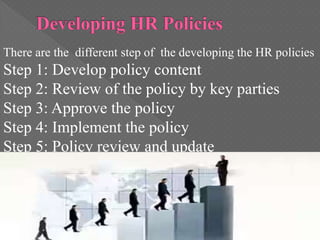
There are the different step of the developing the HR policies
Step 1: Develop policy content
Step 2: Review of the policy by key parties
Step 3: Approve the policy
Step 4: Implement the policy
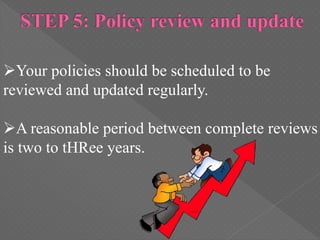
Step 5: Policy review and update
Policy content may be driven by the requirements
HR management policies comply with
employment, workplace health and safety
Remember even though a policy may not be
expressly required to govern a situation, if you
develop one and then don’t follow it you could be
putting your organization at risk.
It is good practice to ask a representative group of
managers and employees to review the policy
For some policies you may also want to involve
stakeholders
In these the manger responsibility to review of the
all policies
If your board is responsible for giving the final
approval on policies, it is often done with a formal,
recorded motion
Provide the board with information on why the
policy is needed and the steps you took in developing
the content for the policy
After you have the board approval, add the date of
approval to the policy
Ways to implement and communicate about
policies
Implementation of the policy tHRough the
development of a procedure to support the
policy
HR Management policies are made accessible
to employees.
Your policies should be scheduled to be
reviewed and updated regularly.
A reasonable period between complete reviews
is two to tHRee years.
The board of director is very important role in the HR
policies
It is helpful to have the board clearly define the role they
want to take in policy development, whether they want to be
involved in shaping the content or be involved only at the
approval stage.
The board may set a time frame for reviewing HR policies,
or they may delegate this responsibility
If your organization develops a policy on the development,
review and update of organization policies, the role of the
board can be outlined in it.
The following advantages could be achieved by the
set up of HR policies
It helps the managers at various levels of decision
making to take decisions without the consulting their
superiors
It ensures long term welfare of employees and
makes for good employee relationship
Well-established policies ensure uniform and consistent
treatment of all employees throughout the organization
 Policies set patterns of behavior and permit employees to
work more confidently.
HR policies
HR policies

HR policies

  • 3.
    Definition of HRpolicies Purposes Types of HR policies Overall HR policy Specific HR policies Appealed policies Imposed policies Developing HR Policies Develop policy content Review of the policy by key parties Approve the policy Implement the policy Policy review and update Role of board of director in the HR policies Advantages of HR policies
  • 4.
    Definition HR policies providegernal and practical advice and guidance managers and staff on a range of employee issue. According ‘Stephen R Covey’ “Always treat your employees exactly as you want them to treat your best customer”
  • 5.
    Why policies areimportant Policies are playing very important role in the HR such as Implement the best partices in the organization Communicate values and expectations for how things are done at your organization Support of staff, fairness and transparency Help management to make decisions, uniform and predictable
  • 6.
    The establishment ofpolicies can help an organization demonstrate, both internally and externally Ethics and training as well as its commitments in relation to regulation and corporate governance of its employees They provide frameworks within which consistent decisions are made and promote equity in the way in which people are treated HR policies can also be very effective at supporting and building the desired organizational culture.
  • 7.
    They provide clearcommunication between the organization and their employees regarding their condition of employment They form a basis for treating all employees fairly and equally They are a set of guidelines for supervisors and managers
  • 8.
     Overall HRpolicy  Specific HR policies  Appealed policies  Imposed policies
  • 9.
    Overall HR policy Theoverall HR policy defines how the organization fulfils its social responsibilities for its employees and set out its attitudes towards them. It is an expression of its values or beliefs about how people should be treated. Specific HR policies Related to specific issues like recruitment, Transfer, Promotion etc
  • 10.
    Imposed policies In thosepolicies are as that are imposed of the Govt and the legal authorities Appealed policies In these policies are as made on request to handle certain situation, or if certain aspects are missing in the main policy
  • 11.
    There are thedifferent step of the developing the HR policies Step 1: Develop policy content Step 2: Review of the policy by key parties Step 3: Approve the policy Step 4: Implement the policy Step 5: Policy review and update
  • 12.
    Policy content maybe driven by the requirements HR management policies comply with employment, workplace health and safety Remember even though a policy may not be expressly required to govern a situation, if you develop one and then don’t follow it you could be putting your organization at risk.
  • 13.
    It is goodpractice to ask a representative group of managers and employees to review the policy For some policies you may also want to involve stakeholders In these the manger responsibility to review of the all policies
  • 14.
    If your boardis responsible for giving the final approval on policies, it is often done with a formal, recorded motion Provide the board with information on why the policy is needed and the steps you took in developing the content for the policy After you have the board approval, add the date of approval to the policy
  • 15.
    Ways to implementand communicate about policies Implementation of the policy tHRough the development of a procedure to support the policy HR Management policies are made accessible to employees.
  • 16.
    Your policies shouldbe scheduled to be reviewed and updated regularly. A reasonable period between complete reviews is two to tHRee years.
  • 17.
    The board ofdirector is very important role in the HR policies It is helpful to have the board clearly define the role they want to take in policy development, whether they want to be involved in shaping the content or be involved only at the approval stage.
  • 18.
    The board mayset a time frame for reviewing HR policies, or they may delegate this responsibility If your organization develops a policy on the development, review and update of organization policies, the role of the board can be outlined in it.
  • 19.
    The following advantagescould be achieved by the set up of HR policies It helps the managers at various levels of decision making to take decisions without the consulting their superiors It ensures long term welfare of employees and makes for good employee relationship
  • 20.
    Well-established policies ensureuniform and consistent treatment of all employees throughout the organization  Policies set patterns of behavior and permit employees to work more confidently.