r ite a food
How   to w
rev iew?
                     20   11
      J   our nalism
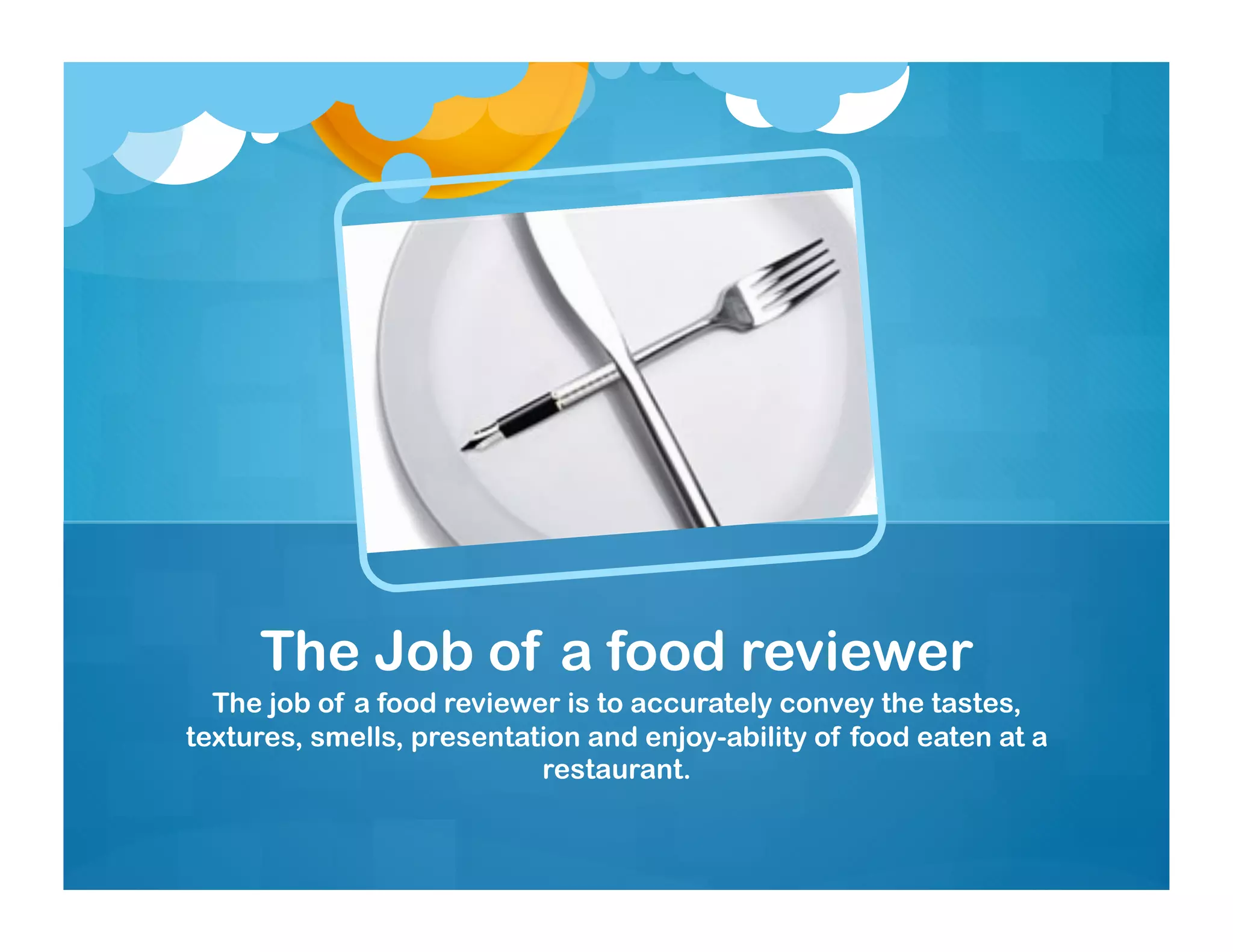
The Job of a food reviewer
  The job of a food reviewer is to accurately convey the tastes,
textures, smells, presentation and enjoy-ability of food eaten at a
                           restaurant.
Be Willing to try new
foods.
If not, writing food reviews is not
going to be a good pastime or
career for you.

Be adventurous as a diner. Try
exotic foods that aren’t typical in
the U.S.

Be open minded. Remember, food
can be pretty creative.
Consider how you will record the
          experience.
You can’t be too obvious because you don’t want the restaurant to
                     know you are reviewing.
Assess the table set up before
       you begin the meal.
Pay attention to details of what your table and the restaurant looks
                           like, sounds like.
Order a broad range
Order food that gives as broad an
experience as possible of the
menu in front of you.

Order an appetizer, entrée and
dessert.

Ask for the waiter’s
recommendations.

Pay attention to what other
people are eating.
Assess as you eat.
• The presentation - clean,
beautiful or messy and
tired?
• The temperature - was
the warm meal warm or
was it cold?
• The level of cooking -
was the food cooked to
perfection, under cooked
Ask questions
Things to try and discern include:

Does the waiting staff know their
food and ingredients? Do they know
where the fish was caught, whether
the vegetables are organic, whether
the beef was grain-fed?

How do they respond if you make a
compliment or a complaint?

Are they able to recommend wine to
accompany the meal?
Consider the
ambiance.
Does it seem that people are
enjoying themselves?

Or is the restaurant emptying
quickly or not filling up at all?

Consider overall presentation of
the place and the friendliness of
staff.
Talk about the food!
While it’s important to consider
ambiance, staff, comfort,
cleanliness, etc., it’s most vital to
talk about the food!

Describe it. What are your
observations eating it?
Don’t exaggerate
Did you like something? Did you
not like something? We want to
know, and the more vivid the
description, the better for those
of us who may not know what the
place is like.


But don't overdo it, either. I'm not
going to believe it if you tell me
that a certain menu item tastes
like blood.
More opinions,
fewer facts
There's nothing wrong with telling
us what's on the menu at any
restaurant. There is something
wrong, however, if you don't give
us your opinions on those menu
items, even if it's as simple as "I
haven't tried this before." In the
days of the Internet, it's pretty
simple to just go to any
restaurant's website to see what
they offer.
Enjoy the food and get
writing.

How to Write a Food Review

  • 1.
    r ite afood How to w rev iew? 20 11 J our nalism
  • 2.
    The Job ofa food reviewer The job of a food reviewer is to accurately convey the tastes, textures, smells, presentation and enjoy-ability of food eaten at a restaurant.
  • 3.
    Be Willing totry new foods. If not, writing food reviews is not going to be a good pastime or career for you. Be adventurous as a diner. Try exotic foods that aren’t typical in the U.S. Be open minded. Remember, food can be pretty creative.
  • 4.
    Consider how youwill record the experience. You can’t be too obvious because you don’t want the restaurant to know you are reviewing.
  • 5.
    Assess the tableset up before you begin the meal. Pay attention to details of what your table and the restaurant looks like, sounds like.
  • 6.
    Order a broadrange Order food that gives as broad an experience as possible of the menu in front of you. Order an appetizer, entrée and dessert. Ask for the waiter’s recommendations. Pay attention to what other people are eating.
  • 7.
    Assess as youeat. • The presentation - clean, beautiful or messy and tired? • The temperature - was the warm meal warm or was it cold? • The level of cooking - was the food cooked to perfection, under cooked
  • 8.
    Ask questions Things totry and discern include: Does the waiting staff know their food and ingredients? Do they know where the fish was caught, whether the vegetables are organic, whether the beef was grain-fed? How do they respond if you make a compliment or a complaint? Are they able to recommend wine to accompany the meal?
  • 9.
    Consider the ambiance. Does itseem that people are enjoying themselves? Or is the restaurant emptying quickly or not filling up at all? Consider overall presentation of the place and the friendliness of staff.
  • 10.
    Talk about thefood! While it’s important to consider ambiance, staff, comfort, cleanliness, etc., it’s most vital to talk about the food! Describe it. What are your observations eating it?
  • 11.
    Don’t exaggerate Did youlike something? Did you not like something? We want to know, and the more vivid the description, the better for those of us who may not know what the place is like. But don't overdo it, either. I'm not going to believe it if you tell me that a certain menu item tastes like blood.
  • 12.
    More opinions, fewer facts There'snothing wrong with telling us what's on the menu at any restaurant. There is something wrong, however, if you don't give us your opinions on those menu items, even if it's as simple as "I haven't tried this before." In the days of the Internet, it's pretty simple to just go to any restaurant's website to see what they offer.
  • 13.
    Enjoy the foodand get writing.