How to Systematize Your Job
Search During Uncertain Times
Albert Qian
Albert’s List
December 10, 2021
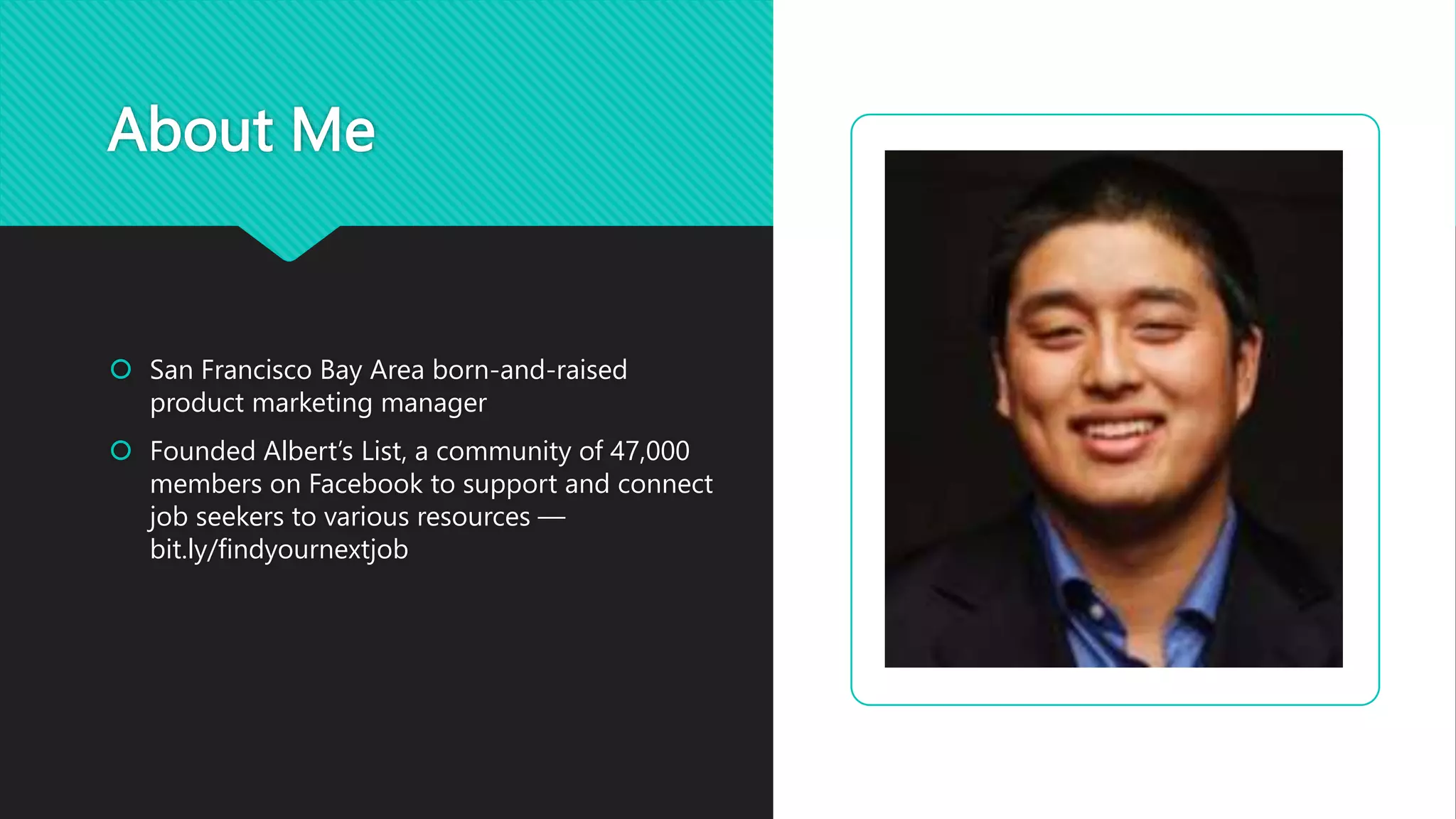
About Me
 San Francisco Bay Area born-and-raised
product marketing manager
 Founded Albert’s List, a community of 47,000
members on Facebook to support and connect
job seekers to various resources —
bit.ly/findyournextjob
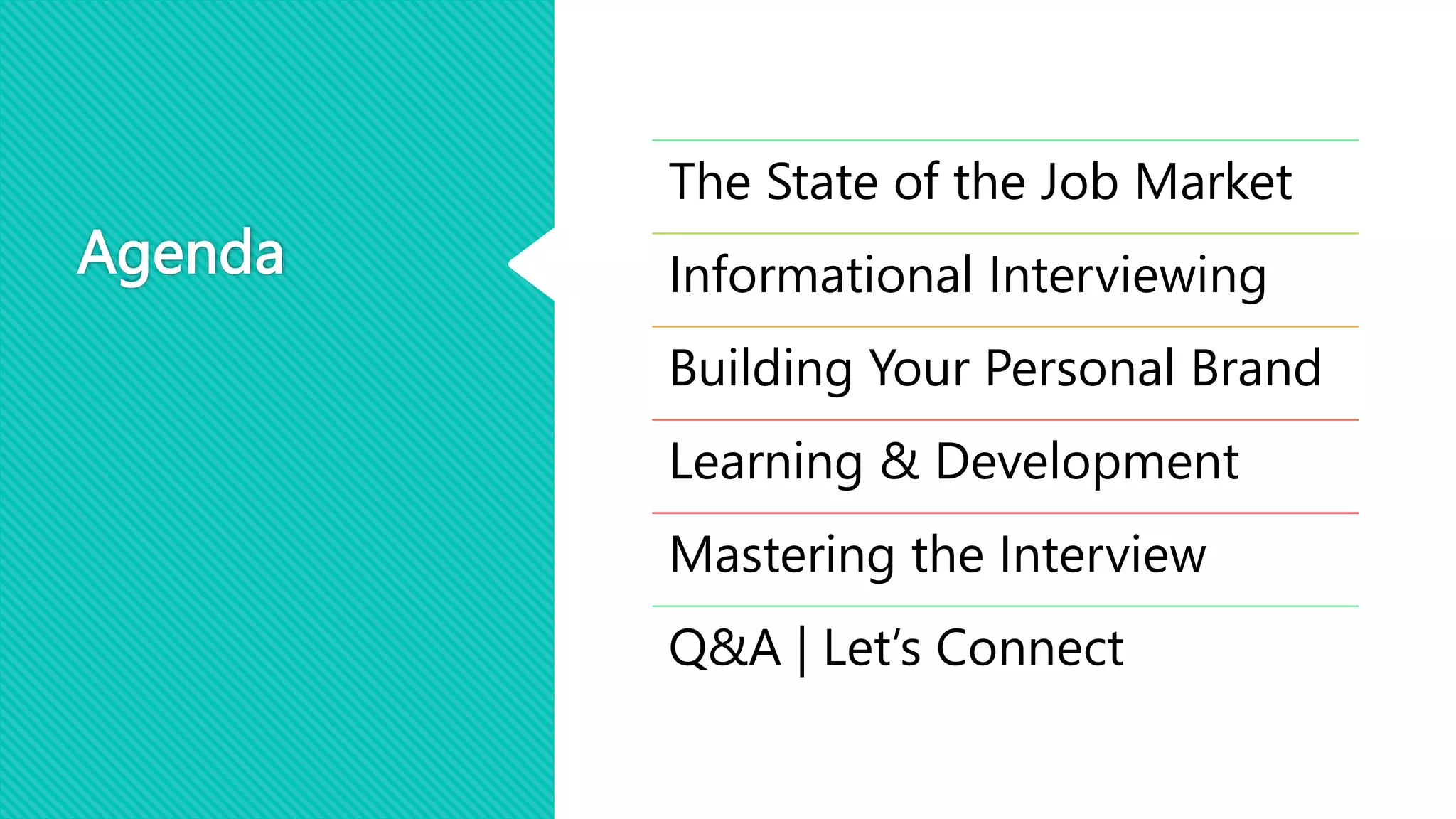
Agenda
The State of the Job Market
Informational Interviewing
Building Your Personal Brand
Learning & Development
Mastering the Interview
Q&A | Let’s Connect
The State of the Job Market
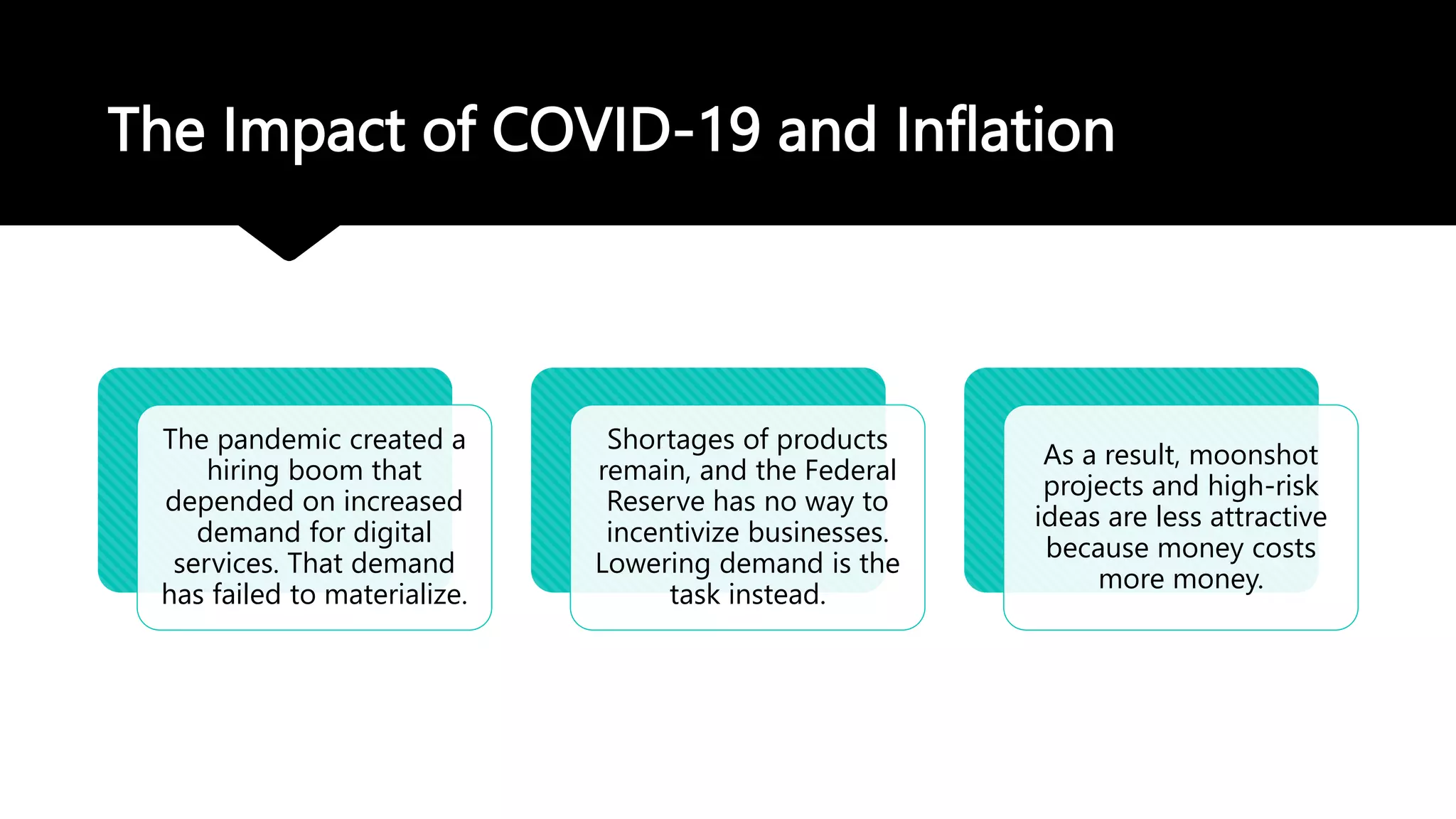
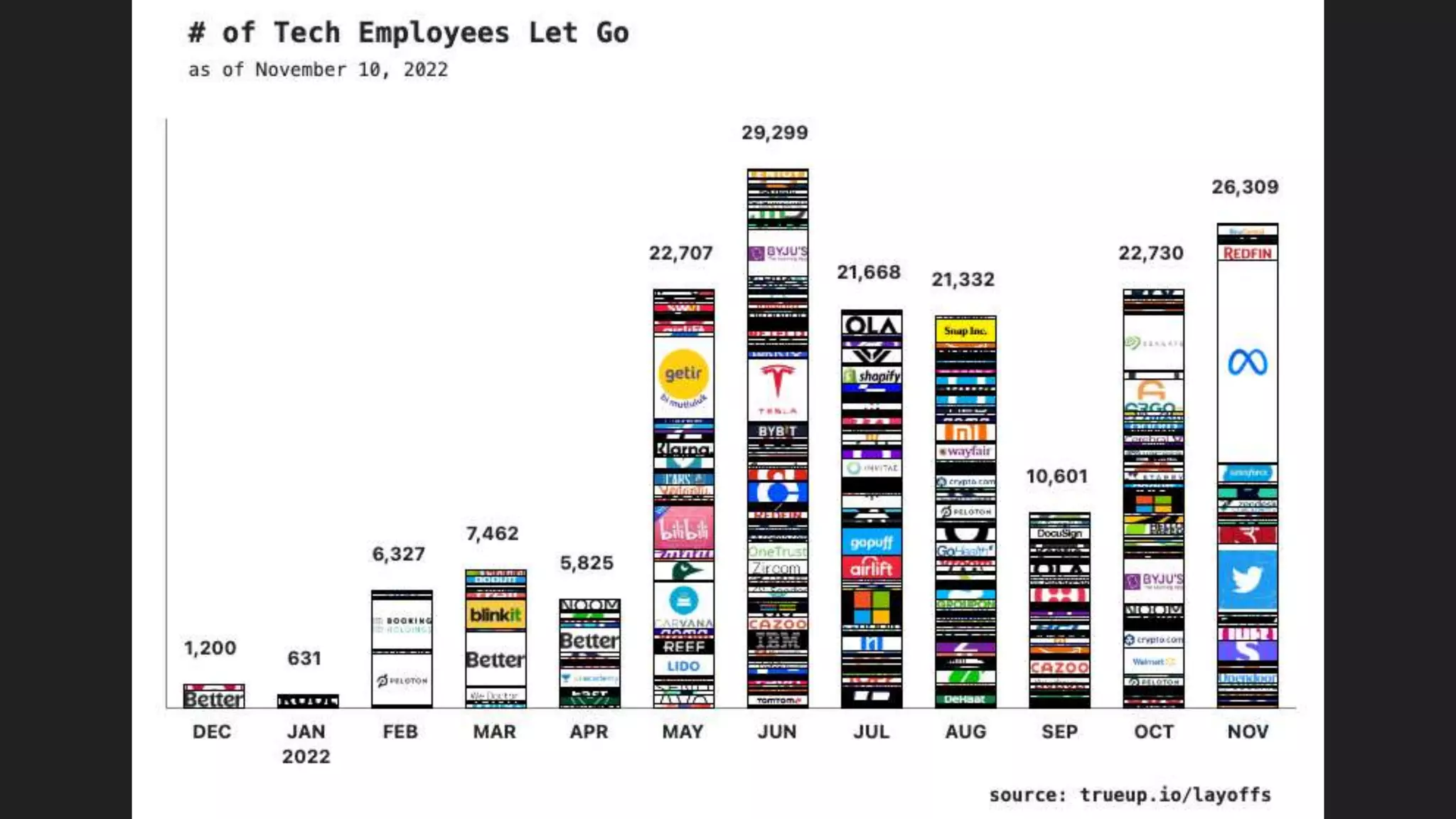
The Impact of COVID-19 and Inflation
The pandemic created a
hiring boom that
depended on increased
demand for digital
services. That demand
has failed to materialize.
Shortages of products
remain, and the Federal
Reserve has no way to
incentivize businesses.
Lowering demand is the
task instead.
As a result, moonshot
projects and high-risk
ideas are less attractive
because money costs
more money.
2023 Promises
to Be Rocky Too
 The Fed will continue raising interest rates until
inflation falls.
 Multiple analysts expect a downturn, including
rolling recessions.
 Companies may continue cutting talent—and
some like Google have yet to start.
 Continued positive jobs reports and shortages
in industries will keep raising wages.
The Job Search Game Has Changed
Fewer available roles for more employees on the market.
Big companies are risky and wondering what’s next.
Who you know and who knows you is more important than ever.
Finding ways to stand out will get you in the door.
Flexibility makes a comeback.
Informational Interviewing
Understanding the Basics
70% of jobs are
unlisted.
People hire
people, not robots
(not yet at least)
Curiosity shows
initiative and
interest
As roles become fewer, getting in front of decision makers gets you out of the traditional
loop
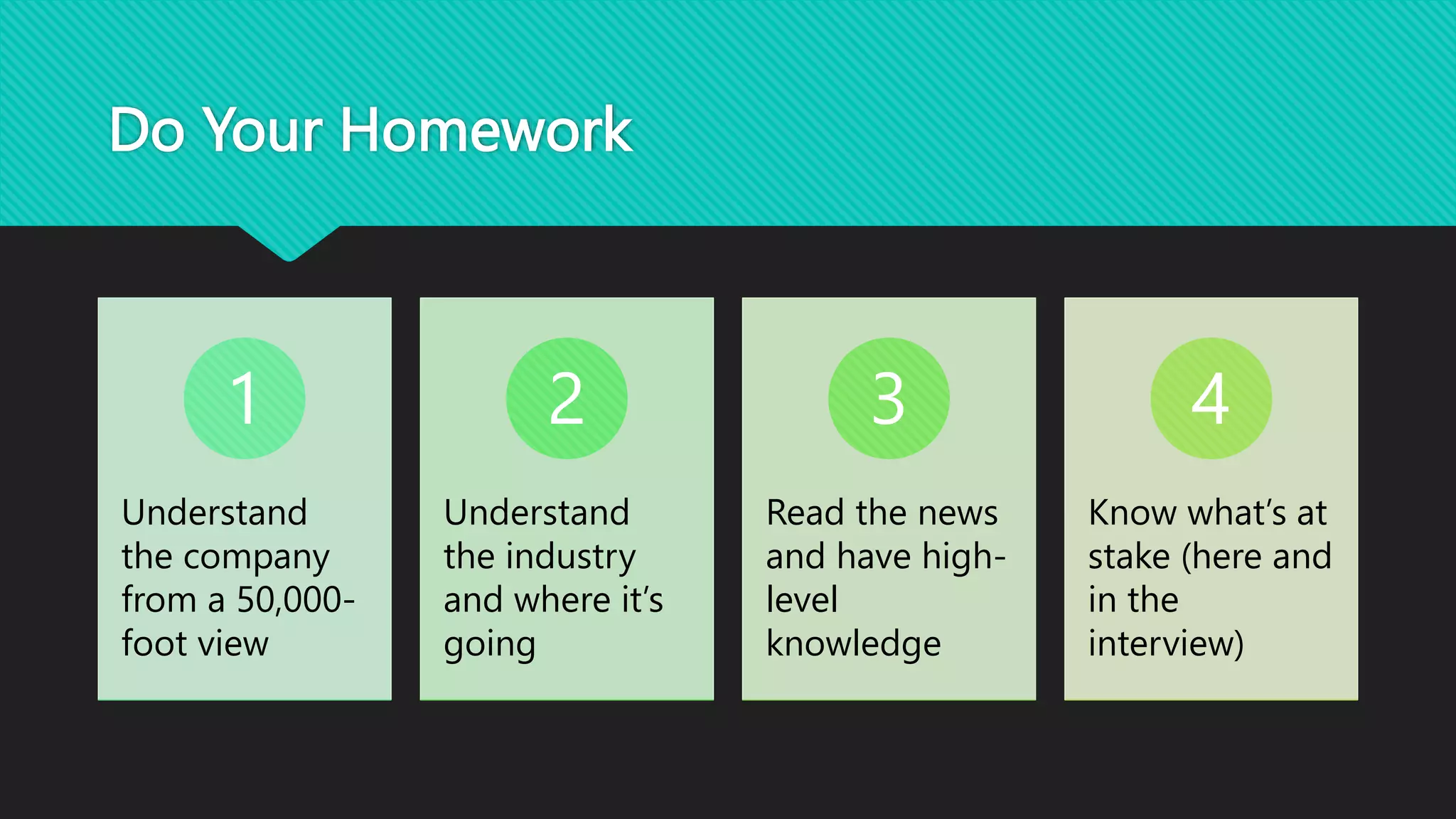
Do Your Homework
Understand
the company
from a 50,000-
foot view
1
Understand
the industry
and where it’s
going
2
Read the news
and have high-
level
knowledge
3
Know what’s at
stake (here and
in the
interview)
4
Ask for the
Informational
Interview
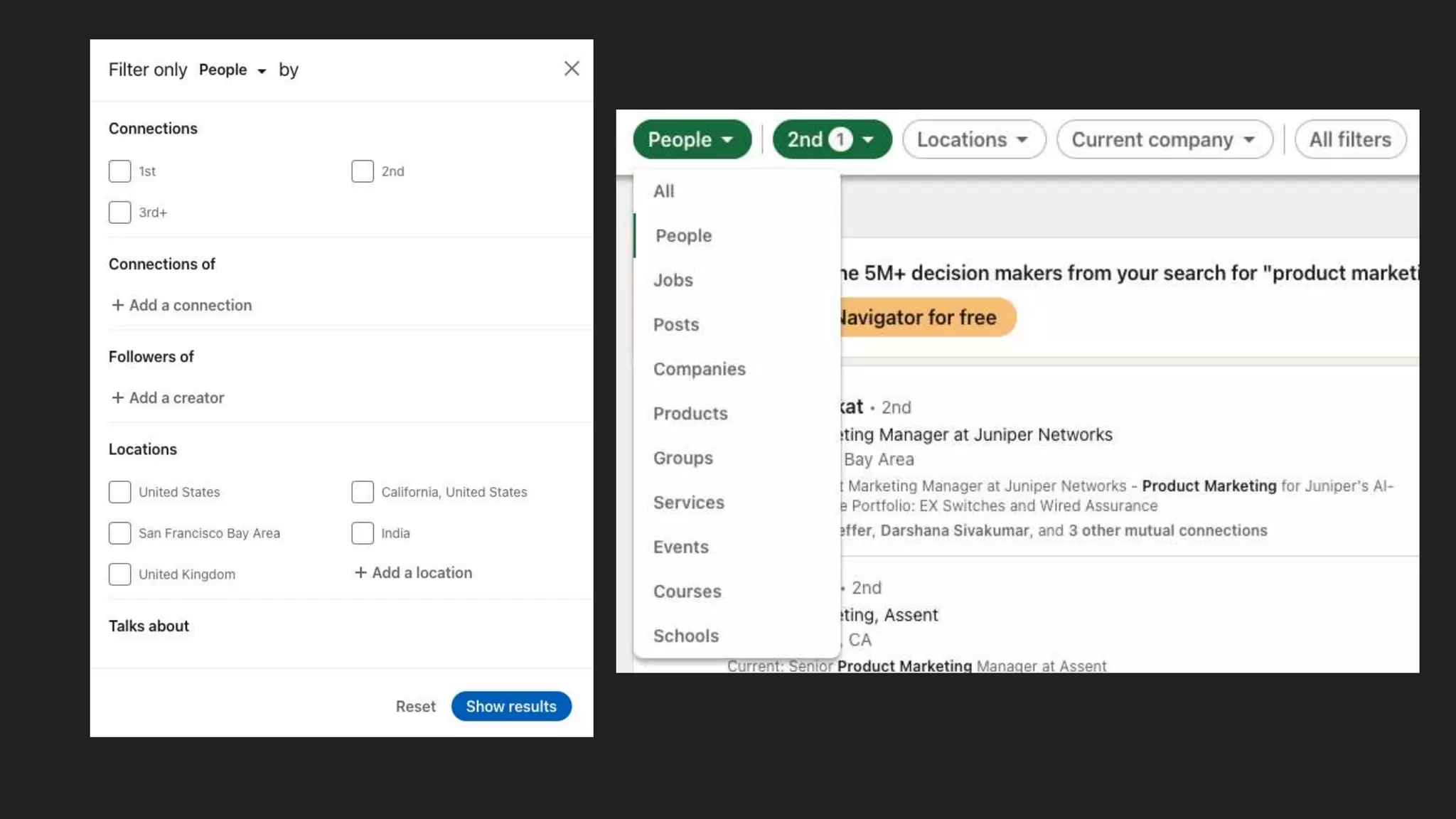
 Focus on warm networks—mutual friends,
previous employers, alumni networks.
 Ask for 20 minutes. It gives enough time to ask
basic questions.
 Prepare your questions in advance.
 Don’t come in with a motive, other than being
curious and wanting to learn more.
 Don’t expect anything—but give your attention
and respect.
If It Goes Right, You’ll Be Successful…
Often, a great conversation needs to an opportunity.
Be gracious and open to what may come.
FOLLOW UP!
Building Your Personal Brand
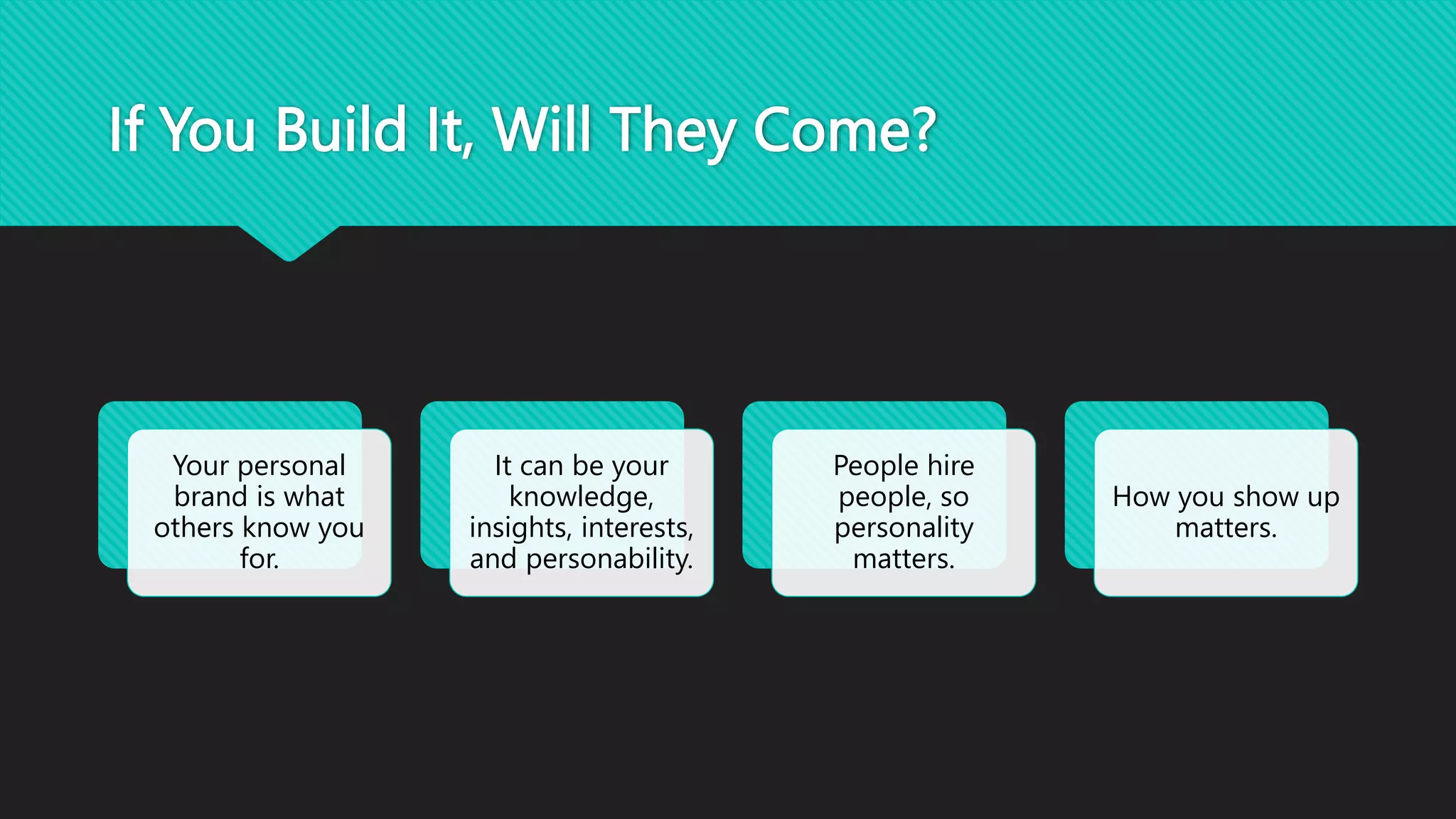
If You Build It, Will They Come?
Your personal
brand is what
others know you
for.
It can be your
knowledge,
insights, interests,
and personability.
People hire
people, so
personality
matters.
How you show up
matters.
There Are MANY Ways to Get Out There
 Personal Website or Portfolio
 LinkedIn
 Facebook
 TikTok
 Medium / Blogging
 Twitter
 In-person networking events
 YouTube
 Virtual events
 Volunteering
 Clubhouse
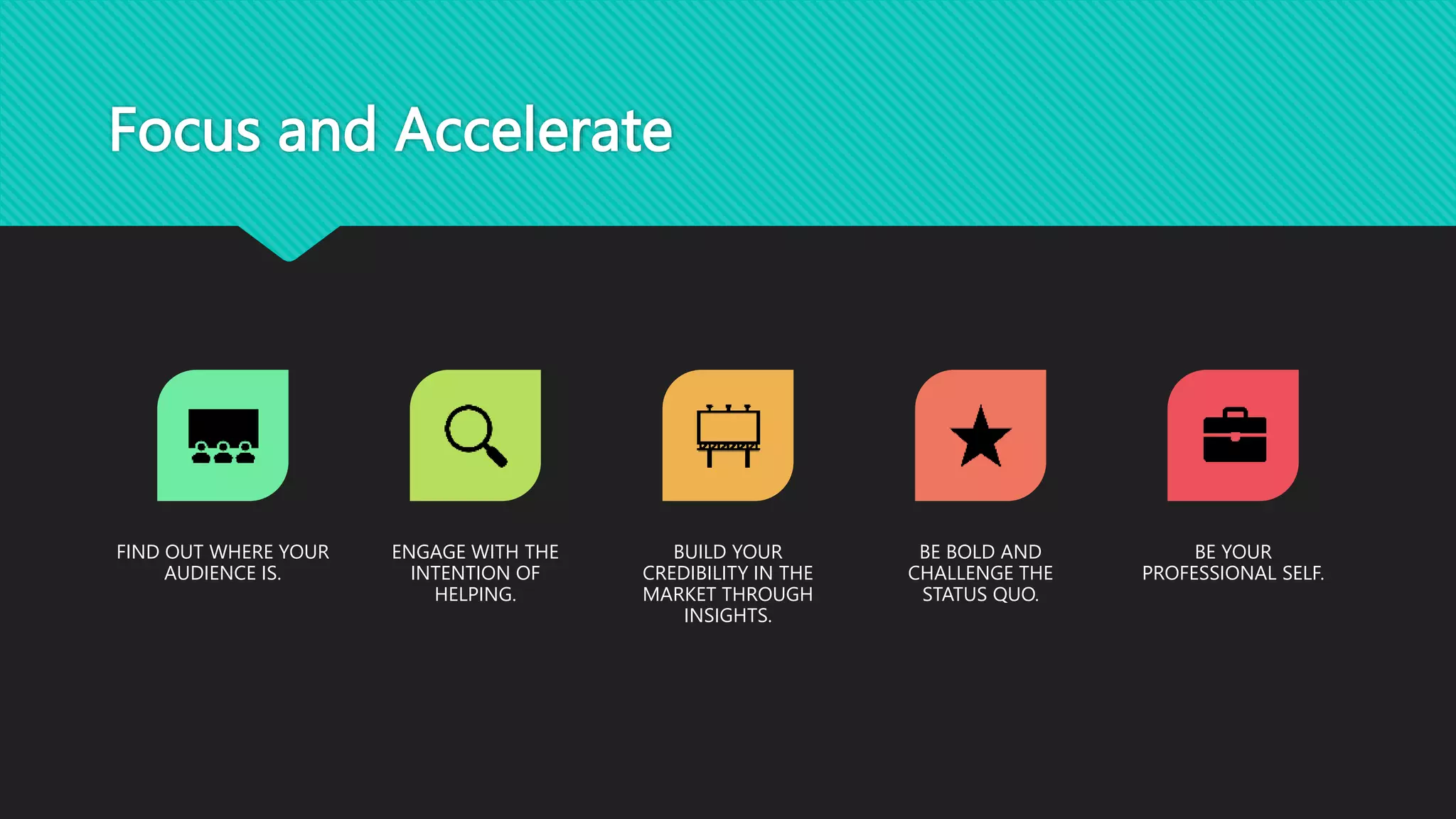
Focus and Accelerate
FIND OUT WHERE YOUR
AUDIENCE IS.
ENGAGE WITH THE
INTENTION OF
HELPING.
BUILD YOUR
CREDIBILITY IN THE
MARKET THROUGH
INSIGHTS.
BE BOLD AND
CHALLENGE THE
STATUS QUO.
BE YOUR
PROFESSIONAL SELF.
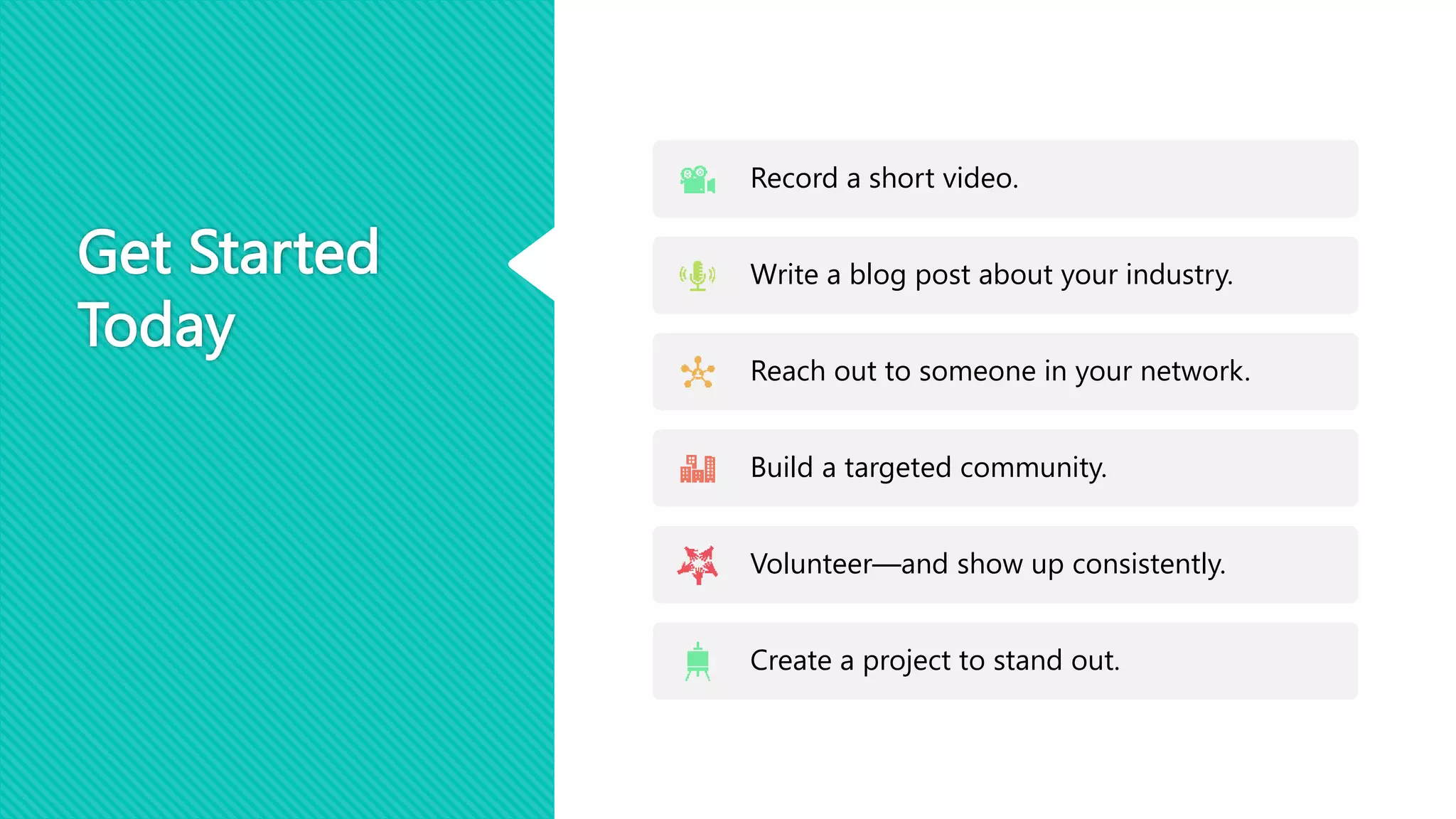
Get Started
Today
Record a short video.
Write a blog post about your industry.
Reach out to someone in your network.
Build a targeted community.
Volunteer—and show up consistently.
Create a project to stand out.
Learning & Development
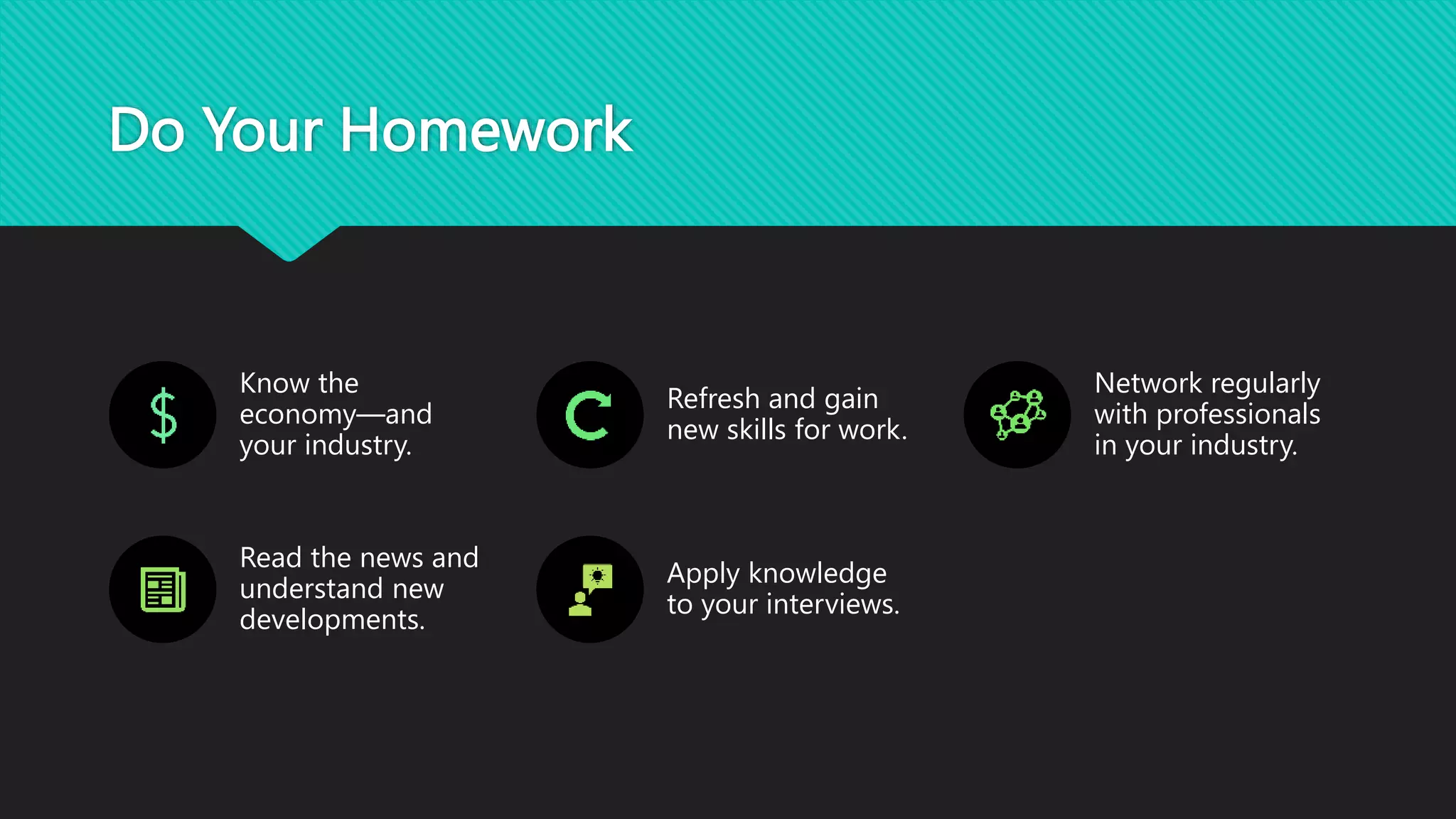
Do Your Homework
Know the
economy—and
your industry.
Refresh and gain
new skills for work.
Network regularly
with professionals
in your industry.
Read the news and
understand new
developments.
Apply knowledge
to your interviews.
Learning
Doesn’t Have
to Be Pricey
LinkedIn Learning is free
through your local library.
Use YouTube and take notes.
Apply what you learn to
personal projects.
Take advantage of sales on
Udemy.
Mastering the Interview
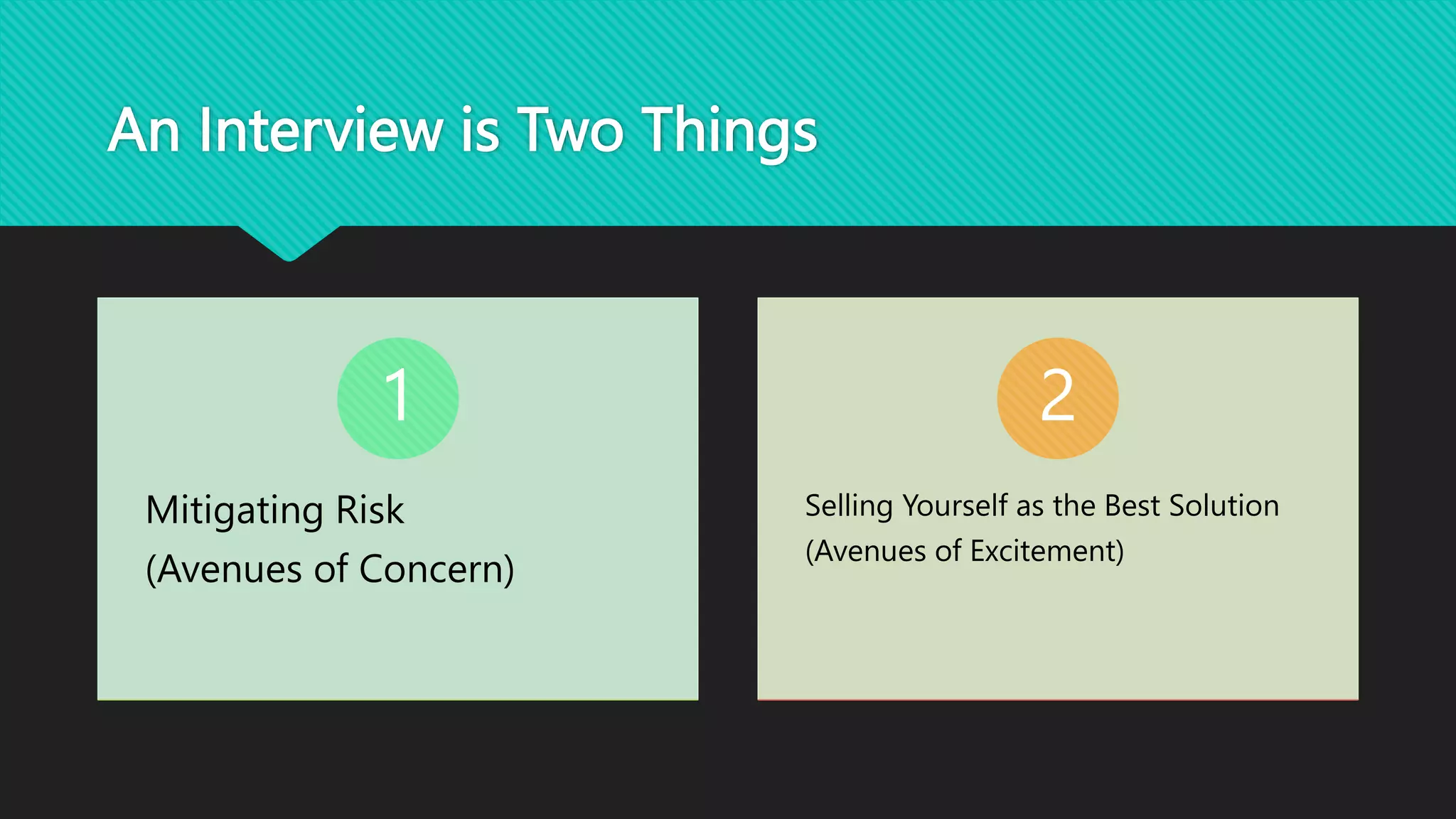
An Interview is Two Things
Mitigating Risk
(Avenues of Concern)
1
Selling Yourself as the Best Solution
(Avenues of Excitement)
2
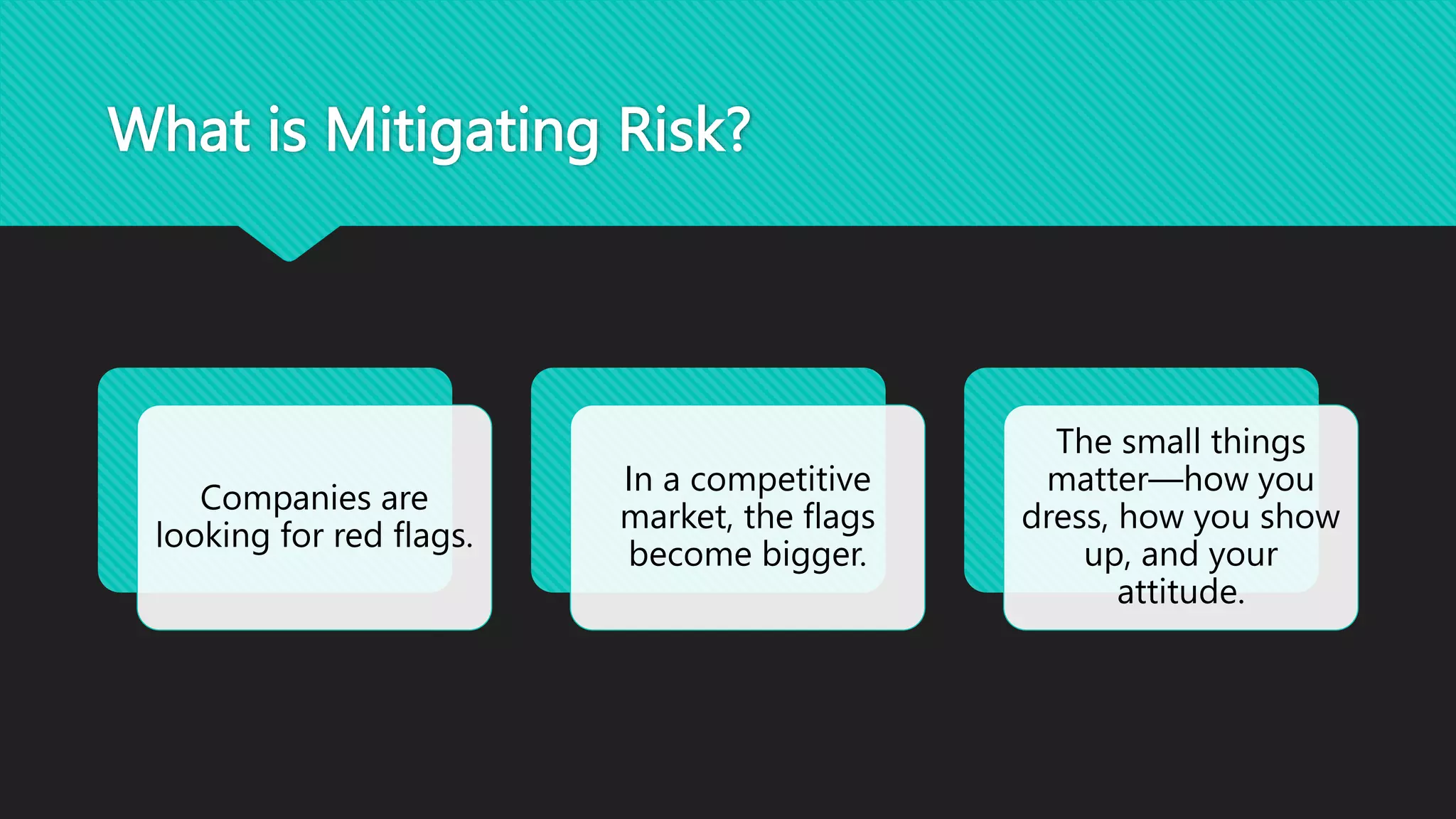
What is Mitigating Risk?
Companies are
looking for red flags.
In a competitive
market, the flags
become bigger.
The small things
matter—how you
dress, how you show
up, and your
attitude.
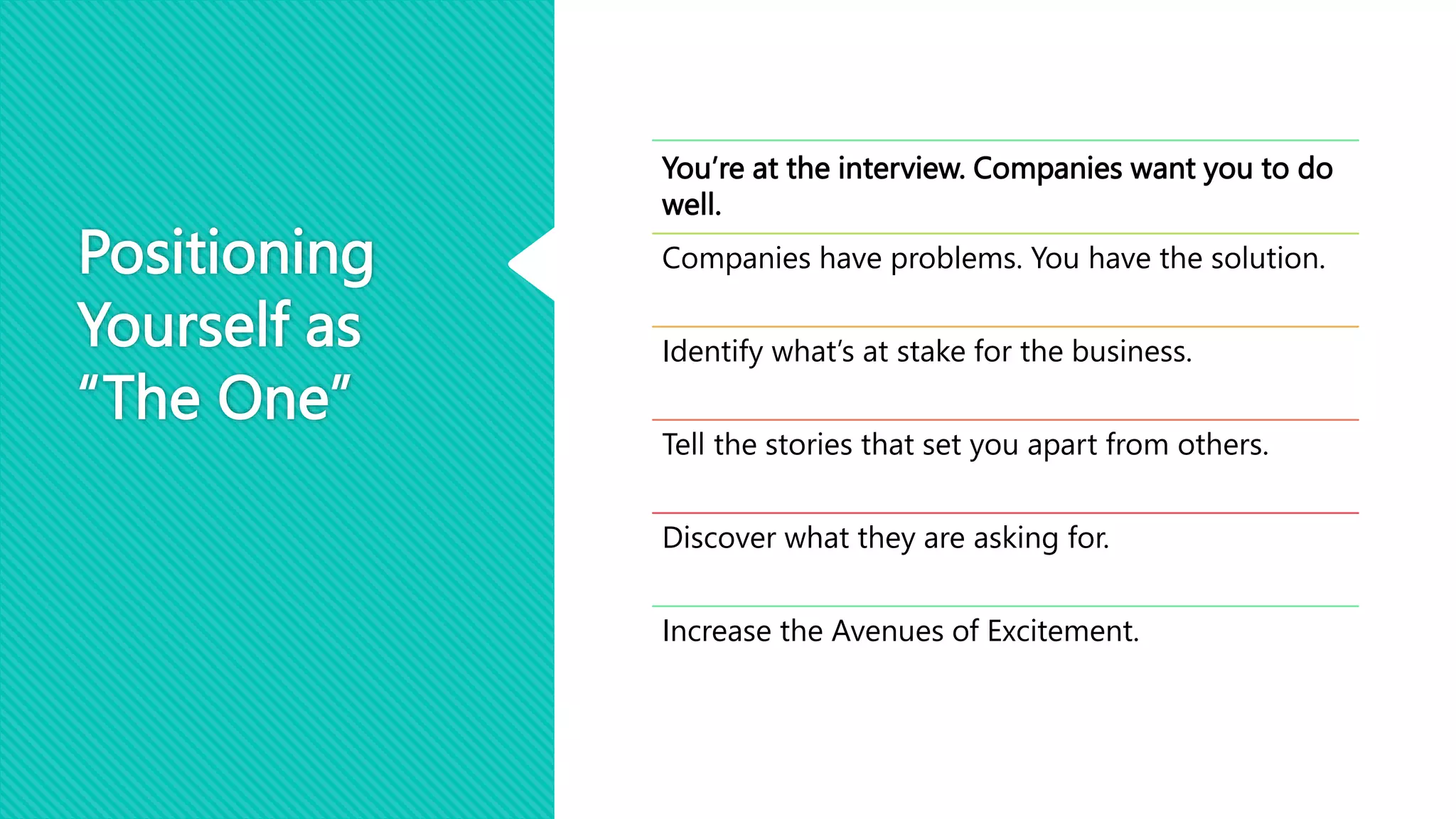
Positioning
Yourself as
“The One”
You’re at the interview. Companies want you to do
well.
Companies have problems. You have the solution.
Identify what’s at stake for the business.
Tell the stories that set you apart from others.
Discover what they are asking for.
Increase the Avenues of Excitement.
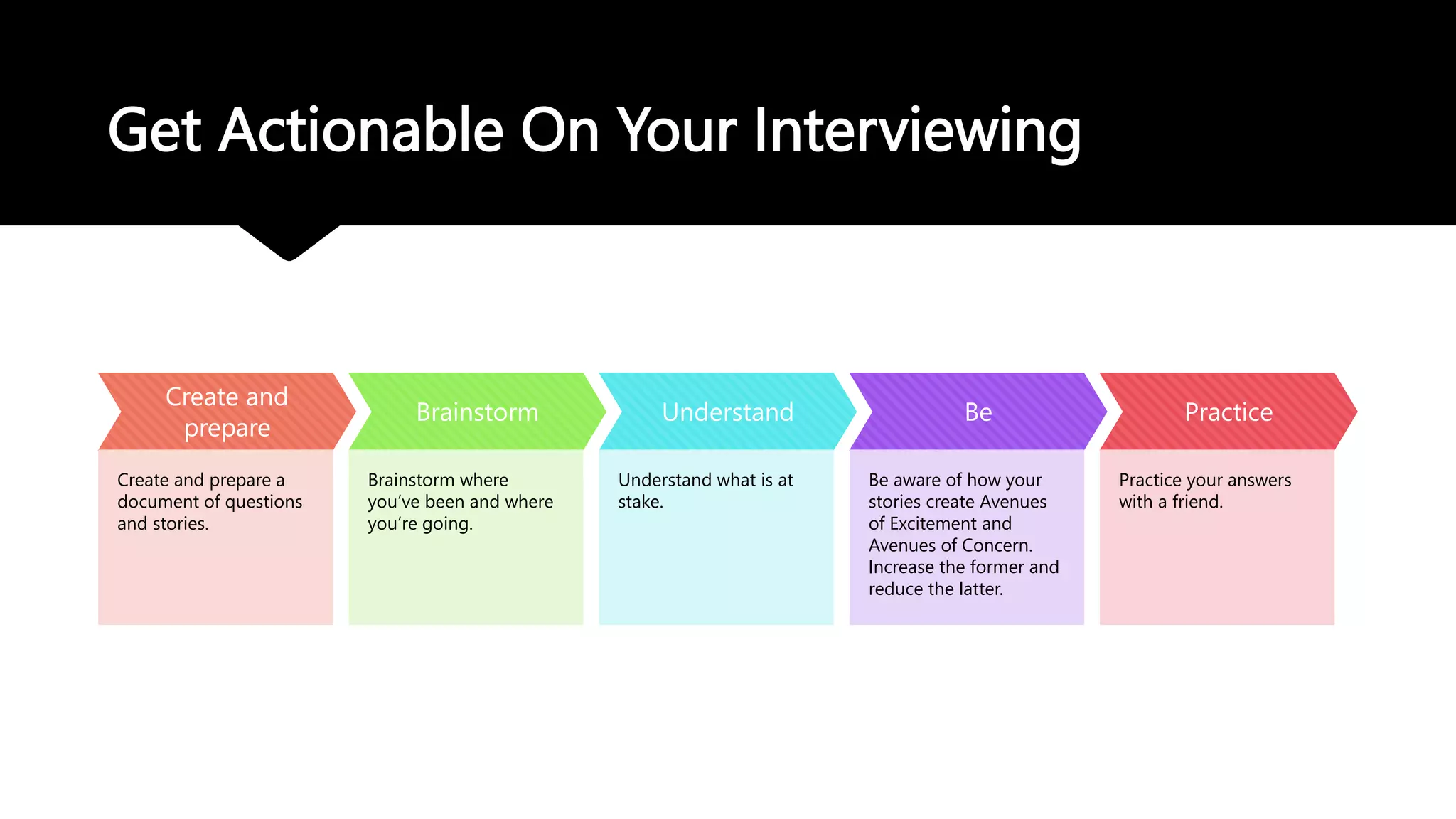
Get Actionable On Your Interviewing
Create and
prepare
Create and prepare a
document of questions
and stories.
Brainstorm
Brainstorm where
you’ve been and where
you’re going.
Understand
Understand what is at
stake.
Be
Be aware of how your
stories create Avenues
of Excitement and
Avenues of Concern.
Increase the former and
reduce the latter.
Practice
Practice your answers
with a friend.
BONUS: Integrating the System
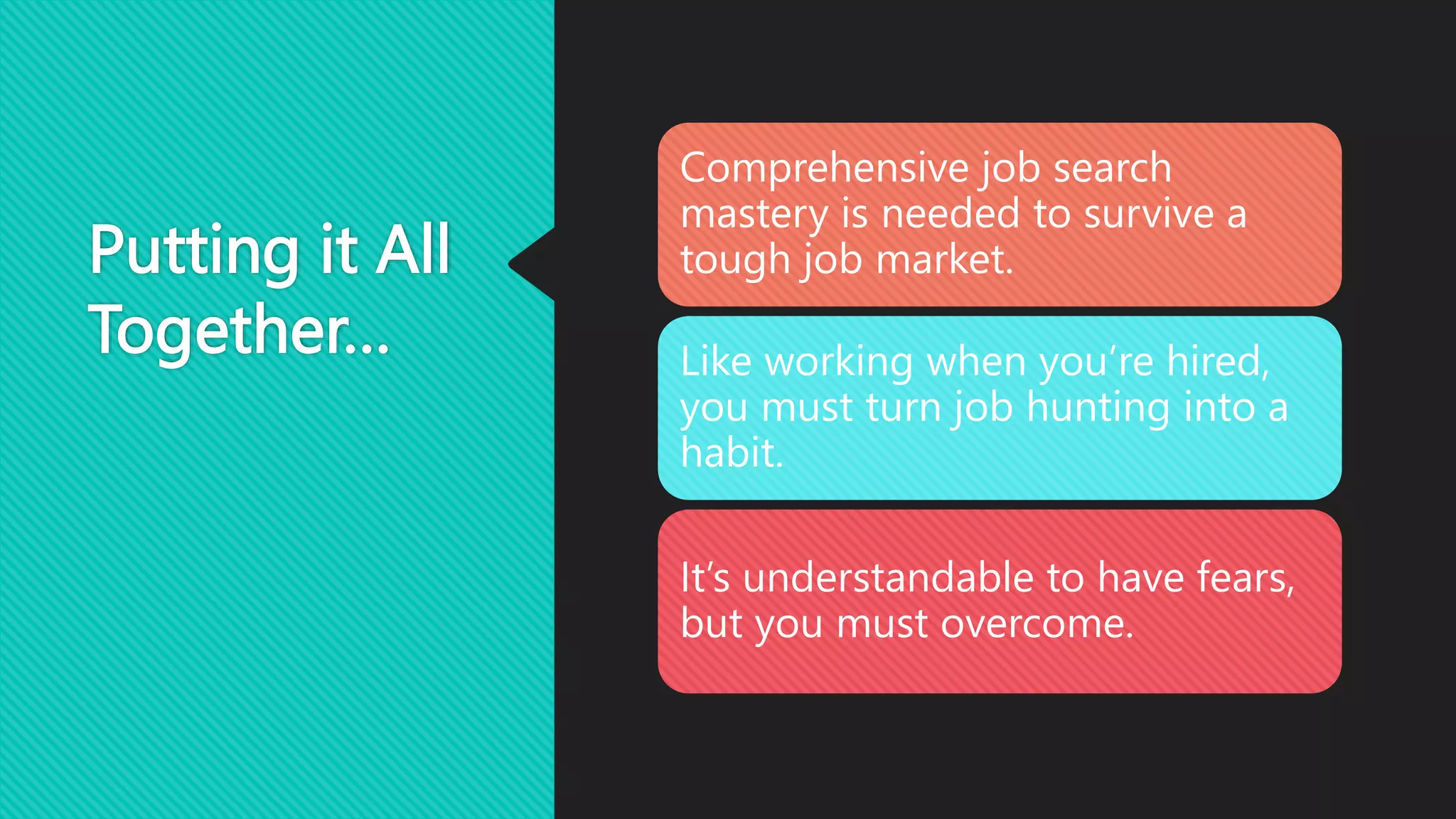
Putting it All
Together…
Comprehensive job search
mastery is needed to survive a
tough job market.
Like working when you’re hired,
you must turn job hunting into a
habit.
It’s understandable to have fears,
but you must overcome.
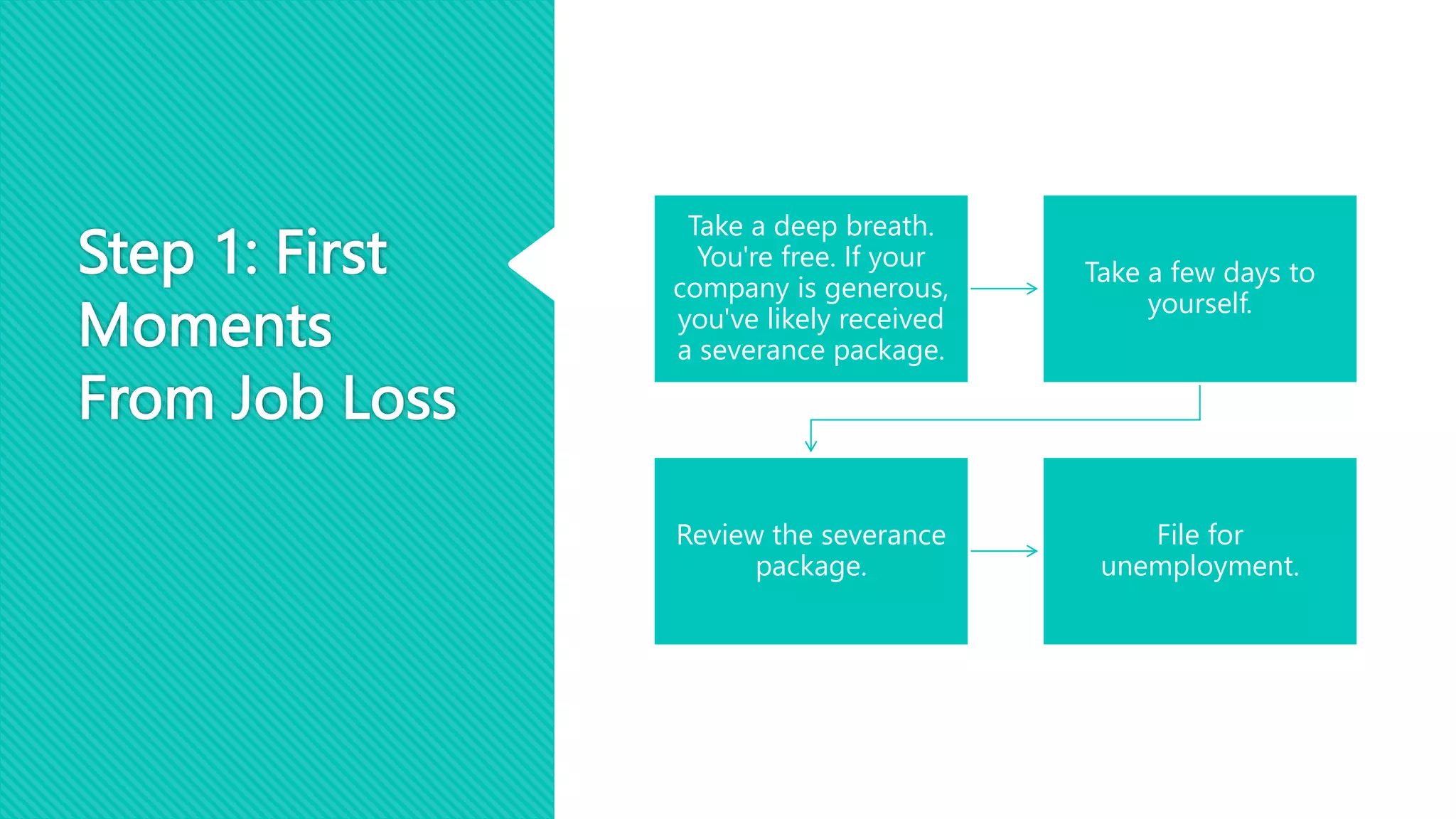
Step 1: First
Moments
From Job Loss
Take a deep breath.
You're free. If your
company is generous,
you've likely received
a severance package.
Take a few days to
yourself.
Review the severance
package.
File for
unemployment.
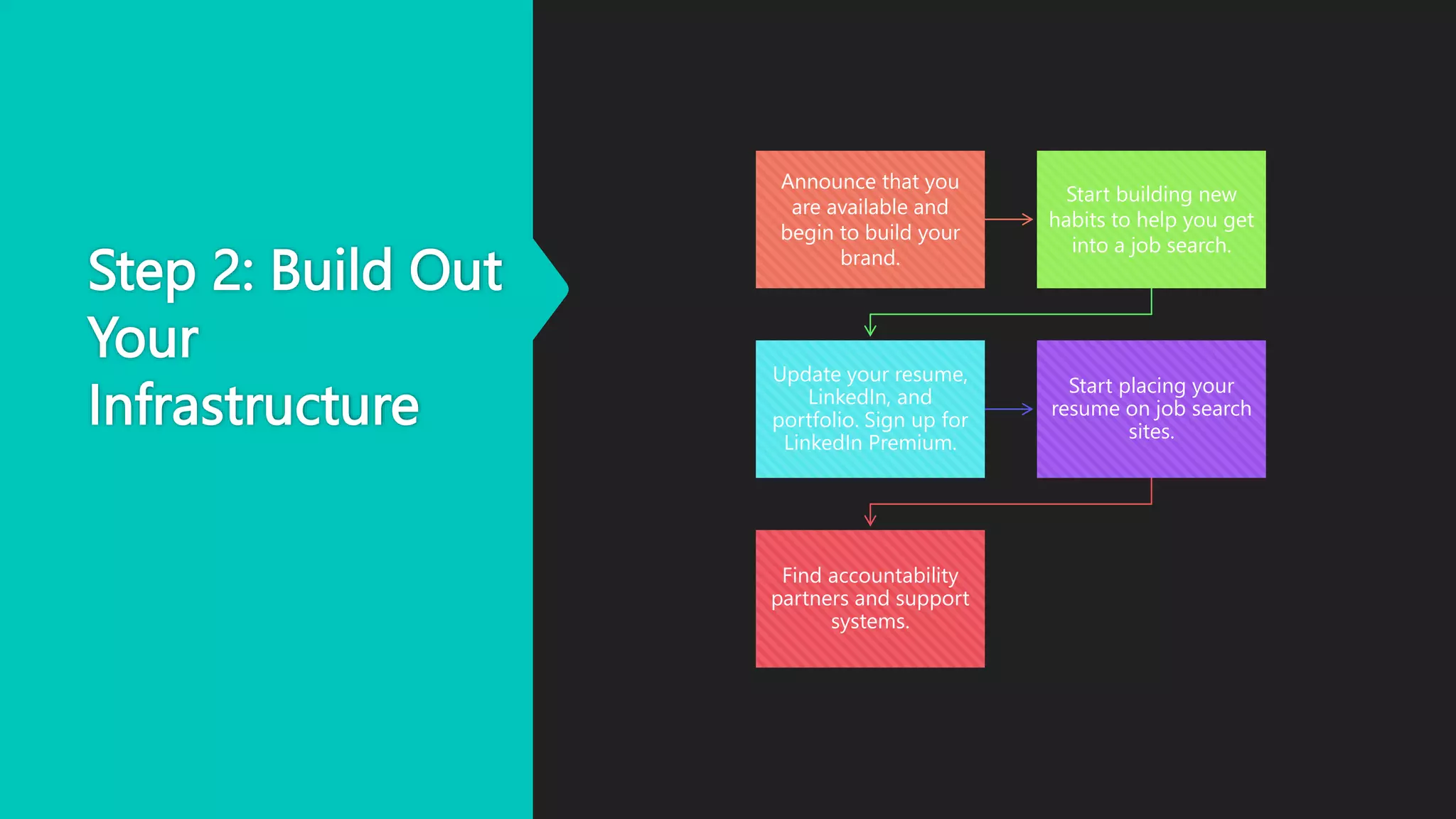
Step 2: Build Out
Your
Infrastructure
Announce that you
are available and
begin to build your
brand.
Start building new
habits to help you get
into a job search.
Update your resume,
LinkedIn, and
portfolio. Sign up for
LinkedIn Premium.
Start placing your
resume on job search
sites.
Find accountability
partners and support
systems.
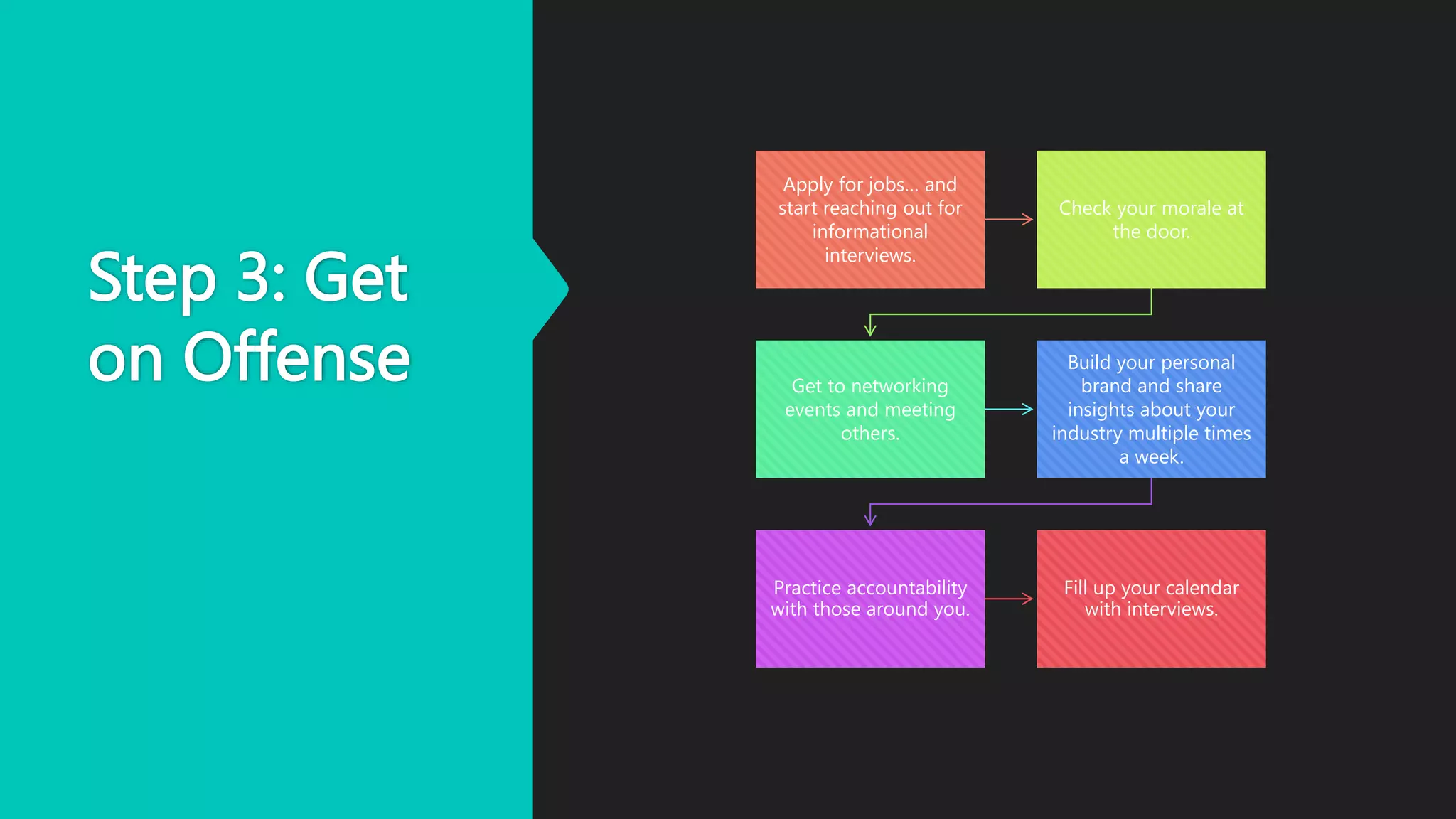
Step 3: Get
on Offense
Apply for jobs… and
start reaching out for
informational
interviews.
Check your morale at
the door.
Get to networking
events and meeting
others.
Build your personal
brand and share
insights about your
industry multiple times
a week.
Practice accountability
with those around you.
Fill up your calendar
with interviews.
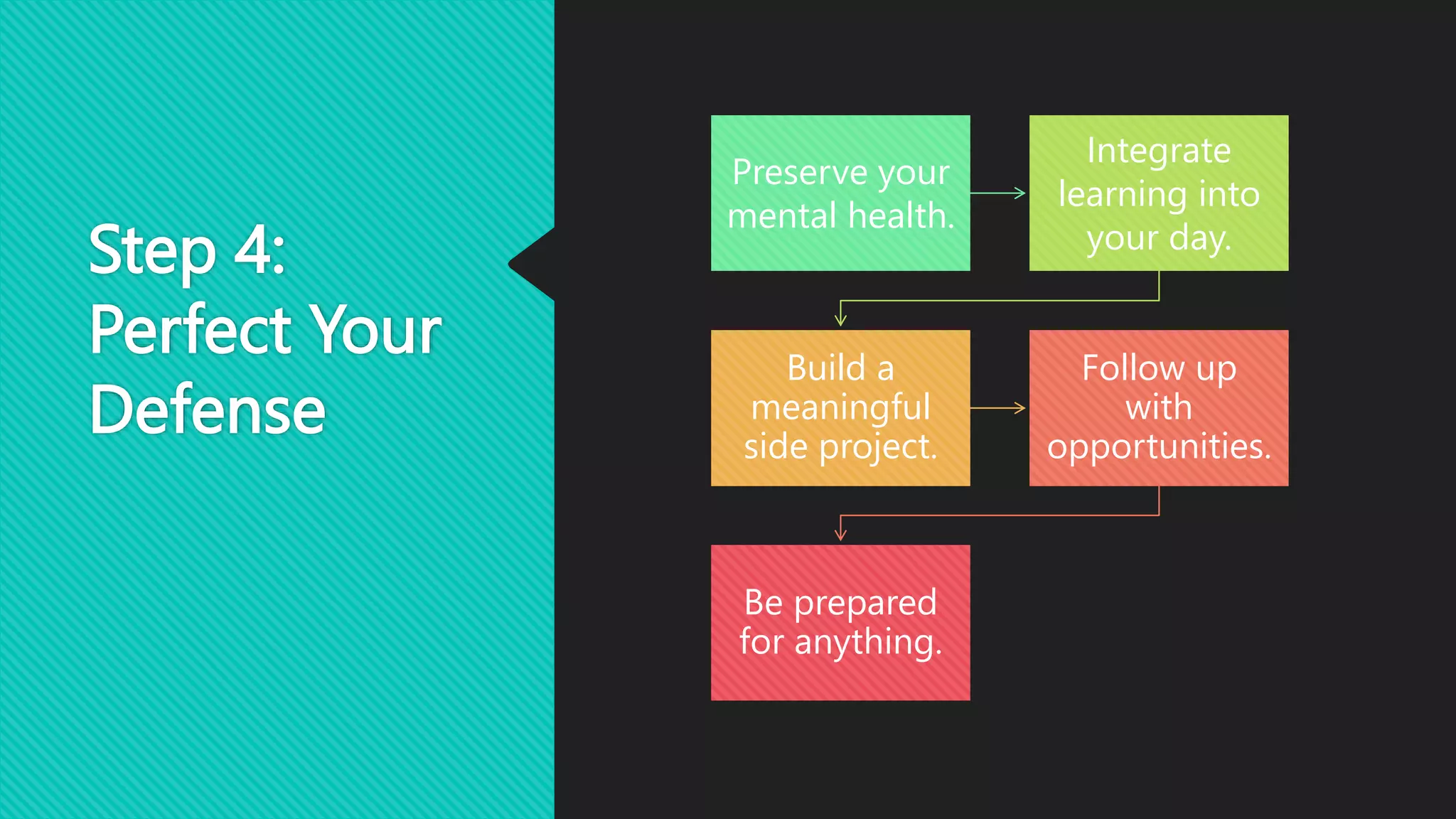
Step 4:
Perfect Your
Defense
Preserve your
mental health.
Integrate
learning into
your day.
Build a
meaningful
side project.
Follow up
with
opportunities.
Be prepared
for anything.
Step 5:
Repeat Until You Get That Job
(Take breaks if you need to)
Next Steps
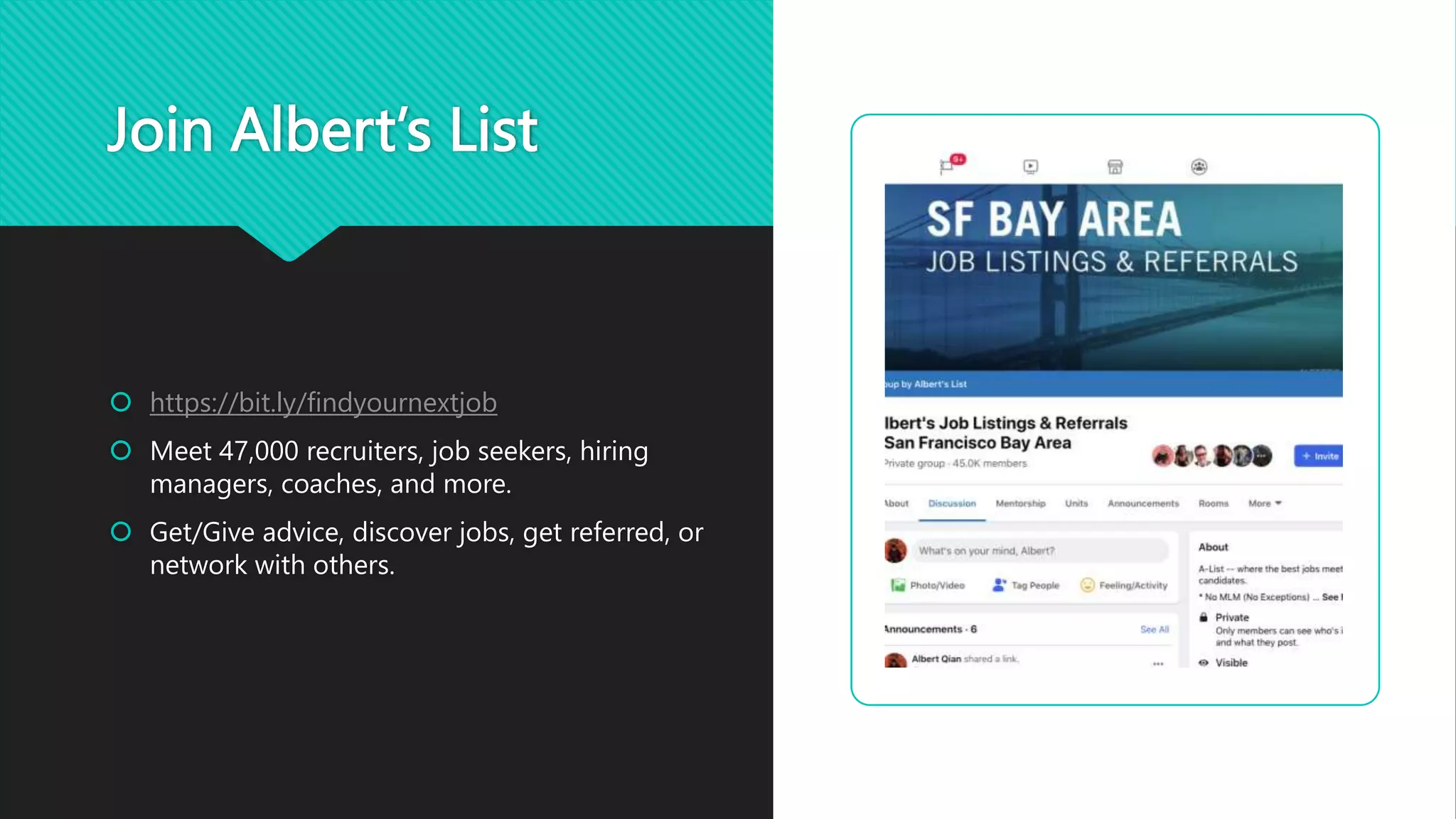
Join Albert’s List
 https://bit.ly/findyournextjob
 Meet 47,000 recruiters, job seekers, hiring
managers, coaches, and more.
 Get/Give advice, discover jobs, get referred, or
network with others.
Q&A + Let’s Connect
Connect with me on LinkedIn: www.linkedin.com/in/albertqian
Send me an email: albert@ajobslist.com
Thank You

How to Systematize Your Job Search During Uncertain Times

  • 1.
    How to SystematizeYour Job Search During Uncertain Times Albert Qian Albert’s List December 10, 2021
  • 2.
    About Me  SanFrancisco Bay Area born-and-raised product marketing manager  Founded Albert’s List, a community of 47,000 members on Facebook to support and connect job seekers to various resources — bit.ly/findyournextjob
  • 3.
    Agenda The State ofthe Job Market Informational Interviewing Building Your Personal Brand Learning & Development Mastering the Interview Q&A | Let’s Connect
  • 4.
    The State ofthe Job Market
  • 6.
    The Impact ofCOVID-19 and Inflation The pandemic created a hiring boom that depended on increased demand for digital services. That demand has failed to materialize. Shortages of products remain, and the Federal Reserve has no way to incentivize businesses. Lowering demand is the task instead. As a result, moonshot projects and high-risk ideas are less attractive because money costs more money.
  • 8.
    2023 Promises to BeRocky Too  The Fed will continue raising interest rates until inflation falls.  Multiple analysts expect a downturn, including rolling recessions.  Companies may continue cutting talent—and some like Google have yet to start.  Continued positive jobs reports and shortages in industries will keep raising wages.
  • 9.
    The Job SearchGame Has Changed Fewer available roles for more employees on the market. Big companies are risky and wondering what’s next. Who you know and who knows you is more important than ever. Finding ways to stand out will get you in the door. Flexibility makes a comeback.
  • 10.
  • 11.
    Understanding the Basics 70%of jobs are unlisted. People hire people, not robots (not yet at least) Curiosity shows initiative and interest As roles become fewer, getting in front of decision makers gets you out of the traditional loop
  • 12.
    Do Your Homework Understand thecompany from a 50,000- foot view 1 Understand the industry and where it’s going 2 Read the news and have high- level knowledge 3 Know what’s at stake (here and in the interview) 4
  • 13.
    Ask for the Informational Interview Focus on warm networks—mutual friends, previous employers, alumni networks.  Ask for 20 minutes. It gives enough time to ask basic questions.  Prepare your questions in advance.  Don’t come in with a motive, other than being curious and wanting to learn more.  Don’t expect anything—but give your attention and respect.
  • 15.
    If It GoesRight, You’ll Be Successful… Often, a great conversation needs to an opportunity. Be gracious and open to what may come. FOLLOW UP!
  • 16.
  • 17.
    If You BuildIt, Will They Come? Your personal brand is what others know you for. It can be your knowledge, insights, interests, and personability. People hire people, so personality matters. How you show up matters.
  • 18.
    There Are MANYWays to Get Out There  Personal Website or Portfolio  LinkedIn  Facebook  TikTok  Medium / Blogging  Twitter  In-person networking events  YouTube  Virtual events  Volunteering  Clubhouse
  • 19.
    Focus and Accelerate FINDOUT WHERE YOUR AUDIENCE IS. ENGAGE WITH THE INTENTION OF HELPING. BUILD YOUR CREDIBILITY IN THE MARKET THROUGH INSIGHTS. BE BOLD AND CHALLENGE THE STATUS QUO. BE YOUR PROFESSIONAL SELF.
  • 20.
    Get Started Today Record ashort video. Write a blog post about your industry. Reach out to someone in your network. Build a targeted community. Volunteer—and show up consistently. Create a project to stand out.
  • 21.
  • 22.
    Do Your Homework Knowthe economy—and your industry. Refresh and gain new skills for work. Network regularly with professionals in your industry. Read the news and understand new developments. Apply knowledge to your interviews.
  • 24.
    Learning Doesn’t Have to BePricey LinkedIn Learning is free through your local library. Use YouTube and take notes. Apply what you learn to personal projects. Take advantage of sales on Udemy.
  • 25.
  • 26.
    An Interview isTwo Things Mitigating Risk (Avenues of Concern) 1 Selling Yourself as the Best Solution (Avenues of Excitement) 2
  • 27.
    What is MitigatingRisk? Companies are looking for red flags. In a competitive market, the flags become bigger. The small things matter—how you dress, how you show up, and your attitude.
  • 28.
    Positioning Yourself as “The One” You’reat the interview. Companies want you to do well. Companies have problems. You have the solution. Identify what’s at stake for the business. Tell the stories that set you apart from others. Discover what they are asking for. Increase the Avenues of Excitement.
  • 29.
    Get Actionable OnYour Interviewing Create and prepare Create and prepare a document of questions and stories. Brainstorm Brainstorm where you’ve been and where you’re going. Understand Understand what is at stake. Be Be aware of how your stories create Avenues of Excitement and Avenues of Concern. Increase the former and reduce the latter. Practice Practice your answers with a friend.
  • 30.
  • 31.
    Putting it All Together… Comprehensivejob search mastery is needed to survive a tough job market. Like working when you’re hired, you must turn job hunting into a habit. It’s understandable to have fears, but you must overcome.
  • 32.
    Step 1: First Moments FromJob Loss Take a deep breath. You're free. If your company is generous, you've likely received a severance package. Take a few days to yourself. Review the severance package. File for unemployment.
  • 33.
    Step 2: BuildOut Your Infrastructure Announce that you are available and begin to build your brand. Start building new habits to help you get into a job search. Update your resume, LinkedIn, and portfolio. Sign up for LinkedIn Premium. Start placing your resume on job search sites. Find accountability partners and support systems.
  • 34.
    Step 3: Get onOffense Apply for jobs… and start reaching out for informational interviews. Check your morale at the door. Get to networking events and meeting others. Build your personal brand and share insights about your industry multiple times a week. Practice accountability with those around you. Fill up your calendar with interviews.
  • 35.
    Step 4: Perfect Your Defense Preserveyour mental health. Integrate learning into your day. Build a meaningful side project. Follow up with opportunities. Be prepared for anything.
  • 36.
    Step 5: Repeat UntilYou Get That Job (Take breaks if you need to)
  • 37.
  • 38.
    Join Albert’s List https://bit.ly/findyournextjob  Meet 47,000 recruiters, job seekers, hiring managers, coaches, and more.  Get/Give advice, discover jobs, get referred, or network with others.
  • 39.
    Q&A + Let’sConnect Connect with me on LinkedIn: www.linkedin.com/in/albertqian Send me an email: albert@ajobslist.com
  • 40.