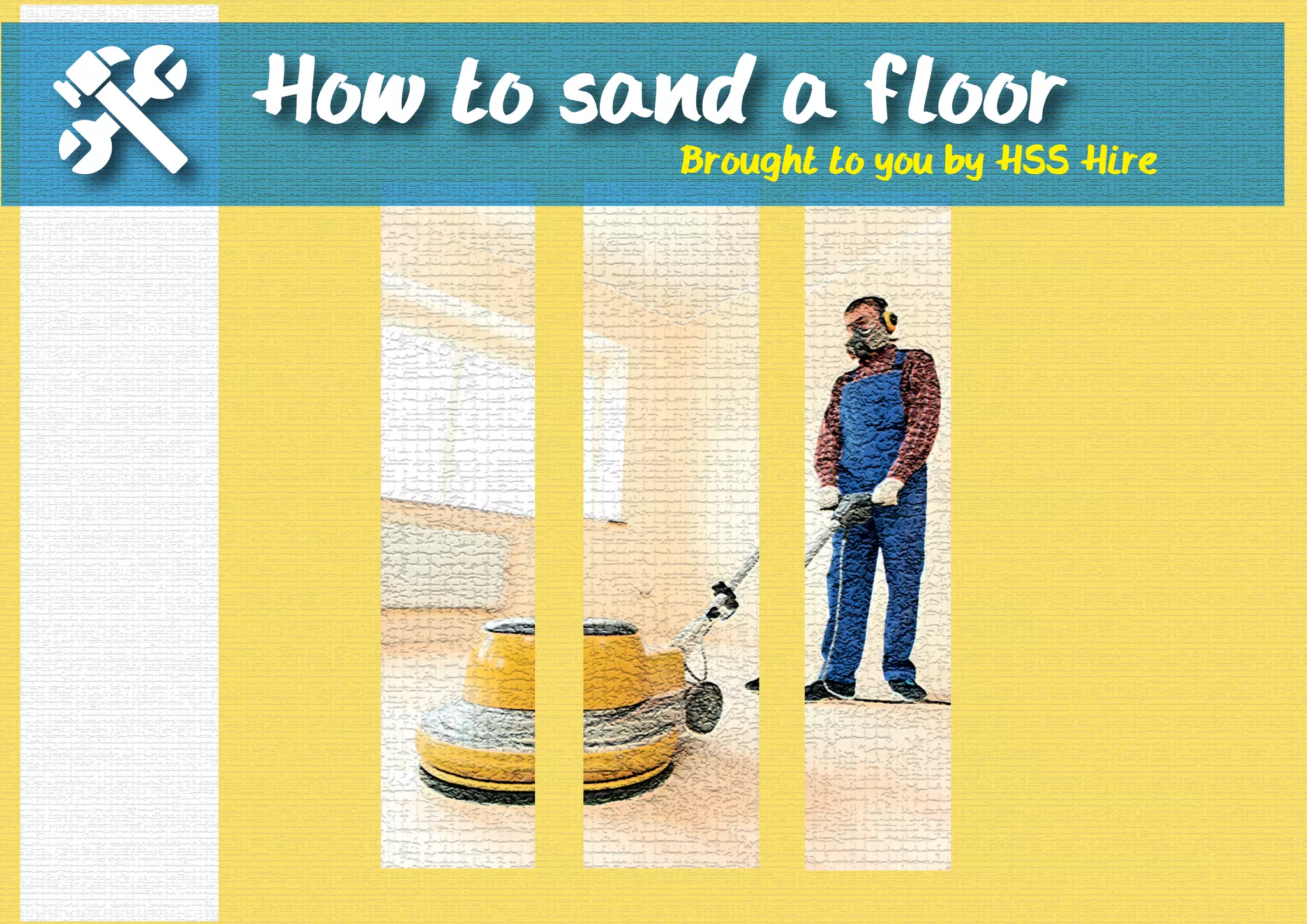
How to sand a floor 
Brought to you by HSS Hire
First, be sure to clear away all furniture and fragile items from the room, 
including curtains and soft furnishings. Also tape up doors and cupboards if 
they cannot be moved to prevent the wood dust getting in. Ensure you are 
wearing the correct breathing apparatus and protective clothing required 
for the task. 
Ensure the flooring is completely clear and any loose nails or potential haz-ards 
are removed. You can knock protruding nails well beneath the woods 
surface to prevent the floor sanding paper from tearing. 
Tidy up the wood panels before starting to sand, by making any necessary 
repairs to the panels and giving the floor a good sweep and vacuuming 
Step 1 
Step 2 
Step 3
Be sure to read the manual for the floor sander before starting any work. 
Load the floor sander with the appropriate sanding sheet, ensuring that it 
remains tight against the drum to prevent slipping. 
Position the floor sander against one wall, with over half of the remaining 
floor in front of you. Keep the sanding drum elevated, and as you start to 
move forward with the machine gradually lower the sanding drum onto the 
wood flooring to start sanding. Be sure to sand with the grain. 
Keep moving forward at a gradual pace, until you reach the end of the 
room. At this stage, lift the drum off the floor and turn around, ready to 
repeat the same procedure over the same area of flooring. 
Step 4 
Step 5 
Step 6
When you have completed one pass, reposition the sander around 7cm across from the first 
area and repeat the process. Gradually you will reach the opposite side of the room, go over 
each pass evenly and carefully. 
Turn off the belt sander and work on neatening up the corners and small areas not reached 
by the drum sander. Do this by using an edge sander; you can blend the two sanded areas to-gether 
by a using semi-circular motion with the edge sander as you work towards the corners 
of the room. 
If you are looking for a rich varnished style or even a “freshly sanded” look, it would always 
be recommended to finish the flooring with a varnish. This varnish will help to seal and pro-tect 
the floor the stains, marks and damage from spills. 
For a classic rich finish, always go for a quality varnish. We would recommend Ronseal Dia-mond 
Hard Floor Finish for best results. Before applying the varnish however, it is always 
recommended to give the floor a vacuum to remove any dust and debris, which could become 
stuck in the varnish. 
Step 7 
Step 8 
Varnishing 
Step 9
When applying the varnish to the floor, be sure to keep the room well venti-lated, 
by opening doors and windows and even wearing a mask if possible. 
Begin applying the varnish with a wide brush in even strokes, which follow 
the grain of the wood. 
Repeat the varnishing process across the whole floor, with at least 2 hours 
drying time between each coat. A minimum of 3 coats are recommended to 
give the floor maximum shine and protection. 
Allow the floor to fully dry. At least 8 hours after the final coat is applied is 
recommended. Allow at least 72 hours drying time if the floor will be heavily 
used. 
Step 10 
Step 11 
Step 12

How to sand a floor

  • 1.
    How to sanda floor Brought to you by HSS Hire
  • 2.
    First, be sureto clear away all furniture and fragile items from the room, including curtains and soft furnishings. Also tape up doors and cupboards if they cannot be moved to prevent the wood dust getting in. Ensure you are wearing the correct breathing apparatus and protective clothing required for the task. Ensure the flooring is completely clear and any loose nails or potential haz-ards are removed. You can knock protruding nails well beneath the woods surface to prevent the floor sanding paper from tearing. Tidy up the wood panels before starting to sand, by making any necessary repairs to the panels and giving the floor a good sweep and vacuuming Step 1 Step 2 Step 3
  • 3.
    Be sure toread the manual for the floor sander before starting any work. Load the floor sander with the appropriate sanding sheet, ensuring that it remains tight against the drum to prevent slipping. Position the floor sander against one wall, with over half of the remaining floor in front of you. Keep the sanding drum elevated, and as you start to move forward with the machine gradually lower the sanding drum onto the wood flooring to start sanding. Be sure to sand with the grain. Keep moving forward at a gradual pace, until you reach the end of the room. At this stage, lift the drum off the floor and turn around, ready to repeat the same procedure over the same area of flooring. Step 4 Step 5 Step 6
  • 4.
    When you havecompleted one pass, reposition the sander around 7cm across from the first area and repeat the process. Gradually you will reach the opposite side of the room, go over each pass evenly and carefully. Turn off the belt sander and work on neatening up the corners and small areas not reached by the drum sander. Do this by using an edge sander; you can blend the two sanded areas to-gether by a using semi-circular motion with the edge sander as you work towards the corners of the room. If you are looking for a rich varnished style or even a “freshly sanded” look, it would always be recommended to finish the flooring with a varnish. This varnish will help to seal and pro-tect the floor the stains, marks and damage from spills. For a classic rich finish, always go for a quality varnish. We would recommend Ronseal Dia-mond Hard Floor Finish for best results. Before applying the varnish however, it is always recommended to give the floor a vacuum to remove any dust and debris, which could become stuck in the varnish. Step 7 Step 8 Varnishing Step 9
  • 5.
    When applying thevarnish to the floor, be sure to keep the room well venti-lated, by opening doors and windows and even wearing a mask if possible. Begin applying the varnish with a wide brush in even strokes, which follow the grain of the wood. Repeat the varnishing process across the whole floor, with at least 2 hours drying time between each coat. A minimum of 3 coats are recommended to give the floor maximum shine and protection. Allow the floor to fully dry. At least 8 hours after the final coat is applied is recommended. Allow at least 72 hours drying time if the floor will be heavily used. Step 10 Step 11 Step 12