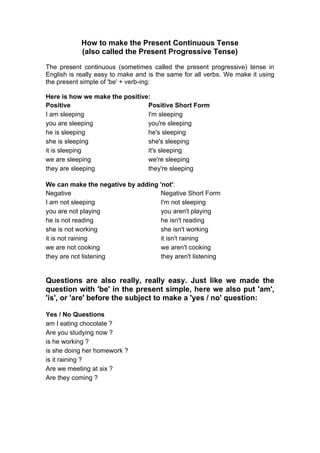
How to make the Present Continuous Tense
(also called the Present Progressive Tense)
The present continuous (sometimes called the present progressive) tense in
English is really easy to make and is the same for all verbs. We make it using
the present simple of 'be' + verb-ing:
Here is how we make the positive:
Positive Positive Short Form
I am sleeping I'm sleeping
you are sleeping you're sleeping
he is sleeping he's sleeping
she is sleeping she's sleeping
it is sleeping it's sleeping
we are sleeping we're sleeping
they are sleeping they're sleeping
We can make the negative by adding 'not':
Negative Negative Short Form
I am not sleeping I'm not sleeping
you are not playing you aren't playing
he is not reading he isn't reading
she is not working she isn't working
it is not raining it isn't raining
we are not cooking we aren't cooking
they are not listening they aren't listening
Questions are also really, really easy. Just like we made the
question with 'be' in the present simple, here we also put 'am',
'is', or 'are' before the subject to make a 'yes / no' question:
Yes / No Questions
am I eating chocolate ?
Are you studying now ?
is he working ?
is she doing her homework ?
is it raining ?
Are we meeting at six ?
Are they coming ?
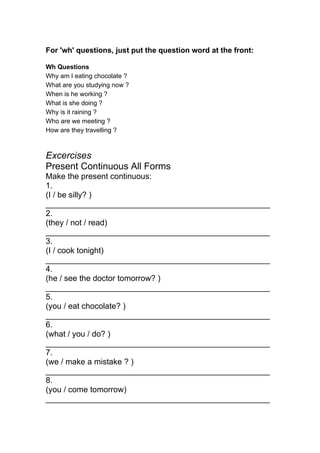
For 'wh' questions, just put the question word at the front:
Wh Questions
Why am I eating chocolate ?
What are you studying now ?
When is he working ?
What is she doing ?
Why is it raining ?
Who are we meeting ?
How are they travelling ?
Excercises
Present Continuous All Forms
Make the present continuous:
1.
(I / be silly? )
__________________________________________________
2.
(they / not / read)
__________________________________________________
3.
(I / cook tonight)
__________________________________________________
4.
(he / see the doctor tomorrow? )
__________________________________________________
5.
(you / eat chocolate? )
__________________________________________________
6.
(what / you / do? )
__________________________________________________
7.
(we / make a mistake ? )
__________________________________________________
8.
(you / come tomorrow)
__________________________________________________
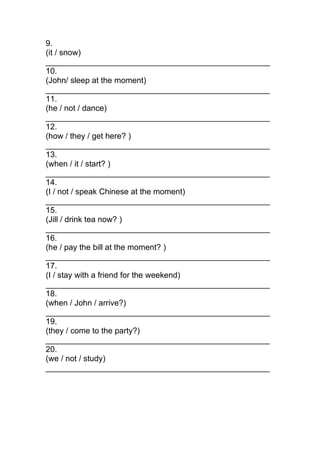
9.
(it / snow)
__________________________________________________
10.
(John/ sleep at the moment)
__________________________________________________
11.
(he / not / dance)
__________________________________________________
12.
(how / they / get here? )
__________________________________________________
13.
(when / it / start? )
__________________________________________________
14.
(I / not / speak Chinese at the moment)
__________________________________________________
15.
(Jill / drink tea now? )
__________________________________________________
16.
(he / pay the bill at the moment? )
__________________________________________________
17.
(I / stay with a friend for the weekend)
__________________________________________________
18.
(when / John / arrive?)
__________________________________________________
19.
(they / come to the party?)
__________________________________________________
20.
(we / not / study)
__________________________________________________

How to make the present continuous tense convertido

  • 1.
    How to makethe Present Continuous Tense (also called the Present Progressive Tense) The present continuous (sometimes called the present progressive) tense in English is really easy to make and is the same for all verbs. We make it using the present simple of 'be' + verb-ing: Here is how we make the positive: Positive Positive Short Form I am sleeping I'm sleeping you are sleeping you're sleeping he is sleeping he's sleeping she is sleeping she's sleeping it is sleeping it's sleeping we are sleeping we're sleeping they are sleeping they're sleeping We can make the negative by adding 'not': Negative Negative Short Form I am not sleeping I'm not sleeping you are not playing you aren't playing he is not reading he isn't reading she is not working she isn't working it is not raining it isn't raining we are not cooking we aren't cooking they are not listening they aren't listening Questions are also really, really easy. Just like we made the question with 'be' in the present simple, here we also put 'am', 'is', or 'are' before the subject to make a 'yes / no' question: Yes / No Questions am I eating chocolate ? Are you studying now ? is he working ? is she doing her homework ? is it raining ? Are we meeting at six ? Are they coming ?
  • 2.
    For 'wh' questions,just put the question word at the front: Wh Questions Why am I eating chocolate ? What are you studying now ? When is he working ? What is she doing ? Why is it raining ? Who are we meeting ? How are they travelling ? Excercises Present Continuous All Forms Make the present continuous: 1. (I / be silly? ) __________________________________________________ 2. (they / not / read) __________________________________________________ 3. (I / cook tonight) __________________________________________________ 4. (he / see the doctor tomorrow? ) __________________________________________________ 5. (you / eat chocolate? ) __________________________________________________ 6. (what / you / do? ) __________________________________________________ 7. (we / make a mistake ? ) __________________________________________________ 8. (you / come tomorrow) __________________________________________________
  • 3.
    9. (it / snow) __________________________________________________ 10. (John/sleep at the moment) __________________________________________________ 11. (he / not / dance) __________________________________________________ 12. (how / they / get here? ) __________________________________________________ 13. (when / it / start? ) __________________________________________________ 14. (I / not / speak Chinese at the moment) __________________________________________________ 15. (Jill / drink tea now? ) __________________________________________________ 16. (he / pay the bill at the moment? ) __________________________________________________ 17. (I / stay with a friend for the weekend) __________________________________________________ 18. (when / John / arrive?) __________________________________________________ 19. (they / come to the party?) __________________________________________________ 20. (we / not / study) __________________________________________________