How to Make News
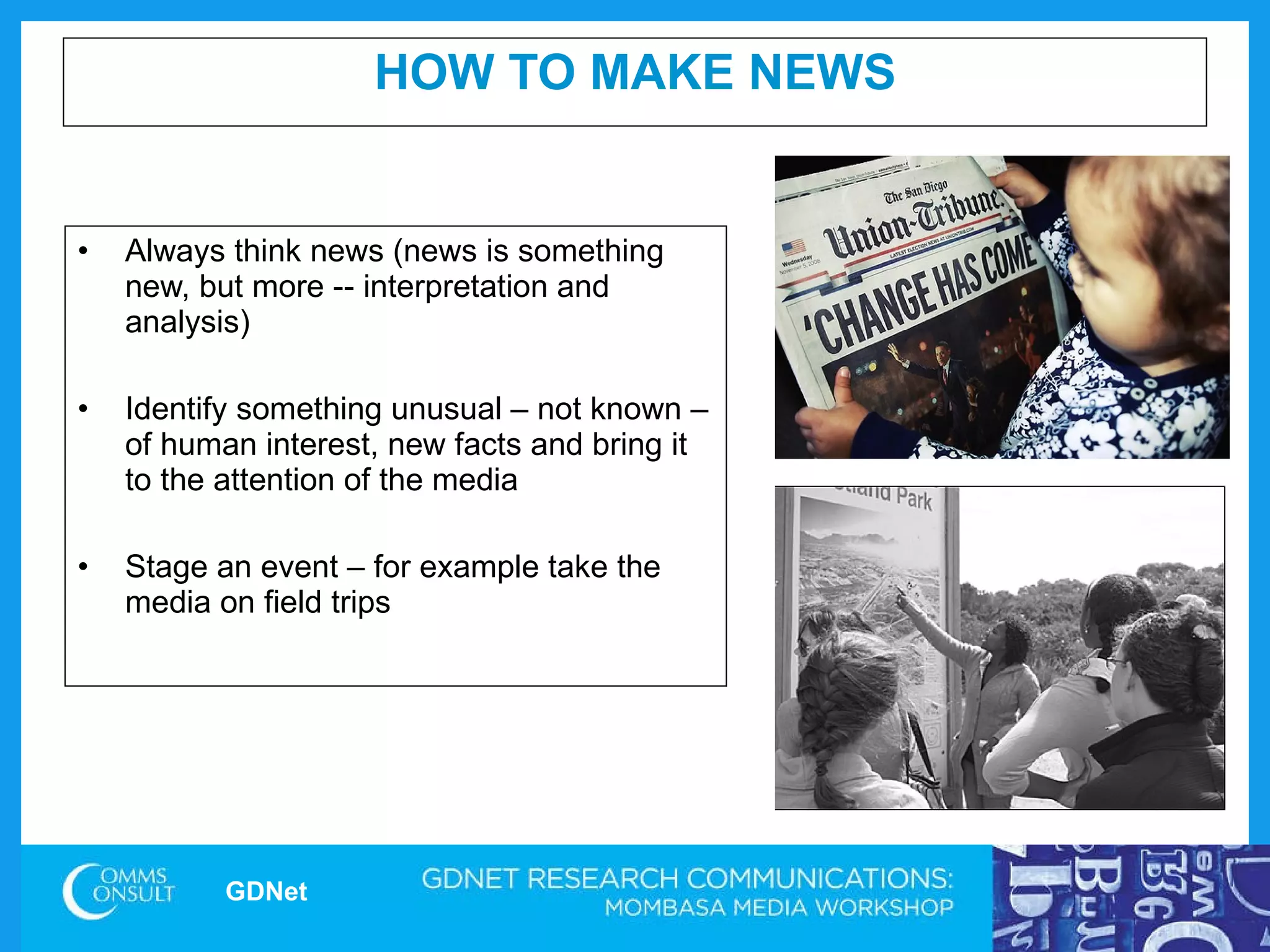
HOW TO MAKE NEWS Always think news (news is something new, but more -- interpretation and analysis) Identify something unusual – not known – of human interest, new facts and bring it to the attention of the media  Stage an event – for example take the media on field trips
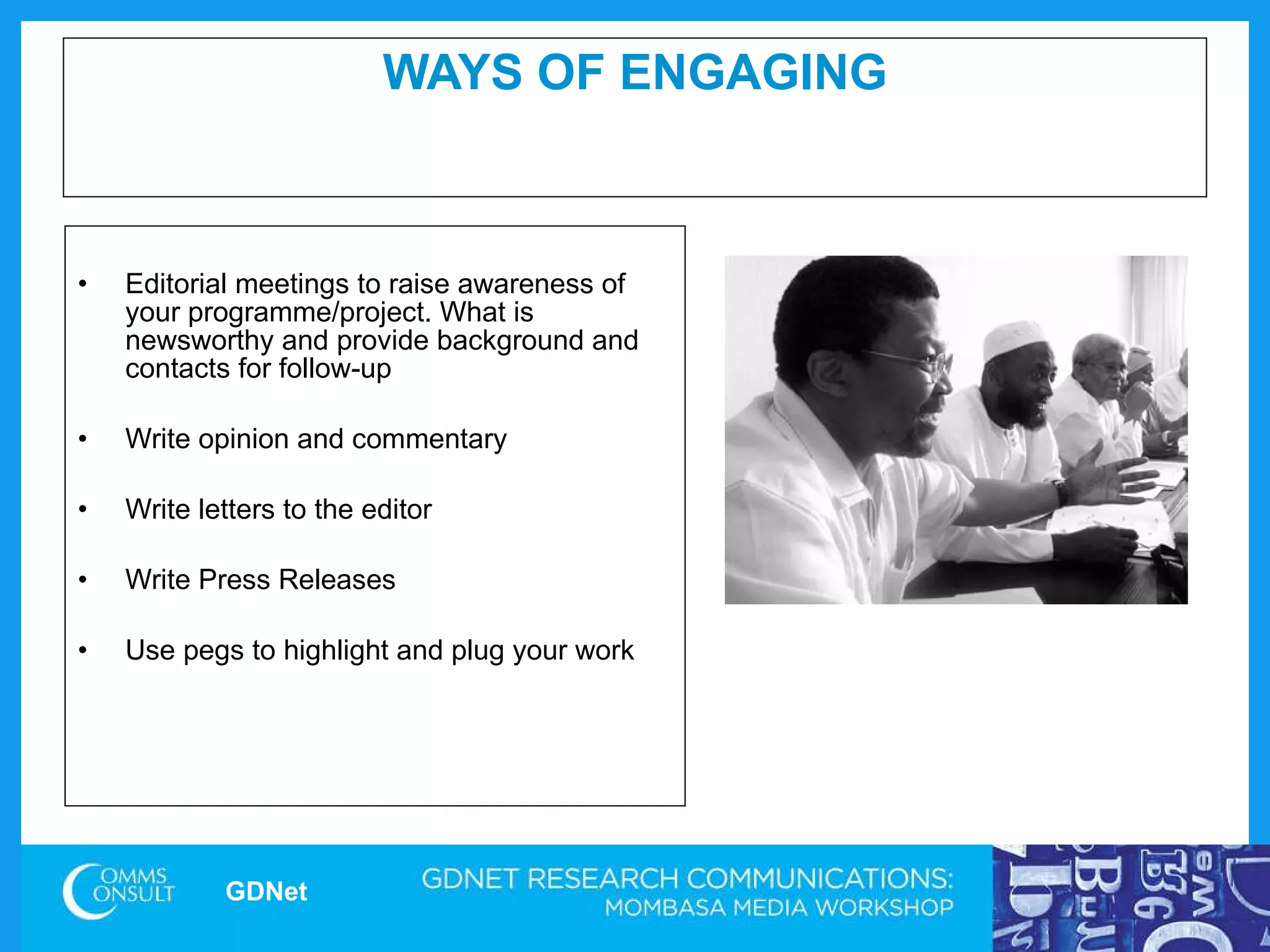
WAYS OF ENGAGING Editorial meetings to raise awareness of your programme/project. What is newsworthy and provide background and contacts for follow-up Write opinion and commentary  Write letters to the editor Write Press Releases Use pegs to highlight and plug your work
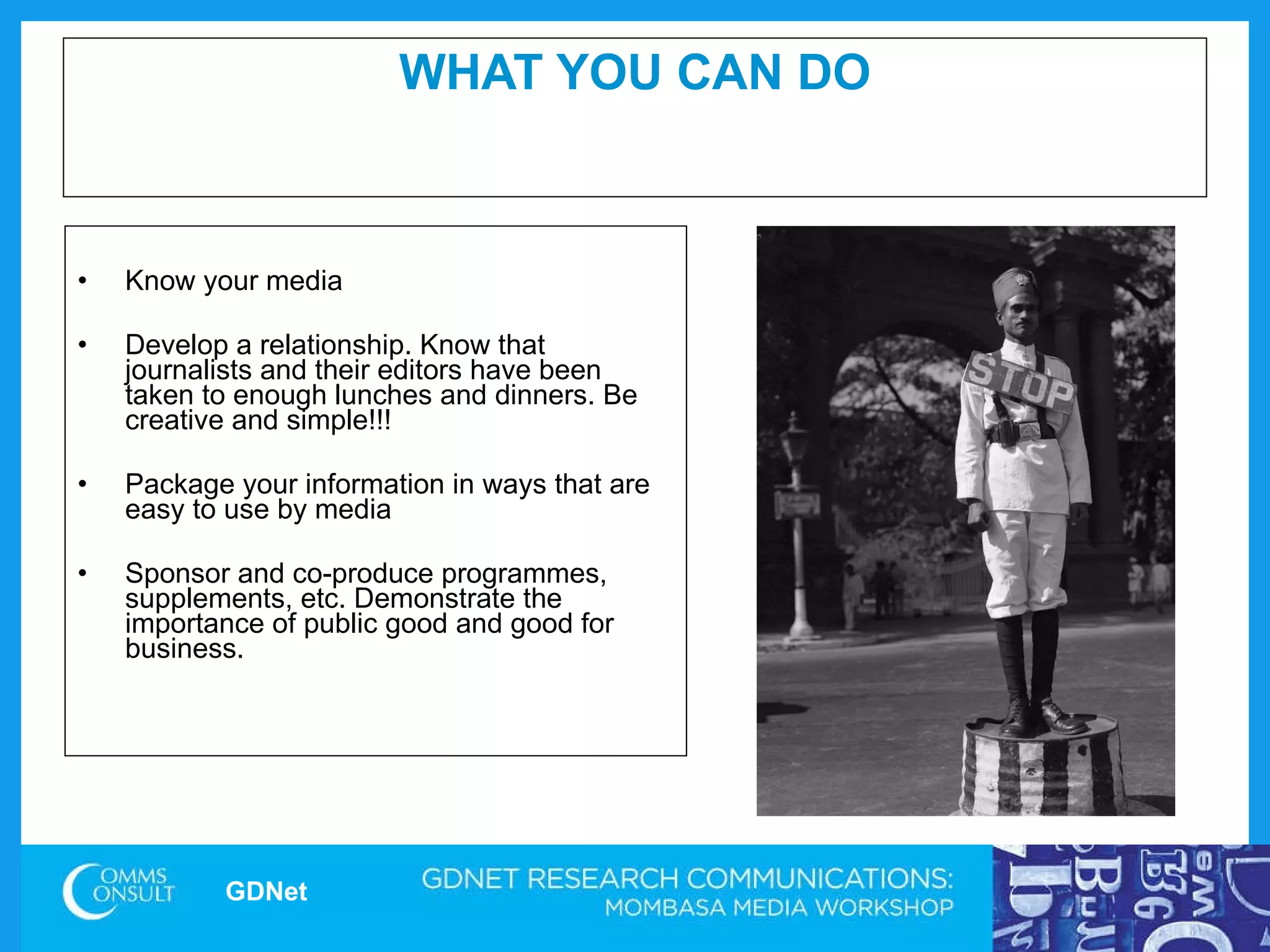
WHAT YOU CAN DO Know your media Develop a relationship. Know that journalists and their editors have been taken to enough lunches and dinners. Be creative and simple!!! Package your information in ways that are easy to use by media  Sponsor and co-produce programmes, supplements, etc. Demonstrate the importance of public good and good for business.
WHAT YOU CAN DO Provide media with tools to make their work easy e.g.  database of researchers in Africa  researchers relevant to journalist’s area of interest female researchers you need to take out for lunch – interesting twist Researchers willing to provide context and background to stories  Train journalists and more – mentor if you can Don’t overwhelm the media Prepare for media interviews. Appoint spokesperson
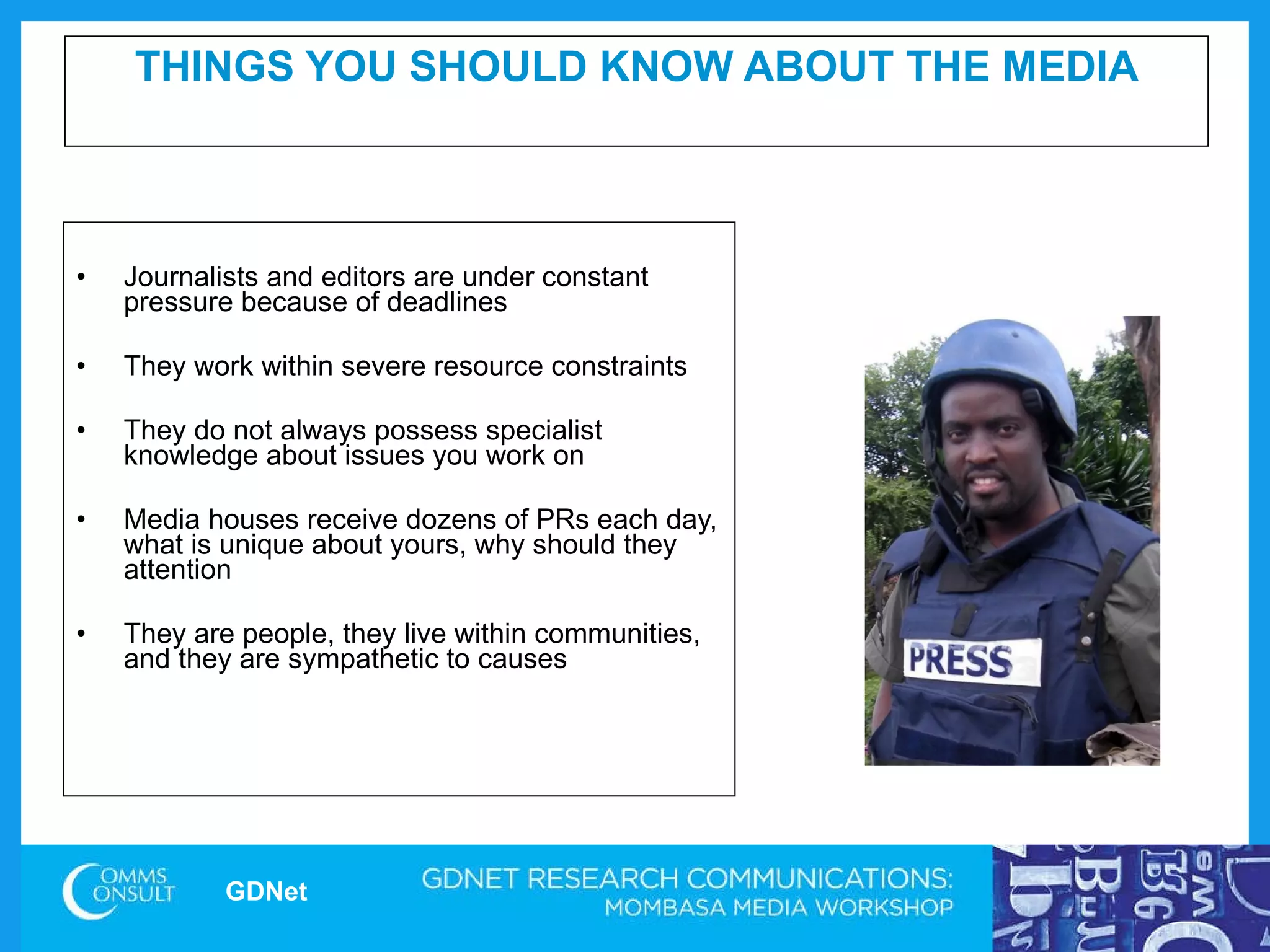
THINGS YOU SHOULD KNOW ABOUT THE MEDIA Journalists and editors are under constant pressure because of deadlines They work within severe resource constraints They do not always possess specialist knowledge about issues you work on Media houses receive dozens of PRs each day, what is unique about yours, why should they attention They are people, they live within communities, and they are sympathetic to causes

How to Make News, Mombasa Workshop 2010

  • 1.
  • 2.
    HOW TO MAKENEWS Always think news (news is something new, but more -- interpretation and analysis) Identify something unusual – not known – of human interest, new facts and bring it to the attention of the media Stage an event – for example take the media on field trips
  • 3.
    WAYS OF ENGAGINGEditorial meetings to raise awareness of your programme/project. What is newsworthy and provide background and contacts for follow-up Write opinion and commentary Write letters to the editor Write Press Releases Use pegs to highlight and plug your work
  • 4.
    WHAT YOU CANDO Know your media Develop a relationship. Know that journalists and their editors have been taken to enough lunches and dinners. Be creative and simple!!! Package your information in ways that are easy to use by media Sponsor and co-produce programmes, supplements, etc. Demonstrate the importance of public good and good for business.
  • 5.
    WHAT YOU CANDO Provide media with tools to make their work easy e.g. database of researchers in Africa researchers relevant to journalist’s area of interest female researchers you need to take out for lunch – interesting twist Researchers willing to provide context and background to stories Train journalists and more – mentor if you can Don’t overwhelm the media Prepare for media interviews. Appoint spokesperson
  • 6.
    THINGS YOU SHOULDKNOW ABOUT THE MEDIA Journalists and editors are under constant pressure because of deadlines They work within severe resource constraints They do not always possess specialist knowledge about issues you work on Media houses receive dozens of PRs each day, what is unique about yours, why should they attention They are people, they live within communities, and they are sympathetic to causes