- Jigsaw Academy
How to Develop IoT Mobile
Applications for a Connected World
Aim Of IoT
The primary aim of IoT is to cut down the amount of manual errors and
discrepancies that arise as a result of manual intervention. It will help
businesses to sharpen their operational accuracy, improve functional
efficiency and also deliver a superior user experience.
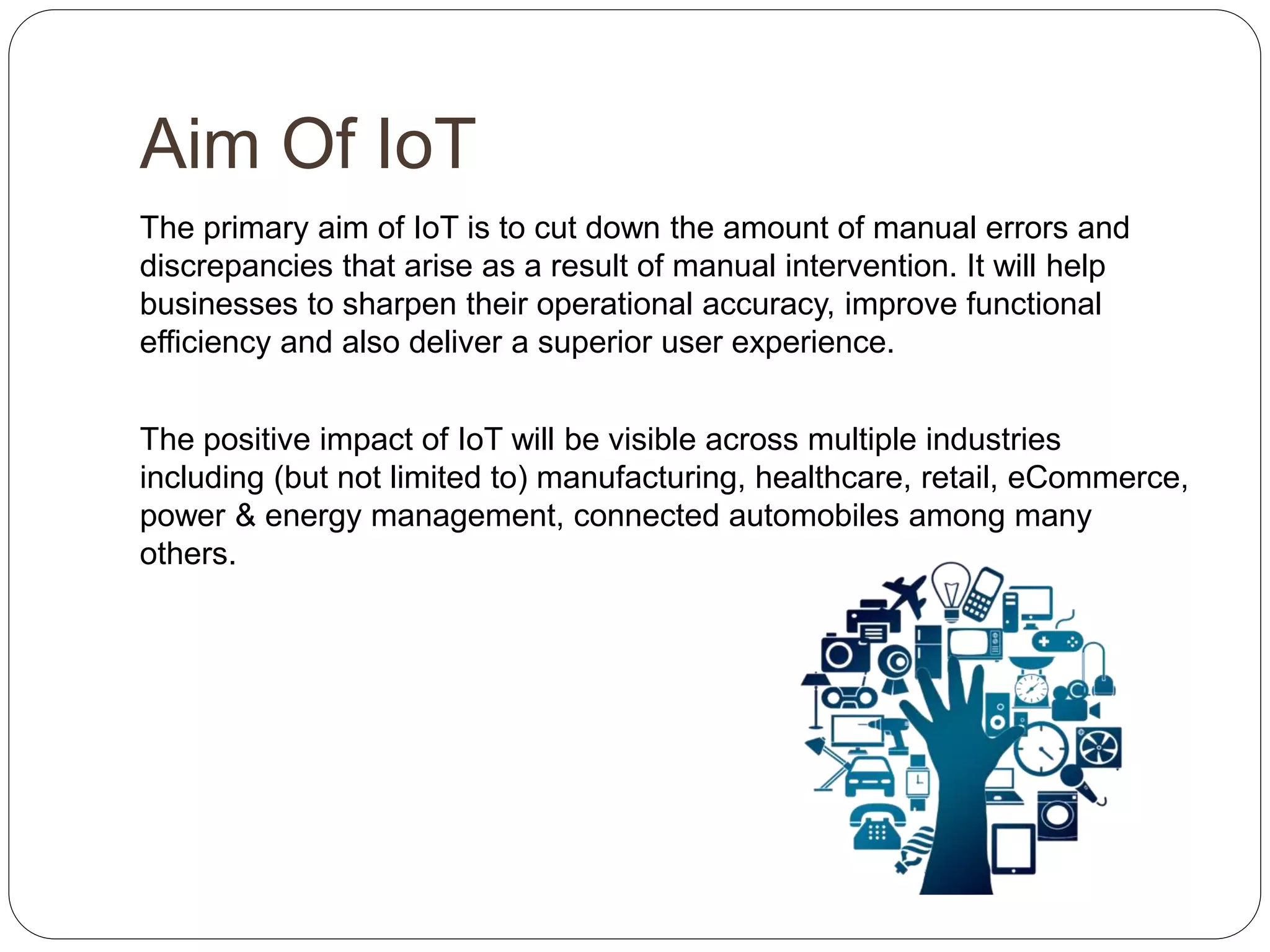
The positive impact of IoT will be visible across multiple industries
including (but not limited to) manufacturing, healthcare, retail, eCommerce,
power & energy management, connected automobiles among many
others.
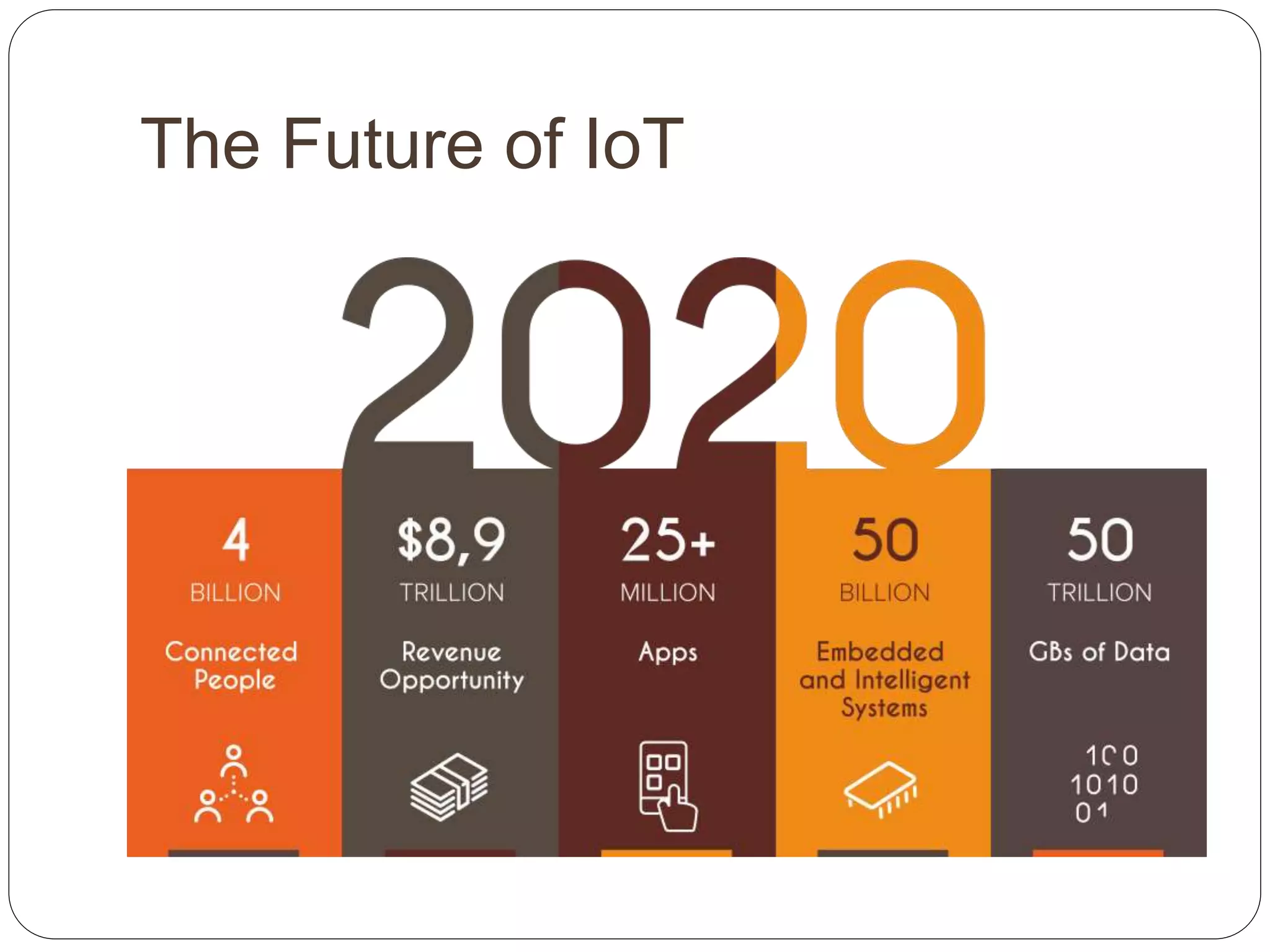
The Future of IoT
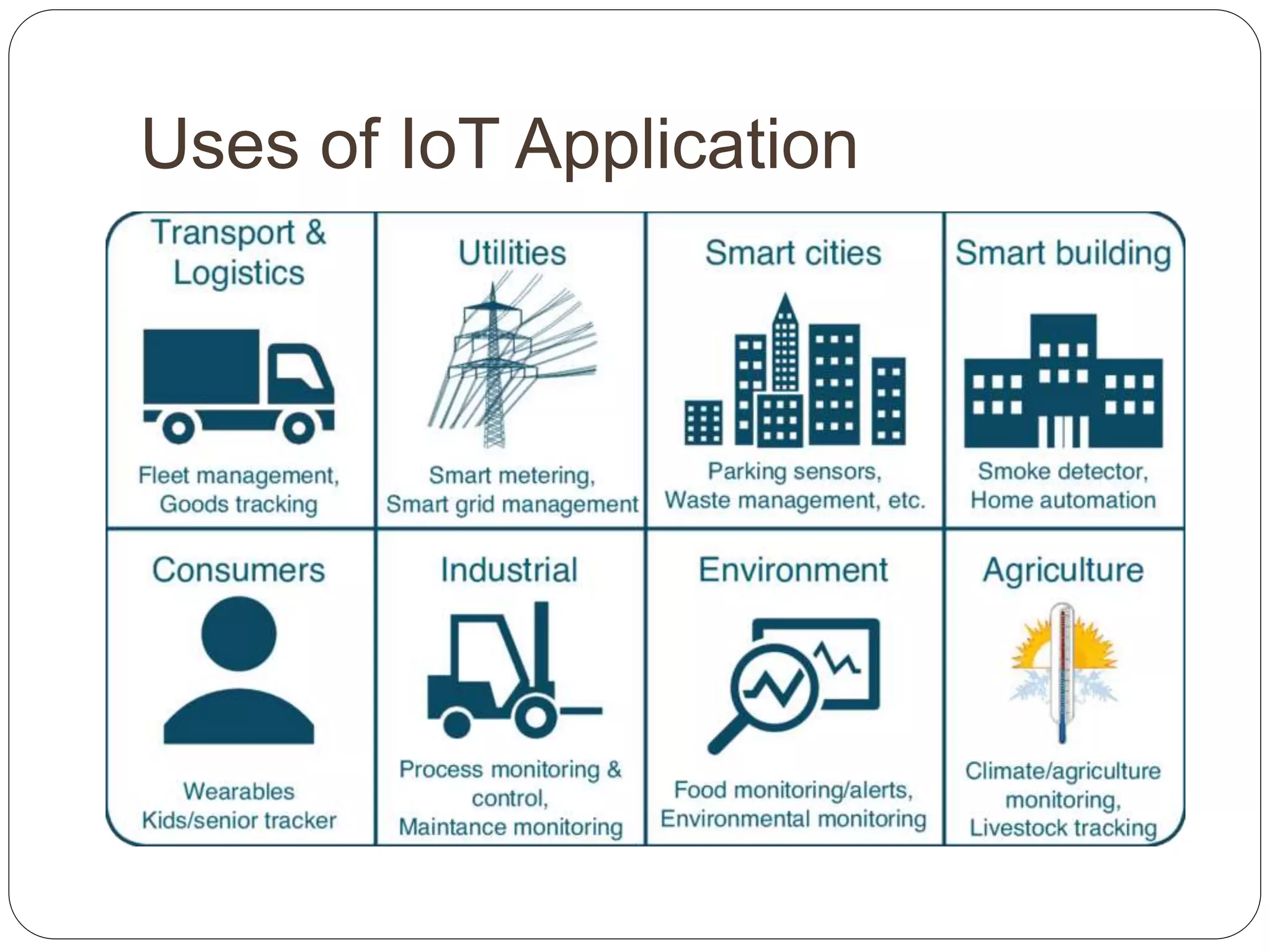
Uses of IoT Applications
By 2020 each person in this planet will be owning at least 19 connected
devices. Internet of Things, a.k.a IoT can be rightly called the Fourth
Industrial Revolution of this century which will empower everyday Things,
ranging from home appliances to cloud applications software and servers
to interact with each other for smarter living.
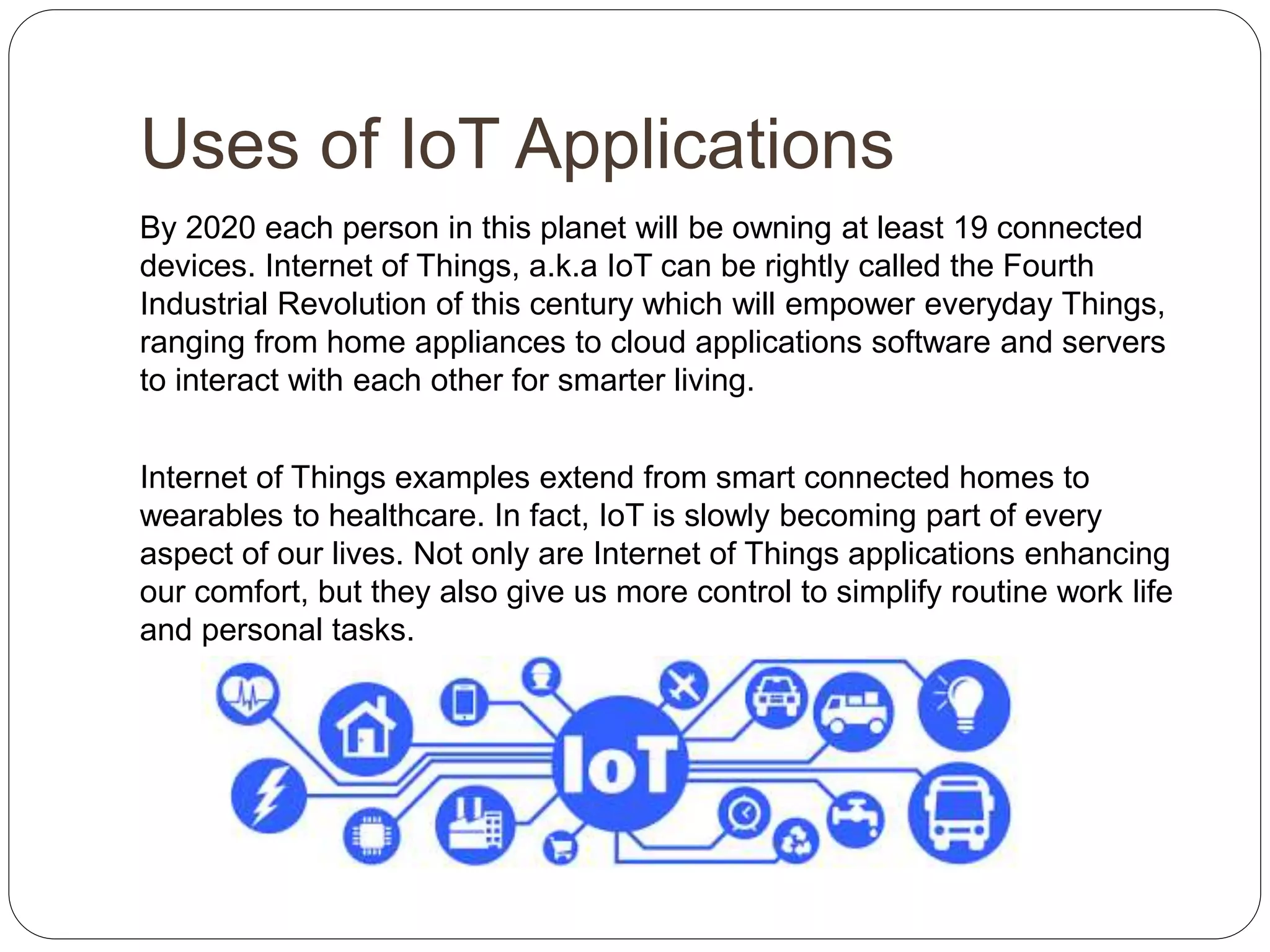
Internet of Things examples extend from smart connected homes to
wearables to healthcare. In fact, IoT is slowly becoming part of every
aspect of our lives. Not only are Internet of Things applications enhancing
our comfort, but they also give us more control to simplify routine work life
and personal tasks.
Uses of IoT Application
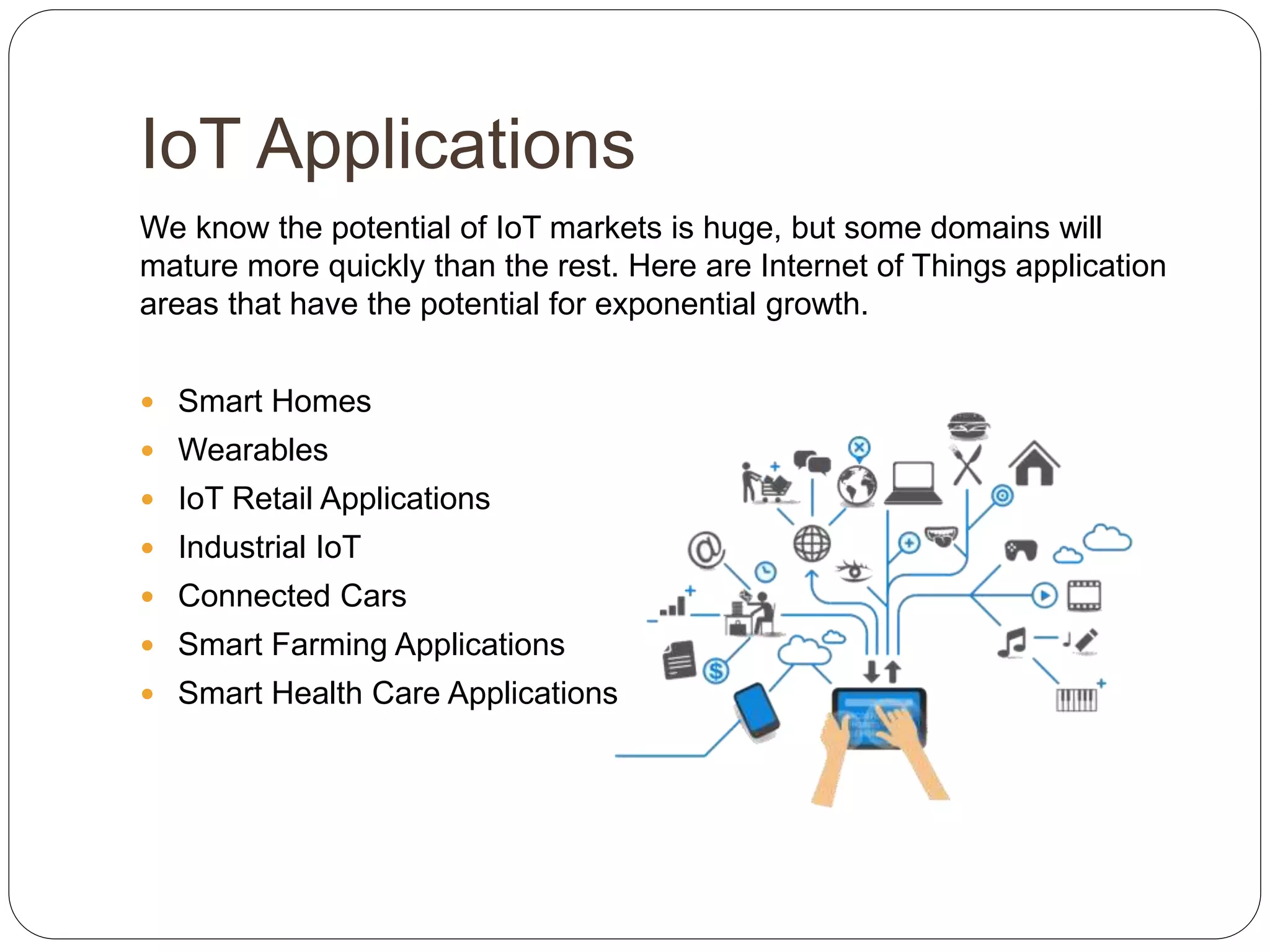
IoT Applications
We know the potential of IoT markets is huge, but some domains will
mature more quickly than the rest. Here are Internet of Things application
areas that have the potential for exponential growth.
 Smart Homes
 Wearables
 IoT Retail Applications
 Industrial IoT
 Connected Cars
 Smart Farming Applications
 Smart Health Care Applications
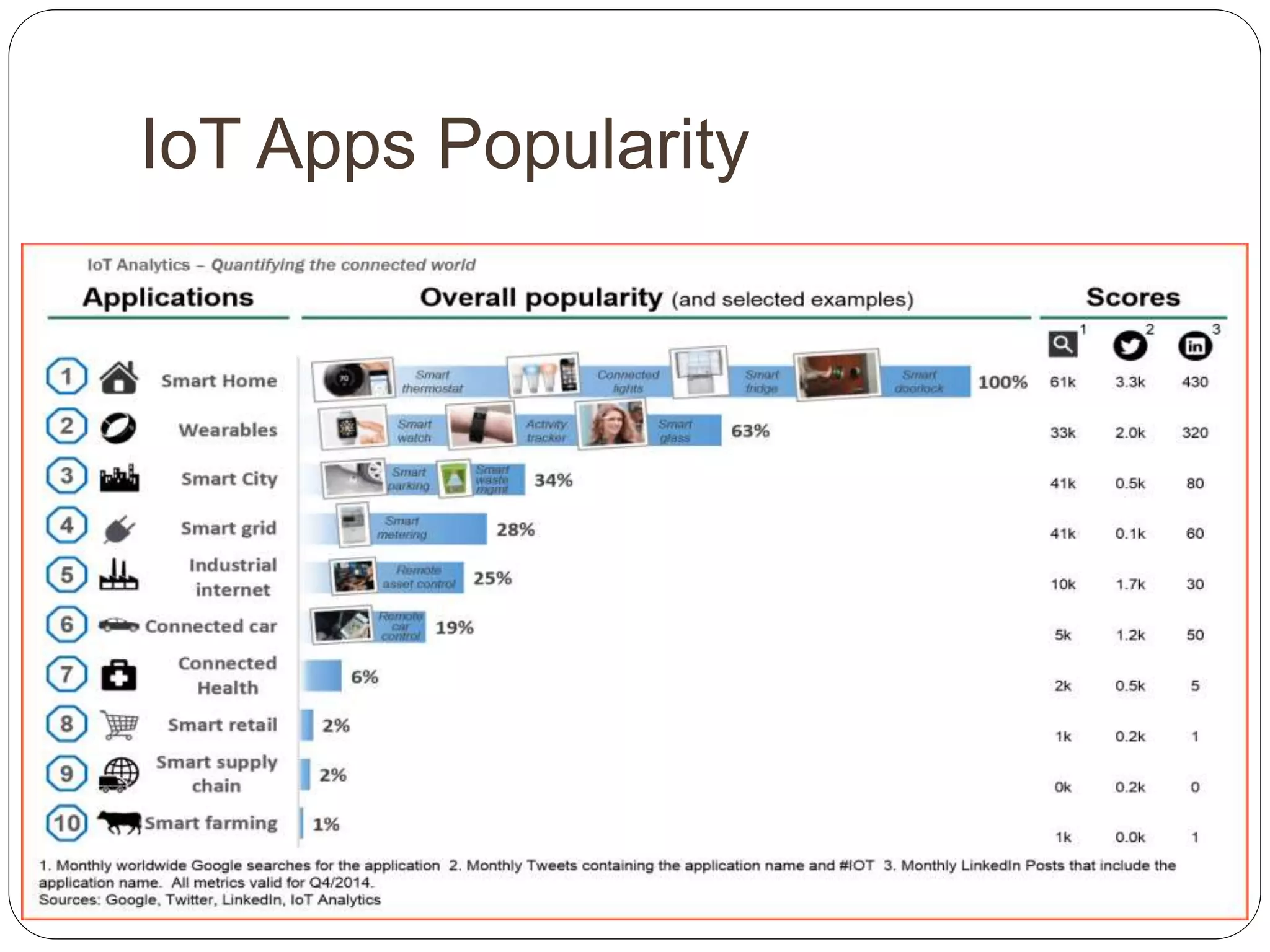
IoT Apps Popularity
Developing Mobile IoT Apps
Here are some things to bear in mind while IoT mobile applications:
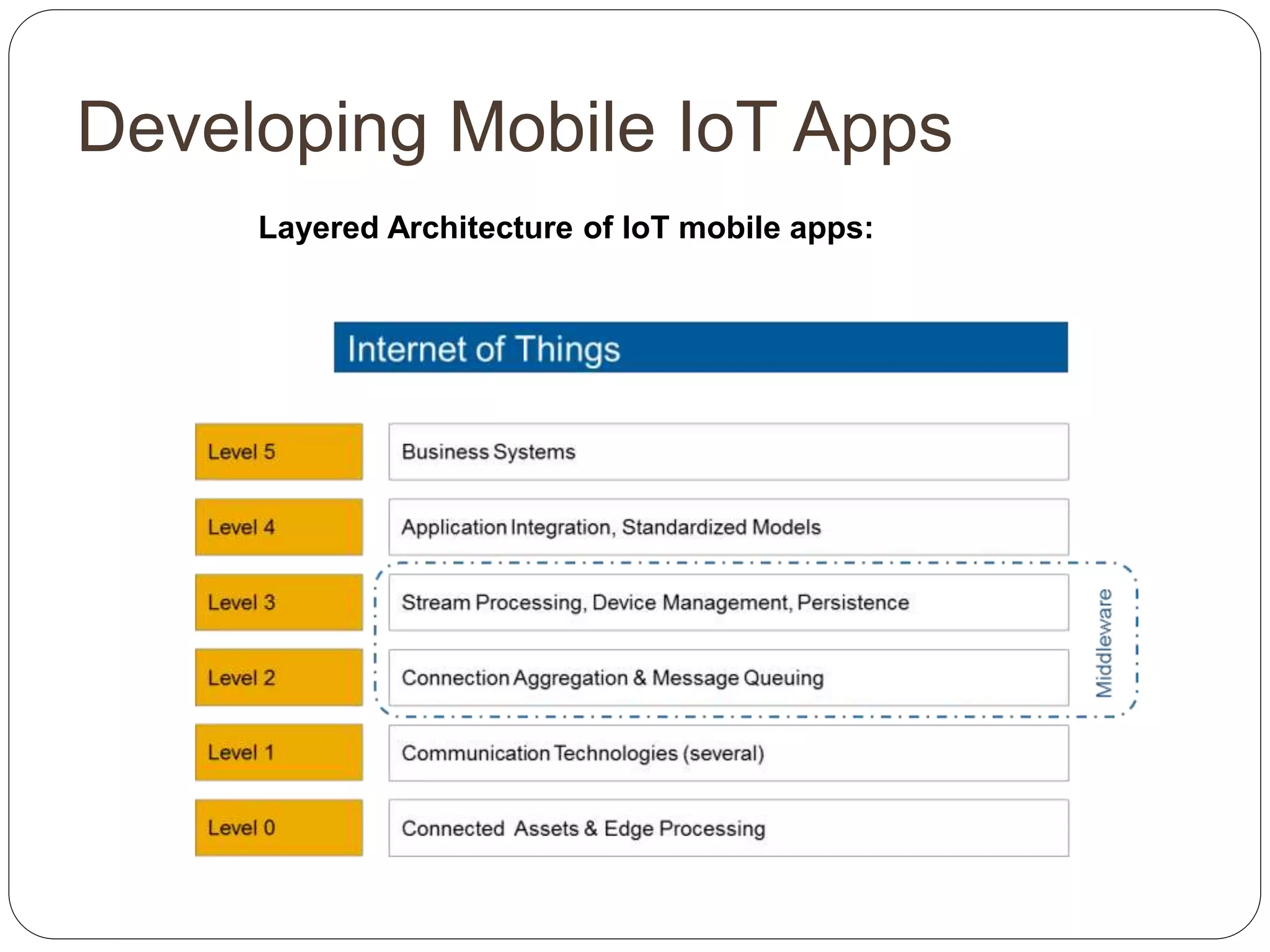
1. Layered Architecture of IoT mobile apps:
Mobile IoT apps have several layers underlying them. The first and foremost
layer is the thing itself. Next to the Thing is the actuator or another Thing to
which the first Thing communicates to exchange data. Thirdly, there would be a
cloud server or cloud application software which will gather data from the
Things.
Finally, there will be analytics to decipher the meaning from the data collected
from all of the above components. A mobile iot app android can be positioned
anywhere in the above levels. It can help users to trigger information or to
collect data from them or even do the analytics part.
Developing Mobile IoT Apps
Layered Architecture of IoT mobile apps:
Developing Mobile IoT Apps
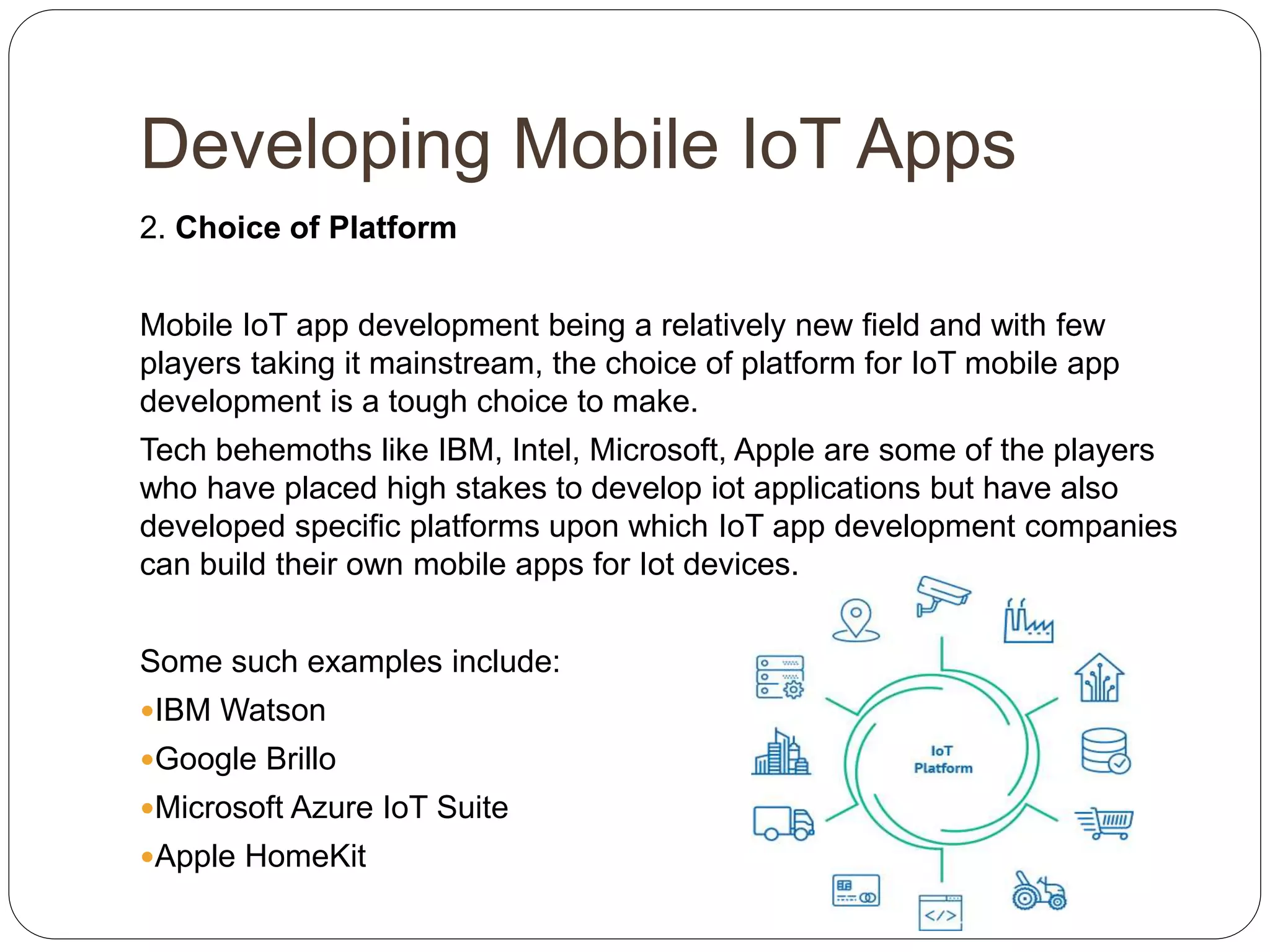
2. Choice of Platform
Mobile IoT app development being a relatively new field and with few
players taking it mainstream, the choice of platform for IoT mobile app
development is a tough choice to make.
Tech behemoths like IBM, Intel, Microsoft, Apple are some of the players
who have placed high stakes to develop iot applications but have also
developed specific platforms upon which IoT app development companies
can build their own mobile apps for Iot devices.
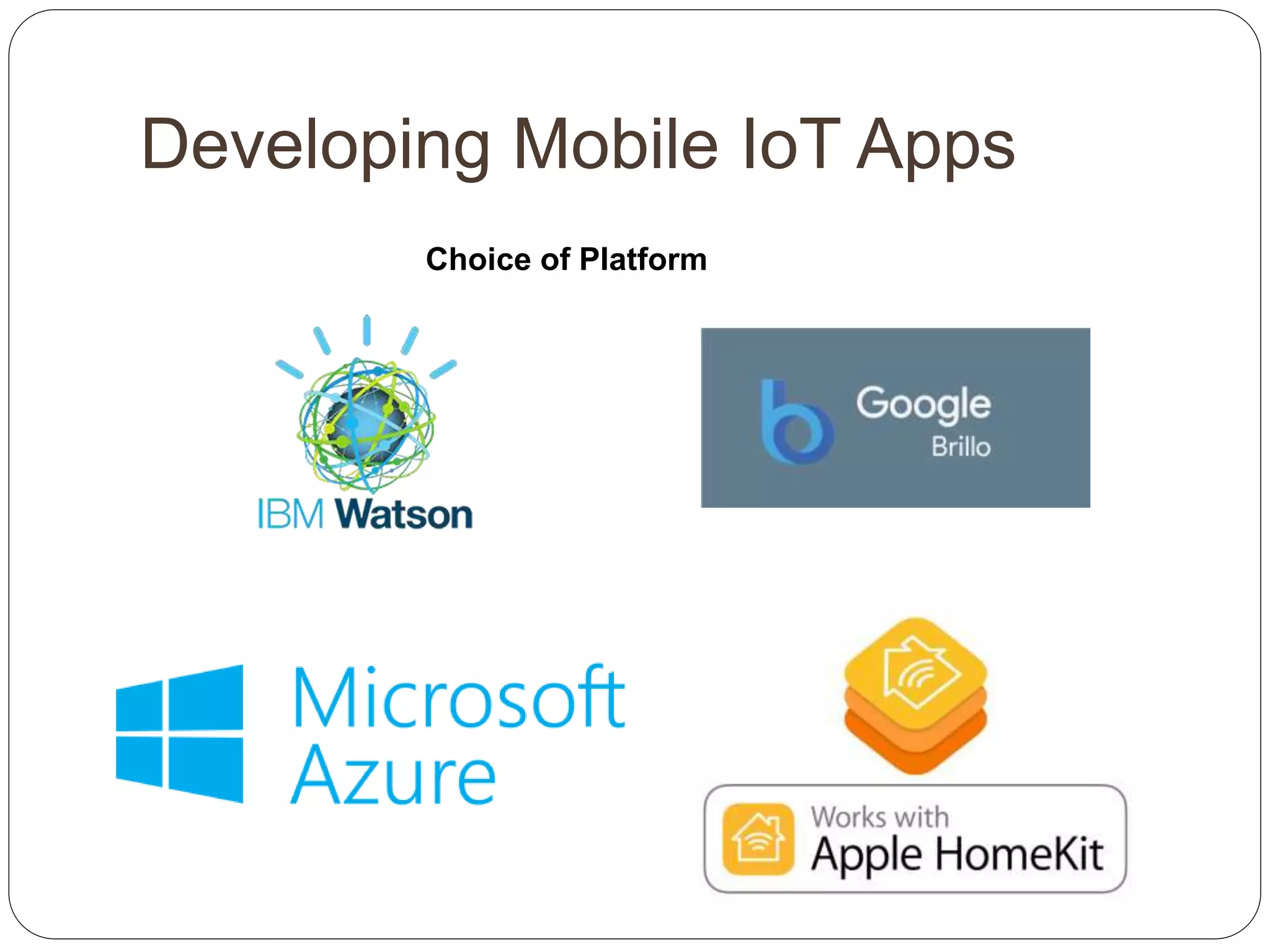
Some such examples include:
IBM Watson
Google Brillo
Microsoft Azure IoT Suite
Apple HomeKit
Developing Mobile IoT Apps
Choice of Platform
Developing Mobile IoT Apps
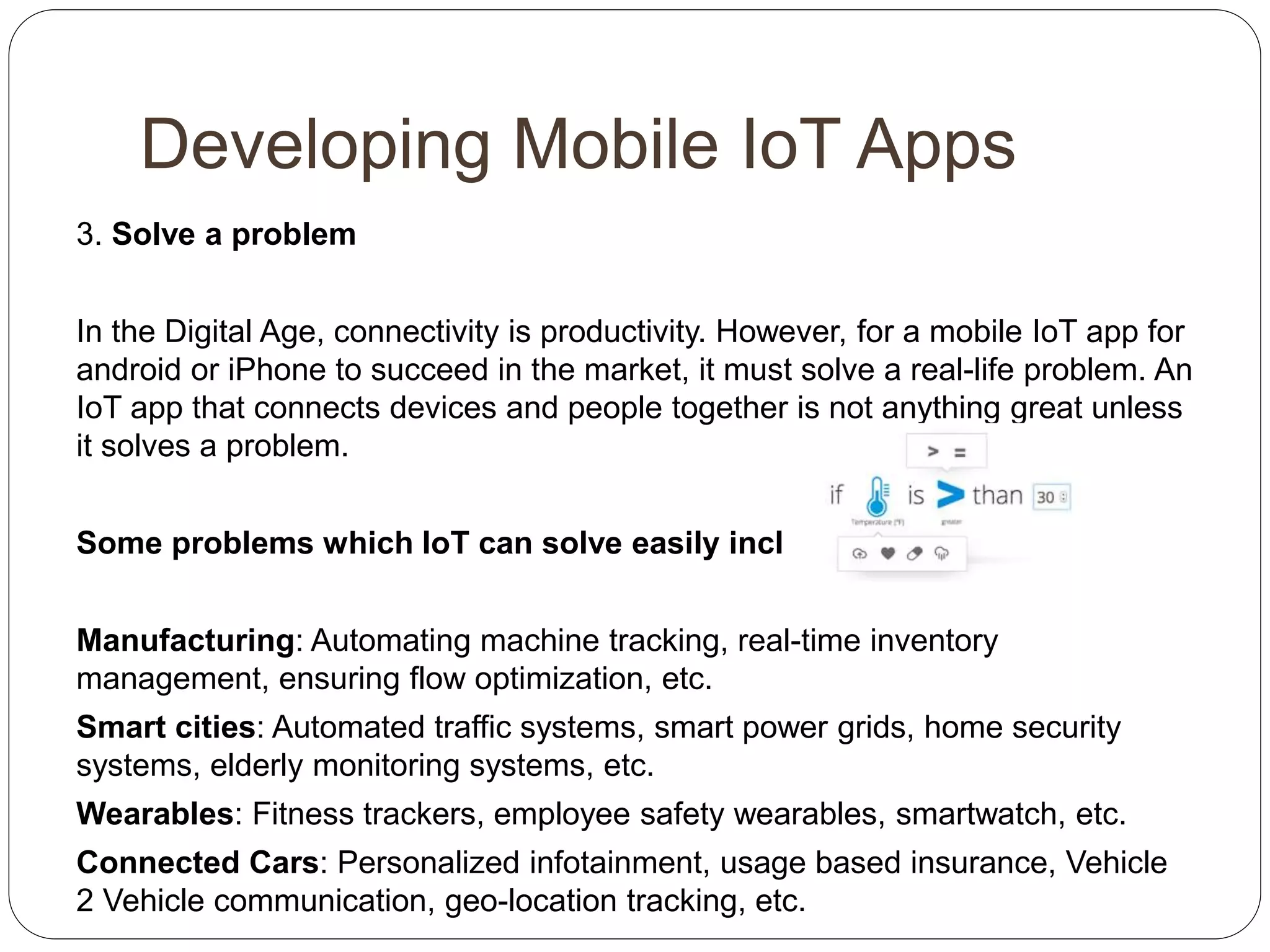
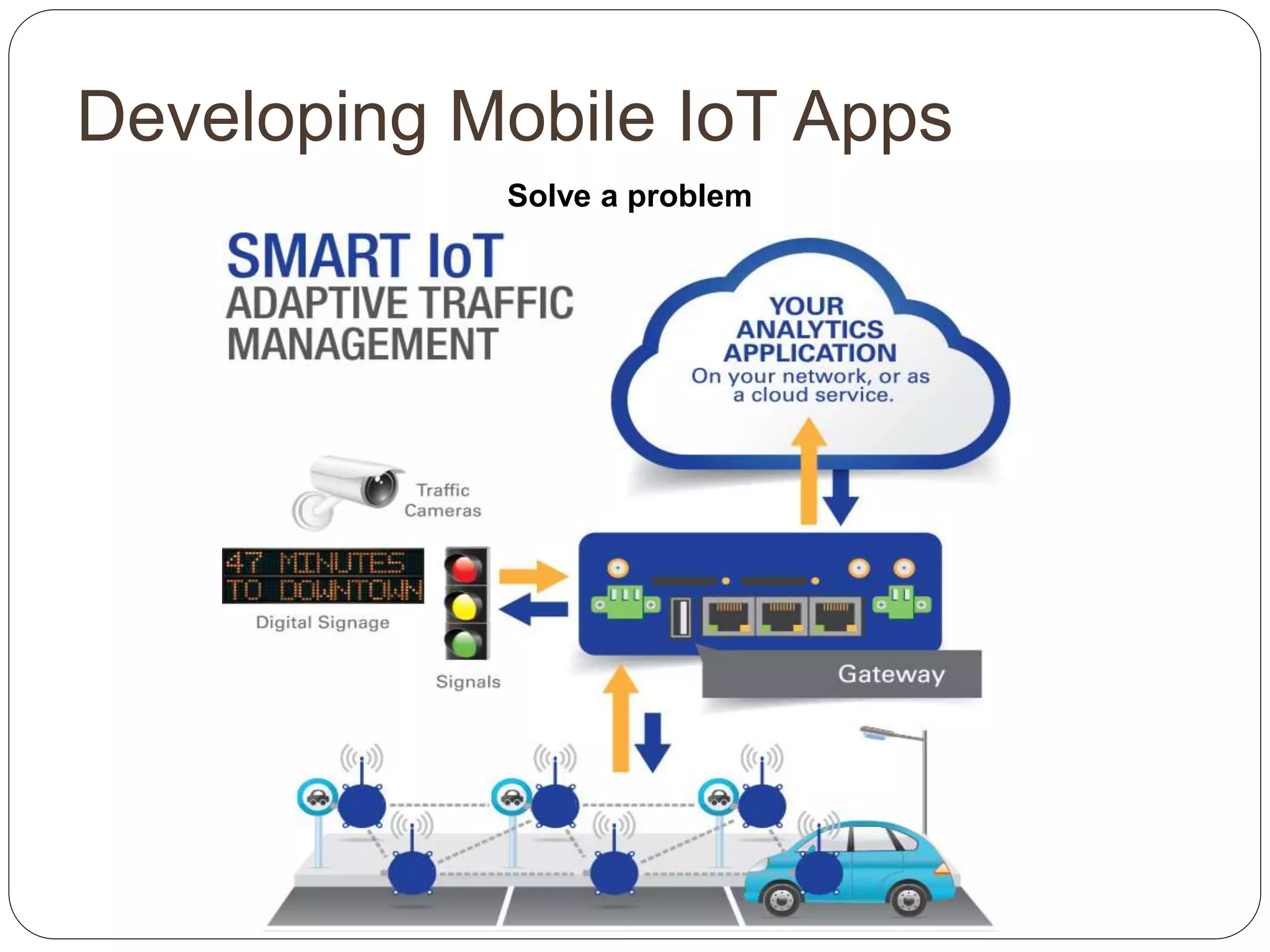
3. Solve a problem
In the Digital Age, connectivity is productivity. However, for a mobile IoT app for
android or iPhone to succeed in the market, it must solve a real-life problem. An
IoT app that connects devices and people together is not anything great unless
it solves a problem.
Some problems which IoT can solve easily include:
Manufacturing: Automating machine tracking, real-time inventory
management, ensuring flow optimization, etc.
Smart cities: Automated traffic systems, smart power grids, home security
systems, elderly monitoring systems, etc.
Wearables: Fitness trackers, employee safety wearables, smartwatch, etc.
Connected Cars: Personalized infotainment, usage based insurance, Vehicle
2 Vehicle communication, geo-location tracking, etc.
Developing Mobile IoT Apps
Solve a problem
Developing Mobile IoT Apps
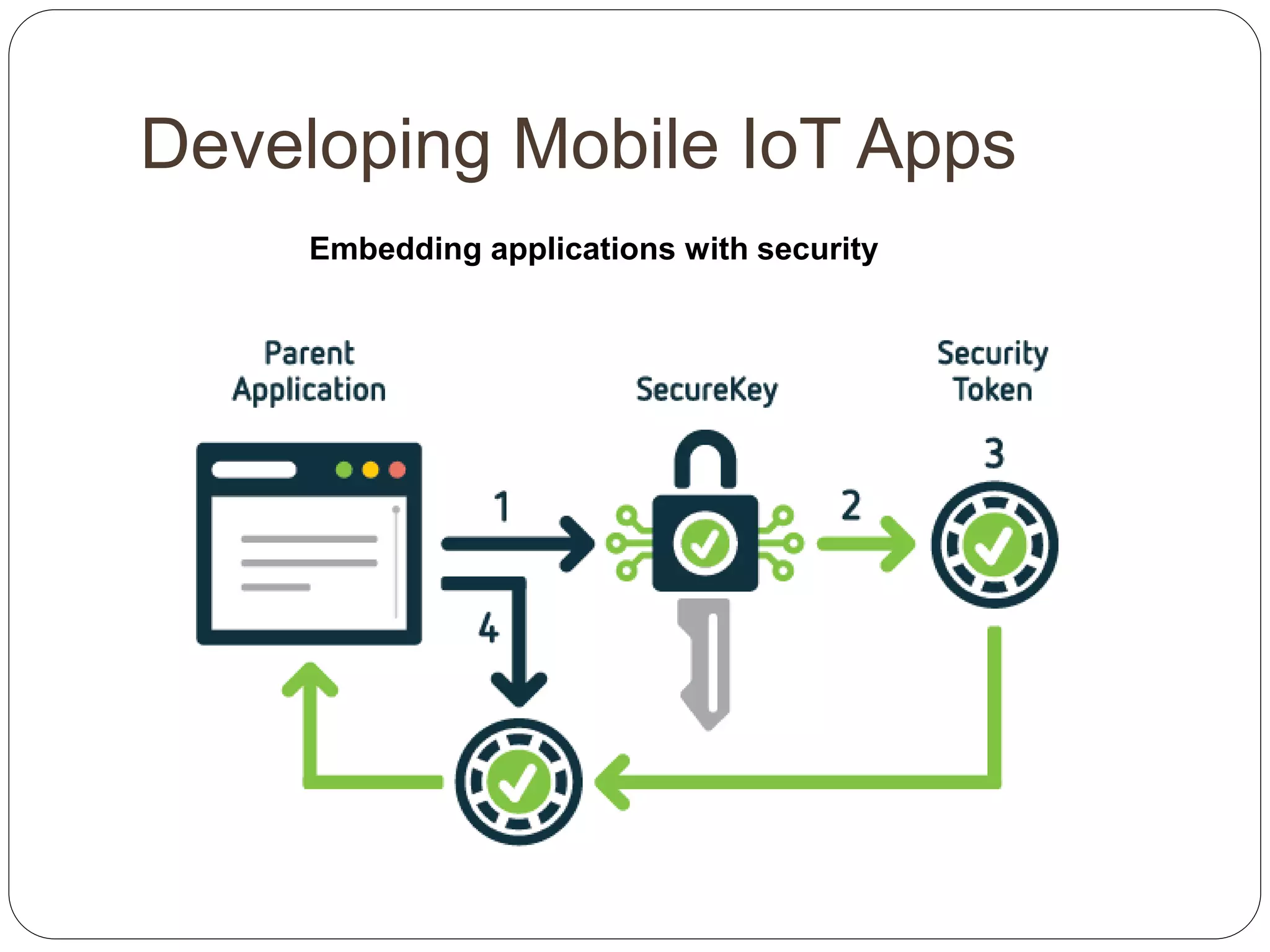
4. Embedding applications with security
The IoT applications are built on many different technologies and platforms,
including power management devices, sensors and microprocessors. Hence,
performance and security requirements vary significantly from one application
to another. But an IoT apps require user confidence in robust, easy-to-use, fail-
safe security capabilities.
This requires mobile IoT app builders to think proactively and build IoT mobile
apps that are high on security. Embedded IoT devices with encryption,
firmware, device safety, etc. need to be setup to ensure longer life span of the
device and also user lifetime value.
Developing Mobile IoT Apps
Embedding applications with security
Contact
Jigsaw Academy
Address: No. 308, First Floor, 100ft Main Road, Indiranagar, 1st
Stage, Bangalore-560038
Landmark: Above Domino’s Pizza
Phone: 9019317000
Email: info@jigsawacademy.com
Website: https://www.jigsawacademy.com/iot/iot-courses
The End

How To Develop IoT Mobile Applications

  • 1.
    - Jigsaw Academy Howto Develop IoT Mobile Applications for a Connected World
  • 2.
    Aim Of IoT Theprimary aim of IoT is to cut down the amount of manual errors and discrepancies that arise as a result of manual intervention. It will help businesses to sharpen their operational accuracy, improve functional efficiency and also deliver a superior user experience. The positive impact of IoT will be visible across multiple industries including (but not limited to) manufacturing, healthcare, retail, eCommerce, power & energy management, connected automobiles among many others.
  • 3.
  • 4.
    Uses of IoTApplications By 2020 each person in this planet will be owning at least 19 connected devices. Internet of Things, a.k.a IoT can be rightly called the Fourth Industrial Revolution of this century which will empower everyday Things, ranging from home appliances to cloud applications software and servers to interact with each other for smarter living. Internet of Things examples extend from smart connected homes to wearables to healthcare. In fact, IoT is slowly becoming part of every aspect of our lives. Not only are Internet of Things applications enhancing our comfort, but they also give us more control to simplify routine work life and personal tasks.
  • 5.
    Uses of IoTApplication
  • 6.
    IoT Applications We knowthe potential of IoT markets is huge, but some domains will mature more quickly than the rest. Here are Internet of Things application areas that have the potential for exponential growth.  Smart Homes  Wearables  IoT Retail Applications  Industrial IoT  Connected Cars  Smart Farming Applications  Smart Health Care Applications
  • 7.
  • 8.
    Developing Mobile IoTApps Here are some things to bear in mind while IoT mobile applications: 1. Layered Architecture of IoT mobile apps: Mobile IoT apps have several layers underlying them. The first and foremost layer is the thing itself. Next to the Thing is the actuator or another Thing to which the first Thing communicates to exchange data. Thirdly, there would be a cloud server or cloud application software which will gather data from the Things. Finally, there will be analytics to decipher the meaning from the data collected from all of the above components. A mobile iot app android can be positioned anywhere in the above levels. It can help users to trigger information or to collect data from them or even do the analytics part.
  • 9.
    Developing Mobile IoTApps Layered Architecture of IoT mobile apps:
  • 10.
    Developing Mobile IoTApps 2. Choice of Platform Mobile IoT app development being a relatively new field and with few players taking it mainstream, the choice of platform for IoT mobile app development is a tough choice to make. Tech behemoths like IBM, Intel, Microsoft, Apple are some of the players who have placed high stakes to develop iot applications but have also developed specific platforms upon which IoT app development companies can build their own mobile apps for Iot devices. Some such examples include: IBM Watson Google Brillo Microsoft Azure IoT Suite Apple HomeKit
  • 11.
    Developing Mobile IoTApps Choice of Platform
  • 12.
    Developing Mobile IoTApps 3. Solve a problem In the Digital Age, connectivity is productivity. However, for a mobile IoT app for android or iPhone to succeed in the market, it must solve a real-life problem. An IoT app that connects devices and people together is not anything great unless it solves a problem. Some problems which IoT can solve easily include: Manufacturing: Automating machine tracking, real-time inventory management, ensuring flow optimization, etc. Smart cities: Automated traffic systems, smart power grids, home security systems, elderly monitoring systems, etc. Wearables: Fitness trackers, employee safety wearables, smartwatch, etc. Connected Cars: Personalized infotainment, usage based insurance, Vehicle 2 Vehicle communication, geo-location tracking, etc.
  • 13.
    Developing Mobile IoTApps Solve a problem
  • 14.
    Developing Mobile IoTApps 4. Embedding applications with security The IoT applications are built on many different technologies and platforms, including power management devices, sensors and microprocessors. Hence, performance and security requirements vary significantly from one application to another. But an IoT apps require user confidence in robust, easy-to-use, fail- safe security capabilities. This requires mobile IoT app builders to think proactively and build IoT mobile apps that are high on security. Embedded IoT devices with encryption, firmware, device safety, etc. need to be setup to ensure longer life span of the device and also user lifetime value.
  • 15.
    Developing Mobile IoTApps Embedding applications with security
  • 16.
    Contact Jigsaw Academy Address: No.308, First Floor, 100ft Main Road, Indiranagar, 1st Stage, Bangalore-560038 Landmark: Above Domino’s Pizza Phone: 9019317000 Email: info@jigsawacademy.com Website: https://www.jigsawacademy.com/iot/iot-courses
  • 17.