So you’re going to be a
       parent!?
   By: Jennifer Purdy, Margaux Haines, Jessica
           Stevens, Ashley Bernhagen
Table of Contents
Prologue………………………………………                   pg. 3
Alleviating stress………………………………..          pg. 4 -5
How to get your newborn around in a car
    seat………………………………………..
                                          pg. 6
How to get your newborn around in a
    stroller……………………………………….              pg. 7
When my newborn cries…………………..            pg. 8- 10
Post Partum Depression…………………             pg. 11-13
Who to call………………………………………….              pg. 14


                                                      2
Prologue
Infant abuse can be emotional, neglect, physical, or sexual. The most common
type is suffered neglect, with 78.3% of cases falling under this category. Abuse
by a primary caregiver damages the basic need of trust. If you can’t trust your
 parents whom can you trust? We decided, while doing an action plan for our
 Community Leadership class that there are many new parents out there that
 are poorly educated about how to care for a newborn. This causes stress for
  both the parent and the child which can lead to neglect on the parents end.
  Because neglect holds 78.3% of the cases, our solution to this problem is to
  create a “basic” care book. Inside this book will be informing the public on
dealing with stress pre- and post-birth. Hopefully more education will lead to a
   smaller percentage of infant neglect. Please read our book and answer the
                            questionnaire at the end.


                                                                               3
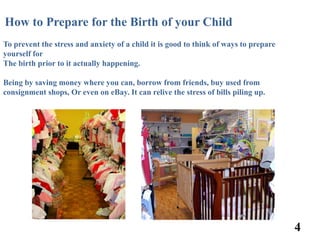
How to Prepare for the Birth of your Child
To prevent the stress and anxiety of a child it is good to think of ways to prepare
yourself for
The birth prior to it actually happening.

Being by saving money where you can, borrow from friends, buy used from
consignment shops, Or even on eBay. It can relive the stress of bills piling up.


                                                                                      4
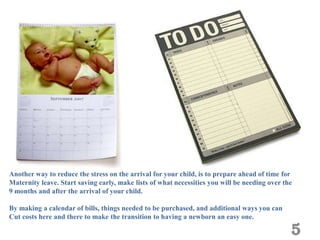
Another way to reduce the stress on the arrival for your child, is to prepare ahead of time for
Maternity leave. Start saving early, make lists of what necessities you will be needing over the
9 months and after the arrival of your child.

By making a calendar of bills, things needed to be purchased, and additional ways you can
Cut costs here and there to make the transition to having a newborn an easy one.

                                                                                               5
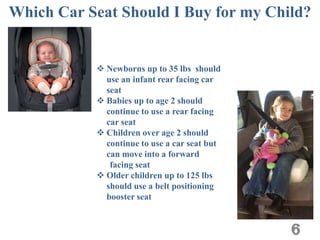
Which Car Seat Should I Buy for my Child?


            Newborns up to 35 lbs should
             use an infant rear facing car
             seat
            Babies up to age 2 should
             continue to use a rear facing
             car seat
            Children over age 2 should
             continue to use a car seat but
             can move into a forward
              facing seat
            Older children up to 125 lbs
             should use a belt positioning
             booster seat


                                              6
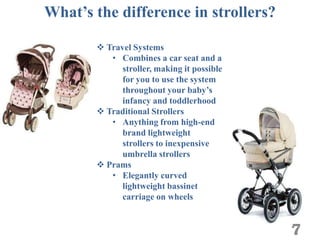
What’s the difference in strollers?

        Travel Systems
          • Combines a car seat and a
             stroller, making it possible
             for you to use the system
             throughout your baby’s
             infancy and toddlerhood
        Traditional Strollers
          • Anything from high-end
             brand lightweight
             strollers to inexpensive
             umbrella strollers
        Prams
          • Elegantly curved
             lightweight bassinet
             carriage on wheels


                                            7
Cry Baby

Your Dream       Reality


                           8
Your babies cry is telling you something

  I’m Hungry                                  I’m hot
                  I Don’t like that
I’ve had enough             My tummy hurts

   It’s just that time of day              I’m wet

                      I’m lonely      I need to move
    I’m Tired

                                                       9
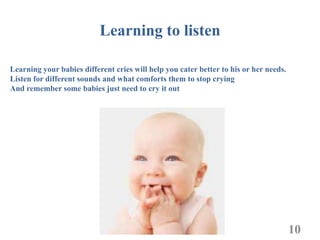
Learning to listen

Learning your babies different cries will help you cater better to his or her needs.
Listen for different sounds and what comforts them to stop crying
And remember some babies just need to cry it out


                                                                                       10
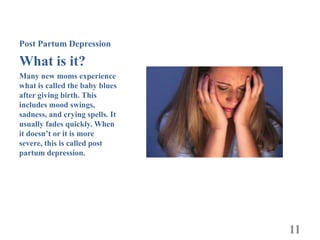
Post Partum Depression

What is it?
Many new moms experience
what is called the baby blues
after giving birth. This
includes mood swings,
sadness, and crying spells. It
usually fades quickly. When
it doesn’t or it is more
severe, this is called post
partum depression.


                                 11
Post Partum Depression
What Causes it?
According to sources post
partum depression is usually
caused by an imbalance in
hormones after birth, still-
birth, or even miscarriage.
You are more likely to have
post partum depression if
you have had depression in
the past.


                               12
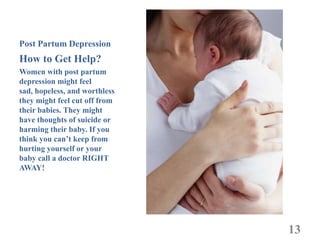
Post Partum Depression
How to Get Help?
Women with post partum
depression might feel
sad, hopeless, and worthless
they might feel cut off from
their babies. They might
have thoughts of suicide or
harming their baby. If you
think you can’t keep from
hurting yourself or your
baby call a doctor RIGHT
AWAY!


                               13
Who to Call.
The Doctor.                              Hotlines
First call your local doctor. Call the   There are a few national hotlines
   one who delivered your baby or          that you can call should you
   maybe one you know and trust.           have these feelings.
                                         The national suicide hotline
                                           1-800-273-TALK
                                         The national child abuse hotline
                                           1-800-4-A-CHILD


                                                                         14
Don’t let things get
worse. Whether you are
having these thoughts or
know someone who is
having these thoughts.
Call your doctor, call a
friend, call a hotline. Help
us decrease the
percentage of abuse and
neglect in the U.S.
Did you learn
anything? Please
fill out our survey.


                               15
Thank You!
How to deal

How to deal

  • 1.
    So you’re goingto be a parent!? By: Jennifer Purdy, Margaux Haines, Jessica Stevens, Ashley Bernhagen
  • 2.
    Table of Contents Prologue……………………………………… pg. 3 Alleviating stress……………………………….. pg. 4 -5 How to get your newborn around in a car seat……………………………………….. pg. 6 How to get your newborn around in a stroller………………………………………. pg. 7 When my newborn cries………………….. pg. 8- 10 Post Partum Depression………………… pg. 11-13 Who to call…………………………………………. pg. 14 2
  • 3.
    Prologue Infant abuse canbe emotional, neglect, physical, or sexual. The most common type is suffered neglect, with 78.3% of cases falling under this category. Abuse by a primary caregiver damages the basic need of trust. If you can’t trust your parents whom can you trust? We decided, while doing an action plan for our Community Leadership class that there are many new parents out there that are poorly educated about how to care for a newborn. This causes stress for both the parent and the child which can lead to neglect on the parents end. Because neglect holds 78.3% of the cases, our solution to this problem is to create a “basic” care book. Inside this book will be informing the public on dealing with stress pre- and post-birth. Hopefully more education will lead to a smaller percentage of infant neglect. Please read our book and answer the questionnaire at the end. 3
  • 4.
    How to Preparefor the Birth of your Child To prevent the stress and anxiety of a child it is good to think of ways to prepare yourself for The birth prior to it actually happening. Being by saving money where you can, borrow from friends, buy used from consignment shops, Or even on eBay. It can relive the stress of bills piling up. 4
  • 5.
    Another way toreduce the stress on the arrival for your child, is to prepare ahead of time for Maternity leave. Start saving early, make lists of what necessities you will be needing over the 9 months and after the arrival of your child. By making a calendar of bills, things needed to be purchased, and additional ways you can Cut costs here and there to make the transition to having a newborn an easy one. 5
  • 6.
    Which Car SeatShould I Buy for my Child?  Newborns up to 35 lbs should use an infant rear facing car seat  Babies up to age 2 should continue to use a rear facing car seat  Children over age 2 should continue to use a car seat but can move into a forward facing seat  Older children up to 125 lbs should use a belt positioning booster seat 6
  • 7.
    What’s the differencein strollers?  Travel Systems • Combines a car seat and a stroller, making it possible for you to use the system throughout your baby’s infancy and toddlerhood  Traditional Strollers • Anything from high-end brand lightweight strollers to inexpensive umbrella strollers  Prams • Elegantly curved lightweight bassinet carriage on wheels 7
  • 8.
  • 9.
    Your babies cryis telling you something I’m Hungry I’m hot I Don’t like that I’ve had enough My tummy hurts It’s just that time of day I’m wet I’m lonely I need to move I’m Tired 9
  • 10.
    Learning to listen Learningyour babies different cries will help you cater better to his or her needs. Listen for different sounds and what comforts them to stop crying And remember some babies just need to cry it out 10
  • 11.
    Post Partum Depression Whatis it? Many new moms experience what is called the baby blues after giving birth. This includes mood swings, sadness, and crying spells. It usually fades quickly. When it doesn’t or it is more severe, this is called post partum depression. 11
  • 12.
    Post Partum Depression WhatCauses it? According to sources post partum depression is usually caused by an imbalance in hormones after birth, still- birth, or even miscarriage. You are more likely to have post partum depression if you have had depression in the past. 12
  • 13.
    Post Partum Depression Howto Get Help? Women with post partum depression might feel sad, hopeless, and worthless they might feel cut off from their babies. They might have thoughts of suicide or harming their baby. If you think you can’t keep from hurting yourself or your baby call a doctor RIGHT AWAY! 13
  • 14.
    Who to Call. TheDoctor. Hotlines First call your local doctor. Call the There are a few national hotlines one who delivered your baby or that you can call should you maybe one you know and trust. have these feelings. The national suicide hotline 1-800-273-TALK The national child abuse hotline 1-800-4-A-CHILD 14
  • 15.
    Don’t let thingsget worse. Whether you are having these thoughts or know someone who is having these thoughts. Call your doctor, call a friend, call a hotline. Help us decrease the percentage of abuse and neglect in the U.S. Did you learn anything? Please fill out our survey. 15
  • 16.