How to Avoid
Cloud Confusion,
DevOps Dilemma,
Microservice Madness
Enterprise Survival – From CULT to CLARITY
BMK Lakshminarayanan
@LBMKRISHNA
Cloud
DevOps
Microservices
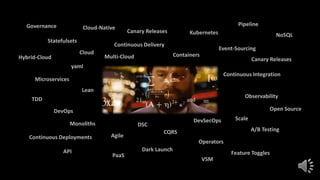
Observability
Microservices
DevOps
Continuous Delivery
Agile
Lean
Containers
Kubernetes
CQRS
Event-Sourcing
Continuous Integration
Cloud
Scale
Operators
Statefulsets
Cloud-Native
API
Monoliths
NoSQL
A/B Testing
Feature Toggles
Continuous Deployments
DSC
PaaS
Dark Launch
Canary Releases
Pipeline
yaml
DevSecOps
Governance
Multi-CloudHybrid-Cloud
Open Source
VSM
TDD
Canary Releases
Microservice
Challenges
Microservice
Challenges
How big, how small? Where to
draw the boundary?
Data in Microservice world
Service Communication
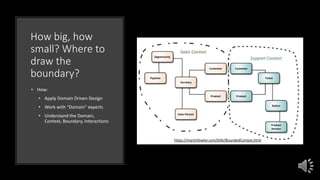
How big, how
small? Where to
draw the
boundary?
• How:
• Apply Domain Driven Design
• Work with “Domain” experts
• Understand the Domain,
Context, Boundary, Interactions
https://martinfowler.com/bliki/BoundedContext.html
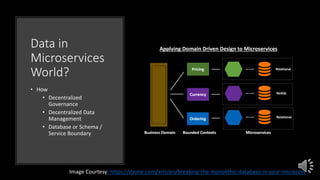
Data in
Microservices
World?
• How
• Decentralized
Governance
• Decentralized Data
Management
• Database or Schema /
Service Boundary
Image Courtesy: https://dzone.com/articles/breaking-the-monolithic-database-in-your-microserv
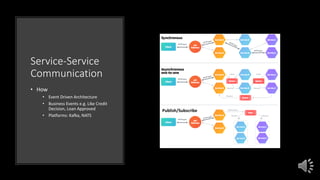
Service-Service
Communication
• How
• Event Driven Architecture
• Business Events e.g. Like Credit
Decision, Loan Approved
• Platforms: Kafka, NATS
Publish/Subscribe
Traps To Avoid
• Everything into Microservices
• Patterns Overloaded (Event-Sourcing, CQRS)
• Too much focus on “Reusability”
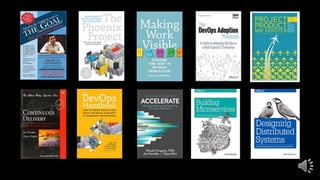
Helpful Resources
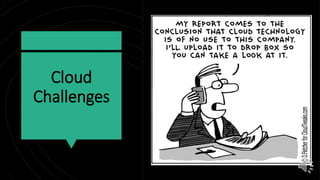
Cloud
Challenges
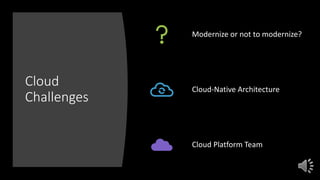
Cloud
Challenges
Modernize or not to modernize?
Cloud-Native Architecture
Cloud Platform Team
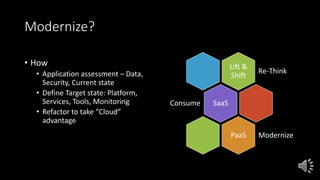
Modernize?
• How
• Application assessment – Data,
Security, Current state
• Define Target state: Platform,
Services, Tools, Monitoring
• Refactor to take “Cloud”
advantage
Lift &
Shift
Re-Think
SaaSConsume
PaaS Modernize
Cloud-Native Architecture
• How
• Automation: Infrastructure
provisioning, Application/Service
CI/CD, Monitoring health,
Recovery
• Secure: Every component is
designed to protect itself
• Data: Identify, Classify, Design
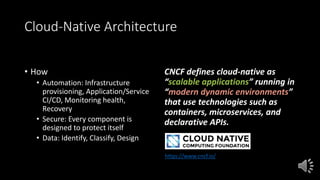
CNCF defines cloud-native as
“scalable applications” running in
“modern dynamic environments”
that use technologies such as
containers, microservices, and
declarative APIs.
https://www.cncf.io/
Cloud Platform Team
• How
• Platform Team – Similar to
“Product” teams
• Enable “Self-Service”
• Advocates and Evangelist
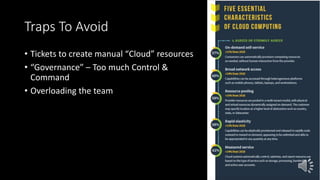
Traps To Avoid
• Tickets to create manual “Cloud” resources
• “Governance” – Too much Control &
Command
• Overloading the team
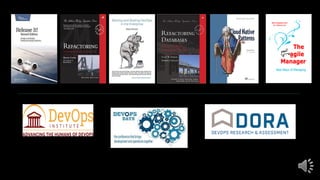
Helpful Resources
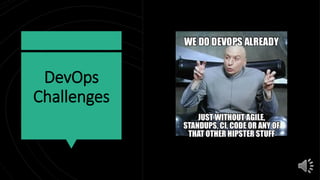
DevOps
Challenges
DevOps
Challenges
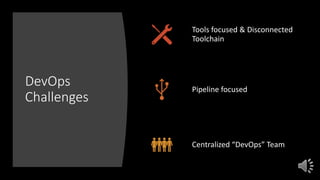
Tools focused & Disconnected
Toolchain
Pipeline focused
Centralized “DevOps” Team
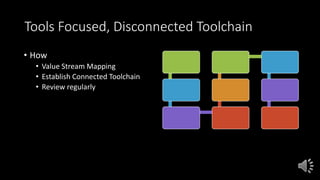
Tools Focused, Disconnected Toolchain
• How
• Value Stream Mapping
• Establish Connected Toolchain
• Review regularly
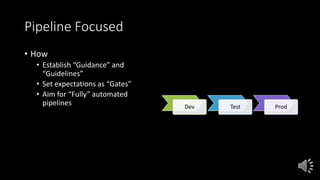
Pipeline Focused
• How
• Establish “Guidance” and
“Guidelines”
• Set expectations as “Gates”
• Aim for “Fully” automated
pipelines Dev Test Prod
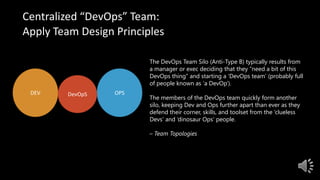
Centralized “DevOps” Team:
Apply Team Design Principles
The DevOps Team Silo (Anti-Type B) typically results from
a manager or exec deciding that they “need a bit of this
DevOps thing” and starting a ‘DevOps team’ (probably full
of people known as ‘a DevOp‘).
The members of the DevOps team quickly form another
silo, keeping Dev and Ops further apart than ever as they
defend their corner, skills, and toolset from the ‘clueless
Devs’ and ‘dinosaur Ops’ people.
– Team Topologies
DEV OPSDevOpS
Traps To Avoid
• DevOps Project
• DevOps Team
• Autonomy Misunderstanding
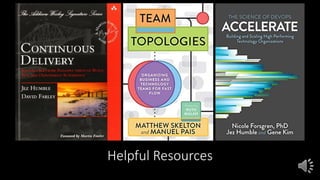
Helpful Resources
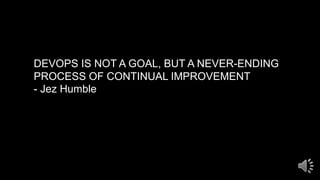
DEVOPS IS NOT A GOAL, BUT A NEVER-ENDING
PROCESS OF CONTINUAL IMPROVEMENT
- Jez Humble
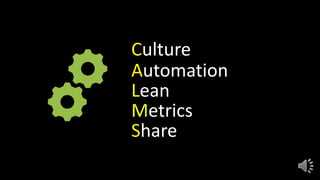
Culture
Automation
Lean
Metrics
Share
Some More Ideas
Ubiquitous
language
Disciplined &
Focused Team
Sensible
Architecture
Upskill
Reduce Context
Switch
Developer
Productivity
Thank you
Hope this helps you

How to Avoid Cloud Confusion, DevOps dilemma, Microservice Madness