How Induction Cooktops Work

Appliancesconnection.com




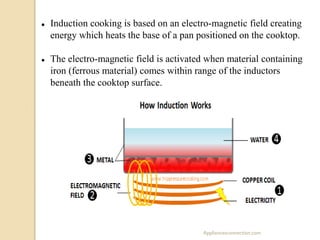
Induction cooking is based on an electro-magnetic field creating
energy which heats the base of a pan positioned on the cooktop.
The electro-magnetic field is activated when material containing
iron (ferrous material) comes within range of the inductors
beneath the cooktop surface.

Appliancesconnection.com
Introduction
• Induction cooktops boast speed surpassing electric,
temperature response rivaling gas, and safety and cleaning ease
that beat out glass-and-ceramic-top stoves.
• Pans need to contain ferrous material for induction to work.
Full stainless steel, aluminium, copper, terracotta or pyrex don't
contain ferrous material, so theoretically they won't work.

Appliancesconnection.com
Induction Cooking Efficiency

Appliancesconnection.com
A wide range of Power Options….
deep fry
grill

sauté
gentle heat*

simmer

50 Watts

3600 Watts

Melting chocolate without using a double boiler is only
possible with induction.
Appliancesconnection.com
Induction Compatible Cookware

enamel

cast iron

stainless steel

FAGOR cookware

Non Induction Compatible

copper

glass

aluminum

Appliancesconnection.com
Benefits of cooking with an
induction cooktop
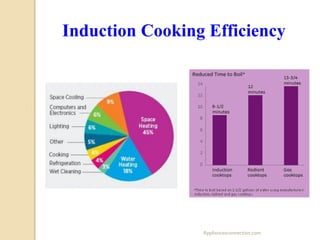
Efficient: Induction cooking uses 90% of the energy produced.
Induction recognizes the base of cookware, directly heating only
the diameter of the pot, so very little energy is wasted.

Appliancesconnection.com
Safer: There are no open flames and
the surface remains cool to the touch
Quicker: Heating and adjustments
are immediate, saving you up to 50%
of the cooking time when compared
to more traditional methods

Even Heating: Hot spots and rings
are avoided because the bottom of
your cookware heats uniformly
Easy Cleaning: The surface is flat
and smooth; spills and overflows do
not stick to the cooktop, so they can
easily be wiped away
Appliancesconnection.com
Electromagnetic Induction




Electromagnetic induction occurs when a circuit with an
alternating current flowing through it generates current in
another circuit simply by being placed nearby.
An alternating current is the kind of electricity flowing
through power lines and home wiring, as opposed to a direct
current, which we get from batteries.

Appliancesconnection.com
Look at a few principles linking
magnetism and electricity:


Every electric current has a magnetic field surrounding it.



Alternating currents have fluctuating magnetic fields.



Fluctuating magnetic fields cause currents to flow in
conductors placed within them, which is also known as
Faraday's Law.

Appliancesconnection.com
Heating Induction Cooktops
Induction cooktops work the same way: Coils located just
beneath the cooktop's elements carry an alternating current,
creating a changing magnetic field.

Appliancesconnection.com
Rapid cooking precision at your
fingertips
8 min 18
time to boil

9 min 50

9 min

4 min 46

induction
2800W

gas
3100W

ceramic
2200W

electric
2000W

390 W

270 W
power
consumption

320 W

225 W

Test with 2 quarts of water ranging from 70°F to 200°F

Appliancesconnection.com
Induction Cooktops Pros and Cons
Induction cooktops work, you're probably wondering what makes
them any better or worse than cooktops with radiant elements, such
as electric coils, gas burners or glass-ceramic stovetops.

Appliancesconnection.com
Some of the pros and cons of
induction cooktops:
Cooking Experience: Induction cooktops
heat 25-50 percent faster and distribute heat
more evenly than radiant stovetops, and they
offer quick, fine temperature adjustment.
Safety and Cleaning: Cooler surfaces and no
open flame to ignite grease, induction
cooktops are safer and easier to clean than
their radiant counterparts.
Cost vs. Efficiency: Prices start at $1,800
and go up to about $3,500, compared with
$550 - $750 for top-tier electric cooktops and
$650 - $1,200 for gas.
Appliancesconnection.com
Buying an Induction Cooktop

Appliancesconnection.com
Buying an Induction
Cooktop Tips:
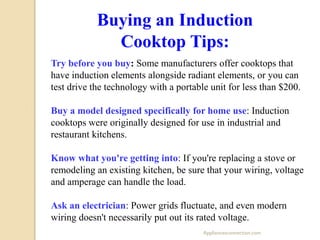
Try before you buy: Some manufacturers offer cooktops that
have induction elements alongside radiant elements, or you can
test drive the technology with a portable unit for less than $200.
Buy a model designed specifically for home use: Induction
cooktops were originally designed for use in industrial and
restaurant kitchens.
Know what you're getting into: If you're replacing a stove or
remodeling an existing kitchen, be sure that your wiring, voltage
and amperage can handle the load.
Ask an electrician: Power grids fluctuate, and even modern
wiring doesn't necessarily put out its rated voltage.
Appliancesconnection.com
If you're looking for a way to
modernize your kitchen, visit us
www.appliancesconnection.com

Appliancesconnection.com

How induction cooktops work

  • 1.
    How Induction CooktopsWork Appliancesconnection.com
  • 2.
      Induction cooking isbased on an electro-magnetic field creating energy which heats the base of a pan positioned on the cooktop. The electro-magnetic field is activated when material containing iron (ferrous material) comes within range of the inductors beneath the cooktop surface. Appliancesconnection.com
  • 3.
    Introduction • Induction cooktopsboast speed surpassing electric, temperature response rivaling gas, and safety and cleaning ease that beat out glass-and-ceramic-top stoves. • Pans need to contain ferrous material for induction to work. Full stainless steel, aluminium, copper, terracotta or pyrex don't contain ferrous material, so theoretically they won't work. Appliancesconnection.com
  • 4.
  • 5.
    A wide rangeof Power Options…. deep fry grill sauté gentle heat* simmer 50 Watts 3600 Watts Melting chocolate without using a double boiler is only possible with induction. Appliancesconnection.com
  • 6.
    Induction Compatible Cookware enamel castiron stainless steel FAGOR cookware Non Induction Compatible copper glass aluminum Appliancesconnection.com
  • 7.
    Benefits of cookingwith an induction cooktop Efficient: Induction cooking uses 90% of the energy produced. Induction recognizes the base of cookware, directly heating only the diameter of the pot, so very little energy is wasted. Appliancesconnection.com
  • 8.
    Safer: There areno open flames and the surface remains cool to the touch Quicker: Heating and adjustments are immediate, saving you up to 50% of the cooking time when compared to more traditional methods Even Heating: Hot spots and rings are avoided because the bottom of your cookware heats uniformly Easy Cleaning: The surface is flat and smooth; spills and overflows do not stick to the cooktop, so they can easily be wiped away Appliancesconnection.com
  • 9.
    Electromagnetic Induction   Electromagnetic inductionoccurs when a circuit with an alternating current flowing through it generates current in another circuit simply by being placed nearby. An alternating current is the kind of electricity flowing through power lines and home wiring, as opposed to a direct current, which we get from batteries. Appliancesconnection.com
  • 10.
    Look at afew principles linking magnetism and electricity:  Every electric current has a magnetic field surrounding it.  Alternating currents have fluctuating magnetic fields.  Fluctuating magnetic fields cause currents to flow in conductors placed within them, which is also known as Faraday's Law. Appliancesconnection.com
  • 11.
    Heating Induction Cooktops Inductioncooktops work the same way: Coils located just beneath the cooktop's elements carry an alternating current, creating a changing magnetic field. Appliancesconnection.com
  • 12.
    Rapid cooking precisionat your fingertips 8 min 18 time to boil 9 min 50 9 min 4 min 46 induction 2800W gas 3100W ceramic 2200W electric 2000W 390 W 270 W power consumption 320 W 225 W Test with 2 quarts of water ranging from 70°F to 200°F Appliancesconnection.com
  • 13.
    Induction Cooktops Prosand Cons Induction cooktops work, you're probably wondering what makes them any better or worse than cooktops with radiant elements, such as electric coils, gas burners or glass-ceramic stovetops. Appliancesconnection.com
  • 14.
    Some of thepros and cons of induction cooktops: Cooking Experience: Induction cooktops heat 25-50 percent faster and distribute heat more evenly than radiant stovetops, and they offer quick, fine temperature adjustment. Safety and Cleaning: Cooler surfaces and no open flame to ignite grease, induction cooktops are safer and easier to clean than their radiant counterparts. Cost vs. Efficiency: Prices start at $1,800 and go up to about $3,500, compared with $550 - $750 for top-tier electric cooktops and $650 - $1,200 for gas. Appliancesconnection.com
  • 15.
    Buying an InductionCooktop Appliancesconnection.com
  • 16.
    Buying an Induction CooktopTips: Try before you buy: Some manufacturers offer cooktops that have induction elements alongside radiant elements, or you can test drive the technology with a portable unit for less than $200. Buy a model designed specifically for home use: Induction cooktops were originally designed for use in industrial and restaurant kitchens. Know what you're getting into: If you're replacing a stove or remodeling an existing kitchen, be sure that your wiring, voltage and amperage can handle the load. Ask an electrician: Power grids fluctuate, and even modern wiring doesn't necessarily put out its rated voltage. Appliancesconnection.com
  • 17.
    If you're lookingfor a way to modernize your kitchen, visit us www.appliancesconnection.com Appliancesconnection.com