Top 3 Ways the Beverage Industry is Changing
If you need proof of the impact that millennials are having on the
food and beverage industry, here’s a story that might provide it
for you.
A lifestyle reporter for the Washington Post hosted a holiday
party for her spouse’s employees at his law firm (pre-Covid, of
course.) As most of her husband’s staff attending the event were
millennials (those born between the years of 1981-1996), she wanted
to ensure she had a liquor and beverage selection that would be
commensurate with their tastes and preferences. She texted a
new associate attorney she’d come to know, a 30-year-old
graduate of Georgetown’s prestigious law school, for ideas of
beverage selections she should put on the list for her shopping
expedition.
First, he told her, there’s no need to go physically shopping for
the supplies. “You should download an app like Drizly, and they’ll
find everything and deliver it for you,” he informed her. Second, he
informed her, you’ll want to make sure anything you buy has the
“ethically bottled and sourced” stamps of approval, because
nearly everyone he knew at the firm only consumes beverages
they know have been humanely distilled and prepared. Third, she
should try to also factor in beverages that had “more natural
ingredients” and that was ideally labeled “organic” if possible,
“especially for mixers,” he said. And finally, “oh and you know, make
sure it looks good, too.”
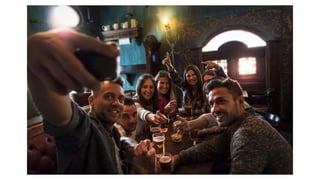
“Looks good?” she thought. What does that even mean? “We take
lots of pictures of what we’re drinking to post on our IG feed. So,
you know, more upscale looking bottles and labels, that sort of
thing,” he offered.
Whereas past baby boomers tended to drink the most dominant
brands of liquor and beverages and Generation X drank whatever
was cheapest and easiest to purchase, the mysteries of the
millennial generation and how they choose to allocate their
purchasing power continue to both abound and astound the
food and beverage industry, not to mention all the rest of the
population.
But making up 25% of the current population means that paying
attention to and incorporating their preferences is a MUST for
beverage companies to stay progressive and profitable.
Here’s a look at the TOP 3 ways the industry is changing to meet
those millennial demands.
Health Conscious
No generation before has valued a life-long commitment to
health and well-being to the extent that millennials do. A recent
Forrester study indicates that 9 out of 10 millennials say that
buying food and beverage products that are healthy is a top
priority to them, and they put their money where their mouth is:
millennials currently account for over half of the organic foods
purchased today.
The millennial generation is uniquely conscious and aware of
everything they put in their body, and everywhere they choose to
spend their money. They are significantly aware of both the
ingredients that go into their consumables as well as where it
came from, how it was produced, and how it was packaged. They
will often reject beverages made with inferior quality or brands
that don’t have a commitment to health and humanity.
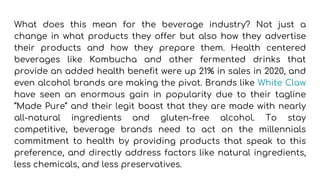
What does this mean for the beverage industry? Not just a
change in what products they offer but also how they advertise
their products and how they prepare them. Health centered
beverages like Kombucha and other fermented drinks that
provide an added health benefit were up 21% in sales in 2020, and
even alcohol brands are making the pivot. Brands like White Claw
have seen an enormous gain in popularity due to their tagline
“Made Pure” and their legit boast that they are made with nearly
all-natural ingredients and gluten-free alcohol. To stay
competitive, beverage brands need to act on the millennials
commitment to health by providing products that speak to this
preference, and directly address factors like natural ingredients,
less chemicals, and less preservatives.
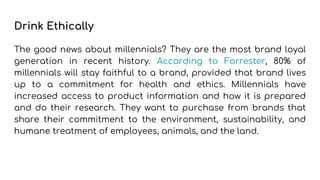
Drink Ethically
The good news about millennials? They are the most brand loyal
generation in recent history. According to Forrester, 80% of
millennials will stay faithful to a brand, provided that brand lives
up to a commitment for health and ethics. Millennials have
increased access to product information and how it is prepared
and do their research. They want to purchase from brands that
share their commitment to the environment, sustainability, and
humane treatment of employees, animals, and the land.
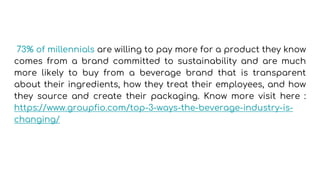
73% of millennials are willing to pay more for a product they know
comes from a brand committed to sustainability and are much
more likely to buy from a beverage brand that is transparent
about their ingredients, how they treat their employees, and how
they source and create their packaging. Know more visit here :
https://www.groupfio.com/top-3-ways-the-beverage-industry-is-
changing/

How has the beverage industry changed?

  • 1.
    Top 3 Waysthe Beverage Industry is Changing
  • 2.
    If you needproof of the impact that millennials are having on the food and beverage industry, here’s a story that might provide it for you. A lifestyle reporter for the Washington Post hosted a holiday party for her spouse’s employees at his law firm (pre-Covid, of course.) As most of her husband’s staff attending the event were millennials (those born between the years of 1981-1996), she wanted to ensure she had a liquor and beverage selection that would be commensurate with their tastes and preferences. She texted a new associate attorney she’d come to know, a 30-year-old graduate of Georgetown’s prestigious law school, for ideas of beverage selections she should put on the list for her shopping expedition.
  • 4.
    First, he toldher, there’s no need to go physically shopping for the supplies. “You should download an app like Drizly, and they’ll find everything and deliver it for you,” he informed her. Second, he informed her, you’ll want to make sure anything you buy has the “ethically bottled and sourced” stamps of approval, because nearly everyone he knew at the firm only consumes beverages they know have been humanely distilled and prepared. Third, she should try to also factor in beverages that had “more natural ingredients” and that was ideally labeled “organic” if possible, “especially for mixers,” he said. And finally, “oh and you know, make sure it looks good, too.”
  • 5.
    “Looks good?” shethought. What does that even mean? “We take lots of pictures of what we’re drinking to post on our IG feed. So, you know, more upscale looking bottles and labels, that sort of thing,” he offered. Whereas past baby boomers tended to drink the most dominant brands of liquor and beverages and Generation X drank whatever was cheapest and easiest to purchase, the mysteries of the millennial generation and how they choose to allocate their purchasing power continue to both abound and astound the food and beverage industry, not to mention all the rest of the population.
  • 6.
    But making up25% of the current population means that paying attention to and incorporating their preferences is a MUST for beverage companies to stay progressive and profitable. Here’s a look at the TOP 3 ways the industry is changing to meet those millennial demands.
  • 7.
    Health Conscious No generationbefore has valued a life-long commitment to health and well-being to the extent that millennials do. A recent Forrester study indicates that 9 out of 10 millennials say that buying food and beverage products that are healthy is a top priority to them, and they put their money where their mouth is: millennials currently account for over half of the organic foods purchased today.
  • 8.
    The millennial generationis uniquely conscious and aware of everything they put in their body, and everywhere they choose to spend their money. They are significantly aware of both the ingredients that go into their consumables as well as where it came from, how it was produced, and how it was packaged. They will often reject beverages made with inferior quality or brands that don’t have a commitment to health and humanity.
  • 9.
    What does thismean for the beverage industry? Not just a change in what products they offer but also how they advertise their products and how they prepare them. Health centered beverages like Kombucha and other fermented drinks that provide an added health benefit were up 21% in sales in 2020, and even alcohol brands are making the pivot. Brands like White Claw have seen an enormous gain in popularity due to their tagline “Made Pure” and their legit boast that they are made with nearly all-natural ingredients and gluten-free alcohol. To stay competitive, beverage brands need to act on the millennials commitment to health by providing products that speak to this preference, and directly address factors like natural ingredients, less chemicals, and less preservatives.
  • 10.
    Drink Ethically The goodnews about millennials? They are the most brand loyal generation in recent history. According to Forrester, 80% of millennials will stay faithful to a brand, provided that brand lives up to a commitment for health and ethics. Millennials have increased access to product information and how it is prepared and do their research. They want to purchase from brands that share their commitment to the environment, sustainability, and humane treatment of employees, animals, and the land.
  • 11.
    73% of millennialsare willing to pay more for a product they know comes from a brand committed to sustainability and are much more likely to buy from a beverage brand that is transparent about their ingredients, how they treat their employees, and how they source and create their packaging. Know more visit here : https://www.groupfio.com/top-3-ways-the-beverage-industry-is- changing/