How Artificial Intelligence and
Machine Learning can speed up
court cases
Siva Prasad Bose
Introduction
• Technologies such as Artificial Intelligence (AI) and
Machine Learning (ML) are becoming common across
industries, including the legal system.
• There are around 40 million pending cases in various
courts in India.
• The use of such technology is critical if the backlog ever is
to be cleared.
• In this presentation we consider a few ways in which AI/ML
can be useful in legal cases.
AI to help judges understand petitions
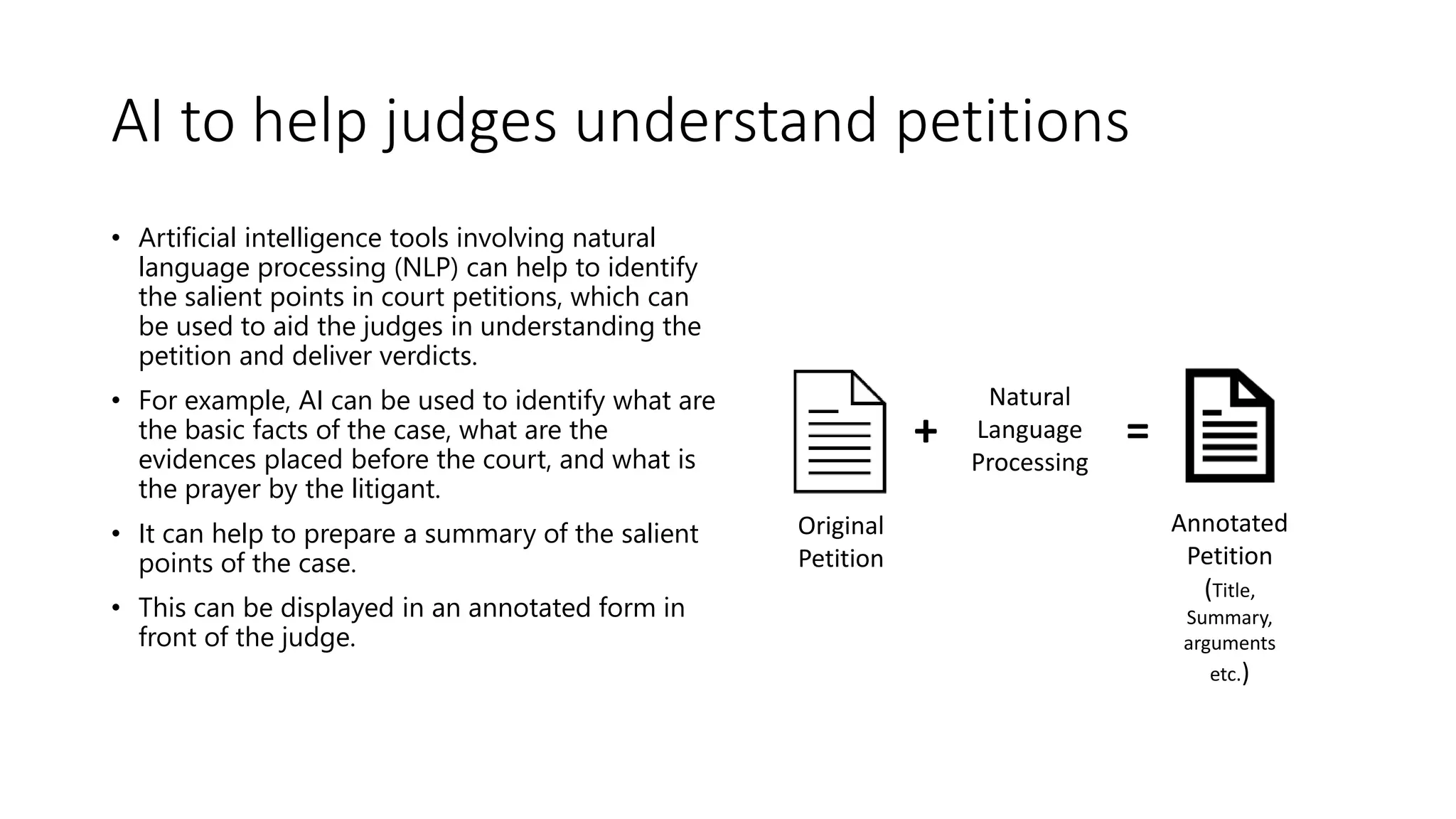
• Artificial intelligence tools involving natural
language processing (NLP) can help to identify
the salient points in court petitions, which can
be used to aid the judges in understanding the
petition and deliver verdicts.
• For example, AI can be used to identify what are
the basic facts of the case, what are the
evidences placed before the court, and what is
the prayer by the litigant.
• It can help to prepare a summary of the salient
points of the case.
• This can be displayed in an annotated form in
front of the judge.
Natural
Language
Processing
+ =
Original
Petition
Annotated
Petition
(Title,
Summary,
arguments
etc.)
AI to search similar cases
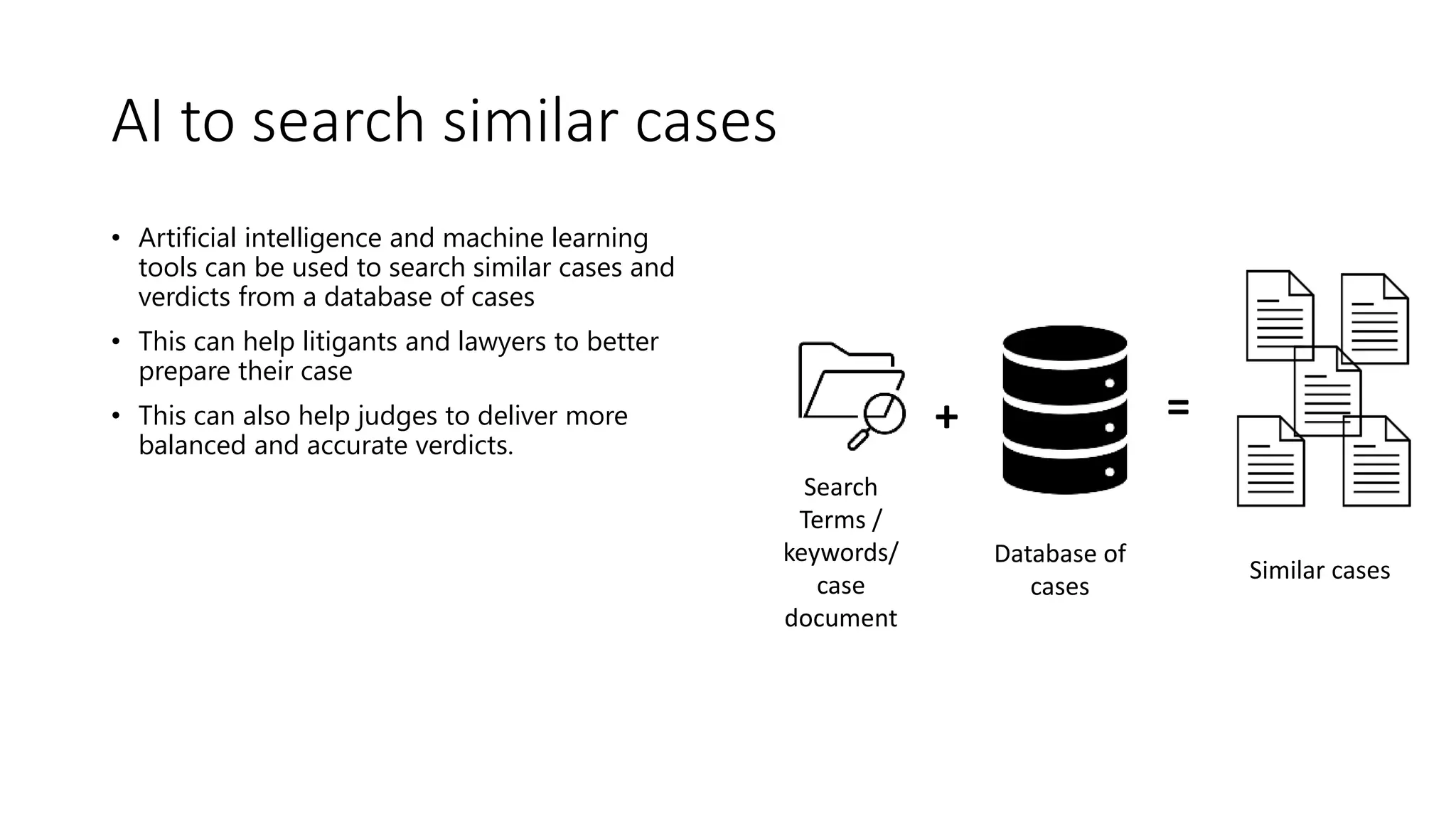
• Artificial intelligence and machine learning
tools can be used to search similar cases and
verdicts from a database of cases
• This can help litigants and lawyers to better
prepare their case
• This can also help judges to deliver more
balanced and accurate verdicts.
+
Search
Terms /
keywords/
case
document
=
Database of
cases
Similar cases
AI to identify frivolous cases
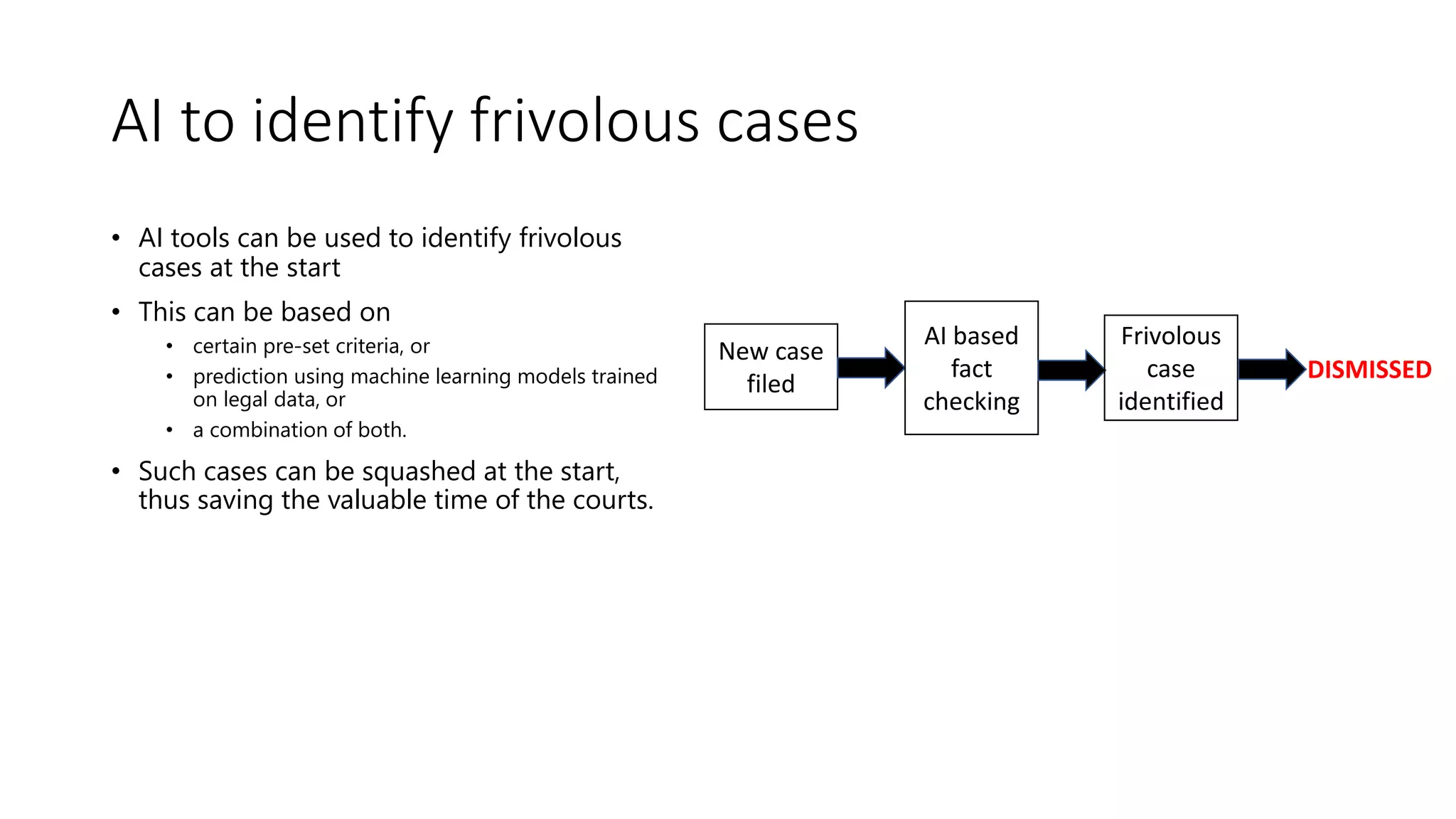
• AI tools can be used to identify frivolous
cases at the start
• This can be based on
• certain pre-set criteria, or
• prediction using machine learning models trained
on legal data, or
• a combination of both.
• Such cases can be squashed at the start,
thus saving the valuable time of the courts.
New case
filed
AI based
fact
checking
Frivolous
case
identified
DISMISSED
AI to help judges with decision making
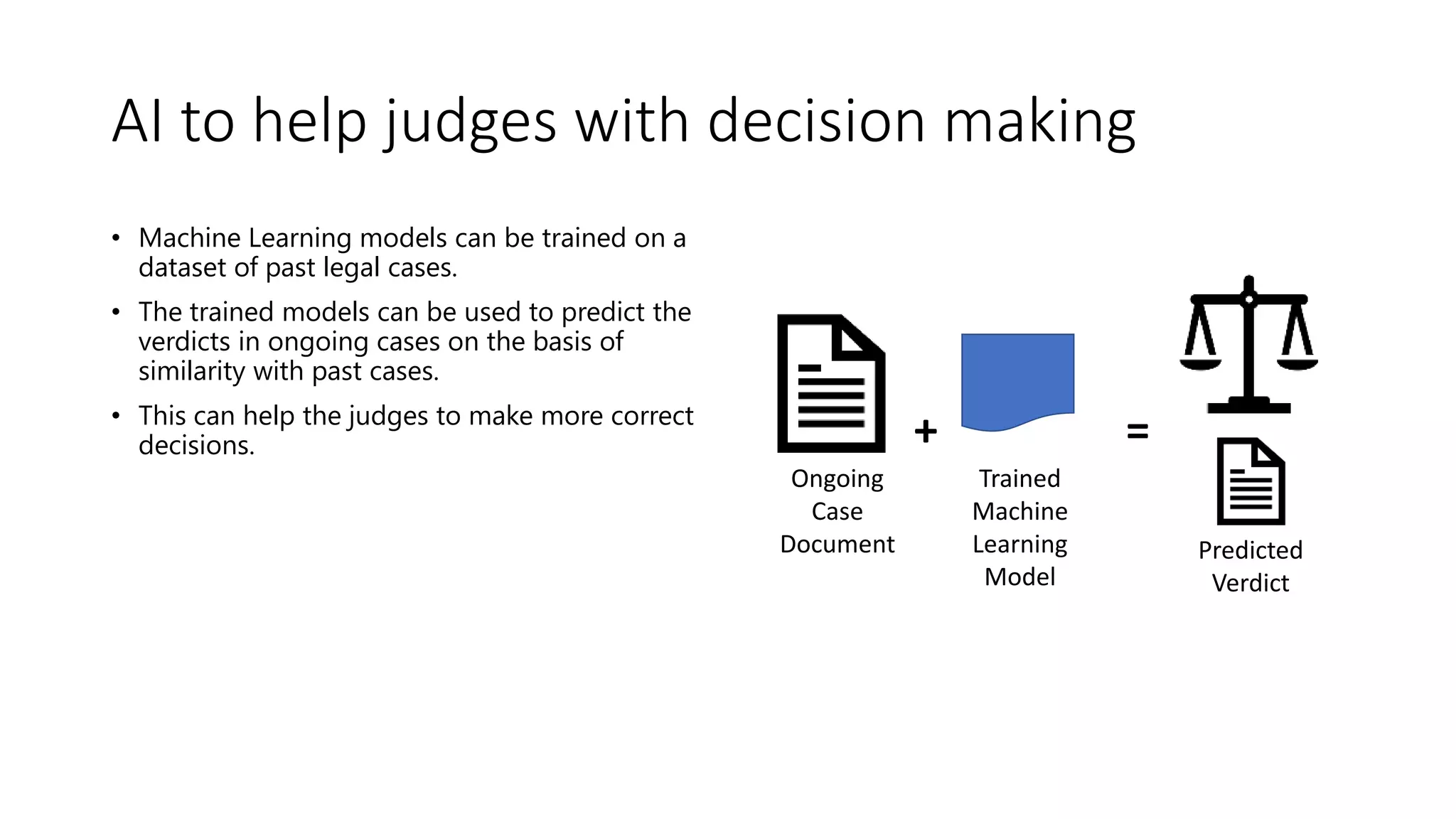
• Machine Learning models can be trained on a
dataset of past legal cases.
• The trained models can be used to predict the
verdicts in ongoing cases on the basis of
similarity with past cases.
• This can help the judges to make more correct
decisions.
Ongoing
Case
Document
Trained
Machine
Learning
Model
+ =
Predicted
Verdict
AI to automatically pronounce verdicts online
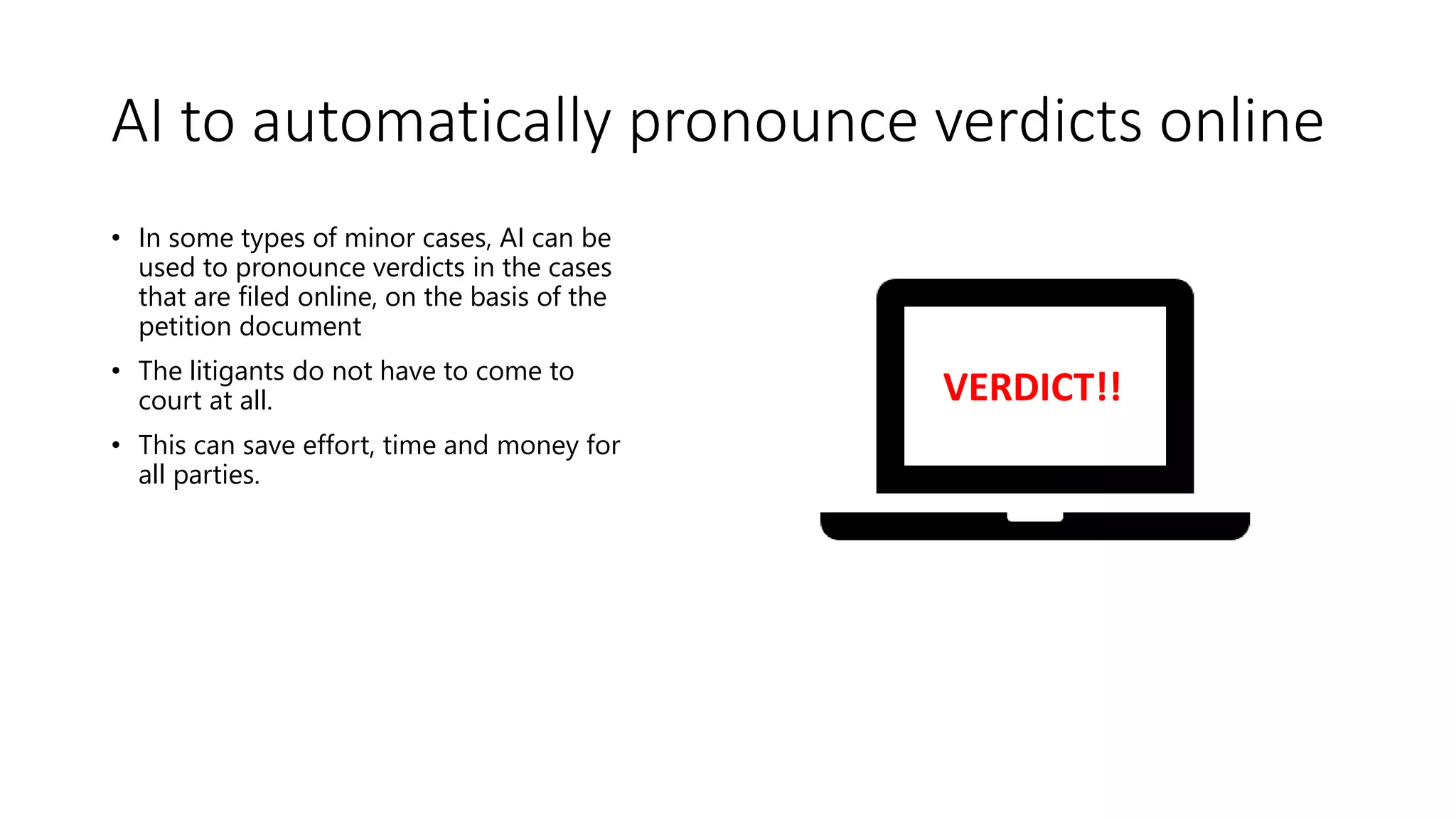
• In some types of minor cases, AI can be
used to pronounce verdicts in the cases
that are filed online, on the basis of the
petition document
• The litigants do not have to come to
court at all.
• This can save effort, time and money for
all parties.
VERDICT!!

How AI and ML can speed up court cases

  • 1.
    How Artificial Intelligenceand Machine Learning can speed up court cases Siva Prasad Bose
  • 2.
    Introduction • Technologies suchas Artificial Intelligence (AI) and Machine Learning (ML) are becoming common across industries, including the legal system. • There are around 40 million pending cases in various courts in India. • The use of such technology is critical if the backlog ever is to be cleared. • In this presentation we consider a few ways in which AI/ML can be useful in legal cases.
  • 3.
    AI to helpjudges understand petitions • Artificial intelligence tools involving natural language processing (NLP) can help to identify the salient points in court petitions, which can be used to aid the judges in understanding the petition and deliver verdicts. • For example, AI can be used to identify what are the basic facts of the case, what are the evidences placed before the court, and what is the prayer by the litigant. • It can help to prepare a summary of the salient points of the case. • This can be displayed in an annotated form in front of the judge. Natural Language Processing + = Original Petition Annotated Petition (Title, Summary, arguments etc.)
  • 4.
    AI to searchsimilar cases • Artificial intelligence and machine learning tools can be used to search similar cases and verdicts from a database of cases • This can help litigants and lawyers to better prepare their case • This can also help judges to deliver more balanced and accurate verdicts. + Search Terms / keywords/ case document = Database of cases Similar cases
  • 5.
    AI to identifyfrivolous cases • AI tools can be used to identify frivolous cases at the start • This can be based on • certain pre-set criteria, or • prediction using machine learning models trained on legal data, or • a combination of both. • Such cases can be squashed at the start, thus saving the valuable time of the courts. New case filed AI based fact checking Frivolous case identified DISMISSED
  • 6.
    AI to helpjudges with decision making • Machine Learning models can be trained on a dataset of past legal cases. • The trained models can be used to predict the verdicts in ongoing cases on the basis of similarity with past cases. • This can help the judges to make more correct decisions. Ongoing Case Document Trained Machine Learning Model + = Predicted Verdict
  • 7.
    AI to automaticallypronounce verdicts online • In some types of minor cases, AI can be used to pronounce verdicts in the cases that are filed online, on the basis of the petition document • The litigants do not have to come to court at all. • This can save effort, time and money for all parties. VERDICT!!