A look at their rapport and communication.
How do they communicate with the public?
                           Where do they live (personal space).
                      Who and what are their support systems.
                         How do they interact with technology?
    Barriers of communication (mental illness, substance abuse).

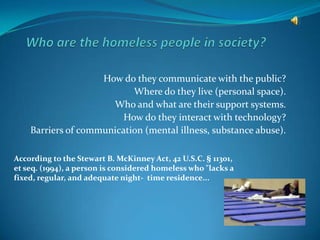
According to the Stewart B. McKinney Act, 42 U.S.C. § 11301,
et seq. (1994), a person is considered homeless who "lacks a
fixed, regular, and adequate night- time residence...
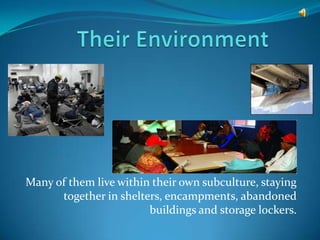
Many of them live within their own subculture, staying
      together in shelters, encampments, abandoned
                        buildings and storage lockers.
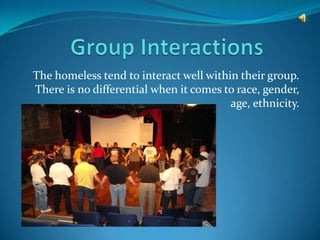
The homeless tend to interact well within their group.
There is no differential when it comes to race, gender,
                                        age, ethnicity.
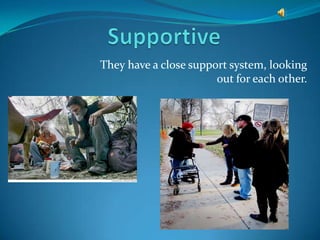
They have a close support system, looking
                       out for each other.
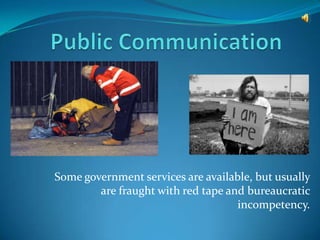
Some government services are available, but usually
        are fraught with red tape and bureaucratic
                                    incompetency.
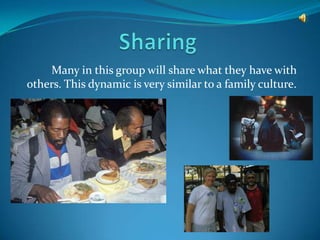
Many in this group will share what they have with
others. This dynamic is very similar to a family culture.
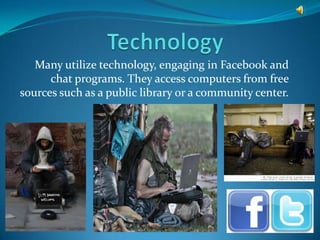
Many utilize technology, engaging in Facebook and
      chat programs. They access computers from free
sources such as a public library or a community center.
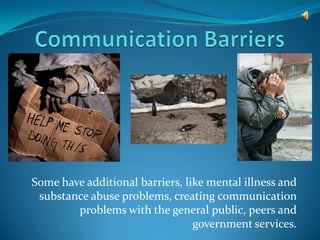
Some have additional barriers, like mental illness and
 substance abuse problems, creating communication
        problems with the general public, peers and
                                 government services.
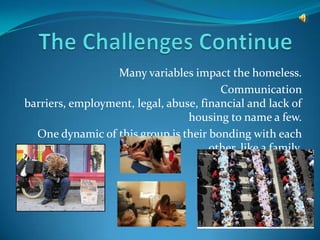
Many variables impact the homeless.
                                        Communication
barriers, employment, legal, abuse, financial and lack of
                                 housing to name a few.
  One dynamic of this group is their bonding with each
                                      other, like a family.
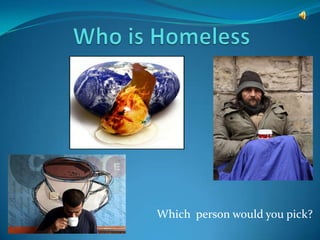
Which person would you pick?

Homless presentation

  • 1.
    A look attheir rapport and communication.
  • 2.
    How do theycommunicate with the public? Where do they live (personal space). Who and what are their support systems. How do they interact with technology? Barriers of communication (mental illness, substance abuse). According to the Stewart B. McKinney Act, 42 U.S.C. § 11301, et seq. (1994), a person is considered homeless who "lacks a fixed, regular, and adequate night- time residence...
  • 3.
    Many of themlive within their own subculture, staying together in shelters, encampments, abandoned buildings and storage lockers.
  • 4.
    The homeless tendto interact well within their group. There is no differential when it comes to race, gender, age, ethnicity.
  • 5.
    They have aclose support system, looking out for each other.
  • 6.
    Some government servicesare available, but usually are fraught with red tape and bureaucratic incompetency.
  • 7.
    Many in thisgroup will share what they have with others. This dynamic is very similar to a family culture.
  • 8.
    Many utilize technology,engaging in Facebook and chat programs. They access computers from free sources such as a public library or a community center.
  • 9.
    Some have additionalbarriers, like mental illness and substance abuse problems, creating communication problems with the general public, peers and government services.
  • 10.
    Many variables impactthe homeless. Communication barriers, employment, legal, abuse, financial and lack of housing to name a few. One dynamic of this group is their bonding with each other, like a family.
  • 11.