TOGETHER,
WE CAN MAKE
A DIFFERENCE.
www.WelcomeHomeBillings.org
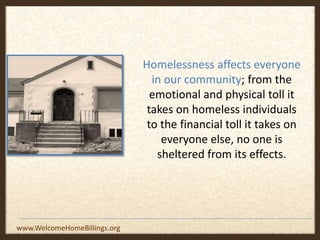
Homelessness affects everyone
in our community; from the
emotional and physical toll it
takes on homeless individuals
to the financial toll it takes on
everyone else, no one is
sheltered from its effects.
www.WelcomeHomeBillings.org
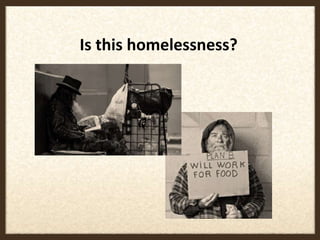
Is this homelessness?
Or this?
Homelessness in Billings
HUD Defines Homeless as Living …
1. Outside or other place not meant for sleeping;
2. Emergency shelter;
3. Domestic violence shelter;
4. Motel or hotel paid for by a
voucher; or
5. Transitional housing program
for homeless persons.
Emergency
Shelter
Domestic
Violence
Shelter
Motel Paid by
Voucher
Transitional
Housing
Program
Outside
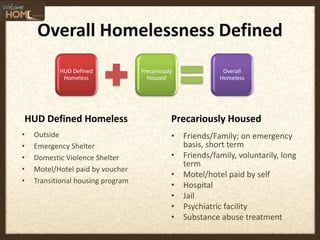
Overall Homelessness Defined
• Outside
• Emergency Shelter
• Domestic Violence Shelter
• Motel/Hotel paid by voucher
• Transitional housing program
• Friends/Family; on emergency
basis, short term
• Friends/family, voluntarily, long
term
• Motel/hotel paid by self
• Hospital
• Jail
• Psychiatric facility
• Substance abuse treatment
HUD Defined Homeless Precariously Housed
HUD Defined
Homeless
Precariously
Housed
Overall
Homeless
Average Homelessness in Billings
For every
10,000
people
living in
Billings, 33
are
homeless
64 of these
individuals
are veterans
321
390
711
0
100
200
300
400
500
600
700
800
HUD Defined
Homelessness
Precariously
Housed
Overall
Homelessness
*Represents averages of annual data from the 2006-2014 Montana Housing Status Surveys
Average Age and Gender of
Billings Homeless
195
153
199
102
7 13
0
50
100
150
200
250
Under
18
18-30 31-50 51-61 62-64 Over 64
60%
40%
Gender
Male Female
AGE
*Represents averages of annual data from the 2006-2014 Montana Housing Status Surveys
DID YOU KNOW?
Families with children are
amongst the fastest growing
sub-population of the
homeless.
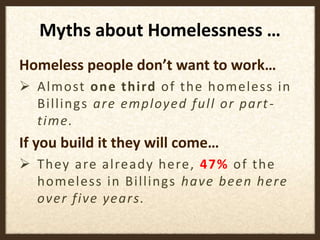
Myths about Homelessness …
Homeless people don’t want to work…
 Almost one third of the homeless in
Billings are employed full or part-
time.
If you build it they will come…
 They are already here, 47% of the
homeless in Billings have been here
over five years.
Length of Time in the Community
Less Than a Month
4%
1-12 Months
10%
13-24 Months
9%
2-5 Years
12%
6-10 Years
11%
11-20 Years
15%
Over 20 Years
21%
*Represents averages of annual data from the 2006-2014 Montana Housing Status Surveys
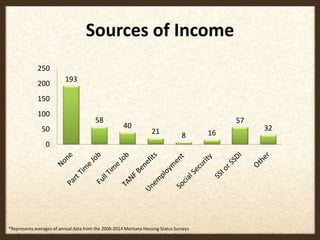
Sources of Income
193
58
40
21 8 16
57
32
0
50
100
150
200
250
*Represents averages of annual data from the 2006-2014 Montana Housing Status Surveys
Sources of Non-Income Benefits
10
11
18
14
5
28
85
204
25
0 50 100 150 200 250
Section 8 Housing
TANF Benefits
Veteran Affairs
WIC
SCHI
Medicare
Medicaid
SNAP
Other
*Represents averages of annual data from the 2006-2014 Montana Housing Status Surveys
Sleeping Locations
15%
22%
7%
8%
34%
13%
Outside
Emergency Shelter
Motel with/Without
Voucher
Transitional Housing
Family and/or
Friends
Other
*Represents averages of annual data from the 2006-2014 Montana Housing Status Surveys
Ethnicity*
52%
7%
34%
3%
White
Hispanic
Native American
African American
*People who identified as Asian, Pacific Islander, or other represented less than 1%
*Represents averages of annual data from the 2006-2014 Montana Housing Status Surveys
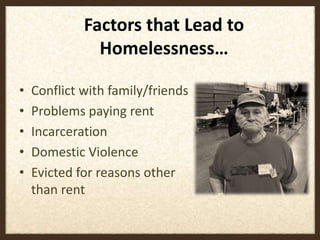
Factors that Lead to
Homelessness…
• Conflict with family/friends
• Problems paying rent
• Incarceration
• Domestic Violence
• Evicted for reasons other
than rent
Average Cost of Living
Monthly Expenses Community Average
Housing $650
Utilities $125
Food $300
Child Care ($22/Day) $484
Health Care $200
Transportation (car payment + fuel) $379
Other (phone, TV, clothing, misc.) $298
Taxes $407
Total $2,843
Based on a full-time employee who earns $8.25/hour ($1 above
minimum wage) will have a net income of $1,367.
Disabling Conditions that Impact
Housing Opportunity
• Substance Abuse
• Lack of Employment
• Physical Disability
• Mental Health
• HIV/AIDS
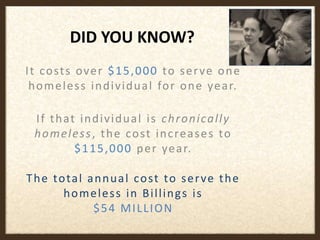
DID YOU KNOW?
It costs over $15,000 to serve one
homeless individual for one year.
If that individual is chronically
homeless, the cost increases to
$115,000 per year.
The total annual cost to serve the
homeless in Billings is
$54 MILLION
Services Needed
Jobs
Affordable Housing
Mental Health Services
Addictions Treatment
• Gather research and data on chronic
homelessness
• Define Billings homeless problem
• Develop strategies to address root causes of
homelessness
• Share knowledge of homelessness with public
B E C A U S E N O O N E H A S T O B E H O M E L E S S .
Mayor’s Committee on Homelessness
History
Structure
No one in Billings has to be homeless. Everyone in Billings
has access to tools and opportunities for safe, appropriate
and affordable housing.
The Mayor’s Committee on Homelessness has partnered
with local organization and community members to develop
and implement a comprehensive ten-year plan in the pursuit
of ending chronic homelessness in the Billings community.
Vision
Mission
Billings
Community
Connect
Billings Metro
VISTA Project
Service
Provider
Collaboration
Social
Enterprise
Spare Change
for Real Change
Housing First
Project
Illuminate
Homelessness
Who are the homeless
They are
Individuals…
And Families.
They are
made up of
both the old…
and the new.
GET INVOLVED
YOU CAN DO SOMETHING
Remember: You can do something: Donate, advocate, volunteer…each effort moves us
that much closer to ending homelessness in Billings.
TO LEARN MORE: WelcomeHomeBillings.org
Here you can learn more about the problem of homelessness in Billings and what our
community is doing to stop impact it. You can find ways to contribute. And if you or
someone you know is in need of support, you can find information on how to get help.
DONATE TODAY
Donate now by going online at www.welcomehomebillings.org/donate
Or by mail at the following address:
Community Development Division
2825 3rd Avenue, 6th Floor
Billings, MT 59101
MAKE CHECKS PAYABLE TO
Mayor’s Committee on Homelessness

Faces of Homelessness Presentation

  • 1.
    TOGETHER, WE CAN MAKE ADIFFERENCE. www.WelcomeHomeBillings.org
  • 2.
    Homelessness affects everyone inour community; from the emotional and physical toll it takes on homeless individuals to the financial toll it takes on everyone else, no one is sheltered from its effects. www.WelcomeHomeBillings.org
  • 3.
  • 4.
  • 5.
  • 6.
    HUD Defines Homelessas Living … 1. Outside or other place not meant for sleeping; 2. Emergency shelter; 3. Domestic violence shelter; 4. Motel or hotel paid for by a voucher; or 5. Transitional housing program for homeless persons. Emergency Shelter Domestic Violence Shelter Motel Paid by Voucher Transitional Housing Program Outside
  • 7.
    Overall Homelessness Defined •Outside • Emergency Shelter • Domestic Violence Shelter • Motel/Hotel paid by voucher • Transitional housing program • Friends/Family; on emergency basis, short term • Friends/family, voluntarily, long term • Motel/hotel paid by self • Hospital • Jail • Psychiatric facility • Substance abuse treatment HUD Defined Homeless Precariously Housed HUD Defined Homeless Precariously Housed Overall Homeless
  • 8.
    Average Homelessness inBillings For every 10,000 people living in Billings, 33 are homeless 64 of these individuals are veterans 321 390 711 0 100 200 300 400 500 600 700 800 HUD Defined Homelessness Precariously Housed Overall Homelessness *Represents averages of annual data from the 2006-2014 Montana Housing Status Surveys
  • 9.
    Average Age andGender of Billings Homeless 195 153 199 102 7 13 0 50 100 150 200 250 Under 18 18-30 31-50 51-61 62-64 Over 64 60% 40% Gender Male Female AGE *Represents averages of annual data from the 2006-2014 Montana Housing Status Surveys
  • 10.
    DID YOU KNOW? Familieswith children are amongst the fastest growing sub-population of the homeless.
  • 11.
    Myths about Homelessness… Homeless people don’t want to work…  Almost one third of the homeless in Billings are employed full or part- time. If you build it they will come…  They are already here, 47% of the homeless in Billings have been here over five years.
  • 12.
    Length of Timein the Community Less Than a Month 4% 1-12 Months 10% 13-24 Months 9% 2-5 Years 12% 6-10 Years 11% 11-20 Years 15% Over 20 Years 21% *Represents averages of annual data from the 2006-2014 Montana Housing Status Surveys
  • 13.
    Sources of Income 193 58 40 218 16 57 32 0 50 100 150 200 250 *Represents averages of annual data from the 2006-2014 Montana Housing Status Surveys
  • 14.
    Sources of Non-IncomeBenefits 10 11 18 14 5 28 85 204 25 0 50 100 150 200 250 Section 8 Housing TANF Benefits Veteran Affairs WIC SCHI Medicare Medicaid SNAP Other *Represents averages of annual data from the 2006-2014 Montana Housing Status Surveys
  • 15.
    Sleeping Locations 15% 22% 7% 8% 34% 13% Outside Emergency Shelter Motelwith/Without Voucher Transitional Housing Family and/or Friends Other *Represents averages of annual data from the 2006-2014 Montana Housing Status Surveys
  • 16.
    Ethnicity* 52% 7% 34% 3% White Hispanic Native American African American *Peoplewho identified as Asian, Pacific Islander, or other represented less than 1% *Represents averages of annual data from the 2006-2014 Montana Housing Status Surveys
  • 17.
    Factors that Leadto Homelessness… • Conflict with family/friends • Problems paying rent • Incarceration • Domestic Violence • Evicted for reasons other than rent
  • 18.
    Average Cost ofLiving Monthly Expenses Community Average Housing $650 Utilities $125 Food $300 Child Care ($22/Day) $484 Health Care $200 Transportation (car payment + fuel) $379 Other (phone, TV, clothing, misc.) $298 Taxes $407 Total $2,843 Based on a full-time employee who earns $8.25/hour ($1 above minimum wage) will have a net income of $1,367.
  • 19.
    Disabling Conditions thatImpact Housing Opportunity • Substance Abuse • Lack of Employment • Physical Disability • Mental Health • HIV/AIDS
  • 20.
    DID YOU KNOW? Itcosts over $15,000 to serve one homeless individual for one year. If that individual is chronically homeless, the cost increases to $115,000 per year. The total annual cost to serve the homeless in Billings is $54 MILLION
  • 21.
    Services Needed Jobs Affordable Housing MentalHealth Services Addictions Treatment
  • 22.
    • Gather researchand data on chronic homelessness • Define Billings homeless problem • Develop strategies to address root causes of homelessness • Share knowledge of homelessness with public B E C A U S E N O O N E H A S T O B E H O M E L E S S . Mayor’s Committee on Homelessness
  • 23.
  • 24.
    No one inBillings has to be homeless. Everyone in Billings has access to tools and opportunities for safe, appropriate and affordable housing. The Mayor’s Committee on Homelessness has partnered with local organization and community members to develop and implement a comprehensive ten-year plan in the pursuit of ending chronic homelessness in the Billings community. Vision Mission
  • 25.
  • 26.
    Who are thehomeless
  • 27.
  • 28.
  • 29.
    They are made upof both the old…
  • 30.
  • 31.
    GET INVOLVED YOU CANDO SOMETHING Remember: You can do something: Donate, advocate, volunteer…each effort moves us that much closer to ending homelessness in Billings. TO LEARN MORE: WelcomeHomeBillings.org Here you can learn more about the problem of homelessness in Billings and what our community is doing to stop impact it. You can find ways to contribute. And if you or someone you know is in need of support, you can find information on how to get help. DONATE TODAY Donate now by going online at www.welcomehomebillings.org/donate Or by mail at the following address: Community Development Division 2825 3rd Avenue, 6th Floor Billings, MT 59101 MAKE CHECKS PAYABLE TO Mayor’s Committee on Homelessness

Editor's Notes

  • #21 The cost of homelessness can be quite high for those experiencing homelessness and for taxpayers subsidizing public systems. During the course of a year, a chronically homeless individual often cycles through public systems including shelters, jail, addiction/mental health treatment facilities, and emergency medical centers. The $15,000/individual was estimated using the Billings Addendum in 2007, the cost to serve the chronically homeless was estimated by the Community Crisis Center. chronically homeless: a homeless individual or family with a disabling condition that has either been continually homeless for a year or more, or has had at least four episodes of homelessness in the past three years. A person or family may have been sleeping in a place not meant for human habitation and / or in an emergency homeless shelter, or staying doubled up with family or friends. A disabling condition is defined as a diagnosable substance use disorder, serious mental illness, developmental disability, or chronic physical illness or disability including the co-occurrence of two or more of these conditions. temporarily homeless: short-term homelessness lasting no more than six months, and excludes cases in which individuals have previous experience with homelessness.