Historical Context of the US Penal
System
● Colonial US - very severe system of
punishment for crimes (public shaming,
flogging, exile or execution)
○ Role of religious ideals
○ Formed a norm of RETRIBUTION and
PUNISHMENT
○ British criminals were banished to the
US, a lot of colonies were made up of
british criminals
● After the revolutionary war (late 1700s and
into the 1800s), population increased a lot,
jails overcrowded, conditions worsened
(STILL AN ISSUE)
● Not enough money → prisoners became
laborers → perpetuated slavery after the civil
war
● Racially biased justice system - African
Americans targeted by law enforcement
authorities and given heavy sentences
How did the United
States develop a
criminal justice
system that relies
so heavily on
incarceration?
Religious Influence ● “The lack of distinction between crime and
sin, informed and perpetuated a belief that it
was thus the work of the devil and not
worthy of further exploration” (Dr. Kirk
Anthony James)
● Early colonies relied on religion to inform
morality and punishment, to maintain “social
order”
● Punishment served more as a deterrent and
means of conformance, hoping to draw
deviant individuals back into the fold (Hirsch,
1992)
● This influence still exists in subtle and overt
ways
The Convict Lease
System
● Prisoners in the custody of the state were
leased to private enterprises
● Essentially a perpetuation of slavery →
legalized slavery in a different way
● Unnecessary harm/corporal punishment
(even though technically illegal at this point)
was common especially for the African
American inmates
● Slavery model for rebuilding a war-ravaged
economy and infrastructure
● A way to continue terrible racism and slavery
Purpose of a Prison
● 20th Century - became clear that prisons
were made with the purpose of ISOLATION
of “UNWANTED” individuals
○ US mindset of othering, hierarchy,
status
● Most prison facilities are constructed in
remote, rural areas rather than cities
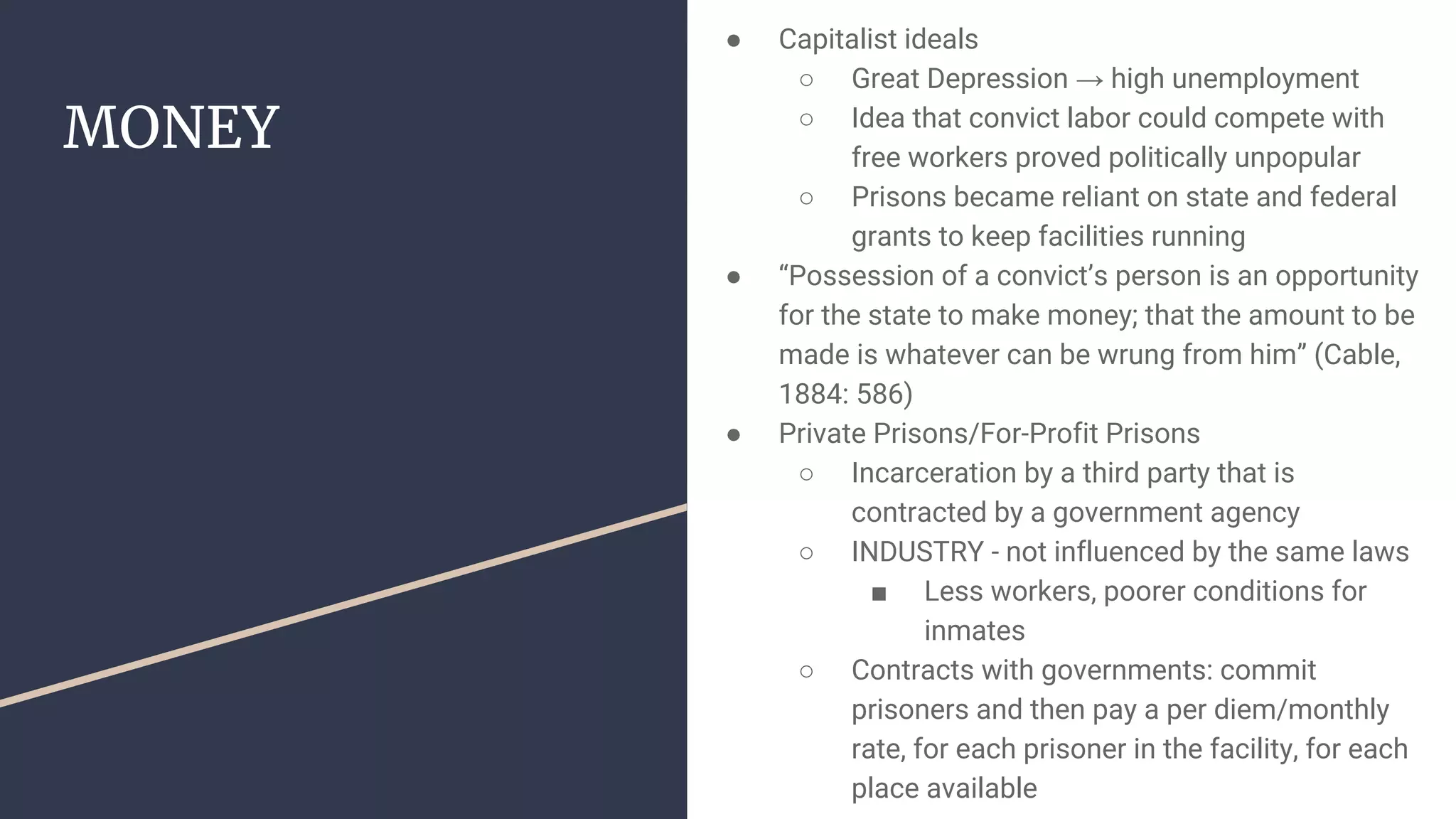
MONEY
● Capitalist ideals
○ Great Depression → high unemployment
○ Idea that convict labor could compete with
free workers proved politically unpopular
○ Prisons became reliant on state and federal
grants to keep facilities running
● “Possession of a convict’s person is an opportunity
for the state to make money; that the amount to be
made is whatever can be wrung from him” (Cable,
1884: 586)
● Private Prisons/For-Profit Prisons
○ Incarceration by a third party that is
contracted by a government agency
○ INDUSTRY - not influenced by the same laws
■ Less workers, poorer conditions for
inmates
○ Contracts with governments: commit
prisoners and then pay a per diem/monthly
rate, for each prisoner in the facility, for each
place available
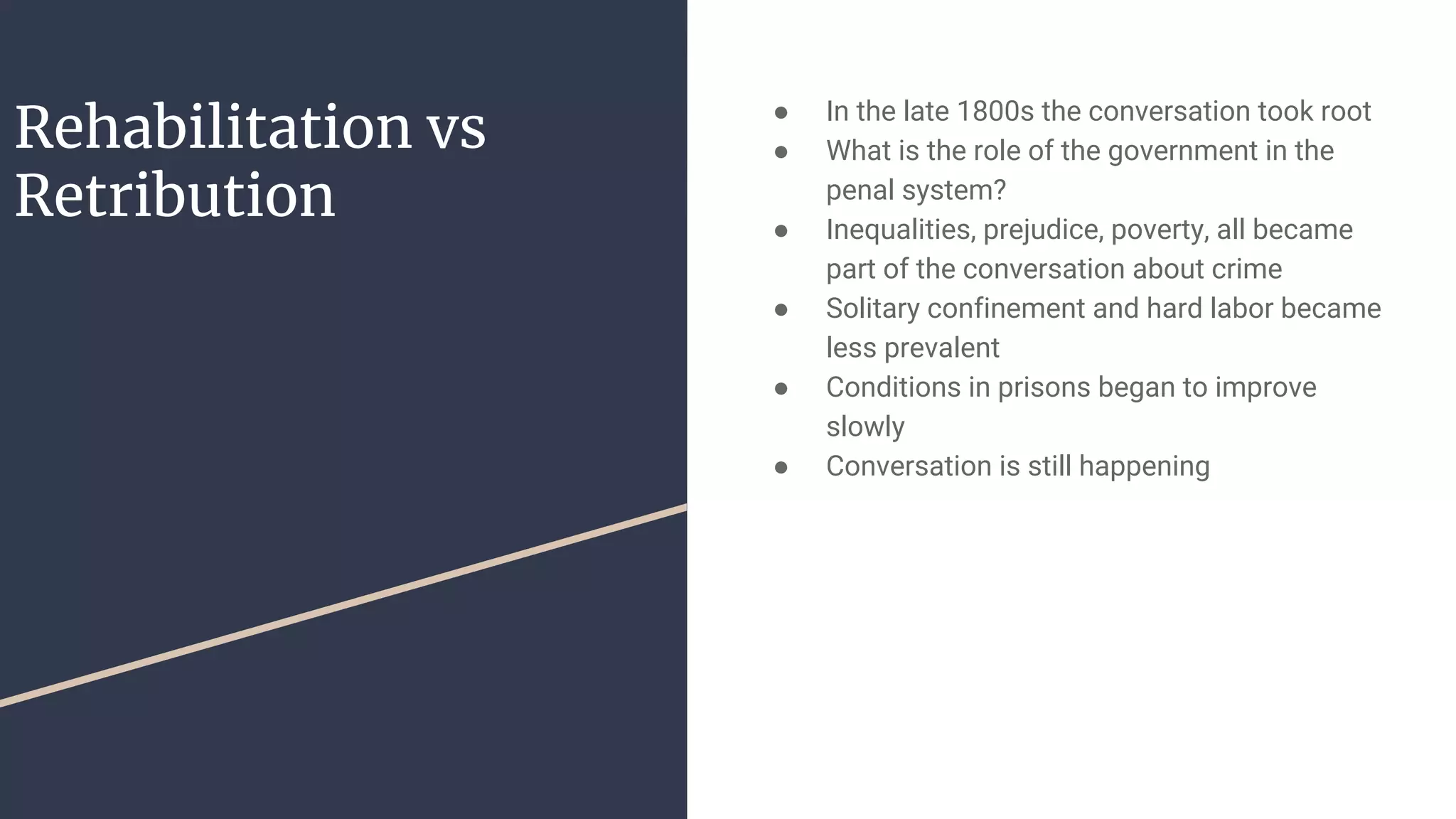
Rehabilitation vs
Retribution
● In the late 1800s the conversation took root
● What is the role of the government in the
penal system?
● Inequalities, prejudice, poverty, all became
part of the conversation about crime
● Solitary confinement and hard labor became
less prevalent
● Conditions in prisons began to improve
slowly
● Conversation is still happening
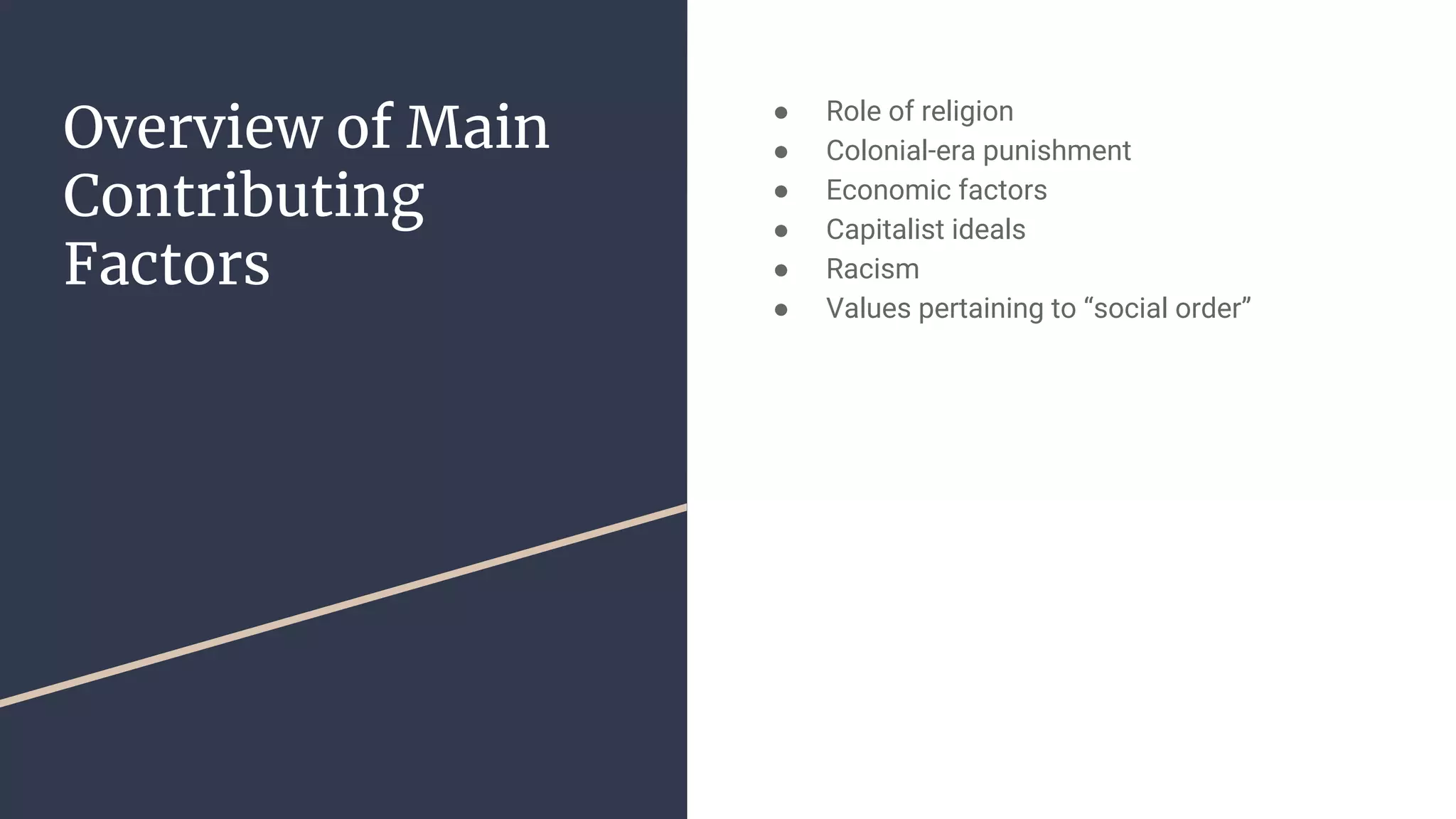
Overview of Main
Contributing
Factors
● Role of religion
● Colonial-era punishment
● Economic factors
● Capitalist ideals
● Racism
● Values pertaining to “social order”
What is it like at
home?
Similar?
Different?
Why?

Historical Context Of The US Penal System

  • 1.
    Historical Context ofthe US Penal System
  • 2.
    ● Colonial US- very severe system of punishment for crimes (public shaming, flogging, exile or execution) ○ Role of religious ideals ○ Formed a norm of RETRIBUTION and PUNISHMENT ○ British criminals were banished to the US, a lot of colonies were made up of british criminals ● After the revolutionary war (late 1700s and into the 1800s), population increased a lot, jails overcrowded, conditions worsened (STILL AN ISSUE) ● Not enough money → prisoners became laborers → perpetuated slavery after the civil war ● Racially biased justice system - African Americans targeted by law enforcement authorities and given heavy sentences How did the United States develop a criminal justice system that relies so heavily on incarceration?
  • 3.
    Religious Influence ●“The lack of distinction between crime and sin, informed and perpetuated a belief that it was thus the work of the devil and not worthy of further exploration” (Dr. Kirk Anthony James) ● Early colonies relied on religion to inform morality and punishment, to maintain “social order” ● Punishment served more as a deterrent and means of conformance, hoping to draw deviant individuals back into the fold (Hirsch, 1992) ● This influence still exists in subtle and overt ways
  • 4.
    The Convict Lease System ●Prisoners in the custody of the state were leased to private enterprises ● Essentially a perpetuation of slavery → legalized slavery in a different way ● Unnecessary harm/corporal punishment (even though technically illegal at this point) was common especially for the African American inmates ● Slavery model for rebuilding a war-ravaged economy and infrastructure ● A way to continue terrible racism and slavery
  • 5.
    Purpose of aPrison ● 20th Century - became clear that prisons were made with the purpose of ISOLATION of “UNWANTED” individuals ○ US mindset of othering, hierarchy, status ● Most prison facilities are constructed in remote, rural areas rather than cities
  • 6.
    MONEY ● Capitalist ideals ○Great Depression → high unemployment ○ Idea that convict labor could compete with free workers proved politically unpopular ○ Prisons became reliant on state and federal grants to keep facilities running ● “Possession of a convict’s person is an opportunity for the state to make money; that the amount to be made is whatever can be wrung from him” (Cable, 1884: 586) ● Private Prisons/For-Profit Prisons ○ Incarceration by a third party that is contracted by a government agency ○ INDUSTRY - not influenced by the same laws ■ Less workers, poorer conditions for inmates ○ Contracts with governments: commit prisoners and then pay a per diem/monthly rate, for each prisoner in the facility, for each place available
  • 7.
    Rehabilitation vs Retribution ● Inthe late 1800s the conversation took root ● What is the role of the government in the penal system? ● Inequalities, prejudice, poverty, all became part of the conversation about crime ● Solitary confinement and hard labor became less prevalent ● Conditions in prisons began to improve slowly ● Conversation is still happening
  • 8.
    Overview of Main Contributing Factors ●Role of religion ● Colonial-era punishment ● Economic factors ● Capitalist ideals ● Racism ● Values pertaining to “social order”
  • 9.
    What is itlike at home? Similar? Different? Why?