
HISTORICAL SOURCES AND
HOW TO MAKE A HISTORICAL TEXT ANALYSIS
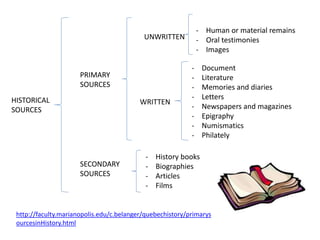
HISTORICAL
SOURCES
PRIMARY
SOURCES
SECONDARY
SOURCES
UNWRITTEN
WRITTEN
- Human or material remains
- Oral testimonies
- Images
- Document
- Literature
- Memories and diaries
- Letters
- Newspapers and magazines
- Epigraphy
- Numismatics
- Philately
- History books
- Biographies
- Articles
- Films
http://faculty.marianopolis.edu/c.belanger/quebechistory/primarysourc
esinHistory.html
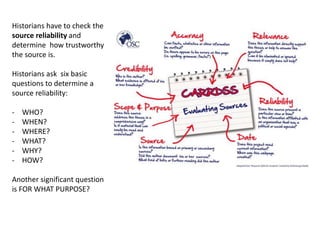
Historians have to check the
source reliability and
determine how trustworthy
the source is.
Historians ask six basic
questions to determine a
source reliability:
- WHO?
- WHEN?
- WHERE?
- WHAT?
- WHY?
- HOW?
Another significant question
is FOR WHAT PURPOSE?
Not everything you find on
books or the Internet is
accurate or reliable.
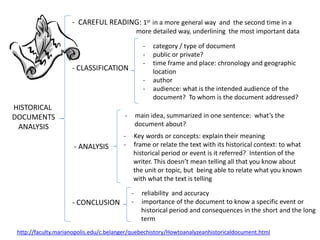
HISTORICAL
DOCUMENTS
ANALYSIS
- CAREFUL READING: 1st in a more general way and the second time in a more
detailed way, underlining the most important data
- CLASSIFICATION
- ANALYSIS
- CONCLUSION
- category / type of document
- public or private?
- time frame and place: chronology and geographic location
- author:brief biography
- audience: what is the intended audience of the document?
To whom is the document addressed?
- reliability and accuracy
- importance of the document: Why is the document
important? How does it contribute to the knowledge of the
period?
- consequenes in the short and the long term
- Key words or concepts: explain their meaning
- Explain with your own words what the text is saying and why,
what the intention of the writer is
- Frame or relate the text with its historical context . This doesn’t
mean explaining all that you know about the unit or topic, but
being able to relate or connect what the text is saying with what
you know.
- Main idea, summarized in one sentence: what’s the text about?
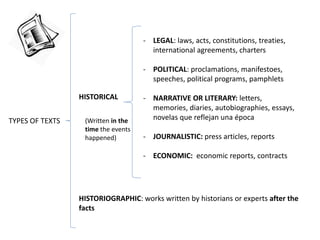
TYPES OF TEXTS
HISTORICAL
(PRIMARY
SOURCES)
HISTORIOGRAPHIC
(SECONDARY SOURCES)
- LEGAL: laws, acts, constitutions, treaties,
international agreements, charters
- POLITICAL: proclamations, manifestoes,
speeches, political programs, pamphlets
- NARRATIVE OR LITERARY: letters,
memories, diaries, autobiographies, essays,
novels that reflect a period
- JOURNALISTIC: press articles, reports
- ECONOMIC: economic reports, contracts
(Written in the
time the events
happened)
works written by historians or experts after
the facts
WHAT YOU MUSTN’T DO IN A TEXT ANALYSIS?
- PARAPHRASE THE TEXT: REPEATING WHAT THE
TEXT SAYS WITH OTHER WORDS, WITHOUT
EXPLAINING ANYTHING
- COPY PARTS OF THE TEXT LITERALLY YOU CAN
TAKE SOME SENTENCES OF THE TEXT LITERALLY
AS AN EXAMPLE OF SOMETHING YOU’VE
EXPLAINED PREVIOUSLY, BUT WHAT YOU COPY
HAS TO BE WRITTEN “IN BRACKETS”, SO THAT IT
CAN BE EASILY DISTINGUISHED FROM WHAT YOU
HAVE WRITTEN PERSONALLY
- USE THE TEXT AS A PRETEXT OR EXCUSE TO
“PUKE”A QUESTION OR UNIT.
- EXPRESS YOUR PERSONAL OPINION IN THE
CONCLUSION. YOU HAVE TO TRY TO BE
OBJECTIVE. DON’T USE THE FIRST PERSON (I, ME,
MY)

Historical sources and how to write a historical text analysis

  • 1.
    HISTORICAL SOURCES AND HOWTO MAKE A HISTORICAL TEXT ANALYSIS
  • 2.
    HISTORICAL SOURCES PRIMARY SOURCES SECONDARY SOURCES UNWRITTEN WRITTEN - Human ormaterial remains - Oral testimonies - Images - Document - Literature - Memories and diaries - Letters - Newspapers and magazines - Epigraphy - Numismatics - Philately - History books - Biographies - Articles - Films http://faculty.marianopolis.edu/c.belanger/quebechistory/primarysourc esinHistory.html
  • 3.
    Historians have tocheck the source reliability and determine how trustworthy the source is. Historians ask six basic questions to determine a source reliability: - WHO? - WHEN? - WHERE? - WHAT? - WHY? - HOW? Another significant question is FOR WHAT PURPOSE?
  • 4.
    Not everything youfind on books or the Internet is accurate or reliable.
  • 5.
    HISTORICAL DOCUMENTS ANALYSIS - CAREFUL READING:1st in a more general way and the second time in a more detailed way, underlining the most important data - CLASSIFICATION - ANALYSIS - CONCLUSION - category / type of document - public or private? - time frame and place: chronology and geographic location - author:brief biography - audience: what is the intended audience of the document? To whom is the document addressed? - reliability and accuracy - importance of the document: Why is the document important? How does it contribute to the knowledge of the period? - consequenes in the short and the long term - Key words or concepts: explain their meaning - Explain with your own words what the text is saying and why, what the intention of the writer is - Frame or relate the text with its historical context . This doesn’t mean explaining all that you know about the unit or topic, but being able to relate or connect what the text is saying with what you know. - Main idea, summarized in one sentence: what’s the text about?
  • 6.
    TYPES OF TEXTS HISTORICAL (PRIMARY SOURCES) HISTORIOGRAPHIC (SECONDARYSOURCES) - LEGAL: laws, acts, constitutions, treaties, international agreements, charters - POLITICAL: proclamations, manifestoes, speeches, political programs, pamphlets - NARRATIVE OR LITERARY: letters, memories, diaries, autobiographies, essays, novels that reflect a period - JOURNALISTIC: press articles, reports - ECONOMIC: economic reports, contracts (Written in the time the events happened) works written by historians or experts after the facts
  • 7.
    WHAT YOU MUSTN’TDO IN A TEXT ANALYSIS? - PARAPHRASE THE TEXT: REPEATING WHAT THE TEXT SAYS WITH OTHER WORDS, WITHOUT EXPLAINING ANYTHING - COPY PARTS OF THE TEXT LITERALLY YOU CAN TAKE SOME SENTENCES OF THE TEXT LITERALLY AS AN EXAMPLE OF SOMETHING YOU’VE EXPLAINED PREVIOUSLY, BUT WHAT YOU COPY HAS TO BE WRITTEN “IN BRACKETS”, SO THAT IT CAN BE EASILY DISTINGUISHED FROM WHAT YOU HAVE WRITTEN PERSONALLY - USE THE TEXT AS A PRETEXT OR EXCUSE TO “PUKE”A QUESTION OR UNIT. - EXPRESS YOUR PERSONAL OPINION IN THE CONCLUSION. YOU HAVE TO TRY TO BE OBJECTIVE. DON’T USE THE FIRST PERSON (I, ME, MY)