The Troubles
Ireland in Ethnic Conflict
     from 1969-1998
Background
Why did the “troubles” even occur?

     Why so much violence?

       Was it because of…
Religious Differences?
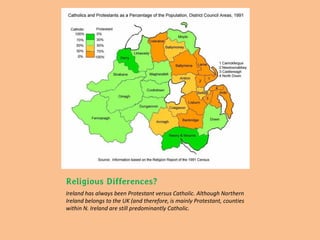
Ireland has always been Protestant versus Catholic. Although Northern
Ireland belongs to the UK (and therefore, is mainly Protestant, counties
within N. Ireland are still predominantly Catholic.
The Home Rule Issue?
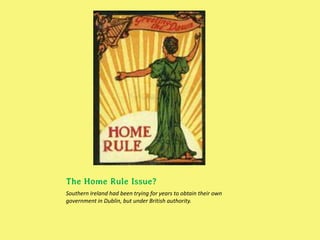
Southern Ireland had been trying for years to obtain their own
government in Dublin, but under British authority.
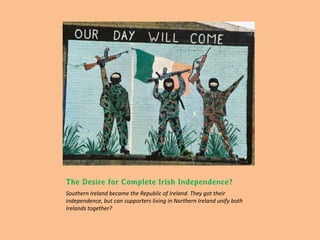
The Desire for Complete Irish Independence?
Southern Ireland became the Republic of Ireland. They got their
independence, but can supporters living in Northern Ireland unify both
Irelands together?
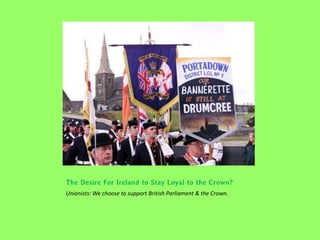
The Desire For Ireland to Stay Loyal to the Crown?
Unionists: We choose to support British Parliament & the Crown.
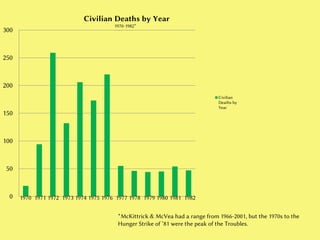
Civilian Deaths by Year
                                      1970-1982*
300                                   1970-1982


250


200
                                                                             Civilian
                                                                             Deaths by
                                                                             Year
150


100


 50


  0 1970 1971 1972 1973 1974 1975 1976 1977 1978 1979 1980 1981 1982

                                        *McKittrick & McVea had a range from 1966-2001, but the 1970s to the
                                        Hunger Strike of ‘81 were the peak of the Troubles.
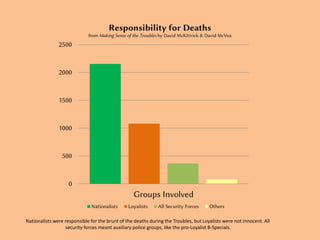
Responsibility for Deaths
                             from Making Sense of the Troubles by David McKittrick & David McVea
               2500


               2000


               1500


               1000


                 500


                    0
                                                  Groups Involved
                              Nationalists      Loyalists     All Security Forces     Others

Nationalists were responsible for the brunt of the deaths during the Troubles, but Loyalists were not innocent. All
                  security forces meant auxiliary police groups, like the pro-Loyalist B-Specials.
Momentum
Battle of the Bogside: 12-14 August 1969
Derry/Londonderry, Northern Ireland
• November 1969: Ulster Defence
              Regiment replaces B-Specials
1969-1973
            • July 1970: All marches, including
              Drumcree, are banned.

            • February 1971: IRA shoots Robert
              Curtis, the first serving soldier to die in
              the Troubles.
A Brief     • January 1972: Bloody Sunday redux—13
              men shot in Derry/Londonderry by

Timeline      army.

            • July 1972: Bloody Friday—22 IRA
              bombs kill nine civilians and numerous
              are injured.

            • December 1973: Sunningdale…
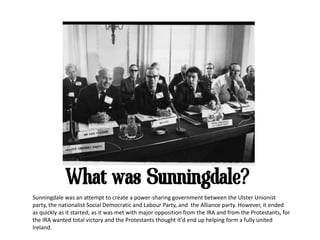
What was Sunningdale?
Sunningdale was an attempt to create a power-sharing government between the Ulster Unionist
party, the nationalist Social Democratic and Labour Party, and the Alliance party. However, it ended
as quickly as it started, as it was met with major opposition from the IRA and from the Protestants, for
the IRA wanted total victory and the Protestants thought it’d end up helping form a fully united
Ireland.
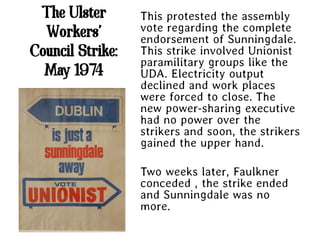
The Ulster       This protested the assembly
  Workers’        vote regarding the complete
                  endorsement of Sunningdale.
Council Strike:   This strike involved Unionist
                  paramilitary groups like the
  May 1974        UDA. Electricity output
                  declined and work places
                  were forced to close. The
                  new power-sharing executive
                  had no power over the
                  strikers and soon, the strikers
                  gained the upper hand.

                  Two weeks later, Faulkner
                  conceded , the strike ended
                  and Sunningdale was no
                  more.
The Origins of Criminalization: 1976
 As paramilitary actions became more
 violent after Sunningdale fell through,
 increasing numbers of paramilitary
 members from both sides were jailed.

 Typically detained at Long Kesh
 prison, paramilitary members had one
 thing ordinary prisoners did not…


 Special Category Status (1972):
 This meant they were political prisoners
 and were treated to certain privileges
 ordinary prisoners were not. They didn’t
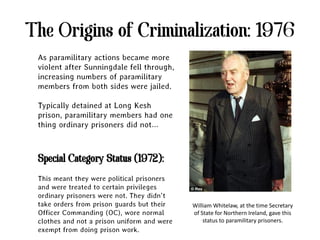
 take orders from prison guards but their    William Whitelaw, at the time Secretary
 Officer Commanding (OC), wore normal        of State for Northern Ireland, gave this
 clothes and not a prison uniform and were       status to paramilitary prisoners.
 exempt from doing prison work.
Regrets: Criminalization, 1976
Whitelaw, in retrospect four years later,
 chooses to revoke it.


What does this mean for paramilitary prisoners now?

They are now ordinary prisoners and their
  privileges do not exist. Their crimes are not
  classified as being “politically” motivated.
What Would A Paramilitary Do?
      Revenge!                       They went to the extreme to get their
                                         status back. Paramilitary strikes
   Early Strikes,                                   included:
    1976-1980
                                   1976: Going “on the blanket.”
What would a paramilitary do?
                                     This protest started it all; when newly detained
Revolt, of course.
                                     prisoners were given their uniform, they refused
                                     to wear it and leave their cell. They only had one
Housed in three specific jails       thing to wear…the blankets on their beds. By
throughout Northern Ireland,         1978, 300 prisoners were “on the blanket.”
paramilitary prisoners planned
numerous strikes in order to
get their political status back.   1978: The “Dirty” Protests
                                     The prisoners didn’t have enough support from
                                     the outside, so they stepped it up a bit in 1978.
Check out this map to see            What started out as a “no-wash” protest
more information about the           culminated into the dirty protest. They refused to
jails, and their location            leave their cells and as a result, chamber pots got
throughout Northern Ireland.         full and caused this…
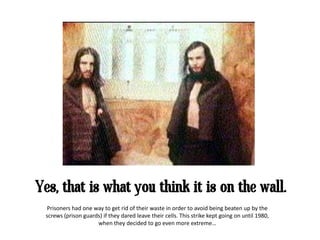
Yes, that is what you think it is on the wall.
  Prisoners had one way to get rid of their waste in order to avoid being beaten up by the
 screws (prison guards) if they dared leave their cells. This strike kept going on until 1980,
                     when they decided to go even more extreme…
Hunger Strike: 1980

Hist390pres

  • 1.
    The Troubles Ireland inEthnic Conflict from 1969-1998
  • 2.
    Background Why did the“troubles” even occur? Why so much violence? Was it because of…
  • 3.
    Religious Differences? Ireland hasalways been Protestant versus Catholic. Although Northern Ireland belongs to the UK (and therefore, is mainly Protestant, counties within N. Ireland are still predominantly Catholic.
  • 4.
    The Home RuleIssue? Southern Ireland had been trying for years to obtain their own government in Dublin, but under British authority.
  • 5.
    The Desire forComplete Irish Independence? Southern Ireland became the Republic of Ireland. They got their independence, but can supporters living in Northern Ireland unify both Irelands together?
  • 6.
    The Desire ForIreland to Stay Loyal to the Crown? Unionists: We choose to support British Parliament & the Crown.
  • 7.
    Civilian Deaths byYear 1970-1982* 300 1970-1982 250 200 Civilian Deaths by Year 150 100 50 0 1970 1971 1972 1973 1974 1975 1976 1977 1978 1979 1980 1981 1982 *McKittrick & McVea had a range from 1966-2001, but the 1970s to the Hunger Strike of ‘81 were the peak of the Troubles.
  • 8.
    Responsibility for Deaths from Making Sense of the Troubles by David McKittrick & David McVea 2500 2000 1500 1000 500 0 Groups Involved Nationalists Loyalists All Security Forces Others Nationalists were responsible for the brunt of the deaths during the Troubles, but Loyalists were not innocent. All security forces meant auxiliary police groups, like the pro-Loyalist B-Specials.
  • 9.
    Momentum Battle of theBogside: 12-14 August 1969 Derry/Londonderry, Northern Ireland
  • 10.
    • November 1969:Ulster Defence Regiment replaces B-Specials 1969-1973 • July 1970: All marches, including Drumcree, are banned. • February 1971: IRA shoots Robert Curtis, the first serving soldier to die in the Troubles. A Brief • January 1972: Bloody Sunday redux—13 men shot in Derry/Londonderry by Timeline army. • July 1972: Bloody Friday—22 IRA bombs kill nine civilians and numerous are injured. • December 1973: Sunningdale…
  • 11.
    What was Sunningdale? Sunningdalewas an attempt to create a power-sharing government between the Ulster Unionist party, the nationalist Social Democratic and Labour Party, and the Alliance party. However, it ended as quickly as it started, as it was met with major opposition from the IRA and from the Protestants, for the IRA wanted total victory and the Protestants thought it’d end up helping form a fully united Ireland.
  • 12.
    The Ulster This protested the assembly Workers’ vote regarding the complete endorsement of Sunningdale. Council Strike: This strike involved Unionist paramilitary groups like the May 1974 UDA. Electricity output declined and work places were forced to close. The new power-sharing executive had no power over the strikers and soon, the strikers gained the upper hand. Two weeks later, Faulkner conceded , the strike ended and Sunningdale was no more.
  • 13.
    The Origins ofCriminalization: 1976 As paramilitary actions became more violent after Sunningdale fell through, increasing numbers of paramilitary members from both sides were jailed. Typically detained at Long Kesh prison, paramilitary members had one thing ordinary prisoners did not… Special Category Status (1972): This meant they were political prisoners and were treated to certain privileges ordinary prisoners were not. They didn’t take orders from prison guards but their William Whitelaw, at the time Secretary Officer Commanding (OC), wore normal of State for Northern Ireland, gave this clothes and not a prison uniform and were status to paramilitary prisoners. exempt from doing prison work.
  • 14.
    Regrets: Criminalization, 1976 Whitelaw,in retrospect four years later, chooses to revoke it. What does this mean for paramilitary prisoners now? They are now ordinary prisoners and their privileges do not exist. Their crimes are not classified as being “politically” motivated.
  • 15.
    What Would AParamilitary Do? Revenge! They went to the extreme to get their status back. Paramilitary strikes Early Strikes, included: 1976-1980 1976: Going “on the blanket.” What would a paramilitary do? This protest started it all; when newly detained Revolt, of course. prisoners were given their uniform, they refused to wear it and leave their cell. They only had one Housed in three specific jails thing to wear…the blankets on their beds. By throughout Northern Ireland, 1978, 300 prisoners were “on the blanket.” paramilitary prisoners planned numerous strikes in order to get their political status back. 1978: The “Dirty” Protests The prisoners didn’t have enough support from the outside, so they stepped it up a bit in 1978. Check out this map to see What started out as a “no-wash” protest more information about the culminated into the dirty protest. They refused to jails, and their location leave their cells and as a result, chamber pots got throughout Northern Ireland. full and caused this…
  • 16.
    Yes, that iswhat you think it is on the wall. Prisoners had one way to get rid of their waste in order to avoid being beaten up by the screws (prison guards) if they dared leave their cells. This strike kept going on until 1980, when they decided to go even more extreme…
  • 17.

Editor's Notes

  • #10 Here I wish to link to a map of the evacuation plan by the British army overlaid on a map of the Derry/Londonderry area, but right now, Google Earth is giving me some issues.