


Presented at MN Statewide High Tunnel
Conference, Feb 17, 2015.
Arrowwood Lodge, Baxter, MN
Larry D Jacobson, Professor and
Extension Agricultural Engineer
Dept of Bioproducts & Biosystems Engineering
University of Minnesota, St.Paul, MN
Understanding High Tunnel
Ventilation in Detail
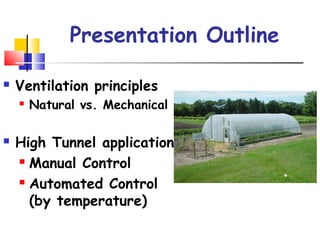
Presentation Outline
 Ventilation principles
 Natural vs. Mechanical
 High Tunnel application
 Manual Control
 Automated Control
(by temperature)
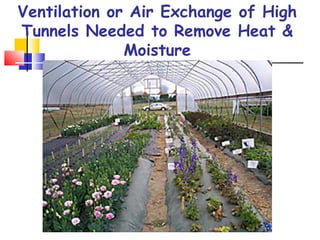
Ventilation or Air Exchange of High
Tunnels Needed to Remove Heat &
Moisture
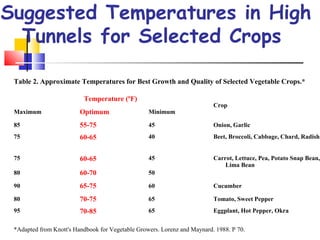
Suggested Temperatures in High
Tunnels for Selected Crops
Table 2. Approximate Temperatures for Best Growth and Quality of Selected Vegetable Crops.*
Temperature (ºF)
Crop
Maximum Optimum Minimum
85 55-75 45 Onion, Garlic
75 60-65 40 Beet, Broccoli, Cabbage, Chard, Radish
75 60-65 45 Carrot, Lettuce, Pea, Potato Snap Bean,
Lima Bean
80 60-70 50
90 65-75 60 Cucumber
80 70-75 65 Tomato, Sweet Pepper
95 70-85 65 Eggplant, Hot Pepper, Okra
*Adapted from Knott's Handbook for Vegetable Growers. Lorenz and Maynard. 1988. P 70.
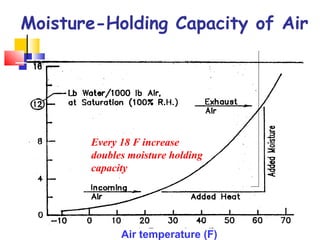
Air temperature (F)
Moisture-Holding Capacity of Air
Every 18 F increase
doubles moisture holding
capacity
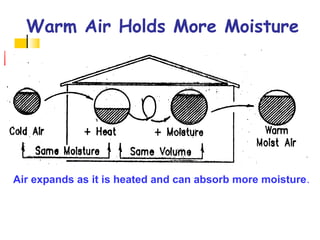
Air expands as it is heated and can absorb more moisture.
Warm Air Holds More Moisture
Two Different Ventilation
Systems used in HT
 Natural Ventilation
 Driving Forces –

Thermal Buoyancy

Wind
 Mechanical Ventilation
 Driving Force –

Exhaust Fans
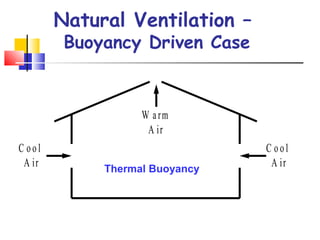
Natural Ventilation –
Buoyancy Driven Case
W a rm
A ir
C o o l
A ir
C o o l
A irThermal Buoyancy
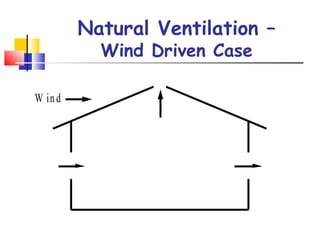
Natural Ventilation –
Wind Driven Case
W in d
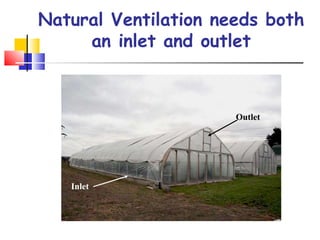
Natural Ventilation needs both
an inlet and outlet
Outlet
Inlet
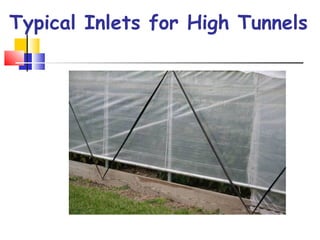
Typical Inlets for High Tunnels
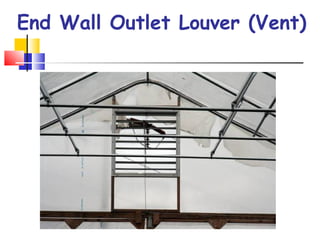
End Wall Outlet Louver (Vent)
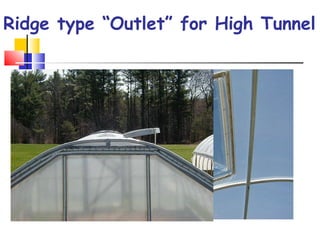
Ridge type “Outlet” for High Tunnel
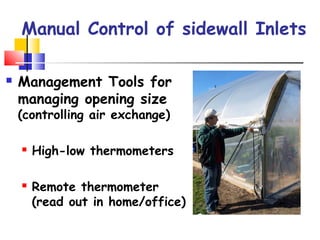
Manual Control of sidewall Inlets
 Management Tools for
managing opening size
(controlling air exchange)
 High-low thermometers
 Remote thermometer
(read out in home/office)
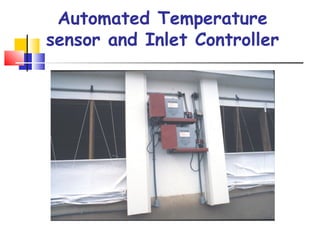
Automated Temperature
sensor and Inlet Controller
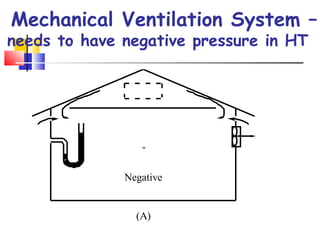
Mechanical Ventilation System –
needs to have negative pressure in HT
-
Negative
(A)
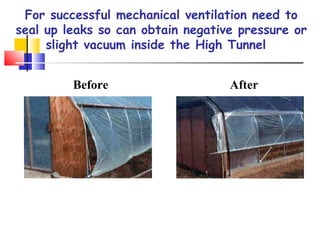
For successful mechanical ventilation need to
seal up leaks so can obtain negative pressure or
slight vacuum inside the High Tunnel
Before After
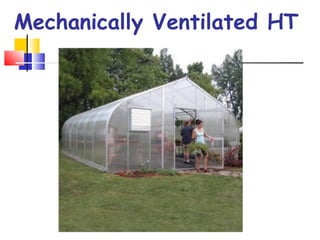
Mechanically Ventilated HT
Summary
 Natural Ventilation is probably preferred in
High Tunnels because of lower cost and
difficulty to seal up all the leaks so
mechanical ventilation will work properly
 Temperature control is primary need for
ventilation or air exchange, moisture control
secondary
 Manual ventilation control challenging but
possible
 Simple aid might be remote thermometer
 Automated controller for sidewall inlets would
yield tighter temperature control
Questions
Inlets and Outlets

High Tunnel Ventilation, 2015

  • 1.
    Presented at MNStatewide High Tunnel Conference, Feb 17, 2015. Arrowwood Lodge, Baxter, MN Larry D Jacobson, Professor and Extension Agricultural Engineer Dept of Bioproducts & Biosystems Engineering University of Minnesota, St.Paul, MN Understanding High Tunnel Ventilation in Detail
  • 2.
    Presentation Outline  Ventilationprinciples  Natural vs. Mechanical  High Tunnel application  Manual Control  Automated Control (by temperature)
  • 3.
    Ventilation or AirExchange of High Tunnels Needed to Remove Heat & Moisture
  • 4.
    Suggested Temperatures inHigh Tunnels for Selected Crops Table 2. Approximate Temperatures for Best Growth and Quality of Selected Vegetable Crops.* Temperature (ºF) Crop Maximum Optimum Minimum 85 55-75 45 Onion, Garlic 75 60-65 40 Beet, Broccoli, Cabbage, Chard, Radish 75 60-65 45 Carrot, Lettuce, Pea, Potato Snap Bean, Lima Bean 80 60-70 50 90 65-75 60 Cucumber 80 70-75 65 Tomato, Sweet Pepper 95 70-85 65 Eggplant, Hot Pepper, Okra *Adapted from Knott's Handbook for Vegetable Growers. Lorenz and Maynard. 1988. P 70.
  • 5.
    Air temperature (F) Moisture-HoldingCapacity of Air Every 18 F increase doubles moisture holding capacity
  • 6.
    Air expands asit is heated and can absorb more moisture. Warm Air Holds More Moisture
  • 7.
    Two Different Ventilation Systemsused in HT  Natural Ventilation  Driving Forces –  Thermal Buoyancy  Wind  Mechanical Ventilation  Driving Force –  Exhaust Fans
  • 8.
    Natural Ventilation – BuoyancyDriven Case W a rm A ir C o o l A ir C o o l A irThermal Buoyancy
  • 9.
    Natural Ventilation – WindDriven Case W in d
  • 10.
    Natural Ventilation needsboth an inlet and outlet Outlet Inlet
  • 11.
    Typical Inlets forHigh Tunnels
  • 12.
    End Wall OutletLouver (Vent)
  • 13.
    Ridge type “Outlet”for High Tunnel
  • 14.
    Manual Control ofsidewall Inlets  Management Tools for managing opening size (controlling air exchange)  High-low thermometers  Remote thermometer (read out in home/office)
  • 15.
  • 16.
    Mechanical Ventilation System– needs to have negative pressure in HT - Negative (A)
  • 17.
    For successful mechanicalventilation need to seal up leaks so can obtain negative pressure or slight vacuum inside the High Tunnel Before After
  • 18.
  • 19.
    Summary  Natural Ventilationis probably preferred in High Tunnels because of lower cost and difficulty to seal up all the leaks so mechanical ventilation will work properly  Temperature control is primary need for ventilation or air exchange, moisture control secondary  Manual ventilation control challenging but possible  Simple aid might be remote thermometer  Automated controller for sidewall inlets would yield tighter temperature control
  • 20.
  • 21.

Editor's Notes

  • #6 A 10-degree C (18 F) rise in air temperature roughly doubles the amount of moisture air can hold (over the range of normal air temperatures). Illustration: morning fog ‘burns off’ or disappears as the air warms up (even though the amount of moisture in the air is basically the same). As the day goes on, the air warms up and takes on additional moisture (from the ground, plants, etc.). But, when it cools off again in the evening, it loses ability to hold moisture and may become ‘saturated’ (foggy) again.
  • #7 Warming air increases the air’s ability to hold water vapor and visa versa.