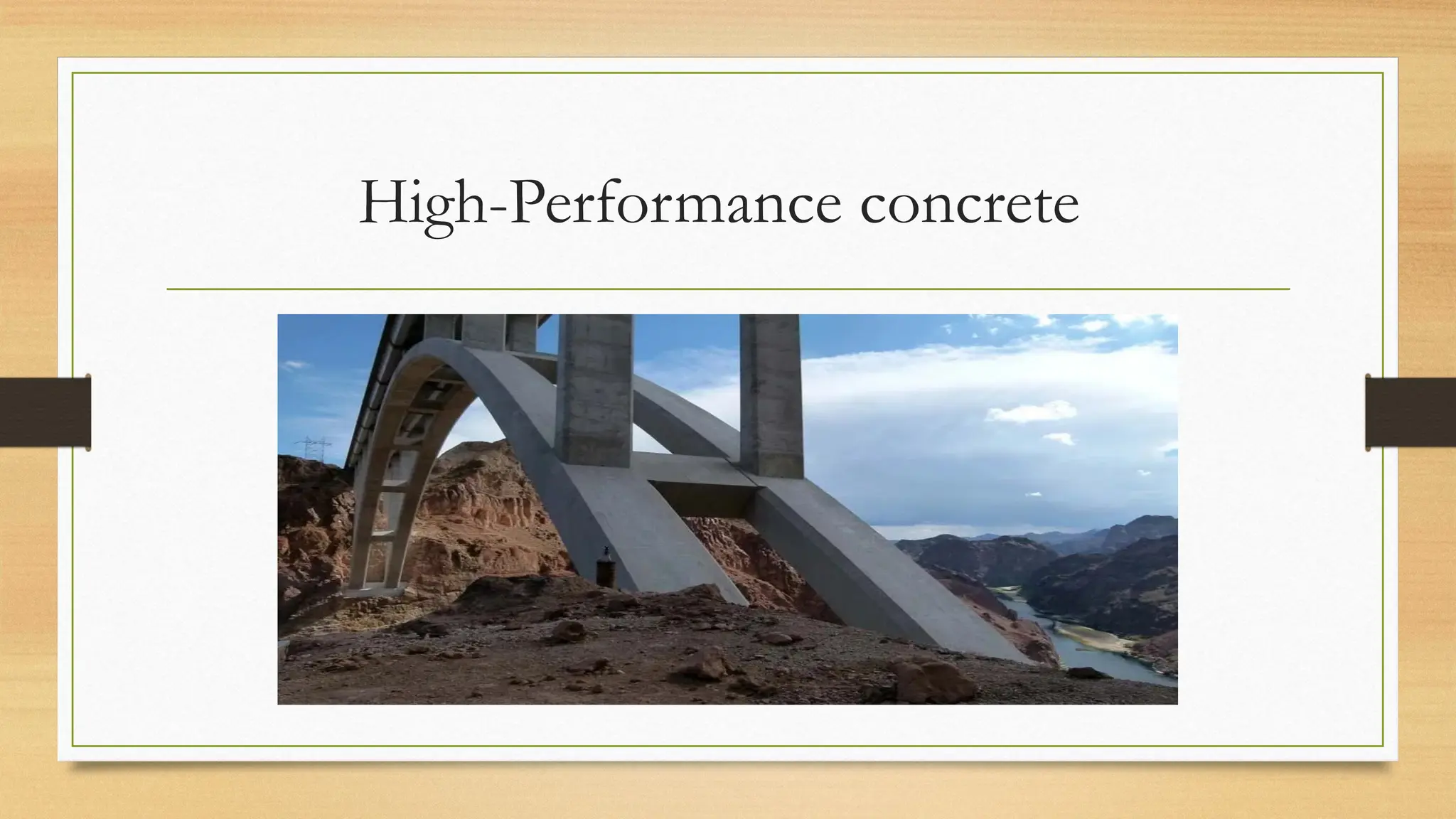
High-Performance concrete
Introduction
• Recently a new term “High performance concrete” is used for concrete
mixture which possess high workability, high strength, high modulus of
elasticity, high density, high dimensional stability, low permeability and
resistance to chemical attack.
• High-performance concrete is also, a high-strength concrete but it has a few
more attributes specifically designed as mentioned above.
Basic Requirements for HPC
• A substantial reduction of quantity of mixing water is the fundamental step for
making HPC. Reduction of w/c ratio will result in high strength concrete. But
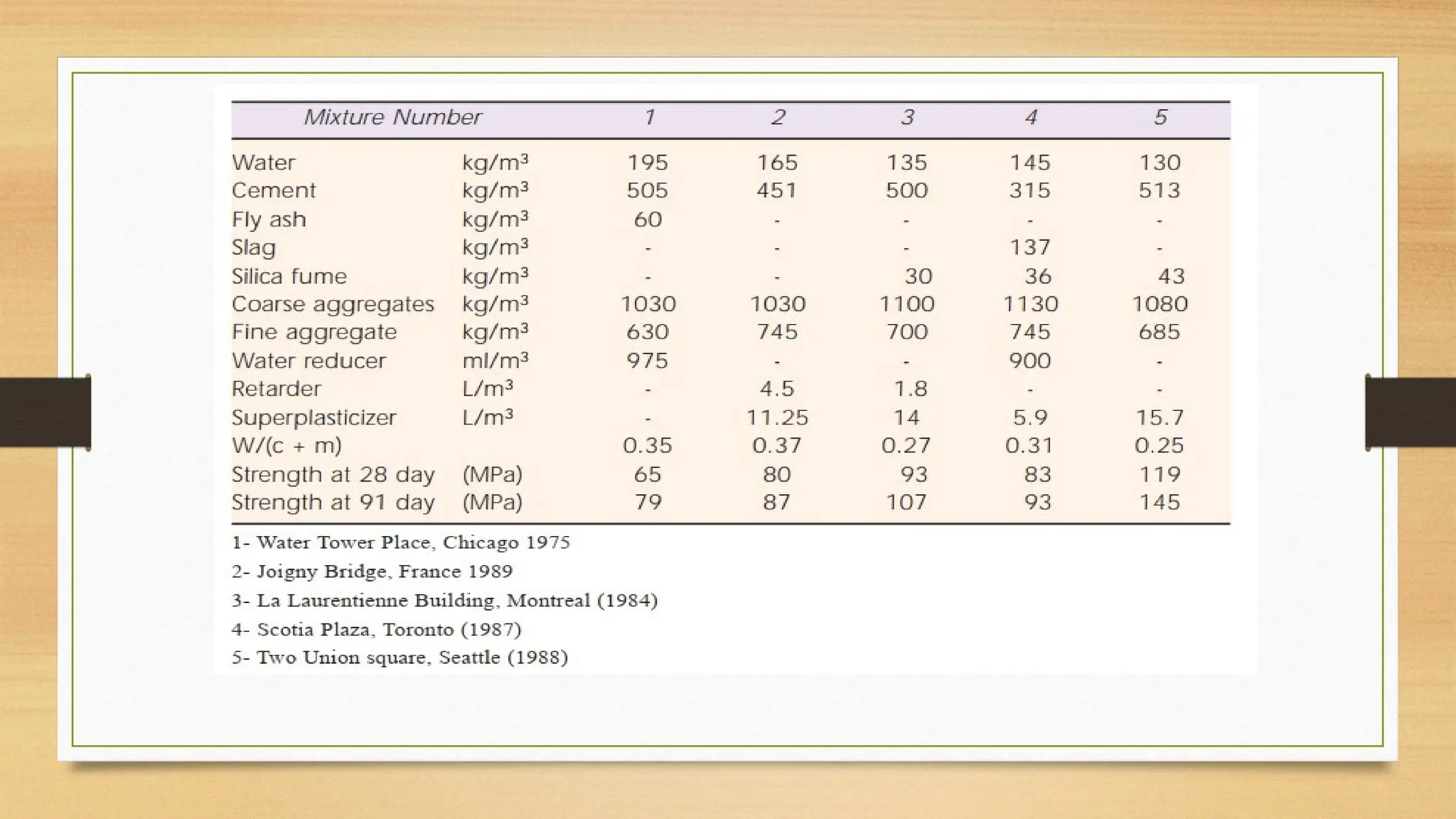
reduction in w/c ratio to less than 0.3 will greatly
improve the qualities of transition zone to give inherent qualities expected in HPC.
• To improve the qualities of transition zone, use of silica fume is also found to be
necessary. Silica fumes becomes a necessary ingredient for strength above to 80 MPa.
• The crux of whole problem lies in using very low w/c ratio, consistant with
high workability at the time of placing and compacting. Neville opines that the lowest
w/c ratio that could be used is 0.22.
Aggregates for HPC
• In normal strength concrete, the strengths of aggregate by itself plays a
minor role. The situation is rather different with HPC, where the bond
between aggregate and hydrated cement paste is so strong that it results in
significant transfer of stress across the transition zone.
• the strength of the cement paste phase, on account very low w/c ratio is so
high that sometimes it is higher than the strength of aggregate particles.
• Indeed in many instances, the strength of aggregate particles has been found
to be the factor that limits the compressive strength of HPC.
Continue
• concrete strength up to 100 MPa, maximum size of 20 mm aggregate could
be used. for concrete in excess of 100 MPa, the maximum size of coarse
aggregate should be limited to 10 to 12 mm.
• aggregates should be cubic in shape, with minimum amount of flaky or
elongated particles.
• In India, it is reported, that HPC of the strength 60 MPa was used for the
first time for the construction of containment dome at Kaiga and Rajasthan
Atomic Power Projects.
High Performance Concrete ppt for civil engineering students

High Performance Concrete ppt for civil engineering students

  • 1.
  • 2.
    Introduction • Recently anew term “High performance concrete” is used for concrete mixture which possess high workability, high strength, high modulus of elasticity, high density, high dimensional stability, low permeability and resistance to chemical attack. • High-performance concrete is also, a high-strength concrete but it has a few more attributes specifically designed as mentioned above.
  • 3.
    Basic Requirements forHPC • A substantial reduction of quantity of mixing water is the fundamental step for making HPC. Reduction of w/c ratio will result in high strength concrete. But reduction in w/c ratio to less than 0.3 will greatly improve the qualities of transition zone to give inherent qualities expected in HPC. • To improve the qualities of transition zone, use of silica fume is also found to be necessary. Silica fumes becomes a necessary ingredient for strength above to 80 MPa. • The crux of whole problem lies in using very low w/c ratio, consistant with high workability at the time of placing and compacting. Neville opines that the lowest w/c ratio that could be used is 0.22.
  • 4.
    Aggregates for HPC •In normal strength concrete, the strengths of aggregate by itself plays a minor role. The situation is rather different with HPC, where the bond between aggregate and hydrated cement paste is so strong that it results in significant transfer of stress across the transition zone. • the strength of the cement paste phase, on account very low w/c ratio is so high that sometimes it is higher than the strength of aggregate particles. • Indeed in many instances, the strength of aggregate particles has been found to be the factor that limits the compressive strength of HPC.
  • 5.
    Continue • concrete strengthup to 100 MPa, maximum size of 20 mm aggregate could be used. for concrete in excess of 100 MPa, the maximum size of coarse aggregate should be limited to 10 to 12 mm. • aggregates should be cubic in shape, with minimum amount of flaky or elongated particles. • In India, it is reported, that HPC of the strength 60 MPa was used for the first time for the construction of containment dome at Kaiga and Rajasthan Atomic Power Projects.