Human Factors &
Ergonomics
Pengantar
Tujuan
1. Mengetahui definisi HFE
2. Memahami kaitan HFE dengan disiplin
ilmu yang lain
3. Memahami penerapan HFE dalam bidang
keselamatan jalan
1. Apakah HFE itu?
2. Apakah kaitan HFE dengan keselamatan
jalan?
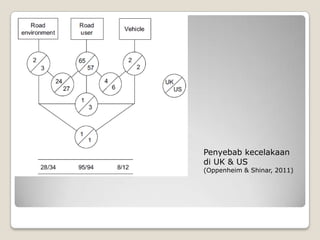
Penyebab kecelakaan
di UK & US
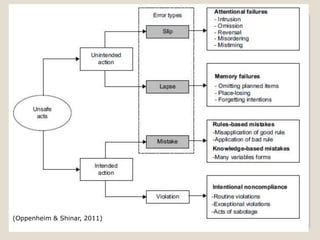
(Oppenheim & Shinar, 2011)
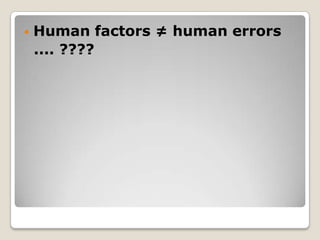
 Human factors ≠ human errors
.... ????
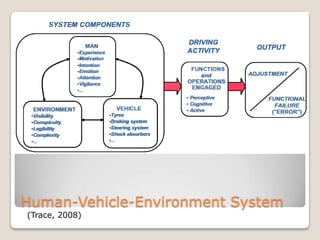
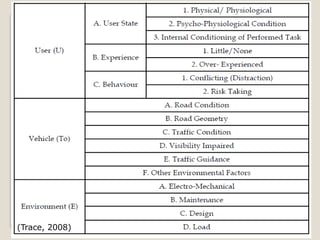
Human-Vehicle-Environment System
(Trace, 2008)
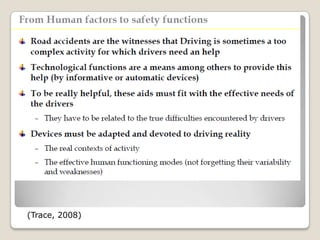
(Trace, 2008)
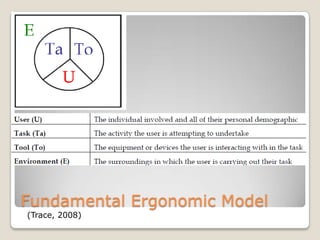
Fundamental Ergonomic Model
(Trace, 2008)
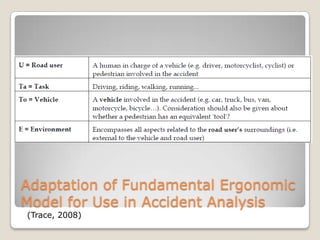
Adaptation of Fundamental Ergonomic
Model for Use in Accident Analysis
(Trace, 2008)
(Trace, 2008)
Sejarah
 Ergonomics:
Ergon: kerja
Nomos: aturan
The study of work
 Polandia:
Jastrzebowski, 1857
‘An Outline of Ergonomics or the Science of
Work’
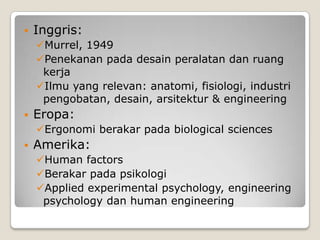
 Inggris:
Murrel, 1949
Penekanan pada desain peralatan dan ruang
kerja
Ilmu yang relevan: anatomi, fisiologi, industri
pengobatan, desain, arsitektur & engineering
 Eropa:
Ergonomi berakar pada biological sciences
 Amerika:
Human factors
Berakar pada psikologi
Applied experimental psychology, engineering
psychology dan human engineering
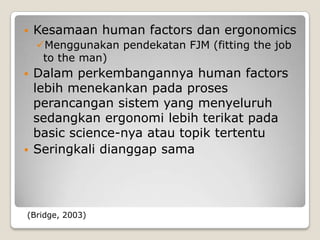
 Kesamaan human factors dan ergonomics
Menggunakan pendekatan FJM (fitting the job
to the man)
 Dalam perkembangannya human factors
lebih menekankan pada proses
perancangan sistem yang menyeluruh
sedangkan ergonomi lebih terikat pada
basic science-nya atau topik tertentu
 Seringkali dianggap sama
(Bridge, 2003)
Definisi
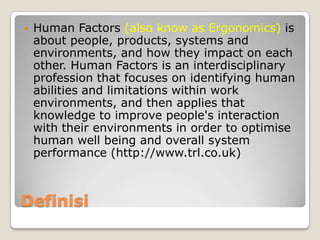
 Human Factors (also know as Ergonomics) is
about people, products, systems and
environments, and how they impact on each
other. Human Factors is an interdisciplinary
profession that focuses on identifying human
abilities and limitations within work
environments, and then applies that
knowledge to improve people's interaction
with their environments in order to optimise
human well being and overall system
performance (http://www.trl.co.uk)
 The International Ergonomics Association
(IEA, 2003) defines ergonomics (or
human factors) as the scientific discipline
concerned with the understanding of the
interactions among humans and other
elements of a system and the profession
that applies theory, principles, data, and
methods to design in order to optimize
human well-being and overall system
performance (Karwowski, 2012)
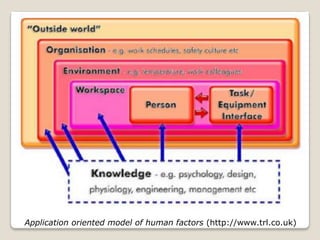
Application oriented model of human factors (http://www.trl.co.uk)
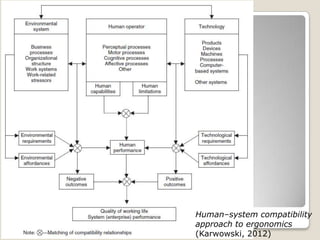
Human–system compatibility
approach to ergonomics
(Karwowski, 2012)
 Domain utama HFE
1. Physical ergonomics
 Hubungan aktivitas fisik dengan anatomi,
antrometi, fisiologi, & karakteristik biomekanik
2. Cognitive ergonomics
 Pengaruh proses mental (persepsi, memori,
pemrosesan informasi, pemikiran, & respon
motorik) terhadap interaksi antarmanusia dan
elemen yang lain dalam suatu sistem
3. Organizational
ergonomics/macroergonomics
 Optimalisasi sistem sosioteknik, meliputi
struktur organisasi, kebijakan, & proses
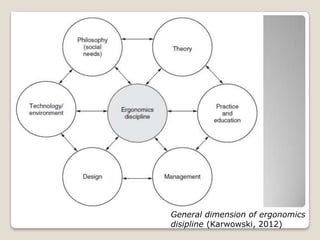
General dimension of ergonomics
disipline (Karwowski, 2012)
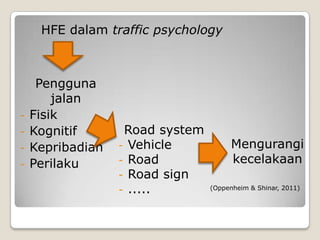
HFE dalam traffic psychology
Pengguna
jalan
- Fisik
- Kognitif
- Kepribadian
- Perilaku
Road system
- Vehicle
- Road
- Road sign
- ..... (Oppenheim & Shinar, 2011)
Mengurangi
kecelakaan
 Transportation ergonomics
(http:www.trl.co.uk)
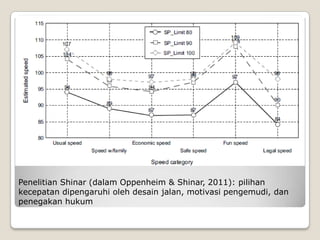
Penelitian Shinar (dalam Oppenheim & Shinar, 2011): pilihan
kecepatan dipengaruhi oleh desain jalan, motivasi pengemudi, dan
penegakan hukum
 Peran HFE untuk mengidentifikasi unsur
pengemudi-kendaraan-jalan yang
menimbulkan kesalahan, bukan sekedar
mengidentifikasi kesalahan dan upaya
perbaikannya
 Tujuan HFE untuk mencegah situasi yang
menimbulkan kesalahan, bukan untuk
melatih pengemudi untuk tidak
melakukan kesalahan
(Oppenheim & Shinar, 2011)
 Sudahkan HFE diterapkan di lingkungan
kerja Anda? Beri contoh!
Sumber
 Bridger, R.S. 2003. Introduction To Ergonomic.
London: Taylor & Francis
 http://www.trl.co.uk
 Lu, Jun-Ming. 2011. Transportation Ergonomic. Dalam
Ergonomic Weekly, No 19, 4 Maret 2011.
 Karwowski, Waldemar. 2012. The Discipline of Human
Factors and Ergonomics. Handbook of human factors
and ergonomics 4th ed., Gavriel Salvendy (Ed). New
Jersey: John Wiley & Sons, Inc.
 Shinar, David. 2007. Traffic Safety and Human
Behavior. Oxford: Elsevier
 TRACE. 2008. 'Analyzing Human Factors in road
accidents‘ TRACE WP5 Summary Report

Hfe 1

  • 1.
  • 2.
    Tujuan 1. Mengetahui definisiHFE 2. Memahami kaitan HFE dengan disiplin ilmu yang lain 3. Memahami penerapan HFE dalam bidang keselamatan jalan
  • 3.
    1. Apakah HFEitu? 2. Apakah kaitan HFE dengan keselamatan jalan?
  • 4.
    Penyebab kecelakaan di UK& US (Oppenheim & Shinar, 2011)
  • 5.
  • 6.
     Human factors≠ human errors .... ????
  • 7.
  • 8.
  • 9.
  • 10.
    Adaptation of FundamentalErgonomic Model for Use in Accident Analysis (Trace, 2008)
  • 11.
  • 12.
    Sejarah  Ergonomics: Ergon: kerja Nomos:aturan The study of work  Polandia: Jastrzebowski, 1857 ‘An Outline of Ergonomics or the Science of Work’
  • 13.
     Inggris: Murrel, 1949 Penekananpada desain peralatan dan ruang kerja Ilmu yang relevan: anatomi, fisiologi, industri pengobatan, desain, arsitektur & engineering  Eropa: Ergonomi berakar pada biological sciences  Amerika: Human factors Berakar pada psikologi Applied experimental psychology, engineering psychology dan human engineering
  • 14.
     Kesamaan humanfactors dan ergonomics Menggunakan pendekatan FJM (fitting the job to the man)  Dalam perkembangannya human factors lebih menekankan pada proses perancangan sistem yang menyeluruh sedangkan ergonomi lebih terikat pada basic science-nya atau topik tertentu  Seringkali dianggap sama (Bridge, 2003)
  • 15.
    Definisi  Human Factors(also know as Ergonomics) is about people, products, systems and environments, and how they impact on each other. Human Factors is an interdisciplinary profession that focuses on identifying human abilities and limitations within work environments, and then applies that knowledge to improve people's interaction with their environments in order to optimise human well being and overall system performance (http://www.trl.co.uk)
  • 16.
     The InternationalErgonomics Association (IEA, 2003) defines ergonomics (or human factors) as the scientific discipline concerned with the understanding of the interactions among humans and other elements of a system and the profession that applies theory, principles, data, and methods to design in order to optimize human well-being and overall system performance (Karwowski, 2012)
  • 17.
    Application oriented modelof human factors (http://www.trl.co.uk)
  • 18.
    Human–system compatibility approach toergonomics (Karwowski, 2012)
  • 19.
     Domain utamaHFE 1. Physical ergonomics  Hubungan aktivitas fisik dengan anatomi, antrometi, fisiologi, & karakteristik biomekanik 2. Cognitive ergonomics  Pengaruh proses mental (persepsi, memori, pemrosesan informasi, pemikiran, & respon motorik) terhadap interaksi antarmanusia dan elemen yang lain dalam suatu sistem 3. Organizational ergonomics/macroergonomics  Optimalisasi sistem sosioteknik, meliputi struktur organisasi, kebijakan, & proses
  • 20.
    General dimension ofergonomics disipline (Karwowski, 2012)
  • 21.
    HFE dalam trafficpsychology Pengguna jalan - Fisik - Kognitif - Kepribadian - Perilaku Road system - Vehicle - Road - Road sign - ..... (Oppenheim & Shinar, 2011) Mengurangi kecelakaan
  • 22.
  • 23.
    Penelitian Shinar (dalamOppenheim & Shinar, 2011): pilihan kecepatan dipengaruhi oleh desain jalan, motivasi pengemudi, dan penegakan hukum
  • 24.
     Peran HFEuntuk mengidentifikasi unsur pengemudi-kendaraan-jalan yang menimbulkan kesalahan, bukan sekedar mengidentifikasi kesalahan dan upaya perbaikannya  Tujuan HFE untuk mencegah situasi yang menimbulkan kesalahan, bukan untuk melatih pengemudi untuk tidak melakukan kesalahan (Oppenheim & Shinar, 2011)
  • 25.
     Sudahkan HFEditerapkan di lingkungan kerja Anda? Beri contoh!
  • 26.
    Sumber  Bridger, R.S.2003. Introduction To Ergonomic. London: Taylor & Francis  http://www.trl.co.uk  Lu, Jun-Ming. 2011. Transportation Ergonomic. Dalam Ergonomic Weekly, No 19, 4 Maret 2011.  Karwowski, Waldemar. 2012. The Discipline of Human Factors and Ergonomics. Handbook of human factors and ergonomics 4th ed., Gavriel Salvendy (Ed). New Jersey: John Wiley & Sons, Inc.  Shinar, David. 2007. Traffic Safety and Human Behavior. Oxford: Elsevier  TRACE. 2008. 'Analyzing Human Factors in road accidents‘ TRACE WP5 Summary Report