HEMOLYTIC
ANEMIAS
DEFENITIONS
 Hemolysis : is the premature destruction of erythrocytes. (normal RBC
survival 110-120 days)
 Hemolytic anemia : a fall in the Hb levels ,when hemolysis exceeds
bone marrow capacity to produce RBCs.
(marrow increase output 2-3 fold in acute & max 6-8 fold in chronic cases).
 Hemolysis may be an extravascular or an intravascular phenomenon.
 Extravascular hemolysis ; RBCs are destroyed in the spleen and other
reticuloendothelial tissues.
 Intravascular hemolysis ; RBCs are destroyed inside blood vessels.
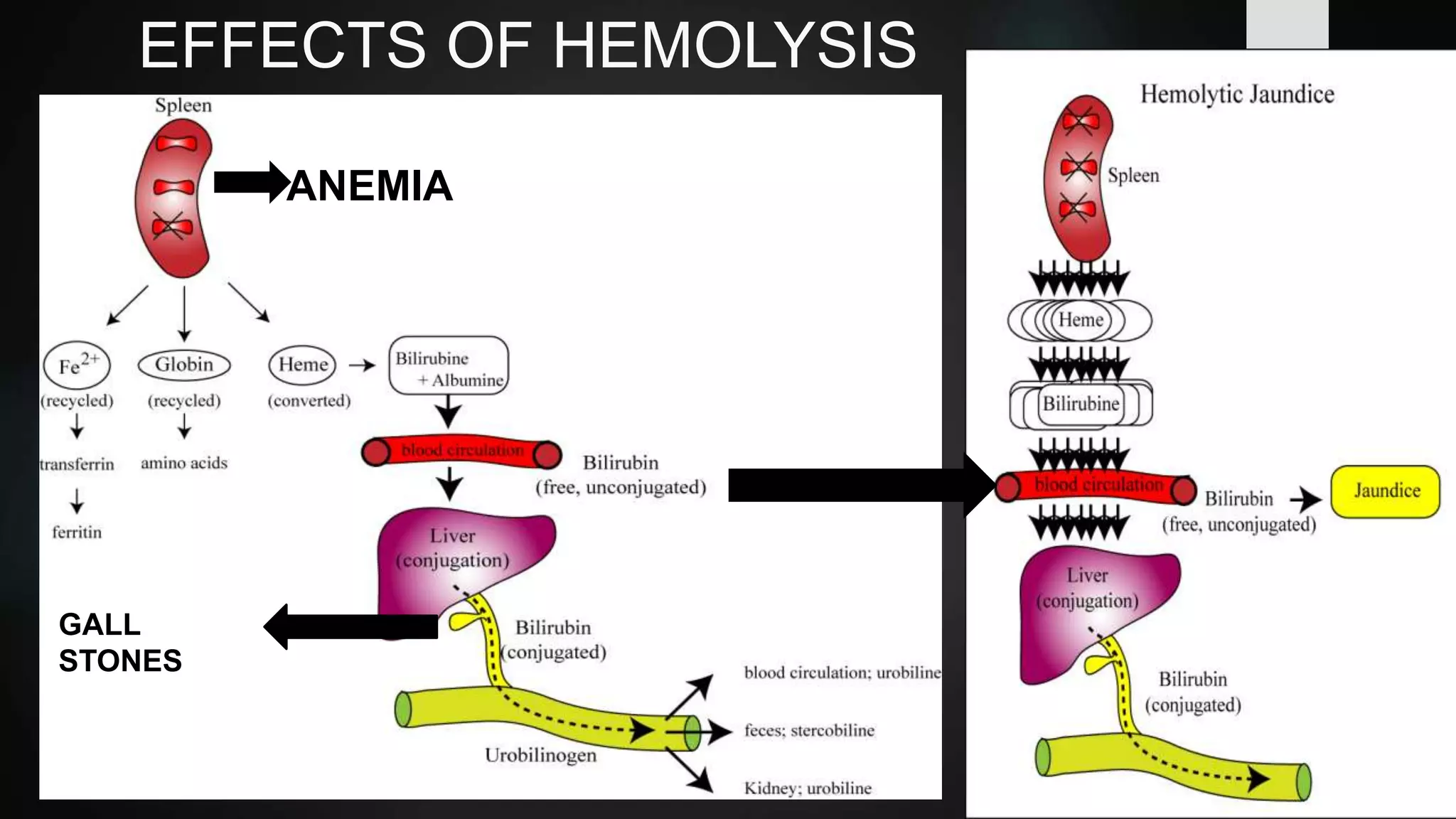
EFFECTS OF HEMOLYSIS
ANEMIA
GALL
STONES
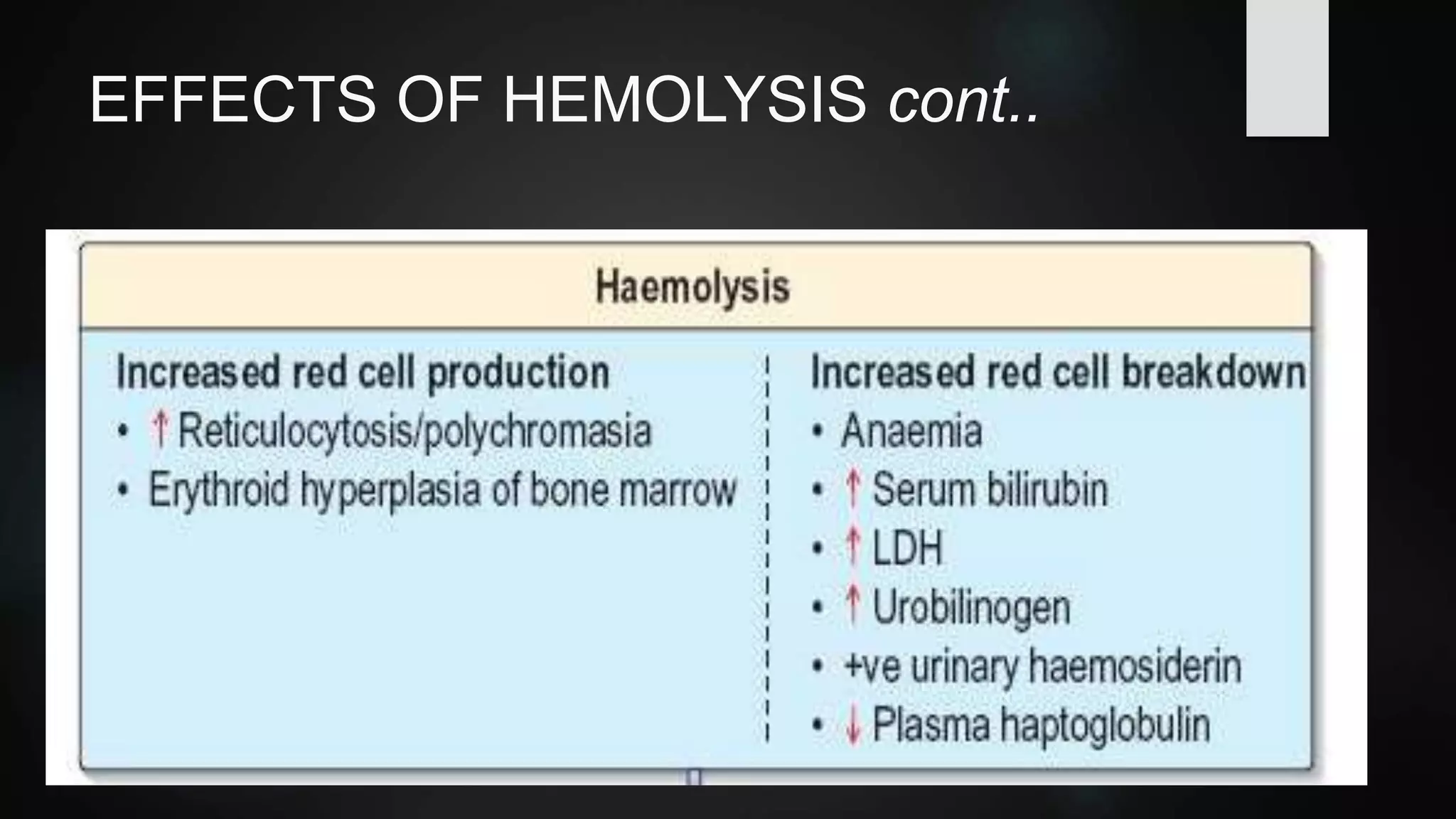
EFFECTS OF HEMOLYSIS cont..
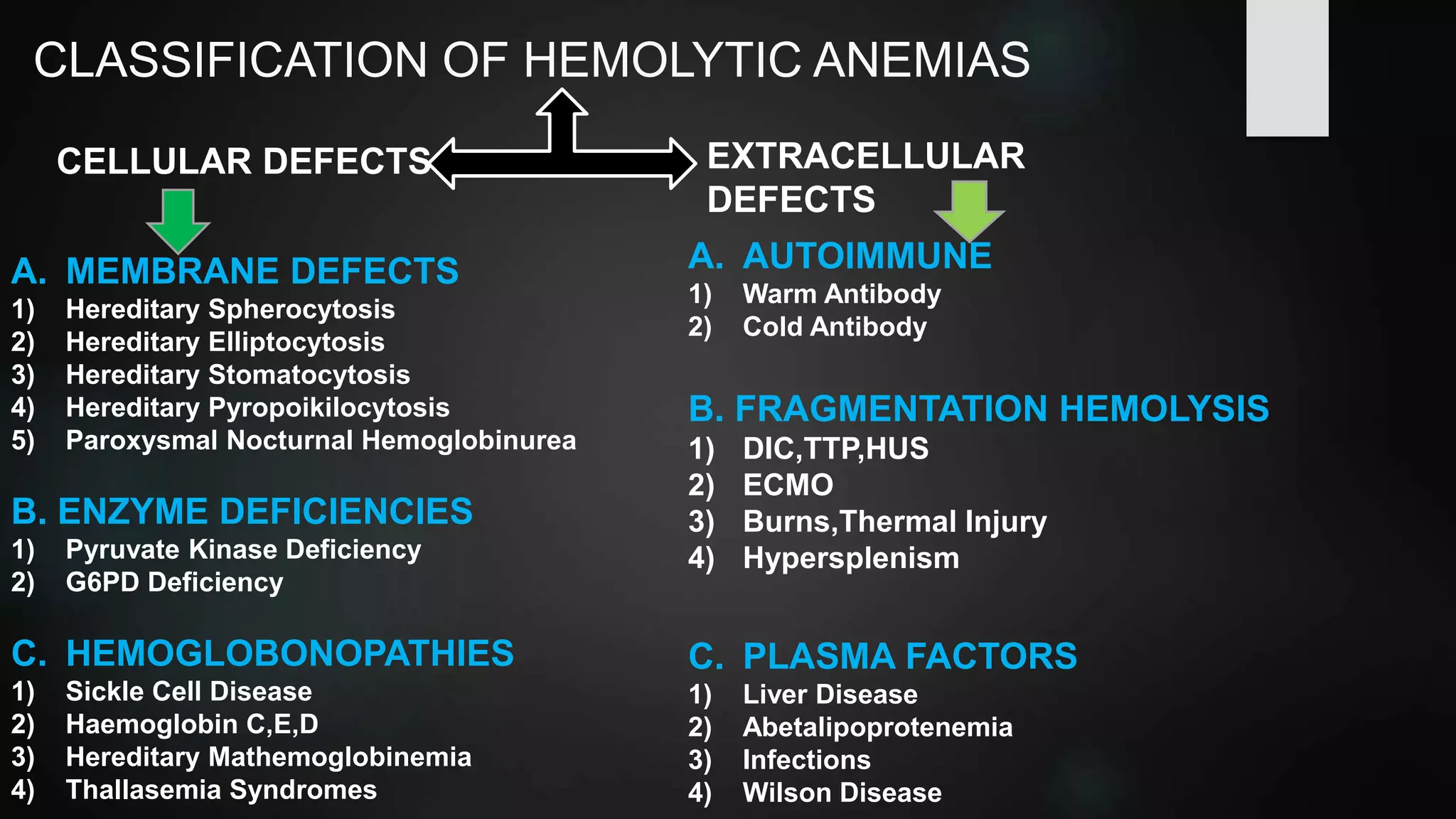
CLASSIFICATION OF HEMOLYTIC ANEMIAS
CELLULAR DEFECTS EXTRACELLULAR
DEFECTS
A. MEMBRANE DEFECTS
1) Hereditary Spherocytosis
2) Hereditary Elliptocytosis
3) Hereditary Stomatocytosis
4) Hereditary Pyropoikilocytosis
5) Paroxysmal Nocturnal Hemoglobinurea
B. ENZYME DEFICIENCIES
1) Pyruvate Kinase Deficiency
2) G6PD Deficiency
C. HEMOGLOBONOPATHIES
1) Sickle Cell Disease
2) Haemoglobin C,E,D
3) Hereditary Mathemoglobinemia
4) Thallasemia Syndromes
A. AUTOIMMUNE
1) Warm Antibody
2) Cold Antibody
B. FRAGMENTATION HEMOLYSIS
1) DIC,TTP,HUS
2) ECMO
3) Burns,Thermal Injury
4) Hypersplenism
C. PLASMA FACTORS
1) Liver Disease
2) Abetalipoprotenemia
3) Infections
4) Wilson Disease
Hereditary Spherocytosis
 A familial hemolytic disorder associated with a variety of mutations that lead to defects in RBC
membrane proteins.
 Morphologic hallmark of HS is the microspherocyte, caused by loss of RBC membrane surface
area.
 Most commonly inherited RBC membrane defect.
 Prevalence 1/5000 .
 Most common in Northern Europeans.
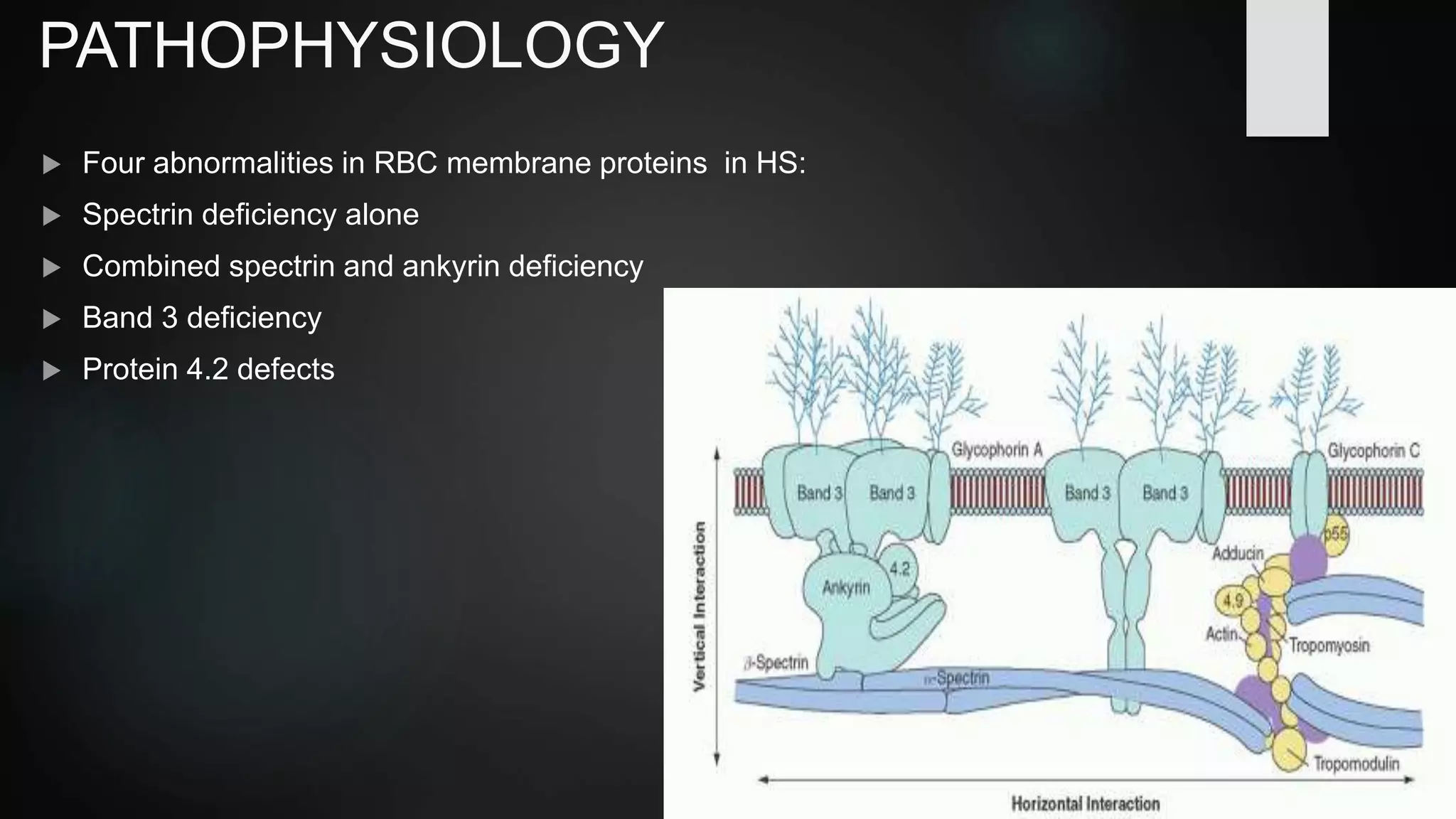
PATHOPHYSIOLOGY
 Four abnormalities in RBC membrane proteins in HS:
 Spectrin deficiency alone
 Combined spectrin and ankyrin deficiency
 Band 3 deficiency
 Protein 4.2 defects
RBC cytoskeleton instability
Loss of erythrocyte surface area
spherical RBCs (spherocytes)
Trapped & destroyed in spleen

Hemolytic anemia

  • 1.
  • 2.
    DEFENITIONS  Hemolysis :is the premature destruction of erythrocytes. (normal RBC survival 110-120 days)  Hemolytic anemia : a fall in the Hb levels ,when hemolysis exceeds bone marrow capacity to produce RBCs. (marrow increase output 2-3 fold in acute & max 6-8 fold in chronic cases).  Hemolysis may be an extravascular or an intravascular phenomenon.  Extravascular hemolysis ; RBCs are destroyed in the spleen and other reticuloendothelial tissues.  Intravascular hemolysis ; RBCs are destroyed inside blood vessels.
  • 3.
  • 4.
  • 5.
    CLASSIFICATION OF HEMOLYTICANEMIAS CELLULAR DEFECTS EXTRACELLULAR DEFECTS A. MEMBRANE DEFECTS 1) Hereditary Spherocytosis 2) Hereditary Elliptocytosis 3) Hereditary Stomatocytosis 4) Hereditary Pyropoikilocytosis 5) Paroxysmal Nocturnal Hemoglobinurea B. ENZYME DEFICIENCIES 1) Pyruvate Kinase Deficiency 2) G6PD Deficiency C. HEMOGLOBONOPATHIES 1) Sickle Cell Disease 2) Haemoglobin C,E,D 3) Hereditary Mathemoglobinemia 4) Thallasemia Syndromes A. AUTOIMMUNE 1) Warm Antibody 2) Cold Antibody B. FRAGMENTATION HEMOLYSIS 1) DIC,TTP,HUS 2) ECMO 3) Burns,Thermal Injury 4) Hypersplenism C. PLASMA FACTORS 1) Liver Disease 2) Abetalipoprotenemia 3) Infections 4) Wilson Disease
  • 6.
    Hereditary Spherocytosis  Afamilial hemolytic disorder associated with a variety of mutations that lead to defects in RBC membrane proteins.  Morphologic hallmark of HS is the microspherocyte, caused by loss of RBC membrane surface area.  Most commonly inherited RBC membrane defect.  Prevalence 1/5000 .  Most common in Northern Europeans.
  • 7.
    PATHOPHYSIOLOGY  Four abnormalitiesin RBC membrane proteins in HS:  Spectrin deficiency alone  Combined spectrin and ankyrin deficiency  Band 3 deficiency  Protein 4.2 defects
  • 8.
    RBC cytoskeleton instability Lossof erythrocyte surface area spherical RBCs (spherocytes) Trapped & destroyed in spleen