HEBREWS 5 COMME TARY
EDITED BY GLE PEASE
1 Every high priest is selected from among men
and is appointed to represent them in matters
related to God, to offer gifts and sacrifices for
sins.
1. BAR ES, "For every high priest - That is, among the Jews, for the remarks
relate to the Jewish system. The Jews had one high priest who was regarded as the
successor of Aaron. The word “high priest” means “chief priest;” that is, a priest of
higher rank and office than others. By the original regulation the Jewish high priest was
to be of the family of Aaron Exo_29:9, though in later times the office was frequently
conferred on others. In the time of the Romans it had become venal, and the Mosaic
regulation was disregarded; 2 Macc. 4:7; Josephus, Ant. xv. 3. 1. It was no longer held for
life, so that there were several persons at one time to whom was given the title of high
priest. The high priest was at the head of religious affairs, and was the ordinary judge of
all that pertained to religion, and even of the general justice of the Hebrew
commonwealth; Deu_17:8-12; Deu_19:17; Deu_21:5; Deu_27:9-10.
He only had the privilege of entering the most holy place once a year, on the great day
of atonement, to make expiation for the sins of the people; Lev. 16. He was to be the son
of one who had married a virgin, and was to be free from any corporeal defect; Lev_
21:13. The “dress” of the high priest was much more costly and magnificent than that of
the inferior order of priests; Exo_39:1-7. He wore a mantle or robe - ‫מציל‬ me
̀ iyl - of
blue, with the borders embroidered with pomegranates in purple and scarlet; an “ephod”
- ‫אפוד‬ ‛ephowd - made of cotton, with crimson, purple, and blue, and ornamented with
gold worn over the robe or mantle, without sleeves, and divided below the arm-pits into
two parts or halves, of which one was in front covering the breast, and the other behind
covering the back. In the ephod was a breastplate of curious workmanship, and on the
head a mitre. The breastplate was a piece of broidered work about ten inches square, and
was made double, so as to answer the purpose of a pouch or bag. It was adorned with
twelve precious stones, each one having the name of one of the tribes of Israel. The two
upper corners of the breastplate were fastened to the ephod, and the two lower to the
girdle.
Taken from among men - There maybe an allusion here to the fact that the great
High Priest of the Christian dispensation had a higher than human origin, and was
selected from a rank far above people. Or it may be that the meaning is, that every high
priest on earth - including all under the old dispensation and the great high priest of the
new - is ordained with reference to the welfare of people, and to bring some valuable
offering forman to God.
Is ordained for men - Is set apart or consecrated for the welfare of people. The
Jewish high priest was set apart to his office with great solemnity; see Exo. 29:
In things pertaining to God - In religious matters, or with reference to the worship
and service of God. He was not to be a civil ruler, nor a teacher of science, nor a military
leader, but his business was to superintend the affairs of religion.
That he may offer both gifts - That is, thank-offerings, or oblations which would
be the expressions of gratitude. Many such offerings were made by the Jews under the
laws of Moses, and the high priest was the medium by whom they were to be presented
to God.
And sacrifices for sin - Bloody offerings; offerings made of slain beasts. The blood
of expiation was sprinkled by him on the mercyseat, and he was the appointed medium
by which such sacrifices were to be presented to God; see the notes at Heb_9:6-10. We
may remark here:
(1) That the proper office of a priest is to present a “sacrifice” for sin.
(2) It is “improper” to give the name “priest” to a minister of the gospel. The reason is,
that he offers no sacrifice; he sprinkles no blood. He is appointed to “preach the
word,” and to lead the devotions of the church, but not to offer sacrifice.
Accordingly the New Testament preserves entire consistency on this point, for the
name “priest” is never once given to the apostles, or to any other minister of the
gospel.
Among the Papists there is “consistency” - though gross and dangerous error - in the
use of the word “priest.” They believe that the minister of religion offers up” the real
body and blood of our Lord;” that the bread and wine are changed by the words of
consecration into the “body and blood, the soul and divinity, of the Lord Jesus” (Decrees
of the Council of Trent), and that “this” is really offered by him as a sacrifice.
Accordingly they “elevate the host;” that is, lift up, or offer the sacrifice and, require all
to bow before it and worship, and with this view they are “consistent” in retaining the
word “priest.” But why should this name be applied to a “Protestant” minister, who
believes that all this is blasphemy, and who claims to have no “sacrifice” to offer when he
comes to minister before God? The great sacrifice; the one sufficient atonement, has
been offered - and the ministers of the gospel are appointed to proclaim that truth to
men, not to offer sacrifices for sin.
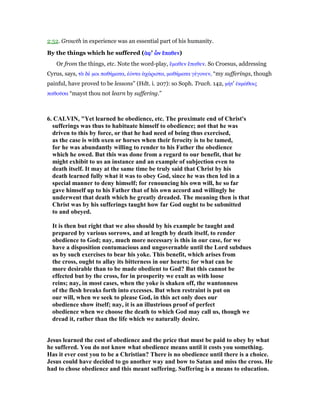
2. CLARKE, "For every high priest taken from among men - This seems to
refer to Lev_21:10, where it is intimated that the high priest shall be taken ‫מאחיו‬
meachaiv, from his brethren; i.e. he shall be of the tribe of Levi, and of the family of
Aaron.
Is ordained for men - ᆙπερ ανθρωπων καθισταται τα προς τον Θεον· Is appointed to
preside over the Divine worship in those things which relate to man’s salvation.
That he may offer both gifts and sacrifices for sins - God ever appeared to all
his followers in two points of view:
1. As the author and dispenser of all temporal good.
2. As their lawgiver and judge. In reference to this twofold view of the Divine Being,
his worship was composed of two different parts:
1. Offerings or gifts.
2. Sacrifices.
1. As the creator and dispenser of all good, he had offerings by which his bounty
and providence were acknowledged.
2. As the lawgiver and judge, against whose injunctions offenses had been
committed, he had sacrifices offered to him to make atonement for sin.
The δωρα, or gifts, mentioned here by the apostle, included every kind of eucharistical
offering. The θυσιαι, sacrifices, included victims of every sort, or animals whose lives
were to be offered in sacrifice, and their blood poured out before God, as an atonement
for sins. The high priest was the mediator between God and the people; and it was his
office, when the people had brought these gifts and sacrifices, to offer them to God in
their behalf. The people could not legitimately offer their own offerings, they must be all
brought to the priest, and he alone could present them to God. As we have a high priest
over the house of God, to offer all our gifts and his own sacrifice, therefore we may come
with boldness to the throne of grace. See above.
3. GILL, "For every high priest taken from among men,.... Every one that was an
high priest under the law was a man, and not an angel; and it was proper he should be
so, that he might be a priest for men, have compassion on them, and offer for them; and
he was among the number of common men, and was taken out from them, and chosen
and separated from the rest of men, as Aaron and his sons were from the children of
Israel, Exo_28:1. And such an one
is ordained for men; in their room and stead, and for their good; and above them, as
the word sometimes signifies; he was exalted unto, and invested with a superior office,
to which he was ordained according to the law of a carnal commandment, by anointing
with oil, and without an oath.
In things pertaining to God; in things in which God had to do with men; and so he
presided over them in the name of God, and declared the will of God unto them, and
blessed them; and in things in which men had to do with God; and so he appeared in
their name, and represented their persons, and presented their sacrifices to God, as
follows:
that he may offer both gifts and sacrifices for sins; freewill offerings, peace
offerings, burnt offerings, sin and trespass offerings, all kind of sacrifice.
4. HE RY, "We have here an account of the nature of the priestly office in general,
though with an accommodation to the Lord Jesus Christ. We are told,
I. Of what kind of beings the high priest must be. He must be taken from among men;
he must be a man, one of ourselves, bone of our bones, flesh of our flesh, and spirit of
our spirits, a partaker of our nature, and a standard-bearer among ten thousand. This
implies, 1. That man had sinned. 2. That God would not admit sinful man to come to him
immediately and alone, without a high priest, who must be taken from among men. 3.
That God was pleased to take one from among men, by whom they might approach God
in hope, and he might receive them with honour. 4. That every one shall now be welcome
to God that comes to him by this his priest.
II. For whom every high priest is ordained: For men in things pertaining to God, for
the glory of God and the good of men, that he might come between God and man. So
Christ did; and therefore let us never attempt to go to God but through Christ, nor
expect any favour from God but through Christ.
III. For what purpose every high priest was ordained: That he might offer both gifts
and sacrifices for sin.
1. That he might offer gifts or free-will offerings, brought to the high priest, so offered
for the glory of God, and as an acknowledgment that our all is of him and from him; we
have nothing but what he is pleased to give us, and of his own we offer to him an
oblation of acknowledgment. This intimates, (1.) That all we bring to God must be free
and not forced; it must be a gift; it must be given and not taken away again. (2.) That all
we bring to God must go through the high priest's hands, as the great agent between God
and man.
2. That he might offer sacrifices for sin; that is, the offerings that were appointed to
make atonement, that sin might be pardoned and sinners accepted. Thus Christ is
constituted a high priest for both these ends. Our good deeds must be presented by
Christ, to render ourselves and them acceptable; and our evil deeds must be expiated by
the sacrifice of himself, that they may not condemn and destroy us. And now, as we
value acceptance with God and pardon, we must apply ourselves by faith to this our
great high priest.
5. JAMISO , "Heb_5:1-14. Christ’s High Priesthood; Needed qualifications; Must
be a man; Must not have assumed the dignity himself, but have been appointed by
God; Their low spiritual perceptions a bar to Paul’s saying all he might on Christ’s
Melchisedec-like Priesthood.
For — substantiating Heb_4:15.
every — that is, every legitimate high priest; for instance, the Levitical, as he is
addressing Hebrews, among whom the Levitical priesthood was established as the
legitimate one. Whatever, reasons Paul, is excellent in the Levitical priests, is also in
Christ, and besides excellencies which are not in the Levitical priests.
taken from among men — not from among angels, who could not have a fellow
feeling with us men. This qualification Christ has, as being, like the Levitical priest, a
man (Heb_2:14, Heb_2:16). Being “from men,” He can be “for (that is, in behalf of, for
the good of) men.”
ordained — Greek, “constituted,” “appointed.”
both gifts — to be joined with “for sins,” as “sacrifices” is (the “both ... and” requires
this); therefore not the Hebrew, “mincha,” “unbloody offerings,” but animal whole burnt
offerings, spontaneously given. “Sacrifices” are the animal sacrifices due according to
the legal ordinance [Estius].
6. CALVI , "For every high priest, etc. He compares Christ with the Levitical
priests, and he teaches us what is the likeness and the difference
between them; and the object of the whole discourse is, to show what
Christ's office really is, and also to prove that whatever was ordained
under the law was ordained on his account. Hence the Apostle passes on
at last to show that the ancient priesthood was abolished.
He first says that the priests were taken from among men; secondly,
that they did not act a private part but for the whole people; thirdly,
that they were not to come empty to appease God, but furnished with
sacrifices; fourthly, that they were not to be exempt from human
infirmities, that they might more readily succor the distressed; and
lastly, that they were not presumptuously to rush into this office, and
that then only was the honor legitimate when they were chosen and
approved by God. We shall consider briefly each of these points.
We must first, however, expose the ignorance of those who apply these
things to our time, as though there was at this day the same need of
priests to offer sacrifices; at the same time there is no necessity for
a long refutation. For what can be more evident than that the reality
found in Christ is compared with its types, which, being prior in time,
have now ceased? But this will appear more fully from the context. How
extremely ridiculous then are they who seek by this passage to
establish and support the sacrifice of the mass! I now return to the
words of the Apostle.
Taken from among men, etc. This he says of the priests. It hence
follows that it was necessary for Christ to be a real man; for as we
are very far from God, we stand in a manner before him in the person of
our priest, which could not be, were he not one of us. Hence, that the
Son of God has a nature in common with us, does not diminish his
dignity, but commends it the more to us; for he is fitted to reconcile
us to God, because he is man. Therefore Paul, in order to prove that he
is a Mediator, expressly calls him man; for had he been taken from
among angels or any other beings, we could not by him be united to God,
as he could not react down to us.
For men, etc. This is the second clause; the priest was not privately a
minister for himself, but was appointed for the common good of the
people. But it is of great consequence to notice this, so that we may
know that the salvation of us all is connected with and revolves on the
priesthood of Christ. The benefit is expressed in these words, ordains
those things which pertain to God. They may, indeed, be explained in
two ways, as the verb kathistatai has a passive as well as an active
sense. They who take it passively give this version, "is ordained in
those things," etc.; and thus they would have the preposition in to be
understood; I approve more of the other rendering, that the high priest
takes care of or ordains the things pertaining to God; for the
construction flows better, and the sense is fuller. [84] But still in
either way, what the Apostle had in view is the same, namely, that we
have no intercourse with God, except there be a priest; for, as we are
unholy, what have we to do with holy things? We are in a word alienated
from God and his service until a priest interposes and undertakes our
cause.
That he may offer both gifts, etc. The third thing he mentions
respecting a priest is the offering of gifts. There are however here
two things, gifts and sacrifices; the first word includes, as I think,
various kinds of sacrifices, and is therefore a general term; but the
second denotes especially the sacrifices of expiation. Still the
meaning is, that the priest without a sacrifice is no peacemaker
between God and man, for without a sacrifice sins are not atoned for,
nor is the wrath of God pacified. Hence, whenever reconciliation
between God and man takes place, this pledge must ever necessarily
precede. Thus we see that angels are by no means capable of obtaining
for us God's favor, because they have no sacrifice. The same must be
thought of Prophets and Apostles. Christ alone then is he, who having
taken away sins by his own sacrifice, can reconcile God to us.
BIBLICAL ILLUSTRATOR, "Every high priest taken from among men
The high priesthood of Christ
I.
CHRIST’S PARTICIPATION OF OUR NATURE, AS NECESSARY TO HIM FOR
DISCHARGING OF THE OFFICE OF A HIGH PRIEST ON OUR BEHALF, IS A GREAT
GROUND OF CONSOLATION UNTO BELIEVERS, A MANIFEST EVIDENCE THAT
HE IS, AND WILL BE, TENDER AND COMPASSIONATE TOWARDS THEM.
II. IT WAS THE ENTRANCE OF SIN THAT MADE THE OFFICE OF THE
PRIESTHOOD NECESSARY.
III. IT WAS OF INFINITE GRACE THAT SUCH AN APPOINTMENT WAS MADE.
Without it all holy intercourse between God and man must have ceased. For neither
1. Were the persons of sinners meet to approach unto God; nor
2. Was any service which they could perform, or were instructed how to perform,
suited unto the great end which man was now to look after; namely, peace with God.
For the persons of all men being defiled, and obnoxious unto the curse of the law,
how should they appear in the presence of the righteous and holy God (Isa_33:14;
Mic_6:8).
IV. THE PRIEST IS DESCRIBED BY THE ESPECIAL DISCHARGE OF HIS DUTY, OR
EXERCISE OF HIS OFFICE; WHICH IS HIS OFFERING. BOTH GIFTS AND
SACRIFICES FOR SIN.
V. WHERE THERE IS NO PROPER PROPITIATORY SACRIFICE THERE IS NO
PROPER PRIEST. Every priest is to offer sacrifices for sin; that is, to make atonement.
VI. JESUS CHRIST ALONE IS THE HIGH PRIEST OF HIS PEOPLE. For He alone
could offer a sacrifice for our sins to make atonement.
VII. IT WAS A GREAT PRIVILEGE WHICH THE CHURCH ENJOYED OF OLD, IN
THE REPRESENTATION WHICH IT HAD BY GOD’S APPOINTMENT, OF THE
PRIESTHOOD AND SACRIFICE OF CHRIST. IN THEIR OWN TYPICAL PRIESTS AND
SACRIFICES.
VIII. MUCH MORE GLORIOUS IS OUR PRIVILEGE UNDER THE GOSPEL SINCE
OUR LORD JESUS HATH TAKEN UPON HIM, AND ACTUALLY DISCHARGED THIS
PART OF HIS OFFICE, IN OFFERING AN ABSOLUTELY PERFECT AND COMPLETE
SACRIFICE FOR SIN. Here is the foundation laid of all our peace and happiness.
IX. WHAT IS TO BE DONE WITH GOD ON THE ACCOUNT OF SIN, THAT IT MAY BE
EXPIATED AND PARDONED, AND THAT THE PEOPLE OF GOD WHO HAVE
SINNED MAY BE ACCEPTED WITH HIM AND BLESSED, IS ALL ACTUALLY DONE
FOR THEM BY JESUS CHRIST THEIR HIGH PRIEST, IN THE SACRIFICE FOR SIN
WHICH HE OFFERED ON THEIR BEHALF. (John, Owen, D. D.)
Compassion on the ignorant
Divine compassion
There was no person in the Hebrew economy that was so revered as their high priest. He
became more corrupt in the political times preceding Christ; but the name high priest, as
interpreted by the whole history of the Hebrew people, was one that was not only
reverenced, but loved. He was ordained, it is said, to have compassion; he was their
highest ideal of purity; he stood in the grandeur of a supposed inspiration; he
represented God, or, still better, he represented the people to God; he was their
advocate; he stood in their place officially, and in every way helped to bring men up
without any oppression; he was a minister of mercy to them; and you could not have
struck a bell that would roll through the air with such melodious sound as by saying that
Jesus Christ stood as a high priest to the people, and that compassion was the great
attribute of Jesus; that He not only represented the people in their wants, but that He
was a forthcomer of the very God Himself, and represented God to mankind as far as
men obscured by the flesh are capable of understanding God. You cannot measure the
infinite wisdom, and you cannot measure the eternal glow and glory of love, and you
cannot in the infirmities of human life in all its relationships have any satisfying
representation of the richness and infinite element of the Divine nature. So, in searching
for some emblem the apostle strikes through to the centre, and says that Jesus Christ is a
High Priest to represent—what? On the one side to represent the infirmities of men. He
is clothed with them Himself; He is touched with a feeling of our infirmities; lie knows
the height, and depth, and length and breadth of human experience and human need,
and He is gone up to stand before God, our High Priest there; and not only to represent
the wants of mankind, but in doing that He represents to us what is the interior
character of God Himself, and what is the economy of the Divine love. In the earlier
periods of the world’s history God was revealed in those aspects that would be most
powerful to restrain animalism. The revelation of God’s motive power was toward the
part that the man could understand; it was a physical manifestation of God as a God that
governs the material world, which has certain fixed laws that cannot be broken without
penalty immediate or remote; and so He was represented in the earlier periods of the
world as the all-compelling Governor of the world. Pain in this world and suffering are
God’s merciful ministers to keep men in the road. “So,” says God, “I will by no means
count it a matter of indifference whether a man lives right or wrong. He shall live right
or he shall suffer, because I am a God of mercy and love.” So the Old Testament had a
sublime conception of God, but when you come down to the prophets, when lust
immeasurable threatened to overwhelm society, when the great curse of idolatry was
licentiousness, then God says: “I will not relax one particle of My eternal law; I will wait
till the crooked grows straight, till the inferior is exalted, I will have compassion on men;
when they are transgressing their own nature and My moral law and all things pure and
holy, I will still have patience, that I may bring them back again.” There is the ideal of the
Old Testament. But, coming down to a later period, when men were brutal they needed a
little thunder, and the prophets gave it to them. They developed the regent character of
God. “I abhor wickedness and My fury shall burn to the lowest hell, I will not tolerate it;
I have not built the world for this: wicked men and devils shall not desecrate it; I will put
forth a hand of strength, and I will clothe Myself in garments of blood! I will walk forth
so that the land shall tremble in My indignation; wickedness shall not prevail; purity in
manhood and Divine excellence shall prevail.” And so the thunder of God’s justice and
the threatenings of God’s law were sounded out continually because men were on so low
a plane that they needed just that development of the Divine nature. But that has given a
disproportionate idea of God’s character. Men have been taught that He is the
implacable thunderer. Another reason is that it is easier for us to thunder than it is to
love. But it was not until the sun rose at the Advent that there came a morning outburst
that gave us sight, not of the administration of God’s government among men, but of the
heart of God Himself in Jesus Christ. There we see the inside of God; and what was that?
If Calvary does not teach it, if His walk among the poor and needy does not teach it, if all
the acts of mercy do not inspire you with the knowledge, if you need it shaped into a
doctrine, then hear it here. He represents that the inner nature of God, as represented by
Jesus Christ acting in place of the high priest, was one that could “have compassion on
the ignorant and on those that are out of the way”—all error, all stumbling, all sin, all
violation of the ideal of duty. The infinite bounty of Divine love is not savage nor partial,
it is universal, it is intense beyond description. What is infinite? That beyond which the
thought of man cannot go; that that has, to our thought, no boundary, extent beyond
ending. What is infinite compassion? That that would wrap this globe round and round a
thousand times, like the folds of a garment round the body, with Divine thoughtfulness,
Divine mercy, Divine love. What is infinite love? What is a mother’s love? The purest and
tenderest thing that is known on earth is the overhanging heart of a mother upon the
cradle that has in it that little nothing which we call a babe, that can give nothing back,
that receives everything arid returns nothing. Yet the love of the mother is but one drop
of the ocean as compared with the love of the great Father of mankind—infinite, infinite!
(H. W. Beecher.)
Compassion on the ignorant
I. COMPASSION AND FORBEARANCE ARE TWO THINGS WHICH ANY MAN WHO
WOULD DO GOOD TO HIS FELLOW-MEN OUGHT TO POSSESS TO A VERY LARGE
DEGREE.
1. You will have plenty of use for all the compassion and all the tenderness that you
can possibly command, for this will help to draw around you those who are ignorant
and out of the way. Love is the queen bee, and where she is you will rind the centre of
the hive.
2. By this same spell you will hold those whom you gather, for men will not long
remain with an unloving leader, even little children in our classes will not long listen
to an unsympathetic teacher. The earth is held together by the force of attraction,
and to the men upon it that same power is exercised by love and compassion.
3. Compassion in your heart will be greatly useful in moving sinners to care for
themselves. Mr. Knill at one time was distributing tracts at Chester, and went out
where there was a company of soldiers. Many received the tracts, but one man tore
the little book in pieces before the good man’s eyes; and on another occasion the
same individual said to the soldiers, “Now make a ring round him.” The men stood
round the preacher, and then the wicked fellow cursed him in such a frightful
manner that Mr. Knill burst into tears to hear such awful sounds. The sight of Knill’s
tears broke the heart of the blasphemer: nothing else could have touched him, but he
could not bear to see a strong man who was at least his equal, and, probably, his
superior, weeping over him. Years after he came forward to own that the tender
emotion displayed by Mr. Knill had touched his inmost soul, and led him to
repentance.
4. You want great compassion to insure your own perseverance, for if you do not
love the children of your class, if you do not love the people whom you try to benefit
as you go from house to house, if you have no compassion on the dying sinners
around you, you will soon give up your mission, or go about it in a merely formal
manner.
5. Compassion of heart can alone teach you how to speak to others.
6. Now, there are many reasons why we should have a great deal of compassion and
forbearance. Think what patience God had with you, all those years before your
conversion, and multitudes of times since; and if He has had patience with your,
should not you have patience with your fellow sinner even to the end? There is one
reflection which may help you. Remember that these poor souls who sin as they do
should be looked upon by you as persons who are deranged, for sin is madness. And
do recollect this—if you do not have compassion you cannot do them good. If you
become weary of them, and speak sharply, you cannot bless them; and, perhaps, if
you are not the means of blessing them, nobody else may be. Ah, is it your own
husband? Wife, win him. Do not drive him from bad to worse by scolding. Sister, is it
your brother? Woo him and win him to Christ. Do not vex him by becoming acid and
sour.
II. COMPASSION AND FORBEARANCE PRE-EMINENTLY DWELL IN JESUS
CHRIST.
1. He has compassion on the ignorant. Very many persons are wilfully ignorant of
Christ. Is not this enough to move the Lord to anger? And yet His patience
continues. Come to Him just as you are and confess your wilful blindness, and He
will put it away, and enable you to understand the things which make for your peace.
Stone are ignorant, however, because they have been cast where they could not well
know; they were born in an ungodly family, or, what is much the same, among those
who have only a mere formal religion. They do not know the truth, but they can
scarcely be blamed for it. Well, Christ is able to teach you. Come and sit at His feet,
for He will have compassion on your ignorance.
2. He will have compassion upon those that are out of the way. Who are these
people? Some are out of the way because they never were in it and never knew it.
Many are in a very emphatic sense out-of-the-way sinners.. They have gone to such
extravagances that they are out of the way of common morality, and quite startle
their careless comrades. Well, my Lord Jesus will have compassion on you out-of-
the-way sinners. However far you have gone, only turn to Him, for pardon is freely
published. (C. H.Spurgeon.)
The human sympathies of Christianity
Every religion professes to reveal to us the supernatural; every philosophy professes to
teach u, moral duty; but Christianity alone has, together with these, approached man
with tender and helpful sympathy. Even Judaism did not. Assuredly infidelity does not;
it may be very philosophical, it may inculcate a very pretentious morality, but it has no
tenderness and sympathy; it has nothing like the Christian ideas of human brotherhood,
and Divine Fatherhood. And yet, is not this precisely what we need? Not stern
injunctions to be good, but sympathy and help in trying to be good. What is it, think you,
that makes your destitute neighbour, who lives in a garret, and dines upon a crust, and
shivers in the cold, and writhes in his pain, talk calmly of his condition, uttering no word
of complaint, looking rather at the alleviations of his sorrow, than at his sorrow itself;
speaking of mercies even where you can hardly discover them. Is it religious cant, think
you? If it be, this cant is a very wonderful thing. It can do what nothing else save
Christianity can do: it can make a suffering and poverty-stricken man patient through
long weary years. What is it, again, that enables the tradesman when misfortune comes
upon him, or the husband, when the mother of his children is smitten down, and his
house is darkened, to kneel down before God with a breaking heart, and to rise up calm
and comforted; what is it, but this very Christianity teaching him, not only that his sins
are forgiven, but that God, even while he lives on earth, is his Heavenly Father; watching
over his life, and appointing every experience of it, solely intent upon doing him the
greatest possible good? Let us look a little, then, at these human sympathies of Christ
and Christianity. You will see from the chapter that the apostle is speaking of the
necessary qualifications of a high priest; and he says that one of these is, that he should
be full of human sympathies—“Who can have compassion on the ignorant, and on them
that are out of the way.” And these requisites, he goes on to say, are very eminently
found in Christ. Here, then, we encounter “the great mystery of godliness,” the great
fundamental fact of Christianity, upon which all its cardinal doctrines rest, that “God
was manifest in the flesh”; that He was essentially Divine, became also properly
human—the “Emmanuel, God with us.” I call this the most wonderful, the most
practical, and the most powerful thought that the world has ever conceived. Why did He
become Incarnate? The general answer is—that by “compassing Himself with infirmity
He might have compassion on the ignorant, and on them that are out of the way.” Let me
show you this in three things. We are ignorant of God’s righteousness, and out of the
way through our guilt. We are ignorant of God’s holiness, and out of the way through our
sinfulness. We are ignorant of God’s happiness, and out of the way through our misery.
And to have compassion on us in each of these respects, Christ became incarnate—
compassed Himself with infirmities; for our pardon, for our purity, and for our peace.
And these are our three great human necessities.
1. First, the apostle tells that He became incarnate to procure our pardon. “He was
made a little lower than the angels for the suffering of death”—that He might be
capable, that is, of suffering death. A wonderful thought that—the express purpose
for which the Divine Son took our nature was that He might die for us! “Herein is
love.” “In this the love of God is manifested.” Other persons come into the world to
live; Jesus Christ came into the world to die. In the very midst of His transfiguration
glory “He spake of the decease which He was to accomplish at Jerusalem.” In the
very midst of His resurrection triumph, He told His disciples that “thus it was
written, and thus it behoved Him to suffer.” And so perfectly were they filled with the
idea of His death, that they described themselves as preachers, not of Christ’s
teaching, although He “spake as never man spake” not of Christ’s life, although He
was “holy, harmless, undefiled, separate from sinners”—but of Christ’s death: “We
preach Christ crucified.” And why this strange and exclusive theme of preaching?
Plato’s disciples preach his doctrine—Moses’ followers preached his laws. Why do
Christian preachers preach only Christ’s death?—glory in a cross? Why, just because
we are “ignorant and cut of the way,” and this Cross precisely meets our first great
need as transgressors; it is Christ’s first great proof of redeeming compassion, the
first great reason for which He compassed Himself with human infirmity that He
might have compassion upon our guilt. It was not merely that He humbled Himself,
but that He humbled Himself m this manner, did for us by taking our nature what
He could not have done in any other way, and laid down His life for us.
2. And then Christ, as our merciful High Priest, has compassion upon us in our
impurity, and takes upon Him our nature that He may set us an example of holiness.
Here is a second great reason for His being “compassed with infirmities”—a man like
ourselves. He shows us how pure and perfect, and obedient, and patient human life
may be. “He learned obedience by the things that He suffered.” “He was in all points
tempted like as we are, yet without sin.” He did not permit either temptation or
suffering to sway Him in His obedience: He would fast in the wilderness rather than
sin, He would endure the bitter anguish of Gethsemane rather than oppose His
Father’s will. And having such experience of duty and temptation and suffering, He
learned how arduous human virtue is—how much grace and strength it requires. Do
you not see, then, how great and precious a purpose of His incarnation this is, to set
us a perfect human example? He does not enjoin holiness merely, or describe it in a
book—He embodies it in His life; He comes into our sinful world and homes, not as a
holy God, but a holy Man; so that if we would be holy, we have only to “consider
Him,” to “walk even as He walked,” to “follow His steps.” We learn duty from His
obedience; love from His tenderness. We clasp His hand, we walk by His side, we
witness His life, the beautiful and perfect exhibition in Him of the moral possibilities
of a sanctified manhood.
3. He can have compassion upon us in our sorrows. And for this again He was
“compassed with infirmities.” It is not without deep significance that He is called
“the Man of sorrows,” and said to be “acquainted with grief,” as if grief were His
familiar acquaintance. Emphatically is He “the Man Christ Jesus,” “bone of our bone,
and flesh of our flesh”; “both He that sanctifieth and they that are satisfied are all of
one, for which cause He is not ashamed to call them brethren.” In all His earthly
experience of duty, and temptation and sorrow He is never less, He is never more
than a proper Man, “A Brother born for the day of adversity.” Oh! how wonderful
this is, and yet how precious, that He “the Creator of the ends of the earth, who
fainteth not neither is weary,” should incarnate Himself in the weakness of a little
child and in the woes of a sorrowful man! And yet this is precisely what we needed; it
is an assurance that comes home to our deepest hearts. Do you not often feel the
unspeakable worth of a friend who understands your trials and difficulties and
sorrows, who can lovingly enter into all your experiences, and give you counsel and
sympathy? Then must it not be infinitely more precious to go to One, who, while on
the human side of His nature He can thus be “touched with the feeling of our
infirmities, because in all points tempted as we are,” is also on the Divine side
Almighty to help, and loving to pity? (H. Allon, D. D.)
Our compassionate High Priest
Often, when we are trying to do good to others, we get more good ourselves. When I was
here one day this week, seeing friends who came to join the church, there came among
the rest a very diffident, tenderhearted woman, who said many sweet things to me about
her Lord, though she did not think that they were any good, I know. She was afraid that I
should not have patience with her and her poor talk; but she said one thing which I
specially remember: “I have to-day put four things together, from which I have derived a
great deal of comfort,” she told me. “And what are they, my sister?” I asked. “Well,” she
said, “they are those four classes—‘the unthankful and the evil, the ignorant and those
that are out of the way.’ Jesus ‘is kind unto the unthankful and to the evil,’ and ‘He can
have compassion on the ignorant, and on them that are out of the way,’ and I think that I
can get in through those four descriptions. Though I am a great sinner, I believe that He
will be kind to me, and have compassion upon me.” I stored that up; for I thought that
one of these days I might want it myself; I tell it to you, for if you do not want it now, you
may need it one of these days; you may yet have to think that you have been unthankful
and evil, ignorant and out of the way, and it will give you comfort to remember that our
Lord Jesus is kind to the unthankful and to the evil, and that He “can have compassion
on the ignorant, and on them that are out of the way.”
I. THE SORT OF SINNERS FOR WHOM OUR HIGH PRIEST IS CONCERNED.
1. The people who claim Christ’s aid are generally those who have a very low opinion
of themselves. The proud and self-satisfied cannot know His love; but the poor and
distressed may ever find in Him comfort and joy, because of His nature, and by
means of His intercession.
2. As with the high priest of old, amongst those who come to our High Priest are
many whose fear and distress arise from ignorance.
(1) There is a universal ignorance. As compared with the light of God, we are in
the dim twilight. He that seeth best only seeth men as trees walking.
(2) But, in addition to the ignorance that is universal, there is also a comparative
ignorance on the part of some; and because of this the compassion of Christ
flows forth to them. There are, first, the recent converts—young people whose
years are few, and who probably think that they know more than they do; but
who, if they are wise, will recognise that their senses have not been fully
exercised to discern between good and evil. Others there are who are ignorant
because of their little opportunity of getting instruction. Upon these our great
High Priest has compassion, and often with their slight knowledge they show
more of the fruits of the Spirit than some of us produce even with our inure
abundant light. There are many that are of a very feeble mind. They could never
explain how they were saved; but they are saved.
(3) There is also a sinful ignorance. Now comes another description of the sort of
sinners for whom our High Priest is concerned. There are many whose fears arise
from being out of the way. The Lord “can have compassion on the ignorant, and
on them that are out of the way.” I remember that, when I felt myself to be a very
great sinner, these words were very, very much blessed to me. I read them, “and
on them that are out of the way”; and I knew that I was an out-of-the-way sinner.
I was then, and I am afraid that I am now, somewhat like a lot out of the
catalogue, an odd person who must go by himself. Very well; our High Priest can
have compassion on those that are odd, and on those that are out of the way, on
those who do not seem to be in the common run of people, but who must be dealt
with individually, and by themselves. He can have compassion upon such.
But now let us look at the more exact meaning of the text.
(1) To be out of the way is, in the case of all men, their natural state.
(2) In addition to that, men have gone out of their way by their own personal
folly. We had enough original sin; but we have added to that another kind of
originality in evil.
(3) Some are out of the way because of their seduction from the way by others.
False teachers have taught them, and they have taken up with the error brought
before them by a stronger mind than their own. In some cases persons of evil life
have had a fascination over them.
(4) Many are out of the way because of their backslidings after grace has come to
them.
(5) Others are out of the way because of their consciousness of special sin. Come
to this compassionate High Priest, and trust your ease in His hands; they were
pierced because of your sin.
II. THE SORT OF HIGH PRIEST WITH WHOM SINNERS HAVE TO DEAL.
1. He is One who can bear with ignorance, forgetfulness, and provocation.
2. He is One who can feel for grief, because He has felt the same.
3. He is One who lays Himself out tenderly to help such as come to Him.
4. He is One who never repelled a single person.
III. Now, I want to speak to those of you who are the people of God. I want to remind
you that there may be a blessing even in your weakness; and that this may be the more
clearly seen we will look, in the third place, at the SORT OF INFIRMITY WHICH MAY
BE SANCTIFIED AND MADE USEFUL. The high priest of old was compassed with
infirmities, and this was part of his qualification. “Yes,” says one, “but he was compassed
with sinful infirmities; but our Lord Jesus had no sin.” That is quite true, but remember
that this does not make Christ less tender, but more so. Anything that is sinful hardens;
and inasmuch as He was without sin, He was without the hardening influence that sin
would bring to bear upon a man. He was all the more tender when compassed with
infirmities, because sin was excluded from the list. We will not, then, reckon sin in any
form as an infirmity likely to be turned to a great use, even though the grace of God
abounds over the sin; but let me speak to some of you who wish to do good, and set forth
some of the things which were sore to bear at the time, and yet have been rich in blessing
since.
1. First think of our struggles in finding mercy. If you have not had a certain
experience, you cannot so well help others who have; but if you were compassed with
infirmity at your first coming to Christ, you may use that in helping others to come to
Him.
2. Again, our grievous temptations may be infirmities which shall be largely used in
our service. You cannot be unto others a helper unless you have been compassed
with infirmities. Therefore accept the temptations which trouble you so much, as a
part of your education to make you useful to others.
3. Our sickness may turn out to be in the same category.
4. Our trials, too, may thus be sanctified.
5. Our depressions may also tend to our fruitfulness. A heart bowed down with
despair is a dreadful thing. “A wounded spirit who can bear?” But if you have never
had such an experience you will not be worth a pin as a preacher. You cannot help
others who are depressed unless you have been down in the depths yourself. (C. H.
Spurgeon.)
The compassionate High Priest
I. COMPASSION AND FORBEARANCE, WITH MEEKNESS, IN THOSE FROM WHOM
WE EXPECT HELP AND RELIEF, IS THE GREAT MOTIVE AND ENCOURAGEMENT
UNTO FAITH, AFFIANCE, AND EXPECTATION OF THEM.
II. We live, THE LIFE OF OUR SOULS IS PRINCIPALLY MAINTAINED, UPON THIS
COMPASSIONATENESS OF OUR HIGH PRIEST; namely, that He is able to bear with
us in our provocations, and to pity us in our weaknesses and distresses. To this purpose
is the promise concerning Him (Isa_40:11). There are three things that are apt to give
great provocations unto them that are concerned in us.
1. Frequency in offending.
2. Greatness of offences.
3. Instability in promises and engagements.
These are things apt to give provocations, beyond what ordinary moderation and
meekness can bear withal; especially where they are accompanied with a disregard of the
greatest love and kindness. And all these are found in believers, some in one, and some
in another, and some in all.
III. Though every sin hath in it the whole nature of sin, rendering the
sinners obnoxious unto the curse of the law; yet as there are several kinds of
sins, so THERE ARE SEVERAL DEGREES OF SIN, some being accompanied with a
greater guilt than others.
1. There is a distinction of sins with respect unto the persons that commit them. But
this distinction ariseth from the event, and not from the nature of the sin itself
intended. Regenerate persons will, through the grace of God, certainly use the means
of faith and repentance for the obtaining of pardon, which the other will not; and if
they are assisted also so to do, even they in like manner shall obtain forgiveness. No
man therefore can take a relief against the guilt of sin from his state and condition,
which may be an aggravation, and can be no alleviation of it.
2. There are degrees of sin amongst men unregenerate, who live in a course of sin all
their days. All do not sin equally, nor shall all be equally punished.
3. In the sins of believers there are different degrees, both in divers, and in the same
persons. And although they shall be all pardoned, yet have they different effects; with
respect
(1) Unto peace of conscience.
(2) Sense of the love of God.
(3) Growth in grace and holiness.
(4) Usefulness or scandal in the Church or the world.
(5) Temporal afflictions.
(6) A quiet or troublesome departure out of this world; but in all, a reserve is still
to be made for the sovereignty of God and His grace.
IV. OUR IGNORANCE IS BOTH OUR CALAMITY, OUR SIN, AND AN OCCASION OF
MANY SINS UNTO US.
V. SIN IS A WANDERING FROM THE WAY.
VI. NO SORT OF SINNERS ARE EXCLUDED FROM AN INTEREST IN THE CARE
AND LOVE OF OUR COMPASSIONATE HIGH PRIEST, BUT ONLY THOSE WHO
EXCLUDE THEMSELVES BY THEIR UNBELIEF.
VII. IT WAS WELL FOR US, AND ENOUGH FOR US, THAT THE LORD CHRIST WAS
ENCOMPASSED WITH THE SINLESS INFIRMITIES OF OUR NATURE.
VIII. GOD CAN TEACH A SANCTIFIED USE OF SINFUL INFIRMITIES, AS HE DID
IN AND TO THE PRIESTS UNDER THE LAW. (John Owen, D. D.)
Tenderness
Our relation to the things under us is the most certain touchstone of our character. Here
we display quite freely what we are. We embody, on a small scale, as it may be, the spirit
of fathers or the spirit of despot. We employ our superiority of power, whatever it is,
either to bring to a clearer light the signs of God’s counsel in external nature which wait
for our interpretation, or to assert ourselves in the impotence of caprice as able to
preserve, or to deface, or to destroy that which it., indeed, God’s work. We either use
that which is at our disposal arbitrarily for our own pleasure, or we deal with it as
representing some fragment of a complicated order of life. We depress our dependents
and our subordinates, the weaker men who come within our influence, that we may be
isolated in the splendour of a lonely tyranny, or we strive to lift them little by little
towards our own level, that in the great day of revelation we may be seen standing by the
throne in the midst of many brethren; for, when we speak of the things under us, we
must give to the phrase a much larger meaning than we commonly attach to it. It reaches
far beyond the men who are under us. The revelation which has been made to us of the
Divine plan of creation shows that we are placed in a world over the whole of which we
have to exercise dominion, charged, as the true ruler must be charged, with a
responsibility towards every part of it. We have from the first a responsibility towards
the material fabric of the world, no less than towards the hosts of sentient beings by
which this material fabric is peopled. And then, as the ages go forward, our
responsibility increases. The feebler races which fall behind in the development of life
become subject to the stronger, and the feebler men to those who in any respect have
been endowed with the prerogative of command. Thus the sphere of the responsibility of
those to whom power is given becomes indefinitely varied, but in each case the position
of authority brings with it the burden of noble cares. We all must and do exercise
dominion for good or for evil, and we all need the spirit of tenderness that our dominion
may he a blessing. Tenderness is for dominion what sympathy is for fellowship.
Tenderness pierces through the surface to the heart of things. It is true of tenderness, in
every application of the pregnant figure, that it “will not break the bruised reed or
quench the smoking flax.” It discerns the element of strength in that which is most frail,
and the element of life in that which is darkest. It sees in forms transitory and common
Divine gifts to be handled reverently. It sees in simple and subject types of life memories,
as it were, the promises of a great plan slowly fulfilled from stage to stage. It sees in the
rudest human mind a mirror for reflecting, however imperfectly, the image of a Father in
heaven; and, as we trust the varied vision, new thoughts pass into our own souls, and we
become conscious of hidden forces about us which are able to still the sorrowful
impatience of our eager desires. Tenderness in each direction quickens our spiritual
sensibility, and under inspired teaching, nature and creaturely life and even man’s
failures disclose mysteries of hope. It springs out of our Christian faith. It is the obvious
expression of our Christian faith in regard to the things under us. There is, I say, a
tenderness towards material things which belongs to the Christian character. And this
tenderness, born from the recognition of God in His creatures, shows itself both in use
and in contemplation. There is something of touching solemnity in the form of the
Jewish thanksgiving over bread and wine, which may go back even to the apostolic age,
“Blessed art Thou, O Lord our God, King of the universe.” The words remind us that the
least and commonest comes from Him who sways the whole. He Himself is seen in His
gifts, and in that presence there can be no wastefulness, no carelessness, no ungrateful
discontent. Even light and food may be dishonoured by reckless indifference; and we
may miss, by blind prodigality, the teachings which come through trivial acts to tender
souls. It is, perhaps, yet more obvious how tenderness finds a place in the contemplation
of material things. To the hard and the impatient there is no sanctity in the purple
mountain-side, no beauty born of murmuring sounds, no majesty in the light of setting
suns. The silence that is in the starry sky, the sleep that is among the lonely hills, have
for them no particular message; but, none the less, sanctity, beauty, majesty, tidings of
great truths are there, and the quiet eye can gather the spiritual harvest. Thus we can see
how tenderness has its scope and blessing in mute, insensate things; but perhaps it is
most called for in our dealings with animals. These lie in our power in a peculiar sense,
and-we need to school ourselves that we may fulfil our duty towards them, for we have a
duty towards them. They are not only for our service or for our amusement, they are
committed by God to our sovereignty, and we owe to them a considerate regard for their
rights. Our responsibility in this respect is easily forgotten. We have all felt, I fancy,
something of that irrational pleasure in the capricious use of power which Browning has
analysed in his portraiture of Caliban. The boy strikes down the butterfly, the man
shoots the swallow on the wing, simply because he can and because he chooses. But
these wanton acts are not indifferent. They tend to reveal and to mould character. They
break the righteous conditions of our sovereignty. The thought has a wide and a pleasant
application, for, looking at the question from this light, I do not see bow the pursuit of
amusement can justify the slaughter of animals, or how the pursuit of knowledge can
justify their torture. Neither amusement nor knowledge is an end for man. Both must be
followed in full view of the supreme aim of life, and in remembrance of the abiding
character on which each action leaves its mark. But it may be said we shall gain an
insight into the hidden causes of disease, and a mastery over them, through the
sufferings which we deliberately inflict on the creatures which are within our control. So
far as I can ascertain, the expectation has not been justified by facts, nor can I discover
the least reasonable ground for supposing that we shall learn any secrets of life which it
is good for us to know by the way of calculated cruelty. If the world were the work of an
evil power, or if it were the result of a chance interaction of force and matter, it would be
at least possible that we might have gained results physically beneficial to ourselves by
the unsparing sacrifice of lower lives. But if He who made us made all other creatures
also—if they find a place in His providential plan—if His tender mercies reach to them—
and this we Christians most certainly believe—then I find it absolutely inconceivable that
He should have so arranged the avenues of knowledge that we can attain to truths it is
His will that we should master only through the unutterable agonies of beings which
trust in us. If we have guarded the spirit of tenderness in our bearing towards the
material world and the animal world, we shall be prepared to apply it also towards
weaker races and weaker men who are in a greater or less degree brought within our
influence. Every one holds a position of superiority as parent or employer, as richer than
others in experience or knowledge, as endowed with authority by years or position; and
every one knows the daily vexations which come through the thoughtlessness, or
ignorance, or indifference, as it seems to us, of those whom we wish to help in the
fulfilment of their duty. Every one, again, has suffered from the temptation which bids
the stronger assert his will by his strength, and overbear what he thinks to be an
unintelligent opposition, and claim deference as an unquestionable right. At such times
we are on our trial, and sympathetic tenderness alone will save us from falling; for
tenderness will trace back the wayward act to some trait of natural character which
gentle discipline can mould to good. It will discern that involuntary ignorance is to be
dealt with as a form of intellectual distress. It will win respect before it claims deference
for the authority with which it is entrusted. It will, in a word, turn stumbling-blocks into
stepping-stones, and find, by them, the way into many hearts. But it is in dealing with
the poorest that tenderness will help us most; and when I speak of the poorest, I mean
those who are poorest in thought, in feeling, in aspiration even more than those who are
poorest in earthly things. The poor man needs relief—the poor in virtue no less than the
poor in money. The bankrupt in noble thoughts is set up again only when he sees the
good for which he was made, and sees that it is still within his reach. This prospect
tenderness can disclose to him—a tenderness which in view of the saddest spectacles of
human failure, kindles in the believer a fire of piety, a light of natural affection, and
reveals in the brother for whom Christ died the possibility and the hope of service; for
tenderness, no less than reverence and sympathy, flows from Christ only as an
inexhaustible source. (Bishop Westcott.)
Compassion qualifies for helpful service amongst men
The following beautiful tradition about Moses is handed down to posterity:—He led the
flock of his father-in-law. One day while he was contemplating his flock in the desert, he
saw a lamb leave the herd, and run further and further away. The tender shepherd not
only followed it with his eyes, but went after it. The lamb quickened his step, hopped
over hill, sprang over ditches, hastening through valley and plain; the shepherd
unweariedly followed its track. At last the lamb stopped by a spring at which it eagerly
quenched its thirst. Moses hastened to the spot, looked sadly at the drinking lamb, and
said: “It was thirst, then, my poor beast, which tormented time, and drove thee from me,
and I didn’t understand; now thou art faint and weary from the long, hard way, thy
powers are exhausted; how then couldst thou return to thy comrades? “After the lamb
had quenched his thirst and seemed undecided what course to take, Moses lifted it to his
shoulder, and bending under the heavy burden, strode back to the flock. Then he heard
the voice of God calling to him, sating: “Thou hast a tender heart for My creatures, thou
art a kind, gentle shepherd to the flocks of man—thou art now called to feed the flocks of
God.” (Jewish Messenger.)
Our Lord’s sympathy
Human sympathy, we must remember, may, and in many cases does, from its very
fulness become weakness. The sympathy of a mother for a child will too often prevent
her from inflicting necessary punishment. The sympathy of the benevolent for the poor
and suffering may, without caution, tend to the encouragement of vice. Sympathy is
essentially a woman’s virtue, but the quickness of feeling which overpowers judgment is
also a woman’s infirmity. There is, in fact, no virtue which more powerfully demands law
and limitation before it, can safely be yielded to. But the dignity of our blessed Lord’s
sympathy is as remarkable as its depth. He sympathised with the shame of the sinner
whom He pardoned, but He never excused the offence. “Thy sins are forgiven thee; go,
and sin no more,” are the words which have touched the human heart, and worked
repentance and amendment of life in thousands since the days when they were first
spoken; but no one could ever claim them as an encouragement to sin. The dignity of our
Lord’s sympathy was, in fact, shown by His obedience to the law which bade Him exhibit
God’s perfection. He never allowed one virtue to interfere with another. Mercy and truth
might meet together, righteousness and peace might kiss each other, but the one never
entrenched upon the province of the other; if it had there would have been no perfection.
And if we, like Christ, would rightly sympathise; if we would in our degree bear the griefs
of our fellow-creatures, without any weakness of judgment or absence of due proportion,
we must view those sorrows as Christ viewed them, and soothe them in His spirit. To
relieve all anguish, to remove all pain, that is not to be our object. If it were, we might
well in sorrow close our doors to the suffering, and, shutting out their misery from our
view, give ourselves up to our own enjoyment. For sympathy is pain. When we feel with
and for another, we must in a measure suffer; and, looking at the sad amount of
wretchedness in this fallen world, we may, perhaps, at first sight be pardoned if we deem
it better to be without sympathy—neither to require it for ourselves, nor to offer it to
others. The loss on the one side may, we may well think, be counterbalanced by the gain
on the other.
Compassion on the ignorant
Men who are ignorant should not be met with scorn, nor fault-finding, nor neglect, for
they need compassion. We should lay ourselves out t,, bear with such for their good. A
disciple who has been taught all that he knows by a gracious Saviour should have
compassion on “the ignorant.” A wanderer who has been restored should have
compassion on “them that are out of the way.” A priest should have compassion on the
people with whom he is one flesh and blood, and assuredly our Lord, who is our great
High Priest, has abundant compassion upon the ignorant.
I. WHAT IS THIS IGNORANCE? It is moral and spiritual, and deals with eternal things.
1. It is fearfully common among all ranks.
2. It leaves them strangers to themselves.
(1) They know not their own ignorance.
(2) They are unaware of the heart’s depravity.
(3) They ale unconscious of the heinousness of their actual sin.
(4) They dream not of their present and eternal danger.
(5) They have not discovered their inability for all that is good.
3. It leaves them unacquainted with the way of salvation.
(1) They choose other ways.
(2) They have a mixed and injurious notion of the one way.
(3) They often question and cavil at this one and only way.
4. It leaves them without the knowledge of Jesus. They know not His person, offices,
work, character, ability, readiness to save.
5. It leaves them strangers to the Holy Spirit.
(1) They perceive not His inward strivings.
(2) They are ignorant of regeneration.
(3) They cannot comprehend the truth which He teaches.
(4) They cannot receive His sanctification.
6. It is most ruinous in its consequences.
(1) It keeps men out of Christ.
(2) It does not excuse them when it is wilful, as it usually is.
II. WHAT IS THERE IN THIS IGNORANCE WHICH IS LIABLE TO PROVOKE US,
AND THEREFORE DEMANDS COMPASSION?
1. Its folly. Wisdom is worried with the absurdities of ignorance.
2. Its pride. Anger is excited by the vanity of self-conceit.
3. Its prejudice. It will not hear nor learn; and this is vexatious.
4. Its obstinacy. It refuses reason; and this is very exasperating.
5. Its opposition. It contends against plain truth; and this is trying.
6. Its density. It cannot be enlightened; it is profoundly foolish.
7. Its unbelief. Witnesses to Divine truth are denied credence.
8. Its wilfulness. It chooses not to know. It is hard teaching such.
9. Its relapses. It returns to folly, forgets and refuses wisdom, and this is a sore
affliction to true love.
III. How OUR LORD’S COMPASSION TOWARDS THE IGNORANT IS SHOWN.
1. By offering to teach them.
2. By actually receiving them as disciples.
3. By instructing them little by little, most condescendingly.
4. By teaching them the same things over again, patiently.
5. By never despising them notwithstanding their dulness.
6. By never casting them off through weariness of their stupidity. (C. H.Spurgeon.)
Ignorance
It is a sad thing for the blind man who has to read the raised type when the tips of his
fingers harden, for then he cannot read the thoughts of men which stand out upon the
page; but it is far worse to lose sensibility of soul, for then you cannot peruse the book of
human nature, but must remain untaught in the sacred literature of the heart. You have
heard of the “iron duke,” but an iron Christian would be a very terrible person: a heart of
flesh is the gift of Divine grace, and one of its sure results is the power to be very pitiful,
tender, and full of compassion. (C. H.Spurgeon.)
Ignorance is the devil’s college. (Christmas Evans.)
The sin of ignorance
In that the ignorant are here brought in as an instance of such sinners as were to have
sacrifices offered up for their sins, the apostle giveth us to understand, that ignorance is
a sin. It is expressly said, “That if any soul sin through ignorance, he shall bring a sin-
offering” Num_15:27-28).
1. Ignorance is a transgression of the law of God, for it is contrary to that knowledge
which the law requireth: but every transgression is sin (1Jn_3:4).
2. Ignorance is a defect of that image of God, after which God at first created man;
for knowledge was a part of that image (Col_3:10).
3. Ignorance is an especial branch of that natural corruption which seized upon the
principal part of man, namely, his understanding.
4. Ignorance is the cause of many other sins (Gal_4:8; 1Ti_1:13). Therefore it must
needs be a sin itself.
5. Judgments are denounced against ignorance, as against a sin (Ho 2Th_1:8).
6. Ignorance is a punishment of other sins (Isa_6:10; Joh_12:40). Though ignorance
be a sin, yet ignorant persons are here brought in as a fit object of compassion. Christ
renders this ground of His praying for the Jews that had a hand in crucifying Him
(Luk_23:34). And Peter allegeth it as a ground of His tendering mercy unto them
(Act_3:17). Ignorance is a spiritual blindness, so as they see not the dangerous
course wherein they walk, and in that respect are the more to be pitied. (W. Gouge.)
Ignorance causes neglect of religion
It’s ignorance of the price of pearls that makes the idiot slight them. It’s ignorance of the
worth of diamonds that makes the fool choose a pebble before them. It’s ignorance of the
satisfaction learning affords that makes the peasant despise and laugh at it; and we very
ordinarily see how men tread and trample on those plants which are the greatest
restoratives, because they know not the virtue of them; and the same may justly be
affirmed of religion, the reason why men meddle no more with it is—because they are
not acquainted with the pleasantness of it. (Anthony Horneck.)
Ministers must remember the ignorant
When I preach I sink myself deep down. I regard neither doctors nor magistrates, of
whom are here in this church above forty; but I have an eye to the multitude of young
people, children, and servants, of whom are more than two thousand. I preach to those,
directing myself to them that have need thereof. Will not the rest hear me? The door
stands open unto them; they may begone. (M. Luther.)
Offer for sins
The great sacrifice
I. THE ABSOLUTE HOLINESS AND SPOTLESS INNOCENCE OF THE LORD CHRIST,
IN HIS OFFERING OF HIMSELF, HAD A SIGNAL INFLUENCE UNTO THE
EFFICACY OF HIS SACRIFICE, AND IS A GREAT ENCOURAGEMENT UNTO OUR
FAITH AND CONSOLATION. No other sort of high priest could have done what was to
be done for us. Had He had any sin of His own He could never have taken all sin from us.
From hence it was that what He did was so acceptable with God, and that what He
suffered was justly imputed unto us, seeing there was no cause in Himself why He
should suffer at all. And we may see herein
1. Pure unmixed love and grace. He had not the least concern in what He did or
suffered herein for Himself. This was the grace of our Lord Jesus Christ, that being
rich, for our sakes He became poor. And will He not pursue the same love unto the
end?
2. The efficacy and merit of His oblation, that was animated by the life and
quintessence of obedience. There was in it the highest sufferings, and the most
absolute innocency, knit together by an act of most inexpressible obedience.
3. The perfection of the example that is set before us (1Pe_2:21-22).
II. WHOSOEVER DEALETH WITH GOD OR MAN ABOUT THE SINS OF OTHERS,
SHOULD LOOK WELL IN THE FIRST PLACE UNTO HIS OWN. There are four ways
whereby some may act with respect unto the sins of others, and not one of them wherein
they can discharge their duty aright, if in the same kind they take not care of themselves
in the first place.
1. It is the duty of some to endeavour the conversion of others from a state of sin.
How can they press that on others, which they neither know what it is, nor whether it
be or not, any otherwise than as blind men know there are colours? By such persons
are the souls of men ruined, who undertake the dispensation of the gospel unto
them, for their conversion unto God, knowing nothing of it themselves.
2. It is our duty to keep those in whom we are concerned, as much as in us lieth,
from sinning, or from actual sin. With what confidence, with what conscience can we
endeavour this towards others, if we do not first take the highest care herein of
ourselves?
3. To direct and assist others in the obtaining pardon for sin is also the duty of some.
And this they may do two ways
(1) By directing them in their application unto God by Jesus Christ for grace and
mercy.
(2) By earnest supplications with them and for them. And what will they do,
what can they do, in these things sincerely for others, who make not use of them
for themselves?
4. To administer consolation under sinning, or surprisals with sin, unto such as God
would have to be comforted, is another duty of the like kind.
And how shall this be done by such as were never cast down for sin themselves, nor ever
spiritually comforted of God?
III. No DIGNITY OF PERSON OR PLACE, NO DUTY, NO MERIT, CAN DELIVER
SINNERS FROM STANDING IN NEED OF A SACRIFICE FOR SIN. THE HIGH
PRIEST, BEING A SINNER, WAS TO OFFER HIMSELF.
IV. IT WAS A PART OF THE DARKNESS AND BONDAGE OF THE CHURCH UNDER
THE OLD TESTAMENT, THAT THEIR HIGH PRIESTS HAD NEED TO OFFER
SACRIFICES FOR THEMSELVES AND THEIR OWN SINS. It is a relief to sinners that
the word of reconciliation is administered unto them, and the sacrifice of Christ
proposed, by men subject unto the like infirmities with themselves. For there is a
testimony therein, how that they also may find acceptance with God, seeing He deals
with them by those who are sinners also. But these are not the persons who procure the
remission, or have made the atonement which they declare. Were it so, who could with
any confidence acquiesce therein? But this is the holy way of God. Those who are sinners
declare the atonement which was made by Him who had no sin. (John Owen, D. D.)
EBC, "THE GREAT HIGH-PRIEST.
"Having then a great High-priest, Who hath passed through the heavens, Jesus the
Son of God, let us hold fast our confession. For we have not a high-priest that cannot
be touched with the feeling of our infirmities; but One that hath been in all points
tempted like as we are, yet without sin. Let us therefore draw near with boldness
unto the throne of grace, that we may receive mercy, and may find grace to help us in
time of need. For every high-priest, being taken from among men, is appointed for
men in things pertaining to God, that he may offer both gifts and sacrifices for sins:
who can bear gently with the ignorant and erring, for that he himself also is
compassed with infirmity; and by reason thereof is bound, as for the people, so also
for himself, to offer for sins. And no man taketh the honour unto himself, but when
he is called of God, even as was Aaron. So Christ also glorified not Himself to be
made a High-priest, but He that spake unto Him,
Thou art My Son, This day have I begotten Thee:
as He saith also in another place,
Thou art a Priest for ever After the order of Melchizedek.
Who in the days of His flesh, having offered up prayers and supplications with strong
crying and tears unto Him that was able to save Him from death, and having been
heard for His godly fear, though He was a Son, yet learned obedience by the things
which He suffered; and having been made perfect, He became unto all them that
obey Him the Author of eternal salvation; named of God a High-priest after the order
of Melchizedek."-- Heb_4:14-16; Heb_5:1-10 (R.V.)
The results already gained are such as these: that the Son, through Whom God has
spoken unto us, is a greater Person than the angels; that Jesus, Whom the Apostle and
the Hebrew Christians acknowledge to be Son of God, is the representative Man,
endowed, as such, with kingly authority; that the Son of God became man in order that
He might be constituted High-priest to make reconciliation for sin; and, finally, that all
the purposes of God revealed in the Old Testament, though they have hitherto been
accomplished but partially, will not fall to the ground, and will remain in higher forms
under the Gospel.
The writer gathers these threads to a head in Heb_4:14. The high-priest still remains. If
we have the high-priest, we have all that is of lasting worth in the old covenant. For the
idea of the covenant is reconciliation with God, and this is embodied and symbolised in
the high-priest, inasmuch as he alone entered within the veil on the day of atonement.
Having the high-priest in a greater Person, we have all the blessings of the covenant
restored to us in a better form. The Epistle to the Hebrews is intended to encourage and
comfort men who have lost their all. Judaism was in its death-throes. National
independence had already ceased. When the Apostle was writing, the eagles were
gathering around the carcase. But when all is lost, all is regained if we "have" the High-
priest.
The secret of His abiding for ever is His own greatness. He is a great High-priest; for He
has entered into the immediate presence of God, not through the Temple veil, but
through the very heavens. In Heb_8:1 the Apostle declares this to be the head and front
of all he has said: "We have such an High-priest" as He must be "Who is set on the right
hand of the throne of the Majesty in the heavens." He is a great High-priest because He
is a Priest on a throne. As the representative Man, Jesus is crowned. His glory is kingly.
But the glory bestowed on the Man as King has brought Him into the audience-chamber
of God as High-priest. The kingship of Jesus, to Whom all creation is subjected, and
Who sits above all creation, has made His priestly service effectual. His exaltation is
much more than a reward for His redemptive sufferings. He entered the heaven of God
as the sanctuary of which He is Minister. For if He were on earth, He would not be a
Priest at all, seeing that He is not of the order of Aaron, to which the earthly priesthood
belongs according to the Law.[64] But Christ is not entered into the holy place made
with hands, but into the very heaven, now to be manifested before the face of God for us.
[65] The Apostle has said that Christ is Son over the house of God. He is also High-priest
over the house of God, having authority over it in virtue of His priesthood for it, and
administering His priestly functions effectually through His kingship.[66]
The entire structure of the Apostle’s inferences rests on the twofold argument of the first
two chapters. Jesus Christ is a great High-priest; that is, King and High-priest in one,
because He unites in His own person Son of God and Son of man.
One is tempted to find an intentional antithesis between the awe-inspiring description of
the word of God in the previous verse and the tender language of the verse that follows.
Is the word a living, energising power? The High-priest too is living and powerful, great
and dwelling above the heavens. Does the word pierce to our innermost being? The
High-priest sympathises with our weaknesses, or, in the beautiful paraphrase of the
English Version, "is touched with a feeling of our infirmities." Does the word judge? The
High-priest can be equitable, inasmuch as He has been tempted like as we are tempted,
and that without sin.[67]
On the last-mentioned point much might be said. He was tempted to sin, but withstood
the temptation. He had true and complete humanity, and human nature, as such and
alone, is capable of sin. Shall we, therefore, admit that Jesus was capable of sin? But He
was Son of God. Christ was Man, but not a human Person. He was a Divine Person, and
therefore absolutely and eternally incapable of sin; for sin is the act and property of a
person, not of a mere nature apart from the persons who have that nature. Having
assumed humanity, the Divine person of the Son of God was truly tempted, like as we
are. He felt the power of the temptation, which appealed in every case, not to a sinful
lust, but to a sinless want and natural desire. But to have yielded to Satan and satisfied a
sinless appetite at his suggestion would have been a sin. It would argue want of faith in
God. Moreover, He strove against the tempter with the weapons of prayer and the word
of God. He conquered by His faith. Far from lessening the force of the trial, His being
Son of God rendered His humanity capable of being tempted to the very utmost limit of
all temptation. We dare not say that mere man would certainly have yielded to the sore
trials that beset Jesus. But we do say that mere man would never have felt the
temptation so keenly. Neither did His Divine greatness lessen His sympathy. Holy men
have a wellspring of pity in their hearts, to which ordinary men are total strangers. The
infinitely holy Son of God had infinite pity. These are the sources of His power to
succour the tempted,--the reality of His temptations as He was Son of man, the intensity
of them as He was Son of God, and the compassion of One Who was both Son of God
and Son of man.
Our author is wont to break off suddenly and intersperse his arguments with affectionate
words of exhortation. He does so here. It is still the same urgent command: Do not let go
the anchor. Hold fast your profession of Christ as Son of God and Son of man, as Priest
and King. Let us draw nearer, and that boldly, unto this great High-priest, Who is
enthroned on the mercy-seat, that we may obtain the pity which, in our sense of utter
helplessness, we seek, and find more than we seek or hope for, even His grace to help us.
Only linger not till it be too late. His aid must be sought in time.[68] "Today" is still the
call.
Pity and helping grace, sympathy and authority--in these two excellences all the
qualifications of a high-priest are comprised. It was so under the old covenant. Every
high-priest was taken from among men that he might sympathise, and was appointed by
God that he might have authority to act on behalf of men.
1. The high-priest under the Law is himself beset by the infirmities of sinful human
nature, the infirmities at least for which alone the Law provides a sacrifice, sins of
ignorance and inadvertence.[69] Thus only can he form a fair and equitable judgment
[70] when men go astray. The thought wears the appearance of novelty. No use is
apparently made of it in the Old Testament. The notion of the high-priest’s Divine
appointment overshadowed that of his human sympathy. His sinfulness is
acknowledged, and Aaron is commanded to offer sacrifice for himself and for the sins of
the people.[71] But the author of this Epistle states the reason why a sinful man was
made high-priest. He has told us that the Law was given through angels. But no angel
interposed as high-priest between the sinner and God. Sympathy would be wanting to
the angel. But the very infirmity that gave the high-priest his power of sympathy made
sacrifice necessary for the high-priest himself. This was the fatal defect. How can he
bestow forgiveness who must seek the like forgiveness?
In the case of the great High-priest, Jesus the Son of God, the end must be sought in
another way. He is not so taken from the stock of humanity as to be stained with sin. He
is not one of many men, any one of whom might have been chosen. On the contrary, He
is holy, innocent, stainless, separated in character and position before God from the
sinners around Him.[72] He has no need to offer sacrifice for any sin of His own, but
only for the sins of the people; and this He did once for all when He offered up Himself.
For the Law makes mere men, beset with sinful infirmity, priests; but the word of the
oath makes the Son Priest, Who has been perfected for His office for ever.[73] In this
respect He bears no resemblance to Aaron. Yet God did not leave His people without a
type of Jesus in this complete separateness. The Psalmist speaks of Him as a Priest after
the order of Melchizedek, and concerning Christ as the Melchizedek Priest the Apostle
has more to say hereafter.[74]
The question returns, How, then, can the Son of God sympathise with sinful man? He
can sympathise with our sinless infirmities because He is true Man. But that He, the
sinless One, may be able to sympathise with sinful infirmities, He must be made sin for
us and face death as a sin-offering. The High-priest Himself becomes the sacrifice which
He offers. Special trials beset Him. His life on earth is pre-eminently "days of the
flesh,"[75] so despised is He, a very Man of sorrows. When He could not acquire the
power of sympathy by offering atonement for Himself, because He needed it not, He
offered prayers and supplications with a strong cry and tears to Him Who was able to
save Him out of death. But why the strong cries and bitter weeping? Can we suppose for
a moment that He was only afraid of physical pain? Or did He dread the shame of the
Cross? Our author elsewhere says that He despised it. Shall we say that Jesus Christ had
less moral courage than Socrates or His own martyr-servant, St. Ignatius? At the same
time, let us confine ourselves strictly to the words of Scripture, lest by any gloss of our
own we ascribe to Christ’s death what is required by the exigencies of a ready-made
theory. "Being in an agony, He prayed more earnestly; and His sweat became as it were
great drops of blood falling down upon the ground."[76] Is this the attitude of a martyr?
The Apostle himself explains it. "Though He was a Son," to Whom obedience to His
Father’s command that He should lay down His life was natural and joyful, yet He
learned His obedience, special and peculiar as it was, by the things which He suffered.
[77] He was perfecting Himself to be our High-priest. By these acts of priestly offering
He was rendering Himself fit to be the sacrifice offered. Because there was in His prayers
and supplications, in His crying and weeping, this element of entire self-surrender to His
Father’s will, which is the truest piety,[78] His prayers were heard. He prayed to be
delivered out of His death. He prayed for the glory which He had with His Father before
the world was. At the same time He piously resigned Himself to die as a sacrifice, and
left it to God to decide whether He would raise Him from death or leave His soul in
Hades. Because of this perfect self-abnegation, His sacrifice was complete; and, on the
other hand, because of the same entire self-denial, God did deliver Him out of death and
made Him an eternal Priest. His prayers were not only heard, but became the foundation
and beginning of His priestly intercession on behalf of others.
2. The second essential qualification of a high-priest was authority to act for men in
things pertaining to God, and in His name to absolve the penitent sinner. Prayer was free
to all God’s people and even to the stranger that came out of a far country for the sake of
the God of Israel’s name. But guilt, by its very nature, involves the need, not merely of
reconciling the sinner, but primarily of reconciling God. Hence the necessity of a Divine
appointment. For how can man bring his sacrifice to God or know that God has accepted
it unless God Himself appoints the mediator and through him pronounces the sinner
absolved? It is true, if man only is to be reconciled, a Divinely appointed prophet will be
enough, who will declare God’s fatherly love and so remove the sinner’s unbelief and slay
his enmity. But the Epistle to the Hebrews teaches that God appoints a high-priest. This
of itself is fatal to the theory that God needs not to be reconciled. In the sense of having
this Divine authorization, the priestly office is here said to be an honour, which no man
takes upon himself, but accepts when called thereunto by God.[79]
How does this apply to the great High-priest Who has passed through the heavens? He
also glorified not Himself to become High-priest. The Apostle has changed the word.
[80] To Aaron it was an honour to be high-priest. He was authorized to act for God and
for men. But to Christ it was more than an honour, more than an external authority
conferred upon Him. It was part of the glory inseparable from His Sonship. He Who said
to Him, "Thou art My Son," made Him thereby potentially High-priest. His office
springs from His personality, and is not, as in the case of Aaron, a prerogative
superadded. The author has cited the second Psalm in a previous passage[81] to prove
the kingly greatness of the Son, and here again he cites the same words to describe His
priestly character. His priesthood is not "from men," and, therefore, does not pass away
from Him to others; and this eternal, independent priesthood of Christ is typified in the
king-priest Melchizedek. Before He began to act in His priestly office God said to Him,
"Thou art a Priest for ever after the order of Melchizedek." When He has been perfected
and learned His obedience[82] by the things which He suffered, God still addresses Him
as a High-priest according to the order of Melchizedek.
HAWKER 1-5, "(1) For every high priest taken from among men is ordained for men in
things pertaining to God, that he may offer both gifts and sacrifices for sins: (2) Who can
have compassion on the ignorant, and on them that are out of the way; for that he
himself also is compassed with infirmity. (3) And by reason hereof he ought, as for the
people, so also for himself, to offer for sins. (4) And no man taketh this honor unto
himself, but he that is called of God, as was Aaron. (5) So also Christ glorified not
himself to be made a high priest; but he that said unto him, Thou art my Son, today have
I begotten thee.
This is a very blessed Chapter. Every verse, more or less, is big with importance. It opens
with shewing the nature and office of an High Priest. The very name implies somewhat
of mediation. And, when considered with an eye to solemn transactions between God
and Man, it is eminently so. The first feature described of his Person, who is an High
Priest, is, that he must be taken from among men. He, that hath to mediate between God
and men, must himself be a man, and not an angel; for an angel could not enter into the
feelings of men; and therefore, could not be properly interested for those, in whose name
he acted. Secondly, Not only must he be a man, who can, from his own feelings, judge
how to act for man, and one of a nature like himself, but he must be able to offer both
gifts and sacrifices for sins. Gifts, if needful, to obtain favor; and sacrifices, to do away
the guilt of sin, in the way of God’s appointment. I need not tell the Reader, that in all
this, there is an allusion to the law. Indeed, all this is beautifully represented, as what the
law required, and which was typical of Christ; in order to shew, how God the Holy Ghost,
under the gifts and sacrifices under the law, shadowed forth Christ; and how Christ, in
the Gospel, hath fully become himself the whole substance of the law. If the Reader will
turn to the law concerning gifts and sacrifices, he will discover how graciously the Lord
the Holy Ghost appointed those things in his Church, by way of preaching Christ in
figure; until He, to whom the whole referred, came in Person, to do away sin, by the
sacrifice of himself, Heb_11:26
The priest, that was anointed to minister in holy things, was to form his judgment
concerning sins done through ignorance by any of the people, and appoint a suitable
sacrifice accordingly. The Reader will find a large account of this, Le 4 throughout, for
both priest and people. And again, Num_15:24-29. And, in like manner, concerning
presumptuous sins, Le 6 and Num_15:30. Now, upon all those occasions, the High
Priest was supposed to enter into the feelings of the people, and to make, in some
measure, their interest his own. So that none could be fit for an High Priest, but one
taken from among men; and even among men, none but he who had a feeling heart, and
who, from a consciousness that he himself was compassed with infirmities, could have
compassion on the ignorant, and on them that are out of the way. And, after all these
qualifications, still no man had an authority to take the office of High Priest upon him,
uncalled of God. Aaron was specially called of God. And so much so, that the daring
presumption of Korah, and his company, who sought the priesthood, uncalled, was
punished with an awful death. See Num_16:1-35. Reader! if such a tremendous
judgment, under the law, followed the unhallowed attempt of men to minister in holy
things before the Lord, what may be ultimately expected to follow those, who, under the
Gospel, run unsent, uncalled, and not only rush, like the unthinking horse to the battle,
into the sacred department of the ministry, but profess to be moved by the Holy Ghost,
albeit everything seems to speak concerning them, as in that Scripture: I have not sent
these prophets, yet they ran: I have not spoken to them, yet they prophesied, Jer_23:21.
Reader! I need not, I should hope, call upon you to observe, what is in itself so very
plain; that all that is here said, in these verses, concerning the High Priest, taken from
among men, with those qualifications, and appointed of God, is here said, expressly to
shew how Christ was taken from among men; how suited he was to such an office of
mercy, and how fully authorized, and called of God to the appointment? But, Reader!
though this was the evident intention of God the Holy Ghost in this Scripture; and
though, at first view, in reading what is here said of the great Jewish High Priest, Aaron;
every child of God, who is taught of God, cannot but be immediately led, to contemplate
the unequalled suitableness of our Almighty Aaron; the Lord Jesus Christ; as the One,
and the only One, capable in all its departments to the performance of this high office:
yet, I should be unpardonably remiss, in a work of this kind, to pass away from so
interesting a subject, without first offering an observation or two upon it. The thoughts
which arise out of it, are indeed very plain and striking; but they are not on that account
the less beautiful and important. Let us look at a few of them.
And, first. As every High Priest was taken from among men, so the Son of God took upon
him our nature for this express purpose, so that he also was taken from among men. For
we are told, that in all things it behoved him to be made like unto his brethren, that he
might be a merciful and faithful High Priest, in things pertaining unto God, Heb_2:17.
And hence, when, in the counsel of peace, between the Persons of the Godhead, the Lord
Jehovah is represented in Scripture as speaking in vision to his Holy One, these are the
words which were spoken, I have laid help upon One that is mighty; I have exalted One
chosen out of the people, Psa_89:19. And as Jesus, our great High Priest, was taken
from among men, so was he ordained for men. For there would have needed no High
Priest, nor sacrifice, had there been no sinners. But, as Christ’s Church, Christ’s people,
his spouse, whom he betrothed to himself before all worlds, had fallen into sin; the Son
of God came to redeem her from all sin, by the sacrifice of himself. And, as God the
Father, first gave her to his dear Son, so God the Father ordained Christ from among
men, to be an High Priest, to act the part of an High Priest, to redeem her to himself, and
to present her to himself a glorious Church; not having spot, or wrinkle, or any such
thing, but to be without blame before him in love, Eph_5:26-27.
Secondly. As no man, among men, would have suited the office of an High Priest,
according to what this blessed Chapter saith, but such as could have compassion on the
ignorant, and on them that are out of the way; so the great feature of character, in our
dear Lord, to constitute him High Priest, was eminently his great meekness and
tenderness of heart. God the Father’s account of him was this by the Prophet. Meek and
lowly, Isa_42:1-4, compared with Mat_2:23 and Mat_12:17-21. And, although in point
of holiness, Christ was holy, harmless, and undefiled: and, in point of power, made
higher than the heavens: and, in point of understanding, in him were hid all the
treasures of wisdom and knowledge; yet, though all these were indeed requisites for the
high office of the Priesthood, it was the infinite compassions of his heart, which made
him so peculiarly suited for our High Priest, and more immediately hath endeared him
to the affections of his people, Heb_7:26; Col_2:3; Heb_4:14-16.
Thirdly. Our great High Priest, as in Person and qualifications, so in gifts and sacrifices,
hath infinitely transcended all the offerings made by mere men. The priest taken from
among men, who had a tender heart, and who, upon due consideration of the sinner’s
offence, when he came to him, knew how to distinguish, and to make an offering
accordingly, between sins of ignorance, and sins of presumption, acted in a very suitable
manner, as the law appointed (see Le 4 and Nu 16), but the gifts and offerings of Jesus,
were himself, which not only included an all-sufficient ransom for all sins, both of
omission and commission, but carried with it such an over-value, resulting from the
dignity of his Person, and the preciousness of the offering, as can never be fully
recompensed to the Church of God, to all eternity. Reader! think of this! Such is the
efficacy of Christ’s merits and sacrifice, that the remuneration to the Lord’s body, the
Church, can never be made, so as to say, there is nothing more to be received, in a way of
acknowledgment, to all eternity!
Fourthly. One very blessed view meets us in this subject, of a similarity in the cases of
the Jewish High Priest, to that of our Almighty Lord, only here also, as in all other
comparisons with an infinite superiority on the part of Jesus; I mean, in that it is said,
the High Priest taken from among men, must have been one that could have compassion
on the ignorant, and on them that were out of the way, in that he himself also was
compassed with infirmity. Here opens a most precious view of Jesus. Though in himself
he knew no sin, yet he personally knew all the sinless infirmities of our nature. Though
none of our sins was put in him, yet the Lord laid on him the iniquities of all his people,
Isa_53:6. Though, in himself, temptations had no power, yet, temptations, in all the
varieties of being tempted, he knew; and was in all points tempted as we are. And,
though no guile was found in his mouth, yet, surely, in the years he lived in our world, all
the sin he beheld in his people, became so many wounds to his heart. If the filthy
conversation of the wicked vexed the soul of Lot day by day; what must the holy Jesus
have felt, when he endured such a contradiction of sinners against himself? 2Pe_2:8;
Heb_12:3. Reader! here again contemplate the suitableness of the Lord Jesus, in his
High Priestly Office, for the boundless compassion of his heart, and for the compassion
he must still feel for the ignorant of his people, and all their infirmities, seeing he himself
was compassed with all of them; though in himself without sin, and liable to none of
them in the possibility of error.
Fifthly. we must not overlook one feature more belonging to our Lord, as our great High
Priest, to which the Jewish high priest could bear no comparison. I mean, that the
interests of Christ are blended with the interests of the people. He that acted as an high
priest in the Jewish church for men, and was taken from among men, might have had,
and no doubt he had being from the Lord’s appointment, a feeling heart. But he could go
no further. If he succeeded not when he had made his offering, he might indeed lament
in secret, as holy men of old did, over the sins of the people. But, with our High Priest,
there can be no failure. His Church is his body. Her concerns are his. The glory of Christ
is more than all the events to his people. That glory ensures his Church’s interest. Hence,
she must succeed in all her members. Jesus must see of the travail of his soul, and be
satisfied, Isa_53:11. And, hence that blessed intercession of Christ, as our High Priest:
Father! I will! that they also whom thou host given me, be with me where I am, that they
may behold any glory, Joh_17:24.
Lastly: and as the crown of all. As no man presumed to act as an High Priest, in the
Church of God, uncalled of God, so sweetly are we told, in this blessed Scripture, that
Christ, though Son of God, and equal with the Father and the Holy Ghost, in his divine
nature, yet, when taking upon him our nature, glorified not himself to be made an High
Priest, but was called to it; yea, and sworn into it, (different from all other priests, Heb_
7:21) and consecrated in it, an High Priest forever, in an unchangeable priesthood, after
the order of Melchizedeck! This is a grand point ever to be kept in view, in our
remembrance of the priesthood of Christ. This gives validity and efficacy to all. Here is
the warrant to faith to believe the record which God gives of his dear Son. Hence, every
child of God, coming to the mercy-seat of God in Christ, finds confidence and boldness
in the double view, that Jehovah’s authority, and his name, is in Christ; and, therefore,
in the efficacy of Christ’s blood and righteousness, he cannot but meet with a most
gracious reception, Heb_10:19-23. Reader! I must not trespass any longer. The subject
indeed is in itself endless. Oh! for grace to have it always in view! Jesus is my High
Priest. He was, and is, and ever must be, One with the Father over all God blessed
forever, Amen. He was also, in his human nature, taken from among men. He can have
compassion, yea, boundless compassion. Not simply by taking our nature only, but by
having known that nature compassed with infirmities. And now in heaven he wears that
nature still. And he cannot but recollect his former exercises, when on earth, and which
hath everlastingly suited him, by past experiences, for sympathy, and fellow-feeling for
his people here below. Precious High Priest of thy people! surely, all thy redeemed upon
earth are as dear to thee, and as much watched over by thee, and loved and regarded by
thee, as thy redeemed in heaven, Isa_27:3.
PINK, “PINK, “PINK, “PINK, “"For every high priest taken from among men." First, then, his humanity
is insisted upon. An angel would be no fitting priest to act on behalf of men, for
he possesses not their nature, is not subject to their temptations, and has no
experimental acquaintance with their sufferings; therefore is he unsuited to act
on their behalf: therefore is he incapable of having "compassion" upon them, for
the motive-spring of all real intercession is heart-felt sympathy. Thus, the primary
qualification of a priest is that he must be personally related to, possess the
same nature as, those for whose welfare he interposes.
"For every high priest taken from among men." Bearing in mind to whom this
Epistle was first addressed, it is not difficult for us to discern why our present
section opens in this somewhat abrupt manner. As was pointed out so frequently
in our articles upon Hebrews 2, that which so sorely perplexed the Jews was,
that the One who had appeared and tabernacled in their minds in human form
should have claimed for Himself divine honors (John 5:23, etc.). But if the Son of
God had never become man, He could never have officiated as priest, He could
never have offered that sacrifice for the sins of His people which Divine justice
required. The Divine Incarnation was an imperative necessity if salvation was to
be secured for God’s elect. "It was necessary for Christ to become a real man,
for as we are very far from God, we stand in a manner before Him in the person
of our Priest, which could not be were He not one of us. Hence, that the Son of
God has a nature in common with us does not diminish His dignity, but
commends it the more to us; for He is fitted to reconcile us to God, because He
is man" (John Calvin).
"Is ordained for men." This tells us the reason why and the purpose for which
the high priest was taken "from among men:" it was that he might transact on
behalf of others, or more accurately, in the stead of others. To this position and
work he was "ordained" or appointed by God. Thereby, under the Mosaic
economy, the Hebrews were taught that men could not directly and personally
approach unto God. They were sinful, He was holy; therefore was there a
breadth between, which they were unable to bridge. It is both solemn and
striking to observe how at the very beginning, when sin first entered the world,
God impressed this awful truth upon our fallen parents. The "tree of life," whose
property was to bestow immortality (Gen. 3:22), was the then emblem and
symbol of God Himself. Therefore when Adam transgressed, we are told, "So He
drove out the man; and He placed at the east of the garden of Eden cherubim,
and a flaming sword which turned every way, to keep the way of the tree of life"
(Gen. 3:24). Thereby man was taught the awful fact that he is "alienated from the
life of God." (Eph. 4:18).
The same terrible truth was pressed unto the Israelites. When Jehovah
Himself came down upon Sinai, the people were fenced off from Him: "And thou
shalt set bounds upon the people round about, saying, Take heed to yourselves,
that ye go not up into the mount, or touch the border of it: whosoever toucheth
the mount shall be surely put to death" (Ex. 19:12). There was the Lord upon the
summit, there were the people at the base: separated the One from the other. So
too when the Tabernacle was set up. Beyond the outward court they were not
suffered to go; into the holy place, the priests alone were permitted to enter. And
into the holy of holies, where God dwelt between the cherubim, none but the
high priest, and he only on the day of atonement, penetrated. Thus were the
Hebrews, from the beginning, shown the awful truth of Isaiah 59:2―"Your
iniquities have separated between you and your God."
But in the person of their high priest, through his representing of them before
God, Israel might approach within the sacred enclosure. Beautifully is that
brought out in the 28th chapter of Exodus, that book whose theme is redemption.
There we read, "And thou shalt take two onyx stones, and grave on them the
names of the children of Israel . . . and thou shalt put the two stones upon the
shoulders of the ephod for stones of memorial unto the children of Israel: and
Aaron shall bear their names before the Lord . . . And thou shalt make the
breastplate of judgment and thou shalt set in it setting of stones . . . and the
stones shall be with the names of the children of Israel . . . And Aaron shall bear
the names of the children of Israel in the breast-plate of judgment upon his heart
when he goeth in unto the holy, for a memorial before the Lord continually"
(verses 9, 12, 15, 17, 21, 29). Concerning the high priest being "ordained for
men" we are told, "Aaron shall lay both his hands upon the head of the live goat,
and confess over him all the iniquities of the children of Israel, and all their
transgressions in all their sins, putting them upon the head of the goat, and shall
send him away by the hand of a fit man into the wilderness" (Lev. 16:21).
"Is ordained for men." The application of these words to the person and work
of Christ is patent. He not only became Man, but had received appointment from
God to act on behalf of, in the stead of, men: "Lo I come, to do Thy will, O God"
(Heb. 10:9), announce both the commission He had received from God and His
own readiness to discharge it. What that commission was we learn in the next
verse: "By the which will we are sanctified through the offering of the body of
Jesus Christ once for all." He came to do what men could not do―satisfy the
claims of Divine justice, procure the Divine favor. Note, in passing "ordained for
men," not mankind in general, but that people which God had given Him―just as
Aaron, the typical high priest, confessed not the sins of the Canaanites or
Amalekites over the head of the goat, but those of Israel only.
"In things pertaining to God," that is, in meeting the requirements of His
holiness. The activities of the priests have God for their object: it is His character,
His claims, His glory which are in view. In their application to Christ these words,
"in things pertaining to God" distinguishes our Lord’s priesthood from His other
offices. As a prophet, He reveals to us the mind and will of God. As the King, He
subdues us to Himself, rules over and defends us. But the object of His
priesthood is not us, but God.
"That He may offer both gifts and sacrifices for sins." To "offer" is the chief
function of the high priest. He offers to God for men. He offers both gifts and
sacrifices; that is, eucharistic or thanksgiving offerings, and sacrificial or
propitiatory sacrifices. "The first word includes, as I think, various kinds of
sacrifices, and is therefore a general term; but the second denotes especially the
sacrifices of expiation. Still the meaning is, that the priest without a sacrifice is no
peace-maker between God and man, for without a sacrifice sins are not atoned
for, nor is the wrath of God pacified. Hence, whenever reconciliation between
God and man takes place this pledge must ever necessarily precede. Thus we
see that angels are by no means capable of obtaining for us God’s favor,
because they have no sacrifice" (John Calvin).
"That He may offer both gifts and sacrifice for sins." The application of these
words to the Lord Jesus, our great High Priest, calls attention to a prominent and
vital aspect of His death which is largely lost sight of today. The sacrificial death
of Christ was a priestly act. On the Cross Christ not only suffered at the hands of
men, and endured the punitive wrath of God, but He actually "accomplished"
(Luke 9:31) something: He offered Himself as a sacrifice to God. At Calvary the
Lord Jesus was not only the Lamb of God bearing judgment, but He was also His
Priest officiating at the altar. "For every high priest is ordained to offer gifts and
sacrifices: wherefore it is of necessity that this Man have somewhat also to offer"
(Heb. 8:3). As Hebrews 9:14 also tells us, He "offered himself without spot to
God."
Christ on the Cross was far more than a willing victim passively enduring the
stroke of Divine judgment. He was there performing a work, nor did He cease
until He cried in triumph, "It is finished." He "loved the Church and gave Himself
for it" (Eph. 5:25). He "laid down His life" for the sheep (John 10:11, 18)―which is
the predicate of an active agent. He "poured out His soul unto death" (Isa.
53:12). He "dismissed His spirit" (John 19:30). "Hell’s utmost force and fury
gathered against Him: heaven’s sword devouring Him, and heaven’s God
forsaking Him: earth, and hell, and heaven, thus in conspiring action against
Him, unto the uttermost of heaven’s extremest justice, and earth’s and hews
extremest injustice:―what is the glory of the Cross if it be not this: that with such
action conspiring to subdue His action, His action outlasted and outlived them all,
and He did not die subdued and overborne in the dying, He did not die till He
gave Himself in death" (H. Martin on "The Atonement").
PINK, “PINK, “PINK, “PINK, “The first ten verses of Hebrews 5 present to us a subject of such vast
and vital importance that we dare not hurry over our exposition of them. They
bring to’ our view the person of the Lord Jesus and His official work as the great
High Priest of God’s people. They set forth His intrinsic sufficiency for the
discharge of the honorous but arduous functions of that office. They show us His
right and title for the executing thereof. They reveal His full qualifications
thereunto. They make known the nature and costliness of His sacrificial work.
They declare the triumphant issue thereof. Yet plain as is their testimony, the
subject of which they treat is so dimly apprehended by most Christians today,
that we deem it necessary to devote a lengthy introduction to the setting forth of
the principal features belonging to the Priesthood of Christ.
Let us begin by asking the question, Why did God ordain the office of
priesthood? Wherein lay the necessity for it? The first and most obvious answer
is, Because of sin. Sin created a breech between a holy God and His sinful
creatures. Were God to advance toward them in His essential character it could
only be in judgment, involving their sure destruction; for He "will by no means
clear the guilty" (Ex. 34:7). Nor was the sinner capable of making the slightest
advance toward God, for he was "alienated from the life of God" (Eph. 4:18), and
thus, "dead in trespasses and sins" (Eph. 2:1); and as such, not only powerless
to perform a spiritual act, but completely devoid of all spiritual aspirations.
Looked at in himself, the case of fallen man was utterly hopeless.
But God has designs of grace unto men, not unto all men, but unto a remnant
of them chosen out of a fallen race. Had God shown grace to all of Adam’s
descendants, the glory of His grace had been clouded, for it would have looked
as though the provisions of grace were something which were due men from
God, because of His having failed to preserve them from falling into sin. But
grace is unmerited favor, something to which no creature is entitled, something
which he cannot in any wise claim from God. Therefore it must be exercised in a
sovereign manner by the Author of it (Ex. 33:19), that grace may appear to be
grace (Rom. 11:6).
But in determining to show grace unto that people whom He had chosen in
Christ before the foundation of the world (Eph. 1:4, 2 Tim. 1:9), God must act in
harmony with His own perfections. The sin of His people could not be ignored.
Justice clamored for its punishment. If they were to be delivered from its penal
consequences, it could only be by an adequate satisfaction being made for
them. Without blood shedding there is no remission of sins. An atonement was a
fundamental necessity. Grace could not be shown at the expense of justice; no,
grace must "reign through righteousness" (Rom. 5:21). Grace could only be
exercised on the ground of accomplished redemption (Rom. 3:24).
And who was capable of rendering a perfect satisfaction unto the law of God?
Who was qualified to meet all the demands of Divine holiness, if a sinful people
were to be redeemed consistently with its claims? Who was competent both to
assume the responsibilities of that people, and discharge them to the full
satisfaction of the Most High? Who was able both to honor the rights of the
Almighty, and yet enter sympathetically into the weakness and needs of those
who were to be saved? Clearly, the only solution to this problem and the only
answer to these questions lay in a Mediator, one who had both ability and title to
act on God’s behalf and on theirs. For this reason was the Son of God appointed
to be made in the likeness of sin’s flesh, that as the God-man He might be a
"merciful and faithful High Priest" (Heb. 2:17); for mediatorship is the chief thing
in priesthood.
Now this is what is brought before us in the opening verse of Hebrews 5.
There we are shown three parties: on the one side God, on the other side men,
and the high priest as the connecting link between: "For every high priest taken
from among men is ordained for men in things pertaining to God, that he may
offer both gifts and sacrifices for sins" (verse 1). No correct conception of
priesthood can exist where this double relation and this double service are not
perceived. In Christ alone is this perfectly made good. He is the one connecting
link between Heaven and earth, the only Mediator between God and "men" (1
Tim. 2:5). From Deity above, He is the Mediator downward to men beneath; and
from men below, He is the Head upward to God. Priesthood is the alone channel
of living relationship with a holy God. Solemn and awful proof of this is found in
the fact that Satan, and then Adam, fell because there was no Mediator who
stood between them and God, to maintain them in their standing before Him.
Above we have said, that Christ is the one connecting link between Heaven
and earth, that He alone bridges the chasm between God and His people,
considered as fallen and mined sinners. Our last sentence really sums up the
whole of Hebrews chapters 1 and 2. There we have a lengthy argument setting
forth the relation between the two natures in Christ, the Divine and the human,
and the needs-be of both to fit Him for the priestly office. He must be the Son of
God in human nature. He must "in all things be made like unto His brethren" in
order that He might be "a merciful and faithful High Priest;" in order that He might
"make propitiation for the sins of the people;" and in order that He might be "able
to succor them that are tempted." Hebrews 2:17, 18 brings us to the climax of
the apostle’s argument in those two chapters.
The priestly work of Christ was to "make propitiation for the sins of the people."
It was to render a complete satisfaction to God on behalf of all their liabilities. It
was to "magnify the law and make it honorable." (Isa. 42:21). In order to do this it
was necessary for the law to be kept, to be perfectly obeyed in thought, word
and deed. Accordingly, the Son of God was "made under the law" (Gal. 4:4), and
"fulfilled" its requirements (Matthew 5:17). And this perfect obedience of Christ,
performed substitutionally and officially, is now imputed to His people: as it is
written, "By the obedience of One shall many be (legally) made righteous" (Rom.
5:19). But "magnifying the law" also involved His enduring its penalty on the
behalf of His peoples’ violation of its precepts, and this He suffered, and so
"redeemed us from the curse of the law" by "being made a curse for us" (Gal.
3:13).
To sum up now the ground we have covered. 1.... The occasion of Christ’s
priesthood was sin: it was this which alienated the creature from the Creator. 2....
The source of Christ’s priesthood was grace: rebels were not entitled to it; such a
wondrous provision proceeded solely from the Divine favor. 3.... The Junction of
Christ’s priesthood is mediation, to come between, to officiate for men God-
wards. 4.... The qualification for perfect priesthood is a God-man: none but God
could meet the requirements of God; none but Man could meet the needs of
men. 5.... The work of priesthood is to make propitiation for sin. To these we may
add: 6.... The design of priesthood is that the claims of God may be honored, the
person of Christ glorified, and His people redeemed. 7.... The outcome of His
priesthood is the maintaining of His people in the favor of God. Other subsidiary
points will come before us, D.V., in the later chapters.
FUDGE, “Gifts and sacrifices stand for the total offerings of the high priest to God on
behalf of the people (see also 8:3 <hebrews.html>; 9:9 <hebrews.html>). Some have
explained gifts as non-blood offerings and sacrifices as blood offerings. This is not
consistent, however, with other passages (Genesis 4:3-4 in the Greek Old Testament, for
example) where these words appear with the meanings exactly reversed. A better
distinction is made in terms of purpose. Gifts are thank-offerings (eucharistic); sacrifices
are sin-offerings (expiatory). If this is in the author's mind, for sins modifies only
sacrifices in the sentence and not both terms.
Not just anyone could rush into God's presence. An individual
needed an intercessor - a priest - to go before the Lord and
sacrifice on his behalf. The first of these priests was Aaron:
And take thou unto thee Aaron thy brother, and his
sons with him, from among the children of Israel, that
he may minister unto me in the priest's office, even
Aaron, Nadab and Abihu, Eleazar and Ithamar,
Aaron's sons. (Exod 28:1)
Thus, that one man, as a representative of all the people, would
stand before God on their behalf. And his descendants were to
continue the job; only a Levite who was a descendant of Aaron
could stand in this position, but not without peril. They were
instructed to wear gold, pomegranate-shaped bells around the hem
of their garment. As the people waited outside the tabernacle they
would hear the bells and know that God was pleased with the
service being performed inside, but sometimes the bells stopped.
Once, two of Aaron's sons decided the particular incense God had prescribed
could be improved upon. They took their new concoction into the tabernacle and
were instantly killed for approaching and worshipping God in their own fashion
(Lev. 10). Again, how we approach Him is very, very important.
Even though this line of priests was hand-picked and ordained of God, and given
every detail of their service; even though they wore the consecrated garments
and offered a continuous flow of blood upon the altar, the priesthood had a major
failing - it was performed by mere humans. To be truly effective it had to
culminate in a sacrifice of such value that it could once-for-all cleanse men of
their sin. It also had to be offered by a spotless, sinless priest who could stand
before God with no fear that his service would be anything less than perfect.
Coffman, “Coffman, “Coffman, “Coffman, “In the Jewish system, a tremendous weight of significance and emphasis
was placed upon the glorious office of the high priest; and, for the encouragement of
Christians tempted to revert to Judaism, it was therefore necessary to show that
Christ was and is indeed a great high priest, not merely equal, but vastly superior to
any of the high priests of Israel. In this and following verses, the author of Hebrews
analyzes the high priesthood of Christ in such a manner as to prove that the
Christians who had given up the priesthood of Aaron and his successors had, in
Christ, received far more than they had lost. In every conceivable comparison, as to
rank, character, quality of sacrifice, or whatsoever, the marvelous superiority of
Christ is emphatically demonstrated.
He begins with the ordinary qualifications of any high priest, namely, that (1) he
should be taken from among people; (2) appointed by God; (3) have tender
compassion for those whom he represented; (4) possess an adequate sacrifice; and
(5) refrain from taking such an honor unto himself. Then he proceeds to show how,
in all of these matters, Christ possessed the most extraordinary qualifications.
Without doubt, the earthly splendor of the Jewish high priest was a factor of
seductive influence on Christians, especially those of Jewish background. His rich
robes, the extravagantly ornate breastplate, the unique privilege of entering the Holy
of Holies on the day of atonement, his status as judge and president of the
Sanhedrin, his dramatic influence as the official representative of the Jewish nation,
more especially at a time when they had no king, the traditional descent of the office
from the sons of Aaron and reaching all the way back to the Exodus, and the
grudging respect paid to the office, even by Roman conquerors - all these things and
many others elevated the Jewish high priest to a position of isolated splendor in the
eyes of the people. "Gifts and sacrifices for sins" has special reference to the day of
atonement and to the ceremonial offering of blood, first for the sins of the high priest
and then for the sins of all the people. The separate mention of gifts and sacrifices is
a distinction between the unbloody offerings and the bloody ones, both classes of
which were offered on the day of atonement. Barmby called attention to this
distinction in these words, "Though bloodshedding was essential for atonement
(Hebrews 9:22 ), the unbloody [Hebrew: minchah] formed part of the ceremony
of expiation, and this notably on the day of atonement."
God made specific commands to help insure the high priest would minister with
compassion. In the breastplate of the high priest were set twelve stones engraved
with the names of the tribes of Israel, and on the shoulder straps were stones engraved
with the names of the tribes. In this, the people of Israel were always on the heart and
on the shoulders of the high priest (Exodus 28:4-30).
. The true priesthood, and the high priest, came from a specific
line of descent. Every priest came from Jacob, Abraham’s
grandson, whose name was changed to Israel. Every priest came
from Levi, one of Israel’s thirteen sons. God set the tribe of Levi
apart as a tribe committed to His service and as representatives of
the whole nation (Exodus 13:2; Numbers 3:40-41). Gershon,
Kohath and Merari were Levi’s three sons; each of these family
lines had their own duties. The family of Gershon had care of the
tabernacle’s screen (veil), fence, and curtains (Numbers 3:25-26).
The family of Kohath will this family had care of the tabernacle’s
furnishings, such as the lampstand, altar of incense, and the ark of
the covenant (Numbers 3:31-32). The family of Merari had care of
the boards and pillars of the tabernacle and the fence (Numbers
3:36-37). These families were not properly priests, though they
were Levites. The priesthood itself came through Aaron, the
brother of Moses, of the family of Kohath. Aaron’s family and
their descendants made up the priests and the high priest, those
able to serve in the tabernacle itself and to offer sacrifice to God.
The high priest was generally the eldest son of Aaron, except if
they disqualified themselves like Nadab and Abihu (Leviticus
10:1-3) or according to the regulations of Leviticus 21. In this
sense, the priesthood was not popularly elected, but chosen by
God, not appointed by man.
ii. There are some dreadful instances where men presumed to act as priests who were not
priests, such as Korah (Numbers 16), Saul (1 Samuel 13) and Uzziah (2 Chronicles
26:16).
iii. We can also not take the honor of being our own priest. It is great arrogance to think
we can approach God on our own, without a priest; but it is great superstition to think we
need any other priest other than Jesus Christ Himself. God has provided a mediator, a
priest, and we must avail ourselves of the priest God has provided.
iv. “A sinner can undertake to manage nothing towards God
immediately, or by himself, but with a mediating priest, who
must know God’s mind and perform it . . . The common
sense of mankind about it since the fall doth evidence it; no
nation being without a religion, a temple, a place of worship,
or a priest.” (Poole)
2 He is able to deal gently with those who are
ignorant and are going astray, since he himself is
subject to weakness.
1. BAR ES, "Who can have compassion - Margin, “Reasonably bear with.” The
idea is that of “sympathizing with.” The high priest is taken from among men, in order
that he may have a fellow-feeling for those on whose behalf he officiates. Sensible of his
own ignorance, he is able to sympathize with those who are ignorant; and compassed
about with infirmity, he is able to succour those who have like infirmities.
And on them that are out of the way - The erring, and the guilty. If he were taken
from an order of beings superior to people, be would be less qualified to sympathize with
those who felt that they were sinners, and who needed pardon.
For that he himself also is compassed with infirmity - see chap. Heb_7:28. He
is liable to err; He is subject to temptation; he must die, and appear before God - and
encompassed with these infirmities, he is better qualified to minister in behalf of guilty
and dying people. For the same reason it is, that the ministers of the gospel are chosen
from among people. They are of like passions with others. They are sinners; they are
dying men. They can enter into the feelings of those who are conscious of guilt; they can
sympathize with those who tremble in dread of death; they can partake of the emotions
of those who expect soon to appear before God.
2. CLARKE, "Who can have compassion on the ignorant - The word
µετριοπαθειν, signifies, not merely to have compassion, but to act with moderation, and
to bear with each in proportion to his ignorance, weakness, and untoward
circumstances, all taken into consideration with the offenses he has committed: in a
word, to pity, feel for, and excuse, as far as possible; and, when the provocation is at the
highest, to moderate one’s passion towards the culprit, and be ready to pardon; and
when punishment must be administered, to do it in the gentlest manner.
Instead of αγνοουσι, the ignorant, one MS. only, but that of high repute, has ασθενουσι,
the weak. Most men sin much through ignorance, but this does not excuse them if they
have within reach the means of instruction. And the great majority of the human race sin
through weakness. The principle of evil is strong in them; the occasions of sin are many;
through their fall from God they are become exceedingly weak; and what the apostle
calls, Heb_12:1, that ευπεριστατον ᅋµαρτιαν, the well-circumstanced sin, often occurs to
every man. But, as in the above ease, weakness itself is no excuse, when the means of
strength and succor are always at hand. However, all these are circumstances which the
Jewish high priest took into consideration, and they are certainly not less attended to by
the High Priest of our profession.
The reason given why the high priest should be slow to punish and prone to forgive is,
that he himself is also compassed with weakness; περικειται ασθενειαν; weakness lies all
around him, it is his clothing; and as he feels his clothing, so should he feel it; and as he
feels it, so he should deplore it, and compassionate others.
3. GILL, "Who can have compassion on the ignorant,.... Who have committed
sins of ignorance, and bring their sacrifices for them; these he does not insult and
upbraid, nor break out into anger and indignation against; but pities them, and
sympathizes with them; has a just measure of compassion suitable to their condition,
and bears with them with great moderation and temper:
and on them that are out of the way; of God's commandments; who are like sheep
going astray, and turn to their own way; who transgress the law of God, and err from it;
perhaps such who sin knowingly and wilfully, and through infirmity, are meant:
for that he himself also is compassed with infirmity; not of body only, but of
mind, sinful infirmity; he had much of it, it beset him all around; he was "clothed" with
it, as the Syriac version renders it; as Joshua the high priest was with filthy garments,
Zec_3:3.
4. HE RY, "How this high priest must be qualified, Heb_5:2.
1. He must be one that can have compassion on two sorts of persons: - (1.) On the
ignorant, or those that are guilty of sins of ignorance. He must be one who can find in
his heart to pity them, and intercede with God for them, one that is willing to instruct
those that are dull of understanding. (2.) On those that are out of the way, out of the
way of truth, duty, and happiness; and he must be one who has tenderness enough to
lead them back from the by-paths of error, sin, and misery, into the right way: this will
require great patience and compassion, even the compassion of a God.
2. He must also be compassed with infirmity; and so be able from himself feelingly to
consider our frame, and to sympathize with us. Thus Christ was qualified. He took upon
him our sinless infirmities; and this gives us great encouragement to apply ourselves to
him under every affliction; for in all the afflictions of his people he is afflicted.
5. JAMISO , "Who can — Greek, “being able”; not pleasing himself (Rom_15:3).
have compassion — Greek, “estimate mildly,” “feel leniently,” or “moderately
towards”; “to make allowance for”; not showing stern rigor save to the obstinate (Heb_
10:28).
ignorant — sins not committed in resistance of light and knowledge, but as Paul’s
past sin (1Ti_1:13). No sacrifice was appointed for willful sin committed with a high
hand; for such were to be punished with death; all other sins, namely, ignorances and
errors, were confessed and expiated with sacrifices by the high priest.
out of the way — not deliberately and altogether willfully erring, but deluded
through the fraud of Satan and their own carnal frailty and thoughtlessness.
infirmity — moral weakness which is sinful, and makes men capable of sin, and so
requires to be expiated by sacrifices. This kind of “infirmity” Christ had not; He had the
“infirmity” of body whereby He was capable of suffering and death.
6. CALVI , "Who can, etc. This fourth point has some affinity to the first, and
yet it may be distinguished from it; for the Apostle before taught us
that mankind are united to God in the person of one man, as all men
partake of the same flesh and nature; but now he refers to another
thing, and that is, that the priest ought to be kind and gentle to
sinners, because he partakes of their infirmities. The word which the
Apostle uses, metriopathein is differently explained both by Greek and
Latin interpreters. [85] I, however, think that it simply means one
capable of sympathy. All the things which are here said of the
Levitical priests do not indeed apply to Christ; for Christ we know was
exempt from every contagion of sin; he therefore differed from others
in this respect, that he had no necessity of offering a sacrifice for
himself. But it is enough for us to know that he bare our infirmities,
though free from sin and undefiled. Then, as to the ancient and
Levitical priests, the Apostle says, that they were subject to human
infirmity, and that they made atonement also for their own sins, that
they might not only be kind to others when gone astray, but also
condole or sympathize with them. This part ought to be so far applied
to Christ as to include that exception which he mentioned before, that
is, that he bare our infirmities, being yet without sin. At the same
time, though ever free from sin, yet that experience of infirmities
before described is alone abundantly sufficient to incline him to help
us, to make him merciful and ready to pardon, to render him solicitous
for us in our miseries. The sum of what is said is, that Christ is a
brother to us, not only on account of unity as to flesh and nature, but
also by becoming a partaker of our infirmities, so that he is led, and
as it were formed, to show forbearance and kindness. The participle,
dunamenos is more forcible than in our common tongue, qui possit, "who
can," for it expresses aptness or fitness. The ignorant and those out
of the way, or erring, he has named instead of sinners, according to
what is done in Hebrew; for sggh, shegage, means every kind of error or
offense, as I shall have presently an occasion to explain.
VWS, "Have compassion (µετιοπαθεሏµετιοπαθεሏµετιοπαθεሏµετιοπαθεሏνννν)
N.T.o. olxx. oClass. Originally of the rational regulation of the natural passions, as
opposed to the Stoic ᅊπάθεια, which involved the crushing out of the passions. Often, in
later Greek, of moderating anger. It is not identical with συνπαθᇿσαι (Heb_4:5), but
signifies to be moderate or tender in judgment toward another's errors. Here it denotes
a state of feeling toward the ignorant and erring which is neither too severe nor too
tolerant. The high priest must not be betrayed into irritation at sin and ignorance,
neither must he be weakly indulgent.
The ignorant (τοሏτοሏτοሏτοሏςςςς ᅊγνοοሞᅊγνοοሞᅊγνοοሞᅊγνοοሞσισισισι)
Comp. ᅊγνοηµάτων ignorances, Heb_9:7, and Num_15:22-31, where the distinction
is drawn between sins of ignorance and sins of presumption. Atonement for sins of
ignorance was required by the Levitical law as a means of educating the moral
perception, and of showing that sin and defilement might exist unsuspected: that God
saw evil where men did not, and that his test of purity was stricter than theirs.
For that he himself also is compassed with infirmity (ᅚπεᆳ καᆳ αᆒτᆵᅚπεᆳ καᆳ αᆒτᆵᅚπεᆳ καᆳ αᆒτᆵᅚπεᆳ καᆳ αᆒτᆵςςςς περίπερίπερίπερίκειταικειταικειταικειται
ᅊσθέᅊσθέᅊσθέᅊσθένειαννειαννειαννειαν)
Sympathy belongs to the high-priestly office, and grows out of the sense of personal
infirmity. The verb is graphic: has infirmity lying round him. Comp. Heb_12:1, of the
encompassing (περικείµενον) cloud of witnesses. ᅒσθένειαν the moral weakness which
makes men capable of sin. This is denied in the case of Christ. See Heb_7:28.
SBC, "Christ, as Son of man, called and perfected to be our High Priest.
I. The Jewish priesthood suffered from two essential defects, and was thus only a type
and shadow of our Lord. (1) In the first place, the priests were as sinful as the people
whom they represented. (2) The mediator ought not merely to be a perfect and sinless
man, he ought also to be Divine, in perfect and full communion with God, so that he can
impart Divine forgiveness and blessing. Only in the Lord Jesus, therefore, is the true
mediation. And now that He has come and entered into the heavenly sanctuary as our
High Priest, the word priest in the sense of sacerdotal mediator dare never be used any
more.
II. The two qualifications of the Aaronic high priest, that he was from among men, and
that he was appointed by God, were fulfilled in a perfect manner in the Lord Jesus. (1)
The Aaronic high priest could have compassion on his fellow sinners, knowing and
feeling his own infirmities. But this compassionate, loving regard for the sinner can exist
in perfection only in a sinless one. The purer and higher the character, the quicker its
penetration, and the livelier its sympathy. (2) Christ glorified not Himself to be made a
High Priest. This is Christ’s glory, even as it is the reward of His suffering, that in Him
we draw near unto the Father, and that from Him we receive the blessings of the
everlasting covenant. He rejoices to be our High Priest. God called Him to the
Priesthood. The glory of Christ is the result of His obedience, and the fruit of the
experience of earth through which He went is His perfect sympathy with us, and His all-
sufficient grace, which is able to uphold us in every trial, and to carry us safely through
all our conflicts, and present us unblamable in body, soul, and spirit before the Father.
A. Saphir, Expository Lectures on the Hebrews, vol. i., p. 253.
MEYER, " OUR DIVINELY APPOINTED HIGH PRIEST
Heb_5:1-10
Having to act for men, our High Priest must be man, acquainted with human conditions;
having to do with God, he must be appointed by God. Is there one of us that is not
conscious of liability to ignorance and wandering? We all evermore need the high
priesthood of Jesus.
The Aaronic priests must needs make atonement for themselves, but our Lord was
without sin. See Lev_4:3. Heb_5:5 has reference to His resurrection and ascension. See
Rom_1:4; Act_13:33. His priestly service dates from the completion of His mediatorial
work on the Cross. No scene in our Lord’s life fulfills Heb_5:7 like that of the Garden,
when it seemed impossible for the human body to hold out under the stress of His
anguish. He feared that He would succumb before He reached Calvary. He had to yield
obedience unto death in order to learn what obedience really means. Thus as to His
humanity He became perfected; and if only we believe and obey, He will effect a perfect
deliverance for us from all evil. There is no sin so strong, no need so intricate, that He
cannot cope with it.
PINK, “PINK, “PINK, “PINK, “"Who can have compassion on the ignorant, and on them that are out
of the way; for that he himself is compassed with infirmity" (verse 2). Passing
now from the design of the Levitical priesthood, we have a word upon their
qualifications, the first of which is compassion unto those for whom he is to act.
"The word here translated ‘have compassion’ is rendered in the margin
‘reasonably bear with.’ A person could not be expected to do the duties of a high
priest aright if he could not enter into the feelings of those whom he represented.
If their faults excited no sentiments in his mind but disapprobation―if they moved
him to no feeling but anger, he would not be fit to interpose in their behalf with
God―he would not be inclined to do for them what was necessary for the
expiation of their sins, and the accomplishment of their services. But the Jewish
high priest was one who was capable of pitying and bearing with the ignorant
and erring; for ‘he himself also was compassed with infirmity.’ ‘Infirmity,’ here,
plainly is significant of sinful weakness, and probably also of the disagreeable
effects resulting from it. The Jewish high priest was himself a sinner. He had
personal experience of temptation, and the tendency of man to yield to it―of sin,
and of the consequences of sin; so that he had the natural capacity, and ought
to have had the moral capacity, of pitying his fellow-sinners" (Dr. J. Brown).
And what, we may enquire, was the Spirit’s design in here making mention of
this personal qualification in the Levitical high priest? We believe His purpose
was at least fourfold. First, implicitly, to call attention to the failure of Israel’s high
priests. It is very solemn to mark how that the last of them failed, most signally,
at this very point. When poor Hannah was "in bitterness of soul," and while she
was in prayer, weeping before the Lord, Eli, because her lips moved not thought
that she was drunken, and spoke roughly to her (1 Sam. 1:9-14). Thus, instead
of sympathizing with her sorrows, instead of making intercession for her, he
cruelly misjudged her. True, it is "human to err;" equally evident is it that the ideal
priest would never be found among the sons of men. Second, was not the Spirit
of God here paving the way for a contrast of the superiority of our great High
Priest over the Aaronical? Third, does not this statement of verse 2 show, once
more, that the value and efficacy of his work was inseparably connected with the
personal qualifications of the priest himself, namely, his moral perfections, his
human sympathy? Fourth, thus there was emphasized again the necessity for
the Son of God becoming man, only thus could He acquire the requisite human
compassion.
"This compassionate, loving, gentle, all-considerate and tender regard for the
sinner can exist in perfection only in a sinless one. This appears at first sight
paradoxical; for we expect the perfect man to be the severest judge. And with
regard to sin, this is doubtless true. God charges even His angels with folly. He
beholds sin where we do not discover it. And Jesus, the Holy One of Israel, like
the Father, has eyes like a flame of fire, and discerns everything that is contrary
to God’s mind and will. But with regard to the sinner, Jesus, by virtue of His
perfect holiness, is the most merciful, compassionate, and considerate Judge.
For we, not taking a deep and keen view of sin, that central essential evil which
exists in all men, and manifests itself in various ways and degrees, are not able
to form a just estimate of men’s comparative guilt and blameworthiness. Nay, our
very sins make us more impatient and severe with regard to the sins of others.
Our vanity finds the vanity of others intolerable, our pride finds the pride of others
excessive. Blind to the guilt of our own peculiar sins, we are shocked with
another’s sins, different indeed from ours, but not less offensive to God, or
pernicious in its tendencies. Again, the greater the knowledge of Divine love and
pardon, the stronger faith in the Divine mercy and renewing grace, the more
hopeful and the more lenient will be our view of sinners. And finally the more we
possess of the spirit and heart of the Shepherd, the Physician, the Father, the
deeper will be our compassion on the ignorant and wayward.
"The Lord Jesus was therefore most compassionate, considerate, lenient,
hopeful in His feelings toward sinners, and in His dealings with them. He was
infinitely holy and perfectly clear in His hatred and judgment of sin; but He was
tender and gracious to the sinner. Beholding the sinful heart in all, esteeming sin
according to the Divine standard, according to its real inward character, and not
the human, conventional, and outward measure; Jesus, infinitely holy and
sensitive as He was, saw often less to shock and pain Him in the drunkard and
profligate than in the respectable, selfish, and ungodly religionists. He looked
upon sin as the greatest and most fearful evil, but on the sinner as poor, lost,
and helpless. Thus, while Jesus, in perfect holiness, judges most truly, lovingly,
and tenderly of us, He knows by experience the weakness of the flesh, and the
difficulty and soreness of the struggle. What a marvelous fulfillment of the
Priest’s requisite, that he should be taken from men! one to whom we can look
with full and calm trust, our Representative, the Man Christ Jesus, possessed of
perfect, Divine love and compassion" (Abbreviated from Adolph Saphir).
Those for whom the high priest was deputed to act are here described as "the
ignorant and them that are out of the way." These are not two different classes of
people, instead, those words give a twofold description of sinners. It has been
rightly said that "in the Bible all sin is represented as the result of ignorance, but
of blameable ignorance." "The way of the wicked is as darkness: they know not
at what they stumble" (Prov. 4:19). "There is none that understandeth, there is
none that seeketh after God" (Rom. 3:11). Every sinner is a fool. "Out of the way"
means that men have turned aside from the path which the Word of God has
marked out for them to walk in: "All we like sheep have gone astray, we have
turned every one to his own way" (Isa. 53:6). "And by reason hereof he ought, as
for the people, so also for himself, to offer for sins" (verse 3). "There was none
who could offer sacrifice for the sins of the high priest; therefore, he must do it for
himself. He was to offer for himself in the same way and for the reasons as he
offered for the people, and this was necessary, for he was encompassed with
the same infirmities and was obnoxious as to sin, and so stood in no less need
of expiation or atonement than did the people" (Dr. John Owen). For scriptures
where the high priest was bidden to present an offering for his own sin, let the
reader consult Leviticus 4:3, 9:7, 16:6, 24.
FUDGE, “Priestly offerings were for the benefit of the ignorant, that is, those whose sin
was unknown to them at the time they committed it, and for those who were out of the
way, which is the literal meaning of erring. The original construction of this verse
suggests that both terms refer to the same people, those who err through ignorance. The
point is that priestly service and offerings were for sins of weakness or ignorance. There
was no sacrifice for presumptuous sins (Numbers 15:30-31; see verses 22ff in the same
chapter).
It was necessary for the priest to be compassionate, for he also was compassed or
surrounded with infirmity or weakness. A play on the word may be intended here, for the
same word which means "surrounded" at other times means "clothed." The priest was
separated from his fellow Jews and was distinguished from them by the holy robes of his
office. Yet he was one of them in weakness and sin. Here was an imperfection of the Old
Testament priesthood -the priest, like every other man, was clothed in weakness. The fact
that he also wore priestly robes did not change that! It remained for Christ to serve as
perfect priest through His own sinlessness and to offer a perfect sacrifice which could
remove sins forever.
Coffman, “The need of compassion on the part of a high priest is stressed here, a
qualification sadly lacking in many who held that position. Alexander Jannaeus, one
particularly heartless priest, was singled out by Bruce, who said of him, "No man in
Israel was less disposed to `bear gently with the ignorant and erring' - or anyone
else." He further said that from the "fall of the house of Zadok to the destruction of
the temple 240 years later, there were very few high priests in Israel who manifested
the personal qualities so indispensable to their sacred office."
F2 Also, the
generation that first received Hebrews were close enough to remember the heartless
Annas, remembered for his part in the crucifixion of Christ, and who had begun his
career as high priest by putting a man to death, for which injustice he was deposed
by Rome and the power to inflict death removed from his office.
Regardless of the failure of many high priests to possess the virtue of compassion
mentioned here, that virtue should nevertheless be held prerequisite to the exercise
of any meaningful sacred ministry, and far more for that of such an office as high
priest. No antidote for a proud and vindictive spirit is quite as effective as a penitent
consciousness of one's own sins and shortcomings, an excellent example being Paul,
who said, "I have great sorrow and unceasing pain in my heart. For I could wish that
I myself were anathema from Christ for my brethren's sake my kinsmen according to
the flesh" (Romans 9:2,3 ).
3 This is why he has to offer sacrifices for his own
sins, as well as for the sins of the people.
1. BAR ES, "And by reason hereof - Because he is a sinner; an imperfect man.
“As for the people, so also for himself, to offer for sins.” To make an expiation for sins.
He needs the same atonement; he offers the sacrifice for himself which he does for
others; Lev_9:7. The same thing is true of the ministers of religion now. They come
before God feeling that they have need of the benefit of the same atonement which they
preach to others; they plead the merits of the same blood for their own salvation which
they show to be indispensable for the salvation of others.
2. CLARKE, "And by reason hereof - As he is also a transgressor of the
commands of God, and unable to observe the law in its spirituality, he must offer
sacrifices for sin, not only for the people, but for himself also: this must teach him to
have a fellow feeling for others.
3. GILL, "And by reason hereof,.... Because of his sinful infirmity:
he ought, as for the people, so also for himself to offer for sins; as he offered
sacrifice for the sins of the people, so he was obliged to offer for his own sins; in this
Christ differed from the high priest, for he had no sin of his own to offer for, Heb_7:27
but he had, and therefore offered for them, Lev_16:11 and made a confession of them:
the form of which, as used on the day of atonement, was this;
"he put both his hands upon the bullock, and confessed, and thus he said: I beseech thee,
O Lord, I have done wickedly, I have transgressed, I have sinned before thee, I and my
house; I beseech thee, O Lord, pardon the iniquities, transgressions, and sins, which I
have done wickedly, transgressed, and sinned before thee, I and my house.''
And this he did a second time on that day (z).
4. JAMISO , "by reason hereof — “on account of this” infirmity.
he ought ... also for himself, to offer for sins — the Levitical priest ought; in this
our High Priest is superior to the Levitical. The second “for” is a different Greek term
from the first; “in behalf of the people ... on account of sins.”
All priests are taken from humanity, and given the assignment of offerings gifts and
sacrifices to God for men. From the later part of this chapter we gather than the author
has in mind especially the sin offering that had to be made for the Day of Atonement - a
most important things, so much so that in Talmud Berachoth 1. 1, we read that for three
days before that offering, the high priest had to be secluded, so that he might not even
inadvertently incur levitical impurity, and so be unable to officiate.
This is a measure added by God to ensure humility. No true high priest would have been
able to even think himself sinless since part of his function was to offer sacrifices for his
own sin. He more than any other, should have seen the picture of Christ in the sacrifices
which he offered over and over again. A close-up reminder of how all of us have been
stained by sin's handiwork.
PINK, “"And by reason hereof he ought, as for the people, so also for himself,
to offer for sins" (verse 3). Here again we may observe the Spirit of God calling
attention to the imperfections of the Levitical priests that the way may be
prepared for presenting the infinitely superior perfections of Christ. But that is not
all we have in this verse. It is the personal qualifications of the one who
exercises his office which is now before us. Before Aaron could present an
offering on behalf of Israel, he must first bring a sacrifice for his own sins, that he
might be purified and stand accepted before Jehovah. In other words, the one
who was to come between a holy God and a sinful people must himself have no
guilt resting upon him, and must be an object of Divine favor. Thus, personal
fitness was an essential qualification of the priest: in the case of the Levitical, a
ceremonial fitness; with Christ, a personal and inherent.
Coffman, “Here the author touches on one of the great differences between the high
priest of Israel and the Lord Jesus Christ; whereas they were, through infirmity and
sins, required to offer blood for themselves, Christ, being sinless and undefiled, was
laid under no such necessity. Milligan pointed out that this acknowledgment of guilt
by the Aaronic priests was not confined to such a special occasion as the day of
atonement, but was all-pervasive.
The high priest was required to offer sacrifices for his own sins, as well
as for the sins of the people. This he did not only on special occasions
and for special offenses (Leviticus 4:3-12 ), but also in all the
regular daily, weekly, monthly, and yearly sacrifices that were offered
for the sins of the nation; in all these there was an acknowledgment of
his own guilt, as well as the guilt of the brethren.
F3
Although there can be no analogy between the high priesthood of Israel and the
office of Christian ministers and teachers, there certainly is, however, the same
common bond of the need of forgiveness that unites every teacher of God's word
with the people who hear him. Every minister of the truth stands squarely in need of
the forgiveness he preaches for others, both the teacher and the taught requiring the
same remedy in the blood of Christ and the same loving obedience that it might
become their final possession.
4 o one takes this honor upon himself; he must
be called by God, just as Aaron was.
1. BAR ES, "And no man taketh this honor to himself - No one has a right to
enter on this office unless he has the qualifications which God has prescribed. There
were fixed and definite laws in regard to the succession in the office of the high priest,
and to the qualifications of him who should hold the office.
But he that is called of God as was Aaron - Aaron was designated by name. It
was necessary that his successors should have as clear evidence that they were called of
God to the office, as though they had been mentioned by name. The manner in which the
high priest was to succeed to the office was designated in the Law of Moses, but in the
time of Paul these rules were little regarded. The office had become venal, and was
conferred at pleasure by the Roman rulers. Still it was true that according to the Law, to
which alone Paul here refers, no one might hold this office but he who had the
qualifications which Moses prescribed, and which showed that he was called of God. We
may remark here:
(1) That this does not refer so much to an internal, as to an “external” call. He was to
have the qualifications prescribed in the Law - but it is not specified that he should be
conscious of an internal call to the office, or be influenced by the Holy Spirit to it. Such a
call was, doubtless, in the highest degree desirable, but it was not prescribed as an
essential qualification.
(2) This has no reference to the call to the work of the Christian ministry, and should
not be applied to it. It should not be urged as a proof-text to show that a minister of the
gospel should have a “call” directly from God, or that he should be called according to a
certain order of succession. The object of Paul is not to state this - whatever may be the
truth on this point. His object is, to show that the Jewish high priest was called of God to
“his” office in a certain way, showing that he held the appointment from God, and that
“therefore” it was necessary that the Great High Priest of the Christian profession should
be called in a similar manner. To this alone the comparison should be understood as
applicable.
2. CLARKE, "This honor - Την τιµην undoubtedly signifies here the office, which is
one meaning of the word in the best Greek writers. It is here an honorable office,
because the man is the high priest of God, and is appointed by God himself to that office.
But he that is called of God, as was Aaron - God himself appointed the tribe and
family out of which the high priest was to be taken, and Aaron and his sons were
expressly chosen by God to fill the office of the high priesthood. As God alone had the
right to appoint his own priest for the Jewish nation, and man had no authority here; so
God alone could provide and appoint a high priest for the whole human race. Aaron was
thus appointed for the Jewish people; Christ, for all mankind.
Some make this “an argument for the uninterrupted succession of popes and their
bishops in the Church, who alone have the authority to ordain for the sacerdotal office;
and whosoever is not thus appointed is, with them, illegitimate.” It is idle to employ time
in proving that there is no such thing as an uninterrupted succession of this kind; it does
not exist, it never did exist. It is a silly fable, invented by ecclesiastical tyrants, and
supported by clerical coxcombs. But were it even true, it has nothing to do with the text.
It speaks merely of the appointment of a high priest, the succession to be preserved in
the tribe of Levi, and in the family of Aaron. But even this succession was interrupted
and broken, and the office itself was to cease on the coming of Christ, after whom there
could be no high priest; nor can Christ have any successor, and therefore he is said to be
a priest for ever, for he ever liveth the intercessor and sacrifice for mankind. The verse,
therefore, has nothing to do with the clerical office, with preaching God’s holy word, or
administering the sacraments; and those who quote it in this way show how little they
understand the Scriptures, and how ignorant they are of the nature of their own office.
3. GILL, "And no man taketh this honour to himself,.... That is, the honour of
the priesthood: the office of the high priest was a very honourable one; it was a peculiar
honour to Aaron, and his sons, to be separated unto it; their instalment into it was very
grand and solemn; at that time they were anointed with oil, and clothed with glorious
garments, and sacrifices were offered for them; they had an honourable maintenance
assigned them, and a large retinue of priests and Levites to attend them; great respect
and reverence were shown them: but their principal honour lay in the work they
performed; in representing the whole body of the people; in offering gifts and sacrifices
for them; in blessing them; and in the resolution of difficult cases brought unto them; in
all which they were types of Christ, the high priest. Now no man might take this
honourable office upon himself, or intrude himself into it, or obtain it by any unjust
method, or in any other way than by a call from God; nor did any man dare to do it, until
of late, when some got into it of themselves, and were put in by the Roman governors,
and even purchased it of them (a): so Joshua ben Gamla became an high priest (b); and
some have thought the apostle has some respect to these wicked practices, and tacitly
reproves them, as what ought not to be: for no one ought to be in this office,
but he that is called of God, as was Aaron; whose call was immediately from the
Lord, and was unquestionable: Moses was ordered to separate him, and his sons, from
the children of Israel, and install them into this office; they were destroyed by fire, or
swallowed up by the earth, that disputed his call; and this was confirmed by a miracle,
by his dry rod budding, blooming, and bringing forth almonds: and the apostle instances
in him, because his call was so remarkable and authentic; and because he was the first
high priest of the Jews, and from whence the rest descended, who were lawful ones.
4. HE RY, "How the high priest was to be called of God. He must have both an
internal and external call to his office: For no man taketh this honour to himself (Heb_
5:4), that is, no man ought to do it, no man can do it legally; if any does it, he must be
reckoned a usurper, and treated accordingly. Here observe, 1. The office of the
priesthood was a very great honour. To be employed to stand between God and man, one
while representing God and his will to men, at another time representing man and his
case to God, and dealing between them about matters of the highest importance -
entrusted on both sides with the honour of God and the happiness of man - must render
the office very honourable. 2. The priesthood is an office and honour that no man ought
to take to himself; if he does, he can expect no success in it, nor any reward for it, only
from himself. He is an intruder who is not called of God, as was Aaron. Observe, (1.) God
is the fountain of all honour, especially true spiritual honour. He is the fountain of true
authority, whether he calls any to the priesthood in an extraordinary way, as he did
Aaron, or in an ordinary way, as he called his successors. (2.) Those only can expect
assistance from God, and acceptance with him, and his presence and blessing on them
and their administrations, that are called of God; others may expect a blast instead of a
blessing.
5. JAMISO , "no man — of any other family but Aaron’s, according to the Mosaic
law, can take to himself the office of high priest. This verse is quoted by some to prove
the need of an apostolic succession of ordination in the Christian ministry; but the
reference here is to the priesthood, not the Christian ministry. The analogy in our
Christian dispensation would warn ministers, seeing that God has separated them from
the congregation of His people to bring them near Himself, and to do the service of His
house, and to minister (as He separated the Levites, Korah with his company), that
content with this, they should beware of assuming the sacrificial priesthood also, which
belongs to Christ alone. The sin of Korah was, not content with the ministry as a Levite,
he took the sacerdotal priesthood also. No Christian minister, as such, is ever called
Hiereus, that is, sacrificing priest. All Christians, without distinction, whether ministers
or people, have a metaphorical, not a literal, priesthood. The sacrifices which they offer
are spiritual, not literal, their bodies and the fruit of their lips, praises continually (Heb_
13:15). Christ alone had a proper and true sacrifice to offer. The law sacrifices were
typical, not metaphorical, as the Christian’s, nor proper and true, as Christ’s. In Roman
times the Mosaic restriction of the priesthood to Aaron’s family was violated.
6. CALVI , "And no man, etc. There is to be noticed in this verse partly a
likeness and partly a difference. What makes an office lawful is the
call of God; so that no one can rightly and orderly perform it without
being made fit for it by God. Christ and Aaron had this in common, that
God called them both; but they differed in this, that Christ succeeded
by a new and different way and was made a perpetual priest. It is hence
evident that Aaron's priesthood was temporary, for it was to cease. We
see the object of the Apostle; it was to defend the right of Christ's
priesthood; and he did this by showing that God was its author. But
this would not have been sufficient, unless it was made evident that an
end was to be put to the old in order that a room might be obtained for
this. And this point he proves by directing our attention to the terms
on which Aaron was appointed, for we are not to extend them further
than God's decree; and he will presently make it evident how long God
had designed this order to continue. Christ then is a lawful priest,
for he was appointed by God's authority. What is to be said of Aaron
and his successors? That they had as much right as was granted them by
the Lord, but not so much as men according to their own fancy concede
to them.
But though this has been said with reference to what is here handled,
yet we may hence draw a general truth, -- that no government is to be
set up in the Church by the will of men, but that we are to wait for
the command of God, and also that we ought to follow a certain rule in
electing ministers, so that no one may intrude according to his own
humor. Both these things ought to be distinctly noticed for the Apostle
here speaks not of persons only, but also of the office itself; nay, he
denies that the office which men appoint without God's command is
lawful and divine. For as it appertains to God only to rule his Church,
so he claims this right as his own, that is, to prescribe the way and
manner of administration. I hence deem it as indisputable, that the
Papal priesthood is spurious; for it has been framed in the workshop of
men. God nowhere commands a sacrifice to be offered now to him for the
expiation of sins; nowhere does he command priests to be appointed for
such a purpose. While then the Pope ordains his priests for the purpose
of sacrificing, the Apostle denies that they are to be counted lawful
priests; they cannot therefore be such, except by some new privilege
they exalt themselves above Christ, for he dared not of himself to take
upon him this honor, but waited for the command of the Father.
This also ought to be held good as to persons, that no individual is of
himself to seize on this honor without public authority. I speak now of
offices divinely appointed. At the same time it may sometimes be, that
one, not called by God, is yet to be tolerated, however little he may
be approved, provided the office itself be divine and approved by God;
for many often creep in through ambition or some bad motives, whose
call has no evidence; and yet they are not to be immediately rejected,
especially when this cannot be done by the public decision of the
Church. For during two hundred years before the coming of Christ the
foulest corruptions prevailed with respect to the priesthood, yet the
right of honor, proceeding from the calling of God, still continued as
to the office itself; and the men themselves were tolerated, because
the freedom of the Church was subverted. It hence appears that the
greatest defect is the character of the office itself, that is, when
men of themselves invent what God has never commanded. The less
endurable then are those Romish sacrificers, who prattle of nothing but
their own titles, that they may be counted sacred, while yet they have
chosen themselves without any authority from God.
S.L. JOHNSON, “After teaching many classes on Hebrews, finally a word dawned on me
and it is the word "honor". Why honor? It is the honor of being High Priest. It is an
honor for the Lord Jesus to be our High Priest! Why would the Lord call being my high
priest an honor? God and the Son of God counted it an honor to serve me as their
priest. Jesus delighted in the work of His priesthood. Trust Him, my Christian friend and
let Him prove His greatness in your life. Let Him be satisfied and glory in the fact that
He is your Priest.
PINK, “"And no man taketh this honor unto himself, but he that is called of God,
as was Aaron" (verse 4). "The foregoing verses declare the personal functions of
a high priest, but these alone are not sufficient to invest any one with that office;
for it is required that he be lawfully called thereunto. Aaron was called of God
immediately, and in an extraordinary way. He was called by the command of
God given to Moses, and entrusted to him for execution; he was actually
separated and consecrated unto the office of high priest, and this was
accomplished by special sacrifices made by another for him; and all these things
were necessary unto Aaron, because God, in his person, erected a new order of
priesthood" (Dr. John Owen).
"And no man taketh this honor to himself." The expression "this honor" refers
to the high priestly office, for one to approach unto the Most High, to have
personal dealings with Him, to transact on behalf of others before Him, obtaining
His favor toward them, is a signal privilege and great favor indeed. To mark this
distinguishing honor, Aaron was clothed in the most gorgeous and imposing
vestments (Ex. 28). Looking beyond the type to the Antitype, we may discern
how that the Spirit is, once more, bringing before the Hebrews that which was
designed to remove the offense of the Cross. To carnal reason the death of
Christ was a humiliating spectacle; but the spiritually enlightened see at Calvary
One performing the functions of an office with high "honor" attached to it.
"But he that is called of God, as was Aaron." This was the ultimate and most
important qualification: no man could legitimately act as high priest unless he
was Divinely called to that office. "The principle on which the necessity of a
Divine calling to the legitimate exercise of the priesthood rests is an obvious one.
It depends entirely on the will of God whether He will accept the services and
pardon the sins of men; and suppose again that it is His will to do so, it belongs
to Him to appoint everything in reference to the manner in which this is to be
accomplished. God is under no obligation to accept of every one, or of any one
who, of his own accord, or by the choice of his fellow-men, takes it upon him to
offer sacrifices or gifts for himself or for others; and no man in these
circumstances can have reason to expect that God will accept of his offerings,
unless He has given him a commission to offer them, and a promise He will be
appeased by them. This, then, from the very nature of the case, was necessary
to the legitimate discharge of the functions of a high priest" (Dr. J. Brown). What
the apostle is here leading up to was the proof that God was the Author of
Christ’s Priesthood. As that will come before us in the verses which follow, we
pass it by now.
"But he that is called of God, as was Aaron." That which makes an office lawful
is the personal call of God. A most important principle is this to recognize, but
one which, in these days of abounding lawlessness, is now flagrantly ignored.
The will of man is to be entirely subordinated to the will of God. Everything
connected with His work is to be regulated by the Divine appointments.
Expediency, convenience, popular customs, are ruled out of court. Nor is any
one justified in rushing into a holy office uncalled of God. To elect myself, or to
have no higher authority than the election of fellow-sinners, is to usurp the
authority of God.
All ministry is in the hand of Christ (Rev. 2:1). He appointed the twelve
apostles, and later the seventy disciples, to go forth. He bids us "Pray ye
therefore the Lord of the harvest, that He send forth laborers into His harvest"
(Matthew 9:38). When He ascended on high He "gave some, apostles; and
some, prophets; and some, evangelists; and some, pastors and teachers" (Eph.
4:11). In the days of Paul it was said, "How shall they preach, except they be
sent?" (Rom. 10:15). But in these days, how many there are who run without
being "sent!" Men have taken it upon themselves to be evangelists, pastors,
teachers, who have received no call from God to such a work. The absence of
His call, is evidenced by the absence of the qualifying gift. When God calls, He
always equips.
Returning to the call of Aaron, we may observe that a time came when his
official authority was challenged (Num. 16:2). The manner in which God
vindicated His servant is worthy of our most thoughtful attention. The record of it
is found in Numbers 17: Aaron’s rod budded and brought forth almonds.
Supernatural fruit was the sign and pledge that he had been called of God. Let
this be laid well to heart. Judged by this standard, how many today stand
accredited as God’s sent-servants? When God calls a man, He does not send
him forth on any fruitless errand.
It is a solemn thing for one to obtrude himself into a sacred office. The tragic
case of Uzzah (2 Chron. 26:16-21) is a lasting warning. Alas, how rarely is it
heeded; and how grievously is God dishonored! There are those who decry a
"one-man ministry," and cut themselves off from many an edifying message from
God’s true servants; but after twenty years’ experience on three continents, the
writer much prefers that which some so unchristianly condemn, to the
lawlessness and fleshly exhibitions of an "every-man ministry" which is their
alternative. Again: how many are urged to become Sunday School teachers and
open-air speakers who have received neither call nor qualification from God to
such work! Again: how many go forth as missionaries, only a few years later, at
most, to abandon the work: what a proof that they were not "sent" or "called by
God!" Let every reader weigh well Hebrews 5:4. Unless God has called you,
enter not into any work for Him. Let restless souls seek grace to heed that Divine
command, "Be swift to hear, slow to speak" (James 1:19).
JOHN WESLEY, “1. There are exceeding few texts of Holy Scripture which have been
more frequently urged than this against laymen, that are neither Priests nor Deacons, and
yet take upon them to preach. Many have asked, "How dare any `take this honour to
himself, unless he be called of God, as was Aaron?'" And a pious and sensible clergyman
some years ago published a sermon on these words, wherein he endeavours to show that
it is not enough to be inwardly called of God to preach, as many imagine themselves to
be, unless they are outwardly called by men sent of God for that purpose, as Aaron was
called of God by Moses.
2. But there is one grievous flaw in this argument, as often as it has been urged. "Called
of God, as was Aaron!" But Aaron did not preach at all: He was not called to it either by
God or man. Aaron was called to minister in holy things; -- to offer up prayers and
sacrifices; to execute the office of a Priest. But he was never called to be a Preacher.
3. In ancient times the office of a Priest and that of a Preacher were known to be entirely
distinct. And so everyone will be convinced that impartially traces the matter from the
beginning. From Adam to Noah it is allowed by all that the first-born in every family was
of course the priest in that family, by virtue of his primogeniture. But this gave him no
right to be a Preacher, or (in the scriptural language) a Prophet. This office not
unfrequently belonged to the youngest branch of the family. For in this respect God
always asserted his right to send by whom he would send.
4. From the time of Noah to that of Moses the same observation may be made. The eldest
of the family was the Priest, but any other might be the Prophet. This, the office of Priest,
we find Esau inherited by virtue of his birth-right, till he profanely sold it to Jacob for a
mess of pottage. And this it was which he could never recover, "though he sought it
carefully with tears."
5. Indeed in the time of Moses a very considerable change was made with regard to the
priesthood. God then appointed that instead of the first-born in every house a whole tribe
should be dedicated to him; and that all that afterwards ministered unto him as priests
should be of that tribe. Thus Aaron was of the tribe of Levi. And so likewise was Moses.
But he was not a Priest, though he was the greatest Prophet that ever lived before God
brought his First-begotten into the world. Meantime, not many of the Levites were
Prophets. And if any were, it was a mere accidental thing. They were not such as being of
that tribe. Many, if not most of the Prophets (as we are informed by the ancient Jewish
writers), were of the tribe of Simeon. And some were of the tribe of Benjamin or Judah,
and probably of other tribes also.
6. But we have reason to believe there were, in every age, two sorts of Prophets. The
extraordinary, such as Nathan, Isaiah, Jeremiah, and many others, on whom the Holy
Ghost came in an extraordinary manner. Such was Amos in particular, who saith of
himself: "I was no Prophet, neither a Prophet's son; but I was an herdman: And the Lord
said unto me, Go, prophesy unto my people Israel." The ordinary were those who were
educated in "the schools of the Prophets," one of which was at Ramah, over which
Samuel presided. (1 Sam. 19:18.) These were trained up to instruct the people, and were
the ordinary preachers in their synagogues. In the New Testament they are usually termed
scribes, or νοµικοι, "expounders of the law." But few, if any of them, were Priests. These
were all along a different order.
7. Many learned men have shown at large that our Lord himself, and all his Apostles,
built the Christian Church as nearly as possible on the plan of the Jewish. So, the great
High-Priest of our profession sent apostles and evangelists to proclaim glad tidings to all
the world; and then Pastors, Preachers, and Teachers, to build up in the faith the
congregations that should be found. But I do not find that ever the office of an Evangelist
was the same with that of a Pastor, frequently called a Bishop. He presided over the flock,
and administered the sacraments: The former assisted him, and preached the Word, either
in one or more congregations. I cannot prove from any part of the New Testament, or
from any author of the three first centuries, that the office of an evangelist gave any man a
right to act as a Pastor or Bishop. I believe these offices were considered as quite distinct
from each other till the time of Constantine.
8. Indeed in that evil hour when Constantine the Great called himself a Christian, and
poured in honour and wealth upon the Christians, the case was widely altered. It soon
grew common for one man to take the whole charge of a congregation, in order to engross
the whole pay. Hence the same person acted as Priest and Prophet, as Pastor and
Evangelist. And this gradually spread more and more throughout the whole Christian
Church. Yet even at this day, although the same person usually discharges both those
offices, yet the office of an Evangelist or Teacher does not imply that of a Pastor, to
whom peculiarly belongs the administration of the sacraments; neither among the
Presbyterians, nor in the Church of England, nor even among the Roman Catholics. All
Presbyterian Churches, it is well known, that of Scotland in particular, license men to
preach before they are ordained, throughout that whole kingdom. And it is never
understood that this appointment to preach gives them any right to administer the
sacraments. Likewise in our own Church, persons may be authorized to preach, yea, may
be Doctors of Divinity, (as was Dr. Alwood at Oxford, when I resided there,) who are not
ordained at all, and consequently have no right to administer the Lord's Supper. Yea, even
in the Church of Rome itself, if a lay-brother believes he is called to go a mission, as it is
termed, he is sent out, though neither priest nor deacon, to execute that office, and not the
other.
9. But may it not be thought that the case now before us is different from all these?
Undoubtedly in many respects it is. Such a phenomenon has now appeared as has not
appeared in the Christian world before, at least not for many ages. Two young men sowed
the word of God, not only in the churches, but likewise literally "by the high-way side;"
and indeed in every place where they saw an open door, where sinners had ears to hear.
They were members of the Church of England, and had no design of separating from it.
And they advised all that were of it to continue therein, although they joined the
Methodist society; for this did not imply leaving their former congregation, but only
leaving their sins. The Churchmen might go to church still; the Presbyterian, Anabaptist,
Quaker, might still retain their own opinions, and attend their own congregations. The
having a real desire to flee from the wrath to come was the only condition required of
them. Whosoever, therefore "feared God and worked righteousness" was qualified for this
society.
10. Not long after, a young man, Thomas Maxfield, offered himself to serve them as a
son in the gospel. And then another, Thomas Richards, and a little after a third, Thomas
Westell. Let it be well observed on what terms we received these, viz., as Prophets, not as
Priests. We received them wholly and solely to preach; not to administer sacraments. And
those who imagine these offices to be inseparably joined are totally ignorant of the
constitution of the whole Jewish as well as Christian Church. Neither the Romish, nor the
English, nor the Presbyterian Churches, ever accounted them so. Otherwise we should
never have accepted the service, either of Mr. Maxfield, Richards, or Westell.
11. In 1744, all the Methodist preachers had their first Conference. But none of them
dreamed, that the being called to preach gave them any right to administer sacraments.
And when that question was proposed, "In what light are we to consider ourselves?" it
was answered, "As extraordinary messengers, raised up to provoke the ordinary ones to
jealousy." In order hereto, one of our first rules was, given to each Preacher, you are to do
that part of the work which we appoint." But what work was this? Did we ever appoint
you to administer sacraments; to exercise the priestly office? Such a design never entered
into our mind; it was the farthest from our thoughts: And if any Preacher had taken such a
step, we should have looked upon it as a palpable breach of this rule, and consequently as
a recantation of our connexion.
12. For, supposing (what I utterly deny) that the receiving you as a Preacher, at the same
time gave an authority to administer the sacraments; yet it gave you no other authority
than to do it, or anything else, where I appoint. But where did I appoint you to do this?
Nowhere at all. Therefore, by this very rule you are excluded from doing it. And in doing
it you renounce the first principle of Methodism, which was wholly and solely to preach
the gospel.
13. It was several years after our society was formed, before any attempt of this kind was
made. The first was, I apprehend, at Norwich. One of our Preachers there yielded to the
importunity of a few of the people, and baptized their children. But as soon as it was
known, he was informed it must not be, unless he designed to leave our Connexion. He
promised to do it no more; and I suppose he kept his promise.
14. Now, as long as the Methodists keep to this plan, they cannot separate from the
Church. And this is our peculiar glory. It is new upon the earth. Revolve all the histories
of the Church, from the earliest ages, and you will find, whenever there was a great work
of God in any particular city or nation, the subjects of that work soon said to their
neighbours, "Stand by yourselves, for we are holier than you!" As soon as ever they
separated themselves, either they retired into deserts, or they built religious houses; or at
least formed parties, into which none was admitted but such as subscribed both to their
judgment and practice. But with the Methodists it is quite otherwise: They are not a sect
or party; they do not separate from the religious community to which they at first
belonged. They are still members of the Church; -- such they desire to live and to die.
And I believe one reason why God is pleased to continue my life so long is, to confirm
them in their present purpose, not to separate from the Church.
15. But, notwithstanding this, many warm men say, "Nay, but you do separate from the
Church." Others are equally warm, because they say, I do not. I will nakedly declare the
thing as it is.
I hold all the doctrines of the Church of England. I love her liturgy. I approve her plan of
discipline, and only wish it could be put in execution. I do not knowingly vary from any
rule of the Church, unless in those few instances, where I judge, and as far as I judge,
there is an absolute necessity.
For instance: (1.) As few clergymen open their churches to me, I am under the necessity
of preaching abroad.
(2.) As I know no forms that will suit all occasions, I am often under a necessity of
praying extempore.
(3.) In order to build up the flock of Christ in faith and love, I am under a necessity of
uniting them together, and of dividing them into little companies, that they may provoke
one another to love and good works.
(4.) That my fellow-labourers and I may more effectually assist each other, to save our
own souls and those that hear us, I judge it necessary to meet the Preachers, or at least the
greater part of them, once a year.
(5.) In those Conferences we fix the stations of all the Preachers for the ensuing year.
But all this is not separating from the Church. So far from it that whenever I have
opportunity I attend the Church service myself, and advise all our societies so to do.
16. Nevertheless as [to] the generality even of religious people, who do not understand
my motives of acting, and who on the one hand hear me profess that I will not separate
from the Church, and on the other that I do vary from it in these instances, they will
naturally think I am inconsistent with myself. And they cannot but think so, unless they
observe my two principles: The one, that I dare not separate from the Church, that I
believe it would be a sin so to do; the other, that I believe it would be a sin not to vary
from it in the points above mentioned. I say, put these two principles together, First, I will
not separate from the Church; yet, Secondly, in cases of necessity I will vary from it (both
of which I have constantly and openly avowed for upwards of fifty years,) and
inconsistency vanishes away. I have been true to my profession from 1730 to this day.
17. "But is it not contrary to your profession to permit service in Dublin at Church hours?
For what necessity is there for this? or what good end does it answer?" I believe it
answers several good ends, which could not so well be answered any other way. The First
is, (strange as it may sound,) to prevent a separation from the Church. Many of our
society were totally separated from the Church; they never attended it at all. But now they
duly attend the Church every first Sunday in the month. "But had they not better attend it
every week?" Yes; but who can persuade them to it? I cannot. I have strove to do it
twenty or thirty years, but in vain. The Second is, the weaning them from attending
Dissenting Meetings, which many of them attended constantly, but have now wholly left.
The Third is, the constantly hearing that sound doctrine which is able to save their souls.
18. I wish all of you who are vulgarly termed Methodists would seriously consider what
has been said. And particularly you whom God hath commissioned to call sinners to
repentance. It does by no means follow from hence that ye are commissioned to baptize,
or to administer the Lord's Supper. Ye never dreamed of this, for ten or twenty years after
ye began to preach. Ye did not then, like Korah, Dathan, and Abiram, "seek the
priesthood also." Ye knew, "no man taketh this honour unto himself, but he that is called
of God, as was Aaron." O contain yourselves within your own bounds; be content with
preaching the gospel; "do the work of Evangelists;" proclaim to all the world the
lovingkindness of God our Saviour; declare to all, "The kingdom of heaven is at hand:
Repent ye, and believe the gospel!" I earnestly advise you, abide in your place; keep your
own station. Ye were, fifty years ago, those of you that were then Methodist Preachers,
extraordinary messengers of God, not going in your own will, but thrust out, not to
supersede, but to "provoke to jealousy" the ordinary messengers. In God's name, stop
there! Both by your preaching and example provoke them to love and to good works. Ye
are a new phenomenon in the earth, -- a body of people who, being of no sect or party, are
friends to all parties, and endeavour to forward all in heart religion, in the knowledge and
love of God and man. Ye yourselves were at first called in the Church of England; and
though ye have and will have a thousand temptations to leave it, and set up for
yourselves, regard them not. Be Church-of-England men still; do not cast away the
peculiar glory which God hath put upon you, and frustrate the design of Providence, the
very end for which God raised you up.
19. I would add a few words to those serious people who are not connected with the
Methodists; many of whom are of our own Church, the Church of England. And why
should ye be displeased with us? We do you no harm; we do not design or desire to
offend you in anything; we hold your doctrines; we observe your rules, more than do most
of the people in the kingdom. Some of you are Clergymen. And why should ye, of all
men, be displeased with us? We neither attack your character, nor your revenue; we
honour you for "your work's sake!" If we see some things which we do not approve of; we
do not publish them; we rather cast a mantle over them, and hide what we cannot
commend. When ye treat us unkindly or unjustly, we suffer it. "Being reviled, we bless;"
we do not return railing for railing. O let not your hand be upon us!
20. Ye that are rich in this world, count us not your enemies because we tell you the truth,
and, it may be, in a fuller and stronger manner than any others will or dare do. Ye have
therefore need of us, inexpressible need. Ye cannot buy such friends at any price. All your
gold and silver cannot purchase such. Make use of us while ye may. If it be possible,
never be without some of those who will speak the truth from their heart. Otherwise ye
may grow grey in your sins; ye may say to your souls, "Peace, peace!" while there is no
peace! Ye may sleep on, and dream ye are in the way to heaven, till ye awake in
everlasting fire.
21. But whether ye will hear, or whether ye will forbear, we, by the grace of God, hold on
our way; being ourselves still members of the Church of England, as we were from the
beginning, but receiving all that love God in every Church as our brother, and sister, and
mother. And in order to their union with us we require no unity in opinions, or in modes
of worship, but barely that they "fear God and work righteousness," as was observed.
Now this is utterly a new thing, unheard of in any other Christian community. In what
Church or congregation beside, throughout the Christian world, can members be admitted
upon these terms, without any other conditions? Point any such out, whoever can. I know
none in Europe, Asia, Africa, or America! This is the glory of the Methodists, and of
them alone! They are themselves no particular sect or party; but they receive those of all
parties who "endeavour to do justly, and love mercy, and walk humbly with their God."
Cork,
May 4, 1789
Coffman, “Only God had the right to appoint such a thing as a high priest who would
represent his people before the presence on high; and only God has the right to
name a High Priest for all mankind. This verse lays the premise for showing that
Christ too was called and appointed by God to the great office which he exercises on
behalf of all people. The misuse of this verse is that of making it apply to the "call" of
gospel ministers, or claiming it as a support of so-called lines of succession, or chain-
like perpetuation of ecclesiastical authority. No such thoughts are in the verse.
Barnes declared that "This has no reference to the call of Christian ministers, and
should not be applied to it."
F4 Adam Clarke also noted the efforts of some to make
such a use of the verse, saying,
For the uninterrupted succession of popes and their bishops in the
church who alone have the authority to ordain for the sacerdotal office;
and whosoever is not thus appointed is, with them, illegitimate.
But he concluded, "The verse has nothing to do with clerical office, with preaching
God's holy word, or administering the sacraments."
F5
The Aaronic priesthood itself did not have an unbroken succession, nor was the
appointment of the high priest always by the rules God gave. Herod the Great,
Archelaus, and various Roman governors usurped the right of naming the high priest,
even deposing Annas and appointing another in his place. Further, the office of the
Jewish high priest was divinely scheduled to expire and disappear with the coming of
Christ.
BIBLICAL ILLUSTRATOR, "No man taketh this honour unto himself.
The ministerial calling from God
A calling is most requisite in all things we take in hand, especially in the ministry. Who
will meddle with the sheep of a man unless he be called to it? and shall we meddle with
Christ’s sheep without a calling? As for our calling.
1. It is of God. We have God’s seal to our calling, because He hath furnished us in
some measure with gifts for it.
2. We are called by the Church, which, by imposition of hands representing God’s
hand, hath separated us to this office. Let every one be assured of his calling. A
lamentable thing to consider, what a number of intruders there be that have thrust
themselves into this holy calling. In Jeroboam’s time every one that would
consecrate himself became one of the priests of the high places. Shall we have them
to make cloth that have no skill in clothing? Will any make him his shepherd that
knows not what belongs to sheep? And wilt thou deliver Christ’s sheep into the
hands of a blind and ignorant shepherd? Wilt thou have him to build thy house that
hath no skill in building? Wilt thou make him the schoolmaster of thy child that hath
no learning? But any is good enough for the ministry. If men did look as well to the
charge as to the dignity of the office; if Onus were as well considered as Bonus, men
would not make such haste to it as they do. They watch over the souls of the people,
as they that must give an account. The day of taking in our profits is sweet, but the
counting day will be terrible, when Christ will require every lost sheep at our hands.
Therefore let none take this honour to himself, but see that he be called of God, as
Aaron was. (W. Jones, D. D.)
Order in ecclesiastical institution
In human doings and human productions we see everywhere manifestations of order.
Well-ordered stones make architecture; well-ordered social regulations make a
constitution and a police; well-ordered ideas make good logic; well-ordered words make
good writing; well-ordered imaginations and emotions make good poetry; well-ordered
facts make science. Disorder, on the ether hand, makes nothing at all, but un-makes
everything. Stones in disorder produce ruins; an ill-ordered social condition is decline,
revolution, or anarchy; ill-ordered ideas are absurdity; ill-ordered words are neither
sense nor grammar; ill-ordered imaginations and emotions are madness; ill-ordered
facts are chaos. (J. S. Blackie.)
The ministerial office
I. Here let us first learn THAT BOTH IT IS UNLAWFUL FOR ANY MAN WITHOUT A
CALLING TO TAKE UPON HIM THE MINISTRY; NEITHER YET ANY CALLING
OUGHT TO BE, WHICH IS NOT ACCORDING TO THE WILL OF GOD: for, seeing the
ministry is honourable, and he is justly honoured that executeth it faithfully, how can I
exalt myself, but of right I ought again to be brought low, and instead of glory, have
shame? For what do I in this but rob Christ of His glory, who is Head of His Church, and
appointeth ministers whom He will, who ruleth in the house of Jacob, and ordaineth
officers at His own pleasure? If in an earthly kingdom subjects would presume to take
offices at their own choice, were it not extreme confusion, utter reproach and shame
unto the prince? How much more to bring this confusion into the Church of Christ?
II. THE SECOND THING TO BE LEARNED IN THESE WORDS IS THAT WE HAVE
ALL SUCH A CALLING AS WE MAY BE SURE IT IS OF GOD; FOR WE MUST BE
CALLED OF GOD, AS AARON WAS. No minister ought to be called in the Church but he
whose calling may be known to be of God. Hereof I may first conclude, touching the
person of the minister: that because in all places, by the prophets, by the apostles, by our
Saviour Christ, God always requireth that His ministers be of good report, well grounded
in faith, able to teach His people; therefore if ignorant men, and not able to teach, be
chosen unto this office, I dare boldly affirm it, their calling is not allowed of God. Now,
touching the office whereunto God appointeth the ministers of His gospel, is it not this:
to preach His Word, and minister Sacraments? Other governors of His Church, are they
not for the people’s obedience unto this Word, and for provision of the poor? (E.
Deering, B. D.)
Of the honour and function of the high priest
It here declareth that the high priest’s function was an honourable function, which is
thus manifested.
1. The solemn manner of inaugurating, or setting them apart thereto Exo_29:1).
2. His glorious apparel (Exo_28:1-43.).
3. The great retinue that attended him: as all sorts of Levites, together with sundry
inferior priests (Num_3:9; Num_8:19).
4. The liberal provision made for him out of the meat-offerings, sacrifices, firstfruits,
tenths, and other oblations (Lev_2:3; Lev_5:13; Lev_7:6; Deu_18:3).
5. The difficult cases that were referred to him.
6. The obedience that was to be yielded to him.
7. The punishment to be inflicted on such as rebelled against him Deu_17:8-10, &c.).
8. The sacred services which they performed, as to be for men in things pertaining to
God: to offer up what was brought to God (verse 1), and to do other particulars set
clown (Heb_2:11). In such honourable esteem were high priests, as kings thought
them fit matches for their daughters 2Ch_22:11).
9. The west principal honour intended under this word was that the high priest, by
virtue of his calling, was a kind of mediator between God and man. For he declared
the answer of the Lord to man, and offered up sacrifices to God for man. (W.
George.)
Of the honour of the ministerial calling
1. Their Master is the great Lord of heaven and of earth. If it be an honour to be an
especial minister of a mortal king, what is it to be the minister of such a Lord?
2. Their place is to be in the room of God, even in His stead—ambassadors for Him
(2Co_5:20).
3. Their work is to declare God’s counsel (Act_20:17).
4. Their end is to perfect the saints (Eph_4:12).
5. Their reward is greater than of others (Dan_12:3). Thus hath the Lord honoured
this function that it might be the better respected, and prove more profitable.
Ministers in regard of their persons are as other men, of like passions with them, and
subject to manifold infirmities, which would cause disrespect were it not for the
honour of their function. (W. George.)
Divine designation
I. IT IS AN ACT OF SOVEREIGNTY IN GOD, TO CALL WHOM HE PLEASETH UNTO
HIS WORK AND ESPECIAL SERVICE; AND EMINENTLY SO WHEN IT IS UNTO ANY
PLACE OF HONOUR AND DIGNITY IN HIS HOUSE.
1. Because every call is accompanied with choice and distinction.
2. Because, antecedently unto their call, there is nothing of merit in any to be so
called, nor of ability in the most, for the work whereunto they are called. What merit
was there, what previous disposition unto their work, in a few fishermen about the
Lake of Tiberias, or Sea of Galilee, that our Lord Jesus Christ should call them to be
His apostles, disposing them into that state and condition, wherein they sit on twelve
thrones, judging the twelve tribes of Israel? So was it ever with all that God called in
an extraordinary manner (see Exo_4:10-11; Jer_1:6; Amo_7:15-16). In His ordinary
calls there is the same sovereignty, though somewhat otherwise exercised. For in
such a call there are three things
(1) A providential designation of such a person to such an office, work, or
employment.
(2) It is a part of this call of God when He blesseth the endeavours of men to
prepare themselves with those previous dispositions and qualifications which are
necessary unto the actual call and susception of this office. And hereof also there
are three parts
(a) An inclination of their hearts, in compliance with His designation of them
unto their office.
(b) An especial blessing of their endeavours for the due improvement of their
natural faculties and abilities, in study and learning, for the necessary aids
and instruments of knowledge and wisdom.
(c) The communications of peculiar gifts unto them, rendering them meet
and able unto the discharge of the duty of their office, which in an ordinary
call is indispensably required as previous to an actual separation unto the
office itself.
3. He ordereth things so as that a person whom He will employ in the service of His
house shall have an outward call, according unto rule, for his admission thereinto.
And in all these things God acts according to His own sovereign will and pleasure.
And many things might hence be insisted on. As
(1) That we should have an awful reverence of, and a holy readiness to comply
with, the call of God; not to run away from it, or the work called unto, as did
Jonah, nor to he weary of it because of difficulty and opposition which we meet
withal in the discharge of our duty, as it sundry times was ready to befall
Jeremiah (Jer_15:10; Jer_20:7-9), much less to desert or give it over, on any
earthly account whatever; seeing that he who sets his hand to this plough and
takes it back again is unworthy of the kingdom of heaven.
(2) That we should not envy nor repine at one another, whatever God is pleased
to call any unto.
(3) That we engage into no work wherein the name of God is concerned without
His call; which gives a second observation, namely, that
II. THE HIGHEST EXCELLENCY AND UTMOST NECESSITY OF ANY WORK TO BE
DONE FOR GOD IN THIS WORLD WILL NOT WARRANT OUR UNDERTAKING OF
IT, OR ENGAGING IN IT, UNLESS WE ARE CALLED THEREUNTO.
III. THE MORE EXCELLENT ANY WORK OF GOD IS, THE MORE EXPRESS OUGHT
OUR CALL UNTO IT TO BE.
IV. IT IS A GREAT DIGNITY AND HONOUR TO BE DULY CALLED UNTO ANY
WORK, SERVICE, OR OFFICE IN THE HOUSE OF GOD. (John Owes, D. D.)
Christ glorified not Himself to be made an High Priest
Christ, as Son of Man, called and perfected to be our High Priest
Twice already the apostle has referred to Christ as our High Priest, and he now enters on
the development of the central theme of his Epistle—Christ a priest for ever after the
order of Melchizedek. But in order to explain the priesthood on which Christ entered
after His death and resurrection, and of which not Aaron but Melchizedek was the type,
it is necessary for him to show how the Lord Jesus fulfilled all that was typified of Him in
the Levitical dispensation, and possessed in perfection all the requirements which,
according to Divine appointment, were needed in the high priest, and which could not be
possessed in perfection by sinful men like the Aaronic priests. In the first place, the
priests were as sinful as the people whom they represented. It was on account of sin that
Israel felt the need of a mediator. But Aaron and the priests were only officially holy;
they were not in reality spotless and pure. Hence they had to offer sacrifices for their
own sins and infirmities, as well as for those of the people. Secondly, the mediator ought
not merely to be perfect and sinless man, he ought also to be Divine, in perfect and full
communion with God, so that he can impart Divine forgiveness and blessing. Only in the
Lord Jesus, therefore, is the true mediation. He who loved us, and washed us from our
sins in His own blood, hath made us kings and priests unto God. The two qualifications
of the Aaronic high priest, that he was from among men and that he was appointed by
God, were fulfilled in a perfect manner in the Lord Jesus. But in considering these two
points, we are struck not merely by the resemblance between the type and the fulfilment,
but also by the contrast.
1. Aaron was chosen from among men to offer gifts and sacrifices for sins. Jesus was
true man, born of a woman and made under the law; He became in all things like
unto His brethren. But whereas the Jewish high priest had to offer for himself, as he
was a sinner, the Lord was harmless and undefiled, pure and spotless. His mediation
was therefore perfect. The Aaronic high priest was able to have compassion on the
ignorant and on them that were out of the way, knowing and feeling his own
infirmities and transgressions, and knowing also the love of God, who desireth not
the death of the sinner, but that he should turn and live. But this compassionate
regard for the sinner can exist in perfection only in a sinless one. This appears at first
sight paradoxical; for we expect the perfect man to be the severest judge. And with
regard to sin, this is doubtless true. God chargeth even His angels with folly. He
beholds sin where we do not discover it. He setteth our secret sins in the light of His
countenance. And Jesus, the Holy One of Israel, like the Father, has eyes like a flame
of fire, and discerns everything that is contrary to God’s mind and will. But with
regard to the sinner, Jesus, by virtue of His perfect holiness, is the most merciful,
compassionate, and considerate Judge. Beholding the sinful heart in all, estimating
sin according to the Divine standard, according to its real inward character, and not
the human, conventional, and outward measure, Jesus, infinitely holy and sensitive
as He was, saw often less to shock an,t pain Him in the drunkard and profligate than
in the respectable, selfish, and ungodly religionists. Again, He had come to heal the
sick, to restore the erring, to bring the sinner to repentance. He looked upon sin as
the greatest and most fearful evil, but on the sinner as poor, suffering, lost, and
helpless. He felt as the Shepherd towards the erring. Again, He fastened in a moment
on any indications of the Father’s drawing the heart, of the Spirit’s work:
2. The high priest is appointed by God. No man taketh this honour unto himself, but
he that is called of God, as was Aaron. The high priesthood of Christ is identified
here with His glory. “Christ glorified not Himself to be made an High Priest.” Blessed
truth, that ,he glory of Christ and our salvation are so intimately connected, that
Christ regards it as His glory to be our Mediator and Intercessor! This is Christ’s
glory, even as it is the reward of His suffering, that in Him we draw near to the
Father, and that from Him we receive the blessings of the everlasting covenant. He
rejoices to be our High Priest. God called Him to the priesthood. The calling of Jesus
to the high priestly dignity is based on His Sonship. Because Jesus is Son, He is the
Prophet, perfectly revealing God; because He is Son, He is the true Sacrifice and
Priest; for only the blood of the Son of God can cleanse from all sin, and bring us
nigh unto God; and only through Christ crucified and exalted can the Father’s love
and the Spirit’s power descend into our hearts. Here the comparison and contrast
between the Lord and Aaron ends. The apostle now enters on that which is peculiar
to our Saviour Jesus. The types and figures of the old covenant could not be perfect
and adequate; for that which is united in Christ had necessarily to be severed and set
forth by a variety of figures. The priests offered not themselves, but animals. Now the
obedience, the conflict, the faith, the offering of the will as the true, real, and
effective Sacrifice could not possibly be symbolised. Nor could any single symbol
represent how Jesus, by being first the Sacrifice, became thereby the perfect,
compassionate, and merciful High Priest. Christ was the victim on the Cross. The
Son of God, according to the eternal counsel, came into the world to be obedient
even unto death. “Lo, I come to do Thy will.” His obedience was characterised
throughout by such continuity, liberty, and inward delight, that we are apt to forget
that aspect of His life on which the apostle dwells when he says, that though Christ
was a Son, yet learned He obedience by the things which He suffered. Real and great
were His difficulties, temptations, and sorrows; and from the prayers and complaints
ascribed to Messiah in the psalms and prophets, we can understand somewhat of the
burden which weighed on His loving and sensitive heart, and the constant
dependence with which He leaned on the Father, and obtained from Him light and
strength. Jesus believed; He lived not merely before, but by the Father. Thus is Jesus
the Author and Finisher of faith. He went before the sheep. He is the forerunner. He
has experienced every difficulty, and last, d every sorrow. He knows the path in all its
narrowness. (A. Saphir.)
Christ glorified not Himself
As the Pope doth, who will needs be styled Pontifex Maximum, the greatest high priest.
Pope Hildebrand especially, whom, when no man would advance to Peter’s chair, he gad
up himself. Said he, “Who can better judge of me than myself?” (J. Trapp)
The difference between the priesthood and the high priesthood of Christ
I. The priest and the high priest did not minister in the same PLACE. AS a priest, Christ
ministered on earth; as high priest, He ministers in heaven.
II. The priest and the high priest did not perform the same WORK.
1. As priest, Christ sacrificed Himself.
2. As high priest, He
(1) entered heaven by His own blood;
(2) intercedes on our behalf with the Father.
III. The priest and the high priest did not appear in the same DRESS. Christ as a priest
was made like unto His brethren: wore the simple dress of humanity. Christ as high
priest of eternity is clothed with all the glories of immortal life.
IV. The priest and the high priest did not occupy the same POSITION. The one was a
sub-officer, the other the supreme judge of the land and the president of the Sanhedrin.
Christ as High Palest is the highest officer in the kingdom of God. (H. Marries.)
Christ not a self-elected, but a God-appointed priest
At length the priesthood of Christ, already three times alluded to, is taken up in earnest,
and made the subject of an elaborate discussion, extending from this point Heb_10:18.
The writer begins at the beginning, setting forth first of all that Christ is a legitimate
priest, not a usurper; one solemnly called to the office by God, not self-elected. The chief
thing in his mind here is the call or appointment; the sympathy is referred to, in
connection with its source, personal infirmity, as explaining the need for a call, so as to
suggest the question, Who, conscious of the infirmity which is the secret of sacerdotal
mildness, would dream of undertaking such an office without a Divine call? Jesus
assuredly undertook the office only as called of God. He was called to the priesthood
before His incarnation. He came to the world under a Divine call. And during the days of
His earthly life His behaviour was such as utterly to exclude the idea of His being a
usurper of sacerdotal honours. All through His incarnate experiences, and especially in
those of the closing scene, He was simply submitting to God’s will that He should be a
priest. And when He returned to heaven He was saluted High Priest in recognition of His
loyalty. Thus from first to last He was emphatically One called of God. What is said of
the sympathy that becomes a high priest, though subordinate to the statement
concerning his call, is important and interesting. First, a description is given of the office
which in every clause suggests the reflection, How congruous sympathy to the sacerdotal
character! The high priest is described as taken from among men, and the suggestion is
that, being a man of like nature with those for whom he transacts, he may be expected to
have fellow-feeling with them. Then he is further described as ordained for men in
things pertaining to God, the implied thought being that he cannot acquit himself
satisfactorily in that capacity unless he sympathise with those whom he represents
before God. Lastly, it is declared to be his special duty to offer sacrifices of various sorts
for sin, the latent idea being that it is impossible for any one to perform that duty with
any earnestness or efficiency who has not genuine compassion for the sinful. Very
remarkable is the word employed to describe priestly compassion. It does not signify to
feel with another, but rather to abstain from feeling against him; to be able to restrain
antipathy. It is carefully selected to represent the spirit which becomes a high priest as a
mean between two extremes. On the one hand, he should be able to control the passions
provoked by error and ignorance, anger, impatience, disgust, contempt. On the other
hand, he must not be so amiable as not even to be tempted to give way to these passions.
Ignorance and misconduct he must not regard with unruffled equanimity. It is plainly
implied that it is possible to be too sympathetic, and so to become the slave or tool of
men’s ignorance or prejudices, and even partaker of their sins—a possibility illustrated
by the histories of Aaron and of Eli, two high priests of Israel. The model high priest is
not like either. He hates ignorance and sin, but he pities the ignorant and sinful. The
ignorant for him are persons to be taught, the erring sheep to be brought back to the
fold. He remembers that sin is not only an evil thing in God’s sight, but also a bitter
thing for the offender; realises the misery of an accusing conscience, the shame and fear
which are the ghostly shadows of guilt. The character thus drawn is obviously congenial
to the priestly office. The priest’s duty is to offer gifts and sacrificies for sin. The
performance of this duty habituates the priestly mind to a certain way of viewing sin: as
an offence deserving punishment, yet pardonable on the presentation of the appropriate
offering. The priest’s relation to the offender is also such as demands a sympathetic
spirit. He is not a legislator, enacting laws with rigid penalties attached. Neither is he a
judge, but rather an advocate pleading for his client at the bar. Neither is he a prophet,
giving utterances in vehement language to the Divine displeasure against transgression,
but rather an intercessor imploring mercy, appeasing anger, striving to awaken Divine
pity. But the special source to which sacerdotal sympathy is traced is the consciousness
of personal infirmity. “For that he himself also is compassed with infirmity.” The
explanation seems to labour under the defect of too great generality. A high priest is no
more human in his nature and experience than other men—why, then, should he be
exceptionally humane? Two reasons suggest themselves. The high priest was officially a
very holy person, begirt on all sides with the emblems of holiness, copiously anointed
with oil, whose exquisite aroma typified the odour of sanctity, arrayed in gorgeous robes,
significant of the beauty of holiness, required to be so devoted to his sacred calling and
so dead to the world that he might not mourn for the death of his nearest kin. How
oppressive the burden of this official sanctity must have been to a thoughtful, humble
man, conscious of personal infirmity, and knowing himself to be of like passions and
sinful tendencies with his fellow-worshippers! Another source of priestly benignity was,
I imagine, habitual converse in the discharge of duty with the erring and the ignorant.
The high priest had officially much to do with men, and that not with picked samples,
but with men in the mass; the greater number probably being inferior specimens of
humanity, and all presenting to his view their weak side. He learned in the discharge of
his functions to take a kindly interest in all sorts of people, even the most erratic, and to
bear with inconsistency even in the best. The account given of priestly sympathy
prepares us for appreciating the statement which follows concerning the need for a
Divine call to the priestly office (Heb_10:4). No one, duly impressed with his own
infirmities, would ever think of taking unto himself so sacred an office. A need for a
Divine call is felt by all devout men in connection with all sacred offices involving a
ministry on men’s behalf in things pertaining to God. The tendency is to shrink from
such offices, rather than to covet and ambitiously appropriate them. Having stated the
general principle that a Divine call is necessary as an inducement to the assumption of
the priestly office, the writer passes to the case of Jesus Christ, whom he emphatically
declares to have been utterly free from the spirit of ambition, and to hare been made a
high priest, not by self-election, but by Divine appointment. It is difficult to understand,
at first, why the text from the second Psalm, “My Son art Thou,” is introduced here at all,
the thing to be proved being, not that Messiah was made by God a Son, but that He was
made a Priest. But on reflection we perceive that it is a preliminary hint as to what sort
of priesthood is signified by the order of Melchizedec, a first attempt to insinuate into
the minds of readers the idea of a priesthood belonging to Christ altogether distinct in
character from the Levitical, yet the highest possible, that of one at once a Divine Son
and a Divine King. On further consideration, it dawns on us that a still deeper truth is
meant to be taught; that Christ’s priesthood is coeval with His sonship, and inherent in
it. From the pre-incarnate state, to which the quotations from the Psalter refer, the
writer proceeds to speak of Christ’s earthly history: “Who, in the days of His flesh.” He
here conceives, as in a later part of the Epistle he expressly represents, the Christ as
coming into the world under a Divine call to be a priest, and conscious of His vocation.
He represents Christ as under training for the priesthood, but training implies previous
destination; as an obedient learner, but obedience implies consciousness of His calling.
In the verses which follow (7, 8) his purpose is to exhibit the behaviour of Jesus during
His life on earth in such a light that the idea of usurpation shall appear an absurdity. The
general import is: “Jesus ever loyal, but never ambitious; so far from arrogating, rather
shrinking from priestly office, at most simply submitting to God’s will, and enabled to do
that by special grace in answer to prayer.” Reference is made to Christ’s Sonship to
enhance the impression of difficulty. Though He was a Son full of love and devotion to
His Father, intensely, enthusiastically loyal to the Divine interest, ever accounting it His
meat and drink to do His Father’s will, yet even for Him so minded it was a matter of
arduous learning to comply with the Father’s will in connection with His priestly
vocation. For it must be understood that the obedience here spoken of has that specific
reference. The aim is not to state didactically that in His earthly life Jesus was a learner
in the virtue of obedience all round, but especially to predicate of Him learning
obedience in connection with His priestly calling—obedience to God’s will that He
should be a priest. But why should obedience be so difficult in this connection? The full
answer comes later on, but it is hinted at even here. It is because priesthood involves for
the priest death (Heb_10:7), mortal suffering (Heb_10:8); because the priest is at the
same time victim. And it is in the light of this fact that we clearly see how impossible it
was that the spirit of ambition should come into play with reference to the priestly office
in the case of Christ. Self-glorification was excluded by the nature of the service. The
verses which follow (9, 10) show the other side of the picture: how He who glorified not
Himself to be made a priest was glorified by God; became a priest indeed, efficient in the
highest degree, acknowledged as such by His Father, whose will He had loyally obeyed.
“Being perfected,” how? In obedience, and by obedience even unto death, perfected for
the office of priest, death being the final stage in His training, through which He became
a Pontifex consummatus. Being made perfect in and through death, Jesus became ipso
facto author of eternal salvation, the final experience of suffering, by which His training
for the priestly office was completed, being at the same time His great priestly
achievement. The statement that through death Jesus became ipso facto author of
salvation, is not falsified by the fact that the essential point in a sacrifice was its
presentation before God in the sanctuary, which in the Levitical system took place
subsequently to the slaughtering of the victim, when the priest took the blood within the
tabernacle and sprinkled it on the altar of incense or on the mercy-seat. The death of our
High Priest is to be conceived of as including all the steps of the sacrificial process within
itself. Lapse of time or change of place is not necessary to the accomplishment of the
work. The death of the victim, the presentation of the sacrificial blood—all was
performed when Christ cried Τετέλεστει. Translated into abstract language, Heb_10:10
supplies the rationale of the fact stated in Heb_10:9. Its effect is to tell us that Christ
became author of eternal salvation because He was a true High Priest after the order of
Melchizedec: author of salvation in virtue of His being a priest, author of eternal
salvation because His priesthood was of the Melchizedec type—never ending. (A. B.
Bruce, D. D.)
5 So Christ also did not take upon himself the
glory of becoming a high priest. But God said to
him, "You are my Son; today I have become your
Father. "
1. BAR ES, "So also Christ glorified not himself; - see the notes at Joh_8:54.
The meaning is, that Jesus was not ambitious; that he did not obtrude himself into the
great office of high priest; he did not enter upon its duties without being regularly called
to it. Paul claimed that Christ held that office; but, as he was not descended front Aaron,
and as no one might perform its duties without being regularly called to it, it was
incumbent on him to show that Jesus was not an intruder, but had a regular vocation to
that work. This he shows by a reference to two passages of the Old Testament.
But he that said unto him - That is, he who said to him “Thou art my Son,” exalted
him to that office. He received his appointment from him. This was decisive in the case,
and this was sufficient, if it could be made out, for the only claim which Aaron and his
successors could have to the office, was the fact that they had received their appointment
front God.
Thou art my Son - Psa_2:7. See this passage explained in the notes on Act_13:38. It
is used here with reference to the designation to the priestly office, though in the Psalm
more particularly to the anointing to the office of king. The propriety of this application
is founded on the fact that the language in the Psalm is of so general a character, that it
may be applied to “any” exaltation of the Redeemer, or to any honor conferred on him. It
is used here with strict propriety, for Paul is saying that Jesus did not exalt “himself,”
and in proof of that he refers to the fact that God had exalted him by calling him his
“Son.”
2. CLARKE, "Christ glorified not himself - The man Jesus Christ, was also
appointed by God to this most awful yet glorious office, of being the High Priest of the
whole human race. The Jewish high priest represented this by the sacrifices of beasts
which he offered; the Christian High Priest must offer his own life: Jesus Christ did so;
and, rising from the dead, he ascended to heaven, and there ever appeareth in the
presence of God for us. Thus he has reassumed the sacerdotal office; and because he
never dies, he can never have a successor. He can have no vicars, either in heaven or
upon earth; those who pretend to be such are impostors, and are worthy neither of
respect nor credit.
Thou art my Son - See on Heb_1:5 (note), and the observations at the end of that
chapter. And thus it appears that God can have no high priest but his Son; and to that
office none can now pretend without blasphemy, for the Son of God is still the High
Priest in his temple.
3. GILL, "So also Christ glorified not himself to be made an high priest,.... It
was a glorifying of Christ, to make him an high priest; not as God, for as such no
addition can be made to his glory; yea, it was a condescension in him to become a priest:
but as man; it was an honour to the human nature to be united to the Son of God; and to
be separated from others to this office; and to be called unto it, qualified for it, and
invested with it; and to be of the order he was, and to do the work; and the very
assistance he had in it, for the accomplishment of it, was a glorifying of him, for which
he prayed; and the work being done, he had glory given him by his Father; and an
ascription of glory is made to him by angels and saints: but Christ did not take this high
and honourable office to himself, nor the glory of it; indeed, he did not receive it from
man, nor was he made a priest according to the ceremonial law; yet he did not intrude
himself into this office:
but he that said unto him, thou art my Son, today have I begotten thee; he
appointed him to this office; he sent him to execute it; he anointed him with the oil of
gladness above his fellows; he consecrated and established him in it with an oath; and
prescribed to him what he should do, suffer, and offer; and declared to him what he
might expect as the reward thereof. These words are taken out of Psa_2:7; see Gill on
Heb_1:5, and they are not to be considered as constitutive of Christ's priesthood, as if
that was intended by the begetting of him as a Son; but as descriptive of the person, who
called him to it, who stood in the relation of a Father to Christ, and Christ in the relation
of a Son to him; therefore the one was very proper to call, and the other a very fit person
to be called to this office, being every way capable of executing it, to the glory of God,
and to the good of men.
4. HE RY, "How this is brought home and applied to Christ: So Christ glorified not
himself, Heb_5:5. Observe here, Though Christ reckoned it his glory to be made a high
priest, yet he would not assume that glory to himself. He could truly say, I seek not my
own glory, Joh_8:50. Considered as God, he was not capable of any additional glory,
but as man and Mediator he did not run without being sent; and, if he did not, surely
others should be afraid to do it.
VII. The apostle prefers Christ before Aaron, both in the manner of his call and in the
holiness of his person. 1. In the manner of his call, in which God said unto him, Thou art
my Son, this day have I begotten thee (quoted from Psa_2:7), referring to his eternal
generation as God, his wonderful conception as man, and his perfect qualification as
Mediator. Thus God solemnly declared his dear affection to Christ, his authoritative
appointment of him to the office of a Mediator, his installment and approbation of him
in that office, his acceptance of him, and of all he had done or should do in the discharge
of it. Now God never said thus to Aaron. Another expression that God used in the call of
Christ we have in Psa_110:4,
5. JAMISO , "glorified not himself — did not assume the glory of the priestly
office of Himself without the call of God (Joh_8:54).
but he that said — that is, the Father glorified Him or appointed Him to the
priesthood. This appointment was involved in, and was the result of, the Sonship of
Christ, which qualified Him for it. None but the divine Son could have fulfilled such an
office (Heb_10:5-9). The connection of Sonship and priesthood is typified in the Hebrew
title for priests being given to David’s sons (2Sa_8:18). Christ did not constitute Himself
the Son of God, but was from everlasting the only-begotten of the Father. On His
Sonship depended His glorification, and His being called of God (Heb_5:10), as Priest.
6. CALVI , "Thou art my Son, etc. This passage may seem to be farfetched; for
though Christ was begotten of God the Father, he was not on this
account made also a priest. But if we consider the end for which Christ
was manifested to the world, it will plainly appear that this character
necessarily belongs to him. We must however bear especially in mind
what we said on the first chapter; that the begetting of Christ, of
which the Psalmist speaks, was a testimony which the Father rendered to
him before men. Therefore the mutual relation between the Father and
the Son is not what is here intended; but regard is rather had to men
to whom he was manifested. ow, what sort of Son did God manifest to
us? One indued with no honor, with no power? ay, one who was to be a
Mediator between himself and man; his begetting then included his
priesthood. [86]
PINK, “"So also Christ glorified not Himself to be made an high priest" (verse 5).
In 2:17, 3:1, 4:14 it had been affirmed that Christ is High Priest. A difficulty is now
anticipated and met. Considering the strictness of God’s law, and the specified
requirements for one entering the priestly office, and more especially seeing that
Jesus did not belong to the tribe of Levi, how could He be said to be "Priest?" In
meeting this difficulty, the apostle emphasizes the fact that the chief requirement
and qualification was a Divine call: "No man taketh this honor unto himself, but
he that is called of God" (verse 4): applying that rule the apostle now shows,
from Scripture itself, our Lord’s right and title to this office. Ere weighing the proof
for this, let us note that He is here designated "the Christ": the apostle’s design
was to demonstrate that the promised Messiah, the Hope of the fathers, was to
be High Priest forever over the house of God. The "Anointed One" signified His
unction unto this office.
"So also Christ glorified not Himself to be made an high priest." He did not take
this dignity unto Himself; He did not obtrude Himself into office. As He declared,
"If I honor Myself, My honor is nothing: it is My Father that honoureth Me." (John
8:54). No, He had made Himself of no reputation; He had taken upon Him the
form of a servant (Phil. 2:7), and He ever acted in perfect subjection to the
Father. Nor was there any need for Him to exalt Himself: He had entered into a
covenant or compact with the Father, and He might be safely trusted to fulfill His
part of the agreement. "He that shall humble Himself shall be exalted" (Matthew
23:12) was no less true of the Head than of His members.
"So also Christ glorified not Himself to be made an high priest." He to whom
the authority belonged, invested Christ with the honors of priesthood, as He had
Aaron. An ellipsis needs supplying to complete the implied antithesis: "But He
glorified Him," or He (God) made Him to be High Priest." That Christ was glorified
by being invested with the high priesthood is here plainly inferred. It was a high
honor bestowed upon His mediatorial person, that is, upon His humanity (united
unto His deity). Scripture plainly teaches that His mediatorial person was capable
of being glorified, with degrees of glory, by augmentation of glory: see John 17:1;
1 Peter 1:21. This honor appears more plainly when we come to consider the
nature of the work assigned Him as Priest: this was no less than healing the
breach which sin had made between God and men, and this by "magnifying the
law and making it honorable." It appears too when we contemplate the effects of
His work: these were the vindicating and glorifying of the thrice holy God, the
bringing of many sons unto glory, and the being Himself crowned with glory and
honor. By that priestly work Christ has won for Himself the love, gratitude, and
worship of a people who shall yet be perfectly conformed to His image, and shall
praise Him world without end.
How wonderful and blessed it is to know that the honor of Christ and the
procuring of our salvation are so intimately connected that it was His glory to be
made our Mediator! There are three chief offices which Christ holds as Mediator:
He is prophet, priest and potentate. But there is an importance, a dignity and a
blessedness (little as carnal reason may be able to perceive it) attaching to His
priestly office which does not belong to the other two. Scripture furnishes three
proofs of this. First, we never read of "our great prophet," or "our great King," but
we do of "our great High Priest" (Heb. 4:14)! Second, the Holy Spirit nowhere
affirms that Christ’s appointment to either His prophetic or His kingly office
"glorified" Him; but this is insisted upon in connection with His call to the
sacerdotal office (Heb. 5:5)! Third, we read not of the dread solemnity of any
divine "oath" in connection with His inauguration to the prophetic or the kingly
office, but we do His priestly―"The Lord hath sworn, and will not repent, thou art
a priest forever." (Ps. 110:4)! Thus the priesthood of Christ is invested with
supreme importance.
"So also Christ glorified not Himself to be made an high priest; but he that said
unto Him, Thou art My Son, today have I begotten Thee." (verse 5). The apostle
here cites the testimony of the 2nd Psalm: but how does this quotation confirm
the priesthood of Christ or prove His "call" to that office? That the quotation here
is adduced as proof-text is clear from the next verse―"As He saith also in another
Psalm," which is given as further confirmation of His call. In weighing carefully
the purpose for which Psalm 2:7 is here quoted, observe, First, it is not the
priesthood but His call thereunto which the apostle has before him. Second, his
object was simply to show that it was from God Christ had all His mediatorial
authority. Third, in Psalm 2:7, God declares the incarnate Christ to be His Son.
The proclamation. "Thou art My Son," testified to the Father’s acceptance of Him
in the discharge of all the work which had been committed to Him. This solemn
approbation by the Father intimated that our Redeemer undertook nothing but
what God had appointed. The Father’s owning of Christ in human nature as "My
Son," acclaimed Him Mediator―Priest for His people. In other words, Christ’s
"call" by God consisted of the formal and public owning of Him as the incarnate
Son. Psalm 2:7 describes the "call."
It is to be observed that Psalm 2:7 opens with the words, "I will declare the
decree," which signifies a public announcement of what had been eternally
predestinated and appointed in the everlasting covenant. It was God making
known that the Mediator had received a Divine commission, and therefore was
possessed of all requisite authority for His office. The deeper meaning, in this
connection, of the proclamation, "Thou art My Son," tells us that Christ’s
sufficiency as Priest lies in His Divine nature. It was the dignity of His person
which gave value to what He did. Because He was the Son, God appointed Him
High Priest: He would not give this glory to another. Just as, because He is the
Son, He has made Him "Heir of all things." (Heb. 1:2.)
"Thou art My Son." The application of these words to the call which Christ
received to His priestly office, refers, historically, we doubt not to what is
recorded in Matthew 3:16, 17. There we behold a shadowing forth on the lower
and visible plane of that which was to take place, a little later, in the higher and
invisible sphere. There we find the antitype of what occurred on the occasion of
Aaron’s induction to the priestly office. In Leviticus 8 we find three things
recorded of the type: First, his call (verses 1, 2). Second, his anointing (verse
12). Third, his consecration, (verse 22) These same three things, only in inverse
order again (for in all things He has the pre-eminence) are found on the occasion
of our Savior’s baptism, which was one of the great crises of His earthly career.
For thirty years He had lived in retirement at Nazareth. Now the time had arrived
for His public ministry. Accordingly, He consecrates, dedicates Himself to
God―presenting Himself for baptism at the hands of God’s servant. Second, it
was at the Jordan He was anointed for His work: "God anointed Jesus of
Nazareth with the Holy Spirit" (Acts 10:38). Third, it was there and then He was
owned of God. "This is my beloved Son in whom I am well pleased." That was
the Father’s attestation to His acceptance of Christ for His priestly office and
work.
Above, we have pointed out the first historical fulfillment of the prophetic word
recorded in Psalm 2:7. As all prophecy has at least a double accomplishment,
we find, accordingly, this same word of the Father’s approbation of the Son
recorded a second time in the Gospel narratives. In Matthew 17:5 we again hear
the Father saying, "Thou art my Son," or "This is My Beloved Son." Here it was
upon the mount, when Christ stood glorified before His disciples. It was then that
God provided a miniature tableau of Christ’s glorious kingdom. As Peter says,
"We are eye-witnesses of His majesty" (2 Pet. 1:16). And no doubt this is the
profounder reference in Hebrews 5:5, for the 2nd Psalm, there quoted, foretells
the setting up of Christ as "King." Yet, let it not be forgotten that the priesthood of
Christ is the basis of His kingship: "He shall be a priest upon His throne." (Zech.
6:13). It is as the "Lamb" He holds His title to the throne (Rev. 22:1)―cf. the
"wherefore" of Philippians 2:9. He is a Priest with royal authority, a King with
Priestly tenderness.
Coffman, “This is one of the most significant declarations about Christ to be found
in all the Bible; and, in all probability, the author of Hebrews was the first ever to
understand it and to find in this Psa. 110 the Old Testament prophecy that united in
a single person the offices of both king and high priest, that is, in the person of
Christ. One of the great mysteries of the prophecies of Jesus had always been the
apparent contradictions in the Messianic prophecies, some hailing him as
"Wonderful, Counsellor, Mighty God, Everlasting Father, Prince of Peace," and
others, often by the same writer, extolling him as "a man of sorrows," "despised
and rejected of men," "a root out of dry ground," and "acquainted with grief," etc.
It was precisely this apparent contradiction that the Pharisees could not and never
did understand. Jesus confronted them with it (Matthew 22:41-46 ) and pressed
them for an answer as to how Christ could be both David's Lord and David's son at
the same time; but the intelligentsia of Israel never resolved the problem. In order to
harmonize the prophecies, they referred them to two different persons, as
represented by a glorious king on one hand, and a suffering high priest on the other.
Bruce outlined this concept of a dual Messiah thus,
In some strand of Jewish expectation, a distinction was made between
the lay Messiah (the Messiah of Israel or prince of the house of David)
and the priestly Messiah (the Messiah of Aaron). F6
The author of Hebrews then did a dramatic, unheard of thing. Having already
argued from Psa. 110:1,2 for the universal kingship of Christ the Messiah (Hebrews
1:5 ), at this point in the epistle he returned to that same Psalm 110 to bring in the
fourth verse from which he also proclaimed the universal high priesthood of Christ,
showing him to be not of Aaron's line, but an independent high priest of universal
dominion "after the order of Melchizedek." Thus was revealed, at last, the mystery
of how the suffering high priestly Messiah and the kingly Messiah were one and the
same person. Modern religious people would not find that problem an impediment
to their believing in Jesus Christ, but it was a powerful deterrent to Christians of
Jewish background in the first century. "You cannot accept Christ as your high
priest," the Pharisees said, "because, since he does not belong to the posterity of
Aaron, he is disqualified from being any kind of priest whatever!" And the only
verse in the Bible that clears that up is Psa. 110:4. The Pharisees should have known
this; but it was true of them, as it was of the Sadducees, that they did err "not
knowing the scriptures nor the power of God" (Matthew 22:29 ). Speaking of the
dramatic problem-solving exegesis set forth in this instance by the inspired author
of Hebrews, Bruce said, "Our author takes up verse 4 of the Psalm and applies it to
Jesus in a way which, as far as we can tell, was unprecedented in the early church."
F7
The typical nature of Melchizedek and the manner of his foreshadowing the advent
of the Saviour is deferred for full discussion later (Hebrews 7:1ff ), where the true
and amazing likeness is brilliantly detailed. This first mention of it though, is very
important because of its bearing upon the question of Christ's qualifications to be
the great high priest. The logical weight of the argument springs from the fact that
Psa. 2:7ff foretold the Messiah to be a universal ruler over all his enemies (as set
forth in 1:5 ), a fact widely known and used among Christians of that age - and now,
that same book of Psalms (Psalms 110:4 ) is brought forward to prove the
extraordinary character of Christ's high priesthood. The author put both references
side by side, the first hailing him as king, the second as a great high priest forever.
Thou art my Son, This day have I begotten thee (Psalms 2:7 ). Thou
art a priest forever After the order of Melchizedek (Psalms 110:4 ).
Forever
means that Christ has no successor as high priest, that as long as the sun, moon and
stars endure, and to the remotest generations of people, he is still the great and only
high priest. His work will never suffer any interruption nor be diminished in any
way until all enemies have been put under his feet, and until the last redeemed
sinners have entered the eternal abodes. Priests of Aaron's line were, like all men,
subject to mortality and death; but not so with him who ever lives to make
intercession for his own.
6 And he says in another place, "You are a priest
forever, in the order of Melchizedek."
1. BAR ES, "As he saith also in another place - Psa_110:4. “Thou art a priest
forever.” It is evident here that the apostle means to be understood as saying that the
Psalm referred to Christ, and this is one of the instances of quotation from the Old
Testament respecting which there can be no doubt. Paul makes much of this argument
in a subsequent part of this Epistle, Heb. 7 and reasons as if no one would deny that the
Psalm had a reference to the Messiah. It is clear from this that the Psalm was understood
by the Jews at that time to have such a reference, and that it was so universally admitted
that no one would call it in question. That the Psalm refers to the Messiah has been the
opinion of nearly all Christian commentators, and has been admitted by the Jewish
Rabbis in general also. The “evidence” that it refers to the Messiah is such as the
following:
(1) It is a Psalm of David, and yet is spoken of one who was superior to him, and
whom he calls his “Lord;” Heb_5:1.
(2) It cannot be referred to Jehovah himself, for he is expressly Heb_5:1 distinguished
from him who is here addressed.
(3) It cannot be referred to anyone in the time of David, for there was no one to whom
he would attribute this character of superiority but God.
(4) For the same reason there was no one among his posterity, except the Messiah, to
whom he would apply this language.
(5) It is expressly ascribed by the Lord Jesus to himself; Mat_22:43-44.
(6) The scope of the Psalm is such as to be applicable to the Messiah, and there is no
part of it which would be inconsistent with such a reference. Indeed, there is no
passage of the Old Testament of which it would be more universally conceded that
there was a reference to the Messiah, than this Psalm.
Thou art a priest - He is not here called a “high priest,” for Melchizedek did not
bear that title, nor was the Lord Jesus to be a high priest exactly in the sense in which
the name was given to Aaron and his successors. A word is used, therefore, in a general
sense to denote that he would be a “priest” simply, or would sustain the priestly office.
This was all that was needful to the present argument which was, that he was
“designated by God” to the priestly office, and that he had not intruded himself into it.
For ever - This was an important circumstance, of which the apostle makes much use
in another part of the Epistle; see the notes at Heb_7:8, Heb_7:23-24. The priesthood of
the Messiah was not to change from hand to hand; it was not to be laid down at death; it
was to remain unchangeably the same.
After the order - The word rendered “order” - τάξις taxis - means “a setting in order
- hence, “arrangement” or “disposition.” It may be applied to ranks of soldiers; to the
gradations of office; or to any rank which men sustain in society. To say that he was of
the same “order” with Melchizedek, was to say that he was of the same “rank” or
“stations.” He was like him in his designation to the office. In what respects he was like
him the apostle shows more fully in Heb. 7. “One” particular in which there was a
striking resemblance, which did not exist between Christ and any other high priest, was,
that Melchizedek was both a “priest” and a “king.” None of the kings of the Jews were
priests; nor were any of the priests ever elevated to the office of king. But in Melchizedek
these offices were united, and this fact constituted a striking resemblance between him
and the Lord Jesus. It was on this principle that there was such pertinency in quoting
here the passage from the second Psalm; see Heb_5:5. The meaning is, that Melchizedek
was of a special rank or order; that he was not numbered with the Levitical priests, and
that there were important features in his office which differed from theirs. In those
features it was distinctly predicted that the Messiah would resemble him.
Melchisedek - see the notes on Heb_7:1 ff.
2. CLARKE, "He saith also in another place - That is, in Psa_110:4, a psalm of
extraordinary importance, containing a very striking prediction of the birth, preaching,
suffering, death, and conquests of the Messiah. See the notes on Psa_110:4. For the
mode of quotation here, See the note on Heb_2:6.
Thou art a priest for ever - As long as the sun and moon endure, Jesus will
continue to be high priest to all the successive generations of men, as he was the lamb
slain from the foundation of the world. If he be a priest for ever, there can be no
succession of priests; and if he have all power in heaven and in earth, and if he be
present wherever two or three are gathered together in his name, he can have no vicars;
nor can the Church need one to act in his place, when he, from the necessity of his
nature, fills all places, and is everywhere present. This one consideration nullifies all the
pretensions of the Romish pontiff, and proves the whole to be a tissue of imposture.
After the order of Melchisedec - Who this person was must still remain a secret.
We know nothing more of him than is written in Gen_14:18 (note), etc., where see the
notes, and particularly the observations at the end of that chapter, in which this very
mysterious person is represented as a type of Christ.
3. GILL, "As he saith also in another place,.... Or psalm; namely, in Psa_110:4 that
is, the same person, even God the Father; who spake the words before cited, also
expressed the following:
thou art a priest for ever, after the order of Melchisedec; that the psalm, from
whence these words are taken, belongs to the Messiah; see Gill on Mat_22:44 and this
very passage is applied unto him by the Jewish writers (c); and had not this been the
general sense of the Jewish church at this time, the apostle writing to Hebrews would
not have produced it; and it very clearly expresses the priesthood of Christ, the eternity
of it, and the order according to which it was; and it being not according to the order of
Aaron, but of another, shows the change of the priesthood, and so of the law; of
Melchizedek; see Gill on Heb_7:1.
4. HE RY, "Thou art a priest for ever, after the order of Melchisedec, Heb_5:6. God
the Father appointed him a priest of a higher order than that of Aaron. The priesthood of
Aaron was to be but temporary; the priesthood of Christ was to be perpetual: the
priesthood of Aaron was to be successive, descending from the fathers to the children;
the priesthood of Christ, after the order of Melchisedec, was to be personal, and the high
priest immortal as to his office, without descent, having neither beginning of days nor
end of life, as it is more largely described in the seventh chapter, and will be opened
there. 2. Christ is here preferred to Aaron in the holiness of his person. Other priests
were to offer up sacrifices, as for the sins of others, so for themselves, Heb_5:3. But
Christ needed not to offer for sins for himself, for he had done no violence, neither was
there any deceit in his mouth, Isa_53:9. And such a high priest became us.
5. JAMISO , "He is here called simply “Priest”; in Heb_5:5, “High Priest.” He is a
Priest absolutely, because He stands alone in that character without an equal. He is
“High Priest” in respect of the Aaronic type, and also in respect to us, whom He has
made priests by throwing open to us access to God [Bengel]. “The order of Melchisedec”
is explained in Heb_7:15, “the similitude of Melchisedec.” The priesthood is similarly
combined with His kingly office in Zec_6:13. Melchisedec was at once man, priest, and
king. Paul’s selecting as the type of Christ one not of the stock of Abraham, on which the
Jews prided themselves, is an intimation of Messianic universalism.
6. CALVI , "As he saith in another place, or, elsewhere, etc. Here is expressed
more clearly what the Apostle intended. This is a remarkable passage,
and indeed the whole Psalm from which it is taken; for there is
scarcely anywhere a clearer prophecy respecting Christ's eternal
priesthood and his kingdom. And yet the Jews try all means to evade it,
in order that they might obscure the glory of Christ; but they cannot
succeed. They apply it to David, as though he was the person whom God
bade to sit on his right hand; but this is an instance of extreme
effrontery; for we know that it was not lawful for kings to exercise
the priesthood. On this account, Uzziah, that is, for the sole crime of
intermeddling with an office that did not belong to him, so provoked
God that he was smitten with leprosy. (2 Chronicles 26:18.) It is
therefore certain that neither David nor any one of the kings is
intended here.
If they raise this objection and say, that princes are sometimes called
khnymcohenim, priests, I indeed allow it, but I deny that the word can
be so understood here. For the comparison here made leaves nothing
doubtful: Melchisedec was God's priest; and the Psalmist testifies that
that king whom God has set on his right hand would be a |kohen|
according to the order of Melchisedec. Who does not see that this is to
be understood of the priesthood? For as it was a rare and almost a
singular thing for the same person to be a priest and a king, at least
an unusual thing among God's people, hence he sets forth Melchisedec as
the type of the Messiah, as though he had said, "The royal dignity will
not prevent him to exercise the priesthood also, for a type of such a
thing has been already presented in Melchisedec." And indeed all among
the Jews, possessed of any modesty, have conceded that the Messiah is
the person here spoken of, and that his priesthood is what is
commended.
What is in Greek, kata taxin according to the order, is in Hebrew,
l-dvrty ol-deberti, and means the same, and may be rendered, "according
to the way" or manner: and hereby is confirmed what I have already
said, that as it was an unusual thing among the people of God for the
same person to bear the office of a king and of a priest, an ancient
example was brought forward, by which the Messiah was represented. The
rest the Apostle himself will more minutely set forth in what follows.
__________________________________________________________________
[84] The former view is what is commonly taken, "is appointed;" and it
comports with the subject in hand -- the appointment of the priest, as
it appears evident from what follows in verses 5 and 6. -- Ed.
[85] "The classic or philosophic use of the word metriopathein, may be
briefly explained. The Stoics maintained that a man should be apathes,
i.e., not subject to passions, such as anger, fear, hope, joy, etc. The
Platonists on the other hand averred that a wise man should
metriopathes, moderate in his affections, and not apathes. The leading
sense, then, or the word metriopathein, is to be moderate in our
feelings or passions." -- Stuart. But this is not exactly its meaning
here. Schleusner, quoting the Greek Lexicographers, shows that it was
used in the sense of being indulgent, or of acting kindly and
forgivingly, or forebearingly; and this seems to be its meaning in this
passage. The sentence is rendered by Macknight, "Being able to have a
right measure of compassion on the ignorant and erring." It may be
rendered, "Being capable of duly feeling for the ignorant and the
erring," or the deceived, that is by sin. See as to the ignorant
Leviticus 5:17-19; and as to the deceived by passions or interest, see
Leviticus 6:1-7 -- Ed.
[86] This passage, "Thou art my Son," etc., in this place, is only
adduced to show that Christ was the Son of God: Christ did not honor or
magnify or exalt himself, (for so doxazo means here,) but he who said
to him, "Thou art my son," etc., did honor or exalt him. This is the
meaning of the sentence. The verse may thus be rendered, -- 5. So also
Christ, himself he did not exalt to be a high priest, but he who had
said to him, "My son art thou, I have this day begotten thee." It is
the same as though he had said, "Christ did not make himself a high
priest but God." And the reason why he speaks of God as having said "My
Son," etc., seems to be this, -- to show that he who made him king (for
the reference in Psalm 2 is to his appointment as a king) made him also
a high priest. And this is confirmed by the next quotation from Psalm
110; for in the first verse he is spoken of as a king, and then in
verse 4 his priesthood is mentioned. -- Ed.
7. HAWKER, "As he saith also in another place, Thou art a priest forever after the order
of Melchizedek.
I will not detain the Reader with a long observation on what the Holy Ghost hath here
said concerning the same authority which made Christ High Priest, which said also unto
him, Thou art my Son, today have I begotten thee. To enter into the whole of this
passage to the full, and follow it up with the remarks which arise out of the Scripture,
would fill many pages. Let it in this place be sufficient to observe, that, in whatever sense
the words be taken, they are most highly expressive of the eternal nature and glory of the
Son of God. They are a quotation from the second Psalm (Ps 2); where Christ, being set
by Jehovah a King on his holy hill of Zion the Church; and having, as is represented by
vision in the revelations, been alone found worthy to open the book, and loose the seals
thereof, (Rev_5:1-10) now, as King in Zion, declares the decree. And the first Chapter in
this mysterious volume, which none but Christ could open, is the sovereign purpose of
Jehovah, and addressed to Christ, as Christ, Thou art my Son, this day have I begotten
thee. Reader! pause one moment, and remark the superior blessedness of all that God
the Father saith to his dear Son, to every other declaration whatever. Very blessed it is to
hear the Lord speaking in a way of grace to the Church. And very blessed, when all that
the Lord saith to the Church, the Lord gives grace to hear and obey. But, oh! how sweet
beyond the expression of all language is it, when we hear the Lord the Father speaking to
his dear Son, concerning his blessing the Church in Him? Here the Father is the
Almighty Speaker, Christ is the sum and substance of all his proclamations to the
Church; and God the Holy Ghost gives the hearing ear, and the seeing eye, to believe the
record God hath given of his Son, 1Jn_5:10-11.
The blessedness of the words themselves, in confirmation, that He who called Christ to
be an High Priest, said also unto him, Thou art my Son, to-day have I begotten thee; very
plainly were designed to shew, that in no office of Son-ship, or Priesthood, did Christ, as
Christ, enter uncalled of God. So that the words are very important, in proof of Christ’s
authority. But, it should be observed also, that they are no less very precious, in
confirmation of Christ’s being set up from everlasting, in his high Mediator-character.
To-day cannot refer to the nature and essence of the Son of God, as God; for eternity is
never called in Scripture language, to-day. And although Christ, as Christ, could not have
been set up in his Mediator-character from everlasting, had he not in his divine nature
and essence as God, been one with the Father and the Holy Ghost from all eternity; yet,
here the Holy Ghost is evidently speaking of Christ, as Christ, in his character of
Mediator. This is the decree which the Book, when unsealed and opened, was found to
contain; and the Son of God, who came forth from the bosom of the Father, came forth
to declare, Joh 1. But it was no decree, or the result of any covenant-settlement, between
the persons of the Godhead, concerning mans redemption, to declare the Son of God, as
the Son of God in his essence of Godhead; for, this, he was, and is, and will be, in the
eternity of his nature, forever. In relation to Christ being said to be a Priest, after the
order of Melchizedec, we shall have occasion to speak of it more fully (Heb 7), to which
therefore I refer.
Philip Mauro, “The Melchizedek order of priesthood is very different from that of
Aaron. Some of the differences we will briefly note.
1. The Melchizedek order is the more ancient of the two. The first occurrence in Scripture
of the word “priest” is in connection with Melchizedek (Gen. 14:18).
2. Melchizedek was not only a Priest, but a King as well. He was first King of
Righteousness (that being the meaning of his name), and after that King of Salem, which
is King of Peace. This speaks clearly of the two leading aspects of the coming Kingdom
of the Son, namely, Righteousness and Peace:--Righteousness first, and after that Peace,
based upon, and the fruit of, established Righteousness. The attempts of the politicians
and money-powers of our day to establish peace, regardless of righteousness, provoke the
wrath of God, and invite “sudden destruction,” from which the false peace-makers “shall
not escape” (1 Thess. 5:3).
3. The priesthood of the family of Aaron was instituted for men in the flesh. Priests of that
order were made according to the law of a carnal commandment (Heb. 7:16), and they
serve, not unto heavenly things, but unto the example and shadow of heavenly things.
The Aaronic order was part of a system of types and shadows which passed away when
Christ, Who is the Substance and Fulfillment of all types and shadows, came into the
world, and fulfilled His mission there.
4. The Melchizedek order of priesthood is for those who are of faith, and especially for
those who are walking and living in the energy of faith. The brief, but highly instructive,
glimpse given of Melchizedek in Genesis 14, shows him as meeting Abram when he was
returning, the victor in the energy of faith, from the slaughter of the Kings, as specially
noted in Hebrews 7:1. The ministry of this Priest of the Most High God was confined to
Abraham, the man of faith, whom he “blessed,” and of whom he received tithes. This
shows the superiority of Melchizedek to Abraham, who was the father of Aaron.
5. The chief duty of the Aaronic priests was to offer sacrifices, day by day, in a wearisome
round of repetition, for the sins of the people. No sacrifices are mentioned in connection
with Melchizedek. The Son of God was not saluted as High Priest after the order of
Melchizedek until after He had offered Himself a Sacrifice for sin, and had been raised
from the dead. Melchizedek, on the other hand, brought forth something—bread and
wine. Christ will fulfill this type when He appears the second time, apart from sin, unto
salvation.
6. Finally, in connection with Melchizedek, a special Name of God was revealed. He was
the priest of the “MOST HIGH GOD, POSSESSOR OF HEAVEN AND EARTH.” This
title is of special significance in connection with the main subject of Hebrews—the
habitable earth to come. Although the heavens are at the present time occupied by “hosts
of spiritual wickedness” (Eph. 6:12), and the earth is in possessions of rebellious man,
Satan being the “prince of this world,” nevertheless, God makes Himself known to the
man of faith as the “Possessor of heaven and earth.” That title contains, moreover, a
prophecy of the approaching day, when the Devil and his angels—the evil principalities
and powers—shall be cast out of heaven (Rev. 12:9), and the Kingdom of God, and the
authority of His Christ, shall be established on earth.
The Melchizedek order of priesthood is very different from that of Aaron. Some of the
differences we will briefly note.
7. The Melchizedek order is the more ancient of the two. The first occurrence in Scripture
of the word “priest” is in connection with Melchizedek (Gen. 14:18).
8. Melchizedek was not only a Priest, but a King as well. He was first King of
Righteousness (that being the meaning of his name), and after that King of Salem, which
is King of Peace. This speaks clearly of the two leading aspects of the coming Kingdom
of the Son, namely, Righteousness and Peace:--Righteousness first, and after that Peace,
based upon, and the fruit of, established Righteousness. The attempts of the politicians
and money-powers of our day to establish peace, regardless of righteousness, provoke the
wrath of God, and invite “sudden destruction,” from which the false peace-makers “shall
not escape” (1 Thess. 5:3).
9. The priesthood of the family of Aaron was instituted for men in the flesh. Priests of that
order were made according to the law of a carnal commandment (Heb. 7:16), and they
serve, not unto heavenly things, but unto the example and shadow of heavenly things.
The Aaronic order was part of a system of types and shadows which passed away when
Christ, Who is the Substance and Fulfillment of all types and shadows, came into the
world, and fulfilled His mission there.
10. The Melchizedek order of priesthood is for those who are of faith, and especially for
those who are walking and living in the energy of faith. The brief, but highly instructive,
glimpse given of Melchizedek in Genesis 14, shows him as meeting Abram when he was
returning, the victor in the energy of faith, from the slaughter of the Kings, as specially
noted in Hebrews 7:1. The ministry of this Priest of the Most High God was confined to
Abraham, the man of faith, whom he “blessed,” and of whom he received tithes. This
shows the superiority of Melchizedek to Abraham, who was the father of Aaron.
11. The chief duty of the Aaronic priests was to offer sacrifices, day by day, in a wearisome
round of repetition, for the sins of the people. No sacrifices are mentioned in connection
with Melchizedek. The Son of God was not saluted as High Priest after the order of
Melchizedek until after He had offered Himself a Sacrifice for sin, and had been raised
from the dead. Melchizedek, on the other hand, brought forth something—bread and
wine. Christ will fulfill this type when He appears the second time, apart from sin, unto
salvation.
12. Finally, in connection with Melchizedek, a special Name of God was revealed. He was
the priest of the “MOST HIGH GOD, POSSESSOR OF HEAVEN AND EARTH.” This
title is of special significance in connection with the main subject of Hebrews—the
habitable earth to come. Although the heavens are at the present time occupied by “hosts
of spiritual wickedness” (Eph. 6:12), and the earth is in possessions of rebellious man,
Satan being the “prince of this world,” nevertheless, God makes Himself known to the
man of faith as the “Possessor of heaven and earth.” That title contains, moreover, a
prophecy of the approaching day, when the Devil and his angels—the evil principalities
and powers—shall be cast out of heaven (Rev. 12:9), and the Kingdom of God, and the
authority of His Christ, shall be established on earth.
At that day it will be proclaimed with a “loud voice,”—
“Now is come SALVATION, and STRENGTH, and the KINGDOM OF
OUR GOD, and the AUTHORITY OF HIS CHRIST” (Rev. 12:10).
That will be the proclamation of the “so-great salvation which began to be spoken by the
Lord”; the “eternal salvation,” whereof He became the Author to all who obey Him,
having been saluted High Priest for ever after the order of Melchizedek.
PINK, “"As He saith also in another, Thou art a priest forever after the order of
Melchizedek" (verse 6). A further proof of God’s call of Christ to the priestly office
is now given, the quotation being from the 110th Psalm, which was owned by the
Jews as a Messianic one. There the Father had by the Spirit of prophecy, said
these words to His incarnate Son. Thus a double testimony was here adduced.
The subject was of such importance that God deigned to give unto these
Hebrews confirmation added to confirmation. How graciously He bears with our
dullness: compare the "twice" of Psalm 62:11, the "again" of the Lord Jesus in
John 8:12,21 etc., the "many" proofs of Acts 1:3. "As He saith" is another
evidence that God was the Author of the Old Testament. Here, the Father is
heard speaking through David; in Psalm 22:1, the Son; in Hebrews 3:7, the
Spirit. "As He saith," namely unto the Son. The Father’s here speaking to Him
was His "call," just as in Hebrews 7:21, it is His "oath." "Thou art a priest" was
declarative of His eternal decree, of the everlasting covenant between the Father
and the Son, wherein He was designated unto this office. Thus was Christ
"called of God as was Aaron."
FUDGE, “The second quotation is from Psalm 110:4, and will figure prominently in the
discussion of the next two chapters of Hebrews. As Psalm two joined the position of Son
to that of King, so Psalm 110 related the functions of King and Priest. By using both these
passages, the writer shows Christ to be Son (which in chapter one had the significance of
Prophet), Priest (which he is about to discuss) and King. Our author used the first verse of
Psalm 110 in 1:13 <hebrews.html> and in the verses now following he will discuss verse
four of that psalm.
God said to Christ in His resurrection, "Thou art my Son, this day have I begotten thee"
(Acts 13:33). At the same time, according to the present passage, He constituted Hhn high
priest. Here the emphasis will be on the eternal nature of Christ's priesthood ("thou art a
priest forever"); Acts 13 also stresses Christ's unending life (verses 34-37). Here the
eternal priesthood of Christ means continual salvation for His people (7:23-25
<hebrews.html>); the "therefore" of Acts 13:38 shows the same consequential blessing.
Aaron was not only called of God (Exodus 28:1), he was also confirmed as God's chosen
one by a miracle of new life. When Korah, Dathan and Abiram questioned Aaron's
authority and office (Numbers 16:1-3), the ground opened beneath them and their
families, swallowing them alive, and a fire from God consumed their followers (verses
31-35). God then confirmed Aaron's appointment by making his rod (a piece of dead
wood) come to life again, bear buds, bloom blossoms and yield almonds (Numbers 17).
Christ was called by God to be high priest. He, too, was confirmed by a miracle of new
life. His dead body, wrapped in burial clothes and entombed for three days, was given life
by the power of God. He now lives to make priestly intercession for His people, through
the merits of His own sacrificial blood.
Woe to any person who questions Christ's divine appointment or loses confidence in His
sacred work of redemption! The "gainsaying of Korah" is still a present danger (Jude 11).
The first readers of Hebrews were urged to put their confidence in Christ as God's
appointed high priest divinely-appointed, all-sufficient and everlasting. That exhortation
is no less needful today among those claiming to follow Him.
What does it mean to be appointed to a high priesthood according to the order
of Melchizedek? The meaning of the name Melchizedek is "King of
Righteousness." He makes his only appearance in biblical narrative in Gen
14:18-20: "Then Melchizedek king of Salem brought out bread and wine and
he was a priest of God most high. And he blessed him and said, 'Blessed be
Abram by God most high, possessor of heaven and earth, and blessed be God
most high who delivered your enemies into your hand.' And he [Abram] gave
to him a tenth of everything." In the Genesis narrative, Melchizedek is said to
be both king of Salem and a priest of God most high. Abraham recognizes his
priestly status by tithing to him. The only other reference to Melchizedek in the
Old Testament occurs in Ps 110:4. The figure of Melchizedek sees the
unification of king and high priest into one individual. These two offices were
separated in the Mosaic covenant and also later in the Davidic covenant. Moses
led the people whereas Aaron his brother founded a high-priestly order; later,
when God swore to David that he would establish his dynasty forever, the high
priesthood belonged to the family of Zadok, who was a priest (from the line of
Aaron). Melchizedek, in the author's view, prefigures the unification of two
offices in one person, which should come to pass in the "last days." To be a
priest forever according to the order of Melchizedek is to be both king and
priest. (It should be noted that in the Hasmonean period the high priesthood
was unified with the office of king by popular acclamation [beginning with
Jonathan]; this arrangement did not meet with the approval of many Jews, who
believed that the High Priesthood belonged to someone form the line of Zadok;
previous to the interference by Antiochus IV, the High Priesthood was in the
hands of the descendents of Zadok) As explained later, the author's use of the
figure of Melchizedek to interpret Jesus' salvation-historical significance may
be due his intended readers' own view about Melchizedek. Suffice it to say that
Melchizedek was viewed variously as an angel (identical to Michael) and
probably the heavenly presiding priest (High Priest) over the heavenly temple,
so that the author's theological use of the figure of Melchizedek would not
strike his readers as unusual.
7 During the days of Jesus' life on earth, he
offered up prayers and petitions with loud cries
and tears to the one who could save him from
death, and he was heard because of his reverent
submission.
1. BAR ES, "Who - That is, the Lord Jesus - for so the connection demands. The
object of this verse and the two following is, to show that the Lord Jesus had that
qualification for the office of priest to which he had referred in Heb_5:2. It was one
important qualification for that office that he who sustained it should be able to show
compassion, to aid those that were out of the way, and to sympathize with sufferers; in
other words, they were themselves encompassed with infirmity, and thus were able to
succour those who were subjected to trials. The apostle shows now that the Lord Jesus
had those qualifications, as far as it was possible for one to have them who had no sin. In
the days of his flesh he suffered intensely; he prayed with fervor; he placed himself in a
situation where he learned subjection and obedience by his trials; and in all this he went
far beyond what had been evinced by the priests under the ancient dispensation.
In the days of his flesh - When he appeared on earth as a man. Flesh is used to
denote human nature, and especially human nature as susceptible of suffering. The Son
of God still is united to human nature, but it is human nature glorified, for in his case, as
in all others, “flesh and blood cannot inherit the kingdom of God,” 1Co_15:50. He has
now a glorified body Phi_3:21, such as the redeemed will have in the future world;
compare Rev_1:13-17. The phrase “days of his flesh,” means the “time” when he was
incarnate, or when he lived on earth in human form. The particular time here referred
to, evidently, was the agony in the garden of Gethsemane.
Prayers and supplications - These words are often used to denote the same thing.
If there is a difference, the former - δεήσεις deēseis - means petitions which arise “from a
sense of need” - from δέοµαι deomai - “to want, to need;” the latter refers usually to
supplication “for protection,” and is applicable to one who under a sense of guilt flees to
an altar with the symbols of supplication in his hand. Suppliants in such cases often
carried an olive-branch as an emblem of the peace which they sought. A fact is
mentioned by Livy respecting the Locrians that may illustrate this passage. “Ten
delegates from the Locrians, squalid and covered with rags, came into the hall where the
consuls were sitting, extending the badges of suppliants - olive-branches - according to
the custom of the Greeks; and prostrated themselves on the ground before the tribunal,
with a lamentable cry;” Lib. xxix. 100:16. The particular idea in the word used here -
ᅷκετηρία hiketēria - is petition for “protection, help,” or “shelter” (Passow), and this idea
accords well with the design of the passage. The Lord Jesus prayed as one who had
“need,” and as one who desired “protection, shelter,” or “help.” The words here,
therefore, do not mean the same thing, and are not merely intensive, but they refer to
distinct purposes which the Redeemer had in his prayers. He was about to die, and as a
man needed the divine help; he was, probably, tempted in that dark hour (see the note,
Joh_12:31), and he fled to God for “protection.”
With strong crying - This word does not mean “weeping,” as the word “crying” does
familiarly with us. It rather means an outcry, the voice of wailing and lamentation. It is
the cry for help of one who is deeply distressed, or in danger; and refers here to the
“earnest petition” of the Saviour when in the agony of Gethsemane or when on the cross.
It is the “intensity of the voice” which is referred to when it is raised by an agony of
suffering; compare Luk_22:44, “He prayed more earnestly;” Mat_27:46, “And about the
ninth hour Jesus cried with a loud voice - My God, my God, why hast thou forsaken
me?” see also Mat_26:38-39; Mat_27:50.
And tears - Jesus wept at the grave of Lazarus Joh_11:35, and over Jerusalem; Luk_
19:41. It is not expressly stated by the Evangelists that he “wept” in the garden of
Gethsemane, but there is no reason to doubt that he did. In such an intense agony as to
cause a bloody sweat, there is every probability that it would be accompanied with tears.
We may remark then:
(1) That there is nothing “dishonorable” in tears and that man should not be ashamed
on proper occasions to weep. The fact that the Son of God wept is a full
demonstration that it is not disgraceful to weep. God has so made us as to express
sympathy for others by tears. Religion does not make the heart insensible and hard
as stoical philosophy does; it makes it tender and susceptible to impression.
(2) It is not “improper” to weep. The Son of God wept - and if he poured forth tears it
cannot be wrong for us. Besides, it is a great law of our nature that in suffering we
should find relief by tears. God would not have so made us if it had been wrong.
(3) The fact that the Son of God thus wept should be allowed deeply to effect our
hearts.
“He wept that we might weep;
Each sin demands a tear.”
He wept that he might redeem us we should weep that our sins were so great as to
demand such bitter woes for our salvation. That we had sinned; that our sins caused him
such anguish; that he endured for us this bitter conflict, should make us weep. Tear
should answer to tear, and sigh respond to sigh, and groan to groan, when we
contemplate the sorrows of the Son of God in accomplishing our redemption. That man
must have a hard heart who has never had an emotion when he has reflected that the
Son of God wept, and bled, and died for him.
Unto him that was able - To God. He alone was able then to save. In such a conflict
man could not aid, and the help of angels, ready as they were to assist him, could not
sustain him. We may derive aid from man in trial; we may be comforted by sympathy
and counsel; but there are sorrows where God only can uphold the sufferer. That God
was “able” to uphold him in his severe conflict, the Redeemer could not doubt; nor need
“we” doubt it in reference to ourselves when deep sorrows come over our souls.
To save him from death - It would seem from this, that what constituted the agony
of the Redeemer was the dread of death, and that he prayed that he might be saved from
that. This might be, so far as the language is concerned, either the dread of death on the
spot by the intensity of his sufferings and by the power of the tempter, or it might be the
dread of the approaching death on the cross. As the Redeemer, however, knew that he
was to die on the cross, it can hardly be supposed that he apprehended death in the
garden of Gethsemane. What he prayed for was, that, if it were possible, he might be
spared from a death so painful as he apprehended; Mat_26:39. Feeling that God had
“power” to save him from that mode of dying, the burden of his petition was, that, if
human redemption could be accomplished without such sufferings, it might please his
Father to remove that cup from him.
And was heard - In Joh_11:42, the Saviour says,” I know that thou hearest me
always.” In the garden of Gethsemane, he was heard. His prayer was not disregarded,
though it was not” literally” answered. The cup of death was not taken away; but his
prayer was not disregarded. What answer was given; what assurance or support was
imparted to his soul, we are not informed. The case, however, shows us:
(1) That prayer may be heard even when the sufferings which are dreaded, and from
which we prayed to be delivered, may come upon us. They may come with such
assurances of divine favor, and such supports, as will be full proof that the prayer was
not disregarded.
(2) That prayer offered in faith may not be always” literally answered.” No one can
doubt that Jesus offered the prayer of faith; and it is as little to be doubted, if he referred
in the prayer to the death on the cross, that it was not “literally” answered; compare
Mat_26:39. In like manner, it may occur now, that prayer shall be offered with every
right feeling, and with an earnest desire for the object, which may not be literally
answered. Christians, even in the highest exercise of faith, are not inspired to know what
is best for them, and as long as this is the case, it is possible that they may ask for things
which it would not be best to have granted. They who maintain that the prayer of faith is
always literally answered, must hold that the Christian is under such a guidance of the
Spirit of God that he cannot ask anything amiss; see the notes on 2Co_12:9.
In that he feared - Margin, “For his piety.” Coverdale, “Because he had God in
honor.” Tyndale, “Because he had God in reverence.” Prof. Stuart renders it, “And was
delivered from what he feared.” So also Doddridge. Whitby, “Was delivered from his
fear.” Luther renders it, “And was heard for that he had God in reverence” - “dass er Gott
in Ehren hatte.” Beza renders it, “His prayers being heard, he was delivered, from fear.”
From this variety in translating the passage, it will be seen at once that it is attended
with difficulty. The Greek is literally “from fear or reverence” - ᅊπᆵ της εᆒλαβείας apo tēs
eulabeias. The word occurs in the New Testament only in one other place, Heb_12:28,
where it is rendered “fear.” “Let us serve him with reverence and godly fear.” The word
properly means “caution, circumspection;” then timidity, fear; then the fear of God,
reverence, piety.
Where the most distinguished scholars have differed as to the meaning of a Greek
phrase, it would be presumption in me to attempt to determine its sense. The most
natural and obvious interpretation, however, as it seems to me, is, that it means that he
was heard on account of his reverence for God; his profound veneration; his submission.
Such was his piety that the prayer was “heard,” though it was not literally answered. A
prayer may be “heard” and yet not literally answered; it may be acceptable to God,
though it may not consist with his arrangements to bestow the very blessing that is
sought. The posture of the mind of the Redeemer perhaps was something like this. He
knew that he was about to be put to death in a most cruel manner. His tender and
sensitive nature as a man shrank from such a death. As a man he went under the
pressure of his great sorrows and pleaded that the cup might be removed, and that man
might be redeemed by a less fearful scene of suffering.
That arrangement, however, could not be made. Yet the spirit which he evinced; the
desire to do the will of God; the resignation, and the confidence in his Father which he
evinced, were such as were acceptable in his sight. They showed that he had
unconquerable virtue; that no power of temptation, and no prospect of the intensest
woes which human nature could endure, could alienate him from piety. To show this
was an object of inestimable value, and much as it cost the Saviour was worth it all. So
now it is worth much to see what Christian piety can endure; what strong temptations it
can resist; and what strength it has to hear up under accumulated woes; and even
though the prayer of the pious sufferer is not directly answered, yet, that prayer is
acceptable to God, and the result of such a trial is worth all that it costs.
2. CLARKE, "Who in the days of his flesh - The time of his incarnation, during
which he took all the infirmities of human nature upon him, and was afflicted in his
body and human soul just as other men are, irregular and sinful passions excepted.
Offered up prayers and supplications - This is one of the most difficult places in
this epistle, if not in the whole of the New Testament. The labors of learned men upon it
have been prodigious; and even in their sayings it is hard to find the meaning.
I shall take a general view of this and the two following verses, and then examine the
particular expressions.
It is probable that the apostle refers to something in the agony of our Lord, which the
evangelists have not distinctly marked.
The Redeemer of the world appears here as simply man; but he is the representative of
the whole human race. He must make expiation for sin by suffering, and he can suffer
only as man. Suffering was as necessary as death; for man, because he has sinned, must
suffer, and because he has broken the law, should die. Jesus took upon himself the
nature of man, subject to all the trials and distresses of human nature. He is now making
atonement; and he begins with sufferings, as sufferings commence with human life; and
he terminates with death, as that is the end of human existence in this world. Though he
was the Son of God, conceived and born without sin, or any thing that could render him
liable to suffering or death, and only suffered and died through infinite condescension;
yet, to constitute him a complete Savior, he must submit to whatever the law required;
and therefore he is stated to have learned Obedience by the things which he suffered,
Heb_5:8, that is, subjection to all the requisitions of the law; and being made perfect,
that is, having finished the whole by dying, he, by these means, became the author of
eternal salvation to all them who obey him, Heb_5:9; to them who, according to his own
command, repent and believe the Gospel, and, under the influence of his Spirit, walk in
holiness of life. “But he appears to be under the most dreadful apprehension of death;
for he offered up prayers and supplications, with strong crying and tears, unto him that
was able to save him from death, Heb_5:7.” I shall consider this first in the common
point of view, and refer to the subsequent notes. This fear of death was in Christ a widely
different thing from what it is in men; they fear death because of what lies beyond the
grave; they have sinned, and they are afraid to meet their Judge. Jesus could have no
fear on these grounds: he was now suffering for man, and he felt as their expiatory
victim; and God only can tell, and perhaps neither men nor angels can conceive, how
great the suffering and agony must be which, in the sight of infinite Justice, was
requisite to make this atonement. Death, temporal and eternal, was the portion of man;
and now Christ is to destroy death by agonizing and dying! The tortures and torments
necessary to effect this destruction Jesus Christ alone could feel, Jesus Christ alone
could sustain, Jesus Christ alone can comprehend. We are referred to them in this most
solemn verse; but the apostle himself only drops hints, he does not attempt to explain
them: he prayed; he supplicated with strong crying and tears; and he was heard in
reference to that which he feared. His prayers, as our Mediator, were answered; and his
sufferings and death were complete and effectual as our sacrifice. This is the glorious
sum of what the apostle here states; and it is enough. We may hear it with awful respect;
and adore him with silence whose grief had nothing common in it to that of other men,
and is not to be estimated according to the measures of human miseries. It was: -
A weight of wo, more than whole worlds could bear.
I shall now make some remarks on particular expressions, and endeavor to show that
the words may be understood with a shade of difference from the common acceptation.
Prayers and supplications, etc. - There may be an allusion here to the manner in
which the Jews speak of prayer, etc. “Rabbi Yehudah said: All human things depend on
repentance and the prayers which men make to the holy blessed God; especially if tears
be poured out with the prayers. There is no gate which tears will not pass through.”
Sohar, Exod., fol. 5.
“There are three degrees of prayer, each surpassing the other in sublimity; prayer,
crying, and tears: prayer is made in silence; crying, with a loud voice; but tears surpass
all.” Synops. Sohar, p. 33.
The apostle shows that Christ made every species of prayer, and those especially by
which they allowed a man must be successful with his Maker.
The word ᅷκετηριας, which we translate supplications, exists in no other part of the
New Testament. ᅿκετης signifies a supplicant, from ᅷκοµαι, I come or approach; it is used
in this connection by the purest Greek writers. Nearly the same words are found in
Isocrates, De Pace: ᅿκετηριας πολλας και δεησεις ποιουµενοι. Making many supplications
and prayers. ᅿκετηρια, says Suidas, καλειται ελαιας κλαδος, στεµµατι εστεµµενος· - εστιν, ᅧν
οᅷ δεοµενοι κατατιθενται που, η µετα χειρας εχουσις· “Hiketeria is a branch of olive, rolled
round with wool - is what suppliants were accustomed to deposite in some place, or to
carry in their hands.” And ᅷκετης , hiketes, he defines to be, ᆇ δουλοπρεπως παρακαλων, και
δεοµενος περι τινος ᆇτουουν· “He who, in the most humble and servile manner, entreats
and begs any thing from another.” In reference to this custom the Latins used the phrase
velamenta pratendere, “to hold forth these covered branches,” when they made
supplication; and Herodian calls them ᅷκετηριας θαλλους, “branches of supplication.”
Livy mentions the custom frequently; see lib. xxv. cap. 25: lib. xxix. c. 16; lib. xxxv. c. 34;
lib. xxxvi. c. 20. The place in lib. xxix. c. 16, is much to the point, and shows us the full
force of the word, and nature of the custom. “Decem legati Locrensium, obsiti squalore
et sordibus, in comitio sedentibus consulibus velamenta supplicium, ramos oleae (ut
Graecis mos est), porrigentes, ante tribunal cum flebili vociferatione humi
procubuerunt.” “Ten delegates from the Locrians, squalid and covered with rags, came
into the hall where the consuls were sitting, holding out in their hands olive branches
covered with wool, according to the custom of the Greeks; and prostrated themselves on
the ground before the tribunal, with weeping and loud lamentation.” This is a
remarkable case, and may well illustrate our Lord’s situation and conduct. The Locrians,
pillaged, oppressed, and ruined by the consul, Q. Plemmius, send their delegates to the
Roman government to implore protection and redress they, the better to represent their
situation, and that of their oppressed fellow citizens, take the hiketeria, or olive branch
wrapped round with wool, and present themselves before the consuls in open court, and
with wailing and loud outcries make known their situation. The senate heard, arrested
Plemmius, loaded him with chains, and he expired in a dungeon. Jesus Christ, the
representative of and delegate from the whole human race, oppressed and ruined by
Satan and sin, with the hiketeria, or ensign of a most distressed suppliant, presents
himself before the throne of God, with strong crying and tears, and prays against death
and his ravages, in behalf of those whose representative he was; and he was heard in that
he feared - the evils were removed, and the oppressor cast down. Satan was bound, he
was spoiled of his dominion, and is reserved in chains of darkness to the judgment of the
great day.
Every scholar will see that the words of the Roman historian answer exactly to those of
the apostle; and the allusion in both is to the same custom. I do not approve of
allegorizing or spiritualizing; but the allusion and similarity of the expressions led me to
make this application. Many others would make more of this circumstance, as the
allusion in the text is so pointed to this custom. Should it appear to any of my readers
that I should, after the example of great names, have gone into this house of Rimmon,
and bowed myself there, they will pardon their servant in this thing.
To save him from death - I have already observed that Jesus Christ was the
representative of the human race; and have made some observations on the peculiarity
of his sufferings, following the common acceptation of the words in the text, which
things are true, howsoever the text may be interpreted. But here we may consider the
pronoun αυτον, him, as implying the collective body of mankind; the children who were
partakers of flesh and blood, Heb_2:14; the seed of Abraham, Heb_2:16, who through
fear of death were all their life subject to bondage. So he made supplication with strong
crying and tears to him who was able to save Them from death; for I consider the
τουτους, them, of Heb_2:15, the same or implying the same thing as αυτον, him, in this
verse; and, thus understood, all the difficulty vanishes away. On this interpretation I
shall give a paraphrase of the whole verse: Jesus Christ, in the days of his flesh, (for he
was incarnated that he might redeem the seed of Abraham, the fallen race of man), and
in his expiatory sufferings, when representing the whole human race, offered up prayers
and supplications, with strong crying and tears, to him who was able to save Them from
death: the intercession was prevalent, the passion and sacrifice were accepted, the sting
of death was extracted, and Satan was dethroned.
If it should be objected that this interpretation occasions a very unnatural change of
person in these verses, I may reply that the change made by my construction is not
greater than that made between Heb_5:6 and Heb_5:7; in the first of which the apostle
speaks of Melchisedec, who at the conclusion of the verse appears to be antecedent to
the relative who in Heb_5:7; and yet, from the nature of the subject, we must
understand Christ to be meant. And I consider, Heb_5:8, Though he were a Son, yet
learned he obedience by the things which he suffered, as belonging, not only to Christ
considered in his human nature, but also to him in his collective capacity; i.e., belonging
to all the sons and daughters of God, who, by means of suffering and various
chastisements, learn submission, obedience and righteousness; and this very subject the
apostle treats in considerable detail in Heb_12:2-11 (note), to which the reader will do
well to refer.
3. GILL, "Who in the days of his flesh,.... Or "of his humanity", as the Arabic
version renders it; or "when he was clothed with flesh", as the Syriac version; in the time
of his humiliation, when he was attended with the sinless infirmities of the flesh, or
human nature; it may take in the whole course of his life on earth, especially the latter
part of it: it is not to be concluded from hence, that he has not flesh now, or is not in the
flesh; for it is certain that he had flesh after his resurrection; only now he is free from all
the infirmities of the flesh, the pains, and sorrows, and griefs of it, which he endured
when here on earth:
when he had offered up prayers and supplications; as he often did in many parts
of his life, particularly in the garden, and upon the cross, when he offered up himself:
and as the days of Christ's flesh were filled up with prayers and supplications, so should
ours be also: the word for "supplications" signifies branches of olive trees, covered with
wool (d); which such as sued for peace carried in their hands, and so came to signify
supplications for peace: the manner in which these were offered up by Christ was
with strong crying and tears; with a most vehement outcry, with a loud voice, as
when on the cross; and though there is no mention of his tears at that time, or when in
the garden, no doubt but he shed them: all that Christ did, and said, are not written;
some things were received by tradition, and by inspiration; Christ wept at other times,
and why not at these? and there are some circumstances in his prayers which intimate as
much, Mat_26:38 which shows the weight of sin, of sorrow, and of punishment, that lay
upon him, and the weakness of the human nature, considered in itself: and it may be
observed to our comfort, that as Christ's crying and tears were confined to the days of
his flesh, or to the time of his life here on earth, so shall ours be also. Mention is made of
‫חזקות‬ ‫,תפלות‬ "strong prayers" (e), in Jewish writings. The person to whom Christ offered
his prayers is described in the following words,
unto him that was able to save him from death; from a corporeal death, as he
could, but that it was otherwise determined; or rather to raise him from the dead, to
deliver him from the state of the dead, from the power of death, and the grave, as he did;
and so the Syriac version renders it, "to quicken him from death"; to restore him from
death to life:
and was heard in that he feared; or "by fear"; by God, who was the object of his
fear, and who is called the fear of Isaac, Gen_31:42 he was always heard by him, and so
he was in the garden, and on the cross; and was carried through his sufferings, and was
delivered from the fear of death, and was saved from the dominion and power of it,
being raised from the dead by his Father: or "he was heard because of his fear", or
"reverence"; either because of the dignity and reverence of his person, in which he was
had by God; or because of his reverence of his Father.
4. HE RY, "We have an account of Christ's discharge of this his office, and of the
consequences of that discharge, Heb_5:7-9.
1. The discharge of his office of the priesthood (Heb_5:7): Who in the days of his flesh,
when he had offered up prayers and supplications, etc. Here observe, (1.) He took to
him flesh, and for some days tabernacled therein; he became a mortal man, and
reckoned his life by days, herein setting us an example how we should reckon ours. Were
we to reckon our lives by days, it would be a means to quicken us to do the work of every
day in its day. (2.) Christ, in the days of his flesh, subjected himself to death; he
hungered, he was a tempted, bleeding, dying Jesus! He body is now in heaven, but it is a
spiritual glorious body. (3.) God the Father was able to save him from death. He could
have prevented his dying, but he would not; for then the great design of his wisdom and
grace must have been defeated. What would have become of us if God had saved Christ
from dying? The Jews reproachfully said, Let him deliver him now, if he will have him,
Mat_27:43. But it was in kindness to us that the Father would not suffer that bitter cup
to pass away from him; for then we must have drunk the dregs of it, and been miserable
for ever. (4.) Christ, in the days of his flesh, offered up prayers and supplications to his
Father, as an earnest of his intercession in heaven. A great many instances we have of
Christ's praying. This refers to his prayer in his agony (Mat_26:39, and Mat_27:46), and
to that before his agony (Jn. 17) which he put up for his disciples, and all who should
believe on his name. (5.) The prayers and supplications that Christ offered up were
joined with strong cries and tears, herein setting us an example not only to pray, but to
be fervent and importunate in prayer. How many dry prayers, how few wet ones, do we
offer up to God! (6.) Christ was heard in that he feared. How? Why he was answered by
present supports in and under his agonies, and in being carried well through death, and
delivered from it by a glorious resurrection: He was heard in that he feared. He had an
awful sense of the wrath of God, of the weight of sin. His human nature was ready to
sink under the heavy load, and would have sunk, had he been quite forsaken in point of
help and comfort from God; but he was heard in this, he was supported under the
agonies of death. He was carried through death; and there is no real deliverance from
death but to be carried well through it. We may have many recoveries from sickness, but
we are never saved from death till we are carried well through it. And those that are thus
saved from death will be fully delivered at last by a glorious resurrection, of which the
resurrection of Christ was the earnest and first-fruits.
5. JAMISO , "in the days of his flesh — (Heb_2:14; Heb_10:20). Heb_5:7-10
state summarily the subject about to be handled more fully in the seventh and eighth
chapters.
when he had offered — rather, “in that He offered.” His crying and tears were part
of the experimental lesson of obedience which He submitted to learn from the Father
(when God was qualifying Him for the high priesthood). “Who” is to be construed with
“learned obedience” (or rather as Greek, “His obedience”; “the obedience” which we all
know about). This all shows that “Christ glorified not Himself to be made an High
Priest” (Heb_5:5), but was appointed thereto by the Father.
prayers and supplications — Greek, “both prayers and supplications.” In
Gethsemane, where He prayed thrice, and on the cross, where He cried, My God, my
God ... probably repeating inwardly all the twenty-second Psalm. “Prayers” refer to the
mind: “supplications” also to the body (namely, the suppliant attitude) (Mat_26:39)
[Bengel].
with strong crying and tears — The “tears” are an additional fact here
communicated to us by the inspired apostle, not recorded in the Gospels, though
implied. Mat_26:37, “sorrowful and very heavy.” Mar_14:33; Luk_22:44, “in an agony
He prayed more earnestly ... His sweat ... great drops of blood falling down to the
ground.” Psa_22:1 (“roaring ... cry”), Psa_22:2, Psa_22:19, Psa_22:21, Psa_22:24; Psa_
69:3, Psa_69:10, “I wept.”
able to save him from death — Mar_14:36, “All things are possible unto Thee”
(Joh_12:27). His cry showed His entire participation of man’s infirmity: His reference of
His wish to the will of God, His sinless faith and obedience.
heard in that he feared — There is no intimation in the twenty-second Psalm, or
the Gospels that Christ prayed to be saved from the mere act of dying. What He feared
was the hiding of the Father’s countenance. His holy filial love must rightly have shrunk
from this strange and bitterest of trials without the imputation of impatience. To have
been passively content at the approach of such a cloud would have been, not faith, but
sin. The cup of death He prayed to be freed from was, not corporal, but spiritual death,
that is, the (temporary) separation of His human soul from the light of God’s
countenance. His prayer was “heard” in His Father’s strengthening Him so as to hold
fast His unwavering faith under the trial (My God, my God, was still His filial cry under
it, still claiming God as His, though God hid His face), and soon removing it in answer to
His cry during the darkness on the cross, “My God, my God,” etc. But see below a further
explanation of how He was heard. The Greek literally, is, “Was heard from His fear,”
that is, so as to be saved from His fear. Compare Psa_22:21, which well accords with
this, “Save me from the lion’s mouth (His prayer): thou hast heard me from the horns of
the unicorns.” Or what better accords with the strict meaning of the Greek noun, “in
consequence of His REVERENTIAL FEAR,” that is, in that He shrank from the horrors
of separation from the bright presence of the Father, yet was reverentially cautious by
no thought or word of impatience to give way to a shadow of distrust or want of perfect
filial love. In the same sense Heb_12:28 uses the noun, and Heb_11:7 the verb. Alford
somewhat similarly translates, “By reason of His reverent submission.” I prefer
“reverent fear.” The word in derivation means the cautious handling of some precious,
yet delicate vessel, which with ruder handling might easily be broken [Trench]. This fully
agrees with Jesus’ spirit, “If it be possible ... nevertheless not My will, but Thy will be
done”; and with the context, Heb_5:5, “Glorified not Himself to be made an High
Priest,” implying reverent fear: wherein it appears He had the requisite for the office
specified Heb_5:4, “No man taketh this honor unto himself.” Alford well says, What is
true in the Christian’s life, that what we ask from God, though He may not grant in the
form we wish, yet He grants in His own, and that a better form, does not hold good in
Christ’s case; for Christ’s real prayer, “not My will, but Thine be done,” in consistency
with His reverent fear towards the Father, was granted in the very form in which it was
expressed, not in another.
6. CALVI , "Who in the days, etc. As the form and beauty of Christ is especially
disfigured by the cross, while men do not consider the end for which he
humbled himself, the Apostle again teaches us what he had before
briefly referred to, that his wonderful goodness shines forth
especially in this respect, that he for our good subjected himself to
our infirmities. It hence appears that our faith is thus confirmed, and
that his honor is not diminished for having borne our evils.
He points out two causes why it behooved Christ to suffer, the
proximate and the ultimate. The proximate was, that he might learn
obedience; and the ultimate, that he might be thus consecrated a priest
for our salutation.
The days of his flesh no doubt mean his life in this world. It hence
follows, that the word flesh does not signify what is material, but a
condition, according to what is said in 1 Corinthians 15:50, "Flesh and
blood shall not inherit the kingdom of God." Rave then do those
fanatical men who dream that Christ is now divested of his flesh,
because it is here intimated that he has outlived the days of his flesh
for it is one thing to be a real man, though endued with a blessed
immortality; it is another thing to be liable to those human sorrows
and infirmities, which Christ sustained as long as he was in this
world, but has now laid aside, having been received into heaven.
Let us now look into the subject. Christ who was a Son, who sought
relief from the Father and was heard, yet suffered death, that thus he
might be taught to obey. There is in every word a singular importance.
By days of the flesh he intimates that the time of our miseries is
limited, which brings no small alleviation. And doubtless hard were our
condition, and by no means tolerable, if no end of suffering were set
before us. The three things which follow bring us also no small
consolations; Christ was a Son, whom his own dignity exempted from the
common lot of men, and yet he subjected himself to that lot for our
sakes: who now of us mortals can dare refuse the same condition?
Another argument may be added, -- though we may be pressed down by
adversity, yet we are not excluded from the number of God's children,
since we see him going before us who was by nature his only Son; for
that we are counted his children is owing only to the gift of adoption
by which he admits us into a union with him, who alone lays claim to
this honor in his own right.
When he had offered up prayers, etc. The second thing he mentions
respecting Christ is, that he, as it became him, sought a remedy that
he might be delivered from evils; and he said this that no one might
think that Christ had an iron heart which felt nothing; for we ought
always to consider why a thing is said. Had Christ been touched by no
sorrow, no consolation could arise to us from his sufferings; but when
we hear that he also endured the bitterest agonies of mind, the
likeness becomes then evident to us. Christ, he says, did not undergo
death and other evils because he disregarded them or was pressed down
by no feeling of distress, but he prayed with tears, by which he
testified the extreme anguish of his soul. [87] Then by tears and
strong crying the Apostle meant to express the intensity of his grief,
for it is usual to show it by outward symptoms; nor do I doubt but that
he refers to that prayer which the Evangelists mention, "Father, if it
be possible, let this cup pass from me," (Matthew 26:42; Luke 22:42;)
and also to another, "My God, my God, why hast thou forsaken me?"
(Matthew 27:46.) For in the second instance mention is made by the
evangelists of strong crying; and in the first it is not possible to
believe that his eyes were dry, since drops of blood, through excessive
grief, flowed from his body. It is indeed certain that he was reduced
to great straits; and being overwhelmed with real sorrows, he earnestly
prayed his Father to bring him help. [88]
And what application is to be made of this? Even this, that whenever
our evils press upon us and overwhelm us, we may call to mind the Son
of God who labored under the same; and since he has gone before us
there is no reason for us to faint. We are at the same time reminded
that deliverance from evils can be found from no other but from God
alone, and what better guidance can we have as to prayer than the
example of Christ? He betook himself immediately to the Father. And
thus the Apostle indicates what ought to be done by us when he says
that he offered prayers to him who was able to deliver him from death;
for by these words he intimates that he rightly prayed, because he fled
to God the only Deliverer. His tears and crying recommend to us ardor
and earnestness in prayer, for we ought not to pray to God formally,
but with ardent desires.
And was heard, etc. Some render the following words, "on account of his
reverence" or fears but I wholly differ from them. In the first place
he puts the word alone eulatheias without the possessive "his"; and
then there is the preposition apo "from," not huper "on account of," or
any other signifying a cause or a reason. As, then, eulatheia means for
the most part fear or anxiety, I doubt not but that the Apostle means
that Christ was heard from that which he feared, so that he was not
overwhelmed by his evils or swallowed up by death. For in this contest
the Son of God had to engage, not because he was tried by unbelief, the
source of all our fears, but because he sustained as a man in our flesh
the judgment of God, the terror of which could not have been overcome
without an arduous effort. Chrysostom interprets it of Christ's
dignity, which the Father in a manner reverenced; but this cannot be
admitted. Others render it "piety." But the explanation I have given is
much more suitable, and requires no long arguments in its favor. [89]
ow he added this third particular, lest we should think that Christ's
prayers were rejected, because he was not immediately delivered from
his evils; for at no time was God's mercy and aid wanting to him. And
hence we may conclude that God often hears our prayers, even when that
is in no way made evident. For though it belongs not to us to prescribe
to him as it were a fixed rule, nor does it become him to grant
whatsoever requests we may conceive in our minds or express with our
tongues, yet he shows that he grants our prayers in everything
necessary for our salvation. So when we seem apparently to be repulsed,
we obtain far more than if he fully granted our requests.
But how was Christ heard from what he feared, as he underwent the death
which he dreaded? To this I reply, that we must consider what it was
that he feared; why was it that he dreaded death except that he saw in
it the curse of God, and that he had to wrestle with the guilt of all
iniquities, and also with hell itself? Hence was his trepidation and
anxiety; for extremely terrible is God's judgment. He then obtained
what he prayed for, when he came forth a conqueror from the pains of
death, when he was sustained by the saving hand of the Father, when
after a short conflict he gained a glorious victory over Satan, sin,
and hell. Thus it often happens that we ask this or that, but not for a
right end; yet God, not granting what we ask, at the same time finds
out himself a way to succor us.
BIBLICAL ILLUSTRATOR 7-11, "With strong crying and tears
The exercise of the Son of God in His agony
I.
In the first place we shall illustrate the definition of THE SEASON OF THE AGONY OF
THY, SON OF GOD in these words: “The days of His flesh.” In general, it may he
observed that the application of the term “flesh” to the mystery of His incarnation is
remarkable. By the application of this term something more is expressed than the
subsistence of our nature in His person.
1. The beginning of these days is at His birth. In His birth the Son of God entered
into the infirmities of our flesh, and, for our sakes, exposed Himself not only to
sufferings attending ordinary births, but unto hardships peculiar to the
circumstances of His own extraordinary birth.
2. These days ended at His resurrection. The human nature subsisting in the person
of the Son of God, was the same nature after His resurrection that it had been before
His death. But the likeness, or appearance, was different. Before His death it had
“the likeness of sinful flesh”; after His resurrection it appeared in the original glory
of human nature subsisting still in His person.
3. The number of these days is not exactly known. The Author of revelation is the
Judge of what is proper to appear in the witness which He hath testified of His Son,
and what is proper to be concealed.
4. These were the days of His sufferings and temptations. At their beginning, the Son
of God entered into His sufferings, and suffered every day until their end.
5. Toward the close of these days He suffered an agony. Day after day, all the days of
His flesh, He waded deeper and deeper in the ocean of sorrow, and toward the last
the waves rose high and broke over Him in the fury and vengeance of the curse.
6. These were the days of His supplication, prayers, and tears.
II. But in regard our text refers unto THE PRAYERS AND SUPPLICATIONS WHICH IN
THE CLOSE OF THE DAYS OF HIS FLESH HE OFFERED UP, under His agony, we
proceed to the second head of our general method, and shall illustrate these words of the
text: “When He had offered up prayers and supplications, with strong crying and tears,
unto Him who was able to save Him from death.”
1. “Offering up prayers and supplications” is the action of the Son of God under His
agony in the close of the days of His flesh. In our nature, He is “the High Priest of our
profession”; and His suffering and dying for our sins are represented in many texts
of Scripture as actions of a priest offering sacrifice, and making atonement and
reconciliation for sins.
2. “To Him who was able to save Him from death,” is the description of the object
unto whom the Son of God, under His agony, in the days of His flesh, offered up
prayers and supplications. In our nature, and in that station wherein the Son of God
stood, He considered His righteous and holy Father as possessing sovereign power
ever Him with respect to life and death, and executing the curse upon Him according
to the penalty of the law; He considered Him as able, not to deliver Him from dying-
this is not the object of His prayers—but to uphold His suffering nature in conflicting
with the pangs and sorrows of death, and to save Him from the mouth of the lion,
and from the horns of the unicorn, or from being overcome by the prince of this
world who had the power of death; and He considered Him as able to loose the cords
and pains of death, and, through the blood of the everlasting covenant, to bring Him
again from the dead by a glorious resurrection on the third day.
3. “Strong crying and tears” are expressions of the fervency with which the Son of
God, under His agony, in the close of the days of His flesh, offered up prayers and
supplications to His righteous Father, who was able to save Him from death.
III. We proceed to illustrate His ACCEPTANCE, which is affirmed by the apostle in the
latter part of our text: “Heard in that He feared.”
1. The nature of that fear, which is ascribed to the Son of God under His agony, is to
be ascertained. The term used by the apostle, and translated “fear,” signifies godly
fear, accompanied with weakness and feelings in the present frame of our nature.
Impressions of the holiness of His Father, together with sensations of His
displeasure, sunk deep into His soul, and affected every member of His body,
exciting that fear which is the sum of obedience and the essence of adoration, and
which, in His state, was accompanied with infirmities and feelings of flesh and blood.
Obedience and adoration were in His prayer; and His agony itself, in one
consideration, was suffering affliction, and, in another, subjection to the will and
obedience to the commandment of His Father.
2. We shall collect several principles which gave force to the operation of fear in the
Son of God under His agony in the days of His flesh.
(1) His apprehensions of the glory and majesty of His Father were clear and
sublime.
(2) His burden was heavy and pressed His suffering nature to the ground.
(3) His sensations of the wrath and curse of God were deep and piercing.
(4) His temptations were violent and extraordinary.
(5) The sorrows of death drew up and stood before Him in battle array. But while
His soul was offering for sin, and sorrowing even unto death, every desponding
and gloomy apprehension which attacked His faith was resisted and broken, and
full assurance of His hope of a resurrection by the glory of the Father held firm
unto the end. Thy right hand, triumphant Sufferer, doth ever valiantly!
3. The sense in which the Son of God under His agony, in the days of His flesh, was
heard is to be ascertained and illustrated.
(1) The prayers and supplications, which in the days of His flesh the Son of God
offered up unto Him who was able to save Him from death, were answered.
(2) His fatigued and dying nature was strengthened.
(3) His sacrifice was accepted; and, in the odour of perfection, came up before
His Father with a sweet-smelling savour.
(4) His body was raised from the dead and saw no corruption.
(5) He was received up into heaven, crowned with glory and honour, and made
Captain of salvation, to bring unto glory the multitude of sons.
IV. After illustrating the several parts of our text, SOME APPLICATIONS are proper for
reproof, correction, and instruction, unto the peculiar people who are in the fellowship
of God’s dear Son in the first place; and, in the second, unto the children of disobedience
who will not enter into this holy fellowship.
1. “Holy brethren, consider the Apostle and High Priest of our profession.” Consider
His infirmities, consider His temptations, consider His conflict, consider His
example, consider His acceptance, and consider His divinity.
2. After these considerations which have been addressed unto the peculiar people
who are in the fellowship of the mystery of godliness, we would have the children of
disobedience to consider the existence and holiness of God; the provocation which
they have given Him; the necessity of reconciliation; the access to the benefit of the
reconciliation which the merciful and faithful High Priest of our profession made for
the sins of the people; and the penal and certain consequences of refusing the benefit
of this reconciliation. (Alex. Shanks.)
The mental sadness of Christ
I. HIS MIND WAS THE SUBJECT OF INTENSE EMOTIONS.
II. A DREAD OF DEATH SEEMS TO HAVE BEEN ONE OF HIS MOST DISTRESSING
EMOTIONS.
III. UNDER THIS MOST INTENSE EMOTION HE SOUGHT RELIEF IN PRAYER.
IV. HIS PRAYERS WERE ANSWERED IN CONSEQUENCE OF HIS PIETY. The dread
was taken away and strength given to bear it. (Homilist.)
The benefit arising to Christ from His own sufferings
I. His CONDUCT UNDER HIS SUFFERINGS. Never were the sufferings of any creature
comparable with those of Christ. His bodily sufferings perhaps were less than many of
His followers have been called to endure—but those of His soul were infinitely beyond
our conception (Psa_22:14, Mat_26:38; Luk_22:44). Under them He poured out His
heart in prayer unto His heavenly Father. He never lost sight of God as His Father, but
addressed Him with the greater earnestness under that endearing title (Mar_14:36). Not
that He repented of the work He had undertaken; but only desired such a mitigation of
His sufferings as might consist with His Father’s glory and the salvation of men. Nor did
He desist from prayer till He had obtained His request. Him the Father always heard;
nor was an answer now denied Him. Though the cup was not removed, He was not
suffered to faint in drinking it. His sufferings indeed could not be dispensed with; but
they were amply recompensed by
II. THE BENEFIT HE DERIVED FROM THEM.
1. Personal. It was necessary for Him, as our High Priest, to experience everything
which His people are called to endure in their conflicts with sin and Satan (Heb_
2:17). Now the difficulty of abiding faithful to God in arduous circumstances is
exceeding great. This is a trial which all His people are called to sustain. Though as
the Son of God He knew all things in a speculative manner, yet He could not know
this experimentally, but by being reduced to a suffering condition. This therefore was
one benefit which He derived from His sufferings. He learned by them more tenderly
to sympathise with His afflicted people, and more speedily to succour them when
imploring His help with strong crying and tears (verse 18).
2. Official. As the priests were consecrated to their office by the blood of their
sacrifices, so was Jesus by His own blood. From that time He had a right to impart
salvation.
III. LEARN
1. What we should do under sufferings, or a dread of God’s displeasure. We should
not hastily conclude that we are not His children (Heb_12:6). We should rather go
with humble boldness to God as our Father Luk_15:17-18). We should plead His
gracious promises (Psa_51:15).
2. Whither to go for salvation. The Father was “able to save His Son from death.”
And doubtless He can save us also. But He has exalted His Son to be a Prince and a
Saviour (Act_5:31). To Christ therefore we are to go, and to the Father through
Christ (Eph_2:18). In this way we shall find Him to be the author of eternal salvation
to us (Heb_7:25).
3. What is to be our conduct when He has saved us? Jesus died “to purchase to
Himself a peculiar people zealous of good works.” We must therefore obey Him, and
that too as willingly in seasons of severe trial as in times of peace. We must be
content to be conformed to the likeness of our Lord and Master. Let us be faithful
unto death (Rev_2:10). (Theological Sketch-Book.)
Our sympathising High Priest
I. First, that we may see the suitability of our Lord to deal with us in our cares and
sorrows, we shall view Him as A SUPPLIANT.
1. The text begins with a word which reveals His weakness: “Who in the days of His
flesh.” Our blessed Lord was in such a condition that He pleaded out of weakness
with the God who was able to save. When our Lord was compassed with the
weakness of flesh He was much in prayer.
2. In the days of His flesh our Divine Lord felt His necessities. The words, “He
offered up prayers and supplications,” proved that He had many needs. Men do not
pray and supplicate unless they have greater need than this world can satisfy. The
Saviour offered no petitions by way of mere form; His supplications arose out of an
urgent sense of His need of heavenly aid.
3. Further, let us see how like the Son of God was to us in His intensity of prayer.
The intensity of His prayer was such that our Lord expressed Himself in “crying and
tears.” Since from His lips you hear strong crying, and from His eyes you see showers
of tears, you may well feel that His is a sympathetic spirit, to whom you may run in
the hour of danger, even as the chicks seek the wings of the hen.
4. We have seen our Lord’s needs and the intensity of His prayer; now note His
understanding in prayer. He prayed “ unto Him that was able to save Him from
death.” The expression is startling; the Saviour prayed to be saved. In His direst woe
He prayed thoughtfully, and with a clear apprehension of the character of Him to
whom He prayed. It is a great help in devotion to pray intelligently, knowing well the
character of God to whom you are speaking. Jesus was about to die, and therefore
the aspect under which He viewed the great Father was as “ Him that was able to
save Him from death.” This passage may be read in two ways: it may mean that He
would be saved from actually dying if it could be done consistently with the glorifying
of the Father; or it may mean that He pleaded to be saved out of death, though He
actually descended into it. The word may be rendered either from or out of. The
Saviour viewed the great Father as able to preserve Him in death from the power of
death, so that He should triumph on the Cross; and also as able to bring Him up
again from among the dead.
5. It will further help you if I now call your attention to His fear. I believe our old
Bibles give us a correct translation, much better than the Revised Version, although
much can be said for the latter, “With strong crying and tears unto Him that was able
to save Him from death, and was heard in that He feared.” That is to say, He had a
fear, a natural and not a sinful fear; and from this fear He was delivered by the
strength brought to Him from heaven by the angel. God has implanted in all of us the
love of life, and we cannot part from it without a pang: our Lord felt a natural dread
of death.
6. But then notice another thing in the text, namely, His success in prayer, which
also brings Him near to us. He was heard “in that He feared.” O my soul! to think
that it should be said of thy Lord that He was heard, even as thou a poor suppliant,
art heard. Yet the cup did not pass from Him, neither was the bitterness thereof in
the least abated.
II. Behold our Lord as A SON. His prayers and pleadings were those of a son with a
father.
1. The Sonship of our Saviour is well attested. The Lord declared this in the second
Psalm: “Thou art My Son; this day have I begotten Thee.” Thrice did the voice out of
the excellent glory proclaim this truth, and He was “declared to be the Son of God
with power, according to the spirit of holiness, by the resurrection from the dead.”
So, when you are put to great grief, do not doubt your sonship.
2. Being a Son, the text goes on to tell us that He had to learn obedience. How near
this brings our Lord to us, that He should be a Son and should have to learn! We go
to school to Christ and with Christ, and so we feel His fitness to be our
compassionate High Priest.
3. Jesus must needs learn by suffering. As swimming is only to be learned in the
water, so is obedience only learned by actually doing and suffering the Divine will.
4. The Lord Jesus Christ learned this obedience to perfection.
5. Our Lord learned by suffering mixed with prayer and supplication. His was no
unsanctified sorrow, His griefs were baptised in prayer. It cost Him cries and tears to
learn the lesson of His sufferings. He never suffered without prayer, nor prayed
without suffering.
III. Behold the Lord Jesus as A SAVIOUR.
1. As a Saviour He is perfect. Nothing is lacking in Him in any one point. However
difficult your case may seem, He is equal to it. Made perfect by suffering, He is able
to meet the intricacies of your trials, and to deliver you in the most complicated
emergency.
2. Henceforth He is the author of salvation. Author! How expressive! He is the cause
i,f salvation; the originator, the worker, the producer of salvation. Salvation begins
with Christ; salvation is carried on by Christ; salvation is completed by Christ. He
has finished it, and you cannot sad to it; it only remains for you to receive it.
3. Observe that it is eternal salvation: “ the author of eternal salvation.” Jesus does
not save us to-day and leave us to perish to-morrow; He knows what is in man, and
so He has prepared nothing less than eternal salvation for man.
4. Furthermore, inasmuch as He has learned obedience and become a perfect High
Priest, His salvation is wide in its range, for it is unto “all them that obey Him.”
5. Note, that He is all this for ever, for He is “a priest for ever.” If you could have seen
Him when He came from Gethsemane, yon think you could have trusted Him. Oh!
trust Him to-day, for He is “ called of God to be an High Priest after the order of
Melchizedec,” and that order of Melchizedec is an everlasting and perpetual
priesthood. He is able today to plead for you, able to-day to put away your sins. (C.
H. Spurgeon.)
Christ in the infirmity of the flesh
I. THE LORD JESUS CHRIST HIMSELF HAD A TIME OF INFIRMITY IN THIS
WORLD. It is true His infirmities were all sinless, but all troublesome and grievous. By
them was He exposed unto all sorts of temptations and sufferings, which are the two
springs of all that is evil and dolorous unto our nature. And thus it was with Him not a
few days, nor a short season only, but during His whole course in this world.
1. It was out of infinite condescension and love unto our souls, that Christ took on
Himself this condition (Php_2:6-8).
2. As He had other ends herein, for the-e things were indispensably required unto
the discharge of the sacerdotal office, so He designed to set us an example, that we
should not faint under our infirmities and sufferings on their account (Heb_12:2-3;
1Pe_4:1).
(1) His patience, unconquerable and unmovable in all things that befell Him in
the days of His flesh (Isa_42:2). Whatever befell Him, He bore itquietly and
patiently.
(2) His trust in God. By this testimony that it is said of Him, “I wilt put My trust
in God,” doth our apostle prove that He had the same nature with us, subject to
the same weakness and infirmities (Heb_2:13). And this we are taught thereby,
that there is no management of our human nature, as now beset with infirmities,
but by a constant trust in God.
(3) His earnest, fervent prayers and supplications, which are here expressed by
our apostle, and accommodated unto the days of His flesh.
II. A LIFE OF GLORY MAY ENSUE AFTER A LIFE OF INFIRMITY. We see that it hath
done so with Jesus Christ. His season of infirmity issued in eternal glory. And nothing
but unbelief and sin can hinder ours from doing so also.
III. THE LORD CHRIST IS NO MORE NOW IN A STATE OF WEAKNESS AND
TEMPTATION; THE DAYS OF HIS FLESH ARE PAST AND GONE. With His death,
ended the days of His flesh. His revival or return unto life, was into absolute, eternal,
unchangeable glory.
IV. THE LORD CHRIST FILLED UP EVERY SEASON WITH DUTY, WITH THE
PROPER DUTY OF IT. The days of His flesh, were the only season wherein He could
offer to God; and He missed it not, He did so accordingly. It is true, in His glorified state,
He continually represents in heaven, the offering that He made of Himself on the earth,
in an effectual application of it unto the advantage of the elect. But the offering itself was
in the days of His flesh. Then was His body capable of pain, His soul of sorrow, His
nature of dissolution, all which were necessary unto this duty.
V. THE LORD CHRIST, IN HIS OFFERING UP HIMSELF FOR US, LABOURED AND
TRAVAILED IN SOUL, TO BRING THE WEEK UNTO A GOOD AND HOLY ISSUE. A
hard labour it was, and as such, it is here expressed. He went through it with fears,
sorrows, tears, outcries, prayers, and humble supplications.
1. All the holy, natural affections of His soul were filled, taken up, and extended to
the utmost capacity, in acting and suffering.
2. All His graces, the gracious qualifications of His mind and affections were, in a
like manner, in the height of their exercise. Both those whose immediate object was
God Himself, and those which respected the Church, were all of them excited, drawn
forth, arid engaged. As
(1) Faith and trust in God. These Himself expresseth, in His greatest trial, as
those which He betook Himself unto (Isa_50:7-8; Psa_22:9, Heb_2:13). These
graces in Him were now tried to the utmost. All their strength, all their efficacy
was exercised and proved.
(2) Love to mankind. As this in His Divine nature was the peculiar spring of that
infinite condescension, whereby He took our nature on Him, for the work of
mediation (Php_2:6-8); so it wrought mightily and effectually in His human
nature, in the whole course of His obedience, but especially in the offering of
Himself unto God for us.
(3) Zeal to the glory of God. This was committed unto Him, and concerning this,
He took care that it might not miscarry.
(4) He was now in the highest exercise of obedience unto God, and that in such a
peculiar manner as before He had no occasion for.
3. He did so also with respect to that confluence of calamities, distresses, pains, and
miseries, which was upon His whole nature. And that in these consisted no small
part of His trials, wherein He underwent and suffered the utmost which human
nature is capable to undergo, is evident from the description given of His dolorous
sufferings both in prophecy (Psa_22:1-31.;
Isa_53:1-12.) and in the story of what befell Him in the evangelists. And in this manner
of His death, there were sundry things concurring.
(1) A natural sign of His readiness to embrace all sinners that should come unto
Him, His arms being, as it were, stretched out to receive them Isa_45:22; Isa_
45:1).
(2) A moral token of His condition, being left as one rejected of all between
heaven and earth for a season; but in Himself interposing between heaven and
earth for the justice of God and sins of men, to make reconciliation and peace
(Ephesians if. 16, 17).
(3) The accomplishment of sundry types; as
(a) Of that of him who was hanged on a tree, as cursed of the Lord Deu_
21:22).
(b) Of the brazen serpent which was lifted up in the wilderness (Joh_2:14),
with respect whereunto He says, that when He is lifted up, He would draw all
men to Him (Joh_12:32).
(c) Of the wave-offering, which was moved, shaken, and turned several ways,
to declare that the Lord Christ in this offering of Himself, should have respect
unto all parts of the world, and all sorts of men (Exo_29:26).
(4) The conflict He had with Satan, and all the powers of darkness, was another
part of His travail. And herein He laboured for that victory and success which in
the issue He did obtain (Col_2:13-14; Heb_2:14; 1Jn_3:18).
(5) His inward conflict, in the making His soul an offering for sin, in His
apprehensions, and undergoing of the wrath of God due unto sin, hath been
already spoken unto, so far as is necessary unto our present purpose.
(6) In, and during all these things, there was in His eye continually that
unspeakable glory that was set before Him, of being the repairer of the breaches
of the creation, the rest,refer of mankind, the captain of salvation unto all that
obey Him, the destruction of Satan, with his kingdom of sin and darkness, and in
all the great restorer of Divine glory, to the eternal praise of God. Whilst all these
things were in the height of their transaction, is it any wonder if the Lord Christ
laboured and travailed in soul, according to the description here given of Him?
VI. THE LORD CHRIST, IN THE TIME OF HIS OFFERING AND SUFFERING,
CONSIDERING GOD WITH WHOM HE HAD TO DO, AS THE SOVEREIGN LORD OF
LIFE AND DEATH, AS THE SUPREME RECTOR AND JUDGE OF ALL, CASTS
HIMSELF BEFORE HIM WITH MOST FERVENT PRAYERS FOR DELIVERANCE,
FROM THE SENTENCE OF DEATH AND THE CURSE OF THE LAW.
1. HOW great a matter it was, to make peace with God for sinners, to make
atonement and reconciliation for sin. This is the life and spirit of our religion, the
centre wherein all the lines of it do meet (Php_3:8-10; 1 Corinthians if. 2; Gal_6:14).
2. A sight and sense of the wrath of God due unto sin, will be full of dread and terror
for the souls of men, and will put them to a great conflict with wrestling for
deliverance.
VII. IN ALL THE PRESSURES THAT WERE ON THE LORD JESUS CHRIST, IN ALL
THE DISTRESSES HE HAD TO CONFLICT WITHAL IN HIS SUFFERING, HIS FAITH
FOR DELIVERANCE AND SUCCESS WAS FIRM AND UNCONQUERABLE. This was
the ground He stood upon in all His prayers and supplications.
VIII. THE SUCCESS OF OUR LORD JESUS CHRIST, IN HIS TRIALS, AS OUR HEAD
AND SURETY, IS A PLEDGE AND ASSURANCE OF SUCCESS UNTO US IN ALL OUR
SPIRITUAL CONFLICTS. (John Owen, D. D.)
Christ’s sufferings
In this one sentence there is more for us to learn than either eye hath seen or ear hath
heart or all flesh in this life shall attain unto: it is the depth of the glorious gospel which
the angels do desire to behold.
I. We have to learn by the example of our Saviour Christ in this place, THAT IN ALL
TEMPTATIONS WE SHOULD APPROACH UNTO OUR GOD, and make our complaints
unto Him, who is only able and ready for to help us. In all miseries we are not sunken so
deep in sorrow as He that for our sakes made prayers end supplications, with strong
cryings and with tears, and was delivered from His fear.
II. The second point that we have here to learn in this example of our Saviour Christ is,
TO KNOW UNTO WHOM WE SHOULD MAKE OUR PRAYERS IN THE DAY OF
TROUBLE, which the apostle testifieth in these words: that Christ made His prayers
unto Him that was able to deliver Him from death. It followeth in the text: with great
crying and with tears.
III. Here we have to NOTE, IN WHAT MEASURE OUR SAVIOUR CHRIST WAS
AFFLICTED, even so far, that He cried out in the bitterness of His soul. Who hath been
ever so full of woe, and who hath been brought so low into the dust of death? His virtues
were unspeakable, and righteous above all measure, yet was He accounted among the
wicked. And if these were the causes that Christ had to complain, then think not that His
cryings were above His sorrow; to see so near unto His heart, even in His own person,
innocence blamed, virtue defaced, righteousness trodden down, holiness profaned, love
despised, glory contemned, honour reviled, all goodness ashamed, faith oppugned, and
life wounded to death; how could He yet abstain from strong crying and tears, when the
malice of Satan had gotten so great a conquest? His grief was exceeding to see all virtue
and godliness so trodden under feet and Satan to prevail against man, to his everlasting
condemnation. No creature could ever bear such a perfect image of a man of sorrow. But
the height and depth of all miseries was yet behind: the sin that He hated He must take it
upon His own body, and bear the wrath of His Father, that was poured out against it.
This is the fulness of all pain that compassed Him round about, which no tongue is able
to utter, and no heart can conceive.
IV. But let us now see what the apostle further teacheth us, and while our Saviour Christ
is in these great extremities, WHAT FRUIT OF WELL-DOING HE HATH LEARNED BY
IT. It followeth, and although He were the Son, yet learned He obedience by the things
He suffered. Lo, this was no little profit of all His troubles; He learned thereby, how and
what it was to obey His Father; He might have great boldness that His obedience was
perfect. The shame of the world, the afflictions of the flesh, the vexations of the mind,
the pains of hell, when these could make Him utter no other words but,” Father, as Thou
wilt, so let it be done,” what hope, what faith did He surely build on, that His obedience
was precious in the sight of His Father? This example is our instruction. We know then
best how we love the Lord, when we feel by experience what we will suffer for His sake.
So faint not in your mournings, but endure patiently; you know not the happiness of that
which seemeth your misery; let this be the first cause why we should be glad of
temptations. Lo, these are the healthful counsels of the Lord toward us, that we should
be made like unto His Son Christ in many afflictions, that at the last we might be also
like Him in eternal glory. Thus far we have heard two special causes why we ought to
rejoice in all temptations: the one, that so we learn true obedience; the other, that by
them we be made like unto Christ. The third cause at this time which I will touch, is this:
God sendeth us sundry chastisements, and especially that which is most grievous of all
other, the anguish of spirit, and affliction of the soul; for this purpose, that we should be
warned in time how to turn unto Him and be free from the plague when it cometh. It
followeth in the apostle: “And being consecrate, He was made the author of salvation to
all them that obey Him.”
V. In these words we are taught, WHAT FRUIT AND COMMODITY WE HAVE
THROUGH THESE BITTER SUFFERINGS OF OUR SAVIOUR CHRIST, AND ALSO BY
WHAT MEANS WE ARE MADE PARTAKERS OF IT. The fruit is eternal salvation, the
means to go unto it is obedience. In the first we learn that all promise and hope of life is
in Christ alone; He hath alone the words of life, and he that dwelleth not in Him, shall
see no life: but the wrath of God abideth on him. Take hold of Christ, and take hold of
life; reach forth thine hand to any other thing, and thou reachest unto vanity which
cannot help. (E. Deering, B. D.)
Distractions in prayer
Such is the pattern which He, who is our pattern, gives us of acceptable effectual prayer.
What are our prayers? Heavy, for the most part, and earthly; often we are unwilling to
begin them, readily falling in with some plea, why we should not pray now, readily
ceasing. And well may we have no pleasure in prayers such as we too often offer. Or of
those she really desire to pray, how many have their minds so little controlled at other
times, or so thronged with the things of this life, that the thoughts of the world pour in
upon them, when they would pray. Step by step, we sunk amid the distractions of the
world, and step by step only may we hope that our Father will raise us out of the mire
wherein we plunged ourselves. Rut our first step, the very beginning and condition of
our restoration, is to unlearn the distractions whereby we have been beset. In seeking to
remedy our distractions, our first labour must be to amend ourselves. Such as we are at
other times, such will our prayers be. A person cannot be full of cares, and riches, and
pleasures, and enjoyments, and vanities of this life, up to the very moment when he falls
down at God’s footstool, and leave these companions of his other hours behind him, so
that they will not thrust themselves in with him into the holy presence. We cannot keep
our thoughts disengaged at prayer, if they are through the day engaged; we cannot keep
out vain thoughts then, if at other times we yield to them. We must live more to God, if
we would pray more to God; we must be less engrossed with the world, if we would not
have the world thrust itself in upon our prayers and stifle them. But still further, even
when we would serve God, or do our duty in this life, we must see that we do our very
duties calmly. There is a religious, as well as a worldly, distraction. We may mix up self
in doing duty, as well as when we make self our end. Religious excitement, or excitement
about things of religion, may as effectually bar our praying as eagerness about worldly
things. We may be engaged about the things of God, yet our mind may all the while
centre in these things, not in God. Holy Scripture joins these two together, calmness or
sobriety and prayer; “ Be ye therefore sober, and watch unto prayer.” Peace is the
beginning and end of prayer; its condition and its reward. Resign yourselves, that ye may
pray, and God will guard your thoughts, and hold them to Himself. If, also, you would
guard against wandering in prater, you must practise yourself in keeping a check upon
your thoughts at other times. In this busy age, in which every one would know about
everything, and, like the Athenians, our occupation seems to be to know some new thing,
and what conveys news is thought the instrument of knowledge, and knowledge of every
sort is thought a good, it is not a light matter, but one to which we must take great heed;
what we hear, and admit into our minds. Our minds are holy things: they are the temples
of God; and so, for His honor’s sake who has so hallowed them, we should be on our
guard what we allow to enter there. Be not curious about things which concern you not:
what happens in the street, or passes by you, or befalls a neighbour, unless charity
requires it of you. These things waste the mind more than you can well think. Rather
recollect that your concern is not with the world; your home, your hopes, your abiding-
place, is not here, but in God; your citizenship is not on earth, but in the heavens; your
places here shall shortly know you no more; the earth shall contain no more of you than
the dust of your bodies, in keeping for you against the resurrection. Then, on the other
hand, as we seek, during the day, to weaken the hold which the world has upon us and
our thoughts, so must we by His grace to strengthen our own capacity of turning to God.
Away from the world and to God! Commit to Him thoughts, words, and works, to be
“ordered by His governance, to do that is righteous in His sight”; to be “begun,
continued, and ended” in Him. So when you come to your fuller and more set devotions,
you may hope that He, whom you serve continually, will keep you then also, and will
vouchsafe Himself to visit you, and be in your thoughts, which you would fain make His,
and will shut out the world by filling your thoughts with Himself. It is the infrequency of
prayer which makes prayer so difficult. It is not a great effort now and then, which
makes the things even of this life easy to us; it is their being the habit of our bodies or
our minds. It was by continued exercise which we were not aware of, that our bodies, as
children, were strengthened; it was by continued practice that we learnt anything. By
continued gazing at far-off objects, the eye sees further than others; by continued
practice the hand becomes steadied and obeys the motions of our mind. So and much
more must the mind, by continual exercise, be steadied, to fix itself on Him whom it
cannot grasp, and look up to Him whom it cannot see. Yea, so much the more
exceedingly must it with strong effort fix itself by His grace on Him, because we cannot
see Him or approach to Him, but by His revealing Himself and coming down to us, and
giving us eyes to see and hearts to comprehend; and this He will do only to the earnest
and persevering, and to us severally, as we are such. They then will pray best, who,
praying truly, pray oftenest. This, also, is one great blessing of the practice of ejaculatory
prayer, that is, prayer which is darted up from the mind in the little intervals which
occur, whatever we are doing, Nothing goes on without breaks, to leave us space to turn
to God. Amid conversation there is silence; in the busiest life there are moments, if we
would mark them, when we must remain idle. We are kept waiting, or we must bear
what is wearisome; let prayer take the place of impatience. In preparing for business, let
prayer take the place of eagerness; in closing it, of self-satisfaction. Are we weary? be it
our refreshment! Are we strong? let us hallow our strength by thanksgiving! The very
preparation or close of any business brings with it of necessity a pause, teaching us by
this very respite to begin and end with prayer; with prayer beforehand for His help, or at
the end thanksgiving to Him who carried us through it, or for pardon for what has been
amiss in it. Such are some of the more distant preparations for prayer, such as it should
be, fixed and earnest; to strive to make God, not the world, the end of our lives; not to be
taken up even with our duties in the world, but amid them to seek Him; to subdue self,
and put a restraint upon our senses at other times, that we may have the control over
them then; to lift our thoughts to Him at other times, so will they rise more readily then.
These are, in their very nature, slowly learnt. Yet as, if wholly learnt, it were heaven
itself, so is each step, a step heavenwards. Yet there are many more immediate helps, at
the very time of prayer. Neglect nothing which can produce reverence. Pass not at once
from the things of this world to prayer, but collect thyself. Think what thou art, what
God is; thyself a child, and God thy Father; but also thyself dust and ashes, God, a
consuming fire, before whom angels hide their faces: thyself unholy, God holy; thyself a
sinner, God thy Judge. Then forget not that of thyself thou canst not pray. We come
before Him, as helpless creatures, who need to be taught what to ask for, and knowing,
to be enabled to ask, and a-king, to be enabled to persevere to ask. Then watch thyself,
what helps or hinders thee to fix thy mind on God. Then as to the words of our prayer:
we should beware how we pass hastily over any of our prayers. It is not how much we
say, but what we pray, which is of real moment. Then, the best models of prayer consist
of brief petitions, as suited to men in need; for when they really feel their need, they use
not many words. “Lord, save us, we perish,” is the cry of need. And so the petitions of the
pattern of all prayer, our Lord’s, are very short, but each containing manifold prayers. So
are the Psalms in prayer or praise: “Blot out all mine iniquities,” “Create in me a new
heart,” “Cast me not away from Thy presence,” “Save me by Thy Name.” In this way we
may collect our strength and attention for each petition, and so pray on, step by step,
through the whole, resting at each step on Him, who alone can carry us to the end, and
if, by human frailty, we be distracted, sum up briefly with one strong concentrated effort
what we have lost by wandering. In public prayer the case is different. For here, if we
wander, the prayers meanwhile go on, and we find that we have lost a portion of our
daily bread; that God’s Church on earth has been praising with angels and archangels
and the Church in heaven, while we have been bringing our sheep and our oxen and our
money-changing, the things of this life, into God’s presence and the court of heaven. Yet
the remedies are the same, and we have even greater helps. The majesty of the place may
well awe us with devotion, and will aid us to it, if we waste not its impressiveness by our
negligence or frivolity. Come we then calmly to this holy place, not thinking or speaking,
up to its very threshold, of things of earth, but as men bent on a great service, where
much is at stake; coming to a holy presence, from whom depends our all. Pray we, as we
enter it, that God would guard our thoughts and compose oar minds and fix them on
Him. Employ we any leisure before the service b, gins, in thought or private prayer;
guard we our eyes from straying to those around us; listen we reverently to His holy
word; use the pause before each prayer to ask God to enable us to pray this prayer also;
and so pray each separate prayer, as far as we can, relying on His gracious aid. Yet we are
not to think that by these or any other remedies distraction is to be cured at once. We
cannot undo at once the habit, it may be, of years. Distraction will come through
weakness, ill-health, fatigue: only pray, guard, strive against it; humble yourselves under
it, and for the past negligences, of which it is mostly the sad fruit; rely less upon yourself,
cast yourself more upon God, hang more wholly upon Him, and long the more for that
blessed time, when the redeemed of the Lord shall serve Him day and night without
distraction. (E. B. Pusey, D. D.)
Begging prayers
A little boy, one of the Sunday-school children in Jamaica, called upon the “missionary
and stated that he had lately been very ill, and in his sickness often wished his minister
had been present to pray with him. “But Thomas,” said the missionary, “I hope you
prayed.” “Oh yes, sir.” “Well, how did you pray?” “Why, sir, I begged.” (Henry T.
Williams.)
The grace of tears
“Lord Jesus, give me the grace of tears.” (Augustine.)
Tears a safety-valve
The safety-valve of the heart when too much pressure is laid on. (Albert Smith.)
Yet learned He obedience by the things which He suffered.
Suffering the school of obedience
I. GOD HAS LAID EVEN UPON SORROW THE DESTINY OF FULFILLING HIS
PURPOSES OF MERCY. In the beginning, sorrow was the wages of sin, penal and
working death; by the law of Christ’s redemption, it is become a discipline of cleansing
and perfection. To the impenitent, and such as will not obey the truth, it is still, as ever, a
dark and crushing penalty; to the contrite and obedient it is as the refiner’s fire, keen
and searching, purging out the soils, and perfecting the renewal of our spiritual nature.
It is the discipline of saints, and the safest, though the austerest, school of sanctity; and
that because suffering, or, as we are wont to say, trial, turns our knowledge into reality.
There is laid upon us a mighty hand, from whose shadow we cannot flee. All general
truths teem with a particular meaning, and speak to us with a piercing emphasis. Equally
true this is, also, of all bright and blessed truths: they also are quickened with a living
energy. The promises of heaven, and the times of refreshing, and the rest of the saints,
and the love of God, and the presence of Christ, which we have so long thought of, and
talked about, and felt after, and yet never seemed to grasp—all these likewise become
realities. They seem to gather round us, andshed sensible influences of peace upon our
suffering hearts; and this is what we mean when we say, “I have long known these things
to be true, but now I feel them to be true.”
II. And, in the next place, SUFFERINGS SO PUT OUR FAITH ON TRIAL AS TO
STRENGTHEN AND CONFIRM IT. They develop what was lying hid in us, unknown
even to ourselves. And therefore we often see persons, who have shown no very great
tokens of high devotion, come out, under the pressure of trials, into a more elevated
bearing. This is especially true of sickness and affliction. Not only are persons of a holy
life made to shine with a more radiant brightness, but common Christians, of no note or
visibleness, are changed to a saintly character. They wrestle with their trial, as the
patriarch with his unknown companion, and will not let it go without a blessing; and
thereby the gifts which lie enwrapped in a regenerate nature are unfolded into life and
energy.
III. Once more: NOTHING SO LIKENS US TO THE EXAMPLE OF CHRIST AS
SUFFERING. All that suffer are not therefore saints; alas! far from it, for many suffer
without the fruits of sanctity; but all saints at some time, and in some way and measure,
have entered into the mystery of suffering. And this throws light on a very perplexing
thought in which we sometimes entangle ourselves; I mean, on the wonderful fact that
oftentimes the same persons are as visibly marked by sorrows as by sanctity. They seem
never to pass out of the shadow of affliction; they seem to be a mark for all the storms
and arrows of adversity, the world esteems them to be “stricken, smitten of God, and
afflicted”; even religious people are perplexed at their trials. When we see eminently holy
persons suddenly bereaved, or suffering sharp bodily anguish, and their trials long
drawn out, or multiplied by succession, we often say, How strange and dark is this
dispensation! Who would have thought that one so poor, so patient, and resigned,
should have been so visited and overwhelmed by strokes? And yet all this shows how
shallow and blind our faith is, for we know little even of those we know best; we readily
overrate their character, at all events they are far otherwise in the esteem of God than in
our judgment; our thoughts are not His thoughts: we set up a poor, dim, depressed
standard of perfection and we should miserably defraud even those we love most if it
were in our power to mete out their trials by our measures; we little know what God is
doing, and how can we know the way? And we often think that the sorrows of the saints
are sent for their punishment, when they are sent for their perfection. We forget that
Christ suffered, and why; and how He learned obedience, and what that obedience was.
He was made “perfect “ by sufferings, and that “perfection,” whatsoever it be, has an
ineffable depth of meaning. It was not only a sacerdotal perfection by consecration to the
priesthood of Melchisedec, but something of which that was the formal expression and
manifestation of a great spiritual reality, a perfection of holiness, knowledge, obedience,
sympathy, and will. And of this perfection, after the measures of a creature, and the
proportions of our mere manhood, are the saints made to partake; they are purified, that
they may be made perfect. (Archdeacon H. E. Manning.)
Learning obedience
“Though He was a Son, He learned.” Though a Son, i.e., though He was so exalted a
being, not a mere servant like the angels, but One whom the angels worship. Not a
servant like Moses or like Aaron, but the Son by whom God made the worlds, yet even
He had something to learn, and learned it in the days of His flesh. There is a mystery
here, yet if we are content to inquire instead of speculate we shall find sufficient answer.
There is light in the word “ obedience.” He learned not the art and wisdom of
commanding, this belonged to His Eternal Nature. But obedience is an art which belongs
of right to lower ranks of being. The Highest cannot, as the Highest, obey, for there is no
authority above His own. Obedience may be taught from a throne, but it cannot be
learned by one who occupies it. Thus, even the Son of God might learn obedience if He
saw fit to empty Himself of Divine prerogative and take upon Him the form of a servant,
wearing our human nature and accepting our duties and temptations. Therefore because
obedience is so foreign to the Divine nature, it is a thing which the Son of God could
learn by becoming incarnate, and could only learn by stooping to share our discipline
and bear the Divine will as a yoke instead of wield it as a sceptre. Viewing the Sonship of
Christ under another aspect, it might have been thought that a perfect Son would have
needed no more teaching, and that when found in fashion as man, His filial spirit, His
perfect readiness to obey would have sufficed. But this is denied. Having become a
servant, having come down under the yoke of commandments, it is insisted that the Son
went right through the actual course of human discipline, evading nothing, missing
nothing, until He crowned His obedience by submission, even unto death. Though a Son
He learnt obedience by suffering. Could He not learn it otherwise? We know that
suffering is needful in our case because our spirits are so faulty, because we are so prone
to err and go astray. But a Son, a perfect Son I surely such an One having no share in our
defects might have learnt obedience without pain! Can we be wrong in such a view?
Perhaps not. If a faultless Son began life in a faultless world; if He were born into a
sinless family, or were created in a paradise where no fall had taken place, He might
possibly have learned obedience by a painless and unfailing life of conformity to the
Father’s will. But whatever might have been possible in heaven or in paradise, painless
obedience was not possible in the moral wilderness. In a world where sin abounded
Christ had constantly to choose between affliction and iniquity. Without using
miraculous powers to screen Himself from the natural consequences of His actions, He
was obliged to suffer. The suffering was at once the measure and test of His obedience,
and thus it was He passed through pain to perfectness as a learner in the school of
human life. This must be so, yet still our hearts cry out in pity for One so holy and true—
surely it was not needful for Him to suffer so much! Could not the Father have spared
His well-beloved Son such extreme agonies while obedience was being learned? The
answer is clear. This might have been possible under some circumstances. An easier life
might have been laid out for Jesus as it is laid out for most of us. He might have lived
obediently in the midst of plenty. Why then should the Father be pleased to set His well-
beloved Son such agonising tasks, why be pleased to bruise and put to grief the Son who
always did His will? That is a question which admits of many answers. It is one which
none but the Father Himself can answer altogether, yet part of His answer shines before
us here. The Son of God came not to learn obedience for Himself, but for our sakes. He
came not merely to become perfect As a man before God who reads the heart, but to be
visibly perfect before men who can only read actions. He came to be made thus visibly
perfect not only as a man, but as a Saviour and as the Author of obedience in us. Look at
a few reasons why death, the death of the Cross, was needful to this end. Christ came to
set us an example. He came to do much more than this, but that was one great object of
His incarnation. But if He had stopped short of obedience unto death, He would have
left no example how we ought to act when shut up to the dilemma of being obliged to
either sin or die. Christ came to magnify Divine law, to make it venerable in our sight,
and to declare the entire rightness of God’s will. While God’s will appoints us a path of
flowers, and while duty brings honour and reward, gratitude and trust are easy. But
when duty runs straight into a Red Sea! When it leads to a fiery furnace! When the soul,
intent on doing right, finds itself alone, misunderstood, and persecuted, then is the time
when the enemy finds a listening ear for his slander, “God is careless,” “God is cruel,”
“God is unfaithful to those who are most faithful to Himself.” Where then would be the
value of Christ’s testimony to the goodness of God’s will when most in danger of being
doubted, if He Himself had been spared this terrible temptation? “Be thou faithful unto
death”; we can hear that from Christ. Christ came to reveal the Divine sympathy with us
in all our afflictions, but that revelation would have been very partial if destitute of any
kindly light to shed on dying eyes. We are not all called to martyrdom, hut we have all to
die. But where could we have seen the sympathy of Christ with ourselves as mortal, if He
had left the world by a private door of rapture? Wherefore to be our sympathetic Friend
in the dark valley, Jesus was obedient even unto death. Christ came to preach the
forgiveness of sins, to declare the righteousness of God in the act of forgiveness, to
commend the love of God to all men, including the very chief of sinners and the most
malignant of His foes; and in all these things He must have failed had His obedience
stopped short of death. Wherefore Jesus was obedient unto death. Christ came to bring
life and immortality to light, and for this end it was needful He should die and rise again.
The mere continuance of His life would have had no revelation of a future life to us. But
an emptied grave visibly spoils death, breaks the bars of Hades, preaches resurrection to
us, who have to die, and reveals Jesus as the first-fruits of them that slept. Wherefore
that He might be the Author of an eternal salvation and bring life end immortality to
light, the Son was obedient unto death. (T. V. Tymms.)
Christ a learner
I. THE DIVINE EXALTATION OF THE CHARACTER OF HIM WHO IS THE
REDEEMER OF MEN, A Son. “Though He were a Son,” “The Son of God,” as in the
previous context. We understand this expression as in the first place presenting the
Redeemer in the nature, and with the attributes of Deity.
II. His GRACIOUS CONDESCENSION. “Though He were a Son, yet learned He
obedience,” &c. Here we behold the Son of God, He who was infinite in excellency and in
working, condescending to become a learner, placing Himself in circumstances in which
He might receive instruction. No doubt the Spirit of God that was in Him taught Him
better than the scribe, or priest, or ruler, or parent could; but the child Jesus, growing
up to manhood, learned, received the wisdom, the counsel, the instruction that is from
God. But, “though He were a Son,” He learned something more than knowledge. He
learned how to obey. What affections were involved in obedience! What satisfaction
resulted to the obedient mind! What intimate and fervent communion existed between
Him that was obeyed and Him that did obey! But the lowliest condescension that we
mark is, that He learned obedience by suffering. There are many who are willing to obey,
and who find pleasure in obedience, when there is only joy, when there is the reward of
obedience; but to go through the deep flood, to pass under the dark cloud, to penetrate
the fiery furnace, and to endure all that could be heaped in the shape of sorrows, and
woes, and to do this that He might “learn obedience”—this was Christ’s condescension.
Ah! but He suffered more than this. “The contradiction of sinners against Himself” He
suffered. He “learned obedience” by suffering ingratitude from those to whom He
showed mercy. He suffered contumely and reproach, He entered into our sorrows. He
Himself “took our griefs and carried our sorrows.” Still farther, and even more painful,
was His humiliation. We know what it is to be convinced of sin; we know what it is to be
overwhelmed with shame for sin. I know that Jesus knew no sin; but oh, in this I see the
poignancy of His grief, when all our sins were made to meet on Him. And He was “made
perfect”—He condescended to be made perfect “by the things which He suffered,” that
He should be a perfectly righteous person in the midst of the most trying
circumstances—that He should love even unto death, though death was heaped upon
Him for His love.
III. THE END TO BE ACCOMPLISHED BY HIS HUMILIATION. “That He might
become the author of eternal salvation unto all them that obey Him.” How much there is
in those words! There would have been no salvation for guilty men if Jesus had not come
to die. It is in Christ’s excellencies originally; it is in Christ as the perfect Saviour that we
can alone have confidence towards God. He is the author of salvation, inasmuch as He
has “taken away sin by the sacrifice of Himself”; He is the author of salvation, inasmuch
as He has endured the curse of the broken law, and delivered us from the sentence of
condemnation; He is the author of salvation, inasmuch as He has received from His
Father the promised Spirit, by which poor guilty sinners are regenerated, and faith
wrought in them, to trust in Jesus and His finished work; He is the author of salvation,
inasmuch as He has gone to heaven to carry on the work, and He ever lives to make
intercession for His people, and is “ able to save to the very uttermost all that come unto
God by Him.” He is the author of salvation, for it is the gospel that produces the happy
change, that translates from the kingdom of darkness into the kingdom of light and
glory. But it is “eternal salvation.” It is a salvation that, having been begun, will never be
interrupted; it is a salvation that will be unto the end; it is a salvation that will be found,
in its consummation, in the presence of God, where “there is fulness of joy,” and at His
right hand, where “there are pleasures for evermore.” “Unto all them that obey Him.”
You will mark what the obedience is which Christ requires. If He be a Son, He has
authority. In His character of Son He is “set at the right hand of the Majesty on high.”
Now, to obey Christ is to fulfil that which He has enjoined: in the first place, to accept of
Him as He is offered; in the next place, to come to Him as He invites; in the third place,
to trust in Him as He warrants; in the fourth place, to plead His finished work, and to
seek the enjoyment of forgiveness through His continual intercession. Bowing to His
sceptre, taking up His cross, uniting ourselves to His people, giving ourselves, first to the
Lord, and then to one another, according to His will. All those that thus obey Him have
the assurance that He is “the author of eternal salvation unto them.” Not by works of
righteousness that they have done, but they are saved for His sake, and the work is
wrought in them for His glory, and they are obedient to Him, having been “made willing
in the day of His power.” (J. W.Massie, D. D.)
The suffering Son
I. INFINITE LOVE PREVAILED WITH THE SON OF GOD, TO LAY ASIDE THE
PRIVILEGE OF HIS INFINITE DIGNITY, THAT HE MIGHT SUFFER FOR US AND
OUR REDEMPTION. “Although He was a Son, yet He learned,” &c.
1. The name of “Son” carrieth with it infinite dignity, as our apostle proves at large
(Heb_1:3-4, &c.).
2. He voluntarily laid aside the consideration, advantage, and exercise of it, that He
might suffer for us. This our apostle fully expresseth Php_2:5-8). Concerning which
we must observe, that the Son of God could not absolutely and really part with His
eternal glory. Whatever He did, He was the Son of God, and God still. But He is said
to empty Himself of His Divine glory
(1) With respect to the infinite condescension of His person.
(2) With respect to the manifestations of it in this world.
II. IN HIS SUFFERINGS, AND NOTWITHSTANDING THEM ALL, THE LORD
CHRIST WAS THE SON STILL, THE SON OF GOD. He was so both as to real relation
and as to suitable affection. He had in them all the state of a Son, and the love of a Son.
III. A PRACTICAL EXPERIENCE OF OBEDIENCE TO GOD IN SOME CASES WILL
COST US DEAR. We cannot learn it but through the suffering of those things which will
assuredly befall us on the account thereof. So was it with the Lord Christ. I intend not
here the difficulties we meet withal in mortifying the internal lusts and corruptions of
nature, for these had no place in the example here proposed to us. Those only are
respected which come on us from without. And it is an especial kind of obedience also,
namely, that which holds some conformity to the obedience of Christ, that is intended.
Wherefore
1. It must be singular; it must have somewhat in it, that may, in an especial manner,
turn the eyes of others towards it.
2. It is required that this obedience be universal. Sufferings will attend it. They that
live godly in Christ Jesus shall suffer persecution. For this kind of obedience will be
observed in the world. It cannot escape observation, because it is singular” and it
provokes the world, because it will admit of no compliance with it. And where the
world is first awakened and then enraged, suffering of one kind or another will
ensue. If it do not bite and tear, it will bark and rage.
IV. SUFFERINGS UNDERGONE ACCORDING TO THE WILL OF GOD ARE HIGHLY
INSTRUCTIVE. Even Christ Himself learned by the things which He suffered, and much
more may we who have so much more to learn. God designs our sufferings to this end,
and to this end He blesseth them.
V. IN ALL THESE THINGS, BOTH AS TO SUFFERING, AND LEARNING, OR
PROFITING THEREBY, WE HAVE A GREAT EXAMPLE IN OUR LORD JESUS
CHRIST. AS such is He proposed unto us in all His course of obedience, especially in His
sufferings (1Pe_2:2). For He would leave nothing undone which was any way needful,
that His great work of sanctifying and saving His church to the utmost might be perfect.
VI. THE LOVE OF GOD TOWARDS ANY, THE RELATION OF ANY UNTO GOD,
HINDERS NOT BUT THAT THEY MAY UNDERGO GREAT SUFFERINGS AND
TRIALS. The Lord Christ did so, “although He were a Son.” And this instance
irrefragably confirms our position. For the love of God to Jesus Christ was singular and
supereminent. And yet His sufferings and trials were singular also. And in the whole
course of the Scripture we may observe that the nearer any have been unto God, the
greater have been their trials. For
1. There is not in such trials and exercises an) thing that is absolutely evil, but they
are all such as may be rendered good, useful, honourable to the sufferers.
2. The love of God and the gracious emanations of it can, and do, abundantly
compensate the temporary evils which any do undergo according to His will.
3. The glory of God, which is the end designed unto, and which shall infallibly ensue
upon all the sufferings of the people of God, and that so much the greater as any of
them, on any account, are nearer than others unto Him, is such a good unto them
which suffer, as that their sufferings neither are, nor are esteemed by them to be evil.
(John Owen, D. D.)
The education of sons of God
I. SONSHIP DOES NOT EXEMPT FROM SUFFERING.
1. Not even Jesus, as a Son, escaped suffering.
2. No honour put upon sons of God will exempt them from suffering.
3. No holiness of character, nor completeness of obedience, can exempt the children
of God from the school of suffering.
4. No prayer of God’s sons, however earnest, will remove every thorn in the flesh
from them.
5. No love in God’s child, however fervent, will prevent his being tried.
II. SUFFERING DOES NOT MAR SONSHIP. The case of our Lord is set forth as a
model for all the sons of God.
1. His poverty did not disprove His Sonship (Luk_2:12).
2. His temptations did not shake His Sonship (Mat_4:3).
3. His endurance of slander did not jeopardise it (Joh_10:36).
4. His fear and sorrow did not put it in dispute (Mt
26:39).
5. His desertion by men did not invalidate it (Joh_16:32).
6. His bring forsaken of God did not alter it (Luk_23:46).
7. His death cast no doubt thereon (Mar_15:39). He rose again, and thus proved His
Father’s pleasure in Him (Joh_20:17).
III. OBEDIENCE HAS TO BE LEARNED EVEN BY SONS.
1. It must be learned experimentally.
2. It must be learned by suffering.
3. It must be learned for use in earth and in heaven.
(1) On earth by sympathy with others.
(2) In heaven by perfect praise to God growing out of experience.
IV. SUFFERING HAS A PECULIAR POWER TO TEACH TRUE SONS. It is a better
tutor than all else, because
1. It touches the man’s self; his hone, his flesh, his heart.
2. It tests his graces, and sweeps away those shams which are not proofs of
obedience, but pretences of self-will.
3. It goes to the root, and tests the truth of our new nature. It shows whether
repentance, faith, prayer, &c., are mere importations, or home-grown fruits.
4. It tests our endurance, and makes us see how far we are established in the
obedience which we think we possess. Can we say, “Though He slay me, yet will I
trust in Him”?
(1) The anxious question—Am I a son?
(2) The aspiring desire—Let me learn obedience.
(3) The accepted discipline—I submit to suffer. (C. H. Spurgeon.)
Instructed by suffering
I bear my willing witness that I owe more to the fire, and the hammer, and the file, than
to anything else in my Lord’s workshop. I sometimes question whether I have ever
learned anything except through the rod. When my school-room is darkened, I see most.
(C. H.Spurgeon.)
Suffering a good teacher of divinity
A minister was recovering from a danger, bus illness, when one of his friends addressed
him thus, “Sir, though God seems to be bringing you up from the gates of death, yet it
will be a long time before you will sufficiently retrieve your strength, and regain vigour
enough of mind to preach as usual.” The good man answered, “You are mistaken, my
friend: for this six weeks’ illness has taught me more divinity than all my past studies
and all my ten years’ ministry put together.”
Christ’s experience of obedience
Obedience belongs to a servant, but accordance, concurrence, co-operation, are the
characteristics of a son. In His eternal union with God there was no distinction of will
and work between Him and His Father; as the Father’s life was the Son’s life, and the
Father’s glory the Son’s also, so the Son was the very Word and Wisdom of the Father,
His Power and Co-equal Minister in all things, the same and not the same as He Himself.
But in the days of His flesh, when He had humbled Himself to “the form of a servant,”
taking on Himself a separate will and a separate work, and the toil and sufferings
incident to a creature, then what had been mere concurrence became obedience. This,
then, is the force of the words, “Though He was a Son, yet had He experience of
obedience.” He took on Him a lower nature, and wrought in it towards a Will higher and
more perfect than it. Further, “He learned obedience amid suffering,” and therefore
amid temptation. Before He came on earth He was infinitely above joy and grief, fear
and anger, pain and heaviness; but afterwards all these properties and many more were
His as fully as they are ours. Before He came on earth He had hut the perfections of God,
but afterwards He had also the virtues of a creature, such as faith, meekness, self-denial.
Before He came on earth He could not be tempted of evil, but afterwards He had a man’s
heart, a man’s tears, and a man’s wants and infirmities. His Divine nature indeed
pervaded His manhood, so that every deed and word of His in the flesh savoured of
eternity and infinity; but, on the other hand, from the time He was born of the Virgin
Mary, He had a natural fear or danger, a natural shrinking from pain, though ever
subject to the ruling influence of that Holy and Eternal Essence which was in Him. Thus
He possessed at once a double assemblage of attributes, Divine and human. Still He was
all-powerful, though in the form of a servant; still He was all-knowing, though seemingly
ignorant; still incapable of temptation, though exposed to it. (J. H. Newman, D. D.)
Made perfect
The perfect Son
I. THE PERFECTION OF THE CHARACTER OF CHRIST. Of the manner of His life
before He assumed the office of a public teacher we know almost nothing, except that He
was not addicted to studious retirement, nor to the acquisition of human science, which
have been employed by teachers of false religions to dazzle the ignorant; but that, living
in the common intercourse of society. He laboured in the occupation of His reputed
father, increasing in mind as in stature. When He appeared as the Messenger of Heaven
He was already complete in the graces which His high character demanded, and that
knowledge which was requisite for a teacher of righteousness. His pure life is the best
illustration of His moral precepts. His doctrines were, literally, tidings of joy, for He
disclosed the mercy and grace of the Divine nature towards penitent offenders, which all
the efforts of the human understanding could never perfectly ascertain. He disclosed the
high destination of man; He brought life and immortality clearly to light through His
gospel. His precepts, also, were good tidings; He spake wholesome words, prescribing a
doctrine according to godliness; His aim was to purify the heart and mind, and to teach
us to live soberly, righteously, and godly, to qualify us for the glory and immortality
which He had unfolded. In His temper and manners Christ exhibited a perfect model of
all that can adorn and dignify human nature; “He did no sin, nor was guile found in His
mouth.” But it was not innocence nor purity only that were found in His character; the
highest virtues of our nature were peculiarly His; He exhibited a life, not only of strict
justice, but of overflowing benignity and mercy, of the most tender compassion, and the
most ardent piety. These virtues were so mingled, tempered, and contrasted, as to
render the whole assemblage delightful, graceful, and perfect the whole life of Christ was
a pattern of the sanctity and beauty which He portrayed in His discourses. Christ was
perfect in His manner of communicating and enjoining His instructions; He spake with
authority, yet with an admirable modesty and simplicity, beautifully calculated to inform
and to impress the mind and the heart; He inculcates the most important lessons with
simplicity and plainness adapted to human capacity; preferring use to the glare of
ornament, no quaint play of words weakens the force of His emphatic language; all is
chaste and pore alike—full of energy and of grace. Considered, then, even as a man, the
character of Christ is perfect—nowhere can we find another so resplendent and so
pleasing—so amiable and so venerable—one which presents so much for our admiration
and our love; its beauties are peculiar, its awful greatness and dignity are relieved by the
most concilating tenderness. “Christ was made perfect.” This expression, besides the
meaning in which we have hitherto taken it, has a special reference to the subject which
is described in this chapter; that subject is the priesthood and the sacrifice of Christ.
Christ was made perfect by possessing the natural qualifications of the High Priest. He
was able to have compassion on the ignorant, the sinning, the weak, and the afflicted,
because He Himself was compassed with infirmity. In proof of this the apostle appeals to
facts well known in the days of His flesh. He offered up prayers and supplications with
strong crying and tears. If sympathy arises from the experience of suffering, and
fellowship in affliction, we may well rely on the fellow feeling of the High Priest, who was
made perfect through suffering whether, then, we view Christ as a teacher of
righteousness, or as a High Priest of good things to come, the perfection of His nature is
evident.
II. THE COMPLETE SALVATION OF WHICH HE IS THE AUTHOR.
III. THE CHARACTER OF THOSE TO WHOM THIS SALVATION IS IMPARTED.
When we consider the high benefits procured for us by Christ, our hearts are naturally
animated with the most grateful affection; and the natural expression of that affection is
obedience to the will of our benefactor. That a good and ingenuous mind naturally
dictates as our right conduct on such occasions is the very conduct which our Redeemer
requires—that we may be made meet to be partakers of ,he blessings He hath purchased.
1. What you have heard now affords a most delightful subject of contemplation.
What can be more pleasant to the human mind than to consider the mercy of our
Heavenly Father, who hath sent His Son into the world to save us—the unsullied
purity of the Redeemer’s character—the glorious privileges which He has conferred
on this state of being, and the unfading joys He hath promised in the world to come?
2. It affords a subject of devout gratitude. What can warm the heart with lively and
pious affection more than the display of that love of God, who sent His Son to die for
us while we were yet sinners?
3. It affords a subject for watchful attention. While the pardon of sin has been
purchased by Christ, and the hope of heaven offered to our view, we are not released
from the obligations to duty. (L. Adamson, D. D.)
Jesus, the model of perfection
I. In the first place, we see the perfection of Jesus as our Saviour—in the PERFECT
EXAMPLE He sets us. He is an example not of one point of character only, but of every
point. And He is perfect in them all. He never failed in any of them. A young man had a
situation as clerk in a mercantile house in one of our large cities. In writing home to his
mother one day he said, “I have been connected in business, at different times, with a
number of merchants, all of them members of Christian churches; but I must say that
Mr. Johnson, with whom I am now employed, is the best of them all, in the way in which
be governs himself by his religion, in all his business affairs. I take great pleasure in
watching how faithfully he does this. I must say of him that he is a Christian all over.” It
was a great honour to this good merchant that one of his clerks should feel obliged to
speak thus of him. Now let us remember these last two illustrations; and let us all try to
follow the example which Jesus sets us, in such a way that we may be Christians in little
things—and Christians all over.
II. Jesus is a perfect Saviour, in the second place, because He gives us PERFECT HELP.
There are three things about Jesus which make Him a perfect Helper.
1. He is—a near helper. Many persons, when they are in need of help, can think of
their friends at home, who would be glad to help them. But they are far away, and it
is impossible for them to do anything in the way of helping. But how different it is
with Jesus! He is in every place. He is always near. “He is a God”—a helper—“at
hand, and not afar off.” And this is one thing that makes Him a perfect Helper.
2. He is—able to help. It sometimes happens that though our friends are near us in
our trouble, yet they are not able to help us. But it is not so with Jesus. Nothing is
impressible with Him. His ability to help is perfect. St. Paul tells us that—“He is able
to save,” and to helps” unto the uttermost.” “He is able to do exceeding abundantly
above all that we can ask or think.”
3. He is willing to help. As one of our beautiful collects says, “He is more ready to
hear than we to pray, and is wont to give more than either we desire or deserve.”
III. But, in the third place, He is a perfect Saviour, because He prepares for His people a
PERFECT HOME in heaven. He will make their bodies perfect, after the pattern of His
own glorious body, as it appeared on the Mount of Transfiguration. He will make their
souls perfect. They will be entirely free from sin for ever. He will put them in a perfect
home. (R. Newton, D. D.)
The author of eternal salvation
Eternal salvation in Christ
In what respects is He called “the author of eternal salvation”? I answer, He is ,he author
of it, first in this sense, He rendered it possible for the justice, the holiness, and the truth
of God, to bestow salvation on whom these attributes could not bestow it, and would not
suffer it to be bestowed on other terms—that is, inconsistently with the glory and the
honour of God. He could not save but by suffering; He could not ransom us at a less
price than His death; and rather than see a world perish, He would not save Himself
from being perfected by suffering, that we might be saved from irretrievable perdition.
Again, He is the author of salvation in this sense, that He bestows it. He is exalted, “a
Prince and a Saviour to give repentance and remission of sins.” Moreover, Christ is the
sole author of eternal salvation to all them that obey Him. He says to you, “Take all the
benefit, and the only tribute I exact is a tribute which honours me and does not
impoverish you—the tribute of praise and thanksgiving;” in heart, in lip, in life. Having
seen the exclusiveness of His work, and the exclusiveness of His jurisdiction and of His
claims to the glory and honour, let us now inquire what salvation is, and what salvation
means. He is the author of eternal salvation to all them that obey Him. His greatest glory
is, not that He made the universe, nor yet that He rules the universe, but that He has
redeemed a lost world; lost, not by His oversight, but by our sin; and by His Cross has
brought it back to Himself a redeemed, a reinstated, and a renovated orb. What is this
salvation which is so precious? It is a twofold thing, very easily explained and
understood. Two great calamities have struck us from the Fall; namely, that we have lost
a right to heaven by having justly forfeited it, and that if we had the right we have lost all
fitness for it and desire for it by having become polluted, unholy, impure, corrupt. What
will be to us salvation must be a provision that will put us right in both respects. The
gospel does so, or rather our great High Priest does so. He gives us, first of all, by His
sacrifice, His death, a recovery from the curse which we had earned; and by His
obedience or righteousness, imputed to us, He entitles us to the inheritance which we
had forfeited; and by the gift of His Holy Spirit, “whom,” He says, “I will send unto
you,”! It regenerates our hearts, gives us new tastes, new sympathies, new thoughts, new
life—in short, a new nature. And then one single epithet bestowed upon this salvation
marks its character; it is “eternal salvation.” Now Adam’s standing was not eternal; it
was liable to forfeiture. But our recovered standing in heaven is eternal, and never liable
to any forfeiture. Having seen this, let me notice, in the next place, the character of them
for whom it is provided. He became by His consecration the author of eternal salvation
to all them that obey Him. First, I observe here there is no national monopoly. It is not
said to the Jews, and not to the Gentiles, but it is “to all them that obey Him.” In other
words, Christianity is not the peculiarity of an age, not the monopoly of a nation, nor the
restriction of a sect; it is not only offered to the election, but it is for all them that obey
Him. But, you ask, in the next place, and very justly, What do you mean by obeying? My
answer is, that the word “obey” is not the just expression. The Greek word means, first,
“to listen,” “to hear,” “to hearken”; secondly, to submit to, to acquiesce; and thirdly, not
its strict meaning, but its intrinsic meaning, to obey, or render obedience to. Salvation is
not like a gleam of sunshine that falls upon the evil and the good, but something that is
given only to them that intelligently accept it, submit to it—receive it just as Christ
reveals it to them. The patient only that takes the prescription makes a step towards
recovery from his illness. In order to be benefited by the gospel you must take it just as it
is offered, not upon your own terms, but upon the terms of the offerer, and thus alone do
you receive eternal salvation. (J. Cumming, D. D.)
The Saviour you need
I. THE UNDOUBTED WILLINGNESS OF JESUS CHRIST TO SAVE. “Being made
perfect, He became the author of eternal salvation.” Now, if we find that He was willing
to undergo the process which made Him completely fit for the office of a Saviour, we
may certainly conclude that He is willing enough to exercise the qualifications which He
has obtained.
II. THE PERFECT FITNESS OF THE SAVIOUR FOR HIS WORK. We will view the
fitness both Godward and manward.
1. View it Godward. Sinner, if any one is to deal with God for you so as to avail on
your behalf, he must be one of God’s choosing, for “no man taketh this honour upon
himself, but he that was called of God, as was Aaron. So also Christ glorified not
Himself to be made as high priest, but He that said unto Him, Thou art My Son, to-
day have I begotten Thee.” What God appoints it must be safe for us to accept. In
order that Jesus Christ, being appointed, should be fit for His office, it was necessary
that He should become man. Surely it is the sin of sins if we reject a Saviour who has
made such a stoop in order to be perfectly qualified to save. “Being found in fashion
as a man,” it was necessary towards God that Jesus should fulfil the law, and work
out a perfect obedience. The High Priest who is to intercede for us must wear upon
his forehead “Holiness unto the Lord”; and truly such a High Priest we have, for
Jesus is “holy, harmless, undefiled, and separate from sinners.” Nor was this all
towards God. The High Priest who should save us must be able to offer a sufficient
sacrifice, efficacious to make atonement, so as to vindicate eternal justice and make
an end of sin.
2. Christ Jesus, as our High Priest, needed to be perfected manward. O sinner,
consider His perfections as they concern yourself. That He might save us He must
have power to pardon, and to renew our hearts; these He has to the full, for all power
is given unto Him in heaven and in earth; He both gives repentance and remission.
There is one delightful thing in Christ’s perfect qualification to save, namely, that He
“ever liveth to make intercession for us.” If Jesus Christ were dead and had left us
the boon of salvation that we might freely help ourselves to it, we should have much
to praise Him for; but He is not dead, He is alive. He left us a legacy, but many a
legacy is left which never gets to the legatee: lo, the great Maker of the will is alive to
carry out His own intentions. He died, and so made the legacy good; He rose again
and lives to see that none shall rob any one of His beloved of the portion He has left.
What think you of Christ pleading in heaven? Have you ever estimated the power of
that plea?
III. THE HIGH POSITION WHICH OUR LORD JESUS TAKES IN REFERENCE TO
SALVATION. According to the text, “He became the author of eternal salvation.” He is
the designer, creator, worker, and cause of salvation.
IV. THE REMARKABLE CHARACTER OF THE SALVATION WHICH CHRIST HAS
WROUGHT OUT. He is the author of eternal salvation. Oh, how I love that word
“eternal”! “Eternal salvation!”
1. It is an eternal salvation as opposed to every other kind of deliverance.
2. It is eternal salvation in this sense, that it rescues from eternal condemnation and
everlasting punishment.
3. It is eternal salvation as opposed to the risk of falling away and perishing.
4. It will ripen into eternal bliss.
V. THE PERSONS CONCERNED IN THIS SALVATION. “TO all them that obey Him.”
The word “obey” signifies “obedience upon hearing,” and this indicates faith. To obey
Christ is in its very essence to trust Him; and we might read our text as if it said, “The
author of eternal salvation to all them that believe in Him.” If you would be saved your
first act of obedience must be to trust Jesus wholly, simply, heartily, and alone. Recline
your soul wholly on Jesus and you are saved now. (C. H. Spurgeon.)
Jesus Christ the author of eternal salvation
I. THE OFFICE OF CHRIST, “He is the author of eternal salvation.” He has undertaken
to give back to us a title to heaven and a fitness for it. He has undertaken to save us from
the dominion of sin, from the power of the devil, from the pains of hell. He has
undertaken to make us the children of God, and heirs of eternal glory.
II. His FITNESS FOR DISCHARGING THIS OFFICE.
1. He was appointed of God to be our High Priest. This appointment was absolutely
necessary to make Him duly fitted for the discharge of His office. Without it we could
have had no certainty that God would accept His mediation.
2. He had wherewith to offer for the sins of the people. He was able “to make
reconciliation for iniquity”; to offer such a sacrifice for sin as would take it away; and
to deliver sinners from the punishment due to them by taking it upon Himself. Thus
was “the Captain of our salvation made perfect through suffering.”
3. Christ is able effectually to intercede for His people. First, in that “He ever liveth
to make intercession for us.” Secondly, in that He has something available to plead in
our behalf, even the infinite merits of His own sufferings.
4. He is not only a priest, but a king. “The government is upon His shoulders.”
Whatever happens in nature and in providence is under His control. The gift of the
Spirit itself is at His disposal. He is “ King of kings, and Lord of lords”; and “shall
reign” as Mediator, “till He hath put all enemies under His feet.”
III. THE PERSONS TO WHOM THE BENEFIT OF HIS MEDIATION WILL REACH.
Christ “died for all.” He “tasted death for every man.” His mediation is sufficient for all.
All are invited to share the benefits of it. Christ is “the author of eternal salvation to all
them,” but to them only “who obey Him.” This obedience has respect to His whole
mediatorial office. Those who would be saved by Him must obey Him as their Priest and
as their King. As their Priest they must humbly trust in His sacrifice and intercession,
and place all their spiritual concerns in His hands. As their King they must submit to His
government, and keep His commandments. (E. Cooper, M. A.)
Christ the author, and obedience the condition, of salvation
I. How AND BY WHAT MEANS CHRIST IS THE AUTHOR OF OUR SALVATION; and
this is contained in these words, “Being made perfect, He became the author of eternal
salvation”; that is, having finished His course, which was accomplished in His last
sufferings; and having received the reward of them, being exalted at the right hand of
God, “He became the author of eternal salvation” to us; so that, by all He did and
suffered for us, in the days of His flesh, and in the state of His humiliation, and by all
that He still continues to do for us now that He is in heaven at the right hand of God; He
hath effected and brought about the great work of our salvation.
1. By the holiness and purity of His doctrine, whereby we are perfectly instructed in
the will of God and our duty, and powerfully excited and persuaded to the practice of
it.
2. The example of our Saviour’s life is likewise another excellent means to this end.
The law lays an obligation upon us; but a pattern gives life and encouragement, and
renders our duty more easy, and practicable, and familiar to us; for here we see
obedience to the Divine law practised in our own nature, and performed by a man
like ourselves, “in all things like unto us, sin only excepted.”
3. He is “the author of eternal salvation,” as He hath purchased it for us, by the
“merit of His obedience and sufferings,” by which He hath obtained eternal
redemption for us; not only deliverance from the wrath to come, but eternal life and
happiness.
4. Christ is said to be the author of our salvation, in respect of His powerful and
perpetual intercession for us at the right hand of God. And this seems to be more
especially intimated and intended, in that expression here in the text, that “being
made perfect He became the author of eternal salvation to them that obey Him.”
II. WHAT OBEDIENCE THE GOSPEL REQUIRES AS A CONDITION, AND IS
PLEASED TO ACCEPT AS A QUALIFICATION, IN THOSE WHO HOPE FOR
ETERNAL SALVATION.
1. Negatively. It is not a mere outward profession of the Christian religion, and
owning of Christ for our Lord and lawgiver, that will be accepted in this case.
2. Positively. That which God requires as a condition and will accept as a
qualification, in those who hope for eternal life, is faith in Christ and a sincere and
universal obedience to the precepts of His holy gospel.
1. There is a virtual and there is an actual obedience to the laws of God. By an actual
obedience I mean the practice of the several graces of Christianity in the course of a
holy life; when “out of a good conversation men do show forth their works”; and, by
the outward actions of their lives, do give real testimony of their piety, justice,
sobriety, humility, meekness, and charity, and all other Christian graces and virtues,
as occasion is ministered for the exercise of them. By a virtual obedience I mean a
sincere belief of the gospel, of the holiness and equity of its precepts, of the truth of
its promises, and the terror of its threatenings, and a true repentance for all our sins.
This is obedience in the root and principle; for he who sincerely believes the gospel,
and does truly repent of the errors and miscarriages of his life, is firmly resolved to
obey the commandments of God, and to walk before Him in holiness and
righteousness all the days of his life; so that there is nothing that prevents or hinders
this man’s actual obedience to the laws of God, in the course of a holy and good life,
but only the want of time and opportunity for it.
2. There is a perfect, and there is a sincere obedience. Perfect obedience consists in
the exact conformity of our hearts and lives to the law of God, without the least
imperfection, and without failing in any point or degree of our duty. And this
obedience, as it is not consistent with the frailty of corrupt nature, and the
imperfection of our present state, so neither doth God require it of us as a necessary
condition of eternal life. We are, indeed, commanded to be “perfect, as our Father
which is in heaven is perfect.” But the plain meaning of this precept is that we should
imitate those Divine perfections of goodness, and mercy, and patience, and purity,
and endeavour to be as like God in all these as we can, and be still aspiring after a
nearer resemblance of Him, as may be evident to any one who considers the
connection and occasion of these words. By a sincere obedience I mean such a
conformity of our lives and actions to the law of God, as to the general course and
tenor of them, that we do not live in the habitual practice of any known sin, or in the
customary neglect of any material or considerable part of our known duty; and that
we be not wilfully and deliberately guilty of the single act of notorious sins. And this
obedience, even in the best of men, is mixed with great frailty and imperfection; but
yet, because it is the utmost that we can do in this state of infirmity and
imperfection, the terms of the gospel are so merciful and gracious, as that God is
pleased, for the sake of the meritorious obedience and sufferings of our blessed
Saviour, to accept this sincere though imperfect obedience, and to reward it with
eternal life. (Archbishop Tillotson.)
Author of eternal salvation
1. By salvation is meant deliverance from sin and all the consequences thereof, so as
the party saved is made ever happy. There be both bodily and spiritual, temporal and
eternal dangers whereunto man by sin is liable; and this salvation is a deliverance
from all. There is deliverance as from some evils, and not all; so deliverance only for
a time, and not for ever, but this salvation is a total deliverance from all evil, and that
for ever. Eternal peace, safety, felicity, is the issue and consequence thereof.
2. This salvation being so noble and glorious an effect, must have some cause, some
author and efficient; and this efficient was Christ; yet Christ as perfected and
consecrated. For by His blood and purest sacrifice of Himself
(1) He satisfied Divine justice and merited this salvation.
(2) Being upon His resurrection constituted and made an High Priest and King,
and fit to minister and officiate as a priest and reign as king in heaven, He
ascends into that glorious temple and palace, and is set at the right hand of God.
(3) Being there established, He begins as King to send down the Holy Ghost,
reveal the gospel, and by both to work faith in the hearts of men, and qualify
them for justification and salvation.
(4) When men are once qualified and prepared so as to sue for pardon in His
name before the throne of God, He, as Priest, begins His intercession, and by the
plea of His own blood for them procures their pardon and eternal salvation; so
that, as consecrated and perfect, He becomes the great efficient cause of this
salvation, by way of merit, intercession, and actual communication.
3. If it be communicated from and by Him, it must be received in some subject; and
if in Him there be an eternal saving virtue, and He exercise it, there must be some
subject and persons in whom this saving power shall produce this effect, so as that
they shall be saved. And though this power be able to save all, yet only they and all
who obey Him shall be saved: efficient causes work most effectually in subjects
united and disposed aright. And so it is in this case; for though the mercies of God,
merited by Christ, may be so far communicable to all, as that all may become
savable, which is a great and universal benefit, yet they are not actually
communicated to all, because all are not obedient. His laws require sincere
submission and obedience in renouncing all others, and a total dependence upon
Him, and Him alone, n repenting of our sins and believing upon Him. And this
sincere faith is the fundamental virtue, and potentially all obedience. (G. Lawson.)
Salvation in Christ
Having Christ we have salvation also, while without receiving Christ Himself we cannot
have the salvation. Having the fountain, we have its issuing streams. Cut off from the
fountain the streams will not flow to us, Christ offers Himself to be the Bridegroom of
the soul. He offers to endow His bride with all the riches of His own inheritance in the
heirship of His Father. Taking Him as oar Bridegroom, and giving ourselves to Him as
the bride espouses her husband, with Him we have all He has as well as all He is, while
without Him we can have neither. The mistake is that of seeking the salvation instead of
seeking the Saviour. Just the same mistake that the affianced would make if she should
seek to have the possessions of him to whom she was engaged made over to her from
him, without their union in wedlock, instead of accepting his offer of himself, and having
the hymeneal bond completed by which he and all he has would become hers. (W. E.
Boardman.)
Salvation, not compulsion
“Well, then,” said a sceptic to me on one occasion, “why is the world not saved?” “My
friend,” said I, “you misconceive the power required to convert souls.” There was a little
boy in the room; and I illustrated my meaning by saying, “Suppose I will that that little
boy leave the room. There are two ways in which I could give effect to that will. I could
take him in my arms, and by superior muscular force remove him; or I could take him on
my knee, speak lovingly and persuasively to him in order to induce him to leave the
room himself. If I adopted the former, I should merely have removed his body: his
volition would be against me, and he would feel that I had done him violence. If I
succeed in the latter, I should have influenced his mind; and he himself would use his
own limbs, and with a happy smile depart.” (D. Thomas, D. D.)
Unto all them that obey Him
Obedience due to Christ
Let us examine our obedience. Christ wills us to avoid sins that cause His gospel to be ill
spoken of, by good works to adorn it, to stop the mouths of the adversaries, &c. Do we
so? Doth not drunkenness, covetousness, pride, malice, and uncleanness abound? As
they said and promised to Joshua, so let us to Christ—“Whatsoever Thou commandest
us we will do, and whithersoever Thou sendest us we will go.” How must we obey Him?
1. Fully. The young man in the gospel most proudly vaunted that he had kept all the
commandments from his youth; let us endeavour that we may say so in truth and
sincere heart, and as Zacharias and Elisabeth, “let us walk in all the commandments
and ordinances of the Lord, blameless.”
2. Cheerfully. God loves a cheerful giver. “I was glad,” says the Psalm, “when they
said, Let us go up into the house of the Lord” (Psa_122:1).
3. Constantly. A runner hath not the prize till he come to the goal. A tailor hath not
his wages till the garment be finished. A traveller hath not his money till he come to
his journey’s end. Here we are as children (1Co_13:1-13.), growing higher and higher
in knowledge, faith, love, obedience, &c. (W. Jones, D. D.)
The possibility and necessity of gospel obedience, and its consistence with
free grace
I. THE POSSIBILITY OF OUR PERFORMING THIS CONDITION.
1. We are not sufficient of ourselves, and by any power in us, to perform the
conditions of the gospel. The grace of God doth clearly appear in the whole business
of our salvation: “By grace ye are saved,” says the apostle, “and that not of
yourselves, it is the gift of God.” Faith is the gift of God, and so is repentance.
2. The grace of God is remedy to assist and enable us to the performance of these
conditions; that is, to faith and repentance, and all the purposes of obedience and a
holy life; if we be not wanting to ourselves, and do not reject or neglect to make use
of that grace which God offers us, and is ready to afford us in a very plentiful
manner.
3. What the grace of Go t is ready to enable us to do, if we be not wanting to
ourselves, may properly be said to be possible to us, and in some sense in our power,
II. THE NECESSITY OF THIS OBEDIENCE IN ORDER TO OUR OBTAINING OF
ETERNAL LIFE AND HAPPINESS. “Christ is the author of eternal salvation to them
that obey Him”; that is, to such, and only to such, as live in obedience to the precepts of
His holy gospel, to them who frame the general course of their lives according to His
laws. Now the necessity of obedience, in order to eternal life and happiness, relies upon
these three grounds:
1. The constitution and appointment of God.
2. The general reason of rewards.
3. The particular nature of that reward which God will confer upon us for our
obedience.
III. THIS METHOD AND MEANS OF OUR SALVATION IS NO PREJUDICE TO THE
LAW OF FAITH, AND TO THE FREE GRACE AND MERCY OF GOD DECLARED IN
THE GOSPEL. For so long as these three things are but asserted and secured
1. That faith is the root and principle of obedience and a holy life, and that without it
“it is impossible to please God.”
2. That we stand continually in need of the Divine grace and assistance to enable us
to perform that obedience which the gospel requires of us, and is pleased to accept in
order to eternal life. And
3. That the forgiveness of our sins, and the reward of eternal life, are founded in the
free grace and mercy of God, conferring these blessings upon us, not for the merit of
our obedience, but only for the merit and satisfaction of the obedience and sufferings
of our blessed Saviour and Redeemer; I say, so long an we assert these things, we
give all that the gospel anywhere ascribes to faith, and to the grace of God revealed in
the gospel. Inferences:
1. To convince us that an empty profession of the Christian religion, how specious
and glorious soever it be, if it be destitute of the fruits of obedience and a holy life,
will by no means avail to bring us to heaven.
2. The consideration of what hath been said should stir us up to a thankful
acknowledgment of what the author of our salvation hath done for us; and there is
great reason for thankfulness whether we consider the greatness of the benefit
conferred upon us, or the way and manner in which it was purchased, or the easy
and reasonable terms upon which it may be obtained.
3. Here is abundant encouragement given to our obedience; we have the Divine
assistance promised to us, to enable us to the performance of the most difficult parts
of our duty; we have the Holy Spirit of God to help our infirmities, to excite us to that
which is good, and to help and strengthen us in the doing of it. For our further
encouragement we are assured of the Divine acceptance in case of our sincere
obedience, notwithstanding the manifold failings and imperfections of it, for the sake
of the perfect righteousness and obedience and the meritorious sufferings of our
blessed Saviour.
4. The consideration of what hath been said upon this argument may serve severely
to rebuke the groundless presumption of those who rely with so much confidence
upon Christ for eternal salvation, without any conscience or care to keep His
commandments; as if salvation lay upon His hands, and He knew not how to dispose
of it, and were glad of any one that would come and take it off upon any terms. No,
“He came to save us from our sins, to redeem us from all iniquity, and to purify to
Himself a peculiar people, zealous of good works.” (Archbishop Tillotson.)
God’s obedience
It is reported of the old kings of Peru, that they were won t to use a tassel, or fringe,
made of red wool, which they wore upon their heads, and when they sent any governor
to rule as viceroy in any part of their country, they delivered unto him one of the threads
of their tassel, and, for one of those simple threads, he was as much obeyed as if he had
been the king himself—yea, it hath so happened that the king had sent a governor only
with this thread to slay men and women of a whole province, without any further
commission; for of such power and authority was the king’s tassel with them, that they
willingly submitted thereunto, even at the sight of one thread of it. Now, it is to be hoped
that, if one thread shall be so forcible to draw heathen obedience, there will be no need
of cart-ropes to houl on that which is Christian. Exemplary was that obedience of the
Romans which was said to have come abroad to all men. And certainly gospel obedience
is a grace of much worth, and of great force upon the whole man; for when it is once
wrought in the heart, it worketh a conformity to all God’s will. Be it for life or death, one
word from God will command the whole soul as soon as obedience hath fouled
admittance into the heart. (J. Spencer.)
Faith and works
‘Twas an unhappy division that has been made between faith and works. Though in my
intellect I may divide them, just as in the candle I know there is both light and heat, but
yet put out the candle, and they are both gone; one remains not without the other; so it
is betwixt faith and works. Nay, in a right conception tides eat opus: if I believe a thing
because I am commanded, that is opus..(John Selden.)
HAWKER, "(7) Who in the days of his flesh, when he had offered up prayers and
supplications with strong crying and tears unto him that was able to save him from
death, and was heard in that he feared; (8) Though he were a Son, yet learned he
obedience by the things which he suffered;
In these verses we have a most interesting account of our Lord. It will be our mercy to
consider what the Holy Ghost hath here said of Jesus. By the days of his flesh, must he
understood, the different state to that of his glory. The expression is strong to this
purpose. The days of his flesh; not the flesh that is his human nature itself, for that he
hath the same still, but the time of his abode in our world, accomplishing the
redemption of his people. During this period of the Son of God’s humiliation on earth,
he was subject to all the feelings and infirmities of that nature, which he had assumed,
and was in all points tempted like as we are, yet without sin, Heb_4:15. And it is our
mercy that he was so; because it proves the certainty of his having been made like to his
brethren, that he might be a merciful and faithful High Priest, in things pertaining to
God. Hence, under this consciousness, I can, and do, go to Jesus, because he knows what
my nature is by his own. He not only knows it, as God, but he feels it as man. He, who in
the days of his flesh offered up prayers and supplications with strong crying and tears,
will assuredly now, in the day of his power, take part in his High Priestly Office with his
people, when in their depth of sorrow they cry to the depth of divine mercy, Psa_130:1-
3.
I beg the Reader not to overlook what is said of Christ being heard, in that he feared. It is
not said that Christ was fearful, but that he feared. There is a natural fear, which, no
doubt, the Lord Jesus, by taking our nature, felt; for, without it, he could not be said to
be in all things made like unto his brethren, Heb_2:17. And, in confirmation, we read,
that in his agony in the garden, he was sore amazed, Mar_14:33. And beside this natural
fear, there is a godly fear, which marks the Lord’s people, and is the gift of the Holy
Spirit. The Lord promiseth this as a covenant blessing: Jer_32:40. This the Lord Jesus
himself possessed, when the Spirit of Jehovah rested upon him, Isa_11:2. Such views
will help us to understand, concerning those cries of Jesus which he offered up, in the
days of his flesh, when it is said, he was heard in that he feared.
One word more on this interesting passage. The Son of God it is said, learned obedience
by the things which he suffered. By which I presume is meant, that he learned, not as
Son of God, but in his human nature, by personal feeling, in human sufferings, and
human exercises. He acquired in that school, the full apprehension of suffering
obedience, in suffering distresses; and, in a personal sense, of what we feel, he knew,
what our exercises are. Sweet thought! In that he himself, hath suffered, being tempted;
he knoweth how to succour them that are tempted!
VWS, "He is now to show that Christ was under training for the priesthood, and
describes the process of training.
Who (ᆉᆉᆉᆉςςςς)
Nominative to ᅞµαθεν learned, Heb_5:8, to which all the participles are preparatory.
In the days of his flesh (ᅚᅚᅚᅚνννν ταሏταሏταሏταሏςςςς ᅧµέᅧµέᅧµέᅧµέραιςραιςραιςραις τᇿτᇿτᇿτᇿςςςς σαρκᆵσαρκᆵσαρκᆵσαρκᆵςςςς αᆒτοሞαᆒτοሞαᆒτοሞαᆒτοሞ)
During his mortal life.
When he had offered up prayers and supplications (δεᆱδεᆱδεᆱδεᆱσεις τεσεις τεσεις τεσεις τε καᆳ ᅷκετηρίκαᆳ ᅷκετηρίκαᆳ ᅷκετηρίκαᆳ ᅷκετηρίαςαςαςας
προσενέπροσενέπροσενέπροσενέγκαςγκαςγκαςγκας)
∆εήσεις special, definite requests: ᅷκετηρίας, N.T.o , is properly an adjective,
pertaining to or fit for suppliants, with ምάβδους staves or ᅚλαίας olive-branches
understood. The olive-branch bound round with wool was held forth by a suppliant in
token of his character as such. The phrase προσφέρειν δεήσεις N.T.o.
Unto him that was able to save him from death (πρᆵπρᆵπρᆵπρᆵςςςς τᆵτᆵτᆵτᆵνννν δυνάδυνάδυνάδυνάµενονµενονµενονµενον σώσώσώσώζεινζεινζεινζειν αᆒτᆵαᆒτᆵαᆒτᆵαᆒτᆵνννν
ᅚᅚᅚᅚκκκκ θανάθανάθανάθανάτουτουτουτου)
Const. with prayers and supplications, not with offered. To save him from death
may mean to deliver him from the fear of death, from the anguish of death, or from
remaining a prey to death. In either case, the statement connects itself with the thought
of Christ's real humanity. He was under the pressure of a sore human need which
required divine help, thus showing that he was like unto his brethren. He appealed to
one who could answer his prayer. The purport of the prayer is not stated. It is at least
suggested by Mat_26:39.
And was heard in that he feared (καᆳ εᅶσακουσεᆳκαᆳ εᅶσακουσεᆳκαᆳ εᅶσακουσεᆳκαᆳ εᅶσακουσεᆳςςςς ᅊπᆵ τᇿᅊπᆵ τᇿᅊπᆵ τᇿᅊπᆵ τᇿςςςς εᆒλαβείεᆒλαβείεᆒλαβείεᆒλαβείαςαςαςας)
Rend. was heard on account of his godly fear. ᅠυλάβεια only here and Heb_12:28.
The verb εᆒλαβεሏσθαι to act cautiously, beware, fear, only Heb_11:7. The image in the
word is that of a cautious taking hold (λαµβάνειν) and careful and respectful handling:
hence piety of a devout and circumspect character, as that of Christ, who in his prayer
took account of all things, not only his own desire, but his Father's will. Ευλάβεια is
ascribed to Christ as a human trait, see Heb_12:28. He was heard, for his prayer was
answered, whatever it may have been. God was able to save him from death altogether.
He did not do this. He was able to sustain him under the anguish of death, and to give
him strength to suffer the Father's will: he was also able to deliver him from death by
resurrection: both these he did. It is not impossible that both these may be combined in
the statement he was heard.
PINK, “"Who in the days of His flesh, when He had offered up prayers and
supplications with strong crying and tears unto Him that was able to save Him
from death, and was heard in that He feared" (verse 7). In seeking to expound
this verse three things require attention. To ascertain its scope, or theme, to
discover its relation to the context and its own contribution unto the apostle’s
argument, and to define its solemn terms. Its theme is the priestly ministry of
Christ: this is evident from the expression "offered up." "As the theme of verses
4-6 is, ‘Jesus Christ has been divinely appointed to the priestly office, so the
theme of verses 7-9 is Jesus Christ has successfully executed the priestly
office.’" (Dr. J. Brown). Its relation to the context is that the apostle was here
showing the "compassed with infirmity" (verse 2) is found in the Antitype: the
"strong crying and tears" being the proof. Its terms will be weighed in what
follows. Ere submitting our own interpretations, we first subjoin the helpful
analysis of Dr. Brown.
"The body of the sentence (verses 7-10) divides itself into two parts: 1. ‘He’
Christ in the character of a Priest ‘learned obedience by the things which He
suffered.’ 2. ‘He’, in the same character, ‘has become the Author of eternal
salvation to all that obey Him.’ The clauses, ‘In the days of his flesh,’ and ‘though
He were a Son,’ qualify the general declaration, ‘He learned obedience by the
things which He suffered,’ and the clauses, ‘when He had offered up,’ ‘prayers
and supplications with strong crying and tears, unto Him that was able to save
Him from death,’ and ‘when He had heard’―or having been heard―‘in that He
feared,’ contain in them illustrations both of the nature and extent of those
sufferings by which Christ learned obedience; whilst the clause, ‘being made
perfect,’ qualifies the second part of the sentence, connecting it with the first, and
showing how His ‘learning obedience by the things which He suffered,’ led to His
being ‘the Author of eternal salvation to all who obey Him.’"
In this 7th verse two other of the qualifications of Israel’s high priest are
accommodated to Christ. First, his being "compassed with infirmity" (verse 2) so
as to fit him for having compassion on those for whom he transacted. In like
manner was the Son, when He entered upon the discharge of His office,
compassed with sinless infirmity. This is here exemplified in a threefold way.
First, the time when He fulfilled the Aaronic type, namely, "in the days of His
flesh," which was before He was "crowned with glory and honor." Second, from
His condition, "in the days of His flesh," which signifies a state of weakness and
humiliation. Third, from the manner of His deportment: "with strong crying and
tears," for these proceed from the "infirmity" of our nature―angels do not weep.
Second, Israel’s high priest was appointed to "offer." (verses 1, 2). This is what
Christ is here seen doing: offering up to God―"to Him that was able to save Him."
This was a sacerdotal act, as is clear from the fact that the declaration of verse 7
is immediately preceded (verse 6), and succeeded (verse 10) by a reference to
His priesthood. Let us now examine our verse clause by clause.
"Who in the days of His flesh." "Flesh as applied to Christ, signifies human
nature not yet glorified, with all its infirmities, wherein He was exposed
unto―hunger, thirst, weariness, labor, sorrow, grief, fear, pain, death itself.
Hereby doth the apostle express what he had before laid down in the person of
the high priest according to the law―he was ‘compassed’ with infirmity." (Dr. John
Owen.) The word "flesh" is often used in Scripture of man as a poor, frail, mortal
creature: Psalm 78:39, 65:2. The "days of His flesh" is antithetical to "made
perfect." They cover the entire period of our Lord’s humiliation, from the manger
to the grave―cf. 2 Corinthians 5:16. During that time Christ was "a man of
sorrows," filled with them, never free from them; "and acquainted with grief," as a
companion that never departed from Him. No doubt there is special reference to
the close of those days when His sorrows and trials came to a head.
"The ‘days of His flesh’ mean the whole time of His humiliation―that period
when He came among men as one of them, but still the Son of God, whose
majesty was hid. As applied to Christ ‘flesh’ intimates that He put on a true
humanity, but a humanity under the weight of imputed guilt, with the curse that
followed in its train―a sinless, yet a sin-bearing humanity. The Lord felt the
weakness of the flesh in His whole vicarious work, and though personally
spotless, was in virtue of taking our place, subjected to all that we were heir to.
We do not, indeed, find in Him the personal consequences of sin, such as
sickness and disease, but the consequences which could competently fall to the
sinless substitute; for He never was in Adam’s covenant, but was Himself the last
Adam. As He took flesh for an official purpose, He submitted to the
consequences following in the train of sin-bearing―hunger and thirst, toil and
fatigue in the sweat of His brow, persecution and injustice, arrest and sufferings,
wounds and death." (Professor Smeaton on the Atonement.)
"When He had offered up prayers and supplications." The Greek word for
"offer up" signifies "to bear toward." It occurs in this Epistle sixteen times, and
always as a priestly act. See Hebrews 8:3, 9:7, 14, 10:11, 14, 18, etc. Prayers
and supplications are expressive of the frailty of human nature, for we never read
of angels praying. "Prayers" are of two kinds: petitions for that which is good,
requests for deliverance from that which is evil: both are included here. The
Greek word for "supplications" occurs nowhere else in the New Testament; in its
classical usage it denotes an olive bough, lifted up by those who were
supplicating others for peace. What is here in view is Christ "offering" Himself
unto God (Heb. 9:14), His offering being accompanied with priestly prayers and
supplications. These are mentioned to exemplify His "infirmity," and to impress
upon us how great a work it was to make expiation for sin. These prayers and
supplications are not to be restricted to the agony of Gethsemane, or the hours
of torture on the Cross; they must be regarded as being offered by Him through
the entire period of His humiliation. "The pressure of human guilt habitually
weighed down His mind and He was by way of eminence a Man of prayer, as
well as a Man of sorrows." (Dr. Brown.)
"With strong crying and tears." These words not only intimate the intensity of
the sufferings endured by our Priest, but also the extent to which He felt them.
The God-man was no stoic, unmoved by the fearful experiences through which
He passed. No, He suffered acutely, not only in body, but in His soul too. The
curse of the law, under which He had spontaneously placed Himself, smote His
soul as well as His body, for we had sinned in both, and He redeemed both.
These crying and tears were evoked not by what He received at the hands of
man, but what imputed guilt had brought down upon Him from the hand of God.
He was overwhelmed by the pressure of horror and anguish, caused by the
Divine anger against sin.
"With strong crying and tears." These were, in part, the fulfillment of that
prophecy in Psalm 22:1: "the words of My roaring." A part of those "strong
cryings" are recorded in the Gospels. To His disciples He said, "My soul is
exceeding sorrowful, even unto death" (Matthew 26:38). To the Father He
prayed, "If Thou be willing, remove this cup from Me" (Luke 22:42). There we
read of Him "being in an agony," that "He prayed more earnestly," that "His
sweat was as it were great drops of blood falling down to the ground." Such was
the "travail of His soul" that He cried for deliverance. He voluntarily entered the
place into which sin had brought us: one of misery and wretchedness. No heart
can conceive the terribleness of that conflict through which our Blessed
Substitute passed. "Jesus cried with a loud voice, My God, My God, Why hast
Thou forsaken Me?" (Matthew 27:46): here again we witness the "strong crying"
accompanying His sacrifice. And what is the application of this to us? If His
sacrifice was offered to God with "strong crying and tears" let none of us imagine
we are savingly interested therein if our hearts are unmoved by the awfulness of
sin, and are in the coldness of impenitence and the sloth of unbelief. Let him who
would approach unto Christ ponder well how He approached unto God on behalf
of sinners.
"Unto Him that was able to save Him from death." The particular character in
which our suffering Surety here viewed God, calls for close attention. These
words reveal to us how Christ contemplated Deity at that time: "unto Him that is
able." Ability or power is either natural or moral. Natural power is strength and
active efficacy; in God, omnipotence. Moral power is right and authority; in God,
absolute sovereignty. Christ looked toward both. In view of God’s omnipotence
He sought deliverance; in view of His sovereignty, He meekly submitted. The
former was the object of His faith; the latter, of His fear. These two attributes of
God should ever be before us when we approach unto His footstool. A sight of
His omnipotence will encourage our hearts and strengthen our faith: a realization
of His high sovereignty will humble us before Him and check our presumption.
"Unto Him that was able to save Him from death." This also makes known the
cause of His "strong crying and tears:" it was His sight of death. What "death?"
Not merely the separation of the soul from the body, but the "wages of sin," that
curse of the law which God, as a just judge, inflicts on the guilty. As the Surety of
the covenant, as the One who had voluntarily taken upon Himself the debts of all
His people, the wrath of a holy God must be visited upon Him. To this Christ
referred when He said, "I am afflicted and ready to die from youth up; I suffer Thy
terrors, I am distracted" (Ps. 88:15). Fiercer grew the conflict as the end was
neared, and stronger were His cries for deliverance: "The sorrows of death
compassed Me, and the pains of hell gat hold upon Me: I found trouble and
sorrow. Then called I upon the name of the Lord; O Lord, I beseech Thee,
deliver My soul" (Ps. 116:34).
But what was the "deliverance" which He sought? Exemption from suffering
this death? No, for He had received commandment to endure it (John 10:18,
Philippians 2:8). What then? Note carefully that Christ prayed not to be delivered
from dying, but from "death." We believe the answer is twofold. First, He sought
to be sustained under it. When death as the penal visitation of God’s anger upon
Him for our sins was presented to His view, He had deep and dreadful
apprehension of the utter inability of frail human nature bearing up under it, and
prevailing against it. He was conscious of His need of Divine succor and support,
to enable Him to endure the incalculable load which was upon Him. Therefore it
was His duty, as perfect yet dependent Man, to pray that He might not be
overwhelmed and overborne. His confidence was in "Him that is able." He
declared, "For the Lord God will help Me, therefore shall I not be confounded"
(Isa. 50:17).
"And was heard in that He feared." The best commentators differ in their
understanding of these words. Two interpretations have been given, which, we
believe, need to be combined to bring out the full meaning of this clause. Calvin
gave as its meaning that the object of Christ’s "fear" was the awful judgment of
God upon our sins, the smiting of Him with the sword of justice, His desertion by
God Himself. Arguing against the "fear" here having reference to Christ’s own
piety, because of which God answered Him, this profound exegete points out the
absence of the possessive "His fear;" that the Greek preposition "apo" (rather
than "huper") signifies "from," not "on account of;" and that the word "fear"
means, for the most part, anxiety―"consternation" is its force as used in the Sept.
His words are, "I doubt not that Christ was ‘heard’ from that which He feared, so
that He was not overwhelmed by His evils or swallowed up by death. For in this
contest the Son of God had to engage, not because He was tried by unbelief
(the source of all our fears), but because He sustained as a man in the flesh the
judgment of God, the terror of which could not have been overcome without an
arduous effort"―and, we may add, without a Divine strengthening.
The sufferings of Christ wrung His soul, producing sorrow, perplexity, horror,
dread. This is shown by His exercises and agony in Gethsemane. While He
suffered God’s "terrors," He was "distracted" (Ps. 88:15). "I am poured out like
water," He exclaimed, "and all My bones are out of joint: My heart is like wax, it is
melted in the midst of My bowels. My strength is dried up like a potsherd; and My
tongue cleaveth to My jaws" (Ps. 22:14, 15). And again, He cried, "Save Me, O
God; for the waters are come in unto My soul. I sink in deep mire, where there is
no standing . . . Let not the water-flood overflow Me, neither let the deep swallow
Me up" (Ps. 69:1, 2, 15). Fear, pain, torture of body and soul, were now His
portion. He was then enduring that which shall yet cause the damned to weep
and wail and gnash their teeth. He was deserted by God. The comforting
influences of His relation to God were withdrawn. His relation to God as His God
and Father were the fount of all His comfort and joy. The sense of this was now
suspended. Therefore was He filled with heaviness and sorrow inexpressible,
and, "and with strong crying and tears" He prayed for deliverance.
"And was heard." This means, first of all, God’s approval or acceptance of the
petitioner himself. Christ’s prayer here was answered in the same way as was
Paul’s request for the removal of the thorn in his flesh―not by exemption, but by
Divine succor which gave enablement to bear the trial. In Gethsemane "There
appeared an angel unto Him from heaven, strengthening Him" (Luke 22:43). So
too on the Cross. "His mind and heart were fortified and sustained against the
dread and terror which His humanity felt, so as to come to a perfect composure
in the will of God. He was heard insofar as He desired to be heard; for although
He could not but desire deliverance from the whole, as He was man, yet He
desired it not absolutely as the God-man, as He was wholly subject to the will of
the Father" (Dr. John Owen).
"And was heard in that He feared." Other commentators have rightly pointed
out that the Greek word for "fear" here signifies godly reverence or piety: cf.
Hebrews 12:28, where it is found in its noun form. Having from godly fear offered
up prayers and supplications, He was heard. His personal perfections made His
petition acceptable. This was His own assurance, at the triumphant completion of
His sufferings: "Thou hast heard Me from the horns of the unicorns" (Ps. 22:21).
This brings us to the second and ultimate meaning of the Savior’s petition to be
delivered "from death," and the corresponding second response of the Father.
"To ‘save from death’ means, to deliver from death after having died. God
manifested Himself as ‘Him who was able to save Him from death,’ when, as
‘The God of peace’―the pacified Divinity―‘He brought again from the dead our
Lord Jesus that great Shepherd of the sheep, by the blood of the everlasting
covenant’. Hebrews 13:20" (Dr. J. Brown).
Thus, to summarize the contents of this most solemn and wonderful verse, we
here learn: First, that our blessed Substitute, in the discharge of His priestly
work, encountered that awful wrath of God which is the wages of sin―"death."
Second, that He encountered it in the frailty of human nature, compassed with
infirmity―"in the days of His flesh." Third, that He felt, to an extent we are
incapable of realizing, the visitation of God’s judgment upon sin―evidenced by
His "strong crying and tears." Fourth, that He cried for deliverance: for strength to
endure and for an exodus from the grave. Fifth, that God answered by bestowing
the needed succor and by raising Him from the dead.
Many are the lessons which might be drawn from all that has been before us.
Into what infinite depths of humiliation did the Son of God descend! How
unspeakably dreadful was His anguish! What a hideous thing sin must be if such
a sacrifice was required for its atonement! How real and terrible a thing is the
wrath of God! What love moved Him to suffer so on our behalf! What must be the
portion of those who despise and reject such a Savior! What an example has He
left us of turning to God in the hour of need! What fervor is called for if our
prayers are to be answered! Above all, what gratitude, love, devotion and praise
are due Him from those for whom the Son of God died!
FUDGE, “Four terms express the intensity of Christ's suffering in the face of death.
Prayers signify pleadings or beggings, with reference to a need. Supplications stress the
act of imploring or asking. Strong crying shows the depth of these calls for help. Tears
are not mentioned in the Gospel accounts of Gethsemane, but were certainly visible on
that occasion as an external indication of the utter agony of soul within the Lord
(Matthew 26:36-44; Mark 14:3241; Luke 22:39-45).
These prayers were offered to him that was able to save him from death, that is, the
Father (see notes at 2:12-13 <exp02.html>). Some commentators see two prayers here:
that God would save Christ from death on the cross, or that He would save Him from
death by resurrection if the first prayer was not answered. Lenski correctly notes that
Jesus is nowhere pictured as praying for the resurrection. On that basis he argues strongly
for the first sense only. God was able to save the Son from the cross - by twelve legions
of angels, if necessary (Matthew 26:53). But it was not the Father's win to do that, nor
was it in accord with the Scriptures, as Jesus Himself had pointed out to His disciples
(Matthew 26:54).
The statement that Christ was heard in these prayers is confusing to some, but need not
be when thought is given to the actual prayer of the Lord. Christ did not pray simply that
the cup of suffering might pass Him by, though that was included in His request (see
references above). His primary prayer -- and this is the writer's chief point in this verse --
was for the will of God to be done! That prayer was answered -- by the death, yes, and by
the resurrection of the Son who willingly submitted to the Father's sovereign will! See the
references given above, also John 12:23-33. Again there may be an allusion to Psalm 22,
where the speaker cries to God (verse two) and is heard (verse 24). See the comments at
2:12 <exp02.html> on that psalm.
Christ was heard in that he feared. Literally the text says, "because of (His) reverent
fear" or "fearful reverence." "If it be possible, let this cup pass from me," prayed the
Savior, with strong crying and tears. But with the same intensity He respectfully and
fearfully climaxed that prayer, "nevertheless, not my will, but thine be done!"
We are dealing here with the perfect obedience of the Son of God. This is an obedience
unto death, an obedience perfected only in suffering. In. the face of such absolute
dedication to God's will -- and that at the cost of all personal claims and human ambitions
or even life -- in the face of this divine obedience angels weep, demons shudder and
sinful man must cry out in abject remorse, "God, be merciful to me, a sinner!"
How inadequate all our obedience is in this light! How meager our dedication to the
Father's will! How far short of God's glory and the Savior's example we see our own self-
willed lives! Our Lord did not presume anything of His own accord. He did not hold back
anything in His obedience and submission to the Father's perfect will. With every ounce
of His deepest feeling He threw Himself in His Father's arms, there to depend on the
Father's strength as He exclaimed simply, "Thy will be done!"
STEDMAN, "“There is a great mystery here. Jesus seems to face the experience with
puzzlement and deep unrest of heart. For the first time in his ministry, he appeals to his
own disciples for help, asking them to watch and pray for him. He confesses to being
deeply troubled in his spirit. Each of his three prayers questions the necessity for this
experience and each is addressed 'to the one who could save him from death.' Luke tells
us that before the third prayer and angel was sent to strengthen him. Perhaps this is what
the words of 5:7 refer to, 'He was heard because of His reverent submission.' His cry to
the Father was one of such desperate need that the Father answered by strengthening him
through an angel." - Ray C. Stedman: Hebrews ( Volume 15, The IVP New Testament
Commentary Series )
) "The author implies that Jesus faced the emotional misery which sin produces: its shame,
guilt and despair. He felt the iron bands of sin's enslaving power. He was oppressed by a
sense of hopelessness, total discouragement and utter defeat. He is anticipating the moment
on the cross when he would be forsaken of the Father, since he would then be bearing the sin
of the world as though it were his own. The very thought of it crushed his heart as in a
winepress. No sinner on earth has ever felt the stain and shame of sin as he did. He
understood exactly the same feeling we have (in much lesser degree) when we are angry with
ourselves and so filled with shame and self-loathing that we cannot believe that God can do
anything but hate us for our evil. Jesus knows what that is like. He went the whole way and
took the full brunt. We will never pass through a Gethsemane as tortuous as he did. He saw
our sins as his own, and thus fulfilled beyond any other priest's experience the ability to deal
gently with others' sins since he was so fully aware of the sense of personal defilement sin
leaves." - Ray C. Stedman: Ibid.
TONY DENTON, "Jesus shed tears of compassion.
By “compassion” I mean as Webster said, a “sympathetic consciousness of the distress of
others together with a desire to alleviate it.” Please read John 11:1-5, 11-14, 17-21, and
32-36. Christ’s tears of compassion demonstrated His love for the sorrowful (verse 33).
The word “weep” here simply means “to shed tears, to weep silently” (Vincent).
Robertson said that although “This is the shortest verse in the Bible...no verse carries
more meaning.” A scholar named Godet wrote, “The very Gospel in which the deity of
Jesus is most clearly asserted, is also that which makes us best acquainted with the
profoundly human side of His life.”
How different Jesus is from idol gods and goddesses—the gods of men. The gods of
Homer wept and bellowed when wounded, but weren't touched with the feeling of human
infirmity: “The gods ordain the lot of man to suffer, while they themselves are free from
care” (Illiad 24:525). The goddess Diana, when appealed to by Hippolytus for sympathy,
replied, “I see thy love, but must not shed a tear” (Hippolytus, Euripides, 1396). A scholar
named Gladstone wrote, “The gods, while they dispense afflictions upon Earth, which are
neither sweetened by love, nor elevated by a distinct disciplinary purpose, take care to
keep themselves beyond all touch of grief or care.” However, the true God, God the Son,
shed tears of compassion; as Paul wrote, “Weep with those who weep” (Romans 12:15).
Jesus again set the example so that we could follow in His steps (First Peter 2:21). We
may stand in awe at God who can raise the dead, but we still bow in worship to God
whose deep concern for us brings tears to His eyes! For example, usually when Jesus is
referred to in Heaven after His resurrection He is “sitting” at the right hand of God, but
when Stephen sees Him while he’s being stone to death in Acts 7:56, he sees Jesus
“standing” at the right hand of God. Why? The obvious answer is that this demonstrates
Christ’s profound love for His people.
Christ’s tears of compassion demonstrated glory to His Father (John 11:4, 40, & 44). It
was Christ’s life-work to glorify His Father: in His prayer to God in John 17:4 He said, "'I
have glorified You on the earth....'" Every word He spoke expressed the wisdom of God.
Every person he healed demonstrated the goodness of God. Every person he fed revealed
the providence of God. Word by word, deed by deed, and day by day Jesus disclosed
more and more of God’s character to a world which did not understand or know Him. So
when He spoke people, such as the Samaritan woman at Jacob's Well (John 4:19),
perceived Him to be a prophet. When He healed the sick (Luke 7:16) and when He raised
the dead (John 11:40) people glorified God. The tears of Jesus glorified God because they
manifested to man how much God really does care for us: Peter admonished, “Cast all
your care upon Him, for He cares for you” (First Peter 5:7). Further, through the tears of
Jesus we come to love God because we see in Him a God worthy of our love: John said,
“We love Him because He first loved us” (First John 4:19).
Jesus shed tears of grief.
Please read Luke 19:41-44. Christ’s tears of grief demonstrated his love for the rebellious.
For three years Jesus had preached repentance and God’s approaching kingdom to the
Jews; because His people had rejected Him and wanted to kill Him, He had to avoid
Jerusalem or steal into secrecy. The tears Jesus shed over Jerusalem weren’t simply quiet
tears of compassion as He shed in Bethany at the grave of Lazarus, but the original word
here means “to weep audibly, to cry as a child” (Thayer); it includes deep and loud,
emotional sobs of distress. But why the difference? There must have been at least two
thoughts in Christ’s mind concerning the Jews. Firstly, the Jews were about to reject their
own Messiah. For centuries they had waited, longingly expecting the Messiah to come
and deliver them. They endured captivities and oppressions in hope the kingdom of God
would soon be established, but they were carnal, seeking a Messiah of military and
political strength. They wanted God’s kingdom to come, but they wanted the throne to be
in Jerusalem, not Heaven. So for three years, as Jesus taught concerning the kingdom of
God, “they saw, but they did not perceive; they heard, but they did not understand”
(Matthew 13:13).
Secondly, He wept over Jerusalem because He could clearly see their impending
destruction, the slaughter of God’s people by the army of Titus. As He gazed on
Jerusalem that day, He foresaw a city surrounded by the Romans. He saw the hunger, the
pain, and the death of what some historians consider to be the most cruel holocaust in
human history. Then He watched as the last of the Jews fled their ruined city to return no
more. For this He wept, not tears of compassion so much as tears of grief. Later Jesus
taught His disciples privately of the destruction of Jerusalem so that, through diligence,
they may escape it without harm. (See Matthew 24, Mark 13, Luke 17, & Luke 21.) A
few days earlier, Mary and Martha had wept over one very dear to them; now Jesus was
mourning the certain death of those so dear to Him: to the city Jesus said, "'O Jerusalem,
Jerusalem, the one who kills the prophets and stones those who are sent to her! How often
I wanted to father your children together as a hen gathers her chicks under her wings but
you were not willing! See! Your house is left to you desolate'" (Matthew 23:37-38). Why
did Jesus weep? He wept because of the sin of unbelief. It was unbelief which sent Him
to the cross, it was unbelief which brought Jerusalem’s destruction. What a destructive
force is the sin of unbelief!
Christ’s tears of grief demonstrated His love for us as well as the Jews. Today He weeps
for those who don’t believe, because we’re just as important to Him as the children of
Jerusalem. He grieves over us when we reject Him, when we refuse His message, His
sacrifice, and His invitation. When we refuse to follow Him, are we doing anything less
than the Jews of His day? When we refuse His invitation, aren’t we also carnally minded
and worthy of death? When we choose our own messiahs like our plans, careers, wealth,
and fame, aren’t we just like those Jews? My Messiah has come; before I came to Him,
He wept over me and still weeps for those who reject Him. Jesus mourns for us because
He sees our end, just like He saw the end of the rebellious Jews; to reject Him, whether
we’re first century Jews or twentieth century Americans, brings the same end—God’s
wrath: John the Baptist said, "'He who believes in the Son has everlasting life, and he
who does not believe in the Son shall not see life, but the wrath of God abides on him'"
(John 3:36).
Do we want to see what Jesus sees? Could we stand the picture of destruction which
awaits those who reject Him? If we saw our fates in Hell, would we not weep, too? It’s
been said that once a boy had a cat that kept walking around his ankles and meowing as
he slowly ate a meal his mother had prepared. Suddenly, the boy picked up the cat and
placed him on the table. The mother yelled, “Put that cat on the floor. Why would you do
such a thing anyway?” The boy answered, “Well, I thought that if he could see what we
were having, he wouldn’t want it so badly.” Perhaps if we could see our fates, we
wouldn’t want it so badly either. But there’s hope for us: as long as we have life, our
destiny isn’t sealed.
See, that which really drives God the Son to tears is to know that we don’t have to end up
in Hell; He didn’t come to condemn, but to save. It breaks His heart that we could die in
unbelief and disobedience to suffer what we could avoid. The tears of Jesus fall for many
today.
Jesus shed tears of struggle.
Please read Hebrews 5:5-9. Christ’s tears of struggle demonstrate that He was tempted
just like we are. Paul wrote, “Seeing then that we have a great High Priest who has passed
into the heavens, Jesus the Son of God, let us hold fast our confession. For we do not
have a High Priest who cannot sympathize with our weaknesses, but was in all point
tempted as we are, yet without sin. Let us therefore come boldly to the throne of grace
that we may obtain mercy and find grace to help in time of need” (Hebrews 4:14-16).
Albert Barnes wrote this concerning verse 15: “Our High Priest is not cold and unfeeling.
That is, we have One who is abundantly qualified to sympathize with us in our afflictions,
and to whom, therefore, we may look for aid and support in trials. Had we a high priest
who was cold and heartless, who simply performed the external duties of his office,
without entering into the sympathies of those who came to seek for pardon, who had
never experienced any trials and who felt himself above those who sought his aid, we
should necessarily feel disheartened in attempting to overcome our sins and live to God.
His coldness would repel us; his statliness would awe us; his distance and reserve would
keep us away and perhaps render us indifferent to all desire to be saved.... But tenderness
and sympathy attract those who are feeble, and kindness does more than anything else to
encouage those who have to encounter difficulties and dangers.”
John wrote, “All that is in the world, the lust of the flesh, the lust of the eyes, and the
pride of life—is not of the Father, but is of the world” (First John 2:16). Jesus, being a
man who wanted to be our “abundantly qualified” High Priest, subjected Himself to these
temptations, the same ones we suffer through each day. Read Matthew 4:1-11.
Concerning the lust of the flesh, Satan personally tempted Jesus to turn a stone into bread
(verses 3-4). Concerning the lust of the eyes, Satan personally tempted Him with all the
world’s kingdoms (verses 8-10). Concerning the pride of life, Satan personally tempted
Him to jump from the top of the temple (verses 5-7).
Christ’s tears of struggle demonstrated the seriousness of sin. Notice, these were tears of
struggle, struggle due to the temptation of sin: He was tempted to avoid going to the
cross; He hoped that there was another way that the scheme of redemption could be
fulfilled. Hebrews 5:7 again says that Jesus, “in the days of His flesh...offered up prayers
and supplications with vehement cries and tears to Him who was able to save Him from
death, and was heard because of His godly fear.” (See Luke 22:41-44.) How strong has
been our resistance to sin? When was the last time we spent a night in prayer? When was
the last time we sweat blood? When was the last time we wept tears in a struggle with
sin? Sin is a serious matter: it’s our sin which crucified Jesus! Remember First
Corinthians 10:13: “No temptation has overtaken you except such as is common to man,
but God is faithful who will not allow you to be tempted beyond what you are able, but
with the temptation will also make a way of escape that you may be able to bear it.”
When it appeared to get to the point where Jesus could bear it no more, God sent an angel
to strengthen Him (Luke 22:43), and I believe He will do the same for us.
Conclusion
Jesus shed many tears during His earthly ministry. He shed tears of compassion,
demonstrating His love for His disciples. He shed tears of grief, demonstrating His love
for the sinner. He shed tears of struggle, demonstrating the seriousness of sin. In short, the
tears of Jesus glorify God the Father by showing how much He cares for all mankind. Our
sorrows move God to tears. Our unbelief moves Him to grief. Our struggles move Him to
weep.
Hebrews 4:15 reads, “We do not have a High Priest who cannot sympathize with our
weaknesses, but was in all points tempted as we are, yet without sin.” Matthew Henry
wrote this concerning this verse: “Though He is great, and so far above us, yet He is very
kind, and tenderly concerned for us. He is touched with the feeling of our infirmities in
such a manner as none else can he, for He was Himself tried with all the afflictions and
troubles that are incident to our nature in its fallen state, and this not only that He might
be able to satisfy for us, but to sympathize with us.” End this study by reading Hebrews
2:14-18.
Coffman, “This verse speaks of the agony in Gethsemane where the godly soul of
Jesus recoiled at the disgusting and repugnant death looming ahead of him on the
cross; for surely, the "cup" mentioned there could mean nothing if not the
approaching agony. Some hesitate to apply this passage thus, due to the fact that
Christ prayed for the cup to be removed ("if it be thy will" etc.); but it was not
removed. The obvious answer lies in the perfect humanity of Jesus which reacted to
the impending death exactly as this passage says. That the "cup" was not the
present agony in the garden but the cross itself is explicit in the fact that, after the
agony was passed, Jesus still proposed to drink the cup; for, when Peter would have
defended him, he said, "Put up the sword into the sheath: the cup which the Father
hath given me, shall I not drink it?" (John 18:11 ). Thus Christ's prayer was truly
heard; and, although the specific petition to remove the cup was not granted, it is
declared that angels came and strengthened him; and here is seen God's method of
answering prayers in some instances, in which he sends not a lighter load but a
stronger heart to bear it. It was thus with Jesus, and many after him have found it
even so.
Having already proved Christ's right of kingship, demonstrating from the Old
Testament scriptures that Christ was truly the Messiah prince of the house of David,
and also that he was a priest forever of the independent and perpetual order of
Melchizedek, the author in this verse stresses the mercy and sympathetic
understanding of Jesus, as testified in the sorrows and agonies through which our
Lord passed.
Godly fear
comes from a Greek expression in which many learned scholars have found occasion
to differ as to its exact meaning; but whatever the technical meaning of these words,
Christians can be sure that nothing unworthy of the Lord is denoted. If it refers to
the natural dread and fear of death, such was not dishonorable in Jesus who thus
tasted of the instinctive feelings of all people; if it means the fear of God, it becomes
a synonym of reverence and piety. Perhaps the ew English Bible (1961) has given
the best translation, making the words read "humble submission."
with strong crying and tears--The "tears" are an additional fact here communicated to us
by the inspired apostle, not recorded in the Gospels, though implied. Matthew 26:37 ,
"sorrowful and very heavy." 14:33 , Luke 22:44 , "in an agony He prayed more earnestly
. . . His sweat . . . great drops of blood falling down to the ground." Psalms 22:1
("roaring . . . cry"), Psalms 22:2,19,21,24 , 69:3,10 , "I wept."
able to save him from death--Mark 14:36 , "All things are possible unto Thee" (John
12:27 ). His cry showed His entire participation of man's infirmity: His reference of His
wish to the will of God, His sinless faith and obedience.
heard in that he feared--There is no intimation in the twenty-second Psalm, or the Gospels
that Christ prayed to be saved from the mere act of dying. What He feared was the hiding
of the Father's countenance. His holy filial love must rightly have shrunk from this strange
and bitterest of trials without the imputation of impatience. To have been passively content
at the approach of such a cloud would have been, not faith, but sin. The cup of death He
prayed to be freed from was, not corporal, but spiritual death, that is, the (temporary)
separation of His human soul from the light of God's countenance. His prayer was "heard"
in His Father's strengthening Him so as to hold fast His unwavering faith under the trial
(My God, my God, was still His filial cry under it. still claiming God as His, though God hid
His face), and soon removing it in answer to His cry during the darkness on the cross, "My
God, my God," &c. But see below a further explanation of how He was heard. The Greek
literally, is, "Was heard from His fear," that is, so as to be saved from His fear. Compare
Psalms 22:21 , which well accords with this, "Save me from the lion's mouth (His
prayer): thou hast heard me from the horns of the unicorns." Or what better accords with
the strict meaning of the Greek noun, "in consequence of His REVERENTIAL FEAR," that
is, in that He shrank from the horrors of separation from the bright presence of the Father,
yet was reverentially cautious by no thought or word of impatience to give way to a
shadow of distrust or want of perfect filial love. In the same sense Hebrews 12:28 uses
the noun, and Hebrews 11:7 the verb. ALFORD somewhat similarly translates, "By
reason of His reverent submission." I prefer "reverent fear." The word in derivation means
the cautious handling of some precious, yet. delicate vessel, which with ruder handling
might easily be broken [TRENCH]. This fully agrees with Jesus' spirit, "If it be possible . . .
nevertheless not My will, but Thy will be done"; and with the context, Hebrews 5:5 ,
"Glorified not Himself to be made an High Priest," implying reverent fear: wherein it
appears He had the requisite for the office specified Hebrews 5:4 , "No man taketh this
honor unto himself." ALFORD well says, What is true in the Christian's life, that what we
ask from God, though He may not grant in the form we wish, yet He grants in His own, and
that a better form, does not hold good in Christ's case; for Christ's real prayer, "not My
will, but Thine be done," in consistency with His reverent fear towards the Father, was
granted in the very form in which it was expressed, not in another.
The word for supplications is hiketeria. This ancient Greek word
essentially means “an olive branch wrapped in wool,” because that is
was someone in Greek culture would hold and wave to express their
desperate prayer and desire. Significantly, this supplication of Jesus
took place in a garden of olives - and he supplied the “wool,” being
the Lamb of God!
c. And was heard because of His godly fear: If Jesus asked that the cup be taken
away from Him (Luke 22:42), and the cup was not taken away, how can it be said
that He was heard? Because His prayer was not to escape His Father’s will, but to
accept it - and that prayer was definitely heard.
Other ideas about tears to be incorporated into the message.
In the book, Love Is ot Blind, the story is written of Russell Criddle. After years of blindness
he had a marvelous operation. ew corneas were grafted on his eyes, and when he left the hospital
he could see. It so overwhelmed him that the first thing that he did when he got home was to go to his
room, bury his head in a pillow, and weep for shear joy.
Theodore Issac Rubin in, The Angry Book writes, "I have seen a number of asthmatics who were
enormously relieved and who could finally breathe when they learned how to weep. Strange but true
that so many of us have somehow lost the ability for normal weeping."
Psalm 126:5, "They that sow in tears shall reap in joy."
How can we hope to be mowers,
And to gather the ripe gold ears,
Unless we have first been sowers,
And watered the furrows with tears.
8 Although he was a son, he learned obedience
from what he suffered
1. BAR ES, "Though he were a Son - Though the Son of God. Though he
sustained this exalted rank, and was conscious of it, yet he was willing to learn
experimentally what is meant by obedience in the midst of sufferings.
Yet learned he obedience - That is, he learned experimentally and practically. It
cannot be supposed that he did not “know” what obedience was; or that he was
“indisposed” to obey God before he suffered; or that he had, as we have, perversities of
nature leading to rebellion which required to be subdued by suffering, but that he was
willing to “test” the power of obedience in sufferings; to become personally and
practically acquainted with the nature of such obedience in the midst of protracted woes;
compare note on Phi_2:8. The “object” here is, to show how well suited the Lord Jesus
was to be a Saviour for mankind; and the argument is, that he has set us an example, and
has shown that the most perfect obedience may be manifested in the deepest sorrows of
the body and the soul. Hence, learn that one of the objects of affliction is to lead us “to
obey God.” In prosperity we forget it. We become self-confident and rebellious. “Then”
God lays his hand upon us; breaks up our plans; crushes our hopes; takes away our
health, and teaches us that we “must” be submissive to his will. Some of the most
valuable lessons of obedience are learned in the furnace of affliction; and many of the
most submissive children of the Almighty have been made so as the result of protracted
woes.
2. CLARKE, "Though he were a Son - See the whole of the preceding note.
3. GILL, "Though he were a Son,.... The Son of God, as the Vulgate Latin version
reads; not by creation, nor by adoption, nor by office, but by nature, being the only
begotten of the Father, having the same nature and perfections with him:
yet learned he obedience; not to his parents, or civil magistrates, though that is true;
nor merely to the precepts of the law, which he did; but unto death: through sufferings
he became obedient to death, even the death of the cross: and this he learnt; not that he
was ignorant of the nature of it; nor was he destitute of an obedient disposition to it; but
the meaning is, he had an experience of it, and effected it; and which was voluntary, and
done in our room and stead; and is the rule and the measure of our righteousness before
God: and this he learned,
by the things which he suffered; from men, from devils, and from the justice of
God. Christ's sonship did not exempt him from obedience and sufferings; this shows the
dignity of Christ's person, that he is the Son of God, not as Mediator, for as such he is a
servant; and it would be no wonder that he should learn obedience as a servant; and this
shows also the great humility and condescension of Christ in obeying and suffering for
us; though so great a person; and likewise the vile nature of sin, and the strictness of
divine justice: and we may learn from hence, not to expect to be exempted from
sufferings on account of sonship; nor to conclude we are not sons, because we suffer;
and that afflictions are instructive, and by them experience is learned.
4. HE RY, "The consequences of this discharge of his office, Heb_5:8, Heb_5:9, etc.
(1.) By these his sufferings he learned obedience, though he was a Son, Heb_5:8. Here
observe, [1.] The privilege of Christ: He was a Son; the only-begotten of the Father. One
would have thought this might have exempted him from suffering, but it did not. Let
none then who are the children of God by adoption expect an absolute freedom from
suffering. What Son is he whom the Father chasteneth not? [2.] Christ made
improvement by his sufferings. By his passive obedience, he learned active obedience;
that is, he practiced that great lesson, and made it appear that he was well and perfectly
learned in it; though he never was disobedient, yet he never performed such an act of
obedience as when he became obedient to death, even to the death of the cross. Here he
has left us an example, that we should learn by all our afflictions a humble obedience to
the will of God. We need affliction, to teach us submission.
5. JAMISO , "The consequences of this discharge of his office, Heb_5:8, Heb_5:9,
etc.
(1.) By these his sufferings he learned obedience, though he was a Son, Heb_5:8. Here
observe, [1.] The privilege of Christ: He was a Son; the only-begotten of the Father. One
would have thought this might have exempted him from suffering, but it did not. Let
none then who are the children of God by adoption expect an absolute freedom from
suffering. What Son is he whom the Father chasteneth not? [2.] Christ made
improvement by his sufferings. By his passive obedience, he learned active obedience;
that is, he practiced that great lesson, and made it appear that he was well and perfectly
learned in it; though he never was disobedient, yet he never performed such an act of
obedience as when he became obedient to death, even to the death of the cross. Here he
has left us an example, that we should learn by all our afflictions a humble obedience to
the will of God. We need affliction, to teach us submission.
VWS, "Though he were a Son (καίκαίκαίκαίπερπερπερπερ ᆠᆠᆠᆠνννν υᅷᆵυᅷᆵυᅷᆵυᅷᆵςςςς)
For were rend. was. His training for the priesthood involved suffering, even though
he was a son. Connect with ᅞµαθεν learned, not with the preceding clause, which would
mean that his position as a son did not exempt him from the obligation to godly fear,
which is true as a fact (see Heb_5:7), but is not the point of emphasis here.
Learned he obedience (ᅞᅞᅞᅞµαθενµαθενµαθενµαθεν τᆱτᆱτᆱτᆱνννν ᆓπακοήᆓπακοήᆓπακοήᆓπακοήνννν)
Omit he, since the subject of ᅞµαθεν learned is ᆉς who, Heb_5:7. Jesus did not have
to learn to obey, see Joh_8:29; but he required the special discipline of a severe human
experience as a training for his office as a high priest who could be touched with the
feeling of human infirmities. He did not need to be disciplined out of any inclination to
disobedience; but, as Alford puts it, “the special course of submission by which he
became perfected as our high priest was gone through in time, and was a matter of
acquirement and practice.” This is no more strange than his growth in wisdom, Luk_
2:52. Growth in experience was an essential part of his humanity.
By the things which he suffered (ᅊᅊᅊᅊφφφφ' ᆤᆤᆤᆤνννν ᅞᅞᅞᅞπαθενπαθενπαθενπαθεν)
Or from the things, etc. Note the word-play, ᅞµαθεν ᅞπαθεν. So Croesus, addressing
Cyrus, says, τᆭ δέ µοι παθήµατα, ᅚόντα ᅊχάριστα, µαθήµατα γέγονεν, “my sufferings, though
painful, have proved to be lessons” (Hdt. i. 207): so Soph. Trach. 142, µήτ' ᅚκµάθοις
παθοሞσα “mayst thou not learn by suffering.”
6. CALVI , "Yet learned he obedience, etc. The proximate end of Christ's
sufferings was thus to habituate himself to obedience; not that he was
driven to this by force, or that he had need of being thus exercised,
as the case is with oxen or horses when their ferocity is to be tamed,
for he was abundantly willing to render to his Father the obedience
which he owed. But this was done from a regard to our benefit, that he
might exhibit to us an instance and an example of subjection even to
death itself. It may at the same time be truly said that Christ by his
death learned fully what it was to obey God, since he was then led in a
special manner to deny himself; for renouncing his own will, he so far
gave himself up to his Father that of his own accord and willingly he
underwent that death which he greatly dreaded. The meaning then is that
Christ was by his sufferings taught how far God ought to be submitted
to and obeyed.
It is then but right that we also should by his example be taught and
prepared by various sorrows, and at length by death itself, to render
obedience to God; nay, much more necessary is this in our case, for we
have a disposition contumacious and ungovernable until the Lord subdues
us by such exercises to bear his yoke. This benefit, which arises from
the cross, ought to allay its bitterness in our hearts; for what can be
more desirable than to be made obedient to God? But this cannot be
effected but by the cross, for in prosperity we exult as with loose
reins; nay, in most cases, when the yoke is shaken off, the wantonness
of the flesh breaks forth into excesses. But when restraint is put on
our will, when we seek to please God, in this act only does our
obedience show itself; nay, it is an illustrious proof of perfect
obedience when we choose the death to which God may call us, though we
dread it, rather than the life which we naturally desire.
Jesus learned the cost of obedience and the price that must be paid to obey by what
he suffered. You do not know what obedience means until it costs you something.
Has it ever cost you to be a Christian? There is no obedience until there is a choice.
Jesus could have decided to go another way and bow to Satan and miss the cross. He
had to chose obedience and this meant suffering. Suffering is a means to education.
ot all suffering is a teacher, but it is when it is a price you pay for obeying God.
Some make this truth apply to all suffering as disease and accidents and natural
disasters and plane crashes etc. But it must be applied only where it fits. If you try
to fit the wrong plug into the socket it will not fit. You have to have things that fit to
make this apply and work right.
MOST, “What of the words saying that He learned obedience from the things He
suffered? It surely could not mean He was in any way deficient in obedience before that
point. The whole theme of His life, expressed in Hebrews 10. 7 was: "Behold, I come to
do your will O God." And as He Himself said in John 4. 34,"my food is to do the will of
Him who sent me." We think of the great Greek Tragedian, Aeschylus, who wrote
(Agamemnon 176ff), pathei mathos -- "by suffering comes learning". But more than that,
let us think of a man who all his life has been most devoted to the will of God, but has
never yet had the experience of severe illness. Suddenly he does fall into that physical
suffering. It takes some doing for Him to learn to acquiesce, as it were, to settle down in
pain. His will was always in accord with the will of God - but His bodily side had to learn
to settle down in suffering.
Jesus then, made perfect by suffering is specially fitted to be the source of eternal
salvation to those who obey Him, in the "obedience of faith" (Romans 1. 5). He was of
course perfect from the beginning, being the divine son. But He acquired a special
addition to that perfection by the learning that came from suffering. He won salvation by
obeying, and so it is right that those who are to obtain salvation should follow Him in the
obedience that faith is (cf. Rom 1. 5).
If there is anything Americans don’t like to admit to more than sins, it is anything
associated with the word "obedience." Obedience means following rules, accepting
authority, submitting to another. Obedience implies something external to ourselves
which requires conformity on our part. Our existentialism-permeated culture calls that
"inauthentic existence." Authentic existence, we are told, is to accept no authority but
one’s chosen values, goals and lifestyle. The American mind-set is epitomized in Frank
Sinatra’s rendition of "I Did It My Way"-- not society’s way, not the church’s way and
certainly not God’s way.
Jesus Christ "learned obedience through what he suffered" (Heb. 5:8). One would have
expected the opposite: "because he obeyed, he suffered." Chrysostom, however, identifies
Jesus’ "suffering" as beginning with the incarnation. The whole divine-human experience
of God’s taking on human nature in one person is an exemplar of suffering that works
itself out in multiple dimensions of obedience. As Philippians puts it, Jesus "emptied
himself, taking the form of a servant, being born in the likeness of men. And being found
in human form he humbled himself and became obedient unto death, even death on a
cross.
The "learning obedience," according to Euthymios Zigabenos, an early 12th-century
biblical commentator, was a result of Jesus’ suffering the incarnational existence. "In the
days of his flesh having done this and this, he learned the meaning of obedience. His
mission as Redeemer and Savior elicited the obedience of his calling in numerous
circumstances.
The next verse in Hebrews links Jesus Christ’s obedience to ours: ". . . and being made
perfect he became the source of eternal salvation to all who obey him" (5:9). Theodoret,
bishop of Chyrrhus (fifth century), understands this perfection as the resurrection and
immortal life -- "this is the conclusion of the divine plan of salvation." Our obedience
flows from our relationship to the one who is now and forever our "high priest after the
order of Melchizedek" (Heb. 5:10).
The New Testament is filled with references to obedience that flows from the Christian’s
relationship with the Savior and High Priest of our salvation. The fourth Gospel reports
Jesus’ saying, "If you love me, you will keep my commandments," and "He who believes
in the Son has eternal life; he who does not obey the Son shall not see life, but the wrath
of God rests upon him."
In the Eastern Orthodox tradition, the Fifth Sunday of Lent is dedicated to the story of St.
Mary of Egypt, who lived in the fifth century. A prostitute in Alexandria, she was living a
life of disobedience. Having heard of the Church of the Holy Sepulchre, which houses the
tomb of Christ, she joined pilgrims on a ship to the Holy Land. But when she came to the
door of the sacred place, a hand blocked her entrance. Moved to faith in Christ, she
crossed the Jordan into the desert wilderness and lived 40 years there in repentance,
prayer and obedience.
This austere story is the last Sunday message to the faithful in preparation for Palm
Sunday and Passion Week. It is a story of repentance and the movement from
disobedience to obedience. Can its message traverse 1,500 years to speak to American
Christians? The cross and the empty tomb loom ahead. Can we approach them with
repentance for our sins and a faith that expresses itself in obedience to the crucified and
risen Lord
PINK, “Verses 8, 9 of Hebrews 5 complete the passage which was before us in
the preceding article. That we may the better perceive their scope and meaning,
let us recapitulate the teaching of the earlier verses. In this first division of
Hebrews 5 the apostle’s design was to show how that Christ fulfilled the Aaronic
type. First, He had been Divinely called or appointed to the priestly office (verses
4-6). Second, to fit Him for compassion on behalf of those for whom He
officiated, He was "compassed with (sinless) infirmity" (verses 3, 7). Third, He
had "offered" to God, as Priest, "as for the people so also for himself" (verse 3),
"strong crying and tears" (verse 7). That which is now to be before us, brings out
still other perfections of Christ which qualified Him to fill the sacerdotal office, and
also makes known the happy issues therefrom.
"Though He were a Son, yet learned He obedience by the things which He
suffered" (verse 8). In view of His unspeakable humiliation, portrayed in the
previous verse, the Divine dignity of our High Priest is here mentioned both to
guard and enhance His glory. "The things discoursed in the foregoing verse
seem to have an inconsistency with the account given us concerning the person
of Jesus Christ at the entrance of this Epistle. For He is therein declared to be
the Son of God, and that in such a glorious manner as to be deservedly exalted
above all the angels in heaven. Here He is represented as in a low, distressed
condition, humbly, as it were, begging for His life, and pleading with ‘strong
crying and tears’ before Him who was able to deliver Him. These things might
seem unto the Hebrews to have some kind of repugnancy unto one another.
And, indeed, they are a ‘stone of stumbling, and a rock of offense,’ unto many at
this day; they are not able to reconcile them in their carnal minds and reasonings
. . .
"The aim of the apostle in this place is, not to repel the objections of
unbelievers, but to instruct the faith of those who do believe in the truth of these
things. For He doth not only manifest that they were all possible, upon the
account of His participation of flesh and blood, who was in Himself the eternal
Son of God; but also that the whole of the humiliation and distress therein
ascribed unto Him was necessary, with respect unto the office which He had
undertaken to discharge, and the work which was committed unto Him. And this
he doth in the next ensuing and following verses" (Dr. John Owen).
"Though He were a Son, yet learned He obedience by the things which He
suffered" (verse 8). First, what relation does this statement bear to the passage
of which it is a part? Second, what is the particular "obedience" here referred to?
Third, in what sense did the Son "learn obedience"? Fourth, how did the things
"which He suffered" teach Him obedience? Fifth, what are the practical lessons
here pointed for us? These are some of the questions raised by our verse which
call for answer.
"Though He were a Son" looks back more immediately to verse 5, where a part
of Psalm 2:7 is quoted. "That quotation has also reminded us of the Divine
dignity and excellence of Christ as the ground of His everlasting priesthood.
Jesus had a Divine commission; He was appointed by the Father because He
was the Son; and thus He was possessed of all requisite qualifications for His
office. Nevertheless the Son had to ‘learn obedience.’ He must not only possess
authority and dignity, but be able to sympathize with the condition of sinners. By
entering the circle of human experience He was made a merciful and faithful
High Priest, and through suffering fitted for compassionately guiding our highest
interests, as well as conducting our cause. The bond of brotherhood, the identity
of suffering and sorrow, fitted Him to be touched with the feeling of our infirmities.
He was made like unto His brethren (Heb. 2:17); He suffered, that He might be in
a position to succor them that are tempted (Heb. 2:18); He was made in all
respects like us, with the single exception of personal sinfulness (Heb. 4:15); and
He learned obedience by what He suffered. The design of all this was, that He
might be a compassionate and sympathizing High Priest" (Professor Smeaton).
Here then is the answer to our first question. In the 8th verse the Holy Spirit is
still showing how that which was found in the type (verse 3), is also to be seen in
the Antitype. What could more emphatically exemplify the fact that our High
Priest was "compassed with infirmity" than to inform us that He not only felt
acutely the experiences through which He passed, but also that He "learned
obedience" by those very experiences? Nor need we hesitate to go as far as the
Spirit of truth has gone; rather must we seek grace to believe all that He has
said. None were more jealous of the Son’s glory than He, and none knew so well
how His glory had been displayed by His voluntary descent into such
unfathomable depths of shame. While holding firmly to Christ’s absolute deity,
we must not (through a false conception of His dignity) shrink from following Him
in thought and affection into that abyss of humiliation unto which, for our sakes,
He came. When Scripture says, "He learned obedience" we must not whittle
down these words to mean anything less than they affirm.
"Yet learned He obedience" brings out, very forcibly, the reality of the humanity
which the Son assumed. He became true Man. If we bow to the inspired
statement that "Jesus increased in wisdom and stature, and in favor with God
and man" (Luke 2:52), why balk―as many have―at He "learned obedience?"
True, blessedly true, these words do not signify that there was in Him a will
which resisted the law of God, and which needed severe discipline to bring it into
subjection. As Calvin well says, "Not that He was driven to this by force, or that
He had need of being thus exercised, as the case is with oxen or horses when
their ferocity is to be tamed; for He was abundantly willing to render to His Father
the obedience which He owed." No, He declared, "I delight to do Thy will, O God"
(Ps. 40:8). And again, "My meat is to do the will of Him that sent Me" (John
4:34).
But what is "obedience?" It is subjection to the will of another: it is an owning of
the authority of another; it is performing the pleasure of another. This was an
entirely new experience for the Son. Before His incarnation, He had Himself
occupied the place of authority, of supreme authority. His seat had been the
throne of the universe. From it He had issued commands and had enforced
obedience. But now He had taken the place of a servant. He had assumed a
creature nature. He had become man. And in this new place and role He
conducted Himself with befitting submission to Another. He had been "made
under the law," and its precepts must be honored by Him. But more: the place
He had taken was an official one. He had come here as the Surety of His people.
He had come to discharge their liabilities. He had come to work out a perfect
righteousness for them; and therefore, as their Representative, He must obey
God’s law. As the One who was here to maintain the claims of God, He must
"magnify the law and make it honorable," by yielding to it a voluntary, perfect,
joyous compliance.
Again; the "obedience" of Christ formed an essential part of His priestly
oblation. This was typified of old―though very few have perceived it―in the
animals prescribed for sacrifice: they were to be "without spot, without blemish."
That denoted their excellency; only the "choice of the flock" (Ezek. 24:5) were
presented to God. The antitype of this pointed to far more than the sinlessness
of Christ―that were merely negative. It had in view His positive perfections, His
active obedience, His personal excellency. When Christ "offered Himself without
spot to God" (Heb. 9:14), He presented a Sacrifice which had already fulfilled
every preceptive requirement of the law. And it was as Priest that He thus
offered Himself to God, thereby fulfilling the Aaronic type. But in all things He has
the pre-eminence, for at the cross He was both Offerer and Offering. Thus there
is the most intimate connection between the contents of verse 8 and its context,
especially with verse 7.
"Yet learned He obedience." The incarnate Son actually entered into the
experience of what it was to obey. He denied Himself, He renounced His own
will, He "pleased not Himself" (Rom. 15:3). There was no insubordination in Him,
nothing disinclined to God’s law; instead, His obedience was voluntary and
hearty. But by being "made under the law" as Man, He "learned" what Divine
righteousness required of Him; by receiving commandment to lay down His life
(John 10:18), He "learned" the extent of that obedience which holiness
demanded. Again; as the God-man, Christ "learned" obedience experimentally.
As we learn the sweetness or bitterness of food by actually tasting it, so He
learned what submission is by yielding to the Father’s will. "But, moreover, there
was still somewhat peculiar in that obedience which the Son of God is said to
learn from His own sufferings, namely, what it is for a sinless person to suffer for
sinners, ‘the Just for the unjust.’ The obedience herein was peculiar unto Him,
nor do we know, nor can we have an experience of the ways and paths of it" (Dr.
John Owen).
"By the things which He suffered" announces the means by which He learned
obedience. Everything that Christ suffered, from first to last, during the days of
His flesh, is here included. His entire course was one of suffering, and He had
the experience of obedience in it all. Every scene through which He passed
provided occasion for the exercise of those graces wherein obedience consists.
Meekness and lowliness (Matthew 11:29), self-denial (Rom. 15:3), patience
(Rev. 1:9), faith (Heb. 2:13), were habitually resident in His holy nature, but they
were only capable of exercise by reason of His suffering. As His suffering
increased, so His obedience grew in extent and intensity, by the very pressure
brought to bear upon it; the hotter the conflict grew, the more His inward
submission was manifested outwardly (compare Isaiah 50:6, 7). There was not
only sufferings passively endured, but obedience in suffering, and that the most
amazing and unparalleled.
To sum up now the important teachings of this wonderful verse: He who
personally was high above all obedience, stooped so low as to enter the place of
obedience. In that place He learned, by His sufferings, the actual experience of
obedience―He obeyed. Hereby we learn what was required to the right discharge
of Surety-ship: there must needs be both an active and a passive obedience
vicariously rendered. The opening word "though" intimates that the high dignity
of His person did not exempt Him from the humiliation which our salvation
involved. The word "yet" is a note of exclamation, to deepen our sense of
wonderment at His infinite condescension on our behalf, for in His place of
servitude He never ceased to be the Lord of glory. "He was no less God when
He died, than when He was ‘declared to be the Son of God with power, by the
resurrection from the dead,’ Romans 1:4’ (Dr. John Owen).
And what are the practical lessons here pointed for us? First, our Redeemer
has left us an example that we should follow His steps. He has shown us how to
wear our creature nature: complete and unquestioning subjection to God is that
which is required of us. Second, Christ has hereby taught us the extent to which
God ought to be submitted unto: He was "obedient unto death." Third, obedience
to God cost something: "Yea, and all that will live godly in Christ Jesus shall
suffer persecution" (2 Tim. 3:12). Fourth, sufferings undergone according to the
will of God are highly instructive. Christ Himself learned by the things which He
suffered; much more may we do so, who have so much more to learn (Heb.
12:10, 11). Fifth, God’s love for us does not exempt from suffering. Though the
Son of His love, Christ was not spared great sorrows and trials: sufficient for the
disciple to be as his Master.
BILL BRITTON, ““Though he were a Son, yet learned he obedience by the things which
he suffered”. Sons must learn obedience. It is one of the most important ingredients in the
life of a son. There must be a trust in the Father, and a complete submission to His perfect
will. Still want to be a son? Read further. “By the things which he suffered”. The word
“suffered” here is the Greek word “pascho”, meaning to allow, to endure or experience. It
is not speaking of His suffering on the cross. He learned obedience long before He got to
Calvary. It was a daily dealing of God throughout His entire life from Bethlehem to
Calvary. He endured every circumstance God brought His way. He allowed the perfect
will of God to take place in His life, regardless of the humiliation or discomfort. And as a
Son, He learned obedience, as all sons must. Are you “suffering”? Are you allowing the
will of God to take it’s toll on your ways and desires? Are you enduring every
circumstance of life, with the knowledge that He is the Lord of your life, and knowing
that all things are of God? Satan’s attacks cannot destroy a son of God. Job and the devil
both found that out. Every attack of the enemy is there only to be overcome. It is the will
of God that destroys us. Our old man is crucified, until there is nothing left of us except
the Christ that is being birthed within. Enduring this destruction of the self-life, allowing
His perfect will to be done in us, is what brings sonship obedience.
JAMES STALKER O OBEDIE CE
James Stalker comments:
It belongs to the very essence of human nature that it must grow from stage to
stage. Now the perfection of our Lord, just because it was human, had to realize itself on
every step of the ladder of development. He was always more perfect on the stage
which he had reached and at the same time rising to a higher stage of perfection.
So He learned obedience, but was never disobedient. He learned obedience by
experiencing it. He did not learn to obey in the sense that he was disobedient. Yet, he
learned to obey like everyone of you for if you are obedient, you had to learn.
What you told your children was meant to teach them to obey. Our Lord did not
have to learn "to obey", but He went through the experience of obedience responding to
the requirement of obedience at each step of the way.
Roger Staubach who led the Dallas Cowboys to the World Championship in ’71
admitted that his position as a quarterback who didn’t call his own signals was a
source of trial for him. Coach Landry sent in every play. He told Roger when to pass,
when to run and only in emergency situations could he change the play (and he had
better be right!). Even though Roger considered coach Landry to have a "genius
mind" when it came to football strategy, pride said that he should be able to run his
own team.
Roger later said, "I faced up to the issue of obedience. Once I learned to obey there
was harmony, fulfillment, and victory."
We find all those things to be true when we grasp the first life lesson about God
God expects his children to obey Him
One of my favorite songs is an old one by a secular group named stix. There is an
apparent searching in the song .
Every night I say a prayer in the hope that there’s a heaven
And every day I’m more confused as the saints turn into sinners
All the heroes and legends I knew as a child have fallen to idols of clay
And I feel this empty place inside so afraid that I’ve lost my faith
Show me the way, show me the way
Take me tonight to the river
And wash my illusions away
Show me the way
JESUS IS THAT WAY
THOMAS HOOD WROTE, “PROSE AND VERSE. LIFE IN THE SICK ROOM.* OF all
the know-nothing persons in this world, commend us to the man who has " never known
a day's illness." He is a moral duhce; one who has lost the greatest lesson in life; who has
skipped the finest lecture in that great school of humanity, the Sick Chamber. Let him be
versed in mathematics, profound in metaphysics, a ripe scholar in the classics, a bachelor
of arts, or even a doctor in divinity, yet is he as one of those gentlemen whose education
has been neglected. For all his college acquirements, how inferior is he in wholesome
knowledge to the mortal who has had but a quarter's gout, or a half-year of ague -how
infinitely below the fellow-creature who has been soundly taught his tic-douloureux,
thoroughly grounded in the rheumatics, and deeply red in the scarlet fever! And yet, what
is more common than to hear a great hulking, florid fellow, bragging of an ignorance, a
brutal ignorance, that he shares in common with the pig and the bullock, the generality of
which die, probably, without ever having experienced a day's indisposition? To such a
monster of health the volume before us will be a sealed'book; for how can he appreciate
its allusions to physical suffering, whose bodily annoyance has never reached beyond a
slight tickling of the epidermis, or the tingling of a foot gone to sleep? How should he,
who has sailed through life with a clean bill of health, be able to sympathize with the
feelings, or the quiet sayings and doings, of an invalid condemned to a life. long
quarantine in his chamber? What should he know of Life in the Sick Room? As little as
our poor paralytic grandmother knows of Life in London.
DREW WORTHEN, “The question has been raised, how can the perfect Son of God
learn anything at all, let alone through obedience? This is where an understanding
of both His Divinity and manhood comes into play. Keep in mind that it was man
who was commanded to obey God perfectly in the Garden of Eden. It was man who
disobeyed and learned for the first time of the horrors of sin.
And now, Jesus Christ, as a man, must also obey as the first man failed to do.
Through His perfect obedience as one of us, He is eligible to represent us as our
substitute for sin, though He committed no sin.
But His obedience, unlike ours, is always, without exception, to do the Father's will
and to always please Him. In doing the Father's will, even from childhood, He grew
as a man through the same experiences we encounter in life. Though Jesus is fully
God and is omniscient, knowing all things, there was a sense in which He learned
first hand as a man. Prior to his incarnation He was Spirit. As man He grew, not
only physically but emotionally and mentally in the sense that all of His human-ness
was new from a personal experiential stand-point.
This is why the Holy Spirit records for us in LUK 2:52 "And Jesus grew in wisdom
and stature, and in favor with God and men." Unlike you and I who need discipline
to bring us into subjection at times so that we might obey, Jesus never resisted to
disobey the Father.
Andrew Murray puts it all into perspective when he say's, "Obedience is the very
essence of salvation." And by inference Murray suggests that obedience must be in
conformity to the will of God. In fact he continues: "The living center around which
all the perfections of God cluster, the living energy through which they all do their
work, is the will of God. The will of God is the life of the universe; it is what it is
because God wills it; ......
..... His will is the living energy which maintains it in existence. The creature can
have no more of God than he has of God's will working in him. He that would meet
and find God must seek Him in His will; union with God's will is union with
Himself. Therefore it was that the Lord Jesus, when He came to this world, always
spoke of His having come to do one thing ~ the will of His Father."
ow this brings up a very important point for you and me. If we are to be imitators
of Christ whose whole life was dedicated to doing the Father's will, then it would
make all the sense in the world for us to do the same.
You'll notice in verse 9 of our text... HEB 5:9 "and, once made perfect, he became
the source of eternal salvation for all who obey him..."
Our obedience is essential in our salvation, which is to say, in all things we should be
desiring to do the Father's will as opposed to our own. ow we need to be careful
not to get the cart in front of the horse at this point. When we talk about obedience
on the part of God's people as being essential for their salvation, we are talking
about two different aspects of the one truth of obedience.
The first aspect of obedience has to do with obeying the command from God's will
to repent and believe on the Lord Jesus Christ for your salvation. This is exactly
what Pink points out when he say's, "The obedience of this verse is an evangelical
one, not a legal one: it is the obedience of faith (as found in Rom.16:26). So also in
ACT 5:32 "We are witnesses of these things, and so is the Holy Spirit, whom God
has given to those who obey him." But this obedience is not to be restricted to the
initial act, but takes the whole life of faith."
And this is the second aspect of obedience for the believer in Christ Jesus. Our
initial obedience is to repent and believe, but guess what happens after we believe?
We receive the Spirit of Christ. And what does the Spirit of Christ desire to do? The
same thing Christ desired to do; the will of the Father in obedience to Him.
This is why it makes no sense to say on the one hand that we believe on the Lord
Jesus Christ and yet have no desire to do His will by loving Him above all and
following Him wherever He leads as we depend on His Spirit for grace and strength
to do that.
If our Savior's greatest desire was to do the will of His Father, then what should be
our desire after we've been given the greatest gift the Father could give us in His
Son? This is why Murray states what seems to be an indisputable fact of the church
at large. "It is to be feared that there are many Christians who seek salvation, and
have no conception in what salvation consists ~ being saved from their own will, and
being restored to do the will of God alone."
This is what our sanctification is all about. Sanctification is our cooperation through
faith and obedience with the Holy Spirit who desires to make us more like Christ
which is another way of saying we are practicing holiness. And the only reason we
can practice holiness is because we have life and in life comes the fruit of that life
which is holiness.
That's why the writer of Hebrews can make the statement in HEB 12:14 "Make
every effort to live in peace with all men and to be holy; without holiness no one will
see the Lord." This is essentially what Jesus said in the sermon on the Mount in
MAT 5:8 "Blessed are the pure in heart, for they will see God."
9 and, once made perfect, he became the source of
eternal salvation for all who obey him
1. BAR ES, "And being made perfect - That is, being made a “complete” Saviour
- a Saviour suited in all respects to redeem people. Sufferings were necessary to the
“completeness” or the “finish” of his character as a Saviour, not to his moral perfection,
for he was always without sin; see this explained in the notes on Heb_2:10.
He became the author - That is, he was the procuring cause (αᅺτιος aitios) of
salvation. It is to be traced wholly to his sufferings and death; see the note, Heb_2:10.
“Unto all them that obey him.” It is not to save those who live in sin. Only those who
“obey” him have any evidence that they will be saved; see the note, Joh_14:15.
2. CLARKE, "And being made perfect - Και τελειωθεις· And having finished all -
having died and risen again. Τελειωθηναι signifies to have obtained the goal; to have
ended one’s labor, and enjoyed the fruits of it. Heb_12:23 : The spirits of just men made
perfect, πνευµασι δικαιων τετελειωµενων, means the souls of those who have gained the
goal, and obtained the prize. So, when Christ had finished his course of tremendous
sufferings, and consummated the whole by his death and resurrection, he became αιτιος
σωτηριας αιωνιου, the cause of eternal salvation unto all them who obey him. He was
consecrated both highs priest and sacrifice by his offering upon the cross.
“In this verse,” says Dr. Macknight, “three things are clearly stated:
1. That obedience to Christ is equally necessary to salvation with believing on him.
2. That he was made perfect as a high priest by offering himself a sacrifice for sin,
Heb_8:3.
3. That, by the merit of that sacrifice, he hath obtained pardon and eternal life for
them who obey him.”
He tasted death for every man; but he is the author and cause of eternal salvation only
to them who obey him. It is not merely believers, but obedient believers, that shall be
finally saved. Therefore this text is an absolute, unimpeachable evidence, that it is not
the imputed obedience of Christ that saves any man. Christ has bought men by his
blood; and by the infinite merit of his death he has purchased for them an endless glory;
but, in order to be prepared for it, the sinner must, through that grace which God
withholds from no man, repent, turn from sin, believe on Jesus as being a sufficient
ransom and sacrifice for his soul, receive the gift of the Holy Ghost, be a worker together
with him, walk in conformity to the Divine will through this Divine aid, and continue
faithful unto death, through him, out of whose fullness he may receive grace upon grace.
3. GILL, "And being made perfect,.... In his obedience, through sufferings; having
completed his obedience, gone through his sufferings, and finished his sacrifice, and
being perfectly glorified in heaven:
he became the author of eternal salvation unto all them that obey him; the
salvation Christ is the author of is "eternal"; it was resolved upon from eternity, and
contrived in it; it was secured in the everlasting covenant, in which not only a Saviour
was provided, but blessings both of grace and glory: and it is to eternity; and stands
distinguished from a temporal salvation, and is opposed to eternal damnation; it is the
salvation of the soul, which is immortal; and it takes in both grace and glory, which are
of a durable nature; and the continuance of it is owing to the abiding and lasting virtue
of Christ's person, blood, and righteousness: and Christ is the cause or author of this
salvation, by his obedience and sufferings; by obeying the precept, and bearing the
penalty of the law; by the price of his blood, and by the power of his arm; by his death
and by his life; by his sacrifice on the cross, and by his intercession in heaven; by
bestowing grace here, and glory hereafter: this shows that salvation is done, and that
Christ is the sole author of it, and that all the glory of it should be given to him; and
those to whom he is the author of salvation, are such as hearken to the voice of his
Gospel, and obey hin in his ordinances. Christ is not the author of salvation to all men;
all men do not obey him; all those whom Christ saves, he brings them to an obedience to
himself; for his obedience for them does not exempt them from obedience to him,
though their obedience is no cause of their salvation; Christ himself is the alone author
of that.
4. HE RY, "By these his sufferings he was made perfect, and became the author of
eternal salvation to all who obey him, Heb_5:9. [1.] Christ by his sufferings was
consecrated to his office, consecrated by his own blood. [2.] By his sufferings he
consummated that part of his office which was to be performed on earth, making
reconciliation for iniquity; and in this sense he is said to be made perfect, a perfect
propitiation. [3.] Hereby he has become the author of eternal salvation to men; he has by
his sufferings purchased a full deliverance from sin and misery, and a full fruition of
holiness and happiness for his people. Of this salvation he has given notice in the gospel;
he has made a tender of it in the new covenant, and has sent the Spirit to enable men to
accept this salvation. [4.] This salvation is actually bestowed on none but those who obey
Christ. It is not sufficient that we have some doctrinal knowledge of Christ, or that we
make a profession of faith in him, but we must hearken to his word, and obey him. He is
exalted to be a prince to rule us, as well as a Saviour to deliver us; and he will be a
Saviour to none but to those whom he is a prince, and who are willing that he should
reign over them; the rest he will account his enemies, and treat them accordingly. But to
those who obey him, devoting themselves to him, denying themselves, and taking up
their cross, and following him, he will be the author, aitios - the grand cause of their
salvation, and they shall own him as such for ever.
5. JAMISO , "made perfect — completed, brought to His goal of learning and
suffering through death (Heb_2:10) [Alford], namely, at His glorious resurrection and
ascension.
author — Greek, “cause.”
eternal salvation — obtained for us in the short “days of Jesus’ flesh” (Heb_5:7;
compare Heb_5:6, “for ever,” Isa_45:17).
unto all ... that obey him — As Christ obeyed the Father, so must we obey Him by
faith.
HAWKER 9-14, "(9) And being made perfect, he became the author of eternal salvation
unto all them that obey him; (10) Called of God a high priest after the order of
Melchizedek. (11) Of whom we have many things to say, and hard to be uttered, seeing ye
are dull of hearing. (12) For when for the time ye ought to be teachers, ye have need that
one teach you again which be the first principles of the oracles of God; and are become
such as have need of milk, and not of strong meat. (13) For every one that useth milk is
unskillfull in the word of righteousness: for he is a babe. (14) But strong meat belongeth
to them that are of full age, even those who by reason of use have their senses exercised
to discern both good and evil.
There is somewhat particularly striking, in these words, concerning Christ, being made
perfect. By which, we must of course accept the terms, as referring wholly to his
character of Mediator. The perfection of the Godhead can never be said to be made. And
it is most evident, and plain, from all the concurrent testimony of scripture, that every
act of perfection, revealed or made manifest; and all the revelations made of Jehovah,
are in the Person of the God-Man Christ Jesus. As in creation, it is most decidedly said,
that all things were made by him, and that without him was not anything made that was
made; so in all the after acts of grace; every communication of Jehovah, in redemption,
providence, grace, glory all are wholly in, and by Christ. It is the Son of God, which in
our nature came forth, from the invisibility of God, to make known God, and the
purposes of his will, to his creatures. And in a more especial manner, the whole work of
redemption is said to be his. He became the Author of it; and that eternal. A plain proof
of the eternity of his nature by whom it is wrought.
Whether Christ, or Melchizedec, be meant, by what is here said, of having much to
relate, and yet hard to be uttered, is not so clearly shewn. The person of Christ and his
priesthood: or in relation to Melchizedec, and his priesthood; vast things are folded up
in mystery, which the Lord only can unfold to his people. Paul speaking of his Lord, calls
his Gospel the unsearchable, riches of Christ, Eph_3:8. And what is unsearchable cannot
be fully revealed. But from the figures, or similitudes, of babes in Christ, unskillful in the
word of righteousness, we learn, how deep the science is; and how much like children,
yea, and little children too, the Lord’s people are, during their minority in this world.
Very blessed it is, when the Lord the Spirit, leads on the people of God to acquire fuller
views of the Person and work, and glory of Christ; and when the actings of their faith are
going forth, in continual exercise upon Him, as the Lord our righteousness. Oh! for grace
to be always sending in, before the Lord, the cry of the soul. Lord! increase our faith!
6. CALVI , "And being made perfect, or sanctified, etc. Here is the ultimate or
the remoter end, as they call it, why it was necessary for Christ to
suffer: it was that he might thus become initiated into his priesthood,
as though the Apostle had said that the enduring of the cross and death
were to Christ a solemn kind of consecration, by which he intimates
that all his sufferings had a regard to our salvation. It hence
follows, that they are so far from being prejudicial to his dignity
that they are on the contrary his glory; for if salvation be highly
esteemed by us, how honorably ought we to think of its cause or author?
For he speaks not here of Christ only as an example, but he ascends
higher, even that he by his obedience has blotted out our
transgressions. He became then the cause of salvation, because he
obtained righteousness for us before God, having removed the
disobedience of Adam by an act of an opposite kind, even obedience.
Sanctified suits the passage better than "made perfect." The Greek word
teleiotheis means both; but as he speaks here of the priesthood, he
fitly and suitably mentions sanctification. And so Christ himself
speaks in another place, "For their sakes I sanctify myself." (John
17:19.) It hence appears that this is to be properly applied to his
human nature, in which he performed the office of a priest, and in
which he also suffered. [90]
To all them that obey him. If then we desire that Christ's obedience
should be profitable to us, we must imitate him; for the Apostle means
that its benefit shall come to none but to those who obey. But by
saying this he recommends faith to us; for he becomes not ours, nor his
blessings, except as far as we receive them and him by faith. He seems
at the same time to have adopted a universal term, all, for this end,
that he might show that no one is precluded from salvation who is but
teachable and becomes obedient to the Gospel of Christ.
This is by no means the only place in the Bible where faith in Christ is described as an act
of obedience. We might expect to have read: "the source of eternal salvation for all who
trust in him, or believe in him." Here, instead, those who are saved are described as those
who obey him. There are a number of texts like this one in the Bible, both in the OT and
the NT. In Jeremiah 7:23, for example, the Lord says to Israel: "Obey me, and I will be
your God and you will be my people." And you get the same way of speaking a number of
times in the NT. It is possible to speak this way, of course, because true faith carries
obedience with it and always expresses itself through obedience. But, more than that,
faith, depending upon the Lord, is itself an act of obedience. It is an answer to God's
summons. We are called upon to do it, summoned to do it and when we do it we are not
only believing but obeying. Taking the entire teaching of the Bible together, faith and
obedience are not precisely the same thing, though each of them has the other in it. But,
we say that faith is not works - in the sense that we are justified by faith and not by works
- not because there is no obedience in faith, for there is; but because that obedience is not
regarded as the basis of our right standing with God. Our righteousness comes from
another, Jesus Christ. Faith is the means by which we lay hold of another's righteousness,
but that faith, if it is true and living faith, is obedience to a summons and carries
obedience of life with it.
Every person who hears the gospel is obliged to believe it. It is a summons, a command
from God. You must obey. You must believe in Christ. Anything else is rebellion and
disobedience. The gospel is not only an invitation to be saved by faith in Christ; it is a
command to be obeyed.
Coffman, “Coffman, “Coffman, “Coffman, “Eternal salvationEternal salvationEternal salvationEternal salvation
brings to mind other things mentioned in this epistle: "eternal redemption" (brings to mind other things mentioned in this epistle: "eternal redemption" (brings to mind other things mentioned in this epistle: "eternal redemption" (brings to mind other things mentioned in this epistle: "eternal redemption" (HebrewsHebrewsHebrewsHebrews
9999::::12121212 ), "eternal inheritance" (), "eternal inheritance" (), "eternal inheritance" (), "eternal inheritance" (HebrewsHebrewsHebrewsHebrews 9999::::15151515 ), and "eternal covenant" (), and "eternal covenant" (), and "eternal covenant" (), and "eternal covenant" (HebrewsHebrewsHebrewsHebrews
13131313::::20202020 ). The word "author" is translated from the Greek word "cause," as a glance at). The word "author" is translated from the Greek word "cause," as a glance at). The word "author" is translated from the Greek word "cause," as a glance at). The word "author" is translated from the Greek word "cause," as a glance at
the English Revised Version (the English Revised Version (the English Revised Version (the English Revised Version (1885188518851885) margin will show. Some think that the idea of) margin will show. Some think that the idea of) margin will show. Some think that the idea of) margin will show. Some think that the idea of
"pioneer" is also included; but, in any case, Christ is the source, fountain head,"pioneer" is also included; but, in any case, Christ is the source, fountain head,"pioneer" is also included; but, in any case, Christ is the source, fountain head,"pioneer" is also included; but, in any case, Christ is the source, fountain head,
procurer and administrator of redemption.procurer and administrator of redemption.procurer and administrator of redemption.procurer and administrator of redemption.
We cannot leave this verse without stressing the obedience which is so forciblyWe cannot leave this verse without stressing the obedience which is so forciblyWe cannot leave this verse without stressing the obedience which is so forciblyWe cannot leave this verse without stressing the obedience which is so forcibly
enjoined. That the disobedient have any prospect whatever of salvation is a delusionenjoined. That the disobedient have any prospect whatever of salvation is a delusionenjoined. That the disobedient have any prospect whatever of salvation is a delusionenjoined. That the disobedient have any prospect whatever of salvation is a delusion
and a snare. If the Son and such a Son, learned obedience through suffering, howand a snare. If the Son and such a Son, learned obedience through suffering, howand a snare. If the Son and such a Son, learned obedience through suffering, howand a snare. If the Son and such a Son, learned obedience through suffering, how
much more necessary is it that all of his followers obey him even at the cost ofmuch more necessary is it that all of his followers obey him even at the cost ofmuch more necessary is it that all of his followers obey him even at the cost ofmuch more necessary is it that all of his followers obey him even at the cost of
suffering and death. Paul thundered this anathema against the disobedient:suffering and death. Paul thundered this anathema against the disobedient:suffering and death. Paul thundered this anathema against the disobedient:suffering and death. Paul thundered this anathema against the disobedient:
And to you that are afflicted, rest with us, at the revelation of theAnd to you that are afflicted, rest with us, at the revelation of theAnd to you that are afflicted, rest with us, at the revelation of theAnd to you that are afflicted, rest with us, at the revelation of the
Lord Jesus from heaven with the angels of his power in flaming fire,Lord Jesus from heaven with the angels of his power in flaming fire,Lord Jesus from heaven with the angels of his power in flaming fire,Lord Jesus from heaven with the angels of his power in flaming fire,
rendering vengeance to them that know not God, and to them thatrendering vengeance to them that know not God, and to them thatrendering vengeance to them that know not God, and to them thatrendering vengeance to them that know not God, and to them that
obey not the gospel of our Lord Jesus; who shall suffer punishment,obey not the gospel of our Lord Jesus; who shall suffer punishment,obey not the gospel of our Lord Jesus; who shall suffer punishment,obey not the gospel of our Lord Jesus; who shall suffer punishment,
even eternal destruction from the face of the Lord and fromeven eternal destruction from the face of the Lord and fromeven eternal destruction from the face of the Lord and fromeven eternal destruction from the face of the Lord and from the glorythe glorythe glorythe glory
of his might (of his might (of his might (of his might (2222 ThessaloniansThessaloniansThessaloniansThessalonians 1111::::7777----9999 ).).).).
The scriptural exhortation to obedience is not merely that it shall be until death, butThe scriptural exhortation to obedience is not merely that it shall be until death, butThe scriptural exhortation to obedience is not merely that it shall be until death, butThe scriptural exhortation to obedience is not merely that it shall be until death, but
unto death. "Be thou faithful unto death, and I will give thee the crown of life"unto death. "Be thou faithful unto death, and I will give thee the crown of life"unto death. "Be thou faithful unto death, and I will give thee the crown of life"unto death. "Be thou faithful unto death, and I will give thee the crown of life"
((((RevelationRevelationRevelationRevelation 2222::::10101010 ).).).).
PINK, “"And being made perfect, He became the Author of eternal salvation
unto all them that obey Him" (verse 9). "The apostle having declared the
sufferings of Christ as our High Priest, in His offering of Himself, with the
necessity thereof, proceeds now to declare both what was effected thereby, and
what was the especial design of God therein. And this in general was that, the
Lord Christ, considering our lost condition, might be every way fitted to be a
‘perfect cause of eternal salvation unto all that obey Him,’ There are, therefore,
two things in the words, both which God aimed at and accomplished in the
sufferings of Christ. 1. On His own part, that He might be ‘made perfect;’ not
absolutely, but with respect unto the administration of His office in the behalf of
sinners. 2. With respect unto believers, that He might be unto them the ‘Author of
eternal salvation’" (Dr. John Owen). This is a good epitome of the teaching of the
9th verse, but a number of things in it call for fuller elucidation.
"And being made perfect." The word, "perfect" is one which is found frequently
in this Epistle. It signifies "to consummate" or "complete." It also means "to
dedicate" or "fully consecrate." Our present passage contains its second
occurrence, the first being in Hebrews 2:10, to which we must refer the reader.
There the verb is used actively with respect to the Father: it became Him to
"make perfect" the Captain of our salvation. Here it is used passively, telling of
the effect of that act of God on the person of Christ; by His suffering He was
"perfected." It has reference to the setting apart of Christ as Priest. "The legal
high priests were consecrated by the sufferings and deaths of the beasts which
were offered in sacrifice at their consecration (Ex. 29). But it belonged unto the
perfection of the priesthood of Christ to be consecrated in and by His own
sufferings" (Dr. John Owen). It is most important to note that the reference here
is to what took place in "the days of His flesh," not at His resurrection or
ascension―verses 7-9 form one complete statement. The Greek is even more
emphatic than the A.V.: "And having been perfected became to those that obey
Him all, the Author of salvation eternal." It was not in heaven that He was
"perfected," but before He "became the Author of salvation"―cf. Hebrews 10:14,
which affirms our oneness with Him in His approved obedience and
accomplished sacrifice.
"And being made perfect" does not contemplate any change wrought in His
person, but speaks of His being fully qualified to officiate as Priest, to present
Himself to God as a perfect sacrifice for the sins of His people. His official
"perfecting" was accomplished in and by means of His sufferings. By His offering
up of Himself He was consecrated to the priestly office, and by the active
presentation of His sacrifice to God He discharged the essential function thereof.
Thus, the inspired declaration we are now considering furnishes another flat
contradiction (cf. Hebrews 2:17) of those who affirm that Christ was not
constituted and consecrated High Priest till His resurrection. True, there were
other acts and duties pertaining to His sacerdotal office yet to be performed, but
these depend for their efficacy on His previous sufferings; those He was now
made meet for. The "being made perfect" or "consecrated" to the priestly office
at the Cross, finds a parallel in our Lord’s own words, "For their sakes I sanctify
(dedicate) Myself" (John 17:19). "Here is the ultimate end why it was necessary
for Christ to suffer: that He might thus become initiated into His priesthood" (John
Calvin).
"He became the Author of eternal salvation." "Having thus been made perfect
through such intense, obediental, pious suffering―having thus obtained all the
merit, all the power and authority, all the sympathy, which are necessary to the
discharge of the high priestly functions of Savior, ‘He is become the Author of
eternal salvation.’ This is the second statement which the apostle makes in
illustration of the principle, that our Lord has proved Himself qualified for the
office to which He has been divinely appointed by a successful discharge of its
functions, the subsidiary clause, ‘being made perfect,’ connects this second
statement with the first; showing how our Lord’s ‘learning obedience by the
things which He suffered in the days of His flesh’―His humbled state led to His
being now, in His exalted state, ‘the Author of salvation to all who obey Him’....
‘Being made perfect’ is just equivalent to ‘having thus obtained’ every necessary
qualification for actually saving them" (Dr. J. Brown).
The "Author of salvation" conveys a slightly different thought than the "Captain
of salvation" in Hebrews 2:10. There it is Christ actually conducting many sons,
by the powerful administration of His Word and Spirit, unto glory. Here it is the
work of Christ as the meritorious and efficient Cause of their salvation. It was the
perfect satisfaction which He rendered to God, the propitiatory sacrifice of
Himself, which has secured the eternal deliverance of His people from the penal
consequences of their sins. By His expiation He became the purchaser and
procurer of our redemption. His intercession and His gift of the Spirit are the
effects and fruits of His perfect oblation. "He has done everything that is
necessary to make the salvation of His people consistent with, and illustrative of,
the perfections of the Divine character and the principles of the Divine
government; and He actually does save His people from guilt, depravity and
misery―He actually makes them really holy and happy hereafter" (Dr. J. Brown).
The salvation which Christ has procured and now secures unto all His people,
is here said to be an "eternal" one. First of all, none other was suited unto us. By
virtue of the nature which we have received from God, we are made for eternal
duration. But by sin we made ourselves obnoxious to eternal damnation, being
by nature "the children of wrath, even as others" (Eph. 2:3). Therefore an eternal
salvation was our deep and dire need. Second, the merits of our Savior being
infinite, required from the hand of Justice a corresponding salvation, one infinite
in value and in duration: cf. Hebrews 9:12. Third, the salvation procured by our
great High Priest is here contrasted with that obtained by the Levitical high priest:
the atonement which Aaron made, held good for one year only (Lev. 16); but that
which Christ has accomplished, is of eternal validity.
"To all them that obey Him" describes those who are the beneficiaries of our
High Priest’s atonement. "The expression is emphatical. To all and every one of
them that obey Him; not any one of them shall be exempted from a share and
interest in this salvation; nor shall any one of any other sort be admitted
thereunto" (Dr. John Owen). It is not all men universally, but those only who bow
to His scepter. The recipients of His great salvation are here spoken of according
to the terms of human accountability. All who hear the Gospel are commanded to
believe (1 John 3:23); such is their responsibility. The "obedience" of this verse is
an evangelical, not a legal one: it is the "obedience of faith" (Rom. 16:26). So
also in Acts 5:32 we read of the Holy Spirit "whom God hath given to them that
obey Him." But this "obedience" is not to be restricted to the initial act, but takes
in the whole life of faith. A Christian, in contradistinction from a non-Christian, is
one who obeys Christ (John 14:23). The "all them that obey Him" of Hebrews 5:9
is in opposition to "yet learned He obedience" in the previous verse: it identifies
the members with their Head!
Before taking up the next verse, let us seek to point out how that the passage
which has been before us, not only shows Christ provided the substance of what
was foreshadowed by the Levitical priests, but also how that He excelled them at
every point, thus demonstrating the immeasurable superiority of Christ over
Aaron. First, Aaron was but a man (verse 1); Christ, the "Son." Second, Aaron
offered "sacrifices" (verse 1); Christ offered one perfect sacrifice, once for all.
Third, Aaron was "compassed with infirmity" (verse 2); Christ was the "mighty"
One (Ps. 89:19). Fourth, Aaron needed to offer for his own sins (verse 3); Christ
was sinless. Fifth, Aaron offered a sacrifice external to himself; Christ offered
Himself. Sixth, Aaron effected only a temporary salvation. Christ secured an
eternal one. Seventh, Aaron’s atonement was for Israel only; Christ’s for "all
them that obey Him."
FUDGE, “Christ was made perfect, not in a moral sense, but for the business of saving.
He then became the author or source of eternal salvation unto all them that obey him.
By the obedience learned only in suffering, Christ was made complete as Captain of
salvation (2:10 <hebrews.html>). By the same suffering and obedience He was perfected
as Source of eternal salvation. "Captain" signifies "pioneer," and Christ has already gone
ahead to enter the eternal glory which will be shared one day by the "many sons" (2:10
<hebrews.html>; see 6:20 <hebrews.html>).
Author here means "source," as it is only from Christ, and through Him, and by His work
of obedience that those "sons" will share in the glory He now has as Son. Author may
also be translated "cause," suggesting that Christ's perfect obedience is the cause of our
salvation, not our own imperfect obedience, though this very verse affirms the fact of
obedience on our part if we are recipients of the salvation He has made a reality. The
English connection between "author" and "authority" is not in our word here, though
Christ certainly has all authority as Son and Lord (Matthew 28:18; Philippians 2:9-11).
Christ is author or cause or source of salvation to them that obey him. It is always the
case that blessing follows obedience, though sometimes the obedience of one man secures
blessing for another. Abraham's obedience was the basis on which God blessed his
descendants (Genesis 22:15-18; Deuteronomy 4:37; 9:4-6). How much more does Christ's
obedience -- a perfect obedience -- result in the perfect salvation of all who share sonship
with Him (see Romans 5:19). Yet those who share Christ's sonship and His righteousness
(Isaiah 61:9-11; Jeremiah 23:5-6; 33:15-16; I Corinthians 1:30; II Corinthians 5:21;
Philippians 3:9) must and will share also with Him in faithful obedience to God an
obedience in which He led the way, set the example and obtained salvation for those who
follow.
What is a yielded life?
'Tis one at God's command,
For him to mould, to form, to use
Or do with it as he may choose
Resistless in his hand.
What is a yielded life?
A life whose only will
When into blest subjection brought
In every deed and aim and thought
Seeks just to do his will.
What is a yielded life?
A life which love has won,
And in surrender, full, complete,
Lays all with gladness at the feet
Of God's most holy Son. -- W. A. G.
WORTHEN, “Before we move on to the next verse let me just quickly make a
comment about the phrase HEB 5:9 "and, once made perfect, he became the source
of eternal salvation..." Jesus Christ did not become perfect through sufferings. He
has always been perfect, being God. What that phrase speaks of is having completed
His work for the Father, He became the source of eternal salvation.
The Greek word for "made perfect" could better be translated "consummate or
complete." But having completed or perfected His work in this world He and He
alone became the source of eternal salvation. The word "source" could also be
translated "cause" or "author" of eternal salvation.
This too should excite every believer because our salvation, unlike the promises of
men in this world, is forever. It's a theme we see repeatedly in this letter. In
Heb.9:12 he speaks of eternal redemption, Heb.9:15, eternal inheritance, Heb.13:20,
eternal covenant, and this is so because as F.F. Bruce say's, "it is based on the
sacrifice of Christ, once for all accomplished, never to be repeated, and permanently
valid."
10 and was designated by God to be high priest in
the order of Melchizedek.
1. BAR ES, "Called of God - Addressed by him, or greeted by him. The word used
here does not mean that he was “appointed” by God, or “called” to the office, in the sense
in which we often use the word, but simply that he was “addressed” as such, to wit, in
Psa_110:1-7;
An high priest - In the Septuagint Psa_110:4, and in Heb_5:6, above, it is rendered
“priest” - ᅷερεύς hiereus - but the Hebrew word - ‫כהן‬ kohēn - is often used to denote the
high priest, and may mean either; see Septuagint in Lev_4:3. Whether the word “priest,”
or “high priest,” be used here, does not affect the argument of the apostle. “After the
order of Melchizedek.” see the notes at Heb_5:6.
2. CLARKE, "Called of God a high priest - Προσαγορευθεις· Being constituted,
hailed, and acknowledged to be a high priest. In Hesychius we find προσαγορευει, which
he translates ασπαζεται· hence we learn that one meaning of this word is to salute; as
when a man was constituted or anointed king, those who accosted him would say, Hail
king! On this verse Dr. Macknight has the following note, with the insertion of which the
reader will not be displeased: “As our Lord, in his conversation with the Pharisees,
recorded Mat_22:43, spake of it as a thing certain of itself, and universally known and
acknowledged by the Jews, that David wrote the 110th Psalm by inspiration, concerning
the Christ or Messiah; the apostle was well founded in applying the whole of that Psalm
to Jesus. Wherefore, having quoted the fourth verse, Thou art a priest for ever after the
order of Melchisedec, as directed to Messiah, David’s Lord, he justly termed that speech
of the Deity a salutation of Jesus, according to the true import of the word
προσαγορευθεις, which properly signifies to address one by his name, or title, or office;
accordingly Hesychius explains προσαγορευοµαι by ασπαζοµαι. Now, that the deep
meaning of this salutation may be understood, I observe, First, that, by the testimony of
the inspired writers, Jesus sat down at the right hand of God when he returned to
heaven, after having finished his ministry upon earth; Mar_16:19; Act_7:56; Heb_1:3;
Heb_8:1; 1Pe_3:22. Not, however, immediately, but after that he had offered the
sacrifice of himself in heaven, by presenting his crucified body before the presence of
God; Heb_1:3; Heb_10:10. Secondly, I observe, that God’s saluting Messiah a priest
after the order of Melchisedec, being mentioned in the psalm after God is said to have
invited him to sit at his right hand, it is reasonable to think the salutation was given him
after he had offered the sacrifice of himself; and had taken his seat at God’s right hand.
Considered in this order, the salutation of Jesus, as a priest after the order of
Melchisedec, was a public declaration on the part of God that he accepted the sacrifice of
himself, which Jesus then offered, as a sufficient atonement for the sin of the world, and
approved of the whole of his ministrations on earth, and confirmed all the effects of that
meritorious sacrifice, And whereas we are informed in the psalm that, after God had
invited his Son, in the human nature; to sit at his right hand as Governor of the world,
and foretold the blessed fruits of his government, he published the oath by which he
made him a Priest for ever, before he sent him into the world to accomplish the salvation
of mankind; and declared that he would never repent of that oath: The Lord hath sworn,
and will not repent; Thou art a Priest for ever after the similitude of Melchisedec. It was,
in effect, a solemn publication of the method in which God would pardon sinners; and a
promise that the effects of his Son’s government as a King, and of his ministrations as a
Priest, should be eternal; see Heb_6:20. Moreover, as this solemn declaration of the
dignity of the Son of God, as a King and a Priest for ever in the human nature, was made
in the hearing of the angelical hosts, it was designed for this instruction, that they might
understand their subordination to God’s Son, and pay him that homage that is due to
him as Governor of the world, and as Savior of the human race; Phi_2:9, Phi_2:10;
Heb_1:6. The above explanation of the import of God’s saluting Jesus a Priest for ever, is
founded on the apostle’s reasonings in the seventh and following chapters, where he
enters into the deep meaning of the oath by which that salutation was conferred.”
3. GILL, "Called of God an high priest, after the order of Melchisedec. ‫על‬
‫,דברתי‬ according to what is said of him, Psa_110:4 there is a resemblance between
Melchizedek and Christ; many things that are said of the one, agree with the other: there
is a likeness in Melchizedek to Christ; in his person, and what is said of him, that he was
without father and mother; and in his office as a priest, and in the manner of his
instalment into it; and in the antiquity, dignity, and perpetuity of it: and this is repeated
for the further confirmation of Christ's priesthood, and is a conclusion of the truth of it
from sufficient evidence: this does not so much design the constitution of Christ as
priest, nor the call of him to that office, as the denomination or surnaming of him a
priest of Melchizedek's order, because of the agreement between them; and contains a
reason of Christ's being the author of eternal salvation, because he is a priest for ever;
and prevents any objections against Christ's priesthood, and opens a way to discourse
more largely concerning it.
4. HE RY, "Here the apostle returns to what he had in Heb_5:6 cited out of Psa_
110:1-7, concerning the peculiar order of the priesthood of Christ, that is, the order of
Melchisedec. And here,
I. He declares he had many things which he could say to them concerning this
mysterious person called Melchisedec, whose priesthood was eternal, and therefore the
salvation procured thereby should be eternal also. We have a more particular account of
this Melchisedec in ch. 7. Some think the things which the apostle means, that were hard
to be uttered, were not so much concerning Melchisedec himself as concerning Christ, of
whom Melchisedec was the type. And doubtless this apostle had many things to say
concerning Christ that were very mysterious, hard to be uttered; there are great
mysteries in the person and offices of the Redeemer; Christianity is the great mystery of
godliness.
5. JAMISO , "Greek, rather, “Addressed by God (by the appellation) High Priest.”
Being formally recognized by God as High Priest at the time of His being “made perfect”
(Heb_5:9). He was High Priest already in the purpose of God before His passion; but
after it, when perfected, He was formally addressed so.
6. CALVI , "Called of God, or named by God, etc. As it was necessary that he
should pursue more at large the comparison between Christ and
Melchisedec, on which he had briefly touched, and that the mind of the
Jews should be stirred up to greater attention, he so passes to a
digression that he still retails his argument.
Coffman, “Here the author picks up the thread of argument relative to the high
priesthood of Christ, intending to return a few verses later with a further elaboration
of it; but characteristically of the author, he interrupts himself to deliver the third of
five great exhortations in the epistle. It is precisely this trait which suggests Paul as
the author.
Named of God
indicates that Christ's being made a priest forever after the order of Melchizedek was
none of the author's doing; it had not been conceived by any of Christ's followers,
but it was an act of God himself; and there it was in the sacred scriptures, embedded
as in a matrix, and only waiting for the fullness of time when the mind of inspiration
would illuminate it with a finger of light, as is done in this very passage. The
deduction that all were expected to make is quite obvious, namely, that Christ's high
priesthood was no less of God than was that of Aaron, and over and beyond that,
was in many remarkable particulars superior to it.
THE THIRD EXHORTATION
The balance of Heb. 5 and all of Heb. 6 are given to an extensive exhortation for the
purpose of arousing the disciples from their lethargy and setting their feet firmly on
the road to spiritual maturity. They had simply not developed as should have been
expected; and, although sufficient time had elapsed since their conversion that they
should have been by that time able teachers of the word of God, such was far from
being true of them. They had made themselves content with a knowledge of the
rudimentary things of faith and of the first principles of the gospel and had not gone
forward to acquire a genuine mastery of the faith. That elementary character of their
faith looms in the writer's mind, at this point, as an actual impediment to their
understanding of the marvelous things he was writing; and before proceeding with
such advanced teaching, he takes time out to protest their incompetence to
understand it!
Warning Against Falling Away
6:4-6Ref -- Heb 10:26-31
11 We have much to say about this, but it is hard
to explain because you are slow to learn.
1. BAR ES, "Of whom we have many things to say - There are many things
which seem strange in regard to him; many things which are hard to be understood. Paul
knew that what be had to say of this man as a type of the Redeemer would excite wonder,
and that many might be disposed to call it in question. He knew that in order to be
understood, what he was about to say required a familiar acquaintance with the
Scriptures, and a strong and elevated faith. A young convert; one who had just
commenced the Christian life, could hardly expect to be able to understand it. The same
thing is true now. One of the first questions which a young convert often asks, is, Who
was Melchizedek? And one of the things which most uniformly perplex those who begin
to study the Bible, is, the statement which is made about this remarkable man.
Hard to be uttered - Rather, hard to be “interpreted,” or “explained.” So the Greek
word means.
Seeing ye are dull of hearing - That is, when they ought to have been acquainted
with the higher truths of religion, they had shown that they received them slowly, and
were dull of apprehension. On what particular “fact” Paul grounded this charge
respecting them is unknown; nor could we know, unless we were better acquainted with
the persons to whom he wrote, and their circumstances, than we now are. But he had
doubtless in his eye some fact which showed that they were slow to understand the great
principles of the gospel.
2. CLARKE, "Of whom we have many things to say - The words περι οᆓ, which
we translate of whom, are variously applied:
1. To Melchisedec;
2. To Christ;
3. To the endless priesthood.
Those who understand the place of Melchisedec, suppose that it is in reference to this
that the apostle resumes the subject in the seventh chapter, where much more is said on
this subject, though not very difficult of comprehension; and indeed it is not to be
supposed that the Hebrews could be more capable of understanding the subject when
the apostle wrote the seventh chapter than they were when, a few hours before, he had
written the fifth. It is more likely, therefore, that the words are to be understood as
meaning Jesus, or that endless priesthood, of which he was a little before speaking, and
which is a subject that carnal Christians cannot easily comprehend.
Hard to be uttered - ∆υσερµηνευτος· Difficult to be interpreted, because
Melchisedec was a typical person. Or if it refer to the priesthood of Christ, that is still
more difficult to be explained, as it implies, not only his being constituted a priest after
this typical order, but his paying down the ransom for the sins of the whole world; and
his satisfying the Divine justice by this sacrifice, but also thereby opening the kingdom of
heaven to all believers, and giving the whole world an entrance to the holy of holies by
his blood.
Dull of hearing - Νωθροι ταις ακοαις· Your souls do not keep pace with the doctrines
and exhortations delivered to you. As νωθρος signifies a person who walks heavily and
makes little speed, it is here elegantly applied to those who are called to the Christian
race, have the road laid down plain before them, how to proceed specified, and the
blessings to be obtained enumerated, and yet make no exertions to get on, but are always
learning, and never able to come to the full knowledge of the truth.
3. GILL, "Of whom we have many things to say,.... Either of Melchizedek, or of
Christ, or of his priesthood or of all of these; since the apostle does largely treat of them
in the following chapters: he says many things concerning Melchizedek in the seventh
chapter, and many things of Christ, and his priesthood, in those that follow; Christ is a
large and inexhaustible subject in the Gospel ministry, and what a Gospel minister
delights to dwell on; and it is a fund and stock from whence he is furnished with things
of the greatest usefulness, and of the utmost importance:
and hard to be uttered; as were many things respecting Melchizedek, mentioned in
Heb_7:3 and also concerning Christ, and his priesthood: abstruse and difficult things
are to be looked into, considered, searched after, and insisted on: the whole Scripture is
profitable, and the whole counsel of God is to be declared, and things hard to be
explained should be attempted; this is the way to an increase of light and knowledge;
though it becomes ministers to consult their own abilities, and the capacity of their
hearers, that they do not go beyond them:
seeing ye are dull of hearing; this dulness of hearing is thought by some to arise
from their afflictions; or from their attachment to the law of Moses; or rather from their
sluggishness, indocility, and want of industry; and often times this arises from pride and
prejudice, and irreverence of the word of God; and frequently from the deceitfulness of
riches, and the cares of this life.
4. HE RY, "He assigns the reason why he did not say all those things concerning
Christ, our Melchisedec, that he had to say, and what it was that made it so difficult for
him to utter them, namely, the dulness of the Hebrews to whom he wrote: You are dull
of hearing. There is a difficulty in the things themselves, and there may be a weakness in
the ministers of the gospel to speak clearly about these things; but generally the fault is
in the hearers. Dull hearers make the preaching of the gospel a difficult thing, and even
many who have some faith are but dull hearers, dull of understanding and slow to
believe; the understanding is weak, and does not apprehend these spiritual things; the
memory is weak, and does not retain them.
5. JAMISO , "Here he digresses to complain of the low spiritual attainments of the
Palestinian Christians and to warn them of the danger of falling from light once enjoyed;
at the same time encouraging them by God’s faithfulness to persevere. At Heb_6:20 he
resumes the comparison of Christ to Melchisedec.
hard to be uttered — rather as Greek, “hard of interpretation to speak.” Hard for
me to state intelligibly to you owing to your dullness about spiritual things. Hence,
instead of saying many things, he writes in comparatively few words (Heb_13:22). In
the “we,” Paul, as usual, includes Timothy with himself in addressing them.
ye are — Greek, “ye have become dull” (the Greek, by derivation, means hard to
move): this implies that once, when first “enlightened,” they were earnest and zealous,
but had become dull. That the Hebrew believers AT JERUSALEM were dull in spiritual
things, and legal in spirit, appears from Act_21:20-24, where James and the elders
expressly say of the “thousands of Jews which believe,” that “they are all zealous of the
law”; this was at Paul’s last visit to Jerusalem, after which this Epistle seems to have
been written (see on Heb_5:12, on “for the time”).
6. CALVI , " He therefore makes a preface by saying that he had many things to
say, but that they were to prepare themselves lest these things should
be said in vain. He reminds them that they were hard or difficult
things; not indeed to repel them, but to stimulate them to greater
attention. For as things that are easily understood render us slothful,
so we become more keenly bent on hearing when anything obscure is set
before us. He however states that the cause of the difficulty was not
in the subject but in themselves. And indeed the Lord speaks to us so
clearly and without any obscurity, that his word is rightly called our
light; but its brightness become dim through our darkness. [91] This
happens partly through our dullness and partly through our sloth; for
though we are very dull to understand the truth of God, yet there is to
be added to this vice the depravity of our affections, for we apply our
minds to vanity rather than to God's truth. We are also continually
impeded either by our perverseness, or by the cares of the world, or by
the lusts of our flesh. Of whom does not refer to Christ, but to
Melchisedec; yet he is not referred to as a private man, but as the
type of Christ, and in a manner personating him.
__________________________________________________________________
[87] "Prayers and supplications" are nearly of the same meaning; the
first word means a request, a petition, strictly a prayer; and the last
an earnest or humble entreaty. The last word is found only here in the
ew Testament; once in the Septuagint, in Job 41:3; and once in the
Apocrypha, 2 Macc. 9:18. Hesychius, as quoted by Schleusner, gives
paraklesis, request, entreaty, as its meaning: it comes from hiketes, a
suppliant. The word hiketeria, which is here used means first an olive
branch wrapped in wool, carried by suppliants as a symbol of entreaty
and hence used often in the sense of entreaty and supplication. -- Ed.
[88] Stuart on this passage very justly observes, "If Jesus died as a
common virtuous suffered, and merely as a martyr to the truth, without
any vicarious suffering laid upon him, then is his death a most
unaccountable event in respect to the manner of his behavior while
suffering it; and it must be admitted that multitudes of humble,
sinful, meek and very imperfect disciples of Christianity have
surpassed their Master in the fortitude, and collected firmness and
calm complacency which are requisite to triumph over the pangs of a
dying hour. But who can well believe this? Or who can regard Jesus as a
simple sufferer in the ordinary way upon the cross, and explain the
mysteries of his dreadful horror before and during the hours of
crucifixion?" What is referred to is certainly inexplicable, except we
admit what is often and in various ways plainly taught us in God's
word, that Christ died for our sins. -- Ed.
[89] The idea of the effect of hearing, that is deliverance, is no
doubt included in eisakoustheis, "having been heard," as it is
sometimes in the corresponding word in Hebrew; so that Stuart is
justified in the rendering it delivered, -- "and being delivered from
that which he feared." It is rendered the same by Macknight, "and being
delivered from fear." Both Beza and Grotius render the last word fear;
and this is its meaning as used in the Septuagint. -- Ed
[90] The word teleiotheis, means here the same as in chapter 2:10.
Stuart gives it the same meaning here as in the former passage, "Then
when exalted to glory," etc.; but this does not comport with what
follows, for it was not his exaltation to glory that qualified him to
be "the author (or the causer or effecter) of eternal salvation," but
his perfect or complete work in suffering, by his having completely and
perfectly performed the work of atonement. And that his suffering in
obedience to God's will, even his vicarious suffering, is meant here,
appears also from the following reference to his being a priest after
the order of Melchisedec. The meaning then seems to be, that Christ
having fully completed his work as a priest, and that by suffering,
became thereby the author of eternal salvation. -- Ed
[91] The literal rendering is "Of whom we have many a word to say, and
hardly explainable," or hard to be explained. This hardness of
explanation was however owing to their dullness of comprehension, as
Calvin justly observes. "Hard to be uttered" of our version is not
correct; nor is "hard to be understood" of Doddridge right. Macknight
gives the true meaning, "difficult to be explained." Beza's is the
same. The reason is added "Since dull (or sluggish) ye are become in
ears," or in hearings. To be dull in ears is to be inattentive; but to
be sluggish in ears seems to mean stupidity, slowness of comprehension.
The latter is evidently meant here; that is, a tardiness or slowness in
understanding. To hear with the ear is in the language of Scripture to
understand. (Matthew 11:15; John 8:43; 1 Corinthians 14:2.) Hence to be
sluggish in ears is to be slow or tardy in understanding the Word of
God. Stuart therefore gives the sense, "Since ye are dull of
apprehension." -- Ed.
EBC, "THE IMPOSSIBILITY OF RENEWAL.
"Of Whom we have many things to say, and hard of interpretation, seeing ye are
become dull of hearing. For when by reason of the time ye ought to be teachers, ye
have need again that some one teach you the rudiments of the first principles of the
oracles of God; and are become such as have need of milk, and not of solid food. For
every one that partaketh of milk is without experience of the word of righteousness;
for he is a babe. But solid food is for full-grown men, even those who by reason of use
have their senses exercised to discern good and evil. Wherefore let us cease to speak
of the first principles of Christ, and press on unto perfection; not laying again a
foundation of repentance from dead works, and of faith toward God, of the teaching
of baptisms, and of laying on of hands, and of resurrection of the dead, and of eternal
judgment. And this will we do, if God permit. For as touching those who were once
enlightened and tasted of the heavenly gift, and were made partakers of the Holy
Ghost, and tasted the good word of God, and the powers of the age to come, and then
fell away, it is impossible to renew them again unto repentance; seeing they crucify to
themselves the Son of God afresh, and put Him to an open shame. For the land
which hath drunk the rain that cometh oft upon it, and bringeth forth herbs meet for
them for whose sake it is also tilled, receiveth blessing from God: but if it beareth
thorns and thistles, it is rejected and nigh unto a curse; whose end is to be burned."--
Heb_5:11-14; Heb_6:1-8 (R.V.).
In one of the greatest and most strange of human books the argument is sometimes said
"to veil itself," and the sustained image of a man battling with the waves betrays the
writer’s hesitancy. When he has surmounted the first wave, he dreads the second. When
he has escaped out of the second, he fears to take another step, lest the third wave may
overwhelm him. The writer of the Epistle to the Hebrews has proved that Christ is
Priest-King. But before he starts anew, he warns his readers that whoever will venture on
must be prepared to hear a hard saying, which he himself will find difficult to interpret
and few will receive. Hitherto he has only shown that whatever of lasting worth was
contained in the old covenant remains and is exalted in Christ. Even this truth is an
advance on the mere rudiments of Christian doctrine. But what if he attempts to prove
that the covenant which God made with their fathers has waxed old and must vanish
away to make room for a new and better one? For his part, he is eager to ascend to these
higher truths. He has yet much to teach about Christ in the power of His heavenly life.
[83] But his readers are dull of hearing and inexperienced in the word of righteousness.
The commentators are much divided and exercised on the question whether the Apostle
means that the argument should advance or that his readers ought to make progress in
spiritual character.[84] In a way he surely means both. What gives point to the whole
section now to be considered is the connection between development of doctrine and a
corresponding development of the moral nature. "For the time ye ought to be
teachers."[85] They ought to have been teachers of the elementary truths, in
consequence of having discovered the higher truths for themselves, under the guidance
of God’s Spirit. It ought to have been unnecessary for the Apostle to explain them. At
this time the "teachers" in the Church had probably consolidated into a class formally set
apart, but had not yet fallen to the second place, as compared with the "prophets," which
they occupy in the "Teaching of the Twelve Apostles." A long time had elapsed since the
Church of Jerusalem, with the Apostles and elders, had sat in judgment on the question
submitted to their decision by such men as Peter, Barnabas, Paul, and James.[86] Since
then the Hebrew Christians had degenerated, and now needed somebody--it mattered
little who it might be,[87]--to teach them the alphabet[88] of Christian doctrine.
Philo had already emphasised the distinction between the child in knowledge and the
man of full age and mature judgment. St. Paul had said more than once that such a
distinction holds among Christians. Many are carnal; some are spiritual. In his writings
the difference is not an external one, nor is the line between the two classes broad and
clear. The one shades into the other. But, though we may not be able to determine where
the one begins and the other ends, both are tendencies, and move in opposite directions.
In the Epistle to the Hebrews the distinction resembles the old doctrine of habit taught
by Aristotle. Our organs of sense are trained by use to distinguish forms and colours. In
like manner, there are inner organs of the spirit,[89] which distinguish good from evil,
not by mathematical demonstration, but by long-continued exercise[90] in hating evil
and in loving holiness. The growth of this spiritual sense is connected by our author with
the power to understand the higher doctrine. He only who discerns, by force of spirited
insight, what is good and what is evil, can also understand spiritual truths. The
difference between good and evil is not identical with "the word of righteousness." But
the moral elevation of character that clearly discerns the former is the condition of
understanding also the latter.
"Wherefore"--that is, inasmuch as solid food is for full-grown men--"let us have done
[91] with the elementary doctrines, and permit ourselves to be borne strongly onwards
[92] towards full growth of spiritual character."[93] The Apostle has just said that his
readers needed some one to teach them the rudiments. We should have expected him,
therefore, to take it in hand. But he reminds them that the defect lies deeper than
intellectual error. The remedy is not mere teaching, but spiritual growth. Apart from
moral progress there can be no revelation of new truths. Ever-recurring efforts to lay the
foundation of individual piety will result only in an apprehension of what we may
designate personal and subjective doctrines.
The Apostle particularises. Repentance towards God and faith in God are the initial
graces.[94] For without sorrow for sin and trust in God’s mercy God’s revelation of
Himself in His Son will not be deemed worthy of all acceptation. If this is so, the
doctrines suitable to the initial stage of the Christian life will be--
(1) the doctrine of baptisms and of laying on of hands, and
(2) the doctrine of the resurrection of the dead and of eternal judgment.
Repentance and faith accept the gospel of forgiveness, which is symbolised in baptism,
and of absolution, symbolised in the laying on of hands. Again, repentance and faith
realise the future life and the final award; the beginning of piety reaching forth a hand,
as runners do, as if to grasp the furthest goal before it touches the intermediate points.
Yet every intermediate truth, when apprehended, throws new light on the soul’s
eschatology. In like manner civilization began with contemplation of the stars, long
before it descended to chemical analysis, but at last it applies its chemistry to make
discoveries in the stars.
This, then, is the initial stage in the Christian character,--repentance and faith; and these
are the initial doctrines, baptism, absolution, resurrection, and judgment. How may they
be described? They all centre in the individual believer. They have all to do with the fact
of his sin. One question, and one only, presses for an answer. It is, "What must I do to be
saved?" One result, and one only, flows from the salvation obtained. It is the final
acquittal of the sinner at the last day. God is known only as the merciful Saviour and the
holy Judge. The whole of the believer’s personal existence hovers in mid-air between two
points: repentance at some moment in the past and judgment at the end of the world.
Works are "dead," and the reason why is that they have no saving power. There is here
no thought of life as a complete thing or as a series of possibilities that ever spring into
actuality, no thought of the individual as being part of a greater whole. The Church exists
for the sake of the believer, not the believer for the sake of the Church. Even Christ
Himself is nothing more to him than his Saviour, Who by an atoning death paid his debt.
The Apostle would rise to higher truths concerning Christ in the power of His heavenly
life. This is the truth which the story of Melchizedek will teach to such as are sufficiently
advanced in spirituality to understand its meaning.
But, before he faces the rolling wave, the Apostle tells his readers why it is that, in
reference to Christian doctrine, character is the necessary condition of intelligence. It is
so for two reasons.
First, the word spoken by God in His Son has for its primary object, not speculation, but
"righteousness."[95] Theology is essentially a practical, not a merely theoretical, science.
Its purpose is to create righteous men; that is, to produce a certain character. When
produced, this lofty character is sustained by the truths of the Gospel as by a spiritual
"food," milk or strong meat. Christianity is the art of holy living, and the art is mastered
only as every other art is learned: by practice or experience. But experience will suggest
rules, and rules will lead to principles. The art itself creates a faculty to transform it into
a science. Religion will produce a theology. The doctrine will be understood only by the
possessor of that goodness to which it has itself given birth.
Second, the Apostle introduces the personal action of God into the question.
Understanding of the higher truths is God’s blessing on goodness,[96] and destruction
of the faculty of spiritual discernment is His way of punishing moral depravity.[97] This
is the general sense and purport of an extremely difficult passage. The threatened billow
is still far away. But before it rolls over us, we seem to be already submerged under the
waves. Our only hope lies in the Apostle’s illustration of the earth that bears here thorns
and there good grain.
Expositors go quite astray when they explain the simile as if it were intended to describe
the effect on moral character of rightly or wrongly using our faculty of knowledge. The
meaning is the reverse. The Apostle is showing the effect of character on our power to
understand truth. Neither soil is barren. Both lands drink in the rain that often comes
upon them. But the fatness of the one field brings forth thorns and thistles, and this can
only mean that the man’s vigour of soul is itself an occasion of moral evil. The richness of
the other land produces plants fit for use by men, who are the sole reason for its tillage.
[98] This, again, must mean that, in the case of some men, God blesses that natural
strength which itself is neither good nor evil, and it becomes a source of goodness. We
come now to the result in each case. The soil that brings forth useful herbs has its share
of the Creator’s first blessing. What the blessing consists in we are not here told, and it is
not necessary to pursue this side of the illustration further. But the other soil, which
gives its natural strength to the production of noxious weeds, falls under the Creator’s
primal curse and is nigh unto burning. The point of the parable evidently is that God
blesses the one, that God destroys the other. In both cases the Apostle recognises the
Divine action, carrying into effect a Divine threat and a Divine promise.
Let us see how the simile is applied. The terrible word "impossible" might indeed have
been pronounced, with some qualification, over a man who had fallen under the power
of evil habits. For God sets His seal to the verdict of our moral nature. To such a man the
only escape is through the strait gate of repentance. But here we have much more than
the ordinary evil habits of men, such as covetousness, hypocrisy, carnal imaginations,
cruelty. The Apostle is thinking throughout of God’s revelation in His Son. He refers to
the righteous anger of God against those who persistently despise the Son. In the second
chapter[99] he has asked how men who neglect the salvation spoken through the Lord
can hope to shun God’s anger. Here, he declares the same truth in a stronger form. How
shall they escape His wrath who crucify afresh the Son and put Him to an open shame?
Such men God will punish by hardening their hearts, so that they cannot even repent.
The initial grace becomes impossible.
The four parts of the simile and of the application correspond.
First, drinking in the rain that often comes upon the land corresponds to being once
enlightened, tasting of the heavenly gift, being made partakers of the Holy Ghost, and
tasting the good word of God and the powers of the world to come. The rain descends on
all the land and gives it its natural richness. The question whether the Apostle speaks of
converted or unconverted men is entirely beside the purpose, and may safely be
relegated to the limbo of misapplied interpretations. No doubt the controversy between
Calvinists and Arminians concerning final perseverance and the possibility of a fall from
a state of grace is itself vastly important. But the question whether the gifts mentioned
are bestowed on an unconverted man is of no importance to the right apprehension of
the Apostle’s meaning. We must be forgiven for thinking he had it not in his mind. It is
more to the purpose to remind ourselves that all these excellences are regarded by the
Apostle as gifts of God, like the oft-descending rain, not as moral qualities in men. He
mentions the one enlightenment produced by the one revelation of God in His Son. It
may be compared to the opening of blind eyes or the startled waking of the soul by a
great idea. To taste the heavenly gift is to make trial of the new truth. To be made
partakers of the Holy Ghost is to be moved by a supernatural enlightening influence. To
taste the good word of God is to discern the moral beauty of the revelation. To taste the
powers of the world to come is to participate in the gifts of power which the Spirit
divides to each one severally even as He will. All these things have an intellectual quality.
Faith in Christ and love to God are purposely excluded. The Apostle brings together
various phases of our spiritual intelligence, the gift of illumination, which we sometimes
call genius, sometimes culture, sometimes insight, the faculty that ought to apprehend
Christ and welcome the revelation in the Son. If these high gifts are used to scoff at the
Son of God, and that with the persistence that can spring only from the pride and self-
righteousness of unbelief, renewal is impossible.
Second, the negative result of not bringing forth any useful herbs corresponds to falling
away.[100] God has bestowed His gift of enlightenment, but there is no response of
heart and will. The soul does not lay hold, but drifts away.
Third, the positive result of bearing thorns and thistles corresponds to crucifying to
themselves the Son of God afresh and putting Him to an open shame. The gifts of God
have been abused, and the contrary of what He, in His care for men, intended the earth
to produce, is the result. The Divine gift of spiritual enlightenment has been itself turned
into a very genius of cynical mockery. The Son of God has already been once crucified
amid the awful scenes of Gethsemane and Calvary. The agony and bloody sweat, the cry
of infinite loneliness on the Cross, the tender compassion of the dying Jesus, the power
of His resurrection--all this is past. One bitterness yet remains. Men use God’s own gift
of spiritual illumination to crucify the Son afresh. But they crucify Him only for
themselves.[101] When the sneer has died away on the scoffer’s lips, nothing is left. No
result has been achieved in the moral world. When Christ was crucified on Calvary, His
death changed for ever the relations of God and men. When He is crucified in the
reproach of His enemies, nothing has been accomplished outside the scoffer’s little
world of vanity and pride.
Fourth, to be nigh unto a curse and to be given in the end to be burned corresponds to
the impossibility of renewal. The illustration requires us to distinguish between "falling
away" and "crucifying the Son of God afresh and putting Him to an open shame."[102]
The land is doomed to be burned because it bears thorns and thistles. God renders men
incapable of repentance, not because they have fallen away once or more than once, but
because they scoff at the Son, through Whom God has spoken unto us. The terrible
impossibility of renewal here threatened applies, not to apostasy (as the early Church
maintained) nor to the lapsed (as the Novatianists held),[103] but to apostasy combined
with a cynical, scoffing temper that persists in treading the Son of God under foot.
Apostasy resembles the sin against the Son of man; cynicism in reference to the Son of
man comes very near the sin against the Holy Ghost. This sin is not forgiven, because it
hardens the heart and makes repentance impossible. It hardens the heart, because God
is jealous of His Son’s honour, and punishes the scoffer with the utter destruction of the
spiritual faculty and with absolute inability to recover it. This is not the mere force of
habit. It is God’s retribution, and the Apostle mentions it here because the text of the
whole Epistle is that God has spoken unto us in His Son.
But the Hebrew Christians have not come to this.[104] The Apostle is persuaded better
things of them, and things that are nigh, not unto a curse, but unto ultimate salvation.
Yet they are not free from the danger. If we may appropriate the language of an eminent
historian, "the worship of wealth, grandeur, and dominion blinded the Jews to the form
of spiritual godliness; the rejection of the Saviour and the deification of Herod were
parallel manifestations of the same engrossing delusion."[105] That the Christian
Hebrews may not fall under the curse impending over their race, the Apostle urges them
to press on unto full growth of character. And this he and they will do--he ranks himself
among them, and ventures to make reply in their name. But He must add an "if God
permit." For there are men whom God will not permit to advance a jot higher. Because
they have abused His great gift of illumination to scoff at the greater gift of the Son, they
are doomed to forfeit possession of both. The only doomed man is the cynic.
FOOTNOTES:
[83] Heb_5:11.
[84] Heb_6:1.
[85] Heb_5:12.
[86] Act_15:1-41
[87] tina (Heb_5:12).
[88] stoicheia.
[89] aisthêtêria.
[90] gegymnasmena.
[91] aphentes (Heb_6:1).
[92] pherômetha.
[93] teleiotêta.
[94] themelion.
[95] Heb_5:13.
[96] Heb_6:7.
[97] Heb_6:8.
[98] di’ hous.
[99] Heb_2:3.
[100] parapesontas (Heb_6:6). Cf. pararyômen (Heb_2:1).
[101] heautois.
[102] Apart from the exigencies of the illustration, the change from the aorist participle
to the present participles tells in the same way. It is extremely harsh to consider
anastaurauntas and paradeigmatizontas to be explanatory of parapesontas. The former
must be rendered hypothetically: "They cannot be renewed after falling away if they
persist in crucifying," etc.
[103] The apostates, or deserters, were not identical with the lapsed, who fell away from
fear of martyrdom. Novatian refused to restore either to Church privileges. The Church
restored the latter, but not the former. Cf. Cyprian, EP 55 : ad fin.
[104] Heb_6:9.
[105] Dean Merivale, Romans under the Empire, Hebrews.
SBC, "Growth in Grace and Knowledge.
I. The comparison between a newly-converted man and a babe is, like all comparisons,
imperfect. For, in one sense, a Christian is born by the Holy Ghost full-grown, as Adam
came into the world a perfect man. The babe in Christ learns very easily and very rapidly.
He delights in the Word; he is humble and tender; he does not resist truths which
condemn the flesh and correct our waywardness; he is unworldly, heavenly-minded, and
nine-tenths of the Bible become clear when we are willing to deny ourselves, and take
our cross and follow Jesus.
II. It is not that there is a higher truth or life for the older Christians. There are no
doctrines more profound than those which are preached when Christ’s salvation is
declared, and to which they who are more advanced are admitted, as to an esoteric
wisdom. All our progress consists in learning more fully the doctrine which at first is
preached unto us. The strong meat, the doctrine of Christ’s high priesthood in Heaven, is
also milk, pure and nourishing, simple, and only received by the childlike heart; whereas
pride and ambition often call speculative and unprofitable discussions strong meat,
though they are of no use to the spiritual man, but minister only unto strife and the
exaltation of the flesh.
III. The Christians were to show (1) repentance from dead works and faith towards God.
(2) The doctrine of baptism and of the laying on of hands is given. (3) Intimately
connected is the doctrine of resurrection and eternal judgment. The germ of all truth is
contained in these elementary doctrines. There is a simplicity which is the result of full
and profound knowledge, of varied experience and conflict; a simplicity which is the
indication of abundance and depth, which is the result of meditation, prayerfulness, and
a humble walk with God.
A. Saphir, Lectures on Hebrews, vol. i., p. 278.
Are all Christians equal? Yes they are equally saved. Yes they have equal access to
God through Christ. Yes they are equally children of God. But, no they are not
equally teachable. o they are not equally intelligent, or obedient, or mature. The
Hebrew Christians should be more mature, and by this time be teaching others the
deeper things of God, but they are still learning their ABC’s. The ultimate goal of
having a baby is to raise it up so that it is a baby no more but a mature independent
person who can make wise decisions on its own. Perpetual babyhood is a curse.
According to 5:14 the key sign of a mature Christian is the ability to discern
between good and evil. Immature Christians listen to a cult leader who preaches
heresies, and they jump on the band wagon because they do not know the difference
between truth and error. Some Christians need milk and others need meat, and
which is the best depends on their state of growth.
Are all truths equal? Yes they are all equally important for the stage at which they
are needed, but they are not all equally lasting. Some do not stick to the ribs and
soon you are hungry again. Others really feed you and fill you. The Bible is all
equally inspired but not all equally inspiring. There are some truths that are basic,
but once you learn them they are no longer exciting, but are like the ABC’s that you
once sang about but no longer do because it would be boring. Is it legitimate to be
bored with Christian truth? Yes it is. A Christian ought to be bored with basic
truths that he knows well just as a mature person should be bored with the ABC’s.
We have an obligation to press on to other matters when the basics are fully
grasped. ot doing so is to remain in babyhood, and this is just as bad in the
spiritual realm as in the physical.
If being slow to learn is a defect, what is the ideal? It is being swift to learn. A non-
learning Christian is a contradiction in terms, for we are called to learn. We need to
learn to know God and His will. ot to learn is a serious problem. Christian
education if a requirement for mature Christians. Is the author being fair in
putting them down for being slow? Can they help it if they are not as intelligent as
he? Even Jesus got exasperated with the slowness of His own disciples. See Matt.
15:10-20, and 16:5-12. Jesus obviously did not check their grade point average
before He called them. Why do you suppose Jesus chose 12 common men and not
professional scholars. They were workers and not thinkers, and this added to the
frustration of Jesus. Why did so many who came to Christ have learning problems?
It is because the majority of sinners are not wise, noble and educated. See I Cor.
3:1-2.
Can anything be taught to Christians? ot according to John 16:12 and Mark 4:33.
You have to teach people according to their capacity to understand, and so it is milk
for some and meat for others. Can the same thing be both good and bad? Yes.
7. Babes are bad here but good in I Pet. 2:2.
8. Lions are bad as Satan in I Pet. 5:8, but good in Christ in Rev. 5:5.
9. Thief is bad in John 10:8, but good in Rev. 21:15.
10. Serpent is bad in Psa. 58:4, but good in Matt. 10:16.
Flesh is bad in John 3:6, but good in Ezek. 11:19.
5:11
Barclay, “The culpable incapacity resulting from the neglect of opportunity.
WORTHEN, “Dullness of hearing doesn't mean we can't hear and take in
information, it means an inability or unwillingness to act on what we've been told by
the Lord in His word. And this is where the deception comes in and this is where
our spiritual eyes and ears do become dull and sluggish which affects our ability to
grow in grace and truth.
Dr. J. Brown makes this comment: "To be dull of hearing is descriptive of that state
of mind in which statements may be made without producing any corresponding
impression, without being attended to, without being understood, without being felt.
In a word, it is descriptive of mental listlessness. To a person in this state, it is very
difficult to explain anything; for nothing, however simple in itself, can be
understood if it be not attended to."
This is true. To a person who's not interested in the truth of the Lord in a particular
area of his or her life the truth seems to go in one ear and out the other. You can
explain something in great detail to someone and they may even be nodding their
head and twenty minutes later what comes out of their mouths is directly opposed to
what they just heard. And our first reaction to such a thing may be, 'is anybody
home?'
"Be not afraid of growing slowly, be afraid only of standing still."
11. Chinese Proverb
12 In fact, though by this time you ought to be
teachers, you need someone to teach you the
elementary truths of God's word all over again.
You need milk, not solid food!
1. BAR ES, "For when for the time - Considering the time which has elapsed
since you were converted. You have been Christians long enough to he expected to
understand such doctrines. This verse proves that those to whom he wrote were not
recent converts.
Ye ought to be teachers - You ought to be able to instruct others. He does not
mean to say, evidently, that they ought all to become public teachers, or preachers of the
gospel, but that they ought to be able to explain to others the truths of the Christian
religion. As parents they ought to be able to explain them to their children; as neighbors,
to their neighbors; or as friends, to those who were inquiring the way to life.
Ye have need - That is, probably, the mass of them had need. As a people, or a
church, they had shown that they were ignorant of some of the very elements of the
gospel.
Again - This shows that they “had been” taught on some former occasion what were
the first principles of religion, but they had not followed, up the teaching as they ought
to have done.
The first principles - The very elements; the rudiments; the first lessons - such as
children learn before they advance to higher studies. See the word used here explained
in the notes on Gal_4:3, under the word “elements.” The Greek word is the same.
Of the oracles of God - Of the Scriptures, or what God has spoken; see the notes on
Rom_3:2. The phrase here may refer to the writings of the Old Testament, and
particularly to those parts which relate to the Messiah; or it may include all that God had
at that time revealed in whatever way it was preserved; in 1Pe_4:11, it is used with
reference to the Christian religion, and to the doctrines which God had revealed in the
gospel. In the passage before us, it may mean” the divine oracles or communications,” in
whatever way they had been made known. They had shown that they were ignorant of
the very rudiments of the divine teaching.
And are become such - There is more meant in this phrase than that they simply
“were” such persons. The word rendered “are become” - γίνοµαι ginomai - sometimes
implies “a change of state,” or a passing from one state to another - well expressed by the
phrase “are become;” see Mat_5:45; Mat_4:3; Mat_13:32; Mat_6:16; Mat_10:25; Mar_
1:17; Rom_7:3-4. The idea here is, that they had passed from the hopeful condition in
which they were when they showed that they had an acquaintance with the great
principles of the gospel, and that they had become such as to need again the most simple
form of instruction. This agrees well with the general strain of the Epistle, which is to
preserve them from the danger of apostasy. They were verging toward it, and had come
to that state where if they were recovered it must be by being again taught the elements
of religion.
Have need of milk - Like little children. You can bear only the most simple
nourishment. The meaning is, that they were incapable of receiving the higher doctrines
of the gospel as much as little children are incapable of digesting solid food. They were in
fact in a state of spiritual infancy.
And not of strong meat - Greek. “Strong food.” The word “meat” with us is used
now to denote only animal food. Formerly it meant food in general. The Greek word here
means “nourishment.”
2. CLARKE, "For when for the time - They had heard the Gospel for many years,
and had professed to be Christians for a long time; on these accounts they might
reasonably have been expected to be well instructed in Divine things, so as to be able to
instruct others.
Which be the first principles - Τινα τα στοιχεια· Certain first principles or
elements. The word τινα is not the nominative plural, as our translators have supposed,
but the accusative case, governed by διδασκειν· and therefore the literal translation of the
passage is this: Ye have need that one teach you a second time (παλιν) certain elements
of the doctrines of Christ, or oracles of God; i.e. the notices which the prophets gave
concerning the priesthood of Jesus Christ, such as are found in Psa_110:1-7 :, and in
Isa_53:1-12 : By the oracles of God the writings of the Old Testament, are undoubtedly
meant.
And are become such - The words seem to intimate that they had once been better
instructed, and had now forgotten that teaching; and this was occasioned by their being
dull of hearing; either they had not continued to hear, or they had heard so carelessly
that they were not profited by what they heard. They had probably totally omitted the
preaching of the Gospel, and consequently forgotten all they had learned. Indeed, it was
to reclaim those Hebrews from backsliding, and preserve them from total apostasy, that
this epistle was written.
Such as have need of milk - Milk is a metaphor by which many authors, both
sacred and profane, express the first principles of religion and science; and they apply
sucking to learning; and every student in his novitiate, or commencement of his studies,
was likened to an infant that derives all its nourishment from the breast of its mother,
not being able to digest any other kind of food. On the contrary, those who had well
learned all the first principles of religion and science, and knew how to apply them, were
considered as adults who were capable of receiving στερεα τροφη, solid food; i.e. the
more difficult and sublime doctrines. The rabbins abound with this figure; it occurs
frequently in Philo, and in the Greek ethic writers also. In the famous Arabic poem called
al Bordah, written by Abi Abdallah Mohammed ben Said ben Hamad Albusiree, in praise
of Mohammed and his religion, every couplet of which ends with the letter mim, the first
letter in Mohammed’s name, we meet with a couplet that contains a similar sentiment to
that of the apostle: -
“The soul is like to a young infant, which, if permitted, will grow up to
manhood in the love of sucking; but if thou take it from the breast it will
feel itself weaned.”
Dr. Owen observes that there are two Sorts of hearers of the Gospel, which are here
expressed by an elegant metaphor or similitude; this consists,
1. In the conformity that is between bodily food and the Gospel as preached.
2. In the variety of natural food as suited to the various states of them that feed on it,
answered by the truths of the Gospel, which are of various kinds; and, in
exemplification of this metaphor, natural food is reduced to two kinds:
1. milk;
2. strong or solid meat; and those who feed on these are reduced to two sorts:
1. children;
2. men of ripe age. Both of which are applied to hearers of the Gospel.
1. Some there are who are νηπιοι, babes or infants, and some are τελειοι,
perfect or full grown.
2. These babes are described by a double properly:
1. They are dull of hearing;
2. They are unskilful in the word of righteousness.
In opposition to this, those who are spiritually adult are,
1. They who are capable of instruction.
2. Such as have their senses exercised to discern both good and evil.
3. The different means to be applied to these different sorts for their good, according
to their respective conditions, are expressed in the terms of the metaphor: to the
first, γαλα, milk; to the others, στεοεα τροφη, strong meat. All these are
compromised in the following scheme: -
3. GILL, "For when for the time ye ought to be teachers,.... These Hebrews had
had great advantages; they were not only descended from Abraham, and had the law of
Moses, and the writings of the Old Testament, but some of them had enjoyed the
ministry of Christ, and however of his apostles; and it was now about thirty years from
the day of Pentecost, in which the gifts of the Holy Ghost were bestowed in such an
extraordinary manner, and a large number were converted, and a church state settled
among them; and therefore considering the length of time, the opportunities and
advantages they had enjoyed, it might have been expected, and indeed it is what should
have been, that they would have been teachers of others, some in a private, and some in
a public way: from whence it may be observed, that to have time for learning, and yet
make no proficiency, is an aggravation of dulness; moreover, that men ought to be
hearers, and make some good proficiency in hearing, before they are fit to be teachers of
others; also, that persons are not only to hear for their own edification, but for the
instruction of others, though all hearers are not designed for public teachers; for to be
teachers of others, requires a considerable share of knowledge: to which may be added,
that the churches of Christ are the proper seminaries of Gospel ministers. But this was
so far from being the case of these Hebrews, that the apostle says of them,
ye have need that one teach on again which be the first principles of the
oracles of God; by the oracles of God are meant the Scriptures, not the law of Moses
only, but all the writings of the Old Testament, which were given by the respiration of
God, and are authoritative and infallible; and by the "first principles" of them are
intended, either the first promises in them, concerning the Messiah; or the institutions,
rites, and ceremonies of the law, which are sometimes called στοιχεια, elements, Gal_4:3
where the same word is used as here; and which were the alphabet and rudiments of the
Gospel to the Jews: or else the apostle designs the plain doctrines of the Gospel, which
were at first preached unto them, in which they needed to be again instructed, as they
were at first; so that instead of going forward, they had rather gone back:
and are become such as have need of milk; of the types, shadows, and figures of
the law, which were suited to the infant state of the church, who by sensible objects were
directed to the view of Gospel grace; or of the plain and easier parts of the Gospel,
comparable to milk for their purity, sweetness, nourishing nature, and being easy of
digestion:
and not of strong meat: such as the deep things of God, the mysteries of the Gospel;
those which are more hard to he understood, received, and digested; such as the
doctrines of the Trinity, of God's everlasting love, of eternal election and reprobation, of
the person of Christ, the abrogation of the law, &c.
4. HE RY, "He insists upon the faultiness of this infirmity of theirs. It was not a
mere natural infirmity, but it was a sinful infirmity, and more in them than others, by
reason of the singular advantages they had enjoyed for improving in the knowledge of
Christ: For when, for the time, you ought to be teachers, you have need that one teach
you again which are the first principles of the oracles of God, Heb_5:12. Here observe,
1. What proficiency might have been reasonably expected from these Hebrews - that
they might have been so well instructed in the doctrine of the gospel as to have been
teachers of others. Hence learn, (1.) God takes notice of the time and helps we have for
gaining scripture-knowledge. (2.) From those to whom much is given much is expected.
(3.) Those who have a good understanding in the gospel should be teachers of other, if
not in a public, yet in a private station. (4.) None should take upon them to be teachers
of others, but those who have made a good improvement in spiritual knowledge
themselves.
2. Observe the sad disappointment of those just expectations: You have need that one
should teach you again, etc. Here note, (1.) In the oracles of God there are some first
principles, plain to be understood and necessary to be learned. (2.) There are also deep
and sublime mysteries, which those should search into who have learned the first
principles, that so they may stand complete in the whole will of God. (3.) Some persons,
instead of going forward in Christian knowledge, forget the very first principles that they
had learned long ago; and indeed those that are not improving under the means of grace
will be losing. (4.) It is a sin and shame for persons that are men for their age and
standing in the church to be children and babes in understanding.
IV. The apostle shows how the various doctrines of the gospel must be dispensed to
different persons. There are in the church babes and persons of full age (Heb_5:12-14),
and there are in the gospel milk and strong meat. Observe, 1. Those that are babes,
unskillful in the word of righteousness, must be fed with milk; they must be entertained
with the plainest truths, and these delivered in the plainest manner; there must be line
upon line, precept upon precept, here a little, and there a little, Isa_28:10. Christ
despises not his babes; he has provided suitable food for them. It is good to be babes in
Christ, but not always to continue in that childish state; we should endeavor to pass the
infant state; we should always remain in malice children, but in understanding we
should grow up to a manly maturity. 2. There is strong meat for those that are of full age,
Heb_5:14. The deeper mysteries of religion belong to those that are of a higher class in
the school of Christ, who have learned the first principles and well improved them; so
that by reason of use they have their senses exercised to discern both good and evil, duty
and sin, truth and error. Observe, (1.) There have been always in the Christian state
children, young men, and fathers. (2.) Every true Christian, having received a principle
of spiritual life from God, stands in need of nourishment to preserve that life. (3.) The
word of God is food and nourishment to the life of grace: As new-born babes desire the
sincere milk of the word that you may grow thereby. (4.) It is the wisdom of ministers
rightly to divide the word of truth, and to give to every one his portion - milk to babes,
and strong meat to those of full age. (5.) There are spiritual senses as well as those that
are natural. There is a spiritual eye, a spiritual appetite, a spiritual taste; the soul has its
sensations as well as the body; these are much depraved and lost by sin, but they are
recovered by grace. (6.) It is by use and exercise that these senses are improved, made
more quick and strong to taste the sweetness of what is good and true, and the bitterness
of what is false and evil. Not only reason and faith, but spiritual sense, will teach men to
distinguish between what is pleasing and what is provoking to God, between what is
helpful and what is hurtful to our own souls.
5. JAMISO , "for the time — considering the long time that you have been
Christians. Therefore this Epistle was not one of those written early.
which be the first principles — Greek, “the rudiments of the beginning of.” A
Pauline phrase (see on Gal_4:3; see on Gal_4:9). Ye need not only to be taught the first
elements, but also “which they be.” They are therefore enumerated Heb_6:1, Heb_6:2
[Bengel]. Alford translates, “That someone teach you the rudiments”; but the position of
the Greek, “tina,” inclines me to take it interrogatively, “which,” as English Version,
Syriac, Vulgate, etc.
of the oracles of God — namely, of the Old Testament: instead of seeing Christ as
the end of the Old Testament Scripture, they were relapsing towards Judaism, so as not
only not to be capable of understanding the typical reference to Christ of such an Old
Testament personage as Melchisedec, but even much more elementary references.
are become — through indolence.
milk ... not ... strong meat — “Milk” refers to such fundamental first principles as
he enumerates in Heb_6:1, Heb_6:2. The solid meat, or food, is not absolutely necessary
for preserving life, but is so for acquiring greater strength. Especially in the case of the
Hebrews, who were much given to allegorical interpretations of their law, which they so
much venerated, the application of the Old Testament types, to Christ and His High
Priesthood, was calculated much to strengthen them in the Christian faith [Limborch].
6. CALVI , "For when for the time ye ought, etc. This reproof contains in it
very sharp goads to rouse the Jews from their sloth. He says that it
was unreasonable and disgraceful that they should still continue in the
elements, in the first rudiments of knowledge, while they ought to have
been teachers. "You ought," he says, "to have been the instructors of
others, but ye are not even disciples capable of comprehending an
ordinary truth; for ye do not as yet understand the first rudiments of
Christianity." That he might, however, make them the more ashamed of
themselves, he mentions the "first principles," or the elements of the
beginning of God's words, as though he had said, You do not know the
alphabet. We must, indeed, learn through life; for he alone is truly
wise who owns that he is very far from perfect knowledge; but we ought
still to profit so much by learning as not to continue always in the
first principles. or are we to act in such a way, that what is said by
Isaiah should be verified in us,
"There shall be to you a precept on precept, a precept on precept,"
etc. (Isaiah 28:10;)
but we ought, on the contrary, so to exert ourselves, that our progress
may correspond to the time allowed us.
Doubtless, not only years, but days also, must be accounted for; so
that every one ought to strive to make progress; but few there are who
summon themselves to an account as to past time, or who show any
concern for the future. We are, therefore, justly punished for our
sloth, for most of us remain in elements fitted for children. We are
further reminded, that it is the duty of every one to impart the
knowledge he has to his brethren; so that no one is to retain what he
knows to himself, but to communicate it to the edification of others.
[92]
Such as have need of milk. Paul uses the same metaphor in 1 Corinthians
3:2; and he reproaches the Corinthians with the same fault with what is
mentioned here, at least with one that is very similar; for he says,
that they were carnal and could not bear solid food. Milk then means an
elementary doctrine suitable to the ignorant. Peter takes the word in
another sense, when he bids us to desire the milk that is without
deceit, (1 Peter 2:2;) for there is a twofold childhood, that is, as to
wickedness, and as to understanding; and so Paul tells us, "Be not
children in understanding, but in wickedness." (1 Corinthians 14:20.)
They then who are so tender that they cannot receive the higher
doctrine, are by way of reproach called children.
For the right application of doctrines is to join us together, so that
we may grow to a perfect manhood, to the measure of full age, and that
we should not be like children, tossed here and there, and carried
about by every wind of doctrine. (Ephesians 4:14.) We must indeed show
some indulgence to those who have not yet known much of Christ, if they
are not capable as yet of receiving solid food, but he who has had time
to grow, if he till continues a child, is not entitled to any excuse.
We indeed see that Isaiah brands the reprobate with this mark, that
they were like children newly weaned from the breasts. (Isaiah 28:9.)
The doctrine of Christ does indeed minister milk to babes as well as
strong meat to adults; but as the babe is nourished by the milk of its
nurse, not that it may ever depend on the breast, but that it may by
degrees grow and take stronger food; so also at first we must suck milk
from Scripture, so that we may afterwards feed on its bread. The
Apostle yet so distinguishes between milk and strong food, that he
still understands sound doctrine by both, but the ignorant begin with
the one, and they who are welltaught are strengthened by the other.
BIBLICAL ILLUSTRATOR, "Of whom we have many things to say, and hard to be
uttered
Difficult truth
I.
There are revealed in the Scripture SUNDRY DEEP AND MYSTERIOUS TRUTHS
WHICH REQUIRE A PECULIAR DILIGENCE IN OUR ATTENDANCE UNTO THEIR
DECLARATION, that we may rightly understand them, or receive them in a due manner.
1. There are some things or truths revealed in the Scripture which have a peculiar
remark put upon them, as those which are deep and mysterious 1Ti_3:16; Eph_5:32;
1Co_2:6-8; Eph_3:4-5).
2. The doctrines concerning these things are not dark and obscure, but clear,
evident, and perspicuous. There are two practices about these things that are equally
pernicious.
(1) A pretence of things mysterious that are not clearly revealed. This the apostle
calls a curious prying or intruding into things which we have not seen; they who
do so are “vainly purled up by their fleshly mind” Col_2:18), and which he
cautioneth us against (Rom_12:3).
(2) A neglect and contempt of clear open revelations, because the things revealed
are mysterious.
3. The depths and mystery of the things intended, lie in themselves and their own
nature. They are effects of Divine wisdom, yea the greatest which ever God will either
work or declare. Hence the doctrine of them is called “His wisdom” (1Co_2:7), “His
manifold wisdom” Eph_3:10), as having put the most eminent characters of infinite
wisdom upon them.
4. The principal of these mysteries concern the person, offices, and grace of our Lord
Jesus Christ. So as to His person, it is declared by our apostle 1Ti_3:16; as to His
work and office, Philippians if. 7-10; and as to His grace, Eph_3:8-11).
5. Of all things which we are to learn in the dispensation of the Word, these are we
with most diligence to attend unto (Php_3:8-10), as those wherein the glory of God
and our own obedience are most concerned.
II. IT IS NECESSARY FOR THE MINISTERS OF THE GOSPEL SOMETIMES TO
INSIST ON THE MOST ABSTRUSE AND DIFFICULT TRUTHS THAT ARE REVEALED
FOR OUR EDIFICATION.
1. It ought to be the design of every faithful minister in the course of his ministry to
withhold nothing from those committed unto his charge that belongs unto their
edification, as do all things that are written in the
Scripture, but to declare unto them the whole counsel of God, so far as he himself hath
attained.
2. His duty is, as much as in him lieth, to carry on his hearers unto perfection (Heb_
6:1).
3. Whereas the greatest part of our congregations, it may be, frequently are such as
stand in need of milk, and are not skilfull, as yet, in the word of righteousness, it is
our duty also to insist on those plainer truths which are suited unto their edification.
4. Those who are called by the state of their flocks to engage sometimes in the
exposition of abstruse and mysterious passages of Scripture, may do well to observe
the ensuing rules, all which may be evidently gathered from the way and manner of
our apostle’s treating concerning Melchisedec and his office.
(1) That their interpretations be openly and evidently conformable to the analogy
of faith.
(2) That the exposition of them be necessary from present circumstances, which
are principally two.
(a) That the things contained in them do belong unto some important truth
which is plainly declared for the substance of it in other places, although from
them it may receive light and illustration.
(b) When they offer themselves in the course of our work or ministry, where
God gives light into the sense of the Holy Ghost in them, they are not to be
waived, as we would be esteemed faithful in our work.
(3) Always to remember, that what is so abstrusely expressed, is so on purpose,
for the exercise as of our faith, humility, and subjection of mind unto the
authority of the Holy Ghost speaking in the Scripture; so of our diligence and
dependence on Him for instruction, which calls for an especial frame of spirit in
the work we undertake.
(4) That the difficulty and necessity of treating concerning such things be
intimated unto them who are to be instructed, that so they may be prepared to
attend with diligence, and judge with sobriety of what is delivered.
III. THERE IS A GLORIOUS LIGHT AND EVIDENCE IN ALL DIVINE TRUTHS, BUT
BY REASON OF OUR DARKNESS AND WEAKNESS WE ARE NOT ALWAYS ABLE TO
COMPREHEND THEM. OUR WANT OF THAT ACQUAINTANCE WITH THEM,
WHICH IT IS OUR DUTY TO HAVE, AND WHICH IS NEEDFUL UNTO OUR
EDIFICATION, IS FROM OURSELVES ALONE, AND FOR THE MOST PART FROM
OUR SINFUL NEGLECT OF WHAT IS REQUIRED THEREUNTO.
IV. MANY WHO RECEIVE THE WORD AT FIRST WITH SOME READINESS, DO YET
AFTERWARDS MAKE BUT SLOW PROGRESS EITHER IN KNOWLEDGE OR GRACE.
V. IT IS MEN’S SLOTHFULNESS IN HEARING THAT IS THE SOLE CAUSE OF
THEIR NOT IMPROVING THE MEANS OF GRACE, OR NOT THRIVING UNDER THE
DISPENSATION OF THE WORD OR, ALL OUR MISCARRIAGES, WITH RESPECT
UNTO THE GOSPEL, ARE TO BE RESOLVED INTO OUR OWN SLOTH,
NEGLIGENCE, AND DEPRAVED AFFECTIONS. (John Owen, D. D.)
Ye are dull of hearing
Dull of hearing
It is a metaphor taken from lazy travellers that go slowly. As men are slow in going, so
are you in hearing the Word of God. And by hearing is not meant the external hearing
alone, but the internal. Slow in conceiving and learning, as is expounded in the next
verse. Hearing is put for learning, because knowledge is conveyed by the sense of
hearing. There be many things that procure this dulness and slowness.
1. Carelessness or want of diligence (Mat_12:19).
2. A mind possessed with other things, which keep the gospel out of the doors, as
these were with an high opinion of the ceremonial law and Levitical priesthood. A
barrel full of corrupt water cannot receive wine.
3. Want of meditation.
4. Want of reading and conferring (Act_17:1-34.).
5. Want of prayer. We are apt scholars for the world, swift to hear news and tales,
but slow and dull in hearing of the Word of God. So that we may justly suffer that
check of our Saviour’s (Luk_24:25). (W. Jones, D. D.)
Dull of heating
The meaning is not that they were deaf either in whole or part, or that such amongst
them as were learned could not read them, if written, or understand the language; but by
hearing is meant understanding. There are outward ears, and outward hearing of the
body: inward ears, and inward hearing of the soul: the former they had, the latter they
had not, so as to be capable of such things as he had to say of this priest and priesthood.
This was no obscurity in the matter, but an indisposition in the soul to receive this
doctrine. Dulness was this indisposition, which in general is a defect of active power; in
particular, in this place, of the intellective faculty, as not able to perceive, discern,
apprehend, and judge of this higher doctrine. It is opposed to that we call acumen, the
sharpness, quickness, and piercing power of the wit and intellect; yet here this dulness is
restrained to a certain object, for in other things they might be apprehensive and
judicious enough. By reason of this defect it is that much excellent and Divine doctrine is
lost, or at least useless to the greatest part of the people, who are no whir moved with
doctrine, though excellent, if above their capacity. For this cause the meanest teachers
are most popular; though it is true that all wise men must have respect unto the capacity
of their hearers, and condescend unto them, yet men should not be always babes and
dunces in God’s school. (G. Lawson.)
Dull hearers
There is a difficulty in the things themselves (the matter of preaching), and there may be
a weakness in the ministers of the gospel to speak clearly about these things; but
generally the fault is in the bearers. Dull hearers make the preaching of the gospel a
difficult thing: and even those that have some faith may be dull hearers, dull of
understanding, and slow to believe; the understanding is weak and does not apprehend
these spiritual things; the memory is weak and does not retain them. The apostle insists
upon the faultiness of this infirmity of theirs. It was not a mere natural infirmity, but it
was a sinful infirmity, and more in them than others, by reason of the singular
advantages they had enjoyed for improving in the knowledge of Christ (Heb_5:12). (M.
Henry.)
Hebrews 5:12-14
Ye ought to be teachers
The duty of teaching
I.
You ought to have KNOWN enough of the truth of the gospel to ENABLE YOU to be
teachers.
II. You ought to have enough INTEREST in others to IMPEL YOU to be teachers.
III. You ought to have enough LOYALTY to Christ to CONSTRAIN YOU to be teachers.
Whether or no Be would have us to be teachers, we may gather from
1. His commands, “Go, teach,” &c.
2. His spirit. Ever communicative.
3. His example. “Went about doing good.” (U. R. Thomas.)
Improvement in knowledge
I. THAT ALL WHO ARE FAVOURED WITH THE LIGHT OF THE GOSPEL SHALL BE
UTTERLY INEXCUSABLE IF THEIR IMPROVEMENTS IN KNOWLEDGE NO NOT
BEAR A PROPORTION TO THE TIME THEY HAVE CONTINUED TO ENJOY IT.
II. THAT THOSE WHO ARE NOT CAREFUL TO AND TO THEIR KNOWLEDGE, WILL
BE IN GREAT DANGER OF LOSING WHAT THEY HAVE FORMERLY ACQUIRED.
III. THAT WITHOUT A PROPER ACQUAINTANCE WITH THE FIRST PLAIN
PRINCIPLES OF RELIGION, MEN ARE UNFIT TO RECEIVE DOCTRINES OF A
HIGHER AND MORE SPECULATIVE NATURE. (R. Walker.)
Religious teachers
None should take upon them to be teachers of others but those who have made a good
improvement in spiritual knowledge themselves. (M. Henry.)
Blameworthy backwardness
Small progress under great privileges is a grievous fault. The scholar who has time, and
books, and excellent instructors, and yet learns nothing, is soon given up as incorrigible.
He soon loses caste, is degraded, is censured by his friends, and is condemned by all. The
man of business who, by negligence or prodigality, loses his customers, and so suffers
his business to run down, is despised, and when the pinching hand of poverty seizes
him, is unpitied. (Geo. Peck, D. D.)
Christian growth
They are blamed for being babes, and not “of full age,” or perfect. In the Church of Christ
there are little children, there are men, there are fathers. It is evident that the apostle
refers in our passage to the wisdom of the heart and of life. Christians differ in their
measure of understanding and strength, as well as in the gifts of grace, which by the
Spirit and according to their natural endowments and providential position are
bestowed on them. Those who have only recently been brought into the fold cannot
possess the experience and the wisdom of the elder. The Lord, who is the Head of the
Church, distributes also gifts and talents according to His good and wise will. Some
members of the Church are called to be teachers, lights, and guides, sons of consolation
and fathers in the gospel; whereas others will, perhaps, always remain weak, and in need
of constant help and guidance. Now the Lord, who Himself is full of tenderness, exhorts
the Church to be gentle, patient toward the young and the inexperienced. They that are
strong ought not merely to bear the infirmities of the weak, but exercise self-denial in
accommodating themselves to their less enlightened brethren. We must exercise a wise
and patient discretion, even as Jesus had many things to say to His disciples, but
remembered that they could not bear them.
1. The comparison between a newly-converted man and a babe is, like all
comparisons, imperfect. For in one sense a Christian is born by the Holy Ghost full-
grown; as Adam came into the world a perfect man, full of light and insight, who
gave names to all the living creatures, who understood and spake. The newly-
converted man is born into the spiritual world, and from the first moment he sees
and knows Christ, and has the mind of Christ, the Spirit, so that he can immediately
understand all spiritual things. The milk of the Word, as contrasted with strong
meat, does not refer to any real and inherent difference between the gospel first
preached and afterwards taught. From first to last we present the same truth, the
same circle of truths, the whole truth. The babe in Christ (I mean he who is a babe
naturally, and not unnaturally through iris own worldiness and indolence), full of
love to Jesus, and impressed with the importance and blessedness of heavenly
things, learns very easily and very rapidly. He delights in the Word; he is humble and
tender; he does not resist truths which condemn the flesh and correct our
waywardness; he is unworldly, heavenly-minded, and nine-tenths of the Bible
becomes clear, when we are willing to deny ourselves, and take our cross and follow
Jesus. Yes, we run well at the commencement. It is apathy, worldliness, conceit,
which afterwards render Christians slow of heart to understand all that is written.
The lukewarm church must needs be an ignorant church. The divided heart must
needs be confused and dim-sighted. It is for this reason that the apostle blames the
Hebrews for not having progressed in knowledge. Their senses had not been
exercised; that is, they had not walked closely with God. They had not
conscientiously applied the knowledge which they had, but allowed it to remain dead
and unused.
2. It is not that there is a higher truth or life for the older Christians. All our progress
consists in learning more fully the doctrine which at first is preached unto us. Let us
beware of entertaining erroneous views as to what is meant by milk and meat. “Milk”
designates gospel truth preached simply, so that thereby true nourishment is given,
and faith is both called forth, and the new spiritual life strengthened and increased.
Hence there is nothing in the term meant to depreciate, but, on the contrary, to exalt
the first declaration of saving truth in Christ. The strong meat, the doctrine of
Christ’s high priesthood in heaven, is also milk, pure and nourishing, simple, and
only received by the child-like heart; whereas pride and ambition often call
speculative and unprofitable discussions strong meat, though they are of no use to
the spiritual man, but minister only unto strife and the exaltation of the flesh. The
Hebrews had become as babes. Hence the word, which elsewhere is the sweetest
expression of Divine love and favour, is a term of reproach when it intimates an
unnatural and dangerous condition of spiritual weakness, the result of a culpable and
habitual inertness. It had not always been thus with the Hebrew Christians. For we
read that when they were first enlightened they endured a great fight of affliction.
Then, although they had many and grievous sufferings, they were strong, and
rejoiced in Christ; and why? Because they were heavenly-minded. Then, though
young in the faith, they were more fervent, and therefore more spiritual, possessed of
clearer knowledge and perception. And therefore the apostle is so anxious to lead
them on to perfection, that is, to fix their thoughts on Christ in heaven. Their
earthly-mindedness constitutes both the necessity and the difficulty of his task. For
the perfection unto which the apostle desires to go is not an esoteric doctrine or
method of holiness peculiar to an imaginary second stage of faith. It has nothing to
do directly with anything in our heart and conduct. It refers, on the contrary, to
heaven, to the High Priest above, to our position in Him who is seated at the right
hand of God. It is to know that we are priests, worshippers in spirit and in truth,
that, being reconciled to God by the death of Christ, we have now been brought nigh
to the Father; and our citizenship, the source of our life and strength, the things
which we seek, the blessings with which we are enriched, are no longer on earth, but
in heaven. (A. Saphir.)
Ye have need that one teach you
The need of catechising
I. WEIGHTY REASONS MAY BE GIVEN FOR THE NECESSITY OF CATECHISING.
1. By catechising a good and sure foundation is laid. Now it is necessary that in all
buildings a good foundation be laid, lest for want of it the building come to ruin
(Mat_7:26-27).
2. By catechising people are by degrees made capable of deeper mysteries; as
children by learning letters and syllables, and to spell them, are brought on to read
distinctly. The most intelligent hearers are such as have been well instructed in the
principles of religion.
3. By catechising such as profess the faith are enabled to render a reason of the hope
that is in them (1Pe_3:15). For a catechism well compiled contains the sum and
substance of all that a Christian is to believe.
4. By catechising, pastors may know their people’s capacity and understanding to
and this is requisite in two respects
(1) That he may the better know whom to admit to the Lord’s table.
(2) That he may the better discern how to order his preaching both for matter
and manner.
5. The fruits of catechising have ever been observed to be many and great. Thereby
have families been made seminaries for the Church.
II. If the question be demanded WHEREIN THE DIFFERENCE LIETH BETWIXT
CATECHISING AND PREACHING, I answer, in these particulars especially.
1. By catechising, a foundation is laid (Heb_6:1). By preaching, the building is
farther reared up, beautified and perfected.
2. By catechizing, many and large points are contracted into brief sums, as in the Ten
Commandments, Creed, and Lord’s Prayer. By preaching, sundry points are
amplified, enlarged, and sundry ways applied.
3. By catechising, weak and ignorant ones are fed, as with milk. By preaching, the
strong are further nourished with strong meat. For in catechising the most necessary
principles are plainly laid down; but in preaching all sorts of points, the difficult as
well as easy, use to be handled; yea, and contrary errors refuted.
4. By catechising, a particular account is taken of the learners, which is not so done
by preaching. For catechising is by question and answer; so as the catechised give an
account of their proficiency. But preaching is only by a minister’s declaring his mind.
5. Catechising is for such as are newly entered into the Church; and that for a time
till they may be fitted for the sacrament. But preaching is for all, of all sorts, so long
as they live. For though a man had all knowledge, yet is preaching requisite to work
upon their affections, and to bring to their mind and memory such things as they
know. Preaching is profitable to all those uses that are mentioned (2Ti_3:16). (W.
Gouge.)
The lesson of ripeness
As in the family, the child, from being taught, gradually grows into a position of
authority, from being directed by others, becomes self-determining, and has a voice and
an influence in the counsels of men; so, in the great family of God, Christian maturity
and its accompaniments are recognised facts—attainments which the gospel treats not
merely as privileges, but as obligations. There is a Christian manhood, in short, which is
expected and required of the child of God, in which, from being a recipient of gospel
influences, he is to become their defender, their illustrator, and their propagator. This is
the truth for our consideration. It is embodied in these words of the text, addressed to
those who had been for a good while under gospel training: “Ye ought to be teachers.”
I. YE, AS FOLLOWERS AND DISCIPLES OF CHRIST, OUGHT TO BE TEACHERS. One
reason why Christ found it expedient to go away in person from the world, was that the
number of teachingcentres might be multiplied. As plainly as words could speak, He laid
the burden of diffusing the gospel upon His Church. “Ye,” He said to His disciples, “ye
are the salt of the earth. Ye are the light of the world.” Men are taught by the gospel that
their responsibility does not cease with their own salvation; that they cannot live out
their Christian lives simply with reference to God and to themselves; that from the fact
of their being members of society, they exert power for good or for evil over other lives;
that they cannot be Christians and not teach.
II. BUT THIS DUTY IS HERE URGED BY ONE CONSIDERATION MERELY, TO
WHICH WE MAY CONFINE OURSELVES. The familiar rendering, “for the time ye
ought to be teachers,” entirely obscures the force of the passage. The meaning is, rather,
“by reason of the time”; that is, because you have been for a long time under Christian
influence, listening to Christian doctrine, versed in Christian experience: by reason of
the time which has passed since you became Christian disciples, you ought to be
teachers. We do not expect the apprenticed mechanic to be always an apprentice or an
underling. Time is needed to teach him how to handle tools, and to make him acquainted
with the capacity of materials: but, with the time, we expect to see him a master-
workman; we look for him to develop new resources out of his material, and new
methods of treating it, and thus to become a teacher to his craft. The man who through
all his years is merely acquiring knowledge, and does not come in process of time to give
it out, may be a prodigy of learning, but he is also a prodigy of uselessness, no better
than so much lumber. And the same principle runs up into the moral and spiritual
realm, and prevails there. We have a right to expect, as the result of years, larger and
clearer views of truth, better defined conviction, more self-mastery, more practical
efficiency, and more consistency of life. It is a sad thing when a man has been before the
world for long years as a professed disciple of Christ, and when all he has to show for it is
that he is very old. Length of days, be it remembered, is in the right hand of wisdom.
III. And now let us LOOK AT A FEW OF THE POINTS IN WHICH, BY REASON OF
TIME, A CHRISTIAN OUGHT TO BE A TEACHER.
1. He ought to be a teacher by reason of a matured faith, and that under three
aspects
(1) In respect of his own assurance of Christian truth. The instructive power of
the gospel resides very largely in the lives which it shapes and pervades and
propels. The life is the light of men. Ye ought to be teachers, but ye will not be if
the gospel is still an open question to you. Ye will not be if your attitude towards
its foundation-truths is that of suspense.
(2) Again, time ought to develop faith in the sense of spiritual discernment—
clearer perception of the things o! the unseen world. It is not strange if a young
Christian simply believes in the things which are not seen. It is strange if the
older Christian does not feel the power of the world to come. It is one thing to
assent to the truth that “ the things which are not seen are eternal”; it is another
thing to apprehend that truth, and to take it into life as a working principle; to
realise that the things on which heaven stamps a value—love and faith and purity
and truth and good conscience—are the paramount things, and to make
everything give way to these. That kind of spiritual seeing has a teaching power.
It is of the very essence of all teaching that the man who sees what we do not see,
brings us to his feet to learn. When we want to know about the stars we go to the
scholar who has the telescope. And the life which one lives by faith in the unseen,
teaches. It does what all true leaching must do—it excites attention, it awakens
inquiry, it communicates enthusiasm.
(3) And time ought to have ripened faith in the sense of restfulness. We count it
strange if natural manhood does not bring with it increased composure,
tranquillity, balance. Shall we count it any less strange if, with the lapse of time,
Christian manhood does not become better poised, more restful and quiet, less
easily thrown off its balance?
2. By reason of the time a Christian ought to have been confirmed in the habit of
communion with God. Prayer is a subject of discipline. No man learns all its
resources at once. I have somewhere seen a little story of a king who had employed
some people to weave for him, had supplied them the materials and the patterns,
and had told them, that if they were ever in trouble about their work, they were to
come to him without fear. Among those at the looms was a child; and one day, when
all the rest were distressed at the sight of the tangles in their yarn, they gathered
round the child, and asked, “Why are you so happy at your work? These constant
tangles are more than we can bear.” “Why do you not tell the king? “ said the little
weaver. “He told us to, and that he would help us.” “We do,” replied they, “at night
and at morning.” “Ah!” said the child, “I send directly whenever I have a tangle.” We
ought to have reached that point by reason or time—that habit of referring
everything at once and directly to God; just as, when we are walking with a friend, we
naturally refer to him every matter of interest as it comes up. That habit of
communion with heaven sets its mark on the life and invests it with a teaching-
power.
3. By reason of time a Christian should have become a teacher in the matter of
habitual consistency of life, obedience, and docility. It is strange, something is
wrong, if we are still committing and repenting of the same old sins which we began
to fight long ago. As the lines of that living epistle which we began writing when we
entered Christ’s service creep farther down the page, they ought to be more fairly and
evenly written. In short, though we shall never be perfect men and women, though
the nearer we get to Christ, the less we shall be pleased with ourselves—yet we ought
to be better men and women by reason of the time, and, by our better living of the
gospel, be teachers to those about us.
4. And, by reason of the time, we ought to be broader in our charity. Our own
experience ought to have given us an insight into our own weakness and fallibility,
and to have made us correspondingly tolerant of the weakness and fallibility of our
brother men. (M. R. Vincent, D. D.)
The growth of the spiritual sense
Philo had already emphasised the distinction between the child in knowledge and the
man of full age and mature judgment. St. Paul had said more than once that such a
distinction holds among Christians. Many are carnal; some are spiritual. In his writings
the difference is not an external one, nor is the line between the two classes broad and
clear. The one shades into the other. But, though we may not be able to determine where
the one begins and the other ends, both are tendencies, and move in opposite directions.
In the Epistle to the Hebrews the distinction resembles the old doctrine of habit taught
by Aristotle. Our organs of sense are trained by use to distinguish forms and colours. In
like manner, there are inner organs of the spirit, which distinguish good from evil, not
by mathematical demonstration, but by long-continued exercise in hating evil and in
loving holiness. The growth of this spiritual sense is connected by our author with the
power to understand the higher doctrine. He only who discerns, by force of spiritual
insight, what is good and what is evil, can also understand spiritual truths. The
difference between good and evil is not identical with “the word of righteousness.” But
the moral elevation of character that clearly discerns the former is the condition of
understanding also the latter. (T. C. Edwards, D. D.)
The oracles of God
The oracles of God
An oracle is, strictly speaking, an instrument, a mouthpiece of a mighty person who
prefers to remain unknown. By oracles future events were declared, perplexities cleared,
and doubts solved. Oracles, therefore, or those taken as such, abounded in the world,
they especially played a prominent part in Greek society. Celebrated above all the rest, in
the very centre of Greece, was the renowned one of Delphi, whither from far and near
questioners betook themselves, and went away with perfect faith that they had indeed
received answers from a god, to whom the place was sacred, and at whose shrine they
laid offerings of worship and gratitude. What then the heathen fondly flattered
themselves to have, the Jews really possessed. If the great work of man here is to know
God and do His will, the Jews were indeed blessed above all others, since alone of all the
inhabitants of the earth they were acquainted with a revelation from the Creator to
creatures of His hand, of which no power on earth could rob them. When the ark was
gone for ever, and when not one stone upon another of the Temple was left, when the
glory was departed from Israel, the Jewish children could still read the Old Testament
stories, the Jewish men and women could still learn to do God justice by His Word.
Nothing could touch this priceless treasure they had retained unhurt through perils of
wars; it would have taught them still as of old, if they themselves had not misused it, and
so lost, by their own fault, the blessing which no outward influence was ever able to take
away. Thus are all God’s gifts to man abused. He chooses to place Himself at such
disadvantage, that man may scorn what He is pleased to send. Nor are the Jews, alas I
the only people who have done so. Their fate may well cause us anxiety. We have been
speaking so highly of the Jewish privileges, of people who had but part,—what of us who
have the whole truth and revelation? (L. T.Lochee, M. A.)
The oracles of God
“The oracles of God” is a very arresting and illustrious name. And yet it accurately
indicates the real character of what prophets and apostles teach. Heaven’s inspiration
was poured upon their minds, and guided, as well as animated, their voices and their
pens. What they declare Jehovah speaks. Oh with what reverence, and attention, and
faith, and obedience, and grateful praises, should we receive and study the heavenly
message! and how seriously and vividly, as both a motive and a check in dealing with the
Scriptures, should we realise the thought: these are “the oracles of God”! They are,
moreover, “the word of righteousness.” The Bible clearly, comprehensively, and
authoritatively propounds the principles, and prescribes the rules of piety and virtue;
and, in the hands of the Holy Spirit, it is the instrument of producing these great
attainments in the heart and character of men. What a noble distinction of “the oracles
of God”! and how important faithfully to use them in this practical relation! If the
knowledge and attainment of “ righteousness” be momentous and valuable things, oh,
let us highly esteem, and diligently use, what is here significantly called “ the word of
righteousness.” It is suggested in this passage that there is great inequality among
professing Christians to whom “the oracles of God “ have come. Some, it is here said, are
“ babes,” and others, men; some, such as can digest “ strong meat,” others, such as “have
need of milk”; some, “unskilful in the word of righteousness,” others, “by reason of use
having their senses exercised to discern both good and evil.” In other words, some are
comparatively ignorant, inexperienced, and unsettled in religion, while others are
comparatively intelligent, vigorous, and accomplished; and while the latter can
understand, and appreciate, and apply the more difficult and abstruse doctrines of
revelation, the former are more exclusively dependent, for the sustentation and
improvement of their souls, on the simpler elements of religious truth. It is suggested
still further, that “the oracles of God” have appliances appropriate for both classes.
Revelation, as some one has graphically said, “has fords which a lamb can wade and
depths which an elephant can swim.” (A. S. Patterson.)
Unskilful in the Word
Unskilful in the use of Scripture
I. THE CHARACTER OF THE GOSPEL. “The Word of righteousness.”
1. This shows the quality of it.
2. The subject of which it treats.
II. THE FAULT LAMENTED.
1. Some are unskilful in
(1) Finding,
(2) Quoting,
(3) Defending,
(4) Applying,
(5) Perusing the Scriptures.
2. They use Scripture unskilfully, when they do not use it
(1) Harmoniously,
(2) Impartially,
(3) Practically.
Lessons:
1. Be thankful that you have this Word of righteousness.
2. Pity those who are destitute of it and be concerned to supply them. (W. Jay.)
The best thing badly used
I. THE BEST THING ON EARTH. The gospel is called “the word of righteousness”
because it reveals
1. The true standard of righteousness. God’s character is the foundation; God’s will
the rule.
2. The highest exemplar of righteousness—Christ.
3. The true way to righteousness—following Christ.
II. THE BEST THING ON EARTH BADLY USED. The word is “ unskilfully “ used when
used
1. Controversially. Fighting for dogmas.
2. Sectarianly. Fighting for sects.
3. Mercenarily. Fighting for money and position.
4. Unlovingly. Lacking the unbounded love and exquisite tenderness of the system.
(Homilist.)
He is a babe
Spiritual babyhood
We have the likenesses of our boys taken on every birthday, and twelve of the annual
portraits are now framed in one picture, so that we see them at a glance from their
babyhood to their youth. Suppose such photographic memorials of our own spiritual life
had been taken and preserved, would there be a regular advance, as in these boys, or
should we still have been exhibited in the perambulator? Have not some grown awhile,
and then suddenly dwarfed? Have not others gone back to babyhood? (C. H. Spurgeon.)
Strong meat belongeth to them that are of full age
The need of diversified food
There are persons, even in Europe, to whom a muttonchop would be poisonous. Cases
are known where animal food has been poisonous to people. Some persons cannot take
coffee without vomiting; others are thrown into a general inflammation if they eat
cherries or gooseberries. Many persons are unable to eat eggs and cakes or puddings
having eggs in their composition produce serious disturbances in such persons; if they
are induced to eat them under false assurances of no eggs having been employed, they
are soon undeceived by the unmistakable effects. Only gross ignorance of physiology, an
ignorance unhappily too widely spread, can argue that because a certain article is
wholesome to many it must necessarily be wholesome to all. Each individual organism is
specially different from every other. However much it may resemble others, it
necessarily in some points differs from them, and the amount of these differences is
often considerable. If the same wave of air striking upon the tympanum of two different
men will produce sounds to the one which to the other are inappreciable; if the same
wave of light will affect the vision of one man as that of red colour, while to the vision of
another it is no colour at all, how unreasonable is it to expect that the same substance
will bear precisely the same relation to the alimentary system of one man as to that of
another! Experience tells us that it is not so. (Scientific Illustrations and Symbols.)
“The simple gospel”
I believe that if many Christian people of the present day had lived 1800 years ago, and
an apostle had told them that he wanted to speak to them about Melchisedec, but found
it hard to present the truth in a form sufficiently clear to be quite intelligible, they would
have said that they would greatly prefer that he should leave the whole subject
untouched; that they liked the simple gospel—the simpler the better; that what they
wanted was “milk”; that they had no taste for different questions; that they liked to have
their hearts moved; that this doctrinal teaching of which, unfortunately, he and some of
his brethren seemed so fond, was quite above them, and did them no good; that there
were many things in his sermons “hard to be understood”; that they wished he would be
more “obvious”; and that a Christian teacher was bound to be constantly repeating the
elementary facts and truths of the Christian faith. (R. W. Dale, LL. D.)
Meat for men
The importance of cultivating a profound knowledge of the highest and deepest truths
may be brought home to us by the following considerations
1. It is a sin to neglect any part of God’s oracles. To select portions for study and
obedience is to be disobedient, as it is setting up of our individual private judgment
against the wisdom and the will of the infinite Heavenly Father. It furthermore
argues a want of love for truth. This love for truth it is indispensable to cultivate. It is
really more important than a nervous carefulness to be exact in all our Statements,
and accurate in the use of our words.
2. Profound spiritual knowledge is necessary, in order to teach others. Every man is
a teacher, whether he will be or not; but every man ought to feel the importance and
privilege of being able to give his fellowman some help, however small, out of the
darkness into the light.
3. It is necessary to keep us in times when false doctrines are influential. It does not
require great acquisitions of worldly learning to become profoundly versed in
spiritual things. A simple, obedient, trusting heart, going unaffectedly to the Eternal
Spirit of truth, will be led to such knowledge of the key-truth as will enable him to
unlock all the caskets as he comes to them.
4. The profounder one’s knowledge of the greatest Divine truths, the greater one’s
humility. If all a man knows of the Bible is the original tongues in which it was
written, its history, its chronology, its literature, he may be a self-conceited sciolist:
but when he comes to know Him for whom were all things and by whom are all
things, he falls naturally into his place, and the things that are seen and temporal will
yield in his estimation to the things which are unseen and eternal, and he becomes
simple in his love for the truth, especially of the commanding truth of the universe.
5. This profound knowledge of Divine truth increases the lovingness of a man’s
nature. Knowledge and love are twins. It was a pagan idea that love should be a blind
god. No eyes quicker than the eyes of love to see all that is good and sweet in the
beloved.
6. Sectarianism owes its existence to a want of knowledge of the highest central
truths. Deep knowledge of the highest spiritual things is to all Christians a law of
gravitation, keeping them in their orbit.
7. The oracles of God are the instruments of our personal sanctification. We are,
through the Spirit, to learn the truth; and this truth will show us what is
righteousness, the right; and we are to purify our spirits, not by some supposed act
of consecration in a moment of enthusiasm, however honest avid good that
enthusiasm may be, but by constant obedience to the truth, by the aid of the Spirit of
God.
8. Our surest present enjoyment, and our happiest views of the future of the Church,
depend on our knowledge of the truth as it is in Jesus. The more a Christian knows of
the greatness, and goodness, and wisdom, and love of Jesus, of all the grace that is to
come to him in this world, and all She glory that is to come to him in the eternal
world, through Jesus, the more his happiness deepens. (C. F. Deems, D. D.)
Wherein it is a grace or disgrace to be like children
I. THE FORMER RESPECTS ARE THESE
1. Simplicity, honesty, plainness, truth. These graces are implied to be in children
(Isa_11:8). We have a proverb that children will tell truth.
2. Humility and meekness. Herein doth Christ set forth children as a pattern Mat_
18:4). So doth the Psalmist (Psa_131:2).
3. Freedom from rancour, malice, envy, and such like violent and evil passions (1Co_
14:20).
4. Desire of milk whereby they are nourished (1Pe_2:2).
5. Growing and increasing (1Pe_2:2). Childhood is a growing age. When men come
to man-age they use to stand at a stay.
6. Taking notice of their parents, and depending on them. Lambs, calves, and other
young ones know their own dams, and will quickly find them out in a great flock or
herd. The prophet showeth that the ox and ass, the most brutish of brutes, know
where they are fed (Isa_1:3). “Your Heavenly Father knoweth that you have need of
these things” Mat_6:31). Will you not then depend on Him?
7. Subjection to their parents’ will, which is a law to children (1Pe_1:14), and seeking
their parents’ honour (Mal_1:6). Christ hath made Himself a pattern herein (Luk_
2:51).
8. Care to imitate their parents, and seeking to be like them (Joh_8:39; Rom_4:12;
1Pe_1:16-17; Eph_5:1; Mat_5:48).
9. Retaining a childlike affection to their parents, and reverencing them, though they
correct them (Heb_12:9).
10. Returning to them after they have offended them (Luk_15:18). That affection
which a child conceiveth to be in his parents towards him, will be in him towards his
parents.
II. THE RESPECTS WHEREIN IT IS DISCOMMENDABLE AND DISGRACEFUL TO
BE AS CHILDREN, are such as these
1. Ignorance and want of capacity (1Co_14:20).
2. Vanity and delighting in toys, as painted pears, rattles, and such like. “When I
became a man I put away childish, things” (1Co_13:11).
3. Levity, inconstancy (Eph_4:14). We say of a child that it is won with a nut, and
lost with the shell.
4. Disability to manage weighty affairs (Ecc_10:16; Isa_3:4 Jer_1:6).
5. Non-proficiency, and a small measure of knowledge, faith, and other graces. In
this respect children are here opposed to men well grown; and babes are counted
carnal, and opposed to such as are spiritual. This last respect is here especially
meant. (W. Gouge.)
Strong meat
In most large houses we shall find humanity in all its stages. We shall see the infant in its
cradle, children laughing in their play, young men working with vigour, and the old man
resting in peace. In such a mansion, if a careful Martha be in charge, provision will be
made for all the different ages. Now in our Father’s great house His family is always so
largo that you will always find believers in all stages of growth. Now it were unfitting to
give the milk to the man of full age, and equally improper to present the strong meat to
those who are but infants; our Lord has, therefore, been pleased to dictate directions as
to the persons for whom the various provisions of His table are intended.
I. Let us, first of all, BRING FORTH SOME OF THIS STRONG MEAT AND SET IT
UPON THE TABLE BEFORE YOU.
1. A careful examination of the context will inform you that one form of strong meat
Which is only fit for full-grown Christians is the allegorical exposition of Scriptural
history. I believe that every book of Scripture has some special lesson beyond its
historical import; and perhaps when the history of the world shall have been fully
wrought out, we shall see that the books of the Bible were like a prophetic roll sealed
to us, but yet fulfilled to the letter.
2. I feel persuaded that the apostle also more particularly referred to those
mysterious truths which have respect to the relationships of our Lord Jesus Christ,
and to His complex person. The very simplest believer understands that Christ is
God and man, that Christ stood as the sinner’s surety and paid his debt. But His
complex person suggests a thousand thoughts, all of which are too high for
comprehension or even consideration until our senses have been exercised.
3. The doctrines of grace are also generally esteemed to be very strong meat. Only
they who do business upon the great waters, and have learned the need of solid food,
can usually feed on these things with satisfaction.
4. Scarcely need I mention that other dish—the more advanced and inwrought forms
of Christian experience.
II. Secondly, let me INVITE THE QUALIFIED PERSONS TO COME TO THE FEAST.
Who are they? They are here described as being persons of full age. Understand that
there is no reference here at all to the age of a person as to human life. Growth in grace
does not run side by side with growth in years. As old Master Brooks says, “There are
some few believers who seem to be born with beards”; they are ripe Christians at a very
early stage of their spiritual existence; and there are some who, if they tarry at Jericho
till their beards be grown, will be long in seeing the King’s face. They are always babes,
needing the spoon and the rocking-chair, even in old age. The expression in the text,
then, has no reference to age, but is used in a spiritual and metaphorical sense But what
is meant by men that are full-grown? Well, you know, a babe has the same parts as a
man. The babe is perfect in its measure, but it is not perfectly perfect. Those limbs must
expand; the little hand must get a wider grasp; the trembling feet must become strong
pillars for ripening manhood; the man must swell, and grow, and expand, and enlarge,
and be consolidated. Now when we are born to God we have all the parts of the advanced
Christian. Faith, hope, love, patience—they are all there, but they are all little, and they
must all grow; and he is of full age whose faith is vigorous, whose love is inflamed, whose
patience is constant, whose hope is bright, who has every grace, in full fashion. Nor is it
only development. The full grown man is stronger than the babe. His sinews are knit; his
bones have become more full of solid material; they are no longer soft and cartilaginous,
there is more solid matter in them. So with the advanced Christian; he is no longer to be
bent about and twisted; his bones are as iron, and his muscles as steel; he moveth
himself in stately paces, neither needeth he any upon whom to lean. He can plough the
soil, or reap the corn; deeds that were impossible to infancy are simplicities to the full-
grown man. But then our text tells us that they have had their senses exercised. The soul
has senses as well as the body. Men who have had their senses exercised know how to
choose between good and evil. Now, what are these senses? Well, there are our spiritual
eyes. Travellers, who go to Switzerland for the first time, soon discover that they have
not had their eyes exercised. You think that you can reach the peak of yonder mountain
in half-an-hour. There is the top of yonder rock; you dream that a boy might fly his kite
to the summit, but it shall take you hours to climb there, and weary limbs alone can bear
you to the dizzy height. At a distance, young travellers scarcely know which is mountain
and which is cloud. All this is the result of not baying the eyes exercised upon such
glorious objects. It is just precisely so in spiritual things, unless Christians have their
eyes exercised. I hope you know what it is to see Christ; your eyes, by faith, have looked
upon the King in His beauty. You know what it is, too, to see self; you have looked into
the depravity of your own heart, and have been amazed. Your eyes have seen the rising
and the falling of many deceptions. Your eyes have been tried in waiting for God in many
a dark night, or in beholding Him in the midst of many a bright Providence. Thus your
eyes have been exercised. Now, when a doctrine is put before you, a strong doctrine, you
look at it and say—“All! yes; my eye of faith tells me from what I have seen before that
thatis healthy food upon which I may feed.” But if you detect something in it that is too
high, or too low, you at once say—“No, that won’t do for me,” and you put it by. Hence it
is that the man, the eye of whose faith has been tried with bright visions and dark
revelations, is qualified to discern between good and evil in those great mysteries which
would be too high for unexercised believers. Then there is the ear, &c.
III. I think our apostle meant the text to be a GENTLE REBUKE TO THOSE WHO ARE
NOT FULL-GROWN MEN. The apostle says that the Hebrew saints ought to have been
teachers, but that they still remained infants. It is very pleasant to see the infant in the
house. What joy there is in its tender cry. But suppose that our children were always to
remain infants, that would be no happiness to the parent. How long have you been
converted to God? Why, I have known some converts that have been in long clothes for
thirty years after they were converted, and are babies still. If you asked them to speak for
Christ, they could only say a word or two of mere babble; and as for their confession of
faith, it was not a reason; they did declare the hope that was in them, but they did not
give a reason for it, for they could not give one. Then there are some who grow so slowly
that their faith is just as weak now as it was twenty years ago. They go tottering along,
and cannot run alone yet. Have I not seen some who ought to have been as patient as
Job by this time, as fretful as they can well be. Why not begin to search the Scriptures?
Why not try to live nearer to God? Why not pant after a greater conformity to Christ’s
image? Why, what a Christian you might then be! (C. H. Spurgeon.)
The perfection of Christian knowledge
I. It is evident from the nature of Christianity that you CAN NEITHER SEE ITS
BEAUTIES, NOR REAP ITS BENEFITS, WHILE YOU ATTEND ONLY TO SOME
LOOSE PRINCIPLES, AND DO NOT CONSIDER THE WHOLE SYSTEM: for the truths
of religion form a system, a body of coherent doctrines, closely connected, and in perfect
harmony. I am aware that this grand characteristic of Christianity hath occasioned many
mistakes among mankind. Under pretence that a religion proceeding from God must
harmonise in its component parts, men have licentiously contrived a chain of
propositions to please themselves. They have substituted a phantom of their own
imagination, for that body of doctrine which God hath given us in the Holy Scriptures.
Hence so much obstinacy in maintaining, after so much rashness and presumption in
advancing such phantoms. For of all obstinate people, none excel more in their dreadful
kind than those who are prejudiced in favour of certain systems. But if infatuation with
systems hath occasioned so many disorders in the Church, the opposite disposition, I
mean, the obstinate rejection of all, or the careless composition of some, hath been
equally hurtful; for it is no less dangerous, in a system of religion, to omit what really
belongs to it, than to incorporate anything foreign from it. Let us be more explicit. There
are two sorts of truths in religion: truths of speculation, and truths of practice. Each
truth is connected not only with other truths in its own class, but truths of the first class
are connected with those of the second, and of these parts thus united is composed that
admirable body of doctrine which forms the system of religion. There are in religion
some truths of speculation, there is a chain of doctrines. God is holy: this is the first
truth. A hot, God can have no intimate communion with unholy creatures: this is a
second truth which follows from the first. God, who can have no communion with u holy
creatures, can have no communion with men who are unholy creatures: this is a third
truth which follows from the second. Thus follow the thread of Jesus Christ’s theology,
and you will find, as I said, each part that composeth it depending on another, and every
one giving another the hand. For, from the loving and merciful inclination of God to
relieve a multitude of His creatures from a threatening abyss of the deepest miseries,
follows the mission of Jesus Christ; because it was fit that the remedy chosen of God to
relieve the miseries of men should bear a proportion to the causes which produced it.
From the doctrine of Jesus Christ’s mission follows the necessity of the Spirit of God:
because it would have been impossible for men to have discovered by their own
speculations the way of salvation, unless they had been assisted by a supernatural
revelation. From the doctrines of the infusion of the Son of God, an, of the gift of the
Holy Spirit, follows this most comfortable truth, that we are the objects of the love of
God, even of love the most vehement and sincere that can be imagined. In like manner
there is a connection between practical truths. The class of practical truths is connected
with the class of speculative truths, and each practical truth is connected with another
practical truth. Tile class of practical truths is connected with the class of speculative
truths. As soon as ever we are convinced of the truth of the doctrines just now
mentioned, we shall be thereby convinced that we are under an indispensable necessity
to devote ourselves to holiness. All virtues mutually support each other, and there is no
invalidating one part of our morality without, on that very account, invalidating the
whole. To illustrate this we may compare spiritual with natural things. The more art and
ingenuity there is in a machine composed of divers wheels, the more necessary it is to
consider it in its whole, and in all its arrangements, and the more does its beauty escape
our observation when we confine our attention to a single wheel: because the more art
there is in a machine the more essential is the minutest part to its perfection. Now
deprive a machine of an essential part and you deface and destroy it. Apply this to
spiritual things. In a compact system, in a coherent body of doctrine, there is nothing
useless, nothing which ought not to occupy the very place that the genius who composed
the whole hath given it. What will become of religion if ye consider any of its doctrines
separately? What becomes of religion if ye consider the holiness of God without His
justice, or His justice without His mercy?
II. Let us then proceed to inquire WHY SO MANY OF US CONFINE OURSELVES TO A
SMALL NUMBER OF RELIGIOUS TRUTHS, AND INCAPACITATE OURSELVES FOR
EXAMINING THE WHOLE SYSTEM.
1. The first cause is a party-spirit. This is a disposition that cannot be easily defined,
and it would be difficult to include in a definition of it even its genus and species. It is
a monstrous composition of all bad genuses and of all bad species. It is an hydra that
reproduceth while it seemeth to destroy itself, and which, when one head hath been
cut off, instantly produceth a thousand more. This spirit must naturally incapacitate
a man for considering the whole of religion; it must naturally incline him to take it
only by bits and shreds. On the one hand, it contracts the mind: for how can a soul
that harboureth and cherisheth all the phantoms which a party-spirit produceth,
study and meditate as religion requires? On the other hand, a party-spirit depraves
the heart and eradicates the desire of knowing religion. A man animated with the
spirit of party directeth all his attention to such propositions of religion as seem to
favour his erroneous opinions, and irregular passions, and diverts it from all that
oppose them; his system includes only what strengthens his party, it is exclusive of
everything that weakens or opposes it.
2. The second cause of the evil that we would remove is the choice of teachers. In
general, we have three sorts of teachers. The first are catechists, who teach our
children the principles of religion. The second are ministers. The third prepare the
minds of young people for the ministry itself. The carelessness that prevails in the
choice of the first sorter teachers cannot be sufficiently lamented. The care of
instructing our children is committed to people more fit for disciples than masters,
and the meanest talents are thought more than sufficient to teach the first principles
of religion. And yet what capacity does it not require to lay the first foundations of
the edifice of salvation! What address to take the different forms necessary to
insinuate into the minds of catechumens, and to conciliate their attention and love!
What dexterity to proportion instruction to the different ages and characters of
learners! The pastors of our churches are our second class of teachers. What
precaution, and, in some sort, what dread ought to prevail in the choice of an office,
which so greatly influences the salvation of those among whom it is exercised! There
needs only the bad system of a pastor to produce and preserve thousands of false
notions of religion in the people’s minds, notions which fifty years’ labour of a more
wise and sensible ministry will scarcely be able to eradicate. What hath been said on
the choice of pastors still more particularly regards the election of tutors, who are
employed to form pastors themselves. Universities are public springs, whence
rivulets flow into all the Church. On the contrary, place men of evil character at the
head of our universities, and they will send out impoisoned ministers, who will
diffuse through the whole Church the fatal venom which themselves have imbibed.
3. The third cause, which we have assigned, of the infancy and novitiate of most
Christians in religious knowledge, is the multitude of their secular affairs. Far be it
from us to aim at inspiring you with superstitious maxims. We do not mean that they
who fill eminent posts in society should devote that time to devotion which the good
of the community requires. Amidst the most turbulent solicitudes of life, a Christian,
desirous of being saved, will devote some time to his salvation.
4. The last cause of the incapacity of so many Christians for seeing the whole of
religion in its connection and harmony; the last cause of their taking it only by bits
and shreds, is their love of sensual pleasure. We do not speak here of those gross
pleasures at which heathens would have blushed, and which are incompatible with
Christianity. We attack pleasures more refined, maxims for which reasonable
persons become sometimes apologists; persons who, on more accounts than one, are
worthy of being proposed as examples; persons who would seem to be the salt of the
earth, the flower of society, and whom we cannot justly accuse of not loving religion.
Recollect here that genera! notion of religion watch we have laid down: it contains
truths of speculation, and truths of practice. Such sensual pleasures, as we have just
now mentioned, form invincible obstacles to the knowledge of both.
(1) To the knowledge of speculative truths. How is it possible for a man to obtain
a complete system of the doctrines of the gospel while he is a slave to sensual
pleasures? To obtain a complete system of the doctrines of the gospel there must
be a certain habit of thinking and meditating. Tats habit cannot be acquired
without exercise, it is unattainable without serious attention and profound
application. But how can people devoted to pleasure acquire such a habit? To
counterbalance the difficulty of meditation and study there must be a relish for it.
But nothing is more capable of disgusting us with the spiritual pleasures of study
and meditation than the love of sensual pleasures. To acquire a complete
knowledge of religious truths, it is not enough to study them in the closet, in
retirement and silence; we must converse with others who study them too. But
the love of sensual pleasure indisposes us for such conversations.
(2) But, secondly, if the love of sensual pleasure raises such great obstacles to the
knowledge of speculative truths, it raiseth incomparably greater still to the truths
of practice. There are some Scripture maxims which are never thought of by the
persons in question, except it be to destroy them, at least they make no part of
their system of morality. In your system of morality, what becomes of this
Scripture maxim, “Evil communications corrupt good manners “? Nothing forms
connections more intimate, and, at the same time, more extravagant, than an
immoderate love of pleasure. In your system of morality, what becomes of those
maxims of Scripture which say that we must “confess Jesus Christ before men,”
that “ whosoever shall be ashamed of Him before men, of him will He be
ashamed when He cometh in the glory of His Father”? In your system of
morality, what become of those Scripture maxims which threaten those with the
greatest punishments who injure others? The love of sensual pleasure causeth
offences of the most odiums kind; I mean, it betrays your partners in pleasure
into vice. Ye do not injure your families; but do ye not occasion other men to
injure theirs? Ye are guilty of no fraud; but do ye not tempt others to be
fraudulent? What become, in your moral system, of those maxims of Scripture
that require us to contribute to the excision of “all wicked doers from the city of
the Lord” (Psa_101:8); to discountenance those who commit a crime as well as to
renounce it ourselves? The love of sensual pleasure makes us countenance people
of the most irregular conduct. In your system of morality what become of those
maxims of Scripture which expostulate with us, when the Lord chastiseth us, to
“be afflicted and mourn,” to :humble ourselves under the mighty hand of God”;
to “enter into our chambers, and shut the door about us, to hide ourselves until
the indignation be overpast”; to “examine ourselves before the decree bring
forth”; to “prepare ourselves to meet our God”; to “hear the rod and who hath
appointed it”; to mourn in sackcloth and ashes; and, while we feel present
miseries, to remember those that are past, tremble for those that are to come and
endeavour by extraordinary efforts to avert the anger of Heaven? The love of
sensual pleasure turns away people’s attention from all these maxims, and
represents those who preach them as wild visionaries or dry declaimers. In your
system of morality, what become of Scripture exhortations to redeem the time, to
know the time of our visitation, to do all that our hands find to do, because there
is no work, nor device, nor knowledge, nor wisdom in the grave whither we go?
The love of pleasure inclines mortals, who have so short a time to live and so
great a task to perform, to waste a considerable part of this fleeting life in
amusements, that obliterate both the shortness of life and the necessity of death.
(J. Saurin.)
The food that makes strong men
The essence of Bible makes moral and spiritual bone. I saw an advertisement the other
day—“Thirty tons of bones wanted “and I said to myself, “Yes, mostly backbones.”
Bibline is the nutriment which makes backbone, muscle, and, above all, heart. (C.
H.Spurgeon.)
Senses exercised to discern both good and evil
The growth of the conscience
This verse, like another well-known verse in the same Epistle, seems to contain in few
words the solution of a difficulty which accompanies us throughout the writings of St.
Paul. For all through St. Paul’s teaching a prominent doctrine is what we now call liberty
of conscience. The inner principle is always recognised by him as supreme over the man.
Now, it is not difficult to see why the apostle thus puts the inner voice above all outer
voices whatever. For the inner voice, and that voice alone, speaks personally and
individually to the soul. A man’s conscience may be mistaken; but if so, obedience to it is
a mistake and not a sin, and we know that mistakes are very different from sins. If our
conscience be mistaken because we have not taken due trouble to enlighten it, then for
that neglect of cultivating our conscience we are responsible. But even then the
conscience claims our obedience, and if to obey is a mistake, to disobey is a sin. Mistaken
or not, the conscience must rule the life. To do right in disobedience to conscience would
be (if it could ever be done) more fatal to the character by far than to do wrong in
obedience to it. But nevertheless the apostle feels, and every one must feel in reading
what he says, that surely here is a serious difficulty. The difference between making
conscience supreme, and making any outer law or authority supreme, depends in fact on
this. Which is it that God would have here on earth, good actions or good men? Does His
gospel propose to redeem and sanctify men’s deeds or their souls? Does He desire to see
a series of good acts—acts, that is, regulated in their outward form by His holy Law? or
does He desire to see a number of His servants striving to obey His will? If you want a
number of right acts, then your business is to lay down a number of fixed rules and get
men to obey them. But if you desire to have a number of good men, then it is tolerably
plain that you must awake within them a power that shall guide their lives independently
of mere rules. The acts of such men may not be quite as good as those of the men who
are compelled to walk in a more defined path. But the men are men, and not machines,
and as such are truer servants of God. To procure such men, the voice within themselves
must be entrusted with the absolute dominion over all their lives. The difficulty is, how
far this principle is to apply. Are all consciences in a state to claim this liberty? What will
justify a man in relying unreservedly on his conscience? The answer is supplied by the
verse in the Epistle to the Hebrews with which I began. Those who, by reason of use,
have their senses exercised to discern both good and evil, are fittest to use strong meat.
They may trust themselves to decide on their own conduct, to choose their own
opinions; not certainly in confidence that they cannot make mistakes, but that their
mistakes will not be ruinous to their character, and will, on the contrary, contain ever
more good than evil. The conscience, like the other faculties that God gives, is not
implanted perfect all at once. It has its infancy, its age of weakness; and it ought to have
and can have its age of maturity. When it is full grown, it may and must be trusted
unreservedly. This is its claim when it has grown to its full strength, And how, then, does
it grow? Will it grow entirely of itself, or does it depend entirely on our own exertions?
Its growth is like the growth of all our other faculties, the result of a combination of what
is without with what is within. It will grow partly, on the one hand, by the experience of
our lives, by the intercourse of our fellows, by the truth that we learn in our studies, by
the new thoughts that flash upon us unbidden we know not whence, by the mere lapse of
time and growth of our whole framework, both of body and soul, but, above all and
through all, by the constant use of God’s Holy Word, without which it would hardly be
the same faculty; partly, on the other hand, by our own greater or less co-operation, by
the bent which we have given to our wills, by the purposes which we have cherished as
the hope of our future days, by the passions and impulses that we have fostered in our
secret hearts. On the one hand, every day will probably enable us to see more distinctly
the consequences and the bearings of every separate act, the extent and limits of every
rule of life, the true meaning Of every precept in the Bible, the application of our Lord’s
commands, the various doctrines of the gospel of God. And this, to a great extent,
without any co-operation on our part at all; simply because we are older and more
experienced, and our intellects have attained to greater power. But, on the other band,
the power of the gospel, the true nature of sin, the hatefulness of evil in God’s sight, the
love of Christ which passeth knowledge,—these, and truths like these are quite invisible,
except to the soul, which opens to receive the grace that flows into it from on high, and
rises to meet the blessings that God is ever giving. The true condition of the growth of
the conscience is to live in it. To obey it is not enough, if, by obedience, is meant simply
doing what it bids. What is wanted is to live in its spirit. That voice is ever calling us to
Him who gave it; to God the Father who created it; to Christ whose gospel redeemed it,
purifies it, fills it with power; to the Holy Spirit speaking in the Word of God, and
revealing the everlasting truth. The constant habit of referring our lives to the will of
Christ, the habit of living in the thought of His presence, of trusting entirely to His love,
of feeling an absolute confidence in His protection and care, of doing His will, as far as
we know it, cheerfully and resolutely, of opening our hearts for Him to see, of filling our
intellects with the lessons which He has written for our learning—this is the life which
exercises the senses to discern both good and evil. (Bp. Temple.)
Reason in religion
This is a chiding for want of intelligence. It is a reproach for an indolent use, or rather
for the disuse, of reason in the province of duty. The sacred Scripture stands almost
alone as a book of religious directions in exhorting to a full, free, and constant use of the
reason. The Word of God is an enlightener; and wherever it has been a free Bible, and its
influence has really entered into the lives and hearts of men, there intelligence has
prevailed, and there the human understanding has unfolded its best works, and
developed its best efforts. So that the Word of God is not a tyrant book. It imposes no
manacles and no restraints, except those which belong to the nature of the human mind,
and the nature of the subjects which the human mind is called to investigate. So, then, it
is indispensably necessary that men should think, and that they should think for
themselves. It is necessary, in repeated instances, that they should make their own
deductions and conclusions, and follow in the lines of conduct which flow from them.
But, on the other hand, men cannot, in all things, think for themselves. It is right, it is
wise, to accept the thoughts of others. We give and take. In one place a man thinks for
yea, and in another place you think for him. There is this interchange of knowledge on
the great principle of the faith of man in man. When, therefore, men insist upon it that
to be in the full exercise of reason one must throw off the past and lift up his head into
an independent sphere, where no man before has been, and think out all things, to him
may be applied the words of the proverb: “ Seest thou a man wise in his own conceit?
There is more hope of a fool than of him.” Not philosophy, but folly, inheres there. Let us
look a little, then, at the elements and the proofs of that reason which men talk so much
about, and know so little of. First and lowest, is that which we possess with the whole
range of the lower animals perceptive reason—that part of the human understanding
which takes cognisance of physical facts and events that are exterior to ourselves—which
perceives the existence of things and their various qualities—which recognises whatever
belongs to the framework or physical structure of the globe. Now, if any man supposes
that there is certainty in this realm, he has given very little consideration to it. Men say,
“Do you not believe the sight of your own eyes?” I have nothing better, I admit, by which
to see things. But are these instruments so perfect that men may rely upon them
implicitly? No. Every court of justice shows that the same event, being looked at by two,
by four, by six different men, is not, although they are honest, and mean to state the
truth, seen by any two of them alike. The sense of seeing in each one acts imperfectly,
and each sees differently from the others, and makes a different report from theirs. The
same is true of the sense of hearing. Men do not hear half that is going on, to begin with.
Let the leader of a choir or a band hear a semi-tone of discord, and his ear will detect it
instantly. Mine does not. That belongs only to the musician, and comes only by
education. Hearing is not very accurate as between one man and another. In some it is
tar better than in others. It is not very accurate as between one period of a man’s life and
another. Different statements are given where men listen carefully and report truly what
they have heard. The same is true in respect to the sense of touch. The five senses, with
the perceptive intellect back of them, are alike in this respect. The sense of colour, the
sense of shape, the sense of quality, all the senses, when you apply the test to them, and
measure their accuracy, are found to be very unreliable. Nothing is more inaccurate than
the reports of a man’s perceptive intellect. The genius of knowing even the lowest form
of truth is a rare genius; and in respect to the great mass of men the senses are fallible.
Though they answer a certain rough use of life, and afford a basis for general confidence,
yet, after all, when the question is one of exactitude, there is nothing less to be trusted
than the senses, until they have been trained. And there are not many men who are
capable of being trained so that their senses shall be irreproachable. This is one of the
grounds and signs of the scepticism of science. Men w o are scientific investigators apply
to truth the tests of physical investigation. They perceive the mistakes which are made
by others and themselves, and they come to have a realising sense, as the old ministers
used to say, of the fallibility of man’s perceptive reason. When they hear a man reasoning
from the Bible, and forming judgments and drawing deductions therefrom, they hold
these judgments and deductions in suspicion, and say, “That man is not using his
understanding accurately.” If you go still higher, to the reflective reason, it is that which
recognises the relations of things to the relations of truths. Ordinarily we call the use of
this reason philosophy. Where it exists in certain forms, and considers everything in the
most abstract way, we call it metaphysics. Now, when we look at the reliableness of this
superior reason, has it proved to he a safe ground for trust? Men have been for ages
reasoning, drilling, training, accumulating; and, after all, the consciousness of mankind
is that the reflective reason, while it has vast advantages, while it supplies a human want
and a human necessity, is as far from being infallible as anything can be. No man can
afford to lean his whole weight upon it without suspicion, without test, without trial. It
partakes of the fallibility, of human nature, Nor does it follow because a great many
different minds, in different directions, come together on a truth, that it is more true
than it would otherwise be. The fact that things have been accepted from the days of rue
patriarchs may create a presumption or probability that they are true, but it is not
absolute evidence of their truth; for many things have been believed from the days of the
patriarchs that have proved not to be true, and been taken out of the category of truths.
When, then, you come to judge of the action of the understandings of men—their
perceptive reason and their reflective reason—you will find, that though they have
practical serviceableness, they are so crude, so untrained, and so disturbed by the
emotions of the mind, that they are not infallible, nor absolute, nor to be depended
upon. There is another sphere of the reason—that one in which truths are apprehended
in their social and moral relations. We come into the knowledge of truths of fact and
matter by the mediation of our senses; but there is a higher realm than that of fact and
matter. There is an invisible realm where emotion, where sentiment, where spirituality
reside. We come into communion with that realm by the understanding, through the
mediation of our personal emotions and feelings. I will illustrate it. Take a little air, or
strain, which an organist may give you. It shall be some familiar tune, like “Dundee,” or
some old carol. Let him, by-and-by, after playing it on one or two small stops, introduce
another stop—a hautbois or wood-flute, for instance; and you will see that while the air
remains, there is a new quality in it. Now, it is so with the human mind. The intellect is
looking at things; and if all the emotions were shut off, and were not allowed to colour
them, how barren, how unrich they would be! But you draw one emotion, and instantly
the things perceived through the intellect are affected by that emotion. As in playing a
tune, every additional stop that is introduced adds a new quality to the sound, so the
understanding is modified, changed, enriched, by this or that emotion which is let on.
When the intellect is thus electrified, magnetised, polarised, it comes to a recognition of
the greater truths of affection and sentiment. Take a man who has no conscience
naturally, and let him stand in the midst of actions and presentations, whatever they are,
and he will perceive no sense of equity; he will have no fine appreciation of honour, no
intense feeling of what is right or wrong; he will be entirely without any such emotion;
but others, standing eight by him, and highly constituted in their moral nature, will be
sensible to what is right, and true, and noble, and just. Take the emotion of ideality,
which we call imagination, fancy, aspiration, yearning, and what not. Where that joins
itself to the understanding it makes the orator, the poet, the mystic, the dreamer. It
makes men that see truths in regions where they do not outwardly appear. In all such
eases the understanding is magnetised by that feeling which brings them in relation to
things invisible—to superior truths. Throughout the world the sentiment of benevolence,
the sentiment of hope, the sentiment of faith, the sentiment of conscience, the sentiment
of love, bring us into relation to spheres of truth which are infinite, Divine, transcendent.
When, then, you come to look at what are called moral intuitions in men, what are they
but the results of such a highly-organised, sensitive state of mind that feeling, flashing
upon the understanding, brings into the form of knowledge or perception all the truths
that belong to the emotion which has coloured, or magnetised, or polarised the
understanding? Now, in this realm what style and degree of certainty is there? I think,
generally speaking, it may be said that those intuitions which are against nature—using
nature in a qualified sense—are more apt to be true than those which are with nature. In
other words, the spontaneous feelings which a man has in the direction of the animal
sphere—anger, pride, cruelty, and the like—are, generally speaking, more erroneous than
those intuitions which go out toward the generous, the noble, the pure, the self-denying.
It is more natural for a man to act with those immense swells of feeling which work
toward the animal, than to act with those emotions which work toward the spiritual, and
yet in that direction he most often acts wrongly. It is only by long practice with reason
and feeling that we bare learned to discern the right from the wrong—the good from the
bad. It requires education—that is to say, theintroduction of the element of habit upon
this joint action of the reason and the emotions—to enable us to make just moral
distinctions. So far, then, as to the fallibility of men’s reason. It would seem, at first
thought, in looking over this subject, as though there was a strong argument in favour of
having the Church think for men, and tell them what is right and what is wrong; but
there is always this fallacy, that where the Church thinks out a truth, and tells it to me, I
have to think of it before I can understand it. I meet the same liabilities to error in
accepting from the Church what it says as infallible that I do in the exercise of my own
thought independent of the Church. The very act of receiving truths from other persons,
or from bodies of persons, is attended with as many risks as the act of searching for
truths unaided by others. I am liable, in accepting what comes to me from others, to no
less limitations and mistakes than I would be if I went forth and gathered my own
materials and made my own deductions. Moreover, we have had the experience of ages,
which shows us that the truths which are handed down to us by corporate bodies are not
any more true than those which are developed by our own individual experiences. Take
the household. The father and the mother can think for the children until they are
fifteen, or eighteen, or twenty years of age; but then they must think for themselves.
Why? Because no child is like its father and mother. All truth is relative to the person by
whom it is applied. Then, next, let me speak of the arrogance of those who are throwing
aside or attempting to disesteem or to disown all the deductions of the spiritual sense;
all tire results of the action of the upper understanding. Shall 1 disown the sounds that
fill the air, because, applying my eye to them, I cannot see them? Shall I disown all
odours, because, putting my ear to the flower, I cannot smell them? Shall men disown
truths because they cannot taste them when they are discoverable, only through the joint
action of passion or affection or spiritual emotion, and the higher understanding? Shall
men apply the crucible, or the mathematical rule, or any outward measure to things that,
if perceived at all, must be perceived through the channel of higher thoughts and
feelings, and disown them because they cannot stand the test of the lower reason? The
lower reason has its tests, the superior unspiritualised reason has its tests, and the
spiritualised reason has its rests; and each must rest on its own ground. One other point.
In view of the carefulness required in the investigation of truth; in view of the time and
training and discipline that are required; in view of the nature of the mind and the skill
required to judge of its actions rightly, I say to all those who are speaking lightly of the
faith of their fathers, and of the manners and customs of their childhood; I say to all
those who, without any special knowledge, are talking of progress and emancipation,
and of the glorious era of reason; I say to all those who are curveling in physical
philosophy, as against the higher modes of arriving at the truth, “You are going too fast
and too far. No man is wise who leaves his head behind him; and you are travelling
faster than your train can go.” To bring new thought to the balancing of truth; to put
thoughts to thoughts, and to make them march in ranks and train together to term
systematic facts and co-operating truths—this is a slow, a cautious, and a difficult
process. Knowledge, virtue, morality, spirituality, manhood, can only be acquired by
long effort and practice. Men gradually find new elements of truth, or larger proportions
of old truths. Be willing to receive new light; but until you ha, e something substantial
and clear as crystal to take the place of the old, hold on to what you already have.
Nothing is so bad as for a man to be afloat; nothing is so bad as for a man to lose faith in
everything. Put in a skiff, in the middle of the Atlantic Ocean, a babe that knows neither
the stars, nor the sea, nor storms, nor sail, nor compass, nor rudder, and what such a
child is, that is the young man who drifts through life, contemning all faith, all
knowledge of the past, yet without having acquired any knowledge of the present, or
gained any intuitions of the future. (H. W. Beecher.)
The nature of conscience
It is clearly implied in the context that ignorance confines men to very imperfect guides
in life, and that a true religion ought to develop growth in knowledge, not only, but skill
in using knowledge as a means of restitude; and still more clearly in the closing verse is it
declared that the conscience of men requires education, in order that it may, “by reason
of use,” “discern both good and evil.” Using exercising, disciplining a man’s conscience,
according to the conception of this passage, is the method by which it may be made to
discern good and evil. First as to the nature of conscience. It is a moral sentiment or
emotion subject to all the conditions of all other emotions in the mind of man. It does
not differ in that regard from any sentiment or any emotion. All the great moral desires
or sentiments are dependent for opportunity and for incitement upon the foregoing
action of the intellect. The intellect thinks and perceives for the conscience just as much
as it does for hope, for fear, for veneration, or for love. It is the precursor of these
elements. Therefore the desires or sentiments are not, in and of themselves, intelligent.
There is not a sentiment of hope with a little intellect of hope in it. There is not a
sentiment of veneration with a little thinking power in it. There is not a sentiment of
conscience with a little thinking mind belonging to it. The intellect belongs to all
sentiments. Every sentiment draws its knowledge, and therefore its opportunity and
incitement for action, from the common understanding that overspreads all the
sentiments. They are dependent upon the reason for light. No man discerns the
rightness or the wrongness of anything through his conscience. It is the intellect that
sees the agreement or disagreement of conduct with the rule of life. It is conscience that
experiences pain or pleasure in itself at this disagreement or agreement. The action of
conscience, therefore, is partnership action. What some term “the moral sense” is the co-
operative action of the intellect and the sentiment of conscience. No mind, no intelligent
conscience. The reason, therefore, stands related to all sentiments—to conscience and
the rest—as the keys on the keyboard do to the pipes in an organ. All the pipes have the
potentiality of certain sounds, differing one from another; but they do not sound
themselves. They never open their throat to speak until the keys are pressed. We open
them with our hands. The whole issuing range of harmony from the instrument is
determined at the key-board and not behind it. We touch the keys first, and the response
comes afterward. So reason is the key-board of the mind; and when it pronounces any
course of conduct, or any action, to be right, the conscience approves it—that is, it gives
forth the sentiment of pleasure to itself; and when the reason condemns any course of
conduct or action, then the conscience gives back to itself the sentiment of pain. But
while on the one side it is true that the conscience does not itself think, nor perceive, nor
discern, it would be wrong to suppose that it has nothing to do with thinking, perceiving,
and discerning. Indirectly it has much to do with them, for, while the emotions of the
soul have incitement and opportunity from the intellect, the intellect is not unaffected by
them. Strong emotions inspire the intellect with a sensibility peculiar to the truths which
belong to those emotions that are acting. Or, if I may so say, figuratively, a feeling gives
its colour to the intellect, and makes it susceptible of the kinds of truth which it
otherwise would not discern. For example, every kind of sorrow produces in the intellect
a sensibility to the peculiar class of truths which are concerned in sorrow. If one be
overladen with sorrow, everything he sees becomes Fad, and everything he thinks of has
a colour of sadness in it. But if the sorrow be cleared away, and mirth come in the place
of it, the intellect no longer sees the shades, nor the low tones or tints of truth. It sees,
dancing on every side, all the variable elements of the truths that belong to mirth. There
is, then, a cooperative or interchangeable action of the intellect upon the emotions; so
that a perfect education of either one requires the education of the other. They work
together; and a proportion and balance between thought and feeling is indispensable to
thought and indispensable to feeling. Therefore, so far from the intellect, devoid of
emotion, being the discerner in regard to the greatest sphere of truth, it is precisely the
opposite; the intellect is utterly unable to discern what is true in these higher realms
except by the force of underlying feeling, which does not see, but which inspires the
intellect with a quality that enables it to see, the truths which belong to these several
departments. Secondly, consider the function and scope of conscience. Its function
relates, properly, to reason, or intellect; to sensibility, and to truths of rectitude. It
inspires the reason with that sensibility by which it discerns all truth, in so far as it
relates to the moral conduct of mankind. When right is done, the conscience gives forth
pleasurable emotions. When wrong is done, the conscience gives back pain. Thus it
approves or condemns. It presides in all the spheres of men—in the household, m the
market, in the forum, in government—and makes itself felt in universal law. At the same
time it leavens every feeling of the soul, inspiring in each one a sense of truth and
righteousness and rectitude in his own sphere. And it is a restraint upon unregulated
and extravagant thought and emotion. Thus in all things it brings itself into human
experience, whether it be in the form of feeling, or whether it be in the form of action.
With this foundation, I remark, first, that we discern in the action of conscience,
practically, in a very great number of instances, the variety and intensity of our own
judgment. Thou* sands of men are said to be conscientious simply because in the
respects in which they have a sense of right and wrong they are intense, though they are
not intelligent. Men who have a profound conscience toward God, toward His Book,
toward His Church, toward His ministering servants, and toward truths that have in
them something of the element of eternity—those men often have almost no conscience
in regard to elements whichrelate to the welfare of mankind. So you shall see an Italian
bandit who goes to bed with remorse because he did not pay his vows to the statue of the
Virgin Mary, nor say the prayers that he had vowed, but who will wipe the dagger with
which he had stabbed a man in the back with a sense of having performed a virtuous
action! Ill anything which relates to religion many men are very conscientious; and such
men are said to be very religious; but in the things which relate to worldly affairs these
same men often have no conscience. Envy, jealousy, anger, hatred, rivalry, supersession,
all such things they indulge in innocently, without the least idea that conscience has
anything to do with them. They have not a conscience for truth everywhere, but they
have a conscience for truth in spots, and of a certain kind. They have a conscience for
truth toward the supernatural, for truth toward the supernal, but not for truth toward
the human. Multitudes of persons there are who have a conscience about pins, but not
about crowbars. They have a conscience about nettles, but not about serpents’ teeth.
That is to say, they exalt the bottom until it is as high as the top, and the top can be no
higher. On the other hand, there are those who, not by feebleness of intellect but by an
over-refined process or habit of searching and researching into metaphysical threads
and films and gossamers, are perpetually bringing about them insoluble matters and
tormenting themselves and their friends with questions in life which have no practical
issue, but exist in the bowels of their brain and are being spun out. They weary
themselves by excessive addiction to a subtle conscientiousness which works in such
channels. Then, next, come mechanical consciences, or consciences that act entirely by
rule and custom, and not by determining right or wrong through the reason. A
mechanical conscience can only act in reference to cases which have been already
determined; for it is a conscience which acts according to precedent or rule. Now, rules
are the indispensable eyes of ignorance, as principles are the indispensable eyes of
intelligence. They are the resultants of practical experiments in right and wrong through
ages, and are not likely to be set aside for any one. It is far more likely that generations of
men, as the result of continuous trial, will be right in practical affairs than that any single
man will. Where, therefore, we are prone to ignore a custom because we are at liberty to
act from original considerations we shall be very likely to substitute conceit for wisdom.
For the great mass of mankind, then, conscience must determine right and wrong. That
is, their intellect must ask, “What is custom?’” “What is rule?” And they must go by that.
Yet it is not the best guide. It is the very thing that is condemned in this passage. Wider
civilisation and a higher life are full of things that must of necessity be outside of
customs and rules, and for which no precedent can be established; and these must be
determined by the application of principles. Hence you will find that the Word of God
constantly recognises the propriety of a man determining right and wrong by referring to
his original moral feelings. Many a man has trained his conscience to an interpretation
of sensibility—that is to say, conscience and the understanding together, which form the
moral sense, has been trained in such a way that they interpret right and wrong precisely
as musicians interpret right and wrong in music, not as the result of any experience by
which they say, “One, two, and three make a discord”, but as the result of feeling. A
discord hurts the ear of one who is cultivated in music. Now, there is such a training of a
man’s moral sense that whatever is dishonour-able, whatever is coarse, whatever is
wrong in one way or another, hurts him. First comes the feeling of pare, and he has to
determine the cause of it afterwards. The intellect and conscience working together are
so sensitised that that which is at variance with or unlike moral principles, with truth,
with simplicity, with fairness, with honour, with any virtue, is offensive to them. They
have been so drilled in things right that the first appearance of a thing that is wrong
strikes oppugnance into them. On the other hand, you will find men who are strict
Sabbath-keepers, who are strict in the letter of honesty, who are strict in a thousand
conventional elements of right and wrong, but who in business spheres, in the
development of a campaign, in an enterprise where there is rivalry, where there is some
end to be gained by combination, or where there is pressure in one direction or another,
are overreaching, and do not hesitate to do wrong, and violate the principles of
humanity. They were never in such a case before; they have had no training of
conscience which makes them feel that they are transgressing the law of right; and their
want of integrity does not trouble them. But there are some men who shrink back
instinctively from things that are wrong, and do not themselves know why they are
shocked at them. There are many things that we are familiar with, but that we are
unconscious of. There are many things that we know without thinking of them. I know
the surface of the ground on which I walk without knowing it. I know a hill or a level
without knowing it. My foot knows more than my head in these matters. It has been
trained respecting them. We get up and sit down, we go backwards and forwards, we do
a great many things where the body is concerned automatically. We have come to that
point where intantaneity is the law of operation in many physical things. Higher than
that, men may come to that state of mind in which, without any conscious intellectual
operation, by instinct or moral insight, they shall abhor that which is evil, and in which
they shall instinctively seek that which is good. This is the highest form of conscience. I
must add one or two remarks. First, I think our times need training in judicial ethics far
more than in intensity of spirituality. It is morality that develops spirituality, and not
spirituality that develops morality. You cannot put on your roof until you have built your
foundation. The lack of training in the principles of honesty and integrity is the weakness
of our times. This training, like all real training, should be first in the household. I only
add that perhaps more than any other single thing in the training of children, in the
family, in the school, and in the preliminary stages of their life, are needed, first, training
in what is right and wrong, and second, the development of an instantaneous subjection
of thought and action to that which is determined to be right and wrong, and a habit of
doing that which is duty instantly without questioning. (H. W.Beecher.)
Necessity of discrimination
A set of half-witted people went to the sea to gather precious stones. Not being well able
to discriminate between true and false stones, they took for precious a lot of common
pebbles, thinking they must be good because they were of bright colour and heavy. The
really precious stones, being of uncertain colour and light weight, they rejected as
worthless. (J. Gilmour, M. A.)
Knowledge by use
Practical sciences are not to be learned but in the way of action. It is experience that
must give knowledge in the Christian profession, as well as in all others. And the
knowledge drawn from experience is quite of another kind from that which flows from
speculation or discourse. It is not the opinion, but the path of the just, that the wisest of
men tells us shines more and more unto a perfect day. The obedient, and the men of
practice, are those sons of light that shall outgrow all their doubts and ignorances, that
shall ride upon these clouds, and triumph over their present imperfections, till
persuasion pass into knowledge, and knowledge advance into assurance, and all come at
length to be completed in the beatific vision and a full fruition of those joys which God
has in reserve for them whom by His grace He shall prepare for glory. (R. South, D. D.)
TIME TO GROW UP!TIME TO GROW UP!TIME TO GROW UP!TIME TO GROW UP!
Some people have been Christians for years have never matured in the things ofSome people have been Christians for years have never matured in the things ofSome people have been Christians for years have never matured in the things ofSome people have been Christians for years have never matured in the things of
God. Paul is exhorting the Christians in these verses to "grow up"!God. Paul is exhorting the Christians in these verses to "grow up"!God. Paul is exhorting the Christians in these verses to "grow up"!God. Paul is exhorting the Christians in these verses to "grow up"!
THEIR DULLNESSTHEIR DULLNESSTHEIR DULLNESSTHEIR DULLNESS ---- Vs.Vs.Vs.Vs. 12121212 ---- Paul had much to say about the Lord as a priestPaul had much to say about the Lord as a priestPaul had much to say about the Lord as a priestPaul had much to say about the Lord as a priest
according to the order of Melchisedek (Vss.according to the order of Melchisedek (Vss.according to the order of Melchisedek (Vss.according to the order of Melchisedek (Vss. 1111----10101010), but could not utter them because), but could not utter them because), but could not utter them because), but could not utter them because
they were "dull of hearing".they were "dull of hearing".they were "dull of hearing".they were "dull of hearing".
THEIR DELAYTHEIR DELAYTHEIR DELAYTHEIR DELAY ---- Vs.Vs.Vs.Vs. 12121212 ---- They should have been teachers, but instead needed toThey should have been teachers, but instead needed toThey should have been teachers, but instead needed toThey should have been teachers, but instead needed to
learn their "A, B, C's".learn their "A, B, C's".learn their "A, B, C's".learn their "A, B, C's".
THEIR DISADVANTAGETHEIR DISADVANTAGETHEIR DISADVANTAGETHEIR DISADVANTAGE ---- Vs.Vs.Vs.Vs. 13131313 ---- Their was no problem with drinking milk, or theTheir was no problem with drinking milk, or theTheir was no problem with drinking milk, or theTheir was no problem with drinking milk, or the
basics of the Word of God, (basics of the Word of God, (basics of the Word of God, (basics of the Word of God, (1111PeterPeterPeterPeter2222::::2222), but "babes in Christ" are to move on from), but "babes in Christ" are to move on from), but "babes in Christ" are to move on from), but "babes in Christ" are to move on from
the "milk" of the word, and add the "meat" of the Word. to their diet.the "milk" of the word, and add the "meat" of the Word. to their diet.the "milk" of the word, and add the "meat" of the Word. to their diet.the "milk" of the word, and add the "meat" of the Word. to their diet.
THEIR DISCERNMENTTHEIR DISCERNMENTTHEIR DISCERNMENTTHEIR DISCERNMENT ---- Vs.Vs.Vs.Vs. 14141414 ---- Discernment of good and evil would come as theyDiscernment of good and evil would come as theyDiscernment of good and evil would come as theyDiscernment of good and evil would come as they
grow up to digest "strong meat"grow up to digest "strong meat"grow up to digest "strong meat"grow up to digest "strong meat"
A few years ago the Burger King Restaurant Corporation ran a commercial on TVA few years ago the Burger King Restaurant Corporation ran a commercial on TVA few years ago the Burger King Restaurant Corporation ran a commercial on TVA few years ago the Burger King Restaurant Corporation ran a commercial on TV
where an elderly lady would walk up to the counter with her hamburger in her hand,where an elderly lady would walk up to the counter with her hamburger in her hand,where an elderly lady would walk up to the counter with her hamburger in her hand,where an elderly lady would walk up to the counter with her hamburger in her hand,
open the bread up and cry, “Where’s the Beef!” It seems that she got a burger withopen the bread up and cry, “Where’s the Beef!” It seems that she got a burger withopen the bread up and cry, “Where’s the Beef!” It seems that she got a burger withopen the bread up and cry, “Where’s the Beef!” It seems that she got a burger with
a meat patty so small that you couldn’t find it. Of course the commercial was tryinga meat patty so small that you couldn’t find it. Of course the commercial was tryinga meat patty so small that you couldn’t find it. Of course the commercial was tryinga meat patty so small that you couldn’t find it. Of course the commercial was trying
to make the point that Burger King offered more “meat” for your money.to make the point that Burger King offered more “meat” for your money.to make the point that Burger King offered more “meat” for your money.to make the point that Burger King offered more “meat” for your money.
In the course of my ministry through the years I have heard many people say thatIn the course of my ministry through the years I have heard many people say thatIn the course of my ministry through the years I have heard many people say thatIn the course of my ministry through the years I have heard many people say that
they wanted to experience the real meat of the Word of God. Yet, when the meat ofthey wanted to experience the real meat of the Word of God. Yet, when the meat ofthey wanted to experience the real meat of the Word of God. Yet, when the meat ofthey wanted to experience the real meat of the Word of God. Yet, when the meat of
the Word was presented they went back to sucking their milk bottle because theythe Word was presented they went back to sucking their milk bottle because theythe Word was presented they went back to sucking their milk bottle because theythe Word was presented they went back to sucking their milk bottle because they
couldn’t handle the real meat at all.couldn’t handle the real meat at all.couldn’t handle the real meat at all.couldn’t handle the real meat at all.
It was only about a year ago that someone who told me that they wanted to hear theIt was only about a year ago that someone who told me that they wanted to hear theIt was only about a year ago that someone who told me that they wanted to hear theIt was only about a year ago that someone who told me that they wanted to hear the
real meat of the Bible approached me right in this very church. Their claim was thatreal meat of the Bible approached me right in this very church. Their claim was thatreal meat of the Bible approached me right in this very church. Their claim was thatreal meat of the Bible approached me right in this very church. Their claim was that
too many preachers talk about the real meat but never really get into the Word deeptoo many preachers talk about the real meat but never really get into the Word deeptoo many preachers talk about the real meat but never really get into the Word deeptoo many preachers talk about the real meat but never really get into the Word deep
enough to bring out anything with real meaning to it. I want you to know that theenough to bring out anything with real meaning to it. I want you to know that theenough to bring out anything with real meaning to it. I want you to know that theenough to bring out anything with real meaning to it. I want you to know that the
same person who said this to me was one of the very ones who would not hear thesame person who said this to me was one of the very ones who would not hear thesame person who said this to me was one of the very ones who would not hear thesame person who said this to me was one of the very ones who would not hear the
real meat of God’s Word and continued to live only on the milk. Today I don’t evenreal meat of God’s Word and continued to live only on the milk. Today I don’t evenreal meat of God’s Word and continued to live only on the milk. Today I don’t evenreal meat of God’s Word and continued to live only on the milk. Today I don’t even
know if they are drinking the milk of the Word. I fear that they have quit tasting ofknow if they are drinking the milk of the Word. I fear that they have quit tasting ofknow if they are drinking the milk of the Word. I fear that they have quit tasting ofknow if they are drinking the milk of the Word. I fear that they have quit tasting of
the Word altogether and are spiritually dead. JAMES MAYthe Word altogether and are spiritually dead. JAMES MAYthe Word altogether and are spiritually dead. JAMES MAYthe Word altogether and are spiritually dead. JAMES MAY
1111 PeterPeterPeterPeter 2222::::2222----3333, "As newborn babes, desire the sincere milk of the word, that ye may, "As newborn babes, desire the sincere milk of the word, that ye may, "As newborn babes, desire the sincere milk of the word, that ye may, "As newborn babes, desire the sincere milk of the word, that ye may
grow thereby: If so be ye have tasted that the Lord is gracious."grow thereby: If so be ye have tasted that the Lord is gracious."grow thereby: If so be ye have tasted that the Lord is gracious."grow thereby: If so be ye have tasted that the Lord is gracious."
The Milk of the Word consists of those promises, blessings and good things that GodThe Milk of the Word consists of those promises, blessings and good things that GodThe Milk of the Word consists of those promises, blessings and good things that GodThe Milk of the Word consists of those promises, blessings and good things that God
has given in His Word that are easy to swallow and require no real commitment tohas given in His Word that are easy to swallow and require no real commitment tohas given in His Word that are easy to swallow and require no real commitment tohas given in His Word that are easy to swallow and require no real commitment to
obedience and suffering for the cause of Christ.obedience and suffering for the cause of Christ.obedience and suffering for the cause of Christ.obedience and suffering for the cause of Christ.
The milk is great and we must all begin at this place of growth as babes in Christ. IfThe milk is great and we must all begin at this place of growth as babes in Christ. IfThe milk is great and we must all begin at this place of growth as babes in Christ. IfThe milk is great and we must all begin at this place of growth as babes in Christ. If
we were to know everything that God would require of us before we begin to walkwe were to know everything that God would require of us before we begin to walkwe were to know everything that God would require of us before we begin to walkwe were to know everything that God would require of us before we begin to walk
with Him, most of us would never begin the journey. Thank God that He takes uswith Him, most of us would never begin the journey. Thank God that He takes uswith Him, most of us would never begin the journey. Thank God that He takes uswith Him, most of us would never begin the journey. Thank God that He takes us
one step at a time, gives us baby steps into learning obedience and knowledge of theone step at a time, gives us baby steps into learning obedience and knowledge of theone step at a time, gives us baby steps into learning obedience and knowledge of theone step at a time, gives us baby steps into learning obedience and knowledge of the
greater things of God that are in His Word.greater things of God that are in His Word.greater things of God that are in His Word.greater things of God that are in His Word.
Over a long period of time, through much study and through hearing the WordOver a long period of time, through much study and through hearing the WordOver a long period of time, through much study and through hearing the WordOver a long period of time, through much study and through hearing the Word
taught and preached over and again, we learn to “rightly divide” or correctlytaught and preached over and again, we learn to “rightly divide” or correctlytaught and preached over and again, we learn to “rightly divide” or correctlytaught and preached over and again, we learn to “rightly divide” or correctly
understand the Bible.understand the Bible.understand the Bible.understand the Bible.
JohnJohnJohnJohn 4444::::34343434, "Jesus saith unto them, My meat is to do the will of him that sent me, and, "Jesus saith unto them, My meat is to do the will of him that sent me, and, "Jesus saith unto them, My meat is to do the will of him that sent me, and, "Jesus saith unto them, My meat is to do the will of him that sent me, and
to finish his work."to finish his work."to finish his work."to finish his work."
There we find the general definition of what the real meat of the Word of God reallyThere we find the general definition of what the real meat of the Word of God reallyThere we find the general definition of what the real meat of the Word of God reallyThere we find the general definition of what the real meat of the Word of God really
is. That meat is to search the Word to learn what God demands of us in His serviceis. That meat is to search the Word to learn what God demands of us in His serviceis. That meat is to search the Word to learn what God demands of us in His serviceis. That meat is to search the Word to learn what God demands of us in His service
and then to do what God requires.and then to do what God requires.and then to do what God requires.and then to do what God requires.
We all have a work to do and a calling upon our lives from God. We have to learn toWe all have a work to do and a calling upon our lives from God. We have to learn toWe all have a work to do and a calling upon our lives from God. We have to learn toWe all have a work to do and a calling upon our lives from God. We have to learn to
dig deeply and immerse our lives into God’s Word and His service. We must learn todig deeply and immerse our lives into God’s Word and His service. We must learn todig deeply and immerse our lives into God’s Word and His service. We must learn todig deeply and immerse our lives into God’s Word and His service. We must learn to
conform into the very image of Jesus Christ so that we can perform our calling toconform into the very image of Jesus Christ so that we can perform our calling toconform into the very image of Jesus Christ so that we can perform our calling toconform into the very image of Jesus Christ so that we can perform our calling to
God’s expectations.God’s expectations.God’s expectations.God’s expectations.
The meat doesn’t just consist of some new revelation, or some deep meaning in aThe meat doesn’t just consist of some new revelation, or some deep meaning in aThe meat doesn’t just consist of some new revelation, or some deep meaning in aThe meat doesn’t just consist of some new revelation, or some deep meaning in a
familiar passage, or learning some new thing. All of this is important certainly, butfamiliar passage, or learning some new thing. All of this is important certainly, butfamiliar passage, or learning some new thing. All of this is important certainly, butfamiliar passage, or learning some new thing. All of this is important certainly, but
the real meaning of getting into the meat of the Word of God is learning to livethe real meaning of getting into the meat of the Word of God is learning to livethe real meaning of getting into the meat of the Word of God is learning to livethe real meaning of getting into the meat of the Word of God is learning to live
obediently, in sanctification, holiness and commitment to doing the will of God inobediently, in sanctification, holiness and commitment to doing the will of God inobediently, in sanctification, holiness and commitment to doing the will of God inobediently, in sanctification, holiness and commitment to doing the will of God in
your life with persistence, knowing that God will bring us to maturity in Him.your life with persistence, knowing that God will bring us to maturity in Him.your life with persistence, knowing that God will bring us to maturity in Him.your life with persistence, knowing that God will bring us to maturity in Him.
MIKE HAYS, “the writer of Hebrews felt that he couldn’t speak to the readersMIKE HAYS, “the writer of Hebrews felt that he couldn’t speak to the readersMIKE HAYS, “the writer of Hebrews felt that he couldn’t speak to the readersMIKE HAYS, “the writer of Hebrews felt that he couldn’t speak to the readers
about Melchizedek because they "were slow to learn." What does this mean? Wereabout Melchizedek because they "were slow to learn." What does this mean? Wereabout Melchizedek because they "were slow to learn." What does this mean? Wereabout Melchizedek because they "were slow to learn." What does this mean? Were
the readers "intellectually challenged," "not very smart," or "destined to remedialthe readers "intellectually challenged," "not very smart," or "destined to remedialthe readers "intellectually challenged," "not very smart," or "destined to remedialthe readers "intellectually challenged," "not very smart," or "destined to remedial
spirituality?" They didn’t need a special classspirituality?" They didn’t need a special classspirituality?" They didn’t need a special classspirituality?" They didn’t need a special class -------- they needed to grow up! Thethey needed to grow up! Thethey needed to grow up! Thethey needed to grow up! The
Greek word for "slow" or "dull" as the New King James translates it is "nwqro,j"Greek word for "slow" or "dull" as the New King James translates it is "nwqro,j"Greek word for "slow" or "dull" as the New King James translates it is "nwqro,j"Greek word for "slow" or "dull" as the New King James translates it is "nwqro,j"
(nothros). The word means, "slow moving in mind, sluggish, lazy, or slothful." It is(nothros). The word means, "slow moving in mind, sluggish, lazy, or slothful." It is(nothros). The word means, "slow moving in mind, sluggish, lazy, or slothful." It is(nothros). The word means, "slow moving in mind, sluggish, lazy, or slothful." It is
used in the New Testament of being slow to understand or respond spiritually. Whenused in the New Testament of being slow to understand or respond spiritually. Whenused in the New Testament of being slow to understand or respond spiritually. Whenused in the New Testament of being slow to understand or respond spiritually. When
used of a person it generally meant intellectually numb or thick.used of a person it generally meant intellectually numb or thick.used of a person it generally meant intellectually numb or thick.used of a person it generally meant intellectually numb or thick.
Let me take you a little deeper if you choose to come along. The Greek wordLet me take you a little deeper if you choose to come along. The Greek wordLet me take you a little deeper if you choose to come along. The Greek wordLet me take you a little deeper if you choose to come along. The Greek word
"nothros" is made up of two Greek words, the word for "no" and the word for"nothros" is made up of two Greek words, the word for "no" and the word for"nothros" is made up of two Greek words, the word for "no" and the word for"nothros" is made up of two Greek words, the word for "no" and the word for
"push." Literally the word means, "no push.""push." Literally the word means, "no push.""push." Literally the word means, "no push.""push." Literally the word means, "no push."
The same word is found in one other place in the New Testament and it is inThe same word is found in one other place in the New Testament and it is inThe same word is found in one other place in the New Testament and it is inThe same word is found in one other place in the New Testament and it is in
HebrewsHebrewsHebrewsHebrews 6666::::12121212 where we read,where we read,where we read,where we read,
12121212We do not want you to become lazy, but to imitate those who through faith andWe do not want you to become lazy, but to imitate those who through faith andWe do not want you to become lazy, but to imitate those who through faith andWe do not want you to become lazy, but to imitate those who through faith and
patience inherit what has been promised. (Hebrewspatience inherit what has been promised. (Hebrewspatience inherit what has been promised. (Hebrewspatience inherit what has been promised. (Hebrews 6666::::12121212 NIV)NIV)NIV)NIV)
"We do not want you to become lazy..." The people couldn’t be taught about the"We do not want you to become lazy..." The people couldn’t be taught about the"We do not want you to become lazy..." The people couldn’t be taught about the"We do not want you to become lazy..." The people couldn’t be taught about the
deep truths of Jesus’ High Priesthood because they were sluggish of mind, lazy,deep truths of Jesus’ High Priesthood because they were sluggish of mind, lazy,deep truths of Jesus’ High Priesthood because they were sluggish of mind, lazy,deep truths of Jesus’ High Priesthood because they were sluggish of mind, lazy,
slothful, and had no desire to grow up and "push on" in their gaining knowledge ofslothful, and had no desire to grow up and "push on" in their gaining knowledge ofslothful, and had no desire to grow up and "push on" in their gaining knowledge ofslothful, and had no desire to grow up and "push on" in their gaining knowledge of
spiritual matters.spiritual matters.spiritual matters.spiritual matters.
The offspring of these first century sluggards are filling our churches today. TheyThe offspring of these first century sluggards are filling our churches today. TheyThe offspring of these first century sluggards are filling our churches today. TheyThe offspring of these first century sluggards are filling our churches today. They
come in to be entertained, to look for a "feel good" sermon, to be told how "good"come in to be entertained, to look for a "feel good" sermon, to be told how "good"come in to be entertained, to look for a "feel good" sermon, to be told how "good"come in to be entertained, to look for a "feel good" sermon, to be told how "good"
we really are deep down inside, but there is no desire to face the truth of who wewe really are deep down inside, but there is no desire to face the truth of who wewe really are deep down inside, but there is no desire to face the truth of who wewe really are deep down inside, but there is no desire to face the truth of who we
are, of the deeper teachings of Jesus, or to apply what they’ve learned through theare, of the deeper teachings of Jesus, or to apply what they’ve learned through theare, of the deeper teachings of Jesus, or to apply what they’ve learned through theare, of the deeper teachings of Jesus, or to apply what they’ve learned through the
study of God’s Word. They are willing to come to churchstudy of God’s Word. They are willing to come to churchstudy of God’s Word. They are willing to come to churchstudy of God’s Word. They are willing to come to church ---- now and then, but don’tnow and then, but don’tnow and then, but don’tnow and then, but don’t
you dare ask them for anymore than that or you will catch their wrath and hear aboutyou dare ask them for anymore than that or you will catch their wrath and hear aboutyou dare ask them for anymore than that or you will catch their wrath and hear aboutyou dare ask them for anymore than that or you will catch their wrath and hear about
how busy they are. They don’t have time for Sunday night prayer or Bible studyhow busy they are. They don’t have time for Sunday night prayer or Bible studyhow busy they are. They don’t have time for Sunday night prayer or Bible studyhow busy they are. They don’t have time for Sunday night prayer or Bible study
during the week, but they will change their schedule in a minute to go and watchduring the week, but they will change their schedule in a minute to go and watchduring the week, but they will change their schedule in a minute to go and watchduring the week, but they will change their schedule in a minute to go and watch
their favorite team, catch a round of golf, or have a night out with the guys or gals.their favorite team, catch a round of golf, or have a night out with the guys or gals.their favorite team, catch a round of golf, or have a night out with the guys or gals.their favorite team, catch a round of golf, or have a night out with the guys or gals.
The problem is not that we are unable to learn. The problem is that we are unwillingThe problem is not that we are unable to learn. The problem is that we are unwillingThe problem is not that we are unable to learn. The problem is that we are unwillingThe problem is not that we are unable to learn. The problem is that we are unwilling
to learn. We are sluggish when it comes to the things of God. We are lazy when itto learn. We are sluggish when it comes to the things of God. We are lazy when itto learn. We are sluggish when it comes to the things of God. We are lazy when itto learn. We are sluggish when it comes to the things of God. We are lazy when it
comes to the things of God. We are not wiling to push on, to be stretched by God,comes to the things of God. We are not wiling to push on, to be stretched by God,comes to the things of God. We are not wiling to push on, to be stretched by God,comes to the things of God. We are not wiling to push on, to be stretched by God,
to submit ourselves to the discipline necessary to understand God’s Word andto submit ourselves to the discipline necessary to understand God’s Word andto submit ourselves to the discipline necessary to understand God’s Word andto submit ourselves to the discipline necessary to understand God’s Word and
God’s will.God’s will.God’s will.God’s will.
The Hebrews were not the only ones addressed in the Bible who were slow to learnThe Hebrews were not the only ones addressed in the Bible who were slow to learnThe Hebrews were not the only ones addressed in the Bible who were slow to learnThe Hebrews were not the only ones addressed in the Bible who were slow to learn
and lethargic concerning the thing of God. Let me give you a few examples.and lethargic concerning the thing of God. Let me give you a few examples.and lethargic concerning the thing of God. Let me give you a few examples.and lethargic concerning the thing of God. Let me give you a few examples.
Brothers, I could not address you as spiritual but as worldlyBrothers, I could not address you as spiritual but as worldlyBrothers, I could not address you as spiritual but as worldlyBrothers, I could not address you as spiritual but as worldly -------- mere infants inmere infants inmere infants inmere infants in
Christ. I gave you milk, not solid food, for you were not yet ready for it. Indeed, youChrist. I gave you milk, not solid food, for you were not yet ready for it. Indeed, youChrist. I gave you milk, not solid food, for you were not yet ready for it. Indeed, youChrist. I gave you milk, not solid food, for you were not yet ready for it. Indeed, you
are still not ready. For since there is jealousy and quarreling among you, are you notare still not ready. For since there is jealousy and quarreling among you, are you notare still not ready. For since there is jealousy and quarreling among you, are you notare still not ready. For since there is jealousy and quarreling among you, are you not
worldly? Are you not acting like mere men? For when one says, ’I follow Paul,’ andworldly? Are you not acting like mere men? For when one says, ’I follow Paul,’ andworldly? Are you not acting like mere men? For when one says, ’I follow Paul,’ andworldly? Are you not acting like mere men? For when one says, ’I follow Paul,’ and
another, ’I follow Apollos,’ are you not mere men? (I Corinthiansanother, ’I follow Apollos,’ are you not mere men? (I Corinthiansanother, ’I follow Apollos,’ are you not mere men? (I Corinthiansanother, ’I follow Apollos,’ are you not mere men? (I Corinthians 3333::::1111----4444 NIV)NIV)NIV)NIV)
Brothers, stop thinking like children. In regard to evil be infants, but in your thinkingBrothers, stop thinking like children. In regard to evil be infants, but in your thinkingBrothers, stop thinking like children. In regard to evil be infants, but in your thinkingBrothers, stop thinking like children. In regard to evil be infants, but in your thinking
be adults. (I Corinthiansbe adults. (I Corinthiansbe adults. (I Corinthiansbe adults. (I Corinthians 14141414::::20202020 NIV)NIV)NIV)NIV)
...until we all reach unity in the faith and in the knowledge of the Son of God and...until we all reach unity in the faith and in the knowledge of the Son of God and...until we all reach unity in the faith and in the knowledge of the Son of God and...until we all reach unity in the faith and in the knowledge of the Son of God and
become mature, attaining to the whole measure of the fullness of Christ. Then we willbecome mature, attaining to the whole measure of the fullness of Christ. Then we willbecome mature, attaining to the whole measure of the fullness of Christ. Then we willbecome mature, attaining to the whole measure of the fullness of Christ. Then we will
no longer be infants, tossed back and forth by the waves, and blown here and thereno longer be infants, tossed back and forth by the waves, and blown here and thereno longer be infants, tossed back and forth by the waves, and blown here and thereno longer be infants, tossed back and forth by the waves, and blown here and there
by every wind of teaching and by the cunning and craftiness of men in their deceitfulby every wind of teaching and by the cunning and craftiness of men in their deceitfulby every wind of teaching and by the cunning and craftiness of men in their deceitfulby every wind of teaching and by the cunning and craftiness of men in their deceitful
scheming. Instead, speaking the truth in love, we will in all things grow up into Himscheming. Instead, speaking the truth in love, we will in all things grow up into Himscheming. Instead, speaking the truth in love, we will in all things grow up into Himscheming. Instead, speaking the truth in love, we will in all things grow up into Him
who is the Head, that is, Christ. (Ephesianswho is the Head, that is, Christ. (Ephesianswho is the Head, that is, Christ. (Ephesianswho is the Head, that is, Christ. (Ephesians 4444::::13131313----15151515 NIV)NIV)NIV)NIV)
Therefore, rid yourselves of all malice and all deceit, hypocrisy, envy, and slander ofTherefore, rid yourselves of all malice and all deceit, hypocrisy, envy, and slander ofTherefore, rid yourselves of all malice and all deceit, hypocrisy, envy, and slander ofTherefore, rid yourselves of all malice and all deceit, hypocrisy, envy, and slander of
every kind. Like newborn babies crave spiritual milk, so that by it you may grow upevery kind. Like newborn babies crave spiritual milk, so that by it you may grow upevery kind. Like newborn babies crave spiritual milk, so that by it you may grow upevery kind. Like newborn babies crave spiritual milk, so that by it you may grow up
in your salvation, now that you have tasted that the Lord is good. (I Peterin your salvation, now that you have tasted that the Lord is good. (I Peterin your salvation, now that you have tasted that the Lord is good. (I Peterin your salvation, now that you have tasted that the Lord is good. (I Peter 2222::::1111----3333
NIV)NIV)NIV)NIV)
The seed that fell among thorns stands for those who hear, but as they go on theirThe seed that fell among thorns stands for those who hear, but as they go on theirThe seed that fell among thorns stands for those who hear, but as they go on theirThe seed that fell among thorns stands for those who hear, but as they go on their
way they are choked by life’s worries, riches and pleasures, and they do not mature.way they are choked by life’s worries, riches and pleasures, and they do not mature.way they are choked by life’s worries, riches and pleasures, and they do not mature.way they are choked by life’s worries, riches and pleasures, and they do not mature.
(Luke(Luke(Luke(Luke 8888::::14141414 NIV)NIV)NIV)NIV)
The Scriptures say to us, "When will you grow up?" God’s Word doesn’t tell us toThe Scriptures say to us, "When will you grow up?" God’s Word doesn’t tell us toThe Scriptures say to us, "When will you grow up?" God’s Word doesn’t tell us toThe Scriptures say to us, "When will you grow up?" God’s Word doesn’t tell us to
grow up to meet the expectations of our society, but to grow up into Christ. Howgrow up to meet the expectations of our society, but to grow up into Christ. Howgrow up to meet the expectations of our society, but to grow up into Christ. Howgrow up to meet the expectations of our society, but to grow up into Christ. How
can we know when we are truly growing up? Great question. We can know that wecan we know when we are truly growing up? Great question. We can know that wecan we know when we are truly growing up? Great question. We can know that wecan we know when we are truly growing up? Great question. We can know that we
are growing up when our lives reflect the life of our Savior. I don’t think anybodyare growing up when our lives reflect the life of our Savior. I don’t think anybodyare growing up when our lives reflect the life of our Savior. I don’t think anybodyare growing up when our lives reflect the life of our Savior. I don’t think anybody
would argue with me that when we look into the mirror we do not see the character,would argue with me that when we look into the mirror we do not see the character,would argue with me that when we look into the mirror we do not see the character,would argue with me that when we look into the mirror we do not see the character,
conduct, and Christlike attitudes that God desires for us.conduct, and Christlike attitudes that God desires for us.conduct, and Christlike attitudes that God desires for us.conduct, and Christlike attitudes that God desires for us.
When we look around our soWhen we look around our soWhen we look around our soWhen we look around our so----called "Christian" nation we do not see that the lives ofcalled "Christian" nation we do not see that the lives ofcalled "Christian" nation we do not see that the lives ofcalled "Christian" nation we do not see that the lives of
the followers of Jesus are that much different than nonbelievers. I was readingthe followers of Jesus are that much different than nonbelievers. I was readingthe followers of Jesus are that much different than nonbelievers. I was readingthe followers of Jesus are that much different than nonbelievers. I was reading
George Barna’s research on the Internet this past week and discovered someGeorge Barna’s research on the Internet this past week and discovered someGeorge Barna’s research on the Internet this past week and discovered someGeorge Barna’s research on the Internet this past week and discovered some
unsettling facts. Let me give you some examples: George Barna reports,unsettling facts. Let me give you some examples: George Barna reports,unsettling facts. Let me give you some examples: George Barna reports,unsettling facts. Let me give you some examples: George Barna reports,
* Born again adults are more likely to experience a divorce than are non* Born again adults are more likely to experience a divorce than are non* Born again adults are more likely to experience a divorce than are non* Born again adults are more likely to experience a divorce than are non----born againborn againborn againborn again
adults (adults (adults (adults (27272727% vs.% vs.% vs.% vs. 24242424%).%).%).%).
* Desiring to have a close, personal relationship with God ranks just sixth among the* Desiring to have a close, personal relationship with God ranks just sixth among the* Desiring to have a close, personal relationship with God ranks just sixth among the* Desiring to have a close, personal relationship with God ranks just sixth among the
21212121 life goals tested, trailing such desires as "living a comfortable lifestyle."life goals tested, trailing such desires as "living a comfortable lifestyle."life goals tested, trailing such desires as "living a comfortable lifestyle."life goals tested, trailing such desires as "living a comfortable lifestyle."
* Born again Christians spend seven times as much time on entertainment as they do* Born again Christians spend seven times as much time on entertainment as they do* Born again Christians spend seven times as much time on entertainment as they do* Born again Christians spend seven times as much time on entertainment as they do
on spiritual activities.on spiritual activities.on spiritual activities.on spiritual activities.
* Although two* Although two* Although two* Although two----thirds of all teenagers say they know all the basic teachings andthirds of all teenagers say they know all the basic teachings andthirds of all teenagers say they know all the basic teachings andthirds of all teenagers say they know all the basic teachings and
principles of the Christian faith, twoprinciples of the Christian faith, twoprinciples of the Christian faith, twoprinciples of the Christian faith, two----thirds of them reject the existence of Satan,thirds of them reject the existence of Satan,thirds of them reject the existence of Satan,thirds of them reject the existence of Satan,
threethreethreethree----fifths reject the existence of the Holy Spirit, and half believe that Jesus sinnedfifths reject the existence of the Holy Spirit, and half believe that Jesus sinnedfifths reject the existence of the Holy Spirit, and half believe that Jesus sinnedfifths reject the existence of the Holy Spirit, and half believe that Jesus sinned
during His lifetime.during His lifetime.during His lifetime.during His lifetime.
* In a representative nationwide survey among born again adults, none of the* In a representative nationwide survey among born again adults, none of the* In a representative nationwide survey among born again adults, none of the* In a representative nationwide survey among born again adults, none of the
individuals interviewed said that the single, most important goal in their life is to be aindividuals interviewed said that the single, most important goal in their life is to be aindividuals interviewed said that the single, most important goal in their life is to be aindividuals interviewed said that the single, most important goal in their life is to be a
committed follower of Jesus Christ.committed follower of Jesus Christ.committed follower of Jesus Christ.committed follower of Jesus Christ.
These facts that George Barna has gathered from conducting polls shows us how weThese facts that George Barna has gathered from conducting polls shows us how weThese facts that George Barna has gathered from conducting polls shows us how weThese facts that George Barna has gathered from conducting polls shows us how we
are like our unbelieving neighbors. Why is this? Is it because Jesus’ is just a fictionalare like our unbelieving neighbors. Why is this? Is it because Jesus’ is just a fictionalare like our unbelieving neighbors. Why is this? Is it because Jesus’ is just a fictionalare like our unbelieving neighbors. Why is this? Is it because Jesus’ is just a fictional
character with no power to transform our lives? Is it because the teachings of God’scharacter with no power to transform our lives? Is it because the teachings of God’scharacter with no power to transform our lives? Is it because the teachings of God’scharacter with no power to transform our lives? Is it because the teachings of God’s
Word are outWord are outWord are outWord are out----dated and we no longer need to observe them, to allow them to shapedated and we no longer need to observe them, to allow them to shapedated and we no longer need to observe them, to allow them to shapedated and we no longer need to observe them, to allow them to shape
our lives? Is it because Jesus was simply kidding when He said, "You will receiveour lives? Is it because Jesus was simply kidding when He said, "You will receiveour lives? Is it because Jesus was simply kidding when He said, "You will receiveour lives? Is it because Jesus was simply kidding when He said, "You will receive
power when the Holy Spirit comes upon you and you will be My witnesses..." Or arepower when the Holy Spirit comes upon you and you will be My witnesses..." Or arepower when the Holy Spirit comes upon you and you will be My witnesses..." Or arepower when the Holy Spirit comes upon you and you will be My witnesses..." Or are
we living like our neighbors and unbelieving cowe living like our neighbors and unbelieving cowe living like our neighbors and unbelieving cowe living like our neighbors and unbelieving co----workers because we are sluggish,workers because we are sluggish,workers because we are sluggish,workers because we are sluggish,
unwilling to push forward, comfortably numb to the things of God?unwilling to push forward, comfortably numb to the things of God?unwilling to push forward, comfortably numb to the things of God?unwilling to push forward, comfortably numb to the things of God?
As we look at verseAs we look at verseAs we look at verseAs we look at verse 12121212 we can see that our maturity should lead to more than a merewe can see that our maturity should lead to more than a merewe can see that our maturity should lead to more than a merewe can see that our maturity should lead to more than a mere
gathering of information, we should share with others what God has taught usgathering of information, we should share with others what God has taught usgathering of information, we should share with others what God has taught usgathering of information, we should share with others what God has taught us
through our study, prayer, and times of worship. Read along with me in versethrough our study, prayer, and times of worship. Read along with me in versethrough our study, prayer, and times of worship. Read along with me in versethrough our study, prayer, and times of worship. Read along with me in verse 12121212,,,,
12121212In fact, though by this time you ought to be teachers, you need someone to teachIn fact, though by this time you ought to be teachers, you need someone to teachIn fact, though by this time you ought to be teachers, you need someone to teachIn fact, though by this time you ought to be teachers, you need someone to teach
you the elementary truths of God’s word all over again. You need milk, not solidyou the elementary truths of God’s word all over again. You need milk, not solidyou the elementary truths of God’s word all over again. You need milk, not solidyou the elementary truths of God’s word all over again. You need milk, not solid
food! (Hebrewsfood! (Hebrewsfood! (Hebrewsfood! (Hebrews 5555::::12121212 NIV)NIV)NIV)NIV)
For so many of us, we’ve had so many opportunities to grow and learn God’s WordFor so many of us, we’ve had so many opportunities to grow and learn God’s WordFor so many of us, we’ve had so many opportunities to grow and learn God’s WordFor so many of us, we’ve had so many opportunities to grow and learn God’s Word
that we should be spending time with others teaching them God’s Word. Rather thanthat we should be spending time with others teaching them God’s Word. Rather thanthat we should be spending time with others teaching them God’s Word. Rather thanthat we should be spending time with others teaching them God’s Word. Rather than
going on and becoming a teacher we are still in need of someone to teach us thegoing on and becoming a teacher we are still in need of someone to teach us thegoing on and becoming a teacher we are still in need of someone to teach us thegoing on and becoming a teacher we are still in need of someone to teach us the
most basic truths of God’s Word. The phrase "elementary truths" is translated frommost basic truths of God’s Word. The phrase "elementary truths" is translated frommost basic truths of God’s Word. The phrase "elementary truths" is translated frommost basic truths of God’s Word. The phrase "elementary truths" is translated from
the Greek word, "stoicei/on" (stoicheion), which means the very basic teachingsthe Greek word, "stoicei/on" (stoicheion), which means the very basic teachingsthe Greek word, "stoicei/on" (stoicheion), which means the very basic teachingsthe Greek word, "stoicei/on" (stoicheion), which means the very basic teachings
about any field of knowledge. The definition from the Greek dictionary is, "theabout any field of knowledge. The definition from the Greek dictionary is, "theabout any field of knowledge. The definition from the Greek dictionary is, "theabout any field of knowledge. The definition from the Greek dictionary is, "the
rudimentary elements of anything, what belongs to a basic series in any field ofrudimentary elements of anything, what belongs to a basic series in any field ofrudimentary elements of anything, what belongs to a basic series in any field ofrudimentary elements of anything, what belongs to a basic series in any field of
knowledge; in grammar, the ABC’s; in speech, basic sounds; in physics, the fourknowledge; in grammar, the ABC’s; in speech, basic sounds; in physics, the fourknowledge; in grammar, the ABC’s; in speech, basic sounds; in physics, the fourknowledge; in grammar, the ABC’s; in speech, basic sounds; in physics, the four
basic elements, earth, air, fire, and water; in geometry, the axioms; in philosophy,basic elements, earth, air, fire, and water; in geometry, the axioms; in philosophy,basic elements, earth, air, fire, and water; in geometry, the axioms; in philosophy,basic elements, earth, air, fire, and water; in geometry, the axioms; in philosophy,
the givens; as a religious term it has to do with the elementary doctrines,the givens; as a religious term it has to do with the elementary doctrines,the givens; as a religious term it has to do with the elementary doctrines,the givens; as a religious term it has to do with the elementary doctrines,
fundamental teachings, or basic principles."fundamental teachings, or basic principles."fundamental teachings, or basic principles."fundamental teachings, or basic principles."
The Hebrews who read this powerful little letter were reminded that they wereThe Hebrews who read this powerful little letter were reminded that they wereThe Hebrews who read this powerful little letter were reminded that they wereThe Hebrews who read this powerful little letter were reminded that they were
needing someone to teach them God’s Word all over again because of their lack ofneeding someone to teach them God’s Word all over again because of their lack ofneeding someone to teach them God’s Word all over again because of their lack ofneeding someone to teach them God’s Word all over again because of their lack of
maturity, their slowness to learn, their unwillingness to push on to gaining godlymaturity, their slowness to learn, their unwillingness to push on to gaining godlymaturity, their slowness to learn, their unwillingness to push on to gaining godlymaturity, their slowness to learn, their unwillingness to push on to gaining godly
wisdom and truth. John MacArthur writes in his commentary,wisdom and truth. John MacArthur writes in his commentary,wisdom and truth. John MacArthur writes in his commentary,wisdom and truth. John MacArthur writes in his commentary,
These Jews did not even understand the meaning of their own law. They neededThese Jews did not even understand the meaning of their own law. They neededThese Jews did not even understand the meaning of their own law. They neededThese Jews did not even understand the meaning of their own law. They needed
someone to go back and show them the pictures again. They were not ready to readsomeone to go back and show them the pictures again. They were not ready to readsomeone to go back and show them the pictures again. They were not ready to readsomeone to go back and show them the pictures again. They were not ready to read
a book; they had to go back to the ABC’sa book; they had to go back to the ABC’sa book; they had to go back to the ABC’sa book; they had to go back to the ABC’s ---- the elementary picturethe elementary picturethe elementary picturethe elementary picture----truths oftruths oftruths oftruths of
ordinances, ceremonies, sacrifices, holy days, washings. These foreshadowed Christ,ordinances, ceremonies, sacrifices, holy days, washings. These foreshadowed Christ,ordinances, ceremonies, sacrifices, holy days, washings. These foreshadowed Christ,ordinances, ceremonies, sacrifices, holy days, washings. These foreshadowed Christ,
and they could not recognize Him unless they understood the pictures...The law wasand they could not recognize Him unless they understood the pictures...The law wasand they could not recognize Him unless they understood the pictures...The law wasand they could not recognize Him unless they understood the pictures...The law was
a tutor, a child trainer, that taught the first and basic truths about God. In the Newa tutor, a child trainer, that taught the first and basic truths about God. In the Newa tutor, a child trainer, that taught the first and basic truths about God. In the Newa tutor, a child trainer, that taught the first and basic truths about God. In the New
Covenant we are not under the tutor anymore. We have grown up. That withCovenant we are not under the tutor anymore. We have grown up. That withCovenant we are not under the tutor anymore. We have grown up. That withCovenant we are not under the tutor anymore. We have grown up. That with
substance, the picturebook is replaced with great writings that we can read. Thesubstance, the picturebook is replaced with great writings that we can read. Thesubstance, the picturebook is replaced with great writings that we can read. Thesubstance, the picturebook is replaced with great writings that we can read. The
alphabet is replaced with the full composition. The types have given way to thealphabet is replaced with the full composition. The types have given way to thealphabet is replaced with the full composition. The types have given way to thealphabet is replaced with the full composition. The types have given way to the
truth. (John MacArthur, Commentary on Hebrews, pg.truth. (John MacArthur, Commentary on Hebrews, pg.truth. (John MacArthur, Commentary on Hebrews, pg.truth. (John MacArthur, Commentary on Hebrews, pg. 133133133133.).).).)
It is time for us to move, spiritually, beyond the equivalent of "See Jack run. RunIt is time for us to move, spiritually, beyond the equivalent of "See Jack run. RunIt is time for us to move, spiritually, beyond the equivalent of "See Jack run. RunIt is time for us to move, spiritually, beyond the equivalent of "See Jack run. Run
Jack run." It is time for us to grow up and to share what God is teaching us. I haveJack run." It is time for us to grow up and to share what God is teaching us. I haveJack run." It is time for us to grow up and to share what God is teaching us. I haveJack run." It is time for us to grow up and to share what God is teaching us. I have
the opportunity to visit with many pastors from across the nation and if there is onethe opportunity to visit with many pastors from across the nation and if there is onethe opportunity to visit with many pastors from across the nation and if there is onethe opportunity to visit with many pastors from across the nation and if there is one
common denominator among all of them, regardless of their denominational affiliation,common denominator among all of them, regardless of their denominational affiliation,common denominator among all of them, regardless of their denominational affiliation,common denominator among all of them, regardless of their denominational affiliation,
it is the lack of teachers for their people. The folks in their churches want to beit is the lack of teachers for their people. The folks in their churches want to beit is the lack of teachers for their people. The folks in their churches want to beit is the lack of teachers for their people. The folks in their churches want to be
entertained, but they have no desire to disciple someone. If each of us who knowentertained, but they have no desire to disciple someone. If each of us who knowentertained, but they have no desire to disciple someone. If each of us who knowentertained, but they have no desire to disciple someone. If each of us who know
Christ would simply take one person to spend one hour a week with in the study ofChrist would simply take one person to spend one hour a week with in the study ofChrist would simply take one person to spend one hour a week with in the study ofChrist would simply take one person to spend one hour a week with in the study of
God’s Word then the wonders we would see would amaze us!God’s Word then the wonders we would see would amaze us!God’s Word then the wonders we would see would amaze us!God’s Word then the wonders we would see would amaze us!
About one year ago there was a man who stopped me after worship one day and said,About one year ago there was a man who stopped me after worship one day and said,About one year ago there was a man who stopped me after worship one day and said,About one year ago there was a man who stopped me after worship one day and said,
"Can I talk to you?" I said, "Sure." We made our way to my office and when we"Can I talk to you?" I said, "Sure." We made our way to my office and when we"Can I talk to you?" I said, "Sure." We made our way to my office and when we"Can I talk to you?" I said, "Sure." We made our way to my office and when we
arrived he said, "I really like coming to church here. The people are so friendly and Iarrived he said, "I really like coming to church here. The people are so friendly and Iarrived he said, "I really like coming to church here. The people are so friendly and Iarrived he said, "I really like coming to church here. The people are so friendly and I
enjoy the music and your talks, but when you say, ’Turn toenjoy the music and your talks, but when you say, ’Turn toenjoy the music and your talks, but when you say, ’Turn toenjoy the music and your talks, but when you say, ’Turn to 1111 JohnJohnJohnJohn 4444::::11111111 ---- I don’tI don’tI don’tI don’t
have any idea what you are talking about.’" I knew immediately that this dear younghave any idea what you are talking about.’" I knew immediately that this dear younghave any idea what you are talking about.’" I knew immediately that this dear younghave any idea what you are talking about.’" I knew immediately that this dear young
man had never read God’s Word so I took my Bible and turned toman had never read God’s Word so I took my Bible and turned toman had never read God’s Word so I took my Bible and turned toman had never read God’s Word so I took my Bible and turned to 1111 John. I said, "AtJohn. I said, "AtJohn. I said, "AtJohn. I said, "At
the top of the page is the name of the book. The number that follows that is thethe top of the page is the name of the book. The number that follows that is thethe top of the page is the name of the book. The number that follows that is thethe top of the page is the name of the book. The number that follows that is the
chapter number. The number after the colon is the verse number." I showed him howchapter number. The number after the colon is the verse number." I showed him howchapter number. The number after the colon is the verse number." I showed him howchapter number. The number after the colon is the verse number." I showed him how
the verses were numbered within each paragraph and tried to reassure him that notthe verses were numbered within each paragraph and tried to reassure him that notthe verses were numbered within each paragraph and tried to reassure him that notthe verses were numbered within each paragraph and tried to reassure him that not
knowing was all right, that he could begin to learn. He has continued to come toknowing was all right, that he could begin to learn. He has continued to come toknowing was all right, that he could begin to learn. He has continued to come toknowing was all right, that he could begin to learn. He has continued to come to
church here with his family and a few months ago he accepted Jesus as Lord andchurch here with his family and a few months ago he accepted Jesus as Lord andchurch here with his family and a few months ago he accepted Jesus as Lord andchurch here with his family and a few months ago he accepted Jesus as Lord and
Savior and was baptized here on a Sunday morning.Savior and was baptized here on a Sunday morning.Savior and was baptized here on a Sunday morning.Savior and was baptized here on a Sunday morning.
He and his wife are in my Sunday night Bible study and after class a couple of weeksHe and his wife are in my Sunday night Bible study and after class a couple of weeksHe and his wife are in my Sunday night Bible study and after class a couple of weeksHe and his wife are in my Sunday night Bible study and after class a couple of weeks
ago he stopped me to ask another question. He has been studying a book given toago he stopped me to ask another question. He has been studying a book given toago he stopped me to ask another question. He has been studying a book given toago he stopped me to ask another question. He has been studying a book given to
him by another guy in our church. He told me that Moses was the main character ofhim by another guy in our church. He told me that Moses was the main character ofhim by another guy in our church. He told me that Moses was the main character ofhim by another guy in our church. He told me that Moses was the main character of
the Exodus, he named the Patriarchs for methe Exodus, he named the Patriarchs for methe Exodus, he named the Patriarchs for methe Exodus, he named the Patriarchs for me ---- Abraham, Isaac, and Jacob. He sharedAbraham, Isaac, and Jacob. He sharedAbraham, Isaac, and Jacob. He sharedAbraham, Isaac, and Jacob. He shared
so many biblical truths with me in the few minutes that we spoke and my heartso many biblical truths with me in the few minutes that we spoke and my heartso many biblical truths with me in the few minutes that we spoke and my heartso many biblical truths with me in the few minutes that we spoke and my heart
soared. He is a young man who one year ago didn’t know how to look up Johnsoared. He is a young man who one year ago didn’t know how to look up Johnsoared. He is a young man who one year ago didn’t know how to look up Johnsoared. He is a young man who one year ago didn’t know how to look up John 3333::::16161616
and yet, today, he is hungering for the Word for God and he is growing. My friendand yet, today, he is hungering for the Word for God and he is growing. My friendand yet, today, he is hungering for the Word for God and he is growing. My friendand yet, today, he is hungering for the Word for God and he is growing. My friend
has a wonderful testimony of what the Lord has done in his life and you will have thehas a wonderful testimony of what the Lord has done in his life and you will have thehas a wonderful testimony of what the Lord has done in his life and you will have thehas a wonderful testimony of what the Lord has done in his life and you will have the
opportunity to hear his testimony some day, but we can all learn a powerful lessonopportunity to hear his testimony some day, but we can all learn a powerful lessonopportunity to hear his testimony some day, but we can all learn a powerful lessonopportunity to hear his testimony some day, but we can all learn a powerful lesson
from his life. We can move on from milk to solid food if we will cry out to God tofrom his life. We can move on from milk to solid food if we will cry out to God tofrom his life. We can move on from milk to solid food if we will cry out to God tofrom his life. We can move on from milk to solid food if we will cry out to God to
grow us up and give us a hunger for His Word.grow us up and give us a hunger for His Word.grow us up and give us a hunger for His Word.grow us up and give us a hunger for His Word.
In the last section of Scripture that we are going to take a look at this morning weIn the last section of Scripture that we are going to take a look at this morning weIn the last section of Scripture that we are going to take a look at this morning weIn the last section of Scripture that we are going to take a look at this morning we
can see that solid food, the deeper truths of God’s Word, are only to be enjoyed bycan see that solid food, the deeper truths of God’s Word, are only to be enjoyed bycan see that solid food, the deeper truths of God’s Word, are only to be enjoyed bycan see that solid food, the deeper truths of God’s Word, are only to be enjoyed by
those who press on, push on into deep water, and work out in God’s Word like athose who press on, push on into deep water, and work out in God’s Word like athose who press on, push on into deep water, and work out in God’s Word like athose who press on, push on into deep water, and work out in God’s Word like a
wellwellwellwell----trained athlete. Take a look at versetrained athlete. Take a look at versetrained athlete. Take a look at versetrained athlete. Take a look at verse 13131313----14141414....
13131313Anyone who lives on milk, being still an infant, is not acquainted with the teachingAnyone who lives on milk, being still an infant, is not acquainted with the teachingAnyone who lives on milk, being still an infant, is not acquainted with the teachingAnyone who lives on milk, being still an infant, is not acquainted with the teaching
about righteousness.about righteousness.about righteousness.about righteousness. 14141414But solid food is for the mature, who by constant use haveBut solid food is for the mature, who by constant use haveBut solid food is for the mature, who by constant use haveBut solid food is for the mature, who by constant use have
trained themselves to distinguish good from evil. (Hebrewstrained themselves to distinguish good from evil. (Hebrewstrained themselves to distinguish good from evil. (Hebrewstrained themselves to distinguish good from evil. (Hebrews 5555::::13131313----14141414 NIV)NIV)NIV)NIV)
When a baby is born we give the baby milk. Nobody in their right mind would give aWhen a baby is born we give the baby milk. Nobody in their right mind would give aWhen a baby is born we give the baby milk. Nobody in their right mind would give aWhen a baby is born we give the baby milk. Nobody in their right mind would give a
baby a steak sandwich. Why? Because a baby is not mature enough physically tobaby a steak sandwich. Why? Because a baby is not mature enough physically tobaby a steak sandwich. Why? Because a baby is not mature enough physically tobaby a steak sandwich. Why? Because a baby is not mature enough physically to
digest foods like steak. We must give them what they can handle. On a spiritualdigest foods like steak. We must give them what they can handle. On a spiritualdigest foods like steak. We must give them what they can handle. On a spiritualdigest foods like steak. We must give them what they can handle. On a spiritual
level, the writer of Hebrews is letting us know that anyone who lives on milk can’tlevel, the writer of Hebrews is letting us know that anyone who lives on milk can’tlevel, the writer of Hebrews is letting us know that anyone who lives on milk can’tlevel, the writer of Hebrews is letting us know that anyone who lives on milk can’t
spiritually handle God’s teachings about righteousness, the more mature teachings ofspiritually handle God’s teachings about righteousness, the more mature teachings ofspiritually handle God’s teachings about righteousness, the more mature teachings ofspiritually handle God’s teachings about righteousness, the more mature teachings of
God. The teachings of righteousness, of being rightlyGod. The teachings of righteousness, of being rightlyGod. The teachings of righteousness, of being rightlyGod. The teachings of righteousness, of being rightly----related to God and to others inrelated to God and to others inrelated to God and to others inrelated to God and to others in
daily life are only going to be digested and assimilated by those who are mature. Youdaily life are only going to be digested and assimilated by those who are mature. Youdaily life are only going to be digested and assimilated by those who are mature. Youdaily life are only going to be digested and assimilated by those who are mature. You
may be thinking to yourself, "Okay, I can deal with that, but I want to grow so that Imay be thinking to yourself, "Okay, I can deal with that, but I want to grow so that Imay be thinking to yourself, "Okay, I can deal with that, but I want to grow so that Imay be thinking to yourself, "Okay, I can deal with that, but I want to grow so that I
can digest the whole counsel of God. How can I do it?" The answer is given to us incan digest the whole counsel of God. How can I do it?" The answer is given to us incan digest the whole counsel of God. How can I do it?" The answer is given to us incan digest the whole counsel of God. How can I do it?" The answer is given to us in
verseverseverseverse 14141414 when we read,when we read,when we read,when we read, 14141414But solid food is for the mature, who by constant use haveBut solid food is for the mature, who by constant use haveBut solid food is for the mature, who by constant use haveBut solid food is for the mature, who by constant use have
trained themselves to distinguish good from evil. The key to the verse is found in thetrained themselves to distinguish good from evil. The key to the verse is found in thetrained themselves to distinguish good from evil. The key to the verse is found in thetrained themselves to distinguish good from evil. The key to the verse is found in the
phrase, "who by constant use have trained themselves to distinguish good from evil."phrase, "who by constant use have trained themselves to distinguish good from evil."phrase, "who by constant use have trained themselves to distinguish good from evil."phrase, "who by constant use have trained themselves to distinguish good from evil."
There are two important words to help us clarify what is meant here. The first wordThere are two important words to help us clarify what is meant here. The first wordThere are two important words to help us clarify what is meant here. The first wordThere are two important words to help us clarify what is meant here. The first word
is translated "use." These folks through constant use have trained themselves tois translated "use." These folks through constant use have trained themselves tois translated "use." These folks through constant use have trained themselves tois translated "use." These folks through constant use have trained themselves to
distinguish between good and evil. The word, "e[xij" (hexis) means, "a repeateddistinguish between good and evil. The word, "e[xij" (hexis) means, "a repeateddistinguish between good and evil. The word, "e[xij" (hexis) means, "a repeateddistinguish between good and evil. The word, "e[xij" (hexis) means, "a repeated
activity, practice, doing again and again, doing repeatedly." If we do something overactivity, practice, doing again and again, doing repeatedly." If we do something overactivity, practice, doing again and again, doing repeatedly." If we do something overactivity, practice, doing again and again, doing repeatedly." If we do something over
and over again we are going to get better at it. There is a lot of truth in the oldand over again we are going to get better at it. There is a lot of truth in the oldand over again we are going to get better at it. There is a lot of truth in the oldand over again we are going to get better at it. There is a lot of truth in the old
adage, "Practice makes perfect." If we choose to surrender our hearts every morningadage, "Practice makes perfect." If we choose to surrender our hearts every morningadage, "Practice makes perfect." If we choose to surrender our hearts every morningadage, "Practice makes perfect." If we choose to surrender our hearts every morning
to God’s purposes and will, then we will see more of Christ shine through us, we willto God’s purposes and will, then we will see more of Christ shine through us, we willto God’s purposes and will, then we will see more of Christ shine through us, we willto God’s purposes and will, then we will see more of Christ shine through us, we will
see His Word begin to shape our lives, and we will begin to make decisions thatsee His Word begin to shape our lives, and we will begin to make decisions thatsee His Word begin to shape our lives, and we will begin to make decisions thatsee His Word begin to shape our lives, and we will begin to make decisions that
better represent His character.better represent His character.better represent His character.better represent His character.
The second word that we should understand is the word translated "trained." TheThe second word that we should understand is the word translated "trained." TheThe second word that we should understand is the word translated "trained." TheThe second word that we should understand is the word translated "trained." The
Greek work, "gumna,zw" (gumnazo) means, "exercise, train in gymnastic discipline,Greek work, "gumna,zw" (gumnazo) means, "exercise, train in gymnastic discipline,Greek work, "gumna,zw" (gumnazo) means, "exercise, train in gymnastic discipline,Greek work, "gumna,zw" (gumnazo) means, "exercise, train in gymnastic discipline,
mental and spiritual training and discipline." On Wednesday morning I left my housemental and spiritual training and discipline." On Wednesday morning I left my housemental and spiritual training and discipline." On Wednesday morning I left my housemental and spiritual training and discipline." On Wednesday morning I left my house
atatatat 5555::::30303030 am to go to Promise Keepers atam to go to Promise Keepers atam to go to Promise Keepers atam to go to Promise Keepers at 6666::::00000000 am here at the church. When I pulledam here at the church. When I pulledam here at the church. When I pulledam here at the church. When I pulled
out of my addition I saw two different groups of people running. Those are folks whoout of my addition I saw two different groups of people running. Those are folks whoout of my addition I saw two different groups of people running. Those are folks whoout of my addition I saw two different groups of people running. Those are folks who
are serious about running. They are getting in shape, buffeting their body, making itare serious about running. They are getting in shape, buffeting their body, making itare serious about running. They are getting in shape, buffeting their body, making itare serious about running. They are getting in shape, buffeting their body, making it
their slave so that they will be able to complete their race when it comes. The word,their slave so that they will be able to complete their race when it comes. The word,their slave so that they will be able to complete their race when it comes. The word,their slave so that they will be able to complete their race when it comes. The word,
"gumnazo" is used in other places in the New Testament. Let me share some"gumnazo" is used in other places in the New Testament. Let me share some"gumnazo" is used in other places in the New Testament. Let me share some"gumnazo" is used in other places in the New Testament. Let me share some
examples with you.examples with you.examples with you.examples with you.
7777Have nothing to do with godless myths and old wives’ tales; rather, train yourselfHave nothing to do with godless myths and old wives’ tales; rather, train yourselfHave nothing to do with godless myths and old wives’ tales; rather, train yourselfHave nothing to do with godless myths and old wives’ tales; rather, train yourself
to be godly.to be godly.to be godly.to be godly. 8888For physical training is of some value, but godliness has value for allFor physical training is of some value, but godliness has value for allFor physical training is of some value, but godliness has value for allFor physical training is of some value, but godliness has value for all
things, holding promise for both the present life and the life to come. (things, holding promise for both the present life and the life to come. (things, holding promise for both the present life and the life to come. (things, holding promise for both the present life and the life to come. (1111 TimothyTimothyTimothyTimothy
4444::::7777----8888 NIV)NIV)NIV)NIV)
11111111No discipline seems pleasant at the time, but painful. Later on, however, itNo discipline seems pleasant at the time, but painful. Later on, however, itNo discipline seems pleasant at the time, but painful. Later on, however, itNo discipline seems pleasant at the time, but painful. Later on, however, it
produces a harvest of righteousness and peace for those who have been trained by it.produces a harvest of righteousness and peace for those who have been trained by it.produces a harvest of righteousness and peace for those who have been trained by it.produces a harvest of righteousness and peace for those who have been trained by it.
(Hebrews(Hebrews(Hebrews(Hebrews 12121212::::11111111 NIV)NIV)NIV)NIV)
The word is not just used in such lofty ways as these, but also to show how we canThe word is not just used in such lofty ways as these, but also to show how we canThe word is not just used in such lofty ways as these, but also to show how we canThe word is not just used in such lofty ways as these, but also to show how we can
train ourselves in sin. Intrain ourselves in sin. Intrain ourselves in sin. Intrain ourselves in sin. In 2222 PeterPeterPeterPeter 2222::::14141414, Peter shows us how there were some present, Peter shows us how there were some present, Peter shows us how there were some present, Peter shows us how there were some present
in his day who "trained" themselves to the point of becoming experts. Take a lookin his day who "trained" themselves to the point of becoming experts. Take a lookin his day who "trained" themselves to the point of becoming experts. Take a lookin his day who "trained" themselves to the point of becoming experts. Take a look
with me.with me.with me.with me.
14141414With eyes full of adultery, they never stop sinning; they seduce the unstable; theyWith eyes full of adultery, they never stop sinning; they seduce the unstable; theyWith eyes full of adultery, they never stop sinning; they seduce the unstable; theyWith eyes full of adultery, they never stop sinning; they seduce the unstable; they
are experts in greedare experts in greedare experts in greedare experts in greed----an accursed brood! (an accursed brood! (an accursed brood! (an accursed brood! (2222 PeterPeterPeterPeter 2222::::14141414 NIV)NIV)NIV)NIV)
Getting out of bed to run atGetting out of bed to run atGetting out of bed to run atGetting out of bed to run at 5555::::30303030 am on a cold winter morning when the rest of theam on a cold winter morning when the rest of theam on a cold winter morning when the rest of theam on a cold winter morning when the rest of the
world is in bed is not fun, but it is necessary if one wants to compete in the race. Iworld is in bed is not fun, but it is necessary if one wants to compete in the race. Iworld is in bed is not fun, but it is necessary if one wants to compete in the race. Iworld is in bed is not fun, but it is necessary if one wants to compete in the race. I
know those folks wanted to turn their alarm off and go back to sleep, but they had aknow those folks wanted to turn their alarm off and go back to sleep, but they had aknow those folks wanted to turn their alarm off and go back to sleep, but they had aknow those folks wanted to turn their alarm off and go back to sleep, but they had a
higher desire, a greater passion.higher desire, a greater passion.higher desire, a greater passion.higher desire, a greater passion.
Studying God’s Word, spending time in prayer, and seeking to know the heart ofStudying God’s Word, spending time in prayer, and seeking to know the heart ofStudying God’s Word, spending time in prayer, and seeking to know the heart ofStudying God’s Word, spending time in prayer, and seeking to know the heart of
God is not always fun. I can show you fun if you want fun. Let’s watch a movie, chillGod is not always fun. I can show you fun if you want fun. Let’s watch a movie, chillGod is not always fun. I can show you fun if you want fun. Let’s watch a movie, chillGod is not always fun. I can show you fun if you want fun. Let’s watch a movie, chill
in front of the tube, go catch a good game, hanging out at the club on a Friday night,in front of the tube, go catch a good game, hanging out at the club on a Friday night,in front of the tube, go catch a good game, hanging out at the club on a Friday night,in front of the tube, go catch a good game, hanging out at the club on a Friday night,
or take a vacation. Now that’s fun! But for those who have a higher aim in life, foror take a vacation. Now that’s fun! But for those who have a higher aim in life, foror take a vacation. Now that’s fun! But for those who have a higher aim in life, foror take a vacation. Now that’s fun! But for those who have a higher aim in life, for
those who want to know the Lord in an intimate way, and allow Him to shape andthose who want to know the Lord in an intimate way, and allow Him to shape andthose who want to know the Lord in an intimate way, and allow Him to shape andthose who want to know the Lord in an intimate way, and allow Him to shape and
guide their lives then it means that we say "No" to what our flesh cries out for andguide their lives then it means that we say "No" to what our flesh cries out for andguide their lives then it means that we say "No" to what our flesh cries out for andguide their lives then it means that we say "No" to what our flesh cries out for and
"Yes" to what our spirit is craving."Yes" to what our spirit is craving."Yes" to what our spirit is craving."Yes" to what our spirit is craving.
Today, God is calling us to grow up. When will we put away the childish things of thisToday, God is calling us to grow up. When will we put away the childish things of thisToday, God is calling us to grow up. When will we put away the childish things of thisToday, God is calling us to grow up. When will we put away the childish things of this
world and seek the things of God? If God is speaking to your heart this morning andworld and seek the things of God? If God is speaking to your heart this morning andworld and seek the things of God? If God is speaking to your heart this morning andworld and seek the things of God? If God is speaking to your heart this morning and
stirring a hunger in you to go beyond the ABC’s of faith then I want to invite you tostirring a hunger in you to go beyond the ABC’s of faith then I want to invite you tostirring a hunger in you to go beyond the ABC’s of faith then I want to invite you tostirring a hunger in you to go beyond the ABC’s of faith then I want to invite you to
invite Jesus into your heart as Lord as Savior of your life this morning.invite Jesus into your heart as Lord as Savior of your life this morning.invite Jesus into your heart as Lord as Savior of your life this morning.invite Jesus into your heart as Lord as Savior of your life this morning.
Mike HaysMike HaysMike HaysMike Hays
JAMES FOWLER, “5:12 "For through this time you ought to be teachers," Paul
implores. A teacher is not just an information processor who instructs others. A teacher is
one who is responsible and takes the lead to speak out boldly, sharing out of what that
teacher knows (cf. 8:11; I Cor. 2:12). A Christian teacher is one who has been taught by
God (cf. I Thess. 4:9), "listening under" the Divine instruction of the Spirit (cf. Jn. 14:26;
I Jn. 2:27), and is willing to take the lead in obedience. "Through this time" of difficult
turmoil in Palestine, the Jerusalem Christians were not leading boldly in faith, and Paul
chides them saying, "you have need again for someone to teach you the initial elements
of the words of God." These Christians had apparently retrogressed into a pupil phase of
spiritual progress. In their hesitancy to act in the obedience of faith, they were like
students who were dependent on an instructor to receive second-hand knowledge
concerning the basic rudiments of divine logic. The "initial elements of the words of
God" are not just elementary Biblical information, but the foundational (cf. 6:1)
understanding of God's fulfilling all His promises in Jesus Christ (cf. II Cor. 1:20).
Changing the analogy, but continuing the irony, Paul adds, "and you have come to need
milk and not solid food." Mature Christians should be able to accommodate both "the
pure milk of the word that causes one to grow in respect to salvation" (I Peter 2:2), as
well as the "solid food" of spiritual discernment and digestion that understands the
sufficiency of the "finished work" of Christ. Paul intimates that if the Judean Christians
are not willing to persevere under pressure, they are like infants that can only tolerate the
second-hand nourishment of predigested food.
13 Anyone who lives on milk, being still an infant,
is not acquainted with the teaching about
righteousness.
1. BAR ES, "For every one that useth milk - Referring to the food of children.
The apostle has in view here those Christians who resemble children in this respect, that
they are not capable of receiving the stronger food adapted to those of mature age.
Is unskilful - Inexperienced; who has not skill to perform anything. The word is
properly applied to one who has not experience or skill, or who is ignorant. Here it does
not mean that they were not true Christians - but that they had not the experience or
skill requisite to enable them to understand the higher mysteries of the Christian
religion.
In the word of righteousness - The doctrine respecting the way in which men
become righteous, or the way of salvation by the Redeemer; see the notes on Rom_1:17.
For He is a babe - That is, in religious matters. He understands the great system
only as a child may. It is common to speak of “babes in knowledge,” as denoting a state
of ignorance.
2. CLARKE, "For every one that useth milk - It is very likely that the apostle, by
using this term, refers to the doctrines of the law, which were only the rudiments of
religion, and were intended to lead us to Christ, that we might be justified by faith.
The word of righteousness - Αογος δικαιοσυνης· The doctrine of justification. I
believe this to be the apostle’s meaning. He that uses milk - rests in the ceremonies and
observances of the law, is unskilful in the doctrine of justification; for this requires faith
in the sacrificial death of the promised Messiah.
3. GILL, "For everyone that useth milk,.... And sits down contented with the first
principles of the Gospel, such as are easily taken in and digested; or makes use of the
ceremonial law, as a schoolmaster to teach him the Gospel:
is unskilful in the word of righteousness; the Gospel, which is a doctrine of
righteousness; not of works of righteousness done by men, and of justification by them,
or of a man's own righteousness; but of the pure, perfect, and everlasting righteousness
of Christ: and it is called so, because it is the means of stripping a man of his own
righteousness; and of revealing the righteousness of Christ unto him; and of working
faith in him to lay hold upon it; and of discovering the agreement there is between the
righteousness of Christ, and the justice of God; and of teaching men to live soberly,
righteously, and godly: and such are unskilful in it, who either have no knowledge of the
doctrine of justification; of the matter of it, Christ's righteousness; of the form of it, by
imputation; and of the date of it, before faith: or have a very confused notion of it,
joining their own works with Christ's righteousness, for justification, as many judaizing
professors did; or who, if they have a notional knowledge of it, have no practical concern
in it; do not believe with the heart unto righteousness; have not the experience,
sweetness, and power of this doctrine upon them; and do not live lives agreeable to it:
for he is a babe. This word is used sometimes by way of commendation, and is
expressive of some good characters of the saints; such as harmlessness and
inoffensiveness, humility, and meekness, a desire after the sincere milk of the word,
freedom from rancour and malice, hypocrisy and guile; but here it is used by way of
reproach, and denotes levity and inconstancy, ignorance and non-proficiency, want of
digestion of strong meat, and incapacity to take care of themselves, as standing in need
of tutors and governors.
4. JAMISO , "useth — Greek, “partaketh,” that is, taketh as his portion. Even
strong men partake of milk, but do not make milk their chief, much less their sole, diet.
the word of righteousness — the Gospel wherein “the righteousness of God is
revealed from faith to faith” (Rom_1:17), and which is called “the ministration of
righteousness” (2Co_3:9). This includes the doctrine of justification and sanctification:
the first principles, as well as the perfection, of the doctrine of Christ: the nature of the
offices and person of Christ as the true Melchisedec, that is, “King of righteousness”
(compare Mat_3:15).
5. CALVI , "For every one who uses milk, or, who partakes of milk, etc. He
means those who from tenderness or weakness as yet refuse solid
doctrine; for otherwise he who is grown up is not averse to milk. But
he reproves here an infancy in understanding, such as constrains God
even to prattle with us. He then says, that babes are not fit to
receive the word of righteousness, understanding by righteousness the
perfection of which he will presently speak. [93] For the Apostle does
not here, as I think, refer to the question, how we are justified
before God, but takes the word in a simpler sense, as denoting that
completeness of knowledge which leads to perfection, which office Paul
ascribes to the Gospel in his epistle to the Colossians, 1:28; as
though he had said, that those who indulge themselves in their
ignorance preclude themselves from a real knowledge of Christ, and that
the doctrine of the Gospel is unfruitful in them, because they never
reach the goal, nor come even near it.
The most important point in verse thirteen is that those who are spiritually
immature are not in a position to accept advanced concepts. Unless they
understand the basics previously mentioned concerning the relationship of the
old covenant to the new, any further teaching would be wasted. When I taught
Algebra in college, I had to deal with an abundance of students who did not have
the foundational math skills needed to be successful in the course. In some
cases, this did not stop them from attempting to solve problems. With their
superficial confidence and faulty understanding of fundamentals they tried to
work the more advanced problems. In some cases, only a few fundamental
errors were carried through, resulting in problems that needed only minor
correction to be valid. In a majority of cases, however, fundamental errors in
understanding created greater errors in the more advanced topics, resulting in a
process that bore little resemblance to any currently known Algebraic process.
Quite simply, they invented their own faulty methods that, not surprisingly, gave
faulty results. When confronted with the problems, they did not understand their
mistakes nor did they have any desire to learn what they had done wrong. They
had gone too far and invested too much time in their own methods to learn valid
skills. Most who did this simply gave up, stopped coming to class, and thus
failed. There were a few brave souls who went all the way through the class still
taking tests and expecting to pass by their own perseverance but they still were
not able to make passing grades. Many churches and believers operate much
like that today. They do not understand the basic difference between the old and
new covenants. Many confuse the nature of the conditional covenant God made
with Israel with the covenant of Grace that believers in Jesus Christ enjoy. So
common is it to hear those who try to make the covenant with Israel a covenant
of grace or make faith the condition of the covenant of grace rather than the
means. It goes without saying that many are so far from understanding
fundamental doctrine that they are not in a position to teach. To make matters
worse, some who teach do not even recognize their inability, but for those who
do recognize their shortcomings, the Bible should hold great joy for those caught
in these errors. I rejoice when I learn there were believers in the early days who
suffered from the same form of ignorance I have suffered.
The cause of their immaturity is clearly described in 5:13. They are not
acquainted with the teaching about righteousness. Commentators differ as to
whether righteousness here refers to conduct or imputed worth. Hughes opts for
the latter view, describing it as "the teaching about righteousness which is
fundamental to the Christian faith, namely, the insistence on Christ as our
righteousness (1 Cor. 1:30, 2 Cor. 5:21) as opposed to self-righteousness or
works-righteousness" (1977:191). Ignorance of having a righteous position in
God's eyes already through faith in Christ has been the cause of much useless
laboring to earn righteousness through the centuries. It invariably produces a
form of legalism which tries to earn "brownie points" with God to gain his
acceptance. The dullness which does not understand the divine program that
leads to right conduct manifests its ignorance by being unable to "distinguish
good from evil." But those who, by persistent obedience to the truth, are able to
grasp such solid food will give evidence of it in wise and wholesome conduct.
They will identify evil as evil, even when it looks good, and follow good because
it is good, even when it looks evil.
How do Christians train themselves to be able to understand the teaching about
righteousness? The steps are the same in any age. (1) Begin with truth you
already know but have not been obeying. Does God want you to stop some
activity you know to be wrong? Does Scripture exhort you to change your
attitude, forgive someone, reach out with help to another? No further light will be
given until you begin to obey the light you already have. (2) Review the promises
of God for help from on high to obey his word, for example, Hebrews 2:18; 4:14-
16; 2 Timothy 2:7. (3) Claim those promises for yourself, do whatever you need
to do, and count on God's grace to see you through the consequences. (4)
Follow this procedure whenever you become aware of areas of your life and
thinking that need to be changed. This is the constant use which will enable one
to grow and to handle the solid food of the teaching about righteousness. Paul,
in Ephesians 4:14, says, "Then we will no longer be infants, tossed back and
forth by the waves, and blown here and there by every wind of teaching and by
the cunning and craftiness of men in their deceitful scheming."
Since understanding and practicing the truth of the high priestly ministry of Jesus
leads believers to such maturity, it is obvious that it is one of the most important
truths of Scripture and also one which every Christian should seek diligently to
grasp and practice.
Infants are basically self-centered non-givers. Some time ago, I hazarded watching a nursery full of two-
year-olds. After all, my grandson was one of them. One small male person seemed to take a fancy to me,
repeatedly bringing me toys. I said to myself, “Kid, if you don’t quit this, you’ll ruin my sermon point about
infants being takers and not givers.” So I tracked the little fellow cruising among the others. An
unsuspecting little girl sat alone in a corner with her doll. My generous little friend slipped up behind her,
bonked her on the head and snatched her dolly to bring as a gift. “Thank you,” I breathed, “for restoring my
faith in original sin.” An infant is basically a non-giver. Every church seems to have its share of infants—
getters, not givers, needing a platoon of the faithful to quell their squabbles, entertain and clean up their
messes.
JESSE GISTAND
"For every one that useth milk is unskilful in the word of righteousness: for
he is a babe." Hebrews 5:13
As we open up our discussion once again let us recapitulate. (1) The
Hebrews were considered babes. They obviously were tottering to and
fro like a fence post that had no depth of root. When the wind blew its
instability was manifest. They said, is Christ enough or no, or should I
let him go? The temple I can see and feel, to make the God I serve
more real. Such is the weak and wavering mind of an infant, a child,
one who is unskillful in the word of righteousness. The Apostle has laid
down the rule of life for the believers. Now the just shall live by faith:Now the just shall live by faith:Now the just shall live by faith:Now the just shall live by faith:
but if any man draw back, my soul shall have no pleasure in him.but if any man draw back, my soul shall have no pleasure in him.but if any man draw back, my soul shall have no pleasure in him.but if any man draw back, my soul shall have no pleasure in him.
(Hebrews(Hebrews(Hebrews(Hebrews 10101010::::38383838)))). From Adam until Christ comes again this is the rule of
life for the just.
From Adam to Moses there was no temple, no carnal ordinances, no
priesthood, no sacrifices, just the word of The LORD, which liveth and
abideth forever. Isn’t that enough? Not for these Hebrews. The word of
Faith which Paul preached, fell into ill repose when the persecution
came. "But what saith it? The word is nigh thee, even in thy mouth,"But what saith it? The word is nigh thee, even in thy mouth,"But what saith it? The word is nigh thee, even in thy mouth,"But what saith it? The word is nigh thee, even in thy mouth,
and in they heart: that is, the word of faith, which we preach;"and in they heart: that is, the word of faith, which we preach;"and in they heart: that is, the word of faith, which we preach;"and in they heart: that is, the word of faith, which we preach;"
(Romans(Romans(Romans(Romans 10101010::::8888).).).). When as our Master said "And ye shall be hated of all"And ye shall be hated of all"And ye shall be hated of all"And ye shall be hated of all
men for my name’s sake: but he that endureth to the end shall bemen for my name’s sake: but he that endureth to the end shall bemen for my name’s sake: but he that endureth to the end shall bemen for my name’s sake: but he that endureth to the end shall be
saved. But when they persecute you in this city, flee ye into another:saved. But when they persecute you in this city, flee ye into another:saved. But when they persecute you in this city, flee ye into another:saved. But when they persecute you in this city, flee ye into another:
for verily I say unto you, Ye shall not have gone over the cities offor verily I say unto you, Ye shall not have gone over the cities offor verily I say unto you, Ye shall not have gone over the cities offor verily I say unto you, Ye shall not have gone over the cities of
Israel, till the Son of man be come. The disciple is not above hisIsrael, till the Son of man be come. The disciple is not above hisIsrael, till the Son of man be come. The disciple is not above hisIsrael, till the Son of man be come. The disciple is not above his
master, nor the servant above his lord. It is enough for the disciple thatmaster, nor the servant above his lord. It is enough for the disciple thatmaster, nor the servant above his lord. It is enough for the disciple thatmaster, nor the servant above his lord. It is enough for the disciple that
he be as his master, and the servant as his lord. If they have calledhe be as his master, and the servant as his lord. If they have calledhe be as his master, and the servant as his lord. If they have calledhe be as his master, and the servant as his lord. If they have called
the master of the house Beelzebub, how much more shall they callthe master of the house Beelzebub, how much more shall they callthe master of the house Beelzebub, how much more shall they callthe master of the house Beelzebub, how much more shall they call
them of his household?" (Matthewthem of his household?" (Matthewthem of his household?" (Matthewthem of his household?" (Matthew 10101010::::22222222----25252525).).).). The Romans persecuting
you on one side and the Jews on the other, what will you do? The
Apostle knew of the difficulty, and in love with the people of GOD, he
would do the very best job he could to exalt Christ. To reveal Christ in
all of his glorious offices to these faint hearted Hebrews, and because
of his theological brilliance, not to mention being inspired by the Holy
Ghost, the book of Hebrews is self contained. Its arguments, its
purpose, its propositions, and the conclusion, are all to be found within
the book.
The question for the Hebrew of his day and ours is, Who do you love,
the picture or the person? As we said last time the Hebrews should
have been teachers of Christ, having been disciplined in the First
principles of the oracles of GOD. Which is the old testament ceremonial
code, and the Law of commands contained in ordinances. All of the
sacrifices, all of the washings or old testament immersion which were
Jewish baptisms, all of the dietary codes, etc., should have driven them
to its higher purpose and significance. "Then said I, Lo, I come: in the"Then said I, Lo, I come: in the"Then said I, Lo, I come: in the"Then said I, Lo, I come: in the
volume of the book it is written of me," (Psalmvolume of the book it is written of me," (Psalmvolume of the book it is written of me," (Psalmvolume of the book it is written of me," (Psalm 40404040::::7777).).).). But the veil being
still over their hearts, when He who was greater than the temple,
Solomon, and Moses did come, they comprehended him not, and
jealous for the picture they crucified the person.
The milk of the word in this case, refers to the weak and beggarly
elements that are compatible to those who are not of full age, again
Judaism, who had not yet been weaned from the breast and drawn
from the milk. "Whom shall he teach knowledge? and whom shall he"Whom shall he teach knowledge? and whom shall he"Whom shall he teach knowledge? and whom shall he"Whom shall he teach knowledge? and whom shall he
make to understand doctrine? them that are weaned from the milk,make to understand doctrine? them that are weaned from the milk,make to understand doctrine? them that are weaned from the milk,make to understand doctrine? them that are weaned from the milk,
and drawn from the breasts." (Isaiahand drawn from the breasts." (Isaiahand drawn from the breasts." (Isaiahand drawn from the breasts." (Isaiah 28282828::::9999).).).). Remember to be a child is
to drink milk, in order that one may grow. Israel should have grown to
maturity (full age) when Christ came. They should have been prepared
for the meat of the gospel truth. When Christ said, I am the way, the life
and the truth, when He said, except you eat my flesh and drink my
blood, you have no life in you. When He said no man comes unto the
Father but by me, this was meat too heavy for the Jews infant mind.
"These things said he in the synagogue, as he taught in Capernaum."These things said he in the synagogue, as he taught in Capernaum."These things said he in the synagogue, as he taught in Capernaum."These things said he in the synagogue, as he taught in Capernaum.
Many therefore of his disciples, when they had heard this, said, This isMany therefore of his disciples, when they had heard this, said, This isMany therefore of his disciples, when they had heard this, said, This isMany therefore of his disciples, when they had heard this, said, This is
an hard saying; who can hear it?" (Johnan hard saying; who can hear it?" (Johnan hard saying; who can hear it?" (Johnan hard saying; who can hear it?" (John 6666::::59595959----60606060). "From that time). "From that time). "From that time). "From that time
many of his disciples went back, and walked no more with him." (Johnmany of his disciples went back, and walked no more with him." (Johnmany of his disciples went back, and walked no more with him." (Johnmany of his disciples went back, and walked no more with him." (John
6666::::66666666).).).).
Christ alone apart from works is meat, designed to make a strong body
out of a mature man. "Till we all come in the unity of the faith, and of"Till we all come in the unity of the faith, and of"Till we all come in the unity of the faith, and of"Till we all come in the unity of the faith, and of
the knowledge of the Son of God, unto a perfect man, unto thethe knowledge of the Son of God, unto a perfect man, unto thethe knowledge of the Son of God, unto a perfect man, unto thethe knowledge of the Son of God, unto a perfect man, unto the
measure of the stature of the fulness of Christ:" (Ephesiansmeasure of the stature of the fulness of Christ:" (Ephesiansmeasure of the stature of the fulness of Christ:" (Ephesiansmeasure of the stature of the fulness of Christ:" (Ephesians 4444::::13131313). "No). "No). "No). "No
more children That we henceforth be no more children, tossed to andmore children That we henceforth be no more children, tossed to andmore children That we henceforth be no more children, tossed to andmore children That we henceforth be no more children, tossed to and
fro, and carried about with every wind of doctrine, by the sleight offro, and carried about with every wind of doctrine, by the sleight offro, and carried about with every wind of doctrine, by the sleight offro, and carried about with every wind of doctrine, by the sleight of
men, and cunning craftiness, whereby they lie in wait to deceive;"men, and cunning craftiness, whereby they lie in wait to deceive;"men, and cunning craftiness, whereby they lie in wait to deceive;"men, and cunning craftiness, whereby they lie in wait to deceive;"
(Ephesians(Ephesians(Ephesians(Ephesians 4444::::14141414).).).). You see what I’m saying. But persecution will always
spy out the hypocrite. "The sinners in Zion are afraid; fearfulness hath"The sinners in Zion are afraid; fearfulness hath"The sinners in Zion are afraid; fearfulness hath"The sinners in Zion are afraid; fearfulness hath
surprised the hypocrites. Who among us shall dwell with the devouringsurprised the hypocrites. Who among us shall dwell with the devouringsurprised the hypocrites. Who among us shall dwell with the devouringsurprised the hypocrites. Who among us shall dwell with the devouring
fire? who among us shall dwell with everlasting burnings? He thatfire? who among us shall dwell with everlasting burnings? He thatfire? who among us shall dwell with everlasting burnings? He thatfire? who among us shall dwell with everlasting burnings? He that
walketh righteously, and speaketh uprightly; he that despiseth the gainwalketh righteously, and speaketh uprightly; he that despiseth the gainwalketh righteously, and speaketh uprightly; he that despiseth the gainwalketh righteously, and speaketh uprightly; he that despiseth the gain
of oppressions, that shaketh his hands from holding of bribes, thatof oppressions, that shaketh his hands from holding of bribes, thatof oppressions, that shaketh his hands from holding of bribes, thatof oppressions, that shaketh his hands from holding of bribes, that
stoppeth his ears from hearing of blood, and shutteth his eyes fromstoppeth his ears from hearing of blood, and shutteth his eyes fromstoppeth his ears from hearing of blood, and shutteth his eyes fromstoppeth his ears from hearing of blood, and shutteth his eyes from
seeing evil; He shall dwell on high: his place of defence shall be theseeing evil; He shall dwell on high: his place of defence shall be theseeing evil; He shall dwell on high: his place of defence shall be theseeing evil; He shall dwell on high: his place of defence shall be the
munitions of rocks: bread shall be given him; his waters shall be sure.munitions of rocks: bread shall be given him; his waters shall be sure.munitions of rocks: bread shall be given him; his waters shall be sure.munitions of rocks: bread shall be given him; his waters shall be sure.
Thine eyes shall see the king in his beauty: they shall behold the landThine eyes shall see the king in his beauty: they shall behold the landThine eyes shall see the king in his beauty: they shall behold the landThine eyes shall see the king in his beauty: they shall behold the land
that is very far off." (Isaiahthat is very far off." (Isaiahthat is very far off." (Isaiahthat is very far off." (Isaiah 33333333::::14141414----17171717).).).).
Do you see the King in his beauty? The word neepios literally means
unable to speak. Like Jeremiah who confessed when the LORD called
him, "Then said I, Ah, Lord GOD! behold, I cannot speak: for I am a"Then said I, Ah, Lord GOD! behold, I cannot speak: for I am a"Then said I, Ah, Lord GOD! behold, I cannot speak: for I am a"Then said I, Ah, Lord GOD! behold, I cannot speak: for I am a
child." (Jeremiahchild." (Jeremiahchild." (Jeremiahchild." (Jeremiah 1111::::6666).).).). Obviously if one is not able to speak he cannot
be an ambassador of Christ. It takes a mouth with words, to beseech
men to be reconciled to GOD. And it takes a message, the message
that GOD was in Christ reconciling the world to himself not imputing
their trespasses to them. This is a hard saying but it is gospel truth.
GOD in the person of Jesus Christ has long ago reconciled elect
sinners to himself in their federal head Jesus Christ. Long ago on the
cross of Golgotha, God had made peace between him and the sinner.
"But God commendeth his love toward us, in that, while we were yet"But God commendeth his love toward us, in that, while we were yet"But God commendeth his love toward us, in that, while we were yet"But God commendeth his love toward us, in that, while we were yet
sinners, Christ died for us. Much more then, being now justified by hissinners, Christ died for us. Much more then, being now justified by hissinners, Christ died for us. Much more then, being now justified by hissinners, Christ died for us. Much more then, being now justified by his
blood, we shall be saved from wrath through him. For if, when weblood, we shall be saved from wrath through him. For if, when weblood, we shall be saved from wrath through him. For if, when weblood, we shall be saved from wrath through him. For if, when we
were enemies, we were reconciled to God by the death of his Son,were enemies, we were reconciled to God by the death of his Son,were enemies, we were reconciled to God by the death of his Son,were enemies, we were reconciled to God by the death of his Son,
much more, being reconciled, we shall be saved by his life. And notmuch more, being reconciled, we shall be saved by his life. And notmuch more, being reconciled, we shall be saved by his life. And notmuch more, being reconciled, we shall be saved by his life. And not
only so, but we also joy in God through our Lord Jesus Christ, byonly so, but we also joy in God through our Lord Jesus Christ, byonly so, but we also joy in God through our Lord Jesus Christ, byonly so, but we also joy in God through our Lord Jesus Christ, by
whom we have now received the atonement." (Romanswhom we have now received the atonement." (Romanswhom we have now received the atonement." (Romanswhom we have now received the atonement." (Romans 5555::::8888----11111111).).).).
Salvation is what Christ accomplished at Calvary. Redemption
accomplished was the work of the cross. Not your receiving it. Not your
accepting Christ, or seeking him, or whatever. The work of justification
is Salvation. The man, woman or child that has been justified by the
blood of his cross, is at that point in the scheme of redemption saved.
"Much more then, being now justified by his blood, we shall be saved"Much more then, being now justified by his blood, we shall be saved"Much more then, being now justified by his blood, we shall be saved"Much more then, being now justified by his blood, we shall be saved
from wrath through him." (Romansfrom wrath through him." (Romansfrom wrath through him." (Romansfrom wrath through him." (Romans 5555::::9999).).).). He has but to experience the
sanctifying work of the spirit in regeneration that gives him life and Faith
in Christ, through the preaching of the gospel. "Be not thou therefore"Be not thou therefore"Be not thou therefore"Be not thou therefore
ashamed of the testimony of our Lord, nor of me his prisoner: but beashamed of the testimony of our Lord, nor of me his prisoner: but beashamed of the testimony of our Lord, nor of me his prisoner: but beashamed of the testimony of our Lord, nor of me his prisoner: but be
thou partaker of the afflictions of the gospel according to the power ofthou partaker of the afflictions of the gospel according to the power ofthou partaker of the afflictions of the gospel according to the power ofthou partaker of the afflictions of the gospel according to the power of
God; Who hath saved us, and called us with an holy calling, notGod; Who hath saved us, and called us with an holy calling, notGod; Who hath saved us, and called us with an holy calling, notGod; Who hath saved us, and called us with an holy calling, not
according to our works, but according to his own purpose and grace,according to our works, but according to his own purpose and grace,according to our works, but according to his own purpose and grace,according to our works, but according to his own purpose and grace,
which was given us in Christ Jesus before the world began," (which was given us in Christ Jesus before the world began," (which was given us in Christ Jesus before the world began," (which was given us in Christ Jesus before the world began," (2222
TimothyTimothyTimothyTimothy 1111::::8888----9999).).).).
Do you see it? The experience of grace is one thing. Grace in its work
of Salvation, in Christ is another. To be sure it is all of Grace, but what
we experience is a by product of the great work of our Saviour. The
accomplishment of redemption at Calvary is destined to application at
the time appointed of GOD in the life of the elect. It is the message of
Faith in Christ that the spirit uses as the instrument of saving Faith in
the sinner. Who in turn will let everything go for Christ. That’s what you
do when you love someone. They Follow Christ. That which these
Hebrews were about to depart from. And the Apostle diagnoses them
as being untried (a piros) in this word of righteousness. It did not fill
them. It was not meat for them. Like the armour of Saul on David,
untried, so that David had no confidence in them. Even so these
Hebrews had no confidence in the message of Faith alone without the
scaffolding of Moses. They needed someone to hold them by the hand.
Someone they could confess to, to pray to, who would console them.
Someone they could see. A vicar, a pope, a father, that special man of
God for them. Anyone but a Christ who is in the heavens, with whom it
demands Faith to see and hear. These trues are the strong meat. Trues
of the gospel way. Meat for those whose senses have been exercised
to discern between good and evil. The goodness of Grace and truth in
Christ and the evil of damnation which works by the Law. He that is of
full age (maturity) understands these things. Next time we shall
consider Chapter 6:1-3.
ILLUS: In his book "Don’t Park Here," C. William Fisher likens many Christians to a piano
player. Their testimonies never change. Instead of drawing on the full range of their blessings
in Christ, they concentrate on just one or two "notes." They "play middle C" again and again.
In a testimony meeting or during a sharing time, they say the same old thing -- "I was saved
40 years ago, and I know I’m going to heaven." You get the feeling they’ve made little
progress in all that time. Yet there’s so much to the Christian life. Fisher commented, "Why,
with all the rich, wide range of the keyboard of spiritual insight and truth, do so many
Christians play on only one note? Why should anyone be content to be a dull monotone when
God intends his life to be a rich, harmonious symphony?" The psalmist said, "I will tell of all
Your marvelous works."
PINK, “"For every one that useth milk is unskillful in the word of righteousness:
for he is a babe" (verse 13). "Useth milk" means, lives on nothing else. By the
"word of righteousness" is meant the Gospel of God’s grace. In 1 Corinthians
1:18 it is termed "the Word of the Cross," because that is its principal subject. In
Romans 10:8 it is designated "the Word of Faith," because that is its chief
requirement from all who hear it. Here, the Word of Righteousness, because of
its nature, use and end. In the Gospel is "the righteousness of God revealed"
(Rom. 1:16, 17), for Christ is "the end of the law for righteousness unto every
one that believeth" (Rom. 10:4). Now the Hebrews are not here said to be
ignorant of or utterly without the Word of Righteousness, but "unskillful" or
"inexperienced" in the use of it. They had failed to improve it to its proper end.
Did they clearly apprehend the Gospel, they had perceived the needlessness for
the perpetuation of the Levitical priesthood with its sacrifices.
The one unskilled in the Word of Righteousness is a "babe." This term is here
used by way of reproach. A "babe" is weak, ignorant. A spiritual "babe" is one
who has an inadequate knowledge of Christ, i.e. an experimental knowledge and
heart-acquaintance with Him. Let the reader note that a state of infancy was
what characterized God’s people of old under Judaism (Gal. 4:1-6). They were
looking forward to the Christ that was to come, and whose person and work was
represented to their eyes by typical pictures and persons. Such was the ground
to which these Hebrews had well-nigh slipped back. Earthly things were
engrossing their attention. So it is still. A person may have been a Christian
twenty or thirty years, but if he is not forgetting the things which are behind, and
constantly pressing to the things before, he is, in actual experience and spiritual
stature, but "a babe."
FUDGE, “. The spiritual milk-baby is not able to learn and digest his own spiritual food.
He depends on someone else to do most of his learning and thinking for him. This is a
beginning point, to be sure, but it should not characterize those who for the time ought to
be able to teach others.
A certain measure of the blame for this condition must be put on some among the
teachers and preachers who have not led the babes to stronger food. When the bottle is
administered at every feeding time, and often the same formula warmed over, the hungry
souls can not be expected to develop into maturity. Let each teacher and preacher learn
from this context as well, to follow our author's example as he himself leaves the first
principles to carry his readers on to maturity and perfection.
Coffman, “Peter referred to young Christians as "newborn babes," admonishing them
to "long for the spiritual milk which is without guile, that ye may grow thereby unto
salvation" (1 Peter 2:2 ). Paul used the same metaphor and extended it thus, "I
fed you with milk, not with meat; for ye were not able to bear it; nay, not even now
are ye able; for ye are yet carnal" (1 Corinthians 3:2,3 ). The metaphor of
children and full-grown men is also used in Ephesians 4:13,14, where Paul
admonished his readers to attain the stature of "full-grown men" and that they
should be no longer "children."
From the passage before us, it is plain that spiritual maturity is not simply a matter
of time. Many who have been Christians many years may be in the condition of these
Hebrew Christians. True spiritual growth is the result of prayer, study, meditation,
faithfulness, diligence, exercise, and the successful struggle against temptations. The
need for spiritual maturity is implicit in the confusion of the complex and sinful world
in which people live. Matters of right and wrong do not always appear as
checkerboard squares of black and white, there being many gray areas where the
proper discovery of what is right and wrong can be a far more difficult matter. The
great loss to the spiritual infant is that he may be misled, an eventuality that
becomes certain unless he attains some degree of spiritual maturity. The church
needs full-grown people, people who are not blown about by every wind of doctrine,
people who have triumphed over the flesh, people of deep and loving personality,
able to comfort the weak and the discouraged, and prepared to stand against all
obstacles whatsoever. The pity of the present age of the church is seen in
congregations of spiritual infants, uninstructed in the weightier things of the true
faith, and indeed utterly ignorant of them, incapable of recognizing the most
arrogant heresies, even those that deny the Lord, and still, after so many years,
possessing only the most elementary knowledge of Christianity.
14 But solid food is for the mature, who by
constant use have trained themselves to
distinguish good from evil.
1. BAR ES, "Strong meat - Solid food pertains to those of maturer years. So it is
with the higher doctrines of Christianity. They can be understood and appreciated only
by those who are advanced in Christian experience.
Of full age - Margin, “Perfect.” The expression refers to those who are grown up.
Who by reason of use - Margin, Or, “an habit,” or, “perfection.” Coverdale and
Tyndale render it, “through custom.” The Greek word means “habit, practice.” The
meaning is, that by long use and habit they had arrived to that state in which they could
appreciate the more elevated doctrines of Christianity. The reference in the use of this
word is not to those who “eat food” - meaning that by long use they are able to
distinguish good from bad - but it is to experienced Christians, who by long experience
are able to distinguish what is useful in pretended religious instruction from what is
injurious. It refers to the delicate taste which an experienced Christian has in regard to
those doctrines which impart most light and consolation. Experience will thus enable
one to discern what is suited to the soul of man; what elevates and purifies the
affections, and what tends to draw the heart near to God.
Have their senses - The word used here means properly “the senses” - as we use the
term; the seat of sensation, the smell, taste, etc. Then it means “the internal sense,” the
faculty of perceiving truth; and this is the idea here. The meaning is, that by long
experience Christians come to be able to understand the more elevated doctrines of
Christianity; they see their beauty and value, and they are able carefully and accurately
to distinguish them from error; compare the notes at Joh_7:17.
To discern both good and evil - That is, in doctrine. They will appreciate and
understand what is true; they will reject what is false.
Remarks
1. Let us rejoice that we have a High Priest who is duly called to take upon himself the
functions of that great office, and who lives forever: Heb_5:1. True, he was not of the
tribe of Levi; he was not a descendant of Aaron; but he had a more noble elevation, and a
more exalted rank. He was the Son of God, and was called to his office by special divine
designation. He did not obtrude himself into the work; he did not unduly exalt himself,
but he was directly called to it by the appointment of God. When, moreover, the Jewish
high priests could look back on the long line of their ancestors, and trace the succession
up to Aaron, it was in the power of the great High Priest; of the Christian faith to look
further back still, and to be associated in the office with one of higher antiquity than
Aaron, and of higher rank - one of the most remarkable men of all ancient times - he
whom Abraham acknowledged as his superior, and from whom Abraham received the
benediction.
2. It is not unmanly to weep; Heb_5:7. The Son of God poured out prayers and
supplications with strong crying and tears. He wept at the grave of Lazarus, and he wept
over Jerusalem. If the Redeemer wept, it is not unmanly to weep; and we should not be
ashamed to have tears seen streaming down our cheeks. Tears are appointed by God to
be the natural expression of sorrow, and often to furnish a relief to a burdened soul. We
instinctively honor the man whom we see weeping when there is occasion for grief. We
sympathize with him in his sorrow, and we love him the more. When we see a father who
could face the cannon’s mouth without shrinking, yet weeping over the open grave of a
daughter, we honor him more than we could otherwise do. He shows that he has a heart
that can love and feel, as well as courage that can meet danger without alarm.
Washington wept when he signed the death-warrant of Major Andre; and who ever read
the affecting account without feeling that his character was the more worthy of our love?
There is enough in the world to make us weep. Sickness, calamity, death, are around us.
They come into our dwellings, and our dearest objects of affection are taken away, and
“God intends” that we shall deeply feel. Tears here will make heaven more sweet; and
our sorrows on earth are intended to prepare us for the joy of that day when it shall be
announced to us that” all tears shall be wiped away from every face.”
3. We see the propriety of prayer in view of approaching death; Heb_5:7. The
Redeemer prayed when he felt that he must die. We know, also, that we must die. True,
we shall not suffer as he did. He had pangs on the cross which no other dying man ever
bore. But death to us is an object of dread. The hour of death is a fearful hour. The scene
when a man dies is a gloomy scene. The sunken eye, the pallid cheek, the clammy sweat,
the stiffened corpse, the coffin, the shroud, the grave, are all sad and gloomy things. We
know not, too, what severe pangs we may have when we die. Death may come to us in
some especially fearful form; and in view of his approach in any way, we should pray.
Pray, dying man, that you may be prepared for that sad hour; pray, that you may not be
left to complain, and rebel, and murmur then; pray that you may lie down in calmness
and peace; pray that you may be enabled to “honor God even in death.”
4. It is not sinful to dread death; Heb_5:7. The Redeemer dreaded it. His human
nature, though perfectly holy, shrank back from the fearful agonies of dying. The fear of
death, therefore, in itself is not sinful. Christians are often troubled because they have
not that calmness in the prospect of death which they suppose they ought to have, and
because their nature shrinks back from the dying pang. They suppose that such feelings
are inconsistent with religion, and that they who have them cannot be true Christians.
But they forget their Redeemer and his sorrows; they forget the earnestness with which
he pleaded that the cup might be removed. Death is in itself fearful, and it is a part of our
nature to dread it, and even in the best of minds sometimes the fear of it is not wholly
taken away until the hour comes, and God gives them “dying grace.” There are probably
two reasons why God made death so fearful to man:
(1) One is, to impress him with the importance of being prepared for it. Death is to
him the entrance on an endless being, and it is an object of God to keep the attention
fixed on that as a most momentous and solemn event. The ox, the lamb, the robin, the
dove, have no immortal nature; no conscience; no responsibility, and no need of making
preparation for death - and hence - except in a very slight degree - they seem to have no
dread of dying. But not so with man. He has an undying soul. His main business here is
to prepare for death and for the world beyond, and hence, by all the fear of the dying
pang, and by all the horror of the grave, God would fix the attention of man on his own
death as a most momentous event, and lead him to seek that hope of immortality which
alone can lay the foundation for any proper removal of the fear of dying.
(2) The other reason is, to deter man from taking his own life. To keep him from this,
he is made so as to start back from death. He fears it; it is to him an object of deepest
dread, and even when pressed down by calamity and sadness, as a general law, he “had
rather bear the ills he has, than fly to others that he knows not of.” Man is the only
creature in reference to whom this danger exists. There is no one of the brute creation,
unless it be the scorpion, that will take its own life, and hence, they have not such a
dread of dying. But we know how it is with man. Weary of life; goaded by a guilty
conscience; disappointed and heart-broken, he is under strong temptation to commit the
enormous crime of self-murder, and to rush uncalled to the bar of God. As one of the
means of deterring from this, God has so made us that we fear to die; and thousands are
kept from this enormous crime by this fear, when nothing else would save them. It is
benevolence, therefore, to the world, that man is afraid to die - and in every pang of the
dying struggle, and everything about death that makes us turn pale and tremble at its
approach, there is in some way the manifestation of goodness to mankind.
5. We may be comforted in the prospect of death by looking to the example of the
Redeemer; Heb_5:7. Much as we may fear to die, and much as we may be left to suffer
then, of one thing we may be sure. It is, that he has gone beyond us in suffering. The
sorrows of our dying will never equal his. We shall never go through such scenes as
occurred in the garden of Gethsemane and on the cross. It may be some consolation that
human nature has endured greater pangs than we shall, and that there is one who has
surpassed us even in our keenest sufferings. It “should” be to us a source of consolation,
also of the highest kind, that he did it that he might alleviate our sorrows, and that he
might drive away the horrors of death from us by “bringing life and immortality to light,”
and that as the result of his sufferings our dying moments may be calm and peaceful.
6. It often occurs that people are true Christians, and yet are ignorant of some of the
elementary principles of religion; Heb_5:12. This is owing to such things as the
following; a want of early religious instruction; the faults of preachers who fail to teach
their people; a want of inquiry on the part of Christians, and the interest which they feel
in other things above what they feel in religion. It is often surprising what vague and
unsettled opinions many professed Christians have on some of the most important
points of Christianity, and how little qualified they are to defend their opinions when
they are attacked. Of multitudes in the Church even now it might be said, that they “need
some one to teach them what are the very first principles of true religion.” To some of
the “elementary” doctrines of Christianity about deadness to the world, about self-
denial, about prayer, about doing good, and about spirituality, they are utter strangers.
So of forgiveness of injuries, and charity, and love for a dying world. These are the
“elements” of Christianity - rudiments which children in righteousness should learn; and
yet they are not learned by multitudes who bear the Christian name.
7. All Christians ought to be “teachers;” Heb_5:12. I do not mean that they should all
be “preachers;” but they should all so live as to “teach” others the true nature of religion.
This they should do by their example, and by their daily conversation. Any Christian is
qualified to impart useful instruction to others. The servant of lowest rank may teach his
master how a Christian should live. A child may thus teach a parent how he should live,
and his daily walk may furnish to the parent lessons of inestimable value. Neighbors may
thus teach neighbors; and strangers may learn of strangers. Every Christian has a
knowledge of the way to be saved which it would be of the highest value to others to
know, and is qualified to tell the rich, and proud, and learned sinner, that about himself
and of the final destiny of man of which he is now wholly ignorant. Let it be
remembered, also, that the world derives its views of the nature of religion from the lives
and conduct of its professed friends. It is not from the Bible, or from the pulpit, or from
books, that people learn what Christianity is; it is from the daily walk of those who
profess to be its friends; and every day we live, a wife, a child, a neighbor, or a stranger,
is forming some view of the nature of religion from what they see in us. How important,
therefore, it is that we so live as to communicate to them just views of what constitutes
religion!
2. CLARKE, "But strong meat - The high and sublime doctrines of Christianity;
the atonement, justification by faith, the gift of the Holy Ghost, the fullness of Christ
dwelling in the souls of men, triumph in and over death, the resurrection of the body, the
glorification of both body and soul in the realms of blessedness, and an endless union
with Christ in the throne of his glory. This is the strong food which the genuine Christian
understands, receives, digests, and by which he grows.
By reason of use - Who, by constant hearing, believing, praying, and obedience, use
all the graces of God’s Spirit; and, in the faithful use of them, find every one improved,
so that they daily grow in grace, and in the knowledge of Jesus Christ our Lord.
Have their senses exercised - The word αισθητηρια signifies the different organs of
sense, as the eyes, ears, tongue, and palate, nose, and finger ends, and the nervous
surface in general, through which we gain the sensations called seeing, hearing, tasting,
smelling, and feeling. These organs of sense, being frequently exercised or employed on a
variety of subjects, acquire the power to discern the various objects of sense: viz. all
objects of light; difference of sounds; of tastes or savours; of odours or smelling; and of
hard, soft, wet, dry, cold, hot, rough, smooth, and all other tangible qualities.
There is something in the soul that answers to all these senses in the body. And as
universal nature presents to the other senses their different and appropriate objects, so
religion presents to these interior senses the objects which are suited to them. Hence in
Scripture we are said, even in spiritual things, to see, hear, taste, smell, and touch or feel.
These are the means by which the soul is rendered comfortable, and through which it
derives its happiness and perfection.
In the adult Christian these senses are said to be γεγυµνασµενα, exercised, a metaphor
taken from the athlete or contenders in the Grecian games, who were wont to employ all
their powers, skill, and agility in mock fights, running, wrestling, etc., that they might be
the better prepared for the actual contests when they took place. So these employ and
improve all their powers, and in using grace get more grace; and thus, being able to
discern good from evil, they are in little danger of being imposed on by false doctrine, or
by the pretensions of hypocrites; or of being deceived by the subtleties of Satan. They
feel that their security depends, under God, on this exercise - on the proper use which
they make of the grace already given them by God. Can any reader be so dull as not to
understand this?
3. GILL, "But strong meat belongeth to them that are of full age,.... Or perfect;
see 1Co_2:6. This does not intend a perfection of justification; for though some have a
greater degree of faith than others, and a clearer discovery of their justification, yet
babes in Christ are as perfectly justified as more grown and experienced believers; nor a
perfection of sanctification, for there is no perfection of holiness but in Christ; and
though the work of sanctification may be in greater perfection in one saint than in
another, yet all are imperfect in this life; and as to a perfection of parts, babes have this
as well as adult persons: but it designs a perfection of knowledge; for though none are
entirely perfect, yet some have arrived to a greater degree of the knowledge of Gospel
mysteries than others, and to these the strong meat of the Gospel belongs; they are
capable of understanding the more mysterious parts of the Gospel; of searching into the
deep things of God; and of receiving and digesting the more sublime truths of the
Christian religion:
even those who by reason of use, have their senses exercised to discern both
good and evil; that is, their spiritual senses, the internal senses of the understanding
and judgment, signified by external ones; as by seeing the Son; hearing the voice of
Christ; savouring or smelling a sweet odour in the things of God, and Christ; tasting that
the Lord is gracious; feeling and handling the word of life, as these are held forth in the
everlasting Gospel: and these being exercised on their proper object, by use, an habit is
contracted; and such are qualified for discerning, as between moral good and evil, and
the worse and better state of the church, and between law and Gospel, so between the
doctrines of Christ, and the doctrines of men; who find they differ: the doctrines of
Christ such experienced persons find to be good, wholesome, nourishing, and salutary;
and the doctrines of men to be evil, to eat, as does a canker, and to be pernicious,
poisonous, and damnable; and the discernment they make, and the judgment they form,
are not according to the dictates of carnal reason, but according to the Scriptures of
truth, and their own experience.
4. HE RY, "There is strong meat for those that are of full age, Heb_5:14. The deeper
mysteries of religion belong to those that are of a higher class in the school of Christ,
who have learned the first principles and well improved them; so that by reason of use
they have their senses exercised to discern both good and evil, duty and sin, truth and
error. Observe, (1.) There have been always in the Christian state children, young men,
and fathers. (2.) Every true Christian, having received a principle of spiritual life from
God, stands in need of nourishment to preserve that life. (3.) The word of God is food
and nourishment to the life of grace: As new-born babes desire the sincere milk of the
word that you may grow thereby. (4.) It is the wisdom of ministers rightly to divide the
word of truth, and to give to every one his portion - milk to babes, and strong meat to
those of full age. (5.) There are spiritual senses as well as those that are natural. There is
a spiritual eye, a spiritual appetite, a spiritual taste; the soul has its sensations as well as
the body; these are much depraved and lost by sin, but they are recovered by grace. (6.)
It is by use and exercise that these senses are improved, made more quick and strong to
taste the sweetness of what is good and true, and the bitterness of what is false and evil.
Not only reason and faith, but spiritual sense, will teach men to distinguish between
what is pleasing and what is provoking to God, between what is helpful and what is
hurtful to our own souls.
5. JAMISO , "strong meat — “solid food.”
them ... of full age — literally, “perfect”: akin to “perfection” (Heb_6:1).
by reason of use — Greek, “habit.”
senses — organs of sense.
exercised — similarly connected with “righteousness” in Heb_12:11.
to discern both good and evil — as a child no longer an infant (Isa_7:16): so able
to distinguish between sound and unsound doctrine. The mere child puts into its mouth
things hurtful and things nutritious, without discrimination: but not so the adult. Paul
again alludes to their tendency not to discriminate, but to be carried about by strange
doctrines, in Heb_13:9.
6. CALVI , "Of full age, or perfect, etc. He calls those perfect who are
adults; he mentions them in opposition to babes, as it is done in 1
Corinthians 2:6; 14:20; Ephesians 4:13. For the middle and manly age is
the full age of human life; but he calls those by a figure men in
Christ; who are spiritual. And such he would have all Christians to be,
such as have attained by continual practice a habit to discern between
good and evil. For he cannot have been otherwise taught aright in the
truth, except we are fortified by his protection against all the
falsehoods and delusions of Satan; for on this account it is called the
sword of the Spirit. And Paul points out this benefit conferred by
sound doctrine when he says, "That we may not be carried about by every
wind of doctrine." (Ephesians 4:14.) And truly what sort of faith is
that which doubts, being suspended between truth and falsehood? Is it
not in danger of coming to nothing every moment?
But not satisfied to mention in one word the mind, he mentions all the
senses, in order to show that we are ever to strive until we be in
every way furnished by God's word, and be so armed for battle, that
Satan may by no means steal upon us with his fallacies. [94]
It hence appears what sort of Christianity there is under the Papacy,
where not only the grossest ignorance is commended under the name of
simplicity, but where the people are also most rigidly prevented from
seeking real knowledge; nay, it is easy to judge by what spirit they
are influenced, who hardly allow that to be touched which the Apostle
commands us to handle continually, who imagine that a laudable neglect
which the Apostle here so severely reproves, who take away the word of
God, the only rule of discerning rightly, which discerning he declares
to be necessary for all Christians! But among those who are freed from
this diabolical prohibition and enjoy the liberty of learning, there is
yet often no less indifference both as to hearing and reading. When
thus we exercise not our powers, we are stupidly ignorant and void of
all discernment.
__________________________________________________________________
[92] Our version of this clause is very literal and compact, and
sufficiently plain, "For when for the time ye ought to be teachers."
Its elegance and conciseness are not retained either by Macknight or by
Stuart. What is implied in the words, "for the time," is sufficiently
evident without being expressed. As to the following sentence, "Ye have
need," etc., some difficulty has been found in the construction. I
render it as follows, "Ye have again need of this -- that some one
should teach you the first principles of the oracles of God." I take
tina to be accusative before "teach." The word "oracles" is used by
Peter in the same sense, as designating the doctrines of the Gospels, 1
Peter 4:11. -- Ed
[93] This is the view of Grotius and others, but some regard "the word
of righteousness" as a paraphrasis for the Gospel; and Stuart renders
it, "the word of salvation." Dr. Owen says that the Gospel is called
"the word of righteousness," because it reveals the righteousness of
God, Romans 1:17. It may also be so called, because it reveals and
contains the truth, the full truth, partly revealed previously. The
word "righteousness" has this meaning both in the Old and ew
Testaments. See Psalm 3:4; Isaiah 45:19, 23; and Matthew 21:23, 2
Corinthians 11:15. "The ministers of righteousness" in the last text
are opposed to false ministers. -- Ed.
[94] The word for "senses" means literally the organs of the senses,
such as the eyes, the ears, etc., but here as signifying the senses
themselves, as seeing, hearing, tasting, and smelling, by means of
which those grown up are enabled by long experience to know what is
good and wholesome for them, and also what is bad and injurious. By
this comparison, which is here carried out fully, he intimates that the
grown up in Christian truth attain by the habit of exercising all the
senses or faculties of their minds, a capacity to distinguish between
good and evil, between truth and error, in religion. The doctrine of
reserve cannot be drawn from this passage; for though the Apostle says
that they were not capable, owing to their sloth, or taking strong
food, he yet lays it before them. -- Ed.
DAVID GUZIK, "F. W. Boreham in his book, Arrows of Desire,* interprets a French
proverb: "At night, all cats are grey .... In a poor light, chalk looks pretty much the same
as cheese; wine as water; brass as gold; a weed as a flower, a mongrel as a champion ....
In the grey dawn or the gathering dusk or the falling twilight, foes and friends closely
resemble each other. Many a battle has been won, as Gideon won his struggle with the
Midianites, by throwing the enemy into confusion in the darkness and turning every man's
hand against his brother .... A toddler sees no difference between mushrooms and
toadstools, between the pretty but noxious berries of the deadly nightshade and the
appetizing fruits in his own garden . . . . A baby, unenlightened on such matters, would as
soon play with a snake as with a skipping-rope."
Dedication to the truth presupposes a high degree of mind enlightenment and alertness. In
the realm of the Christian faith, the issues are final. To remain in mental and spiritual
darkness concerning what is truth is folly.
The Word of God has a lot to say about light and darkness. Jesus is the Light of the
World. Satan is called the prince of darkness. His followers are said to walk in darkness.
Isaiah pictured the whole world lying in gross darkness (see Isa. 60: 1, 2). With the
coming of Christ the people who sat in darkness saw a great light.
Jesus must be our ultimate point of reference, our fixed Center. Every traveler on land,
sea, or in the air knows how important it is to have some landmark or star to indicate
where he is. We cannot afford to be blind on what is truth, the way we ought to go. We
are always to be open to the light.
We are to develop a mind that can perceive and sense the difference between right and
wrong, between the true and the false; a mind that makes it impossible to tolerate the
ugly, the cheap, the seductive, and the sinful. By the Holy Spirit we possess a spiritual
mind with spiritual insight.
i. These Christians demonstrated immaturity by both their lack of
discernment between good and evil and in their contemplation of
giving up with Jesus. The mature Christian is marked by their
discernment and by their unshakable commitment to Jesus Christ.
ii. The ability to discern is a critical measure of spiritual maturity. Babies will put
anything in their mouths! Babes are weak in discernment, and will accept any kind of
spiritual food.
e. Have their senses exercised: It can be said that all five human senses
have their spiritual counterparts.
i. We have a spiritual sense of taste: If indeed you have tasted that
the Lord is gracious (1 Peter 2:3). Taste and see that the LORD is
good! (Psalm 34:8)
ii. We have a spiritual sense of hearing: Hear and your soul shall live (Isaiah 55:3). He
who has an ear, let him hear what the Spirit says to the churches (Revelation 2:7).
iii. We have a spiritual sense of sight: Open my eyes, that I may see wondrous things from
Your law (Psalm 119:18). The eyes of your understanding (heart) being enlightened
(Ephesians 1:18).
iv. We have a spiritual sense of smell: He shall be of quick scent in the fear of the LORD
(Isaiah 11:3, RV margin). I am full, having received from . . . you, a sweet-smelling
aroma (Philippians 4:18).
v. We have a spiritual sense of touch or feeling: Because your heart was tender, and you
humbled yourself before the LORD (2 Kings 22:19). The hardening of their heart; who
being past feeling, have given themselves over to licentiousness (Ephesians 4:18-19).
JAMES FOWLER, “5:14 "But solid food," Paul goes on to explain, "is for the
mature, those who through habituated experience have their perceptions exercised to
discern both good and evil." Mature Christians, those recognizing the end-objective that
God intends for their lives in the functional expression of the Christ-life lived out to the
glory of God, can appreciate and accommodate the "solid food" of understanding and
applying the reality of Christ's intercessory high priesthood in their lives. Christian
maturity is the habituated experience or the practiced exercise of perceiving, appreciating
and discerning (the English word "aesthetics" is derived from the same root as the word
here translated "perceptions") the source and expression of the character of good and evil.
This is not the same as an intellectual determination of true and false, nor an ethical
discrimination of right and wrong, but is a spiritual discernment of the "good" character
that is derived only from God (cf. III John 11) by the sufficiency of His grace, as
distinguished from the "evil" character derived from the Evil One (cf. Matt. 12:35). In the
case of the Christians in Jerusalem, they did not seem to have an appetite for the "good"
character that "accompanied salvation" (cf. 6:9) and allowed them to minister to others in
maturity (cf. 6:10) as they continued to be receptive to the "Word of Righteousness"
(5:13), despite the difficulty of the then present circumstances. The "evil" character that
they were tempted to partake of was the failure to appreciate the full significance of the
risen Lord Jesus and the tendency to function in a manner that was not consistent with
God's intent and character by desiring a physical and material fulfillment of God's
promises rather than the spiritual fulfillment God had provided in Jesus Christ. Paul had
such a deep-seated concern for his kinsmen, both physical and spiritual, that they should
not lapse into the immaturity of seeking the second-best of the second-hand promises of
the Jewish liberationists, but that the maturity of their sanctification would be manifested
in the "diligence that would realize the full assurance of hope until the end" (6:11) as they
remained receptive to God's "good" character effected only by the high priestly
intercessory work of the living Lord Jesus.

Hebrews 5 commentary

  • 1.
    HEBREWS 5 COMMETARY EDITED BY GLE PEASE 1 Every high priest is selected from among men and is appointed to represent them in matters related to God, to offer gifts and sacrifices for sins. 1. BAR ES, "For every high priest - That is, among the Jews, for the remarks relate to the Jewish system. The Jews had one high priest who was regarded as the successor of Aaron. The word “high priest” means “chief priest;” that is, a priest of higher rank and office than others. By the original regulation the Jewish high priest was to be of the family of Aaron Exo_29:9, though in later times the office was frequently conferred on others. In the time of the Romans it had become venal, and the Mosaic regulation was disregarded; 2 Macc. 4:7; Josephus, Ant. xv. 3. 1. It was no longer held for life, so that there were several persons at one time to whom was given the title of high priest. The high priest was at the head of religious affairs, and was the ordinary judge of all that pertained to religion, and even of the general justice of the Hebrew commonwealth; Deu_17:8-12; Deu_19:17; Deu_21:5; Deu_27:9-10. He only had the privilege of entering the most holy place once a year, on the great day of atonement, to make expiation for the sins of the people; Lev. 16. He was to be the son of one who had married a virgin, and was to be free from any corporeal defect; Lev_ 21:13. The “dress” of the high priest was much more costly and magnificent than that of the inferior order of priests; Exo_39:1-7. He wore a mantle or robe - ‫מציל‬ me ̀ iyl - of blue, with the borders embroidered with pomegranates in purple and scarlet; an “ephod” - ‫אפוד‬ ‛ephowd - made of cotton, with crimson, purple, and blue, and ornamented with gold worn over the robe or mantle, without sleeves, and divided below the arm-pits into two parts or halves, of which one was in front covering the breast, and the other behind covering the back. In the ephod was a breastplate of curious workmanship, and on the head a mitre. The breastplate was a piece of broidered work about ten inches square, and was made double, so as to answer the purpose of a pouch or bag. It was adorned with twelve precious stones, each one having the name of one of the tribes of Israel. The two upper corners of the breastplate were fastened to the ephod, and the two lower to the girdle. Taken from among men - There maybe an allusion here to the fact that the great High Priest of the Christian dispensation had a higher than human origin, and was selected from a rank far above people. Or it may be that the meaning is, that every high priest on earth - including all under the old dispensation and the great high priest of the new - is ordained with reference to the welfare of people, and to bring some valuable offering forman to God. Is ordained for men - Is set apart or consecrated for the welfare of people. The
  • 2.
    Jewish high priestwas set apart to his office with great solemnity; see Exo. 29: In things pertaining to God - In religious matters, or with reference to the worship and service of God. He was not to be a civil ruler, nor a teacher of science, nor a military leader, but his business was to superintend the affairs of religion. That he may offer both gifts - That is, thank-offerings, or oblations which would be the expressions of gratitude. Many such offerings were made by the Jews under the laws of Moses, and the high priest was the medium by whom they were to be presented to God. And sacrifices for sin - Bloody offerings; offerings made of slain beasts. The blood of expiation was sprinkled by him on the mercyseat, and he was the appointed medium by which such sacrifices were to be presented to God; see the notes at Heb_9:6-10. We may remark here: (1) That the proper office of a priest is to present a “sacrifice” for sin. (2) It is “improper” to give the name “priest” to a minister of the gospel. The reason is, that he offers no sacrifice; he sprinkles no blood. He is appointed to “preach the word,” and to lead the devotions of the church, but not to offer sacrifice. Accordingly the New Testament preserves entire consistency on this point, for the name “priest” is never once given to the apostles, or to any other minister of the gospel. Among the Papists there is “consistency” - though gross and dangerous error - in the use of the word “priest.” They believe that the minister of religion offers up” the real body and blood of our Lord;” that the bread and wine are changed by the words of consecration into the “body and blood, the soul and divinity, of the Lord Jesus” (Decrees of the Council of Trent), and that “this” is really offered by him as a sacrifice. Accordingly they “elevate the host;” that is, lift up, or offer the sacrifice and, require all to bow before it and worship, and with this view they are “consistent” in retaining the word “priest.” But why should this name be applied to a “Protestant” minister, who believes that all this is blasphemy, and who claims to have no “sacrifice” to offer when he comes to minister before God? The great sacrifice; the one sufficient atonement, has been offered - and the ministers of the gospel are appointed to proclaim that truth to men, not to offer sacrifices for sin. 2. CLARKE, "For every high priest taken from among men - This seems to refer to Lev_21:10, where it is intimated that the high priest shall be taken ‫מאחיו‬ meachaiv, from his brethren; i.e. he shall be of the tribe of Levi, and of the family of Aaron. Is ordained for men - ᆙπερ ανθρωπων καθισταται τα προς τον Θεον· Is appointed to preside over the Divine worship in those things which relate to man’s salvation. That he may offer both gifts and sacrifices for sins - God ever appeared to all his followers in two points of view: 1. As the author and dispenser of all temporal good. 2. As their lawgiver and judge. In reference to this twofold view of the Divine Being, his worship was composed of two different parts: 1. Offerings or gifts.
  • 3.
    2. Sacrifices. 1. Asthe creator and dispenser of all good, he had offerings by which his bounty and providence were acknowledged. 2. As the lawgiver and judge, against whose injunctions offenses had been committed, he had sacrifices offered to him to make atonement for sin. The δωρα, or gifts, mentioned here by the apostle, included every kind of eucharistical offering. The θυσιαι, sacrifices, included victims of every sort, or animals whose lives were to be offered in sacrifice, and their blood poured out before God, as an atonement for sins. The high priest was the mediator between God and the people; and it was his office, when the people had brought these gifts and sacrifices, to offer them to God in their behalf. The people could not legitimately offer their own offerings, they must be all brought to the priest, and he alone could present them to God. As we have a high priest over the house of God, to offer all our gifts and his own sacrifice, therefore we may come with boldness to the throne of grace. See above. 3. GILL, "For every high priest taken from among men,.... Every one that was an high priest under the law was a man, and not an angel; and it was proper he should be so, that he might be a priest for men, have compassion on them, and offer for them; and he was among the number of common men, and was taken out from them, and chosen and separated from the rest of men, as Aaron and his sons were from the children of Israel, Exo_28:1. And such an one is ordained for men; in their room and stead, and for their good; and above them, as the word sometimes signifies; he was exalted unto, and invested with a superior office, to which he was ordained according to the law of a carnal commandment, by anointing with oil, and without an oath. In things pertaining to God; in things in which God had to do with men; and so he presided over them in the name of God, and declared the will of God unto them, and blessed them; and in things in which men had to do with God; and so he appeared in their name, and represented their persons, and presented their sacrifices to God, as follows: that he may offer both gifts and sacrifices for sins; freewill offerings, peace offerings, burnt offerings, sin and trespass offerings, all kind of sacrifice. 4. HE RY, "We have here an account of the nature of the priestly office in general, though with an accommodation to the Lord Jesus Christ. We are told, I. Of what kind of beings the high priest must be. He must be taken from among men; he must be a man, one of ourselves, bone of our bones, flesh of our flesh, and spirit of our spirits, a partaker of our nature, and a standard-bearer among ten thousand. This implies, 1. That man had sinned. 2. That God would not admit sinful man to come to him immediately and alone, without a high priest, who must be taken from among men. 3. That God was pleased to take one from among men, by whom they might approach God in hope, and he might receive them with honour. 4. That every one shall now be welcome to God that comes to him by this his priest. II. For whom every high priest is ordained: For men in things pertaining to God, for
  • 4.
    the glory ofGod and the good of men, that he might come between God and man. So Christ did; and therefore let us never attempt to go to God but through Christ, nor expect any favour from God but through Christ. III. For what purpose every high priest was ordained: That he might offer both gifts and sacrifices for sin. 1. That he might offer gifts or free-will offerings, brought to the high priest, so offered for the glory of God, and as an acknowledgment that our all is of him and from him; we have nothing but what he is pleased to give us, and of his own we offer to him an oblation of acknowledgment. This intimates, (1.) That all we bring to God must be free and not forced; it must be a gift; it must be given and not taken away again. (2.) That all we bring to God must go through the high priest's hands, as the great agent between God and man. 2. That he might offer sacrifices for sin; that is, the offerings that were appointed to make atonement, that sin might be pardoned and sinners accepted. Thus Christ is constituted a high priest for both these ends. Our good deeds must be presented by Christ, to render ourselves and them acceptable; and our evil deeds must be expiated by the sacrifice of himself, that they may not condemn and destroy us. And now, as we value acceptance with God and pardon, we must apply ourselves by faith to this our great high priest. 5. JAMISO , "Heb_5:1-14. Christ’s High Priesthood; Needed qualifications; Must be a man; Must not have assumed the dignity himself, but have been appointed by God; Their low spiritual perceptions a bar to Paul’s saying all he might on Christ’s Melchisedec-like Priesthood. For — substantiating Heb_4:15. every — that is, every legitimate high priest; for instance, the Levitical, as he is addressing Hebrews, among whom the Levitical priesthood was established as the legitimate one. Whatever, reasons Paul, is excellent in the Levitical priests, is also in Christ, and besides excellencies which are not in the Levitical priests. taken from among men — not from among angels, who could not have a fellow feeling with us men. This qualification Christ has, as being, like the Levitical priest, a man (Heb_2:14, Heb_2:16). Being “from men,” He can be “for (that is, in behalf of, for the good of) men.” ordained — Greek, “constituted,” “appointed.” both gifts — to be joined with “for sins,” as “sacrifices” is (the “both ... and” requires this); therefore not the Hebrew, “mincha,” “unbloody offerings,” but animal whole burnt offerings, spontaneously given. “Sacrifices” are the animal sacrifices due according to the legal ordinance [Estius]. 6. CALVI , "For every high priest, etc. He compares Christ with the Levitical priests, and he teaches us what is the likeness and the difference between them; and the object of the whole discourse is, to show what Christ's office really is, and also to prove that whatever was ordained under the law was ordained on his account. Hence the Apostle passes on at last to show that the ancient priesthood was abolished.
  • 5.
    He first saysthat the priests were taken from among men; secondly, that they did not act a private part but for the whole people; thirdly, that they were not to come empty to appease God, but furnished with sacrifices; fourthly, that they were not to be exempt from human infirmities, that they might more readily succor the distressed; and lastly, that they were not presumptuously to rush into this office, and that then only was the honor legitimate when they were chosen and approved by God. We shall consider briefly each of these points. We must first, however, expose the ignorance of those who apply these things to our time, as though there was at this day the same need of priests to offer sacrifices; at the same time there is no necessity for a long refutation. For what can be more evident than that the reality found in Christ is compared with its types, which, being prior in time, have now ceased? But this will appear more fully from the context. How extremely ridiculous then are they who seek by this passage to establish and support the sacrifice of the mass! I now return to the words of the Apostle. Taken from among men, etc. This he says of the priests. It hence follows that it was necessary for Christ to be a real man; for as we are very far from God, we stand in a manner before him in the person of our priest, which could not be, were he not one of us. Hence, that the Son of God has a nature in common with us, does not diminish his dignity, but commends it the more to us; for he is fitted to reconcile us to God, because he is man. Therefore Paul, in order to prove that he is a Mediator, expressly calls him man; for had he been taken from among angels or any other beings, we could not by him be united to God, as he could not react down to us. For men, etc. This is the second clause; the priest was not privately a minister for himself, but was appointed for the common good of the people. But it is of great consequence to notice this, so that we may know that the salvation of us all is connected with and revolves on the priesthood of Christ. The benefit is expressed in these words, ordains those things which pertain to God. They may, indeed, be explained in two ways, as the verb kathistatai has a passive as well as an active sense. They who take it passively give this version, "is ordained in those things," etc.; and thus they would have the preposition in to be understood; I approve more of the other rendering, that the high priest takes care of or ordains the things pertaining to God; for the construction flows better, and the sense is fuller. [84] But still in either way, what the Apostle had in view is the same, namely, that we have no intercourse with God, except there be a priest; for, as we are unholy, what have we to do with holy things? We are in a word alienated from God and his service until a priest interposes and undertakes our cause.
  • 6.
    That he mayoffer both gifts, etc. The third thing he mentions respecting a priest is the offering of gifts. There are however here two things, gifts and sacrifices; the first word includes, as I think, various kinds of sacrifices, and is therefore a general term; but the second denotes especially the sacrifices of expiation. Still the meaning is, that the priest without a sacrifice is no peacemaker between God and man, for without a sacrifice sins are not atoned for, nor is the wrath of God pacified. Hence, whenever reconciliation between God and man takes place, this pledge must ever necessarily precede. Thus we see that angels are by no means capable of obtaining for us God's favor, because they have no sacrifice. The same must be thought of Prophets and Apostles. Christ alone then is he, who having taken away sins by his own sacrifice, can reconcile God to us. BIBLICAL ILLUSTRATOR, "Every high priest taken from among men The high priesthood of Christ I. CHRIST’S PARTICIPATION OF OUR NATURE, AS NECESSARY TO HIM FOR DISCHARGING OF THE OFFICE OF A HIGH PRIEST ON OUR BEHALF, IS A GREAT GROUND OF CONSOLATION UNTO BELIEVERS, A MANIFEST EVIDENCE THAT HE IS, AND WILL BE, TENDER AND COMPASSIONATE TOWARDS THEM. II. IT WAS THE ENTRANCE OF SIN THAT MADE THE OFFICE OF THE PRIESTHOOD NECESSARY. III. IT WAS OF INFINITE GRACE THAT SUCH AN APPOINTMENT WAS MADE. Without it all holy intercourse between God and man must have ceased. For neither 1. Were the persons of sinners meet to approach unto God; nor 2. Was any service which they could perform, or were instructed how to perform, suited unto the great end which man was now to look after; namely, peace with God. For the persons of all men being defiled, and obnoxious unto the curse of the law, how should they appear in the presence of the righteous and holy God (Isa_33:14; Mic_6:8). IV. THE PRIEST IS DESCRIBED BY THE ESPECIAL DISCHARGE OF HIS DUTY, OR EXERCISE OF HIS OFFICE; WHICH IS HIS OFFERING. BOTH GIFTS AND SACRIFICES FOR SIN. V. WHERE THERE IS NO PROPER PROPITIATORY SACRIFICE THERE IS NO PROPER PRIEST. Every priest is to offer sacrifices for sin; that is, to make atonement. VI. JESUS CHRIST ALONE IS THE HIGH PRIEST OF HIS PEOPLE. For He alone could offer a sacrifice for our sins to make atonement. VII. IT WAS A GREAT PRIVILEGE WHICH THE CHURCH ENJOYED OF OLD, IN THE REPRESENTATION WHICH IT HAD BY GOD’S APPOINTMENT, OF THE PRIESTHOOD AND SACRIFICE OF CHRIST. IN THEIR OWN TYPICAL PRIESTS AND
  • 7.
    SACRIFICES. VIII. MUCH MOREGLORIOUS IS OUR PRIVILEGE UNDER THE GOSPEL SINCE OUR LORD JESUS HATH TAKEN UPON HIM, AND ACTUALLY DISCHARGED THIS PART OF HIS OFFICE, IN OFFERING AN ABSOLUTELY PERFECT AND COMPLETE SACRIFICE FOR SIN. Here is the foundation laid of all our peace and happiness. IX. WHAT IS TO BE DONE WITH GOD ON THE ACCOUNT OF SIN, THAT IT MAY BE EXPIATED AND PARDONED, AND THAT THE PEOPLE OF GOD WHO HAVE SINNED MAY BE ACCEPTED WITH HIM AND BLESSED, IS ALL ACTUALLY DONE FOR THEM BY JESUS CHRIST THEIR HIGH PRIEST, IN THE SACRIFICE FOR SIN WHICH HE OFFERED ON THEIR BEHALF. (John, Owen, D. D.) Compassion on the ignorant Divine compassion There was no person in the Hebrew economy that was so revered as their high priest. He became more corrupt in the political times preceding Christ; but the name high priest, as interpreted by the whole history of the Hebrew people, was one that was not only reverenced, but loved. He was ordained, it is said, to have compassion; he was their highest ideal of purity; he stood in the grandeur of a supposed inspiration; he represented God, or, still better, he represented the people to God; he was their advocate; he stood in their place officially, and in every way helped to bring men up without any oppression; he was a minister of mercy to them; and you could not have struck a bell that would roll through the air with such melodious sound as by saying that Jesus Christ stood as a high priest to the people, and that compassion was the great attribute of Jesus; that He not only represented the people in their wants, but that He was a forthcomer of the very God Himself, and represented God to mankind as far as men obscured by the flesh are capable of understanding God. You cannot measure the infinite wisdom, and you cannot measure the eternal glow and glory of love, and you cannot in the infirmities of human life in all its relationships have any satisfying representation of the richness and infinite element of the Divine nature. So, in searching for some emblem the apostle strikes through to the centre, and says that Jesus Christ is a High Priest to represent—what? On the one side to represent the infirmities of men. He is clothed with them Himself; He is touched with a feeling of our infirmities; lie knows the height, and depth, and length and breadth of human experience and human need, and He is gone up to stand before God, our High Priest there; and not only to represent the wants of mankind, but in doing that He represents to us what is the interior character of God Himself, and what is the economy of the Divine love. In the earlier periods of the world’s history God was revealed in those aspects that would be most powerful to restrain animalism. The revelation of God’s motive power was toward the part that the man could understand; it was a physical manifestation of God as a God that governs the material world, which has certain fixed laws that cannot be broken without penalty immediate or remote; and so He was represented in the earlier periods of the world as the all-compelling Governor of the world. Pain in this world and suffering are God’s merciful ministers to keep men in the road. “So,” says God, “I will by no means count it a matter of indifference whether a man lives right or wrong. He shall live right or he shall suffer, because I am a God of mercy and love.” So the Old Testament had a sublime conception of God, but when you come down to the prophets, when lust immeasurable threatened to overwhelm society, when the great curse of idolatry was licentiousness, then God says: “I will not relax one particle of My eternal law; I will wait
  • 8.
    till the crookedgrows straight, till the inferior is exalted, I will have compassion on men; when they are transgressing their own nature and My moral law and all things pure and holy, I will still have patience, that I may bring them back again.” There is the ideal of the Old Testament. But, coming down to a later period, when men were brutal they needed a little thunder, and the prophets gave it to them. They developed the regent character of God. “I abhor wickedness and My fury shall burn to the lowest hell, I will not tolerate it; I have not built the world for this: wicked men and devils shall not desecrate it; I will put forth a hand of strength, and I will clothe Myself in garments of blood! I will walk forth so that the land shall tremble in My indignation; wickedness shall not prevail; purity in manhood and Divine excellence shall prevail.” And so the thunder of God’s justice and the threatenings of God’s law were sounded out continually because men were on so low a plane that they needed just that development of the Divine nature. But that has given a disproportionate idea of God’s character. Men have been taught that He is the implacable thunderer. Another reason is that it is easier for us to thunder than it is to love. But it was not until the sun rose at the Advent that there came a morning outburst that gave us sight, not of the administration of God’s government among men, but of the heart of God Himself in Jesus Christ. There we see the inside of God; and what was that? If Calvary does not teach it, if His walk among the poor and needy does not teach it, if all the acts of mercy do not inspire you with the knowledge, if you need it shaped into a doctrine, then hear it here. He represents that the inner nature of God, as represented by Jesus Christ acting in place of the high priest, was one that could “have compassion on the ignorant and on those that are out of the way”—all error, all stumbling, all sin, all violation of the ideal of duty. The infinite bounty of Divine love is not savage nor partial, it is universal, it is intense beyond description. What is infinite? That beyond which the thought of man cannot go; that that has, to our thought, no boundary, extent beyond ending. What is infinite compassion? That that would wrap this globe round and round a thousand times, like the folds of a garment round the body, with Divine thoughtfulness, Divine mercy, Divine love. What is infinite love? What is a mother’s love? The purest and tenderest thing that is known on earth is the overhanging heart of a mother upon the cradle that has in it that little nothing which we call a babe, that can give nothing back, that receives everything arid returns nothing. Yet the love of the mother is but one drop of the ocean as compared with the love of the great Father of mankind—infinite, infinite! (H. W. Beecher.) Compassion on the ignorant I. COMPASSION AND FORBEARANCE ARE TWO THINGS WHICH ANY MAN WHO WOULD DO GOOD TO HIS FELLOW-MEN OUGHT TO POSSESS TO A VERY LARGE DEGREE. 1. You will have plenty of use for all the compassion and all the tenderness that you can possibly command, for this will help to draw around you those who are ignorant and out of the way. Love is the queen bee, and where she is you will rind the centre of the hive. 2. By this same spell you will hold those whom you gather, for men will not long remain with an unloving leader, even little children in our classes will not long listen to an unsympathetic teacher. The earth is held together by the force of attraction, and to the men upon it that same power is exercised by love and compassion. 3. Compassion in your heart will be greatly useful in moving sinners to care for themselves. Mr. Knill at one time was distributing tracts at Chester, and went out
  • 9.
    where there wasa company of soldiers. Many received the tracts, but one man tore the little book in pieces before the good man’s eyes; and on another occasion the same individual said to the soldiers, “Now make a ring round him.” The men stood round the preacher, and then the wicked fellow cursed him in such a frightful manner that Mr. Knill burst into tears to hear such awful sounds. The sight of Knill’s tears broke the heart of the blasphemer: nothing else could have touched him, but he could not bear to see a strong man who was at least his equal, and, probably, his superior, weeping over him. Years after he came forward to own that the tender emotion displayed by Mr. Knill had touched his inmost soul, and led him to repentance. 4. You want great compassion to insure your own perseverance, for if you do not love the children of your class, if you do not love the people whom you try to benefit as you go from house to house, if you have no compassion on the dying sinners around you, you will soon give up your mission, or go about it in a merely formal manner. 5. Compassion of heart can alone teach you how to speak to others. 6. Now, there are many reasons why we should have a great deal of compassion and forbearance. Think what patience God had with you, all those years before your conversion, and multitudes of times since; and if He has had patience with your, should not you have patience with your fellow sinner even to the end? There is one reflection which may help you. Remember that these poor souls who sin as they do should be looked upon by you as persons who are deranged, for sin is madness. And do recollect this—if you do not have compassion you cannot do them good. If you become weary of them, and speak sharply, you cannot bless them; and, perhaps, if you are not the means of blessing them, nobody else may be. Ah, is it your own husband? Wife, win him. Do not drive him from bad to worse by scolding. Sister, is it your brother? Woo him and win him to Christ. Do not vex him by becoming acid and sour. II. COMPASSION AND FORBEARANCE PRE-EMINENTLY DWELL IN JESUS CHRIST. 1. He has compassion on the ignorant. Very many persons are wilfully ignorant of Christ. Is not this enough to move the Lord to anger? And yet His patience continues. Come to Him just as you are and confess your wilful blindness, and He will put it away, and enable you to understand the things which make for your peace. Stone are ignorant, however, because they have been cast where they could not well know; they were born in an ungodly family, or, what is much the same, among those who have only a mere formal religion. They do not know the truth, but they can scarcely be blamed for it. Well, Christ is able to teach you. Come and sit at His feet, for He will have compassion on your ignorance. 2. He will have compassion upon those that are out of the way. Who are these people? Some are out of the way because they never were in it and never knew it. Many are in a very emphatic sense out-of-the-way sinners.. They have gone to such extravagances that they are out of the way of common morality, and quite startle their careless comrades. Well, my Lord Jesus will have compassion on you out-of- the-way sinners. However far you have gone, only turn to Him, for pardon is freely published. (C. H.Spurgeon.)
  • 10.
    The human sympathiesof Christianity Every religion professes to reveal to us the supernatural; every philosophy professes to teach u, moral duty; but Christianity alone has, together with these, approached man with tender and helpful sympathy. Even Judaism did not. Assuredly infidelity does not; it may be very philosophical, it may inculcate a very pretentious morality, but it has no tenderness and sympathy; it has nothing like the Christian ideas of human brotherhood, and Divine Fatherhood. And yet, is not this precisely what we need? Not stern injunctions to be good, but sympathy and help in trying to be good. What is it, think you, that makes your destitute neighbour, who lives in a garret, and dines upon a crust, and shivers in the cold, and writhes in his pain, talk calmly of his condition, uttering no word of complaint, looking rather at the alleviations of his sorrow, than at his sorrow itself; speaking of mercies even where you can hardly discover them. Is it religious cant, think you? If it be, this cant is a very wonderful thing. It can do what nothing else save Christianity can do: it can make a suffering and poverty-stricken man patient through long weary years. What is it, again, that enables the tradesman when misfortune comes upon him, or the husband, when the mother of his children is smitten down, and his house is darkened, to kneel down before God with a breaking heart, and to rise up calm and comforted; what is it, but this very Christianity teaching him, not only that his sins are forgiven, but that God, even while he lives on earth, is his Heavenly Father; watching over his life, and appointing every experience of it, solely intent upon doing him the greatest possible good? Let us look a little, then, at these human sympathies of Christ and Christianity. You will see from the chapter that the apostle is speaking of the necessary qualifications of a high priest; and he says that one of these is, that he should be full of human sympathies—“Who can have compassion on the ignorant, and on them that are out of the way.” And these requisites, he goes on to say, are very eminently found in Christ. Here, then, we encounter “the great mystery of godliness,” the great fundamental fact of Christianity, upon which all its cardinal doctrines rest, that “God was manifest in the flesh”; that He was essentially Divine, became also properly human—the “Emmanuel, God with us.” I call this the most wonderful, the most practical, and the most powerful thought that the world has ever conceived. Why did He become Incarnate? The general answer is—that by “compassing Himself with infirmity He might have compassion on the ignorant, and on them that are out of the way.” Let me show you this in three things. We are ignorant of God’s righteousness, and out of the way through our guilt. We are ignorant of God’s holiness, and out of the way through our sinfulness. We are ignorant of God’s happiness, and out of the way through our misery. And to have compassion on us in each of these respects, Christ became incarnate— compassed Himself with infirmities; for our pardon, for our purity, and for our peace. And these are our three great human necessities. 1. First, the apostle tells that He became incarnate to procure our pardon. “He was made a little lower than the angels for the suffering of death”—that He might be capable, that is, of suffering death. A wonderful thought that—the express purpose for which the Divine Son took our nature was that He might die for us! “Herein is love.” “In this the love of God is manifested.” Other persons come into the world to live; Jesus Christ came into the world to die. In the very midst of His transfiguration glory “He spake of the decease which He was to accomplish at Jerusalem.” In the very midst of His resurrection triumph, He told His disciples that “thus it was written, and thus it behoved Him to suffer.” And so perfectly were they filled with the idea of His death, that they described themselves as preachers, not of Christ’s teaching, although He “spake as never man spake” not of Christ’s life, although He was “holy, harmless, undefiled, separate from sinners”—but of Christ’s death: “We
  • 11.
    preach Christ crucified.”And why this strange and exclusive theme of preaching? Plato’s disciples preach his doctrine—Moses’ followers preached his laws. Why do Christian preachers preach only Christ’s death?—glory in a cross? Why, just because we are “ignorant and cut of the way,” and this Cross precisely meets our first great need as transgressors; it is Christ’s first great proof of redeeming compassion, the first great reason for which He compassed Himself with human infirmity that He might have compassion upon our guilt. It was not merely that He humbled Himself, but that He humbled Himself m this manner, did for us by taking our nature what He could not have done in any other way, and laid down His life for us. 2. And then Christ, as our merciful High Priest, has compassion upon us in our impurity, and takes upon Him our nature that He may set us an example of holiness. Here is a second great reason for His being “compassed with infirmities”—a man like ourselves. He shows us how pure and perfect, and obedient, and patient human life may be. “He learned obedience by the things that He suffered.” “He was in all points tempted like as we are, yet without sin.” He did not permit either temptation or suffering to sway Him in His obedience: He would fast in the wilderness rather than sin, He would endure the bitter anguish of Gethsemane rather than oppose His Father’s will. And having such experience of duty and temptation and suffering, He learned how arduous human virtue is—how much grace and strength it requires. Do you not see, then, how great and precious a purpose of His incarnation this is, to set us a perfect human example? He does not enjoin holiness merely, or describe it in a book—He embodies it in His life; He comes into our sinful world and homes, not as a holy God, but a holy Man; so that if we would be holy, we have only to “consider Him,” to “walk even as He walked,” to “follow His steps.” We learn duty from His obedience; love from His tenderness. We clasp His hand, we walk by His side, we witness His life, the beautiful and perfect exhibition in Him of the moral possibilities of a sanctified manhood. 3. He can have compassion upon us in our sorrows. And for this again He was “compassed with infirmities.” It is not without deep significance that He is called “the Man of sorrows,” and said to be “acquainted with grief,” as if grief were His familiar acquaintance. Emphatically is He “the Man Christ Jesus,” “bone of our bone, and flesh of our flesh”; “both He that sanctifieth and they that are satisfied are all of one, for which cause He is not ashamed to call them brethren.” In all His earthly experience of duty, and temptation and sorrow He is never less, He is never more than a proper Man, “A Brother born for the day of adversity.” Oh! how wonderful this is, and yet how precious, that He “the Creator of the ends of the earth, who fainteth not neither is weary,” should incarnate Himself in the weakness of a little child and in the woes of a sorrowful man! And yet this is precisely what we needed; it is an assurance that comes home to our deepest hearts. Do you not often feel the unspeakable worth of a friend who understands your trials and difficulties and sorrows, who can lovingly enter into all your experiences, and give you counsel and sympathy? Then must it not be infinitely more precious to go to One, who, while on the human side of His nature He can thus be “touched with the feeling of our infirmities, because in all points tempted as we are,” is also on the Divine side Almighty to help, and loving to pity? (H. Allon, D. D.) Our compassionate High Priest Often, when we are trying to do good to others, we get more good ourselves. When I was
  • 12.
    here one daythis week, seeing friends who came to join the church, there came among the rest a very diffident, tenderhearted woman, who said many sweet things to me about her Lord, though she did not think that they were any good, I know. She was afraid that I should not have patience with her and her poor talk; but she said one thing which I specially remember: “I have to-day put four things together, from which I have derived a great deal of comfort,” she told me. “And what are they, my sister?” I asked. “Well,” she said, “they are those four classes—‘the unthankful and the evil, the ignorant and those that are out of the way.’ Jesus ‘is kind unto the unthankful and to the evil,’ and ‘He can have compassion on the ignorant, and on them that are out of the way,’ and I think that I can get in through those four descriptions. Though I am a great sinner, I believe that He will be kind to me, and have compassion upon me.” I stored that up; for I thought that one of these days I might want it myself; I tell it to you, for if you do not want it now, you may need it one of these days; you may yet have to think that you have been unthankful and evil, ignorant and out of the way, and it will give you comfort to remember that our Lord Jesus is kind to the unthankful and to the evil, and that He “can have compassion on the ignorant, and on them that are out of the way.” I. THE SORT OF SINNERS FOR WHOM OUR HIGH PRIEST IS CONCERNED. 1. The people who claim Christ’s aid are generally those who have a very low opinion of themselves. The proud and self-satisfied cannot know His love; but the poor and distressed may ever find in Him comfort and joy, because of His nature, and by means of His intercession. 2. As with the high priest of old, amongst those who come to our High Priest are many whose fear and distress arise from ignorance. (1) There is a universal ignorance. As compared with the light of God, we are in the dim twilight. He that seeth best only seeth men as trees walking. (2) But, in addition to the ignorance that is universal, there is also a comparative ignorance on the part of some; and because of this the compassion of Christ flows forth to them. There are, first, the recent converts—young people whose years are few, and who probably think that they know more than they do; but who, if they are wise, will recognise that their senses have not been fully exercised to discern between good and evil. Others there are who are ignorant because of their little opportunity of getting instruction. Upon these our great High Priest has compassion, and often with their slight knowledge they show more of the fruits of the Spirit than some of us produce even with our inure abundant light. There are many that are of a very feeble mind. They could never explain how they were saved; but they are saved. (3) There is also a sinful ignorance. Now comes another description of the sort of sinners for whom our High Priest is concerned. There are many whose fears arise from being out of the way. The Lord “can have compassion on the ignorant, and on them that are out of the way.” I remember that, when I felt myself to be a very great sinner, these words were very, very much blessed to me. I read them, “and on them that are out of the way”; and I knew that I was an out-of-the-way sinner. I was then, and I am afraid that I am now, somewhat like a lot out of the catalogue, an odd person who must go by himself. Very well; our High Priest can have compassion on those that are odd, and on those that are out of the way, on those who do not seem to be in the common run of people, but who must be dealt with individually, and by themselves. He can have compassion upon such.
  • 13.
    But now letus look at the more exact meaning of the text. (1) To be out of the way is, in the case of all men, their natural state. (2) In addition to that, men have gone out of their way by their own personal folly. We had enough original sin; but we have added to that another kind of originality in evil. (3) Some are out of the way because of their seduction from the way by others. False teachers have taught them, and they have taken up with the error brought before them by a stronger mind than their own. In some cases persons of evil life have had a fascination over them. (4) Many are out of the way because of their backslidings after grace has come to them. (5) Others are out of the way because of their consciousness of special sin. Come to this compassionate High Priest, and trust your ease in His hands; they were pierced because of your sin. II. THE SORT OF HIGH PRIEST WITH WHOM SINNERS HAVE TO DEAL. 1. He is One who can bear with ignorance, forgetfulness, and provocation. 2. He is One who can feel for grief, because He has felt the same. 3. He is One who lays Himself out tenderly to help such as come to Him. 4. He is One who never repelled a single person. III. Now, I want to speak to those of you who are the people of God. I want to remind you that there may be a blessing even in your weakness; and that this may be the more clearly seen we will look, in the third place, at the SORT OF INFIRMITY WHICH MAY BE SANCTIFIED AND MADE USEFUL. The high priest of old was compassed with infirmities, and this was part of his qualification. “Yes,” says one, “but he was compassed with sinful infirmities; but our Lord Jesus had no sin.” That is quite true, but remember that this does not make Christ less tender, but more so. Anything that is sinful hardens; and inasmuch as He was without sin, He was without the hardening influence that sin would bring to bear upon a man. He was all the more tender when compassed with infirmities, because sin was excluded from the list. We will not, then, reckon sin in any form as an infirmity likely to be turned to a great use, even though the grace of God abounds over the sin; but let me speak to some of you who wish to do good, and set forth some of the things which were sore to bear at the time, and yet have been rich in blessing since. 1. First think of our struggles in finding mercy. If you have not had a certain experience, you cannot so well help others who have; but if you were compassed with infirmity at your first coming to Christ, you may use that in helping others to come to Him. 2. Again, our grievous temptations may be infirmities which shall be largely used in our service. You cannot be unto others a helper unless you have been compassed with infirmities. Therefore accept the temptations which trouble you so much, as a part of your education to make you useful to others. 3. Our sickness may turn out to be in the same category. 4. Our trials, too, may thus be sanctified.
  • 14.
    5. Our depressionsmay also tend to our fruitfulness. A heart bowed down with despair is a dreadful thing. “A wounded spirit who can bear?” But if you have never had such an experience you will not be worth a pin as a preacher. You cannot help others who are depressed unless you have been down in the depths yourself. (C. H. Spurgeon.) The compassionate High Priest I. COMPASSION AND FORBEARANCE, WITH MEEKNESS, IN THOSE FROM WHOM WE EXPECT HELP AND RELIEF, IS THE GREAT MOTIVE AND ENCOURAGEMENT UNTO FAITH, AFFIANCE, AND EXPECTATION OF THEM. II. We live, THE LIFE OF OUR SOULS IS PRINCIPALLY MAINTAINED, UPON THIS COMPASSIONATENESS OF OUR HIGH PRIEST; namely, that He is able to bear with us in our provocations, and to pity us in our weaknesses and distresses. To this purpose is the promise concerning Him (Isa_40:11). There are three things that are apt to give great provocations unto them that are concerned in us. 1. Frequency in offending. 2. Greatness of offences. 3. Instability in promises and engagements. These are things apt to give provocations, beyond what ordinary moderation and meekness can bear withal; especially where they are accompanied with a disregard of the greatest love and kindness. And all these are found in believers, some in one, and some in another, and some in all. III. Though every sin hath in it the whole nature of sin, rendering the sinners obnoxious unto the curse of the law; yet as there are several kinds of sins, so THERE ARE SEVERAL DEGREES OF SIN, some being accompanied with a greater guilt than others. 1. There is a distinction of sins with respect unto the persons that commit them. But this distinction ariseth from the event, and not from the nature of the sin itself intended. Regenerate persons will, through the grace of God, certainly use the means of faith and repentance for the obtaining of pardon, which the other will not; and if they are assisted also so to do, even they in like manner shall obtain forgiveness. No man therefore can take a relief against the guilt of sin from his state and condition, which may be an aggravation, and can be no alleviation of it. 2. There are degrees of sin amongst men unregenerate, who live in a course of sin all their days. All do not sin equally, nor shall all be equally punished. 3. In the sins of believers there are different degrees, both in divers, and in the same persons. And although they shall be all pardoned, yet have they different effects; with respect (1) Unto peace of conscience. (2) Sense of the love of God. (3) Growth in grace and holiness. (4) Usefulness or scandal in the Church or the world.
  • 15.
    (5) Temporal afflictions. (6)A quiet or troublesome departure out of this world; but in all, a reserve is still to be made for the sovereignty of God and His grace. IV. OUR IGNORANCE IS BOTH OUR CALAMITY, OUR SIN, AND AN OCCASION OF MANY SINS UNTO US. V. SIN IS A WANDERING FROM THE WAY. VI. NO SORT OF SINNERS ARE EXCLUDED FROM AN INTEREST IN THE CARE AND LOVE OF OUR COMPASSIONATE HIGH PRIEST, BUT ONLY THOSE WHO EXCLUDE THEMSELVES BY THEIR UNBELIEF. VII. IT WAS WELL FOR US, AND ENOUGH FOR US, THAT THE LORD CHRIST WAS ENCOMPASSED WITH THE SINLESS INFIRMITIES OF OUR NATURE. VIII. GOD CAN TEACH A SANCTIFIED USE OF SINFUL INFIRMITIES, AS HE DID IN AND TO THE PRIESTS UNDER THE LAW. (John Owen, D. D.) Tenderness Our relation to the things under us is the most certain touchstone of our character. Here we display quite freely what we are. We embody, on a small scale, as it may be, the spirit of fathers or the spirit of despot. We employ our superiority of power, whatever it is, either to bring to a clearer light the signs of God’s counsel in external nature which wait for our interpretation, or to assert ourselves in the impotence of caprice as able to preserve, or to deface, or to destroy that which it., indeed, God’s work. We either use that which is at our disposal arbitrarily for our own pleasure, or we deal with it as representing some fragment of a complicated order of life. We depress our dependents and our subordinates, the weaker men who come within our influence, that we may be isolated in the splendour of a lonely tyranny, or we strive to lift them little by little towards our own level, that in the great day of revelation we may be seen standing by the throne in the midst of many brethren; for, when we speak of the things under us, we must give to the phrase a much larger meaning than we commonly attach to it. It reaches far beyond the men who are under us. The revelation which has been made to us of the Divine plan of creation shows that we are placed in a world over the whole of which we have to exercise dominion, charged, as the true ruler must be charged, with a responsibility towards every part of it. We have from the first a responsibility towards the material fabric of the world, no less than towards the hosts of sentient beings by which this material fabric is peopled. And then, as the ages go forward, our responsibility increases. The feebler races which fall behind in the development of life become subject to the stronger, and the feebler men to those who in any respect have been endowed with the prerogative of command. Thus the sphere of the responsibility of those to whom power is given becomes indefinitely varied, but in each case the position of authority brings with it the burden of noble cares. We all must and do exercise dominion for good or for evil, and we all need the spirit of tenderness that our dominion may he a blessing. Tenderness is for dominion what sympathy is for fellowship. Tenderness pierces through the surface to the heart of things. It is true of tenderness, in every application of the pregnant figure, that it “will not break the bruised reed or quench the smoking flax.” It discerns the element of strength in that which is most frail, and the element of life in that which is darkest. It sees in forms transitory and common Divine gifts to be handled reverently. It sees in simple and subject types of life memories,
  • 16.
    as it were,the promises of a great plan slowly fulfilled from stage to stage. It sees in the rudest human mind a mirror for reflecting, however imperfectly, the image of a Father in heaven; and, as we trust the varied vision, new thoughts pass into our own souls, and we become conscious of hidden forces about us which are able to still the sorrowful impatience of our eager desires. Tenderness in each direction quickens our spiritual sensibility, and under inspired teaching, nature and creaturely life and even man’s failures disclose mysteries of hope. It springs out of our Christian faith. It is the obvious expression of our Christian faith in regard to the things under us. There is, I say, a tenderness towards material things which belongs to the Christian character. And this tenderness, born from the recognition of God in His creatures, shows itself both in use and in contemplation. There is something of touching solemnity in the form of the Jewish thanksgiving over bread and wine, which may go back even to the apostolic age, “Blessed art Thou, O Lord our God, King of the universe.” The words remind us that the least and commonest comes from Him who sways the whole. He Himself is seen in His gifts, and in that presence there can be no wastefulness, no carelessness, no ungrateful discontent. Even light and food may be dishonoured by reckless indifference; and we may miss, by blind prodigality, the teachings which come through trivial acts to tender souls. It is, perhaps, yet more obvious how tenderness finds a place in the contemplation of material things. To the hard and the impatient there is no sanctity in the purple mountain-side, no beauty born of murmuring sounds, no majesty in the light of setting suns. The silence that is in the starry sky, the sleep that is among the lonely hills, have for them no particular message; but, none the less, sanctity, beauty, majesty, tidings of great truths are there, and the quiet eye can gather the spiritual harvest. Thus we can see how tenderness has its scope and blessing in mute, insensate things; but perhaps it is most called for in our dealings with animals. These lie in our power in a peculiar sense, and-we need to school ourselves that we may fulfil our duty towards them, for we have a duty towards them. They are not only for our service or for our amusement, they are committed by God to our sovereignty, and we owe to them a considerate regard for their rights. Our responsibility in this respect is easily forgotten. We have all felt, I fancy, something of that irrational pleasure in the capricious use of power which Browning has analysed in his portraiture of Caliban. The boy strikes down the butterfly, the man shoots the swallow on the wing, simply because he can and because he chooses. But these wanton acts are not indifferent. They tend to reveal and to mould character. They break the righteous conditions of our sovereignty. The thought has a wide and a pleasant application, for, looking at the question from this light, I do not see bow the pursuit of amusement can justify the slaughter of animals, or how the pursuit of knowledge can justify their torture. Neither amusement nor knowledge is an end for man. Both must be followed in full view of the supreme aim of life, and in remembrance of the abiding character on which each action leaves its mark. But it may be said we shall gain an insight into the hidden causes of disease, and a mastery over them, through the sufferings which we deliberately inflict on the creatures which are within our control. So far as I can ascertain, the expectation has not been justified by facts, nor can I discover the least reasonable ground for supposing that we shall learn any secrets of life which it is good for us to know by the way of calculated cruelty. If the world were the work of an evil power, or if it were the result of a chance interaction of force and matter, it would be at least possible that we might have gained results physically beneficial to ourselves by the unsparing sacrifice of lower lives. But if He who made us made all other creatures also—if they find a place in His providential plan—if His tender mercies reach to them— and this we Christians most certainly believe—then I find it absolutely inconceivable that He should have so arranged the avenues of knowledge that we can attain to truths it is His will that we should master only through the unutterable agonies of beings which
  • 17.
    trust in us.If we have guarded the spirit of tenderness in our bearing towards the material world and the animal world, we shall be prepared to apply it also towards weaker races and weaker men who are in a greater or less degree brought within our influence. Every one holds a position of superiority as parent or employer, as richer than others in experience or knowledge, as endowed with authority by years or position; and every one knows the daily vexations which come through the thoughtlessness, or ignorance, or indifference, as it seems to us, of those whom we wish to help in the fulfilment of their duty. Every one, again, has suffered from the temptation which bids the stronger assert his will by his strength, and overbear what he thinks to be an unintelligent opposition, and claim deference as an unquestionable right. At such times we are on our trial, and sympathetic tenderness alone will save us from falling; for tenderness will trace back the wayward act to some trait of natural character which gentle discipline can mould to good. It will discern that involuntary ignorance is to be dealt with as a form of intellectual distress. It will win respect before it claims deference for the authority with which it is entrusted. It will, in a word, turn stumbling-blocks into stepping-stones, and find, by them, the way into many hearts. But it is in dealing with the poorest that tenderness will help us most; and when I speak of the poorest, I mean those who are poorest in thought, in feeling, in aspiration even more than those who are poorest in earthly things. The poor man needs relief—the poor in virtue no less than the poor in money. The bankrupt in noble thoughts is set up again only when he sees the good for which he was made, and sees that it is still within his reach. This prospect tenderness can disclose to him—a tenderness which in view of the saddest spectacles of human failure, kindles in the believer a fire of piety, a light of natural affection, and reveals in the brother for whom Christ died the possibility and the hope of service; for tenderness, no less than reverence and sympathy, flows from Christ only as an inexhaustible source. (Bishop Westcott.) Compassion qualifies for helpful service amongst men The following beautiful tradition about Moses is handed down to posterity:—He led the flock of his father-in-law. One day while he was contemplating his flock in the desert, he saw a lamb leave the herd, and run further and further away. The tender shepherd not only followed it with his eyes, but went after it. The lamb quickened his step, hopped over hill, sprang over ditches, hastening through valley and plain; the shepherd unweariedly followed its track. At last the lamb stopped by a spring at which it eagerly quenched its thirst. Moses hastened to the spot, looked sadly at the drinking lamb, and said: “It was thirst, then, my poor beast, which tormented time, and drove thee from me, and I didn’t understand; now thou art faint and weary from the long, hard way, thy powers are exhausted; how then couldst thou return to thy comrades? “After the lamb had quenched his thirst and seemed undecided what course to take, Moses lifted it to his shoulder, and bending under the heavy burden, strode back to the flock. Then he heard the voice of God calling to him, sating: “Thou hast a tender heart for My creatures, thou art a kind, gentle shepherd to the flocks of man—thou art now called to feed the flocks of God.” (Jewish Messenger.) Our Lord’s sympathy Human sympathy, we must remember, may, and in many cases does, from its very fulness become weakness. The sympathy of a mother for a child will too often prevent
  • 18.
    her from inflictingnecessary punishment. The sympathy of the benevolent for the poor and suffering may, without caution, tend to the encouragement of vice. Sympathy is essentially a woman’s virtue, but the quickness of feeling which overpowers judgment is also a woman’s infirmity. There is, in fact, no virtue which more powerfully demands law and limitation before it, can safely be yielded to. But the dignity of our blessed Lord’s sympathy is as remarkable as its depth. He sympathised with the shame of the sinner whom He pardoned, but He never excused the offence. “Thy sins are forgiven thee; go, and sin no more,” are the words which have touched the human heart, and worked repentance and amendment of life in thousands since the days when they were first spoken; but no one could ever claim them as an encouragement to sin. The dignity of our Lord’s sympathy was, in fact, shown by His obedience to the law which bade Him exhibit God’s perfection. He never allowed one virtue to interfere with another. Mercy and truth might meet together, righteousness and peace might kiss each other, but the one never entrenched upon the province of the other; if it had there would have been no perfection. And if we, like Christ, would rightly sympathise; if we would in our degree bear the griefs of our fellow-creatures, without any weakness of judgment or absence of due proportion, we must view those sorrows as Christ viewed them, and soothe them in His spirit. To relieve all anguish, to remove all pain, that is not to be our object. If it were, we might well in sorrow close our doors to the suffering, and, shutting out their misery from our view, give ourselves up to our own enjoyment. For sympathy is pain. When we feel with and for another, we must in a measure suffer; and, looking at the sad amount of wretchedness in this fallen world, we may, perhaps, at first sight be pardoned if we deem it better to be without sympathy—neither to require it for ourselves, nor to offer it to others. The loss on the one side may, we may well think, be counterbalanced by the gain on the other. Compassion on the ignorant Men who are ignorant should not be met with scorn, nor fault-finding, nor neglect, for they need compassion. We should lay ourselves out t,, bear with such for their good. A disciple who has been taught all that he knows by a gracious Saviour should have compassion on “the ignorant.” A wanderer who has been restored should have compassion on “them that are out of the way.” A priest should have compassion on the people with whom he is one flesh and blood, and assuredly our Lord, who is our great High Priest, has abundant compassion upon the ignorant. I. WHAT IS THIS IGNORANCE? It is moral and spiritual, and deals with eternal things. 1. It is fearfully common among all ranks. 2. It leaves them strangers to themselves. (1) They know not their own ignorance. (2) They are unaware of the heart’s depravity. (3) They ale unconscious of the heinousness of their actual sin. (4) They dream not of their present and eternal danger. (5) They have not discovered their inability for all that is good. 3. It leaves them unacquainted with the way of salvation. (1) They choose other ways. (2) They have a mixed and injurious notion of the one way.
  • 19.
    (3) They oftenquestion and cavil at this one and only way. 4. It leaves them without the knowledge of Jesus. They know not His person, offices, work, character, ability, readiness to save. 5. It leaves them strangers to the Holy Spirit. (1) They perceive not His inward strivings. (2) They are ignorant of regeneration. (3) They cannot comprehend the truth which He teaches. (4) They cannot receive His sanctification. 6. It is most ruinous in its consequences. (1) It keeps men out of Christ. (2) It does not excuse them when it is wilful, as it usually is. II. WHAT IS THERE IN THIS IGNORANCE WHICH IS LIABLE TO PROVOKE US, AND THEREFORE DEMANDS COMPASSION? 1. Its folly. Wisdom is worried with the absurdities of ignorance. 2. Its pride. Anger is excited by the vanity of self-conceit. 3. Its prejudice. It will not hear nor learn; and this is vexatious. 4. Its obstinacy. It refuses reason; and this is very exasperating. 5. Its opposition. It contends against plain truth; and this is trying. 6. Its density. It cannot be enlightened; it is profoundly foolish. 7. Its unbelief. Witnesses to Divine truth are denied credence. 8. Its wilfulness. It chooses not to know. It is hard teaching such. 9. Its relapses. It returns to folly, forgets and refuses wisdom, and this is a sore affliction to true love. III. How OUR LORD’S COMPASSION TOWARDS THE IGNORANT IS SHOWN. 1. By offering to teach them. 2. By actually receiving them as disciples. 3. By instructing them little by little, most condescendingly. 4. By teaching them the same things over again, patiently. 5. By never despising them notwithstanding their dulness. 6. By never casting them off through weariness of their stupidity. (C. H.Spurgeon.) Ignorance It is a sad thing for the blind man who has to read the raised type when the tips of his fingers harden, for then he cannot read the thoughts of men which stand out upon the page; but it is far worse to lose sensibility of soul, for then you cannot peruse the book of human nature, but must remain untaught in the sacred literature of the heart. You have heard of the “iron duke,” but an iron Christian would be a very terrible person: a heart of
  • 20.
    flesh is thegift of Divine grace, and one of its sure results is the power to be very pitiful, tender, and full of compassion. (C. H.Spurgeon.) Ignorance is the devil’s college. (Christmas Evans.) The sin of ignorance In that the ignorant are here brought in as an instance of such sinners as were to have sacrifices offered up for their sins, the apostle giveth us to understand, that ignorance is a sin. It is expressly said, “That if any soul sin through ignorance, he shall bring a sin- offering” Num_15:27-28). 1. Ignorance is a transgression of the law of God, for it is contrary to that knowledge which the law requireth: but every transgression is sin (1Jn_3:4). 2. Ignorance is a defect of that image of God, after which God at first created man; for knowledge was a part of that image (Col_3:10). 3. Ignorance is an especial branch of that natural corruption which seized upon the principal part of man, namely, his understanding. 4. Ignorance is the cause of many other sins (Gal_4:8; 1Ti_1:13). Therefore it must needs be a sin itself. 5. Judgments are denounced against ignorance, as against a sin (Ho 2Th_1:8). 6. Ignorance is a punishment of other sins (Isa_6:10; Joh_12:40). Though ignorance be a sin, yet ignorant persons are here brought in as a fit object of compassion. Christ renders this ground of His praying for the Jews that had a hand in crucifying Him (Luk_23:34). And Peter allegeth it as a ground of His tendering mercy unto them (Act_3:17). Ignorance is a spiritual blindness, so as they see not the dangerous course wherein they walk, and in that respect are the more to be pitied. (W. Gouge.) Ignorance causes neglect of religion It’s ignorance of the price of pearls that makes the idiot slight them. It’s ignorance of the worth of diamonds that makes the fool choose a pebble before them. It’s ignorance of the satisfaction learning affords that makes the peasant despise and laugh at it; and we very ordinarily see how men tread and trample on those plants which are the greatest restoratives, because they know not the virtue of them; and the same may justly be affirmed of religion, the reason why men meddle no more with it is—because they are not acquainted with the pleasantness of it. (Anthony Horneck.) Ministers must remember the ignorant When I preach I sink myself deep down. I regard neither doctors nor magistrates, of whom are here in this church above forty; but I have an eye to the multitude of young people, children, and servants, of whom are more than two thousand. I preach to those, directing myself to them that have need thereof. Will not the rest hear me? The door stands open unto them; they may begone. (M. Luther.)
  • 21.
    Offer for sins Thegreat sacrifice I. THE ABSOLUTE HOLINESS AND SPOTLESS INNOCENCE OF THE LORD CHRIST, IN HIS OFFERING OF HIMSELF, HAD A SIGNAL INFLUENCE UNTO THE EFFICACY OF HIS SACRIFICE, AND IS A GREAT ENCOURAGEMENT UNTO OUR FAITH AND CONSOLATION. No other sort of high priest could have done what was to be done for us. Had He had any sin of His own He could never have taken all sin from us. From hence it was that what He did was so acceptable with God, and that what He suffered was justly imputed unto us, seeing there was no cause in Himself why He should suffer at all. And we may see herein 1. Pure unmixed love and grace. He had not the least concern in what He did or suffered herein for Himself. This was the grace of our Lord Jesus Christ, that being rich, for our sakes He became poor. And will He not pursue the same love unto the end? 2. The efficacy and merit of His oblation, that was animated by the life and quintessence of obedience. There was in it the highest sufferings, and the most absolute innocency, knit together by an act of most inexpressible obedience. 3. The perfection of the example that is set before us (1Pe_2:21-22). II. WHOSOEVER DEALETH WITH GOD OR MAN ABOUT THE SINS OF OTHERS, SHOULD LOOK WELL IN THE FIRST PLACE UNTO HIS OWN. There are four ways whereby some may act with respect unto the sins of others, and not one of them wherein they can discharge their duty aright, if in the same kind they take not care of themselves in the first place. 1. It is the duty of some to endeavour the conversion of others from a state of sin. How can they press that on others, which they neither know what it is, nor whether it be or not, any otherwise than as blind men know there are colours? By such persons are the souls of men ruined, who undertake the dispensation of the gospel unto them, for their conversion unto God, knowing nothing of it themselves. 2. It is our duty to keep those in whom we are concerned, as much as in us lieth, from sinning, or from actual sin. With what confidence, with what conscience can we endeavour this towards others, if we do not first take the highest care herein of ourselves? 3. To direct and assist others in the obtaining pardon for sin is also the duty of some. And this they may do two ways (1) By directing them in their application unto God by Jesus Christ for grace and mercy. (2) By earnest supplications with them and for them. And what will they do, what can they do, in these things sincerely for others, who make not use of them for themselves? 4. To administer consolation under sinning, or surprisals with sin, unto such as God would have to be comforted, is another duty of the like kind. And how shall this be done by such as were never cast down for sin themselves, nor ever
  • 22.
    spiritually comforted ofGod? III. No DIGNITY OF PERSON OR PLACE, NO DUTY, NO MERIT, CAN DELIVER SINNERS FROM STANDING IN NEED OF A SACRIFICE FOR SIN. THE HIGH PRIEST, BEING A SINNER, WAS TO OFFER HIMSELF. IV. IT WAS A PART OF THE DARKNESS AND BONDAGE OF THE CHURCH UNDER THE OLD TESTAMENT, THAT THEIR HIGH PRIESTS HAD NEED TO OFFER SACRIFICES FOR THEMSELVES AND THEIR OWN SINS. It is a relief to sinners that the word of reconciliation is administered unto them, and the sacrifice of Christ proposed, by men subject unto the like infirmities with themselves. For there is a testimony therein, how that they also may find acceptance with God, seeing He deals with them by those who are sinners also. But these are not the persons who procure the remission, or have made the atonement which they declare. Were it so, who could with any confidence acquiesce therein? But this is the holy way of God. Those who are sinners declare the atonement which was made by Him who had no sin. (John Owen, D. D.) EBC, "THE GREAT HIGH-PRIEST. "Having then a great High-priest, Who hath passed through the heavens, Jesus the Son of God, let us hold fast our confession. For we have not a high-priest that cannot be touched with the feeling of our infirmities; but One that hath been in all points tempted like as we are, yet without sin. Let us therefore draw near with boldness unto the throne of grace, that we may receive mercy, and may find grace to help us in time of need. For every high-priest, being taken from among men, is appointed for men in things pertaining to God, that he may offer both gifts and sacrifices for sins: who can bear gently with the ignorant and erring, for that he himself also is compassed with infirmity; and by reason thereof is bound, as for the people, so also for himself, to offer for sins. And no man taketh the honour unto himself, but when he is called of God, even as was Aaron. So Christ also glorified not Himself to be made a High-priest, but He that spake unto Him, Thou art My Son, This day have I begotten Thee: as He saith also in another place, Thou art a Priest for ever After the order of Melchizedek. Who in the days of His flesh, having offered up prayers and supplications with strong crying and tears unto Him that was able to save Him from death, and having been heard for His godly fear, though He was a Son, yet learned obedience by the things which He suffered; and having been made perfect, He became unto all them that obey Him the Author of eternal salvation; named of God a High-priest after the order of Melchizedek."-- Heb_4:14-16; Heb_5:1-10 (R.V.) The results already gained are such as these: that the Son, through Whom God has spoken unto us, is a greater Person than the angels; that Jesus, Whom the Apostle and the Hebrew Christians acknowledge to be Son of God, is the representative Man, endowed, as such, with kingly authority; that the Son of God became man in order that He might be constituted High-priest to make reconciliation for sin; and, finally, that all the purposes of God revealed in the Old Testament, though they have hitherto been accomplished but partially, will not fall to the ground, and will remain in higher forms under the Gospel. The writer gathers these threads to a head in Heb_4:14. The high-priest still remains. If
  • 23.
    we have thehigh-priest, we have all that is of lasting worth in the old covenant. For the idea of the covenant is reconciliation with God, and this is embodied and symbolised in the high-priest, inasmuch as he alone entered within the veil on the day of atonement. Having the high-priest in a greater Person, we have all the blessings of the covenant restored to us in a better form. The Epistle to the Hebrews is intended to encourage and comfort men who have lost their all. Judaism was in its death-throes. National independence had already ceased. When the Apostle was writing, the eagles were gathering around the carcase. But when all is lost, all is regained if we "have" the High- priest. The secret of His abiding for ever is His own greatness. He is a great High-priest; for He has entered into the immediate presence of God, not through the Temple veil, but through the very heavens. In Heb_8:1 the Apostle declares this to be the head and front of all he has said: "We have such an High-priest" as He must be "Who is set on the right hand of the throne of the Majesty in the heavens." He is a great High-priest because He is a Priest on a throne. As the representative Man, Jesus is crowned. His glory is kingly. But the glory bestowed on the Man as King has brought Him into the audience-chamber of God as High-priest. The kingship of Jesus, to Whom all creation is subjected, and Who sits above all creation, has made His priestly service effectual. His exaltation is much more than a reward for His redemptive sufferings. He entered the heaven of God as the sanctuary of which He is Minister. For if He were on earth, He would not be a Priest at all, seeing that He is not of the order of Aaron, to which the earthly priesthood belongs according to the Law.[64] But Christ is not entered into the holy place made with hands, but into the very heaven, now to be manifested before the face of God for us. [65] The Apostle has said that Christ is Son over the house of God. He is also High-priest over the house of God, having authority over it in virtue of His priesthood for it, and administering His priestly functions effectually through His kingship.[66] The entire structure of the Apostle’s inferences rests on the twofold argument of the first two chapters. Jesus Christ is a great High-priest; that is, King and High-priest in one, because He unites in His own person Son of God and Son of man. One is tempted to find an intentional antithesis between the awe-inspiring description of the word of God in the previous verse and the tender language of the verse that follows. Is the word a living, energising power? The High-priest too is living and powerful, great and dwelling above the heavens. Does the word pierce to our innermost being? The High-priest sympathises with our weaknesses, or, in the beautiful paraphrase of the English Version, "is touched with a feeling of our infirmities." Does the word judge? The High-priest can be equitable, inasmuch as He has been tempted like as we are tempted, and that without sin.[67] On the last-mentioned point much might be said. He was tempted to sin, but withstood the temptation. He had true and complete humanity, and human nature, as such and alone, is capable of sin. Shall we, therefore, admit that Jesus was capable of sin? But He was Son of God. Christ was Man, but not a human Person. He was a Divine Person, and therefore absolutely and eternally incapable of sin; for sin is the act and property of a person, not of a mere nature apart from the persons who have that nature. Having assumed humanity, the Divine person of the Son of God was truly tempted, like as we are. He felt the power of the temptation, which appealed in every case, not to a sinful lust, but to a sinless want and natural desire. But to have yielded to Satan and satisfied a sinless appetite at his suggestion would have been a sin. It would argue want of faith in God. Moreover, He strove against the tempter with the weapons of prayer and the word of God. He conquered by His faith. Far from lessening the force of the trial, His being
  • 24.
    Son of Godrendered His humanity capable of being tempted to the very utmost limit of all temptation. We dare not say that mere man would certainly have yielded to the sore trials that beset Jesus. But we do say that mere man would never have felt the temptation so keenly. Neither did His Divine greatness lessen His sympathy. Holy men have a wellspring of pity in their hearts, to which ordinary men are total strangers. The infinitely holy Son of God had infinite pity. These are the sources of His power to succour the tempted,--the reality of His temptations as He was Son of man, the intensity of them as He was Son of God, and the compassion of One Who was both Son of God and Son of man. Our author is wont to break off suddenly and intersperse his arguments with affectionate words of exhortation. He does so here. It is still the same urgent command: Do not let go the anchor. Hold fast your profession of Christ as Son of God and Son of man, as Priest and King. Let us draw nearer, and that boldly, unto this great High-priest, Who is enthroned on the mercy-seat, that we may obtain the pity which, in our sense of utter helplessness, we seek, and find more than we seek or hope for, even His grace to help us. Only linger not till it be too late. His aid must be sought in time.[68] "Today" is still the call. Pity and helping grace, sympathy and authority--in these two excellences all the qualifications of a high-priest are comprised. It was so under the old covenant. Every high-priest was taken from among men that he might sympathise, and was appointed by God that he might have authority to act on behalf of men. 1. The high-priest under the Law is himself beset by the infirmities of sinful human nature, the infirmities at least for which alone the Law provides a sacrifice, sins of ignorance and inadvertence.[69] Thus only can he form a fair and equitable judgment [70] when men go astray. The thought wears the appearance of novelty. No use is apparently made of it in the Old Testament. The notion of the high-priest’s Divine appointment overshadowed that of his human sympathy. His sinfulness is acknowledged, and Aaron is commanded to offer sacrifice for himself and for the sins of the people.[71] But the author of this Epistle states the reason why a sinful man was made high-priest. He has told us that the Law was given through angels. But no angel interposed as high-priest between the sinner and God. Sympathy would be wanting to the angel. But the very infirmity that gave the high-priest his power of sympathy made sacrifice necessary for the high-priest himself. This was the fatal defect. How can he bestow forgiveness who must seek the like forgiveness? In the case of the great High-priest, Jesus the Son of God, the end must be sought in another way. He is not so taken from the stock of humanity as to be stained with sin. He is not one of many men, any one of whom might have been chosen. On the contrary, He is holy, innocent, stainless, separated in character and position before God from the sinners around Him.[72] He has no need to offer sacrifice for any sin of His own, but only for the sins of the people; and this He did once for all when He offered up Himself. For the Law makes mere men, beset with sinful infirmity, priests; but the word of the oath makes the Son Priest, Who has been perfected for His office for ever.[73] In this respect He bears no resemblance to Aaron. Yet God did not leave His people without a type of Jesus in this complete separateness. The Psalmist speaks of Him as a Priest after the order of Melchizedek, and concerning Christ as the Melchizedek Priest the Apostle has more to say hereafter.[74] The question returns, How, then, can the Son of God sympathise with sinful man? He can sympathise with our sinless infirmities because He is true Man. But that He, the sinless One, may be able to sympathise with sinful infirmities, He must be made sin for
  • 25.
    us and facedeath as a sin-offering. The High-priest Himself becomes the sacrifice which He offers. Special trials beset Him. His life on earth is pre-eminently "days of the flesh,"[75] so despised is He, a very Man of sorrows. When He could not acquire the power of sympathy by offering atonement for Himself, because He needed it not, He offered prayers and supplications with a strong cry and tears to Him Who was able to save Him out of death. But why the strong cries and bitter weeping? Can we suppose for a moment that He was only afraid of physical pain? Or did He dread the shame of the Cross? Our author elsewhere says that He despised it. Shall we say that Jesus Christ had less moral courage than Socrates or His own martyr-servant, St. Ignatius? At the same time, let us confine ourselves strictly to the words of Scripture, lest by any gloss of our own we ascribe to Christ’s death what is required by the exigencies of a ready-made theory. "Being in an agony, He prayed more earnestly; and His sweat became as it were great drops of blood falling down upon the ground."[76] Is this the attitude of a martyr? The Apostle himself explains it. "Though He was a Son," to Whom obedience to His Father’s command that He should lay down His life was natural and joyful, yet He learned His obedience, special and peculiar as it was, by the things which He suffered. [77] He was perfecting Himself to be our High-priest. By these acts of priestly offering He was rendering Himself fit to be the sacrifice offered. Because there was in His prayers and supplications, in His crying and weeping, this element of entire self-surrender to His Father’s will, which is the truest piety,[78] His prayers were heard. He prayed to be delivered out of His death. He prayed for the glory which He had with His Father before the world was. At the same time He piously resigned Himself to die as a sacrifice, and left it to God to decide whether He would raise Him from death or leave His soul in Hades. Because of this perfect self-abnegation, His sacrifice was complete; and, on the other hand, because of the same entire self-denial, God did deliver Him out of death and made Him an eternal Priest. His prayers were not only heard, but became the foundation and beginning of His priestly intercession on behalf of others. 2. The second essential qualification of a high-priest was authority to act for men in things pertaining to God, and in His name to absolve the penitent sinner. Prayer was free to all God’s people and even to the stranger that came out of a far country for the sake of the God of Israel’s name. But guilt, by its very nature, involves the need, not merely of reconciling the sinner, but primarily of reconciling God. Hence the necessity of a Divine appointment. For how can man bring his sacrifice to God or know that God has accepted it unless God Himself appoints the mediator and through him pronounces the sinner absolved? It is true, if man only is to be reconciled, a Divinely appointed prophet will be enough, who will declare God’s fatherly love and so remove the sinner’s unbelief and slay his enmity. But the Epistle to the Hebrews teaches that God appoints a high-priest. This of itself is fatal to the theory that God needs not to be reconciled. In the sense of having this Divine authorization, the priestly office is here said to be an honour, which no man takes upon himself, but accepts when called thereunto by God.[79] How does this apply to the great High-priest Who has passed through the heavens? He also glorified not Himself to become High-priest. The Apostle has changed the word. [80] To Aaron it was an honour to be high-priest. He was authorized to act for God and for men. But to Christ it was more than an honour, more than an external authority conferred upon Him. It was part of the glory inseparable from His Sonship. He Who said to Him, "Thou art My Son," made Him thereby potentially High-priest. His office springs from His personality, and is not, as in the case of Aaron, a prerogative superadded. The author has cited the second Psalm in a previous passage[81] to prove the kingly greatness of the Son, and here again he cites the same words to describe His priestly character. His priesthood is not "from men," and, therefore, does not pass away
  • 26.
    from Him toothers; and this eternal, independent priesthood of Christ is typified in the king-priest Melchizedek. Before He began to act in His priestly office God said to Him, "Thou art a Priest for ever after the order of Melchizedek." When He has been perfected and learned His obedience[82] by the things which He suffered, God still addresses Him as a High-priest according to the order of Melchizedek. HAWKER 1-5, "(1) For every high priest taken from among men is ordained for men in things pertaining to God, that he may offer both gifts and sacrifices for sins: (2) Who can have compassion on the ignorant, and on them that are out of the way; for that he himself also is compassed with infirmity. (3) And by reason hereof he ought, as for the people, so also for himself, to offer for sins. (4) And no man taketh this honor unto himself, but he that is called of God, as was Aaron. (5) So also Christ glorified not himself to be made a high priest; but he that said unto him, Thou art my Son, today have I begotten thee. This is a very blessed Chapter. Every verse, more or less, is big with importance. It opens with shewing the nature and office of an High Priest. The very name implies somewhat of mediation. And, when considered with an eye to solemn transactions between God and Man, it is eminently so. The first feature described of his Person, who is an High Priest, is, that he must be taken from among men. He, that hath to mediate between God and men, must himself be a man, and not an angel; for an angel could not enter into the feelings of men; and therefore, could not be properly interested for those, in whose name he acted. Secondly, Not only must he be a man, who can, from his own feelings, judge how to act for man, and one of a nature like himself, but he must be able to offer both gifts and sacrifices for sins. Gifts, if needful, to obtain favor; and sacrifices, to do away the guilt of sin, in the way of God’s appointment. I need not tell the Reader, that in all this, there is an allusion to the law. Indeed, all this is beautifully represented, as what the law required, and which was typical of Christ; in order to shew, how God the Holy Ghost, under the gifts and sacrifices under the law, shadowed forth Christ; and how Christ, in the Gospel, hath fully become himself the whole substance of the law. If the Reader will turn to the law concerning gifts and sacrifices, he will discover how graciously the Lord the Holy Ghost appointed those things in his Church, by way of preaching Christ in figure; until He, to whom the whole referred, came in Person, to do away sin, by the sacrifice of himself, Heb_11:26 The priest, that was anointed to minister in holy things, was to form his judgment concerning sins done through ignorance by any of the people, and appoint a suitable sacrifice accordingly. The Reader will find a large account of this, Le 4 throughout, for both priest and people. And again, Num_15:24-29. And, in like manner, concerning presumptuous sins, Le 6 and Num_15:30. Now, upon all those occasions, the High Priest was supposed to enter into the feelings of the people, and to make, in some measure, their interest his own. So that none could be fit for an High Priest, but one taken from among men; and even among men, none but he who had a feeling heart, and who, from a consciousness that he himself was compassed with infirmities, could have compassion on the ignorant, and on them that are out of the way. And, after all these qualifications, still no man had an authority to take the office of High Priest upon him, uncalled of God. Aaron was specially called of God. And so much so, that the daring presumption of Korah, and his company, who sought the priesthood, uncalled, was punished with an awful death. See Num_16:1-35. Reader! if such a tremendous judgment, under the law, followed the unhallowed attempt of men to minister in holy
  • 27.
    things before theLord, what may be ultimately expected to follow those, who, under the Gospel, run unsent, uncalled, and not only rush, like the unthinking horse to the battle, into the sacred department of the ministry, but profess to be moved by the Holy Ghost, albeit everything seems to speak concerning them, as in that Scripture: I have not sent these prophets, yet they ran: I have not spoken to them, yet they prophesied, Jer_23:21. Reader! I need not, I should hope, call upon you to observe, what is in itself so very plain; that all that is here said, in these verses, concerning the High Priest, taken from among men, with those qualifications, and appointed of God, is here said, expressly to shew how Christ was taken from among men; how suited he was to such an office of mercy, and how fully authorized, and called of God to the appointment? But, Reader! though this was the evident intention of God the Holy Ghost in this Scripture; and though, at first view, in reading what is here said of the great Jewish High Priest, Aaron; every child of God, who is taught of God, cannot but be immediately led, to contemplate the unequalled suitableness of our Almighty Aaron; the Lord Jesus Christ; as the One, and the only One, capable in all its departments to the performance of this high office: yet, I should be unpardonably remiss, in a work of this kind, to pass away from so interesting a subject, without first offering an observation or two upon it. The thoughts which arise out of it, are indeed very plain and striking; but they are not on that account the less beautiful and important. Let us look at a few of them. And, first. As every High Priest was taken from among men, so the Son of God took upon him our nature for this express purpose, so that he also was taken from among men. For we are told, that in all things it behoved him to be made like unto his brethren, that he might be a merciful and faithful High Priest, in things pertaining unto God, Heb_2:17. And hence, when, in the counsel of peace, between the Persons of the Godhead, the Lord Jehovah is represented in Scripture as speaking in vision to his Holy One, these are the words which were spoken, I have laid help upon One that is mighty; I have exalted One chosen out of the people, Psa_89:19. And as Jesus, our great High Priest, was taken from among men, so was he ordained for men. For there would have needed no High Priest, nor sacrifice, had there been no sinners. But, as Christ’s Church, Christ’s people, his spouse, whom he betrothed to himself before all worlds, had fallen into sin; the Son of God came to redeem her from all sin, by the sacrifice of himself. And, as God the Father, first gave her to his dear Son, so God the Father ordained Christ from among men, to be an High Priest, to act the part of an High Priest, to redeem her to himself, and to present her to himself a glorious Church; not having spot, or wrinkle, or any such thing, but to be without blame before him in love, Eph_5:26-27. Secondly. As no man, among men, would have suited the office of an High Priest, according to what this blessed Chapter saith, but such as could have compassion on the ignorant, and on them that are out of the way; so the great feature of character, in our dear Lord, to constitute him High Priest, was eminently his great meekness and tenderness of heart. God the Father’s account of him was this by the Prophet. Meek and lowly, Isa_42:1-4, compared with Mat_2:23 and Mat_12:17-21. And, although in point of holiness, Christ was holy, harmless, and undefiled: and, in point of power, made higher than the heavens: and, in point of understanding, in him were hid all the treasures of wisdom and knowledge; yet, though all these were indeed requisites for the high office of the Priesthood, it was the infinite compassions of his heart, which made him so peculiarly suited for our High Priest, and more immediately hath endeared him to the affections of his people, Heb_7:26; Col_2:3; Heb_4:14-16. Thirdly. Our great High Priest, as in Person and qualifications, so in gifts and sacrifices, hath infinitely transcended all the offerings made by mere men. The priest taken from
  • 28.
    among men, whohad a tender heart, and who, upon due consideration of the sinner’s offence, when he came to him, knew how to distinguish, and to make an offering accordingly, between sins of ignorance, and sins of presumption, acted in a very suitable manner, as the law appointed (see Le 4 and Nu 16), but the gifts and offerings of Jesus, were himself, which not only included an all-sufficient ransom for all sins, both of omission and commission, but carried with it such an over-value, resulting from the dignity of his Person, and the preciousness of the offering, as can never be fully recompensed to the Church of God, to all eternity. Reader! think of this! Such is the efficacy of Christ’s merits and sacrifice, that the remuneration to the Lord’s body, the Church, can never be made, so as to say, there is nothing more to be received, in a way of acknowledgment, to all eternity! Fourthly. One very blessed view meets us in this subject, of a similarity in the cases of the Jewish High Priest, to that of our Almighty Lord, only here also, as in all other comparisons with an infinite superiority on the part of Jesus; I mean, in that it is said, the High Priest taken from among men, must have been one that could have compassion on the ignorant, and on them that were out of the way, in that he himself also was compassed with infirmity. Here opens a most precious view of Jesus. Though in himself he knew no sin, yet he personally knew all the sinless infirmities of our nature. Though none of our sins was put in him, yet the Lord laid on him the iniquities of all his people, Isa_53:6. Though, in himself, temptations had no power, yet, temptations, in all the varieties of being tempted, he knew; and was in all points tempted as we are. And, though no guile was found in his mouth, yet, surely, in the years he lived in our world, all the sin he beheld in his people, became so many wounds to his heart. If the filthy conversation of the wicked vexed the soul of Lot day by day; what must the holy Jesus have felt, when he endured such a contradiction of sinners against himself? 2Pe_2:8; Heb_12:3. Reader! here again contemplate the suitableness of the Lord Jesus, in his High Priestly Office, for the boundless compassion of his heart, and for the compassion he must still feel for the ignorant of his people, and all their infirmities, seeing he himself was compassed with all of them; though in himself without sin, and liable to none of them in the possibility of error. Fifthly. we must not overlook one feature more belonging to our Lord, as our great High Priest, to which the Jewish high priest could bear no comparison. I mean, that the interests of Christ are blended with the interests of the people. He that acted as an high priest in the Jewish church for men, and was taken from among men, might have had, and no doubt he had being from the Lord’s appointment, a feeling heart. But he could go no further. If he succeeded not when he had made his offering, he might indeed lament in secret, as holy men of old did, over the sins of the people. But, with our High Priest, there can be no failure. His Church is his body. Her concerns are his. The glory of Christ is more than all the events to his people. That glory ensures his Church’s interest. Hence, she must succeed in all her members. Jesus must see of the travail of his soul, and be satisfied, Isa_53:11. And, hence that blessed intercession of Christ, as our High Priest: Father! I will! that they also whom thou host given me, be with me where I am, that they may behold any glory, Joh_17:24. Lastly: and as the crown of all. As no man presumed to act as an High Priest, in the Church of God, uncalled of God, so sweetly are we told, in this blessed Scripture, that Christ, though Son of God, and equal with the Father and the Holy Ghost, in his divine nature, yet, when taking upon him our nature, glorified not himself to be made an High Priest, but was called to it; yea, and sworn into it, (different from all other priests, Heb_ 7:21) and consecrated in it, an High Priest forever, in an unchangeable priesthood, after the order of Melchizedeck! This is a grand point ever to be kept in view, in our
  • 29.
    remembrance of thepriesthood of Christ. This gives validity and efficacy to all. Here is the warrant to faith to believe the record which God gives of his dear Son. Hence, every child of God, coming to the mercy-seat of God in Christ, finds confidence and boldness in the double view, that Jehovah’s authority, and his name, is in Christ; and, therefore, in the efficacy of Christ’s blood and righteousness, he cannot but meet with a most gracious reception, Heb_10:19-23. Reader! I must not trespass any longer. The subject indeed is in itself endless. Oh! for grace to have it always in view! Jesus is my High Priest. He was, and is, and ever must be, One with the Father over all God blessed forever, Amen. He was also, in his human nature, taken from among men. He can have compassion, yea, boundless compassion. Not simply by taking our nature only, but by having known that nature compassed with infirmities. And now in heaven he wears that nature still. And he cannot but recollect his former exercises, when on earth, and which hath everlastingly suited him, by past experiences, for sympathy, and fellow-feeling for his people here below. Precious High Priest of thy people! surely, all thy redeemed upon earth are as dear to thee, and as much watched over by thee, and loved and regarded by thee, as thy redeemed in heaven, Isa_27:3. PINK, “PINK, “PINK, “PINK, “"For every high priest taken from among men." First, then, his humanity is insisted upon. An angel would be no fitting priest to act on behalf of men, for he possesses not their nature, is not subject to their temptations, and has no experimental acquaintance with their sufferings; therefore is he unsuited to act on their behalf: therefore is he incapable of having "compassion" upon them, for the motive-spring of all real intercession is heart-felt sympathy. Thus, the primary qualification of a priest is that he must be personally related to, possess the same nature as, those for whose welfare he interposes. "For every high priest taken from among men." Bearing in mind to whom this Epistle was first addressed, it is not difficult for us to discern why our present section opens in this somewhat abrupt manner. As was pointed out so frequently in our articles upon Hebrews 2, that which so sorely perplexed the Jews was, that the One who had appeared and tabernacled in their minds in human form should have claimed for Himself divine honors (John 5:23, etc.). But if the Son of God had never become man, He could never have officiated as priest, He could never have offered that sacrifice for the sins of His people which Divine justice required. The Divine Incarnation was an imperative necessity if salvation was to be secured for God’s elect. "It was necessary for Christ to become a real man, for as we are very far from God, we stand in a manner before Him in the person
  • 30.
    of our Priest,which could not be were He not one of us. Hence, that the Son of God has a nature in common with us does not diminish His dignity, but commends it the more to us; for He is fitted to reconcile us to God, because He is man" (John Calvin). "Is ordained for men." This tells us the reason why and the purpose for which the high priest was taken "from among men:" it was that he might transact on behalf of others, or more accurately, in the stead of others. To this position and work he was "ordained" or appointed by God. Thereby, under the Mosaic economy, the Hebrews were taught that men could not directly and personally approach unto God. They were sinful, He was holy; therefore was there a breadth between, which they were unable to bridge. It is both solemn and striking to observe how at the very beginning, when sin first entered the world, God impressed this awful truth upon our fallen parents. The "tree of life," whose property was to bestow immortality (Gen. 3:22), was the then emblem and symbol of God Himself. Therefore when Adam transgressed, we are told, "So He drove out the man; and He placed at the east of the garden of Eden cherubim, and a flaming sword which turned every way, to keep the way of the tree of life" (Gen. 3:24). Thereby man was taught the awful fact that he is "alienated from the life of God." (Eph. 4:18). The same terrible truth was pressed unto the Israelites. When Jehovah Himself came down upon Sinai, the people were fenced off from Him: "And thou shalt set bounds upon the people round about, saying, Take heed to yourselves, that ye go not up into the mount, or touch the border of it: whosoever toucheth the mount shall be surely put to death" (Ex. 19:12). There was the Lord upon the summit, there were the people at the base: separated the One from the other. So too when the Tabernacle was set up. Beyond the outward court they were not suffered to go; into the holy place, the priests alone were permitted to enter. And into the holy of holies, where God dwelt between the cherubim, none but the high priest, and he only on the day of atonement, penetrated. Thus were the Hebrews, from the beginning, shown the awful truth of Isaiah 59:2―"Your
  • 31.
    iniquities have separatedbetween you and your God." But in the person of their high priest, through his representing of them before God, Israel might approach within the sacred enclosure. Beautifully is that brought out in the 28th chapter of Exodus, that book whose theme is redemption. There we read, "And thou shalt take two onyx stones, and grave on them the names of the children of Israel . . . and thou shalt put the two stones upon the shoulders of the ephod for stones of memorial unto the children of Israel: and Aaron shall bear their names before the Lord . . . And thou shalt make the breastplate of judgment and thou shalt set in it setting of stones . . . and the stones shall be with the names of the children of Israel . . . And Aaron shall bear the names of the children of Israel in the breast-plate of judgment upon his heart when he goeth in unto the holy, for a memorial before the Lord continually" (verses 9, 12, 15, 17, 21, 29). Concerning the high priest being "ordained for men" we are told, "Aaron shall lay both his hands upon the head of the live goat, and confess over him all the iniquities of the children of Israel, and all their transgressions in all their sins, putting them upon the head of the goat, and shall send him away by the hand of a fit man into the wilderness" (Lev. 16:21). "Is ordained for men." The application of these words to the person and work of Christ is patent. He not only became Man, but had received appointment from God to act on behalf of, in the stead of, men: "Lo I come, to do Thy will, O God" (Heb. 10:9), announce both the commission He had received from God and His own readiness to discharge it. What that commission was we learn in the next verse: "By the which will we are sanctified through the offering of the body of Jesus Christ once for all." He came to do what men could not do―satisfy the claims of Divine justice, procure the Divine favor. Note, in passing "ordained for men," not mankind in general, but that people which God had given Him―just as Aaron, the typical high priest, confessed not the sins of the Canaanites or Amalekites over the head of the goat, but those of Israel only. "In things pertaining to God," that is, in meeting the requirements of His
  • 32.
    holiness. The activitiesof the priests have God for their object: it is His character, His claims, His glory which are in view. In their application to Christ these words, "in things pertaining to God" distinguishes our Lord’s priesthood from His other offices. As a prophet, He reveals to us the mind and will of God. As the King, He subdues us to Himself, rules over and defends us. But the object of His priesthood is not us, but God. "That He may offer both gifts and sacrifices for sins." To "offer" is the chief function of the high priest. He offers to God for men. He offers both gifts and sacrifices; that is, eucharistic or thanksgiving offerings, and sacrificial or propitiatory sacrifices. "The first word includes, as I think, various kinds of sacrifices, and is therefore a general term; but the second denotes especially the sacrifices of expiation. Still the meaning is, that the priest without a sacrifice is no peace-maker between God and man, for without a sacrifice sins are not atoned for, nor is the wrath of God pacified. Hence, whenever reconciliation between God and man takes place this pledge must ever necessarily precede. Thus we see that angels are by no means capable of obtaining for us God’s favor, because they have no sacrifice" (John Calvin). "That He may offer both gifts and sacrifice for sins." The application of these words to the Lord Jesus, our great High Priest, calls attention to a prominent and vital aspect of His death which is largely lost sight of today. The sacrificial death of Christ was a priestly act. On the Cross Christ not only suffered at the hands of men, and endured the punitive wrath of God, but He actually "accomplished" (Luke 9:31) something: He offered Himself as a sacrifice to God. At Calvary the Lord Jesus was not only the Lamb of God bearing judgment, but He was also His Priest officiating at the altar. "For every high priest is ordained to offer gifts and sacrifices: wherefore it is of necessity that this Man have somewhat also to offer" (Heb. 8:3). As Hebrews 9:14 also tells us, He "offered himself without spot to God." Christ on the Cross was far more than a willing victim passively enduring the
  • 33.
    stroke of Divinejudgment. He was there performing a work, nor did He cease until He cried in triumph, "It is finished." He "loved the Church and gave Himself for it" (Eph. 5:25). He "laid down His life" for the sheep (John 10:11, 18)―which is the predicate of an active agent. He "poured out His soul unto death" (Isa. 53:12). He "dismissed His spirit" (John 19:30). "Hell’s utmost force and fury gathered against Him: heaven’s sword devouring Him, and heaven’s God forsaking Him: earth, and hell, and heaven, thus in conspiring action against Him, unto the uttermost of heaven’s extremest justice, and earth’s and hews extremest injustice:―what is the glory of the Cross if it be not this: that with such action conspiring to subdue His action, His action outlasted and outlived them all, and He did not die subdued and overborne in the dying, He did not die till He gave Himself in death" (H. Martin on "The Atonement"). PINK, “PINK, “PINK, “PINK, “The first ten verses of Hebrews 5 present to us a subject of such vast and vital importance that we dare not hurry over our exposition of them. They bring to’ our view the person of the Lord Jesus and His official work as the great High Priest of God’s people. They set forth His intrinsic sufficiency for the discharge of the honorous but arduous functions of that office. They show us His right and title for the executing thereof. They reveal His full qualifications thereunto. They make known the nature and costliness of His sacrificial work. They declare the triumphant issue thereof. Yet plain as is their testimony, the subject of which they treat is so dimly apprehended by most Christians today, that we deem it necessary to devote a lengthy introduction to the setting forth of the principal features belonging to the Priesthood of Christ. Let us begin by asking the question, Why did God ordain the office of priesthood? Wherein lay the necessity for it? The first and most obvious answer is, Because of sin. Sin created a breech between a holy God and His sinful creatures. Were God to advance toward them in His essential character it could only be in judgment, involving their sure destruction; for He "will by no means clear the guilty" (Ex. 34:7). Nor was the sinner capable of making the slightest
  • 34.
    advance toward God,for he was "alienated from the life of God" (Eph. 4:18), and thus, "dead in trespasses and sins" (Eph. 2:1); and as such, not only powerless to perform a spiritual act, but completely devoid of all spiritual aspirations. Looked at in himself, the case of fallen man was utterly hopeless. But God has designs of grace unto men, not unto all men, but unto a remnant of them chosen out of a fallen race. Had God shown grace to all of Adam’s descendants, the glory of His grace had been clouded, for it would have looked as though the provisions of grace were something which were due men from God, because of His having failed to preserve them from falling into sin. But grace is unmerited favor, something to which no creature is entitled, something which he cannot in any wise claim from God. Therefore it must be exercised in a sovereign manner by the Author of it (Ex. 33:19), that grace may appear to be grace (Rom. 11:6). But in determining to show grace unto that people whom He had chosen in Christ before the foundation of the world (Eph. 1:4, 2 Tim. 1:9), God must act in harmony with His own perfections. The sin of His people could not be ignored. Justice clamored for its punishment. If they were to be delivered from its penal consequences, it could only be by an adequate satisfaction being made for them. Without blood shedding there is no remission of sins. An atonement was a fundamental necessity. Grace could not be shown at the expense of justice; no, grace must "reign through righteousness" (Rom. 5:21). Grace could only be exercised on the ground of accomplished redemption (Rom. 3:24). And who was capable of rendering a perfect satisfaction unto the law of God? Who was qualified to meet all the demands of Divine holiness, if a sinful people were to be redeemed consistently with its claims? Who was competent both to assume the responsibilities of that people, and discharge them to the full satisfaction of the Most High? Who was able both to honor the rights of the Almighty, and yet enter sympathetically into the weakness and needs of those who were to be saved? Clearly, the only solution to this problem and the only
  • 35.
    answer to thesequestions lay in a Mediator, one who had both ability and title to act on God’s behalf and on theirs. For this reason was the Son of God appointed to be made in the likeness of sin’s flesh, that as the God-man He might be a "merciful and faithful High Priest" (Heb. 2:17); for mediatorship is the chief thing in priesthood. Now this is what is brought before us in the opening verse of Hebrews 5. There we are shown three parties: on the one side God, on the other side men, and the high priest as the connecting link between: "For every high priest taken from among men is ordained for men in things pertaining to God, that he may offer both gifts and sacrifices for sins" (verse 1). No correct conception of priesthood can exist where this double relation and this double service are not perceived. In Christ alone is this perfectly made good. He is the one connecting link between Heaven and earth, the only Mediator between God and "men" (1 Tim. 2:5). From Deity above, He is the Mediator downward to men beneath; and from men below, He is the Head upward to God. Priesthood is the alone channel of living relationship with a holy God. Solemn and awful proof of this is found in the fact that Satan, and then Adam, fell because there was no Mediator who stood between them and God, to maintain them in their standing before Him. Above we have said, that Christ is the one connecting link between Heaven and earth, that He alone bridges the chasm between God and His people, considered as fallen and mined sinners. Our last sentence really sums up the whole of Hebrews chapters 1 and 2. There we have a lengthy argument setting forth the relation between the two natures in Christ, the Divine and the human, and the needs-be of both to fit Him for the priestly office. He must be the Son of God in human nature. He must "in all things be made like unto His brethren" in order that He might be "a merciful and faithful High Priest;" in order that He might "make propitiation for the sins of the people;" and in order that He might be "able to succor them that are tempted." Hebrews 2:17, 18 brings us to the climax of the apostle’s argument in those two chapters.
  • 36.
    The priestly workof Christ was to "make propitiation for the sins of the people." It was to render a complete satisfaction to God on behalf of all their liabilities. It was to "magnify the law and make it honorable." (Isa. 42:21). In order to do this it was necessary for the law to be kept, to be perfectly obeyed in thought, word and deed. Accordingly, the Son of God was "made under the law" (Gal. 4:4), and "fulfilled" its requirements (Matthew 5:17). And this perfect obedience of Christ, performed substitutionally and officially, is now imputed to His people: as it is written, "By the obedience of One shall many be (legally) made righteous" (Rom. 5:19). But "magnifying the law" also involved His enduring its penalty on the behalf of His peoples’ violation of its precepts, and this He suffered, and so "redeemed us from the curse of the law" by "being made a curse for us" (Gal. 3:13). To sum up now the ground we have covered. 1.... The occasion of Christ’s priesthood was sin: it was this which alienated the creature from the Creator. 2.... The source of Christ’s priesthood was grace: rebels were not entitled to it; such a wondrous provision proceeded solely from the Divine favor. 3.... The Junction of Christ’s priesthood is mediation, to come between, to officiate for men God- wards. 4.... The qualification for perfect priesthood is a God-man: none but God could meet the requirements of God; none but Man could meet the needs of men. 5.... The work of priesthood is to make propitiation for sin. To these we may add: 6.... The design of priesthood is that the claims of God may be honored, the person of Christ glorified, and His people redeemed. 7.... The outcome of His priesthood is the maintaining of His people in the favor of God. Other subsidiary points will come before us, D.V., in the later chapters. FUDGE, “Gifts and sacrifices stand for the total offerings of the high priest to God on behalf of the people (see also 8:3 <hebrews.html>; 9:9 <hebrews.html>). Some have explained gifts as non-blood offerings and sacrifices as blood offerings. This is not consistent, however, with other passages (Genesis 4:3-4 in the Greek Old Testament, for example) where these words appear with the meanings exactly reversed. A better distinction is made in terms of purpose. Gifts are thank-offerings (eucharistic); sacrifices are sin-offerings (expiatory). If this is in the author's mind, for sins modifies only sacrifices in the sentence and not both terms.
  • 37.
    Not just anyonecould rush into God's presence. An individual needed an intercessor - a priest - to go before the Lord and sacrifice on his behalf. The first of these priests was Aaron: And take thou unto thee Aaron thy brother, and his sons with him, from among the children of Israel, that he may minister unto me in the priest's office, even Aaron, Nadab and Abihu, Eleazar and Ithamar, Aaron's sons. (Exod 28:1) Thus, that one man, as a representative of all the people, would stand before God on their behalf. And his descendants were to continue the job; only a Levite who was a descendant of Aaron could stand in this position, but not without peril. They were instructed to wear gold, pomegranate-shaped bells around the hem of their garment. As the people waited outside the tabernacle they would hear the bells and know that God was pleased with the service being performed inside, but sometimes the bells stopped. Once, two of Aaron's sons decided the particular incense God had prescribed could be improved upon. They took their new concoction into the tabernacle and were instantly killed for approaching and worshipping God in their own fashion (Lev. 10). Again, how we approach Him is very, very important. Even though this line of priests was hand-picked and ordained of God, and given every detail of their service; even though they wore the consecrated garments and offered a continuous flow of blood upon the altar, the priesthood had a major failing - it was performed by mere humans. To be truly effective it had to culminate in a sacrifice of such value that it could once-for-all cleanse men of their sin. It also had to be offered by a spotless, sinless priest who could stand
  • 38.
    before God withno fear that his service would be anything less than perfect. Coffman, “Coffman, “Coffman, “Coffman, “In the Jewish system, a tremendous weight of significance and emphasis was placed upon the glorious office of the high priest; and, for the encouragement of Christians tempted to revert to Judaism, it was therefore necessary to show that Christ was and is indeed a great high priest, not merely equal, but vastly superior to any of the high priests of Israel. In this and following verses, the author of Hebrews analyzes the high priesthood of Christ in such a manner as to prove that the Christians who had given up the priesthood of Aaron and his successors had, in Christ, received far more than they had lost. In every conceivable comparison, as to rank, character, quality of sacrifice, or whatsoever, the marvelous superiority of Christ is emphatically demonstrated. He begins with the ordinary qualifications of any high priest, namely, that (1) he should be taken from among people; (2) appointed by God; (3) have tender compassion for those whom he represented; (4) possess an adequate sacrifice; and (5) refrain from taking such an honor unto himself. Then he proceeds to show how, in all of these matters, Christ possessed the most extraordinary qualifications. Without doubt, the earthly splendor of the Jewish high priest was a factor of seductive influence on Christians, especially those of Jewish background. His rich robes, the extravagantly ornate breastplate, the unique privilege of entering the Holy of Holies on the day of atonement, his status as judge and president of the Sanhedrin, his dramatic influence as the official representative of the Jewish nation, more especially at a time when they had no king, the traditional descent of the office from the sons of Aaron and reaching all the way back to the Exodus, and the grudging respect paid to the office, even by Roman conquerors - all these things and many others elevated the Jewish high priest to a position of isolated splendor in the eyes of the people. "Gifts and sacrifices for sins" has special reference to the day of atonement and to the ceremonial offering of blood, first for the sins of the high priest and then for the sins of all the people. The separate mention of gifts and sacrifices is a distinction between the unbloody offerings and the bloody ones, both classes of which were offered on the day of atonement. Barmby called attention to this distinction in these words, "Though bloodshedding was essential for atonement (Hebrews 9:22 ), the unbloody [Hebrew: minchah] formed part of the ceremony of expiation, and this notably on the day of atonement." God made specific commands to help insure the high priest would minister with compassion. In the breastplate of the high priest were set twelve stones engraved with the names of the tribes of Israel, and on the shoulder straps were stones engraved with the names of the tribes. In this, the people of Israel were always on the heart and on the shoulders of the high priest (Exodus 28:4-30). . The true priesthood, and the high priest, came from a specific line of descent. Every priest came from Jacob, Abraham’s grandson, whose name was changed to Israel. Every priest came
  • 39.
    from Levi, oneof Israel’s thirteen sons. God set the tribe of Levi apart as a tribe committed to His service and as representatives of the whole nation (Exodus 13:2; Numbers 3:40-41). Gershon, Kohath and Merari were Levi’s three sons; each of these family lines had their own duties. The family of Gershon had care of the tabernacle’s screen (veil), fence, and curtains (Numbers 3:25-26). The family of Kohath will this family had care of the tabernacle’s furnishings, such as the lampstand, altar of incense, and the ark of the covenant (Numbers 3:31-32). The family of Merari had care of the boards and pillars of the tabernacle and the fence (Numbers 3:36-37). These families were not properly priests, though they were Levites. The priesthood itself came through Aaron, the brother of Moses, of the family of Kohath. Aaron’s family and their descendants made up the priests and the high priest, those able to serve in the tabernacle itself and to offer sacrifice to God. The high priest was generally the eldest son of Aaron, except if they disqualified themselves like Nadab and Abihu (Leviticus 10:1-3) or according to the regulations of Leviticus 21. In this sense, the priesthood was not popularly elected, but chosen by God, not appointed by man. ii. There are some dreadful instances where men presumed to act as priests who were not priests, such as Korah (Numbers 16), Saul (1 Samuel 13) and Uzziah (2 Chronicles 26:16). iii. We can also not take the honor of being our own priest. It is great arrogance to think we can approach God on our own, without a priest; but it is great superstition to think we need any other priest other than Jesus Christ Himself. God has provided a mediator, a priest, and we must avail ourselves of the priest God has provided. iv. “A sinner can undertake to manage nothing towards God immediately, or by himself, but with a mediating priest, who must know God’s mind and perform it . . . The common sense of mankind about it since the fall doth evidence it; no nation being without a religion, a temple, a place of worship, or a priest.” (Poole) 2 He is able to deal gently with those who are ignorant and are going astray, since he himself is
  • 40.
    subject to weakness. 1.BAR ES, "Who can have compassion - Margin, “Reasonably bear with.” The idea is that of “sympathizing with.” The high priest is taken from among men, in order that he may have a fellow-feeling for those on whose behalf he officiates. Sensible of his own ignorance, he is able to sympathize with those who are ignorant; and compassed about with infirmity, he is able to succour those who have like infirmities. And on them that are out of the way - The erring, and the guilty. If he were taken from an order of beings superior to people, be would be less qualified to sympathize with those who felt that they were sinners, and who needed pardon. For that he himself also is compassed with infirmity - see chap. Heb_7:28. He is liable to err; He is subject to temptation; he must die, and appear before God - and encompassed with these infirmities, he is better qualified to minister in behalf of guilty and dying people. For the same reason it is, that the ministers of the gospel are chosen from among people. They are of like passions with others. They are sinners; they are dying men. They can enter into the feelings of those who are conscious of guilt; they can sympathize with those who tremble in dread of death; they can partake of the emotions of those who expect soon to appear before God. 2. CLARKE, "Who can have compassion on the ignorant - The word µετριοπαθειν, signifies, not merely to have compassion, but to act with moderation, and to bear with each in proportion to his ignorance, weakness, and untoward circumstances, all taken into consideration with the offenses he has committed: in a word, to pity, feel for, and excuse, as far as possible; and, when the provocation is at the highest, to moderate one’s passion towards the culprit, and be ready to pardon; and when punishment must be administered, to do it in the gentlest manner. Instead of αγνοουσι, the ignorant, one MS. only, but that of high repute, has ασθενουσι, the weak. Most men sin much through ignorance, but this does not excuse them if they have within reach the means of instruction. And the great majority of the human race sin through weakness. The principle of evil is strong in them; the occasions of sin are many; through their fall from God they are become exceedingly weak; and what the apostle calls, Heb_12:1, that ευπεριστατον ᅋµαρτιαν, the well-circumstanced sin, often occurs to every man. But, as in the above ease, weakness itself is no excuse, when the means of strength and succor are always at hand. However, all these are circumstances which the Jewish high priest took into consideration, and they are certainly not less attended to by the High Priest of our profession. The reason given why the high priest should be slow to punish and prone to forgive is, that he himself is also compassed with weakness; περικειται ασθενειαν; weakness lies all around him, it is his clothing; and as he feels his clothing, so should he feel it; and as he feels it, so he should deplore it, and compassionate others. 3. GILL, "Who can have compassion on the ignorant,.... Who have committed
  • 41.
    sins of ignorance,and bring their sacrifices for them; these he does not insult and upbraid, nor break out into anger and indignation against; but pities them, and sympathizes with them; has a just measure of compassion suitable to their condition, and bears with them with great moderation and temper: and on them that are out of the way; of God's commandments; who are like sheep going astray, and turn to their own way; who transgress the law of God, and err from it; perhaps such who sin knowingly and wilfully, and through infirmity, are meant: for that he himself also is compassed with infirmity; not of body only, but of mind, sinful infirmity; he had much of it, it beset him all around; he was "clothed" with it, as the Syriac version renders it; as Joshua the high priest was with filthy garments, Zec_3:3. 4. HE RY, "How this high priest must be qualified, Heb_5:2. 1. He must be one that can have compassion on two sorts of persons: - (1.) On the ignorant, or those that are guilty of sins of ignorance. He must be one who can find in his heart to pity them, and intercede with God for them, one that is willing to instruct those that are dull of understanding. (2.) On those that are out of the way, out of the way of truth, duty, and happiness; and he must be one who has tenderness enough to lead them back from the by-paths of error, sin, and misery, into the right way: this will require great patience and compassion, even the compassion of a God. 2. He must also be compassed with infirmity; and so be able from himself feelingly to consider our frame, and to sympathize with us. Thus Christ was qualified. He took upon him our sinless infirmities; and this gives us great encouragement to apply ourselves to him under every affliction; for in all the afflictions of his people he is afflicted. 5. JAMISO , "Who can — Greek, “being able”; not pleasing himself (Rom_15:3). have compassion — Greek, “estimate mildly,” “feel leniently,” or “moderately towards”; “to make allowance for”; not showing stern rigor save to the obstinate (Heb_ 10:28). ignorant — sins not committed in resistance of light and knowledge, but as Paul’s past sin (1Ti_1:13). No sacrifice was appointed for willful sin committed with a high hand; for such were to be punished with death; all other sins, namely, ignorances and errors, were confessed and expiated with sacrifices by the high priest. out of the way — not deliberately and altogether willfully erring, but deluded through the fraud of Satan and their own carnal frailty and thoughtlessness. infirmity — moral weakness which is sinful, and makes men capable of sin, and so requires to be expiated by sacrifices. This kind of “infirmity” Christ had not; He had the “infirmity” of body whereby He was capable of suffering and death. 6. CALVI , "Who can, etc. This fourth point has some affinity to the first, and yet it may be distinguished from it; for the Apostle before taught us that mankind are united to God in the person of one man, as all men partake of the same flesh and nature; but now he refers to another thing, and that is, that the priest ought to be kind and gentle to sinners, because he partakes of their infirmities. The word which the
  • 42.
    Apostle uses, metriopatheinis differently explained both by Greek and Latin interpreters. [85] I, however, think that it simply means one capable of sympathy. All the things which are here said of the Levitical priests do not indeed apply to Christ; for Christ we know was exempt from every contagion of sin; he therefore differed from others in this respect, that he had no necessity of offering a sacrifice for himself. But it is enough for us to know that he bare our infirmities, though free from sin and undefiled. Then, as to the ancient and Levitical priests, the Apostle says, that they were subject to human infirmity, and that they made atonement also for their own sins, that they might not only be kind to others when gone astray, but also condole or sympathize with them. This part ought to be so far applied to Christ as to include that exception which he mentioned before, that is, that he bare our infirmities, being yet without sin. At the same time, though ever free from sin, yet that experience of infirmities before described is alone abundantly sufficient to incline him to help us, to make him merciful and ready to pardon, to render him solicitous for us in our miseries. The sum of what is said is, that Christ is a brother to us, not only on account of unity as to flesh and nature, but also by becoming a partaker of our infirmities, so that he is led, and as it were formed, to show forbearance and kindness. The participle, dunamenos is more forcible than in our common tongue, qui possit, "who can," for it expresses aptness or fitness. The ignorant and those out of the way, or erring, he has named instead of sinners, according to what is done in Hebrew; for sggh, shegage, means every kind of error or offense, as I shall have presently an occasion to explain. VWS, "Have compassion (µετιοπαθεሏµετιοπαθεሏµετιοπαθεሏµετιοπαθεሏνννν) N.T.o. olxx. oClass. Originally of the rational regulation of the natural passions, as opposed to the Stoic ᅊπάθεια, which involved the crushing out of the passions. Often, in later Greek, of moderating anger. It is not identical with συνπαθᇿσαι (Heb_4:5), but signifies to be moderate or tender in judgment toward another's errors. Here it denotes a state of feeling toward the ignorant and erring which is neither too severe nor too tolerant. The high priest must not be betrayed into irritation at sin and ignorance, neither must he be weakly indulgent. The ignorant (τοሏτοሏτοሏτοሏςςςς ᅊγνοοሞᅊγνοοሞᅊγνοοሞᅊγνοοሞσισισισι) Comp. ᅊγνοηµάτων ignorances, Heb_9:7, and Num_15:22-31, where the distinction is drawn between sins of ignorance and sins of presumption. Atonement for sins of ignorance was required by the Levitical law as a means of educating the moral perception, and of showing that sin and defilement might exist unsuspected: that God saw evil where men did not, and that his test of purity was stricter than theirs. For that he himself also is compassed with infirmity (ᅚπεᆳ καᆳ αᆒτᆵᅚπεᆳ καᆳ αᆒτᆵᅚπεᆳ καᆳ αᆒτᆵᅚπεᆳ καᆳ αᆒτᆵςςςς περίπερίπερίπερίκειταικειταικειταικειται ᅊσθέᅊσθέᅊσθέᅊσθένειαννειαννειαννειαν)
  • 43.
    Sympathy belongs tothe high-priestly office, and grows out of the sense of personal infirmity. The verb is graphic: has infirmity lying round him. Comp. Heb_12:1, of the encompassing (περικείµενον) cloud of witnesses. ᅒσθένειαν the moral weakness which makes men capable of sin. This is denied in the case of Christ. See Heb_7:28. SBC, "Christ, as Son of man, called and perfected to be our High Priest. I. The Jewish priesthood suffered from two essential defects, and was thus only a type and shadow of our Lord. (1) In the first place, the priests were as sinful as the people whom they represented. (2) The mediator ought not merely to be a perfect and sinless man, he ought also to be Divine, in perfect and full communion with God, so that he can impart Divine forgiveness and blessing. Only in the Lord Jesus, therefore, is the true mediation. And now that He has come and entered into the heavenly sanctuary as our High Priest, the word priest in the sense of sacerdotal mediator dare never be used any more. II. The two qualifications of the Aaronic high priest, that he was from among men, and that he was appointed by God, were fulfilled in a perfect manner in the Lord Jesus. (1) The Aaronic high priest could have compassion on his fellow sinners, knowing and feeling his own infirmities. But this compassionate, loving regard for the sinner can exist in perfection only in a sinless one. The purer and higher the character, the quicker its penetration, and the livelier its sympathy. (2) Christ glorified not Himself to be made a High Priest. This is Christ’s glory, even as it is the reward of His suffering, that in Him we draw near unto the Father, and that from Him we receive the blessings of the everlasting covenant. He rejoices to be our High Priest. God called Him to the Priesthood. The glory of Christ is the result of His obedience, and the fruit of the experience of earth through which He went is His perfect sympathy with us, and His all- sufficient grace, which is able to uphold us in every trial, and to carry us safely through all our conflicts, and present us unblamable in body, soul, and spirit before the Father. A. Saphir, Expository Lectures on the Hebrews, vol. i., p. 253. MEYER, " OUR DIVINELY APPOINTED HIGH PRIEST Heb_5:1-10 Having to act for men, our High Priest must be man, acquainted with human conditions; having to do with God, he must be appointed by God. Is there one of us that is not conscious of liability to ignorance and wandering? We all evermore need the high priesthood of Jesus. The Aaronic priests must needs make atonement for themselves, but our Lord was without sin. See Lev_4:3. Heb_5:5 has reference to His resurrection and ascension. See Rom_1:4; Act_13:33. His priestly service dates from the completion of His mediatorial work on the Cross. No scene in our Lord’s life fulfills Heb_5:7 like that of the Garden, when it seemed impossible for the human body to hold out under the stress of His anguish. He feared that He would succumb before He reached Calvary. He had to yield obedience unto death in order to learn what obedience really means. Thus as to His humanity He became perfected; and if only we believe and obey, He will effect a perfect deliverance for us from all evil. There is no sin so strong, no need so intricate, that He
  • 44.
    cannot cope withit. PINK, “PINK, “PINK, “PINK, “"Who can have compassion on the ignorant, and on them that are out of the way; for that he himself is compassed with infirmity" (verse 2). Passing now from the design of the Levitical priesthood, we have a word upon their qualifications, the first of which is compassion unto those for whom he is to act. "The word here translated ‘have compassion’ is rendered in the margin ‘reasonably bear with.’ A person could not be expected to do the duties of a high priest aright if he could not enter into the feelings of those whom he represented. If their faults excited no sentiments in his mind but disapprobation―if they moved him to no feeling but anger, he would not be fit to interpose in their behalf with God―he would not be inclined to do for them what was necessary for the expiation of their sins, and the accomplishment of their services. But the Jewish high priest was one who was capable of pitying and bearing with the ignorant and erring; for ‘he himself also was compassed with infirmity.’ ‘Infirmity,’ here, plainly is significant of sinful weakness, and probably also of the disagreeable effects resulting from it. The Jewish high priest was himself a sinner. He had personal experience of temptation, and the tendency of man to yield to it―of sin, and of the consequences of sin; so that he had the natural capacity, and ought to have had the moral capacity, of pitying his fellow-sinners" (Dr. J. Brown). And what, we may enquire, was the Spirit’s design in here making mention of this personal qualification in the Levitical high priest? We believe His purpose was at least fourfold. First, implicitly, to call attention to the failure of Israel’s high priests. It is very solemn to mark how that the last of them failed, most signally, at this very point. When poor Hannah was "in bitterness of soul," and while she was in prayer, weeping before the Lord, Eli, because her lips moved not thought that she was drunken, and spoke roughly to her (1 Sam. 1:9-14). Thus, instead of sympathizing with her sorrows, instead of making intercession for her, he cruelly misjudged her. True, it is "human to err;" equally evident is it that the ideal priest would never be found among the sons of men. Second, was not the Spirit
  • 45.
    of God herepaving the way for a contrast of the superiority of our great High Priest over the Aaronical? Third, does not this statement of verse 2 show, once more, that the value and efficacy of his work was inseparably connected with the personal qualifications of the priest himself, namely, his moral perfections, his human sympathy? Fourth, thus there was emphasized again the necessity for the Son of God becoming man, only thus could He acquire the requisite human compassion. "This compassionate, loving, gentle, all-considerate and tender regard for the sinner can exist in perfection only in a sinless one. This appears at first sight paradoxical; for we expect the perfect man to be the severest judge. And with regard to sin, this is doubtless true. God charges even His angels with folly. He beholds sin where we do not discover it. And Jesus, the Holy One of Israel, like the Father, has eyes like a flame of fire, and discerns everything that is contrary to God’s mind and will. But with regard to the sinner, Jesus, by virtue of His perfect holiness, is the most merciful, compassionate, and considerate Judge. For we, not taking a deep and keen view of sin, that central essential evil which exists in all men, and manifests itself in various ways and degrees, are not able to form a just estimate of men’s comparative guilt and blameworthiness. Nay, our very sins make us more impatient and severe with regard to the sins of others. Our vanity finds the vanity of others intolerable, our pride finds the pride of others excessive. Blind to the guilt of our own peculiar sins, we are shocked with another’s sins, different indeed from ours, but not less offensive to God, or pernicious in its tendencies. Again, the greater the knowledge of Divine love and pardon, the stronger faith in the Divine mercy and renewing grace, the more hopeful and the more lenient will be our view of sinners. And finally the more we possess of the spirit and heart of the Shepherd, the Physician, the Father, the deeper will be our compassion on the ignorant and wayward. "The Lord Jesus was therefore most compassionate, considerate, lenient, hopeful in His feelings toward sinners, and in His dealings with them. He was infinitely holy and perfectly clear in His hatred and judgment of sin; but He was
  • 46.
    tender and graciousto the sinner. Beholding the sinful heart in all, esteeming sin according to the Divine standard, according to its real inward character, and not the human, conventional, and outward measure; Jesus, infinitely holy and sensitive as He was, saw often less to shock and pain Him in the drunkard and profligate than in the respectable, selfish, and ungodly religionists. He looked upon sin as the greatest and most fearful evil, but on the sinner as poor, lost, and helpless. Thus, while Jesus, in perfect holiness, judges most truly, lovingly, and tenderly of us, He knows by experience the weakness of the flesh, and the difficulty and soreness of the struggle. What a marvelous fulfillment of the Priest’s requisite, that he should be taken from men! one to whom we can look with full and calm trust, our Representative, the Man Christ Jesus, possessed of perfect, Divine love and compassion" (Abbreviated from Adolph Saphir). Those for whom the high priest was deputed to act are here described as "the ignorant and them that are out of the way." These are not two different classes of people, instead, those words give a twofold description of sinners. It has been rightly said that "in the Bible all sin is represented as the result of ignorance, but of blameable ignorance." "The way of the wicked is as darkness: they know not at what they stumble" (Prov. 4:19). "There is none that understandeth, there is none that seeketh after God" (Rom. 3:11). Every sinner is a fool. "Out of the way" means that men have turned aside from the path which the Word of God has marked out for them to walk in: "All we like sheep have gone astray, we have turned every one to his own way" (Isa. 53:6). "And by reason hereof he ought, as for the people, so also for himself, to offer for sins" (verse 3). "There was none who could offer sacrifice for the sins of the high priest; therefore, he must do it for himself. He was to offer for himself in the same way and for the reasons as he offered for the people, and this was necessary, for he was encompassed with the same infirmities and was obnoxious as to sin, and so stood in no less need of expiation or atonement than did the people" (Dr. John Owen). For scriptures where the high priest was bidden to present an offering for his own sin, let the reader consult Leviticus 4:3, 9:7, 16:6, 24.
  • 47.
    FUDGE, “Priestly offeringswere for the benefit of the ignorant, that is, those whose sin was unknown to them at the time they committed it, and for those who were out of the way, which is the literal meaning of erring. The original construction of this verse suggests that both terms refer to the same people, those who err through ignorance. The point is that priestly service and offerings were for sins of weakness or ignorance. There was no sacrifice for presumptuous sins (Numbers 15:30-31; see verses 22ff in the same chapter). It was necessary for the priest to be compassionate, for he also was compassed or surrounded with infirmity or weakness. A play on the word may be intended here, for the same word which means "surrounded" at other times means "clothed." The priest was separated from his fellow Jews and was distinguished from them by the holy robes of his office. Yet he was one of them in weakness and sin. Here was an imperfection of the Old Testament priesthood -the priest, like every other man, was clothed in weakness. The fact that he also wore priestly robes did not change that! It remained for Christ to serve as perfect priest through His own sinlessness and to offer a perfect sacrifice which could remove sins forever. Coffman, “The need of compassion on the part of a high priest is stressed here, a qualification sadly lacking in many who held that position. Alexander Jannaeus, one particularly heartless priest, was singled out by Bruce, who said of him, "No man in Israel was less disposed to `bear gently with the ignorant and erring' - or anyone else." He further said that from the "fall of the house of Zadok to the destruction of the temple 240 years later, there were very few high priests in Israel who manifested the personal qualities so indispensable to their sacred office." F2 Also, the generation that first received Hebrews were close enough to remember the heartless Annas, remembered for his part in the crucifixion of Christ, and who had begun his career as high priest by putting a man to death, for which injustice he was deposed by Rome and the power to inflict death removed from his office. Regardless of the failure of many high priests to possess the virtue of compassion mentioned here, that virtue should nevertheless be held prerequisite to the exercise of any meaningful sacred ministry, and far more for that of such an office as high priest. No antidote for a proud and vindictive spirit is quite as effective as a penitent consciousness of one's own sins and shortcomings, an excellent example being Paul, who said, "I have great sorrow and unceasing pain in my heart. For I could wish that I myself were anathema from Christ for my brethren's sake my kinsmen according to the flesh" (Romans 9:2,3 ).
  • 48.
    3 This iswhy he has to offer sacrifices for his own sins, as well as for the sins of the people. 1. BAR ES, "And by reason hereof - Because he is a sinner; an imperfect man. “As for the people, so also for himself, to offer for sins.” To make an expiation for sins. He needs the same atonement; he offers the sacrifice for himself which he does for others; Lev_9:7. The same thing is true of the ministers of religion now. They come before God feeling that they have need of the benefit of the same atonement which they preach to others; they plead the merits of the same blood for their own salvation which they show to be indispensable for the salvation of others. 2. CLARKE, "And by reason hereof - As he is also a transgressor of the commands of God, and unable to observe the law in its spirituality, he must offer sacrifices for sin, not only for the people, but for himself also: this must teach him to have a fellow feeling for others. 3. GILL, "And by reason hereof,.... Because of his sinful infirmity: he ought, as for the people, so also for himself to offer for sins; as he offered sacrifice for the sins of the people, so he was obliged to offer for his own sins; in this Christ differed from the high priest, for he had no sin of his own to offer for, Heb_7:27 but he had, and therefore offered for them, Lev_16:11 and made a confession of them: the form of which, as used on the day of atonement, was this; "he put both his hands upon the bullock, and confessed, and thus he said: I beseech thee, O Lord, I have done wickedly, I have transgressed, I have sinned before thee, I and my house; I beseech thee, O Lord, pardon the iniquities, transgressions, and sins, which I have done wickedly, transgressed, and sinned before thee, I and my house.'' And this he did a second time on that day (z). 4. JAMISO , "by reason hereof — “on account of this” infirmity. he ought ... also for himself, to offer for sins — the Levitical priest ought; in this our High Priest is superior to the Levitical. The second “for” is a different Greek term from the first; “in behalf of the people ... on account of sins.” All priests are taken from humanity, and given the assignment of offerings gifts and sacrifices to God for men. From the later part of this chapter we gather than the author
  • 49.
    has in mindespecially the sin offering that had to be made for the Day of Atonement - a most important things, so much so that in Talmud Berachoth 1. 1, we read that for three days before that offering, the high priest had to be secluded, so that he might not even inadvertently incur levitical impurity, and so be unable to officiate. This is a measure added by God to ensure humility. No true high priest would have been able to even think himself sinless since part of his function was to offer sacrifices for his own sin. He more than any other, should have seen the picture of Christ in the sacrifices which he offered over and over again. A close-up reminder of how all of us have been stained by sin's handiwork. PINK, “"And by reason hereof he ought, as for the people, so also for himself, to offer for sins" (verse 3). Here again we may observe the Spirit of God calling attention to the imperfections of the Levitical priests that the way may be prepared for presenting the infinitely superior perfections of Christ. But that is not all we have in this verse. It is the personal qualifications of the one who exercises his office which is now before us. Before Aaron could present an offering on behalf of Israel, he must first bring a sacrifice for his own sins, that he might be purified and stand accepted before Jehovah. In other words, the one who was to come between a holy God and a sinful people must himself have no guilt resting upon him, and must be an object of Divine favor. Thus, personal fitness was an essential qualification of the priest: in the case of the Levitical, a ceremonial fitness; with Christ, a personal and inherent. Coffman, “Here the author touches on one of the great differences between the high priest of Israel and the Lord Jesus Christ; whereas they were, through infirmity and sins, required to offer blood for themselves, Christ, being sinless and undefiled, was laid under no such necessity. Milligan pointed out that this acknowledgment of guilt by the Aaronic priests was not confined to such a special occasion as the day of atonement, but was all-pervasive. The high priest was required to offer sacrifices for his own sins, as well as for the sins of the people. This he did not only on special occasions and for special offenses (Leviticus 4:3-12 ), but also in all the regular daily, weekly, monthly, and yearly sacrifices that were offered for the sins of the nation; in all these there was an acknowledgment of
  • 50.
    his own guilt,as well as the guilt of the brethren. F3 Although there can be no analogy between the high priesthood of Israel and the office of Christian ministers and teachers, there certainly is, however, the same common bond of the need of forgiveness that unites every teacher of God's word with the people who hear him. Every minister of the truth stands squarely in need of the forgiveness he preaches for others, both the teacher and the taught requiring the same remedy in the blood of Christ and the same loving obedience that it might become their final possession. 4 o one takes this honor upon himself; he must be called by God, just as Aaron was. 1. BAR ES, "And no man taketh this honor to himself - No one has a right to enter on this office unless he has the qualifications which God has prescribed. There were fixed and definite laws in regard to the succession in the office of the high priest, and to the qualifications of him who should hold the office. But he that is called of God as was Aaron - Aaron was designated by name. It was necessary that his successors should have as clear evidence that they were called of God to the office, as though they had been mentioned by name. The manner in which the high priest was to succeed to the office was designated in the Law of Moses, but in the time of Paul these rules were little regarded. The office had become venal, and was conferred at pleasure by the Roman rulers. Still it was true that according to the Law, to which alone Paul here refers, no one might hold this office but he who had the qualifications which Moses prescribed, and which showed that he was called of God. We may remark here: (1) That this does not refer so much to an internal, as to an “external” call. He was to have the qualifications prescribed in the Law - but it is not specified that he should be conscious of an internal call to the office, or be influenced by the Holy Spirit to it. Such a call was, doubtless, in the highest degree desirable, but it was not prescribed as an essential qualification. (2) This has no reference to the call to the work of the Christian ministry, and should not be applied to it. It should not be urged as a proof-text to show that a minister of the gospel should have a “call” directly from God, or that he should be called according to a certain order of succession. The object of Paul is not to state this - whatever may be the truth on this point. His object is, to show that the Jewish high priest was called of God to “his” office in a certain way, showing that he held the appointment from God, and that
  • 51.
    “therefore” it wasnecessary that the Great High Priest of the Christian profession should be called in a similar manner. To this alone the comparison should be understood as applicable. 2. CLARKE, "This honor - Την τιµην undoubtedly signifies here the office, which is one meaning of the word in the best Greek writers. It is here an honorable office, because the man is the high priest of God, and is appointed by God himself to that office. But he that is called of God, as was Aaron - God himself appointed the tribe and family out of which the high priest was to be taken, and Aaron and his sons were expressly chosen by God to fill the office of the high priesthood. As God alone had the right to appoint his own priest for the Jewish nation, and man had no authority here; so God alone could provide and appoint a high priest for the whole human race. Aaron was thus appointed for the Jewish people; Christ, for all mankind. Some make this “an argument for the uninterrupted succession of popes and their bishops in the Church, who alone have the authority to ordain for the sacerdotal office; and whosoever is not thus appointed is, with them, illegitimate.” It is idle to employ time in proving that there is no such thing as an uninterrupted succession of this kind; it does not exist, it never did exist. It is a silly fable, invented by ecclesiastical tyrants, and supported by clerical coxcombs. But were it even true, it has nothing to do with the text. It speaks merely of the appointment of a high priest, the succession to be preserved in the tribe of Levi, and in the family of Aaron. But even this succession was interrupted and broken, and the office itself was to cease on the coming of Christ, after whom there could be no high priest; nor can Christ have any successor, and therefore he is said to be a priest for ever, for he ever liveth the intercessor and sacrifice for mankind. The verse, therefore, has nothing to do with the clerical office, with preaching God’s holy word, or administering the sacraments; and those who quote it in this way show how little they understand the Scriptures, and how ignorant they are of the nature of their own office. 3. GILL, "And no man taketh this honour to himself,.... That is, the honour of the priesthood: the office of the high priest was a very honourable one; it was a peculiar honour to Aaron, and his sons, to be separated unto it; their instalment into it was very grand and solemn; at that time they were anointed with oil, and clothed with glorious garments, and sacrifices were offered for them; they had an honourable maintenance assigned them, and a large retinue of priests and Levites to attend them; great respect and reverence were shown them: but their principal honour lay in the work they performed; in representing the whole body of the people; in offering gifts and sacrifices for them; in blessing them; and in the resolution of difficult cases brought unto them; in all which they were types of Christ, the high priest. Now no man might take this honourable office upon himself, or intrude himself into it, or obtain it by any unjust method, or in any other way than by a call from God; nor did any man dare to do it, until of late, when some got into it of themselves, and were put in by the Roman governors, and even purchased it of them (a): so Joshua ben Gamla became an high priest (b); and some have thought the apostle has some respect to these wicked practices, and tacitly reproves them, as what ought not to be: for no one ought to be in this office, but he that is called of God, as was Aaron; whose call was immediately from the Lord, and was unquestionable: Moses was ordered to separate him, and his sons, from
  • 52.
    the children ofIsrael, and install them into this office; they were destroyed by fire, or swallowed up by the earth, that disputed his call; and this was confirmed by a miracle, by his dry rod budding, blooming, and bringing forth almonds: and the apostle instances in him, because his call was so remarkable and authentic; and because he was the first high priest of the Jews, and from whence the rest descended, who were lawful ones. 4. HE RY, "How the high priest was to be called of God. He must have both an internal and external call to his office: For no man taketh this honour to himself (Heb_ 5:4), that is, no man ought to do it, no man can do it legally; if any does it, he must be reckoned a usurper, and treated accordingly. Here observe, 1. The office of the priesthood was a very great honour. To be employed to stand between God and man, one while representing God and his will to men, at another time representing man and his case to God, and dealing between them about matters of the highest importance - entrusted on both sides with the honour of God and the happiness of man - must render the office very honourable. 2. The priesthood is an office and honour that no man ought to take to himself; if he does, he can expect no success in it, nor any reward for it, only from himself. He is an intruder who is not called of God, as was Aaron. Observe, (1.) God is the fountain of all honour, especially true spiritual honour. He is the fountain of true authority, whether he calls any to the priesthood in an extraordinary way, as he did Aaron, or in an ordinary way, as he called his successors. (2.) Those only can expect assistance from God, and acceptance with him, and his presence and blessing on them and their administrations, that are called of God; others may expect a blast instead of a blessing. 5. JAMISO , "no man — of any other family but Aaron’s, according to the Mosaic law, can take to himself the office of high priest. This verse is quoted by some to prove the need of an apostolic succession of ordination in the Christian ministry; but the reference here is to the priesthood, not the Christian ministry. The analogy in our Christian dispensation would warn ministers, seeing that God has separated them from the congregation of His people to bring them near Himself, and to do the service of His house, and to minister (as He separated the Levites, Korah with his company), that content with this, they should beware of assuming the sacrificial priesthood also, which belongs to Christ alone. The sin of Korah was, not content with the ministry as a Levite, he took the sacerdotal priesthood also. No Christian minister, as such, is ever called Hiereus, that is, sacrificing priest. All Christians, without distinction, whether ministers or people, have a metaphorical, not a literal, priesthood. The sacrifices which they offer are spiritual, not literal, their bodies and the fruit of their lips, praises continually (Heb_ 13:15). Christ alone had a proper and true sacrifice to offer. The law sacrifices were typical, not metaphorical, as the Christian’s, nor proper and true, as Christ’s. In Roman times the Mosaic restriction of the priesthood to Aaron’s family was violated. 6. CALVI , "And no man, etc. There is to be noticed in this verse partly a likeness and partly a difference. What makes an office lawful is the call of God; so that no one can rightly and orderly perform it without being made fit for it by God. Christ and Aaron had this in common, that God called them both; but they differed in this, that Christ succeeded by a new and different way and was made a perpetual priest. It is hence evident that Aaron's priesthood was temporary, for it was to cease. We
  • 53.
    see the objectof the Apostle; it was to defend the right of Christ's priesthood; and he did this by showing that God was its author. But this would not have been sufficient, unless it was made evident that an end was to be put to the old in order that a room might be obtained for this. And this point he proves by directing our attention to the terms on which Aaron was appointed, for we are not to extend them further than God's decree; and he will presently make it evident how long God had designed this order to continue. Christ then is a lawful priest, for he was appointed by God's authority. What is to be said of Aaron and his successors? That they had as much right as was granted them by the Lord, but not so much as men according to their own fancy concede to them. But though this has been said with reference to what is here handled, yet we may hence draw a general truth, -- that no government is to be set up in the Church by the will of men, but that we are to wait for the command of God, and also that we ought to follow a certain rule in electing ministers, so that no one may intrude according to his own humor. Both these things ought to be distinctly noticed for the Apostle here speaks not of persons only, but also of the office itself; nay, he denies that the office which men appoint without God's command is lawful and divine. For as it appertains to God only to rule his Church, so he claims this right as his own, that is, to prescribe the way and manner of administration. I hence deem it as indisputable, that the Papal priesthood is spurious; for it has been framed in the workshop of men. God nowhere commands a sacrifice to be offered now to him for the expiation of sins; nowhere does he command priests to be appointed for such a purpose. While then the Pope ordains his priests for the purpose of sacrificing, the Apostle denies that they are to be counted lawful priests; they cannot therefore be such, except by some new privilege they exalt themselves above Christ, for he dared not of himself to take upon him this honor, but waited for the command of the Father. This also ought to be held good as to persons, that no individual is of himself to seize on this honor without public authority. I speak now of offices divinely appointed. At the same time it may sometimes be, that one, not called by God, is yet to be tolerated, however little he may be approved, provided the office itself be divine and approved by God; for many often creep in through ambition or some bad motives, whose call has no evidence; and yet they are not to be immediately rejected, especially when this cannot be done by the public decision of the Church. For during two hundred years before the coming of Christ the foulest corruptions prevailed with respect to the priesthood, yet the right of honor, proceeding from the calling of God, still continued as to the office itself; and the men themselves were tolerated, because the freedom of the Church was subverted. It hence appears that the greatest defect is the character of the office itself, that is, when
  • 54.
    men of themselvesinvent what God has never commanded. The less endurable then are those Romish sacrificers, who prattle of nothing but their own titles, that they may be counted sacred, while yet they have chosen themselves without any authority from God. S.L. JOHNSON, “After teaching many classes on Hebrews, finally a word dawned on me and it is the word "honor". Why honor? It is the honor of being High Priest. It is an honor for the Lord Jesus to be our High Priest! Why would the Lord call being my high priest an honor? God and the Son of God counted it an honor to serve me as their priest. Jesus delighted in the work of His priesthood. Trust Him, my Christian friend and let Him prove His greatness in your life. Let Him be satisfied and glory in the fact that He is your Priest. PINK, “"And no man taketh this honor unto himself, but he that is called of God, as was Aaron" (verse 4). "The foregoing verses declare the personal functions of a high priest, but these alone are not sufficient to invest any one with that office; for it is required that he be lawfully called thereunto. Aaron was called of God immediately, and in an extraordinary way. He was called by the command of God given to Moses, and entrusted to him for execution; he was actually separated and consecrated unto the office of high priest, and this was accomplished by special sacrifices made by another for him; and all these things were necessary unto Aaron, because God, in his person, erected a new order of priesthood" (Dr. John Owen). "And no man taketh this honor to himself." The expression "this honor" refers to the high priestly office, for one to approach unto the Most High, to have personal dealings with Him, to transact on behalf of others before Him, obtaining His favor toward them, is a signal privilege and great favor indeed. To mark this distinguishing honor, Aaron was clothed in the most gorgeous and imposing vestments (Ex. 28). Looking beyond the type to the Antitype, we may discern how that the Spirit is, once more, bringing before the Hebrews that which was designed to remove the offense of the Cross. To carnal reason the death of Christ was a humiliating spectacle; but the spiritually enlightened see at Calvary One performing the functions of an office with high "honor" attached to it.
  • 55.
    "But he thatis called of God, as was Aaron." This was the ultimate and most important qualification: no man could legitimately act as high priest unless he was Divinely called to that office. "The principle on which the necessity of a Divine calling to the legitimate exercise of the priesthood rests is an obvious one. It depends entirely on the will of God whether He will accept the services and pardon the sins of men; and suppose again that it is His will to do so, it belongs to Him to appoint everything in reference to the manner in which this is to be accomplished. God is under no obligation to accept of every one, or of any one who, of his own accord, or by the choice of his fellow-men, takes it upon him to offer sacrifices or gifts for himself or for others; and no man in these circumstances can have reason to expect that God will accept of his offerings, unless He has given him a commission to offer them, and a promise He will be appeased by them. This, then, from the very nature of the case, was necessary to the legitimate discharge of the functions of a high priest" (Dr. J. Brown). What the apostle is here leading up to was the proof that God was the Author of Christ’s Priesthood. As that will come before us in the verses which follow, we pass it by now. "But he that is called of God, as was Aaron." That which makes an office lawful is the personal call of God. A most important principle is this to recognize, but one which, in these days of abounding lawlessness, is now flagrantly ignored. The will of man is to be entirely subordinated to the will of God. Everything connected with His work is to be regulated by the Divine appointments. Expediency, convenience, popular customs, are ruled out of court. Nor is any one justified in rushing into a holy office uncalled of God. To elect myself, or to have no higher authority than the election of fellow-sinners, is to usurp the authority of God. All ministry is in the hand of Christ (Rev. 2:1). He appointed the twelve apostles, and later the seventy disciples, to go forth. He bids us "Pray ye therefore the Lord of the harvest, that He send forth laborers into His harvest" (Matthew 9:38). When He ascended on high He "gave some, apostles; and
  • 56.
    some, prophets; andsome, evangelists; and some, pastors and teachers" (Eph. 4:11). In the days of Paul it was said, "How shall they preach, except they be sent?" (Rom. 10:15). But in these days, how many there are who run without being "sent!" Men have taken it upon themselves to be evangelists, pastors, teachers, who have received no call from God to such a work. The absence of His call, is evidenced by the absence of the qualifying gift. When God calls, He always equips. Returning to the call of Aaron, we may observe that a time came when his official authority was challenged (Num. 16:2). The manner in which God vindicated His servant is worthy of our most thoughtful attention. The record of it is found in Numbers 17: Aaron’s rod budded and brought forth almonds. Supernatural fruit was the sign and pledge that he had been called of God. Let this be laid well to heart. Judged by this standard, how many today stand accredited as God’s sent-servants? When God calls a man, He does not send him forth on any fruitless errand. It is a solemn thing for one to obtrude himself into a sacred office. The tragic case of Uzzah (2 Chron. 26:16-21) is a lasting warning. Alas, how rarely is it heeded; and how grievously is God dishonored! There are those who decry a "one-man ministry," and cut themselves off from many an edifying message from God’s true servants; but after twenty years’ experience on three continents, the writer much prefers that which some so unchristianly condemn, to the lawlessness and fleshly exhibitions of an "every-man ministry" which is their alternative. Again: how many are urged to become Sunday School teachers and open-air speakers who have received neither call nor qualification from God to such work! Again: how many go forth as missionaries, only a few years later, at most, to abandon the work: what a proof that they were not "sent" or "called by God!" Let every reader weigh well Hebrews 5:4. Unless God has called you, enter not into any work for Him. Let restless souls seek grace to heed that Divine command, "Be swift to hear, slow to speak" (James 1:19).
  • 57.
    JOHN WESLEY, “1.There are exceeding few texts of Holy Scripture which have been more frequently urged than this against laymen, that are neither Priests nor Deacons, and yet take upon them to preach. Many have asked, "How dare any `take this honour to himself, unless he be called of God, as was Aaron?'" And a pious and sensible clergyman some years ago published a sermon on these words, wherein he endeavours to show that it is not enough to be inwardly called of God to preach, as many imagine themselves to be, unless they are outwardly called by men sent of God for that purpose, as Aaron was called of God by Moses. 2. But there is one grievous flaw in this argument, as often as it has been urged. "Called of God, as was Aaron!" But Aaron did not preach at all: He was not called to it either by God or man. Aaron was called to minister in holy things; -- to offer up prayers and sacrifices; to execute the office of a Priest. But he was never called to be a Preacher. 3. In ancient times the office of a Priest and that of a Preacher were known to be entirely distinct. And so everyone will be convinced that impartially traces the matter from the beginning. From Adam to Noah it is allowed by all that the first-born in every family was of course the priest in that family, by virtue of his primogeniture. But this gave him no right to be a Preacher, or (in the scriptural language) a Prophet. This office not unfrequently belonged to the youngest branch of the family. For in this respect God always asserted his right to send by whom he would send. 4. From the time of Noah to that of Moses the same observation may be made. The eldest of the family was the Priest, but any other might be the Prophet. This, the office of Priest, we find Esau inherited by virtue of his birth-right, till he profanely sold it to Jacob for a mess of pottage. And this it was which he could never recover, "though he sought it carefully with tears." 5. Indeed in the time of Moses a very considerable change was made with regard to the priesthood. God then appointed that instead of the first-born in every house a whole tribe should be dedicated to him; and that all that afterwards ministered unto him as priests should be of that tribe. Thus Aaron was of the tribe of Levi. And so likewise was Moses. But he was not a Priest, though he was the greatest Prophet that ever lived before God brought his First-begotten into the world. Meantime, not many of the Levites were Prophets. And if any were, it was a mere accidental thing. They were not such as being of that tribe. Many, if not most of the Prophets (as we are informed by the ancient Jewish writers), were of the tribe of Simeon. And some were of the tribe of Benjamin or Judah, and probably of other tribes also.
  • 58.
    6. But wehave reason to believe there were, in every age, two sorts of Prophets. The extraordinary, such as Nathan, Isaiah, Jeremiah, and many others, on whom the Holy Ghost came in an extraordinary manner. Such was Amos in particular, who saith of himself: "I was no Prophet, neither a Prophet's son; but I was an herdman: And the Lord said unto me, Go, prophesy unto my people Israel." The ordinary were those who were educated in "the schools of the Prophets," one of which was at Ramah, over which Samuel presided. (1 Sam. 19:18.) These were trained up to instruct the people, and were the ordinary preachers in their synagogues. In the New Testament they are usually termed scribes, or νοµικοι, "expounders of the law." But few, if any of them, were Priests. These were all along a different order. 7. Many learned men have shown at large that our Lord himself, and all his Apostles, built the Christian Church as nearly as possible on the plan of the Jewish. So, the great High-Priest of our profession sent apostles and evangelists to proclaim glad tidings to all the world; and then Pastors, Preachers, and Teachers, to build up in the faith the congregations that should be found. But I do not find that ever the office of an Evangelist was the same with that of a Pastor, frequently called a Bishop. He presided over the flock, and administered the sacraments: The former assisted him, and preached the Word, either in one or more congregations. I cannot prove from any part of the New Testament, or from any author of the three first centuries, that the office of an evangelist gave any man a right to act as a Pastor or Bishop. I believe these offices were considered as quite distinct from each other till the time of Constantine. 8. Indeed in that evil hour when Constantine the Great called himself a Christian, and poured in honour and wealth upon the Christians, the case was widely altered. It soon grew common for one man to take the whole charge of a congregation, in order to engross the whole pay. Hence the same person acted as Priest and Prophet, as Pastor and Evangelist. And this gradually spread more and more throughout the whole Christian Church. Yet even at this day, although the same person usually discharges both those offices, yet the office of an Evangelist or Teacher does not imply that of a Pastor, to whom peculiarly belongs the administration of the sacraments; neither among the Presbyterians, nor in the Church of England, nor even among the Roman Catholics. All Presbyterian Churches, it is well known, that of Scotland in particular, license men to preach before they are ordained, throughout that whole kingdom. And it is never understood that this appointment to preach gives them any right to administer the sacraments. Likewise in our own Church, persons may be authorized to preach, yea, may be Doctors of Divinity, (as was Dr. Alwood at Oxford, when I resided there,) who are not ordained at all, and consequently have no right to administer the Lord's Supper. Yea, even in the Church of Rome itself, if a lay-brother believes he is called to go a mission, as it is termed, he is sent out, though neither priest nor deacon, to execute that office, and not the other. 9. But may it not be thought that the case now before us is different from all these?
  • 59.
    Undoubtedly in manyrespects it is. Such a phenomenon has now appeared as has not appeared in the Christian world before, at least not for many ages. Two young men sowed the word of God, not only in the churches, but likewise literally "by the high-way side;" and indeed in every place where they saw an open door, where sinners had ears to hear. They were members of the Church of England, and had no design of separating from it. And they advised all that were of it to continue therein, although they joined the Methodist society; for this did not imply leaving their former congregation, but only leaving their sins. The Churchmen might go to church still; the Presbyterian, Anabaptist, Quaker, might still retain their own opinions, and attend their own congregations. The having a real desire to flee from the wrath to come was the only condition required of them. Whosoever, therefore "feared God and worked righteousness" was qualified for this society. 10. Not long after, a young man, Thomas Maxfield, offered himself to serve them as a son in the gospel. And then another, Thomas Richards, and a little after a third, Thomas Westell. Let it be well observed on what terms we received these, viz., as Prophets, not as Priests. We received them wholly and solely to preach; not to administer sacraments. And those who imagine these offices to be inseparably joined are totally ignorant of the constitution of the whole Jewish as well as Christian Church. Neither the Romish, nor the English, nor the Presbyterian Churches, ever accounted them so. Otherwise we should never have accepted the service, either of Mr. Maxfield, Richards, or Westell. 11. In 1744, all the Methodist preachers had their first Conference. But none of them dreamed, that the being called to preach gave them any right to administer sacraments. And when that question was proposed, "In what light are we to consider ourselves?" it was answered, "As extraordinary messengers, raised up to provoke the ordinary ones to jealousy." In order hereto, one of our first rules was, given to each Preacher, you are to do that part of the work which we appoint." But what work was this? Did we ever appoint you to administer sacraments; to exercise the priestly office? Such a design never entered into our mind; it was the farthest from our thoughts: And if any Preacher had taken such a step, we should have looked upon it as a palpable breach of this rule, and consequently as a recantation of our connexion. 12. For, supposing (what I utterly deny) that the receiving you as a Preacher, at the same time gave an authority to administer the sacraments; yet it gave you no other authority than to do it, or anything else, where I appoint. But where did I appoint you to do this? Nowhere at all. Therefore, by this very rule you are excluded from doing it. And in doing it you renounce the first principle of Methodism, which was wholly and solely to preach the gospel. 13. It was several years after our society was formed, before any attempt of this kind was made. The first was, I apprehend, at Norwich. One of our Preachers there yielded to the importunity of a few of the people, and baptized their children. But as soon as it was
  • 60.
    known, he wasinformed it must not be, unless he designed to leave our Connexion. He promised to do it no more; and I suppose he kept his promise. 14. Now, as long as the Methodists keep to this plan, they cannot separate from the Church. And this is our peculiar glory. It is new upon the earth. Revolve all the histories of the Church, from the earliest ages, and you will find, whenever there was a great work of God in any particular city or nation, the subjects of that work soon said to their neighbours, "Stand by yourselves, for we are holier than you!" As soon as ever they separated themselves, either they retired into deserts, or they built religious houses; or at least formed parties, into which none was admitted but such as subscribed both to their judgment and practice. But with the Methodists it is quite otherwise: They are not a sect or party; they do not separate from the religious community to which they at first belonged. They are still members of the Church; -- such they desire to live and to die. And I believe one reason why God is pleased to continue my life so long is, to confirm them in their present purpose, not to separate from the Church. 15. But, notwithstanding this, many warm men say, "Nay, but you do separate from the Church." Others are equally warm, because they say, I do not. I will nakedly declare the thing as it is. I hold all the doctrines of the Church of England. I love her liturgy. I approve her plan of discipline, and only wish it could be put in execution. I do not knowingly vary from any rule of the Church, unless in those few instances, where I judge, and as far as I judge, there is an absolute necessity. For instance: (1.) As few clergymen open their churches to me, I am under the necessity of preaching abroad. (2.) As I know no forms that will suit all occasions, I am often under a necessity of praying extempore. (3.) In order to build up the flock of Christ in faith and love, I am under a necessity of uniting them together, and of dividing them into little companies, that they may provoke one another to love and good works. (4.) That my fellow-labourers and I may more effectually assist each other, to save our own souls and those that hear us, I judge it necessary to meet the Preachers, or at least the greater part of them, once a year.
  • 61.
    (5.) In thoseConferences we fix the stations of all the Preachers for the ensuing year. But all this is not separating from the Church. So far from it that whenever I have opportunity I attend the Church service myself, and advise all our societies so to do. 16. Nevertheless as [to] the generality even of religious people, who do not understand my motives of acting, and who on the one hand hear me profess that I will not separate from the Church, and on the other that I do vary from it in these instances, they will naturally think I am inconsistent with myself. And they cannot but think so, unless they observe my two principles: The one, that I dare not separate from the Church, that I believe it would be a sin so to do; the other, that I believe it would be a sin not to vary from it in the points above mentioned. I say, put these two principles together, First, I will not separate from the Church; yet, Secondly, in cases of necessity I will vary from it (both of which I have constantly and openly avowed for upwards of fifty years,) and inconsistency vanishes away. I have been true to my profession from 1730 to this day. 17. "But is it not contrary to your profession to permit service in Dublin at Church hours? For what necessity is there for this? or what good end does it answer?" I believe it answers several good ends, which could not so well be answered any other way. The First is, (strange as it may sound,) to prevent a separation from the Church. Many of our society were totally separated from the Church; they never attended it at all. But now they duly attend the Church every first Sunday in the month. "But had they not better attend it every week?" Yes; but who can persuade them to it? I cannot. I have strove to do it twenty or thirty years, but in vain. The Second is, the weaning them from attending Dissenting Meetings, which many of them attended constantly, but have now wholly left. The Third is, the constantly hearing that sound doctrine which is able to save their souls. 18. I wish all of you who are vulgarly termed Methodists would seriously consider what has been said. And particularly you whom God hath commissioned to call sinners to repentance. It does by no means follow from hence that ye are commissioned to baptize, or to administer the Lord's Supper. Ye never dreamed of this, for ten or twenty years after ye began to preach. Ye did not then, like Korah, Dathan, and Abiram, "seek the priesthood also." Ye knew, "no man taketh this honour unto himself, but he that is called of God, as was Aaron." O contain yourselves within your own bounds; be content with preaching the gospel; "do the work of Evangelists;" proclaim to all the world the lovingkindness of God our Saviour; declare to all, "The kingdom of heaven is at hand: Repent ye, and believe the gospel!" I earnestly advise you, abide in your place; keep your own station. Ye were, fifty years ago, those of you that were then Methodist Preachers, extraordinary messengers of God, not going in your own will, but thrust out, not to supersede, but to "provoke to jealousy" the ordinary messengers. In God's name, stop there! Both by your preaching and example provoke them to love and to good works. Ye are a new phenomenon in the earth, -- a body of people who, being of no sect or party, are
  • 62.
    friends to allparties, and endeavour to forward all in heart religion, in the knowledge and love of God and man. Ye yourselves were at first called in the Church of England; and though ye have and will have a thousand temptations to leave it, and set up for yourselves, regard them not. Be Church-of-England men still; do not cast away the peculiar glory which God hath put upon you, and frustrate the design of Providence, the very end for which God raised you up. 19. I would add a few words to those serious people who are not connected with the Methodists; many of whom are of our own Church, the Church of England. And why should ye be displeased with us? We do you no harm; we do not design or desire to offend you in anything; we hold your doctrines; we observe your rules, more than do most of the people in the kingdom. Some of you are Clergymen. And why should ye, of all men, be displeased with us? We neither attack your character, nor your revenue; we honour you for "your work's sake!" If we see some things which we do not approve of; we do not publish them; we rather cast a mantle over them, and hide what we cannot commend. When ye treat us unkindly or unjustly, we suffer it. "Being reviled, we bless;" we do not return railing for railing. O let not your hand be upon us! 20. Ye that are rich in this world, count us not your enemies because we tell you the truth, and, it may be, in a fuller and stronger manner than any others will or dare do. Ye have therefore need of us, inexpressible need. Ye cannot buy such friends at any price. All your gold and silver cannot purchase such. Make use of us while ye may. If it be possible, never be without some of those who will speak the truth from their heart. Otherwise ye may grow grey in your sins; ye may say to your souls, "Peace, peace!" while there is no peace! Ye may sleep on, and dream ye are in the way to heaven, till ye awake in everlasting fire. 21. But whether ye will hear, or whether ye will forbear, we, by the grace of God, hold on our way; being ourselves still members of the Church of England, as we were from the beginning, but receiving all that love God in every Church as our brother, and sister, and mother. And in order to their union with us we require no unity in opinions, or in modes of worship, but barely that they "fear God and work righteousness," as was observed. Now this is utterly a new thing, unheard of in any other Christian community. In what Church or congregation beside, throughout the Christian world, can members be admitted upon these terms, without any other conditions? Point any such out, whoever can. I know none in Europe, Asia, Africa, or America! This is the glory of the Methodists, and of them alone! They are themselves no particular sect or party; but they receive those of all parties who "endeavour to do justly, and love mercy, and walk humbly with their God." Cork, May 4, 1789
  • 63.
    Coffman, “Only Godhad the right to appoint such a thing as a high priest who would represent his people before the presence on high; and only God has the right to name a High Priest for all mankind. This verse lays the premise for showing that Christ too was called and appointed by God to the great office which he exercises on behalf of all people. The misuse of this verse is that of making it apply to the "call" of gospel ministers, or claiming it as a support of so-called lines of succession, or chain- like perpetuation of ecclesiastical authority. No such thoughts are in the verse. Barnes declared that "This has no reference to the call of Christian ministers, and should not be applied to it." F4 Adam Clarke also noted the efforts of some to make such a use of the verse, saying, For the uninterrupted succession of popes and their bishops in the church who alone have the authority to ordain for the sacerdotal office; and whosoever is not thus appointed is, with them, illegitimate. But he concluded, "The verse has nothing to do with clerical office, with preaching God's holy word, or administering the sacraments." F5 The Aaronic priesthood itself did not have an unbroken succession, nor was the appointment of the high priest always by the rules God gave. Herod the Great, Archelaus, and various Roman governors usurped the right of naming the high priest, even deposing Annas and appointing another in his place. Further, the office of the Jewish high priest was divinely scheduled to expire and disappear with the coming of Christ. BIBLICAL ILLUSTRATOR, "No man taketh this honour unto himself. The ministerial calling from God A calling is most requisite in all things we take in hand, especially in the ministry. Who will meddle with the sheep of a man unless he be called to it? and shall we meddle with Christ’s sheep without a calling? As for our calling. 1. It is of God. We have God’s seal to our calling, because He hath furnished us in some measure with gifts for it. 2. We are called by the Church, which, by imposition of hands representing God’s hand, hath separated us to this office. Let every one be assured of his calling. A lamentable thing to consider, what a number of intruders there be that have thrust themselves into this holy calling. In Jeroboam’s time every one that would consecrate himself became one of the priests of the high places. Shall we have them
  • 64.
    to make cloththat have no skill in clothing? Will any make him his shepherd that knows not what belongs to sheep? And wilt thou deliver Christ’s sheep into the hands of a blind and ignorant shepherd? Wilt thou have him to build thy house that hath no skill in building? Wilt thou make him the schoolmaster of thy child that hath no learning? But any is good enough for the ministry. If men did look as well to the charge as to the dignity of the office; if Onus were as well considered as Bonus, men would not make such haste to it as they do. They watch over the souls of the people, as they that must give an account. The day of taking in our profits is sweet, but the counting day will be terrible, when Christ will require every lost sheep at our hands. Therefore let none take this honour to himself, but see that he be called of God, as Aaron was. (W. Jones, D. D.) Order in ecclesiastical institution In human doings and human productions we see everywhere manifestations of order. Well-ordered stones make architecture; well-ordered social regulations make a constitution and a police; well-ordered ideas make good logic; well-ordered words make good writing; well-ordered imaginations and emotions make good poetry; well-ordered facts make science. Disorder, on the ether hand, makes nothing at all, but un-makes everything. Stones in disorder produce ruins; an ill-ordered social condition is decline, revolution, or anarchy; ill-ordered ideas are absurdity; ill-ordered words are neither sense nor grammar; ill-ordered imaginations and emotions are madness; ill-ordered facts are chaos. (J. S. Blackie.) The ministerial office I. Here let us first learn THAT BOTH IT IS UNLAWFUL FOR ANY MAN WITHOUT A CALLING TO TAKE UPON HIM THE MINISTRY; NEITHER YET ANY CALLING OUGHT TO BE, WHICH IS NOT ACCORDING TO THE WILL OF GOD: for, seeing the ministry is honourable, and he is justly honoured that executeth it faithfully, how can I exalt myself, but of right I ought again to be brought low, and instead of glory, have shame? For what do I in this but rob Christ of His glory, who is Head of His Church, and appointeth ministers whom He will, who ruleth in the house of Jacob, and ordaineth officers at His own pleasure? If in an earthly kingdom subjects would presume to take offices at their own choice, were it not extreme confusion, utter reproach and shame unto the prince? How much more to bring this confusion into the Church of Christ? II. THE SECOND THING TO BE LEARNED IN THESE WORDS IS THAT WE HAVE ALL SUCH A CALLING AS WE MAY BE SURE IT IS OF GOD; FOR WE MUST BE CALLED OF GOD, AS AARON WAS. No minister ought to be called in the Church but he whose calling may be known to be of God. Hereof I may first conclude, touching the person of the minister: that because in all places, by the prophets, by the apostles, by our Saviour Christ, God always requireth that His ministers be of good report, well grounded in faith, able to teach His people; therefore if ignorant men, and not able to teach, be chosen unto this office, I dare boldly affirm it, their calling is not allowed of God. Now, touching the office whereunto God appointeth the ministers of His gospel, is it not this: to preach His Word, and minister Sacraments? Other governors of His Church, are they not for the people’s obedience unto this Word, and for provision of the poor? (E. Deering, B. D.)
  • 65.
    Of the honourand function of the high priest It here declareth that the high priest’s function was an honourable function, which is thus manifested. 1. The solemn manner of inaugurating, or setting them apart thereto Exo_29:1). 2. His glorious apparel (Exo_28:1-43.). 3. The great retinue that attended him: as all sorts of Levites, together with sundry inferior priests (Num_3:9; Num_8:19). 4. The liberal provision made for him out of the meat-offerings, sacrifices, firstfruits, tenths, and other oblations (Lev_2:3; Lev_5:13; Lev_7:6; Deu_18:3). 5. The difficult cases that were referred to him. 6. The obedience that was to be yielded to him. 7. The punishment to be inflicted on such as rebelled against him Deu_17:8-10, &c.). 8. The sacred services which they performed, as to be for men in things pertaining to God: to offer up what was brought to God (verse 1), and to do other particulars set clown (Heb_2:11). In such honourable esteem were high priests, as kings thought them fit matches for their daughters 2Ch_22:11). 9. The west principal honour intended under this word was that the high priest, by virtue of his calling, was a kind of mediator between God and man. For he declared the answer of the Lord to man, and offered up sacrifices to God for man. (W. George.) Of the honour of the ministerial calling 1. Their Master is the great Lord of heaven and of earth. If it be an honour to be an especial minister of a mortal king, what is it to be the minister of such a Lord? 2. Their place is to be in the room of God, even in His stead—ambassadors for Him (2Co_5:20). 3. Their work is to declare God’s counsel (Act_20:17). 4. Their end is to perfect the saints (Eph_4:12). 5. Their reward is greater than of others (Dan_12:3). Thus hath the Lord honoured this function that it might be the better respected, and prove more profitable. Ministers in regard of their persons are as other men, of like passions with them, and subject to manifold infirmities, which would cause disrespect were it not for the honour of their function. (W. George.) Divine designation I. IT IS AN ACT OF SOVEREIGNTY IN GOD, TO CALL WHOM HE PLEASETH UNTO HIS WORK AND ESPECIAL SERVICE; AND EMINENTLY SO WHEN IT IS UNTO ANY PLACE OF HONOUR AND DIGNITY IN HIS HOUSE.
  • 66.
    1. Because everycall is accompanied with choice and distinction. 2. Because, antecedently unto their call, there is nothing of merit in any to be so called, nor of ability in the most, for the work whereunto they are called. What merit was there, what previous disposition unto their work, in a few fishermen about the Lake of Tiberias, or Sea of Galilee, that our Lord Jesus Christ should call them to be His apostles, disposing them into that state and condition, wherein they sit on twelve thrones, judging the twelve tribes of Israel? So was it ever with all that God called in an extraordinary manner (see Exo_4:10-11; Jer_1:6; Amo_7:15-16). In His ordinary calls there is the same sovereignty, though somewhat otherwise exercised. For in such a call there are three things (1) A providential designation of such a person to such an office, work, or employment. (2) It is a part of this call of God when He blesseth the endeavours of men to prepare themselves with those previous dispositions and qualifications which are necessary unto the actual call and susception of this office. And hereof also there are three parts (a) An inclination of their hearts, in compliance with His designation of them unto their office. (b) An especial blessing of their endeavours for the due improvement of their natural faculties and abilities, in study and learning, for the necessary aids and instruments of knowledge and wisdom. (c) The communications of peculiar gifts unto them, rendering them meet and able unto the discharge of the duty of their office, which in an ordinary call is indispensably required as previous to an actual separation unto the office itself. 3. He ordereth things so as that a person whom He will employ in the service of His house shall have an outward call, according unto rule, for his admission thereinto. And in all these things God acts according to His own sovereign will and pleasure. And many things might hence be insisted on. As (1) That we should have an awful reverence of, and a holy readiness to comply with, the call of God; not to run away from it, or the work called unto, as did Jonah, nor to he weary of it because of difficulty and opposition which we meet withal in the discharge of our duty, as it sundry times was ready to befall Jeremiah (Jer_15:10; Jer_20:7-9), much less to desert or give it over, on any earthly account whatever; seeing that he who sets his hand to this plough and takes it back again is unworthy of the kingdom of heaven. (2) That we should not envy nor repine at one another, whatever God is pleased to call any unto. (3) That we engage into no work wherein the name of God is concerned without His call; which gives a second observation, namely, that II. THE HIGHEST EXCELLENCY AND UTMOST NECESSITY OF ANY WORK TO BE DONE FOR GOD IN THIS WORLD WILL NOT WARRANT OUR UNDERTAKING OF IT, OR ENGAGING IN IT, UNLESS WE ARE CALLED THEREUNTO. III. THE MORE EXCELLENT ANY WORK OF GOD IS, THE MORE EXPRESS OUGHT OUR CALL UNTO IT TO BE.
  • 67.
    IV. IT ISA GREAT DIGNITY AND HONOUR TO BE DULY CALLED UNTO ANY WORK, SERVICE, OR OFFICE IN THE HOUSE OF GOD. (John Owes, D. D.) Christ glorified not Himself to be made an High Priest Christ, as Son of Man, called and perfected to be our High Priest Twice already the apostle has referred to Christ as our High Priest, and he now enters on the development of the central theme of his Epistle—Christ a priest for ever after the order of Melchizedek. But in order to explain the priesthood on which Christ entered after His death and resurrection, and of which not Aaron but Melchizedek was the type, it is necessary for him to show how the Lord Jesus fulfilled all that was typified of Him in the Levitical dispensation, and possessed in perfection all the requirements which, according to Divine appointment, were needed in the high priest, and which could not be possessed in perfection by sinful men like the Aaronic priests. In the first place, the priests were as sinful as the people whom they represented. It was on account of sin that Israel felt the need of a mediator. But Aaron and the priests were only officially holy; they were not in reality spotless and pure. Hence they had to offer sacrifices for their own sins and infirmities, as well as for those of the people. Secondly, the mediator ought not merely to be perfect and sinless man, he ought also to be Divine, in perfect and full communion with God, so that he can impart Divine forgiveness and blessing. Only in the Lord Jesus, therefore, is the true mediation. He who loved us, and washed us from our sins in His own blood, hath made us kings and priests unto God. The two qualifications of the Aaronic high priest, that he was from among men and that he was appointed by God, were fulfilled in a perfect manner in the Lord Jesus. But in considering these two points, we are struck not merely by the resemblance between the type and the fulfilment, but also by the contrast. 1. Aaron was chosen from among men to offer gifts and sacrifices for sins. Jesus was true man, born of a woman and made under the law; He became in all things like unto His brethren. But whereas the Jewish high priest had to offer for himself, as he was a sinner, the Lord was harmless and undefiled, pure and spotless. His mediation was therefore perfect. The Aaronic high priest was able to have compassion on the ignorant and on them that were out of the way, knowing and feeling his own infirmities and transgressions, and knowing also the love of God, who desireth not the death of the sinner, but that he should turn and live. But this compassionate regard for the sinner can exist in perfection only in a sinless one. This appears at first sight paradoxical; for we expect the perfect man to be the severest judge. And with regard to sin, this is doubtless true. God chargeth even His angels with folly. He beholds sin where we do not discover it. He setteth our secret sins in the light of His countenance. And Jesus, the Holy One of Israel, like the Father, has eyes like a flame of fire, and discerns everything that is contrary to God’s mind and will. But with regard to the sinner, Jesus, by virtue of His perfect holiness, is the most merciful, compassionate, and considerate Judge. Beholding the sinful heart in all, estimating sin according to the Divine standard, according to its real inward character, and not the human, conventional, and outward measure, Jesus, infinitely holy and sensitive as He was, saw often less to shock an,t pain Him in the drunkard and profligate than in the respectable, selfish, and ungodly religionists. Again, He had come to heal the sick, to restore the erring, to bring the sinner to repentance. He looked upon sin as the greatest and most fearful evil, but on the sinner as poor, suffering, lost, and helpless. He felt as the Shepherd towards the erring. Again, He fastened in a moment
  • 68.
    on any indicationsof the Father’s drawing the heart, of the Spirit’s work: 2. The high priest is appointed by God. No man taketh this honour unto himself, but he that is called of God, as was Aaron. The high priesthood of Christ is identified here with His glory. “Christ glorified not Himself to be made an High Priest.” Blessed truth, that ,he glory of Christ and our salvation are so intimately connected, that Christ regards it as His glory to be our Mediator and Intercessor! This is Christ’s glory, even as it is the reward of His suffering, that in Him we draw near to the Father, and that from Him we receive the blessings of the everlasting covenant. He rejoices to be our High Priest. God called Him to the priesthood. The calling of Jesus to the high priestly dignity is based on His Sonship. Because Jesus is Son, He is the Prophet, perfectly revealing God; because He is Son, He is the true Sacrifice and Priest; for only the blood of the Son of God can cleanse from all sin, and bring us nigh unto God; and only through Christ crucified and exalted can the Father’s love and the Spirit’s power descend into our hearts. Here the comparison and contrast between the Lord and Aaron ends. The apostle now enters on that which is peculiar to our Saviour Jesus. The types and figures of the old covenant could not be perfect and adequate; for that which is united in Christ had necessarily to be severed and set forth by a variety of figures. The priests offered not themselves, but animals. Now the obedience, the conflict, the faith, the offering of the will as the true, real, and effective Sacrifice could not possibly be symbolised. Nor could any single symbol represent how Jesus, by being first the Sacrifice, became thereby the perfect, compassionate, and merciful High Priest. Christ was the victim on the Cross. The Son of God, according to the eternal counsel, came into the world to be obedient even unto death. “Lo, I come to do Thy will.” His obedience was characterised throughout by such continuity, liberty, and inward delight, that we are apt to forget that aspect of His life on which the apostle dwells when he says, that though Christ was a Son, yet learned He obedience by the things which He suffered. Real and great were His difficulties, temptations, and sorrows; and from the prayers and complaints ascribed to Messiah in the psalms and prophets, we can understand somewhat of the burden which weighed on His loving and sensitive heart, and the constant dependence with which He leaned on the Father, and obtained from Him light and strength. Jesus believed; He lived not merely before, but by the Father. Thus is Jesus the Author and Finisher of faith. He went before the sheep. He is the forerunner. He has experienced every difficulty, and last, d every sorrow. He knows the path in all its narrowness. (A. Saphir.) Christ glorified not Himself As the Pope doth, who will needs be styled Pontifex Maximum, the greatest high priest. Pope Hildebrand especially, whom, when no man would advance to Peter’s chair, he gad up himself. Said he, “Who can better judge of me than myself?” (J. Trapp) The difference between the priesthood and the high priesthood of Christ I. The priest and the high priest did not minister in the same PLACE. AS a priest, Christ ministered on earth; as high priest, He ministers in heaven. II. The priest and the high priest did not perform the same WORK.
  • 69.
    1. As priest,Christ sacrificed Himself. 2. As high priest, He (1) entered heaven by His own blood; (2) intercedes on our behalf with the Father. III. The priest and the high priest did not appear in the same DRESS. Christ as a priest was made like unto His brethren: wore the simple dress of humanity. Christ as high priest of eternity is clothed with all the glories of immortal life. IV. The priest and the high priest did not occupy the same POSITION. The one was a sub-officer, the other the supreme judge of the land and the president of the Sanhedrin. Christ as High Palest is the highest officer in the kingdom of God. (H. Marries.) Christ not a self-elected, but a God-appointed priest At length the priesthood of Christ, already three times alluded to, is taken up in earnest, and made the subject of an elaborate discussion, extending from this point Heb_10:18. The writer begins at the beginning, setting forth first of all that Christ is a legitimate priest, not a usurper; one solemnly called to the office by God, not self-elected. The chief thing in his mind here is the call or appointment; the sympathy is referred to, in connection with its source, personal infirmity, as explaining the need for a call, so as to suggest the question, Who, conscious of the infirmity which is the secret of sacerdotal mildness, would dream of undertaking such an office without a Divine call? Jesus assuredly undertook the office only as called of God. He was called to the priesthood before His incarnation. He came to the world under a Divine call. And during the days of His earthly life His behaviour was such as utterly to exclude the idea of His being a usurper of sacerdotal honours. All through His incarnate experiences, and especially in those of the closing scene, He was simply submitting to God’s will that He should be a priest. And when He returned to heaven He was saluted High Priest in recognition of His loyalty. Thus from first to last He was emphatically One called of God. What is said of the sympathy that becomes a high priest, though subordinate to the statement concerning his call, is important and interesting. First, a description is given of the office which in every clause suggests the reflection, How congruous sympathy to the sacerdotal character! The high priest is described as taken from among men, and the suggestion is that, being a man of like nature with those for whom he transacts, he may be expected to have fellow-feeling with them. Then he is further described as ordained for men in things pertaining to God, the implied thought being that he cannot acquit himself satisfactorily in that capacity unless he sympathise with those whom he represents before God. Lastly, it is declared to be his special duty to offer sacrifices of various sorts for sin, the latent idea being that it is impossible for any one to perform that duty with any earnestness or efficiency who has not genuine compassion for the sinful. Very remarkable is the word employed to describe priestly compassion. It does not signify to feel with another, but rather to abstain from feeling against him; to be able to restrain antipathy. It is carefully selected to represent the spirit which becomes a high priest as a mean between two extremes. On the one hand, he should be able to control the passions provoked by error and ignorance, anger, impatience, disgust, contempt. On the other hand, he must not be so amiable as not even to be tempted to give way to these passions. Ignorance and misconduct he must not regard with unruffled equanimity. It is plainly implied that it is possible to be too sympathetic, and so to become the slave or tool of men’s ignorance or prejudices, and even partaker of their sins—a possibility illustrated
  • 70.
    by the historiesof Aaron and of Eli, two high priests of Israel. The model high priest is not like either. He hates ignorance and sin, but he pities the ignorant and sinful. The ignorant for him are persons to be taught, the erring sheep to be brought back to the fold. He remembers that sin is not only an evil thing in God’s sight, but also a bitter thing for the offender; realises the misery of an accusing conscience, the shame and fear which are the ghostly shadows of guilt. The character thus drawn is obviously congenial to the priestly office. The priest’s duty is to offer gifts and sacrificies for sin. The performance of this duty habituates the priestly mind to a certain way of viewing sin: as an offence deserving punishment, yet pardonable on the presentation of the appropriate offering. The priest’s relation to the offender is also such as demands a sympathetic spirit. He is not a legislator, enacting laws with rigid penalties attached. Neither is he a judge, but rather an advocate pleading for his client at the bar. Neither is he a prophet, giving utterances in vehement language to the Divine displeasure against transgression, but rather an intercessor imploring mercy, appeasing anger, striving to awaken Divine pity. But the special source to which sacerdotal sympathy is traced is the consciousness of personal infirmity. “For that he himself also is compassed with infirmity.” The explanation seems to labour under the defect of too great generality. A high priest is no more human in his nature and experience than other men—why, then, should he be exceptionally humane? Two reasons suggest themselves. The high priest was officially a very holy person, begirt on all sides with the emblems of holiness, copiously anointed with oil, whose exquisite aroma typified the odour of sanctity, arrayed in gorgeous robes, significant of the beauty of holiness, required to be so devoted to his sacred calling and so dead to the world that he might not mourn for the death of his nearest kin. How oppressive the burden of this official sanctity must have been to a thoughtful, humble man, conscious of personal infirmity, and knowing himself to be of like passions and sinful tendencies with his fellow-worshippers! Another source of priestly benignity was, I imagine, habitual converse in the discharge of duty with the erring and the ignorant. The high priest had officially much to do with men, and that not with picked samples, but with men in the mass; the greater number probably being inferior specimens of humanity, and all presenting to his view their weak side. He learned in the discharge of his functions to take a kindly interest in all sorts of people, even the most erratic, and to bear with inconsistency even in the best. The account given of priestly sympathy prepares us for appreciating the statement which follows concerning the need for a Divine call to the priestly office (Heb_10:4). No one, duly impressed with his own infirmities, would ever think of taking unto himself so sacred an office. A need for a Divine call is felt by all devout men in connection with all sacred offices involving a ministry on men’s behalf in things pertaining to God. The tendency is to shrink from such offices, rather than to covet and ambitiously appropriate them. Having stated the general principle that a Divine call is necessary as an inducement to the assumption of the priestly office, the writer passes to the case of Jesus Christ, whom he emphatically declares to have been utterly free from the spirit of ambition, and to hare been made a high priest, not by self-election, but by Divine appointment. It is difficult to understand, at first, why the text from the second Psalm, “My Son art Thou,” is introduced here at all, the thing to be proved being, not that Messiah was made by God a Son, but that He was made a Priest. But on reflection we perceive that it is a preliminary hint as to what sort of priesthood is signified by the order of Melchizedec, a first attempt to insinuate into the minds of readers the idea of a priesthood belonging to Christ altogether distinct in character from the Levitical, yet the highest possible, that of one at once a Divine Son and a Divine King. On further consideration, it dawns on us that a still deeper truth is meant to be taught; that Christ’s priesthood is coeval with His sonship, and inherent in it. From the pre-incarnate state, to which the quotations from the Psalter refer, the
  • 71.
    writer proceeds tospeak of Christ’s earthly history: “Who, in the days of His flesh.” He here conceives, as in a later part of the Epistle he expressly represents, the Christ as coming into the world under a Divine call to be a priest, and conscious of His vocation. He represents Christ as under training for the priesthood, but training implies previous destination; as an obedient learner, but obedience implies consciousness of His calling. In the verses which follow (7, 8) his purpose is to exhibit the behaviour of Jesus during His life on earth in such a light that the idea of usurpation shall appear an absurdity. The general import is: “Jesus ever loyal, but never ambitious; so far from arrogating, rather shrinking from priestly office, at most simply submitting to God’s will, and enabled to do that by special grace in answer to prayer.” Reference is made to Christ’s Sonship to enhance the impression of difficulty. Though He was a Son full of love and devotion to His Father, intensely, enthusiastically loyal to the Divine interest, ever accounting it His meat and drink to do His Father’s will, yet even for Him so minded it was a matter of arduous learning to comply with the Father’s will in connection with His priestly vocation. For it must be understood that the obedience here spoken of has that specific reference. The aim is not to state didactically that in His earthly life Jesus was a learner in the virtue of obedience all round, but especially to predicate of Him learning obedience in connection with His priestly calling—obedience to God’s will that He should be a priest. But why should obedience be so difficult in this connection? The full answer comes later on, but it is hinted at even here. It is because priesthood involves for the priest death (Heb_10:7), mortal suffering (Heb_10:8); because the priest is at the same time victim. And it is in the light of this fact that we clearly see how impossible it was that the spirit of ambition should come into play with reference to the priestly office in the case of Christ. Self-glorification was excluded by the nature of the service. The verses which follow (9, 10) show the other side of the picture: how He who glorified not Himself to be made a priest was glorified by God; became a priest indeed, efficient in the highest degree, acknowledged as such by His Father, whose will He had loyally obeyed. “Being perfected,” how? In obedience, and by obedience even unto death, perfected for the office of priest, death being the final stage in His training, through which He became a Pontifex consummatus. Being made perfect in and through death, Jesus became ipso facto author of eternal salvation, the final experience of suffering, by which His training for the priestly office was completed, being at the same time His great priestly achievement. The statement that through death Jesus became ipso facto author of salvation, is not falsified by the fact that the essential point in a sacrifice was its presentation before God in the sanctuary, which in the Levitical system took place subsequently to the slaughtering of the victim, when the priest took the blood within the tabernacle and sprinkled it on the altar of incense or on the mercy-seat. The death of our High Priest is to be conceived of as including all the steps of the sacrificial process within itself. Lapse of time or change of place is not necessary to the accomplishment of the work. The death of the victim, the presentation of the sacrificial blood—all was performed when Christ cried Τετέλεστει. Translated into abstract language, Heb_10:10 supplies the rationale of the fact stated in Heb_10:9. Its effect is to tell us that Christ became author of eternal salvation because He was a true High Priest after the order of Melchizedec: author of salvation in virtue of His being a priest, author of eternal salvation because His priesthood was of the Melchizedec type—never ending. (A. B. Bruce, D. D.)
  • 72.
    5 So Christalso did not take upon himself the glory of becoming a high priest. But God said to him, "You are my Son; today I have become your Father. " 1. BAR ES, "So also Christ glorified not himself; - see the notes at Joh_8:54. The meaning is, that Jesus was not ambitious; that he did not obtrude himself into the great office of high priest; he did not enter upon its duties without being regularly called to it. Paul claimed that Christ held that office; but, as he was not descended front Aaron, and as no one might perform its duties without being regularly called to it, it was incumbent on him to show that Jesus was not an intruder, but had a regular vocation to that work. This he shows by a reference to two passages of the Old Testament. But he that said unto him - That is, he who said to him “Thou art my Son,” exalted him to that office. He received his appointment from him. This was decisive in the case, and this was sufficient, if it could be made out, for the only claim which Aaron and his successors could have to the office, was the fact that they had received their appointment front God. Thou art my Son - Psa_2:7. See this passage explained in the notes on Act_13:38. It is used here with reference to the designation to the priestly office, though in the Psalm more particularly to the anointing to the office of king. The propriety of this application is founded on the fact that the language in the Psalm is of so general a character, that it may be applied to “any” exaltation of the Redeemer, or to any honor conferred on him. It is used here with strict propriety, for Paul is saying that Jesus did not exalt “himself,” and in proof of that he refers to the fact that God had exalted him by calling him his “Son.” 2. CLARKE, "Christ glorified not himself - The man Jesus Christ, was also appointed by God to this most awful yet glorious office, of being the High Priest of the whole human race. The Jewish high priest represented this by the sacrifices of beasts which he offered; the Christian High Priest must offer his own life: Jesus Christ did so; and, rising from the dead, he ascended to heaven, and there ever appeareth in the presence of God for us. Thus he has reassumed the sacerdotal office; and because he never dies, he can never have a successor. He can have no vicars, either in heaven or upon earth; those who pretend to be such are impostors, and are worthy neither of respect nor credit. Thou art my Son - See on Heb_1:5 (note), and the observations at the end of that chapter. And thus it appears that God can have no high priest but his Son; and to that office none can now pretend without blasphemy, for the Son of God is still the High Priest in his temple.
  • 73.
    3. GILL, "Soalso Christ glorified not himself to be made an high priest,.... It was a glorifying of Christ, to make him an high priest; not as God, for as such no addition can be made to his glory; yea, it was a condescension in him to become a priest: but as man; it was an honour to the human nature to be united to the Son of God; and to be separated from others to this office; and to be called unto it, qualified for it, and invested with it; and to be of the order he was, and to do the work; and the very assistance he had in it, for the accomplishment of it, was a glorifying of him, for which he prayed; and the work being done, he had glory given him by his Father; and an ascription of glory is made to him by angels and saints: but Christ did not take this high and honourable office to himself, nor the glory of it; indeed, he did not receive it from man, nor was he made a priest according to the ceremonial law; yet he did not intrude himself into this office: but he that said unto him, thou art my Son, today have I begotten thee; he appointed him to this office; he sent him to execute it; he anointed him with the oil of gladness above his fellows; he consecrated and established him in it with an oath; and prescribed to him what he should do, suffer, and offer; and declared to him what he might expect as the reward thereof. These words are taken out of Psa_2:7; see Gill on Heb_1:5, and they are not to be considered as constitutive of Christ's priesthood, as if that was intended by the begetting of him as a Son; but as descriptive of the person, who called him to it, who stood in the relation of a Father to Christ, and Christ in the relation of a Son to him; therefore the one was very proper to call, and the other a very fit person to be called to this office, being every way capable of executing it, to the glory of God, and to the good of men. 4. HE RY, "How this is brought home and applied to Christ: So Christ glorified not himself, Heb_5:5. Observe here, Though Christ reckoned it his glory to be made a high priest, yet he would not assume that glory to himself. He could truly say, I seek not my own glory, Joh_8:50. Considered as God, he was not capable of any additional glory, but as man and Mediator he did not run without being sent; and, if he did not, surely others should be afraid to do it. VII. The apostle prefers Christ before Aaron, both in the manner of his call and in the holiness of his person. 1. In the manner of his call, in which God said unto him, Thou art my Son, this day have I begotten thee (quoted from Psa_2:7), referring to his eternal generation as God, his wonderful conception as man, and his perfect qualification as Mediator. Thus God solemnly declared his dear affection to Christ, his authoritative appointment of him to the office of a Mediator, his installment and approbation of him in that office, his acceptance of him, and of all he had done or should do in the discharge of it. Now God never said thus to Aaron. Another expression that God used in the call of Christ we have in Psa_110:4, 5. JAMISO , "glorified not himself — did not assume the glory of the priestly office of Himself without the call of God (Joh_8:54). but he that said — that is, the Father glorified Him or appointed Him to the priesthood. This appointment was involved in, and was the result of, the Sonship of Christ, which qualified Him for it. None but the divine Son could have fulfilled such an office (Heb_10:5-9). The connection of Sonship and priesthood is typified in the Hebrew title for priests being given to David’s sons (2Sa_8:18). Christ did not constitute Himself the Son of God, but was from everlasting the only-begotten of the Father. On His Sonship depended His glorification, and His being called of God (Heb_5:10), as Priest.
  • 74.
    6. CALVI ,"Thou art my Son, etc. This passage may seem to be farfetched; for though Christ was begotten of God the Father, he was not on this account made also a priest. But if we consider the end for which Christ was manifested to the world, it will plainly appear that this character necessarily belongs to him. We must however bear especially in mind what we said on the first chapter; that the begetting of Christ, of which the Psalmist speaks, was a testimony which the Father rendered to him before men. Therefore the mutual relation between the Father and the Son is not what is here intended; but regard is rather had to men to whom he was manifested. ow, what sort of Son did God manifest to us? One indued with no honor, with no power? ay, one who was to be a Mediator between himself and man; his begetting then included his priesthood. [86] PINK, “"So also Christ glorified not Himself to be made an high priest" (verse 5). In 2:17, 3:1, 4:14 it had been affirmed that Christ is High Priest. A difficulty is now anticipated and met. Considering the strictness of God’s law, and the specified requirements for one entering the priestly office, and more especially seeing that Jesus did not belong to the tribe of Levi, how could He be said to be "Priest?" In meeting this difficulty, the apostle emphasizes the fact that the chief requirement and qualification was a Divine call: "No man taketh this honor unto himself, but he that is called of God" (verse 4): applying that rule the apostle now shows, from Scripture itself, our Lord’s right and title to this office. Ere weighing the proof for this, let us note that He is here designated "the Christ": the apostle’s design was to demonstrate that the promised Messiah, the Hope of the fathers, was to be High Priest forever over the house of God. The "Anointed One" signified His unction unto this office. "So also Christ glorified not Himself to be made an high priest." He did not take this dignity unto Himself; He did not obtrude Himself into office. As He declared, "If I honor Myself, My honor is nothing: it is My Father that honoureth Me." (John 8:54). No, He had made Himself of no reputation; He had taken upon Him the form of a servant (Phil. 2:7), and He ever acted in perfect subjection to the Father. Nor was there any need for Him to exalt Himself: He had entered into a
  • 75.
    covenant or compactwith the Father, and He might be safely trusted to fulfill His part of the agreement. "He that shall humble Himself shall be exalted" (Matthew 23:12) was no less true of the Head than of His members. "So also Christ glorified not Himself to be made an high priest." He to whom the authority belonged, invested Christ with the honors of priesthood, as He had Aaron. An ellipsis needs supplying to complete the implied antithesis: "But He glorified Him," or He (God) made Him to be High Priest." That Christ was glorified by being invested with the high priesthood is here plainly inferred. It was a high honor bestowed upon His mediatorial person, that is, upon His humanity (united unto His deity). Scripture plainly teaches that His mediatorial person was capable of being glorified, with degrees of glory, by augmentation of glory: see John 17:1; 1 Peter 1:21. This honor appears more plainly when we come to consider the nature of the work assigned Him as Priest: this was no less than healing the breach which sin had made between God and men, and this by "magnifying the law and making it honorable." It appears too when we contemplate the effects of His work: these were the vindicating and glorifying of the thrice holy God, the bringing of many sons unto glory, and the being Himself crowned with glory and honor. By that priestly work Christ has won for Himself the love, gratitude, and worship of a people who shall yet be perfectly conformed to His image, and shall praise Him world without end. How wonderful and blessed it is to know that the honor of Christ and the procuring of our salvation are so intimately connected that it was His glory to be made our Mediator! There are three chief offices which Christ holds as Mediator: He is prophet, priest and potentate. But there is an importance, a dignity and a blessedness (little as carnal reason may be able to perceive it) attaching to His priestly office which does not belong to the other two. Scripture furnishes three proofs of this. First, we never read of "our great prophet," or "our great King," but we do of "our great High Priest" (Heb. 4:14)! Second, the Holy Spirit nowhere affirms that Christ’s appointment to either His prophetic or His kingly office "glorified" Him; but this is insisted upon in connection with His call to the
  • 76.
    sacerdotal office (Heb.5:5)! Third, we read not of the dread solemnity of any divine "oath" in connection with His inauguration to the prophetic or the kingly office, but we do His priestly―"The Lord hath sworn, and will not repent, thou art a priest forever." (Ps. 110:4)! Thus the priesthood of Christ is invested with supreme importance. "So also Christ glorified not Himself to be made an high priest; but he that said unto Him, Thou art My Son, today have I begotten Thee." (verse 5). The apostle here cites the testimony of the 2nd Psalm: but how does this quotation confirm the priesthood of Christ or prove His "call" to that office? That the quotation here is adduced as proof-text is clear from the next verse―"As He saith also in another Psalm," which is given as further confirmation of His call. In weighing carefully the purpose for which Psalm 2:7 is here quoted, observe, First, it is not the priesthood but His call thereunto which the apostle has before him. Second, his object was simply to show that it was from God Christ had all His mediatorial authority. Third, in Psalm 2:7, God declares the incarnate Christ to be His Son. The proclamation. "Thou art My Son," testified to the Father’s acceptance of Him in the discharge of all the work which had been committed to Him. This solemn approbation by the Father intimated that our Redeemer undertook nothing but what God had appointed. The Father’s owning of Christ in human nature as "My Son," acclaimed Him Mediator―Priest for His people. In other words, Christ’s "call" by God consisted of the formal and public owning of Him as the incarnate Son. Psalm 2:7 describes the "call." It is to be observed that Psalm 2:7 opens with the words, "I will declare the decree," which signifies a public announcement of what had been eternally predestinated and appointed in the everlasting covenant. It was God making known that the Mediator had received a Divine commission, and therefore was possessed of all requisite authority for His office. The deeper meaning, in this connection, of the proclamation, "Thou art My Son," tells us that Christ’s sufficiency as Priest lies in His Divine nature. It was the dignity of His person which gave value to what He did. Because He was the Son, God appointed Him
  • 77.
    High Priest: Hewould not give this glory to another. Just as, because He is the Son, He has made Him "Heir of all things." (Heb. 1:2.) "Thou art My Son." The application of these words to the call which Christ received to His priestly office, refers, historically, we doubt not to what is recorded in Matthew 3:16, 17. There we behold a shadowing forth on the lower and visible plane of that which was to take place, a little later, in the higher and invisible sphere. There we find the antitype of what occurred on the occasion of Aaron’s induction to the priestly office. In Leviticus 8 we find three things recorded of the type: First, his call (verses 1, 2). Second, his anointing (verse 12). Third, his consecration, (verse 22) These same three things, only in inverse order again (for in all things He has the pre-eminence) are found on the occasion of our Savior’s baptism, which was one of the great crises of His earthly career. For thirty years He had lived in retirement at Nazareth. Now the time had arrived for His public ministry. Accordingly, He consecrates, dedicates Himself to God―presenting Himself for baptism at the hands of God’s servant. Second, it was at the Jordan He was anointed for His work: "God anointed Jesus of Nazareth with the Holy Spirit" (Acts 10:38). Third, it was there and then He was owned of God. "This is my beloved Son in whom I am well pleased." That was the Father’s attestation to His acceptance of Christ for His priestly office and work. Above, we have pointed out the first historical fulfillment of the prophetic word recorded in Psalm 2:7. As all prophecy has at least a double accomplishment, we find, accordingly, this same word of the Father’s approbation of the Son recorded a second time in the Gospel narratives. In Matthew 17:5 we again hear the Father saying, "Thou art my Son," or "This is My Beloved Son." Here it was upon the mount, when Christ stood glorified before His disciples. It was then that God provided a miniature tableau of Christ’s glorious kingdom. As Peter says, "We are eye-witnesses of His majesty" (2 Pet. 1:16). And no doubt this is the profounder reference in Hebrews 5:5, for the 2nd Psalm, there quoted, foretells the setting up of Christ as "King." Yet, let it not be forgotten that the priesthood of
  • 78.
    Christ is thebasis of His kingship: "He shall be a priest upon His throne." (Zech. 6:13). It is as the "Lamb" He holds His title to the throne (Rev. 22:1)―cf. the "wherefore" of Philippians 2:9. He is a Priest with royal authority, a King with Priestly tenderness. Coffman, “This is one of the most significant declarations about Christ to be found in all the Bible; and, in all probability, the author of Hebrews was the first ever to understand it and to find in this Psa. 110 the Old Testament prophecy that united in a single person the offices of both king and high priest, that is, in the person of Christ. One of the great mysteries of the prophecies of Jesus had always been the apparent contradictions in the Messianic prophecies, some hailing him as "Wonderful, Counsellor, Mighty God, Everlasting Father, Prince of Peace," and others, often by the same writer, extolling him as "a man of sorrows," "despised and rejected of men," "a root out of dry ground," and "acquainted with grief," etc. It was precisely this apparent contradiction that the Pharisees could not and never did understand. Jesus confronted them with it (Matthew 22:41-46 ) and pressed them for an answer as to how Christ could be both David's Lord and David's son at the same time; but the intelligentsia of Israel never resolved the problem. In order to harmonize the prophecies, they referred them to two different persons, as represented by a glorious king on one hand, and a suffering high priest on the other. Bruce outlined this concept of a dual Messiah thus, In some strand of Jewish expectation, a distinction was made between the lay Messiah (the Messiah of Israel or prince of the house of David) and the priestly Messiah (the Messiah of Aaron). F6 The author of Hebrews then did a dramatic, unheard of thing. Having already argued from Psa. 110:1,2 for the universal kingship of Christ the Messiah (Hebrews 1:5 ), at this point in the epistle he returned to that same Psalm 110 to bring in the fourth verse from which he also proclaimed the universal high priesthood of Christ, showing him to be not of Aaron's line, but an independent high priest of universal dominion "after the order of Melchizedek." Thus was revealed, at last, the mystery of how the suffering high priestly Messiah and the kingly Messiah were one and the same person. Modern religious people would not find that problem an impediment to their believing in Jesus Christ, but it was a powerful deterrent to Christians of Jewish background in the first century. "You cannot accept Christ as your high priest," the Pharisees said, "because, since he does not belong to the posterity of Aaron, he is disqualified from being any kind of priest whatever!" And the only verse in the Bible that clears that up is Psa. 110:4. The Pharisees should have known this; but it was true of them, as it was of the Sadducees, that they did err "not knowing the scriptures nor the power of God" (Matthew 22:29 ). Speaking of the dramatic problem-solving exegesis set forth in this instance by the inspired author of Hebrews, Bruce said, "Our author takes up verse 4 of the Psalm and applies it to
  • 79.
    Jesus in away which, as far as we can tell, was unprecedented in the early church." F7 The typical nature of Melchizedek and the manner of his foreshadowing the advent of the Saviour is deferred for full discussion later (Hebrews 7:1ff ), where the true and amazing likeness is brilliantly detailed. This first mention of it though, is very important because of its bearing upon the question of Christ's qualifications to be the great high priest. The logical weight of the argument springs from the fact that Psa. 2:7ff foretold the Messiah to be a universal ruler over all his enemies (as set forth in 1:5 ), a fact widely known and used among Christians of that age - and now, that same book of Psalms (Psalms 110:4 ) is brought forward to prove the extraordinary character of Christ's high priesthood. The author put both references side by side, the first hailing him as king, the second as a great high priest forever. Thou art my Son, This day have I begotten thee (Psalms 2:7 ). Thou art a priest forever After the order of Melchizedek (Psalms 110:4 ). Forever means that Christ has no successor as high priest, that as long as the sun, moon and stars endure, and to the remotest generations of people, he is still the great and only high priest. His work will never suffer any interruption nor be diminished in any way until all enemies have been put under his feet, and until the last redeemed sinners have entered the eternal abodes. Priests of Aaron's line were, like all men, subject to mortality and death; but not so with him who ever lives to make intercession for his own. 6 And he says in another place, "You are a priest forever, in the order of Melchizedek." 1. BAR ES, "As he saith also in another place - Psa_110:4. “Thou art a priest forever.” It is evident here that the apostle means to be understood as saying that the Psalm referred to Christ, and this is one of the instances of quotation from the Old
  • 80.
    Testament respecting whichthere can be no doubt. Paul makes much of this argument in a subsequent part of this Epistle, Heb. 7 and reasons as if no one would deny that the Psalm had a reference to the Messiah. It is clear from this that the Psalm was understood by the Jews at that time to have such a reference, and that it was so universally admitted that no one would call it in question. That the Psalm refers to the Messiah has been the opinion of nearly all Christian commentators, and has been admitted by the Jewish Rabbis in general also. The “evidence” that it refers to the Messiah is such as the following: (1) It is a Psalm of David, and yet is spoken of one who was superior to him, and whom he calls his “Lord;” Heb_5:1. (2) It cannot be referred to Jehovah himself, for he is expressly Heb_5:1 distinguished from him who is here addressed. (3) It cannot be referred to anyone in the time of David, for there was no one to whom he would attribute this character of superiority but God. (4) For the same reason there was no one among his posterity, except the Messiah, to whom he would apply this language. (5) It is expressly ascribed by the Lord Jesus to himself; Mat_22:43-44. (6) The scope of the Psalm is such as to be applicable to the Messiah, and there is no part of it which would be inconsistent with such a reference. Indeed, there is no passage of the Old Testament of which it would be more universally conceded that there was a reference to the Messiah, than this Psalm. Thou art a priest - He is not here called a “high priest,” for Melchizedek did not bear that title, nor was the Lord Jesus to be a high priest exactly in the sense in which the name was given to Aaron and his successors. A word is used, therefore, in a general sense to denote that he would be a “priest” simply, or would sustain the priestly office. This was all that was needful to the present argument which was, that he was “designated by God” to the priestly office, and that he had not intruded himself into it. For ever - This was an important circumstance, of which the apostle makes much use in another part of the Epistle; see the notes at Heb_7:8, Heb_7:23-24. The priesthood of the Messiah was not to change from hand to hand; it was not to be laid down at death; it was to remain unchangeably the same. After the order - The word rendered “order” - τάξις taxis - means “a setting in order - hence, “arrangement” or “disposition.” It may be applied to ranks of soldiers; to the gradations of office; or to any rank which men sustain in society. To say that he was of the same “order” with Melchizedek, was to say that he was of the same “rank” or “stations.” He was like him in his designation to the office. In what respects he was like him the apostle shows more fully in Heb. 7. “One” particular in which there was a striking resemblance, which did not exist between Christ and any other high priest, was, that Melchizedek was both a “priest” and a “king.” None of the kings of the Jews were priests; nor were any of the priests ever elevated to the office of king. But in Melchizedek these offices were united, and this fact constituted a striking resemblance between him and the Lord Jesus. It was on this principle that there was such pertinency in quoting here the passage from the second Psalm; see Heb_5:5. The meaning is, that Melchizedek was of a special rank or order; that he was not numbered with the Levitical priests, and that there were important features in his office which differed from theirs. In those features it was distinctly predicted that the Messiah would resemble him. Melchisedek - see the notes on Heb_7:1 ff.
  • 81.
    2. CLARKE, "Hesaith also in another place - That is, in Psa_110:4, a psalm of extraordinary importance, containing a very striking prediction of the birth, preaching, suffering, death, and conquests of the Messiah. See the notes on Psa_110:4. For the mode of quotation here, See the note on Heb_2:6. Thou art a priest for ever - As long as the sun and moon endure, Jesus will continue to be high priest to all the successive generations of men, as he was the lamb slain from the foundation of the world. If he be a priest for ever, there can be no succession of priests; and if he have all power in heaven and in earth, and if he be present wherever two or three are gathered together in his name, he can have no vicars; nor can the Church need one to act in his place, when he, from the necessity of his nature, fills all places, and is everywhere present. This one consideration nullifies all the pretensions of the Romish pontiff, and proves the whole to be a tissue of imposture. After the order of Melchisedec - Who this person was must still remain a secret. We know nothing more of him than is written in Gen_14:18 (note), etc., where see the notes, and particularly the observations at the end of that chapter, in which this very mysterious person is represented as a type of Christ. 3. GILL, "As he saith also in another place,.... Or psalm; namely, in Psa_110:4 that is, the same person, even God the Father; who spake the words before cited, also expressed the following: thou art a priest for ever, after the order of Melchisedec; that the psalm, from whence these words are taken, belongs to the Messiah; see Gill on Mat_22:44 and this very passage is applied unto him by the Jewish writers (c); and had not this been the general sense of the Jewish church at this time, the apostle writing to Hebrews would not have produced it; and it very clearly expresses the priesthood of Christ, the eternity of it, and the order according to which it was; and it being not according to the order of Aaron, but of another, shows the change of the priesthood, and so of the law; of Melchizedek; see Gill on Heb_7:1. 4. HE RY, "Thou art a priest for ever, after the order of Melchisedec, Heb_5:6. God the Father appointed him a priest of a higher order than that of Aaron. The priesthood of Aaron was to be but temporary; the priesthood of Christ was to be perpetual: the priesthood of Aaron was to be successive, descending from the fathers to the children; the priesthood of Christ, after the order of Melchisedec, was to be personal, and the high priest immortal as to his office, without descent, having neither beginning of days nor end of life, as it is more largely described in the seventh chapter, and will be opened there. 2. Christ is here preferred to Aaron in the holiness of his person. Other priests were to offer up sacrifices, as for the sins of others, so for themselves, Heb_5:3. But Christ needed not to offer for sins for himself, for he had done no violence, neither was there any deceit in his mouth, Isa_53:9. And such a high priest became us. 5. JAMISO , "He is here called simply “Priest”; in Heb_5:5, “High Priest.” He is a Priest absolutely, because He stands alone in that character without an equal. He is “High Priest” in respect of the Aaronic type, and also in respect to us, whom He has made priests by throwing open to us access to God [Bengel]. “The order of Melchisedec” is explained in Heb_7:15, “the similitude of Melchisedec.” The priesthood is similarly
  • 82.
    combined with Hiskingly office in Zec_6:13. Melchisedec was at once man, priest, and king. Paul’s selecting as the type of Christ one not of the stock of Abraham, on which the Jews prided themselves, is an intimation of Messianic universalism. 6. CALVI , "As he saith in another place, or, elsewhere, etc. Here is expressed more clearly what the Apostle intended. This is a remarkable passage, and indeed the whole Psalm from which it is taken; for there is scarcely anywhere a clearer prophecy respecting Christ's eternal priesthood and his kingdom. And yet the Jews try all means to evade it, in order that they might obscure the glory of Christ; but they cannot succeed. They apply it to David, as though he was the person whom God bade to sit on his right hand; but this is an instance of extreme effrontery; for we know that it was not lawful for kings to exercise the priesthood. On this account, Uzziah, that is, for the sole crime of intermeddling with an office that did not belong to him, so provoked God that he was smitten with leprosy. (2 Chronicles 26:18.) It is therefore certain that neither David nor any one of the kings is intended here. If they raise this objection and say, that princes are sometimes called khnymcohenim, priests, I indeed allow it, but I deny that the word can be so understood here. For the comparison here made leaves nothing doubtful: Melchisedec was God's priest; and the Psalmist testifies that that king whom God has set on his right hand would be a |kohen| according to the order of Melchisedec. Who does not see that this is to be understood of the priesthood? For as it was a rare and almost a singular thing for the same person to be a priest and a king, at least an unusual thing among God's people, hence he sets forth Melchisedec as the type of the Messiah, as though he had said, "The royal dignity will not prevent him to exercise the priesthood also, for a type of such a thing has been already presented in Melchisedec." And indeed all among the Jews, possessed of any modesty, have conceded that the Messiah is the person here spoken of, and that his priesthood is what is commended. What is in Greek, kata taxin according to the order, is in Hebrew, l-dvrty ol-deberti, and means the same, and may be rendered, "according to the way" or manner: and hereby is confirmed what I have already said, that as it was an unusual thing among the people of God for the same person to bear the office of a king and of a priest, an ancient example was brought forward, by which the Messiah was represented. The rest the Apostle himself will more minutely set forth in what follows. __________________________________________________________________ [84] The former view is what is commonly taken, "is appointed;" and it comports with the subject in hand -- the appointment of the priest, as
  • 83.
    it appears evidentfrom what follows in verses 5 and 6. -- Ed. [85] "The classic or philosophic use of the word metriopathein, may be briefly explained. The Stoics maintained that a man should be apathes, i.e., not subject to passions, such as anger, fear, hope, joy, etc. The Platonists on the other hand averred that a wise man should metriopathes, moderate in his affections, and not apathes. The leading sense, then, or the word metriopathein, is to be moderate in our feelings or passions." -- Stuart. But this is not exactly its meaning here. Schleusner, quoting the Greek Lexicographers, shows that it was used in the sense of being indulgent, or of acting kindly and forgivingly, or forebearingly; and this seems to be its meaning in this passage. The sentence is rendered by Macknight, "Being able to have a right measure of compassion on the ignorant and erring." It may be rendered, "Being capable of duly feeling for the ignorant and the erring," or the deceived, that is by sin. See as to the ignorant Leviticus 5:17-19; and as to the deceived by passions or interest, see Leviticus 6:1-7 -- Ed. [86] This passage, "Thou art my Son," etc., in this place, is only adduced to show that Christ was the Son of God: Christ did not honor or magnify or exalt himself, (for so doxazo means here,) but he who said to him, "Thou art my son," etc., did honor or exalt him. This is the meaning of the sentence. The verse may thus be rendered, -- 5. So also Christ, himself he did not exalt to be a high priest, but he who had said to him, "My son art thou, I have this day begotten thee." It is the same as though he had said, "Christ did not make himself a high priest but God." And the reason why he speaks of God as having said "My Son," etc., seems to be this, -- to show that he who made him king (for the reference in Psalm 2 is to his appointment as a king) made him also a high priest. And this is confirmed by the next quotation from Psalm 110; for in the first verse he is spoken of as a king, and then in verse 4 his priesthood is mentioned. -- Ed. 7. HAWKER, "As he saith also in another place, Thou art a priest forever after the order of Melchizedek. I will not detain the Reader with a long observation on what the Holy Ghost hath here said concerning the same authority which made Christ High Priest, which said also unto him, Thou art my Son, today have I begotten thee. To enter into the whole of this passage to the full, and follow it up with the remarks which arise out of the Scripture, would fill many pages. Let it in this place be sufficient to observe, that, in whatever sense the words be taken, they are most highly expressive of the eternal nature and glory of the Son of God. They are a quotation from the second Psalm (Ps 2); where Christ, being set by Jehovah a King on his holy hill of Zion the Church; and having, as is represented by vision in the revelations, been alone found worthy to open the book, and loose the seals thereof, (Rev_5:1-10) now, as King in Zion, declares the decree. And the first Chapter in this mysterious volume, which none but Christ could open, is the sovereign purpose of Jehovah, and addressed to Christ, as Christ, Thou art my Son, this day have I begotten
  • 84.
    thee. Reader! pauseone moment, and remark the superior blessedness of all that God the Father saith to his dear Son, to every other declaration whatever. Very blessed it is to hear the Lord speaking in a way of grace to the Church. And very blessed, when all that the Lord saith to the Church, the Lord gives grace to hear and obey. But, oh! how sweet beyond the expression of all language is it, when we hear the Lord the Father speaking to his dear Son, concerning his blessing the Church in Him? Here the Father is the Almighty Speaker, Christ is the sum and substance of all his proclamations to the Church; and God the Holy Ghost gives the hearing ear, and the seeing eye, to believe the record God hath given of his Son, 1Jn_5:10-11. The blessedness of the words themselves, in confirmation, that He who called Christ to be an High Priest, said also unto him, Thou art my Son, to-day have I begotten thee; very plainly were designed to shew, that in no office of Son-ship, or Priesthood, did Christ, as Christ, enter uncalled of God. So that the words are very important, in proof of Christ’s authority. But, it should be observed also, that they are no less very precious, in confirmation of Christ’s being set up from everlasting, in his high Mediator-character. To-day cannot refer to the nature and essence of the Son of God, as God; for eternity is never called in Scripture language, to-day. And although Christ, as Christ, could not have been set up in his Mediator-character from everlasting, had he not in his divine nature and essence as God, been one with the Father and the Holy Ghost from all eternity; yet, here the Holy Ghost is evidently speaking of Christ, as Christ, in his character of Mediator. This is the decree which the Book, when unsealed and opened, was found to contain; and the Son of God, who came forth from the bosom of the Father, came forth to declare, Joh 1. But it was no decree, or the result of any covenant-settlement, between the persons of the Godhead, concerning mans redemption, to declare the Son of God, as the Son of God in his essence of Godhead; for, this, he was, and is, and will be, in the eternity of his nature, forever. In relation to Christ being said to be a Priest, after the order of Melchizedec, we shall have occasion to speak of it more fully (Heb 7), to which therefore I refer. Philip Mauro, “The Melchizedek order of priesthood is very different from that of Aaron. Some of the differences we will briefly note. 1. The Melchizedek order is the more ancient of the two. The first occurrence in Scripture of the word “priest” is in connection with Melchizedek (Gen. 14:18). 2. Melchizedek was not only a Priest, but a King as well. He was first King of Righteousness (that being the meaning of his name), and after that King of Salem, which is King of Peace. This speaks clearly of the two leading aspects of the coming Kingdom of the Son, namely, Righteousness and Peace:--Righteousness first, and after that Peace, based upon, and the fruit of, established Righteousness. The attempts of the politicians and money-powers of our day to establish peace, regardless of righteousness, provoke the wrath of God, and invite “sudden destruction,” from which the false peace-makers “shall not escape” (1 Thess. 5:3). 3. The priesthood of the family of Aaron was instituted for men in the flesh. Priests of that order were made according to the law of a carnal commandment (Heb. 7:16), and they serve, not unto heavenly things, but unto the example and shadow of heavenly things. The Aaronic order was part of a system of types and shadows which passed away when
  • 85.
    Christ, Who isthe Substance and Fulfillment of all types and shadows, came into the world, and fulfilled His mission there. 4. The Melchizedek order of priesthood is for those who are of faith, and especially for those who are walking and living in the energy of faith. The brief, but highly instructive, glimpse given of Melchizedek in Genesis 14, shows him as meeting Abram when he was returning, the victor in the energy of faith, from the slaughter of the Kings, as specially noted in Hebrews 7:1. The ministry of this Priest of the Most High God was confined to Abraham, the man of faith, whom he “blessed,” and of whom he received tithes. This shows the superiority of Melchizedek to Abraham, who was the father of Aaron. 5. The chief duty of the Aaronic priests was to offer sacrifices, day by day, in a wearisome round of repetition, for the sins of the people. No sacrifices are mentioned in connection with Melchizedek. The Son of God was not saluted as High Priest after the order of Melchizedek until after He had offered Himself a Sacrifice for sin, and had been raised from the dead. Melchizedek, on the other hand, brought forth something—bread and wine. Christ will fulfill this type when He appears the second time, apart from sin, unto salvation. 6. Finally, in connection with Melchizedek, a special Name of God was revealed. He was the priest of the “MOST HIGH GOD, POSSESSOR OF HEAVEN AND EARTH.” This title is of special significance in connection with the main subject of Hebrews—the habitable earth to come. Although the heavens are at the present time occupied by “hosts of spiritual wickedness” (Eph. 6:12), and the earth is in possessions of rebellious man, Satan being the “prince of this world,” nevertheless, God makes Himself known to the man of faith as the “Possessor of heaven and earth.” That title contains, moreover, a prophecy of the approaching day, when the Devil and his angels—the evil principalities and powers—shall be cast out of heaven (Rev. 12:9), and the Kingdom of God, and the authority of His Christ, shall be established on earth. The Melchizedek order of priesthood is very different from that of Aaron. Some of the differences we will briefly note. 7. The Melchizedek order is the more ancient of the two. The first occurrence in Scripture of the word “priest” is in connection with Melchizedek (Gen. 14:18). 8. Melchizedek was not only a Priest, but a King as well. He was first King of Righteousness (that being the meaning of his name), and after that King of Salem, which is King of Peace. This speaks clearly of the two leading aspects of the coming Kingdom of the Son, namely, Righteousness and Peace:--Righteousness first, and after that Peace, based upon, and the fruit of, established Righteousness. The attempts of the politicians and money-powers of our day to establish peace, regardless of righteousness, provoke the wrath of God, and invite “sudden destruction,” from which the false peace-makers “shall not escape” (1 Thess. 5:3).
  • 86.
    9. The priesthoodof the family of Aaron was instituted for men in the flesh. Priests of that order were made according to the law of a carnal commandment (Heb. 7:16), and they serve, not unto heavenly things, but unto the example and shadow of heavenly things. The Aaronic order was part of a system of types and shadows which passed away when Christ, Who is the Substance and Fulfillment of all types and shadows, came into the world, and fulfilled His mission there. 10. The Melchizedek order of priesthood is for those who are of faith, and especially for those who are walking and living in the energy of faith. The brief, but highly instructive, glimpse given of Melchizedek in Genesis 14, shows him as meeting Abram when he was returning, the victor in the energy of faith, from the slaughter of the Kings, as specially noted in Hebrews 7:1. The ministry of this Priest of the Most High God was confined to Abraham, the man of faith, whom he “blessed,” and of whom he received tithes. This shows the superiority of Melchizedek to Abraham, who was the father of Aaron. 11. The chief duty of the Aaronic priests was to offer sacrifices, day by day, in a wearisome round of repetition, for the sins of the people. No sacrifices are mentioned in connection with Melchizedek. The Son of God was not saluted as High Priest after the order of Melchizedek until after He had offered Himself a Sacrifice for sin, and had been raised from the dead. Melchizedek, on the other hand, brought forth something—bread and wine. Christ will fulfill this type when He appears the second time, apart from sin, unto salvation. 12. Finally, in connection with Melchizedek, a special Name of God was revealed. He was the priest of the “MOST HIGH GOD, POSSESSOR OF HEAVEN AND EARTH.” This title is of special significance in connection with the main subject of Hebrews—the habitable earth to come. Although the heavens are at the present time occupied by “hosts of spiritual wickedness” (Eph. 6:12), and the earth is in possessions of rebellious man, Satan being the “prince of this world,” nevertheless, God makes Himself known to the man of faith as the “Possessor of heaven and earth.” That title contains, moreover, a prophecy of the approaching day, when the Devil and his angels—the evil principalities and powers—shall be cast out of heaven (Rev. 12:9), and the Kingdom of God, and the authority of His Christ, shall be established on earth. At that day it will be proclaimed with a “loud voice,”— “Now is come SALVATION, and STRENGTH, and the KINGDOM OF OUR GOD, and the AUTHORITY OF HIS CHRIST” (Rev. 12:10). That will be the proclamation of the “so-great salvation which began to be spoken by the Lord”; the “eternal salvation,” whereof He became the Author to all who obey Him, having been saluted High Priest for ever after the order of Melchizedek.
  • 87.
    PINK, “"As Hesaith also in another, Thou art a priest forever after the order of Melchizedek" (verse 6). A further proof of God’s call of Christ to the priestly office is now given, the quotation being from the 110th Psalm, which was owned by the Jews as a Messianic one. There the Father had by the Spirit of prophecy, said these words to His incarnate Son. Thus a double testimony was here adduced. The subject was of such importance that God deigned to give unto these Hebrews confirmation added to confirmation. How graciously He bears with our dullness: compare the "twice" of Psalm 62:11, the "again" of the Lord Jesus in John 8:12,21 etc., the "many" proofs of Acts 1:3. "As He saith" is another evidence that God was the Author of the Old Testament. Here, the Father is heard speaking through David; in Psalm 22:1, the Son; in Hebrews 3:7, the Spirit. "As He saith," namely unto the Son. The Father’s here speaking to Him was His "call," just as in Hebrews 7:21, it is His "oath." "Thou art a priest" was declarative of His eternal decree, of the everlasting covenant between the Father and the Son, wherein He was designated unto this office. Thus was Christ "called of God as was Aaron." FUDGE, “The second quotation is from Psalm 110:4, and will figure prominently in the discussion of the next two chapters of Hebrews. As Psalm two joined the position of Son to that of King, so Psalm 110 related the functions of King and Priest. By using both these passages, the writer shows Christ to be Son (which in chapter one had the significance of Prophet), Priest (which he is about to discuss) and King. Our author used the first verse of Psalm 110 in 1:13 <hebrews.html> and in the verses now following he will discuss verse four of that psalm. God said to Christ in His resurrection, "Thou art my Son, this day have I begotten thee" (Acts 13:33). At the same time, according to the present passage, He constituted Hhn high priest. Here the emphasis will be on the eternal nature of Christ's priesthood ("thou art a priest forever"); Acts 13 also stresses Christ's unending life (verses 34-37). Here the eternal priesthood of Christ means continual salvation for His people (7:23-25 <hebrews.html>); the "therefore" of Acts 13:38 shows the same consequential blessing. Aaron was not only called of God (Exodus 28:1), he was also confirmed as God's chosen one by a miracle of new life. When Korah, Dathan and Abiram questioned Aaron's authority and office (Numbers 16:1-3), the ground opened beneath them and their families, swallowing them alive, and a fire from God consumed their followers (verses 31-35). God then confirmed Aaron's appointment by making his rod (a piece of dead wood) come to life again, bear buds, bloom blossoms and yield almonds (Numbers 17). Christ was called by God to be high priest. He, too, was confirmed by a miracle of new
  • 88.
    life. His deadbody, wrapped in burial clothes and entombed for three days, was given life by the power of God. He now lives to make priestly intercession for His people, through the merits of His own sacrificial blood. Woe to any person who questions Christ's divine appointment or loses confidence in His sacred work of redemption! The "gainsaying of Korah" is still a present danger (Jude 11). The first readers of Hebrews were urged to put their confidence in Christ as God's appointed high priest divinely-appointed, all-sufficient and everlasting. That exhortation is no less needful today among those claiming to follow Him. What does it mean to be appointed to a high priesthood according to the order of Melchizedek? The meaning of the name Melchizedek is "King of Righteousness." He makes his only appearance in biblical narrative in Gen 14:18-20: "Then Melchizedek king of Salem brought out bread and wine and he was a priest of God most high. And he blessed him and said, 'Blessed be Abram by God most high, possessor of heaven and earth, and blessed be God most high who delivered your enemies into your hand.' And he [Abram] gave to him a tenth of everything." In the Genesis narrative, Melchizedek is said to be both king of Salem and a priest of God most high. Abraham recognizes his priestly status by tithing to him. The only other reference to Melchizedek in the Old Testament occurs in Ps 110:4. The figure of Melchizedek sees the unification of king and high priest into one individual. These two offices were separated in the Mosaic covenant and also later in the Davidic covenant. Moses led the people whereas Aaron his brother founded a high-priestly order; later, when God swore to David that he would establish his dynasty forever, the high priesthood belonged to the family of Zadok, who was a priest (from the line of Aaron). Melchizedek, in the author's view, prefigures the unification of two offices in one person, which should come to pass in the "last days." To be a priest forever according to the order of Melchizedek is to be both king and priest. (It should be noted that in the Hasmonean period the high priesthood was unified with the office of king by popular acclamation [beginning with Jonathan]; this arrangement did not meet with the approval of many Jews, who believed that the High Priesthood belonged to someone form the line of Zadok; previous to the interference by Antiochus IV, the High Priesthood was in the hands of the descendents of Zadok) As explained later, the author's use of the figure of Melchizedek to interpret Jesus' salvation-historical significance may be due his intended readers' own view about Melchizedek. Suffice it to say that Melchizedek was viewed variously as an angel (identical to Michael) and probably the heavenly presiding priest (High Priest) over the heavenly temple, so that the author's theological use of the figure of Melchizedek would not strike his readers as unusual.
  • 89.
    7 During thedays of Jesus' life on earth, he offered up prayers and petitions with loud cries and tears to the one who could save him from death, and he was heard because of his reverent submission. 1. BAR ES, "Who - That is, the Lord Jesus - for so the connection demands. The object of this verse and the two following is, to show that the Lord Jesus had that qualification for the office of priest to which he had referred in Heb_5:2. It was one important qualification for that office that he who sustained it should be able to show compassion, to aid those that were out of the way, and to sympathize with sufferers; in other words, they were themselves encompassed with infirmity, and thus were able to succour those who were subjected to trials. The apostle shows now that the Lord Jesus had those qualifications, as far as it was possible for one to have them who had no sin. In the days of his flesh he suffered intensely; he prayed with fervor; he placed himself in a situation where he learned subjection and obedience by his trials; and in all this he went far beyond what had been evinced by the priests under the ancient dispensation. In the days of his flesh - When he appeared on earth as a man. Flesh is used to denote human nature, and especially human nature as susceptible of suffering. The Son of God still is united to human nature, but it is human nature glorified, for in his case, as in all others, “flesh and blood cannot inherit the kingdom of God,” 1Co_15:50. He has now a glorified body Phi_3:21, such as the redeemed will have in the future world; compare Rev_1:13-17. The phrase “days of his flesh,” means the “time” when he was incarnate, or when he lived on earth in human form. The particular time here referred to, evidently, was the agony in the garden of Gethsemane. Prayers and supplications - These words are often used to denote the same thing. If there is a difference, the former - δεήσεις deēseis - means petitions which arise “from a sense of need” - from δέοµαι deomai - “to want, to need;” the latter refers usually to supplication “for protection,” and is applicable to one who under a sense of guilt flees to an altar with the symbols of supplication in his hand. Suppliants in such cases often carried an olive-branch as an emblem of the peace which they sought. A fact is mentioned by Livy respecting the Locrians that may illustrate this passage. “Ten delegates from the Locrians, squalid and covered with rags, came into the hall where the consuls were sitting, extending the badges of suppliants - olive-branches - according to the custom of the Greeks; and prostrated themselves on the ground before the tribunal, with a lamentable cry;” Lib. xxix. 100:16. The particular idea in the word used here - ᅷκετηρία hiketēria - is petition for “protection, help,” or “shelter” (Passow), and this idea accords well with the design of the passage. The Lord Jesus prayed as one who had
  • 90.
    “need,” and asone who desired “protection, shelter,” or “help.” The words here, therefore, do not mean the same thing, and are not merely intensive, but they refer to distinct purposes which the Redeemer had in his prayers. He was about to die, and as a man needed the divine help; he was, probably, tempted in that dark hour (see the note, Joh_12:31), and he fled to God for “protection.” With strong crying - This word does not mean “weeping,” as the word “crying” does familiarly with us. It rather means an outcry, the voice of wailing and lamentation. It is the cry for help of one who is deeply distressed, or in danger; and refers here to the “earnest petition” of the Saviour when in the agony of Gethsemane or when on the cross. It is the “intensity of the voice” which is referred to when it is raised by an agony of suffering; compare Luk_22:44, “He prayed more earnestly;” Mat_27:46, “And about the ninth hour Jesus cried with a loud voice - My God, my God, why hast thou forsaken me?” see also Mat_26:38-39; Mat_27:50. And tears - Jesus wept at the grave of Lazarus Joh_11:35, and over Jerusalem; Luk_ 19:41. It is not expressly stated by the Evangelists that he “wept” in the garden of Gethsemane, but there is no reason to doubt that he did. In such an intense agony as to cause a bloody sweat, there is every probability that it would be accompanied with tears. We may remark then: (1) That there is nothing “dishonorable” in tears and that man should not be ashamed on proper occasions to weep. The fact that the Son of God wept is a full demonstration that it is not disgraceful to weep. God has so made us as to express sympathy for others by tears. Religion does not make the heart insensible and hard as stoical philosophy does; it makes it tender and susceptible to impression. (2) It is not “improper” to weep. The Son of God wept - and if he poured forth tears it cannot be wrong for us. Besides, it is a great law of our nature that in suffering we should find relief by tears. God would not have so made us if it had been wrong. (3) The fact that the Son of God thus wept should be allowed deeply to effect our hearts. “He wept that we might weep; Each sin demands a tear.” He wept that he might redeem us we should weep that our sins were so great as to demand such bitter woes for our salvation. That we had sinned; that our sins caused him such anguish; that he endured for us this bitter conflict, should make us weep. Tear should answer to tear, and sigh respond to sigh, and groan to groan, when we contemplate the sorrows of the Son of God in accomplishing our redemption. That man must have a hard heart who has never had an emotion when he has reflected that the Son of God wept, and bled, and died for him. Unto him that was able - To God. He alone was able then to save. In such a conflict man could not aid, and the help of angels, ready as they were to assist him, could not sustain him. We may derive aid from man in trial; we may be comforted by sympathy and counsel; but there are sorrows where God only can uphold the sufferer. That God was “able” to uphold him in his severe conflict, the Redeemer could not doubt; nor need “we” doubt it in reference to ourselves when deep sorrows come over our souls. To save him from death - It would seem from this, that what constituted the agony of the Redeemer was the dread of death, and that he prayed that he might be saved from that. This might be, so far as the language is concerned, either the dread of death on the spot by the intensity of his sufferings and by the power of the tempter, or it might be the
  • 91.
    dread of theapproaching death on the cross. As the Redeemer, however, knew that he was to die on the cross, it can hardly be supposed that he apprehended death in the garden of Gethsemane. What he prayed for was, that, if it were possible, he might be spared from a death so painful as he apprehended; Mat_26:39. Feeling that God had “power” to save him from that mode of dying, the burden of his petition was, that, if human redemption could be accomplished without such sufferings, it might please his Father to remove that cup from him. And was heard - In Joh_11:42, the Saviour says,” I know that thou hearest me always.” In the garden of Gethsemane, he was heard. His prayer was not disregarded, though it was not” literally” answered. The cup of death was not taken away; but his prayer was not disregarded. What answer was given; what assurance or support was imparted to his soul, we are not informed. The case, however, shows us: (1) That prayer may be heard even when the sufferings which are dreaded, and from which we prayed to be delivered, may come upon us. They may come with such assurances of divine favor, and such supports, as will be full proof that the prayer was not disregarded. (2) That prayer offered in faith may not be always” literally answered.” No one can doubt that Jesus offered the prayer of faith; and it is as little to be doubted, if he referred in the prayer to the death on the cross, that it was not “literally” answered; compare Mat_26:39. In like manner, it may occur now, that prayer shall be offered with every right feeling, and with an earnest desire for the object, which may not be literally answered. Christians, even in the highest exercise of faith, are not inspired to know what is best for them, and as long as this is the case, it is possible that they may ask for things which it would not be best to have granted. They who maintain that the prayer of faith is always literally answered, must hold that the Christian is under such a guidance of the Spirit of God that he cannot ask anything amiss; see the notes on 2Co_12:9. In that he feared - Margin, “For his piety.” Coverdale, “Because he had God in honor.” Tyndale, “Because he had God in reverence.” Prof. Stuart renders it, “And was delivered from what he feared.” So also Doddridge. Whitby, “Was delivered from his fear.” Luther renders it, “And was heard for that he had God in reverence” - “dass er Gott in Ehren hatte.” Beza renders it, “His prayers being heard, he was delivered, from fear.” From this variety in translating the passage, it will be seen at once that it is attended with difficulty. The Greek is literally “from fear or reverence” - ᅊπᆵ της εᆒλαβείας apo tēs eulabeias. The word occurs in the New Testament only in one other place, Heb_12:28, where it is rendered “fear.” “Let us serve him with reverence and godly fear.” The word properly means “caution, circumspection;” then timidity, fear; then the fear of God, reverence, piety. Where the most distinguished scholars have differed as to the meaning of a Greek phrase, it would be presumption in me to attempt to determine its sense. The most natural and obvious interpretation, however, as it seems to me, is, that it means that he was heard on account of his reverence for God; his profound veneration; his submission. Such was his piety that the prayer was “heard,” though it was not literally answered. A prayer may be “heard” and yet not literally answered; it may be acceptable to God, though it may not consist with his arrangements to bestow the very blessing that is sought. The posture of the mind of the Redeemer perhaps was something like this. He knew that he was about to be put to death in a most cruel manner. His tender and sensitive nature as a man shrank from such a death. As a man he went under the pressure of his great sorrows and pleaded that the cup might be removed, and that man might be redeemed by a less fearful scene of suffering.
  • 92.
    That arrangement, however,could not be made. Yet the spirit which he evinced; the desire to do the will of God; the resignation, and the confidence in his Father which he evinced, were such as were acceptable in his sight. They showed that he had unconquerable virtue; that no power of temptation, and no prospect of the intensest woes which human nature could endure, could alienate him from piety. To show this was an object of inestimable value, and much as it cost the Saviour was worth it all. So now it is worth much to see what Christian piety can endure; what strong temptations it can resist; and what strength it has to hear up under accumulated woes; and even though the prayer of the pious sufferer is not directly answered, yet, that prayer is acceptable to God, and the result of such a trial is worth all that it costs. 2. CLARKE, "Who in the days of his flesh - The time of his incarnation, during which he took all the infirmities of human nature upon him, and was afflicted in his body and human soul just as other men are, irregular and sinful passions excepted. Offered up prayers and supplications - This is one of the most difficult places in this epistle, if not in the whole of the New Testament. The labors of learned men upon it have been prodigious; and even in their sayings it is hard to find the meaning. I shall take a general view of this and the two following verses, and then examine the particular expressions. It is probable that the apostle refers to something in the agony of our Lord, which the evangelists have not distinctly marked. The Redeemer of the world appears here as simply man; but he is the representative of the whole human race. He must make expiation for sin by suffering, and he can suffer only as man. Suffering was as necessary as death; for man, because he has sinned, must suffer, and because he has broken the law, should die. Jesus took upon himself the nature of man, subject to all the trials and distresses of human nature. He is now making atonement; and he begins with sufferings, as sufferings commence with human life; and he terminates with death, as that is the end of human existence in this world. Though he was the Son of God, conceived and born without sin, or any thing that could render him liable to suffering or death, and only suffered and died through infinite condescension; yet, to constitute him a complete Savior, he must submit to whatever the law required; and therefore he is stated to have learned Obedience by the things which he suffered, Heb_5:8, that is, subjection to all the requisitions of the law; and being made perfect, that is, having finished the whole by dying, he, by these means, became the author of eternal salvation to all them who obey him, Heb_5:9; to them who, according to his own command, repent and believe the Gospel, and, under the influence of his Spirit, walk in holiness of life. “But he appears to be under the most dreadful apprehension of death; for he offered up prayers and supplications, with strong crying and tears, unto him that was able to save him from death, Heb_5:7.” I shall consider this first in the common point of view, and refer to the subsequent notes. This fear of death was in Christ a widely different thing from what it is in men; they fear death because of what lies beyond the grave; they have sinned, and they are afraid to meet their Judge. Jesus could have no fear on these grounds: he was now suffering for man, and he felt as their expiatory victim; and God only can tell, and perhaps neither men nor angels can conceive, how great the suffering and agony must be which, in the sight of infinite Justice, was requisite to make this atonement. Death, temporal and eternal, was the portion of man; and now Christ is to destroy death by agonizing and dying! The tortures and torments necessary to effect this destruction Jesus Christ alone could feel, Jesus Christ alone
  • 93.
    could sustain, JesusChrist alone can comprehend. We are referred to them in this most solemn verse; but the apostle himself only drops hints, he does not attempt to explain them: he prayed; he supplicated with strong crying and tears; and he was heard in reference to that which he feared. His prayers, as our Mediator, were answered; and his sufferings and death were complete and effectual as our sacrifice. This is the glorious sum of what the apostle here states; and it is enough. We may hear it with awful respect; and adore him with silence whose grief had nothing common in it to that of other men, and is not to be estimated according to the measures of human miseries. It was: - A weight of wo, more than whole worlds could bear. I shall now make some remarks on particular expressions, and endeavor to show that the words may be understood with a shade of difference from the common acceptation. Prayers and supplications, etc. - There may be an allusion here to the manner in which the Jews speak of prayer, etc. “Rabbi Yehudah said: All human things depend on repentance and the prayers which men make to the holy blessed God; especially if tears be poured out with the prayers. There is no gate which tears will not pass through.” Sohar, Exod., fol. 5. “There are three degrees of prayer, each surpassing the other in sublimity; prayer, crying, and tears: prayer is made in silence; crying, with a loud voice; but tears surpass all.” Synops. Sohar, p. 33. The apostle shows that Christ made every species of prayer, and those especially by which they allowed a man must be successful with his Maker. The word ᅷκετηριας, which we translate supplications, exists in no other part of the New Testament. ᅿκετης signifies a supplicant, from ᅷκοµαι, I come or approach; it is used in this connection by the purest Greek writers. Nearly the same words are found in Isocrates, De Pace: ᅿκετηριας πολλας και δεησεις ποιουµενοι. Making many supplications and prayers. ᅿκετηρια, says Suidas, καλειται ελαιας κλαδος, στεµµατι εστεµµενος· - εστιν, ᅧν οᅷ δεοµενοι κατατιθενται που, η µετα χειρας εχουσις· “Hiketeria is a branch of olive, rolled round with wool - is what suppliants were accustomed to deposite in some place, or to carry in their hands.” And ᅷκετης , hiketes, he defines to be, ᆇ δουλοπρεπως παρακαλων, και δεοµενος περι τινος ᆇτουουν· “He who, in the most humble and servile manner, entreats and begs any thing from another.” In reference to this custom the Latins used the phrase velamenta pratendere, “to hold forth these covered branches,” when they made supplication; and Herodian calls them ᅷκετηριας θαλλους, “branches of supplication.” Livy mentions the custom frequently; see lib. xxv. cap. 25: lib. xxix. c. 16; lib. xxxv. c. 34; lib. xxxvi. c. 20. The place in lib. xxix. c. 16, is much to the point, and shows us the full force of the word, and nature of the custom. “Decem legati Locrensium, obsiti squalore et sordibus, in comitio sedentibus consulibus velamenta supplicium, ramos oleae (ut Graecis mos est), porrigentes, ante tribunal cum flebili vociferatione humi procubuerunt.” “Ten delegates from the Locrians, squalid and covered with rags, came into the hall where the consuls were sitting, holding out in their hands olive branches covered with wool, according to the custom of the Greeks; and prostrated themselves on the ground before the tribunal, with weeping and loud lamentation.” This is a remarkable case, and may well illustrate our Lord’s situation and conduct. The Locrians, pillaged, oppressed, and ruined by the consul, Q. Plemmius, send their delegates to the
  • 94.
    Roman government toimplore protection and redress they, the better to represent their situation, and that of their oppressed fellow citizens, take the hiketeria, or olive branch wrapped round with wool, and present themselves before the consuls in open court, and with wailing and loud outcries make known their situation. The senate heard, arrested Plemmius, loaded him with chains, and he expired in a dungeon. Jesus Christ, the representative of and delegate from the whole human race, oppressed and ruined by Satan and sin, with the hiketeria, or ensign of a most distressed suppliant, presents himself before the throne of God, with strong crying and tears, and prays against death and his ravages, in behalf of those whose representative he was; and he was heard in that he feared - the evils were removed, and the oppressor cast down. Satan was bound, he was spoiled of his dominion, and is reserved in chains of darkness to the judgment of the great day. Every scholar will see that the words of the Roman historian answer exactly to those of the apostle; and the allusion in both is to the same custom. I do not approve of allegorizing or spiritualizing; but the allusion and similarity of the expressions led me to make this application. Many others would make more of this circumstance, as the allusion in the text is so pointed to this custom. Should it appear to any of my readers that I should, after the example of great names, have gone into this house of Rimmon, and bowed myself there, they will pardon their servant in this thing. To save him from death - I have already observed that Jesus Christ was the representative of the human race; and have made some observations on the peculiarity of his sufferings, following the common acceptation of the words in the text, which things are true, howsoever the text may be interpreted. But here we may consider the pronoun αυτον, him, as implying the collective body of mankind; the children who were partakers of flesh and blood, Heb_2:14; the seed of Abraham, Heb_2:16, who through fear of death were all their life subject to bondage. So he made supplication with strong crying and tears to him who was able to save Them from death; for I consider the τουτους, them, of Heb_2:15, the same or implying the same thing as αυτον, him, in this verse; and, thus understood, all the difficulty vanishes away. On this interpretation I shall give a paraphrase of the whole verse: Jesus Christ, in the days of his flesh, (for he was incarnated that he might redeem the seed of Abraham, the fallen race of man), and in his expiatory sufferings, when representing the whole human race, offered up prayers and supplications, with strong crying and tears, to him who was able to save Them from death: the intercession was prevalent, the passion and sacrifice were accepted, the sting of death was extracted, and Satan was dethroned. If it should be objected that this interpretation occasions a very unnatural change of person in these verses, I may reply that the change made by my construction is not greater than that made between Heb_5:6 and Heb_5:7; in the first of which the apostle speaks of Melchisedec, who at the conclusion of the verse appears to be antecedent to the relative who in Heb_5:7; and yet, from the nature of the subject, we must understand Christ to be meant. And I consider, Heb_5:8, Though he were a Son, yet learned he obedience by the things which he suffered, as belonging, not only to Christ considered in his human nature, but also to him in his collective capacity; i.e., belonging to all the sons and daughters of God, who, by means of suffering and various chastisements, learn submission, obedience and righteousness; and this very subject the apostle treats in considerable detail in Heb_12:2-11 (note), to which the reader will do well to refer.
  • 95.
    3. GILL, "Whoin the days of his flesh,.... Or "of his humanity", as the Arabic version renders it; or "when he was clothed with flesh", as the Syriac version; in the time of his humiliation, when he was attended with the sinless infirmities of the flesh, or human nature; it may take in the whole course of his life on earth, especially the latter part of it: it is not to be concluded from hence, that he has not flesh now, or is not in the flesh; for it is certain that he had flesh after his resurrection; only now he is free from all the infirmities of the flesh, the pains, and sorrows, and griefs of it, which he endured when here on earth: when he had offered up prayers and supplications; as he often did in many parts of his life, particularly in the garden, and upon the cross, when he offered up himself: and as the days of Christ's flesh were filled up with prayers and supplications, so should ours be also: the word for "supplications" signifies branches of olive trees, covered with wool (d); which such as sued for peace carried in their hands, and so came to signify supplications for peace: the manner in which these were offered up by Christ was with strong crying and tears; with a most vehement outcry, with a loud voice, as when on the cross; and though there is no mention of his tears at that time, or when in the garden, no doubt but he shed them: all that Christ did, and said, are not written; some things were received by tradition, and by inspiration; Christ wept at other times, and why not at these? and there are some circumstances in his prayers which intimate as much, Mat_26:38 which shows the weight of sin, of sorrow, and of punishment, that lay upon him, and the weakness of the human nature, considered in itself: and it may be observed to our comfort, that as Christ's crying and tears were confined to the days of his flesh, or to the time of his life here on earth, so shall ours be also. Mention is made of ‫חזקות‬ ‫,תפלות‬ "strong prayers" (e), in Jewish writings. The person to whom Christ offered his prayers is described in the following words, unto him that was able to save him from death; from a corporeal death, as he could, but that it was otherwise determined; or rather to raise him from the dead, to deliver him from the state of the dead, from the power of death, and the grave, as he did; and so the Syriac version renders it, "to quicken him from death"; to restore him from death to life: and was heard in that he feared; or "by fear"; by God, who was the object of his fear, and who is called the fear of Isaac, Gen_31:42 he was always heard by him, and so he was in the garden, and on the cross; and was carried through his sufferings, and was delivered from the fear of death, and was saved from the dominion and power of it, being raised from the dead by his Father: or "he was heard because of his fear", or "reverence"; either because of the dignity and reverence of his person, in which he was had by God; or because of his reverence of his Father. 4. HE RY, "We have an account of Christ's discharge of this his office, and of the consequences of that discharge, Heb_5:7-9. 1. The discharge of his office of the priesthood (Heb_5:7): Who in the days of his flesh, when he had offered up prayers and supplications, etc. Here observe, (1.) He took to him flesh, and for some days tabernacled therein; he became a mortal man, and reckoned his life by days, herein setting us an example how we should reckon ours. Were we to reckon our lives by days, it would be a means to quicken us to do the work of every day in its day. (2.) Christ, in the days of his flesh, subjected himself to death; he
  • 96.
    hungered, he wasa tempted, bleeding, dying Jesus! He body is now in heaven, but it is a spiritual glorious body. (3.) God the Father was able to save him from death. He could have prevented his dying, but he would not; for then the great design of his wisdom and grace must have been defeated. What would have become of us if God had saved Christ from dying? The Jews reproachfully said, Let him deliver him now, if he will have him, Mat_27:43. But it was in kindness to us that the Father would not suffer that bitter cup to pass away from him; for then we must have drunk the dregs of it, and been miserable for ever. (4.) Christ, in the days of his flesh, offered up prayers and supplications to his Father, as an earnest of his intercession in heaven. A great many instances we have of Christ's praying. This refers to his prayer in his agony (Mat_26:39, and Mat_27:46), and to that before his agony (Jn. 17) which he put up for his disciples, and all who should believe on his name. (5.) The prayers and supplications that Christ offered up were joined with strong cries and tears, herein setting us an example not only to pray, but to be fervent and importunate in prayer. How many dry prayers, how few wet ones, do we offer up to God! (6.) Christ was heard in that he feared. How? Why he was answered by present supports in and under his agonies, and in being carried well through death, and delivered from it by a glorious resurrection: He was heard in that he feared. He had an awful sense of the wrath of God, of the weight of sin. His human nature was ready to sink under the heavy load, and would have sunk, had he been quite forsaken in point of help and comfort from God; but he was heard in this, he was supported under the agonies of death. He was carried through death; and there is no real deliverance from death but to be carried well through it. We may have many recoveries from sickness, but we are never saved from death till we are carried well through it. And those that are thus saved from death will be fully delivered at last by a glorious resurrection, of which the resurrection of Christ was the earnest and first-fruits. 5. JAMISO , "in the days of his flesh — (Heb_2:14; Heb_10:20). Heb_5:7-10 state summarily the subject about to be handled more fully in the seventh and eighth chapters. when he had offered — rather, “in that He offered.” His crying and tears were part of the experimental lesson of obedience which He submitted to learn from the Father (when God was qualifying Him for the high priesthood). “Who” is to be construed with “learned obedience” (or rather as Greek, “His obedience”; “the obedience” which we all know about). This all shows that “Christ glorified not Himself to be made an High Priest” (Heb_5:5), but was appointed thereto by the Father. prayers and supplications — Greek, “both prayers and supplications.” In Gethsemane, where He prayed thrice, and on the cross, where He cried, My God, my God ... probably repeating inwardly all the twenty-second Psalm. “Prayers” refer to the mind: “supplications” also to the body (namely, the suppliant attitude) (Mat_26:39) [Bengel]. with strong crying and tears — The “tears” are an additional fact here communicated to us by the inspired apostle, not recorded in the Gospels, though implied. Mat_26:37, “sorrowful and very heavy.” Mar_14:33; Luk_22:44, “in an agony He prayed more earnestly ... His sweat ... great drops of blood falling down to the ground.” Psa_22:1 (“roaring ... cry”), Psa_22:2, Psa_22:19, Psa_22:21, Psa_22:24; Psa_ 69:3, Psa_69:10, “I wept.” able to save him from death — Mar_14:36, “All things are possible unto Thee” (Joh_12:27). His cry showed His entire participation of man’s infirmity: His reference of
  • 97.
    His wish tothe will of God, His sinless faith and obedience. heard in that he feared — There is no intimation in the twenty-second Psalm, or the Gospels that Christ prayed to be saved from the mere act of dying. What He feared was the hiding of the Father’s countenance. His holy filial love must rightly have shrunk from this strange and bitterest of trials without the imputation of impatience. To have been passively content at the approach of such a cloud would have been, not faith, but sin. The cup of death He prayed to be freed from was, not corporal, but spiritual death, that is, the (temporary) separation of His human soul from the light of God’s countenance. His prayer was “heard” in His Father’s strengthening Him so as to hold fast His unwavering faith under the trial (My God, my God, was still His filial cry under it, still claiming God as His, though God hid His face), and soon removing it in answer to His cry during the darkness on the cross, “My God, my God,” etc. But see below a further explanation of how He was heard. The Greek literally, is, “Was heard from His fear,” that is, so as to be saved from His fear. Compare Psa_22:21, which well accords with this, “Save me from the lion’s mouth (His prayer): thou hast heard me from the horns of the unicorns.” Or what better accords with the strict meaning of the Greek noun, “in consequence of His REVERENTIAL FEAR,” that is, in that He shrank from the horrors of separation from the bright presence of the Father, yet was reverentially cautious by no thought or word of impatience to give way to a shadow of distrust or want of perfect filial love. In the same sense Heb_12:28 uses the noun, and Heb_11:7 the verb. Alford somewhat similarly translates, “By reason of His reverent submission.” I prefer “reverent fear.” The word in derivation means the cautious handling of some precious, yet delicate vessel, which with ruder handling might easily be broken [Trench]. This fully agrees with Jesus’ spirit, “If it be possible ... nevertheless not My will, but Thy will be done”; and with the context, Heb_5:5, “Glorified not Himself to be made an High Priest,” implying reverent fear: wherein it appears He had the requisite for the office specified Heb_5:4, “No man taketh this honor unto himself.” Alford well says, What is true in the Christian’s life, that what we ask from God, though He may not grant in the form we wish, yet He grants in His own, and that a better form, does not hold good in Christ’s case; for Christ’s real prayer, “not My will, but Thine be done,” in consistency with His reverent fear towards the Father, was granted in the very form in which it was expressed, not in another. 6. CALVI , "Who in the days, etc. As the form and beauty of Christ is especially disfigured by the cross, while men do not consider the end for which he humbled himself, the Apostle again teaches us what he had before briefly referred to, that his wonderful goodness shines forth especially in this respect, that he for our good subjected himself to our infirmities. It hence appears that our faith is thus confirmed, and that his honor is not diminished for having borne our evils. He points out two causes why it behooved Christ to suffer, the proximate and the ultimate. The proximate was, that he might learn obedience; and the ultimate, that he might be thus consecrated a priest for our salutation. The days of his flesh no doubt mean his life in this world. It hence follows, that the word flesh does not signify what is material, but a
  • 98.
    condition, according towhat is said in 1 Corinthians 15:50, "Flesh and blood shall not inherit the kingdom of God." Rave then do those fanatical men who dream that Christ is now divested of his flesh, because it is here intimated that he has outlived the days of his flesh for it is one thing to be a real man, though endued with a blessed immortality; it is another thing to be liable to those human sorrows and infirmities, which Christ sustained as long as he was in this world, but has now laid aside, having been received into heaven. Let us now look into the subject. Christ who was a Son, who sought relief from the Father and was heard, yet suffered death, that thus he might be taught to obey. There is in every word a singular importance. By days of the flesh he intimates that the time of our miseries is limited, which brings no small alleviation. And doubtless hard were our condition, and by no means tolerable, if no end of suffering were set before us. The three things which follow bring us also no small consolations; Christ was a Son, whom his own dignity exempted from the common lot of men, and yet he subjected himself to that lot for our sakes: who now of us mortals can dare refuse the same condition? Another argument may be added, -- though we may be pressed down by adversity, yet we are not excluded from the number of God's children, since we see him going before us who was by nature his only Son; for that we are counted his children is owing only to the gift of adoption by which he admits us into a union with him, who alone lays claim to this honor in his own right. When he had offered up prayers, etc. The second thing he mentions respecting Christ is, that he, as it became him, sought a remedy that he might be delivered from evils; and he said this that no one might think that Christ had an iron heart which felt nothing; for we ought always to consider why a thing is said. Had Christ been touched by no sorrow, no consolation could arise to us from his sufferings; but when we hear that he also endured the bitterest agonies of mind, the likeness becomes then evident to us. Christ, he says, did not undergo death and other evils because he disregarded them or was pressed down by no feeling of distress, but he prayed with tears, by which he testified the extreme anguish of his soul. [87] Then by tears and strong crying the Apostle meant to express the intensity of his grief, for it is usual to show it by outward symptoms; nor do I doubt but that he refers to that prayer which the Evangelists mention, "Father, if it be possible, let this cup pass from me," (Matthew 26:42; Luke 22:42;) and also to another, "My God, my God, why hast thou forsaken me?" (Matthew 27:46.) For in the second instance mention is made by the evangelists of strong crying; and in the first it is not possible to believe that his eyes were dry, since drops of blood, through excessive grief, flowed from his body. It is indeed certain that he was reduced to great straits; and being overwhelmed with real sorrows, he earnestly
  • 99.
    prayed his Fatherto bring him help. [88] And what application is to be made of this? Even this, that whenever our evils press upon us and overwhelm us, we may call to mind the Son of God who labored under the same; and since he has gone before us there is no reason for us to faint. We are at the same time reminded that deliverance from evils can be found from no other but from God alone, and what better guidance can we have as to prayer than the example of Christ? He betook himself immediately to the Father. And thus the Apostle indicates what ought to be done by us when he says that he offered prayers to him who was able to deliver him from death; for by these words he intimates that he rightly prayed, because he fled to God the only Deliverer. His tears and crying recommend to us ardor and earnestness in prayer, for we ought not to pray to God formally, but with ardent desires. And was heard, etc. Some render the following words, "on account of his reverence" or fears but I wholly differ from them. In the first place he puts the word alone eulatheias without the possessive "his"; and then there is the preposition apo "from," not huper "on account of," or any other signifying a cause or a reason. As, then, eulatheia means for the most part fear or anxiety, I doubt not but that the Apostle means that Christ was heard from that which he feared, so that he was not overwhelmed by his evils or swallowed up by death. For in this contest the Son of God had to engage, not because he was tried by unbelief, the source of all our fears, but because he sustained as a man in our flesh the judgment of God, the terror of which could not have been overcome without an arduous effort. Chrysostom interprets it of Christ's dignity, which the Father in a manner reverenced; but this cannot be admitted. Others render it "piety." But the explanation I have given is much more suitable, and requires no long arguments in its favor. [89] ow he added this third particular, lest we should think that Christ's prayers were rejected, because he was not immediately delivered from his evils; for at no time was God's mercy and aid wanting to him. And hence we may conclude that God often hears our prayers, even when that is in no way made evident. For though it belongs not to us to prescribe to him as it were a fixed rule, nor does it become him to grant whatsoever requests we may conceive in our minds or express with our tongues, yet he shows that he grants our prayers in everything necessary for our salvation. So when we seem apparently to be repulsed, we obtain far more than if he fully granted our requests. But how was Christ heard from what he feared, as he underwent the death which he dreaded? To this I reply, that we must consider what it was that he feared; why was it that he dreaded death except that he saw in it the curse of God, and that he had to wrestle with the guilt of all
  • 100.
    iniquities, and alsowith hell itself? Hence was his trepidation and anxiety; for extremely terrible is God's judgment. He then obtained what he prayed for, when he came forth a conqueror from the pains of death, when he was sustained by the saving hand of the Father, when after a short conflict he gained a glorious victory over Satan, sin, and hell. Thus it often happens that we ask this or that, but not for a right end; yet God, not granting what we ask, at the same time finds out himself a way to succor us. BIBLICAL ILLUSTRATOR 7-11, "With strong crying and tears The exercise of the Son of God in His agony I. In the first place we shall illustrate the definition of THE SEASON OF THE AGONY OF THY, SON OF GOD in these words: “The days of His flesh.” In general, it may he observed that the application of the term “flesh” to the mystery of His incarnation is remarkable. By the application of this term something more is expressed than the subsistence of our nature in His person. 1. The beginning of these days is at His birth. In His birth the Son of God entered into the infirmities of our flesh, and, for our sakes, exposed Himself not only to sufferings attending ordinary births, but unto hardships peculiar to the circumstances of His own extraordinary birth. 2. These days ended at His resurrection. The human nature subsisting in the person of the Son of God, was the same nature after His resurrection that it had been before His death. But the likeness, or appearance, was different. Before His death it had “the likeness of sinful flesh”; after His resurrection it appeared in the original glory of human nature subsisting still in His person. 3. The number of these days is not exactly known. The Author of revelation is the Judge of what is proper to appear in the witness which He hath testified of His Son, and what is proper to be concealed. 4. These were the days of His sufferings and temptations. At their beginning, the Son of God entered into His sufferings, and suffered every day until their end. 5. Toward the close of these days He suffered an agony. Day after day, all the days of His flesh, He waded deeper and deeper in the ocean of sorrow, and toward the last the waves rose high and broke over Him in the fury and vengeance of the curse. 6. These were the days of His supplication, prayers, and tears. II. But in regard our text refers unto THE PRAYERS AND SUPPLICATIONS WHICH IN THE CLOSE OF THE DAYS OF HIS FLESH HE OFFERED UP, under His agony, we proceed to the second head of our general method, and shall illustrate these words of the text: “When He had offered up prayers and supplications, with strong crying and tears, unto Him who was able to save Him from death.” 1. “Offering up prayers and supplications” is the action of the Son of God under His agony in the close of the days of His flesh. In our nature, He is “the High Priest of our profession”; and His suffering and dying for our sins are represented in many texts of Scripture as actions of a priest offering sacrifice, and making atonement and
  • 101.
    reconciliation for sins. 2.“To Him who was able to save Him from death,” is the description of the object unto whom the Son of God, under His agony, in the days of His flesh, offered up prayers and supplications. In our nature, and in that station wherein the Son of God stood, He considered His righteous and holy Father as possessing sovereign power ever Him with respect to life and death, and executing the curse upon Him according to the penalty of the law; He considered Him as able, not to deliver Him from dying- this is not the object of His prayers—but to uphold His suffering nature in conflicting with the pangs and sorrows of death, and to save Him from the mouth of the lion, and from the horns of the unicorn, or from being overcome by the prince of this world who had the power of death; and He considered Him as able to loose the cords and pains of death, and, through the blood of the everlasting covenant, to bring Him again from the dead by a glorious resurrection on the third day. 3. “Strong crying and tears” are expressions of the fervency with which the Son of God, under His agony, in the close of the days of His flesh, offered up prayers and supplications to His righteous Father, who was able to save Him from death. III. We proceed to illustrate His ACCEPTANCE, which is affirmed by the apostle in the latter part of our text: “Heard in that He feared.” 1. The nature of that fear, which is ascribed to the Son of God under His agony, is to be ascertained. The term used by the apostle, and translated “fear,” signifies godly fear, accompanied with weakness and feelings in the present frame of our nature. Impressions of the holiness of His Father, together with sensations of His displeasure, sunk deep into His soul, and affected every member of His body, exciting that fear which is the sum of obedience and the essence of adoration, and which, in His state, was accompanied with infirmities and feelings of flesh and blood. Obedience and adoration were in His prayer; and His agony itself, in one consideration, was suffering affliction, and, in another, subjection to the will and obedience to the commandment of His Father. 2. We shall collect several principles which gave force to the operation of fear in the Son of God under His agony in the days of His flesh. (1) His apprehensions of the glory and majesty of His Father were clear and sublime. (2) His burden was heavy and pressed His suffering nature to the ground. (3) His sensations of the wrath and curse of God were deep and piercing. (4) His temptations were violent and extraordinary. (5) The sorrows of death drew up and stood before Him in battle array. But while His soul was offering for sin, and sorrowing even unto death, every desponding and gloomy apprehension which attacked His faith was resisted and broken, and full assurance of His hope of a resurrection by the glory of the Father held firm unto the end. Thy right hand, triumphant Sufferer, doth ever valiantly! 3. The sense in which the Son of God under His agony, in the days of His flesh, was heard is to be ascertained and illustrated. (1) The prayers and supplications, which in the days of His flesh the Son of God offered up unto Him who was able to save Him from death, were answered.
  • 102.
    (2) His fatiguedand dying nature was strengthened. (3) His sacrifice was accepted; and, in the odour of perfection, came up before His Father with a sweet-smelling savour. (4) His body was raised from the dead and saw no corruption. (5) He was received up into heaven, crowned with glory and honour, and made Captain of salvation, to bring unto glory the multitude of sons. IV. After illustrating the several parts of our text, SOME APPLICATIONS are proper for reproof, correction, and instruction, unto the peculiar people who are in the fellowship of God’s dear Son in the first place; and, in the second, unto the children of disobedience who will not enter into this holy fellowship. 1. “Holy brethren, consider the Apostle and High Priest of our profession.” Consider His infirmities, consider His temptations, consider His conflict, consider His example, consider His acceptance, and consider His divinity. 2. After these considerations which have been addressed unto the peculiar people who are in the fellowship of the mystery of godliness, we would have the children of disobedience to consider the existence and holiness of God; the provocation which they have given Him; the necessity of reconciliation; the access to the benefit of the reconciliation which the merciful and faithful High Priest of our profession made for the sins of the people; and the penal and certain consequences of refusing the benefit of this reconciliation. (Alex. Shanks.) The mental sadness of Christ I. HIS MIND WAS THE SUBJECT OF INTENSE EMOTIONS. II. A DREAD OF DEATH SEEMS TO HAVE BEEN ONE OF HIS MOST DISTRESSING EMOTIONS. III. UNDER THIS MOST INTENSE EMOTION HE SOUGHT RELIEF IN PRAYER. IV. HIS PRAYERS WERE ANSWERED IN CONSEQUENCE OF HIS PIETY. The dread was taken away and strength given to bear it. (Homilist.) The benefit arising to Christ from His own sufferings I. His CONDUCT UNDER HIS SUFFERINGS. Never were the sufferings of any creature comparable with those of Christ. His bodily sufferings perhaps were less than many of His followers have been called to endure—but those of His soul were infinitely beyond our conception (Psa_22:14, Mat_26:38; Luk_22:44). Under them He poured out His heart in prayer unto His heavenly Father. He never lost sight of God as His Father, but addressed Him with the greater earnestness under that endearing title (Mar_14:36). Not that He repented of the work He had undertaken; but only desired such a mitigation of His sufferings as might consist with His Father’s glory and the salvation of men. Nor did He desist from prayer till He had obtained His request. Him the Father always heard; nor was an answer now denied Him. Though the cup was not removed, He was not suffered to faint in drinking it. His sufferings indeed could not be dispensed with; but they were amply recompensed by
  • 103.
    II. THE BENEFITHE DERIVED FROM THEM. 1. Personal. It was necessary for Him, as our High Priest, to experience everything which His people are called to endure in their conflicts with sin and Satan (Heb_ 2:17). Now the difficulty of abiding faithful to God in arduous circumstances is exceeding great. This is a trial which all His people are called to sustain. Though as the Son of God He knew all things in a speculative manner, yet He could not know this experimentally, but by being reduced to a suffering condition. This therefore was one benefit which He derived from His sufferings. He learned by them more tenderly to sympathise with His afflicted people, and more speedily to succour them when imploring His help with strong crying and tears (verse 18). 2. Official. As the priests were consecrated to their office by the blood of their sacrifices, so was Jesus by His own blood. From that time He had a right to impart salvation. III. LEARN 1. What we should do under sufferings, or a dread of God’s displeasure. We should not hastily conclude that we are not His children (Heb_12:6). We should rather go with humble boldness to God as our Father Luk_15:17-18). We should plead His gracious promises (Psa_51:15). 2. Whither to go for salvation. The Father was “able to save His Son from death.” And doubtless He can save us also. But He has exalted His Son to be a Prince and a Saviour (Act_5:31). To Christ therefore we are to go, and to the Father through Christ (Eph_2:18). In this way we shall find Him to be the author of eternal salvation to us (Heb_7:25). 3. What is to be our conduct when He has saved us? Jesus died “to purchase to Himself a peculiar people zealous of good works.” We must therefore obey Him, and that too as willingly in seasons of severe trial as in times of peace. We must be content to be conformed to the likeness of our Lord and Master. Let us be faithful unto death (Rev_2:10). (Theological Sketch-Book.) Our sympathising High Priest I. First, that we may see the suitability of our Lord to deal with us in our cares and sorrows, we shall view Him as A SUPPLIANT. 1. The text begins with a word which reveals His weakness: “Who in the days of His flesh.” Our blessed Lord was in such a condition that He pleaded out of weakness with the God who was able to save. When our Lord was compassed with the weakness of flesh He was much in prayer. 2. In the days of His flesh our Divine Lord felt His necessities. The words, “He offered up prayers and supplications,” proved that He had many needs. Men do not pray and supplicate unless they have greater need than this world can satisfy. The Saviour offered no petitions by way of mere form; His supplications arose out of an urgent sense of His need of heavenly aid. 3. Further, let us see how like the Son of God was to us in His intensity of prayer. The intensity of His prayer was such that our Lord expressed Himself in “crying and tears.” Since from His lips you hear strong crying, and from His eyes you see showers of tears, you may well feel that His is a sympathetic spirit, to whom you may run in
  • 104.
    the hour ofdanger, even as the chicks seek the wings of the hen. 4. We have seen our Lord’s needs and the intensity of His prayer; now note His understanding in prayer. He prayed “ unto Him that was able to save Him from death.” The expression is startling; the Saviour prayed to be saved. In His direst woe He prayed thoughtfully, and with a clear apprehension of the character of Him to whom He prayed. It is a great help in devotion to pray intelligently, knowing well the character of God to whom you are speaking. Jesus was about to die, and therefore the aspect under which He viewed the great Father was as “ Him that was able to save Him from death.” This passage may be read in two ways: it may mean that He would be saved from actually dying if it could be done consistently with the glorifying of the Father; or it may mean that He pleaded to be saved out of death, though He actually descended into it. The word may be rendered either from or out of. The Saviour viewed the great Father as able to preserve Him in death from the power of death, so that He should triumph on the Cross; and also as able to bring Him up again from among the dead. 5. It will further help you if I now call your attention to His fear. I believe our old Bibles give us a correct translation, much better than the Revised Version, although much can be said for the latter, “With strong crying and tears unto Him that was able to save Him from death, and was heard in that He feared.” That is to say, He had a fear, a natural and not a sinful fear; and from this fear He was delivered by the strength brought to Him from heaven by the angel. God has implanted in all of us the love of life, and we cannot part from it without a pang: our Lord felt a natural dread of death. 6. But then notice another thing in the text, namely, His success in prayer, which also brings Him near to us. He was heard “in that He feared.” O my soul! to think that it should be said of thy Lord that He was heard, even as thou a poor suppliant, art heard. Yet the cup did not pass from Him, neither was the bitterness thereof in the least abated. II. Behold our Lord as A SON. His prayers and pleadings were those of a son with a father. 1. The Sonship of our Saviour is well attested. The Lord declared this in the second Psalm: “Thou art My Son; this day have I begotten Thee.” Thrice did the voice out of the excellent glory proclaim this truth, and He was “declared to be the Son of God with power, according to the spirit of holiness, by the resurrection from the dead.” So, when you are put to great grief, do not doubt your sonship. 2. Being a Son, the text goes on to tell us that He had to learn obedience. How near this brings our Lord to us, that He should be a Son and should have to learn! We go to school to Christ and with Christ, and so we feel His fitness to be our compassionate High Priest. 3. Jesus must needs learn by suffering. As swimming is only to be learned in the water, so is obedience only learned by actually doing and suffering the Divine will. 4. The Lord Jesus Christ learned this obedience to perfection. 5. Our Lord learned by suffering mixed with prayer and supplication. His was no unsanctified sorrow, His griefs were baptised in prayer. It cost Him cries and tears to learn the lesson of His sufferings. He never suffered without prayer, nor prayed without suffering.
  • 105.
    III. Behold theLord Jesus as A SAVIOUR. 1. As a Saviour He is perfect. Nothing is lacking in Him in any one point. However difficult your case may seem, He is equal to it. Made perfect by suffering, He is able to meet the intricacies of your trials, and to deliver you in the most complicated emergency. 2. Henceforth He is the author of salvation. Author! How expressive! He is the cause i,f salvation; the originator, the worker, the producer of salvation. Salvation begins with Christ; salvation is carried on by Christ; salvation is completed by Christ. He has finished it, and you cannot sad to it; it only remains for you to receive it. 3. Observe that it is eternal salvation: “ the author of eternal salvation.” Jesus does not save us to-day and leave us to perish to-morrow; He knows what is in man, and so He has prepared nothing less than eternal salvation for man. 4. Furthermore, inasmuch as He has learned obedience and become a perfect High Priest, His salvation is wide in its range, for it is unto “all them that obey Him.” 5. Note, that He is all this for ever, for He is “a priest for ever.” If you could have seen Him when He came from Gethsemane, yon think you could have trusted Him. Oh! trust Him to-day, for He is “ called of God to be an High Priest after the order of Melchizedec,” and that order of Melchizedec is an everlasting and perpetual priesthood. He is able today to plead for you, able to-day to put away your sins. (C. H. Spurgeon.) Christ in the infirmity of the flesh I. THE LORD JESUS CHRIST HIMSELF HAD A TIME OF INFIRMITY IN THIS WORLD. It is true His infirmities were all sinless, but all troublesome and grievous. By them was He exposed unto all sorts of temptations and sufferings, which are the two springs of all that is evil and dolorous unto our nature. And thus it was with Him not a few days, nor a short season only, but during His whole course in this world. 1. It was out of infinite condescension and love unto our souls, that Christ took on Himself this condition (Php_2:6-8). 2. As He had other ends herein, for the-e things were indispensably required unto the discharge of the sacerdotal office, so He designed to set us an example, that we should not faint under our infirmities and sufferings on their account (Heb_12:2-3; 1Pe_4:1). (1) His patience, unconquerable and unmovable in all things that befell Him in the days of His flesh (Isa_42:2). Whatever befell Him, He bore itquietly and patiently. (2) His trust in God. By this testimony that it is said of Him, “I wilt put My trust in God,” doth our apostle prove that He had the same nature with us, subject to the same weakness and infirmities (Heb_2:13). And this we are taught thereby, that there is no management of our human nature, as now beset with infirmities, but by a constant trust in God. (3) His earnest, fervent prayers and supplications, which are here expressed by our apostle, and accommodated unto the days of His flesh. II. A LIFE OF GLORY MAY ENSUE AFTER A LIFE OF INFIRMITY. We see that it hath
  • 106.
    done so withJesus Christ. His season of infirmity issued in eternal glory. And nothing but unbelief and sin can hinder ours from doing so also. III. THE LORD CHRIST IS NO MORE NOW IN A STATE OF WEAKNESS AND TEMPTATION; THE DAYS OF HIS FLESH ARE PAST AND GONE. With His death, ended the days of His flesh. His revival or return unto life, was into absolute, eternal, unchangeable glory. IV. THE LORD CHRIST FILLED UP EVERY SEASON WITH DUTY, WITH THE PROPER DUTY OF IT. The days of His flesh, were the only season wherein He could offer to God; and He missed it not, He did so accordingly. It is true, in His glorified state, He continually represents in heaven, the offering that He made of Himself on the earth, in an effectual application of it unto the advantage of the elect. But the offering itself was in the days of His flesh. Then was His body capable of pain, His soul of sorrow, His nature of dissolution, all which were necessary unto this duty. V. THE LORD CHRIST, IN HIS OFFERING UP HIMSELF FOR US, LABOURED AND TRAVAILED IN SOUL, TO BRING THE WEEK UNTO A GOOD AND HOLY ISSUE. A hard labour it was, and as such, it is here expressed. He went through it with fears, sorrows, tears, outcries, prayers, and humble supplications. 1. All the holy, natural affections of His soul were filled, taken up, and extended to the utmost capacity, in acting and suffering. 2. All His graces, the gracious qualifications of His mind and affections were, in a like manner, in the height of their exercise. Both those whose immediate object was God Himself, and those which respected the Church, were all of them excited, drawn forth, arid engaged. As (1) Faith and trust in God. These Himself expresseth, in His greatest trial, as those which He betook Himself unto (Isa_50:7-8; Psa_22:9, Heb_2:13). These graces in Him were now tried to the utmost. All their strength, all their efficacy was exercised and proved. (2) Love to mankind. As this in His Divine nature was the peculiar spring of that infinite condescension, whereby He took our nature on Him, for the work of mediation (Php_2:6-8); so it wrought mightily and effectually in His human nature, in the whole course of His obedience, but especially in the offering of Himself unto God for us. (3) Zeal to the glory of God. This was committed unto Him, and concerning this, He took care that it might not miscarry. (4) He was now in the highest exercise of obedience unto God, and that in such a peculiar manner as before He had no occasion for. 3. He did so also with respect to that confluence of calamities, distresses, pains, and miseries, which was upon His whole nature. And that in these consisted no small part of His trials, wherein He underwent and suffered the utmost which human nature is capable to undergo, is evident from the description given of His dolorous sufferings both in prophecy (Psa_22:1-31.; Isa_53:1-12.) and in the story of what befell Him in the evangelists. And in this manner of His death, there were sundry things concurring. (1) A natural sign of His readiness to embrace all sinners that should come unto Him, His arms being, as it were, stretched out to receive them Isa_45:22; Isa_
  • 107.
    45:1). (2) A moraltoken of His condition, being left as one rejected of all between heaven and earth for a season; but in Himself interposing between heaven and earth for the justice of God and sins of men, to make reconciliation and peace (Ephesians if. 16, 17). (3) The accomplishment of sundry types; as (a) Of that of him who was hanged on a tree, as cursed of the Lord Deu_ 21:22). (b) Of the brazen serpent which was lifted up in the wilderness (Joh_2:14), with respect whereunto He says, that when He is lifted up, He would draw all men to Him (Joh_12:32). (c) Of the wave-offering, which was moved, shaken, and turned several ways, to declare that the Lord Christ in this offering of Himself, should have respect unto all parts of the world, and all sorts of men (Exo_29:26). (4) The conflict He had with Satan, and all the powers of darkness, was another part of His travail. And herein He laboured for that victory and success which in the issue He did obtain (Col_2:13-14; Heb_2:14; 1Jn_3:18). (5) His inward conflict, in the making His soul an offering for sin, in His apprehensions, and undergoing of the wrath of God due unto sin, hath been already spoken unto, so far as is necessary unto our present purpose. (6) In, and during all these things, there was in His eye continually that unspeakable glory that was set before Him, of being the repairer of the breaches of the creation, the rest,refer of mankind, the captain of salvation unto all that obey Him, the destruction of Satan, with his kingdom of sin and darkness, and in all the great restorer of Divine glory, to the eternal praise of God. Whilst all these things were in the height of their transaction, is it any wonder if the Lord Christ laboured and travailed in soul, according to the description here given of Him? VI. THE LORD CHRIST, IN THE TIME OF HIS OFFERING AND SUFFERING, CONSIDERING GOD WITH WHOM HE HAD TO DO, AS THE SOVEREIGN LORD OF LIFE AND DEATH, AS THE SUPREME RECTOR AND JUDGE OF ALL, CASTS HIMSELF BEFORE HIM WITH MOST FERVENT PRAYERS FOR DELIVERANCE, FROM THE SENTENCE OF DEATH AND THE CURSE OF THE LAW. 1. HOW great a matter it was, to make peace with God for sinners, to make atonement and reconciliation for sin. This is the life and spirit of our religion, the centre wherein all the lines of it do meet (Php_3:8-10; 1 Corinthians if. 2; Gal_6:14). 2. A sight and sense of the wrath of God due unto sin, will be full of dread and terror for the souls of men, and will put them to a great conflict with wrestling for deliverance. VII. IN ALL THE PRESSURES THAT WERE ON THE LORD JESUS CHRIST, IN ALL THE DISTRESSES HE HAD TO CONFLICT WITHAL IN HIS SUFFERING, HIS FAITH FOR DELIVERANCE AND SUCCESS WAS FIRM AND UNCONQUERABLE. This was the ground He stood upon in all His prayers and supplications. VIII. THE SUCCESS OF OUR LORD JESUS CHRIST, IN HIS TRIALS, AS OUR HEAD AND SURETY, IS A PLEDGE AND ASSURANCE OF SUCCESS UNTO US IN ALL OUR SPIRITUAL CONFLICTS. (John Owen, D. D.)
  • 108.
    Christ’s sufferings In thisone sentence there is more for us to learn than either eye hath seen or ear hath heart or all flesh in this life shall attain unto: it is the depth of the glorious gospel which the angels do desire to behold. I. We have to learn by the example of our Saviour Christ in this place, THAT IN ALL TEMPTATIONS WE SHOULD APPROACH UNTO OUR GOD, and make our complaints unto Him, who is only able and ready for to help us. In all miseries we are not sunken so deep in sorrow as He that for our sakes made prayers end supplications, with strong cryings and with tears, and was delivered from His fear. II. The second point that we have here to learn in this example of our Saviour Christ is, TO KNOW UNTO WHOM WE SHOULD MAKE OUR PRAYERS IN THE DAY OF TROUBLE, which the apostle testifieth in these words: that Christ made His prayers unto Him that was able to deliver Him from death. It followeth in the text: with great crying and with tears. III. Here we have to NOTE, IN WHAT MEASURE OUR SAVIOUR CHRIST WAS AFFLICTED, even so far, that He cried out in the bitterness of His soul. Who hath been ever so full of woe, and who hath been brought so low into the dust of death? His virtues were unspeakable, and righteous above all measure, yet was He accounted among the wicked. And if these were the causes that Christ had to complain, then think not that His cryings were above His sorrow; to see so near unto His heart, even in His own person, innocence blamed, virtue defaced, righteousness trodden down, holiness profaned, love despised, glory contemned, honour reviled, all goodness ashamed, faith oppugned, and life wounded to death; how could He yet abstain from strong crying and tears, when the malice of Satan had gotten so great a conquest? His grief was exceeding to see all virtue and godliness so trodden under feet and Satan to prevail against man, to his everlasting condemnation. No creature could ever bear such a perfect image of a man of sorrow. But the height and depth of all miseries was yet behind: the sin that He hated He must take it upon His own body, and bear the wrath of His Father, that was poured out against it. This is the fulness of all pain that compassed Him round about, which no tongue is able to utter, and no heart can conceive. IV. But let us now see what the apostle further teacheth us, and while our Saviour Christ is in these great extremities, WHAT FRUIT OF WELL-DOING HE HATH LEARNED BY IT. It followeth, and although He were the Son, yet learned He obedience by the things He suffered. Lo, this was no little profit of all His troubles; He learned thereby, how and what it was to obey His Father; He might have great boldness that His obedience was perfect. The shame of the world, the afflictions of the flesh, the vexations of the mind, the pains of hell, when these could make Him utter no other words but,” Father, as Thou wilt, so let it be done,” what hope, what faith did He surely build on, that His obedience was precious in the sight of His Father? This example is our instruction. We know then best how we love the Lord, when we feel by experience what we will suffer for His sake. So faint not in your mournings, but endure patiently; you know not the happiness of that which seemeth your misery; let this be the first cause why we should be glad of temptations. Lo, these are the healthful counsels of the Lord toward us, that we should be made like unto His Son Christ in many afflictions, that at the last we might be also like Him in eternal glory. Thus far we have heard two special causes why we ought to rejoice in all temptations: the one, that so we learn true obedience; the other, that by
  • 109.
    them we bemade like unto Christ. The third cause at this time which I will touch, is this: God sendeth us sundry chastisements, and especially that which is most grievous of all other, the anguish of spirit, and affliction of the soul; for this purpose, that we should be warned in time how to turn unto Him and be free from the plague when it cometh. It followeth in the apostle: “And being consecrate, He was made the author of salvation to all them that obey Him.” V. In these words we are taught, WHAT FRUIT AND COMMODITY WE HAVE THROUGH THESE BITTER SUFFERINGS OF OUR SAVIOUR CHRIST, AND ALSO BY WHAT MEANS WE ARE MADE PARTAKERS OF IT. The fruit is eternal salvation, the means to go unto it is obedience. In the first we learn that all promise and hope of life is in Christ alone; He hath alone the words of life, and he that dwelleth not in Him, shall see no life: but the wrath of God abideth on him. Take hold of Christ, and take hold of life; reach forth thine hand to any other thing, and thou reachest unto vanity which cannot help. (E. Deering, B. D.) Distractions in prayer Such is the pattern which He, who is our pattern, gives us of acceptable effectual prayer. What are our prayers? Heavy, for the most part, and earthly; often we are unwilling to begin them, readily falling in with some plea, why we should not pray now, readily ceasing. And well may we have no pleasure in prayers such as we too often offer. Or of those she really desire to pray, how many have their minds so little controlled at other times, or so thronged with the things of this life, that the thoughts of the world pour in upon them, when they would pray. Step by step, we sunk amid the distractions of the world, and step by step only may we hope that our Father will raise us out of the mire wherein we plunged ourselves. Rut our first step, the very beginning and condition of our restoration, is to unlearn the distractions whereby we have been beset. In seeking to remedy our distractions, our first labour must be to amend ourselves. Such as we are at other times, such will our prayers be. A person cannot be full of cares, and riches, and pleasures, and enjoyments, and vanities of this life, up to the very moment when he falls down at God’s footstool, and leave these companions of his other hours behind him, so that they will not thrust themselves in with him into the holy presence. We cannot keep our thoughts disengaged at prayer, if they are through the day engaged; we cannot keep out vain thoughts then, if at other times we yield to them. We must live more to God, if we would pray more to God; we must be less engrossed with the world, if we would not have the world thrust itself in upon our prayers and stifle them. But still further, even when we would serve God, or do our duty in this life, we must see that we do our very duties calmly. There is a religious, as well as a worldly, distraction. We may mix up self in doing duty, as well as when we make self our end. Religious excitement, or excitement about things of religion, may as effectually bar our praying as eagerness about worldly things. We may be engaged about the things of God, yet our mind may all the while centre in these things, not in God. Holy Scripture joins these two together, calmness or sobriety and prayer; “ Be ye therefore sober, and watch unto prayer.” Peace is the beginning and end of prayer; its condition and its reward. Resign yourselves, that ye may pray, and God will guard your thoughts, and hold them to Himself. If, also, you would guard against wandering in prater, you must practise yourself in keeping a check upon your thoughts at other times. In this busy age, in which every one would know about everything, and, like the Athenians, our occupation seems to be to know some new thing, and what conveys news is thought the instrument of knowledge, and knowledge of every sort is thought a good, it is not a light matter, but one to which we must take great heed;
  • 110.
    what we hear,and admit into our minds. Our minds are holy things: they are the temples of God; and so, for His honor’s sake who has so hallowed them, we should be on our guard what we allow to enter there. Be not curious about things which concern you not: what happens in the street, or passes by you, or befalls a neighbour, unless charity requires it of you. These things waste the mind more than you can well think. Rather recollect that your concern is not with the world; your home, your hopes, your abiding- place, is not here, but in God; your citizenship is not on earth, but in the heavens; your places here shall shortly know you no more; the earth shall contain no more of you than the dust of your bodies, in keeping for you against the resurrection. Then, on the other hand, as we seek, during the day, to weaken the hold which the world has upon us and our thoughts, so must we by His grace to strengthen our own capacity of turning to God. Away from the world and to God! Commit to Him thoughts, words, and works, to be “ordered by His governance, to do that is righteous in His sight”; to be “begun, continued, and ended” in Him. So when you come to your fuller and more set devotions, you may hope that He, whom you serve continually, will keep you then also, and will vouchsafe Himself to visit you, and be in your thoughts, which you would fain make His, and will shut out the world by filling your thoughts with Himself. It is the infrequency of prayer which makes prayer so difficult. It is not a great effort now and then, which makes the things even of this life easy to us; it is their being the habit of our bodies or our minds. It was by continued exercise which we were not aware of, that our bodies, as children, were strengthened; it was by continued practice that we learnt anything. By continued gazing at far-off objects, the eye sees further than others; by continued practice the hand becomes steadied and obeys the motions of our mind. So and much more must the mind, by continual exercise, be steadied, to fix itself on Him whom it cannot grasp, and look up to Him whom it cannot see. Yea, so much the more exceedingly must it with strong effort fix itself by His grace on Him, because we cannot see Him or approach to Him, but by His revealing Himself and coming down to us, and giving us eyes to see and hearts to comprehend; and this He will do only to the earnest and persevering, and to us severally, as we are such. They then will pray best, who, praying truly, pray oftenest. This, also, is one great blessing of the practice of ejaculatory prayer, that is, prayer which is darted up from the mind in the little intervals which occur, whatever we are doing, Nothing goes on without breaks, to leave us space to turn to God. Amid conversation there is silence; in the busiest life there are moments, if we would mark them, when we must remain idle. We are kept waiting, or we must bear what is wearisome; let prayer take the place of impatience. In preparing for business, let prayer take the place of eagerness; in closing it, of self-satisfaction. Are we weary? be it our refreshment! Are we strong? let us hallow our strength by thanksgiving! The very preparation or close of any business brings with it of necessity a pause, teaching us by this very respite to begin and end with prayer; with prayer beforehand for His help, or at the end thanksgiving to Him who carried us through it, or for pardon for what has been amiss in it. Such are some of the more distant preparations for prayer, such as it should be, fixed and earnest; to strive to make God, not the world, the end of our lives; not to be taken up even with our duties in the world, but amid them to seek Him; to subdue self, and put a restraint upon our senses at other times, that we may have the control over them then; to lift our thoughts to Him at other times, so will they rise more readily then. These are, in their very nature, slowly learnt. Yet as, if wholly learnt, it were heaven itself, so is each step, a step heavenwards. Yet there are many more immediate helps, at the very time of prayer. Neglect nothing which can produce reverence. Pass not at once from the things of this world to prayer, but collect thyself. Think what thou art, what God is; thyself a child, and God thy Father; but also thyself dust and ashes, God, a consuming fire, before whom angels hide their faces: thyself unholy, God holy; thyself a
  • 111.
    sinner, God thyJudge. Then forget not that of thyself thou canst not pray. We come before Him, as helpless creatures, who need to be taught what to ask for, and knowing, to be enabled to ask, and a-king, to be enabled to persevere to ask. Then watch thyself, what helps or hinders thee to fix thy mind on God. Then as to the words of our prayer: we should beware how we pass hastily over any of our prayers. It is not how much we say, but what we pray, which is of real moment. Then, the best models of prayer consist of brief petitions, as suited to men in need; for when they really feel their need, they use not many words. “Lord, save us, we perish,” is the cry of need. And so the petitions of the pattern of all prayer, our Lord’s, are very short, but each containing manifold prayers. So are the Psalms in prayer or praise: “Blot out all mine iniquities,” “Create in me a new heart,” “Cast me not away from Thy presence,” “Save me by Thy Name.” In this way we may collect our strength and attention for each petition, and so pray on, step by step, through the whole, resting at each step on Him, who alone can carry us to the end, and if, by human frailty, we be distracted, sum up briefly with one strong concentrated effort what we have lost by wandering. In public prayer the case is different. For here, if we wander, the prayers meanwhile go on, and we find that we have lost a portion of our daily bread; that God’s Church on earth has been praising with angels and archangels and the Church in heaven, while we have been bringing our sheep and our oxen and our money-changing, the things of this life, into God’s presence and the court of heaven. Yet the remedies are the same, and we have even greater helps. The majesty of the place may well awe us with devotion, and will aid us to it, if we waste not its impressiveness by our negligence or frivolity. Come we then calmly to this holy place, not thinking or speaking, up to its very threshold, of things of earth, but as men bent on a great service, where much is at stake; coming to a holy presence, from whom depends our all. Pray we, as we enter it, that God would guard our thoughts and compose oar minds and fix them on Him. Employ we any leisure before the service b, gins, in thought or private prayer; guard we our eyes from straying to those around us; listen we reverently to His holy word; use the pause before each prayer to ask God to enable us to pray this prayer also; and so pray each separate prayer, as far as we can, relying on His gracious aid. Yet we are not to think that by these or any other remedies distraction is to be cured at once. We cannot undo at once the habit, it may be, of years. Distraction will come through weakness, ill-health, fatigue: only pray, guard, strive against it; humble yourselves under it, and for the past negligences, of which it is mostly the sad fruit; rely less upon yourself, cast yourself more upon God, hang more wholly upon Him, and long the more for that blessed time, when the redeemed of the Lord shall serve Him day and night without distraction. (E. B. Pusey, D. D.) Begging prayers A little boy, one of the Sunday-school children in Jamaica, called upon the “missionary and stated that he had lately been very ill, and in his sickness often wished his minister had been present to pray with him. “But Thomas,” said the missionary, “I hope you prayed.” “Oh yes, sir.” “Well, how did you pray?” “Why, sir, I begged.” (Henry T. Williams.) The grace of tears “Lord Jesus, give me the grace of tears.” (Augustine.)
  • 112.
    Tears a safety-valve Thesafety-valve of the heart when too much pressure is laid on. (Albert Smith.) Yet learned He obedience by the things which He suffered. Suffering the school of obedience I. GOD HAS LAID EVEN UPON SORROW THE DESTINY OF FULFILLING HIS PURPOSES OF MERCY. In the beginning, sorrow was the wages of sin, penal and working death; by the law of Christ’s redemption, it is become a discipline of cleansing and perfection. To the impenitent, and such as will not obey the truth, it is still, as ever, a dark and crushing penalty; to the contrite and obedient it is as the refiner’s fire, keen and searching, purging out the soils, and perfecting the renewal of our spiritual nature. It is the discipline of saints, and the safest, though the austerest, school of sanctity; and that because suffering, or, as we are wont to say, trial, turns our knowledge into reality. There is laid upon us a mighty hand, from whose shadow we cannot flee. All general truths teem with a particular meaning, and speak to us with a piercing emphasis. Equally true this is, also, of all bright and blessed truths: they also are quickened with a living energy. The promises of heaven, and the times of refreshing, and the rest of the saints, and the love of God, and the presence of Christ, which we have so long thought of, and talked about, and felt after, and yet never seemed to grasp—all these likewise become realities. They seem to gather round us, andshed sensible influences of peace upon our suffering hearts; and this is what we mean when we say, “I have long known these things to be true, but now I feel them to be true.” II. And, in the next place, SUFFERINGS SO PUT OUR FAITH ON TRIAL AS TO STRENGTHEN AND CONFIRM IT. They develop what was lying hid in us, unknown even to ourselves. And therefore we often see persons, who have shown no very great tokens of high devotion, come out, under the pressure of trials, into a more elevated bearing. This is especially true of sickness and affliction. Not only are persons of a holy life made to shine with a more radiant brightness, but common Christians, of no note or visibleness, are changed to a saintly character. They wrestle with their trial, as the patriarch with his unknown companion, and will not let it go without a blessing; and thereby the gifts which lie enwrapped in a regenerate nature are unfolded into life and energy. III. Once more: NOTHING SO LIKENS US TO THE EXAMPLE OF CHRIST AS SUFFERING. All that suffer are not therefore saints; alas! far from it, for many suffer without the fruits of sanctity; but all saints at some time, and in some way and measure, have entered into the mystery of suffering. And this throws light on a very perplexing thought in which we sometimes entangle ourselves; I mean, on the wonderful fact that oftentimes the same persons are as visibly marked by sorrows as by sanctity. They seem never to pass out of the shadow of affliction; they seem to be a mark for all the storms and arrows of adversity, the world esteems them to be “stricken, smitten of God, and afflicted”; even religious people are perplexed at their trials. When we see eminently holy persons suddenly bereaved, or suffering sharp bodily anguish, and their trials long drawn out, or multiplied by succession, we often say, How strange and dark is this dispensation! Who would have thought that one so poor, so patient, and resigned, should have been so visited and overwhelmed by strokes? And yet all this shows how shallow and blind our faith is, for we know little even of those we know best; we readily
  • 113.
    overrate their character,at all events they are far otherwise in the esteem of God than in our judgment; our thoughts are not His thoughts: we set up a poor, dim, depressed standard of perfection and we should miserably defraud even those we love most if it were in our power to mete out their trials by our measures; we little know what God is doing, and how can we know the way? And we often think that the sorrows of the saints are sent for their punishment, when they are sent for their perfection. We forget that Christ suffered, and why; and how He learned obedience, and what that obedience was. He was made “perfect “ by sufferings, and that “perfection,” whatsoever it be, has an ineffable depth of meaning. It was not only a sacerdotal perfection by consecration to the priesthood of Melchisedec, but something of which that was the formal expression and manifestation of a great spiritual reality, a perfection of holiness, knowledge, obedience, sympathy, and will. And of this perfection, after the measures of a creature, and the proportions of our mere manhood, are the saints made to partake; they are purified, that they may be made perfect. (Archdeacon H. E. Manning.) Learning obedience “Though He was a Son, He learned.” Though a Son, i.e., though He was so exalted a being, not a mere servant like the angels, but One whom the angels worship. Not a servant like Moses or like Aaron, but the Son by whom God made the worlds, yet even He had something to learn, and learned it in the days of His flesh. There is a mystery here, yet if we are content to inquire instead of speculate we shall find sufficient answer. There is light in the word “ obedience.” He learned not the art and wisdom of commanding, this belonged to His Eternal Nature. But obedience is an art which belongs of right to lower ranks of being. The Highest cannot, as the Highest, obey, for there is no authority above His own. Obedience may be taught from a throne, but it cannot be learned by one who occupies it. Thus, even the Son of God might learn obedience if He saw fit to empty Himself of Divine prerogative and take upon Him the form of a servant, wearing our human nature and accepting our duties and temptations. Therefore because obedience is so foreign to the Divine nature, it is a thing which the Son of God could learn by becoming incarnate, and could only learn by stooping to share our discipline and bear the Divine will as a yoke instead of wield it as a sceptre. Viewing the Sonship of Christ under another aspect, it might have been thought that a perfect Son would have needed no more teaching, and that when found in fashion as man, His filial spirit, His perfect readiness to obey would have sufficed. But this is denied. Having become a servant, having come down under the yoke of commandments, it is insisted that the Son went right through the actual course of human discipline, evading nothing, missing nothing, until He crowned His obedience by submission, even unto death. Though a Son He learnt obedience by suffering. Could He not learn it otherwise? We know that suffering is needful in our case because our spirits are so faulty, because we are so prone to err and go astray. But a Son, a perfect Son I surely such an One having no share in our defects might have learnt obedience without pain! Can we be wrong in such a view? Perhaps not. If a faultless Son began life in a faultless world; if He were born into a sinless family, or were created in a paradise where no fall had taken place, He might possibly have learned obedience by a painless and unfailing life of conformity to the Father’s will. But whatever might have been possible in heaven or in paradise, painless obedience was not possible in the moral wilderness. In a world where sin abounded Christ had constantly to choose between affliction and iniquity. Without using miraculous powers to screen Himself from the natural consequences of His actions, He was obliged to suffer. The suffering was at once the measure and test of His obedience,
  • 114.
    and thus itwas He passed through pain to perfectness as a learner in the school of human life. This must be so, yet still our hearts cry out in pity for One so holy and true— surely it was not needful for Him to suffer so much! Could not the Father have spared His well-beloved Son such extreme agonies while obedience was being learned? The answer is clear. This might have been possible under some circumstances. An easier life might have been laid out for Jesus as it is laid out for most of us. He might have lived obediently in the midst of plenty. Why then should the Father be pleased to set His well- beloved Son such agonising tasks, why be pleased to bruise and put to grief the Son who always did His will? That is a question which admits of many answers. It is one which none but the Father Himself can answer altogether, yet part of His answer shines before us here. The Son of God came not to learn obedience for Himself, but for our sakes. He came not merely to become perfect As a man before God who reads the heart, but to be visibly perfect before men who can only read actions. He came to be made thus visibly perfect not only as a man, but as a Saviour and as the Author of obedience in us. Look at a few reasons why death, the death of the Cross, was needful to this end. Christ came to set us an example. He came to do much more than this, but that was one great object of His incarnation. But if He had stopped short of obedience unto death, He would have left no example how we ought to act when shut up to the dilemma of being obliged to either sin or die. Christ came to magnify Divine law, to make it venerable in our sight, and to declare the entire rightness of God’s will. While God’s will appoints us a path of flowers, and while duty brings honour and reward, gratitude and trust are easy. But when duty runs straight into a Red Sea! When it leads to a fiery furnace! When the soul, intent on doing right, finds itself alone, misunderstood, and persecuted, then is the time when the enemy finds a listening ear for his slander, “God is careless,” “God is cruel,” “God is unfaithful to those who are most faithful to Himself.” Where then would be the value of Christ’s testimony to the goodness of God’s will when most in danger of being doubted, if He Himself had been spared this terrible temptation? “Be thou faithful unto death”; we can hear that from Christ. Christ came to reveal the Divine sympathy with us in all our afflictions, but that revelation would have been very partial if destitute of any kindly light to shed on dying eyes. We are not all called to martyrdom, hut we have all to die. But where could we have seen the sympathy of Christ with ourselves as mortal, if He had left the world by a private door of rapture? Wherefore to be our sympathetic Friend in the dark valley, Jesus was obedient even unto death. Christ came to preach the forgiveness of sins, to declare the righteousness of God in the act of forgiveness, to commend the love of God to all men, including the very chief of sinners and the most malignant of His foes; and in all these things He must have failed had His obedience stopped short of death. Wherefore Jesus was obedient unto death. Christ came to bring life and immortality to light, and for this end it was needful He should die and rise again. The mere continuance of His life would have had no revelation of a future life to us. But an emptied grave visibly spoils death, breaks the bars of Hades, preaches resurrection to us, who have to die, and reveals Jesus as the first-fruits of them that slept. Wherefore that He might be the Author of an eternal salvation and bring life end immortality to light, the Son was obedient unto death. (T. V. Tymms.) Christ a learner I. THE DIVINE EXALTATION OF THE CHARACTER OF HIM WHO IS THE REDEEMER OF MEN, A Son. “Though He were a Son,” “The Son of God,” as in the previous context. We understand this expression as in the first place presenting the Redeemer in the nature, and with the attributes of Deity.
  • 115.
    II. His GRACIOUSCONDESCENSION. “Though He were a Son, yet learned He obedience,” &c. Here we behold the Son of God, He who was infinite in excellency and in working, condescending to become a learner, placing Himself in circumstances in which He might receive instruction. No doubt the Spirit of God that was in Him taught Him better than the scribe, or priest, or ruler, or parent could; but the child Jesus, growing up to manhood, learned, received the wisdom, the counsel, the instruction that is from God. But, “though He were a Son,” He learned something more than knowledge. He learned how to obey. What affections were involved in obedience! What satisfaction resulted to the obedient mind! What intimate and fervent communion existed between Him that was obeyed and Him that did obey! But the lowliest condescension that we mark is, that He learned obedience by suffering. There are many who are willing to obey, and who find pleasure in obedience, when there is only joy, when there is the reward of obedience; but to go through the deep flood, to pass under the dark cloud, to penetrate the fiery furnace, and to endure all that could be heaped in the shape of sorrows, and woes, and to do this that He might “learn obedience”—this was Christ’s condescension. Ah! but He suffered more than this. “The contradiction of sinners against Himself” He suffered. He “learned obedience” by suffering ingratitude from those to whom He showed mercy. He suffered contumely and reproach, He entered into our sorrows. He Himself “took our griefs and carried our sorrows.” Still farther, and even more painful, was His humiliation. We know what it is to be convinced of sin; we know what it is to be overwhelmed with shame for sin. I know that Jesus knew no sin; but oh, in this I see the poignancy of His grief, when all our sins were made to meet on Him. And He was “made perfect”—He condescended to be made perfect “by the things which He suffered,” that He should be a perfectly righteous person in the midst of the most trying circumstances—that He should love even unto death, though death was heaped upon Him for His love. III. THE END TO BE ACCOMPLISHED BY HIS HUMILIATION. “That He might become the author of eternal salvation unto all them that obey Him.” How much there is in those words! There would have been no salvation for guilty men if Jesus had not come to die. It is in Christ’s excellencies originally; it is in Christ as the perfect Saviour that we can alone have confidence towards God. He is the author of salvation, inasmuch as He has “taken away sin by the sacrifice of Himself”; He is the author of salvation, inasmuch as He has endured the curse of the broken law, and delivered us from the sentence of condemnation; He is the author of salvation, inasmuch as He has received from His Father the promised Spirit, by which poor guilty sinners are regenerated, and faith wrought in them, to trust in Jesus and His finished work; He is the author of salvation, inasmuch as He has gone to heaven to carry on the work, and He ever lives to make intercession for His people, and is “ able to save to the very uttermost all that come unto God by Him.” He is the author of salvation, for it is the gospel that produces the happy change, that translates from the kingdom of darkness into the kingdom of light and glory. But it is “eternal salvation.” It is a salvation that, having been begun, will never be interrupted; it is a salvation that will be unto the end; it is a salvation that will be found, in its consummation, in the presence of God, where “there is fulness of joy,” and at His right hand, where “there are pleasures for evermore.” “Unto all them that obey Him.” You will mark what the obedience is which Christ requires. If He be a Son, He has authority. In His character of Son He is “set at the right hand of the Majesty on high.” Now, to obey Christ is to fulfil that which He has enjoined: in the first place, to accept of Him as He is offered; in the next place, to come to Him as He invites; in the third place, to trust in Him as He warrants; in the fourth place, to plead His finished work, and to seek the enjoyment of forgiveness through His continual intercession. Bowing to His
  • 116.
    sceptre, taking upHis cross, uniting ourselves to His people, giving ourselves, first to the Lord, and then to one another, according to His will. All those that thus obey Him have the assurance that He is “the author of eternal salvation unto them.” Not by works of righteousness that they have done, but they are saved for His sake, and the work is wrought in them for His glory, and they are obedient to Him, having been “made willing in the day of His power.” (J. W.Massie, D. D.) The suffering Son I. INFINITE LOVE PREVAILED WITH THE SON OF GOD, TO LAY ASIDE THE PRIVILEGE OF HIS INFINITE DIGNITY, THAT HE MIGHT SUFFER FOR US AND OUR REDEMPTION. “Although He was a Son, yet He learned,” &c. 1. The name of “Son” carrieth with it infinite dignity, as our apostle proves at large (Heb_1:3-4, &c.). 2. He voluntarily laid aside the consideration, advantage, and exercise of it, that He might suffer for us. This our apostle fully expresseth Php_2:5-8). Concerning which we must observe, that the Son of God could not absolutely and really part with His eternal glory. Whatever He did, He was the Son of God, and God still. But He is said to empty Himself of His Divine glory (1) With respect to the infinite condescension of His person. (2) With respect to the manifestations of it in this world. II. IN HIS SUFFERINGS, AND NOTWITHSTANDING THEM ALL, THE LORD CHRIST WAS THE SON STILL, THE SON OF GOD. He was so both as to real relation and as to suitable affection. He had in them all the state of a Son, and the love of a Son. III. A PRACTICAL EXPERIENCE OF OBEDIENCE TO GOD IN SOME CASES WILL COST US DEAR. We cannot learn it but through the suffering of those things which will assuredly befall us on the account thereof. So was it with the Lord Christ. I intend not here the difficulties we meet withal in mortifying the internal lusts and corruptions of nature, for these had no place in the example here proposed to us. Those only are respected which come on us from without. And it is an especial kind of obedience also, namely, that which holds some conformity to the obedience of Christ, that is intended. Wherefore 1. It must be singular; it must have somewhat in it, that may, in an especial manner, turn the eyes of others towards it. 2. It is required that this obedience be universal. Sufferings will attend it. They that live godly in Christ Jesus shall suffer persecution. For this kind of obedience will be observed in the world. It cannot escape observation, because it is singular” and it provokes the world, because it will admit of no compliance with it. And where the world is first awakened and then enraged, suffering of one kind or another will ensue. If it do not bite and tear, it will bark and rage. IV. SUFFERINGS UNDERGONE ACCORDING TO THE WILL OF GOD ARE HIGHLY INSTRUCTIVE. Even Christ Himself learned by the things which He suffered, and much more may we who have so much more to learn. God designs our sufferings to this end, and to this end He blesseth them. V. IN ALL THESE THINGS, BOTH AS TO SUFFERING, AND LEARNING, OR
  • 117.
    PROFITING THEREBY, WEHAVE A GREAT EXAMPLE IN OUR LORD JESUS CHRIST. AS such is He proposed unto us in all His course of obedience, especially in His sufferings (1Pe_2:2). For He would leave nothing undone which was any way needful, that His great work of sanctifying and saving His church to the utmost might be perfect. VI. THE LOVE OF GOD TOWARDS ANY, THE RELATION OF ANY UNTO GOD, HINDERS NOT BUT THAT THEY MAY UNDERGO GREAT SUFFERINGS AND TRIALS. The Lord Christ did so, “although He were a Son.” And this instance irrefragably confirms our position. For the love of God to Jesus Christ was singular and supereminent. And yet His sufferings and trials were singular also. And in the whole course of the Scripture we may observe that the nearer any have been unto God, the greater have been their trials. For 1. There is not in such trials and exercises an) thing that is absolutely evil, but they are all such as may be rendered good, useful, honourable to the sufferers. 2. The love of God and the gracious emanations of it can, and do, abundantly compensate the temporary evils which any do undergo according to His will. 3. The glory of God, which is the end designed unto, and which shall infallibly ensue upon all the sufferings of the people of God, and that so much the greater as any of them, on any account, are nearer than others unto Him, is such a good unto them which suffer, as that their sufferings neither are, nor are esteemed by them to be evil. (John Owen, D. D.) The education of sons of God I. SONSHIP DOES NOT EXEMPT FROM SUFFERING. 1. Not even Jesus, as a Son, escaped suffering. 2. No honour put upon sons of God will exempt them from suffering. 3. No holiness of character, nor completeness of obedience, can exempt the children of God from the school of suffering. 4. No prayer of God’s sons, however earnest, will remove every thorn in the flesh from them. 5. No love in God’s child, however fervent, will prevent his being tried. II. SUFFERING DOES NOT MAR SONSHIP. The case of our Lord is set forth as a model for all the sons of God. 1. His poverty did not disprove His Sonship (Luk_2:12). 2. His temptations did not shake His Sonship (Mat_4:3). 3. His endurance of slander did not jeopardise it (Joh_10:36). 4. His fear and sorrow did not put it in dispute (Mt 26:39). 5. His desertion by men did not invalidate it (Joh_16:32). 6. His bring forsaken of God did not alter it (Luk_23:46). 7. His death cast no doubt thereon (Mar_15:39). He rose again, and thus proved His
  • 118.
    Father’s pleasure inHim (Joh_20:17). III. OBEDIENCE HAS TO BE LEARNED EVEN BY SONS. 1. It must be learned experimentally. 2. It must be learned by suffering. 3. It must be learned for use in earth and in heaven. (1) On earth by sympathy with others. (2) In heaven by perfect praise to God growing out of experience. IV. SUFFERING HAS A PECULIAR POWER TO TEACH TRUE SONS. It is a better tutor than all else, because 1. It touches the man’s self; his hone, his flesh, his heart. 2. It tests his graces, and sweeps away those shams which are not proofs of obedience, but pretences of self-will. 3. It goes to the root, and tests the truth of our new nature. It shows whether repentance, faith, prayer, &c., are mere importations, or home-grown fruits. 4. It tests our endurance, and makes us see how far we are established in the obedience which we think we possess. Can we say, “Though He slay me, yet will I trust in Him”? (1) The anxious question—Am I a son? (2) The aspiring desire—Let me learn obedience. (3) The accepted discipline—I submit to suffer. (C. H. Spurgeon.) Instructed by suffering I bear my willing witness that I owe more to the fire, and the hammer, and the file, than to anything else in my Lord’s workshop. I sometimes question whether I have ever learned anything except through the rod. When my school-room is darkened, I see most. (C. H.Spurgeon.) Suffering a good teacher of divinity A minister was recovering from a danger, bus illness, when one of his friends addressed him thus, “Sir, though God seems to be bringing you up from the gates of death, yet it will be a long time before you will sufficiently retrieve your strength, and regain vigour enough of mind to preach as usual.” The good man answered, “You are mistaken, my friend: for this six weeks’ illness has taught me more divinity than all my past studies and all my ten years’ ministry put together.” Christ’s experience of obedience Obedience belongs to a servant, but accordance, concurrence, co-operation, are the characteristics of a son. In His eternal union with God there was no distinction of will and work between Him and His Father; as the Father’s life was the Son’s life, and the Father’s glory the Son’s also, so the Son was the very Word and Wisdom of the Father,
  • 119.
    His Power andCo-equal Minister in all things, the same and not the same as He Himself. But in the days of His flesh, when He had humbled Himself to “the form of a servant,” taking on Himself a separate will and a separate work, and the toil and sufferings incident to a creature, then what had been mere concurrence became obedience. This, then, is the force of the words, “Though He was a Son, yet had He experience of obedience.” He took on Him a lower nature, and wrought in it towards a Will higher and more perfect than it. Further, “He learned obedience amid suffering,” and therefore amid temptation. Before He came on earth He was infinitely above joy and grief, fear and anger, pain and heaviness; but afterwards all these properties and many more were His as fully as they are ours. Before He came on earth He had hut the perfections of God, but afterwards He had also the virtues of a creature, such as faith, meekness, self-denial. Before He came on earth He could not be tempted of evil, but afterwards He had a man’s heart, a man’s tears, and a man’s wants and infirmities. His Divine nature indeed pervaded His manhood, so that every deed and word of His in the flesh savoured of eternity and infinity; but, on the other hand, from the time He was born of the Virgin Mary, He had a natural fear or danger, a natural shrinking from pain, though ever subject to the ruling influence of that Holy and Eternal Essence which was in Him. Thus He possessed at once a double assemblage of attributes, Divine and human. Still He was all-powerful, though in the form of a servant; still He was all-knowing, though seemingly ignorant; still incapable of temptation, though exposed to it. (J. H. Newman, D. D.) Made perfect The perfect Son I. THE PERFECTION OF THE CHARACTER OF CHRIST. Of the manner of His life before He assumed the office of a public teacher we know almost nothing, except that He was not addicted to studious retirement, nor to the acquisition of human science, which have been employed by teachers of false religions to dazzle the ignorant; but that, living in the common intercourse of society. He laboured in the occupation of His reputed father, increasing in mind as in stature. When He appeared as the Messenger of Heaven He was already complete in the graces which His high character demanded, and that knowledge which was requisite for a teacher of righteousness. His pure life is the best illustration of His moral precepts. His doctrines were, literally, tidings of joy, for He disclosed the mercy and grace of the Divine nature towards penitent offenders, which all the efforts of the human understanding could never perfectly ascertain. He disclosed the high destination of man; He brought life and immortality clearly to light through His gospel. His precepts, also, were good tidings; He spake wholesome words, prescribing a doctrine according to godliness; His aim was to purify the heart and mind, and to teach us to live soberly, righteously, and godly, to qualify us for the glory and immortality which He had unfolded. In His temper and manners Christ exhibited a perfect model of all that can adorn and dignify human nature; “He did no sin, nor was guile found in His mouth.” But it was not innocence nor purity only that were found in His character; the highest virtues of our nature were peculiarly His; He exhibited a life, not only of strict justice, but of overflowing benignity and mercy, of the most tender compassion, and the most ardent piety. These virtues were so mingled, tempered, and contrasted, as to render the whole assemblage delightful, graceful, and perfect the whole life of Christ was a pattern of the sanctity and beauty which He portrayed in His discourses. Christ was perfect in His manner of communicating and enjoining His instructions; He spake with authority, yet with an admirable modesty and simplicity, beautifully calculated to inform and to impress the mind and the heart; He inculcates the most important lessons with
  • 120.
    simplicity and plainnessadapted to human capacity; preferring use to the glare of ornament, no quaint play of words weakens the force of His emphatic language; all is chaste and pore alike—full of energy and of grace. Considered, then, even as a man, the character of Christ is perfect—nowhere can we find another so resplendent and so pleasing—so amiable and so venerable—one which presents so much for our admiration and our love; its beauties are peculiar, its awful greatness and dignity are relieved by the most concilating tenderness. “Christ was made perfect.” This expression, besides the meaning in which we have hitherto taken it, has a special reference to the subject which is described in this chapter; that subject is the priesthood and the sacrifice of Christ. Christ was made perfect by possessing the natural qualifications of the High Priest. He was able to have compassion on the ignorant, the sinning, the weak, and the afflicted, because He Himself was compassed with infirmity. In proof of this the apostle appeals to facts well known in the days of His flesh. He offered up prayers and supplications with strong crying and tears. If sympathy arises from the experience of suffering, and fellowship in affliction, we may well rely on the fellow feeling of the High Priest, who was made perfect through suffering whether, then, we view Christ as a teacher of righteousness, or as a High Priest of good things to come, the perfection of His nature is evident. II. THE COMPLETE SALVATION OF WHICH HE IS THE AUTHOR. III. THE CHARACTER OF THOSE TO WHOM THIS SALVATION IS IMPARTED. When we consider the high benefits procured for us by Christ, our hearts are naturally animated with the most grateful affection; and the natural expression of that affection is obedience to the will of our benefactor. That a good and ingenuous mind naturally dictates as our right conduct on such occasions is the very conduct which our Redeemer requires—that we may be made meet to be partakers of ,he blessings He hath purchased. 1. What you have heard now affords a most delightful subject of contemplation. What can be more pleasant to the human mind than to consider the mercy of our Heavenly Father, who hath sent His Son into the world to save us—the unsullied purity of the Redeemer’s character—the glorious privileges which He has conferred on this state of being, and the unfading joys He hath promised in the world to come? 2. It affords a subject of devout gratitude. What can warm the heart with lively and pious affection more than the display of that love of God, who sent His Son to die for us while we were yet sinners? 3. It affords a subject for watchful attention. While the pardon of sin has been purchased by Christ, and the hope of heaven offered to our view, we are not released from the obligations to duty. (L. Adamson, D. D.) Jesus, the model of perfection I. In the first place, we see the perfection of Jesus as our Saviour—in the PERFECT EXAMPLE He sets us. He is an example not of one point of character only, but of every point. And He is perfect in them all. He never failed in any of them. A young man had a situation as clerk in a mercantile house in one of our large cities. In writing home to his mother one day he said, “I have been connected in business, at different times, with a number of merchants, all of them members of Christian churches; but I must say that Mr. Johnson, with whom I am now employed, is the best of them all, in the way in which be governs himself by his religion, in all his business affairs. I take great pleasure in watching how faithfully he does this. I must say of him that he is a Christian all over.” It
  • 121.
    was a greathonour to this good merchant that one of his clerks should feel obliged to speak thus of him. Now let us remember these last two illustrations; and let us all try to follow the example which Jesus sets us, in such a way that we may be Christians in little things—and Christians all over. II. Jesus is a perfect Saviour, in the second place, because He gives us PERFECT HELP. There are three things about Jesus which make Him a perfect Helper. 1. He is—a near helper. Many persons, when they are in need of help, can think of their friends at home, who would be glad to help them. But they are far away, and it is impossible for them to do anything in the way of helping. But how different it is with Jesus! He is in every place. He is always near. “He is a God”—a helper—“at hand, and not afar off.” And this is one thing that makes Him a perfect Helper. 2. He is—able to help. It sometimes happens that though our friends are near us in our trouble, yet they are not able to help us. But it is not so with Jesus. Nothing is impressible with Him. His ability to help is perfect. St. Paul tells us that—“He is able to save,” and to helps” unto the uttermost.” “He is able to do exceeding abundantly above all that we can ask or think.” 3. He is willing to help. As one of our beautiful collects says, “He is more ready to hear than we to pray, and is wont to give more than either we desire or deserve.” III. But, in the third place, He is a perfect Saviour, because He prepares for His people a PERFECT HOME in heaven. He will make their bodies perfect, after the pattern of His own glorious body, as it appeared on the Mount of Transfiguration. He will make their souls perfect. They will be entirely free from sin for ever. He will put them in a perfect home. (R. Newton, D. D.) The author of eternal salvation Eternal salvation in Christ In what respects is He called “the author of eternal salvation”? I answer, He is ,he author of it, first in this sense, He rendered it possible for the justice, the holiness, and the truth of God, to bestow salvation on whom these attributes could not bestow it, and would not suffer it to be bestowed on other terms—that is, inconsistently with the glory and the honour of God. He could not save but by suffering; He could not ransom us at a less price than His death; and rather than see a world perish, He would not save Himself from being perfected by suffering, that we might be saved from irretrievable perdition. Again, He is the author of salvation in this sense, that He bestows it. He is exalted, “a Prince and a Saviour to give repentance and remission of sins.” Moreover, Christ is the sole author of eternal salvation to all them that obey Him. He says to you, “Take all the benefit, and the only tribute I exact is a tribute which honours me and does not impoverish you—the tribute of praise and thanksgiving;” in heart, in lip, in life. Having seen the exclusiveness of His work, and the exclusiveness of His jurisdiction and of His claims to the glory and honour, let us now inquire what salvation is, and what salvation means. He is the author of eternal salvation to all them that obey Him. His greatest glory is, not that He made the universe, nor yet that He rules the universe, but that He has redeemed a lost world; lost, not by His oversight, but by our sin; and by His Cross has brought it back to Himself a redeemed, a reinstated, and a renovated orb. What is this salvation which is so precious? It is a twofold thing, very easily explained and understood. Two great calamities have struck us from the Fall; namely, that we have lost
  • 122.
    a right toheaven by having justly forfeited it, and that if we had the right we have lost all fitness for it and desire for it by having become polluted, unholy, impure, corrupt. What will be to us salvation must be a provision that will put us right in both respects. The gospel does so, or rather our great High Priest does so. He gives us, first of all, by His sacrifice, His death, a recovery from the curse which we had earned; and by His obedience or righteousness, imputed to us, He entitles us to the inheritance which we had forfeited; and by the gift of His Holy Spirit, “whom,” He says, “I will send unto you,”! It regenerates our hearts, gives us new tastes, new sympathies, new thoughts, new life—in short, a new nature. And then one single epithet bestowed upon this salvation marks its character; it is “eternal salvation.” Now Adam’s standing was not eternal; it was liable to forfeiture. But our recovered standing in heaven is eternal, and never liable to any forfeiture. Having seen this, let me notice, in the next place, the character of them for whom it is provided. He became by His consecration the author of eternal salvation to all them that obey Him. First, I observe here there is no national monopoly. It is not said to the Jews, and not to the Gentiles, but it is “to all them that obey Him.” In other words, Christianity is not the peculiarity of an age, not the monopoly of a nation, nor the restriction of a sect; it is not only offered to the election, but it is for all them that obey Him. But, you ask, in the next place, and very justly, What do you mean by obeying? My answer is, that the word “obey” is not the just expression. The Greek word means, first, “to listen,” “to hear,” “to hearken”; secondly, to submit to, to acquiesce; and thirdly, not its strict meaning, but its intrinsic meaning, to obey, or render obedience to. Salvation is not like a gleam of sunshine that falls upon the evil and the good, but something that is given only to them that intelligently accept it, submit to it—receive it just as Christ reveals it to them. The patient only that takes the prescription makes a step towards recovery from his illness. In order to be benefited by the gospel you must take it just as it is offered, not upon your own terms, but upon the terms of the offerer, and thus alone do you receive eternal salvation. (J. Cumming, D. D.) The Saviour you need I. THE UNDOUBTED WILLINGNESS OF JESUS CHRIST TO SAVE. “Being made perfect, He became the author of eternal salvation.” Now, if we find that He was willing to undergo the process which made Him completely fit for the office of a Saviour, we may certainly conclude that He is willing enough to exercise the qualifications which He has obtained. II. THE PERFECT FITNESS OF THE SAVIOUR FOR HIS WORK. We will view the fitness both Godward and manward. 1. View it Godward. Sinner, if any one is to deal with God for you so as to avail on your behalf, he must be one of God’s choosing, for “no man taketh this honour upon himself, but he that was called of God, as was Aaron. So also Christ glorified not Himself to be made as high priest, but He that said unto Him, Thou art My Son, to- day have I begotten Thee.” What God appoints it must be safe for us to accept. In order that Jesus Christ, being appointed, should be fit for His office, it was necessary that He should become man. Surely it is the sin of sins if we reject a Saviour who has made such a stoop in order to be perfectly qualified to save. “Being found in fashion as a man,” it was necessary towards God that Jesus should fulfil the law, and work out a perfect obedience. The High Priest who is to intercede for us must wear upon his forehead “Holiness unto the Lord”; and truly such a High Priest we have, for Jesus is “holy, harmless, undefiled, and separate from sinners.” Nor was this all
  • 123.
    towards God. TheHigh Priest who should save us must be able to offer a sufficient sacrifice, efficacious to make atonement, so as to vindicate eternal justice and make an end of sin. 2. Christ Jesus, as our High Priest, needed to be perfected manward. O sinner, consider His perfections as they concern yourself. That He might save us He must have power to pardon, and to renew our hearts; these He has to the full, for all power is given unto Him in heaven and in earth; He both gives repentance and remission. There is one delightful thing in Christ’s perfect qualification to save, namely, that He “ever liveth to make intercession for us.” If Jesus Christ were dead and had left us the boon of salvation that we might freely help ourselves to it, we should have much to praise Him for; but He is not dead, He is alive. He left us a legacy, but many a legacy is left which never gets to the legatee: lo, the great Maker of the will is alive to carry out His own intentions. He died, and so made the legacy good; He rose again and lives to see that none shall rob any one of His beloved of the portion He has left. What think you of Christ pleading in heaven? Have you ever estimated the power of that plea? III. THE HIGH POSITION WHICH OUR LORD JESUS TAKES IN REFERENCE TO SALVATION. According to the text, “He became the author of eternal salvation.” He is the designer, creator, worker, and cause of salvation. IV. THE REMARKABLE CHARACTER OF THE SALVATION WHICH CHRIST HAS WROUGHT OUT. He is the author of eternal salvation. Oh, how I love that word “eternal”! “Eternal salvation!” 1. It is an eternal salvation as opposed to every other kind of deliverance. 2. It is eternal salvation in this sense, that it rescues from eternal condemnation and everlasting punishment. 3. It is eternal salvation as opposed to the risk of falling away and perishing. 4. It will ripen into eternal bliss. V. THE PERSONS CONCERNED IN THIS SALVATION. “TO all them that obey Him.” The word “obey” signifies “obedience upon hearing,” and this indicates faith. To obey Christ is in its very essence to trust Him; and we might read our text as if it said, “The author of eternal salvation to all them that believe in Him.” If you would be saved your first act of obedience must be to trust Jesus wholly, simply, heartily, and alone. Recline your soul wholly on Jesus and you are saved now. (C. H. Spurgeon.) Jesus Christ the author of eternal salvation I. THE OFFICE OF CHRIST, “He is the author of eternal salvation.” He has undertaken to give back to us a title to heaven and a fitness for it. He has undertaken to save us from the dominion of sin, from the power of the devil, from the pains of hell. He has undertaken to make us the children of God, and heirs of eternal glory. II. His FITNESS FOR DISCHARGING THIS OFFICE. 1. He was appointed of God to be our High Priest. This appointment was absolutely necessary to make Him duly fitted for the discharge of His office. Without it we could have had no certainty that God would accept His mediation. 2. He had wherewith to offer for the sins of the people. He was able “to make
  • 124.
    reconciliation for iniquity”;to offer such a sacrifice for sin as would take it away; and to deliver sinners from the punishment due to them by taking it upon Himself. Thus was “the Captain of our salvation made perfect through suffering.” 3. Christ is able effectually to intercede for His people. First, in that “He ever liveth to make intercession for us.” Secondly, in that He has something available to plead in our behalf, even the infinite merits of His own sufferings. 4. He is not only a priest, but a king. “The government is upon His shoulders.” Whatever happens in nature and in providence is under His control. The gift of the Spirit itself is at His disposal. He is “ King of kings, and Lord of lords”; and “shall reign” as Mediator, “till He hath put all enemies under His feet.” III. THE PERSONS TO WHOM THE BENEFIT OF HIS MEDIATION WILL REACH. Christ “died for all.” He “tasted death for every man.” His mediation is sufficient for all. All are invited to share the benefits of it. Christ is “the author of eternal salvation to all them,” but to them only “who obey Him.” This obedience has respect to His whole mediatorial office. Those who would be saved by Him must obey Him as their Priest and as their King. As their Priest they must humbly trust in His sacrifice and intercession, and place all their spiritual concerns in His hands. As their King they must submit to His government, and keep His commandments. (E. Cooper, M. A.) Christ the author, and obedience the condition, of salvation I. How AND BY WHAT MEANS CHRIST IS THE AUTHOR OF OUR SALVATION; and this is contained in these words, “Being made perfect, He became the author of eternal salvation”; that is, having finished His course, which was accomplished in His last sufferings; and having received the reward of them, being exalted at the right hand of God, “He became the author of eternal salvation” to us; so that, by all He did and suffered for us, in the days of His flesh, and in the state of His humiliation, and by all that He still continues to do for us now that He is in heaven at the right hand of God; He hath effected and brought about the great work of our salvation. 1. By the holiness and purity of His doctrine, whereby we are perfectly instructed in the will of God and our duty, and powerfully excited and persuaded to the practice of it. 2. The example of our Saviour’s life is likewise another excellent means to this end. The law lays an obligation upon us; but a pattern gives life and encouragement, and renders our duty more easy, and practicable, and familiar to us; for here we see obedience to the Divine law practised in our own nature, and performed by a man like ourselves, “in all things like unto us, sin only excepted.” 3. He is “the author of eternal salvation,” as He hath purchased it for us, by the “merit of His obedience and sufferings,” by which He hath obtained eternal redemption for us; not only deliverance from the wrath to come, but eternal life and happiness. 4. Christ is said to be the author of our salvation, in respect of His powerful and perpetual intercession for us at the right hand of God. And this seems to be more especially intimated and intended, in that expression here in the text, that “being made perfect He became the author of eternal salvation to them that obey Him.” II. WHAT OBEDIENCE THE GOSPEL REQUIRES AS A CONDITION, AND IS
  • 125.
    PLEASED TO ACCEPTAS A QUALIFICATION, IN THOSE WHO HOPE FOR ETERNAL SALVATION. 1. Negatively. It is not a mere outward profession of the Christian religion, and owning of Christ for our Lord and lawgiver, that will be accepted in this case. 2. Positively. That which God requires as a condition and will accept as a qualification, in those who hope for eternal life, is faith in Christ and a sincere and universal obedience to the precepts of His holy gospel. 1. There is a virtual and there is an actual obedience to the laws of God. By an actual obedience I mean the practice of the several graces of Christianity in the course of a holy life; when “out of a good conversation men do show forth their works”; and, by the outward actions of their lives, do give real testimony of their piety, justice, sobriety, humility, meekness, and charity, and all other Christian graces and virtues, as occasion is ministered for the exercise of them. By a virtual obedience I mean a sincere belief of the gospel, of the holiness and equity of its precepts, of the truth of its promises, and the terror of its threatenings, and a true repentance for all our sins. This is obedience in the root and principle; for he who sincerely believes the gospel, and does truly repent of the errors and miscarriages of his life, is firmly resolved to obey the commandments of God, and to walk before Him in holiness and righteousness all the days of his life; so that there is nothing that prevents or hinders this man’s actual obedience to the laws of God, in the course of a holy and good life, but only the want of time and opportunity for it. 2. There is a perfect, and there is a sincere obedience. Perfect obedience consists in the exact conformity of our hearts and lives to the law of God, without the least imperfection, and without failing in any point or degree of our duty. And this obedience, as it is not consistent with the frailty of corrupt nature, and the imperfection of our present state, so neither doth God require it of us as a necessary condition of eternal life. We are, indeed, commanded to be “perfect, as our Father which is in heaven is perfect.” But the plain meaning of this precept is that we should imitate those Divine perfections of goodness, and mercy, and patience, and purity, and endeavour to be as like God in all these as we can, and be still aspiring after a nearer resemblance of Him, as may be evident to any one who considers the connection and occasion of these words. By a sincere obedience I mean such a conformity of our lives and actions to the law of God, as to the general course and tenor of them, that we do not live in the habitual practice of any known sin, or in the customary neglect of any material or considerable part of our known duty; and that we be not wilfully and deliberately guilty of the single act of notorious sins. And this obedience, even in the best of men, is mixed with great frailty and imperfection; but yet, because it is the utmost that we can do in this state of infirmity and imperfection, the terms of the gospel are so merciful and gracious, as that God is pleased, for the sake of the meritorious obedience and sufferings of our blessed Saviour, to accept this sincere though imperfect obedience, and to reward it with eternal life. (Archbishop Tillotson.) Author of eternal salvation 1. By salvation is meant deliverance from sin and all the consequences thereof, so as the party saved is made ever happy. There be both bodily and spiritual, temporal and eternal dangers whereunto man by sin is liable; and this salvation is a deliverance
  • 126.
    from all. Thereis deliverance as from some evils, and not all; so deliverance only for a time, and not for ever, but this salvation is a total deliverance from all evil, and that for ever. Eternal peace, safety, felicity, is the issue and consequence thereof. 2. This salvation being so noble and glorious an effect, must have some cause, some author and efficient; and this efficient was Christ; yet Christ as perfected and consecrated. For by His blood and purest sacrifice of Himself (1) He satisfied Divine justice and merited this salvation. (2) Being upon His resurrection constituted and made an High Priest and King, and fit to minister and officiate as a priest and reign as king in heaven, He ascends into that glorious temple and palace, and is set at the right hand of God. (3) Being there established, He begins as King to send down the Holy Ghost, reveal the gospel, and by both to work faith in the hearts of men, and qualify them for justification and salvation. (4) When men are once qualified and prepared so as to sue for pardon in His name before the throne of God, He, as Priest, begins His intercession, and by the plea of His own blood for them procures their pardon and eternal salvation; so that, as consecrated and perfect, He becomes the great efficient cause of this salvation, by way of merit, intercession, and actual communication. 3. If it be communicated from and by Him, it must be received in some subject; and if in Him there be an eternal saving virtue, and He exercise it, there must be some subject and persons in whom this saving power shall produce this effect, so as that they shall be saved. And though this power be able to save all, yet only they and all who obey Him shall be saved: efficient causes work most effectually in subjects united and disposed aright. And so it is in this case; for though the mercies of God, merited by Christ, may be so far communicable to all, as that all may become savable, which is a great and universal benefit, yet they are not actually communicated to all, because all are not obedient. His laws require sincere submission and obedience in renouncing all others, and a total dependence upon Him, and Him alone, n repenting of our sins and believing upon Him. And this sincere faith is the fundamental virtue, and potentially all obedience. (G. Lawson.) Salvation in Christ Having Christ we have salvation also, while without receiving Christ Himself we cannot have the salvation. Having the fountain, we have its issuing streams. Cut off from the fountain the streams will not flow to us, Christ offers Himself to be the Bridegroom of the soul. He offers to endow His bride with all the riches of His own inheritance in the heirship of His Father. Taking Him as oar Bridegroom, and giving ourselves to Him as the bride espouses her husband, with Him we have all He has as well as all He is, while without Him we can have neither. The mistake is that of seeking the salvation instead of seeking the Saviour. Just the same mistake that the affianced would make if she should seek to have the possessions of him to whom she was engaged made over to her from him, without their union in wedlock, instead of accepting his offer of himself, and having the hymeneal bond completed by which he and all he has would become hers. (W. E. Boardman.)
  • 127.
    Salvation, not compulsion “Well,then,” said a sceptic to me on one occasion, “why is the world not saved?” “My friend,” said I, “you misconceive the power required to convert souls.” There was a little boy in the room; and I illustrated my meaning by saying, “Suppose I will that that little boy leave the room. There are two ways in which I could give effect to that will. I could take him in my arms, and by superior muscular force remove him; or I could take him on my knee, speak lovingly and persuasively to him in order to induce him to leave the room himself. If I adopted the former, I should merely have removed his body: his volition would be against me, and he would feel that I had done him violence. If I succeed in the latter, I should have influenced his mind; and he himself would use his own limbs, and with a happy smile depart.” (D. Thomas, D. D.) Unto all them that obey Him Obedience due to Christ Let us examine our obedience. Christ wills us to avoid sins that cause His gospel to be ill spoken of, by good works to adorn it, to stop the mouths of the adversaries, &c. Do we so? Doth not drunkenness, covetousness, pride, malice, and uncleanness abound? As they said and promised to Joshua, so let us to Christ—“Whatsoever Thou commandest us we will do, and whithersoever Thou sendest us we will go.” How must we obey Him? 1. Fully. The young man in the gospel most proudly vaunted that he had kept all the commandments from his youth; let us endeavour that we may say so in truth and sincere heart, and as Zacharias and Elisabeth, “let us walk in all the commandments and ordinances of the Lord, blameless.” 2. Cheerfully. God loves a cheerful giver. “I was glad,” says the Psalm, “when they said, Let us go up into the house of the Lord” (Psa_122:1). 3. Constantly. A runner hath not the prize till he come to the goal. A tailor hath not his wages till the garment be finished. A traveller hath not his money till he come to his journey’s end. Here we are as children (1Co_13:1-13.), growing higher and higher in knowledge, faith, love, obedience, &c. (W. Jones, D. D.) The possibility and necessity of gospel obedience, and its consistence with free grace I. THE POSSIBILITY OF OUR PERFORMING THIS CONDITION. 1. We are not sufficient of ourselves, and by any power in us, to perform the conditions of the gospel. The grace of God doth clearly appear in the whole business of our salvation: “By grace ye are saved,” says the apostle, “and that not of yourselves, it is the gift of God.” Faith is the gift of God, and so is repentance. 2. The grace of God is remedy to assist and enable us to the performance of these conditions; that is, to faith and repentance, and all the purposes of obedience and a holy life; if we be not wanting to ourselves, and do not reject or neglect to make use of that grace which God offers us, and is ready to afford us in a very plentiful manner. 3. What the grace of Go t is ready to enable us to do, if we be not wanting to
  • 128.
    ourselves, may properlybe said to be possible to us, and in some sense in our power, II. THE NECESSITY OF THIS OBEDIENCE IN ORDER TO OUR OBTAINING OF ETERNAL LIFE AND HAPPINESS. “Christ is the author of eternal salvation to them that obey Him”; that is, to such, and only to such, as live in obedience to the precepts of His holy gospel, to them who frame the general course of their lives according to His laws. Now the necessity of obedience, in order to eternal life and happiness, relies upon these three grounds: 1. The constitution and appointment of God. 2. The general reason of rewards. 3. The particular nature of that reward which God will confer upon us for our obedience. III. THIS METHOD AND MEANS OF OUR SALVATION IS NO PREJUDICE TO THE LAW OF FAITH, AND TO THE FREE GRACE AND MERCY OF GOD DECLARED IN THE GOSPEL. For so long as these three things are but asserted and secured 1. That faith is the root and principle of obedience and a holy life, and that without it “it is impossible to please God.” 2. That we stand continually in need of the Divine grace and assistance to enable us to perform that obedience which the gospel requires of us, and is pleased to accept in order to eternal life. And 3. That the forgiveness of our sins, and the reward of eternal life, are founded in the free grace and mercy of God, conferring these blessings upon us, not for the merit of our obedience, but only for the merit and satisfaction of the obedience and sufferings of our blessed Saviour and Redeemer; I say, so long an we assert these things, we give all that the gospel anywhere ascribes to faith, and to the grace of God revealed in the gospel. Inferences: 1. To convince us that an empty profession of the Christian religion, how specious and glorious soever it be, if it be destitute of the fruits of obedience and a holy life, will by no means avail to bring us to heaven. 2. The consideration of what hath been said should stir us up to a thankful acknowledgment of what the author of our salvation hath done for us; and there is great reason for thankfulness whether we consider the greatness of the benefit conferred upon us, or the way and manner in which it was purchased, or the easy and reasonable terms upon which it may be obtained. 3. Here is abundant encouragement given to our obedience; we have the Divine assistance promised to us, to enable us to the performance of the most difficult parts of our duty; we have the Holy Spirit of God to help our infirmities, to excite us to that which is good, and to help and strengthen us in the doing of it. For our further encouragement we are assured of the Divine acceptance in case of our sincere obedience, notwithstanding the manifold failings and imperfections of it, for the sake of the perfect righteousness and obedience and the meritorious sufferings of our blessed Saviour. 4. The consideration of what hath been said upon this argument may serve severely to rebuke the groundless presumption of those who rely with so much confidence upon Christ for eternal salvation, without any conscience or care to keep His commandments; as if salvation lay upon His hands, and He knew not how to dispose
  • 129.
    of it, andwere glad of any one that would come and take it off upon any terms. No, “He came to save us from our sins, to redeem us from all iniquity, and to purify to Himself a peculiar people, zealous of good works.” (Archbishop Tillotson.) God’s obedience It is reported of the old kings of Peru, that they were won t to use a tassel, or fringe, made of red wool, which they wore upon their heads, and when they sent any governor to rule as viceroy in any part of their country, they delivered unto him one of the threads of their tassel, and, for one of those simple threads, he was as much obeyed as if he had been the king himself—yea, it hath so happened that the king had sent a governor only with this thread to slay men and women of a whole province, without any further commission; for of such power and authority was the king’s tassel with them, that they willingly submitted thereunto, even at the sight of one thread of it. Now, it is to be hoped that, if one thread shall be so forcible to draw heathen obedience, there will be no need of cart-ropes to houl on that which is Christian. Exemplary was that obedience of the Romans which was said to have come abroad to all men. And certainly gospel obedience is a grace of much worth, and of great force upon the whole man; for when it is once wrought in the heart, it worketh a conformity to all God’s will. Be it for life or death, one word from God will command the whole soul as soon as obedience hath fouled admittance into the heart. (J. Spencer.) Faith and works ‘Twas an unhappy division that has been made between faith and works. Though in my intellect I may divide them, just as in the candle I know there is both light and heat, but yet put out the candle, and they are both gone; one remains not without the other; so it is betwixt faith and works. Nay, in a right conception tides eat opus: if I believe a thing because I am commanded, that is opus..(John Selden.) HAWKER, "(7) Who in the days of his flesh, when he had offered up prayers and supplications with strong crying and tears unto him that was able to save him from death, and was heard in that he feared; (8) Though he were a Son, yet learned he obedience by the things which he suffered; In these verses we have a most interesting account of our Lord. It will be our mercy to consider what the Holy Ghost hath here said of Jesus. By the days of his flesh, must he understood, the different state to that of his glory. The expression is strong to this purpose. The days of his flesh; not the flesh that is his human nature itself, for that he hath the same still, but the time of his abode in our world, accomplishing the redemption of his people. During this period of the Son of God’s humiliation on earth, he was subject to all the feelings and infirmities of that nature, which he had assumed, and was in all points tempted like as we are, yet without sin, Heb_4:15. And it is our mercy that he was so; because it proves the certainty of his having been made like to his brethren, that he might be a merciful and faithful High Priest, in things pertaining to God. Hence, under this consciousness, I can, and do, go to Jesus, because he knows what my nature is by his own. He not only knows it, as God, but he feels it as man. He, who in the days of his flesh offered up prayers and supplications with strong crying and tears,
  • 130.
    will assuredly now,in the day of his power, take part in his High Priestly Office with his people, when in their depth of sorrow they cry to the depth of divine mercy, Psa_130:1- 3. I beg the Reader not to overlook what is said of Christ being heard, in that he feared. It is not said that Christ was fearful, but that he feared. There is a natural fear, which, no doubt, the Lord Jesus, by taking our nature, felt; for, without it, he could not be said to be in all things made like unto his brethren, Heb_2:17. And, in confirmation, we read, that in his agony in the garden, he was sore amazed, Mar_14:33. And beside this natural fear, there is a godly fear, which marks the Lord’s people, and is the gift of the Holy Spirit. The Lord promiseth this as a covenant blessing: Jer_32:40. This the Lord Jesus himself possessed, when the Spirit of Jehovah rested upon him, Isa_11:2. Such views will help us to understand, concerning those cries of Jesus which he offered up, in the days of his flesh, when it is said, he was heard in that he feared. One word more on this interesting passage. The Son of God it is said, learned obedience by the things which he suffered. By which I presume is meant, that he learned, not as Son of God, but in his human nature, by personal feeling, in human sufferings, and human exercises. He acquired in that school, the full apprehension of suffering obedience, in suffering distresses; and, in a personal sense, of what we feel, he knew, what our exercises are. Sweet thought! In that he himself, hath suffered, being tempted; he knoweth how to succour them that are tempted! VWS, "He is now to show that Christ was under training for the priesthood, and describes the process of training. Who (ᆉᆉᆉᆉςςςς) Nominative to ᅞµαθεν learned, Heb_5:8, to which all the participles are preparatory. In the days of his flesh (ᅚᅚᅚᅚνννν ταሏταሏταሏταሏςςςς ᅧµέᅧµέᅧµέᅧµέραιςραιςραιςραις τᇿτᇿτᇿτᇿςςςς σαρκᆵσαρκᆵσαρκᆵσαρκᆵςςςς αᆒτοሞαᆒτοሞαᆒτοሞαᆒτοሞ) During his mortal life. When he had offered up prayers and supplications (δεᆱδεᆱδεᆱδεᆱσεις τεσεις τεσεις τεσεις τε καᆳ ᅷκετηρίκαᆳ ᅷκετηρίκαᆳ ᅷκετηρίκαᆳ ᅷκετηρίαςαςαςας προσενέπροσενέπροσενέπροσενέγκαςγκαςγκαςγκας) ∆εήσεις special, definite requests: ᅷκετηρίας, N.T.o , is properly an adjective, pertaining to or fit for suppliants, with ምάβδους staves or ᅚλαίας olive-branches understood. The olive-branch bound round with wool was held forth by a suppliant in token of his character as such. The phrase προσφέρειν δεήσεις N.T.o. Unto him that was able to save him from death (πρᆵπρᆵπρᆵπρᆵςςςς τᆵτᆵτᆵτᆵνννν δυνάδυνάδυνάδυνάµενονµενονµενονµενον σώσώσώσώζεινζεινζεινζειν αᆒτᆵαᆒτᆵαᆒτᆵαᆒτᆵνννν ᅚᅚᅚᅚκκκκ θανάθανάθανάθανάτουτουτουτου) Const. with prayers and supplications, not with offered. To save him from death may mean to deliver him from the fear of death, from the anguish of death, or from remaining a prey to death. In either case, the statement connects itself with the thought of Christ's real humanity. He was under the pressure of a sore human need which required divine help, thus showing that he was like unto his brethren. He appealed to one who could answer his prayer. The purport of the prayer is not stated. It is at least
  • 131.
    suggested by Mat_26:39. Andwas heard in that he feared (καᆳ εᅶσακουσεᆳκαᆳ εᅶσακουσεᆳκαᆳ εᅶσακουσεᆳκαᆳ εᅶσακουσεᆳςςςς ᅊπᆵ τᇿᅊπᆵ τᇿᅊπᆵ τᇿᅊπᆵ τᇿςςςς εᆒλαβείεᆒλαβείεᆒλαβείεᆒλαβείαςαςαςας) Rend. was heard on account of his godly fear. ᅠυλάβεια only here and Heb_12:28. The verb εᆒλαβεሏσθαι to act cautiously, beware, fear, only Heb_11:7. The image in the word is that of a cautious taking hold (λαµβάνειν) and careful and respectful handling: hence piety of a devout and circumspect character, as that of Christ, who in his prayer took account of all things, not only his own desire, but his Father's will. Ευλάβεια is ascribed to Christ as a human trait, see Heb_12:28. He was heard, for his prayer was answered, whatever it may have been. God was able to save him from death altogether. He did not do this. He was able to sustain him under the anguish of death, and to give him strength to suffer the Father's will: he was also able to deliver him from death by resurrection: both these he did. It is not impossible that both these may be combined in the statement he was heard. PINK, “"Who in the days of His flesh, when He had offered up prayers and supplications with strong crying and tears unto Him that was able to save Him from death, and was heard in that He feared" (verse 7). In seeking to expound this verse three things require attention. To ascertain its scope, or theme, to discover its relation to the context and its own contribution unto the apostle’s argument, and to define its solemn terms. Its theme is the priestly ministry of Christ: this is evident from the expression "offered up." "As the theme of verses 4-6 is, ‘Jesus Christ has been divinely appointed to the priestly office, so the theme of verses 7-9 is Jesus Christ has successfully executed the priestly office.’" (Dr. J. Brown). Its relation to the context is that the apostle was here showing the "compassed with infirmity" (verse 2) is found in the Antitype: the "strong crying and tears" being the proof. Its terms will be weighed in what follows. Ere submitting our own interpretations, we first subjoin the helpful analysis of Dr. Brown. "The body of the sentence (verses 7-10) divides itself into two parts: 1. ‘He’ Christ in the character of a Priest ‘learned obedience by the things which He suffered.’ 2. ‘He’, in the same character, ‘has become the Author of eternal salvation to all that obey Him.’ The clauses, ‘In the days of his flesh,’ and ‘though
  • 132.
    He were aSon,’ qualify the general declaration, ‘He learned obedience by the things which He suffered,’ and the clauses, ‘when He had offered up,’ ‘prayers and supplications with strong crying and tears, unto Him that was able to save Him from death,’ and ‘when He had heard’―or having been heard―‘in that He feared,’ contain in them illustrations both of the nature and extent of those sufferings by which Christ learned obedience; whilst the clause, ‘being made perfect,’ qualifies the second part of the sentence, connecting it with the first, and showing how His ‘learning obedience by the things which He suffered,’ led to His being ‘the Author of eternal salvation to all who obey Him.’" In this 7th verse two other of the qualifications of Israel’s high priest are accommodated to Christ. First, his being "compassed with infirmity" (verse 2) so as to fit him for having compassion on those for whom he transacted. In like manner was the Son, when He entered upon the discharge of His office, compassed with sinless infirmity. This is here exemplified in a threefold way. First, the time when He fulfilled the Aaronic type, namely, "in the days of His flesh," which was before He was "crowned with glory and honor." Second, from His condition, "in the days of His flesh," which signifies a state of weakness and humiliation. Third, from the manner of His deportment: "with strong crying and tears," for these proceed from the "infirmity" of our nature―angels do not weep. Second, Israel’s high priest was appointed to "offer." (verses 1, 2). This is what Christ is here seen doing: offering up to God―"to Him that was able to save Him." This was a sacerdotal act, as is clear from the fact that the declaration of verse 7 is immediately preceded (verse 6), and succeeded (verse 10) by a reference to His priesthood. Let us now examine our verse clause by clause. "Who in the days of His flesh." "Flesh as applied to Christ, signifies human nature not yet glorified, with all its infirmities, wherein He was exposed unto―hunger, thirst, weariness, labor, sorrow, grief, fear, pain, death itself. Hereby doth the apostle express what he had before laid down in the person of the high priest according to the law―he was ‘compassed’ with infirmity." (Dr. John Owen.) The word "flesh" is often used in Scripture of man as a poor, frail, mortal
  • 133.
    creature: Psalm 78:39,65:2. The "days of His flesh" is antithetical to "made perfect." They cover the entire period of our Lord’s humiliation, from the manger to the grave―cf. 2 Corinthians 5:16. During that time Christ was "a man of sorrows," filled with them, never free from them; "and acquainted with grief," as a companion that never departed from Him. No doubt there is special reference to the close of those days when His sorrows and trials came to a head. "The ‘days of His flesh’ mean the whole time of His humiliation―that period when He came among men as one of them, but still the Son of God, whose majesty was hid. As applied to Christ ‘flesh’ intimates that He put on a true humanity, but a humanity under the weight of imputed guilt, with the curse that followed in its train―a sinless, yet a sin-bearing humanity. The Lord felt the weakness of the flesh in His whole vicarious work, and though personally spotless, was in virtue of taking our place, subjected to all that we were heir to. We do not, indeed, find in Him the personal consequences of sin, such as sickness and disease, but the consequences which could competently fall to the sinless substitute; for He never was in Adam’s covenant, but was Himself the last Adam. As He took flesh for an official purpose, He submitted to the consequences following in the train of sin-bearing―hunger and thirst, toil and fatigue in the sweat of His brow, persecution and injustice, arrest and sufferings, wounds and death." (Professor Smeaton on the Atonement.) "When He had offered up prayers and supplications." The Greek word for "offer up" signifies "to bear toward." It occurs in this Epistle sixteen times, and always as a priestly act. See Hebrews 8:3, 9:7, 14, 10:11, 14, 18, etc. Prayers and supplications are expressive of the frailty of human nature, for we never read of angels praying. "Prayers" are of two kinds: petitions for that which is good, requests for deliverance from that which is evil: both are included here. The Greek word for "supplications" occurs nowhere else in the New Testament; in its classical usage it denotes an olive bough, lifted up by those who were supplicating others for peace. What is here in view is Christ "offering" Himself unto God (Heb. 9:14), His offering being accompanied with priestly prayers and
  • 134.
    supplications. These arementioned to exemplify His "infirmity," and to impress upon us how great a work it was to make expiation for sin. These prayers and supplications are not to be restricted to the agony of Gethsemane, or the hours of torture on the Cross; they must be regarded as being offered by Him through the entire period of His humiliation. "The pressure of human guilt habitually weighed down His mind and He was by way of eminence a Man of prayer, as well as a Man of sorrows." (Dr. Brown.) "With strong crying and tears." These words not only intimate the intensity of the sufferings endured by our Priest, but also the extent to which He felt them. The God-man was no stoic, unmoved by the fearful experiences through which He passed. No, He suffered acutely, not only in body, but in His soul too. The curse of the law, under which He had spontaneously placed Himself, smote His soul as well as His body, for we had sinned in both, and He redeemed both. These crying and tears were evoked not by what He received at the hands of man, but what imputed guilt had brought down upon Him from the hand of God. He was overwhelmed by the pressure of horror and anguish, caused by the Divine anger against sin. "With strong crying and tears." These were, in part, the fulfillment of that prophecy in Psalm 22:1: "the words of My roaring." A part of those "strong cryings" are recorded in the Gospels. To His disciples He said, "My soul is exceeding sorrowful, even unto death" (Matthew 26:38). To the Father He prayed, "If Thou be willing, remove this cup from Me" (Luke 22:42). There we read of Him "being in an agony," that "He prayed more earnestly," that "His sweat was as it were great drops of blood falling down to the ground." Such was the "travail of His soul" that He cried for deliverance. He voluntarily entered the place into which sin had brought us: one of misery and wretchedness. No heart can conceive the terribleness of that conflict through which our Blessed Substitute passed. "Jesus cried with a loud voice, My God, My God, Why hast Thou forsaken Me?" (Matthew 27:46): here again we witness the "strong crying" accompanying His sacrifice. And what is the application of this to us? If His
  • 135.
    sacrifice was offeredto God with "strong crying and tears" let none of us imagine we are savingly interested therein if our hearts are unmoved by the awfulness of sin, and are in the coldness of impenitence and the sloth of unbelief. Let him who would approach unto Christ ponder well how He approached unto God on behalf of sinners. "Unto Him that was able to save Him from death." The particular character in which our suffering Surety here viewed God, calls for close attention. These words reveal to us how Christ contemplated Deity at that time: "unto Him that is able." Ability or power is either natural or moral. Natural power is strength and active efficacy; in God, omnipotence. Moral power is right and authority; in God, absolute sovereignty. Christ looked toward both. In view of God’s omnipotence He sought deliverance; in view of His sovereignty, He meekly submitted. The former was the object of His faith; the latter, of His fear. These two attributes of God should ever be before us when we approach unto His footstool. A sight of His omnipotence will encourage our hearts and strengthen our faith: a realization of His high sovereignty will humble us before Him and check our presumption. "Unto Him that was able to save Him from death." This also makes known the cause of His "strong crying and tears:" it was His sight of death. What "death?" Not merely the separation of the soul from the body, but the "wages of sin," that curse of the law which God, as a just judge, inflicts on the guilty. As the Surety of the covenant, as the One who had voluntarily taken upon Himself the debts of all His people, the wrath of a holy God must be visited upon Him. To this Christ referred when He said, "I am afflicted and ready to die from youth up; I suffer Thy terrors, I am distracted" (Ps. 88:15). Fiercer grew the conflict as the end was neared, and stronger were His cries for deliverance: "The sorrows of death compassed Me, and the pains of hell gat hold upon Me: I found trouble and sorrow. Then called I upon the name of the Lord; O Lord, I beseech Thee, deliver My soul" (Ps. 116:34). But what was the "deliverance" which He sought? Exemption from suffering
  • 136.
    this death? No,for He had received commandment to endure it (John 10:18, Philippians 2:8). What then? Note carefully that Christ prayed not to be delivered from dying, but from "death." We believe the answer is twofold. First, He sought to be sustained under it. When death as the penal visitation of God’s anger upon Him for our sins was presented to His view, He had deep and dreadful apprehension of the utter inability of frail human nature bearing up under it, and prevailing against it. He was conscious of His need of Divine succor and support, to enable Him to endure the incalculable load which was upon Him. Therefore it was His duty, as perfect yet dependent Man, to pray that He might not be overwhelmed and overborne. His confidence was in "Him that is able." He declared, "For the Lord God will help Me, therefore shall I not be confounded" (Isa. 50:17). "And was heard in that He feared." The best commentators differ in their understanding of these words. Two interpretations have been given, which, we believe, need to be combined to bring out the full meaning of this clause. Calvin gave as its meaning that the object of Christ’s "fear" was the awful judgment of God upon our sins, the smiting of Him with the sword of justice, His desertion by God Himself. Arguing against the "fear" here having reference to Christ’s own piety, because of which God answered Him, this profound exegete points out the absence of the possessive "His fear;" that the Greek preposition "apo" (rather than "huper") signifies "from," not "on account of;" and that the word "fear" means, for the most part, anxiety―"consternation" is its force as used in the Sept. His words are, "I doubt not that Christ was ‘heard’ from that which He feared, so that He was not overwhelmed by His evils or swallowed up by death. For in this contest the Son of God had to engage, not because He was tried by unbelief (the source of all our fears), but because He sustained as a man in the flesh the judgment of God, the terror of which could not have been overcome without an arduous effort"―and, we may add, without a Divine strengthening. The sufferings of Christ wrung His soul, producing sorrow, perplexity, horror, dread. This is shown by His exercises and agony in Gethsemane. While He
  • 137.
    suffered God’s "terrors,"He was "distracted" (Ps. 88:15). "I am poured out like water," He exclaimed, "and all My bones are out of joint: My heart is like wax, it is melted in the midst of My bowels. My strength is dried up like a potsherd; and My tongue cleaveth to My jaws" (Ps. 22:14, 15). And again, He cried, "Save Me, O God; for the waters are come in unto My soul. I sink in deep mire, where there is no standing . . . Let not the water-flood overflow Me, neither let the deep swallow Me up" (Ps. 69:1, 2, 15). Fear, pain, torture of body and soul, were now His portion. He was then enduring that which shall yet cause the damned to weep and wail and gnash their teeth. He was deserted by God. The comforting influences of His relation to God were withdrawn. His relation to God as His God and Father were the fount of all His comfort and joy. The sense of this was now suspended. Therefore was He filled with heaviness and sorrow inexpressible, and, "and with strong crying and tears" He prayed for deliverance. "And was heard." This means, first of all, God’s approval or acceptance of the petitioner himself. Christ’s prayer here was answered in the same way as was Paul’s request for the removal of the thorn in his flesh―not by exemption, but by Divine succor which gave enablement to bear the trial. In Gethsemane "There appeared an angel unto Him from heaven, strengthening Him" (Luke 22:43). So too on the Cross. "His mind and heart were fortified and sustained against the dread and terror which His humanity felt, so as to come to a perfect composure in the will of God. He was heard insofar as He desired to be heard; for although He could not but desire deliverance from the whole, as He was man, yet He desired it not absolutely as the God-man, as He was wholly subject to the will of the Father" (Dr. John Owen). "And was heard in that He feared." Other commentators have rightly pointed out that the Greek word for "fear" here signifies godly reverence or piety: cf. Hebrews 12:28, where it is found in its noun form. Having from godly fear offered up prayers and supplications, He was heard. His personal perfections made His petition acceptable. This was His own assurance, at the triumphant completion of His sufferings: "Thou hast heard Me from the horns of the unicorns" (Ps. 22:21).
  • 138.
    This brings usto the second and ultimate meaning of the Savior’s petition to be delivered "from death," and the corresponding second response of the Father. "To ‘save from death’ means, to deliver from death after having died. God manifested Himself as ‘Him who was able to save Him from death,’ when, as ‘The God of peace’―the pacified Divinity―‘He brought again from the dead our Lord Jesus that great Shepherd of the sheep, by the blood of the everlasting covenant’. Hebrews 13:20" (Dr. J. Brown). Thus, to summarize the contents of this most solemn and wonderful verse, we here learn: First, that our blessed Substitute, in the discharge of His priestly work, encountered that awful wrath of God which is the wages of sin―"death." Second, that He encountered it in the frailty of human nature, compassed with infirmity―"in the days of His flesh." Third, that He felt, to an extent we are incapable of realizing, the visitation of God’s judgment upon sin―evidenced by His "strong crying and tears." Fourth, that He cried for deliverance: for strength to endure and for an exodus from the grave. Fifth, that God answered by bestowing the needed succor and by raising Him from the dead. Many are the lessons which might be drawn from all that has been before us. Into what infinite depths of humiliation did the Son of God descend! How unspeakably dreadful was His anguish! What a hideous thing sin must be if such a sacrifice was required for its atonement! How real and terrible a thing is the wrath of God! What love moved Him to suffer so on our behalf! What must be the portion of those who despise and reject such a Savior! What an example has He left us of turning to God in the hour of need! What fervor is called for if our prayers are to be answered! Above all, what gratitude, love, devotion and praise are due Him from those for whom the Son of God died! FUDGE, “Four terms express the intensity of Christ's suffering in the face of death. Prayers signify pleadings or beggings, with reference to a need. Supplications stress the act of imploring or asking. Strong crying shows the depth of these calls for help. Tears are not mentioned in the Gospel accounts of Gethsemane, but were certainly visible on that occasion as an external indication of the utter agony of soul within the Lord (Matthew 26:36-44; Mark 14:3241; Luke 22:39-45).
  • 139.
    These prayers wereoffered to him that was able to save him from death, that is, the Father (see notes at 2:12-13 <exp02.html>). Some commentators see two prayers here: that God would save Christ from death on the cross, or that He would save Him from death by resurrection if the first prayer was not answered. Lenski correctly notes that Jesus is nowhere pictured as praying for the resurrection. On that basis he argues strongly for the first sense only. God was able to save the Son from the cross - by twelve legions of angels, if necessary (Matthew 26:53). But it was not the Father's win to do that, nor was it in accord with the Scriptures, as Jesus Himself had pointed out to His disciples (Matthew 26:54). The statement that Christ was heard in these prayers is confusing to some, but need not be when thought is given to the actual prayer of the Lord. Christ did not pray simply that the cup of suffering might pass Him by, though that was included in His request (see references above). His primary prayer -- and this is the writer's chief point in this verse -- was for the will of God to be done! That prayer was answered -- by the death, yes, and by the resurrection of the Son who willingly submitted to the Father's sovereign will! See the references given above, also John 12:23-33. Again there may be an allusion to Psalm 22, where the speaker cries to God (verse two) and is heard (verse 24). See the comments at 2:12 <exp02.html> on that psalm. Christ was heard in that he feared. Literally the text says, "because of (His) reverent fear" or "fearful reverence." "If it be possible, let this cup pass from me," prayed the Savior, with strong crying and tears. But with the same intensity He respectfully and fearfully climaxed that prayer, "nevertheless, not my will, but thine be done!" We are dealing here with the perfect obedience of the Son of God. This is an obedience unto death, an obedience perfected only in suffering. In. the face of such absolute dedication to God's will -- and that at the cost of all personal claims and human ambitions or even life -- in the face of this divine obedience angels weep, demons shudder and sinful man must cry out in abject remorse, "God, be merciful to me, a sinner!" How inadequate all our obedience is in this light! How meager our dedication to the Father's will! How far short of God's glory and the Savior's example we see our own self- willed lives! Our Lord did not presume anything of His own accord. He did not hold back anything in His obedience and submission to the Father's perfect will. With every ounce of His deepest feeling He threw Himself in His Father's arms, there to depend on the Father's strength as He exclaimed simply, "Thy will be done!" STEDMAN, "“There is a great mystery here. Jesus seems to face the experience with puzzlement and deep unrest of heart. For the first time in his ministry, he appeals to his own disciples for help, asking them to watch and pray for him. He confesses to being deeply troubled in his spirit. Each of his three prayers questions the necessity for this experience and each is addressed 'to the one who could save him from death.' Luke tells us that before the third prayer and angel was sent to strengthen him. Perhaps this is what the words of 5:7 refer to, 'He was heard because of His reverent submission.' His cry to the Father was one of such desperate need that the Father answered by strengthening him through an angel." - Ray C. Stedman: Hebrews ( Volume 15, The IVP New Testament Commentary Series ) ) "The author implies that Jesus faced the emotional misery which sin produces: its shame, guilt and despair. He felt the iron bands of sin's enslaving power. He was oppressed by a sense of hopelessness, total discouragement and utter defeat. He is anticipating the moment on the cross when he would be forsaken of the Father, since he would then be bearing the sin
  • 140.
    of the worldas though it were his own. The very thought of it crushed his heart as in a winepress. No sinner on earth has ever felt the stain and shame of sin as he did. He understood exactly the same feeling we have (in much lesser degree) when we are angry with ourselves and so filled with shame and self-loathing that we cannot believe that God can do anything but hate us for our evil. Jesus knows what that is like. He went the whole way and took the full brunt. We will never pass through a Gethsemane as tortuous as he did. He saw our sins as his own, and thus fulfilled beyond any other priest's experience the ability to deal gently with others' sins since he was so fully aware of the sense of personal defilement sin leaves." - Ray C. Stedman: Ibid. TONY DENTON, "Jesus shed tears of compassion. By “compassion” I mean as Webster said, a “sympathetic consciousness of the distress of others together with a desire to alleviate it.” Please read John 11:1-5, 11-14, 17-21, and 32-36. Christ’s tears of compassion demonstrated His love for the sorrowful (verse 33). The word “weep” here simply means “to shed tears, to weep silently” (Vincent). Robertson said that although “This is the shortest verse in the Bible...no verse carries more meaning.” A scholar named Godet wrote, “The very Gospel in which the deity of Jesus is most clearly asserted, is also that which makes us best acquainted with the profoundly human side of His life.” How different Jesus is from idol gods and goddesses—the gods of men. The gods of Homer wept and bellowed when wounded, but weren't touched with the feeling of human infirmity: “The gods ordain the lot of man to suffer, while they themselves are free from care” (Illiad 24:525). The goddess Diana, when appealed to by Hippolytus for sympathy, replied, “I see thy love, but must not shed a tear” (Hippolytus, Euripides, 1396). A scholar named Gladstone wrote, “The gods, while they dispense afflictions upon Earth, which are neither sweetened by love, nor elevated by a distinct disciplinary purpose, take care to keep themselves beyond all touch of grief or care.” However, the true God, God the Son, shed tears of compassion; as Paul wrote, “Weep with those who weep” (Romans 12:15). Jesus again set the example so that we could follow in His steps (First Peter 2:21). We may stand in awe at God who can raise the dead, but we still bow in worship to God whose deep concern for us brings tears to His eyes! For example, usually when Jesus is referred to in Heaven after His resurrection He is “sitting” at the right hand of God, but when Stephen sees Him while he’s being stone to death in Acts 7:56, he sees Jesus “standing” at the right hand of God. Why? The obvious answer is that this demonstrates Christ’s profound love for His people. Christ’s tears of compassion demonstrated glory to His Father (John 11:4, 40, & 44). It was Christ’s life-work to glorify His Father: in His prayer to God in John 17:4 He said, "'I have glorified You on the earth....'" Every word He spoke expressed the wisdom of God. Every person he healed demonstrated the goodness of God. Every person he fed revealed the providence of God. Word by word, deed by deed, and day by day Jesus disclosed more and more of God’s character to a world which did not understand or know Him. So when He spoke people, such as the Samaritan woman at Jacob's Well (John 4:19), perceived Him to be a prophet. When He healed the sick (Luke 7:16) and when He raised the dead (John 11:40) people glorified God. The tears of Jesus glorified God because they manifested to man how much God really does care for us: Peter admonished, “Cast all
  • 141.
    your care uponHim, for He cares for you” (First Peter 5:7). Further, through the tears of Jesus we come to love God because we see in Him a God worthy of our love: John said, “We love Him because He first loved us” (First John 4:19). Jesus shed tears of grief. Please read Luke 19:41-44. Christ’s tears of grief demonstrated his love for the rebellious. For three years Jesus had preached repentance and God’s approaching kingdom to the Jews; because His people had rejected Him and wanted to kill Him, He had to avoid Jerusalem or steal into secrecy. The tears Jesus shed over Jerusalem weren’t simply quiet tears of compassion as He shed in Bethany at the grave of Lazarus, but the original word here means “to weep audibly, to cry as a child” (Thayer); it includes deep and loud, emotional sobs of distress. But why the difference? There must have been at least two thoughts in Christ’s mind concerning the Jews. Firstly, the Jews were about to reject their own Messiah. For centuries they had waited, longingly expecting the Messiah to come and deliver them. They endured captivities and oppressions in hope the kingdom of God would soon be established, but they were carnal, seeking a Messiah of military and political strength. They wanted God’s kingdom to come, but they wanted the throne to be in Jerusalem, not Heaven. So for three years, as Jesus taught concerning the kingdom of God, “they saw, but they did not perceive; they heard, but they did not understand” (Matthew 13:13). Secondly, He wept over Jerusalem because He could clearly see their impending destruction, the slaughter of God’s people by the army of Titus. As He gazed on Jerusalem that day, He foresaw a city surrounded by the Romans. He saw the hunger, the pain, and the death of what some historians consider to be the most cruel holocaust in human history. Then He watched as the last of the Jews fled their ruined city to return no more. For this He wept, not tears of compassion so much as tears of grief. Later Jesus taught His disciples privately of the destruction of Jerusalem so that, through diligence, they may escape it without harm. (See Matthew 24, Mark 13, Luke 17, & Luke 21.) A few days earlier, Mary and Martha had wept over one very dear to them; now Jesus was mourning the certain death of those so dear to Him: to the city Jesus said, "'O Jerusalem, Jerusalem, the one who kills the prophets and stones those who are sent to her! How often I wanted to father your children together as a hen gathers her chicks under her wings but you were not willing! See! Your house is left to you desolate'" (Matthew 23:37-38). Why did Jesus weep? He wept because of the sin of unbelief. It was unbelief which sent Him to the cross, it was unbelief which brought Jerusalem’s destruction. What a destructive force is the sin of unbelief! Christ’s tears of grief demonstrated His love for us as well as the Jews. Today He weeps for those who don’t believe, because we’re just as important to Him as the children of Jerusalem. He grieves over us when we reject Him, when we refuse His message, His sacrifice, and His invitation. When we refuse to follow Him, are we doing anything less than the Jews of His day? When we refuse His invitation, aren’t we also carnally minded and worthy of death? When we choose our own messiahs like our plans, careers, wealth, and fame, aren’t we just like those Jews? My Messiah has come; before I came to Him, He wept over me and still weeps for those who reject Him. Jesus mourns for us because
  • 142.
    He sees ourend, just like He saw the end of the rebellious Jews; to reject Him, whether we’re first century Jews or twentieth century Americans, brings the same end—God’s wrath: John the Baptist said, "'He who believes in the Son has everlasting life, and he who does not believe in the Son shall not see life, but the wrath of God abides on him'" (John 3:36). Do we want to see what Jesus sees? Could we stand the picture of destruction which awaits those who reject Him? If we saw our fates in Hell, would we not weep, too? It’s been said that once a boy had a cat that kept walking around his ankles and meowing as he slowly ate a meal his mother had prepared. Suddenly, the boy picked up the cat and placed him on the table. The mother yelled, “Put that cat on the floor. Why would you do such a thing anyway?” The boy answered, “Well, I thought that if he could see what we were having, he wouldn’t want it so badly.” Perhaps if we could see our fates, we wouldn’t want it so badly either. But there’s hope for us: as long as we have life, our destiny isn’t sealed. See, that which really drives God the Son to tears is to know that we don’t have to end up in Hell; He didn’t come to condemn, but to save. It breaks His heart that we could die in unbelief and disobedience to suffer what we could avoid. The tears of Jesus fall for many today. Jesus shed tears of struggle. Please read Hebrews 5:5-9. Christ’s tears of struggle demonstrate that He was tempted just like we are. Paul wrote, “Seeing then that we have a great High Priest who has passed into the heavens, Jesus the Son of God, let us hold fast our confession. For we do not have a High Priest who cannot sympathize with our weaknesses, but was in all point tempted as we are, yet without sin. Let us therefore come boldly to the throne of grace that we may obtain mercy and find grace to help in time of need” (Hebrews 4:14-16). Albert Barnes wrote this concerning verse 15: “Our High Priest is not cold and unfeeling. That is, we have One who is abundantly qualified to sympathize with us in our afflictions, and to whom, therefore, we may look for aid and support in trials. Had we a high priest who was cold and heartless, who simply performed the external duties of his office, without entering into the sympathies of those who came to seek for pardon, who had never experienced any trials and who felt himself above those who sought his aid, we should necessarily feel disheartened in attempting to overcome our sins and live to God. His coldness would repel us; his statliness would awe us; his distance and reserve would keep us away and perhaps render us indifferent to all desire to be saved.... But tenderness and sympathy attract those who are feeble, and kindness does more than anything else to encouage those who have to encounter difficulties and dangers.” John wrote, “All that is in the world, the lust of the flesh, the lust of the eyes, and the pride of life—is not of the Father, but is of the world” (First John 2:16). Jesus, being a man who wanted to be our “abundantly qualified” High Priest, subjected Himself to these temptations, the same ones we suffer through each day. Read Matthew 4:1-11. Concerning the lust of the flesh, Satan personally tempted Jesus to turn a stone into bread (verses 3-4). Concerning the lust of the eyes, Satan personally tempted Him with all the
  • 143.
    world’s kingdoms (verses8-10). Concerning the pride of life, Satan personally tempted Him to jump from the top of the temple (verses 5-7). Christ’s tears of struggle demonstrated the seriousness of sin. Notice, these were tears of struggle, struggle due to the temptation of sin: He was tempted to avoid going to the cross; He hoped that there was another way that the scheme of redemption could be fulfilled. Hebrews 5:7 again says that Jesus, “in the days of His flesh...offered up prayers and supplications with vehement cries and tears to Him who was able to save Him from death, and was heard because of His godly fear.” (See Luke 22:41-44.) How strong has been our resistance to sin? When was the last time we spent a night in prayer? When was the last time we sweat blood? When was the last time we wept tears in a struggle with sin? Sin is a serious matter: it’s our sin which crucified Jesus! Remember First Corinthians 10:13: “No temptation has overtaken you except such as is common to man, but God is faithful who will not allow you to be tempted beyond what you are able, but with the temptation will also make a way of escape that you may be able to bear it.” When it appeared to get to the point where Jesus could bear it no more, God sent an angel to strengthen Him (Luke 22:43), and I believe He will do the same for us. Conclusion Jesus shed many tears during His earthly ministry. He shed tears of compassion, demonstrating His love for His disciples. He shed tears of grief, demonstrating His love for the sinner. He shed tears of struggle, demonstrating the seriousness of sin. In short, the tears of Jesus glorify God the Father by showing how much He cares for all mankind. Our sorrows move God to tears. Our unbelief moves Him to grief. Our struggles move Him to weep. Hebrews 4:15 reads, “We do not have a High Priest who cannot sympathize with our weaknesses, but was in all points tempted as we are, yet without sin.” Matthew Henry wrote this concerning this verse: “Though He is great, and so far above us, yet He is very kind, and tenderly concerned for us. He is touched with the feeling of our infirmities in such a manner as none else can he, for He was Himself tried with all the afflictions and troubles that are incident to our nature in its fallen state, and this not only that He might be able to satisfy for us, but to sympathize with us.” End this study by reading Hebrews 2:14-18. Coffman, “This verse speaks of the agony in Gethsemane where the godly soul of Jesus recoiled at the disgusting and repugnant death looming ahead of him on the cross; for surely, the "cup" mentioned there could mean nothing if not the approaching agony. Some hesitate to apply this passage thus, due to the fact that Christ prayed for the cup to be removed ("if it be thy will" etc.); but it was not removed. The obvious answer lies in the perfect humanity of Jesus which reacted to the impending death exactly as this passage says. That the "cup" was not the present agony in the garden but the cross itself is explicit in the fact that, after the agony was passed, Jesus still proposed to drink the cup; for, when Peter would have defended him, he said, "Put up the sword into the sheath: the cup which the Father
  • 144.
    hath given me,shall I not drink it?" (John 18:11 ). Thus Christ's prayer was truly heard; and, although the specific petition to remove the cup was not granted, it is declared that angels came and strengthened him; and here is seen God's method of answering prayers in some instances, in which he sends not a lighter load but a stronger heart to bear it. It was thus with Jesus, and many after him have found it even so. Having already proved Christ's right of kingship, demonstrating from the Old Testament scriptures that Christ was truly the Messiah prince of the house of David, and also that he was a priest forever of the independent and perpetual order of Melchizedek, the author in this verse stresses the mercy and sympathetic understanding of Jesus, as testified in the sorrows and agonies through which our Lord passed. Godly fear comes from a Greek expression in which many learned scholars have found occasion to differ as to its exact meaning; but whatever the technical meaning of these words, Christians can be sure that nothing unworthy of the Lord is denoted. If it refers to the natural dread and fear of death, such was not dishonorable in Jesus who thus tasted of the instinctive feelings of all people; if it means the fear of God, it becomes a synonym of reverence and piety. Perhaps the ew English Bible (1961) has given the best translation, making the words read "humble submission." with strong crying and tears--The "tears" are an additional fact here communicated to us by the inspired apostle, not recorded in the Gospels, though implied. Matthew 26:37 , "sorrowful and very heavy." 14:33 , Luke 22:44 , "in an agony He prayed more earnestly . . . His sweat . . . great drops of blood falling down to the ground." Psalms 22:1 ("roaring . . . cry"), Psalms 22:2,19,21,24 , 69:3,10 , "I wept." able to save him from death--Mark 14:36 , "All things are possible unto Thee" (John 12:27 ). His cry showed His entire participation of man's infirmity: His reference of His wish to the will of God, His sinless faith and obedience. heard in that he feared--There is no intimation in the twenty-second Psalm, or the Gospels that Christ prayed to be saved from the mere act of dying. What He feared was the hiding of the Father's countenance. His holy filial love must rightly have shrunk from this strange and bitterest of trials without the imputation of impatience. To have been passively content at the approach of such a cloud would have been, not faith, but sin. The cup of death He prayed to be freed from was, not corporal, but spiritual death, that is, the (temporary) separation of His human soul from the light of God's countenance. His prayer was "heard" in His Father's strengthening Him so as to hold fast His unwavering faith under the trial (My God, my God, was still His filial cry under it. still claiming God as His, though God hid His face), and soon removing it in answer to His cry during the darkness on the cross, "My God, my God," &c. But see below a further explanation of how He was heard. The Greek literally, is, "Was heard from His fear," that is, so as to be saved from His fear. Compare Psalms 22:21 , which well accords with this, "Save me from the lion's mouth (His prayer): thou hast heard me from the horns of the unicorns." Or what better accords with the strict meaning of the Greek noun, "in consequence of His REVERENTIAL FEAR," that
  • 145.
    is, in thatHe shrank from the horrors of separation from the bright presence of the Father, yet was reverentially cautious by no thought or word of impatience to give way to a shadow of distrust or want of perfect filial love. In the same sense Hebrews 12:28 uses the noun, and Hebrews 11:7 the verb. ALFORD somewhat similarly translates, "By reason of His reverent submission." I prefer "reverent fear." The word in derivation means the cautious handling of some precious, yet. delicate vessel, which with ruder handling might easily be broken [TRENCH]. This fully agrees with Jesus' spirit, "If it be possible . . . nevertheless not My will, but Thy will be done"; and with the context, Hebrews 5:5 , "Glorified not Himself to be made an High Priest," implying reverent fear: wherein it appears He had the requisite for the office specified Hebrews 5:4 , "No man taketh this honor unto himself." ALFORD well says, What is true in the Christian's life, that what we ask from God, though He may not grant in the form we wish, yet He grants in His own, and that a better form, does not hold good in Christ's case; for Christ's real prayer, "not My will, but Thine be done," in consistency with His reverent fear towards the Father, was granted in the very form in which it was expressed, not in another. The word for supplications is hiketeria. This ancient Greek word essentially means “an olive branch wrapped in wool,” because that is was someone in Greek culture would hold and wave to express their desperate prayer and desire. Significantly, this supplication of Jesus took place in a garden of olives - and he supplied the “wool,” being the Lamb of God! c. And was heard because of His godly fear: If Jesus asked that the cup be taken away from Him (Luke 22:42), and the cup was not taken away, how can it be said that He was heard? Because His prayer was not to escape His Father’s will, but to accept it - and that prayer was definitely heard. Other ideas about tears to be incorporated into the message. In the book, Love Is ot Blind, the story is written of Russell Criddle. After years of blindness he had a marvelous operation. ew corneas were grafted on his eyes, and when he left the hospital he could see. It so overwhelmed him that the first thing that he did when he got home was to go to his room, bury his head in a pillow, and weep for shear joy. Theodore Issac Rubin in, The Angry Book writes, "I have seen a number of asthmatics who were enormously relieved and who could finally breathe when they learned how to weep. Strange but true that so many of us have somehow lost the ability for normal weeping." Psalm 126:5, "They that sow in tears shall reap in joy." How can we hope to be mowers, And to gather the ripe gold ears, Unless we have first been sowers, And watered the furrows with tears.
  • 146.
    8 Although hewas a son, he learned obedience from what he suffered 1. BAR ES, "Though he were a Son - Though the Son of God. Though he sustained this exalted rank, and was conscious of it, yet he was willing to learn experimentally what is meant by obedience in the midst of sufferings. Yet learned he obedience - That is, he learned experimentally and practically. It cannot be supposed that he did not “know” what obedience was; or that he was “indisposed” to obey God before he suffered; or that he had, as we have, perversities of nature leading to rebellion which required to be subdued by suffering, but that he was willing to “test” the power of obedience in sufferings; to become personally and practically acquainted with the nature of such obedience in the midst of protracted woes; compare note on Phi_2:8. The “object” here is, to show how well suited the Lord Jesus was to be a Saviour for mankind; and the argument is, that he has set us an example, and has shown that the most perfect obedience may be manifested in the deepest sorrows of the body and the soul. Hence, learn that one of the objects of affliction is to lead us “to obey God.” In prosperity we forget it. We become self-confident and rebellious. “Then” God lays his hand upon us; breaks up our plans; crushes our hopes; takes away our health, and teaches us that we “must” be submissive to his will. Some of the most valuable lessons of obedience are learned in the furnace of affliction; and many of the most submissive children of the Almighty have been made so as the result of protracted woes. 2. CLARKE, "Though he were a Son - See the whole of the preceding note. 3. GILL, "Though he were a Son,.... The Son of God, as the Vulgate Latin version reads; not by creation, nor by adoption, nor by office, but by nature, being the only begotten of the Father, having the same nature and perfections with him: yet learned he obedience; not to his parents, or civil magistrates, though that is true; nor merely to the precepts of the law, which he did; but unto death: through sufferings he became obedient to death, even the death of the cross: and this he learnt; not that he was ignorant of the nature of it; nor was he destitute of an obedient disposition to it; but the meaning is, he had an experience of it, and effected it; and which was voluntary, and done in our room and stead; and is the rule and the measure of our righteousness before God: and this he learned, by the things which he suffered; from men, from devils, and from the justice of God. Christ's sonship did not exempt him from obedience and sufferings; this shows the dignity of Christ's person, that he is the Son of God, not as Mediator, for as such he is a servant; and it would be no wonder that he should learn obedience as a servant; and this
  • 147.
    shows also thegreat humility and condescension of Christ in obeying and suffering for us; though so great a person; and likewise the vile nature of sin, and the strictness of divine justice: and we may learn from hence, not to expect to be exempted from sufferings on account of sonship; nor to conclude we are not sons, because we suffer; and that afflictions are instructive, and by them experience is learned. 4. HE RY, "The consequences of this discharge of his office, Heb_5:8, Heb_5:9, etc. (1.) By these his sufferings he learned obedience, though he was a Son, Heb_5:8. Here observe, [1.] The privilege of Christ: He was a Son; the only-begotten of the Father. One would have thought this might have exempted him from suffering, but it did not. Let none then who are the children of God by adoption expect an absolute freedom from suffering. What Son is he whom the Father chasteneth not? [2.] Christ made improvement by his sufferings. By his passive obedience, he learned active obedience; that is, he practiced that great lesson, and made it appear that he was well and perfectly learned in it; though he never was disobedient, yet he never performed such an act of obedience as when he became obedient to death, even to the death of the cross. Here he has left us an example, that we should learn by all our afflictions a humble obedience to the will of God. We need affliction, to teach us submission. 5. JAMISO , "The consequences of this discharge of his office, Heb_5:8, Heb_5:9, etc. (1.) By these his sufferings he learned obedience, though he was a Son, Heb_5:8. Here observe, [1.] The privilege of Christ: He was a Son; the only-begotten of the Father. One would have thought this might have exempted him from suffering, but it did not. Let none then who are the children of God by adoption expect an absolute freedom from suffering. What Son is he whom the Father chasteneth not? [2.] Christ made improvement by his sufferings. By his passive obedience, he learned active obedience; that is, he practiced that great lesson, and made it appear that he was well and perfectly learned in it; though he never was disobedient, yet he never performed such an act of obedience as when he became obedient to death, even to the death of the cross. Here he has left us an example, that we should learn by all our afflictions a humble obedience to the will of God. We need affliction, to teach us submission. VWS, "Though he were a Son (καίκαίκαίκαίπερπερπερπερ ᆠᆠᆠᆠνννν υᅷᆵυᅷᆵυᅷᆵυᅷᆵςςςς) For were rend. was. His training for the priesthood involved suffering, even though he was a son. Connect with ᅞµαθεν learned, not with the preceding clause, which would mean that his position as a son did not exempt him from the obligation to godly fear, which is true as a fact (see Heb_5:7), but is not the point of emphasis here. Learned he obedience (ᅞᅞᅞᅞµαθενµαθενµαθενµαθεν τᆱτᆱτᆱτᆱνννν ᆓπακοήᆓπακοήᆓπακοήᆓπακοήνννν) Omit he, since the subject of ᅞµαθεν learned is ᆉς who, Heb_5:7. Jesus did not have to learn to obey, see Joh_8:29; but he required the special discipline of a severe human experience as a training for his office as a high priest who could be touched with the feeling of human infirmities. He did not need to be disciplined out of any inclination to disobedience; but, as Alford puts it, “the special course of submission by which he became perfected as our high priest was gone through in time, and was a matter of acquirement and practice.” This is no more strange than his growth in wisdom, Luk_
  • 148.
    2:52. Growth inexperience was an essential part of his humanity. By the things which he suffered (ᅊᅊᅊᅊφφφφ' ᆤᆤᆤᆤνννν ᅞᅞᅞᅞπαθενπαθενπαθενπαθεν) Or from the things, etc. Note the word-play, ᅞµαθεν ᅞπαθεν. So Croesus, addressing Cyrus, says, τᆭ δέ µοι παθήµατα, ᅚόντα ᅊχάριστα, µαθήµατα γέγονεν, “my sufferings, though painful, have proved to be lessons” (Hdt. i. 207): so Soph. Trach. 142, µήτ' ᅚκµάθοις παθοሞσα “mayst thou not learn by suffering.” 6. CALVI , "Yet learned he obedience, etc. The proximate end of Christ's sufferings was thus to habituate himself to obedience; not that he was driven to this by force, or that he had need of being thus exercised, as the case is with oxen or horses when their ferocity is to be tamed, for he was abundantly willing to render to his Father the obedience which he owed. But this was done from a regard to our benefit, that he might exhibit to us an instance and an example of subjection even to death itself. It may at the same time be truly said that Christ by his death learned fully what it was to obey God, since he was then led in a special manner to deny himself; for renouncing his own will, he so far gave himself up to his Father that of his own accord and willingly he underwent that death which he greatly dreaded. The meaning then is that Christ was by his sufferings taught how far God ought to be submitted to and obeyed. It is then but right that we also should by his example be taught and prepared by various sorrows, and at length by death itself, to render obedience to God; nay, much more necessary is this in our case, for we have a disposition contumacious and ungovernable until the Lord subdues us by such exercises to bear his yoke. This benefit, which arises from the cross, ought to allay its bitterness in our hearts; for what can be more desirable than to be made obedient to God? But this cannot be effected but by the cross, for in prosperity we exult as with loose reins; nay, in most cases, when the yoke is shaken off, the wantonness of the flesh breaks forth into excesses. But when restraint is put on our will, when we seek to please God, in this act only does our obedience show itself; nay, it is an illustrious proof of perfect obedience when we choose the death to which God may call us, though we dread it, rather than the life which we naturally desire. Jesus learned the cost of obedience and the price that must be paid to obey by what he suffered. You do not know what obedience means until it costs you something. Has it ever cost you to be a Christian? There is no obedience until there is a choice. Jesus could have decided to go another way and bow to Satan and miss the cross. He had to chose obedience and this meant suffering. Suffering is a means to education.
  • 149.
    ot all sufferingis a teacher, but it is when it is a price you pay for obeying God. Some make this truth apply to all suffering as disease and accidents and natural disasters and plane crashes etc. But it must be applied only where it fits. If you try to fit the wrong plug into the socket it will not fit. You have to have things that fit to make this apply and work right. MOST, “What of the words saying that He learned obedience from the things He suffered? It surely could not mean He was in any way deficient in obedience before that point. The whole theme of His life, expressed in Hebrews 10. 7 was: "Behold, I come to do your will O God." And as He Himself said in John 4. 34,"my food is to do the will of Him who sent me." We think of the great Greek Tragedian, Aeschylus, who wrote (Agamemnon 176ff), pathei mathos -- "by suffering comes learning". But more than that, let us think of a man who all his life has been most devoted to the will of God, but has never yet had the experience of severe illness. Suddenly he does fall into that physical suffering. It takes some doing for Him to learn to acquiesce, as it were, to settle down in pain. His will was always in accord with the will of God - but His bodily side had to learn to settle down in suffering. Jesus then, made perfect by suffering is specially fitted to be the source of eternal salvation to those who obey Him, in the "obedience of faith" (Romans 1. 5). He was of course perfect from the beginning, being the divine son. But He acquired a special addition to that perfection by the learning that came from suffering. He won salvation by obeying, and so it is right that those who are to obtain salvation should follow Him in the obedience that faith is (cf. Rom 1. 5). If there is anything Americans don’t like to admit to more than sins, it is anything associated with the word "obedience." Obedience means following rules, accepting authority, submitting to another. Obedience implies something external to ourselves which requires conformity on our part. Our existentialism-permeated culture calls that "inauthentic existence." Authentic existence, we are told, is to accept no authority but one’s chosen values, goals and lifestyle. The American mind-set is epitomized in Frank Sinatra’s rendition of "I Did It My Way"-- not society’s way, not the church’s way and certainly not God’s way. Jesus Christ "learned obedience through what he suffered" (Heb. 5:8). One would have expected the opposite: "because he obeyed, he suffered." Chrysostom, however, identifies Jesus’ "suffering" as beginning with the incarnation. The whole divine-human experience of God’s taking on human nature in one person is an exemplar of suffering that works itself out in multiple dimensions of obedience. As Philippians puts it, Jesus "emptied
  • 150.
    himself, taking theform of a servant, being born in the likeness of men. And being found in human form he humbled himself and became obedient unto death, even death on a cross. The "learning obedience," according to Euthymios Zigabenos, an early 12th-century biblical commentator, was a result of Jesus’ suffering the incarnational existence. "In the days of his flesh having done this and this, he learned the meaning of obedience. His mission as Redeemer and Savior elicited the obedience of his calling in numerous circumstances. The next verse in Hebrews links Jesus Christ’s obedience to ours: ". . . and being made perfect he became the source of eternal salvation to all who obey him" (5:9). Theodoret, bishop of Chyrrhus (fifth century), understands this perfection as the resurrection and immortal life -- "this is the conclusion of the divine plan of salvation." Our obedience flows from our relationship to the one who is now and forever our "high priest after the order of Melchizedek" (Heb. 5:10). The New Testament is filled with references to obedience that flows from the Christian’s relationship with the Savior and High Priest of our salvation. The fourth Gospel reports Jesus’ saying, "If you love me, you will keep my commandments," and "He who believes in the Son has eternal life; he who does not obey the Son shall not see life, but the wrath of God rests upon him." In the Eastern Orthodox tradition, the Fifth Sunday of Lent is dedicated to the story of St. Mary of Egypt, who lived in the fifth century. A prostitute in Alexandria, she was living a life of disobedience. Having heard of the Church of the Holy Sepulchre, which houses the tomb of Christ, she joined pilgrims on a ship to the Holy Land. But when she came to the door of the sacred place, a hand blocked her entrance. Moved to faith in Christ, she crossed the Jordan into the desert wilderness and lived 40 years there in repentance, prayer and obedience. This austere story is the last Sunday message to the faithful in preparation for Palm Sunday and Passion Week. It is a story of repentance and the movement from disobedience to obedience. Can its message traverse 1,500 years to speak to American Christians? The cross and the empty tomb loom ahead. Can we approach them with repentance for our sins and a faith that expresses itself in obedience to the crucified and risen Lord PINK, “Verses 8, 9 of Hebrews 5 complete the passage which was before us in the preceding article. That we may the better perceive their scope and meaning,
  • 151.
    let us recapitulatethe teaching of the earlier verses. In this first division of Hebrews 5 the apostle’s design was to show how that Christ fulfilled the Aaronic type. First, He had been Divinely called or appointed to the priestly office (verses 4-6). Second, to fit Him for compassion on behalf of those for whom He officiated, He was "compassed with (sinless) infirmity" (verses 3, 7). Third, He had "offered" to God, as Priest, "as for the people so also for himself" (verse 3), "strong crying and tears" (verse 7). That which is now to be before us, brings out still other perfections of Christ which qualified Him to fill the sacerdotal office, and also makes known the happy issues therefrom. "Though He were a Son, yet learned He obedience by the things which He suffered" (verse 8). In view of His unspeakable humiliation, portrayed in the previous verse, the Divine dignity of our High Priest is here mentioned both to guard and enhance His glory. "The things discoursed in the foregoing verse seem to have an inconsistency with the account given us concerning the person of Jesus Christ at the entrance of this Epistle. For He is therein declared to be the Son of God, and that in such a glorious manner as to be deservedly exalted above all the angels in heaven. Here He is represented as in a low, distressed condition, humbly, as it were, begging for His life, and pleading with ‘strong crying and tears’ before Him who was able to deliver Him. These things might seem unto the Hebrews to have some kind of repugnancy unto one another. And, indeed, they are a ‘stone of stumbling, and a rock of offense,’ unto many at this day; they are not able to reconcile them in their carnal minds and reasonings . . . "The aim of the apostle in this place is, not to repel the objections of unbelievers, but to instruct the faith of those who do believe in the truth of these things. For He doth not only manifest that they were all possible, upon the account of His participation of flesh and blood, who was in Himself the eternal Son of God; but also that the whole of the humiliation and distress therein ascribed unto Him was necessary, with respect unto the office which He had undertaken to discharge, and the work which was committed unto Him. And this
  • 152.
    he doth inthe next ensuing and following verses" (Dr. John Owen). "Though He were a Son, yet learned He obedience by the things which He suffered" (verse 8). First, what relation does this statement bear to the passage of which it is a part? Second, what is the particular "obedience" here referred to? Third, in what sense did the Son "learn obedience"? Fourth, how did the things "which He suffered" teach Him obedience? Fifth, what are the practical lessons here pointed for us? These are some of the questions raised by our verse which call for answer. "Though He were a Son" looks back more immediately to verse 5, where a part of Psalm 2:7 is quoted. "That quotation has also reminded us of the Divine dignity and excellence of Christ as the ground of His everlasting priesthood. Jesus had a Divine commission; He was appointed by the Father because He was the Son; and thus He was possessed of all requisite qualifications for His office. Nevertheless the Son had to ‘learn obedience.’ He must not only possess authority and dignity, but be able to sympathize with the condition of sinners. By entering the circle of human experience He was made a merciful and faithful High Priest, and through suffering fitted for compassionately guiding our highest interests, as well as conducting our cause. The bond of brotherhood, the identity of suffering and sorrow, fitted Him to be touched with the feeling of our infirmities. He was made like unto His brethren (Heb. 2:17); He suffered, that He might be in a position to succor them that are tempted (Heb. 2:18); He was made in all respects like us, with the single exception of personal sinfulness (Heb. 4:15); and He learned obedience by what He suffered. The design of all this was, that He might be a compassionate and sympathizing High Priest" (Professor Smeaton). Here then is the answer to our first question. In the 8th verse the Holy Spirit is still showing how that which was found in the type (verse 3), is also to be seen in the Antitype. What could more emphatically exemplify the fact that our High Priest was "compassed with infirmity" than to inform us that He not only felt acutely the experiences through which He passed, but also that He "learned
  • 153.
    obedience" by thosevery experiences? Nor need we hesitate to go as far as the Spirit of truth has gone; rather must we seek grace to believe all that He has said. None were more jealous of the Son’s glory than He, and none knew so well how His glory had been displayed by His voluntary descent into such unfathomable depths of shame. While holding firmly to Christ’s absolute deity, we must not (through a false conception of His dignity) shrink from following Him in thought and affection into that abyss of humiliation unto which, for our sakes, He came. When Scripture says, "He learned obedience" we must not whittle down these words to mean anything less than they affirm. "Yet learned He obedience" brings out, very forcibly, the reality of the humanity which the Son assumed. He became true Man. If we bow to the inspired statement that "Jesus increased in wisdom and stature, and in favor with God and man" (Luke 2:52), why balk―as many have―at He "learned obedience?" True, blessedly true, these words do not signify that there was in Him a will which resisted the law of God, and which needed severe discipline to bring it into subjection. As Calvin well says, "Not that He was driven to this by force, or that He had need of being thus exercised, as the case is with oxen or horses when their ferocity is to be tamed; for He was abundantly willing to render to His Father the obedience which He owed." No, He declared, "I delight to do Thy will, O God" (Ps. 40:8). And again, "My meat is to do the will of Him that sent Me" (John 4:34). But what is "obedience?" It is subjection to the will of another: it is an owning of the authority of another; it is performing the pleasure of another. This was an entirely new experience for the Son. Before His incarnation, He had Himself occupied the place of authority, of supreme authority. His seat had been the throne of the universe. From it He had issued commands and had enforced obedience. But now He had taken the place of a servant. He had assumed a creature nature. He had become man. And in this new place and role He conducted Himself with befitting submission to Another. He had been "made under the law," and its precepts must be honored by Him. But more: the place
  • 154.
    He had takenwas an official one. He had come here as the Surety of His people. He had come to discharge their liabilities. He had come to work out a perfect righteousness for them; and therefore, as their Representative, He must obey God’s law. As the One who was here to maintain the claims of God, He must "magnify the law and make it honorable," by yielding to it a voluntary, perfect, joyous compliance. Again; the "obedience" of Christ formed an essential part of His priestly oblation. This was typified of old―though very few have perceived it―in the animals prescribed for sacrifice: they were to be "without spot, without blemish." That denoted their excellency; only the "choice of the flock" (Ezek. 24:5) were presented to God. The antitype of this pointed to far more than the sinlessness of Christ―that were merely negative. It had in view His positive perfections, His active obedience, His personal excellency. When Christ "offered Himself without spot to God" (Heb. 9:14), He presented a Sacrifice which had already fulfilled every preceptive requirement of the law. And it was as Priest that He thus offered Himself to God, thereby fulfilling the Aaronic type. But in all things He has the pre-eminence, for at the cross He was both Offerer and Offering. Thus there is the most intimate connection between the contents of verse 8 and its context, especially with verse 7. "Yet learned He obedience." The incarnate Son actually entered into the experience of what it was to obey. He denied Himself, He renounced His own will, He "pleased not Himself" (Rom. 15:3). There was no insubordination in Him, nothing disinclined to God’s law; instead, His obedience was voluntary and hearty. But by being "made under the law" as Man, He "learned" what Divine righteousness required of Him; by receiving commandment to lay down His life (John 10:18), He "learned" the extent of that obedience which holiness demanded. Again; as the God-man, Christ "learned" obedience experimentally. As we learn the sweetness or bitterness of food by actually tasting it, so He learned what submission is by yielding to the Father’s will. "But, moreover, there was still somewhat peculiar in that obedience which the Son of God is said to
  • 155.
    learn from Hisown sufferings, namely, what it is for a sinless person to suffer for sinners, ‘the Just for the unjust.’ The obedience herein was peculiar unto Him, nor do we know, nor can we have an experience of the ways and paths of it" (Dr. John Owen). "By the things which He suffered" announces the means by which He learned obedience. Everything that Christ suffered, from first to last, during the days of His flesh, is here included. His entire course was one of suffering, and He had the experience of obedience in it all. Every scene through which He passed provided occasion for the exercise of those graces wherein obedience consists. Meekness and lowliness (Matthew 11:29), self-denial (Rom. 15:3), patience (Rev. 1:9), faith (Heb. 2:13), were habitually resident in His holy nature, but they were only capable of exercise by reason of His suffering. As His suffering increased, so His obedience grew in extent and intensity, by the very pressure brought to bear upon it; the hotter the conflict grew, the more His inward submission was manifested outwardly (compare Isaiah 50:6, 7). There was not only sufferings passively endured, but obedience in suffering, and that the most amazing and unparalleled. To sum up now the important teachings of this wonderful verse: He who personally was high above all obedience, stooped so low as to enter the place of obedience. In that place He learned, by His sufferings, the actual experience of obedience―He obeyed. Hereby we learn what was required to the right discharge of Surety-ship: there must needs be both an active and a passive obedience vicariously rendered. The opening word "though" intimates that the high dignity of His person did not exempt Him from the humiliation which our salvation involved. The word "yet" is a note of exclamation, to deepen our sense of wonderment at His infinite condescension on our behalf, for in His place of servitude He never ceased to be the Lord of glory. "He was no less God when He died, than when He was ‘declared to be the Son of God with power, by the resurrection from the dead,’ Romans 1:4’ (Dr. John Owen).
  • 156.
    And what arethe practical lessons here pointed for us? First, our Redeemer has left us an example that we should follow His steps. He has shown us how to wear our creature nature: complete and unquestioning subjection to God is that which is required of us. Second, Christ has hereby taught us the extent to which God ought to be submitted unto: He was "obedient unto death." Third, obedience to God cost something: "Yea, and all that will live godly in Christ Jesus shall suffer persecution" (2 Tim. 3:12). Fourth, sufferings undergone according to the will of God are highly instructive. Christ Himself learned by the things which He suffered; much more may we do so, who have so much more to learn (Heb. 12:10, 11). Fifth, God’s love for us does not exempt from suffering. Though the Son of His love, Christ was not spared great sorrows and trials: sufficient for the disciple to be as his Master. BILL BRITTON, ““Though he were a Son, yet learned he obedience by the things which he suffered”. Sons must learn obedience. It is one of the most important ingredients in the life of a son. There must be a trust in the Father, and a complete submission to His perfect will. Still want to be a son? Read further. “By the things which he suffered”. The word “suffered” here is the Greek word “pascho”, meaning to allow, to endure or experience. It is not speaking of His suffering on the cross. He learned obedience long before He got to Calvary. It was a daily dealing of God throughout His entire life from Bethlehem to Calvary. He endured every circumstance God brought His way. He allowed the perfect will of God to take place in His life, regardless of the humiliation or discomfort. And as a Son, He learned obedience, as all sons must. Are you “suffering”? Are you allowing the will of God to take it’s toll on your ways and desires? Are you enduring every circumstance of life, with the knowledge that He is the Lord of your life, and knowing that all things are of God? Satan’s attacks cannot destroy a son of God. Job and the devil both found that out. Every attack of the enemy is there only to be overcome. It is the will of God that destroys us. Our old man is crucified, until there is nothing left of us except the Christ that is being birthed within. Enduring this destruction of the self-life, allowing His perfect will to be done in us, is what brings sonship obedience. JAMES STALKER O OBEDIE CE James Stalker comments: It belongs to the very essence of human nature that it must grow from stage to
  • 157.
    stage. Now theperfection of our Lord, just because it was human, had to realize itself on every step of the ladder of development. He was always more perfect on the stage which he had reached and at the same time rising to a higher stage of perfection. So He learned obedience, but was never disobedient. He learned obedience by experiencing it. He did not learn to obey in the sense that he was disobedient. Yet, he learned to obey like everyone of you for if you are obedient, you had to learn. What you told your children was meant to teach them to obey. Our Lord did not have to learn "to obey", but He went through the experience of obedience responding to the requirement of obedience at each step of the way. Roger Staubach who led the Dallas Cowboys to the World Championship in ’71 admitted that his position as a quarterback who didn’t call his own signals was a source of trial for him. Coach Landry sent in every play. He told Roger when to pass, when to run and only in emergency situations could he change the play (and he had better be right!). Even though Roger considered coach Landry to have a "genius mind" when it came to football strategy, pride said that he should be able to run his own team. Roger later said, "I faced up to the issue of obedience. Once I learned to obey there was harmony, fulfillment, and victory." We find all those things to be true when we grasp the first life lesson about God God expects his children to obey Him One of my favorite songs is an old one by a secular group named stix. There is an apparent searching in the song . Every night I say a prayer in the hope that there’s a heaven And every day I’m more confused as the saints turn into sinners All the heroes and legends I knew as a child have fallen to idols of clay And I feel this empty place inside so afraid that I’ve lost my faith Show me the way, show me the way Take me tonight to the river And wash my illusions away Show me the way JESUS IS THAT WAY THOMAS HOOD WROTE, “PROSE AND VERSE. LIFE IN THE SICK ROOM.* OF all the know-nothing persons in this world, commend us to the man who has " never known a day's illness." He is a moral duhce; one who has lost the greatest lesson in life; who has skipped the finest lecture in that great school of humanity, the Sick Chamber. Let him be versed in mathematics, profound in metaphysics, a ripe scholar in the classics, a bachelor of arts, or even a doctor in divinity, yet is he as one of those gentlemen whose education has been neglected. For all his college acquirements, how inferior is he in wholesome knowledge to the mortal who has had but a quarter's gout, or a half-year of ague -how infinitely below the fellow-creature who has been soundly taught his tic-douloureux, thoroughly grounded in the rheumatics, and deeply red in the scarlet fever! And yet, what is more common than to hear a great hulking, florid fellow, bragging of an ignorance, a
  • 158.
    brutal ignorance, thathe shares in common with the pig and the bullock, the generality of which die, probably, without ever having experienced a day's indisposition? To such a monster of health the volume before us will be a sealed'book; for how can he appreciate its allusions to physical suffering, whose bodily annoyance has never reached beyond a slight tickling of the epidermis, or the tingling of a foot gone to sleep? How should he, who has sailed through life with a clean bill of health, be able to sympathize with the feelings, or the quiet sayings and doings, of an invalid condemned to a life. long quarantine in his chamber? What should he know of Life in the Sick Room? As little as our poor paralytic grandmother knows of Life in London. DREW WORTHEN, “The question has been raised, how can the perfect Son of God learn anything at all, let alone through obedience? This is where an understanding of both His Divinity and manhood comes into play. Keep in mind that it was man who was commanded to obey God perfectly in the Garden of Eden. It was man who disobeyed and learned for the first time of the horrors of sin. And now, Jesus Christ, as a man, must also obey as the first man failed to do. Through His perfect obedience as one of us, He is eligible to represent us as our substitute for sin, though He committed no sin. But His obedience, unlike ours, is always, without exception, to do the Father's will and to always please Him. In doing the Father's will, even from childhood, He grew as a man through the same experiences we encounter in life. Though Jesus is fully God and is omniscient, knowing all things, there was a sense in which He learned first hand as a man. Prior to his incarnation He was Spirit. As man He grew, not only physically but emotionally and mentally in the sense that all of His human-ness was new from a personal experiential stand-point. This is why the Holy Spirit records for us in LUK 2:52 "And Jesus grew in wisdom and stature, and in favor with God and men." Unlike you and I who need discipline to bring us into subjection at times so that we might obey, Jesus never resisted to disobey the Father. Andrew Murray puts it all into perspective when he say's, "Obedience is the very essence of salvation." And by inference Murray suggests that obedience must be in conformity to the will of God. In fact he continues: "The living center around which all the perfections of God cluster, the living energy through which they all do their work, is the will of God. The will of God is the life of the universe; it is what it is because God wills it; ...... ..... His will is the living energy which maintains it in existence. The creature can
  • 159.
    have no moreof God than he has of God's will working in him. He that would meet and find God must seek Him in His will; union with God's will is union with Himself. Therefore it was that the Lord Jesus, when He came to this world, always spoke of His having come to do one thing ~ the will of His Father." ow this brings up a very important point for you and me. If we are to be imitators of Christ whose whole life was dedicated to doing the Father's will, then it would make all the sense in the world for us to do the same. You'll notice in verse 9 of our text... HEB 5:9 "and, once made perfect, he became the source of eternal salvation for all who obey him..." Our obedience is essential in our salvation, which is to say, in all things we should be desiring to do the Father's will as opposed to our own. ow we need to be careful not to get the cart in front of the horse at this point. When we talk about obedience on the part of God's people as being essential for their salvation, we are talking about two different aspects of the one truth of obedience. The first aspect of obedience has to do with obeying the command from God's will to repent and believe on the Lord Jesus Christ for your salvation. This is exactly what Pink points out when he say's, "The obedience of this verse is an evangelical one, not a legal one: it is the obedience of faith (as found in Rom.16:26). So also in ACT 5:32 "We are witnesses of these things, and so is the Holy Spirit, whom God has given to those who obey him." But this obedience is not to be restricted to the initial act, but takes the whole life of faith." And this is the second aspect of obedience for the believer in Christ Jesus. Our initial obedience is to repent and believe, but guess what happens after we believe? We receive the Spirit of Christ. And what does the Spirit of Christ desire to do? The same thing Christ desired to do; the will of the Father in obedience to Him. This is why it makes no sense to say on the one hand that we believe on the Lord Jesus Christ and yet have no desire to do His will by loving Him above all and following Him wherever He leads as we depend on His Spirit for grace and strength to do that. If our Savior's greatest desire was to do the will of His Father, then what should be our desire after we've been given the greatest gift the Father could give us in His Son? This is why Murray states what seems to be an indisputable fact of the church at large. "It is to be feared that there are many Christians who seek salvation, and
  • 160.
    have no conceptionin what salvation consists ~ being saved from their own will, and being restored to do the will of God alone." This is what our sanctification is all about. Sanctification is our cooperation through faith and obedience with the Holy Spirit who desires to make us more like Christ which is another way of saying we are practicing holiness. And the only reason we can practice holiness is because we have life and in life comes the fruit of that life which is holiness. That's why the writer of Hebrews can make the statement in HEB 12:14 "Make every effort to live in peace with all men and to be holy; without holiness no one will see the Lord." This is essentially what Jesus said in the sermon on the Mount in MAT 5:8 "Blessed are the pure in heart, for they will see God." 9 and, once made perfect, he became the source of eternal salvation for all who obey him 1. BAR ES, "And being made perfect - That is, being made a “complete” Saviour - a Saviour suited in all respects to redeem people. Sufferings were necessary to the “completeness” or the “finish” of his character as a Saviour, not to his moral perfection, for he was always without sin; see this explained in the notes on Heb_2:10. He became the author - That is, he was the procuring cause (αᅺτιος aitios) of salvation. It is to be traced wholly to his sufferings and death; see the note, Heb_2:10. “Unto all them that obey him.” It is not to save those who live in sin. Only those who “obey” him have any evidence that they will be saved; see the note, Joh_14:15. 2. CLARKE, "And being made perfect - Και τελειωθεις· And having finished all - having died and risen again. Τελειωθηναι signifies to have obtained the goal; to have ended one’s labor, and enjoyed the fruits of it. Heb_12:23 : The spirits of just men made perfect, πνευµασι δικαιων τετελειωµενων, means the souls of those who have gained the goal, and obtained the prize. So, when Christ had finished his course of tremendous
  • 161.
    sufferings, and consummatedthe whole by his death and resurrection, he became αιτιος σωτηριας αιωνιου, the cause of eternal salvation unto all them who obey him. He was consecrated both highs priest and sacrifice by his offering upon the cross. “In this verse,” says Dr. Macknight, “three things are clearly stated: 1. That obedience to Christ is equally necessary to salvation with believing on him. 2. That he was made perfect as a high priest by offering himself a sacrifice for sin, Heb_8:3. 3. That, by the merit of that sacrifice, he hath obtained pardon and eternal life for them who obey him.” He tasted death for every man; but he is the author and cause of eternal salvation only to them who obey him. It is not merely believers, but obedient believers, that shall be finally saved. Therefore this text is an absolute, unimpeachable evidence, that it is not the imputed obedience of Christ that saves any man. Christ has bought men by his blood; and by the infinite merit of his death he has purchased for them an endless glory; but, in order to be prepared for it, the sinner must, through that grace which God withholds from no man, repent, turn from sin, believe on Jesus as being a sufficient ransom and sacrifice for his soul, receive the gift of the Holy Ghost, be a worker together with him, walk in conformity to the Divine will through this Divine aid, and continue faithful unto death, through him, out of whose fullness he may receive grace upon grace. 3. GILL, "And being made perfect,.... In his obedience, through sufferings; having completed his obedience, gone through his sufferings, and finished his sacrifice, and being perfectly glorified in heaven: he became the author of eternal salvation unto all them that obey him; the salvation Christ is the author of is "eternal"; it was resolved upon from eternity, and contrived in it; it was secured in the everlasting covenant, in which not only a Saviour was provided, but blessings both of grace and glory: and it is to eternity; and stands distinguished from a temporal salvation, and is opposed to eternal damnation; it is the salvation of the soul, which is immortal; and it takes in both grace and glory, which are of a durable nature; and the continuance of it is owing to the abiding and lasting virtue of Christ's person, blood, and righteousness: and Christ is the cause or author of this salvation, by his obedience and sufferings; by obeying the precept, and bearing the penalty of the law; by the price of his blood, and by the power of his arm; by his death and by his life; by his sacrifice on the cross, and by his intercession in heaven; by bestowing grace here, and glory hereafter: this shows that salvation is done, and that Christ is the sole author of it, and that all the glory of it should be given to him; and those to whom he is the author of salvation, are such as hearken to the voice of his Gospel, and obey hin in his ordinances. Christ is not the author of salvation to all men; all men do not obey him; all those whom Christ saves, he brings them to an obedience to himself; for his obedience for them does not exempt them from obedience to him, though their obedience is no cause of their salvation; Christ himself is the alone author of that. 4. HE RY, "By these his sufferings he was made perfect, and became the author of eternal salvation to all who obey him, Heb_5:9. [1.] Christ by his sufferings was
  • 162.
    consecrated to hisoffice, consecrated by his own blood. [2.] By his sufferings he consummated that part of his office which was to be performed on earth, making reconciliation for iniquity; and in this sense he is said to be made perfect, a perfect propitiation. [3.] Hereby he has become the author of eternal salvation to men; he has by his sufferings purchased a full deliverance from sin and misery, and a full fruition of holiness and happiness for his people. Of this salvation he has given notice in the gospel; he has made a tender of it in the new covenant, and has sent the Spirit to enable men to accept this salvation. [4.] This salvation is actually bestowed on none but those who obey Christ. It is not sufficient that we have some doctrinal knowledge of Christ, or that we make a profession of faith in him, but we must hearken to his word, and obey him. He is exalted to be a prince to rule us, as well as a Saviour to deliver us; and he will be a Saviour to none but to those whom he is a prince, and who are willing that he should reign over them; the rest he will account his enemies, and treat them accordingly. But to those who obey him, devoting themselves to him, denying themselves, and taking up their cross, and following him, he will be the author, aitios - the grand cause of their salvation, and they shall own him as such for ever. 5. JAMISO , "made perfect — completed, brought to His goal of learning and suffering through death (Heb_2:10) [Alford], namely, at His glorious resurrection and ascension. author — Greek, “cause.” eternal salvation — obtained for us in the short “days of Jesus’ flesh” (Heb_5:7; compare Heb_5:6, “for ever,” Isa_45:17). unto all ... that obey him — As Christ obeyed the Father, so must we obey Him by faith. HAWKER 9-14, "(9) And being made perfect, he became the author of eternal salvation unto all them that obey him; (10) Called of God a high priest after the order of Melchizedek. (11) Of whom we have many things to say, and hard to be uttered, seeing ye are dull of hearing. (12) For when for the time ye ought to be teachers, ye have need that one teach you again which be the first principles of the oracles of God; and are become such as have need of milk, and not of strong meat. (13) For every one that useth milk is unskillfull in the word of righteousness: for he is a babe. (14) But strong meat belongeth to them that are of full age, even those who by reason of use have their senses exercised to discern both good and evil. There is somewhat particularly striking, in these words, concerning Christ, being made perfect. By which, we must of course accept the terms, as referring wholly to his character of Mediator. The perfection of the Godhead can never be said to be made. And it is most evident, and plain, from all the concurrent testimony of scripture, that every act of perfection, revealed or made manifest; and all the revelations made of Jehovah, are in the Person of the God-Man Christ Jesus. As in creation, it is most decidedly said, that all things were made by him, and that without him was not anything made that was made; so in all the after acts of grace; every communication of Jehovah, in redemption, providence, grace, glory all are wholly in, and by Christ. It is the Son of God, which in our nature came forth, from the invisibility of God, to make known God, and the purposes of his will, to his creatures. And in a more especial manner, the whole work of redemption is said to be his. He became the Author of it; and that eternal. A plain proof
  • 163.
    of the eternityof his nature by whom it is wrought. Whether Christ, or Melchizedec, be meant, by what is here said, of having much to relate, and yet hard to be uttered, is not so clearly shewn. The person of Christ and his priesthood: or in relation to Melchizedec, and his priesthood; vast things are folded up in mystery, which the Lord only can unfold to his people. Paul speaking of his Lord, calls his Gospel the unsearchable, riches of Christ, Eph_3:8. And what is unsearchable cannot be fully revealed. But from the figures, or similitudes, of babes in Christ, unskillful in the word of righteousness, we learn, how deep the science is; and how much like children, yea, and little children too, the Lord’s people are, during their minority in this world. Very blessed it is, when the Lord the Spirit, leads on the people of God to acquire fuller views of the Person and work, and glory of Christ; and when the actings of their faith are going forth, in continual exercise upon Him, as the Lord our righteousness. Oh! for grace to be always sending in, before the Lord, the cry of the soul. Lord! increase our faith! 6. CALVI , "And being made perfect, or sanctified, etc. Here is the ultimate or the remoter end, as they call it, why it was necessary for Christ to suffer: it was that he might thus become initiated into his priesthood, as though the Apostle had said that the enduring of the cross and death were to Christ a solemn kind of consecration, by which he intimates that all his sufferings had a regard to our salvation. It hence follows, that they are so far from being prejudicial to his dignity that they are on the contrary his glory; for if salvation be highly esteemed by us, how honorably ought we to think of its cause or author? For he speaks not here of Christ only as an example, but he ascends higher, even that he by his obedience has blotted out our transgressions. He became then the cause of salvation, because he obtained righteousness for us before God, having removed the disobedience of Adam by an act of an opposite kind, even obedience. Sanctified suits the passage better than "made perfect." The Greek word teleiotheis means both; but as he speaks here of the priesthood, he fitly and suitably mentions sanctification. And so Christ himself speaks in another place, "For their sakes I sanctify myself." (John 17:19.) It hence appears that this is to be properly applied to his human nature, in which he performed the office of a priest, and in which he also suffered. [90] To all them that obey him. If then we desire that Christ's obedience should be profitable to us, we must imitate him; for the Apostle means that its benefit shall come to none but to those who obey. But by saying this he recommends faith to us; for he becomes not ours, nor his blessings, except as far as we receive them and him by faith. He seems at the same time to have adopted a universal term, all, for this end, that he might show that no one is precluded from salvation who is but teachable and becomes obedient to the Gospel of Christ.
  • 164.
    This is byno means the only place in the Bible where faith in Christ is described as an act of obedience. We might expect to have read: "the source of eternal salvation for all who trust in him, or believe in him." Here, instead, those who are saved are described as those who obey him. There are a number of texts like this one in the Bible, both in the OT and the NT. In Jeremiah 7:23, for example, the Lord says to Israel: "Obey me, and I will be your God and you will be my people." And you get the same way of speaking a number of times in the NT. It is possible to speak this way, of course, because true faith carries obedience with it and always expresses itself through obedience. But, more than that, faith, depending upon the Lord, is itself an act of obedience. It is an answer to God's summons. We are called upon to do it, summoned to do it and when we do it we are not only believing but obeying. Taking the entire teaching of the Bible together, faith and obedience are not precisely the same thing, though each of them has the other in it. But, we say that faith is not works - in the sense that we are justified by faith and not by works - not because there is no obedience in faith, for there is; but because that obedience is not regarded as the basis of our right standing with God. Our righteousness comes from another, Jesus Christ. Faith is the means by which we lay hold of another's righteousness, but that faith, if it is true and living faith, is obedience to a summons and carries obedience of life with it. Every person who hears the gospel is obliged to believe it. It is a summons, a command from God. You must obey. You must believe in Christ. Anything else is rebellion and disobedience. The gospel is not only an invitation to be saved by faith in Christ; it is a command to be obeyed. Coffman, “Coffman, “Coffman, “Coffman, “Eternal salvationEternal salvationEternal salvationEternal salvation brings to mind other things mentioned in this epistle: "eternal redemption" (brings to mind other things mentioned in this epistle: "eternal redemption" (brings to mind other things mentioned in this epistle: "eternal redemption" (brings to mind other things mentioned in this epistle: "eternal redemption" (HebrewsHebrewsHebrewsHebrews 9999::::12121212 ), "eternal inheritance" (), "eternal inheritance" (), "eternal inheritance" (), "eternal inheritance" (HebrewsHebrewsHebrewsHebrews 9999::::15151515 ), and "eternal covenant" (), and "eternal covenant" (), and "eternal covenant" (), and "eternal covenant" (HebrewsHebrewsHebrewsHebrews 13131313::::20202020 ). The word "author" is translated from the Greek word "cause," as a glance at). The word "author" is translated from the Greek word "cause," as a glance at). The word "author" is translated from the Greek word "cause," as a glance at). The word "author" is translated from the Greek word "cause," as a glance at the English Revised Version (the English Revised Version (the English Revised Version (the English Revised Version (1885188518851885) margin will show. Some think that the idea of) margin will show. Some think that the idea of) margin will show. Some think that the idea of) margin will show. Some think that the idea of "pioneer" is also included; but, in any case, Christ is the source, fountain head,"pioneer" is also included; but, in any case, Christ is the source, fountain head,"pioneer" is also included; but, in any case, Christ is the source, fountain head,"pioneer" is also included; but, in any case, Christ is the source, fountain head, procurer and administrator of redemption.procurer and administrator of redemption.procurer and administrator of redemption.procurer and administrator of redemption. We cannot leave this verse without stressing the obedience which is so forciblyWe cannot leave this verse without stressing the obedience which is so forciblyWe cannot leave this verse without stressing the obedience which is so forciblyWe cannot leave this verse without stressing the obedience which is so forcibly enjoined. That the disobedient have any prospect whatever of salvation is a delusionenjoined. That the disobedient have any prospect whatever of salvation is a delusionenjoined. That the disobedient have any prospect whatever of salvation is a delusionenjoined. That the disobedient have any prospect whatever of salvation is a delusion and a snare. If the Son and such a Son, learned obedience through suffering, howand a snare. If the Son and such a Son, learned obedience through suffering, howand a snare. If the Son and such a Son, learned obedience through suffering, howand a snare. If the Son and such a Son, learned obedience through suffering, how much more necessary is it that all of his followers obey him even at the cost ofmuch more necessary is it that all of his followers obey him even at the cost ofmuch more necessary is it that all of his followers obey him even at the cost ofmuch more necessary is it that all of his followers obey him even at the cost of suffering and death. Paul thundered this anathema against the disobedient:suffering and death. Paul thundered this anathema against the disobedient:suffering and death. Paul thundered this anathema against the disobedient:suffering and death. Paul thundered this anathema against the disobedient: And to you that are afflicted, rest with us, at the revelation of theAnd to you that are afflicted, rest with us, at the revelation of theAnd to you that are afflicted, rest with us, at the revelation of theAnd to you that are afflicted, rest with us, at the revelation of the Lord Jesus from heaven with the angels of his power in flaming fire,Lord Jesus from heaven with the angels of his power in flaming fire,Lord Jesus from heaven with the angels of his power in flaming fire,Lord Jesus from heaven with the angels of his power in flaming fire,
  • 165.
    rendering vengeance tothem that know not God, and to them thatrendering vengeance to them that know not God, and to them thatrendering vengeance to them that know not God, and to them thatrendering vengeance to them that know not God, and to them that obey not the gospel of our Lord Jesus; who shall suffer punishment,obey not the gospel of our Lord Jesus; who shall suffer punishment,obey not the gospel of our Lord Jesus; who shall suffer punishment,obey not the gospel of our Lord Jesus; who shall suffer punishment, even eternal destruction from the face of the Lord and fromeven eternal destruction from the face of the Lord and fromeven eternal destruction from the face of the Lord and fromeven eternal destruction from the face of the Lord and from the glorythe glorythe glorythe glory of his might (of his might (of his might (of his might (2222 ThessaloniansThessaloniansThessaloniansThessalonians 1111::::7777----9999 ).).).). The scriptural exhortation to obedience is not merely that it shall be until death, butThe scriptural exhortation to obedience is not merely that it shall be until death, butThe scriptural exhortation to obedience is not merely that it shall be until death, butThe scriptural exhortation to obedience is not merely that it shall be until death, but unto death. "Be thou faithful unto death, and I will give thee the crown of life"unto death. "Be thou faithful unto death, and I will give thee the crown of life"unto death. "Be thou faithful unto death, and I will give thee the crown of life"unto death. "Be thou faithful unto death, and I will give thee the crown of life" ((((RevelationRevelationRevelationRevelation 2222::::10101010 ).).).). PINK, “"And being made perfect, He became the Author of eternal salvation unto all them that obey Him" (verse 9). "The apostle having declared the sufferings of Christ as our High Priest, in His offering of Himself, with the necessity thereof, proceeds now to declare both what was effected thereby, and what was the especial design of God therein. And this in general was that, the Lord Christ, considering our lost condition, might be every way fitted to be a ‘perfect cause of eternal salvation unto all that obey Him,’ There are, therefore, two things in the words, both which God aimed at and accomplished in the sufferings of Christ. 1. On His own part, that He might be ‘made perfect;’ not absolutely, but with respect unto the administration of His office in the behalf of sinners. 2. With respect unto believers, that He might be unto them the ‘Author of eternal salvation’" (Dr. John Owen). This is a good epitome of the teaching of the 9th verse, but a number of things in it call for fuller elucidation. "And being made perfect." The word, "perfect" is one which is found frequently in this Epistle. It signifies "to consummate" or "complete." It also means "to dedicate" or "fully consecrate." Our present passage contains its second occurrence, the first being in Hebrews 2:10, to which we must refer the reader. There the verb is used actively with respect to the Father: it became Him to "make perfect" the Captain of our salvation. Here it is used passively, telling of the effect of that act of God on the person of Christ; by His suffering He was "perfected." It has reference to the setting apart of Christ as Priest. "The legal high priests were consecrated by the sufferings and deaths of the beasts which
  • 166.
    were offered insacrifice at their consecration (Ex. 29). But it belonged unto the perfection of the priesthood of Christ to be consecrated in and by His own sufferings" (Dr. John Owen). It is most important to note that the reference here is to what took place in "the days of His flesh," not at His resurrection or ascension―verses 7-9 form one complete statement. The Greek is even more emphatic than the A.V.: "And having been perfected became to those that obey Him all, the Author of salvation eternal." It was not in heaven that He was "perfected," but before He "became the Author of salvation"―cf. Hebrews 10:14, which affirms our oneness with Him in His approved obedience and accomplished sacrifice. "And being made perfect" does not contemplate any change wrought in His person, but speaks of His being fully qualified to officiate as Priest, to present Himself to God as a perfect sacrifice for the sins of His people. His official "perfecting" was accomplished in and by means of His sufferings. By His offering up of Himself He was consecrated to the priestly office, and by the active presentation of His sacrifice to God He discharged the essential function thereof. Thus, the inspired declaration we are now considering furnishes another flat contradiction (cf. Hebrews 2:17) of those who affirm that Christ was not constituted and consecrated High Priest till His resurrection. True, there were other acts and duties pertaining to His sacerdotal office yet to be performed, but these depend for their efficacy on His previous sufferings; those He was now made meet for. The "being made perfect" or "consecrated" to the priestly office at the Cross, finds a parallel in our Lord’s own words, "For their sakes I sanctify (dedicate) Myself" (John 17:19). "Here is the ultimate end why it was necessary for Christ to suffer: that He might thus become initiated into His priesthood" (John Calvin). "He became the Author of eternal salvation." "Having thus been made perfect through such intense, obediental, pious suffering―having thus obtained all the merit, all the power and authority, all the sympathy, which are necessary to the discharge of the high priestly functions of Savior, ‘He is become the Author of
  • 167.
    eternal salvation.’ Thisis the second statement which the apostle makes in illustration of the principle, that our Lord has proved Himself qualified for the office to which He has been divinely appointed by a successful discharge of its functions, the subsidiary clause, ‘being made perfect,’ connects this second statement with the first; showing how our Lord’s ‘learning obedience by the things which He suffered in the days of His flesh’―His humbled state led to His being now, in His exalted state, ‘the Author of salvation to all who obey Him’.... ‘Being made perfect’ is just equivalent to ‘having thus obtained’ every necessary qualification for actually saving them" (Dr. J. Brown). The "Author of salvation" conveys a slightly different thought than the "Captain of salvation" in Hebrews 2:10. There it is Christ actually conducting many sons, by the powerful administration of His Word and Spirit, unto glory. Here it is the work of Christ as the meritorious and efficient Cause of their salvation. It was the perfect satisfaction which He rendered to God, the propitiatory sacrifice of Himself, which has secured the eternal deliverance of His people from the penal consequences of their sins. By His expiation He became the purchaser and procurer of our redemption. His intercession and His gift of the Spirit are the effects and fruits of His perfect oblation. "He has done everything that is necessary to make the salvation of His people consistent with, and illustrative of, the perfections of the Divine character and the principles of the Divine government; and He actually does save His people from guilt, depravity and misery―He actually makes them really holy and happy hereafter" (Dr. J. Brown). The salvation which Christ has procured and now secures unto all His people, is here said to be an "eternal" one. First of all, none other was suited unto us. By virtue of the nature which we have received from God, we are made for eternal duration. But by sin we made ourselves obnoxious to eternal damnation, being by nature "the children of wrath, even as others" (Eph. 2:3). Therefore an eternal salvation was our deep and dire need. Second, the merits of our Savior being infinite, required from the hand of Justice a corresponding salvation, one infinite in value and in duration: cf. Hebrews 9:12. Third, the salvation procured by our
  • 168.
    great High Priestis here contrasted with that obtained by the Levitical high priest: the atonement which Aaron made, held good for one year only (Lev. 16); but that which Christ has accomplished, is of eternal validity. "To all them that obey Him" describes those who are the beneficiaries of our High Priest’s atonement. "The expression is emphatical. To all and every one of them that obey Him; not any one of them shall be exempted from a share and interest in this salvation; nor shall any one of any other sort be admitted thereunto" (Dr. John Owen). It is not all men universally, but those only who bow to His scepter. The recipients of His great salvation are here spoken of according to the terms of human accountability. All who hear the Gospel are commanded to believe (1 John 3:23); such is their responsibility. The "obedience" of this verse is an evangelical, not a legal one: it is the "obedience of faith" (Rom. 16:26). So also in Acts 5:32 we read of the Holy Spirit "whom God hath given to them that obey Him." But this "obedience" is not to be restricted to the initial act, but takes in the whole life of faith. A Christian, in contradistinction from a non-Christian, is one who obeys Christ (John 14:23). The "all them that obey Him" of Hebrews 5:9 is in opposition to "yet learned He obedience" in the previous verse: it identifies the members with their Head! Before taking up the next verse, let us seek to point out how that the passage which has been before us, not only shows Christ provided the substance of what was foreshadowed by the Levitical priests, but also how that He excelled them at every point, thus demonstrating the immeasurable superiority of Christ over Aaron. First, Aaron was but a man (verse 1); Christ, the "Son." Second, Aaron offered "sacrifices" (verse 1); Christ offered one perfect sacrifice, once for all. Third, Aaron was "compassed with infirmity" (verse 2); Christ was the "mighty" One (Ps. 89:19). Fourth, Aaron needed to offer for his own sins (verse 3); Christ was sinless. Fifth, Aaron offered a sacrifice external to himself; Christ offered Himself. Sixth, Aaron effected only a temporary salvation. Christ secured an eternal one. Seventh, Aaron’s atonement was for Israel only; Christ’s for "all them that obey Him."
  • 169.
    FUDGE, “Christ wasmade perfect, not in a moral sense, but for the business of saving. He then became the author or source of eternal salvation unto all them that obey him. By the obedience learned only in suffering, Christ was made complete as Captain of salvation (2:10 <hebrews.html>). By the same suffering and obedience He was perfected as Source of eternal salvation. "Captain" signifies "pioneer," and Christ has already gone ahead to enter the eternal glory which will be shared one day by the "many sons" (2:10 <hebrews.html>; see 6:20 <hebrews.html>). Author here means "source," as it is only from Christ, and through Him, and by His work of obedience that those "sons" will share in the glory He now has as Son. Author may also be translated "cause," suggesting that Christ's perfect obedience is the cause of our salvation, not our own imperfect obedience, though this very verse affirms the fact of obedience on our part if we are recipients of the salvation He has made a reality. The English connection between "author" and "authority" is not in our word here, though Christ certainly has all authority as Son and Lord (Matthew 28:18; Philippians 2:9-11). Christ is author or cause or source of salvation to them that obey him. It is always the case that blessing follows obedience, though sometimes the obedience of one man secures blessing for another. Abraham's obedience was the basis on which God blessed his descendants (Genesis 22:15-18; Deuteronomy 4:37; 9:4-6). How much more does Christ's obedience -- a perfect obedience -- result in the perfect salvation of all who share sonship with Him (see Romans 5:19). Yet those who share Christ's sonship and His righteousness (Isaiah 61:9-11; Jeremiah 23:5-6; 33:15-16; I Corinthians 1:30; II Corinthians 5:21; Philippians 3:9) must and will share also with Him in faithful obedience to God an obedience in which He led the way, set the example and obtained salvation for those who follow. What is a yielded life? 'Tis one at God's command, For him to mould, to form, to use Or do with it as he may choose Resistless in his hand. What is a yielded life? A life whose only will When into blest subjection brought In every deed and aim and thought Seeks just to do his will. What is a yielded life? A life which love has won, And in surrender, full, complete, Lays all with gladness at the feet Of God's most holy Son. -- W. A. G. WORTHEN, “Before we move on to the next verse let me just quickly make a comment about the phrase HEB 5:9 "and, once made perfect, he became the source of eternal salvation..." Jesus Christ did not become perfect through sufferings. He
  • 170.
    has always beenperfect, being God. What that phrase speaks of is having completed His work for the Father, He became the source of eternal salvation. The Greek word for "made perfect" could better be translated "consummate or complete." But having completed or perfected His work in this world He and He alone became the source of eternal salvation. The word "source" could also be translated "cause" or "author" of eternal salvation. This too should excite every believer because our salvation, unlike the promises of men in this world, is forever. It's a theme we see repeatedly in this letter. In Heb.9:12 he speaks of eternal redemption, Heb.9:15, eternal inheritance, Heb.13:20, eternal covenant, and this is so because as F.F. Bruce say's, "it is based on the sacrifice of Christ, once for all accomplished, never to be repeated, and permanently valid." 10 and was designated by God to be high priest in the order of Melchizedek. 1. BAR ES, "Called of God - Addressed by him, or greeted by him. The word used here does not mean that he was “appointed” by God, or “called” to the office, in the sense in which we often use the word, but simply that he was “addressed” as such, to wit, in Psa_110:1-7; An high priest - In the Septuagint Psa_110:4, and in Heb_5:6, above, it is rendered “priest” - ᅷερεύς hiereus - but the Hebrew word - ‫כהן‬ kohēn - is often used to denote the high priest, and may mean either; see Septuagint in Lev_4:3. Whether the word “priest,” or “high priest,” be used here, does not affect the argument of the apostle. “After the order of Melchizedek.” see the notes at Heb_5:6. 2. CLARKE, "Called of God a high priest - Προσαγορευθεις· Being constituted, hailed, and acknowledged to be a high priest. In Hesychius we find προσαγορευει, which
  • 171.
    he translates ασπαζεται·hence we learn that one meaning of this word is to salute; as when a man was constituted or anointed king, those who accosted him would say, Hail king! On this verse Dr. Macknight has the following note, with the insertion of which the reader will not be displeased: “As our Lord, in his conversation with the Pharisees, recorded Mat_22:43, spake of it as a thing certain of itself, and universally known and acknowledged by the Jews, that David wrote the 110th Psalm by inspiration, concerning the Christ or Messiah; the apostle was well founded in applying the whole of that Psalm to Jesus. Wherefore, having quoted the fourth verse, Thou art a priest for ever after the order of Melchisedec, as directed to Messiah, David’s Lord, he justly termed that speech of the Deity a salutation of Jesus, according to the true import of the word προσαγορευθεις, which properly signifies to address one by his name, or title, or office; accordingly Hesychius explains προσαγορευοµαι by ασπαζοµαι. Now, that the deep meaning of this salutation may be understood, I observe, First, that, by the testimony of the inspired writers, Jesus sat down at the right hand of God when he returned to heaven, after having finished his ministry upon earth; Mar_16:19; Act_7:56; Heb_1:3; Heb_8:1; 1Pe_3:22. Not, however, immediately, but after that he had offered the sacrifice of himself in heaven, by presenting his crucified body before the presence of God; Heb_1:3; Heb_10:10. Secondly, I observe, that God’s saluting Messiah a priest after the order of Melchisedec, being mentioned in the psalm after God is said to have invited him to sit at his right hand, it is reasonable to think the salutation was given him after he had offered the sacrifice of himself; and had taken his seat at God’s right hand. Considered in this order, the salutation of Jesus, as a priest after the order of Melchisedec, was a public declaration on the part of God that he accepted the sacrifice of himself, which Jesus then offered, as a sufficient atonement for the sin of the world, and approved of the whole of his ministrations on earth, and confirmed all the effects of that meritorious sacrifice, And whereas we are informed in the psalm that, after God had invited his Son, in the human nature; to sit at his right hand as Governor of the world, and foretold the blessed fruits of his government, he published the oath by which he made him a Priest for ever, before he sent him into the world to accomplish the salvation of mankind; and declared that he would never repent of that oath: The Lord hath sworn, and will not repent; Thou art a Priest for ever after the similitude of Melchisedec. It was, in effect, a solemn publication of the method in which God would pardon sinners; and a promise that the effects of his Son’s government as a King, and of his ministrations as a Priest, should be eternal; see Heb_6:20. Moreover, as this solemn declaration of the dignity of the Son of God, as a King and a Priest for ever in the human nature, was made in the hearing of the angelical hosts, it was designed for this instruction, that they might understand their subordination to God’s Son, and pay him that homage that is due to him as Governor of the world, and as Savior of the human race; Phi_2:9, Phi_2:10; Heb_1:6. The above explanation of the import of God’s saluting Jesus a Priest for ever, is founded on the apostle’s reasonings in the seventh and following chapters, where he enters into the deep meaning of the oath by which that salutation was conferred.” 3. GILL, "Called of God an high priest, after the order of Melchisedec. ‫על‬ ‫,דברתי‬ according to what is said of him, Psa_110:4 there is a resemblance between Melchizedek and Christ; many things that are said of the one, agree with the other: there is a likeness in Melchizedek to Christ; in his person, and what is said of him, that he was without father and mother; and in his office as a priest, and in the manner of his
  • 172.
    instalment into it;and in the antiquity, dignity, and perpetuity of it: and this is repeated for the further confirmation of Christ's priesthood, and is a conclusion of the truth of it from sufficient evidence: this does not so much design the constitution of Christ as priest, nor the call of him to that office, as the denomination or surnaming of him a priest of Melchizedek's order, because of the agreement between them; and contains a reason of Christ's being the author of eternal salvation, because he is a priest for ever; and prevents any objections against Christ's priesthood, and opens a way to discourse more largely concerning it. 4. HE RY, "Here the apostle returns to what he had in Heb_5:6 cited out of Psa_ 110:1-7, concerning the peculiar order of the priesthood of Christ, that is, the order of Melchisedec. And here, I. He declares he had many things which he could say to them concerning this mysterious person called Melchisedec, whose priesthood was eternal, and therefore the salvation procured thereby should be eternal also. We have a more particular account of this Melchisedec in ch. 7. Some think the things which the apostle means, that were hard to be uttered, were not so much concerning Melchisedec himself as concerning Christ, of whom Melchisedec was the type. And doubtless this apostle had many things to say concerning Christ that were very mysterious, hard to be uttered; there are great mysteries in the person and offices of the Redeemer; Christianity is the great mystery of godliness. 5. JAMISO , "Greek, rather, “Addressed by God (by the appellation) High Priest.” Being formally recognized by God as High Priest at the time of His being “made perfect” (Heb_5:9). He was High Priest already in the purpose of God before His passion; but after it, when perfected, He was formally addressed so. 6. CALVI , "Called of God, or named by God, etc. As it was necessary that he should pursue more at large the comparison between Christ and Melchisedec, on which he had briefly touched, and that the mind of the Jews should be stirred up to greater attention, he so passes to a digression that he still retails his argument. Coffman, “Here the author picks up the thread of argument relative to the high priesthood of Christ, intending to return a few verses later with a further elaboration of it; but characteristically of the author, he interrupts himself to deliver the third of five great exhortations in the epistle. It is precisely this trait which suggests Paul as the author. Named of God indicates that Christ's being made a priest forever after the order of Melchizedek was none of the author's doing; it had not been conceived by any of Christ's followers, but it was an act of God himself; and there it was in the sacred scriptures, embedded as in a matrix, and only waiting for the fullness of time when the mind of inspiration would illuminate it with a finger of light, as is done in this very passage. The deduction that all were expected to make is quite obvious, namely, that Christ's high
  • 173.
    priesthood was noless of God than was that of Aaron, and over and beyond that, was in many remarkable particulars superior to it. THE THIRD EXHORTATION The balance of Heb. 5 and all of Heb. 6 are given to an extensive exhortation for the purpose of arousing the disciples from their lethargy and setting their feet firmly on the road to spiritual maturity. They had simply not developed as should have been expected; and, although sufficient time had elapsed since their conversion that they should have been by that time able teachers of the word of God, such was far from being true of them. They had made themselves content with a knowledge of the rudimentary things of faith and of the first principles of the gospel and had not gone forward to acquire a genuine mastery of the faith. That elementary character of their faith looms in the writer's mind, at this point, as an actual impediment to their understanding of the marvelous things he was writing; and before proceeding with such advanced teaching, he takes time out to protest their incompetence to understand it! Warning Against Falling Away 6:4-6Ref -- Heb 10:26-31 11 We have much to say about this, but it is hard to explain because you are slow to learn. 1. BAR ES, "Of whom we have many things to say - There are many things which seem strange in regard to him; many things which are hard to be understood. Paul knew that what be had to say of this man as a type of the Redeemer would excite wonder, and that many might be disposed to call it in question. He knew that in order to be understood, what he was about to say required a familiar acquaintance with the Scriptures, and a strong and elevated faith. A young convert; one who had just commenced the Christian life, could hardly expect to be able to understand it. The same thing is true now. One of the first questions which a young convert often asks, is, Who was Melchizedek? And one of the things which most uniformly perplex those who begin to study the Bible, is, the statement which is made about this remarkable man. Hard to be uttered - Rather, hard to be “interpreted,” or “explained.” So the Greek word means. Seeing ye are dull of hearing - That is, when they ought to have been acquainted with the higher truths of religion, they had shown that they received them slowly, and were dull of apprehension. On what particular “fact” Paul grounded this charge respecting them is unknown; nor could we know, unless we were better acquainted with
  • 174.
    the persons towhom he wrote, and their circumstances, than we now are. But he had doubtless in his eye some fact which showed that they were slow to understand the great principles of the gospel. 2. CLARKE, "Of whom we have many things to say - The words περι οᆓ, which we translate of whom, are variously applied: 1. To Melchisedec; 2. To Christ; 3. To the endless priesthood. Those who understand the place of Melchisedec, suppose that it is in reference to this that the apostle resumes the subject in the seventh chapter, where much more is said on this subject, though not very difficult of comprehension; and indeed it is not to be supposed that the Hebrews could be more capable of understanding the subject when the apostle wrote the seventh chapter than they were when, a few hours before, he had written the fifth. It is more likely, therefore, that the words are to be understood as meaning Jesus, or that endless priesthood, of which he was a little before speaking, and which is a subject that carnal Christians cannot easily comprehend. Hard to be uttered - ∆υσερµηνευτος· Difficult to be interpreted, because Melchisedec was a typical person. Or if it refer to the priesthood of Christ, that is still more difficult to be explained, as it implies, not only his being constituted a priest after this typical order, but his paying down the ransom for the sins of the whole world; and his satisfying the Divine justice by this sacrifice, but also thereby opening the kingdom of heaven to all believers, and giving the whole world an entrance to the holy of holies by his blood. Dull of hearing - Νωθροι ταις ακοαις· Your souls do not keep pace with the doctrines and exhortations delivered to you. As νωθρος signifies a person who walks heavily and makes little speed, it is here elegantly applied to those who are called to the Christian race, have the road laid down plain before them, how to proceed specified, and the blessings to be obtained enumerated, and yet make no exertions to get on, but are always learning, and never able to come to the full knowledge of the truth. 3. GILL, "Of whom we have many things to say,.... Either of Melchizedek, or of Christ, or of his priesthood or of all of these; since the apostle does largely treat of them in the following chapters: he says many things concerning Melchizedek in the seventh chapter, and many things of Christ, and his priesthood, in those that follow; Christ is a large and inexhaustible subject in the Gospel ministry, and what a Gospel minister delights to dwell on; and it is a fund and stock from whence he is furnished with things of the greatest usefulness, and of the utmost importance: and hard to be uttered; as were many things respecting Melchizedek, mentioned in Heb_7:3 and also concerning Christ, and his priesthood: abstruse and difficult things are to be looked into, considered, searched after, and insisted on: the whole Scripture is profitable, and the whole counsel of God is to be declared, and things hard to be
  • 175.
    explained should beattempted; this is the way to an increase of light and knowledge; though it becomes ministers to consult their own abilities, and the capacity of their hearers, that they do not go beyond them: seeing ye are dull of hearing; this dulness of hearing is thought by some to arise from their afflictions; or from their attachment to the law of Moses; or rather from their sluggishness, indocility, and want of industry; and often times this arises from pride and prejudice, and irreverence of the word of God; and frequently from the deceitfulness of riches, and the cares of this life. 4. HE RY, "He assigns the reason why he did not say all those things concerning Christ, our Melchisedec, that he had to say, and what it was that made it so difficult for him to utter them, namely, the dulness of the Hebrews to whom he wrote: You are dull of hearing. There is a difficulty in the things themselves, and there may be a weakness in the ministers of the gospel to speak clearly about these things; but generally the fault is in the hearers. Dull hearers make the preaching of the gospel a difficult thing, and even many who have some faith are but dull hearers, dull of understanding and slow to believe; the understanding is weak, and does not apprehend these spiritual things; the memory is weak, and does not retain them. 5. JAMISO , "Here he digresses to complain of the low spiritual attainments of the Palestinian Christians and to warn them of the danger of falling from light once enjoyed; at the same time encouraging them by God’s faithfulness to persevere. At Heb_6:20 he resumes the comparison of Christ to Melchisedec. hard to be uttered — rather as Greek, “hard of interpretation to speak.” Hard for me to state intelligibly to you owing to your dullness about spiritual things. Hence, instead of saying many things, he writes in comparatively few words (Heb_13:22). In the “we,” Paul, as usual, includes Timothy with himself in addressing them. ye are — Greek, “ye have become dull” (the Greek, by derivation, means hard to move): this implies that once, when first “enlightened,” they were earnest and zealous, but had become dull. That the Hebrew believers AT JERUSALEM were dull in spiritual things, and legal in spirit, appears from Act_21:20-24, where James and the elders expressly say of the “thousands of Jews which believe,” that “they are all zealous of the law”; this was at Paul’s last visit to Jerusalem, after which this Epistle seems to have been written (see on Heb_5:12, on “for the time”). 6. CALVI , " He therefore makes a preface by saying that he had many things to say, but that they were to prepare themselves lest these things should be said in vain. He reminds them that they were hard or difficult things; not indeed to repel them, but to stimulate them to greater attention. For as things that are easily understood render us slothful, so we become more keenly bent on hearing when anything obscure is set before us. He however states that the cause of the difficulty was not in the subject but in themselves. And indeed the Lord speaks to us so clearly and without any obscurity, that his word is rightly called our light; but its brightness become dim through our darkness. [91] This happens partly through our dullness and partly through our sloth; for
  • 176.
    though we arevery dull to understand the truth of God, yet there is to be added to this vice the depravity of our affections, for we apply our minds to vanity rather than to God's truth. We are also continually impeded either by our perverseness, or by the cares of the world, or by the lusts of our flesh. Of whom does not refer to Christ, but to Melchisedec; yet he is not referred to as a private man, but as the type of Christ, and in a manner personating him. __________________________________________________________________ [87] "Prayers and supplications" are nearly of the same meaning; the first word means a request, a petition, strictly a prayer; and the last an earnest or humble entreaty. The last word is found only here in the ew Testament; once in the Septuagint, in Job 41:3; and once in the Apocrypha, 2 Macc. 9:18. Hesychius, as quoted by Schleusner, gives paraklesis, request, entreaty, as its meaning: it comes from hiketes, a suppliant. The word hiketeria, which is here used means first an olive branch wrapped in wool, carried by suppliants as a symbol of entreaty and hence used often in the sense of entreaty and supplication. -- Ed. [88] Stuart on this passage very justly observes, "If Jesus died as a common virtuous suffered, and merely as a martyr to the truth, without any vicarious suffering laid upon him, then is his death a most unaccountable event in respect to the manner of his behavior while suffering it; and it must be admitted that multitudes of humble, sinful, meek and very imperfect disciples of Christianity have surpassed their Master in the fortitude, and collected firmness and calm complacency which are requisite to triumph over the pangs of a dying hour. But who can well believe this? Or who can regard Jesus as a simple sufferer in the ordinary way upon the cross, and explain the mysteries of his dreadful horror before and during the hours of crucifixion?" What is referred to is certainly inexplicable, except we admit what is often and in various ways plainly taught us in God's word, that Christ died for our sins. -- Ed. [89] The idea of the effect of hearing, that is deliverance, is no doubt included in eisakoustheis, "having been heard," as it is sometimes in the corresponding word in Hebrew; so that Stuart is justified in the rendering it delivered, -- "and being delivered from that which he feared." It is rendered the same by Macknight, "and being delivered from fear." Both Beza and Grotius render the last word fear; and this is its meaning as used in the Septuagint. -- Ed [90] The word teleiotheis, means here the same as in chapter 2:10. Stuart gives it the same meaning here as in the former passage, "Then when exalted to glory," etc.; but this does not comport with what follows, for it was not his exaltation to glory that qualified him to be "the author (or the causer or effecter) of eternal salvation," but
  • 177.
    his perfect orcomplete work in suffering, by his having completely and perfectly performed the work of atonement. And that his suffering in obedience to God's will, even his vicarious suffering, is meant here, appears also from the following reference to his being a priest after the order of Melchisedec. The meaning then seems to be, that Christ having fully completed his work as a priest, and that by suffering, became thereby the author of eternal salvation. -- Ed [91] The literal rendering is "Of whom we have many a word to say, and hardly explainable," or hard to be explained. This hardness of explanation was however owing to their dullness of comprehension, as Calvin justly observes. "Hard to be uttered" of our version is not correct; nor is "hard to be understood" of Doddridge right. Macknight gives the true meaning, "difficult to be explained." Beza's is the same. The reason is added "Since dull (or sluggish) ye are become in ears," or in hearings. To be dull in ears is to be inattentive; but to be sluggish in ears seems to mean stupidity, slowness of comprehension. The latter is evidently meant here; that is, a tardiness or slowness in understanding. To hear with the ear is in the language of Scripture to understand. (Matthew 11:15; John 8:43; 1 Corinthians 14:2.) Hence to be sluggish in ears is to be slow or tardy in understanding the Word of God. Stuart therefore gives the sense, "Since ye are dull of apprehension." -- Ed. EBC, "THE IMPOSSIBILITY OF RENEWAL. "Of Whom we have many things to say, and hard of interpretation, seeing ye are become dull of hearing. For when by reason of the time ye ought to be teachers, ye have need again that some one teach you the rudiments of the first principles of the oracles of God; and are become such as have need of milk, and not of solid food. For every one that partaketh of milk is without experience of the word of righteousness; for he is a babe. But solid food is for full-grown men, even those who by reason of use have their senses exercised to discern good and evil. Wherefore let us cease to speak of the first principles of Christ, and press on unto perfection; not laying again a foundation of repentance from dead works, and of faith toward God, of the teaching of baptisms, and of laying on of hands, and of resurrection of the dead, and of eternal judgment. And this will we do, if God permit. For as touching those who were once enlightened and tasted of the heavenly gift, and were made partakers of the Holy Ghost, and tasted the good word of God, and the powers of the age to come, and then fell away, it is impossible to renew them again unto repentance; seeing they crucify to themselves the Son of God afresh, and put Him to an open shame. For the land which hath drunk the rain that cometh oft upon it, and bringeth forth herbs meet for them for whose sake it is also tilled, receiveth blessing from God: but if it beareth thorns and thistles, it is rejected and nigh unto a curse; whose end is to be burned."-- Heb_5:11-14; Heb_6:1-8 (R.V.). In one of the greatest and most strange of human books the argument is sometimes said "to veil itself," and the sustained image of a man battling with the waves betrays the writer’s hesitancy. When he has surmounted the first wave, he dreads the second. When he has escaped out of the second, he fears to take another step, lest the third wave may
  • 178.
    overwhelm him. Thewriter of the Epistle to the Hebrews has proved that Christ is Priest-King. But before he starts anew, he warns his readers that whoever will venture on must be prepared to hear a hard saying, which he himself will find difficult to interpret and few will receive. Hitherto he has only shown that whatever of lasting worth was contained in the old covenant remains and is exalted in Christ. Even this truth is an advance on the mere rudiments of Christian doctrine. But what if he attempts to prove that the covenant which God made with their fathers has waxed old and must vanish away to make room for a new and better one? For his part, he is eager to ascend to these higher truths. He has yet much to teach about Christ in the power of His heavenly life. [83] But his readers are dull of hearing and inexperienced in the word of righteousness. The commentators are much divided and exercised on the question whether the Apostle means that the argument should advance or that his readers ought to make progress in spiritual character.[84] In a way he surely means both. What gives point to the whole section now to be considered is the connection between development of doctrine and a corresponding development of the moral nature. "For the time ye ought to be teachers."[85] They ought to have been teachers of the elementary truths, in consequence of having discovered the higher truths for themselves, under the guidance of God’s Spirit. It ought to have been unnecessary for the Apostle to explain them. At this time the "teachers" in the Church had probably consolidated into a class formally set apart, but had not yet fallen to the second place, as compared with the "prophets," which they occupy in the "Teaching of the Twelve Apostles." A long time had elapsed since the Church of Jerusalem, with the Apostles and elders, had sat in judgment on the question submitted to their decision by such men as Peter, Barnabas, Paul, and James.[86] Since then the Hebrew Christians had degenerated, and now needed somebody--it mattered little who it might be,[87]--to teach them the alphabet[88] of Christian doctrine. Philo had already emphasised the distinction between the child in knowledge and the man of full age and mature judgment. St. Paul had said more than once that such a distinction holds among Christians. Many are carnal; some are spiritual. In his writings the difference is not an external one, nor is the line between the two classes broad and clear. The one shades into the other. But, though we may not be able to determine where the one begins and the other ends, both are tendencies, and move in opposite directions. In the Epistle to the Hebrews the distinction resembles the old doctrine of habit taught by Aristotle. Our organs of sense are trained by use to distinguish forms and colours. In like manner, there are inner organs of the spirit,[89] which distinguish good from evil, not by mathematical demonstration, but by long-continued exercise[90] in hating evil and in loving holiness. The growth of this spiritual sense is connected by our author with the power to understand the higher doctrine. He only who discerns, by force of spirited insight, what is good and what is evil, can also understand spiritual truths. The difference between good and evil is not identical with "the word of righteousness." But the moral elevation of character that clearly discerns the former is the condition of understanding also the latter. "Wherefore"--that is, inasmuch as solid food is for full-grown men--"let us have done [91] with the elementary doctrines, and permit ourselves to be borne strongly onwards [92] towards full growth of spiritual character."[93] The Apostle has just said that his readers needed some one to teach them the rudiments. We should have expected him, therefore, to take it in hand. But he reminds them that the defect lies deeper than intellectual error. The remedy is not mere teaching, but spiritual growth. Apart from moral progress there can be no revelation of new truths. Ever-recurring efforts to lay the foundation of individual piety will result only in an apprehension of what we may
  • 179.
    designate personal andsubjective doctrines. The Apostle particularises. Repentance towards God and faith in God are the initial graces.[94] For without sorrow for sin and trust in God’s mercy God’s revelation of Himself in His Son will not be deemed worthy of all acceptation. If this is so, the doctrines suitable to the initial stage of the Christian life will be-- (1) the doctrine of baptisms and of laying on of hands, and (2) the doctrine of the resurrection of the dead and of eternal judgment. Repentance and faith accept the gospel of forgiveness, which is symbolised in baptism, and of absolution, symbolised in the laying on of hands. Again, repentance and faith realise the future life and the final award; the beginning of piety reaching forth a hand, as runners do, as if to grasp the furthest goal before it touches the intermediate points. Yet every intermediate truth, when apprehended, throws new light on the soul’s eschatology. In like manner civilization began with contemplation of the stars, long before it descended to chemical analysis, but at last it applies its chemistry to make discoveries in the stars. This, then, is the initial stage in the Christian character,--repentance and faith; and these are the initial doctrines, baptism, absolution, resurrection, and judgment. How may they be described? They all centre in the individual believer. They have all to do with the fact of his sin. One question, and one only, presses for an answer. It is, "What must I do to be saved?" One result, and one only, flows from the salvation obtained. It is the final acquittal of the sinner at the last day. God is known only as the merciful Saviour and the holy Judge. The whole of the believer’s personal existence hovers in mid-air between two points: repentance at some moment in the past and judgment at the end of the world. Works are "dead," and the reason why is that they have no saving power. There is here no thought of life as a complete thing or as a series of possibilities that ever spring into actuality, no thought of the individual as being part of a greater whole. The Church exists for the sake of the believer, not the believer for the sake of the Church. Even Christ Himself is nothing more to him than his Saviour, Who by an atoning death paid his debt. The Apostle would rise to higher truths concerning Christ in the power of His heavenly life. This is the truth which the story of Melchizedek will teach to such as are sufficiently advanced in spirituality to understand its meaning. But, before he faces the rolling wave, the Apostle tells his readers why it is that, in reference to Christian doctrine, character is the necessary condition of intelligence. It is so for two reasons. First, the word spoken by God in His Son has for its primary object, not speculation, but "righteousness."[95] Theology is essentially a practical, not a merely theoretical, science. Its purpose is to create righteous men; that is, to produce a certain character. When produced, this lofty character is sustained by the truths of the Gospel as by a spiritual "food," milk or strong meat. Christianity is the art of holy living, and the art is mastered only as every other art is learned: by practice or experience. But experience will suggest rules, and rules will lead to principles. The art itself creates a faculty to transform it into a science. Religion will produce a theology. The doctrine will be understood only by the possessor of that goodness to which it has itself given birth. Second, the Apostle introduces the personal action of God into the question. Understanding of the higher truths is God’s blessing on goodness,[96] and destruction of the faculty of spiritual discernment is His way of punishing moral depravity.[97] This is the general sense and purport of an extremely difficult passage. The threatened billow
  • 180.
    is still faraway. But before it rolls over us, we seem to be already submerged under the waves. Our only hope lies in the Apostle’s illustration of the earth that bears here thorns and there good grain. Expositors go quite astray when they explain the simile as if it were intended to describe the effect on moral character of rightly or wrongly using our faculty of knowledge. The meaning is the reverse. The Apostle is showing the effect of character on our power to understand truth. Neither soil is barren. Both lands drink in the rain that often comes upon them. But the fatness of the one field brings forth thorns and thistles, and this can only mean that the man’s vigour of soul is itself an occasion of moral evil. The richness of the other land produces plants fit for use by men, who are the sole reason for its tillage. [98] This, again, must mean that, in the case of some men, God blesses that natural strength which itself is neither good nor evil, and it becomes a source of goodness. We come now to the result in each case. The soil that brings forth useful herbs has its share of the Creator’s first blessing. What the blessing consists in we are not here told, and it is not necessary to pursue this side of the illustration further. But the other soil, which gives its natural strength to the production of noxious weeds, falls under the Creator’s primal curse and is nigh unto burning. The point of the parable evidently is that God blesses the one, that God destroys the other. In both cases the Apostle recognises the Divine action, carrying into effect a Divine threat and a Divine promise. Let us see how the simile is applied. The terrible word "impossible" might indeed have been pronounced, with some qualification, over a man who had fallen under the power of evil habits. For God sets His seal to the verdict of our moral nature. To such a man the only escape is through the strait gate of repentance. But here we have much more than the ordinary evil habits of men, such as covetousness, hypocrisy, carnal imaginations, cruelty. The Apostle is thinking throughout of God’s revelation in His Son. He refers to the righteous anger of God against those who persistently despise the Son. In the second chapter[99] he has asked how men who neglect the salvation spoken through the Lord can hope to shun God’s anger. Here, he declares the same truth in a stronger form. How shall they escape His wrath who crucify afresh the Son and put Him to an open shame? Such men God will punish by hardening their hearts, so that they cannot even repent. The initial grace becomes impossible. The four parts of the simile and of the application correspond. First, drinking in the rain that often comes upon the land corresponds to being once enlightened, tasting of the heavenly gift, being made partakers of the Holy Ghost, and tasting the good word of God and the powers of the world to come. The rain descends on all the land and gives it its natural richness. The question whether the Apostle speaks of converted or unconverted men is entirely beside the purpose, and may safely be relegated to the limbo of misapplied interpretations. No doubt the controversy between Calvinists and Arminians concerning final perseverance and the possibility of a fall from a state of grace is itself vastly important. But the question whether the gifts mentioned are bestowed on an unconverted man is of no importance to the right apprehension of the Apostle’s meaning. We must be forgiven for thinking he had it not in his mind. It is more to the purpose to remind ourselves that all these excellences are regarded by the Apostle as gifts of God, like the oft-descending rain, not as moral qualities in men. He mentions the one enlightenment produced by the one revelation of God in His Son. It may be compared to the opening of blind eyes or the startled waking of the soul by a great idea. To taste the heavenly gift is to make trial of the new truth. To be made partakers of the Holy Ghost is to be moved by a supernatural enlightening influence. To taste the good word of God is to discern the moral beauty of the revelation. To taste the
  • 181.
    powers of theworld to come is to participate in the gifts of power which the Spirit divides to each one severally even as He will. All these things have an intellectual quality. Faith in Christ and love to God are purposely excluded. The Apostle brings together various phases of our spiritual intelligence, the gift of illumination, which we sometimes call genius, sometimes culture, sometimes insight, the faculty that ought to apprehend Christ and welcome the revelation in the Son. If these high gifts are used to scoff at the Son of God, and that with the persistence that can spring only from the pride and self- righteousness of unbelief, renewal is impossible. Second, the negative result of not bringing forth any useful herbs corresponds to falling away.[100] God has bestowed His gift of enlightenment, but there is no response of heart and will. The soul does not lay hold, but drifts away. Third, the positive result of bearing thorns and thistles corresponds to crucifying to themselves the Son of God afresh and putting Him to an open shame. The gifts of God have been abused, and the contrary of what He, in His care for men, intended the earth to produce, is the result. The Divine gift of spiritual enlightenment has been itself turned into a very genius of cynical mockery. The Son of God has already been once crucified amid the awful scenes of Gethsemane and Calvary. The agony and bloody sweat, the cry of infinite loneliness on the Cross, the tender compassion of the dying Jesus, the power of His resurrection--all this is past. One bitterness yet remains. Men use God’s own gift of spiritual illumination to crucify the Son afresh. But they crucify Him only for themselves.[101] When the sneer has died away on the scoffer’s lips, nothing is left. No result has been achieved in the moral world. When Christ was crucified on Calvary, His death changed for ever the relations of God and men. When He is crucified in the reproach of His enemies, nothing has been accomplished outside the scoffer’s little world of vanity and pride. Fourth, to be nigh unto a curse and to be given in the end to be burned corresponds to the impossibility of renewal. The illustration requires us to distinguish between "falling away" and "crucifying the Son of God afresh and putting Him to an open shame."[102] The land is doomed to be burned because it bears thorns and thistles. God renders men incapable of repentance, not because they have fallen away once or more than once, but because they scoff at the Son, through Whom God has spoken unto us. The terrible impossibility of renewal here threatened applies, not to apostasy (as the early Church maintained) nor to the lapsed (as the Novatianists held),[103] but to apostasy combined with a cynical, scoffing temper that persists in treading the Son of God under foot. Apostasy resembles the sin against the Son of man; cynicism in reference to the Son of man comes very near the sin against the Holy Ghost. This sin is not forgiven, because it hardens the heart and makes repentance impossible. It hardens the heart, because God is jealous of His Son’s honour, and punishes the scoffer with the utter destruction of the spiritual faculty and with absolute inability to recover it. This is not the mere force of habit. It is God’s retribution, and the Apostle mentions it here because the text of the whole Epistle is that God has spoken unto us in His Son. But the Hebrew Christians have not come to this.[104] The Apostle is persuaded better things of them, and things that are nigh, not unto a curse, but unto ultimate salvation. Yet they are not free from the danger. If we may appropriate the language of an eminent historian, "the worship of wealth, grandeur, and dominion blinded the Jews to the form of spiritual godliness; the rejection of the Saviour and the deification of Herod were parallel manifestations of the same engrossing delusion."[105] That the Christian Hebrews may not fall under the curse impending over their race, the Apostle urges them to press on unto full growth of character. And this he and they will do--he ranks himself
  • 182.
    among them, andventures to make reply in their name. But He must add an "if God permit." For there are men whom God will not permit to advance a jot higher. Because they have abused His great gift of illumination to scoff at the greater gift of the Son, they are doomed to forfeit possession of both. The only doomed man is the cynic. FOOTNOTES: [83] Heb_5:11. [84] Heb_6:1. [85] Heb_5:12. [86] Act_15:1-41 [87] tina (Heb_5:12). [88] stoicheia. [89] aisthêtêria. [90] gegymnasmena. [91] aphentes (Heb_6:1). [92] pherômetha. [93] teleiotêta. [94] themelion. [95] Heb_5:13. [96] Heb_6:7. [97] Heb_6:8. [98] di’ hous. [99] Heb_2:3. [100] parapesontas (Heb_6:6). Cf. pararyômen (Heb_2:1). [101] heautois. [102] Apart from the exigencies of the illustration, the change from the aorist participle to the present participles tells in the same way. It is extremely harsh to consider anastaurauntas and paradeigmatizontas to be explanatory of parapesontas. The former must be rendered hypothetically: "They cannot be renewed after falling away if they persist in crucifying," etc. [103] The apostates, or deserters, were not identical with the lapsed, who fell away from fear of martyrdom. Novatian refused to restore either to Church privileges. The Church restored the latter, but not the former. Cf. Cyprian, EP 55 : ad fin. [104] Heb_6:9. [105] Dean Merivale, Romans under the Empire, Hebrews. SBC, "Growth in Grace and Knowledge. I. The comparison between a newly-converted man and a babe is, like all comparisons, imperfect. For, in one sense, a Christian is born by the Holy Ghost full-grown, as Adam
  • 183.
    came into theworld a perfect man. The babe in Christ learns very easily and very rapidly. He delights in the Word; he is humble and tender; he does not resist truths which condemn the flesh and correct our waywardness; he is unworldly, heavenly-minded, and nine-tenths of the Bible become clear when we are willing to deny ourselves, and take our cross and follow Jesus. II. It is not that there is a higher truth or life for the older Christians. There are no doctrines more profound than those which are preached when Christ’s salvation is declared, and to which they who are more advanced are admitted, as to an esoteric wisdom. All our progress consists in learning more fully the doctrine which at first is preached unto us. The strong meat, the doctrine of Christ’s high priesthood in Heaven, is also milk, pure and nourishing, simple, and only received by the childlike heart; whereas pride and ambition often call speculative and unprofitable discussions strong meat, though they are of no use to the spiritual man, but minister only unto strife and the exaltation of the flesh. III. The Christians were to show (1) repentance from dead works and faith towards God. (2) The doctrine of baptism and of the laying on of hands is given. (3) Intimately connected is the doctrine of resurrection and eternal judgment. The germ of all truth is contained in these elementary doctrines. There is a simplicity which is the result of full and profound knowledge, of varied experience and conflict; a simplicity which is the indication of abundance and depth, which is the result of meditation, prayerfulness, and a humble walk with God. A. Saphir, Lectures on Hebrews, vol. i., p. 278. Are all Christians equal? Yes they are equally saved. Yes they have equal access to God through Christ. Yes they are equally children of God. But, no they are not equally teachable. o they are not equally intelligent, or obedient, or mature. The Hebrew Christians should be more mature, and by this time be teaching others the deeper things of God, but they are still learning their ABC’s. The ultimate goal of having a baby is to raise it up so that it is a baby no more but a mature independent person who can make wise decisions on its own. Perpetual babyhood is a curse. According to 5:14 the key sign of a mature Christian is the ability to discern between good and evil. Immature Christians listen to a cult leader who preaches heresies, and they jump on the band wagon because they do not know the difference between truth and error. Some Christians need milk and others need meat, and which is the best depends on their state of growth. Are all truths equal? Yes they are all equally important for the stage at which they are needed, but they are not all equally lasting. Some do not stick to the ribs and soon you are hungry again. Others really feed you and fill you. The Bible is all equally inspired but not all equally inspiring. There are some truths that are basic, but once you learn them they are no longer exciting, but are like the ABC’s that you once sang about but no longer do because it would be boring. Is it legitimate to be bored with Christian truth? Yes it is. A Christian ought to be bored with basic truths that he knows well just as a mature person should be bored with the ABC’s. We have an obligation to press on to other matters when the basics are fully grasped. ot doing so is to remain in babyhood, and this is just as bad in the
  • 184.
    spiritual realm asin the physical. If being slow to learn is a defect, what is the ideal? It is being swift to learn. A non- learning Christian is a contradiction in terms, for we are called to learn. We need to learn to know God and His will. ot to learn is a serious problem. Christian education if a requirement for mature Christians. Is the author being fair in putting them down for being slow? Can they help it if they are not as intelligent as he? Even Jesus got exasperated with the slowness of His own disciples. See Matt. 15:10-20, and 16:5-12. Jesus obviously did not check their grade point average before He called them. Why do you suppose Jesus chose 12 common men and not professional scholars. They were workers and not thinkers, and this added to the frustration of Jesus. Why did so many who came to Christ have learning problems? It is because the majority of sinners are not wise, noble and educated. See I Cor. 3:1-2. Can anything be taught to Christians? ot according to John 16:12 and Mark 4:33. You have to teach people according to their capacity to understand, and so it is milk for some and meat for others. Can the same thing be both good and bad? Yes. 7. Babes are bad here but good in I Pet. 2:2. 8. Lions are bad as Satan in I Pet. 5:8, but good in Christ in Rev. 5:5. 9. Thief is bad in John 10:8, but good in Rev. 21:15. 10. Serpent is bad in Psa. 58:4, but good in Matt. 10:16. Flesh is bad in John 3:6, but good in Ezek. 11:19. 5:11 Barclay, “The culpable incapacity resulting from the neglect of opportunity. WORTHEN, “Dullness of hearing doesn't mean we can't hear and take in information, it means an inability or unwillingness to act on what we've been told by the Lord in His word. And this is where the deception comes in and this is where our spiritual eyes and ears do become dull and sluggish which affects our ability to grow in grace and truth. Dr. J. Brown makes this comment: "To be dull of hearing is descriptive of that state of mind in which statements may be made without producing any corresponding impression, without being attended to, without being understood, without being felt. In a word, it is descriptive of mental listlessness. To a person in this state, it is very difficult to explain anything; for nothing, however simple in itself, can be understood if it be not attended to." This is true. To a person who's not interested in the truth of the Lord in a particular area of his or her life the truth seems to go in one ear and out the other. You can explain something in great detail to someone and they may even be nodding their head and twenty minutes later what comes out of their mouths is directly opposed to what they just heard. And our first reaction to such a thing may be, 'is anybody home?'
  • 185.
    "Be not afraidof growing slowly, be afraid only of standing still." 11. Chinese Proverb 12 In fact, though by this time you ought to be teachers, you need someone to teach you the elementary truths of God's word all over again. You need milk, not solid food! 1. BAR ES, "For when for the time - Considering the time which has elapsed since you were converted. You have been Christians long enough to he expected to understand such doctrines. This verse proves that those to whom he wrote were not recent converts. Ye ought to be teachers - You ought to be able to instruct others. He does not mean to say, evidently, that they ought all to become public teachers, or preachers of the gospel, but that they ought to be able to explain to others the truths of the Christian religion. As parents they ought to be able to explain them to their children; as neighbors, to their neighbors; or as friends, to those who were inquiring the way to life. Ye have need - That is, probably, the mass of them had need. As a people, or a church, they had shown that they were ignorant of some of the very elements of the gospel. Again - This shows that they “had been” taught on some former occasion what were the first principles of religion, but they had not followed, up the teaching as they ought to have done. The first principles - The very elements; the rudiments; the first lessons - such as children learn before they advance to higher studies. See the word used here explained in the notes on Gal_4:3, under the word “elements.” The Greek word is the same. Of the oracles of God - Of the Scriptures, or what God has spoken; see the notes on Rom_3:2. The phrase here may refer to the writings of the Old Testament, and particularly to those parts which relate to the Messiah; or it may include all that God had at that time revealed in whatever way it was preserved; in 1Pe_4:11, it is used with reference to the Christian religion, and to the doctrines which God had revealed in the gospel. In the passage before us, it may mean” the divine oracles or communications,” in whatever way they had been made known. They had shown that they were ignorant of the very rudiments of the divine teaching. And are become such - There is more meant in this phrase than that they simply
  • 186.
    “were” such persons.The word rendered “are become” - γίνοµαι ginomai - sometimes implies “a change of state,” or a passing from one state to another - well expressed by the phrase “are become;” see Mat_5:45; Mat_4:3; Mat_13:32; Mat_6:16; Mat_10:25; Mar_ 1:17; Rom_7:3-4. The idea here is, that they had passed from the hopeful condition in which they were when they showed that they had an acquaintance with the great principles of the gospel, and that they had become such as to need again the most simple form of instruction. This agrees well with the general strain of the Epistle, which is to preserve them from the danger of apostasy. They were verging toward it, and had come to that state where if they were recovered it must be by being again taught the elements of religion. Have need of milk - Like little children. You can bear only the most simple nourishment. The meaning is, that they were incapable of receiving the higher doctrines of the gospel as much as little children are incapable of digesting solid food. They were in fact in a state of spiritual infancy. And not of strong meat - Greek. “Strong food.” The word “meat” with us is used now to denote only animal food. Formerly it meant food in general. The Greek word here means “nourishment.” 2. CLARKE, "For when for the time - They had heard the Gospel for many years, and had professed to be Christians for a long time; on these accounts they might reasonably have been expected to be well instructed in Divine things, so as to be able to instruct others. Which be the first principles - Τινα τα στοιχεια· Certain first principles or elements. The word τινα is not the nominative plural, as our translators have supposed, but the accusative case, governed by διδασκειν· and therefore the literal translation of the passage is this: Ye have need that one teach you a second time (παλιν) certain elements of the doctrines of Christ, or oracles of God; i.e. the notices which the prophets gave concerning the priesthood of Jesus Christ, such as are found in Psa_110:1-7 :, and in Isa_53:1-12 : By the oracles of God the writings of the Old Testament, are undoubtedly meant. And are become such - The words seem to intimate that they had once been better instructed, and had now forgotten that teaching; and this was occasioned by their being dull of hearing; either they had not continued to hear, or they had heard so carelessly that they were not profited by what they heard. They had probably totally omitted the preaching of the Gospel, and consequently forgotten all they had learned. Indeed, it was to reclaim those Hebrews from backsliding, and preserve them from total apostasy, that this epistle was written. Such as have need of milk - Milk is a metaphor by which many authors, both sacred and profane, express the first principles of religion and science; and they apply sucking to learning; and every student in his novitiate, or commencement of his studies, was likened to an infant that derives all its nourishment from the breast of its mother, not being able to digest any other kind of food. On the contrary, those who had well learned all the first principles of religion and science, and knew how to apply them, were considered as adults who were capable of receiving στερεα τροφη, solid food; i.e. the more difficult and sublime doctrines. The rabbins abound with this figure; it occurs
  • 187.
    frequently in Philo,and in the Greek ethic writers also. In the famous Arabic poem called al Bordah, written by Abi Abdallah Mohammed ben Said ben Hamad Albusiree, in praise of Mohammed and his religion, every couplet of which ends with the letter mim, the first letter in Mohammed’s name, we meet with a couplet that contains a similar sentiment to that of the apostle: - “The soul is like to a young infant, which, if permitted, will grow up to manhood in the love of sucking; but if thou take it from the breast it will feel itself weaned.” Dr. Owen observes that there are two Sorts of hearers of the Gospel, which are here expressed by an elegant metaphor or similitude; this consists, 1. In the conformity that is between bodily food and the Gospel as preached. 2. In the variety of natural food as suited to the various states of them that feed on it, answered by the truths of the Gospel, which are of various kinds; and, in exemplification of this metaphor, natural food is reduced to two kinds: 1. milk; 2. strong or solid meat; and those who feed on these are reduced to two sorts: 1. children; 2. men of ripe age. Both of which are applied to hearers of the Gospel. 1. Some there are who are νηπιοι, babes or infants, and some are τελειοι, perfect or full grown. 2. These babes are described by a double properly: 1. They are dull of hearing; 2. They are unskilful in the word of righteousness. In opposition to this, those who are spiritually adult are, 1. They who are capable of instruction. 2. Such as have their senses exercised to discern both good and evil. 3. The different means to be applied to these different sorts for their good, according to their respective conditions, are expressed in the terms of the metaphor: to the first, γαλα, milk; to the others, στεοεα τροφη, strong meat. All these are compromised in the following scheme: - 3. GILL, "For when for the time ye ought to be teachers,.... These Hebrews had had great advantages; they were not only descended from Abraham, and had the law of Moses, and the writings of the Old Testament, but some of them had enjoyed the ministry of Christ, and however of his apostles; and it was now about thirty years from the day of Pentecost, in which the gifts of the Holy Ghost were bestowed in such an extraordinary manner, and a large number were converted, and a church state settled among them; and therefore considering the length of time, the opportunities and advantages they had enjoyed, it might have been expected, and indeed it is what should have been, that they would have been teachers of others, some in a private, and some in a public way: from whence it may be observed, that to have time for learning, and yet
  • 188.
    make no proficiency,is an aggravation of dulness; moreover, that men ought to be hearers, and make some good proficiency in hearing, before they are fit to be teachers of others; also, that persons are not only to hear for their own edification, but for the instruction of others, though all hearers are not designed for public teachers; for to be teachers of others, requires a considerable share of knowledge: to which may be added, that the churches of Christ are the proper seminaries of Gospel ministers. But this was so far from being the case of these Hebrews, that the apostle says of them, ye have need that one teach on again which be the first principles of the oracles of God; by the oracles of God are meant the Scriptures, not the law of Moses only, but all the writings of the Old Testament, which were given by the respiration of God, and are authoritative and infallible; and by the "first principles" of them are intended, either the first promises in them, concerning the Messiah; or the institutions, rites, and ceremonies of the law, which are sometimes called στοιχεια, elements, Gal_4:3 where the same word is used as here; and which were the alphabet and rudiments of the Gospel to the Jews: or else the apostle designs the plain doctrines of the Gospel, which were at first preached unto them, in which they needed to be again instructed, as they were at first; so that instead of going forward, they had rather gone back: and are become such as have need of milk; of the types, shadows, and figures of the law, which were suited to the infant state of the church, who by sensible objects were directed to the view of Gospel grace; or of the plain and easier parts of the Gospel, comparable to milk for their purity, sweetness, nourishing nature, and being easy of digestion: and not of strong meat: such as the deep things of God, the mysteries of the Gospel; those which are more hard to he understood, received, and digested; such as the doctrines of the Trinity, of God's everlasting love, of eternal election and reprobation, of the person of Christ, the abrogation of the law, &c. 4. HE RY, "He insists upon the faultiness of this infirmity of theirs. It was not a mere natural infirmity, but it was a sinful infirmity, and more in them than others, by reason of the singular advantages they had enjoyed for improving in the knowledge of Christ: For when, for the time, you ought to be teachers, you have need that one teach you again which are the first principles of the oracles of God, Heb_5:12. Here observe, 1. What proficiency might have been reasonably expected from these Hebrews - that they might have been so well instructed in the doctrine of the gospel as to have been teachers of others. Hence learn, (1.) God takes notice of the time and helps we have for gaining scripture-knowledge. (2.) From those to whom much is given much is expected. (3.) Those who have a good understanding in the gospel should be teachers of other, if not in a public, yet in a private station. (4.) None should take upon them to be teachers of others, but those who have made a good improvement in spiritual knowledge themselves. 2. Observe the sad disappointment of those just expectations: You have need that one should teach you again, etc. Here note, (1.) In the oracles of God there are some first principles, plain to be understood and necessary to be learned. (2.) There are also deep and sublime mysteries, which those should search into who have learned the first principles, that so they may stand complete in the whole will of God. (3.) Some persons, instead of going forward in Christian knowledge, forget the very first principles that they had learned long ago; and indeed those that are not improving under the means of grace
  • 189.
    will be losing.(4.) It is a sin and shame for persons that are men for their age and standing in the church to be children and babes in understanding. IV. The apostle shows how the various doctrines of the gospel must be dispensed to different persons. There are in the church babes and persons of full age (Heb_5:12-14), and there are in the gospel milk and strong meat. Observe, 1. Those that are babes, unskillful in the word of righteousness, must be fed with milk; they must be entertained with the plainest truths, and these delivered in the plainest manner; there must be line upon line, precept upon precept, here a little, and there a little, Isa_28:10. Christ despises not his babes; he has provided suitable food for them. It is good to be babes in Christ, but not always to continue in that childish state; we should endeavor to pass the infant state; we should always remain in malice children, but in understanding we should grow up to a manly maturity. 2. There is strong meat for those that are of full age, Heb_5:14. The deeper mysteries of religion belong to those that are of a higher class in the school of Christ, who have learned the first principles and well improved them; so that by reason of use they have their senses exercised to discern both good and evil, duty and sin, truth and error. Observe, (1.) There have been always in the Christian state children, young men, and fathers. (2.) Every true Christian, having received a principle of spiritual life from God, stands in need of nourishment to preserve that life. (3.) The word of God is food and nourishment to the life of grace: As new-born babes desire the sincere milk of the word that you may grow thereby. (4.) It is the wisdom of ministers rightly to divide the word of truth, and to give to every one his portion - milk to babes, and strong meat to those of full age. (5.) There are spiritual senses as well as those that are natural. There is a spiritual eye, a spiritual appetite, a spiritual taste; the soul has its sensations as well as the body; these are much depraved and lost by sin, but they are recovered by grace. (6.) It is by use and exercise that these senses are improved, made more quick and strong to taste the sweetness of what is good and true, and the bitterness of what is false and evil. Not only reason and faith, but spiritual sense, will teach men to distinguish between what is pleasing and what is provoking to God, between what is helpful and what is hurtful to our own souls. 5. JAMISO , "for the time — considering the long time that you have been Christians. Therefore this Epistle was not one of those written early. which be the first principles — Greek, “the rudiments of the beginning of.” A Pauline phrase (see on Gal_4:3; see on Gal_4:9). Ye need not only to be taught the first elements, but also “which they be.” They are therefore enumerated Heb_6:1, Heb_6:2 [Bengel]. Alford translates, “That someone teach you the rudiments”; but the position of the Greek, “tina,” inclines me to take it interrogatively, “which,” as English Version, Syriac, Vulgate, etc. of the oracles of God — namely, of the Old Testament: instead of seeing Christ as the end of the Old Testament Scripture, they were relapsing towards Judaism, so as not only not to be capable of understanding the typical reference to Christ of such an Old Testament personage as Melchisedec, but even much more elementary references. are become — through indolence. milk ... not ... strong meat — “Milk” refers to such fundamental first principles as he enumerates in Heb_6:1, Heb_6:2. The solid meat, or food, is not absolutely necessary for preserving life, but is so for acquiring greater strength. Especially in the case of the Hebrews, who were much given to allegorical interpretations of their law, which they so much venerated, the application of the Old Testament types, to Christ and His High
  • 190.
    Priesthood, was calculatedmuch to strengthen them in the Christian faith [Limborch]. 6. CALVI , "For when for the time ye ought, etc. This reproof contains in it very sharp goads to rouse the Jews from their sloth. He says that it was unreasonable and disgraceful that they should still continue in the elements, in the first rudiments of knowledge, while they ought to have been teachers. "You ought," he says, "to have been the instructors of others, but ye are not even disciples capable of comprehending an ordinary truth; for ye do not as yet understand the first rudiments of Christianity." That he might, however, make them the more ashamed of themselves, he mentions the "first principles," or the elements of the beginning of God's words, as though he had said, You do not know the alphabet. We must, indeed, learn through life; for he alone is truly wise who owns that he is very far from perfect knowledge; but we ought still to profit so much by learning as not to continue always in the first principles. or are we to act in such a way, that what is said by Isaiah should be verified in us, "There shall be to you a precept on precept, a precept on precept," etc. (Isaiah 28:10;) but we ought, on the contrary, so to exert ourselves, that our progress may correspond to the time allowed us. Doubtless, not only years, but days also, must be accounted for; so that every one ought to strive to make progress; but few there are who summon themselves to an account as to past time, or who show any concern for the future. We are, therefore, justly punished for our sloth, for most of us remain in elements fitted for children. We are further reminded, that it is the duty of every one to impart the knowledge he has to his brethren; so that no one is to retain what he knows to himself, but to communicate it to the edification of others. [92] Such as have need of milk. Paul uses the same metaphor in 1 Corinthians 3:2; and he reproaches the Corinthians with the same fault with what is mentioned here, at least with one that is very similar; for he says, that they were carnal and could not bear solid food. Milk then means an elementary doctrine suitable to the ignorant. Peter takes the word in another sense, when he bids us to desire the milk that is without deceit, (1 Peter 2:2;) for there is a twofold childhood, that is, as to wickedness, and as to understanding; and so Paul tells us, "Be not children in understanding, but in wickedness." (1 Corinthians 14:20.) They then who are so tender that they cannot receive the higher doctrine, are by way of reproach called children.
  • 191.
    For the rightapplication of doctrines is to join us together, so that we may grow to a perfect manhood, to the measure of full age, and that we should not be like children, tossed here and there, and carried about by every wind of doctrine. (Ephesians 4:14.) We must indeed show some indulgence to those who have not yet known much of Christ, if they are not capable as yet of receiving solid food, but he who has had time to grow, if he till continues a child, is not entitled to any excuse. We indeed see that Isaiah brands the reprobate with this mark, that they were like children newly weaned from the breasts. (Isaiah 28:9.) The doctrine of Christ does indeed minister milk to babes as well as strong meat to adults; but as the babe is nourished by the milk of its nurse, not that it may ever depend on the breast, but that it may by degrees grow and take stronger food; so also at first we must suck milk from Scripture, so that we may afterwards feed on its bread. The Apostle yet so distinguishes between milk and strong food, that he still understands sound doctrine by both, but the ignorant begin with the one, and they who are welltaught are strengthened by the other. BIBLICAL ILLUSTRATOR, "Of whom we have many things to say, and hard to be uttered Difficult truth I. There are revealed in the Scripture SUNDRY DEEP AND MYSTERIOUS TRUTHS WHICH REQUIRE A PECULIAR DILIGENCE IN OUR ATTENDANCE UNTO THEIR DECLARATION, that we may rightly understand them, or receive them in a due manner. 1. There are some things or truths revealed in the Scripture which have a peculiar remark put upon them, as those which are deep and mysterious 1Ti_3:16; Eph_5:32; 1Co_2:6-8; Eph_3:4-5). 2. The doctrines concerning these things are not dark and obscure, but clear, evident, and perspicuous. There are two practices about these things that are equally pernicious. (1) A pretence of things mysterious that are not clearly revealed. This the apostle calls a curious prying or intruding into things which we have not seen; they who do so are “vainly purled up by their fleshly mind” Col_2:18), and which he cautioneth us against (Rom_12:3). (2) A neglect and contempt of clear open revelations, because the things revealed are mysterious. 3. The depths and mystery of the things intended, lie in themselves and their own nature. They are effects of Divine wisdom, yea the greatest which ever God will either work or declare. Hence the doctrine of them is called “His wisdom” (1Co_2:7), “His manifold wisdom” Eph_3:10), as having put the most eminent characters of infinite wisdom upon them. 4. The principal of these mysteries concern the person, offices, and grace of our Lord Jesus Christ. So as to His person, it is declared by our apostle 1Ti_3:16; as to His work and office, Philippians if. 7-10; and as to His grace, Eph_3:8-11).
  • 192.
    5. Of allthings which we are to learn in the dispensation of the Word, these are we with most diligence to attend unto (Php_3:8-10), as those wherein the glory of God and our own obedience are most concerned. II. IT IS NECESSARY FOR THE MINISTERS OF THE GOSPEL SOMETIMES TO INSIST ON THE MOST ABSTRUSE AND DIFFICULT TRUTHS THAT ARE REVEALED FOR OUR EDIFICATION. 1. It ought to be the design of every faithful minister in the course of his ministry to withhold nothing from those committed unto his charge that belongs unto their edification, as do all things that are written in the Scripture, but to declare unto them the whole counsel of God, so far as he himself hath attained. 2. His duty is, as much as in him lieth, to carry on his hearers unto perfection (Heb_ 6:1). 3. Whereas the greatest part of our congregations, it may be, frequently are such as stand in need of milk, and are not skilfull, as yet, in the word of righteousness, it is our duty also to insist on those plainer truths which are suited unto their edification. 4. Those who are called by the state of their flocks to engage sometimes in the exposition of abstruse and mysterious passages of Scripture, may do well to observe the ensuing rules, all which may be evidently gathered from the way and manner of our apostle’s treating concerning Melchisedec and his office. (1) That their interpretations be openly and evidently conformable to the analogy of faith. (2) That the exposition of them be necessary from present circumstances, which are principally two. (a) That the things contained in them do belong unto some important truth which is plainly declared for the substance of it in other places, although from them it may receive light and illustration. (b) When they offer themselves in the course of our work or ministry, where God gives light into the sense of the Holy Ghost in them, they are not to be waived, as we would be esteemed faithful in our work. (3) Always to remember, that what is so abstrusely expressed, is so on purpose, for the exercise as of our faith, humility, and subjection of mind unto the authority of the Holy Ghost speaking in the Scripture; so of our diligence and dependence on Him for instruction, which calls for an especial frame of spirit in the work we undertake. (4) That the difficulty and necessity of treating concerning such things be intimated unto them who are to be instructed, that so they may be prepared to attend with diligence, and judge with sobriety of what is delivered. III. THERE IS A GLORIOUS LIGHT AND EVIDENCE IN ALL DIVINE TRUTHS, BUT BY REASON OF OUR DARKNESS AND WEAKNESS WE ARE NOT ALWAYS ABLE TO COMPREHEND THEM. OUR WANT OF THAT ACQUAINTANCE WITH THEM, WHICH IT IS OUR DUTY TO HAVE, AND WHICH IS NEEDFUL UNTO OUR EDIFICATION, IS FROM OURSELVES ALONE, AND FOR THE MOST PART FROM OUR SINFUL NEGLECT OF WHAT IS REQUIRED THEREUNTO.
  • 193.
    IV. MANY WHORECEIVE THE WORD AT FIRST WITH SOME READINESS, DO YET AFTERWARDS MAKE BUT SLOW PROGRESS EITHER IN KNOWLEDGE OR GRACE. V. IT IS MEN’S SLOTHFULNESS IN HEARING THAT IS THE SOLE CAUSE OF THEIR NOT IMPROVING THE MEANS OF GRACE, OR NOT THRIVING UNDER THE DISPENSATION OF THE WORD OR, ALL OUR MISCARRIAGES, WITH RESPECT UNTO THE GOSPEL, ARE TO BE RESOLVED INTO OUR OWN SLOTH, NEGLIGENCE, AND DEPRAVED AFFECTIONS. (John Owen, D. D.) Ye are dull of hearing Dull of hearing It is a metaphor taken from lazy travellers that go slowly. As men are slow in going, so are you in hearing the Word of God. And by hearing is not meant the external hearing alone, but the internal. Slow in conceiving and learning, as is expounded in the next verse. Hearing is put for learning, because knowledge is conveyed by the sense of hearing. There be many things that procure this dulness and slowness. 1. Carelessness or want of diligence (Mat_12:19). 2. A mind possessed with other things, which keep the gospel out of the doors, as these were with an high opinion of the ceremonial law and Levitical priesthood. A barrel full of corrupt water cannot receive wine. 3. Want of meditation. 4. Want of reading and conferring (Act_17:1-34.). 5. Want of prayer. We are apt scholars for the world, swift to hear news and tales, but slow and dull in hearing of the Word of God. So that we may justly suffer that check of our Saviour’s (Luk_24:25). (W. Jones, D. D.) Dull of heating The meaning is not that they were deaf either in whole or part, or that such amongst them as were learned could not read them, if written, or understand the language; but by hearing is meant understanding. There are outward ears, and outward hearing of the body: inward ears, and inward hearing of the soul: the former they had, the latter they had not, so as to be capable of such things as he had to say of this priest and priesthood. This was no obscurity in the matter, but an indisposition in the soul to receive this doctrine. Dulness was this indisposition, which in general is a defect of active power; in particular, in this place, of the intellective faculty, as not able to perceive, discern, apprehend, and judge of this higher doctrine. It is opposed to that we call acumen, the sharpness, quickness, and piercing power of the wit and intellect; yet here this dulness is restrained to a certain object, for in other things they might be apprehensive and judicious enough. By reason of this defect it is that much excellent and Divine doctrine is lost, or at least useless to the greatest part of the people, who are no whir moved with doctrine, though excellent, if above their capacity. For this cause the meanest teachers are most popular; though it is true that all wise men must have respect unto the capacity of their hearers, and condescend unto them, yet men should not be always babes and dunces in God’s school. (G. Lawson.)
  • 194.
    Dull hearers There isa difficulty in the things themselves (the matter of preaching), and there may be a weakness in the ministers of the gospel to speak clearly about these things; but generally the fault is in the bearers. Dull hearers make the preaching of the gospel a difficult thing: and even those that have some faith may be dull hearers, dull of understanding, and slow to believe; the understanding is weak and does not apprehend these spiritual things; the memory is weak and does not retain them. The apostle insists upon the faultiness of this infirmity of theirs. It was not a mere natural infirmity, but it was a sinful infirmity, and more in them than others, by reason of the singular advantages they had enjoyed for improving in the knowledge of Christ (Heb_5:12). (M. Henry.) Hebrews 5:12-14 Ye ought to be teachers The duty of teaching I. You ought to have KNOWN enough of the truth of the gospel to ENABLE YOU to be teachers. II. You ought to have enough INTEREST in others to IMPEL YOU to be teachers. III. You ought to have enough LOYALTY to Christ to CONSTRAIN YOU to be teachers. Whether or no Be would have us to be teachers, we may gather from 1. His commands, “Go, teach,” &c. 2. His spirit. Ever communicative. 3. His example. “Went about doing good.” (U. R. Thomas.) Improvement in knowledge I. THAT ALL WHO ARE FAVOURED WITH THE LIGHT OF THE GOSPEL SHALL BE UTTERLY INEXCUSABLE IF THEIR IMPROVEMENTS IN KNOWLEDGE NO NOT BEAR A PROPORTION TO THE TIME THEY HAVE CONTINUED TO ENJOY IT. II. THAT THOSE WHO ARE NOT CAREFUL TO AND TO THEIR KNOWLEDGE, WILL BE IN GREAT DANGER OF LOSING WHAT THEY HAVE FORMERLY ACQUIRED. III. THAT WITHOUT A PROPER ACQUAINTANCE WITH THE FIRST PLAIN PRINCIPLES OF RELIGION, MEN ARE UNFIT TO RECEIVE DOCTRINES OF A HIGHER AND MORE SPECULATIVE NATURE. (R. Walker.) Religious teachers None should take upon them to be teachers of others but those who have made a good
  • 195.
    improvement in spiritualknowledge themselves. (M. Henry.) Blameworthy backwardness Small progress under great privileges is a grievous fault. The scholar who has time, and books, and excellent instructors, and yet learns nothing, is soon given up as incorrigible. He soon loses caste, is degraded, is censured by his friends, and is condemned by all. The man of business who, by negligence or prodigality, loses his customers, and so suffers his business to run down, is despised, and when the pinching hand of poverty seizes him, is unpitied. (Geo. Peck, D. D.) Christian growth They are blamed for being babes, and not “of full age,” or perfect. In the Church of Christ there are little children, there are men, there are fathers. It is evident that the apostle refers in our passage to the wisdom of the heart and of life. Christians differ in their measure of understanding and strength, as well as in the gifts of grace, which by the Spirit and according to their natural endowments and providential position are bestowed on them. Those who have only recently been brought into the fold cannot possess the experience and the wisdom of the elder. The Lord, who is the Head of the Church, distributes also gifts and talents according to His good and wise will. Some members of the Church are called to be teachers, lights, and guides, sons of consolation and fathers in the gospel; whereas others will, perhaps, always remain weak, and in need of constant help and guidance. Now the Lord, who Himself is full of tenderness, exhorts the Church to be gentle, patient toward the young and the inexperienced. They that are strong ought not merely to bear the infirmities of the weak, but exercise self-denial in accommodating themselves to their less enlightened brethren. We must exercise a wise and patient discretion, even as Jesus had many things to say to His disciples, but remembered that they could not bear them. 1. The comparison between a newly-converted man and a babe is, like all comparisons, imperfect. For in one sense a Christian is born by the Holy Ghost full- grown; as Adam came into the world a perfect man, full of light and insight, who gave names to all the living creatures, who understood and spake. The newly- converted man is born into the spiritual world, and from the first moment he sees and knows Christ, and has the mind of Christ, the Spirit, so that he can immediately understand all spiritual things. The milk of the Word, as contrasted with strong meat, does not refer to any real and inherent difference between the gospel first preached and afterwards taught. From first to last we present the same truth, the same circle of truths, the whole truth. The babe in Christ (I mean he who is a babe naturally, and not unnaturally through iris own worldiness and indolence), full of love to Jesus, and impressed with the importance and blessedness of heavenly things, learns very easily and very rapidly. He delights in the Word; he is humble and tender; he does not resist truths which condemn the flesh and correct our waywardness; he is unworldly, heavenly-minded, and nine-tenths of the Bible becomes clear, when we are willing to deny ourselves, and take our cross and follow Jesus. Yes, we run well at the commencement. It is apathy, worldliness, conceit, which afterwards render Christians slow of heart to understand all that is written. The lukewarm church must needs be an ignorant church. The divided heart must needs be confused and dim-sighted. It is for this reason that the apostle blames the
  • 196.
    Hebrews for nothaving progressed in knowledge. Their senses had not been exercised; that is, they had not walked closely with God. They had not conscientiously applied the knowledge which they had, but allowed it to remain dead and unused. 2. It is not that there is a higher truth or life for the older Christians. All our progress consists in learning more fully the doctrine which at first is preached unto us. Let us beware of entertaining erroneous views as to what is meant by milk and meat. “Milk” designates gospel truth preached simply, so that thereby true nourishment is given, and faith is both called forth, and the new spiritual life strengthened and increased. Hence there is nothing in the term meant to depreciate, but, on the contrary, to exalt the first declaration of saving truth in Christ. The strong meat, the doctrine of Christ’s high priesthood in heaven, is also milk, pure and nourishing, simple, and only received by the child-like heart; whereas pride and ambition often call speculative and unprofitable discussions strong meat, though they are of no use to the spiritual man, but minister only unto strife and the exaltation of the flesh. The Hebrews had become as babes. Hence the word, which elsewhere is the sweetest expression of Divine love and favour, is a term of reproach when it intimates an unnatural and dangerous condition of spiritual weakness, the result of a culpable and habitual inertness. It had not always been thus with the Hebrew Christians. For we read that when they were first enlightened they endured a great fight of affliction. Then, although they had many and grievous sufferings, they were strong, and rejoiced in Christ; and why? Because they were heavenly-minded. Then, though young in the faith, they were more fervent, and therefore more spiritual, possessed of clearer knowledge and perception. And therefore the apostle is so anxious to lead them on to perfection, that is, to fix their thoughts on Christ in heaven. Their earthly-mindedness constitutes both the necessity and the difficulty of his task. For the perfection unto which the apostle desires to go is not an esoteric doctrine or method of holiness peculiar to an imaginary second stage of faith. It has nothing to do directly with anything in our heart and conduct. It refers, on the contrary, to heaven, to the High Priest above, to our position in Him who is seated at the right hand of God. It is to know that we are priests, worshippers in spirit and in truth, that, being reconciled to God by the death of Christ, we have now been brought nigh to the Father; and our citizenship, the source of our life and strength, the things which we seek, the blessings with which we are enriched, are no longer on earth, but in heaven. (A. Saphir.) Ye have need that one teach you The need of catechising I. WEIGHTY REASONS MAY BE GIVEN FOR THE NECESSITY OF CATECHISING. 1. By catechising a good and sure foundation is laid. Now it is necessary that in all buildings a good foundation be laid, lest for want of it the building come to ruin (Mat_7:26-27). 2. By catechising people are by degrees made capable of deeper mysteries; as children by learning letters and syllables, and to spell them, are brought on to read distinctly. The most intelligent hearers are such as have been well instructed in the principles of religion. 3. By catechising such as profess the faith are enabled to render a reason of the hope
  • 197.
    that is inthem (1Pe_3:15). For a catechism well compiled contains the sum and substance of all that a Christian is to believe. 4. By catechising, pastors may know their people’s capacity and understanding to and this is requisite in two respects (1) That he may the better know whom to admit to the Lord’s table. (2) That he may the better discern how to order his preaching both for matter and manner. 5. The fruits of catechising have ever been observed to be many and great. Thereby have families been made seminaries for the Church. II. If the question be demanded WHEREIN THE DIFFERENCE LIETH BETWIXT CATECHISING AND PREACHING, I answer, in these particulars especially. 1. By catechising, a foundation is laid (Heb_6:1). By preaching, the building is farther reared up, beautified and perfected. 2. By catechizing, many and large points are contracted into brief sums, as in the Ten Commandments, Creed, and Lord’s Prayer. By preaching, sundry points are amplified, enlarged, and sundry ways applied. 3. By catechising, weak and ignorant ones are fed, as with milk. By preaching, the strong are further nourished with strong meat. For in catechising the most necessary principles are plainly laid down; but in preaching all sorts of points, the difficult as well as easy, use to be handled; yea, and contrary errors refuted. 4. By catechising, a particular account is taken of the learners, which is not so done by preaching. For catechising is by question and answer; so as the catechised give an account of their proficiency. But preaching is only by a minister’s declaring his mind. 5. Catechising is for such as are newly entered into the Church; and that for a time till they may be fitted for the sacrament. But preaching is for all, of all sorts, so long as they live. For though a man had all knowledge, yet is preaching requisite to work upon their affections, and to bring to their mind and memory such things as they know. Preaching is profitable to all those uses that are mentioned (2Ti_3:16). (W. Gouge.) The lesson of ripeness As in the family, the child, from being taught, gradually grows into a position of authority, from being directed by others, becomes self-determining, and has a voice and an influence in the counsels of men; so, in the great family of God, Christian maturity and its accompaniments are recognised facts—attainments which the gospel treats not merely as privileges, but as obligations. There is a Christian manhood, in short, which is expected and required of the child of God, in which, from being a recipient of gospel influences, he is to become their defender, their illustrator, and their propagator. This is the truth for our consideration. It is embodied in these words of the text, addressed to those who had been for a good while under gospel training: “Ye ought to be teachers.” I. YE, AS FOLLOWERS AND DISCIPLES OF CHRIST, OUGHT TO BE TEACHERS. One reason why Christ found it expedient to go away in person from the world, was that the number of teachingcentres might be multiplied. As plainly as words could speak, He laid the burden of diffusing the gospel upon His Church. “Ye,” He said to His disciples, “ye
  • 198.
    are the saltof the earth. Ye are the light of the world.” Men are taught by the gospel that their responsibility does not cease with their own salvation; that they cannot live out their Christian lives simply with reference to God and to themselves; that from the fact of their being members of society, they exert power for good or for evil over other lives; that they cannot be Christians and not teach. II. BUT THIS DUTY IS HERE URGED BY ONE CONSIDERATION MERELY, TO WHICH WE MAY CONFINE OURSELVES. The familiar rendering, “for the time ye ought to be teachers,” entirely obscures the force of the passage. The meaning is, rather, “by reason of the time”; that is, because you have been for a long time under Christian influence, listening to Christian doctrine, versed in Christian experience: by reason of the time which has passed since you became Christian disciples, you ought to be teachers. We do not expect the apprenticed mechanic to be always an apprentice or an underling. Time is needed to teach him how to handle tools, and to make him acquainted with the capacity of materials: but, with the time, we expect to see him a master- workman; we look for him to develop new resources out of his material, and new methods of treating it, and thus to become a teacher to his craft. The man who through all his years is merely acquiring knowledge, and does not come in process of time to give it out, may be a prodigy of learning, but he is also a prodigy of uselessness, no better than so much lumber. And the same principle runs up into the moral and spiritual realm, and prevails there. We have a right to expect, as the result of years, larger and clearer views of truth, better defined conviction, more self-mastery, more practical efficiency, and more consistency of life. It is a sad thing when a man has been before the world for long years as a professed disciple of Christ, and when all he has to show for it is that he is very old. Length of days, be it remembered, is in the right hand of wisdom. III. And now let us LOOK AT A FEW OF THE POINTS IN WHICH, BY REASON OF TIME, A CHRISTIAN OUGHT TO BE A TEACHER. 1. He ought to be a teacher by reason of a matured faith, and that under three aspects (1) In respect of his own assurance of Christian truth. The instructive power of the gospel resides very largely in the lives which it shapes and pervades and propels. The life is the light of men. Ye ought to be teachers, but ye will not be if the gospel is still an open question to you. Ye will not be if your attitude towards its foundation-truths is that of suspense. (2) Again, time ought to develop faith in the sense of spiritual discernment— clearer perception of the things o! the unseen world. It is not strange if a young Christian simply believes in the things which are not seen. It is strange if the older Christian does not feel the power of the world to come. It is one thing to assent to the truth that “ the things which are not seen are eternal”; it is another thing to apprehend that truth, and to take it into life as a working principle; to realise that the things on which heaven stamps a value—love and faith and purity and truth and good conscience—are the paramount things, and to make everything give way to these. That kind of spiritual seeing has a teaching power. It is of the very essence of all teaching that the man who sees what we do not see, brings us to his feet to learn. When we want to know about the stars we go to the scholar who has the telescope. And the life which one lives by faith in the unseen, teaches. It does what all true leaching must do—it excites attention, it awakens inquiry, it communicates enthusiasm. (3) And time ought to have ripened faith in the sense of restfulness. We count it
  • 199.
    strange if naturalmanhood does not bring with it increased composure, tranquillity, balance. Shall we count it any less strange if, with the lapse of time, Christian manhood does not become better poised, more restful and quiet, less easily thrown off its balance? 2. By reason of the time a Christian ought to have been confirmed in the habit of communion with God. Prayer is a subject of discipline. No man learns all its resources at once. I have somewhere seen a little story of a king who had employed some people to weave for him, had supplied them the materials and the patterns, and had told them, that if they were ever in trouble about their work, they were to come to him without fear. Among those at the looms was a child; and one day, when all the rest were distressed at the sight of the tangles in their yarn, they gathered round the child, and asked, “Why are you so happy at your work? These constant tangles are more than we can bear.” “Why do you not tell the king? “ said the little weaver. “He told us to, and that he would help us.” “We do,” replied they, “at night and at morning.” “Ah!” said the child, “I send directly whenever I have a tangle.” We ought to have reached that point by reason or time—that habit of referring everything at once and directly to God; just as, when we are walking with a friend, we naturally refer to him every matter of interest as it comes up. That habit of communion with heaven sets its mark on the life and invests it with a teaching- power. 3. By reason of time a Christian should have become a teacher in the matter of habitual consistency of life, obedience, and docility. It is strange, something is wrong, if we are still committing and repenting of the same old sins which we began to fight long ago. As the lines of that living epistle which we began writing when we entered Christ’s service creep farther down the page, they ought to be more fairly and evenly written. In short, though we shall never be perfect men and women, though the nearer we get to Christ, the less we shall be pleased with ourselves—yet we ought to be better men and women by reason of the time, and, by our better living of the gospel, be teachers to those about us. 4. And, by reason of the time, we ought to be broader in our charity. Our own experience ought to have given us an insight into our own weakness and fallibility, and to have made us correspondingly tolerant of the weakness and fallibility of our brother men. (M. R. Vincent, D. D.) The growth of the spiritual sense Philo had already emphasised the distinction between the child in knowledge and the man of full age and mature judgment. St. Paul had said more than once that such a distinction holds among Christians. Many are carnal; some are spiritual. In his writings the difference is not an external one, nor is the line between the two classes broad and clear. The one shades into the other. But, though we may not be able to determine where the one begins and the other ends, both are tendencies, and move in opposite directions. In the Epistle to the Hebrews the distinction resembles the old doctrine of habit taught by Aristotle. Our organs of sense are trained by use to distinguish forms and colours. In like manner, there are inner organs of the spirit, which distinguish good from evil, not by mathematical demonstration, but by long-continued exercise in hating evil and in loving holiness. The growth of this spiritual sense is connected by our author with the power to understand the higher doctrine. He only who discerns, by force of spiritual insight, what is good and what is evil, can also understand spiritual truths. The
  • 200.
    difference between goodand evil is not identical with “the word of righteousness.” But the moral elevation of character that clearly discerns the former is the condition of understanding also the latter. (T. C. Edwards, D. D.) The oracles of God The oracles of God An oracle is, strictly speaking, an instrument, a mouthpiece of a mighty person who prefers to remain unknown. By oracles future events were declared, perplexities cleared, and doubts solved. Oracles, therefore, or those taken as such, abounded in the world, they especially played a prominent part in Greek society. Celebrated above all the rest, in the very centre of Greece, was the renowned one of Delphi, whither from far and near questioners betook themselves, and went away with perfect faith that they had indeed received answers from a god, to whom the place was sacred, and at whose shrine they laid offerings of worship and gratitude. What then the heathen fondly flattered themselves to have, the Jews really possessed. If the great work of man here is to know God and do His will, the Jews were indeed blessed above all others, since alone of all the inhabitants of the earth they were acquainted with a revelation from the Creator to creatures of His hand, of which no power on earth could rob them. When the ark was gone for ever, and when not one stone upon another of the Temple was left, when the glory was departed from Israel, the Jewish children could still read the Old Testament stories, the Jewish men and women could still learn to do God justice by His Word. Nothing could touch this priceless treasure they had retained unhurt through perils of wars; it would have taught them still as of old, if they themselves had not misused it, and so lost, by their own fault, the blessing which no outward influence was ever able to take away. Thus are all God’s gifts to man abused. He chooses to place Himself at such disadvantage, that man may scorn what He is pleased to send. Nor are the Jews, alas I the only people who have done so. Their fate may well cause us anxiety. We have been speaking so highly of the Jewish privileges, of people who had but part,—what of us who have the whole truth and revelation? (L. T.Lochee, M. A.) The oracles of God “The oracles of God” is a very arresting and illustrious name. And yet it accurately indicates the real character of what prophets and apostles teach. Heaven’s inspiration was poured upon their minds, and guided, as well as animated, their voices and their pens. What they declare Jehovah speaks. Oh with what reverence, and attention, and faith, and obedience, and grateful praises, should we receive and study the heavenly message! and how seriously and vividly, as both a motive and a check in dealing with the Scriptures, should we realise the thought: these are “the oracles of God”! They are, moreover, “the word of righteousness.” The Bible clearly, comprehensively, and authoritatively propounds the principles, and prescribes the rules of piety and virtue; and, in the hands of the Holy Spirit, it is the instrument of producing these great attainments in the heart and character of men. What a noble distinction of “the oracles of God”! and how important faithfully to use them in this practical relation! If the knowledge and attainment of “ righteousness” be momentous and valuable things, oh, let us highly esteem, and diligently use, what is here significantly called “ the word of righteousness.” It is suggested in this passage that there is great inequality among professing Christians to whom “the oracles of God “ have come. Some, it is here said, are
  • 201.
    “ babes,” andothers, men; some, such as can digest “ strong meat,” others, such as “have need of milk”; some, “unskilful in the word of righteousness,” others, “by reason of use having their senses exercised to discern both good and evil.” In other words, some are comparatively ignorant, inexperienced, and unsettled in religion, while others are comparatively intelligent, vigorous, and accomplished; and while the latter can understand, and appreciate, and apply the more difficult and abstruse doctrines of revelation, the former are more exclusively dependent, for the sustentation and improvement of their souls, on the simpler elements of religious truth. It is suggested still further, that “the oracles of God” have appliances appropriate for both classes. Revelation, as some one has graphically said, “has fords which a lamb can wade and depths which an elephant can swim.” (A. S. Patterson.) Unskilful in the Word Unskilful in the use of Scripture I. THE CHARACTER OF THE GOSPEL. “The Word of righteousness.” 1. This shows the quality of it. 2. The subject of which it treats. II. THE FAULT LAMENTED. 1. Some are unskilful in (1) Finding, (2) Quoting, (3) Defending, (4) Applying, (5) Perusing the Scriptures. 2. They use Scripture unskilfully, when they do not use it (1) Harmoniously, (2) Impartially, (3) Practically. Lessons: 1. Be thankful that you have this Word of righteousness. 2. Pity those who are destitute of it and be concerned to supply them. (W. Jay.) The best thing badly used I. THE BEST THING ON EARTH. The gospel is called “the word of righteousness” because it reveals 1. The true standard of righteousness. God’s character is the foundation; God’s will the rule. 2. The highest exemplar of righteousness—Christ.
  • 202.
    3. The trueway to righteousness—following Christ. II. THE BEST THING ON EARTH BADLY USED. The word is “ unskilfully “ used when used 1. Controversially. Fighting for dogmas. 2. Sectarianly. Fighting for sects. 3. Mercenarily. Fighting for money and position. 4. Unlovingly. Lacking the unbounded love and exquisite tenderness of the system. (Homilist.) He is a babe Spiritual babyhood We have the likenesses of our boys taken on every birthday, and twelve of the annual portraits are now framed in one picture, so that we see them at a glance from their babyhood to their youth. Suppose such photographic memorials of our own spiritual life had been taken and preserved, would there be a regular advance, as in these boys, or should we still have been exhibited in the perambulator? Have not some grown awhile, and then suddenly dwarfed? Have not others gone back to babyhood? (C. H. Spurgeon.) Strong meat belongeth to them that are of full age The need of diversified food There are persons, even in Europe, to whom a muttonchop would be poisonous. Cases are known where animal food has been poisonous to people. Some persons cannot take coffee without vomiting; others are thrown into a general inflammation if they eat cherries or gooseberries. Many persons are unable to eat eggs and cakes or puddings having eggs in their composition produce serious disturbances in such persons; if they are induced to eat them under false assurances of no eggs having been employed, they are soon undeceived by the unmistakable effects. Only gross ignorance of physiology, an ignorance unhappily too widely spread, can argue that because a certain article is wholesome to many it must necessarily be wholesome to all. Each individual organism is specially different from every other. However much it may resemble others, it necessarily in some points differs from them, and the amount of these differences is often considerable. If the same wave of air striking upon the tympanum of two different men will produce sounds to the one which to the other are inappreciable; if the same wave of light will affect the vision of one man as that of red colour, while to the vision of another it is no colour at all, how unreasonable is it to expect that the same substance will bear precisely the same relation to the alimentary system of one man as to that of another! Experience tells us that it is not so. (Scientific Illustrations and Symbols.) “The simple gospel” I believe that if many Christian people of the present day had lived 1800 years ago, and an apostle had told them that he wanted to speak to them about Melchisedec, but found it hard to present the truth in a form sufficiently clear to be quite intelligible, they would
  • 203.
    have said thatthey would greatly prefer that he should leave the whole subject untouched; that they liked the simple gospel—the simpler the better; that what they wanted was “milk”; that they had no taste for different questions; that they liked to have their hearts moved; that this doctrinal teaching of which, unfortunately, he and some of his brethren seemed so fond, was quite above them, and did them no good; that there were many things in his sermons “hard to be understood”; that they wished he would be more “obvious”; and that a Christian teacher was bound to be constantly repeating the elementary facts and truths of the Christian faith. (R. W. Dale, LL. D.) Meat for men The importance of cultivating a profound knowledge of the highest and deepest truths may be brought home to us by the following considerations 1. It is a sin to neglect any part of God’s oracles. To select portions for study and obedience is to be disobedient, as it is setting up of our individual private judgment against the wisdom and the will of the infinite Heavenly Father. It furthermore argues a want of love for truth. This love for truth it is indispensable to cultivate. It is really more important than a nervous carefulness to be exact in all our Statements, and accurate in the use of our words. 2. Profound spiritual knowledge is necessary, in order to teach others. Every man is a teacher, whether he will be or not; but every man ought to feel the importance and privilege of being able to give his fellowman some help, however small, out of the darkness into the light. 3. It is necessary to keep us in times when false doctrines are influential. It does not require great acquisitions of worldly learning to become profoundly versed in spiritual things. A simple, obedient, trusting heart, going unaffectedly to the Eternal Spirit of truth, will be led to such knowledge of the key-truth as will enable him to unlock all the caskets as he comes to them. 4. The profounder one’s knowledge of the greatest Divine truths, the greater one’s humility. If all a man knows of the Bible is the original tongues in which it was written, its history, its chronology, its literature, he may be a self-conceited sciolist: but when he comes to know Him for whom were all things and by whom are all things, he falls naturally into his place, and the things that are seen and temporal will yield in his estimation to the things which are unseen and eternal, and he becomes simple in his love for the truth, especially of the commanding truth of the universe. 5. This profound knowledge of Divine truth increases the lovingness of a man’s nature. Knowledge and love are twins. It was a pagan idea that love should be a blind god. No eyes quicker than the eyes of love to see all that is good and sweet in the beloved. 6. Sectarianism owes its existence to a want of knowledge of the highest central truths. Deep knowledge of the highest spiritual things is to all Christians a law of gravitation, keeping them in their orbit. 7. The oracles of God are the instruments of our personal sanctification. We are, through the Spirit, to learn the truth; and this truth will show us what is righteousness, the right; and we are to purify our spirits, not by some supposed act of consecration in a moment of enthusiasm, however honest avid good that enthusiasm may be, but by constant obedience to the truth, by the aid of the Spirit of
  • 204.
    God. 8. Our surestpresent enjoyment, and our happiest views of the future of the Church, depend on our knowledge of the truth as it is in Jesus. The more a Christian knows of the greatness, and goodness, and wisdom, and love of Jesus, of all the grace that is to come to him in this world, and all She glory that is to come to him in the eternal world, through Jesus, the more his happiness deepens. (C. F. Deems, D. D.) Wherein it is a grace or disgrace to be like children I. THE FORMER RESPECTS ARE THESE 1. Simplicity, honesty, plainness, truth. These graces are implied to be in children (Isa_11:8). We have a proverb that children will tell truth. 2. Humility and meekness. Herein doth Christ set forth children as a pattern Mat_ 18:4). So doth the Psalmist (Psa_131:2). 3. Freedom from rancour, malice, envy, and such like violent and evil passions (1Co_ 14:20). 4. Desire of milk whereby they are nourished (1Pe_2:2). 5. Growing and increasing (1Pe_2:2). Childhood is a growing age. When men come to man-age they use to stand at a stay. 6. Taking notice of their parents, and depending on them. Lambs, calves, and other young ones know their own dams, and will quickly find them out in a great flock or herd. The prophet showeth that the ox and ass, the most brutish of brutes, know where they are fed (Isa_1:3). “Your Heavenly Father knoweth that you have need of these things” Mat_6:31). Will you not then depend on Him? 7. Subjection to their parents’ will, which is a law to children (1Pe_1:14), and seeking their parents’ honour (Mal_1:6). Christ hath made Himself a pattern herein (Luk_ 2:51). 8. Care to imitate their parents, and seeking to be like them (Joh_8:39; Rom_4:12; 1Pe_1:16-17; Eph_5:1; Mat_5:48). 9. Retaining a childlike affection to their parents, and reverencing them, though they correct them (Heb_12:9). 10. Returning to them after they have offended them (Luk_15:18). That affection which a child conceiveth to be in his parents towards him, will be in him towards his parents. II. THE RESPECTS WHEREIN IT IS DISCOMMENDABLE AND DISGRACEFUL TO BE AS CHILDREN, are such as these 1. Ignorance and want of capacity (1Co_14:20). 2. Vanity and delighting in toys, as painted pears, rattles, and such like. “When I became a man I put away childish, things” (1Co_13:11). 3. Levity, inconstancy (Eph_4:14). We say of a child that it is won with a nut, and lost with the shell. 4. Disability to manage weighty affairs (Ecc_10:16; Isa_3:4 Jer_1:6).
  • 205.
    5. Non-proficiency, anda small measure of knowledge, faith, and other graces. In this respect children are here opposed to men well grown; and babes are counted carnal, and opposed to such as are spiritual. This last respect is here especially meant. (W. Gouge.) Strong meat In most large houses we shall find humanity in all its stages. We shall see the infant in its cradle, children laughing in their play, young men working with vigour, and the old man resting in peace. In such a mansion, if a careful Martha be in charge, provision will be made for all the different ages. Now in our Father’s great house His family is always so largo that you will always find believers in all stages of growth. Now it were unfitting to give the milk to the man of full age, and equally improper to present the strong meat to those who are but infants; our Lord has, therefore, been pleased to dictate directions as to the persons for whom the various provisions of His table are intended. I. Let us, first of all, BRING FORTH SOME OF THIS STRONG MEAT AND SET IT UPON THE TABLE BEFORE YOU. 1. A careful examination of the context will inform you that one form of strong meat Which is only fit for full-grown Christians is the allegorical exposition of Scriptural history. I believe that every book of Scripture has some special lesson beyond its historical import; and perhaps when the history of the world shall have been fully wrought out, we shall see that the books of the Bible were like a prophetic roll sealed to us, but yet fulfilled to the letter. 2. I feel persuaded that the apostle also more particularly referred to those mysterious truths which have respect to the relationships of our Lord Jesus Christ, and to His complex person. The very simplest believer understands that Christ is God and man, that Christ stood as the sinner’s surety and paid his debt. But His complex person suggests a thousand thoughts, all of which are too high for comprehension or even consideration until our senses have been exercised. 3. The doctrines of grace are also generally esteemed to be very strong meat. Only they who do business upon the great waters, and have learned the need of solid food, can usually feed on these things with satisfaction. 4. Scarcely need I mention that other dish—the more advanced and inwrought forms of Christian experience. II. Secondly, let me INVITE THE QUALIFIED PERSONS TO COME TO THE FEAST. Who are they? They are here described as being persons of full age. Understand that there is no reference here at all to the age of a person as to human life. Growth in grace does not run side by side with growth in years. As old Master Brooks says, “There are some few believers who seem to be born with beards”; they are ripe Christians at a very early stage of their spiritual existence; and there are some who, if they tarry at Jericho till their beards be grown, will be long in seeing the King’s face. They are always babes, needing the spoon and the rocking-chair, even in old age. The expression in the text, then, has no reference to age, but is used in a spiritual and metaphorical sense But what is meant by men that are full-grown? Well, you know, a babe has the same parts as a man. The babe is perfect in its measure, but it is not perfectly perfect. Those limbs must expand; the little hand must get a wider grasp; the trembling feet must become strong pillars for ripening manhood; the man must swell, and grow, and expand, and enlarge,
  • 206.
    and be consolidated.Now when we are born to God we have all the parts of the advanced Christian. Faith, hope, love, patience—they are all there, but they are all little, and they must all grow; and he is of full age whose faith is vigorous, whose love is inflamed, whose patience is constant, whose hope is bright, who has every grace, in full fashion. Nor is it only development. The full grown man is stronger than the babe. His sinews are knit; his bones have become more full of solid material; they are no longer soft and cartilaginous, there is more solid matter in them. So with the advanced Christian; he is no longer to be bent about and twisted; his bones are as iron, and his muscles as steel; he moveth himself in stately paces, neither needeth he any upon whom to lean. He can plough the soil, or reap the corn; deeds that were impossible to infancy are simplicities to the full- grown man. But then our text tells us that they have had their senses exercised. The soul has senses as well as the body. Men who have had their senses exercised know how to choose between good and evil. Now, what are these senses? Well, there are our spiritual eyes. Travellers, who go to Switzerland for the first time, soon discover that they have not had their eyes exercised. You think that you can reach the peak of yonder mountain in half-an-hour. There is the top of yonder rock; you dream that a boy might fly his kite to the summit, but it shall take you hours to climb there, and weary limbs alone can bear you to the dizzy height. At a distance, young travellers scarcely know which is mountain and which is cloud. All this is the result of not baying the eyes exercised upon such glorious objects. It is just precisely so in spiritual things, unless Christians have their eyes exercised. I hope you know what it is to see Christ; your eyes, by faith, have looked upon the King in His beauty. You know what it is, too, to see self; you have looked into the depravity of your own heart, and have been amazed. Your eyes have seen the rising and the falling of many deceptions. Your eyes have been tried in waiting for God in many a dark night, or in beholding Him in the midst of many a bright Providence. Thus your eyes have been exercised. Now, when a doctrine is put before you, a strong doctrine, you look at it and say—“All! yes; my eye of faith tells me from what I have seen before that thatis healthy food upon which I may feed.” But if you detect something in it that is too high, or too low, you at once say—“No, that won’t do for me,” and you put it by. Hence it is that the man, the eye of whose faith has been tried with bright visions and dark revelations, is qualified to discern between good and evil in those great mysteries which would be too high for unexercised believers. Then there is the ear, &c. III. I think our apostle meant the text to be a GENTLE REBUKE TO THOSE WHO ARE NOT FULL-GROWN MEN. The apostle says that the Hebrew saints ought to have been teachers, but that they still remained infants. It is very pleasant to see the infant in the house. What joy there is in its tender cry. But suppose that our children were always to remain infants, that would be no happiness to the parent. How long have you been converted to God? Why, I have known some converts that have been in long clothes for thirty years after they were converted, and are babies still. If you asked them to speak for Christ, they could only say a word or two of mere babble; and as for their confession of faith, it was not a reason; they did declare the hope that was in them, but they did not give a reason for it, for they could not give one. Then there are some who grow so slowly that their faith is just as weak now as it was twenty years ago. They go tottering along, and cannot run alone yet. Have I not seen some who ought to have been as patient as Job by this time, as fretful as they can well be. Why not begin to search the Scriptures? Why not try to live nearer to God? Why not pant after a greater conformity to Christ’s image? Why, what a Christian you might then be! (C. H. Spurgeon.) The perfection of Christian knowledge
  • 207.
    I. It isevident from the nature of Christianity that you CAN NEITHER SEE ITS BEAUTIES, NOR REAP ITS BENEFITS, WHILE YOU ATTEND ONLY TO SOME LOOSE PRINCIPLES, AND DO NOT CONSIDER THE WHOLE SYSTEM: for the truths of religion form a system, a body of coherent doctrines, closely connected, and in perfect harmony. I am aware that this grand characteristic of Christianity hath occasioned many mistakes among mankind. Under pretence that a religion proceeding from God must harmonise in its component parts, men have licentiously contrived a chain of propositions to please themselves. They have substituted a phantom of their own imagination, for that body of doctrine which God hath given us in the Holy Scriptures. Hence so much obstinacy in maintaining, after so much rashness and presumption in advancing such phantoms. For of all obstinate people, none excel more in their dreadful kind than those who are prejudiced in favour of certain systems. But if infatuation with systems hath occasioned so many disorders in the Church, the opposite disposition, I mean, the obstinate rejection of all, or the careless composition of some, hath been equally hurtful; for it is no less dangerous, in a system of religion, to omit what really belongs to it, than to incorporate anything foreign from it. Let us be more explicit. There are two sorts of truths in religion: truths of speculation, and truths of practice. Each truth is connected not only with other truths in its own class, but truths of the first class are connected with those of the second, and of these parts thus united is composed that admirable body of doctrine which forms the system of religion. There are in religion some truths of speculation, there is a chain of doctrines. God is holy: this is the first truth. A hot, God can have no intimate communion with unholy creatures: this is a second truth which follows from the first. God, who can have no communion with u holy creatures, can have no communion with men who are unholy creatures: this is a third truth which follows from the second. Thus follow the thread of Jesus Christ’s theology, and you will find, as I said, each part that composeth it depending on another, and every one giving another the hand. For, from the loving and merciful inclination of God to relieve a multitude of His creatures from a threatening abyss of the deepest miseries, follows the mission of Jesus Christ; because it was fit that the remedy chosen of God to relieve the miseries of men should bear a proportion to the causes which produced it. From the doctrine of Jesus Christ’s mission follows the necessity of the Spirit of God: because it would have been impossible for men to have discovered by their own speculations the way of salvation, unless they had been assisted by a supernatural revelation. From the doctrines of the infusion of the Son of God, an, of the gift of the Holy Spirit, follows this most comfortable truth, that we are the objects of the love of God, even of love the most vehement and sincere that can be imagined. In like manner there is a connection between practical truths. The class of practical truths is connected with the class of speculative truths, and each practical truth is connected with another practical truth. Tile class of practical truths is connected with the class of speculative truths. As soon as ever we are convinced of the truth of the doctrines just now mentioned, we shall be thereby convinced that we are under an indispensable necessity to devote ourselves to holiness. All virtues mutually support each other, and there is no invalidating one part of our morality without, on that very account, invalidating the whole. To illustrate this we may compare spiritual with natural things. The more art and ingenuity there is in a machine composed of divers wheels, the more necessary it is to consider it in its whole, and in all its arrangements, and the more does its beauty escape our observation when we confine our attention to a single wheel: because the more art there is in a machine the more essential is the minutest part to its perfection. Now deprive a machine of an essential part and you deface and destroy it. Apply this to spiritual things. In a compact system, in a coherent body of doctrine, there is nothing useless, nothing which ought not to occupy the very place that the genius who composed
  • 208.
    the whole hathgiven it. What will become of religion if ye consider any of its doctrines separately? What becomes of religion if ye consider the holiness of God without His justice, or His justice without His mercy? II. Let us then proceed to inquire WHY SO MANY OF US CONFINE OURSELVES TO A SMALL NUMBER OF RELIGIOUS TRUTHS, AND INCAPACITATE OURSELVES FOR EXAMINING THE WHOLE SYSTEM. 1. The first cause is a party-spirit. This is a disposition that cannot be easily defined, and it would be difficult to include in a definition of it even its genus and species. It is a monstrous composition of all bad genuses and of all bad species. It is an hydra that reproduceth while it seemeth to destroy itself, and which, when one head hath been cut off, instantly produceth a thousand more. This spirit must naturally incapacitate a man for considering the whole of religion; it must naturally incline him to take it only by bits and shreds. On the one hand, it contracts the mind: for how can a soul that harboureth and cherisheth all the phantoms which a party-spirit produceth, study and meditate as religion requires? On the other hand, a party-spirit depraves the heart and eradicates the desire of knowing religion. A man animated with the spirit of party directeth all his attention to such propositions of religion as seem to favour his erroneous opinions, and irregular passions, and diverts it from all that oppose them; his system includes only what strengthens his party, it is exclusive of everything that weakens or opposes it. 2. The second cause of the evil that we would remove is the choice of teachers. In general, we have three sorts of teachers. The first are catechists, who teach our children the principles of religion. The second are ministers. The third prepare the minds of young people for the ministry itself. The carelessness that prevails in the choice of the first sorter teachers cannot be sufficiently lamented. The care of instructing our children is committed to people more fit for disciples than masters, and the meanest talents are thought more than sufficient to teach the first principles of religion. And yet what capacity does it not require to lay the first foundations of the edifice of salvation! What address to take the different forms necessary to insinuate into the minds of catechumens, and to conciliate their attention and love! What dexterity to proportion instruction to the different ages and characters of learners! The pastors of our churches are our second class of teachers. What precaution, and, in some sort, what dread ought to prevail in the choice of an office, which so greatly influences the salvation of those among whom it is exercised! There needs only the bad system of a pastor to produce and preserve thousands of false notions of religion in the people’s minds, notions which fifty years’ labour of a more wise and sensible ministry will scarcely be able to eradicate. What hath been said on the choice of pastors still more particularly regards the election of tutors, who are employed to form pastors themselves. Universities are public springs, whence rivulets flow into all the Church. On the contrary, place men of evil character at the head of our universities, and they will send out impoisoned ministers, who will diffuse through the whole Church the fatal venom which themselves have imbibed. 3. The third cause, which we have assigned, of the infancy and novitiate of most Christians in religious knowledge, is the multitude of their secular affairs. Far be it from us to aim at inspiring you with superstitious maxims. We do not mean that they who fill eminent posts in society should devote that time to devotion which the good of the community requires. Amidst the most turbulent solicitudes of life, a Christian, desirous of being saved, will devote some time to his salvation. 4. The last cause of the incapacity of so many Christians for seeing the whole of
  • 209.
    religion in itsconnection and harmony; the last cause of their taking it only by bits and shreds, is their love of sensual pleasure. We do not speak here of those gross pleasures at which heathens would have blushed, and which are incompatible with Christianity. We attack pleasures more refined, maxims for which reasonable persons become sometimes apologists; persons who, on more accounts than one, are worthy of being proposed as examples; persons who would seem to be the salt of the earth, the flower of society, and whom we cannot justly accuse of not loving religion. Recollect here that genera! notion of religion watch we have laid down: it contains truths of speculation, and truths of practice. Such sensual pleasures, as we have just now mentioned, form invincible obstacles to the knowledge of both. (1) To the knowledge of speculative truths. How is it possible for a man to obtain a complete system of the doctrines of the gospel while he is a slave to sensual pleasures? To obtain a complete system of the doctrines of the gospel there must be a certain habit of thinking and meditating. Tats habit cannot be acquired without exercise, it is unattainable without serious attention and profound application. But how can people devoted to pleasure acquire such a habit? To counterbalance the difficulty of meditation and study there must be a relish for it. But nothing is more capable of disgusting us with the spiritual pleasures of study and meditation than the love of sensual pleasures. To acquire a complete knowledge of religious truths, it is not enough to study them in the closet, in retirement and silence; we must converse with others who study them too. But the love of sensual pleasure indisposes us for such conversations. (2) But, secondly, if the love of sensual pleasure raises such great obstacles to the knowledge of speculative truths, it raiseth incomparably greater still to the truths of practice. There are some Scripture maxims which are never thought of by the persons in question, except it be to destroy them, at least they make no part of their system of morality. In your system of morality, what becomes of this Scripture maxim, “Evil communications corrupt good manners “? Nothing forms connections more intimate, and, at the same time, more extravagant, than an immoderate love of pleasure. In your system of morality, what becomes of those maxims of Scripture which say that we must “confess Jesus Christ before men,” that “ whosoever shall be ashamed of Him before men, of him will He be ashamed when He cometh in the glory of His Father”? In your system of morality, what become of those Scripture maxims which threaten those with the greatest punishments who injure others? The love of sensual pleasure causeth offences of the most odiums kind; I mean, it betrays your partners in pleasure into vice. Ye do not injure your families; but do ye not occasion other men to injure theirs? Ye are guilty of no fraud; but do ye not tempt others to be fraudulent? What become, in your moral system, of those maxims of Scripture that require us to contribute to the excision of “all wicked doers from the city of the Lord” (Psa_101:8); to discountenance those who commit a crime as well as to renounce it ourselves? The love of sensual pleasure makes us countenance people of the most irregular conduct. In your system of morality what become of those maxims of Scripture which expostulate with us, when the Lord chastiseth us, to “be afflicted and mourn,” to :humble ourselves under the mighty hand of God”; to “enter into our chambers, and shut the door about us, to hide ourselves until the indignation be overpast”; to “examine ourselves before the decree bring forth”; to “prepare ourselves to meet our God”; to “hear the rod and who hath appointed it”; to mourn in sackcloth and ashes; and, while we feel present miseries, to remember those that are past, tremble for those that are to come and
  • 210.
    endeavour by extraordinaryefforts to avert the anger of Heaven? The love of sensual pleasure turns away people’s attention from all these maxims, and represents those who preach them as wild visionaries or dry declaimers. In your system of morality, what become of Scripture exhortations to redeem the time, to know the time of our visitation, to do all that our hands find to do, because there is no work, nor device, nor knowledge, nor wisdom in the grave whither we go? The love of pleasure inclines mortals, who have so short a time to live and so great a task to perform, to waste a considerable part of this fleeting life in amusements, that obliterate both the shortness of life and the necessity of death. (J. Saurin.) The food that makes strong men The essence of Bible makes moral and spiritual bone. I saw an advertisement the other day—“Thirty tons of bones wanted “and I said to myself, “Yes, mostly backbones.” Bibline is the nutriment which makes backbone, muscle, and, above all, heart. (C. H.Spurgeon.) Senses exercised to discern both good and evil The growth of the conscience This verse, like another well-known verse in the same Epistle, seems to contain in few words the solution of a difficulty which accompanies us throughout the writings of St. Paul. For all through St. Paul’s teaching a prominent doctrine is what we now call liberty of conscience. The inner principle is always recognised by him as supreme over the man. Now, it is not difficult to see why the apostle thus puts the inner voice above all outer voices whatever. For the inner voice, and that voice alone, speaks personally and individually to the soul. A man’s conscience may be mistaken; but if so, obedience to it is a mistake and not a sin, and we know that mistakes are very different from sins. If our conscience be mistaken because we have not taken due trouble to enlighten it, then for that neglect of cultivating our conscience we are responsible. But even then the conscience claims our obedience, and if to obey is a mistake, to disobey is a sin. Mistaken or not, the conscience must rule the life. To do right in disobedience to conscience would be (if it could ever be done) more fatal to the character by far than to do wrong in obedience to it. But nevertheless the apostle feels, and every one must feel in reading what he says, that surely here is a serious difficulty. The difference between making conscience supreme, and making any outer law or authority supreme, depends in fact on this. Which is it that God would have here on earth, good actions or good men? Does His gospel propose to redeem and sanctify men’s deeds or their souls? Does He desire to see a series of good acts—acts, that is, regulated in their outward form by His holy Law? or does He desire to see a number of His servants striving to obey His will? If you want a number of right acts, then your business is to lay down a number of fixed rules and get men to obey them. But if you desire to have a number of good men, then it is tolerably plain that you must awake within them a power that shall guide their lives independently of mere rules. The acts of such men may not be quite as good as those of the men who are compelled to walk in a more defined path. But the men are men, and not machines, and as such are truer servants of God. To procure such men, the voice within themselves must be entrusted with the absolute dominion over all their lives. The difficulty is, how far this principle is to apply. Are all consciences in a state to claim this liberty? What will
  • 211.
    justify a manin relying unreservedly on his conscience? The answer is supplied by the verse in the Epistle to the Hebrews with which I began. Those who, by reason of use, have their senses exercised to discern both good and evil, are fittest to use strong meat. They may trust themselves to decide on their own conduct, to choose their own opinions; not certainly in confidence that they cannot make mistakes, but that their mistakes will not be ruinous to their character, and will, on the contrary, contain ever more good than evil. The conscience, like the other faculties that God gives, is not implanted perfect all at once. It has its infancy, its age of weakness; and it ought to have and can have its age of maturity. When it is full grown, it may and must be trusted unreservedly. This is its claim when it has grown to its full strength, And how, then, does it grow? Will it grow entirely of itself, or does it depend entirely on our own exertions? Its growth is like the growth of all our other faculties, the result of a combination of what is without with what is within. It will grow partly, on the one hand, by the experience of our lives, by the intercourse of our fellows, by the truth that we learn in our studies, by the new thoughts that flash upon us unbidden we know not whence, by the mere lapse of time and growth of our whole framework, both of body and soul, but, above all and through all, by the constant use of God’s Holy Word, without which it would hardly be the same faculty; partly, on the other hand, by our own greater or less co-operation, by the bent which we have given to our wills, by the purposes which we have cherished as the hope of our future days, by the passions and impulses that we have fostered in our secret hearts. On the one hand, every day will probably enable us to see more distinctly the consequences and the bearings of every separate act, the extent and limits of every rule of life, the true meaning Of every precept in the Bible, the application of our Lord’s commands, the various doctrines of the gospel of God. And this, to a great extent, without any co-operation on our part at all; simply because we are older and more experienced, and our intellects have attained to greater power. But, on the other band, the power of the gospel, the true nature of sin, the hatefulness of evil in God’s sight, the love of Christ which passeth knowledge,—these, and truths like these are quite invisible, except to the soul, which opens to receive the grace that flows into it from on high, and rises to meet the blessings that God is ever giving. The true condition of the growth of the conscience is to live in it. To obey it is not enough, if, by obedience, is meant simply doing what it bids. What is wanted is to live in its spirit. That voice is ever calling us to Him who gave it; to God the Father who created it; to Christ whose gospel redeemed it, purifies it, fills it with power; to the Holy Spirit speaking in the Word of God, and revealing the everlasting truth. The constant habit of referring our lives to the will of Christ, the habit of living in the thought of His presence, of trusting entirely to His love, of feeling an absolute confidence in His protection and care, of doing His will, as far as we know it, cheerfully and resolutely, of opening our hearts for Him to see, of filling our intellects with the lessons which He has written for our learning—this is the life which exercises the senses to discern both good and evil. (Bp. Temple.) Reason in religion This is a chiding for want of intelligence. It is a reproach for an indolent use, or rather for the disuse, of reason in the province of duty. The sacred Scripture stands almost alone as a book of religious directions in exhorting to a full, free, and constant use of the reason. The Word of God is an enlightener; and wherever it has been a free Bible, and its influence has really entered into the lives and hearts of men, there intelligence has prevailed, and there the human understanding has unfolded its best works, and developed its best efforts. So that the Word of God is not a tyrant book. It imposes no
  • 212.
    manacles and norestraints, except those which belong to the nature of the human mind, and the nature of the subjects which the human mind is called to investigate. So, then, it is indispensably necessary that men should think, and that they should think for themselves. It is necessary, in repeated instances, that they should make their own deductions and conclusions, and follow in the lines of conduct which flow from them. But, on the other hand, men cannot, in all things, think for themselves. It is right, it is wise, to accept the thoughts of others. We give and take. In one place a man thinks for yea, and in another place you think for him. There is this interchange of knowledge on the great principle of the faith of man in man. When, therefore, men insist upon it that to be in the full exercise of reason one must throw off the past and lift up his head into an independent sphere, where no man before has been, and think out all things, to him may be applied the words of the proverb: “ Seest thou a man wise in his own conceit? There is more hope of a fool than of him.” Not philosophy, but folly, inheres there. Let us look a little, then, at the elements and the proofs of that reason which men talk so much about, and know so little of. First and lowest, is that which we possess with the whole range of the lower animals perceptive reason—that part of the human understanding which takes cognisance of physical facts and events that are exterior to ourselves—which perceives the existence of things and their various qualities—which recognises whatever belongs to the framework or physical structure of the globe. Now, if any man supposes that there is certainty in this realm, he has given very little consideration to it. Men say, “Do you not believe the sight of your own eyes?” I have nothing better, I admit, by which to see things. But are these instruments so perfect that men may rely upon them implicitly? No. Every court of justice shows that the same event, being looked at by two, by four, by six different men, is not, although they are honest, and mean to state the truth, seen by any two of them alike. The sense of seeing in each one acts imperfectly, and each sees differently from the others, and makes a different report from theirs. The same is true of the sense of hearing. Men do not hear half that is going on, to begin with. Let the leader of a choir or a band hear a semi-tone of discord, and his ear will detect it instantly. Mine does not. That belongs only to the musician, and comes only by education. Hearing is not very accurate as between one man and another. In some it is tar better than in others. It is not very accurate as between one period of a man’s life and another. Different statements are given where men listen carefully and report truly what they have heard. The same is true in respect to the sense of touch. The five senses, with the perceptive intellect back of them, are alike in this respect. The sense of colour, the sense of shape, the sense of quality, all the senses, when you apply the test to them, and measure their accuracy, are found to be very unreliable. Nothing is more inaccurate than the reports of a man’s perceptive intellect. The genius of knowing even the lowest form of truth is a rare genius; and in respect to the great mass of men the senses are fallible. Though they answer a certain rough use of life, and afford a basis for general confidence, yet, after all, when the question is one of exactitude, there is nothing less to be trusted than the senses, until they have been trained. And there are not many men who are capable of being trained so that their senses shall be irreproachable. This is one of the grounds and signs of the scepticism of science. Men w o are scientific investigators apply to truth the tests of physical investigation. They perceive the mistakes which are made by others and themselves, and they come to have a realising sense, as the old ministers used to say, of the fallibility of man’s perceptive reason. When they hear a man reasoning from the Bible, and forming judgments and drawing deductions therefrom, they hold these judgments and deductions in suspicion, and say, “That man is not using his understanding accurately.” If you go still higher, to the reflective reason, it is that which recognises the relations of things to the relations of truths. Ordinarily we call the use of this reason philosophy. Where it exists in certain forms, and considers everything in the
  • 213.
    most abstract way,we call it metaphysics. Now, when we look at the reliableness of this superior reason, has it proved to he a safe ground for trust? Men have been for ages reasoning, drilling, training, accumulating; and, after all, the consciousness of mankind is that the reflective reason, while it has vast advantages, while it supplies a human want and a human necessity, is as far from being infallible as anything can be. No man can afford to lean his whole weight upon it without suspicion, without test, without trial. It partakes of the fallibility, of human nature, Nor does it follow because a great many different minds, in different directions, come together on a truth, that it is more true than it would otherwise be. The fact that things have been accepted from the days of rue patriarchs may create a presumption or probability that they are true, but it is not absolute evidence of their truth; for many things have been believed from the days of the patriarchs that have proved not to be true, and been taken out of the category of truths. When, then, you come to judge of the action of the understandings of men—their perceptive reason and their reflective reason—you will find, that though they have practical serviceableness, they are so crude, so untrained, and so disturbed by the emotions of the mind, that they are not infallible, nor absolute, nor to be depended upon. There is another sphere of the reason—that one in which truths are apprehended in their social and moral relations. We come into the knowledge of truths of fact and matter by the mediation of our senses; but there is a higher realm than that of fact and matter. There is an invisible realm where emotion, where sentiment, where spirituality reside. We come into communion with that realm by the understanding, through the mediation of our personal emotions and feelings. I will illustrate it. Take a little air, or strain, which an organist may give you. It shall be some familiar tune, like “Dundee,” or some old carol. Let him, by-and-by, after playing it on one or two small stops, introduce another stop—a hautbois or wood-flute, for instance; and you will see that while the air remains, there is a new quality in it. Now, it is so with the human mind. The intellect is looking at things; and if all the emotions were shut off, and were not allowed to colour them, how barren, how unrich they would be! But you draw one emotion, and instantly the things perceived through the intellect are affected by that emotion. As in playing a tune, every additional stop that is introduced adds a new quality to the sound, so the understanding is modified, changed, enriched, by this or that emotion which is let on. When the intellect is thus electrified, magnetised, polarised, it comes to a recognition of the greater truths of affection and sentiment. Take a man who has no conscience naturally, and let him stand in the midst of actions and presentations, whatever they are, and he will perceive no sense of equity; he will have no fine appreciation of honour, no intense feeling of what is right or wrong; he will be entirely without any such emotion; but others, standing eight by him, and highly constituted in their moral nature, will be sensible to what is right, and true, and noble, and just. Take the emotion of ideality, which we call imagination, fancy, aspiration, yearning, and what not. Where that joins itself to the understanding it makes the orator, the poet, the mystic, the dreamer. It makes men that see truths in regions where they do not outwardly appear. In all such eases the understanding is magnetised by that feeling which brings them in relation to things invisible—to superior truths. Throughout the world the sentiment of benevolence, the sentiment of hope, the sentiment of faith, the sentiment of conscience, the sentiment of love, bring us into relation to spheres of truth which are infinite, Divine, transcendent. When, then, you come to look at what are called moral intuitions in men, what are they but the results of such a highly-organised, sensitive state of mind that feeling, flashing upon the understanding, brings into the form of knowledge or perception all the truths that belong to the emotion which has coloured, or magnetised, or polarised the understanding? Now, in this realm what style and degree of certainty is there? I think, generally speaking, it may be said that those intuitions which are against nature—using
  • 214.
    nature in aqualified sense—are more apt to be true than those which are with nature. In other words, the spontaneous feelings which a man has in the direction of the animal sphere—anger, pride, cruelty, and the like—are, generally speaking, more erroneous than those intuitions which go out toward the generous, the noble, the pure, the self-denying. It is more natural for a man to act with those immense swells of feeling which work toward the animal, than to act with those emotions which work toward the spiritual, and yet in that direction he most often acts wrongly. It is only by long practice with reason and feeling that we bare learned to discern the right from the wrong—the good from the bad. It requires education—that is to say, theintroduction of the element of habit upon this joint action of the reason and the emotions—to enable us to make just moral distinctions. So far, then, as to the fallibility of men’s reason. It would seem, at first thought, in looking over this subject, as though there was a strong argument in favour of having the Church think for men, and tell them what is right and what is wrong; but there is always this fallacy, that where the Church thinks out a truth, and tells it to me, I have to think of it before I can understand it. I meet the same liabilities to error in accepting from the Church what it says as infallible that I do in the exercise of my own thought independent of the Church. The very act of receiving truths from other persons, or from bodies of persons, is attended with as many risks as the act of searching for truths unaided by others. I am liable, in accepting what comes to me from others, to no less limitations and mistakes than I would be if I went forth and gathered my own materials and made my own deductions. Moreover, we have had the experience of ages, which shows us that the truths which are handed down to us by corporate bodies are not any more true than those which are developed by our own individual experiences. Take the household. The father and the mother can think for the children until they are fifteen, or eighteen, or twenty years of age; but then they must think for themselves. Why? Because no child is like its father and mother. All truth is relative to the person by whom it is applied. Then, next, let me speak of the arrogance of those who are throwing aside or attempting to disesteem or to disown all the deductions of the spiritual sense; all tire results of the action of the upper understanding. Shall 1 disown the sounds that fill the air, because, applying my eye to them, I cannot see them? Shall I disown all odours, because, putting my ear to the flower, I cannot smell them? Shall men disown truths because they cannot taste them when they are discoverable, only through the joint action of passion or affection or spiritual emotion, and the higher understanding? Shall men apply the crucible, or the mathematical rule, or any outward measure to things that, if perceived at all, must be perceived through the channel of higher thoughts and feelings, and disown them because they cannot stand the test of the lower reason? The lower reason has its tests, the superior unspiritualised reason has its tests, and the spiritualised reason has its rests; and each must rest on its own ground. One other point. In view of the carefulness required in the investigation of truth; in view of the time and training and discipline that are required; in view of the nature of the mind and the skill required to judge of its actions rightly, I say to all those who are speaking lightly of the faith of their fathers, and of the manners and customs of their childhood; I say to all those who, without any special knowledge, are talking of progress and emancipation, and of the glorious era of reason; I say to all those who are curveling in physical philosophy, as against the higher modes of arriving at the truth, “You are going too fast and too far. No man is wise who leaves his head behind him; and you are travelling faster than your train can go.” To bring new thought to the balancing of truth; to put thoughts to thoughts, and to make them march in ranks and train together to term systematic facts and co-operating truths—this is a slow, a cautious, and a difficult process. Knowledge, virtue, morality, spirituality, manhood, can only be acquired by long effort and practice. Men gradually find new elements of truth, or larger proportions
  • 215.
    of old truths.Be willing to receive new light; but until you ha, e something substantial and clear as crystal to take the place of the old, hold on to what you already have. Nothing is so bad as for a man to be afloat; nothing is so bad as for a man to lose faith in everything. Put in a skiff, in the middle of the Atlantic Ocean, a babe that knows neither the stars, nor the sea, nor storms, nor sail, nor compass, nor rudder, and what such a child is, that is the young man who drifts through life, contemning all faith, all knowledge of the past, yet without having acquired any knowledge of the present, or gained any intuitions of the future. (H. W. Beecher.) The nature of conscience It is clearly implied in the context that ignorance confines men to very imperfect guides in life, and that a true religion ought to develop growth in knowledge, not only, but skill in using knowledge as a means of restitude; and still more clearly in the closing verse is it declared that the conscience of men requires education, in order that it may, “by reason of use,” “discern both good and evil.” Using exercising, disciplining a man’s conscience, according to the conception of this passage, is the method by which it may be made to discern good and evil. First as to the nature of conscience. It is a moral sentiment or emotion subject to all the conditions of all other emotions in the mind of man. It does not differ in that regard from any sentiment or any emotion. All the great moral desires or sentiments are dependent for opportunity and for incitement upon the foregoing action of the intellect. The intellect thinks and perceives for the conscience just as much as it does for hope, for fear, for veneration, or for love. It is the precursor of these elements. Therefore the desires or sentiments are not, in and of themselves, intelligent. There is not a sentiment of hope with a little intellect of hope in it. There is not a sentiment of veneration with a little thinking power in it. There is not a sentiment of conscience with a little thinking mind belonging to it. The intellect belongs to all sentiments. Every sentiment draws its knowledge, and therefore its opportunity and incitement for action, from the common understanding that overspreads all the sentiments. They are dependent upon the reason for light. No man discerns the rightness or the wrongness of anything through his conscience. It is the intellect that sees the agreement or disagreement of conduct with the rule of life. It is conscience that experiences pain or pleasure in itself at this disagreement or agreement. The action of conscience, therefore, is partnership action. What some term “the moral sense” is the co- operative action of the intellect and the sentiment of conscience. No mind, no intelligent conscience. The reason, therefore, stands related to all sentiments—to conscience and the rest—as the keys on the keyboard do to the pipes in an organ. All the pipes have the potentiality of certain sounds, differing one from another; but they do not sound themselves. They never open their throat to speak until the keys are pressed. We open them with our hands. The whole issuing range of harmony from the instrument is determined at the key-board and not behind it. We touch the keys first, and the response comes afterward. So reason is the key-board of the mind; and when it pronounces any course of conduct, or any action, to be right, the conscience approves it—that is, it gives forth the sentiment of pleasure to itself; and when the reason condemns any course of conduct or action, then the conscience gives back to itself the sentiment of pain. But while on the one side it is true that the conscience does not itself think, nor perceive, nor discern, it would be wrong to suppose that it has nothing to do with thinking, perceiving, and discerning. Indirectly it has much to do with them, for, while the emotions of the soul have incitement and opportunity from the intellect, the intellect is not unaffected by them. Strong emotions inspire the intellect with a sensibility peculiar to the truths which
  • 216.
    belong to thoseemotions that are acting. Or, if I may so say, figuratively, a feeling gives its colour to the intellect, and makes it susceptible of the kinds of truth which it otherwise would not discern. For example, every kind of sorrow produces in the intellect a sensibility to the peculiar class of truths which are concerned in sorrow. If one be overladen with sorrow, everything he sees becomes Fad, and everything he thinks of has a colour of sadness in it. But if the sorrow be cleared away, and mirth come in the place of it, the intellect no longer sees the shades, nor the low tones or tints of truth. It sees, dancing on every side, all the variable elements of the truths that belong to mirth. There is, then, a cooperative or interchangeable action of the intellect upon the emotions; so that a perfect education of either one requires the education of the other. They work together; and a proportion and balance between thought and feeling is indispensable to thought and indispensable to feeling. Therefore, so far from the intellect, devoid of emotion, being the discerner in regard to the greatest sphere of truth, it is precisely the opposite; the intellect is utterly unable to discern what is true in these higher realms except by the force of underlying feeling, which does not see, but which inspires the intellect with a quality that enables it to see, the truths which belong to these several departments. Secondly, consider the function and scope of conscience. Its function relates, properly, to reason, or intellect; to sensibility, and to truths of rectitude. It inspires the reason with that sensibility by which it discerns all truth, in so far as it relates to the moral conduct of mankind. When right is done, the conscience gives forth pleasurable emotions. When wrong is done, the conscience gives back pain. Thus it approves or condemns. It presides in all the spheres of men—in the household, m the market, in the forum, in government—and makes itself felt in universal law. At the same time it leavens every feeling of the soul, inspiring in each one a sense of truth and righteousness and rectitude in his own sphere. And it is a restraint upon unregulated and extravagant thought and emotion. Thus in all things it brings itself into human experience, whether it be in the form of feeling, or whether it be in the form of action. With this foundation, I remark, first, that we discern in the action of conscience, practically, in a very great number of instances, the variety and intensity of our own judgment. Thou* sands of men are said to be conscientious simply because in the respects in which they have a sense of right and wrong they are intense, though they are not intelligent. Men who have a profound conscience toward God, toward His Book, toward His Church, toward His ministering servants, and toward truths that have in them something of the element of eternity—those men often have almost no conscience in regard to elements whichrelate to the welfare of mankind. So you shall see an Italian bandit who goes to bed with remorse because he did not pay his vows to the statue of the Virgin Mary, nor say the prayers that he had vowed, but who will wipe the dagger with which he had stabbed a man in the back with a sense of having performed a virtuous action! Ill anything which relates to religion many men are very conscientious; and such men are said to be very religious; but in the things which relate to worldly affairs these same men often have no conscience. Envy, jealousy, anger, hatred, rivalry, supersession, all such things they indulge in innocently, without the least idea that conscience has anything to do with them. They have not a conscience for truth everywhere, but they have a conscience for truth in spots, and of a certain kind. They have a conscience for truth toward the supernatural, for truth toward the supernal, but not for truth toward the human. Multitudes of persons there are who have a conscience about pins, but not about crowbars. They have a conscience about nettles, but not about serpents’ teeth. That is to say, they exalt the bottom until it is as high as the top, and the top can be no higher. On the other hand, there are those who, not by feebleness of intellect but by an over-refined process or habit of searching and researching into metaphysical threads and films and gossamers, are perpetually bringing about them insoluble matters and
  • 217.
    tormenting themselves andtheir friends with questions in life which have no practical issue, but exist in the bowels of their brain and are being spun out. They weary themselves by excessive addiction to a subtle conscientiousness which works in such channels. Then, next, come mechanical consciences, or consciences that act entirely by rule and custom, and not by determining right or wrong through the reason. A mechanical conscience can only act in reference to cases which have been already determined; for it is a conscience which acts according to precedent or rule. Now, rules are the indispensable eyes of ignorance, as principles are the indispensable eyes of intelligence. They are the resultants of practical experiments in right and wrong through ages, and are not likely to be set aside for any one. It is far more likely that generations of men, as the result of continuous trial, will be right in practical affairs than that any single man will. Where, therefore, we are prone to ignore a custom because we are at liberty to act from original considerations we shall be very likely to substitute conceit for wisdom. For the great mass of mankind, then, conscience must determine right and wrong. That is, their intellect must ask, “What is custom?’” “What is rule?” And they must go by that. Yet it is not the best guide. It is the very thing that is condemned in this passage. Wider civilisation and a higher life are full of things that must of necessity be outside of customs and rules, and for which no precedent can be established; and these must be determined by the application of principles. Hence you will find that the Word of God constantly recognises the propriety of a man determining right and wrong by referring to his original moral feelings. Many a man has trained his conscience to an interpretation of sensibility—that is to say, conscience and the understanding together, which form the moral sense, has been trained in such a way that they interpret right and wrong precisely as musicians interpret right and wrong in music, not as the result of any experience by which they say, “One, two, and three make a discord”, but as the result of feeling. A discord hurts the ear of one who is cultivated in music. Now, there is such a training of a man’s moral sense that whatever is dishonour-able, whatever is coarse, whatever is wrong in one way or another, hurts him. First comes the feeling of pare, and he has to determine the cause of it afterwards. The intellect and conscience working together are so sensitised that that which is at variance with or unlike moral principles, with truth, with simplicity, with fairness, with honour, with any virtue, is offensive to them. They have been so drilled in things right that the first appearance of a thing that is wrong strikes oppugnance into them. On the other hand, you will find men who are strict Sabbath-keepers, who are strict in the letter of honesty, who are strict in a thousand conventional elements of right and wrong, but who in business spheres, in the development of a campaign, in an enterprise where there is rivalry, where there is some end to be gained by combination, or where there is pressure in one direction or another, are overreaching, and do not hesitate to do wrong, and violate the principles of humanity. They were never in such a case before; they have had no training of conscience which makes them feel that they are transgressing the law of right; and their want of integrity does not trouble them. But there are some men who shrink back instinctively from things that are wrong, and do not themselves know why they are shocked at them. There are many things that we are familiar with, but that we are unconscious of. There are many things that we know without thinking of them. I know the surface of the ground on which I walk without knowing it. I know a hill or a level without knowing it. My foot knows more than my head in these matters. It has been trained respecting them. We get up and sit down, we go backwards and forwards, we do a great many things where the body is concerned automatically. We have come to that point where intantaneity is the law of operation in many physical things. Higher than that, men may come to that state of mind in which, without any conscious intellectual operation, by instinct or moral insight, they shall abhor that which is evil, and in which
  • 218.
    they shall instinctivelyseek that which is good. This is the highest form of conscience. I must add one or two remarks. First, I think our times need training in judicial ethics far more than in intensity of spirituality. It is morality that develops spirituality, and not spirituality that develops morality. You cannot put on your roof until you have built your foundation. The lack of training in the principles of honesty and integrity is the weakness of our times. This training, like all real training, should be first in the household. I only add that perhaps more than any other single thing in the training of children, in the family, in the school, and in the preliminary stages of their life, are needed, first, training in what is right and wrong, and second, the development of an instantaneous subjection of thought and action to that which is determined to be right and wrong, and a habit of doing that which is duty instantly without questioning. (H. W.Beecher.) Necessity of discrimination A set of half-witted people went to the sea to gather precious stones. Not being well able to discriminate between true and false stones, they took for precious a lot of common pebbles, thinking they must be good because they were of bright colour and heavy. The really precious stones, being of uncertain colour and light weight, they rejected as worthless. (J. Gilmour, M. A.) Knowledge by use Practical sciences are not to be learned but in the way of action. It is experience that must give knowledge in the Christian profession, as well as in all others. And the knowledge drawn from experience is quite of another kind from that which flows from speculation or discourse. It is not the opinion, but the path of the just, that the wisest of men tells us shines more and more unto a perfect day. The obedient, and the men of practice, are those sons of light that shall outgrow all their doubts and ignorances, that shall ride upon these clouds, and triumph over their present imperfections, till persuasion pass into knowledge, and knowledge advance into assurance, and all come at length to be completed in the beatific vision and a full fruition of those joys which God has in reserve for them whom by His grace He shall prepare for glory. (R. South, D. D.) TIME TO GROW UP!TIME TO GROW UP!TIME TO GROW UP!TIME TO GROW UP! Some people have been Christians for years have never matured in the things ofSome people have been Christians for years have never matured in the things ofSome people have been Christians for years have never matured in the things ofSome people have been Christians for years have never matured in the things of God. Paul is exhorting the Christians in these verses to "grow up"!God. Paul is exhorting the Christians in these verses to "grow up"!God. Paul is exhorting the Christians in these verses to "grow up"!God. Paul is exhorting the Christians in these verses to "grow up"! THEIR DULLNESSTHEIR DULLNESSTHEIR DULLNESSTHEIR DULLNESS ---- Vs.Vs.Vs.Vs. 12121212 ---- Paul had much to say about the Lord as a priestPaul had much to say about the Lord as a priestPaul had much to say about the Lord as a priestPaul had much to say about the Lord as a priest according to the order of Melchisedek (Vss.according to the order of Melchisedek (Vss.according to the order of Melchisedek (Vss.according to the order of Melchisedek (Vss. 1111----10101010), but could not utter them because), but could not utter them because), but could not utter them because), but could not utter them because they were "dull of hearing".they were "dull of hearing".they were "dull of hearing".they were "dull of hearing". THEIR DELAYTHEIR DELAYTHEIR DELAYTHEIR DELAY ---- Vs.Vs.Vs.Vs. 12121212 ---- They should have been teachers, but instead needed toThey should have been teachers, but instead needed toThey should have been teachers, but instead needed toThey should have been teachers, but instead needed to learn their "A, B, C's".learn their "A, B, C's".learn their "A, B, C's".learn their "A, B, C's".
  • 219.
    THEIR DISADVANTAGETHEIR DISADVANTAGETHEIRDISADVANTAGETHEIR DISADVANTAGE ---- Vs.Vs.Vs.Vs. 13131313 ---- Their was no problem with drinking milk, or theTheir was no problem with drinking milk, or theTheir was no problem with drinking milk, or theTheir was no problem with drinking milk, or the basics of the Word of God, (basics of the Word of God, (basics of the Word of God, (basics of the Word of God, (1111PeterPeterPeterPeter2222::::2222), but "babes in Christ" are to move on from), but "babes in Christ" are to move on from), but "babes in Christ" are to move on from), but "babes in Christ" are to move on from the "milk" of the word, and add the "meat" of the Word. to their diet.the "milk" of the word, and add the "meat" of the Word. to their diet.the "milk" of the word, and add the "meat" of the Word. to their diet.the "milk" of the word, and add the "meat" of the Word. to their diet. THEIR DISCERNMENTTHEIR DISCERNMENTTHEIR DISCERNMENTTHEIR DISCERNMENT ---- Vs.Vs.Vs.Vs. 14141414 ---- Discernment of good and evil would come as theyDiscernment of good and evil would come as theyDiscernment of good and evil would come as theyDiscernment of good and evil would come as they grow up to digest "strong meat"grow up to digest "strong meat"grow up to digest "strong meat"grow up to digest "strong meat" A few years ago the Burger King Restaurant Corporation ran a commercial on TVA few years ago the Burger King Restaurant Corporation ran a commercial on TVA few years ago the Burger King Restaurant Corporation ran a commercial on TVA few years ago the Burger King Restaurant Corporation ran a commercial on TV where an elderly lady would walk up to the counter with her hamburger in her hand,where an elderly lady would walk up to the counter with her hamburger in her hand,where an elderly lady would walk up to the counter with her hamburger in her hand,where an elderly lady would walk up to the counter with her hamburger in her hand, open the bread up and cry, “Where’s the Beef!” It seems that she got a burger withopen the bread up and cry, “Where’s the Beef!” It seems that she got a burger withopen the bread up and cry, “Where’s the Beef!” It seems that she got a burger withopen the bread up and cry, “Where’s the Beef!” It seems that she got a burger with a meat patty so small that you couldn’t find it. Of course the commercial was tryinga meat patty so small that you couldn’t find it. Of course the commercial was tryinga meat patty so small that you couldn’t find it. Of course the commercial was tryinga meat patty so small that you couldn’t find it. Of course the commercial was trying to make the point that Burger King offered more “meat” for your money.to make the point that Burger King offered more “meat” for your money.to make the point that Burger King offered more “meat” for your money.to make the point that Burger King offered more “meat” for your money. In the course of my ministry through the years I have heard many people say thatIn the course of my ministry through the years I have heard many people say thatIn the course of my ministry through the years I have heard many people say thatIn the course of my ministry through the years I have heard many people say that they wanted to experience the real meat of the Word of God. Yet, when the meat ofthey wanted to experience the real meat of the Word of God. Yet, when the meat ofthey wanted to experience the real meat of the Word of God. Yet, when the meat ofthey wanted to experience the real meat of the Word of God. Yet, when the meat of the Word was presented they went back to sucking their milk bottle because theythe Word was presented they went back to sucking their milk bottle because theythe Word was presented they went back to sucking their milk bottle because theythe Word was presented they went back to sucking their milk bottle because they couldn’t handle the real meat at all.couldn’t handle the real meat at all.couldn’t handle the real meat at all.couldn’t handle the real meat at all. It was only about a year ago that someone who told me that they wanted to hear theIt was only about a year ago that someone who told me that they wanted to hear theIt was only about a year ago that someone who told me that they wanted to hear theIt was only about a year ago that someone who told me that they wanted to hear the real meat of the Bible approached me right in this very church. Their claim was thatreal meat of the Bible approached me right in this very church. Their claim was thatreal meat of the Bible approached me right in this very church. Their claim was thatreal meat of the Bible approached me right in this very church. Their claim was that too many preachers talk about the real meat but never really get into the Word deeptoo many preachers talk about the real meat but never really get into the Word deeptoo many preachers talk about the real meat but never really get into the Word deeptoo many preachers talk about the real meat but never really get into the Word deep enough to bring out anything with real meaning to it. I want you to know that theenough to bring out anything with real meaning to it. I want you to know that theenough to bring out anything with real meaning to it. I want you to know that theenough to bring out anything with real meaning to it. I want you to know that the same person who said this to me was one of the very ones who would not hear thesame person who said this to me was one of the very ones who would not hear thesame person who said this to me was one of the very ones who would not hear thesame person who said this to me was one of the very ones who would not hear the real meat of God’s Word and continued to live only on the milk. Today I don’t evenreal meat of God’s Word and continued to live only on the milk. Today I don’t evenreal meat of God’s Word and continued to live only on the milk. Today I don’t evenreal meat of God’s Word and continued to live only on the milk. Today I don’t even know if they are drinking the milk of the Word. I fear that they have quit tasting ofknow if they are drinking the milk of the Word. I fear that they have quit tasting ofknow if they are drinking the milk of the Word. I fear that they have quit tasting ofknow if they are drinking the milk of the Word. I fear that they have quit tasting of the Word altogether and are spiritually dead. JAMES MAYthe Word altogether and are spiritually dead. JAMES MAYthe Word altogether and are spiritually dead. JAMES MAYthe Word altogether and are spiritually dead. JAMES MAY 1111 PeterPeterPeterPeter 2222::::2222----3333, "As newborn babes, desire the sincere milk of the word, that ye may, "As newborn babes, desire the sincere milk of the word, that ye may, "As newborn babes, desire the sincere milk of the word, that ye may, "As newborn babes, desire the sincere milk of the word, that ye may grow thereby: If so be ye have tasted that the Lord is gracious."grow thereby: If so be ye have tasted that the Lord is gracious."grow thereby: If so be ye have tasted that the Lord is gracious."grow thereby: If so be ye have tasted that the Lord is gracious." The Milk of the Word consists of those promises, blessings and good things that GodThe Milk of the Word consists of those promises, blessings and good things that GodThe Milk of the Word consists of those promises, blessings and good things that GodThe Milk of the Word consists of those promises, blessings and good things that God has given in His Word that are easy to swallow and require no real commitment tohas given in His Word that are easy to swallow and require no real commitment tohas given in His Word that are easy to swallow and require no real commitment tohas given in His Word that are easy to swallow and require no real commitment to obedience and suffering for the cause of Christ.obedience and suffering for the cause of Christ.obedience and suffering for the cause of Christ.obedience and suffering for the cause of Christ. The milk is great and we must all begin at this place of growth as babes in Christ. IfThe milk is great and we must all begin at this place of growth as babes in Christ. IfThe milk is great and we must all begin at this place of growth as babes in Christ. IfThe milk is great and we must all begin at this place of growth as babes in Christ. If we were to know everything that God would require of us before we begin to walkwe were to know everything that God would require of us before we begin to walkwe were to know everything that God would require of us before we begin to walkwe were to know everything that God would require of us before we begin to walk with Him, most of us would never begin the journey. Thank God that He takes uswith Him, most of us would never begin the journey. Thank God that He takes uswith Him, most of us would never begin the journey. Thank God that He takes uswith Him, most of us would never begin the journey. Thank God that He takes us one step at a time, gives us baby steps into learning obedience and knowledge of theone step at a time, gives us baby steps into learning obedience and knowledge of theone step at a time, gives us baby steps into learning obedience and knowledge of theone step at a time, gives us baby steps into learning obedience and knowledge of the greater things of God that are in His Word.greater things of God that are in His Word.greater things of God that are in His Word.greater things of God that are in His Word.
  • 220.
    Over a longperiod of time, through much study and through hearing the WordOver a long period of time, through much study and through hearing the WordOver a long period of time, through much study and through hearing the WordOver a long period of time, through much study and through hearing the Word taught and preached over and again, we learn to “rightly divide” or correctlytaught and preached over and again, we learn to “rightly divide” or correctlytaught and preached over and again, we learn to “rightly divide” or correctlytaught and preached over and again, we learn to “rightly divide” or correctly understand the Bible.understand the Bible.understand the Bible.understand the Bible. JohnJohnJohnJohn 4444::::34343434, "Jesus saith unto them, My meat is to do the will of him that sent me, and, "Jesus saith unto them, My meat is to do the will of him that sent me, and, "Jesus saith unto them, My meat is to do the will of him that sent me, and, "Jesus saith unto them, My meat is to do the will of him that sent me, and to finish his work."to finish his work."to finish his work."to finish his work." There we find the general definition of what the real meat of the Word of God reallyThere we find the general definition of what the real meat of the Word of God reallyThere we find the general definition of what the real meat of the Word of God reallyThere we find the general definition of what the real meat of the Word of God really is. That meat is to search the Word to learn what God demands of us in His serviceis. That meat is to search the Word to learn what God demands of us in His serviceis. That meat is to search the Word to learn what God demands of us in His serviceis. That meat is to search the Word to learn what God demands of us in His service and then to do what God requires.and then to do what God requires.and then to do what God requires.and then to do what God requires. We all have a work to do and a calling upon our lives from God. We have to learn toWe all have a work to do and a calling upon our lives from God. We have to learn toWe all have a work to do and a calling upon our lives from God. We have to learn toWe all have a work to do and a calling upon our lives from God. We have to learn to dig deeply and immerse our lives into God’s Word and His service. We must learn todig deeply and immerse our lives into God’s Word and His service. We must learn todig deeply and immerse our lives into God’s Word and His service. We must learn todig deeply and immerse our lives into God’s Word and His service. We must learn to conform into the very image of Jesus Christ so that we can perform our calling toconform into the very image of Jesus Christ so that we can perform our calling toconform into the very image of Jesus Christ so that we can perform our calling toconform into the very image of Jesus Christ so that we can perform our calling to God’s expectations.God’s expectations.God’s expectations.God’s expectations. The meat doesn’t just consist of some new revelation, or some deep meaning in aThe meat doesn’t just consist of some new revelation, or some deep meaning in aThe meat doesn’t just consist of some new revelation, or some deep meaning in aThe meat doesn’t just consist of some new revelation, or some deep meaning in a familiar passage, or learning some new thing. All of this is important certainly, butfamiliar passage, or learning some new thing. All of this is important certainly, butfamiliar passage, or learning some new thing. All of this is important certainly, butfamiliar passage, or learning some new thing. All of this is important certainly, but the real meaning of getting into the meat of the Word of God is learning to livethe real meaning of getting into the meat of the Word of God is learning to livethe real meaning of getting into the meat of the Word of God is learning to livethe real meaning of getting into the meat of the Word of God is learning to live obediently, in sanctification, holiness and commitment to doing the will of God inobediently, in sanctification, holiness and commitment to doing the will of God inobediently, in sanctification, holiness and commitment to doing the will of God inobediently, in sanctification, holiness and commitment to doing the will of God in your life with persistence, knowing that God will bring us to maturity in Him.your life with persistence, knowing that God will bring us to maturity in Him.your life with persistence, knowing that God will bring us to maturity in Him.your life with persistence, knowing that God will bring us to maturity in Him. MIKE HAYS, “the writer of Hebrews felt that he couldn’t speak to the readersMIKE HAYS, “the writer of Hebrews felt that he couldn’t speak to the readersMIKE HAYS, “the writer of Hebrews felt that he couldn’t speak to the readersMIKE HAYS, “the writer of Hebrews felt that he couldn’t speak to the readers about Melchizedek because they "were slow to learn." What does this mean? Wereabout Melchizedek because they "were slow to learn." What does this mean? Wereabout Melchizedek because they "were slow to learn." What does this mean? Wereabout Melchizedek because they "were slow to learn." What does this mean? Were the readers "intellectually challenged," "not very smart," or "destined to remedialthe readers "intellectually challenged," "not very smart," or "destined to remedialthe readers "intellectually challenged," "not very smart," or "destined to remedialthe readers "intellectually challenged," "not very smart," or "destined to remedial spirituality?" They didn’t need a special classspirituality?" They didn’t need a special classspirituality?" They didn’t need a special classspirituality?" They didn’t need a special class -------- they needed to grow up! Thethey needed to grow up! Thethey needed to grow up! Thethey needed to grow up! The Greek word for "slow" or "dull" as the New King James translates it is "nwqro,j"Greek word for "slow" or "dull" as the New King James translates it is "nwqro,j"Greek word for "slow" or "dull" as the New King James translates it is "nwqro,j"Greek word for "slow" or "dull" as the New King James translates it is "nwqro,j" (nothros). The word means, "slow moving in mind, sluggish, lazy, or slothful." It is(nothros). The word means, "slow moving in mind, sluggish, lazy, or slothful." It is(nothros). The word means, "slow moving in mind, sluggish, lazy, or slothful." It is(nothros). The word means, "slow moving in mind, sluggish, lazy, or slothful." It is used in the New Testament of being slow to understand or respond spiritually. Whenused in the New Testament of being slow to understand or respond spiritually. Whenused in the New Testament of being slow to understand or respond spiritually. Whenused in the New Testament of being slow to understand or respond spiritually. When used of a person it generally meant intellectually numb or thick.used of a person it generally meant intellectually numb or thick.used of a person it generally meant intellectually numb or thick.used of a person it generally meant intellectually numb or thick. Let me take you a little deeper if you choose to come along. The Greek wordLet me take you a little deeper if you choose to come along. The Greek wordLet me take you a little deeper if you choose to come along. The Greek wordLet me take you a little deeper if you choose to come along. The Greek word "nothros" is made up of two Greek words, the word for "no" and the word for"nothros" is made up of two Greek words, the word for "no" and the word for"nothros" is made up of two Greek words, the word for "no" and the word for"nothros" is made up of two Greek words, the word for "no" and the word for "push." Literally the word means, "no push.""push." Literally the word means, "no push.""push." Literally the word means, "no push.""push." Literally the word means, "no push." The same word is found in one other place in the New Testament and it is inThe same word is found in one other place in the New Testament and it is inThe same word is found in one other place in the New Testament and it is inThe same word is found in one other place in the New Testament and it is in HebrewsHebrewsHebrewsHebrews 6666::::12121212 where we read,where we read,where we read,where we read, 12121212We do not want you to become lazy, but to imitate those who through faith andWe do not want you to become lazy, but to imitate those who through faith andWe do not want you to become lazy, but to imitate those who through faith andWe do not want you to become lazy, but to imitate those who through faith and patience inherit what has been promised. (Hebrewspatience inherit what has been promised. (Hebrewspatience inherit what has been promised. (Hebrewspatience inherit what has been promised. (Hebrews 6666::::12121212 NIV)NIV)NIV)NIV) "We do not want you to become lazy..." The people couldn’t be taught about the"We do not want you to become lazy..." The people couldn’t be taught about the"We do not want you to become lazy..." The people couldn’t be taught about the"We do not want you to become lazy..." The people couldn’t be taught about the deep truths of Jesus’ High Priesthood because they were sluggish of mind, lazy,deep truths of Jesus’ High Priesthood because they were sluggish of mind, lazy,deep truths of Jesus’ High Priesthood because they were sluggish of mind, lazy,deep truths of Jesus’ High Priesthood because they were sluggish of mind, lazy, slothful, and had no desire to grow up and "push on" in their gaining knowledge ofslothful, and had no desire to grow up and "push on" in their gaining knowledge ofslothful, and had no desire to grow up and "push on" in their gaining knowledge ofslothful, and had no desire to grow up and "push on" in their gaining knowledge of
  • 221.
    spiritual matters.spiritual matters.spiritualmatters.spiritual matters. The offspring of these first century sluggards are filling our churches today. TheyThe offspring of these first century sluggards are filling our churches today. TheyThe offspring of these first century sluggards are filling our churches today. TheyThe offspring of these first century sluggards are filling our churches today. They come in to be entertained, to look for a "feel good" sermon, to be told how "good"come in to be entertained, to look for a "feel good" sermon, to be told how "good"come in to be entertained, to look for a "feel good" sermon, to be told how "good"come in to be entertained, to look for a "feel good" sermon, to be told how "good" we really are deep down inside, but there is no desire to face the truth of who wewe really are deep down inside, but there is no desire to face the truth of who wewe really are deep down inside, but there is no desire to face the truth of who wewe really are deep down inside, but there is no desire to face the truth of who we are, of the deeper teachings of Jesus, or to apply what they’ve learned through theare, of the deeper teachings of Jesus, or to apply what they’ve learned through theare, of the deeper teachings of Jesus, or to apply what they’ve learned through theare, of the deeper teachings of Jesus, or to apply what they’ve learned through the study of God’s Word. They are willing to come to churchstudy of God’s Word. They are willing to come to churchstudy of God’s Word. They are willing to come to churchstudy of God’s Word. They are willing to come to church ---- now and then, but don’tnow and then, but don’tnow and then, but don’tnow and then, but don’t you dare ask them for anymore than that or you will catch their wrath and hear aboutyou dare ask them for anymore than that or you will catch their wrath and hear aboutyou dare ask them for anymore than that or you will catch their wrath and hear aboutyou dare ask them for anymore than that or you will catch their wrath and hear about how busy they are. They don’t have time for Sunday night prayer or Bible studyhow busy they are. They don’t have time for Sunday night prayer or Bible studyhow busy they are. They don’t have time for Sunday night prayer or Bible studyhow busy they are. They don’t have time for Sunday night prayer or Bible study during the week, but they will change their schedule in a minute to go and watchduring the week, but they will change their schedule in a minute to go and watchduring the week, but they will change their schedule in a minute to go and watchduring the week, but they will change their schedule in a minute to go and watch their favorite team, catch a round of golf, or have a night out with the guys or gals.their favorite team, catch a round of golf, or have a night out with the guys or gals.their favorite team, catch a round of golf, or have a night out with the guys or gals.their favorite team, catch a round of golf, or have a night out with the guys or gals. The problem is not that we are unable to learn. The problem is that we are unwillingThe problem is not that we are unable to learn. The problem is that we are unwillingThe problem is not that we are unable to learn. The problem is that we are unwillingThe problem is not that we are unable to learn. The problem is that we are unwilling to learn. We are sluggish when it comes to the things of God. We are lazy when itto learn. We are sluggish when it comes to the things of God. We are lazy when itto learn. We are sluggish when it comes to the things of God. We are lazy when itto learn. We are sluggish when it comes to the things of God. We are lazy when it comes to the things of God. We are not wiling to push on, to be stretched by God,comes to the things of God. We are not wiling to push on, to be stretched by God,comes to the things of God. We are not wiling to push on, to be stretched by God,comes to the things of God. We are not wiling to push on, to be stretched by God, to submit ourselves to the discipline necessary to understand God’s Word andto submit ourselves to the discipline necessary to understand God’s Word andto submit ourselves to the discipline necessary to understand God’s Word andto submit ourselves to the discipline necessary to understand God’s Word and God’s will.God’s will.God’s will.God’s will. The Hebrews were not the only ones addressed in the Bible who were slow to learnThe Hebrews were not the only ones addressed in the Bible who were slow to learnThe Hebrews were not the only ones addressed in the Bible who were slow to learnThe Hebrews were not the only ones addressed in the Bible who were slow to learn and lethargic concerning the thing of God. Let me give you a few examples.and lethargic concerning the thing of God. Let me give you a few examples.and lethargic concerning the thing of God. Let me give you a few examples.and lethargic concerning the thing of God. Let me give you a few examples. Brothers, I could not address you as spiritual but as worldlyBrothers, I could not address you as spiritual but as worldlyBrothers, I could not address you as spiritual but as worldlyBrothers, I could not address you as spiritual but as worldly -------- mere infants inmere infants inmere infants inmere infants in Christ. I gave you milk, not solid food, for you were not yet ready for it. Indeed, youChrist. I gave you milk, not solid food, for you were not yet ready for it. Indeed, youChrist. I gave you milk, not solid food, for you were not yet ready for it. Indeed, youChrist. I gave you milk, not solid food, for you were not yet ready for it. Indeed, you are still not ready. For since there is jealousy and quarreling among you, are you notare still not ready. For since there is jealousy and quarreling among you, are you notare still not ready. For since there is jealousy and quarreling among you, are you notare still not ready. For since there is jealousy and quarreling among you, are you not worldly? Are you not acting like mere men? For when one says, ’I follow Paul,’ andworldly? Are you not acting like mere men? For when one says, ’I follow Paul,’ andworldly? Are you not acting like mere men? For when one says, ’I follow Paul,’ andworldly? Are you not acting like mere men? For when one says, ’I follow Paul,’ and another, ’I follow Apollos,’ are you not mere men? (I Corinthiansanother, ’I follow Apollos,’ are you not mere men? (I Corinthiansanother, ’I follow Apollos,’ are you not mere men? (I Corinthiansanother, ’I follow Apollos,’ are you not mere men? (I Corinthians 3333::::1111----4444 NIV)NIV)NIV)NIV) Brothers, stop thinking like children. In regard to evil be infants, but in your thinkingBrothers, stop thinking like children. In regard to evil be infants, but in your thinkingBrothers, stop thinking like children. In regard to evil be infants, but in your thinkingBrothers, stop thinking like children. In regard to evil be infants, but in your thinking be adults. (I Corinthiansbe adults. (I Corinthiansbe adults. (I Corinthiansbe adults. (I Corinthians 14141414::::20202020 NIV)NIV)NIV)NIV) ...until we all reach unity in the faith and in the knowledge of the Son of God and...until we all reach unity in the faith and in the knowledge of the Son of God and...until we all reach unity in the faith and in the knowledge of the Son of God and...until we all reach unity in the faith and in the knowledge of the Son of God and become mature, attaining to the whole measure of the fullness of Christ. Then we willbecome mature, attaining to the whole measure of the fullness of Christ. Then we willbecome mature, attaining to the whole measure of the fullness of Christ. Then we willbecome mature, attaining to the whole measure of the fullness of Christ. Then we will no longer be infants, tossed back and forth by the waves, and blown here and thereno longer be infants, tossed back and forth by the waves, and blown here and thereno longer be infants, tossed back and forth by the waves, and blown here and thereno longer be infants, tossed back and forth by the waves, and blown here and there by every wind of teaching and by the cunning and craftiness of men in their deceitfulby every wind of teaching and by the cunning and craftiness of men in their deceitfulby every wind of teaching and by the cunning and craftiness of men in their deceitfulby every wind of teaching and by the cunning and craftiness of men in their deceitful scheming. Instead, speaking the truth in love, we will in all things grow up into Himscheming. Instead, speaking the truth in love, we will in all things grow up into Himscheming. Instead, speaking the truth in love, we will in all things grow up into Himscheming. Instead, speaking the truth in love, we will in all things grow up into Him who is the Head, that is, Christ. (Ephesianswho is the Head, that is, Christ. (Ephesianswho is the Head, that is, Christ. (Ephesianswho is the Head, that is, Christ. (Ephesians 4444::::13131313----15151515 NIV)NIV)NIV)NIV) Therefore, rid yourselves of all malice and all deceit, hypocrisy, envy, and slander ofTherefore, rid yourselves of all malice and all deceit, hypocrisy, envy, and slander ofTherefore, rid yourselves of all malice and all deceit, hypocrisy, envy, and slander ofTherefore, rid yourselves of all malice and all deceit, hypocrisy, envy, and slander of every kind. Like newborn babies crave spiritual milk, so that by it you may grow upevery kind. Like newborn babies crave spiritual milk, so that by it you may grow upevery kind. Like newborn babies crave spiritual milk, so that by it you may grow upevery kind. Like newborn babies crave spiritual milk, so that by it you may grow up in your salvation, now that you have tasted that the Lord is good. (I Peterin your salvation, now that you have tasted that the Lord is good. (I Peterin your salvation, now that you have tasted that the Lord is good. (I Peterin your salvation, now that you have tasted that the Lord is good. (I Peter 2222::::1111----3333 NIV)NIV)NIV)NIV) The seed that fell among thorns stands for those who hear, but as they go on theirThe seed that fell among thorns stands for those who hear, but as they go on theirThe seed that fell among thorns stands for those who hear, but as they go on theirThe seed that fell among thorns stands for those who hear, but as they go on their way they are choked by life’s worries, riches and pleasures, and they do not mature.way they are choked by life’s worries, riches and pleasures, and they do not mature.way they are choked by life’s worries, riches and pleasures, and they do not mature.way they are choked by life’s worries, riches and pleasures, and they do not mature. (Luke(Luke(Luke(Luke 8888::::14141414 NIV)NIV)NIV)NIV)
  • 222.
    The Scriptures sayto us, "When will you grow up?" God’s Word doesn’t tell us toThe Scriptures say to us, "When will you grow up?" God’s Word doesn’t tell us toThe Scriptures say to us, "When will you grow up?" God’s Word doesn’t tell us toThe Scriptures say to us, "When will you grow up?" God’s Word doesn’t tell us to grow up to meet the expectations of our society, but to grow up into Christ. Howgrow up to meet the expectations of our society, but to grow up into Christ. Howgrow up to meet the expectations of our society, but to grow up into Christ. Howgrow up to meet the expectations of our society, but to grow up into Christ. How can we know when we are truly growing up? Great question. We can know that wecan we know when we are truly growing up? Great question. We can know that wecan we know when we are truly growing up? Great question. We can know that wecan we know when we are truly growing up? Great question. We can know that we are growing up when our lives reflect the life of our Savior. I don’t think anybodyare growing up when our lives reflect the life of our Savior. I don’t think anybodyare growing up when our lives reflect the life of our Savior. I don’t think anybodyare growing up when our lives reflect the life of our Savior. I don’t think anybody would argue with me that when we look into the mirror we do not see the character,would argue with me that when we look into the mirror we do not see the character,would argue with me that when we look into the mirror we do not see the character,would argue with me that when we look into the mirror we do not see the character, conduct, and Christlike attitudes that God desires for us.conduct, and Christlike attitudes that God desires for us.conduct, and Christlike attitudes that God desires for us.conduct, and Christlike attitudes that God desires for us. When we look around our soWhen we look around our soWhen we look around our soWhen we look around our so----called "Christian" nation we do not see that the lives ofcalled "Christian" nation we do not see that the lives ofcalled "Christian" nation we do not see that the lives ofcalled "Christian" nation we do not see that the lives of the followers of Jesus are that much different than nonbelievers. I was readingthe followers of Jesus are that much different than nonbelievers. I was readingthe followers of Jesus are that much different than nonbelievers. I was readingthe followers of Jesus are that much different than nonbelievers. I was reading George Barna’s research on the Internet this past week and discovered someGeorge Barna’s research on the Internet this past week and discovered someGeorge Barna’s research on the Internet this past week and discovered someGeorge Barna’s research on the Internet this past week and discovered some unsettling facts. Let me give you some examples: George Barna reports,unsettling facts. Let me give you some examples: George Barna reports,unsettling facts. Let me give you some examples: George Barna reports,unsettling facts. Let me give you some examples: George Barna reports, * Born again adults are more likely to experience a divorce than are non* Born again adults are more likely to experience a divorce than are non* Born again adults are more likely to experience a divorce than are non* Born again adults are more likely to experience a divorce than are non----born againborn againborn againborn again adults (adults (adults (adults (27272727% vs.% vs.% vs.% vs. 24242424%).%).%).%). * Desiring to have a close, personal relationship with God ranks just sixth among the* Desiring to have a close, personal relationship with God ranks just sixth among the* Desiring to have a close, personal relationship with God ranks just sixth among the* Desiring to have a close, personal relationship with God ranks just sixth among the 21212121 life goals tested, trailing such desires as "living a comfortable lifestyle."life goals tested, trailing such desires as "living a comfortable lifestyle."life goals tested, trailing such desires as "living a comfortable lifestyle."life goals tested, trailing such desires as "living a comfortable lifestyle." * Born again Christians spend seven times as much time on entertainment as they do* Born again Christians spend seven times as much time on entertainment as they do* Born again Christians spend seven times as much time on entertainment as they do* Born again Christians spend seven times as much time on entertainment as they do on spiritual activities.on spiritual activities.on spiritual activities.on spiritual activities. * Although two* Although two* Although two* Although two----thirds of all teenagers say they know all the basic teachings andthirds of all teenagers say they know all the basic teachings andthirds of all teenagers say they know all the basic teachings andthirds of all teenagers say they know all the basic teachings and principles of the Christian faith, twoprinciples of the Christian faith, twoprinciples of the Christian faith, twoprinciples of the Christian faith, two----thirds of them reject the existence of Satan,thirds of them reject the existence of Satan,thirds of them reject the existence of Satan,thirds of them reject the existence of Satan, threethreethreethree----fifths reject the existence of the Holy Spirit, and half believe that Jesus sinnedfifths reject the existence of the Holy Spirit, and half believe that Jesus sinnedfifths reject the existence of the Holy Spirit, and half believe that Jesus sinnedfifths reject the existence of the Holy Spirit, and half believe that Jesus sinned during His lifetime.during His lifetime.during His lifetime.during His lifetime. * In a representative nationwide survey among born again adults, none of the* In a representative nationwide survey among born again adults, none of the* In a representative nationwide survey among born again adults, none of the* In a representative nationwide survey among born again adults, none of the individuals interviewed said that the single, most important goal in their life is to be aindividuals interviewed said that the single, most important goal in their life is to be aindividuals interviewed said that the single, most important goal in their life is to be aindividuals interviewed said that the single, most important goal in their life is to be a committed follower of Jesus Christ.committed follower of Jesus Christ.committed follower of Jesus Christ.committed follower of Jesus Christ. These facts that George Barna has gathered from conducting polls shows us how weThese facts that George Barna has gathered from conducting polls shows us how weThese facts that George Barna has gathered from conducting polls shows us how weThese facts that George Barna has gathered from conducting polls shows us how we are like our unbelieving neighbors. Why is this? Is it because Jesus’ is just a fictionalare like our unbelieving neighbors. Why is this? Is it because Jesus’ is just a fictionalare like our unbelieving neighbors. Why is this? Is it because Jesus’ is just a fictionalare like our unbelieving neighbors. Why is this? Is it because Jesus’ is just a fictional character with no power to transform our lives? Is it because the teachings of God’scharacter with no power to transform our lives? Is it because the teachings of God’scharacter with no power to transform our lives? Is it because the teachings of God’scharacter with no power to transform our lives? Is it because the teachings of God’s Word are outWord are outWord are outWord are out----dated and we no longer need to observe them, to allow them to shapedated and we no longer need to observe them, to allow them to shapedated and we no longer need to observe them, to allow them to shapedated and we no longer need to observe them, to allow them to shape our lives? Is it because Jesus was simply kidding when He said, "You will receiveour lives? Is it because Jesus was simply kidding when He said, "You will receiveour lives? Is it because Jesus was simply kidding when He said, "You will receiveour lives? Is it because Jesus was simply kidding when He said, "You will receive power when the Holy Spirit comes upon you and you will be My witnesses..." Or arepower when the Holy Spirit comes upon you and you will be My witnesses..." Or arepower when the Holy Spirit comes upon you and you will be My witnesses..." Or arepower when the Holy Spirit comes upon you and you will be My witnesses..." Or are we living like our neighbors and unbelieving cowe living like our neighbors and unbelieving cowe living like our neighbors and unbelieving cowe living like our neighbors and unbelieving co----workers because we are sluggish,workers because we are sluggish,workers because we are sluggish,workers because we are sluggish, unwilling to push forward, comfortably numb to the things of God?unwilling to push forward, comfortably numb to the things of God?unwilling to push forward, comfortably numb to the things of God?unwilling to push forward, comfortably numb to the things of God? As we look at verseAs we look at verseAs we look at verseAs we look at verse 12121212 we can see that our maturity should lead to more than a merewe can see that our maturity should lead to more than a merewe can see that our maturity should lead to more than a merewe can see that our maturity should lead to more than a mere gathering of information, we should share with others what God has taught usgathering of information, we should share with others what God has taught usgathering of information, we should share with others what God has taught usgathering of information, we should share with others what God has taught us through our study, prayer, and times of worship. Read along with me in versethrough our study, prayer, and times of worship. Read along with me in versethrough our study, prayer, and times of worship. Read along with me in versethrough our study, prayer, and times of worship. Read along with me in verse 12121212,,,, 12121212In fact, though by this time you ought to be teachers, you need someone to teachIn fact, though by this time you ought to be teachers, you need someone to teachIn fact, though by this time you ought to be teachers, you need someone to teachIn fact, though by this time you ought to be teachers, you need someone to teach you the elementary truths of God’s word all over again. You need milk, not solidyou the elementary truths of God’s word all over again. You need milk, not solidyou the elementary truths of God’s word all over again. You need milk, not solidyou the elementary truths of God’s word all over again. You need milk, not solid food! (Hebrewsfood! (Hebrewsfood! (Hebrewsfood! (Hebrews 5555::::12121212 NIV)NIV)NIV)NIV) For so many of us, we’ve had so many opportunities to grow and learn God’s WordFor so many of us, we’ve had so many opportunities to grow and learn God’s WordFor so many of us, we’ve had so many opportunities to grow and learn God’s WordFor so many of us, we’ve had so many opportunities to grow and learn God’s Word that we should be spending time with others teaching them God’s Word. Rather thanthat we should be spending time with others teaching them God’s Word. Rather thanthat we should be spending time with others teaching them God’s Word. Rather thanthat we should be spending time with others teaching them God’s Word. Rather than going on and becoming a teacher we are still in need of someone to teach us thegoing on and becoming a teacher we are still in need of someone to teach us thegoing on and becoming a teacher we are still in need of someone to teach us thegoing on and becoming a teacher we are still in need of someone to teach us the most basic truths of God’s Word. The phrase "elementary truths" is translated frommost basic truths of God’s Word. The phrase "elementary truths" is translated frommost basic truths of God’s Word. The phrase "elementary truths" is translated frommost basic truths of God’s Word. The phrase "elementary truths" is translated from
  • 223.
    the Greek word,"stoicei/on" (stoicheion), which means the very basic teachingsthe Greek word, "stoicei/on" (stoicheion), which means the very basic teachingsthe Greek word, "stoicei/on" (stoicheion), which means the very basic teachingsthe Greek word, "stoicei/on" (stoicheion), which means the very basic teachings about any field of knowledge. The definition from the Greek dictionary is, "theabout any field of knowledge. The definition from the Greek dictionary is, "theabout any field of knowledge. The definition from the Greek dictionary is, "theabout any field of knowledge. The definition from the Greek dictionary is, "the rudimentary elements of anything, what belongs to a basic series in any field ofrudimentary elements of anything, what belongs to a basic series in any field ofrudimentary elements of anything, what belongs to a basic series in any field ofrudimentary elements of anything, what belongs to a basic series in any field of knowledge; in grammar, the ABC’s; in speech, basic sounds; in physics, the fourknowledge; in grammar, the ABC’s; in speech, basic sounds; in physics, the fourknowledge; in grammar, the ABC’s; in speech, basic sounds; in physics, the fourknowledge; in grammar, the ABC’s; in speech, basic sounds; in physics, the four basic elements, earth, air, fire, and water; in geometry, the axioms; in philosophy,basic elements, earth, air, fire, and water; in geometry, the axioms; in philosophy,basic elements, earth, air, fire, and water; in geometry, the axioms; in philosophy,basic elements, earth, air, fire, and water; in geometry, the axioms; in philosophy, the givens; as a religious term it has to do with the elementary doctrines,the givens; as a religious term it has to do with the elementary doctrines,the givens; as a religious term it has to do with the elementary doctrines,the givens; as a religious term it has to do with the elementary doctrines, fundamental teachings, or basic principles."fundamental teachings, or basic principles."fundamental teachings, or basic principles."fundamental teachings, or basic principles." The Hebrews who read this powerful little letter were reminded that they wereThe Hebrews who read this powerful little letter were reminded that they wereThe Hebrews who read this powerful little letter were reminded that they wereThe Hebrews who read this powerful little letter were reminded that they were needing someone to teach them God’s Word all over again because of their lack ofneeding someone to teach them God’s Word all over again because of their lack ofneeding someone to teach them God’s Word all over again because of their lack ofneeding someone to teach them God’s Word all over again because of their lack of maturity, their slowness to learn, their unwillingness to push on to gaining godlymaturity, their slowness to learn, their unwillingness to push on to gaining godlymaturity, their slowness to learn, their unwillingness to push on to gaining godlymaturity, their slowness to learn, their unwillingness to push on to gaining godly wisdom and truth. John MacArthur writes in his commentary,wisdom and truth. John MacArthur writes in his commentary,wisdom and truth. John MacArthur writes in his commentary,wisdom and truth. John MacArthur writes in his commentary, These Jews did not even understand the meaning of their own law. They neededThese Jews did not even understand the meaning of their own law. They neededThese Jews did not even understand the meaning of their own law. They neededThese Jews did not even understand the meaning of their own law. They needed someone to go back and show them the pictures again. They were not ready to readsomeone to go back and show them the pictures again. They were not ready to readsomeone to go back and show them the pictures again. They were not ready to readsomeone to go back and show them the pictures again. They were not ready to read a book; they had to go back to the ABC’sa book; they had to go back to the ABC’sa book; they had to go back to the ABC’sa book; they had to go back to the ABC’s ---- the elementary picturethe elementary picturethe elementary picturethe elementary picture----truths oftruths oftruths oftruths of ordinances, ceremonies, sacrifices, holy days, washings. These foreshadowed Christ,ordinances, ceremonies, sacrifices, holy days, washings. These foreshadowed Christ,ordinances, ceremonies, sacrifices, holy days, washings. These foreshadowed Christ,ordinances, ceremonies, sacrifices, holy days, washings. These foreshadowed Christ, and they could not recognize Him unless they understood the pictures...The law wasand they could not recognize Him unless they understood the pictures...The law wasand they could not recognize Him unless they understood the pictures...The law wasand they could not recognize Him unless they understood the pictures...The law was a tutor, a child trainer, that taught the first and basic truths about God. In the Newa tutor, a child trainer, that taught the first and basic truths about God. In the Newa tutor, a child trainer, that taught the first and basic truths about God. In the Newa tutor, a child trainer, that taught the first and basic truths about God. In the New Covenant we are not under the tutor anymore. We have grown up. That withCovenant we are not under the tutor anymore. We have grown up. That withCovenant we are not under the tutor anymore. We have grown up. That withCovenant we are not under the tutor anymore. We have grown up. That with substance, the picturebook is replaced with great writings that we can read. Thesubstance, the picturebook is replaced with great writings that we can read. Thesubstance, the picturebook is replaced with great writings that we can read. Thesubstance, the picturebook is replaced with great writings that we can read. The alphabet is replaced with the full composition. The types have given way to thealphabet is replaced with the full composition. The types have given way to thealphabet is replaced with the full composition. The types have given way to thealphabet is replaced with the full composition. The types have given way to the truth. (John MacArthur, Commentary on Hebrews, pg.truth. (John MacArthur, Commentary on Hebrews, pg.truth. (John MacArthur, Commentary on Hebrews, pg.truth. (John MacArthur, Commentary on Hebrews, pg. 133133133133.).).).) It is time for us to move, spiritually, beyond the equivalent of "See Jack run. RunIt is time for us to move, spiritually, beyond the equivalent of "See Jack run. RunIt is time for us to move, spiritually, beyond the equivalent of "See Jack run. RunIt is time for us to move, spiritually, beyond the equivalent of "See Jack run. Run Jack run." It is time for us to grow up and to share what God is teaching us. I haveJack run." It is time for us to grow up and to share what God is teaching us. I haveJack run." It is time for us to grow up and to share what God is teaching us. I haveJack run." It is time for us to grow up and to share what God is teaching us. I have the opportunity to visit with many pastors from across the nation and if there is onethe opportunity to visit with many pastors from across the nation and if there is onethe opportunity to visit with many pastors from across the nation and if there is onethe opportunity to visit with many pastors from across the nation and if there is one common denominator among all of them, regardless of their denominational affiliation,common denominator among all of them, regardless of their denominational affiliation,common denominator among all of them, regardless of their denominational affiliation,common denominator among all of them, regardless of their denominational affiliation, it is the lack of teachers for their people. The folks in their churches want to beit is the lack of teachers for their people. The folks in their churches want to beit is the lack of teachers for their people. The folks in their churches want to beit is the lack of teachers for their people. The folks in their churches want to be entertained, but they have no desire to disciple someone. If each of us who knowentertained, but they have no desire to disciple someone. If each of us who knowentertained, but they have no desire to disciple someone. If each of us who knowentertained, but they have no desire to disciple someone. If each of us who know Christ would simply take one person to spend one hour a week with in the study ofChrist would simply take one person to spend one hour a week with in the study ofChrist would simply take one person to spend one hour a week with in the study ofChrist would simply take one person to spend one hour a week with in the study of God’s Word then the wonders we would see would amaze us!God’s Word then the wonders we would see would amaze us!God’s Word then the wonders we would see would amaze us!God’s Word then the wonders we would see would amaze us! About one year ago there was a man who stopped me after worship one day and said,About one year ago there was a man who stopped me after worship one day and said,About one year ago there was a man who stopped me after worship one day and said,About one year ago there was a man who stopped me after worship one day and said, "Can I talk to you?" I said, "Sure." We made our way to my office and when we"Can I talk to you?" I said, "Sure." We made our way to my office and when we"Can I talk to you?" I said, "Sure." We made our way to my office and when we"Can I talk to you?" I said, "Sure." We made our way to my office and when we arrived he said, "I really like coming to church here. The people are so friendly and Iarrived he said, "I really like coming to church here. The people are so friendly and Iarrived he said, "I really like coming to church here. The people are so friendly and Iarrived he said, "I really like coming to church here. The people are so friendly and I enjoy the music and your talks, but when you say, ’Turn toenjoy the music and your talks, but when you say, ’Turn toenjoy the music and your talks, but when you say, ’Turn toenjoy the music and your talks, but when you say, ’Turn to 1111 JohnJohnJohnJohn 4444::::11111111 ---- I don’tI don’tI don’tI don’t have any idea what you are talking about.’" I knew immediately that this dear younghave any idea what you are talking about.’" I knew immediately that this dear younghave any idea what you are talking about.’" I knew immediately that this dear younghave any idea what you are talking about.’" I knew immediately that this dear young man had never read God’s Word so I took my Bible and turned toman had never read God’s Word so I took my Bible and turned toman had never read God’s Word so I took my Bible and turned toman had never read God’s Word so I took my Bible and turned to 1111 John. I said, "AtJohn. I said, "AtJohn. I said, "AtJohn. I said, "At the top of the page is the name of the book. The number that follows that is thethe top of the page is the name of the book. The number that follows that is thethe top of the page is the name of the book. The number that follows that is thethe top of the page is the name of the book. The number that follows that is the chapter number. The number after the colon is the verse number." I showed him howchapter number. The number after the colon is the verse number." I showed him howchapter number. The number after the colon is the verse number." I showed him howchapter number. The number after the colon is the verse number." I showed him how the verses were numbered within each paragraph and tried to reassure him that notthe verses were numbered within each paragraph and tried to reassure him that notthe verses were numbered within each paragraph and tried to reassure him that notthe verses were numbered within each paragraph and tried to reassure him that not knowing was all right, that he could begin to learn. He has continued to come toknowing was all right, that he could begin to learn. He has continued to come toknowing was all right, that he could begin to learn. He has continued to come toknowing was all right, that he could begin to learn. He has continued to come to church here with his family and a few months ago he accepted Jesus as Lord andchurch here with his family and a few months ago he accepted Jesus as Lord andchurch here with his family and a few months ago he accepted Jesus as Lord andchurch here with his family and a few months ago he accepted Jesus as Lord and Savior and was baptized here on a Sunday morning.Savior and was baptized here on a Sunday morning.Savior and was baptized here on a Sunday morning.Savior and was baptized here on a Sunday morning.
  • 224.
    He and hiswife are in my Sunday night Bible study and after class a couple of weeksHe and his wife are in my Sunday night Bible study and after class a couple of weeksHe and his wife are in my Sunday night Bible study and after class a couple of weeksHe and his wife are in my Sunday night Bible study and after class a couple of weeks ago he stopped me to ask another question. He has been studying a book given toago he stopped me to ask another question. He has been studying a book given toago he stopped me to ask another question. He has been studying a book given toago he stopped me to ask another question. He has been studying a book given to him by another guy in our church. He told me that Moses was the main character ofhim by another guy in our church. He told me that Moses was the main character ofhim by another guy in our church. He told me that Moses was the main character ofhim by another guy in our church. He told me that Moses was the main character of the Exodus, he named the Patriarchs for methe Exodus, he named the Patriarchs for methe Exodus, he named the Patriarchs for methe Exodus, he named the Patriarchs for me ---- Abraham, Isaac, and Jacob. He sharedAbraham, Isaac, and Jacob. He sharedAbraham, Isaac, and Jacob. He sharedAbraham, Isaac, and Jacob. He shared so many biblical truths with me in the few minutes that we spoke and my heartso many biblical truths with me in the few minutes that we spoke and my heartso many biblical truths with me in the few minutes that we spoke and my heartso many biblical truths with me in the few minutes that we spoke and my heart soared. He is a young man who one year ago didn’t know how to look up Johnsoared. He is a young man who one year ago didn’t know how to look up Johnsoared. He is a young man who one year ago didn’t know how to look up Johnsoared. He is a young man who one year ago didn’t know how to look up John 3333::::16161616 and yet, today, he is hungering for the Word for God and he is growing. My friendand yet, today, he is hungering for the Word for God and he is growing. My friendand yet, today, he is hungering for the Word for God and he is growing. My friendand yet, today, he is hungering for the Word for God and he is growing. My friend has a wonderful testimony of what the Lord has done in his life and you will have thehas a wonderful testimony of what the Lord has done in his life and you will have thehas a wonderful testimony of what the Lord has done in his life and you will have thehas a wonderful testimony of what the Lord has done in his life and you will have the opportunity to hear his testimony some day, but we can all learn a powerful lessonopportunity to hear his testimony some day, but we can all learn a powerful lessonopportunity to hear his testimony some day, but we can all learn a powerful lessonopportunity to hear his testimony some day, but we can all learn a powerful lesson from his life. We can move on from milk to solid food if we will cry out to God tofrom his life. We can move on from milk to solid food if we will cry out to God tofrom his life. We can move on from milk to solid food if we will cry out to God tofrom his life. We can move on from milk to solid food if we will cry out to God to grow us up and give us a hunger for His Word.grow us up and give us a hunger for His Word.grow us up and give us a hunger for His Word.grow us up and give us a hunger for His Word. In the last section of Scripture that we are going to take a look at this morning weIn the last section of Scripture that we are going to take a look at this morning weIn the last section of Scripture that we are going to take a look at this morning weIn the last section of Scripture that we are going to take a look at this morning we can see that solid food, the deeper truths of God’s Word, are only to be enjoyed bycan see that solid food, the deeper truths of God’s Word, are only to be enjoyed bycan see that solid food, the deeper truths of God’s Word, are only to be enjoyed bycan see that solid food, the deeper truths of God’s Word, are only to be enjoyed by those who press on, push on into deep water, and work out in God’s Word like athose who press on, push on into deep water, and work out in God’s Word like athose who press on, push on into deep water, and work out in God’s Word like athose who press on, push on into deep water, and work out in God’s Word like a wellwellwellwell----trained athlete. Take a look at versetrained athlete. Take a look at versetrained athlete. Take a look at versetrained athlete. Take a look at verse 13131313----14141414.... 13131313Anyone who lives on milk, being still an infant, is not acquainted with the teachingAnyone who lives on milk, being still an infant, is not acquainted with the teachingAnyone who lives on milk, being still an infant, is not acquainted with the teachingAnyone who lives on milk, being still an infant, is not acquainted with the teaching about righteousness.about righteousness.about righteousness.about righteousness. 14141414But solid food is for the mature, who by constant use haveBut solid food is for the mature, who by constant use haveBut solid food is for the mature, who by constant use haveBut solid food is for the mature, who by constant use have trained themselves to distinguish good from evil. (Hebrewstrained themselves to distinguish good from evil. (Hebrewstrained themselves to distinguish good from evil. (Hebrewstrained themselves to distinguish good from evil. (Hebrews 5555::::13131313----14141414 NIV)NIV)NIV)NIV) When a baby is born we give the baby milk. Nobody in their right mind would give aWhen a baby is born we give the baby milk. Nobody in their right mind would give aWhen a baby is born we give the baby milk. Nobody in their right mind would give aWhen a baby is born we give the baby milk. Nobody in their right mind would give a baby a steak sandwich. Why? Because a baby is not mature enough physically tobaby a steak sandwich. Why? Because a baby is not mature enough physically tobaby a steak sandwich. Why? Because a baby is not mature enough physically tobaby a steak sandwich. Why? Because a baby is not mature enough physically to digest foods like steak. We must give them what they can handle. On a spiritualdigest foods like steak. We must give them what they can handle. On a spiritualdigest foods like steak. We must give them what they can handle. On a spiritualdigest foods like steak. We must give them what they can handle. On a spiritual level, the writer of Hebrews is letting us know that anyone who lives on milk can’tlevel, the writer of Hebrews is letting us know that anyone who lives on milk can’tlevel, the writer of Hebrews is letting us know that anyone who lives on milk can’tlevel, the writer of Hebrews is letting us know that anyone who lives on milk can’t spiritually handle God’s teachings about righteousness, the more mature teachings ofspiritually handle God’s teachings about righteousness, the more mature teachings ofspiritually handle God’s teachings about righteousness, the more mature teachings ofspiritually handle God’s teachings about righteousness, the more mature teachings of God. The teachings of righteousness, of being rightlyGod. The teachings of righteousness, of being rightlyGod. The teachings of righteousness, of being rightlyGod. The teachings of righteousness, of being rightly----related to God and to others inrelated to God and to others inrelated to God and to others inrelated to God and to others in daily life are only going to be digested and assimilated by those who are mature. Youdaily life are only going to be digested and assimilated by those who are mature. Youdaily life are only going to be digested and assimilated by those who are mature. Youdaily life are only going to be digested and assimilated by those who are mature. You may be thinking to yourself, "Okay, I can deal with that, but I want to grow so that Imay be thinking to yourself, "Okay, I can deal with that, but I want to grow so that Imay be thinking to yourself, "Okay, I can deal with that, but I want to grow so that Imay be thinking to yourself, "Okay, I can deal with that, but I want to grow so that I can digest the whole counsel of God. How can I do it?" The answer is given to us incan digest the whole counsel of God. How can I do it?" The answer is given to us incan digest the whole counsel of God. How can I do it?" The answer is given to us incan digest the whole counsel of God. How can I do it?" The answer is given to us in verseverseverseverse 14141414 when we read,when we read,when we read,when we read, 14141414But solid food is for the mature, who by constant use haveBut solid food is for the mature, who by constant use haveBut solid food is for the mature, who by constant use haveBut solid food is for the mature, who by constant use have trained themselves to distinguish good from evil. The key to the verse is found in thetrained themselves to distinguish good from evil. The key to the verse is found in thetrained themselves to distinguish good from evil. The key to the verse is found in thetrained themselves to distinguish good from evil. The key to the verse is found in the phrase, "who by constant use have trained themselves to distinguish good from evil."phrase, "who by constant use have trained themselves to distinguish good from evil."phrase, "who by constant use have trained themselves to distinguish good from evil."phrase, "who by constant use have trained themselves to distinguish good from evil." There are two important words to help us clarify what is meant here. The first wordThere are two important words to help us clarify what is meant here. The first wordThere are two important words to help us clarify what is meant here. The first wordThere are two important words to help us clarify what is meant here. The first word is translated "use." These folks through constant use have trained themselves tois translated "use." These folks through constant use have trained themselves tois translated "use." These folks through constant use have trained themselves tois translated "use." These folks through constant use have trained themselves to distinguish between good and evil. The word, "e[xij" (hexis) means, "a repeateddistinguish between good and evil. The word, "e[xij" (hexis) means, "a repeateddistinguish between good and evil. The word, "e[xij" (hexis) means, "a repeateddistinguish between good and evil. The word, "e[xij" (hexis) means, "a repeated activity, practice, doing again and again, doing repeatedly." If we do something overactivity, practice, doing again and again, doing repeatedly." If we do something overactivity, practice, doing again and again, doing repeatedly." If we do something overactivity, practice, doing again and again, doing repeatedly." If we do something over and over again we are going to get better at it. There is a lot of truth in the oldand over again we are going to get better at it. There is a lot of truth in the oldand over again we are going to get better at it. There is a lot of truth in the oldand over again we are going to get better at it. There is a lot of truth in the old adage, "Practice makes perfect." If we choose to surrender our hearts every morningadage, "Practice makes perfect." If we choose to surrender our hearts every morningadage, "Practice makes perfect." If we choose to surrender our hearts every morningadage, "Practice makes perfect." If we choose to surrender our hearts every morning to God’s purposes and will, then we will see more of Christ shine through us, we willto God’s purposes and will, then we will see more of Christ shine through us, we willto God’s purposes and will, then we will see more of Christ shine through us, we willto God’s purposes and will, then we will see more of Christ shine through us, we will see His Word begin to shape our lives, and we will begin to make decisions thatsee His Word begin to shape our lives, and we will begin to make decisions thatsee His Word begin to shape our lives, and we will begin to make decisions thatsee His Word begin to shape our lives, and we will begin to make decisions that better represent His character.better represent His character.better represent His character.better represent His character. The second word that we should understand is the word translated "trained." TheThe second word that we should understand is the word translated "trained." TheThe second word that we should understand is the word translated "trained." TheThe second word that we should understand is the word translated "trained." The Greek work, "gumna,zw" (gumnazo) means, "exercise, train in gymnastic discipline,Greek work, "gumna,zw" (gumnazo) means, "exercise, train in gymnastic discipline,Greek work, "gumna,zw" (gumnazo) means, "exercise, train in gymnastic discipline,Greek work, "gumna,zw" (gumnazo) means, "exercise, train in gymnastic discipline,
  • 225.
    mental and spiritualtraining and discipline." On Wednesday morning I left my housemental and spiritual training and discipline." On Wednesday morning I left my housemental and spiritual training and discipline." On Wednesday morning I left my housemental and spiritual training and discipline." On Wednesday morning I left my house atatatat 5555::::30303030 am to go to Promise Keepers atam to go to Promise Keepers atam to go to Promise Keepers atam to go to Promise Keepers at 6666::::00000000 am here at the church. When I pulledam here at the church. When I pulledam here at the church. When I pulledam here at the church. When I pulled out of my addition I saw two different groups of people running. Those are folks whoout of my addition I saw two different groups of people running. Those are folks whoout of my addition I saw two different groups of people running. Those are folks whoout of my addition I saw two different groups of people running. Those are folks who are serious about running. They are getting in shape, buffeting their body, making itare serious about running. They are getting in shape, buffeting their body, making itare serious about running. They are getting in shape, buffeting their body, making itare serious about running. They are getting in shape, buffeting their body, making it their slave so that they will be able to complete their race when it comes. The word,their slave so that they will be able to complete their race when it comes. The word,their slave so that they will be able to complete their race when it comes. The word,their slave so that they will be able to complete their race when it comes. The word, "gumnazo" is used in other places in the New Testament. Let me share some"gumnazo" is used in other places in the New Testament. Let me share some"gumnazo" is used in other places in the New Testament. Let me share some"gumnazo" is used in other places in the New Testament. Let me share some examples with you.examples with you.examples with you.examples with you. 7777Have nothing to do with godless myths and old wives’ tales; rather, train yourselfHave nothing to do with godless myths and old wives’ tales; rather, train yourselfHave nothing to do with godless myths and old wives’ tales; rather, train yourselfHave nothing to do with godless myths and old wives’ tales; rather, train yourself to be godly.to be godly.to be godly.to be godly. 8888For physical training is of some value, but godliness has value for allFor physical training is of some value, but godliness has value for allFor physical training is of some value, but godliness has value for allFor physical training is of some value, but godliness has value for all things, holding promise for both the present life and the life to come. (things, holding promise for both the present life and the life to come. (things, holding promise for both the present life and the life to come. (things, holding promise for both the present life and the life to come. (1111 TimothyTimothyTimothyTimothy 4444::::7777----8888 NIV)NIV)NIV)NIV) 11111111No discipline seems pleasant at the time, but painful. Later on, however, itNo discipline seems pleasant at the time, but painful. Later on, however, itNo discipline seems pleasant at the time, but painful. Later on, however, itNo discipline seems pleasant at the time, but painful. Later on, however, it produces a harvest of righteousness and peace for those who have been trained by it.produces a harvest of righteousness and peace for those who have been trained by it.produces a harvest of righteousness and peace for those who have been trained by it.produces a harvest of righteousness and peace for those who have been trained by it. (Hebrews(Hebrews(Hebrews(Hebrews 12121212::::11111111 NIV)NIV)NIV)NIV) The word is not just used in such lofty ways as these, but also to show how we canThe word is not just used in such lofty ways as these, but also to show how we canThe word is not just used in such lofty ways as these, but also to show how we canThe word is not just used in such lofty ways as these, but also to show how we can train ourselves in sin. Intrain ourselves in sin. Intrain ourselves in sin. Intrain ourselves in sin. In 2222 PeterPeterPeterPeter 2222::::14141414, Peter shows us how there were some present, Peter shows us how there were some present, Peter shows us how there were some present, Peter shows us how there were some present in his day who "trained" themselves to the point of becoming experts. Take a lookin his day who "trained" themselves to the point of becoming experts. Take a lookin his day who "trained" themselves to the point of becoming experts. Take a lookin his day who "trained" themselves to the point of becoming experts. Take a look with me.with me.with me.with me. 14141414With eyes full of adultery, they never stop sinning; they seduce the unstable; theyWith eyes full of adultery, they never stop sinning; they seduce the unstable; theyWith eyes full of adultery, they never stop sinning; they seduce the unstable; theyWith eyes full of adultery, they never stop sinning; they seduce the unstable; they are experts in greedare experts in greedare experts in greedare experts in greed----an accursed brood! (an accursed brood! (an accursed brood! (an accursed brood! (2222 PeterPeterPeterPeter 2222::::14141414 NIV)NIV)NIV)NIV) Getting out of bed to run atGetting out of bed to run atGetting out of bed to run atGetting out of bed to run at 5555::::30303030 am on a cold winter morning when the rest of theam on a cold winter morning when the rest of theam on a cold winter morning when the rest of theam on a cold winter morning when the rest of the world is in bed is not fun, but it is necessary if one wants to compete in the race. Iworld is in bed is not fun, but it is necessary if one wants to compete in the race. Iworld is in bed is not fun, but it is necessary if one wants to compete in the race. Iworld is in bed is not fun, but it is necessary if one wants to compete in the race. I know those folks wanted to turn their alarm off and go back to sleep, but they had aknow those folks wanted to turn their alarm off and go back to sleep, but they had aknow those folks wanted to turn their alarm off and go back to sleep, but they had aknow those folks wanted to turn their alarm off and go back to sleep, but they had a higher desire, a greater passion.higher desire, a greater passion.higher desire, a greater passion.higher desire, a greater passion. Studying God’s Word, spending time in prayer, and seeking to know the heart ofStudying God’s Word, spending time in prayer, and seeking to know the heart ofStudying God’s Word, spending time in prayer, and seeking to know the heart ofStudying God’s Word, spending time in prayer, and seeking to know the heart of God is not always fun. I can show you fun if you want fun. Let’s watch a movie, chillGod is not always fun. I can show you fun if you want fun. Let’s watch a movie, chillGod is not always fun. I can show you fun if you want fun. Let’s watch a movie, chillGod is not always fun. I can show you fun if you want fun. Let’s watch a movie, chill in front of the tube, go catch a good game, hanging out at the club on a Friday night,in front of the tube, go catch a good game, hanging out at the club on a Friday night,in front of the tube, go catch a good game, hanging out at the club on a Friday night,in front of the tube, go catch a good game, hanging out at the club on a Friday night, or take a vacation. Now that’s fun! But for those who have a higher aim in life, foror take a vacation. Now that’s fun! But for those who have a higher aim in life, foror take a vacation. Now that’s fun! But for those who have a higher aim in life, foror take a vacation. Now that’s fun! But for those who have a higher aim in life, for those who want to know the Lord in an intimate way, and allow Him to shape andthose who want to know the Lord in an intimate way, and allow Him to shape andthose who want to know the Lord in an intimate way, and allow Him to shape andthose who want to know the Lord in an intimate way, and allow Him to shape and guide their lives then it means that we say "No" to what our flesh cries out for andguide their lives then it means that we say "No" to what our flesh cries out for andguide their lives then it means that we say "No" to what our flesh cries out for andguide their lives then it means that we say "No" to what our flesh cries out for and "Yes" to what our spirit is craving."Yes" to what our spirit is craving."Yes" to what our spirit is craving."Yes" to what our spirit is craving. Today, God is calling us to grow up. When will we put away the childish things of thisToday, God is calling us to grow up. When will we put away the childish things of thisToday, God is calling us to grow up. When will we put away the childish things of thisToday, God is calling us to grow up. When will we put away the childish things of this world and seek the things of God? If God is speaking to your heart this morning andworld and seek the things of God? If God is speaking to your heart this morning andworld and seek the things of God? If God is speaking to your heart this morning andworld and seek the things of God? If God is speaking to your heart this morning and stirring a hunger in you to go beyond the ABC’s of faith then I want to invite you tostirring a hunger in you to go beyond the ABC’s of faith then I want to invite you tostirring a hunger in you to go beyond the ABC’s of faith then I want to invite you tostirring a hunger in you to go beyond the ABC’s of faith then I want to invite you to invite Jesus into your heart as Lord as Savior of your life this morning.invite Jesus into your heart as Lord as Savior of your life this morning.invite Jesus into your heart as Lord as Savior of your life this morning.invite Jesus into your heart as Lord as Savior of your life this morning. Mike HaysMike HaysMike HaysMike Hays JAMES FOWLER, “5:12 "For through this time you ought to be teachers," Paul implores. A teacher is not just an information processor who instructs others. A teacher is one who is responsible and takes the lead to speak out boldly, sharing out of what that teacher knows (cf. 8:11; I Cor. 2:12). A Christian teacher is one who has been taught by
  • 226.
    God (cf. IThess. 4:9), "listening under" the Divine instruction of the Spirit (cf. Jn. 14:26; I Jn. 2:27), and is willing to take the lead in obedience. "Through this time" of difficult turmoil in Palestine, the Jerusalem Christians were not leading boldly in faith, and Paul chides them saying, "you have need again for someone to teach you the initial elements of the words of God." These Christians had apparently retrogressed into a pupil phase of spiritual progress. In their hesitancy to act in the obedience of faith, they were like students who were dependent on an instructor to receive second-hand knowledge concerning the basic rudiments of divine logic. The "initial elements of the words of God" are not just elementary Biblical information, but the foundational (cf. 6:1) understanding of God's fulfilling all His promises in Jesus Christ (cf. II Cor. 1:20). Changing the analogy, but continuing the irony, Paul adds, "and you have come to need milk and not solid food." Mature Christians should be able to accommodate both "the pure milk of the word that causes one to grow in respect to salvation" (I Peter 2:2), as well as the "solid food" of spiritual discernment and digestion that understands the sufficiency of the "finished work" of Christ. Paul intimates that if the Judean Christians are not willing to persevere under pressure, they are like infants that can only tolerate the second-hand nourishment of predigested food. 13 Anyone who lives on milk, being still an infant, is not acquainted with the teaching about righteousness. 1. BAR ES, "For every one that useth milk - Referring to the food of children. The apostle has in view here those Christians who resemble children in this respect, that they are not capable of receiving the stronger food adapted to those of mature age. Is unskilful - Inexperienced; who has not skill to perform anything. The word is properly applied to one who has not experience or skill, or who is ignorant. Here it does not mean that they were not true Christians - but that they had not the experience or skill requisite to enable them to understand the higher mysteries of the Christian religion. In the word of righteousness - The doctrine respecting the way in which men become righteous, or the way of salvation by the Redeemer; see the notes on Rom_1:17. For He is a babe - That is, in religious matters. He understands the great system only as a child may. It is common to speak of “babes in knowledge,” as denoting a state of ignorance.
  • 227.
    2. CLARKE, "Forevery one that useth milk - It is very likely that the apostle, by using this term, refers to the doctrines of the law, which were only the rudiments of religion, and were intended to lead us to Christ, that we might be justified by faith. The word of righteousness - Αογος δικαιοσυνης· The doctrine of justification. I believe this to be the apostle’s meaning. He that uses milk - rests in the ceremonies and observances of the law, is unskilful in the doctrine of justification; for this requires faith in the sacrificial death of the promised Messiah. 3. GILL, "For everyone that useth milk,.... And sits down contented with the first principles of the Gospel, such as are easily taken in and digested; or makes use of the ceremonial law, as a schoolmaster to teach him the Gospel: is unskilful in the word of righteousness; the Gospel, which is a doctrine of righteousness; not of works of righteousness done by men, and of justification by them, or of a man's own righteousness; but of the pure, perfect, and everlasting righteousness of Christ: and it is called so, because it is the means of stripping a man of his own righteousness; and of revealing the righteousness of Christ unto him; and of working faith in him to lay hold upon it; and of discovering the agreement there is between the righteousness of Christ, and the justice of God; and of teaching men to live soberly, righteously, and godly: and such are unskilful in it, who either have no knowledge of the doctrine of justification; of the matter of it, Christ's righteousness; of the form of it, by imputation; and of the date of it, before faith: or have a very confused notion of it, joining their own works with Christ's righteousness, for justification, as many judaizing professors did; or who, if they have a notional knowledge of it, have no practical concern in it; do not believe with the heart unto righteousness; have not the experience, sweetness, and power of this doctrine upon them; and do not live lives agreeable to it: for he is a babe. This word is used sometimes by way of commendation, and is expressive of some good characters of the saints; such as harmlessness and inoffensiveness, humility, and meekness, a desire after the sincere milk of the word, freedom from rancour and malice, hypocrisy and guile; but here it is used by way of reproach, and denotes levity and inconstancy, ignorance and non-proficiency, want of digestion of strong meat, and incapacity to take care of themselves, as standing in need of tutors and governors. 4. JAMISO , "useth — Greek, “partaketh,” that is, taketh as his portion. Even strong men partake of milk, but do not make milk their chief, much less their sole, diet. the word of righteousness — the Gospel wherein “the righteousness of God is revealed from faith to faith” (Rom_1:17), and which is called “the ministration of righteousness” (2Co_3:9). This includes the doctrine of justification and sanctification: the first principles, as well as the perfection, of the doctrine of Christ: the nature of the offices and person of Christ as the true Melchisedec, that is, “King of righteousness” (compare Mat_3:15). 5. CALVI , "For every one who uses milk, or, who partakes of milk, etc. He
  • 228.
    means those whofrom tenderness or weakness as yet refuse solid doctrine; for otherwise he who is grown up is not averse to milk. But he reproves here an infancy in understanding, such as constrains God even to prattle with us. He then says, that babes are not fit to receive the word of righteousness, understanding by righteousness the perfection of which he will presently speak. [93] For the Apostle does not here, as I think, refer to the question, how we are justified before God, but takes the word in a simpler sense, as denoting that completeness of knowledge which leads to perfection, which office Paul ascribes to the Gospel in his epistle to the Colossians, 1:28; as though he had said, that those who indulge themselves in their ignorance preclude themselves from a real knowledge of Christ, and that the doctrine of the Gospel is unfruitful in them, because they never reach the goal, nor come even near it. The most important point in verse thirteen is that those who are spiritually immature are not in a position to accept advanced concepts. Unless they understand the basics previously mentioned concerning the relationship of the old covenant to the new, any further teaching would be wasted. When I taught Algebra in college, I had to deal with an abundance of students who did not have the foundational math skills needed to be successful in the course. In some cases, this did not stop them from attempting to solve problems. With their superficial confidence and faulty understanding of fundamentals they tried to work the more advanced problems. In some cases, only a few fundamental errors were carried through, resulting in problems that needed only minor correction to be valid. In a majority of cases, however, fundamental errors in understanding created greater errors in the more advanced topics, resulting in a process that bore little resemblance to any currently known Algebraic process. Quite simply, they invented their own faulty methods that, not surprisingly, gave faulty results. When confronted with the problems, they did not understand their mistakes nor did they have any desire to learn what they had done wrong. They had gone too far and invested too much time in their own methods to learn valid skills. Most who did this simply gave up, stopped coming to class, and thus failed. There were a few brave souls who went all the way through the class still
  • 229.
    taking tests andexpecting to pass by their own perseverance but they still were not able to make passing grades. Many churches and believers operate much like that today. They do not understand the basic difference between the old and new covenants. Many confuse the nature of the conditional covenant God made with Israel with the covenant of Grace that believers in Jesus Christ enjoy. So common is it to hear those who try to make the covenant with Israel a covenant of grace or make faith the condition of the covenant of grace rather than the means. It goes without saying that many are so far from understanding fundamental doctrine that they are not in a position to teach. To make matters worse, some who teach do not even recognize their inability, but for those who do recognize their shortcomings, the Bible should hold great joy for those caught in these errors. I rejoice when I learn there were believers in the early days who suffered from the same form of ignorance I have suffered. The cause of their immaturity is clearly described in 5:13. They are not acquainted with the teaching about righteousness. Commentators differ as to whether righteousness here refers to conduct or imputed worth. Hughes opts for the latter view, describing it as "the teaching about righteousness which is fundamental to the Christian faith, namely, the insistence on Christ as our righteousness (1 Cor. 1:30, 2 Cor. 5:21) as opposed to self-righteousness or works-righteousness" (1977:191). Ignorance of having a righteous position in God's eyes already through faith in Christ has been the cause of much useless laboring to earn righteousness through the centuries. It invariably produces a form of legalism which tries to earn "brownie points" with God to gain his acceptance. The dullness which does not understand the divine program that leads to right conduct manifests its ignorance by being unable to "distinguish good from evil." But those who, by persistent obedience to the truth, are able to grasp such solid food will give evidence of it in wise and wholesome conduct. They will identify evil as evil, even when it looks good, and follow good because it is good, even when it looks evil.
  • 230.
    How do Christianstrain themselves to be able to understand the teaching about righteousness? The steps are the same in any age. (1) Begin with truth you already know but have not been obeying. Does God want you to stop some activity you know to be wrong? Does Scripture exhort you to change your attitude, forgive someone, reach out with help to another? No further light will be given until you begin to obey the light you already have. (2) Review the promises of God for help from on high to obey his word, for example, Hebrews 2:18; 4:14- 16; 2 Timothy 2:7. (3) Claim those promises for yourself, do whatever you need to do, and count on God's grace to see you through the consequences. (4) Follow this procedure whenever you become aware of areas of your life and thinking that need to be changed. This is the constant use which will enable one to grow and to handle the solid food of the teaching about righteousness. Paul, in Ephesians 4:14, says, "Then we will no longer be infants, tossed back and forth by the waves, and blown here and there by every wind of teaching and by the cunning and craftiness of men in their deceitful scheming." Since understanding and practicing the truth of the high priestly ministry of Jesus leads believers to such maturity, it is obvious that it is one of the most important truths of Scripture and also one which every Christian should seek diligently to grasp and practice. Infants are basically self-centered non-givers. Some time ago, I hazarded watching a nursery full of two- year-olds. After all, my grandson was one of them. One small male person seemed to take a fancy to me, repeatedly bringing me toys. I said to myself, “Kid, if you don’t quit this, you’ll ruin my sermon point about infants being takers and not givers.” So I tracked the little fellow cruising among the others. An unsuspecting little girl sat alone in a corner with her doll. My generous little friend slipped up behind her, bonked her on the head and snatched her dolly to bring as a gift. “Thank you,” I breathed, “for restoring my faith in original sin.” An infant is basically a non-giver. Every church seems to have its share of infants— getters, not givers, needing a platoon of the faithful to quell their squabbles, entertain and clean up their messes. JESSE GISTAND "For every one that useth milk is unskilful in the word of righteousness: for he is a babe." Hebrews 5:13 As we open up our discussion once again let us recapitulate. (1) The
  • 231.
    Hebrews were consideredbabes. They obviously were tottering to and fro like a fence post that had no depth of root. When the wind blew its instability was manifest. They said, is Christ enough or no, or should I let him go? The temple I can see and feel, to make the God I serve more real. Such is the weak and wavering mind of an infant, a child, one who is unskillful in the word of righteousness. The Apostle has laid down the rule of life for the believers. Now the just shall live by faith:Now the just shall live by faith:Now the just shall live by faith:Now the just shall live by faith: but if any man draw back, my soul shall have no pleasure in him.but if any man draw back, my soul shall have no pleasure in him.but if any man draw back, my soul shall have no pleasure in him.but if any man draw back, my soul shall have no pleasure in him. (Hebrews(Hebrews(Hebrews(Hebrews 10101010::::38383838)))). From Adam until Christ comes again this is the rule of life for the just. From Adam to Moses there was no temple, no carnal ordinances, no priesthood, no sacrifices, just the word of The LORD, which liveth and abideth forever. Isn’t that enough? Not for these Hebrews. The word of Faith which Paul preached, fell into ill repose when the persecution came. "But what saith it? The word is nigh thee, even in thy mouth,"But what saith it? The word is nigh thee, even in thy mouth,"But what saith it? The word is nigh thee, even in thy mouth,"But what saith it? The word is nigh thee, even in thy mouth, and in they heart: that is, the word of faith, which we preach;"and in they heart: that is, the word of faith, which we preach;"and in they heart: that is, the word of faith, which we preach;"and in they heart: that is, the word of faith, which we preach;" (Romans(Romans(Romans(Romans 10101010::::8888).).).). When as our Master said "And ye shall be hated of all"And ye shall be hated of all"And ye shall be hated of all"And ye shall be hated of all men for my name’s sake: but he that endureth to the end shall bemen for my name’s sake: but he that endureth to the end shall bemen for my name’s sake: but he that endureth to the end shall bemen for my name’s sake: but he that endureth to the end shall be saved. But when they persecute you in this city, flee ye into another:saved. But when they persecute you in this city, flee ye into another:saved. But when they persecute you in this city, flee ye into another:saved. But when they persecute you in this city, flee ye into another: for verily I say unto you, Ye shall not have gone over the cities offor verily I say unto you, Ye shall not have gone over the cities offor verily I say unto you, Ye shall not have gone over the cities offor verily I say unto you, Ye shall not have gone over the cities of Israel, till the Son of man be come. The disciple is not above hisIsrael, till the Son of man be come. The disciple is not above hisIsrael, till the Son of man be come. The disciple is not above hisIsrael, till the Son of man be come. The disciple is not above his master, nor the servant above his lord. It is enough for the disciple thatmaster, nor the servant above his lord. It is enough for the disciple thatmaster, nor the servant above his lord. It is enough for the disciple thatmaster, nor the servant above his lord. It is enough for the disciple that he be as his master, and the servant as his lord. If they have calledhe be as his master, and the servant as his lord. If they have calledhe be as his master, and the servant as his lord. If they have calledhe be as his master, and the servant as his lord. If they have called the master of the house Beelzebub, how much more shall they callthe master of the house Beelzebub, how much more shall they callthe master of the house Beelzebub, how much more shall they callthe master of the house Beelzebub, how much more shall they call them of his household?" (Matthewthem of his household?" (Matthewthem of his household?" (Matthewthem of his household?" (Matthew 10101010::::22222222----25252525).).).). The Romans persecuting you on one side and the Jews on the other, what will you do? The
  • 232.
    Apostle knew ofthe difficulty, and in love with the people of GOD, he would do the very best job he could to exalt Christ. To reveal Christ in all of his glorious offices to these faint hearted Hebrews, and because of his theological brilliance, not to mention being inspired by the Holy Ghost, the book of Hebrews is self contained. Its arguments, its purpose, its propositions, and the conclusion, are all to be found within the book. The question for the Hebrew of his day and ours is, Who do you love, the picture or the person? As we said last time the Hebrews should have been teachers of Christ, having been disciplined in the First principles of the oracles of GOD. Which is the old testament ceremonial code, and the Law of commands contained in ordinances. All of the sacrifices, all of the washings or old testament immersion which were Jewish baptisms, all of the dietary codes, etc., should have driven them to its higher purpose and significance. "Then said I, Lo, I come: in the"Then said I, Lo, I come: in the"Then said I, Lo, I come: in the"Then said I, Lo, I come: in the volume of the book it is written of me," (Psalmvolume of the book it is written of me," (Psalmvolume of the book it is written of me," (Psalmvolume of the book it is written of me," (Psalm 40404040::::7777).).).). But the veil being still over their hearts, when He who was greater than the temple, Solomon, and Moses did come, they comprehended him not, and jealous for the picture they crucified the person. The milk of the word in this case, refers to the weak and beggarly elements that are compatible to those who are not of full age, again Judaism, who had not yet been weaned from the breast and drawn from the milk. "Whom shall he teach knowledge? and whom shall he"Whom shall he teach knowledge? and whom shall he"Whom shall he teach knowledge? and whom shall he"Whom shall he teach knowledge? and whom shall he make to understand doctrine? them that are weaned from the milk,make to understand doctrine? them that are weaned from the milk,make to understand doctrine? them that are weaned from the milk,make to understand doctrine? them that are weaned from the milk,
  • 233.
    and drawn fromthe breasts." (Isaiahand drawn from the breasts." (Isaiahand drawn from the breasts." (Isaiahand drawn from the breasts." (Isaiah 28282828::::9999).).).). Remember to be a child is to drink milk, in order that one may grow. Israel should have grown to maturity (full age) when Christ came. They should have been prepared for the meat of the gospel truth. When Christ said, I am the way, the life and the truth, when He said, except you eat my flesh and drink my blood, you have no life in you. When He said no man comes unto the Father but by me, this was meat too heavy for the Jews infant mind. "These things said he in the synagogue, as he taught in Capernaum."These things said he in the synagogue, as he taught in Capernaum."These things said he in the synagogue, as he taught in Capernaum."These things said he in the synagogue, as he taught in Capernaum. Many therefore of his disciples, when they had heard this, said, This isMany therefore of his disciples, when they had heard this, said, This isMany therefore of his disciples, when they had heard this, said, This isMany therefore of his disciples, when they had heard this, said, This is an hard saying; who can hear it?" (Johnan hard saying; who can hear it?" (Johnan hard saying; who can hear it?" (Johnan hard saying; who can hear it?" (John 6666::::59595959----60606060). "From that time). "From that time). "From that time). "From that time many of his disciples went back, and walked no more with him." (Johnmany of his disciples went back, and walked no more with him." (Johnmany of his disciples went back, and walked no more with him." (Johnmany of his disciples went back, and walked no more with him." (John 6666::::66666666).).).). Christ alone apart from works is meat, designed to make a strong body out of a mature man. "Till we all come in the unity of the faith, and of"Till we all come in the unity of the faith, and of"Till we all come in the unity of the faith, and of"Till we all come in the unity of the faith, and of the knowledge of the Son of God, unto a perfect man, unto thethe knowledge of the Son of God, unto a perfect man, unto thethe knowledge of the Son of God, unto a perfect man, unto thethe knowledge of the Son of God, unto a perfect man, unto the measure of the stature of the fulness of Christ:" (Ephesiansmeasure of the stature of the fulness of Christ:" (Ephesiansmeasure of the stature of the fulness of Christ:" (Ephesiansmeasure of the stature of the fulness of Christ:" (Ephesians 4444::::13131313). "No). "No). "No). "No more children That we henceforth be no more children, tossed to andmore children That we henceforth be no more children, tossed to andmore children That we henceforth be no more children, tossed to andmore children That we henceforth be no more children, tossed to and fro, and carried about with every wind of doctrine, by the sleight offro, and carried about with every wind of doctrine, by the sleight offro, and carried about with every wind of doctrine, by the sleight offro, and carried about with every wind of doctrine, by the sleight of men, and cunning craftiness, whereby they lie in wait to deceive;"men, and cunning craftiness, whereby they lie in wait to deceive;"men, and cunning craftiness, whereby they lie in wait to deceive;"men, and cunning craftiness, whereby they lie in wait to deceive;" (Ephesians(Ephesians(Ephesians(Ephesians 4444::::14141414).).).). You see what I’m saying. But persecution will always spy out the hypocrite. "The sinners in Zion are afraid; fearfulness hath"The sinners in Zion are afraid; fearfulness hath"The sinners in Zion are afraid; fearfulness hath"The sinners in Zion are afraid; fearfulness hath surprised the hypocrites. Who among us shall dwell with the devouringsurprised the hypocrites. Who among us shall dwell with the devouringsurprised the hypocrites. Who among us shall dwell with the devouringsurprised the hypocrites. Who among us shall dwell with the devouring fire? who among us shall dwell with everlasting burnings? He thatfire? who among us shall dwell with everlasting burnings? He thatfire? who among us shall dwell with everlasting burnings? He thatfire? who among us shall dwell with everlasting burnings? He that walketh righteously, and speaketh uprightly; he that despiseth the gainwalketh righteously, and speaketh uprightly; he that despiseth the gainwalketh righteously, and speaketh uprightly; he that despiseth the gainwalketh righteously, and speaketh uprightly; he that despiseth the gain of oppressions, that shaketh his hands from holding of bribes, thatof oppressions, that shaketh his hands from holding of bribes, thatof oppressions, that shaketh his hands from holding of bribes, thatof oppressions, that shaketh his hands from holding of bribes, that stoppeth his ears from hearing of blood, and shutteth his eyes fromstoppeth his ears from hearing of blood, and shutteth his eyes fromstoppeth his ears from hearing of blood, and shutteth his eyes fromstoppeth his ears from hearing of blood, and shutteth his eyes from
  • 234.
    seeing evil; Heshall dwell on high: his place of defence shall be theseeing evil; He shall dwell on high: his place of defence shall be theseeing evil; He shall dwell on high: his place of defence shall be theseeing evil; He shall dwell on high: his place of defence shall be the munitions of rocks: bread shall be given him; his waters shall be sure.munitions of rocks: bread shall be given him; his waters shall be sure.munitions of rocks: bread shall be given him; his waters shall be sure.munitions of rocks: bread shall be given him; his waters shall be sure. Thine eyes shall see the king in his beauty: they shall behold the landThine eyes shall see the king in his beauty: they shall behold the landThine eyes shall see the king in his beauty: they shall behold the landThine eyes shall see the king in his beauty: they shall behold the land that is very far off." (Isaiahthat is very far off." (Isaiahthat is very far off." (Isaiahthat is very far off." (Isaiah 33333333::::14141414----17171717).).).). Do you see the King in his beauty? The word neepios literally means unable to speak. Like Jeremiah who confessed when the LORD called him, "Then said I, Ah, Lord GOD! behold, I cannot speak: for I am a"Then said I, Ah, Lord GOD! behold, I cannot speak: for I am a"Then said I, Ah, Lord GOD! behold, I cannot speak: for I am a"Then said I, Ah, Lord GOD! behold, I cannot speak: for I am a child." (Jeremiahchild." (Jeremiahchild." (Jeremiahchild." (Jeremiah 1111::::6666).).).). Obviously if one is not able to speak he cannot be an ambassador of Christ. It takes a mouth with words, to beseech men to be reconciled to GOD. And it takes a message, the message that GOD was in Christ reconciling the world to himself not imputing their trespasses to them. This is a hard saying but it is gospel truth. GOD in the person of Jesus Christ has long ago reconciled elect sinners to himself in their federal head Jesus Christ. Long ago on the cross of Golgotha, God had made peace between him and the sinner. "But God commendeth his love toward us, in that, while we were yet"But God commendeth his love toward us, in that, while we were yet"But God commendeth his love toward us, in that, while we were yet"But God commendeth his love toward us, in that, while we were yet sinners, Christ died for us. Much more then, being now justified by hissinners, Christ died for us. Much more then, being now justified by hissinners, Christ died for us. Much more then, being now justified by hissinners, Christ died for us. Much more then, being now justified by his blood, we shall be saved from wrath through him. For if, when weblood, we shall be saved from wrath through him. For if, when weblood, we shall be saved from wrath through him. For if, when weblood, we shall be saved from wrath through him. For if, when we were enemies, we were reconciled to God by the death of his Son,were enemies, we were reconciled to God by the death of his Son,were enemies, we were reconciled to God by the death of his Son,were enemies, we were reconciled to God by the death of his Son, much more, being reconciled, we shall be saved by his life. And notmuch more, being reconciled, we shall be saved by his life. And notmuch more, being reconciled, we shall be saved by his life. And notmuch more, being reconciled, we shall be saved by his life. And not only so, but we also joy in God through our Lord Jesus Christ, byonly so, but we also joy in God through our Lord Jesus Christ, byonly so, but we also joy in God through our Lord Jesus Christ, byonly so, but we also joy in God through our Lord Jesus Christ, by whom we have now received the atonement." (Romanswhom we have now received the atonement." (Romanswhom we have now received the atonement." (Romanswhom we have now received the atonement." (Romans 5555::::8888----11111111).).).). Salvation is what Christ accomplished at Calvary. Redemption accomplished was the work of the cross. Not your receiving it. Not your
  • 235.
    accepting Christ, orseeking him, or whatever. The work of justification is Salvation. The man, woman or child that has been justified by the blood of his cross, is at that point in the scheme of redemption saved. "Much more then, being now justified by his blood, we shall be saved"Much more then, being now justified by his blood, we shall be saved"Much more then, being now justified by his blood, we shall be saved"Much more then, being now justified by his blood, we shall be saved from wrath through him." (Romansfrom wrath through him." (Romansfrom wrath through him." (Romansfrom wrath through him." (Romans 5555::::9999).).).). He has but to experience the sanctifying work of the spirit in regeneration that gives him life and Faith in Christ, through the preaching of the gospel. "Be not thou therefore"Be not thou therefore"Be not thou therefore"Be not thou therefore ashamed of the testimony of our Lord, nor of me his prisoner: but beashamed of the testimony of our Lord, nor of me his prisoner: but beashamed of the testimony of our Lord, nor of me his prisoner: but beashamed of the testimony of our Lord, nor of me his prisoner: but be thou partaker of the afflictions of the gospel according to the power ofthou partaker of the afflictions of the gospel according to the power ofthou partaker of the afflictions of the gospel according to the power ofthou partaker of the afflictions of the gospel according to the power of God; Who hath saved us, and called us with an holy calling, notGod; Who hath saved us, and called us with an holy calling, notGod; Who hath saved us, and called us with an holy calling, notGod; Who hath saved us, and called us with an holy calling, not according to our works, but according to his own purpose and grace,according to our works, but according to his own purpose and grace,according to our works, but according to his own purpose and grace,according to our works, but according to his own purpose and grace, which was given us in Christ Jesus before the world began," (which was given us in Christ Jesus before the world began," (which was given us in Christ Jesus before the world began," (which was given us in Christ Jesus before the world began," (2222 TimothyTimothyTimothyTimothy 1111::::8888----9999).).).). Do you see it? The experience of grace is one thing. Grace in its work of Salvation, in Christ is another. To be sure it is all of Grace, but what we experience is a by product of the great work of our Saviour. The accomplishment of redemption at Calvary is destined to application at the time appointed of GOD in the life of the elect. It is the message of Faith in Christ that the spirit uses as the instrument of saving Faith in the sinner. Who in turn will let everything go for Christ. That’s what you do when you love someone. They Follow Christ. That which these Hebrews were about to depart from. And the Apostle diagnoses them as being untried (a piros) in this word of righteousness. It did not fill them. It was not meat for them. Like the armour of Saul on David, untried, so that David had no confidence in them. Even so these Hebrews had no confidence in the message of Faith alone without the
  • 236.
    scaffolding of Moses.They needed someone to hold them by the hand. Someone they could confess to, to pray to, who would console them. Someone they could see. A vicar, a pope, a father, that special man of God for them. Anyone but a Christ who is in the heavens, with whom it demands Faith to see and hear. These trues are the strong meat. Trues of the gospel way. Meat for those whose senses have been exercised to discern between good and evil. The goodness of Grace and truth in Christ and the evil of damnation which works by the Law. He that is of full age (maturity) understands these things. Next time we shall consider Chapter 6:1-3. ILLUS: In his book "Don’t Park Here," C. William Fisher likens many Christians to a piano player. Their testimonies never change. Instead of drawing on the full range of their blessings in Christ, they concentrate on just one or two "notes." They "play middle C" again and again. In a testimony meeting or during a sharing time, they say the same old thing -- "I was saved 40 years ago, and I know I’m going to heaven." You get the feeling they’ve made little progress in all that time. Yet there’s so much to the Christian life. Fisher commented, "Why, with all the rich, wide range of the keyboard of spiritual insight and truth, do so many Christians play on only one note? Why should anyone be content to be a dull monotone when God intends his life to be a rich, harmonious symphony?" The psalmist said, "I will tell of all Your marvelous works." PINK, “"For every one that useth milk is unskillful in the word of righteousness: for he is a babe" (verse 13). "Useth milk" means, lives on nothing else. By the "word of righteousness" is meant the Gospel of God’s grace. In 1 Corinthians 1:18 it is termed "the Word of the Cross," because that is its principal subject. In Romans 10:8 it is designated "the Word of Faith," because that is its chief requirement from all who hear it. Here, the Word of Righteousness, because of its nature, use and end. In the Gospel is "the righteousness of God revealed" (Rom. 1:16, 17), for Christ is "the end of the law for righteousness unto every one that believeth" (Rom. 10:4). Now the Hebrews are not here said to be ignorant of or utterly without the Word of Righteousness, but "unskillful" or
  • 237.
    "inexperienced" in theuse of it. They had failed to improve it to its proper end. Did they clearly apprehend the Gospel, they had perceived the needlessness for the perpetuation of the Levitical priesthood with its sacrifices. The one unskilled in the Word of Righteousness is a "babe." This term is here used by way of reproach. A "babe" is weak, ignorant. A spiritual "babe" is one who has an inadequate knowledge of Christ, i.e. an experimental knowledge and heart-acquaintance with Him. Let the reader note that a state of infancy was what characterized God’s people of old under Judaism (Gal. 4:1-6). They were looking forward to the Christ that was to come, and whose person and work was represented to their eyes by typical pictures and persons. Such was the ground to which these Hebrews had well-nigh slipped back. Earthly things were engrossing their attention. So it is still. A person may have been a Christian twenty or thirty years, but if he is not forgetting the things which are behind, and constantly pressing to the things before, he is, in actual experience and spiritual stature, but "a babe." FUDGE, “. The spiritual milk-baby is not able to learn and digest his own spiritual food. He depends on someone else to do most of his learning and thinking for him. This is a beginning point, to be sure, but it should not characterize those who for the time ought to be able to teach others. A certain measure of the blame for this condition must be put on some among the teachers and preachers who have not led the babes to stronger food. When the bottle is administered at every feeding time, and often the same formula warmed over, the hungry souls can not be expected to develop into maturity. Let each teacher and preacher learn from this context as well, to follow our author's example as he himself leaves the first principles to carry his readers on to maturity and perfection. Coffman, “Peter referred to young Christians as "newborn babes," admonishing them to "long for the spiritual milk which is without guile, that ye may grow thereby unto salvation" (1 Peter 2:2 ). Paul used the same metaphor and extended it thus, "I fed you with milk, not with meat; for ye were not able to bear it; nay, not even now are ye able; for ye are yet carnal" (1 Corinthians 3:2,3 ). The metaphor of children and full-grown men is also used in Ephesians 4:13,14, where Paul admonished his readers to attain the stature of "full-grown men" and that they should be no longer "children."
  • 238.
    From the passagebefore us, it is plain that spiritual maturity is not simply a matter of time. Many who have been Christians many years may be in the condition of these Hebrew Christians. True spiritual growth is the result of prayer, study, meditation, faithfulness, diligence, exercise, and the successful struggle against temptations. The need for spiritual maturity is implicit in the confusion of the complex and sinful world in which people live. Matters of right and wrong do not always appear as checkerboard squares of black and white, there being many gray areas where the proper discovery of what is right and wrong can be a far more difficult matter. The great loss to the spiritual infant is that he may be misled, an eventuality that becomes certain unless he attains some degree of spiritual maturity. The church needs full-grown people, people who are not blown about by every wind of doctrine, people who have triumphed over the flesh, people of deep and loving personality, able to comfort the weak and the discouraged, and prepared to stand against all obstacles whatsoever. The pity of the present age of the church is seen in congregations of spiritual infants, uninstructed in the weightier things of the true faith, and indeed utterly ignorant of them, incapable of recognizing the most arrogant heresies, even those that deny the Lord, and still, after so many years, possessing only the most elementary knowledge of Christianity. 14 But solid food is for the mature, who by constant use have trained themselves to distinguish good from evil. 1. BAR ES, "Strong meat - Solid food pertains to those of maturer years. So it is with the higher doctrines of Christianity. They can be understood and appreciated only by those who are advanced in Christian experience. Of full age - Margin, “Perfect.” The expression refers to those who are grown up. Who by reason of use - Margin, Or, “an habit,” or, “perfection.” Coverdale and Tyndale render it, “through custom.” The Greek word means “habit, practice.” The meaning is, that by long use and habit they had arrived to that state in which they could appreciate the more elevated doctrines of Christianity. The reference in the use of this word is not to those who “eat food” - meaning that by long use they are able to distinguish good from bad - but it is to experienced Christians, who by long experience are able to distinguish what is useful in pretended religious instruction from what is injurious. It refers to the delicate taste which an experienced Christian has in regard to those doctrines which impart most light and consolation. Experience will thus enable one to discern what is suited to the soul of man; what elevates and purifies the
  • 239.
    affections, and whattends to draw the heart near to God. Have their senses - The word used here means properly “the senses” - as we use the term; the seat of sensation, the smell, taste, etc. Then it means “the internal sense,” the faculty of perceiving truth; and this is the idea here. The meaning is, that by long experience Christians come to be able to understand the more elevated doctrines of Christianity; they see their beauty and value, and they are able carefully and accurately to distinguish them from error; compare the notes at Joh_7:17. To discern both good and evil - That is, in doctrine. They will appreciate and understand what is true; they will reject what is false. Remarks 1. Let us rejoice that we have a High Priest who is duly called to take upon himself the functions of that great office, and who lives forever: Heb_5:1. True, he was not of the tribe of Levi; he was not a descendant of Aaron; but he had a more noble elevation, and a more exalted rank. He was the Son of God, and was called to his office by special divine designation. He did not obtrude himself into the work; he did not unduly exalt himself, but he was directly called to it by the appointment of God. When, moreover, the Jewish high priests could look back on the long line of their ancestors, and trace the succession up to Aaron, it was in the power of the great High Priest; of the Christian faith to look further back still, and to be associated in the office with one of higher antiquity than Aaron, and of higher rank - one of the most remarkable men of all ancient times - he whom Abraham acknowledged as his superior, and from whom Abraham received the benediction. 2. It is not unmanly to weep; Heb_5:7. The Son of God poured out prayers and supplications with strong crying and tears. He wept at the grave of Lazarus, and he wept over Jerusalem. If the Redeemer wept, it is not unmanly to weep; and we should not be ashamed to have tears seen streaming down our cheeks. Tears are appointed by God to be the natural expression of sorrow, and often to furnish a relief to a burdened soul. We instinctively honor the man whom we see weeping when there is occasion for grief. We sympathize with him in his sorrow, and we love him the more. When we see a father who could face the cannon’s mouth without shrinking, yet weeping over the open grave of a daughter, we honor him more than we could otherwise do. He shows that he has a heart that can love and feel, as well as courage that can meet danger without alarm. Washington wept when he signed the death-warrant of Major Andre; and who ever read the affecting account without feeling that his character was the more worthy of our love? There is enough in the world to make us weep. Sickness, calamity, death, are around us. They come into our dwellings, and our dearest objects of affection are taken away, and “God intends” that we shall deeply feel. Tears here will make heaven more sweet; and our sorrows on earth are intended to prepare us for the joy of that day when it shall be announced to us that” all tears shall be wiped away from every face.” 3. We see the propriety of prayer in view of approaching death; Heb_5:7. The Redeemer prayed when he felt that he must die. We know, also, that we must die. True, we shall not suffer as he did. He had pangs on the cross which no other dying man ever bore. But death to us is an object of dread. The hour of death is a fearful hour. The scene when a man dies is a gloomy scene. The sunken eye, the pallid cheek, the clammy sweat, the stiffened corpse, the coffin, the shroud, the grave, are all sad and gloomy things. We know not, too, what severe pangs we may have when we die. Death may come to us in some especially fearful form; and in view of his approach in any way, we should pray. Pray, dying man, that you may be prepared for that sad hour; pray, that you may not be left to complain, and rebel, and murmur then; pray that you may lie down in calmness
  • 240.
    and peace; praythat you may be enabled to “honor God even in death.” 4. It is not sinful to dread death; Heb_5:7. The Redeemer dreaded it. His human nature, though perfectly holy, shrank back from the fearful agonies of dying. The fear of death, therefore, in itself is not sinful. Christians are often troubled because they have not that calmness in the prospect of death which they suppose they ought to have, and because their nature shrinks back from the dying pang. They suppose that such feelings are inconsistent with religion, and that they who have them cannot be true Christians. But they forget their Redeemer and his sorrows; they forget the earnestness with which he pleaded that the cup might be removed. Death is in itself fearful, and it is a part of our nature to dread it, and even in the best of minds sometimes the fear of it is not wholly taken away until the hour comes, and God gives them “dying grace.” There are probably two reasons why God made death so fearful to man: (1) One is, to impress him with the importance of being prepared for it. Death is to him the entrance on an endless being, and it is an object of God to keep the attention fixed on that as a most momentous and solemn event. The ox, the lamb, the robin, the dove, have no immortal nature; no conscience; no responsibility, and no need of making preparation for death - and hence - except in a very slight degree - they seem to have no dread of dying. But not so with man. He has an undying soul. His main business here is to prepare for death and for the world beyond, and hence, by all the fear of the dying pang, and by all the horror of the grave, God would fix the attention of man on his own death as a most momentous event, and lead him to seek that hope of immortality which alone can lay the foundation for any proper removal of the fear of dying. (2) The other reason is, to deter man from taking his own life. To keep him from this, he is made so as to start back from death. He fears it; it is to him an object of deepest dread, and even when pressed down by calamity and sadness, as a general law, he “had rather bear the ills he has, than fly to others that he knows not of.” Man is the only creature in reference to whom this danger exists. There is no one of the brute creation, unless it be the scorpion, that will take its own life, and hence, they have not such a dread of dying. But we know how it is with man. Weary of life; goaded by a guilty conscience; disappointed and heart-broken, he is under strong temptation to commit the enormous crime of self-murder, and to rush uncalled to the bar of God. As one of the means of deterring from this, God has so made us that we fear to die; and thousands are kept from this enormous crime by this fear, when nothing else would save them. It is benevolence, therefore, to the world, that man is afraid to die - and in every pang of the dying struggle, and everything about death that makes us turn pale and tremble at its approach, there is in some way the manifestation of goodness to mankind. 5. We may be comforted in the prospect of death by looking to the example of the Redeemer; Heb_5:7. Much as we may fear to die, and much as we may be left to suffer then, of one thing we may be sure. It is, that he has gone beyond us in suffering. The sorrows of our dying will never equal his. We shall never go through such scenes as occurred in the garden of Gethsemane and on the cross. It may be some consolation that human nature has endured greater pangs than we shall, and that there is one who has surpassed us even in our keenest sufferings. It “should” be to us a source of consolation, also of the highest kind, that he did it that he might alleviate our sorrows, and that he might drive away the horrors of death from us by “bringing life and immortality to light,” and that as the result of his sufferings our dying moments may be calm and peaceful. 6. It often occurs that people are true Christians, and yet are ignorant of some of the elementary principles of religion; Heb_5:12. This is owing to such things as the following; a want of early religious instruction; the faults of preachers who fail to teach their people; a want of inquiry on the part of Christians, and the interest which they feel
  • 241.
    in other thingsabove what they feel in religion. It is often surprising what vague and unsettled opinions many professed Christians have on some of the most important points of Christianity, and how little qualified they are to defend their opinions when they are attacked. Of multitudes in the Church even now it might be said, that they “need some one to teach them what are the very first principles of true religion.” To some of the “elementary” doctrines of Christianity about deadness to the world, about self- denial, about prayer, about doing good, and about spirituality, they are utter strangers. So of forgiveness of injuries, and charity, and love for a dying world. These are the “elements” of Christianity - rudiments which children in righteousness should learn; and yet they are not learned by multitudes who bear the Christian name. 7. All Christians ought to be “teachers;” Heb_5:12. I do not mean that they should all be “preachers;” but they should all so live as to “teach” others the true nature of religion. This they should do by their example, and by their daily conversation. Any Christian is qualified to impart useful instruction to others. The servant of lowest rank may teach his master how a Christian should live. A child may thus teach a parent how he should live, and his daily walk may furnish to the parent lessons of inestimable value. Neighbors may thus teach neighbors; and strangers may learn of strangers. Every Christian has a knowledge of the way to be saved which it would be of the highest value to others to know, and is qualified to tell the rich, and proud, and learned sinner, that about himself and of the final destiny of man of which he is now wholly ignorant. Let it be remembered, also, that the world derives its views of the nature of religion from the lives and conduct of its professed friends. It is not from the Bible, or from the pulpit, or from books, that people learn what Christianity is; it is from the daily walk of those who profess to be its friends; and every day we live, a wife, a child, a neighbor, or a stranger, is forming some view of the nature of religion from what they see in us. How important, therefore, it is that we so live as to communicate to them just views of what constitutes religion! 2. CLARKE, "But strong meat - The high and sublime doctrines of Christianity; the atonement, justification by faith, the gift of the Holy Ghost, the fullness of Christ dwelling in the souls of men, triumph in and over death, the resurrection of the body, the glorification of both body and soul in the realms of blessedness, and an endless union with Christ in the throne of his glory. This is the strong food which the genuine Christian understands, receives, digests, and by which he grows. By reason of use - Who, by constant hearing, believing, praying, and obedience, use all the graces of God’s Spirit; and, in the faithful use of them, find every one improved, so that they daily grow in grace, and in the knowledge of Jesus Christ our Lord. Have their senses exercised - The word αισθητηρια signifies the different organs of sense, as the eyes, ears, tongue, and palate, nose, and finger ends, and the nervous surface in general, through which we gain the sensations called seeing, hearing, tasting, smelling, and feeling. These organs of sense, being frequently exercised or employed on a variety of subjects, acquire the power to discern the various objects of sense: viz. all objects of light; difference of sounds; of tastes or savours; of odours or smelling; and of hard, soft, wet, dry, cold, hot, rough, smooth, and all other tangible qualities. There is something in the soul that answers to all these senses in the body. And as universal nature presents to the other senses their different and appropriate objects, so religion presents to these interior senses the objects which are suited to them. Hence in Scripture we are said, even in spiritual things, to see, hear, taste, smell, and touch or feel.
  • 242.
    These are themeans by which the soul is rendered comfortable, and through which it derives its happiness and perfection. In the adult Christian these senses are said to be γεγυµνασµενα, exercised, a metaphor taken from the athlete or contenders in the Grecian games, who were wont to employ all their powers, skill, and agility in mock fights, running, wrestling, etc., that they might be the better prepared for the actual contests when they took place. So these employ and improve all their powers, and in using grace get more grace; and thus, being able to discern good from evil, they are in little danger of being imposed on by false doctrine, or by the pretensions of hypocrites; or of being deceived by the subtleties of Satan. They feel that their security depends, under God, on this exercise - on the proper use which they make of the grace already given them by God. Can any reader be so dull as not to understand this? 3. GILL, "But strong meat belongeth to them that are of full age,.... Or perfect; see 1Co_2:6. This does not intend a perfection of justification; for though some have a greater degree of faith than others, and a clearer discovery of their justification, yet babes in Christ are as perfectly justified as more grown and experienced believers; nor a perfection of sanctification, for there is no perfection of holiness but in Christ; and though the work of sanctification may be in greater perfection in one saint than in another, yet all are imperfect in this life; and as to a perfection of parts, babes have this as well as adult persons: but it designs a perfection of knowledge; for though none are entirely perfect, yet some have arrived to a greater degree of the knowledge of Gospel mysteries than others, and to these the strong meat of the Gospel belongs; they are capable of understanding the more mysterious parts of the Gospel; of searching into the deep things of God; and of receiving and digesting the more sublime truths of the Christian religion: even those who by reason of use, have their senses exercised to discern both good and evil; that is, their spiritual senses, the internal senses of the understanding and judgment, signified by external ones; as by seeing the Son; hearing the voice of Christ; savouring or smelling a sweet odour in the things of God, and Christ; tasting that the Lord is gracious; feeling and handling the word of life, as these are held forth in the everlasting Gospel: and these being exercised on their proper object, by use, an habit is contracted; and such are qualified for discerning, as between moral good and evil, and the worse and better state of the church, and between law and Gospel, so between the doctrines of Christ, and the doctrines of men; who find they differ: the doctrines of Christ such experienced persons find to be good, wholesome, nourishing, and salutary; and the doctrines of men to be evil, to eat, as does a canker, and to be pernicious, poisonous, and damnable; and the discernment they make, and the judgment they form, are not according to the dictates of carnal reason, but according to the Scriptures of truth, and their own experience. 4. HE RY, "There is strong meat for those that are of full age, Heb_5:14. The deeper mysteries of religion belong to those that are of a higher class in the school of Christ, who have learned the first principles and well improved them; so that by reason of use they have their senses exercised to discern both good and evil, duty and sin, truth and error. Observe, (1.) There have been always in the Christian state children, young men, and fathers. (2.) Every true Christian, having received a principle of spiritual life from
  • 243.
    God, stands inneed of nourishment to preserve that life. (3.) The word of God is food and nourishment to the life of grace: As new-born babes desire the sincere milk of the word that you may grow thereby. (4.) It is the wisdom of ministers rightly to divide the word of truth, and to give to every one his portion - milk to babes, and strong meat to those of full age. (5.) There are spiritual senses as well as those that are natural. There is a spiritual eye, a spiritual appetite, a spiritual taste; the soul has its sensations as well as the body; these are much depraved and lost by sin, but they are recovered by grace. (6.) It is by use and exercise that these senses are improved, made more quick and strong to taste the sweetness of what is good and true, and the bitterness of what is false and evil. Not only reason and faith, but spiritual sense, will teach men to distinguish between what is pleasing and what is provoking to God, between what is helpful and what is hurtful to our own souls. 5. JAMISO , "strong meat — “solid food.” them ... of full age — literally, “perfect”: akin to “perfection” (Heb_6:1). by reason of use — Greek, “habit.” senses — organs of sense. exercised — similarly connected with “righteousness” in Heb_12:11. to discern both good and evil — as a child no longer an infant (Isa_7:16): so able to distinguish between sound and unsound doctrine. The mere child puts into its mouth things hurtful and things nutritious, without discrimination: but not so the adult. Paul again alludes to their tendency not to discriminate, but to be carried about by strange doctrines, in Heb_13:9. 6. CALVI , "Of full age, or perfect, etc. He calls those perfect who are adults; he mentions them in opposition to babes, as it is done in 1 Corinthians 2:6; 14:20; Ephesians 4:13. For the middle and manly age is the full age of human life; but he calls those by a figure men in Christ; who are spiritual. And such he would have all Christians to be, such as have attained by continual practice a habit to discern between good and evil. For he cannot have been otherwise taught aright in the truth, except we are fortified by his protection against all the falsehoods and delusions of Satan; for on this account it is called the sword of the Spirit. And Paul points out this benefit conferred by sound doctrine when he says, "That we may not be carried about by every wind of doctrine." (Ephesians 4:14.) And truly what sort of faith is that which doubts, being suspended between truth and falsehood? Is it not in danger of coming to nothing every moment? But not satisfied to mention in one word the mind, he mentions all the senses, in order to show that we are ever to strive until we be in every way furnished by God's word, and be so armed for battle, that Satan may by no means steal upon us with his fallacies. [94] It hence appears what sort of Christianity there is under the Papacy,
  • 244.
    where not onlythe grossest ignorance is commended under the name of simplicity, but where the people are also most rigidly prevented from seeking real knowledge; nay, it is easy to judge by what spirit they are influenced, who hardly allow that to be touched which the Apostle commands us to handle continually, who imagine that a laudable neglect which the Apostle here so severely reproves, who take away the word of God, the only rule of discerning rightly, which discerning he declares to be necessary for all Christians! But among those who are freed from this diabolical prohibition and enjoy the liberty of learning, there is yet often no less indifference both as to hearing and reading. When thus we exercise not our powers, we are stupidly ignorant and void of all discernment. __________________________________________________________________ [92] Our version of this clause is very literal and compact, and sufficiently plain, "For when for the time ye ought to be teachers." Its elegance and conciseness are not retained either by Macknight or by Stuart. What is implied in the words, "for the time," is sufficiently evident without being expressed. As to the following sentence, "Ye have need," etc., some difficulty has been found in the construction. I render it as follows, "Ye have again need of this -- that some one should teach you the first principles of the oracles of God." I take tina to be accusative before "teach." The word "oracles" is used by Peter in the same sense, as designating the doctrines of the Gospels, 1 Peter 4:11. -- Ed [93] This is the view of Grotius and others, but some regard "the word of righteousness" as a paraphrasis for the Gospel; and Stuart renders it, "the word of salvation." Dr. Owen says that the Gospel is called "the word of righteousness," because it reveals the righteousness of God, Romans 1:17. It may also be so called, because it reveals and contains the truth, the full truth, partly revealed previously. The word "righteousness" has this meaning both in the Old and ew Testaments. See Psalm 3:4; Isaiah 45:19, 23; and Matthew 21:23, 2 Corinthians 11:15. "The ministers of righteousness" in the last text are opposed to false ministers. -- Ed. [94] The word for "senses" means literally the organs of the senses, such as the eyes, the ears, etc., but here as signifying the senses themselves, as seeing, hearing, tasting, and smelling, by means of which those grown up are enabled by long experience to know what is good and wholesome for them, and also what is bad and injurious. By this comparison, which is here carried out fully, he intimates that the grown up in Christian truth attain by the habit of exercising all the senses or faculties of their minds, a capacity to distinguish between good and evil, between truth and error, in religion. The doctrine of reserve cannot be drawn from this passage; for though the Apostle says
  • 245.
    that they werenot capable, owing to their sloth, or taking strong food, he yet lays it before them. -- Ed. DAVID GUZIK, "F. W. Boreham in his book, Arrows of Desire,* interprets a French proverb: "At night, all cats are grey .... In a poor light, chalk looks pretty much the same as cheese; wine as water; brass as gold; a weed as a flower, a mongrel as a champion .... In the grey dawn or the gathering dusk or the falling twilight, foes and friends closely resemble each other. Many a battle has been won, as Gideon won his struggle with the Midianites, by throwing the enemy into confusion in the darkness and turning every man's hand against his brother .... A toddler sees no difference between mushrooms and toadstools, between the pretty but noxious berries of the deadly nightshade and the appetizing fruits in his own garden . . . . A baby, unenlightened on such matters, would as soon play with a snake as with a skipping-rope." Dedication to the truth presupposes a high degree of mind enlightenment and alertness. In the realm of the Christian faith, the issues are final. To remain in mental and spiritual darkness concerning what is truth is folly. The Word of God has a lot to say about light and darkness. Jesus is the Light of the World. Satan is called the prince of darkness. His followers are said to walk in darkness. Isaiah pictured the whole world lying in gross darkness (see Isa. 60: 1, 2). With the coming of Christ the people who sat in darkness saw a great light. Jesus must be our ultimate point of reference, our fixed Center. Every traveler on land, sea, or in the air knows how important it is to have some landmark or star to indicate where he is. We cannot afford to be blind on what is truth, the way we ought to go. We are always to be open to the light. We are to develop a mind that can perceive and sense the difference between right and wrong, between the true and the false; a mind that makes it impossible to tolerate the ugly, the cheap, the seductive, and the sinful. By the Holy Spirit we possess a spiritual mind with spiritual insight. i. These Christians demonstrated immaturity by both their lack of discernment between good and evil and in their contemplation of giving up with Jesus. The mature Christian is marked by their discernment and by their unshakable commitment to Jesus Christ. ii. The ability to discern is a critical measure of spiritual maturity. Babies will put anything in their mouths! Babes are weak in discernment, and will accept any kind of spiritual food. e. Have their senses exercised: It can be said that all five human senses
  • 246.
    have their spiritualcounterparts. i. We have a spiritual sense of taste: If indeed you have tasted that the Lord is gracious (1 Peter 2:3). Taste and see that the LORD is good! (Psalm 34:8) ii. We have a spiritual sense of hearing: Hear and your soul shall live (Isaiah 55:3). He who has an ear, let him hear what the Spirit says to the churches (Revelation 2:7). iii. We have a spiritual sense of sight: Open my eyes, that I may see wondrous things from Your law (Psalm 119:18). The eyes of your understanding (heart) being enlightened (Ephesians 1:18). iv. We have a spiritual sense of smell: He shall be of quick scent in the fear of the LORD (Isaiah 11:3, RV margin). I am full, having received from . . . you, a sweet-smelling aroma (Philippians 4:18). v. We have a spiritual sense of touch or feeling: Because your heart was tender, and you humbled yourself before the LORD (2 Kings 22:19). The hardening of their heart; who being past feeling, have given themselves over to licentiousness (Ephesians 4:18-19). JAMES FOWLER, “5:14 "But solid food," Paul goes on to explain, "is for the mature, those who through habituated experience have their perceptions exercised to discern both good and evil." Mature Christians, those recognizing the end-objective that God intends for their lives in the functional expression of the Christ-life lived out to the glory of God, can appreciate and accommodate the "solid food" of understanding and applying the reality of Christ's intercessory high priesthood in their lives. Christian maturity is the habituated experience or the practiced exercise of perceiving, appreciating and discerning (the English word "aesthetics" is derived from the same root as the word here translated "perceptions") the source and expression of the character of good and evil. This is not the same as an intellectual determination of true and false, nor an ethical discrimination of right and wrong, but is a spiritual discernment of the "good" character that is derived only from God (cf. III John 11) by the sufficiency of His grace, as distinguished from the "evil" character derived from the Evil One (cf. Matt. 12:35). In the case of the Christians in Jerusalem, they did not seem to have an appetite for the "good" character that "accompanied salvation" (cf. 6:9) and allowed them to minister to others in maturity (cf. 6:10) as they continued to be receptive to the "Word of Righteousness" (5:13), despite the difficulty of the then present circumstances. The "evil" character that they were tempted to partake of was the failure to appreciate the full significance of the risen Lord Jesus and the tendency to function in a manner that was not consistent with God's intent and character by desiring a physical and material fulfillment of God's promises rather than the spiritual fulfillment God had provided in Jesus Christ. Paul had such a deep-seated concern for his kinsmen, both physical and spiritual, that they should not lapse into the immaturity of seeking the second-best of the second-hand promises of the Jewish liberationists, but that the maturity of their sanctification would be manifested
  • 247.
    in the "diligencethat would realize the full assurance of hope until the end" (6:11) as they remained receptive to God's "good" character effected only by the high priestly intercessory work of the living Lord Jesus.