The Electronic
Stethoscope
Dr. Kafagy
Characteristics of
Heart Sounds
Most heart diseases are associated with and reflected by
the sounds that the heart produces.
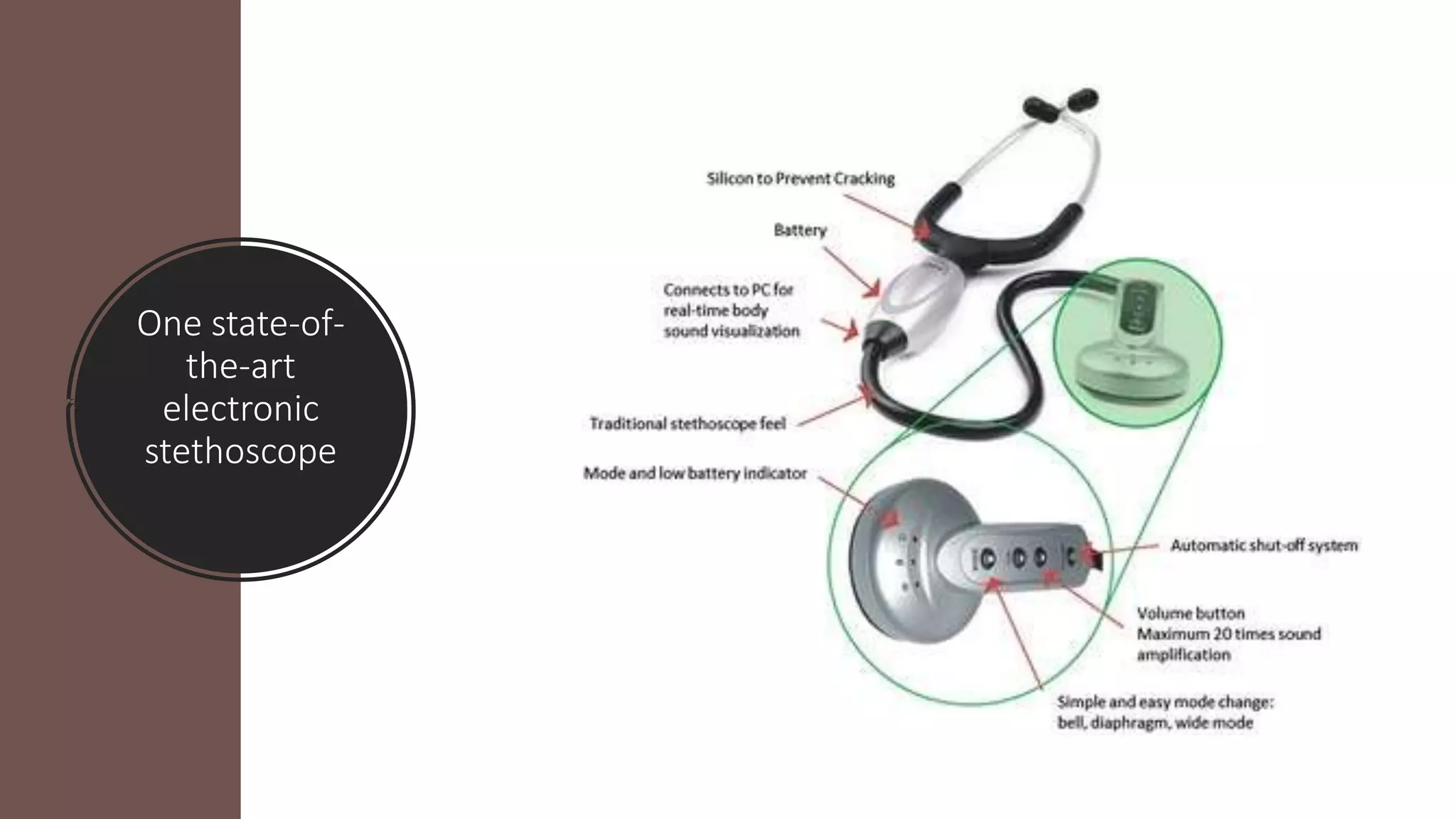
One state-of-
the-art
electronic
stethoscope
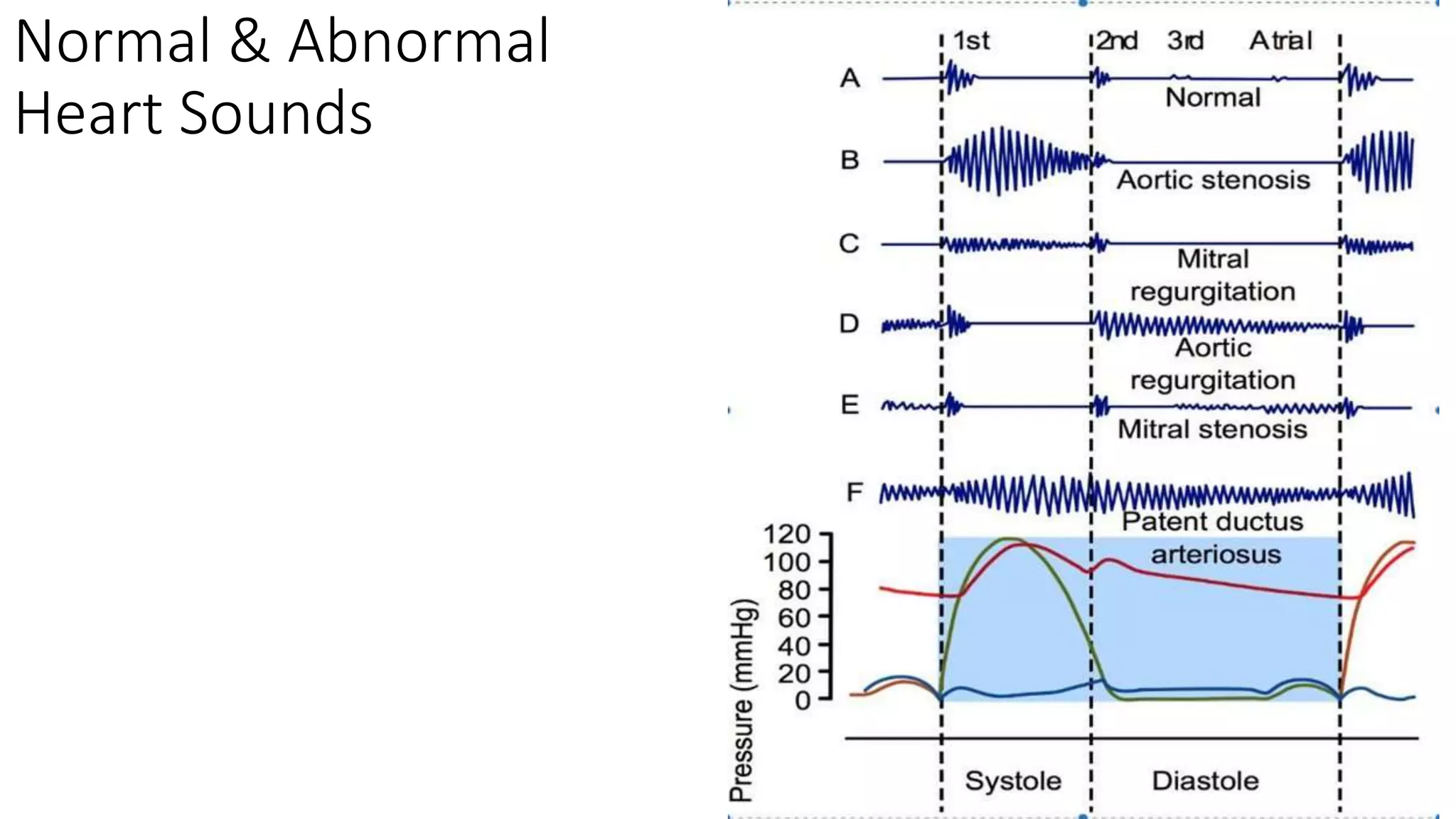
Normal & Abnormal
Heart Sounds
1-Aortic
2-Pulmonic,
3-Tricuspid
4-Mitral
Heart murmur
sounds (cardiac
auscultation
sounds)
Heart Sounds
and Heart
Murmurs,
Animation.
Heart
Murmurs
• Changes in Heart Rate with Exercise
• 1. Have the subject step up onto an 18” stool, right foot first, then bring up the left foot and
place it next
• to your right. Step down with the left foot and then bring the right foot down to the floor
next to it.
• Repeat this exercise five times, allowing three seconds total time for each repetition.
• 2. Immediately after completion of the fifth repetition, measure the subject’s heart rate for
15 second and
• multiply the number of pulses for 15 seconds. Record this value.
• 3. Repeat the 15-second pulse measurements at 30, 60, 90, and 120 seconds post-exercise.
Record the
• time it takes the pulse to return back to normal rate.
• 4. Score the subject based upon a) the difference between heart rate immediately post-
exercise and
• normal standing heart rate and b) The time needed for heart rate to return to normal
standing rate after
• cessation of exercise.

Heart murmurs