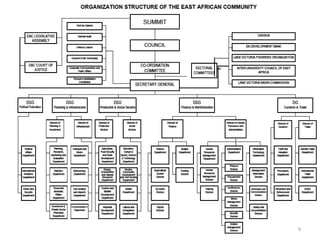
Health structures in the EAC and
how the link with the African
Union Commission
DR. Michael J. Katende
Principal HIV and AIDS Officer

East African Community Secretariat
Arusha, Tanzania
1
Background
The Regional Economic Communities (RECs) are
the pillars of the African Union (AU), and have
been recognized by the AU as the key vehicles for
economic integration and cooperation in Africa.
2001 African Heads of State created the New
Partnership for Africa's Development (NEPAD),
integrated development framework to enhance
growth and reduce poverty in Africa by
addressing key political, economic and social
priorities in a coherent and balanced manner ca
2
Background
Adopted as the continent's premier
development framework at a July 2001 summit
meeting of African Heads of State and
Government
In 2002, the 38th Ordinary Session of the Assembly of
AU Heads of State and Government of the
Organization of African Unity (OAU) held in Durban,
South Africa declared the creation of the AU, decided
that NEPAD would be implemented within the AU
through the RECs
3
Background
Adopted by the AU Conference of African
Ministers of Health (CAMH) in 2003, Inter alia,
recommendations on a proposal to establish
Health and Social Affairs Desks within the
RECs
The 2003 Maputo Session of the Assembly of
AU Heads of State and Government duly
endorsed the Report of the Ministers and
their recommendations
4
Purpose of health Desks in REC
i.

harmonization of the health policies of
member states within the REC;
ii. improved co-ordination of health promotion
activities;
iii. better resource mobilization and utilization; and
iv. better co-operation between the AU, RECs,
Health Ministries of Member Sates, UN
Agencies, NGOs and Civil Society Organizations
on health issues.
5
Guiding principles
the social (or health) issue tackled that are transboundary
in nature or require inter-country cooperation;
Facilitate the implementation of, or commitment to,
international conventions and other regional and
international instruments on health or social welfare and
development;
promote the formulation of an African regional or subregional consensus at international forums;
facilitate inter-country exchange, and promote learning
from best practices in the region or sub-region, through
physical meetings or compiling best practice models,
guidelines and standards;
6
Guiding principles
facilitate action by, and promote linkages or networking
among, centers of excellence, including social (or health)
development institutions, professionals and
practitioners in the region or sub-region;
support the building of capacity for compiling evidence,
regional indicators and trends;
REC, in undertaking interventions, should not duplicate
(but should rather add value to) work already being
done by other regional or sub-regional intergovernmental bodies or institutions
7
• Health Strategy of NEPAD is to substantially
reduce the burden of disease, with specific
targets that are consistent with those of the
Millennium Development Goals (MDGs) and
aimed at halting and beginning to reverse the
spread of disease by 2015

8
9
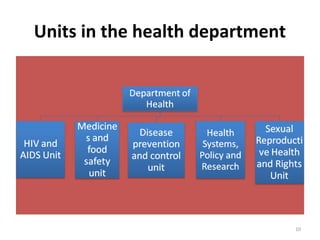
Units in the health department

10
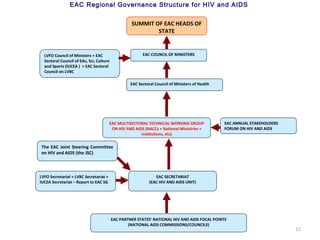
EAC Regional Governance Structure for HIV and AIDS
SUMMIT OF EAC HEADS OF
STATE

EAC COUNCIL OF MINISTERS

LVFO Council of Ministers + EAC
Sectoral Council of Edu, Sci, Culture
and Sports (IUCEA ) + EAC Sectoral
Council on LVBC

EAC Sectoral Council of Ministers of Health

EAC MULTISECTORAL TECHNICAL WORKING GROUP
ON HIV AND AIDS (NACCs + National Ministries +
Institutions, etc)

EAC ANNUAL STAKEHOLDERS
FORUM ON HIV AND AIDS

The EAC Joint Steering Committee
on HIV and AIDS (the JSC)

LVFO Secretariat + LVBC Secretariat +
IUCEA Secretariat – Report to EAC SG

EAC SECRETARIAT
(EAC HIV AND AIDS UNIT)

EAC PARTNER STATES’ NATIONAL HIV AND AIDS FOCAL POINTS
(NATIONAL AIDS COMMISSIONS/COUNCILS)

11
linkages
• Structures may exist but the linkage between
AUC and EAC is weak and sporadic, not well
defined may be regularized but at a much higher
level of the Secretary General.
• Linkage is through NEPAD Agency e.g
– EAC Medicine Regulatory Harmonization project
– East African Public Health Networking Project

• Linkage through NEPAD is mainly project or
programme based, depending on the existing
funding and area of interest of the funding
agency
12
Linkage with Partners
• Partners Forum
• engage Individual with the partners on
thematic areas
• Task force – transport corridors and the Cross
border initiatives

13

Health structures EAC

  • 1.
    Health structures inthe EAC and how the link with the African Union Commission DR. Michael J. Katende Principal HIV and AIDS Officer East African Community Secretariat Arusha, Tanzania 1
  • 2.
    Background The Regional EconomicCommunities (RECs) are the pillars of the African Union (AU), and have been recognized by the AU as the key vehicles for economic integration and cooperation in Africa. 2001 African Heads of State created the New Partnership for Africa's Development (NEPAD), integrated development framework to enhance growth and reduce poverty in Africa by addressing key political, economic and social priorities in a coherent and balanced manner ca 2
  • 3.
    Background Adopted as thecontinent's premier development framework at a July 2001 summit meeting of African Heads of State and Government In 2002, the 38th Ordinary Session of the Assembly of AU Heads of State and Government of the Organization of African Unity (OAU) held in Durban, South Africa declared the creation of the AU, decided that NEPAD would be implemented within the AU through the RECs 3
  • 4.
    Background Adopted by theAU Conference of African Ministers of Health (CAMH) in 2003, Inter alia, recommendations on a proposal to establish Health and Social Affairs Desks within the RECs The 2003 Maputo Session of the Assembly of AU Heads of State and Government duly endorsed the Report of the Ministers and their recommendations 4
  • 5.
    Purpose of healthDesks in REC i. harmonization of the health policies of member states within the REC; ii. improved co-ordination of health promotion activities; iii. better resource mobilization and utilization; and iv. better co-operation between the AU, RECs, Health Ministries of Member Sates, UN Agencies, NGOs and Civil Society Organizations on health issues. 5
  • 6.
    Guiding principles the social(or health) issue tackled that are transboundary in nature or require inter-country cooperation; Facilitate the implementation of, or commitment to, international conventions and other regional and international instruments on health or social welfare and development; promote the formulation of an African regional or subregional consensus at international forums; facilitate inter-country exchange, and promote learning from best practices in the region or sub-region, through physical meetings or compiling best practice models, guidelines and standards; 6
  • 7.
    Guiding principles facilitate actionby, and promote linkages or networking among, centers of excellence, including social (or health) development institutions, professionals and practitioners in the region or sub-region; support the building of capacity for compiling evidence, regional indicators and trends; REC, in undertaking interventions, should not duplicate (but should rather add value to) work already being done by other regional or sub-regional intergovernmental bodies or institutions 7
  • 8.
    • Health Strategyof NEPAD is to substantially reduce the burden of disease, with specific targets that are consistent with those of the Millennium Development Goals (MDGs) and aimed at halting and beginning to reverse the spread of disease by 2015 8
  • 9.
  • 10.
    Units in thehealth department 10
  • 11.
    EAC Regional GovernanceStructure for HIV and AIDS SUMMIT OF EAC HEADS OF STATE EAC COUNCIL OF MINISTERS LVFO Council of Ministers + EAC Sectoral Council of Edu, Sci, Culture and Sports (IUCEA ) + EAC Sectoral Council on LVBC EAC Sectoral Council of Ministers of Health EAC MULTISECTORAL TECHNICAL WORKING GROUP ON HIV AND AIDS (NACCs + National Ministries + Institutions, etc) EAC ANNUAL STAKEHOLDERS FORUM ON HIV AND AIDS The EAC Joint Steering Committee on HIV and AIDS (the JSC) LVFO Secretariat + LVBC Secretariat + IUCEA Secretariat – Report to EAC SG EAC SECRETARIAT (EAC HIV AND AIDS UNIT) EAC PARTNER STATES’ NATIONAL HIV AND AIDS FOCAL POINTS (NATIONAL AIDS COMMISSIONS/COUNCILS) 11
  • 12.
    linkages • Structures mayexist but the linkage between AUC and EAC is weak and sporadic, not well defined may be regularized but at a much higher level of the Secretary General. • Linkage is through NEPAD Agency e.g – EAC Medicine Regulatory Harmonization project – East African Public Health Networking Project • Linkage through NEPAD is mainly project or programme based, depending on the existing funding and area of interest of the funding agency 12
  • 13.
    Linkage with Partners •Partners Forum • engage Individual with the partners on thematic areas • Task force – transport corridors and the Cross border initiatives 13