Hawaiian Approaches to Teaching and LearningTrisha Kehaulani Watson, JD, PhDwatson@honuaconsulting.com
IntroductionBorn and raised in Manoa (O`ahu)Punahou School B.A. (Sociology and American Studies) University of Hawai`i, ManoaM.A. Washington State UniversityJ.D. William S. Richardson School of Law / Environmental Law ProgramPh.D. American Studies (Indigenous Epistemologies)
Know your place and you will find your place.Context is everything.
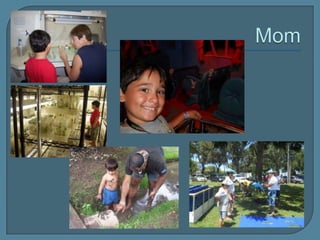
Mom
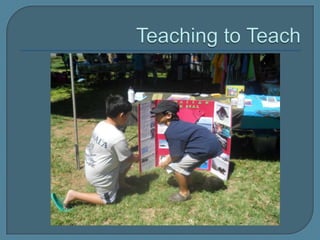
Teaching to Teach
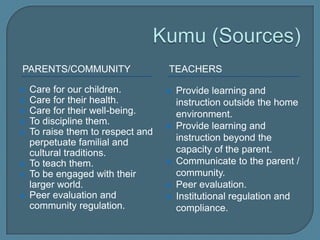
Kumu (Sources)Parents/CommunityTeachersCare for our children.Care for their health.Care for their well-being.To discipline them.To raise them to respect and perpetuate familial and cultural traditions.To teach them.  To be engaged with their larger world.Peer evaluation and community regulation.Provide learning and instruction outside the home environment.Provide learning and instruction beyond the capacity of the parent.Communicate to the parent / community.Peer evaluation.Institutional regulation and compliance.
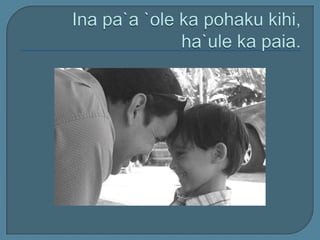
Ina pa`a `ole ka pohakukihi,ha`ule ka paia.
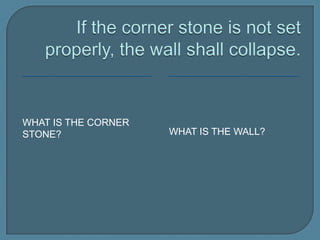
If the corner stone is not set properly, the wall shall collapse.What is the wall?What is the corner stone?
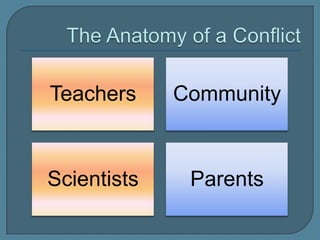
The Anatomy of a Conflict
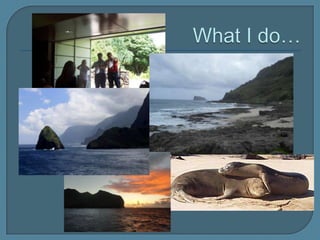
What I do…
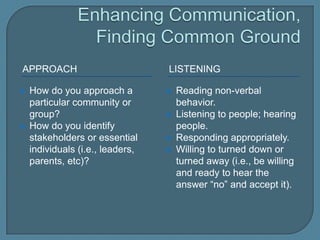
Enhancing Communication, Finding Common GroundApproachlisteningHow do you approach a particular community or group?How do you identify stakeholders or essential individuals (i.e., leaders, parents, etc)?  Reading non-verbal behavior.Listening to people; hearing people.Responding appropriately.Willing to turned down or turned away (i.e., be willing and ready to hear the answer “no” and accept it).
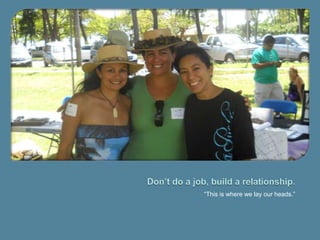
Don’t do a job, build a relationship.“This is where we lay our heads.”
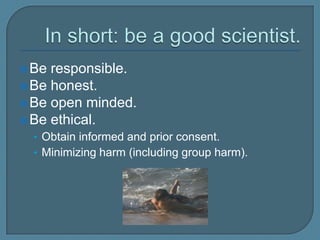
In short: be a good scientist.Be responsible.Be honest.Be open minded.Be ethical.Obtain informed and prior consent.Minimizing harm (including group harm).
Follow ethical standardsDo no harmPrior and informed consentConsultationInformationParticipationCapacity BuildingEnabling Self-EmpowermentRepresentative and Inclusive InstitutionsMinimize harmConsider group harmObtain prior consentConsider adverse effectsTake immediate corrective action when there are unexpected adverse effectsTake immediate responsibility for any immediate adverse effects
Open Communication +RelationshipcommunicationrelationshipAvoid misunderstandings (and thereby conflict)Allow for inclusion of outside / community resourcesEnhances innovation Allows for community evaluation (ho`ike)Demonstrates relevancyFosters curiosity Minimize or mitigate misunderstandings (and thereby conflict)Allows teacher or scientist to appreciate the context (and human dimensions) in which activity is taking placeBuild community
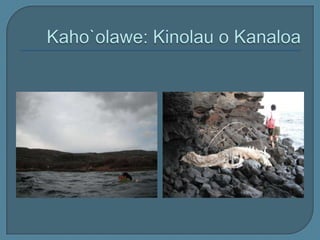
Kaho`olawe: Kinolau o Kanaloa
Hawaiian Approaches to ScienceUnderstanding Unique Perspectives on Context and Content
Papahanaumoku`Aina kapuUnderstanding kapuThe context and history of the kapu systemRespecting kapu`Ike kapu`Ike is not noaWhen `ike is hunaIndigenous ways of learning and knowing
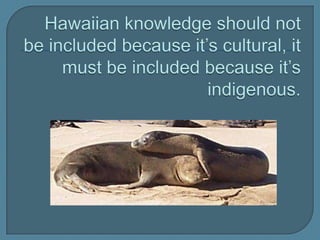
Hawaiian knowledge should not be included because it’s cultural, it must be included because it’s indigenous.
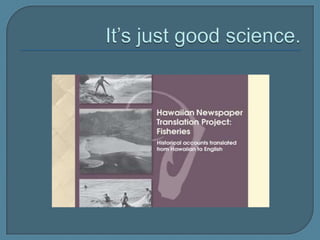
It’s just good science.
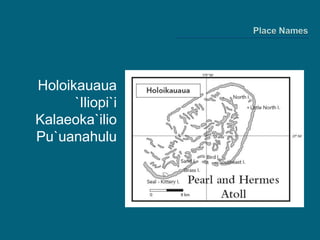
Place NamesHoloikauaua`Iliopi`iKalaeoka`ilioPu`uanahulu
Final SuggestionsIf you have good communication and a good relationship, you will be more likely to find a place of agreement and understanding.A good relationship is one in which all parties teach and learn.  Remember that many local groups can use primarily passive and non-verbal communication.
Mahalo!Questions?

Hawaiian Approaches To Teaching And Learning

  • 1.
    Hawaiian Approaches toTeaching and LearningTrisha Kehaulani Watson, JD, PhDwatson@honuaconsulting.com
  • 2.
    IntroductionBorn and raisedin Manoa (O`ahu)Punahou School B.A. (Sociology and American Studies) University of Hawai`i, ManoaM.A. Washington State UniversityJ.D. William S. Richardson School of Law / Environmental Law ProgramPh.D. American Studies (Indigenous Epistemologies)
  • 3.
    Know your placeand you will find your place.Context is everything.
  • 4.
  • 5.
  • 6.
    Kumu (Sources)Parents/CommunityTeachersCare forour children.Care for their health.Care for their well-being.To discipline them.To raise them to respect and perpetuate familial and cultural traditions.To teach them. To be engaged with their larger world.Peer evaluation and community regulation.Provide learning and instruction outside the home environment.Provide learning and instruction beyond the capacity of the parent.Communicate to the parent / community.Peer evaluation.Institutional regulation and compliance.
  • 7.
    Ina pa`a `oleka pohakukihi,ha`ule ka paia.
  • 8.
    If the cornerstone is not set properly, the wall shall collapse.What is the wall?What is the corner stone?
  • 9.
    The Anatomy ofa Conflict
  • 10.
  • 11.
    Enhancing Communication, FindingCommon GroundApproachlisteningHow do you approach a particular community or group?How do you identify stakeholders or essential individuals (i.e., leaders, parents, etc)? Reading non-verbal behavior.Listening to people; hearing people.Responding appropriately.Willing to turned down or turned away (i.e., be willing and ready to hear the answer “no” and accept it).
  • 12.
    Don’t do ajob, build a relationship.“This is where we lay our heads.”
  • 13.
    In short: bea good scientist.Be responsible.Be honest.Be open minded.Be ethical.Obtain informed and prior consent.Minimizing harm (including group harm).
  • 14.
    Follow ethical standardsDono harmPrior and informed consentConsultationInformationParticipationCapacity BuildingEnabling Self-EmpowermentRepresentative and Inclusive InstitutionsMinimize harmConsider group harmObtain prior consentConsider adverse effectsTake immediate corrective action when there are unexpected adverse effectsTake immediate responsibility for any immediate adverse effects
  • 15.
    Open Communication +RelationshipcommunicationrelationshipAvoidmisunderstandings (and thereby conflict)Allow for inclusion of outside / community resourcesEnhances innovation Allows for community evaluation (ho`ike)Demonstrates relevancyFosters curiosity Minimize or mitigate misunderstandings (and thereby conflict)Allows teacher or scientist to appreciate the context (and human dimensions) in which activity is taking placeBuild community
  • 16.
  • 18.
    Hawaiian Approaches toScienceUnderstanding Unique Perspectives on Context and Content
  • 19.
    Papahanaumoku`Aina kapuUnderstanding kapuThecontext and history of the kapu systemRespecting kapu`Ike kapu`Ike is not noaWhen `ike is hunaIndigenous ways of learning and knowing
  • 20.
    Hawaiian knowledge shouldnot be included because it’s cultural, it must be included because it’s indigenous.
  • 21.
  • 22.
  • 23.
    Final SuggestionsIf youhave good communication and a good relationship, you will be more likely to find a place of agreement and understanding.A good relationship is one in which all parties teach and learn. Remember that many local groups can use primarily passive and non-verbal communication.
  • 24.

Editor's Notes

  • #7 Kumu. Source. Kumu La`au = source of the leaves.
  • #8 If the corner stone is not set firmly, the wall shall collapse. If education shall succeed, the relationship between the community and school needs to be right. What is the corner stone? What is the wall?
  • #9 Activity!
  • #14 Demeanors and values.
  • #15 Nothing you are experiencing is unique. INTERNATIONAL WORKSHOP ON METHODOLOGIES REGARDING FREE PRIOR AND INFORMED CONSENT AND INDIGENOUS PEOPLES45CFR46
  • #22 Monk seal foraging study.
  • #23 Naming. Puakea story.