Amy Lang
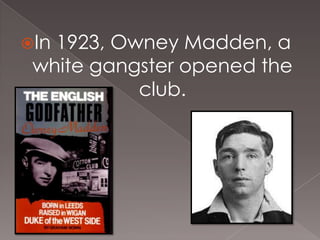
In

1923, Owney Madden, a
white gangster opened the
club.
People could order a number of
dishes, such as fried chicken and
barbecued ribs.
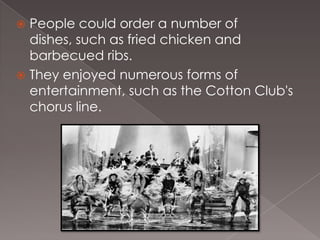
 They enjoyed numerous forms of
entertainment, such as the Cotton Club's
chorus line.


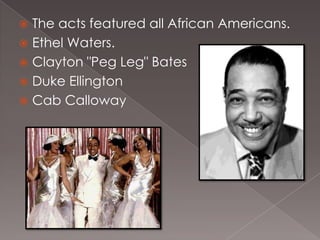
The acts featured all African Americans.

 Ethel Waters.
 Clayton "Peg Leg" Bates
 Duke Ellington
 Cab Calloway

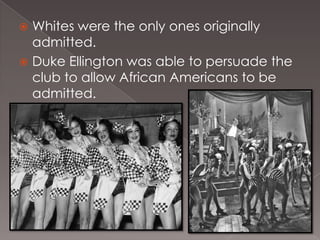
Whites were the only ones originally
admitted.
 Duke Ellington was able to persuade the
club to allow African Americans to be
admitted.

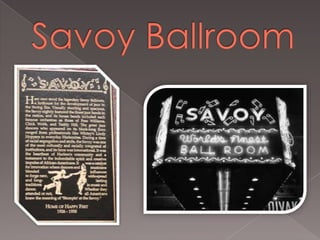
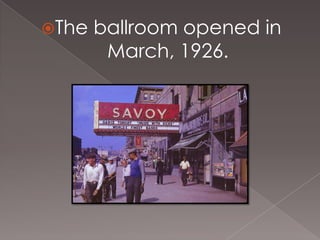
The

ballroom opened in
March, 1926.
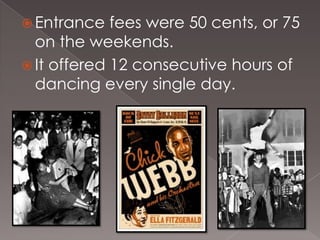
 Entrance

fees were 50 cents, or 75
on the weekends.
 It offered 12 consecutive hours of
dancing every single day.
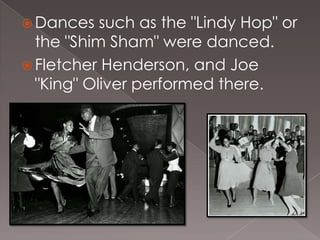
 Dances

such as the "Lindy Hop" or
the "Shim Sham" were danced.
 Fletcher Henderson, and Joe
"King" Oliver performed there.
Kristen Coiley
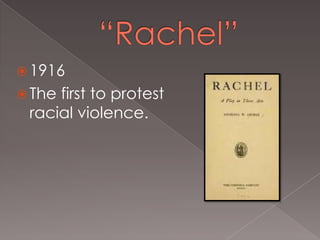
 1916

 The

first to protest
racial violence.
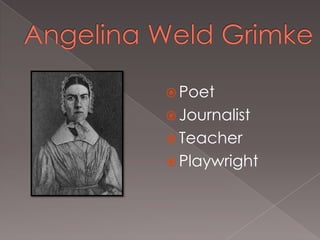
 Poet
 Journalist
 Teacher
 Playwright
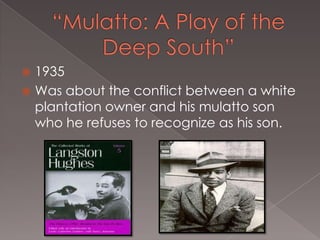
1935
 Was about the conflict between a white
plantation owner and his mulatto son
who he refuses to recognize as his son.

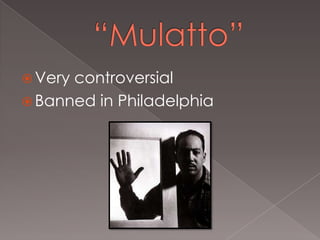
 Very

controversial
 Banned in Philadelphia
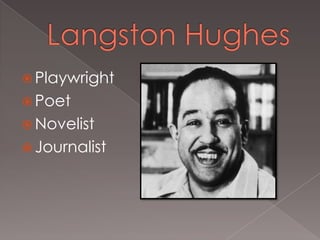
 Playwright
 Poet
 Novelist
 Journalist
 Drama
 About

a man who didn’t follow his
heart and married the wrong woman
 Highlighted the wife’s jealousy of the
other woman’s lighter-colored skin
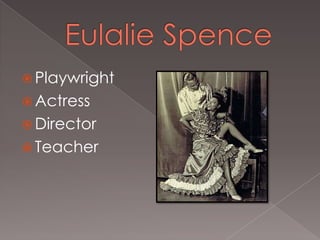
 Playwright
 Actress
 Director
 Teacher
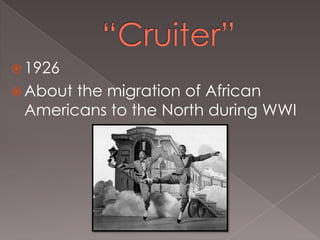
 1926

 About

the migration of African
Americans to the North during WWI
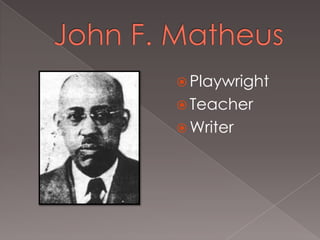
 Playwright
 Teacher
 Writer
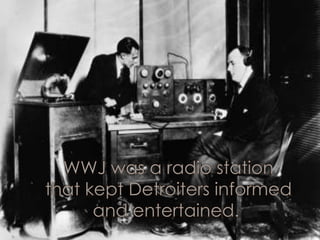
Tom Kaack
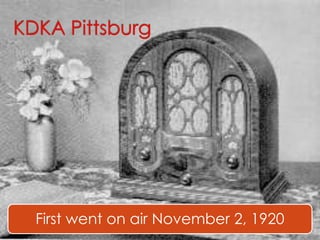
First went on air November 2, 1920
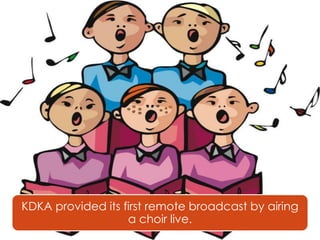
KDKA provided its first remote broadcast by airing
a choir live.
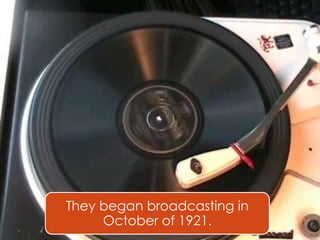
They began broadcasting in
October of 1921.
Collette LeBoeuf


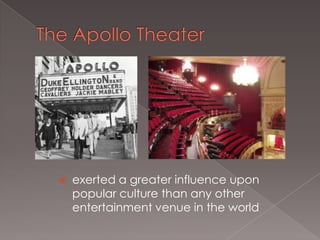
exerted a greater influence upon
popular culture than any other
entertainment venue in the world


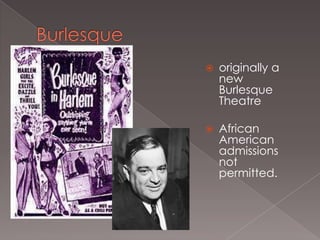
originally a
new
Burlesque
Theatre



African
American
admissions
not
permitted.
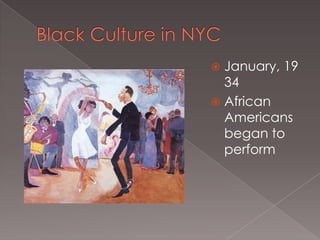
January, 19
34
 African
Americans
began to
perform

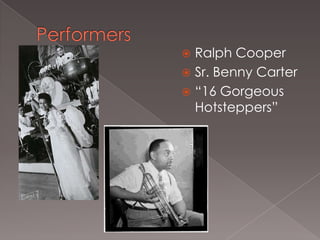
Ralph Cooper
 Sr. Benny Carter
 “16 Gorgeous
Hotsteppers”

HR
HR
HR
HR
HR

HR