Hardy
Weinberg
equilibrium
Submitted to: Dr. Khalid
Mukhtar
Submitted by: Amna Akram
Roll no.: ZOOL51F22R002
BS ZOOLOGY
Hardy Weinberg
equilibrium
Submitted to: Dr. Khalid Mukhtar
Submitted by: Amna Akram
Roll no.: ZOOL51F22R002
BS Zoology 5th regular
University of Sargodha
Introduction
• In population genetics, the Hardy–Weinberg principle,
also known as the Hardy–Weinberg
equilibrium, model, theorem, or law, states
that allele and genotype frequencies in a population
will remain constant from generation to generation in
the absence of other evolutionary influences.
History
• Independent Discovery (1908):
• ○ Godfrey Harold Hardy: A British mathematician who
formulated the principle in a letter to the Science magazine.
○ Wilhelm Weinberg: A German
physician who independently derived the same principle.
• Significance:
○Provided a mathematical framework to understand genetic
stability in populations.
○ Challenged the prevailing notion that dominant alleles would
automatically increase in frequency.
Basic concepts:
• Genome-
Complete set of DNA, including all of it’s genes(of
organism). In human being, copy of entire genome more than
3billion DNA base pairs in all cells that have nucleus.
• Gene frequency-
Relative proportion of a particular genes or alleles of single
locus in a population. When we consider a particular gene on
single locus in population, then we note the probability of a
particular genes. One character dominant in a population while
other is recessive.
Cont…
• Genotypic Frequency-Relative proportion of
a particular genotype in population.
• Population Genetics-Study of allele
frequency and genotype frequency.
• Population-It is freely interbreeding group of
individuals.
• Allele frequency- It is number of individuals
alleles of certain type divided by total number
of alleles of all types in a population.
• Gene locus- It is the portion on chromosome
that representing single gene.
Hardy Weinberg
equation
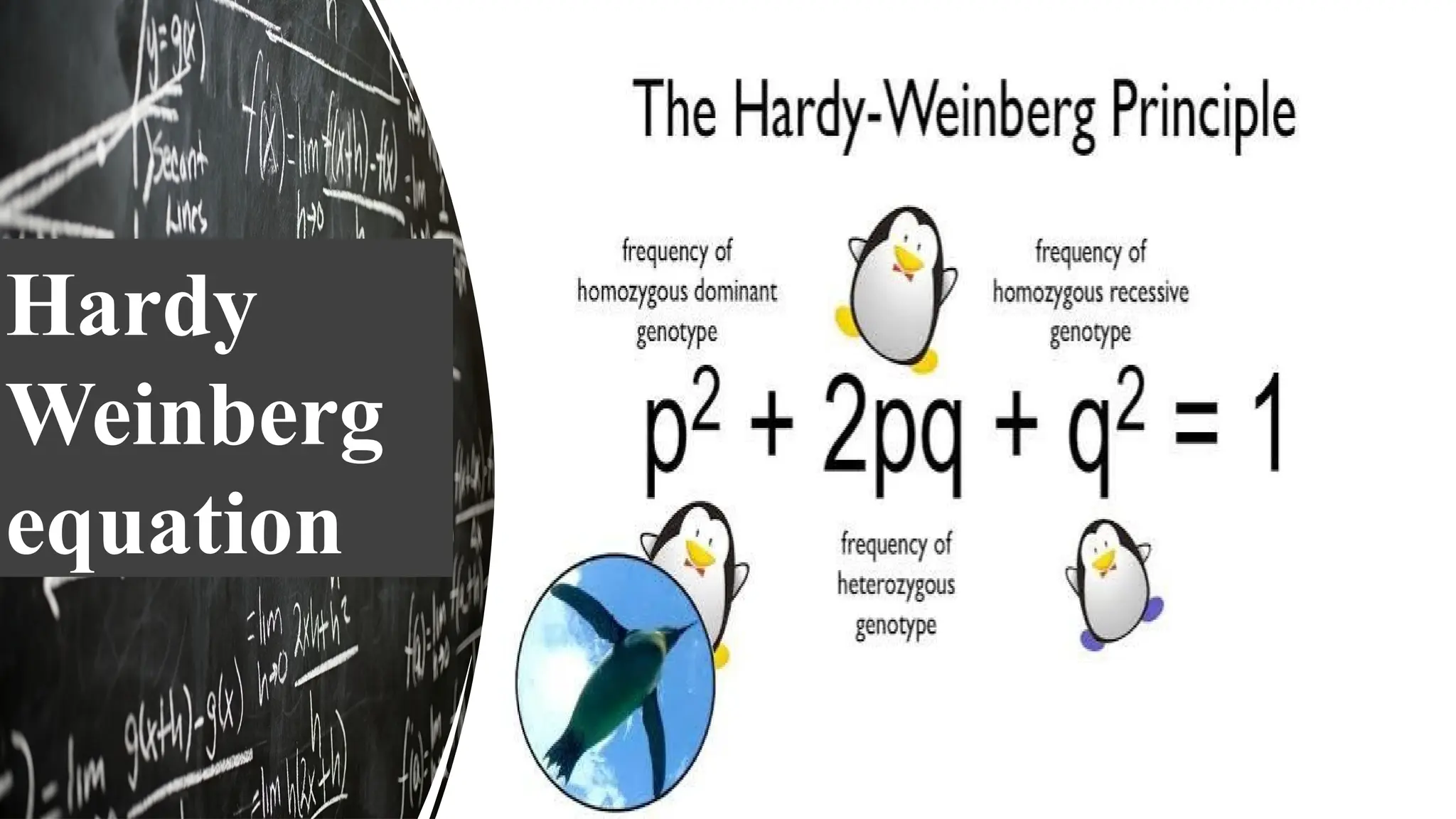
• For example –
• If the frequency of allele ‘A’ in the population is
‘p’ and the frequency of allele “a” in the
population is “q”. Then the frequency of
genotype AA=p² the frequency of genotype
Aa=2pq the frequency of genotype aa= q²
mathematical, p+q=1
• p² + 2pq + q2 = 1
ardy Weinberg
quation
Hardy
Weinberg
equation
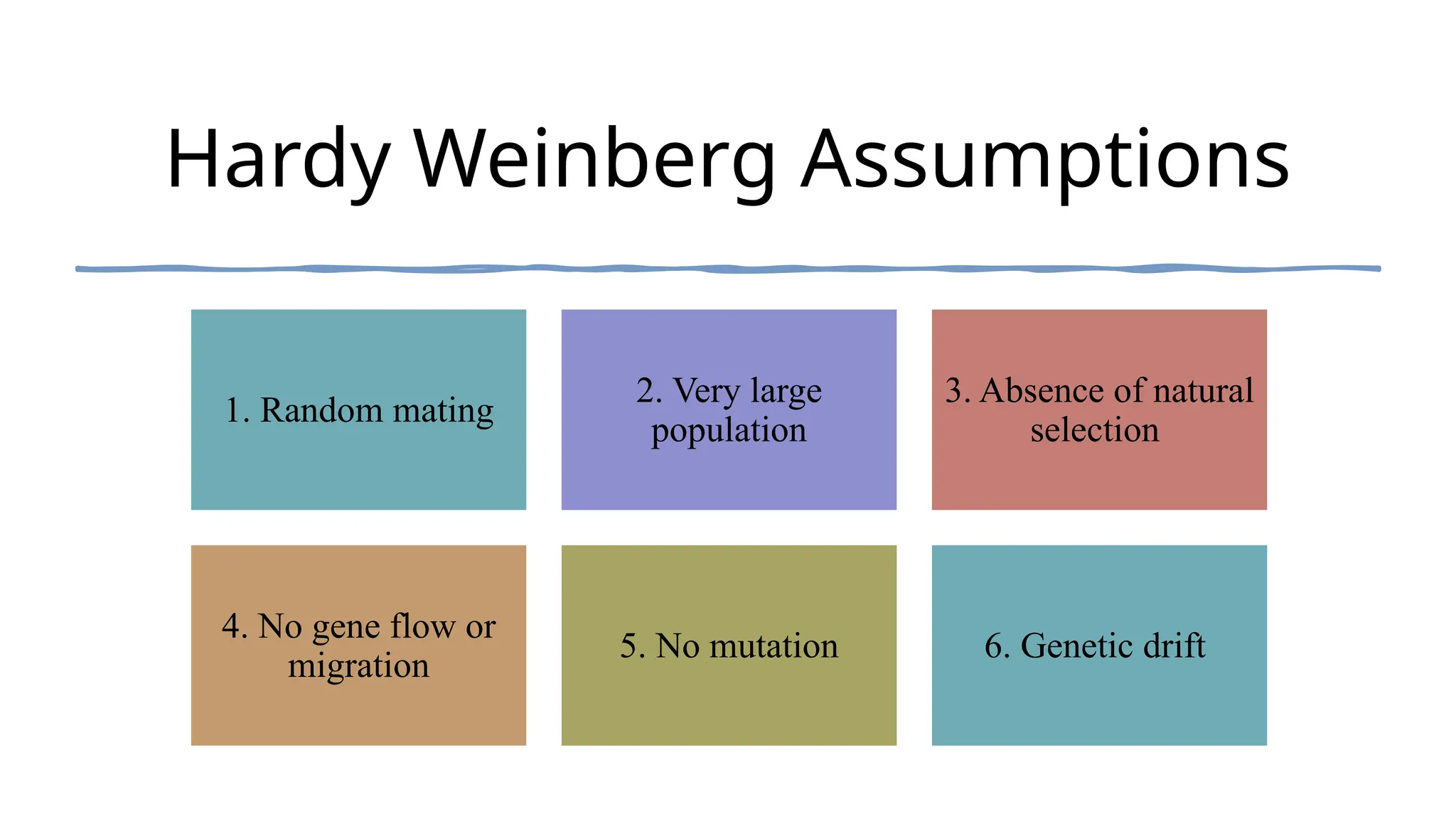
Hardy Weinberg Assumptions
1. Random mating
2. Very large
population
3. Absence of natural
selection
4. No gene flow or
migration
5. No mutation 6. Genetic drift
Random
mating
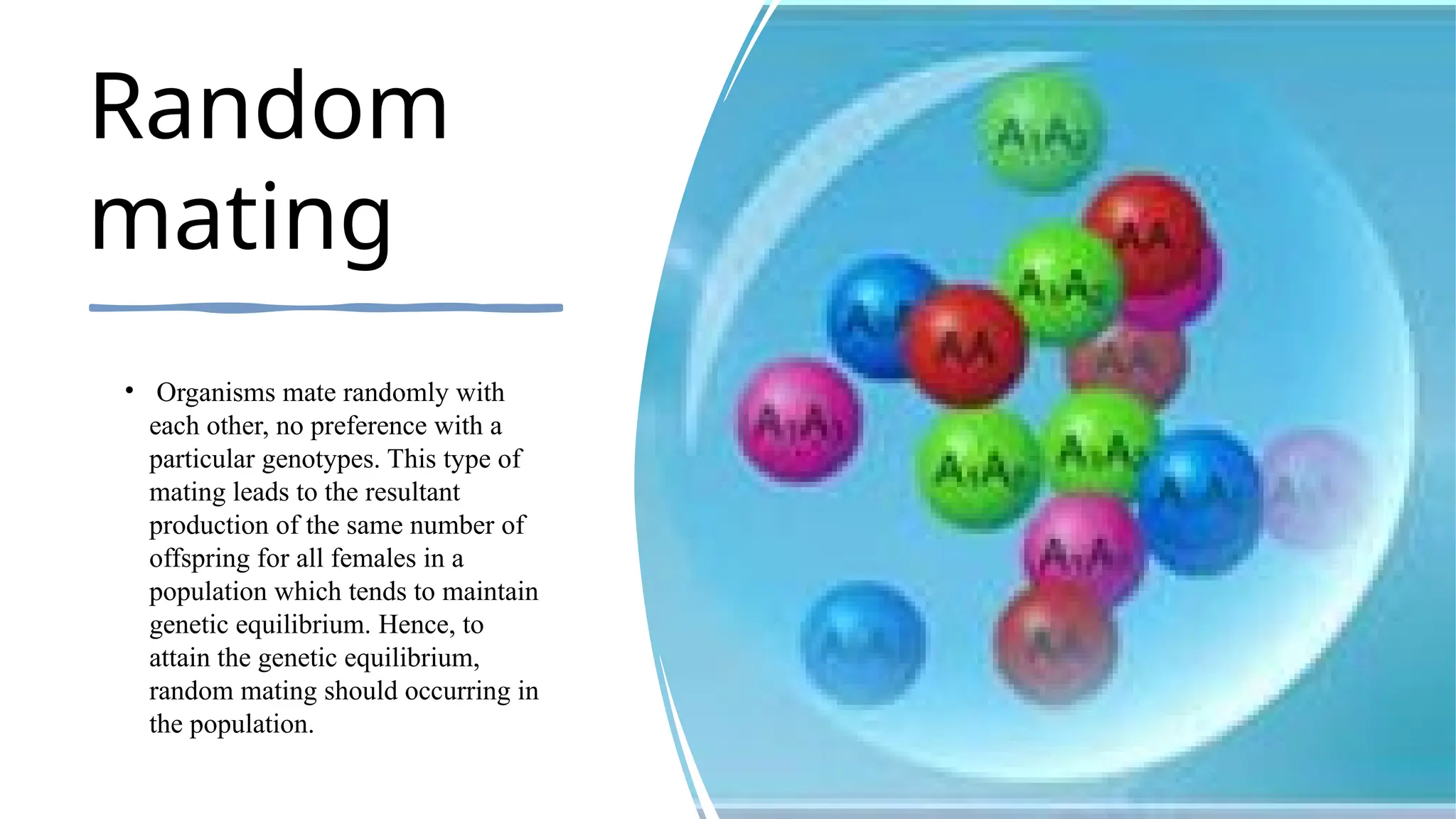
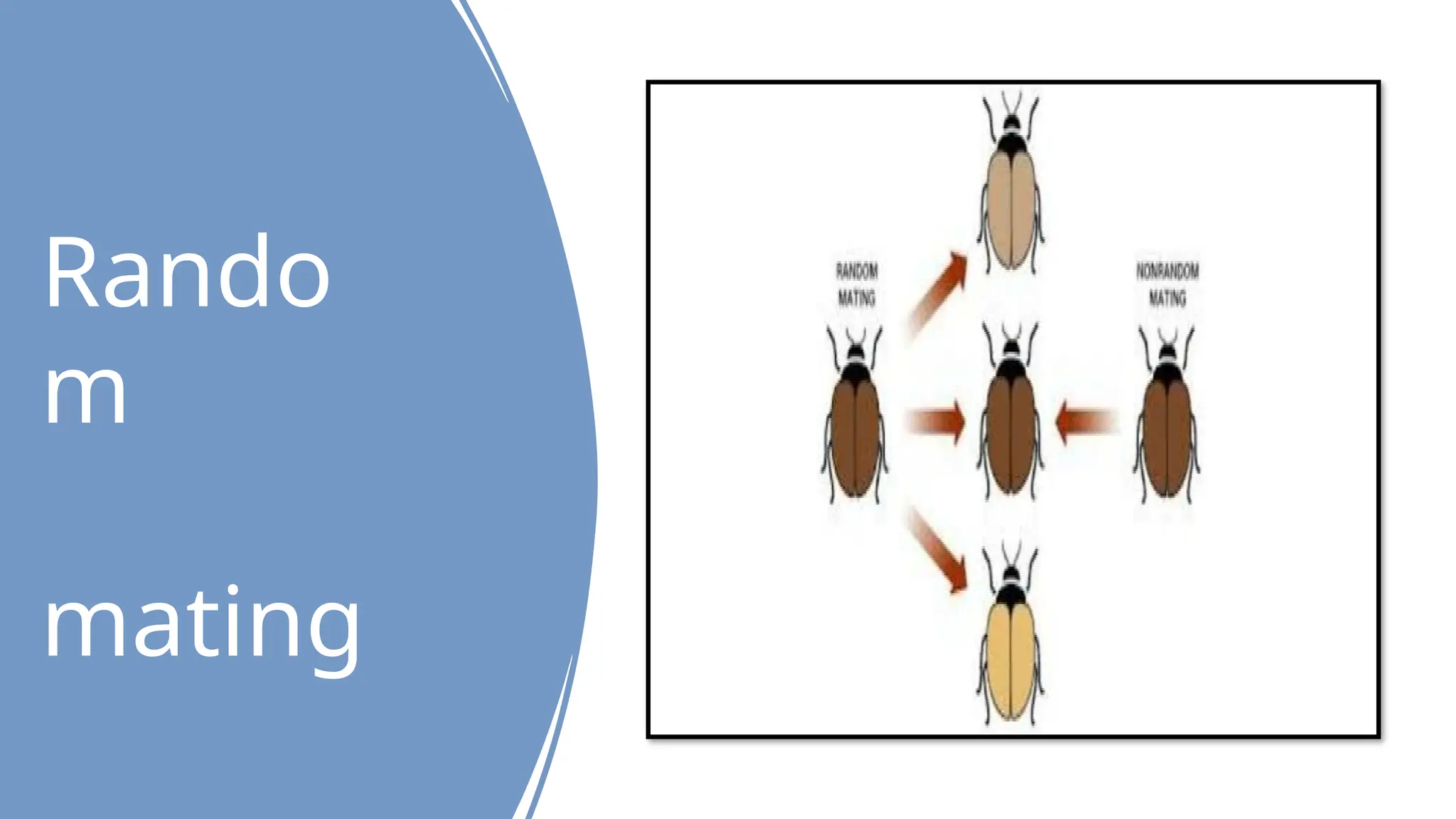
• Organisms mate randomly with
each other, no preference with a
particular genotypes. This type of
mating leads to the resultant
production of the same number of
offspring for all females in a
population which tends to maintain
genetic equilibrium. Hence, to
attain the genetic equilibrium,
random mating should occurring in
the population.
Rando
m
mating
INFINITE
LARGE
POPULATION
• To maintain the genetic equilibrium
the population should be effectively
infinitely large in size. Because of
that genetic drift is not causing a
random changes in allele
frequencies due to sampling error
from one generation to the next
generation.
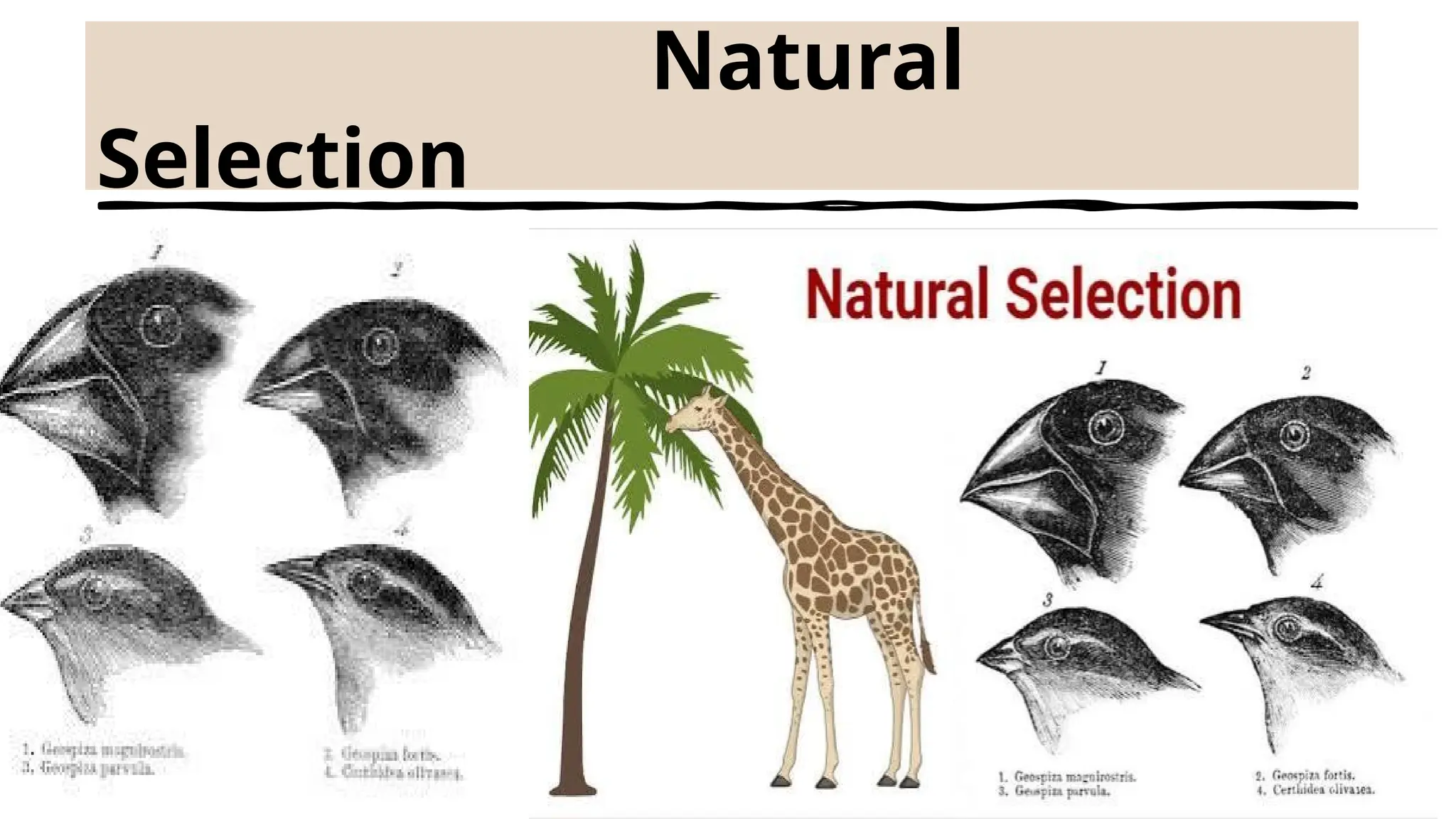
Natural Selection
Is the differential survival
and reproduction of
individuals due to difference
in the phenotype.
It is a key mechanism of
evolution, the change in the
heritable traits characteristics of
the population over the
generation. Hence, to apply the
Hardy-Weinberg law the natural
selection should be absent.
Natural
Selection
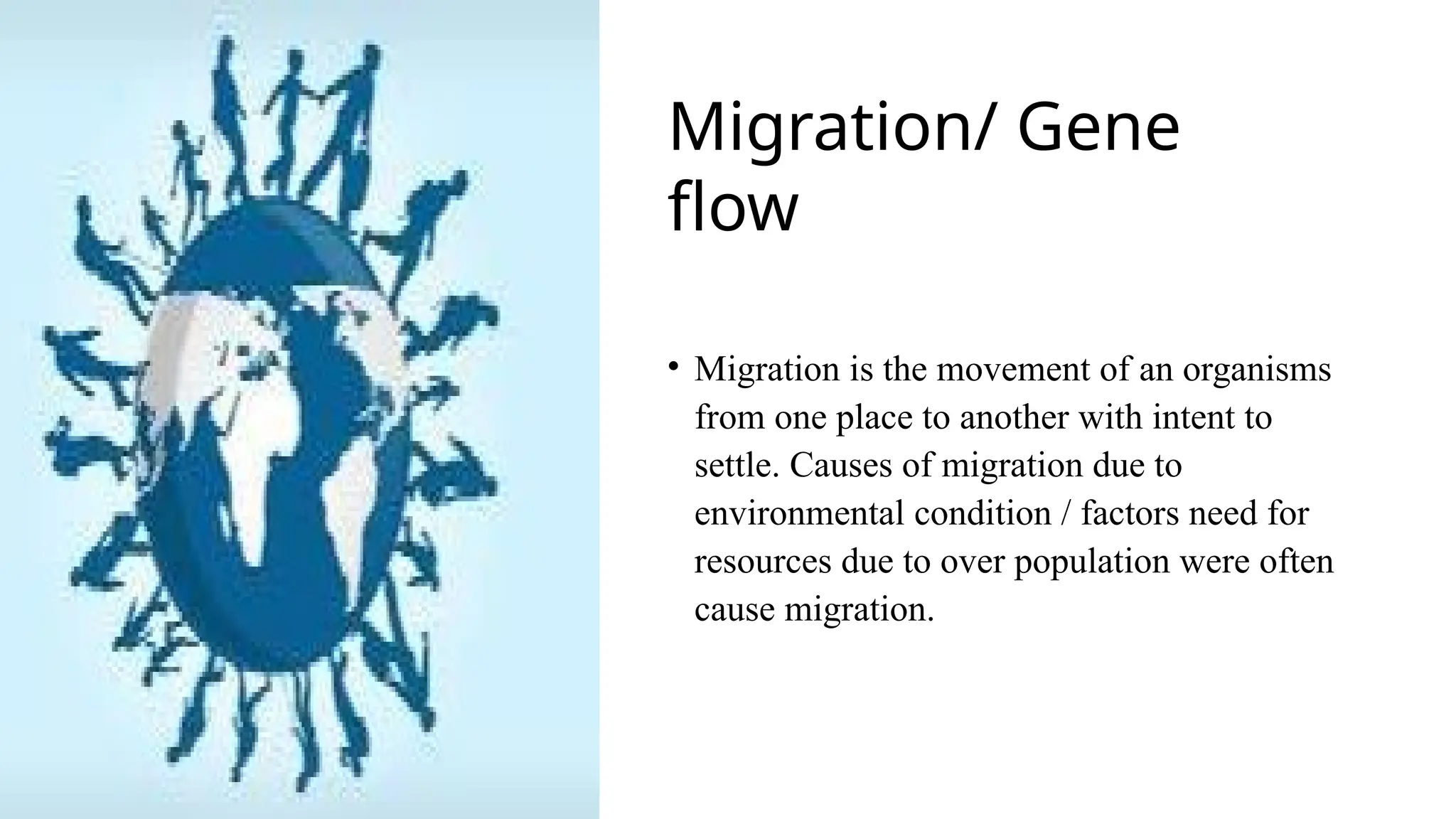
• Migration is the movement of an organisms
from one place to another with intent to
settle. Causes of migration due to
environmental condition / factors need for
resources due to over population were often
cause migration.
M
Migration/ Gene
flow
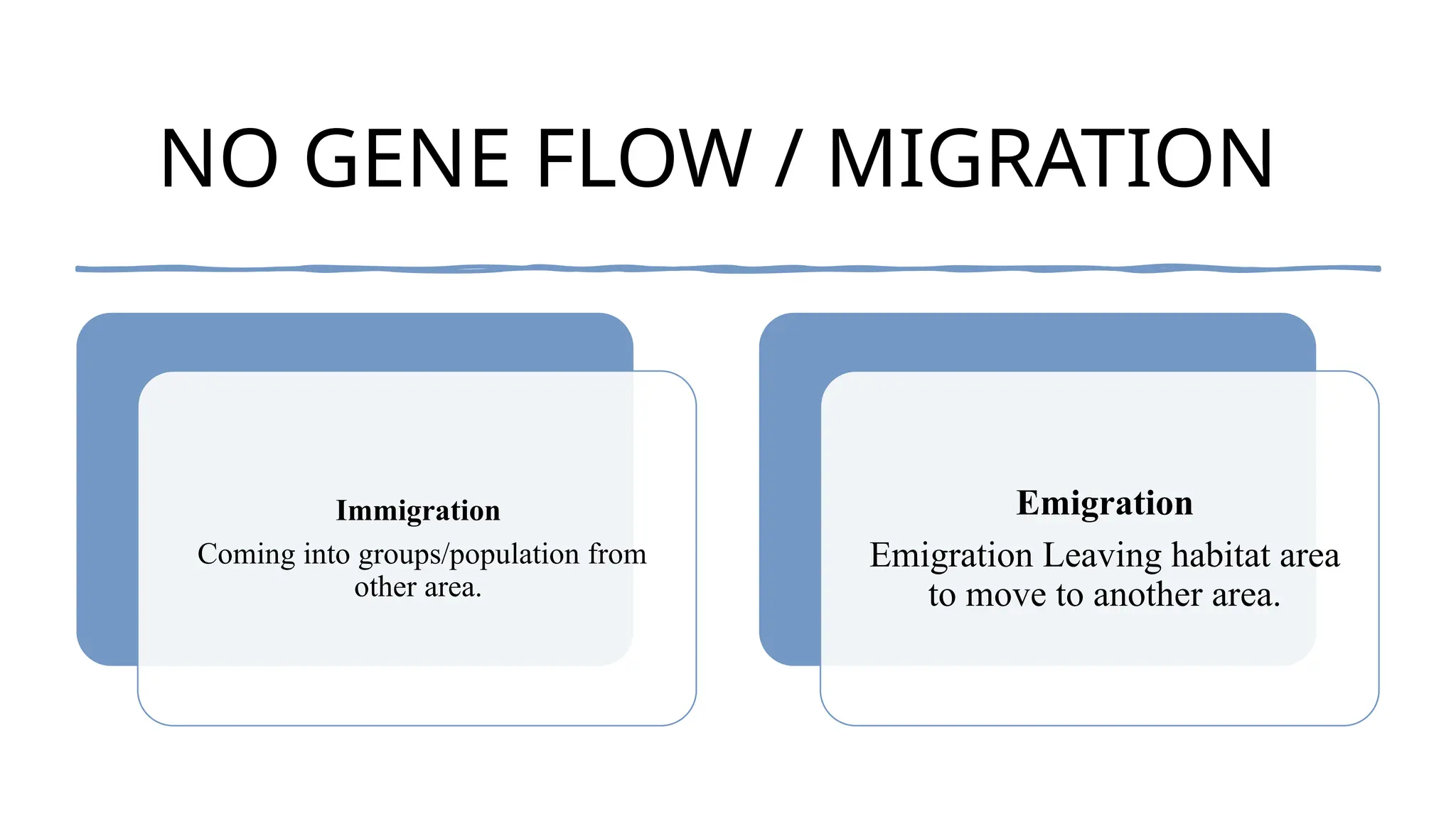
NO GENE FLOW / MIGRATION
Immigration
Coming into groups/population from
other area.
Emigration
Emigration Leaving habitat area
to move to another area.
CONTS.
• Migration is ultimately leads to genes disturbs
in the population.
• It is responsible for adding and deleting the
alleles from the population. Due to gene flow,
population becomes unstable and disturbs the
genetic equilibrium. Hence, migration should
not be present in the population to attains the
Hardy-Weinberg equilibrium.
Mutation
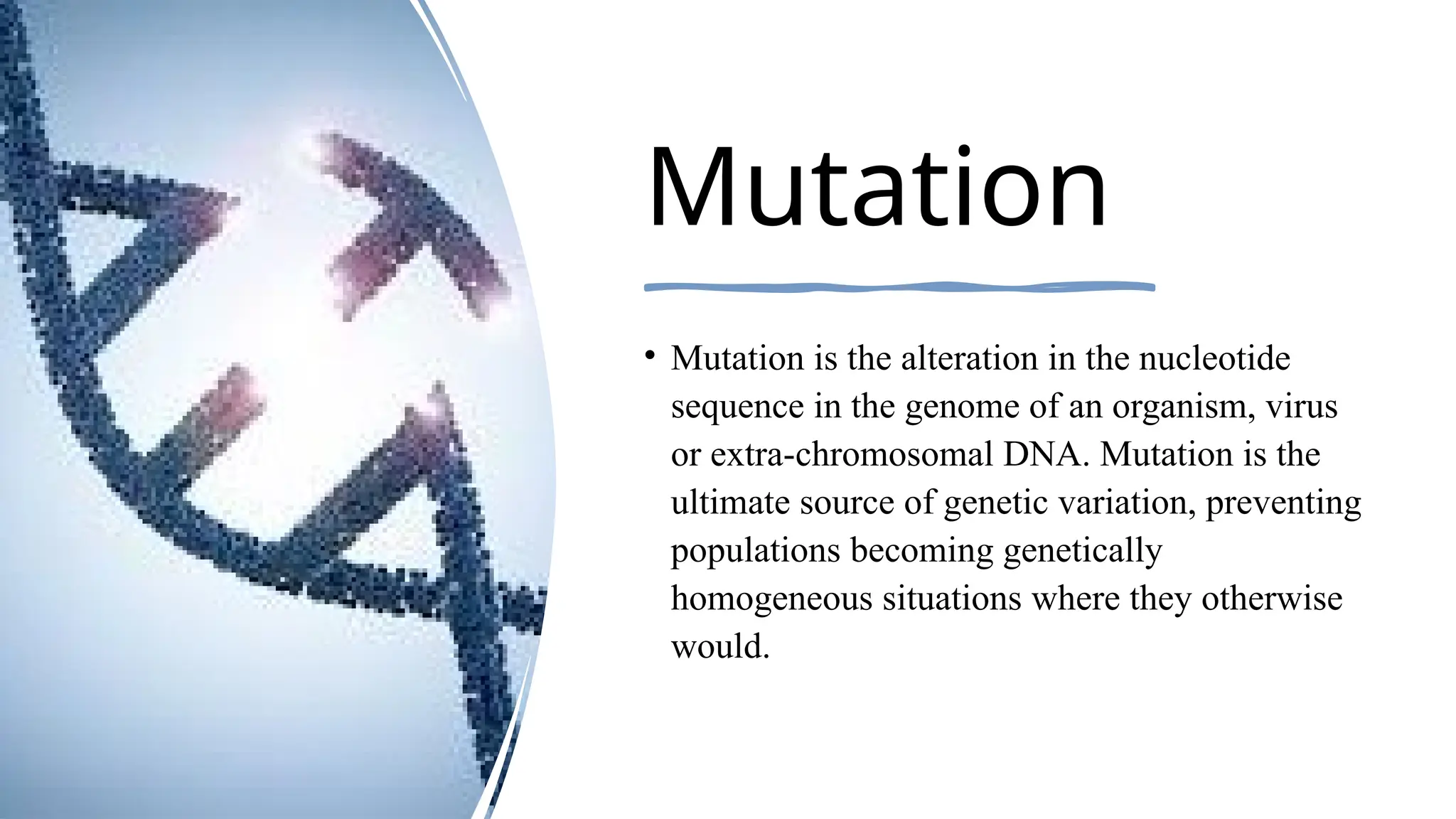
• Mutation is the alteration in the nucleotide
sequence in the genome of an organism, virus
or extra-chromosomal DNA. Mutation is the
ultimate source of genetic variation, preventing
populations becoming genetically
homogeneous situations where they otherwise
would.
Genetic drift
• Genetic drift :- Genetic drift is a change in the
frequency of an allele within a population over
time. This change in frequency of the allele or
gene variation must occur randomly in order
for genetic drift to occur
Use of hardy
Weinberg equilibrium
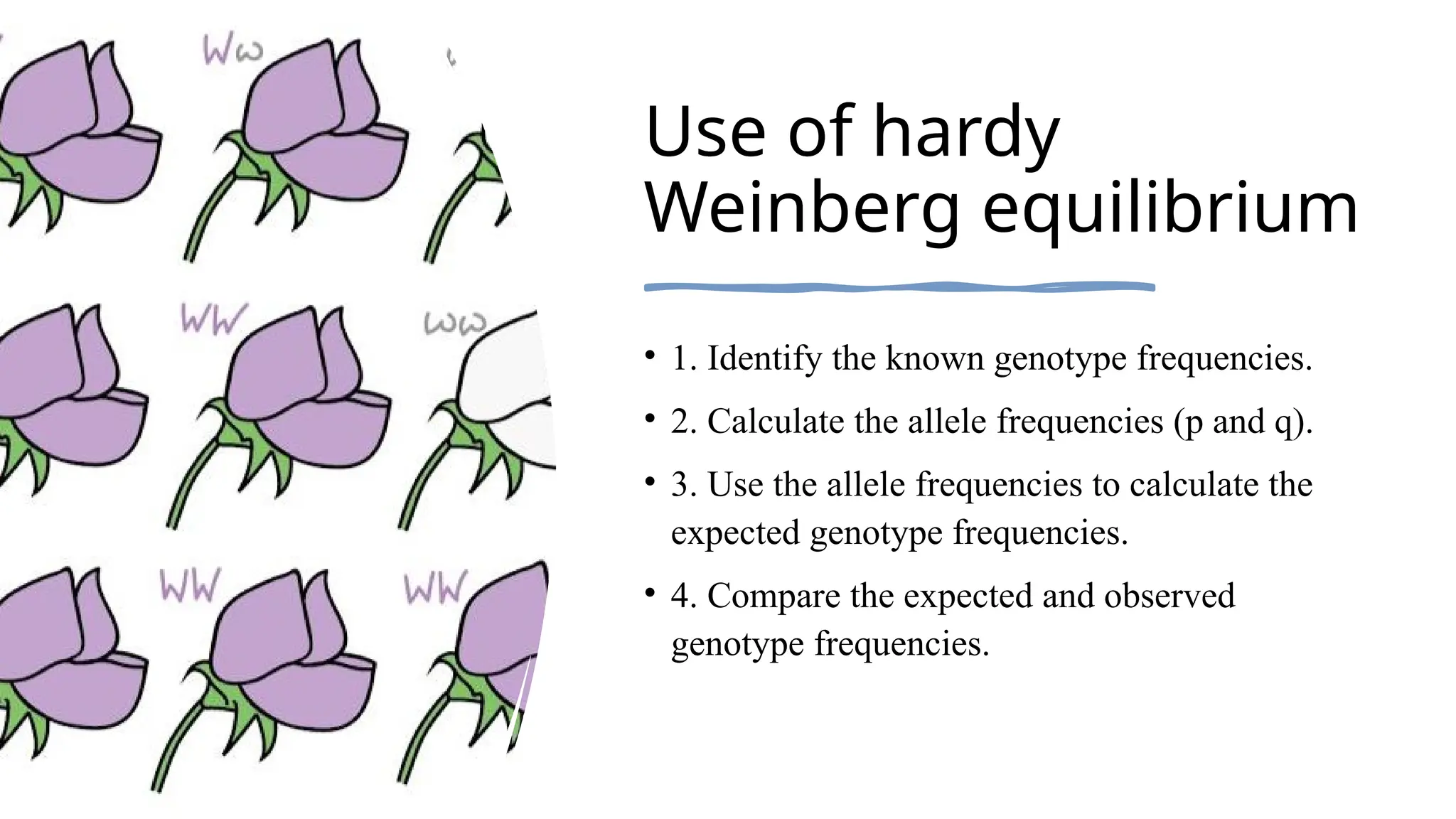
• 1. Identify the known genotype frequencies.
• 2. Calculate the allele frequencies (p and q).
• 3. Use the allele frequencies to calculate the
expected genotype frequencies.
• 4. Compare the expected and observed
genotype frequencies.
Example: A Population
of Flowers
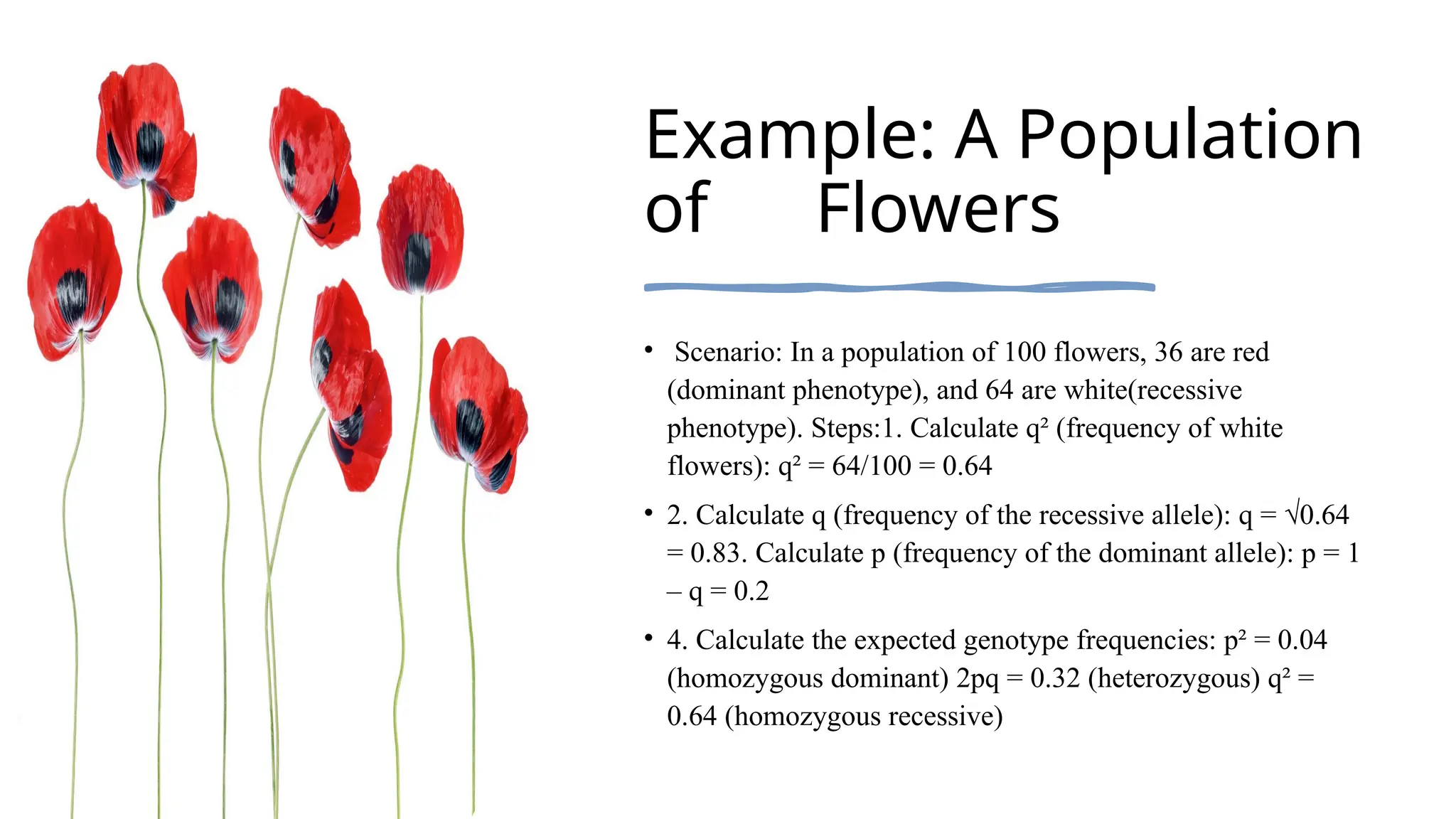
• Scenario: In a population of 100 flowers, 36 are red
(dominant phenotype), and 64 are white(recessive
phenotype). Steps:1. Calculate q² (frequency of white
flowers): q² = 64/100 = 0.64
• 2. Calculate q (frequency of the recessive allele): q = √0.64
= 0.83. Calculate p (frequency of the dominant allele): p = 1
– q = 0.2
• 4. Calculate the expected genotype frequencies: p² = 0.04
(homozygous dominant) 2pq = 0.32 (heterozygous) q² =
0.64 (homozygous recessive)
Real-world Examples of
Hardy-Weinberg
Equilibrium and Deviations
• Human populations: Examples of genetic
disorders like cystic fibrosis and sickle cell
anemia. Animal populations: Studies on
populations of birds, insects, and mammals.
• Plant populations: Investigations of flower
color, seed shape, and other traits.
Conclusions
• Hardy-Weinberg equilibrium is a powerful
tool for understanding population genetics.
By understanding the assumptions and
limitations of this model, we can gain
insights into the forces shaping the genetic
makeup of populations over time.
hardy Weinberg equilibrium.pptx.com..pk.

hardy Weinberg equilibrium.pptx.com..pk.

  • 1.
    Hardy Weinberg equilibrium Submitted to: Dr.Khalid Mukhtar Submitted by: Amna Akram Roll no.: ZOOL51F22R002 BS ZOOLOGY
  • 2.
    Hardy Weinberg equilibrium Submitted to:Dr. Khalid Mukhtar Submitted by: Amna Akram Roll no.: ZOOL51F22R002 BS Zoology 5th regular University of Sargodha
  • 3.
    Introduction • In populationgenetics, the Hardy–Weinberg principle, also known as the Hardy–Weinberg equilibrium, model, theorem, or law, states that allele and genotype frequencies in a population will remain constant from generation to generation in the absence of other evolutionary influences.
  • 4.
    History • Independent Discovery(1908): • ○ Godfrey Harold Hardy: A British mathematician who formulated the principle in a letter to the Science magazine. ○ Wilhelm Weinberg: A German physician who independently derived the same principle. • Significance: ○Provided a mathematical framework to understand genetic stability in populations. ○ Challenged the prevailing notion that dominant alleles would automatically increase in frequency.
  • 6.
    Basic concepts: • Genome- Completeset of DNA, including all of it’s genes(of organism). In human being, copy of entire genome more than 3billion DNA base pairs in all cells that have nucleus. • Gene frequency- Relative proportion of a particular genes or alleles of single locus in a population. When we consider a particular gene on single locus in population, then we note the probability of a particular genes. One character dominant in a population while other is recessive.
  • 7.
    Cont… • Genotypic Frequency-Relativeproportion of a particular genotype in population. • Population Genetics-Study of allele frequency and genotype frequency. • Population-It is freely interbreeding group of individuals. • Allele frequency- It is number of individuals alleles of certain type divided by total number of alleles of all types in a population. • Gene locus- It is the portion on chromosome that representing single gene.
  • 8.
    Hardy Weinberg equation • Forexample – • If the frequency of allele ‘A’ in the population is ‘p’ and the frequency of allele “a” in the population is “q”. Then the frequency of genotype AA=p² the frequency of genotype Aa=2pq the frequency of genotype aa= q² mathematical, p+q=1 • p² + 2pq + q2 = 1
  • 9.
  • 10.
    Hardy Weinberg Assumptions 1.Random mating 2. Very large population 3. Absence of natural selection 4. No gene flow or migration 5. No mutation 6. Genetic drift
  • 11.
    Random mating • Organisms materandomly with each other, no preference with a particular genotypes. This type of mating leads to the resultant production of the same number of offspring for all females in a population which tends to maintain genetic equilibrium. Hence, to attain the genetic equilibrium, random mating should occurring in the population.
  • 12.
  • 13.
    INFINITE LARGE POPULATION • To maintainthe genetic equilibrium the population should be effectively infinitely large in size. Because of that genetic drift is not causing a random changes in allele frequencies due to sampling error from one generation to the next generation.
  • 14.
    Natural Selection Is thedifferential survival and reproduction of individuals due to difference in the phenotype. It is a key mechanism of evolution, the change in the heritable traits characteristics of the population over the generation. Hence, to apply the Hardy-Weinberg law the natural selection should be absent.
  • 15.
  • 16.
    • Migration isthe movement of an organisms from one place to another with intent to settle. Causes of migration due to environmental condition / factors need for resources due to over population were often cause migration. M Migration/ Gene flow
  • 17.
    NO GENE FLOW/ MIGRATION Immigration Coming into groups/population from other area. Emigration Emigration Leaving habitat area to move to another area.
  • 18.
    CONTS. • Migration isultimately leads to genes disturbs in the population. • It is responsible for adding and deleting the alleles from the population. Due to gene flow, population becomes unstable and disturbs the genetic equilibrium. Hence, migration should not be present in the population to attains the Hardy-Weinberg equilibrium.
  • 19.
    Mutation • Mutation isthe alteration in the nucleotide sequence in the genome of an organism, virus or extra-chromosomal DNA. Mutation is the ultimate source of genetic variation, preventing populations becoming genetically homogeneous situations where they otherwise would.
  • 20.
    Genetic drift • Geneticdrift :- Genetic drift is a change in the frequency of an allele within a population over time. This change in frequency of the allele or gene variation must occur randomly in order for genetic drift to occur
  • 21.
    Use of hardy Weinbergequilibrium • 1. Identify the known genotype frequencies. • 2. Calculate the allele frequencies (p and q). • 3. Use the allele frequencies to calculate the expected genotype frequencies. • 4. Compare the expected and observed genotype frequencies.
  • 22.
    Example: A Population ofFlowers • Scenario: In a population of 100 flowers, 36 are red (dominant phenotype), and 64 are white(recessive phenotype). Steps:1. Calculate q² (frequency of white flowers): q² = 64/100 = 0.64 • 2. Calculate q (frequency of the recessive allele): q = √0.64 = 0.83. Calculate p (frequency of the dominant allele): p = 1 – q = 0.2 • 4. Calculate the expected genotype frequencies: p² = 0.04 (homozygous dominant) 2pq = 0.32 (heterozygous) q² = 0.64 (homozygous recessive)
  • 23.
    Real-world Examples of Hardy-Weinberg Equilibriumand Deviations • Human populations: Examples of genetic disorders like cystic fibrosis and sickle cell anemia. Animal populations: Studies on populations of birds, insects, and mammals. • Plant populations: Investigations of flower color, seed shape, and other traits.
  • 24.
    Conclusions • Hardy-Weinberg equilibriumis a powerful tool for understanding population genetics. By understanding the assumptions and limitations of this model, we can gain insights into the forces shaping the genetic makeup of populations over time.