SIOP LESSON PLAN
             TEMPLATE

Camila Barrera
Lissete Gajardo
Milenka Gutiérrez
Alejandro Moreno
Topic:
El Medio Ambiente y su
Cuidado.


Grade:
7th grade.
Content Objectives:
   Listening Comprehension: recognize thematic vocabulary, use of
    the modal verbs (must, have to and should), use of the Will/won’t
    and conditional sentences.

   Reading Comprehension: Demonstrate comprehension about
    general and specific information of descriptive, informative and
    narrative texts.

   Oral Expression: Using the vocabulary theme of the unit, se
    conditional: if + will + future and sing modals to express obligation
    and duties.

   Written Expression: Thematic vocabulary of the unit, expressions
    of future actions, express of obligations and duties, conditional: if +
    Will + future and use of capital letter, dots, interrogation and
    exclamation signs and coma.
 
Language Objectives:
   Conversation: Create a dialog exemplifying a good and bad
    attitude about how to care the environment.

   Grammar: make sentences using conditional tenses and modal
    verbs about how to care the environment and all of this must go in
    the summary.

   Reading: Read the summary’s presentation of the classmates and
    any other information given by them.

   Vocabulary:    Use thematic vocabulary in   sentences   to express
    your ideas.

   Writing: Write a summary with the better ideas for to care de
    environment at the end of the presented activity for each group.
Higher Order Questions:
   Do you think you can contribute to help 
    the environment? In what way?

   Would  you  do  a  personal  commitment 
    to  conserve  those  ideas  in  your  daily 
    routine?
Building Backgrounds:
 Links to Students’ Past Experience:
 Ask the student if they remember the concept of environment
  that they saw in the previous class.
 What is environment?
 Have you ever gone camping? Do your family clean the place
  before and after they use it? Where do they put the garbage?

 Teacher links to Prior Learning:
 Ask them in relation what they answer before.
 Why they think people don't take care of the environment,
  even when they know how to do it.
Description of Hands-on Activity
 Find the meaning of global warming.
 Research about the damage in the
  environment.
 Propose ways to help the environment in
  your school or in your city and then show
  them in front of the class.
 Make a triptych with at least 3 advices or
  poster which your classmate can put into
  practice in their own homes or school.
Description of Lesson Delivery
     components
   The teacher present to the students information about
    the environment and its care through a power point.
     It will be done following the next steps:
   Explain what is environment.
   What kinds of problems you can see in the
    environment.
   What will happen if we don’t take care of our
    environment?
   How we could take care of our environment?
   Motivate students about the topic.
Lesson Sequence
   First Class:

 Presentation of the objectives to the class.
 Show information about the environment.
 Explain the activity and answer questions of
  the students.
 The students start to develop the activity,
  searching information on the internet.
 The teacher finishes the class remembering
  the presentation of the activity for the next
  class.
Lesson Sequence
   Second Class:

   The students present their group, and talk about what
    they found.
   Each student must give some reasons about why we
    should take care of our environment.
   They explain their solution and how it works, and why
    they think their idea is the best.
   Finally the students will give the triptych or the poster to
    the rest to the class, with the ideas about how to keep
    our environment cleans.
Review and Assessment
   Review Key Vocabulary:
   Explain homework. Giving a short review of
    the vocabulary they saw in the class and they
    should check if they wrote it on their
    notebooks.

   Review Key Concepts:
   The teacher will ask to the whole class to
    form groups. The students will talk about
    what they have learned in class, then they
    will write a short summary in their own
    notebooks.
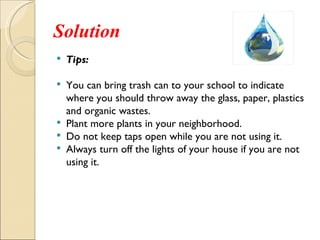
Solution
   Tips:

   You can bring trash can to your school to indicate
    where you should throw away the glass, paper, plastics
    and organic wastes.
   Plant more plants in your neighborhood.
   Do not keep taps open while you are not using it.
   Always turn off the lights of your house if you are not
    using it.

Hands on activity presentation siop lesson plan template

  • 1.
    SIOP LESSON PLAN TEMPLATE Camila Barrera Lissete Gajardo Milenka Gutiérrez Alejandro Moreno
  • 2.
    Topic: El Medio Ambientey su Cuidado. Grade: 7th grade.
  • 3.
    Content Objectives:  Listening Comprehension: recognize thematic vocabulary, use of the modal verbs (must, have to and should), use of the Will/won’t and conditional sentences.  Reading Comprehension: Demonstrate comprehension about general and specific information of descriptive, informative and narrative texts.  Oral Expression: Using the vocabulary theme of the unit, se conditional: if + will + future and sing modals to express obligation and duties.  Written Expression: Thematic vocabulary of the unit, expressions of future actions, express of obligations and duties, conditional: if + Will + future and use of capital letter, dots, interrogation and exclamation signs and coma.  
  • 4.
    Language Objectives:  Conversation: Create a dialog exemplifying a good and bad attitude about how to care the environment.  Grammar: make sentences using conditional tenses and modal verbs about how to care the environment and all of this must go in the summary.  Reading: Read the summary’s presentation of the classmates and any other information given by them.  Vocabulary: Use thematic vocabulary in sentences to express your ideas.  Writing: Write a summary with the better ideas for to care de environment at the end of the presented activity for each group.
  • 5.
    Higher Order Questions:  Do you think you can contribute to help  the environment? In what way?  Would  you  do  a  personal  commitment  to  conserve  those  ideas  in  your  daily  routine?
  • 6.
    Building Backgrounds:  Linksto Students’ Past Experience:  Ask the student if they remember the concept of environment that they saw in the previous class.  What is environment?  Have you ever gone camping? Do your family clean the place before and after they use it? Where do they put the garbage?  Teacher links to Prior Learning:  Ask them in relation what they answer before.  Why they think people don't take care of the environment, even when they know how to do it.
  • 7.
    Description of Hands-onActivity  Find the meaning of global warming.  Research about the damage in the environment.  Propose ways to help the environment in your school or in your city and then show them in front of the class.  Make a triptych with at least 3 advices or poster which your classmate can put into practice in their own homes or school.
  • 8.
    Description of LessonDelivery components  The teacher present to the students information about the environment and its care through a power point. It will be done following the next steps:  Explain what is environment.  What kinds of problems you can see in the environment.  What will happen if we don’t take care of our environment?  How we could take care of our environment?  Motivate students about the topic.
  • 9.
    Lesson Sequence  First Class:  Presentation of the objectives to the class.  Show information about the environment.  Explain the activity and answer questions of the students.  The students start to develop the activity, searching information on the internet.  The teacher finishes the class remembering the presentation of the activity for the next class.
  • 10.
    Lesson Sequence  Second Class:  The students present their group, and talk about what they found.  Each student must give some reasons about why we should take care of our environment.  They explain their solution and how it works, and why they think their idea is the best.  Finally the students will give the triptych or the poster to the rest to the class, with the ideas about how to keep our environment cleans.
  • 11.
    Review and Assessment  Review Key Vocabulary:  Explain homework. Giving a short review of the vocabulary they saw in the class and they should check if they wrote it on their notebooks.  Review Key Concepts:  The teacher will ask to the whole class to form groups. The students will talk about what they have learned in class, then they will write a short summary in their own notebooks.
  • 12.
    Solution  Tips:  You can bring trash can to your school to indicate where you should throw away the glass, paper, plastics and organic wastes.  Plant more plants in your neighborhood.  Do not keep taps open while you are not using it.  Always turn off the lights of your house if you are not using it.