Halloween
Origins and Traditions
Origins
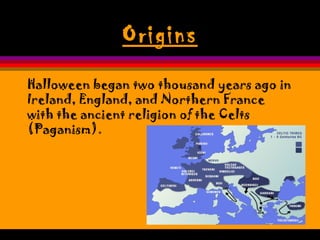
Halloween began two thousand years ago in
Ireland, England, and Northern France
with the ancient religion of the Celts
(Paganism).
They celebrated their New Year
on November 1st
.
This day marked the beginning of the dark,
cold winter, a time of year that was often
associated with human death.
Samhain (samin)
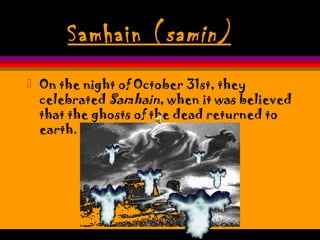
 On the night of October 31st, they
celebrated Samhain, when it was believed
that the ghosts of the dead returned to
earth.
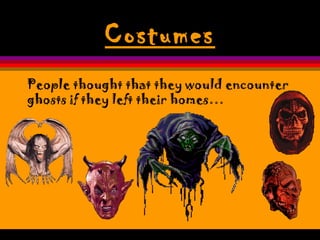
Costumes
People thought that they would encounter
ghosts if they left their homes…
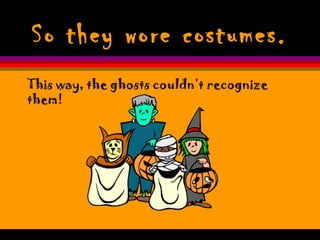
So they wore costumes.
This way, the ghosts couldn’t recognize
them!
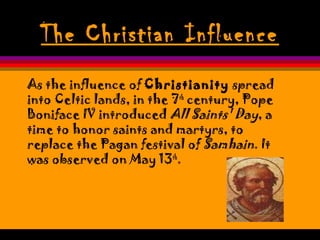
The Christian Influence
As the influence of Christianity spread
into Celtic lands, in the 7th
century, Pope
Boniface IV introduced All Saints' Day, a
time to honor saints and martyrs, to
replace the Pagan festival of Samhain. It
was observed on May 13th
.
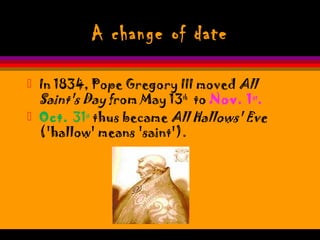
A change of date
 In 1834, Pope Gregory III moved All
Saint's Day from May 13th
to Nov. 1st
.
 Oct. 31st
thus became All Hallows' Eve
('hallow' means 'saint').
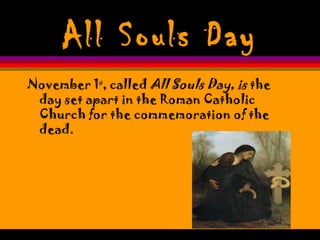
All Souls Day
November 1st
, called All Souls Day, is the
day set apart in the Roman Catholic
Church for the commemoration of the
dead.
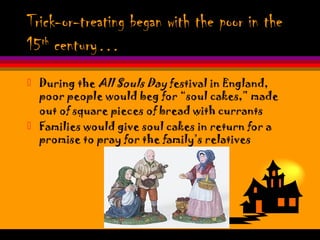
Trick-or-treating began with the poor in the
15th
century…
 During the All Souls Day festival in England,
poor people would beg for “soul cakes,” made
out of square pieces of bread with currants
 Families would give soul cakes in return for a
promise to pray for the family’s relatives
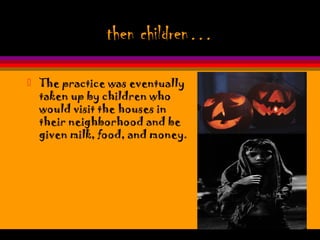
then children…
 The practice was eventually
taken up by children who
would visit the houses in
their neighborhood and be
given milk, food, and money.
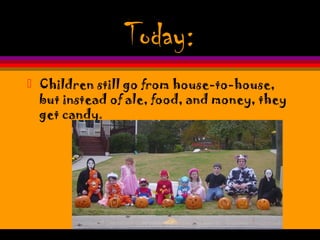
Today:
 Children still go from house-to-house,
but instead of ale, food, and money, they
get candy.
With Irish Immigration Halloween
came to America
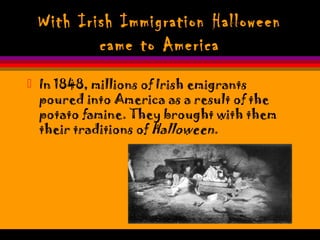
 In 1848, millions of Irish emigrants
poured into America as a result of the
potato famine. They brought with them
their traditions of Halloween.
The Jack-O-Lantern
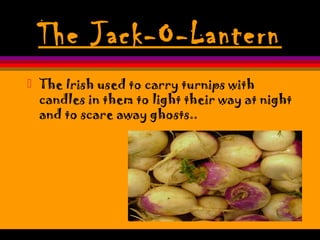
 The Irish used to carry turnips with
candles in them to light their way at night
and to scare away ghosts..
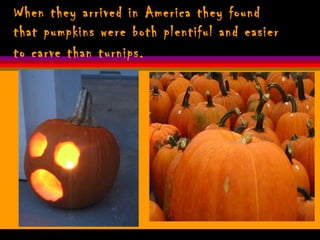
When they arrived in America they found
that pumpkins were both plentiful and easier
to carve than turnips.
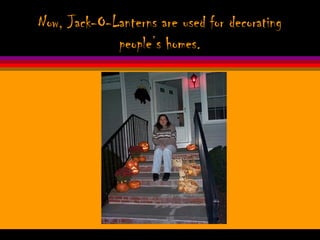
Now, Jack-O-Lanterns are used for decorating
people’s homes.
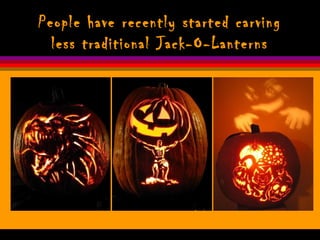
People have recently started carving
less traditional Jack-O-Lanterns
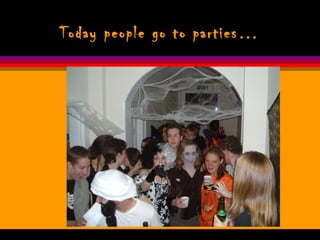
Today people go to parties…
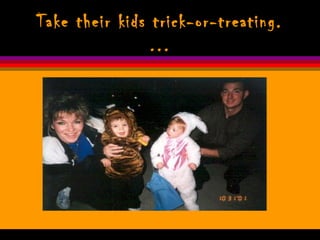
Take their kids trick-or-treating.
…
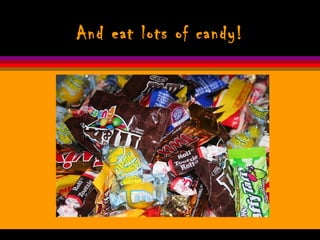
And eat lots of candy!
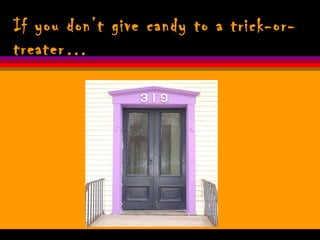
If you don’t give candy to a trick-or-
treater…
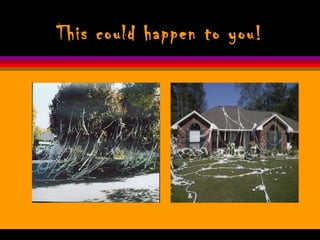
This could happen to you!
The End
Happy Halloween!

Halloween origin & traditions

  • 1.
  • 2.
    Origins Halloween began twothousand years ago in Ireland, England, and Northern France with the ancient religion of the Celts (Paganism).
  • 3.
    They celebrated theirNew Year on November 1st . This day marked the beginning of the dark, cold winter, a time of year that was often associated with human death.
  • 4.
    Samhain (samin)  Onthe night of October 31st, they celebrated Samhain, when it was believed that the ghosts of the dead returned to earth.
  • 5.
    Costumes People thought thatthey would encounter ghosts if they left their homes…
  • 6.
    So they worecostumes. This way, the ghosts couldn’t recognize them!
  • 7.
    The Christian Influence Asthe influence of Christianity spread into Celtic lands, in the 7th century, Pope Boniface IV introduced All Saints' Day, a time to honor saints and martyrs, to replace the Pagan festival of Samhain. It was observed on May 13th .
  • 8.
    A change ofdate  In 1834, Pope Gregory III moved All Saint's Day from May 13th to Nov. 1st .  Oct. 31st thus became All Hallows' Eve ('hallow' means 'saint').
  • 9.
    All Souls Day November1st , called All Souls Day, is the day set apart in the Roman Catholic Church for the commemoration of the dead.
  • 10.
    Trick-or-treating began withthe poor in the 15th century…  During the All Souls Day festival in England, poor people would beg for “soul cakes,” made out of square pieces of bread with currants  Families would give soul cakes in return for a promise to pray for the family’s relatives
  • 11.
    then children…  Thepractice was eventually taken up by children who would visit the houses in their neighborhood and be given milk, food, and money.
  • 12.
    Today:  Children stillgo from house-to-house, but instead of ale, food, and money, they get candy.
  • 13.
    With Irish ImmigrationHalloween came to America  In 1848, millions of Irish emigrants poured into America as a result of the potato famine. They brought with them their traditions of Halloween.
  • 14.
    The Jack-O-Lantern  TheIrish used to carry turnips with candles in them to light their way at night and to scare away ghosts..
  • 15.
    When they arrivedin America they found that pumpkins were both plentiful and easier to carve than turnips.
  • 16.
    Now, Jack-O-Lanterns areused for decorating people’s homes.
  • 17.
    People have recentlystarted carving less traditional Jack-O-Lanterns
  • 18.
    Today people goto parties…
  • 19.
    Take their kidstrick-or-treating. …
  • 20.
    And eat lotsof candy!
  • 21.
    If you don’tgive candy to a trick-or- treater…
  • 22.
  • 23.