Guillermo E. Umpierrez, MD, CDE, FACP, FACE
Professor of Medicine
Director Clinical Research, Diabetes & Metabolism Center
Emory University School of Medicine
Chief, Endocrinology Section, Grady Health System
External Industry
Relationships *
Company Name(s) Role
Equity, stock, or
options in biomedical
industry companies or
publishers
BMJ Open Diabetes
Research & Care
AACE
Editor-in-Chief
Board of Directors
Industry funds to
Emory University for
my research
Merck,
Sanofi,
Novo Nordisk
Boehringer Ingelhein
Astra Zeneca
Investigator-Initiated
Research Projects
Industry
Advisory/Consultant
activities
Dr. Guillermo Umpierrez,
Personal/Professional Financial Relationships with Industry
February 2017
• ADA Professional Practice Recommendation Committee
• AACE Diabetes Council and Guidelines Writing
Committee
• Chairman National AACE Primary care Diabetes
Education
DIABETES MANAGEMENT GUIDELINES
1. Therapeutic options in T2DM
2. ADA-EASD Statements
3. AACE & Other Guidelines
4. Considerations in Choosing Drugs
5. A Look to the Future
Type 2 DM
Management
Guidelines
Current Antihyperglycemic Medications
Sulfonylureas
Generalized
insulin
secretagogue
12 Groups with Different
Mechanisms of Action
-Glucosidase
Inhibitors
Delay CHO
absorption
Biguanide
Reduces hepatic
insulin
resistance
TZDs
Reduce
peripheral insulin
resistance
Amylin Analog
Suppresses
glucagon
GLP-1 Analogs
Stimulate b cells
Suppress
glucagon
Colesevelam
Bile acid
sequestrant
Bromocriptine
Hypothalamic
pituitary reset
Insulin
Replacement
Therapy
SGLT-2
Inhibitors
Block renal glucose
reabsorption
Glinides
Restore
postprandial
insulin
patterns
DPP-4 Inhibitors
Restore
GLP-1 Level
+
-
-
peripheral
glucose
uptake
hepatic
glucose
production
pancreatic
insulin
secretion
pancreatic
glucagon
secretion
gut
carbohydrate
delivery &
absorption
incretin
effect
HYPERGLYCEMIA
?
Adapted from: Inzucchi SE, Sherwin RS in: Cecil Medicine 2011
Multiple Complex Pathophysiological
Abnormalities in T2DM
renal
glucose
excretion
+
-
-
peripheral
glucose
uptake
hepatic
glucose
production
pancreatic
insulin
secretion
pancreatic
glucagon
secretion
gut
carbohydrate
delivery &
absorption
incretin
effect
HYPERGLYCEMIA
?
Adapted from: Inzucchi SE, Sherwin RS in: Cecil Medicine 2011
DA
agonists
T Z D sMetformin
S U sGlinides
DPP-4
inhibitors
GLP-1R
agonists
A G I s
Amylin
mimetics
Insulin
Bile acid
sequestrants
Multiple Pathophysiologically-Based
Therapies for T2DM
renal
glucose
excretion
SGLT-2
inhibitors
+
-
-
peripheral
glucose
uptake
hepatic
glucose
production
pancreatic
insulin
secretion
pancreatic
glucagon
secretion
gut
carbohydrate
delivery &
absorption
incretin
effect
HYPERGLYCEMIA
?
Adapted from: Inzucchi SE, Sherwin RS in: Cecil Medicine 2011
T Z D sMetformin
DPP-4
inhibitors
GLP-1R
agonists
S U s
Insulin
Major Pathophysiologically-Based
Therapies for T2DM
renal
glucose
excretion
SGLT-2
inhibitors
Classes Generic Names  A1c Side effects
Insulin Degludec, Glargine, Detemir, NPH,
Regular, Lispro, Aspart, Glulisine
No
limit
Hypo, weight gain,
injections
SU’s Glyburide, Glipizide, Glimepiride 1-1.5% Hypo, weight gain
Metformin Metformin 1-1.5% GI, lactic acidosis,
B-12 deficiency
TZD’s Rosiglitazone, Pioglitazone 1-1.5% Weight gain, edema, HF,
bone fx’s, ?bladder ca
DPP-4 i’s Sitagliptin, Saxagliptin, Alogliptin,
Linagliptin
0.5-1% Urticaria, ?pancreatitis
GLP-1 RA’s Exenatide, Liraglutide, Albiglutide,
Dulaglutide, Lixisenatide
1-1.5% GI, ?pancreatic disease,
injections
SGLT2-i’s Canagliflozin, Dapagliflozin,
Empagliflozin
0.5-1% Polyuria, GU infections,
DKA, ?bone fxs
Classes Generic Names  A1c Costs
Insulin Degludec, Glargine, Detemir, NPH,
Regular, Lispro, Aspart, Glulisine
No
limit
variable
SU’s Glyburide, Glipizide, Glimepiride 1-1.5% $
Metformin Metformin 1-1.5% $
TZD’s Rosiglitazone, Pioglitazone 1-1.5% $ - $$$
DPP-4 i’s Sitagliptin, Saxagliptin, Alogliptin,
Linagliptin
0.5-1% $$$$
GLP-1 RA’s Exenatide, Liraglutide, Albiglutide,
Dulaglutide, Lixisenatide
1-1.5% $$$$
SGLT2-i’s Canagliflozin, Dapagliflozin,
Empagliflozin
0.5-1% $$$$
DIABETES MANAGEMENT GUIDELINES
1. Therapeutic options in T2DM
2. ADA-EASD Statements
3. AACE & Other Guidelines
4. Considerations in Choosing Drugs
5. A Look to the Future
ADA - EASD Consensus Statement (2008)
Nathan DM, et al. Diabetes Care. 2008;31:1
At Diagnosis:
Lifestyle
+
Metformin Lifestyle + Metformin
+
Sulfonylureaa
Lifestyle + Metformin
+
Basal Insulin
Lifestyle + Metformin
+
Intensive Insulin
Lifestyle + Metformin
+
Pioglitazone
Lifestyle + Metformin
+
GLP-1 agonistb
Lifestyle + Metformin
+
Basal Insulin
Lifestyle + Metformin
+
Pioglitazone
+
Sulfonylureaa
STEP 1 STEP 2 STEP 3
Tier 2: Less well-validated therapies
Tier 1: Well-validated therapies
Reinforce lifestyle changes at every visit and check A1C every 3 months until < 7.0%,
then at least every 6 months thereafter. Change interventions whenever A1C ≥ 7.0%.
aSulfonylureas other than glibenclamide (glyburide) or chlorpropamide.
bInsufficient clinical use to be confident regarding safety.
2012 ADA-EASD ‘Position Statement’: Management of
Hyperglycemia in T2DM: A Patient-Centered Approach
GLUCOSE-LOWERING THERAPY
• Glycemic targets
- HbA1c < 7.0% (mean PG 150-160 mg/dl [8.3-8.9 mmol/l])
- Pre-prandial PG <130 mg/dl (7.2 mmol/l)
- Post-prandial PG <180 mg/dl (10.0 mmol/l)
- Individualization is key:
 Tighter targets (6.0 - 6.5%) - younger, healthier
 Looser targets (7.5 - 8.0%+) - older, comorbidities,
hypoglycemia prone, etc.
PG = plasma glucose Diabetes Care 2012;35:1364–1379
Diabetologia 2012;55:1577–1596
• Pharmacological options
- Individualize drug choice
- Minimize adverse effects, especially hypoglycemia
- Patient-centered care
Figure 1 Diabetes Care 2012;35:1364–1379
Diabetologia 2012;55:1577–1596
Diabetes Care 2012;35:1364–1379
Diabetologia 2012;55:1577–1596
2012 ADA-EASD Position Statement
more
stringent
less
stringent
Patient attitude and
expected treatment efforts highly motivated, adherent,
excellent self-care capacities
less motivated, non-adherent,
poor self-care capacities
Risks potentially associated
with hypoglycemia and
other drug adverse effects
low high
Disease duration
newly diagnosed long-standing
Life expectancy
long short
Important comorbidities
absent severefew / mild
Established vascular
complications absent severefew / mild
Readily available limited
Usually not
modifiable
Potentially
modifiable
HbA1c
7%
PATIENT / DISEASE FEATURES
Approach to the management
of hyperglycemia
Resources and support
system
Diabetes Care 2015;38:140-49; Diabetologia 2015 58:429-42
Figure 1.
Modulating
intensive-
ness of A1c
lowering in
T2DM
Healthy eating, weight control, increased physical activity & diabetes education
Metformin
high
low risk
neutral/loss
GI / lactic acidosis
low
If HbA1c target not achieved after ~3 months of monotherapy, proceed to 2-drug combination (order not meant to denote
any specific preference - choice dependent on a variety of patient- & disease-specific factors):
Metformin
+
Metformin
+
Metformin
+
Metformin
+
Metformin
+
high
low risk
gain
edema,HF,fxs
low
Thiazolidine-
dione
intermediate
low risk
neutral
rare
high
DPP-4
inhibitor
highest
high risk
gain
hypoglycemia
variable
Insulin (basal)
Metformin
+
Metformin
+
Metformin
+
Metformin
+
Metformin
+
Basal Insulin +
Sulfonylurea
+
TZD
DPP-4-i
GLP-1-RA
Insulin§
or
or
or
or
Thiazolidine-
dione
+
SU
DPP-4-i
GLP-1-RA
Insulin§
TZD
DPP-4-ior
or
or GLP-1-RA
high
low risk
loss
GI
high
GLP-1 receptor
agonist
Sulfonylurea
high
moderate risk
gain
hypoglycemia
low
SGLT2
inhibitor
intermediate
low risk
loss
GU, dehydration
high
SU
TZD
Insulin§
GLP-1 receptor
agonist
+
SGLT-2
Inhibitor
+
SU
TZD
Insulin§
Metformin
+
Metformin
+
or
or
or
or
SGLT2-i
or
or
or
SGLT2-i
Mono-
therapy
Efficacy*
Hypo risk
Weight
Side effects
Costs
Dual
therapy†
Efficacy*
Hypo risk
Weight
Side effects
Costs
Triple
therapy
or
or
DPP-4
Inhibitor
+
SU
TZD
Insulin§
SGLT2-i
or
or
or
SGLT2-i
or
DPP-4-i
If HbA1c target not achieved after ~3 months of dual therapy, proceed to 3-drug combination (order not meant to denote
any specific preference - choice dependent on a variety of patient- & disease-specific factors):
If HbA1c target not achieved after ~3 months of triple therapy and patient (1) on oral combination, move to injectables, (2) on GLP-1 RA, add
basal insulin, or (3) on optimally titrated basal insulin, add GLP-1-RA or mealtime insulin. In refractory patients consider adding TZD or SGLT2-i:
Metformin
+
Combination
injectable
therapy‡
GLP-1-RAMealtime Insulin
Insulin (basal)
+
2015ADA-EASD
PositionStatement
onManagementof
Hyperglycemiain
T2DM
Diabetes Care 2015;38:140-149; Diabetologia 2015;58:429-442
Healthy eating, weight control, increased physical activity & diabetes education
Metformin
high
low risk
neutral/loss
GI / lactic acidosis
low
If HbA1c target not achieved after ~3 months of monotherapy, proceed to 2-drug combination (order not meant to denote
any specific preference - choice dependent on a variety of patient- & disease-specific factors):
Metformin
+
Metformin
+
Metformin
+
Metformin
+
Metformin
+
high
low risk
gain
edema,HF,fxs
low
Thiazolidine-
dione
intermediate
low risk
neutral
rare
high
DPP-4
inhibitor
highest
high risk
gain
hypoglycemia
variable
Insulin (basal)
Metformin
+
Metformin
+
Metformin
+
Metformin
+
Metformin
+
Basal Insulin +
Sulfonylurea
+
TZD
DPP-4-i
GLP-1-RA
Insulin§
or
or
or
or
Thiazolidine-
dione
+
SU
DPP-4-i
GLP-1-RA
Insulin§
TZD
DPP-4-ior
or
or GLP-1-RA
high
low risk
loss
GI
high
GLP-1 receptor
agonist
Sulfonylurea
high
moderate risk
gain
hypoglycemia
low
SGLT2
inhibitor
intermediate
low risk
loss
GU, dehydration
high
SU
TZD
Insulin§
GLP-1 receptor
agonist
+
SGLT-2
Inhibitor
+
SU
TZD
Insulin§
Metformin
+
Metformin
+
or
or
or
or
SGLT2-i
or
or
or
SGLT2-i
Mono-
therapy
Efficacy*
Hypo risk
Weight
Side effects
Costs
Dual
therapy†
Efficacy*
Hypo risk
Weight
Side effects
Costs
Triple
therapy
or
or
DPP-4
Inhibitor
+
SU
TZD
Insulin§
SGLT2-i
or
or
or
SGLT2-i
or
DPP-4-i
If HbA1c target not achieved after ~3 months of dual therapy, proceed to 3-drug combination (order not meant to denote
any specific preference - choice dependent on a variety of patient- & disease-specific factors):
If HbA1c target not achieved after ~3 months of triple therapy and patient (1) on oral combination, move to injectables, (2) on GLP-1 RA, add
basal insulin, or (3) on optimally titrated basal insulin, add GLP-1-RA or mealtime insulin. In refractory patients consider adding TZD or SGLT2-i:
Metformin
+
Combination
injectable
therapy‡
GLP-1-RAMealtime Insulin
Insulin (basal)
+
Diabetes Care 2015;38:140-149; Diabetologia 2015;58:429-442
HbA1c
≥9%
Metformin
intolerance or
contraindication
Uncontrolled
hyperglycemia
(catabolic features,
BG ≥300-350 mg/dl,
HbA1c ≥10-12%)
AMERICAN
DIABETES
ASSOCIATION
Standards of
Medical Care
in Diabetes
- 2017
Anti-hyperglycemic therapy in T2DM:
General recommendations
Diabetes Care
2017;40:S66
In patients with long-standing suboptimally
controlled type 2 diabetes and established
atherosclerotic cardiovascular disease, empagliflozin
or liraglutide should be considered as they have
been shown to reduce cardiovascular and all-cause
mortality when added to standard care. Ongoing
studies are investigating the cardiovascular benefits
of other agents in these drug classes. B
HbA1c Weight
Exenatide therapy:
• Less nocturnal hypoglycemia
• Higher patient-satisfaction
• Increased risk GI side effects
DIABETES MANAGEMENT GUIDELINES
1. Pathophysiologically based therapeutic
options in T2DM
2. ADA-EASD Statements
3. AACE & Other Guidelines
4. Considerations in Choosing Drugs
5. A Look to the Future
DM GUIDELINES: ADA-EASD vs. AACE
ADA-EASD AACE
Focus Glycemia Comprehensive
(CV risk, weight, preDM)
Gen’l A1c target <7.0% <6.5%
Monotherapy metformin various
Combination tx @ A1c 9.0% @ A1c 7.5%
Therapeutic
choices
More narrow More broad
Updates Every 3 years Annual
http://www.healthquality.va.gov/guidelines/CD/diabetes/DM20
10_FUL-v4e.pdf
Algorithm for blood glucose lowering
therapy in adults with type 2 diabetes
Oral
Pharmacologic
Treatment of
T2DM:
A Clinical
Practice
Guideline
Update from
the American
College of
Physicians
Qaseem A et al. Ann Intern
Med 2017 [Epub ahead of
print 3 January 2017]
doi: 10.7326/M16-1860
…monotherapy with metformin…
…add a second agent…
…add orals when lifestyle (has) failed…1
2
3
ALAD: Asociacion LatinoAmericana de Diabetes
Glucose < 240 mg/dl and/or HbA1c < 8%
Guzman et al. Rev Panam Salud Publica. 2010 Dec 28 (6) 463-71
ALAD: Asociacion LatinoAmericana de Diabetes
Glucose < 240 mg/dl and/or HbA1c < 8%
Guzman et al. Rev Panam Salud Publica. 2010 Dec 28 (6) 463-71
DIABETES MANAGEMENT GUIDELINES
1. Pathophysiologically based therapeutic
options in T2DM
2. ADA-EASD Statements
3. AACE & Other Guidelines
4. Considerations in Choosing Drugs
5. A Look to the Future
6 P’s of Personalizing of Diabetes Care
1. Pathophysiology Insulin resistance vs. deficiency?
Stage of disease?
2. Potency Distance from A1c target?
3. Precautions
Side effects, contraindications?
(GI, renal, CV)
4. Pluses Added benefits beyond glucose control?
(weight, BP, CV events)
5. Practicalities Pills vs. injections? Frequency?
Need for BG monitoring?
6. Price Branded vs. generic?
Formulary coverage?
www.GoodRx.com/, accessed June 18, 2016,
(lowest price for New Haven, CT 06510)
$0 $100 $200 $300 $400 $500 $600 $700
Liraglutide 1.8mg QD
Canagliflozin 300mg QD
Glargine 50U QD (pen)
Sitagliptin 100mg QD
NPH 50U QD (vials)
Pioglitazone 45mg QD
Glipizide 10mg BID
Metformin 1000mg QD
Cost for 30 days of therapy
$4.
$733.
183 X (!)
JAMA July 4, 2017 Volume 318, Number 1
DIABETES MANAGEMENT GUIDELINES
1. Pathophysiologically based therapeutic
options in T2DM
2. ADA-EASD Statements
3. AACE & Other Guidelines
4. Considerations in Choosing Drugs
5. A Look to the Future
EFFICACY
Lowering HgA1c
SAFETY
Hypoglycemia
Prevention
Management of Type 2 Diabetes
Cardiovascular
Disease
Protection
Under
Consideration:
AMERICAN
DIABETES
ASSOCIATION
Standards of
Medical Care in
Diabetes - 2018
http://guidelines.diabetes.ca/bloodglucoselowering/pharmacologyt2
Recommendations to prevent or delay the development of overt heart
failure or prevent death before the onset of symptoms
2016 ESC Guidelines for the Diagnosis & Treatment
of Acute & Chronic Heart Failure
Ponikowski P et al. Eur Heart J 2016;37, 2129–200
CONFIDENTIAL
2008 2020
EXSCEL (exenatida)
LEADER (liraglutida)
REWIND (dulaglutida)
ELIXA (lixisenatida)
2014
SUSTAIN-6 (semaglutida)
2010 2012 2016
CANVAS (canagliflozina)
DECLARE (dapagliflozina)
EMPA-Reg(empagliflozian)
2018
GLP1 Receptor Agonists
SGLT-2 Inhibitors
ORIGIN (glargina)
Long Acting Insulin
EXAMINE (alogliptina)
CAROLINA (linagliptina)
TECOS (sitagliptina)
SAVOR (saxagliptina)
DPP-4 Inhibitors
450
Reported
Not-Reported
Cardiovascular Safety Studies
• 9,340 T2D patients with high CVD risk
• Mean age 64 yrs, A1c 8.7%, BMI 32.5
• Randomized to liraglutide 1.8mg or placebo
(double blind)
N Engl J Med 2016;375:311-322.
Placebo
Liraglutide
Modest A1c reduction compared to
placebo
LEADER trial: Primary Outcome
15
10
20
5
0
0 6 12 18 24 30 36 42 48 54
Placebo
Liraglutide
Patientswithanevent(%)
Months since randomisation
Hazard ratio, 0.87 (95% CI, 0.78–0.97)
P<0.001 for noninferiority
P=0.01 for superiority
First occurrence of CV death, nonfatal myocardial infarction, or nonfatal stroke in the time-to-
event analysis in patients with type 2 diabetes and high CV risk.
Liraglutide Effect and Action in Diabetes: Evaluation of cardiovascular outcome Results
(LEADER) trial
Adapted from: Marso SP et al., NEJM 2016
LEADER trial:
Death from Cardiovascular Causes
15
10
20
5
0
0 6 12 18 24 30 36 42 48 54
Placebo
Liraglutide
Patientswithanevent(%)
Months since randomisation
Hazard ratio, 0.78 (95% CI, 0.66–0.93)
P=0.007
Liraglutide Effect and Action in Diabetes: Evaluation of cardiovascular outcome Results
(LEADER) trial
Adapted from: Marso SP et al., NEJM 2016
CV death reduced by 22%
Semaglutide and Cardiovascular Outcomes in
Patients with Type 2 Diabetes
Marzo et al. NEJM 375;1874-88, 2016
The primary composite outcome was the first occurrence of cardiovascular death,
nonfatal myocardial infarction, or nonfatal stroke.
N Engl J Med 2015;373:2117-2128.
• 7,020 T2D patients with CVD
• Mean age 63 yrs, A1c ~8%, BMI ~31
• Randomized to empagliflozin 10mg, 25mg, or
placebo (double blind)
Primary outcome:
Composite of death from cardiovascular
causes, nonfatal MI, nonfatal CVA
EMPA-REG TRIAL
• Study medication was given in addition to standard of care
– Glucose-lowering therapy was to remain unchanged for first 12 weeks
• Treatment assignment double masked
• The trial was to continue until at least 691 patients experienced an adjudicated
primary outcome event
Randomised and
treated
(n=7020)
Empagliflozin 10 mg
(n=2345)
Empagliflozin 25 mg
(n=2342)
Placebo
(n=2333)
Screening
(n=11531)
Zinman, B et al. NEJM 2015;373:2117-28.
Placebo
Empagliflozin
Modest A1c reduction with EMPA
29% of placebo,
23% of EMPA
discontinued tx
prematurely
N Engl J Med 2015;373:2117-2128.
EMPA-REG
Primary outcome: 3-point MACE (CV death, MI, stroke)
Cumulative incidence function. MACE, Major Adverse Cardiovascular Event; HR, hazard ratio.
* Two-sided tests for superiority were conducted (statistical significance was indicated if p≤0.0498)
Zinman, B et al. NEJM 2015;373:2117-28.
EMPA-REG
Cardiovascular Death
Cumulative incidence function. HR, hazard ratio
Zinman, B et al. NEJM 2015;373:2117-28.
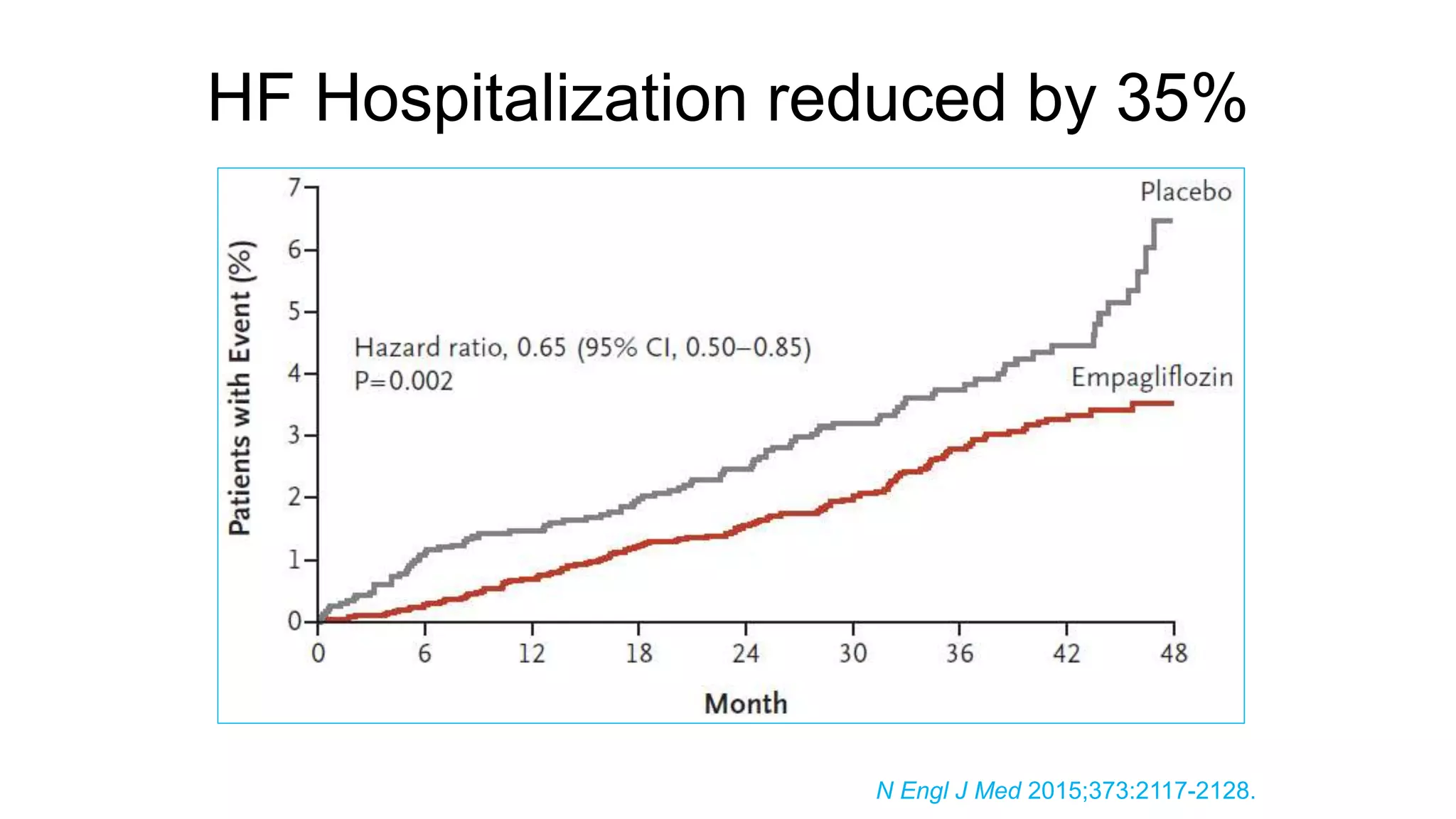
HF Hospitalization reduced by 35%
Placebo
Empagliflozin
N Engl J Med 2015;373:2117-2128.
CANVAS: CANagliflozin
cardioVascular Assessment
Study
• T2DM ~14 years
– Study medication in addition to standard of
care
– HbA1c ≥7.0% to ≤10.5%
• High CV risk
– eGFR ≥30 mL/min/1.73 m2
– Age ≥30 years and history of prior CV event
– Age ≥50 years with ≥2 CV risk factors
Zinman, B et al. NEJM 2017.
CANVAS n = 4330
2010 2011 2012 2013 2014 2015 2016 20172009
UL 95% CI <1.8
2010 2011 2012 2013 2014 2015 2016 20172009
UL 95% CI <1.3CANVAS
trial starts
CANVAS-R
n = 5812
CANVAS: CANagliflozin cardioVascular
Assessment Study
Evaluate
CV safetyCV safety
proved and
marketing
authorization
achieved
CANVAS Program
N = 10,142
Zinman, B et al. NEJM 2017.
Primary MACE Outcome
CV Death, Nonfatal Myocardial Infarction or Nonfatal Stroke
Years since randomization
2 3 4 5 61
Hazard ratio 0.86 (95% CI, 0.75-0.97)
p <0.0001 for noninferiority
p = 0.0158 for superiority
20
18
16
14
12
10
8
6
4
2
0
0
Patientswithanevent(%)
Placebo
Canagliflozin
CANVAS: CANagliflozin cardioVascular
Assessment Study
Zinman, B et al. NEJM 2017.
Progression of Albuminuria
3819 3096 1690 724 626 548 303
5196 4475 2968 1730 1528 1354 775
Hazard ratio 0.73 (95% CI, 0.67-0.79)
2 3 4 5 60 1
100
90
80
70
60
50
40
30
20
10
0
Intent-to-treat analysis
No. of patients
Placebo
Canagliflozin
Years since randomization
Patientswithanevent(%)
Placebo
Canagliflozin
Hazard ratio (95% CI)
1.00.5 2.0
Favors PlaceboFavors SGLT2i
Nonfatal myocardial infarction
Progression to macroalbuminuria*
Renal composite*
Hospitalization for heart failure
CV death, nonfatal myocardial infarction,
or nonfatal stroke
CV death
Nonfatal stroke
Key Outcomes in the CANVAS Program
and EMPA-REG OUTCOME
*CANVAS Program endpoints comparable with
EMPA-REG OUTCOME.
0.25
Zinman Bet al. N Engl J Med. 2015 ;373(22):2117-2128.
Wanner K et al. N Engl J Med. 2016;375(4):323-334.
CANVAS Program
EMPA-REG OUTCOME
CV death or hospitalization for heart failure
All-cause mortality
Management of Type 2 Diabetes
SU TZD DPP4 SGLT2 GLP1 Insulin
Efficacy ++ ++ + ++ ++ ++
Safety + + + +
CV Protection - + ++ ++
EFFICACY
Lowering HgA1c
SAFETY
Hypoglycemia
Prevention
CVD
Protection
Study SAVOR EXAMINE TECOS CAROLINA CARMELINA
DPP4-i saxagliptin alogliptin sitagliptin linagliptin linagliptin
Comparator placebo placebo placebo sulfonylurea placebo
N 16,500 5,400 14,000 6,000 8,300
Results 2013 2013 2015 2017 2017
Study LEADER ELIXA SUSTAIN 6 EXSCEL REWIND
GLP1-RA liraglutide lixisenatide semaglutide exenatide LR dulaglutide
Comparator placebo placebo placebo placebo placebo
N 16,500 14,000 6,000 5,400 8,300
Results 2016 2015 2016 2018 2019
Study EMPA-REG CANVAS DECLARE NCT01986881
SGLT-2-i empaglifozin canagliflozin dapagliflozin ertugliflozin
Comparator placebo placebo placebo placebo
N 7300 4300 22,200 3900
Results 2015 2017 2019 2020
Large CV Outcomes Trials in Diabetes (Non-Insulin)
1. Increasing T2DM prevalance & complexity of therapeutic
options have led to the need for treatment “guidelines.”
2. Most begin quite similarly (“Lifestyle…then metformin…”),
but differ to varying degrees on what to do next.
3. Emerging data from recent CVOT trials should lead to
some modifications in guidelines - particularly in those
patients with overt CVD.
4. There will also always be a need for the wise and skilled
physician to choose the optimal therapeutic regimen for
(and with) each patient.
Muchas Gracias

¿Hacia dónde van los algoritmos de la ADA/EASD, AACE y ALAD en el tratamiento DM2. Control glucémico y protección cardiovascular como objetivo?

  • 1.
    Guillermo E. Umpierrez,MD, CDE, FACP, FACE Professor of Medicine Director Clinical Research, Diabetes & Metabolism Center Emory University School of Medicine Chief, Endocrinology Section, Grady Health System
  • 2.
    External Industry Relationships * CompanyName(s) Role Equity, stock, or options in biomedical industry companies or publishers BMJ Open Diabetes Research & Care AACE Editor-in-Chief Board of Directors Industry funds to Emory University for my research Merck, Sanofi, Novo Nordisk Boehringer Ingelhein Astra Zeneca Investigator-Initiated Research Projects Industry Advisory/Consultant activities Dr. Guillermo Umpierrez, Personal/Professional Financial Relationships with Industry February 2017 • ADA Professional Practice Recommendation Committee • AACE Diabetes Council and Guidelines Writing Committee • Chairman National AACE Primary care Diabetes Education
  • 3.
    DIABETES MANAGEMENT GUIDELINES 1.Therapeutic options in T2DM 2. ADA-EASD Statements 3. AACE & Other Guidelines 4. Considerations in Choosing Drugs 5. A Look to the Future
  • 4.
  • 6.
    Current Antihyperglycemic Medications Sulfonylureas Generalized insulin secretagogue 12Groups with Different Mechanisms of Action -Glucosidase Inhibitors Delay CHO absorption Biguanide Reduces hepatic insulin resistance TZDs Reduce peripheral insulin resistance Amylin Analog Suppresses glucagon GLP-1 Analogs Stimulate b cells Suppress glucagon Colesevelam Bile acid sequestrant Bromocriptine Hypothalamic pituitary reset Insulin Replacement Therapy SGLT-2 Inhibitors Block renal glucose reabsorption Glinides Restore postprandial insulin patterns DPP-4 Inhibitors Restore GLP-1 Level
  • 7.
  • 8.
    + - - peripheral glucose uptake hepatic glucose production pancreatic insulin secretion pancreatic glucagon secretion gut carbohydrate delivery & absorption incretin effect HYPERGLYCEMIA ? Adapted from:Inzucchi SE, Sherwin RS in: Cecil Medicine 2011 DA agonists T Z D sMetformin S U sGlinides DPP-4 inhibitors GLP-1R agonists A G I s Amylin mimetics Insulin Bile acid sequestrants Multiple Pathophysiologically-Based Therapies for T2DM renal glucose excretion SGLT-2 inhibitors
  • 9.
    + - - peripheral glucose uptake hepatic glucose production pancreatic insulin secretion pancreatic glucagon secretion gut carbohydrate delivery & absorption incretin effect HYPERGLYCEMIA ? Adapted from:Inzucchi SE, Sherwin RS in: Cecil Medicine 2011 T Z D sMetformin DPP-4 inhibitors GLP-1R agonists S U s Insulin Major Pathophysiologically-Based Therapies for T2DM renal glucose excretion SGLT-2 inhibitors
  • 10.
    Classes Generic Names A1c Side effects Insulin Degludec, Glargine, Detemir, NPH, Regular, Lispro, Aspart, Glulisine No limit Hypo, weight gain, injections SU’s Glyburide, Glipizide, Glimepiride 1-1.5% Hypo, weight gain Metformin Metformin 1-1.5% GI, lactic acidosis, B-12 deficiency TZD’s Rosiglitazone, Pioglitazone 1-1.5% Weight gain, edema, HF, bone fx’s, ?bladder ca DPP-4 i’s Sitagliptin, Saxagliptin, Alogliptin, Linagliptin 0.5-1% Urticaria, ?pancreatitis GLP-1 RA’s Exenatide, Liraglutide, Albiglutide, Dulaglutide, Lixisenatide 1-1.5% GI, ?pancreatic disease, injections SGLT2-i’s Canagliflozin, Dapagliflozin, Empagliflozin 0.5-1% Polyuria, GU infections, DKA, ?bone fxs
  • 11.
    Classes Generic Names A1c Costs Insulin Degludec, Glargine, Detemir, NPH, Regular, Lispro, Aspart, Glulisine No limit variable SU’s Glyburide, Glipizide, Glimepiride 1-1.5% $ Metformin Metformin 1-1.5% $ TZD’s Rosiglitazone, Pioglitazone 1-1.5% $ - $$$ DPP-4 i’s Sitagliptin, Saxagliptin, Alogliptin, Linagliptin 0.5-1% $$$$ GLP-1 RA’s Exenatide, Liraglutide, Albiglutide, Dulaglutide, Lixisenatide 1-1.5% $$$$ SGLT2-i’s Canagliflozin, Dapagliflozin, Empagliflozin 0.5-1% $$$$
  • 13.
    DIABETES MANAGEMENT GUIDELINES 1.Therapeutic options in T2DM 2. ADA-EASD Statements 3. AACE & Other Guidelines 4. Considerations in Choosing Drugs 5. A Look to the Future
  • 14.
    ADA - EASDConsensus Statement (2008) Nathan DM, et al. Diabetes Care. 2008;31:1 At Diagnosis: Lifestyle + Metformin Lifestyle + Metformin + Sulfonylureaa Lifestyle + Metformin + Basal Insulin Lifestyle + Metformin + Intensive Insulin Lifestyle + Metformin + Pioglitazone Lifestyle + Metformin + GLP-1 agonistb Lifestyle + Metformin + Basal Insulin Lifestyle + Metformin + Pioglitazone + Sulfonylureaa STEP 1 STEP 2 STEP 3 Tier 2: Less well-validated therapies Tier 1: Well-validated therapies Reinforce lifestyle changes at every visit and check A1C every 3 months until < 7.0%, then at least every 6 months thereafter. Change interventions whenever A1C ≥ 7.0%. aSulfonylureas other than glibenclamide (glyburide) or chlorpropamide. bInsufficient clinical use to be confident regarding safety.
  • 15.
    2012 ADA-EASD ‘PositionStatement’: Management of Hyperglycemia in T2DM: A Patient-Centered Approach GLUCOSE-LOWERING THERAPY • Glycemic targets - HbA1c < 7.0% (mean PG 150-160 mg/dl [8.3-8.9 mmol/l]) - Pre-prandial PG <130 mg/dl (7.2 mmol/l) - Post-prandial PG <180 mg/dl (10.0 mmol/l) - Individualization is key:  Tighter targets (6.0 - 6.5%) - younger, healthier  Looser targets (7.5 - 8.0%+) - older, comorbidities, hypoglycemia prone, etc. PG = plasma glucose Diabetes Care 2012;35:1364–1379 Diabetologia 2012;55:1577–1596 • Pharmacological options - Individualize drug choice - Minimize adverse effects, especially hypoglycemia - Patient-centered care
  • 16.
    Figure 1 DiabetesCare 2012;35:1364–1379 Diabetologia 2012;55:1577–1596
  • 17.
    Diabetes Care 2012;35:1364–1379 Diabetologia2012;55:1577–1596 2012 ADA-EASD Position Statement
  • 18.
  • 20.
    more stringent less stringent Patient attitude and expectedtreatment efforts highly motivated, adherent, excellent self-care capacities less motivated, non-adherent, poor self-care capacities Risks potentially associated with hypoglycemia and other drug adverse effects low high Disease duration newly diagnosed long-standing Life expectancy long short Important comorbidities absent severefew / mild Established vascular complications absent severefew / mild Readily available limited Usually not modifiable Potentially modifiable HbA1c 7% PATIENT / DISEASE FEATURES Approach to the management of hyperglycemia Resources and support system Diabetes Care 2015;38:140-49; Diabetologia 2015 58:429-42 Figure 1. Modulating intensive- ness of A1c lowering in T2DM
  • 21.
    Healthy eating, weightcontrol, increased physical activity & diabetes education Metformin high low risk neutral/loss GI / lactic acidosis low If HbA1c target not achieved after ~3 months of monotherapy, proceed to 2-drug combination (order not meant to denote any specific preference - choice dependent on a variety of patient- & disease-specific factors): Metformin + Metformin + Metformin + Metformin + Metformin + high low risk gain edema,HF,fxs low Thiazolidine- dione intermediate low risk neutral rare high DPP-4 inhibitor highest high risk gain hypoglycemia variable Insulin (basal) Metformin + Metformin + Metformin + Metformin + Metformin + Basal Insulin + Sulfonylurea + TZD DPP-4-i GLP-1-RA Insulin§ or or or or Thiazolidine- dione + SU DPP-4-i GLP-1-RA Insulin§ TZD DPP-4-ior or or GLP-1-RA high low risk loss GI high GLP-1 receptor agonist Sulfonylurea high moderate risk gain hypoglycemia low SGLT2 inhibitor intermediate low risk loss GU, dehydration high SU TZD Insulin§ GLP-1 receptor agonist + SGLT-2 Inhibitor + SU TZD Insulin§ Metformin + Metformin + or or or or SGLT2-i or or or SGLT2-i Mono- therapy Efficacy* Hypo risk Weight Side effects Costs Dual therapy† Efficacy* Hypo risk Weight Side effects Costs Triple therapy or or DPP-4 Inhibitor + SU TZD Insulin§ SGLT2-i or or or SGLT2-i or DPP-4-i If HbA1c target not achieved after ~3 months of dual therapy, proceed to 3-drug combination (order not meant to denote any specific preference - choice dependent on a variety of patient- & disease-specific factors): If HbA1c target not achieved after ~3 months of triple therapy and patient (1) on oral combination, move to injectables, (2) on GLP-1 RA, add basal insulin, or (3) on optimally titrated basal insulin, add GLP-1-RA or mealtime insulin. In refractory patients consider adding TZD or SGLT2-i: Metformin + Combination injectable therapy‡ GLP-1-RAMealtime Insulin Insulin (basal) + 2015ADA-EASD PositionStatement onManagementof Hyperglycemiain T2DM Diabetes Care 2015;38:140-149; Diabetologia 2015;58:429-442
  • 22.
    Healthy eating, weightcontrol, increased physical activity & diabetes education Metformin high low risk neutral/loss GI / lactic acidosis low If HbA1c target not achieved after ~3 months of monotherapy, proceed to 2-drug combination (order not meant to denote any specific preference - choice dependent on a variety of patient- & disease-specific factors): Metformin + Metformin + Metformin + Metformin + Metformin + high low risk gain edema,HF,fxs low Thiazolidine- dione intermediate low risk neutral rare high DPP-4 inhibitor highest high risk gain hypoglycemia variable Insulin (basal) Metformin + Metformin + Metformin + Metformin + Metformin + Basal Insulin + Sulfonylurea + TZD DPP-4-i GLP-1-RA Insulin§ or or or or Thiazolidine- dione + SU DPP-4-i GLP-1-RA Insulin§ TZD DPP-4-ior or or GLP-1-RA high low risk loss GI high GLP-1 receptor agonist Sulfonylurea high moderate risk gain hypoglycemia low SGLT2 inhibitor intermediate low risk loss GU, dehydration high SU TZD Insulin§ GLP-1 receptor agonist + SGLT-2 Inhibitor + SU TZD Insulin§ Metformin + Metformin + or or or or SGLT2-i or or or SGLT2-i Mono- therapy Efficacy* Hypo risk Weight Side effects Costs Dual therapy† Efficacy* Hypo risk Weight Side effects Costs Triple therapy or or DPP-4 Inhibitor + SU TZD Insulin§ SGLT2-i or or or SGLT2-i or DPP-4-i If HbA1c target not achieved after ~3 months of dual therapy, proceed to 3-drug combination (order not meant to denote any specific preference - choice dependent on a variety of patient- & disease-specific factors): If HbA1c target not achieved after ~3 months of triple therapy and patient (1) on oral combination, move to injectables, (2) on GLP-1 RA, add basal insulin, or (3) on optimally titrated basal insulin, add GLP-1-RA or mealtime insulin. In refractory patients consider adding TZD or SGLT2-i: Metformin + Combination injectable therapy‡ GLP-1-RAMealtime Insulin Insulin (basal) + Diabetes Care 2015;38:140-149; Diabetologia 2015;58:429-442 HbA1c ≥9% Metformin intolerance or contraindication Uncontrolled hyperglycemia (catabolic features, BG ≥300-350 mg/dl, HbA1c ≥10-12%)
  • 23.
    AMERICAN DIABETES ASSOCIATION Standards of Medical Care inDiabetes - 2017 Anti-hyperglycemic therapy in T2DM: General recommendations Diabetes Care 2017;40:S66 In patients with long-standing suboptimally controlled type 2 diabetes and established atherosclerotic cardiovascular disease, empagliflozin or liraglutide should be considered as they have been shown to reduce cardiovascular and all-cause mortality when added to standard care. Ongoing studies are investigating the cardiovascular benefits of other agents in these drug classes. B
  • 25.
    HbA1c Weight Exenatide therapy: •Less nocturnal hypoglycemia • Higher patient-satisfaction • Increased risk GI side effects
  • 26.
    DIABETES MANAGEMENT GUIDELINES 1.Pathophysiologically based therapeutic options in T2DM 2. ADA-EASD Statements 3. AACE & Other Guidelines 4. Considerations in Choosing Drugs 5. A Look to the Future
  • 29.
    DM GUIDELINES: ADA-EASDvs. AACE ADA-EASD AACE Focus Glycemia Comprehensive (CV risk, weight, preDM) Gen’l A1c target <7.0% <6.5% Monotherapy metformin various Combination tx @ A1c 9.0% @ A1c 7.5% Therapeutic choices More narrow More broad Updates Every 3 years Annual
  • 30.
  • 31.
    Algorithm for bloodglucose lowering therapy in adults with type 2 diabetes
  • 32.
    Oral Pharmacologic Treatment of T2DM: A Clinical Practice Guideline Updatefrom the American College of Physicians Qaseem A et al. Ann Intern Med 2017 [Epub ahead of print 3 January 2017] doi: 10.7326/M16-1860 …monotherapy with metformin… …add a second agent… …add orals when lifestyle (has) failed…1 2 3
  • 33.
    ALAD: Asociacion LatinoAmericanade Diabetes Glucose < 240 mg/dl and/or HbA1c < 8% Guzman et al. Rev Panam Salud Publica. 2010 Dec 28 (6) 463-71
  • 34.
    ALAD: Asociacion LatinoAmericanade Diabetes Glucose < 240 mg/dl and/or HbA1c < 8% Guzman et al. Rev Panam Salud Publica. 2010 Dec 28 (6) 463-71
  • 35.
    DIABETES MANAGEMENT GUIDELINES 1.Pathophysiologically based therapeutic options in T2DM 2. ADA-EASD Statements 3. AACE & Other Guidelines 4. Considerations in Choosing Drugs 5. A Look to the Future
  • 36.
    6 P’s ofPersonalizing of Diabetes Care 1. Pathophysiology Insulin resistance vs. deficiency? Stage of disease? 2. Potency Distance from A1c target? 3. Precautions Side effects, contraindications? (GI, renal, CV) 4. Pluses Added benefits beyond glucose control? (weight, BP, CV events) 5. Practicalities Pills vs. injections? Frequency? Need for BG monitoring? 6. Price Branded vs. generic? Formulary coverage?
  • 37.
    www.GoodRx.com/, accessed June18, 2016, (lowest price for New Haven, CT 06510) $0 $100 $200 $300 $400 $500 $600 $700 Liraglutide 1.8mg QD Canagliflozin 300mg QD Glargine 50U QD (pen) Sitagliptin 100mg QD NPH 50U QD (vials) Pioglitazone 45mg QD Glipizide 10mg BID Metformin 1000mg QD Cost for 30 days of therapy $4. $733. 183 X (!)
  • 38.
    JAMA July 4,2017 Volume 318, Number 1
  • 39.
    DIABETES MANAGEMENT GUIDELINES 1.Pathophysiologically based therapeutic options in T2DM 2. ADA-EASD Statements 3. AACE & Other Guidelines 4. Considerations in Choosing Drugs 5. A Look to the Future
  • 40.
    EFFICACY Lowering HgA1c SAFETY Hypoglycemia Prevention Management ofType 2 Diabetes Cardiovascular Disease Protection
  • 41.
  • 43.
  • 44.
    Recommendations to preventor delay the development of overt heart failure or prevent death before the onset of symptoms 2016 ESC Guidelines for the Diagnosis & Treatment of Acute & Chronic Heart Failure Ponikowski P et al. Eur Heart J 2016;37, 2129–200
  • 45.
    CONFIDENTIAL 2008 2020 EXSCEL (exenatida) LEADER(liraglutida) REWIND (dulaglutida) ELIXA (lixisenatida) 2014 SUSTAIN-6 (semaglutida) 2010 2012 2016 CANVAS (canagliflozina) DECLARE (dapagliflozina) EMPA-Reg(empagliflozian) 2018 GLP1 Receptor Agonists SGLT-2 Inhibitors ORIGIN (glargina) Long Acting Insulin EXAMINE (alogliptina) CAROLINA (linagliptina) TECOS (sitagliptina) SAVOR (saxagliptina) DPP-4 Inhibitors 450 Reported Not-Reported Cardiovascular Safety Studies
  • 46.
    • 9,340 T2Dpatients with high CVD risk • Mean age 64 yrs, A1c 8.7%, BMI 32.5 • Randomized to liraglutide 1.8mg or placebo (double blind)
  • 47.
    N Engl JMed 2016;375:311-322. Placebo Liraglutide Modest A1c reduction compared to placebo
  • 48.
    LEADER trial: PrimaryOutcome 15 10 20 5 0 0 6 12 18 24 30 36 42 48 54 Placebo Liraglutide Patientswithanevent(%) Months since randomisation Hazard ratio, 0.87 (95% CI, 0.78–0.97) P<0.001 for noninferiority P=0.01 for superiority First occurrence of CV death, nonfatal myocardial infarction, or nonfatal stroke in the time-to- event analysis in patients with type 2 diabetes and high CV risk. Liraglutide Effect and Action in Diabetes: Evaluation of cardiovascular outcome Results (LEADER) trial Adapted from: Marso SP et al., NEJM 2016
  • 49.
    LEADER trial: Death fromCardiovascular Causes 15 10 20 5 0 0 6 12 18 24 30 36 42 48 54 Placebo Liraglutide Patientswithanevent(%) Months since randomisation Hazard ratio, 0.78 (95% CI, 0.66–0.93) P=0.007 Liraglutide Effect and Action in Diabetes: Evaluation of cardiovascular outcome Results (LEADER) trial Adapted from: Marso SP et al., NEJM 2016 CV death reduced by 22%
  • 50.
    Semaglutide and CardiovascularOutcomes in Patients with Type 2 Diabetes Marzo et al. NEJM 375;1874-88, 2016 The primary composite outcome was the first occurrence of cardiovascular death, nonfatal myocardial infarction, or nonfatal stroke.
  • 51.
    N Engl JMed 2015;373:2117-2128. • 7,020 T2D patients with CVD • Mean age 63 yrs, A1c ~8%, BMI ~31 • Randomized to empagliflozin 10mg, 25mg, or placebo (double blind) Primary outcome: Composite of death from cardiovascular causes, nonfatal MI, nonfatal CVA
  • 52.
    EMPA-REG TRIAL • Studymedication was given in addition to standard of care – Glucose-lowering therapy was to remain unchanged for first 12 weeks • Treatment assignment double masked • The trial was to continue until at least 691 patients experienced an adjudicated primary outcome event Randomised and treated (n=7020) Empagliflozin 10 mg (n=2345) Empagliflozin 25 mg (n=2342) Placebo (n=2333) Screening (n=11531) Zinman, B et al. NEJM 2015;373:2117-28.
  • 53.
    Placebo Empagliflozin Modest A1c reductionwith EMPA 29% of placebo, 23% of EMPA discontinued tx prematurely N Engl J Med 2015;373:2117-2128.
  • 54.
    EMPA-REG Primary outcome: 3-pointMACE (CV death, MI, stroke) Cumulative incidence function. MACE, Major Adverse Cardiovascular Event; HR, hazard ratio. * Two-sided tests for superiority were conducted (statistical significance was indicated if p≤0.0498) Zinman, B et al. NEJM 2015;373:2117-28.
  • 55.
    EMPA-REG Cardiovascular Death Cumulative incidencefunction. HR, hazard ratio Zinman, B et al. NEJM 2015;373:2117-28.
  • 56.
    HF Hospitalization reducedby 35% Placebo Empagliflozin N Engl J Med 2015;373:2117-2128.
  • 57.
    CANVAS: CANagliflozin cardioVascular Assessment Study •T2DM ~14 years – Study medication in addition to standard of care – HbA1c ≥7.0% to ≤10.5% • High CV risk – eGFR ≥30 mL/min/1.73 m2 – Age ≥30 years and history of prior CV event – Age ≥50 years with ≥2 CV risk factors Zinman, B et al. NEJM 2017.
  • 58.
    CANVAS n =4330 2010 2011 2012 2013 2014 2015 2016 20172009 UL 95% CI <1.8 2010 2011 2012 2013 2014 2015 2016 20172009 UL 95% CI <1.3CANVAS trial starts CANVAS-R n = 5812 CANVAS: CANagliflozin cardioVascular Assessment Study Evaluate CV safetyCV safety proved and marketing authorization achieved CANVAS Program N = 10,142 Zinman, B et al. NEJM 2017.
  • 59.
    Primary MACE Outcome CVDeath, Nonfatal Myocardial Infarction or Nonfatal Stroke Years since randomization 2 3 4 5 61 Hazard ratio 0.86 (95% CI, 0.75-0.97) p <0.0001 for noninferiority p = 0.0158 for superiority 20 18 16 14 12 10 8 6 4 2 0 0 Patientswithanevent(%) Placebo Canagliflozin CANVAS: CANagliflozin cardioVascular Assessment Study Zinman, B et al. NEJM 2017.
  • 60.
    Progression of Albuminuria 38193096 1690 724 626 548 303 5196 4475 2968 1730 1528 1354 775 Hazard ratio 0.73 (95% CI, 0.67-0.79) 2 3 4 5 60 1 100 90 80 70 60 50 40 30 20 10 0 Intent-to-treat analysis No. of patients Placebo Canagliflozin Years since randomization Patientswithanevent(%) Placebo Canagliflozin
  • 61.
    Hazard ratio (95%CI) 1.00.5 2.0 Favors PlaceboFavors SGLT2i Nonfatal myocardial infarction Progression to macroalbuminuria* Renal composite* Hospitalization for heart failure CV death, nonfatal myocardial infarction, or nonfatal stroke CV death Nonfatal stroke Key Outcomes in the CANVAS Program and EMPA-REG OUTCOME *CANVAS Program endpoints comparable with EMPA-REG OUTCOME. 0.25 Zinman Bet al. N Engl J Med. 2015 ;373(22):2117-2128. Wanner K et al. N Engl J Med. 2016;375(4):323-334. CANVAS Program EMPA-REG OUTCOME CV death or hospitalization for heart failure All-cause mortality
  • 62.
    Management of Type2 Diabetes SU TZD DPP4 SGLT2 GLP1 Insulin Efficacy ++ ++ + ++ ++ ++ Safety + + + + CV Protection - + ++ ++ EFFICACY Lowering HgA1c SAFETY Hypoglycemia Prevention CVD Protection
  • 63.
    Study SAVOR EXAMINETECOS CAROLINA CARMELINA DPP4-i saxagliptin alogliptin sitagliptin linagliptin linagliptin Comparator placebo placebo placebo sulfonylurea placebo N 16,500 5,400 14,000 6,000 8,300 Results 2013 2013 2015 2017 2017 Study LEADER ELIXA SUSTAIN 6 EXSCEL REWIND GLP1-RA liraglutide lixisenatide semaglutide exenatide LR dulaglutide Comparator placebo placebo placebo placebo placebo N 16,500 14,000 6,000 5,400 8,300 Results 2016 2015 2016 2018 2019 Study EMPA-REG CANVAS DECLARE NCT01986881 SGLT-2-i empaglifozin canagliflozin dapagliflozin ertugliflozin Comparator placebo placebo placebo placebo N 7300 4300 22,200 3900 Results 2015 2017 2019 2020 Large CV Outcomes Trials in Diabetes (Non-Insulin)
  • 64.
    1. Increasing T2DMprevalance & complexity of therapeutic options have led to the need for treatment “guidelines.” 2. Most begin quite similarly (“Lifestyle…then metformin…”), but differ to varying degrees on what to do next. 3. Emerging data from recent CVOT trials should lead to some modifications in guidelines - particularly in those patients with overt CVD. 4. There will also always be a need for the wise and skilled physician to choose the optimal therapeutic regimen for (and with) each patient.
  • 65.