ATRIAL FIBRILLATION – LECTURE SERIES
GUIDELINES ON
ANTICOAGULATION IN
ATRIAL FIBRILLATION
Dr RAJA MOHAMMED, MD, MESC
Specialist in Cardiology,
Sheikh Jaber Al Ahmed Hospital, Ministry of Health,
KUWAIT
FOREWORD
Medical science is an ever changing science. Practitioners must always rely on their
own experience and latest scientific evidence before prescribing. Sincere thanks to
European Society of Cardiology for the contents related to guidelines. Though the
content is taken from authenticated source and standard books the typing error and
content misquotes if any are solely mine.
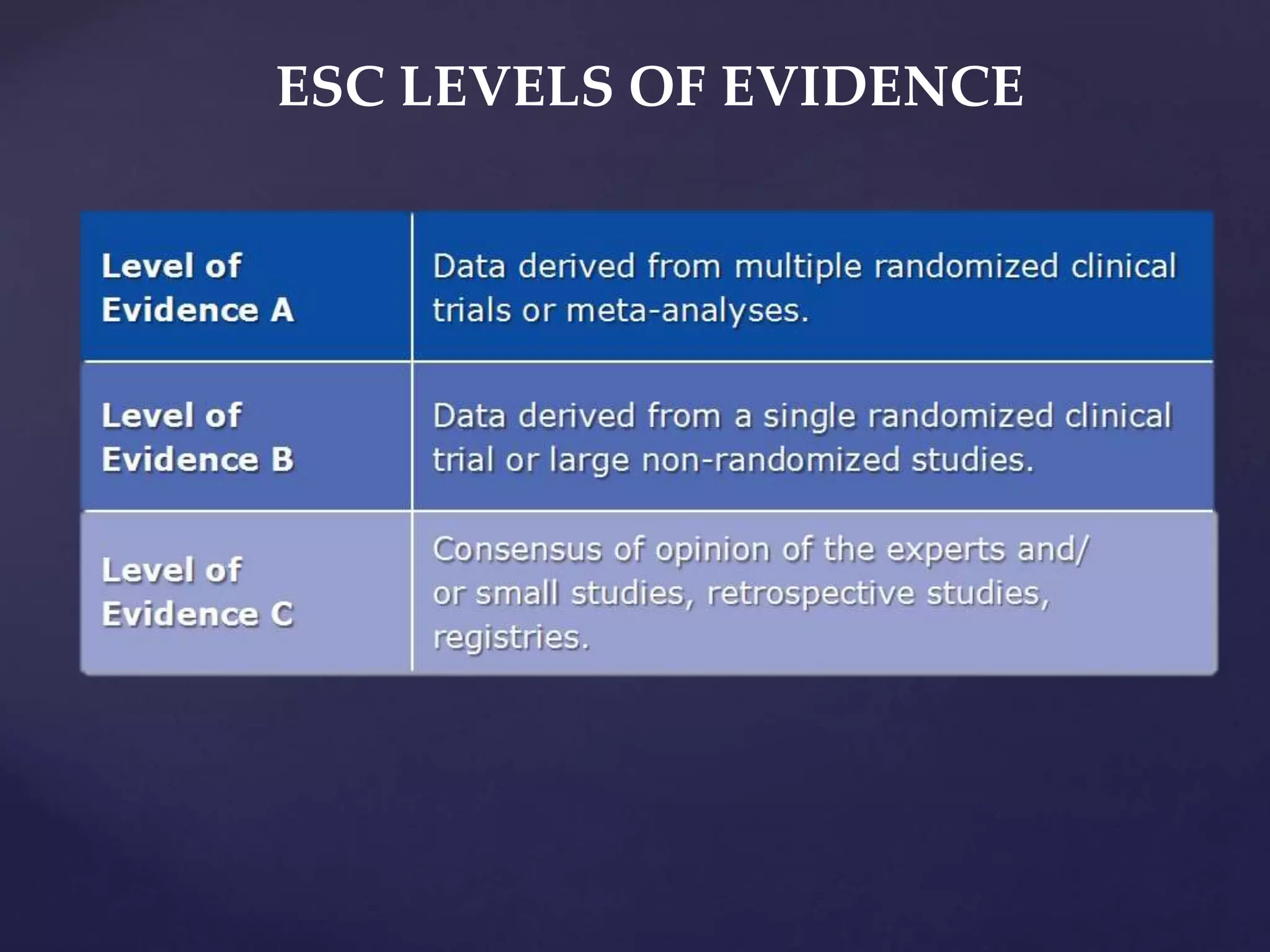
ESC LEVELS OF EVIDENCE
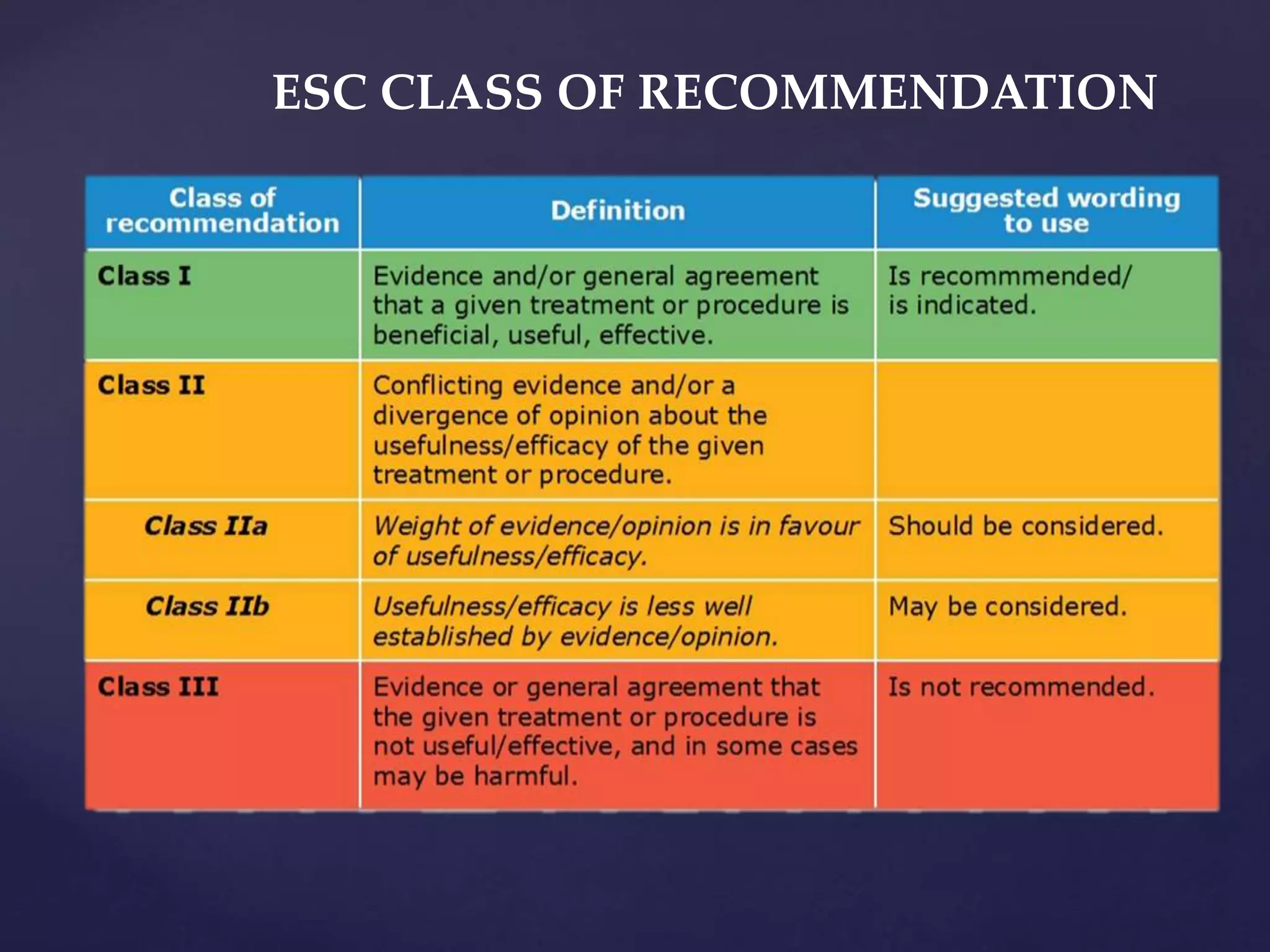
ESC CLASS OF RECOMMENDATION
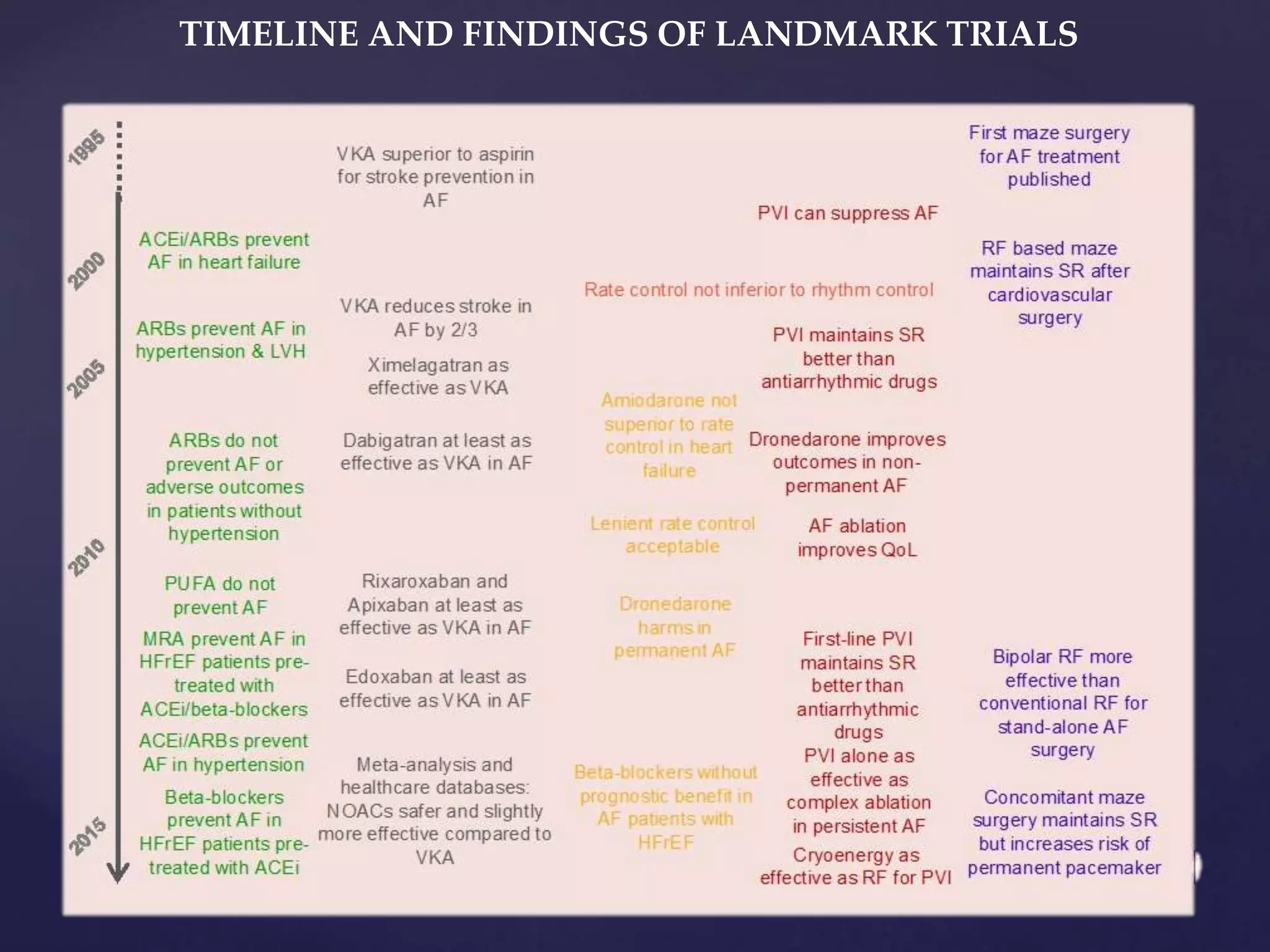
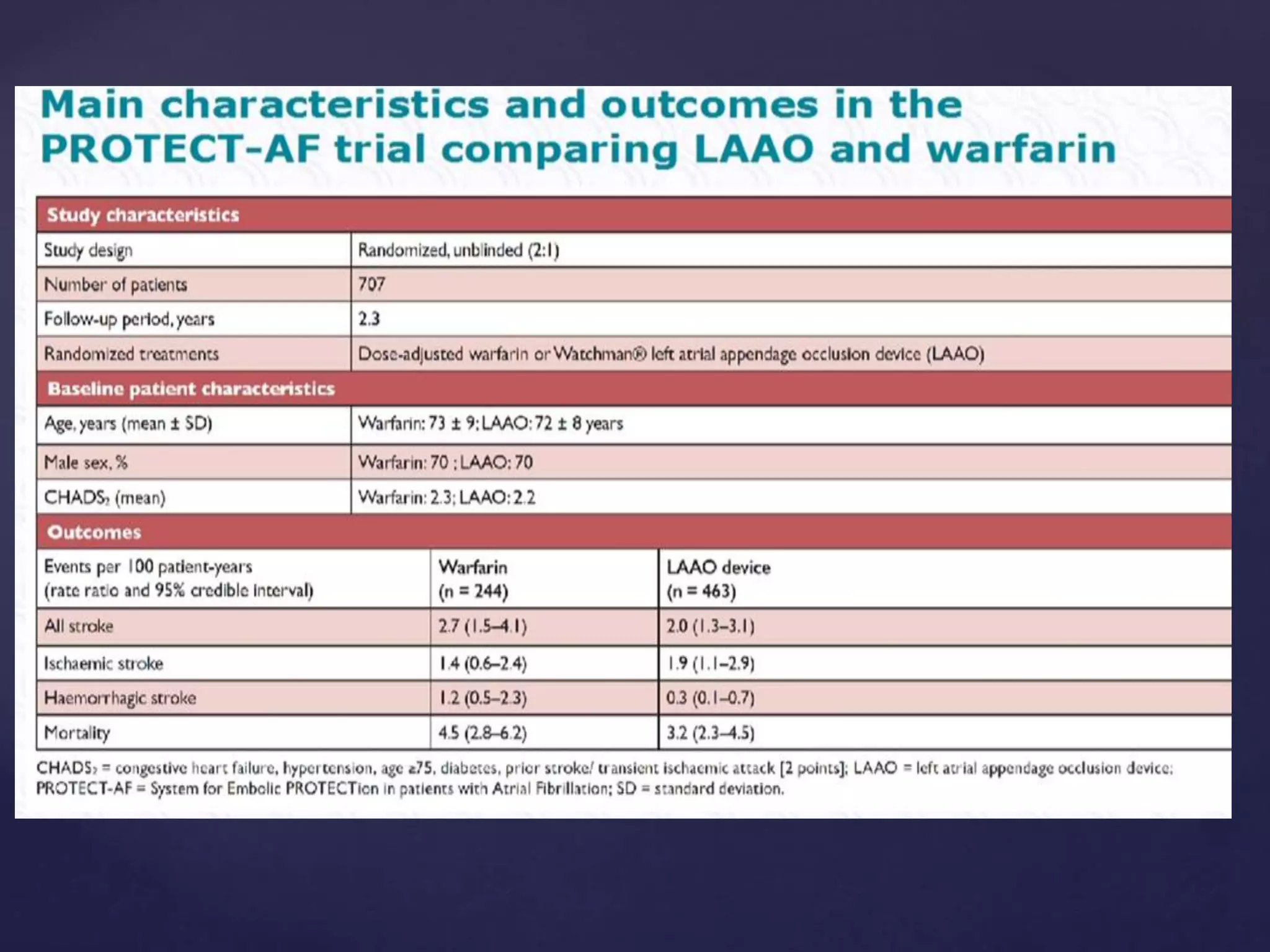
TIMELINE AND FINDINGS OF LANDMARK TRIALS
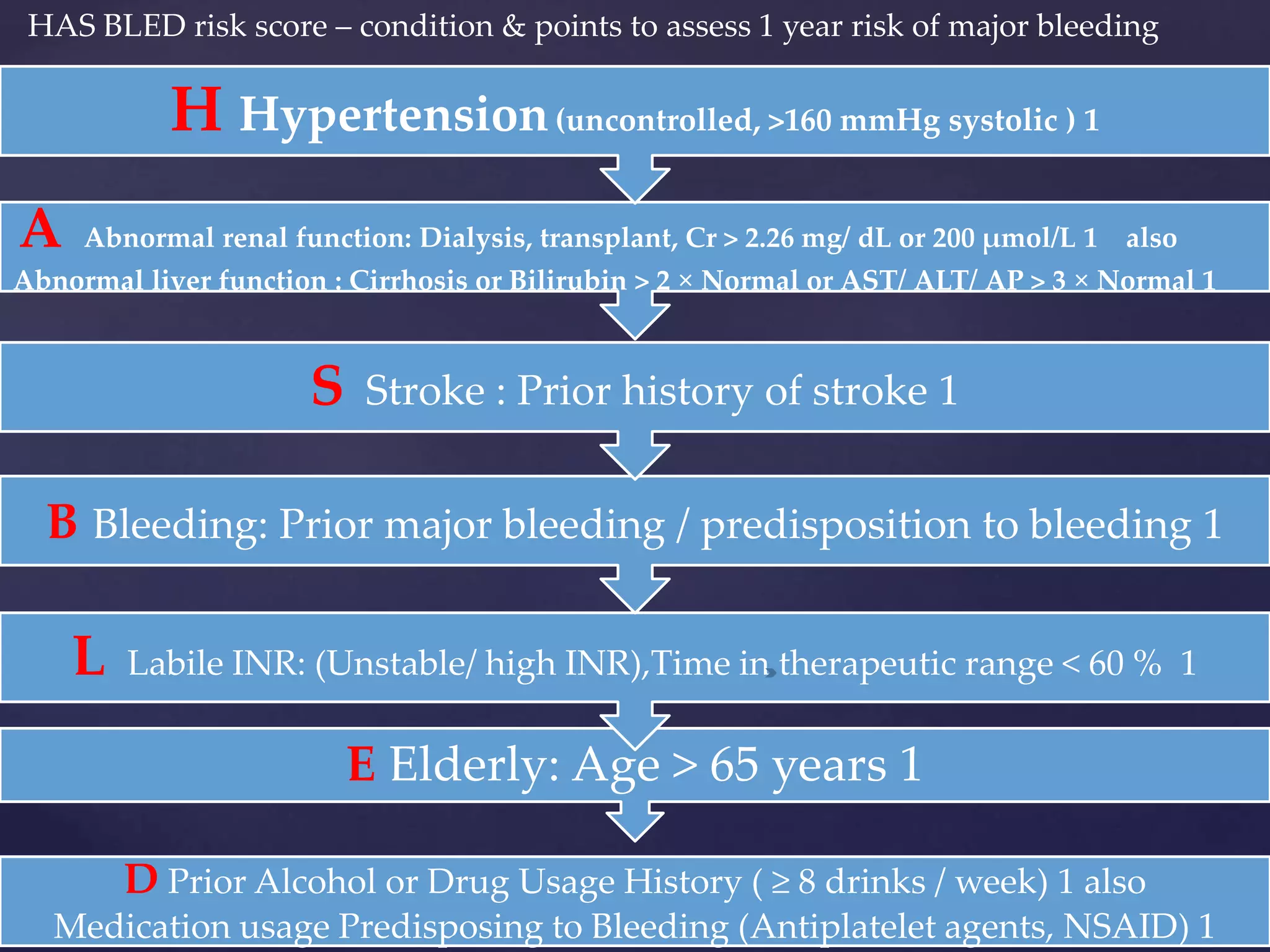
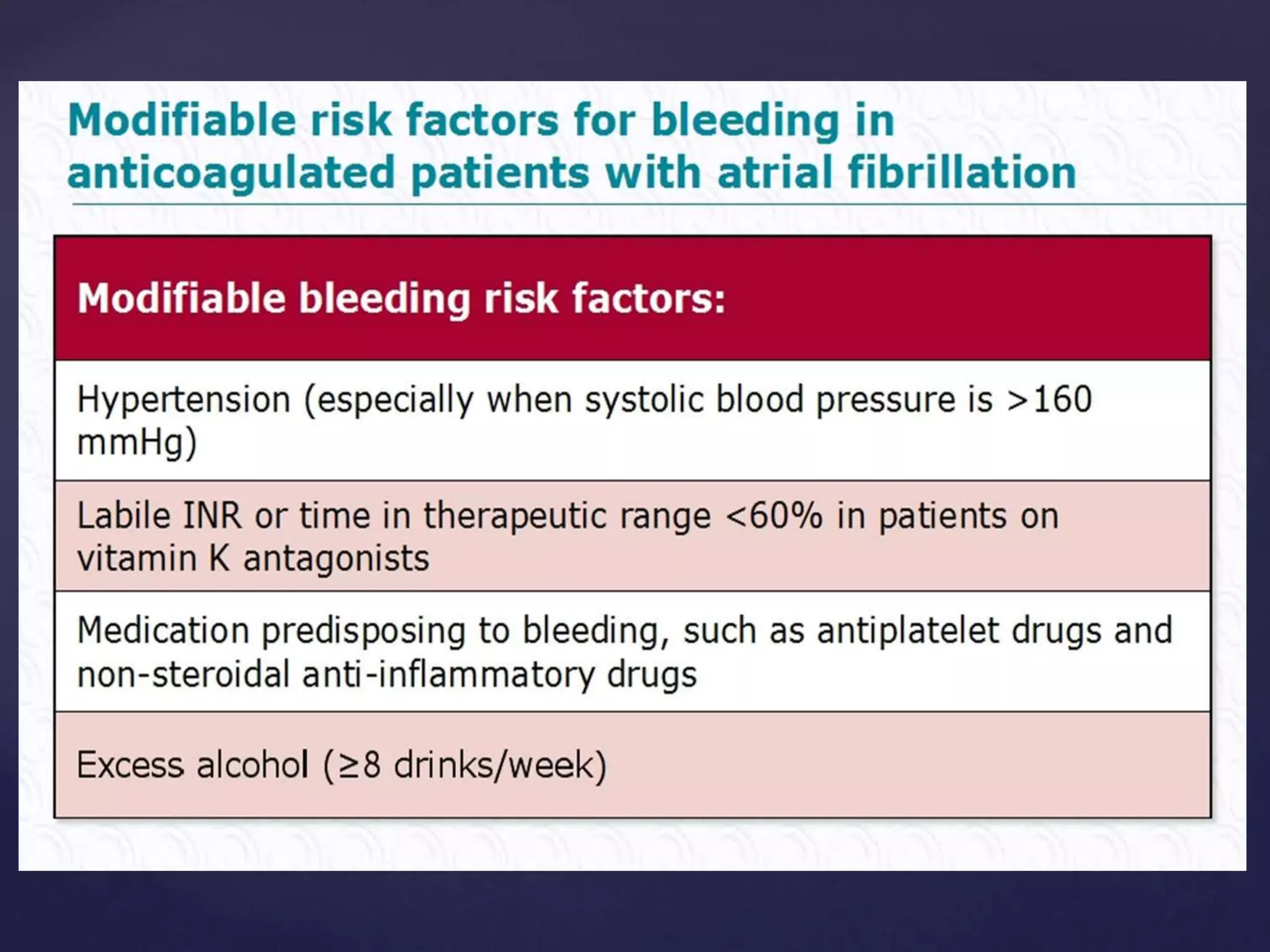
D Prior Alcohol or Drug Usage History ( ≥ 8 drinks / week) 1 also
Medication usage Predisposing to Bleeding (Antiplatelet agents, NSAID) 1
E Elderly: Age > 65 years 1
L Labile INR: (Unstable/ high INR),Time in therapeutic range < 60 % 1
B Bleeding: Prior major bleeding / predisposition to bleeding 1
S Stroke : Prior history of stroke 1
A Abnormal renal function: Dialysis, transplant, Cr > 2.26 mg/ dL or 200 µmol/L 1 also
Abnormal liver function : Cirrhosis or Bilirubin > 2 × Normal or AST/ ALT/ AP > 3 × Normal 1
H Hypertension(uncontrolled, >160 mmHg systolic ) 1
HAS BLED risk score – condition & points to assess 1 year risk of major bleeding
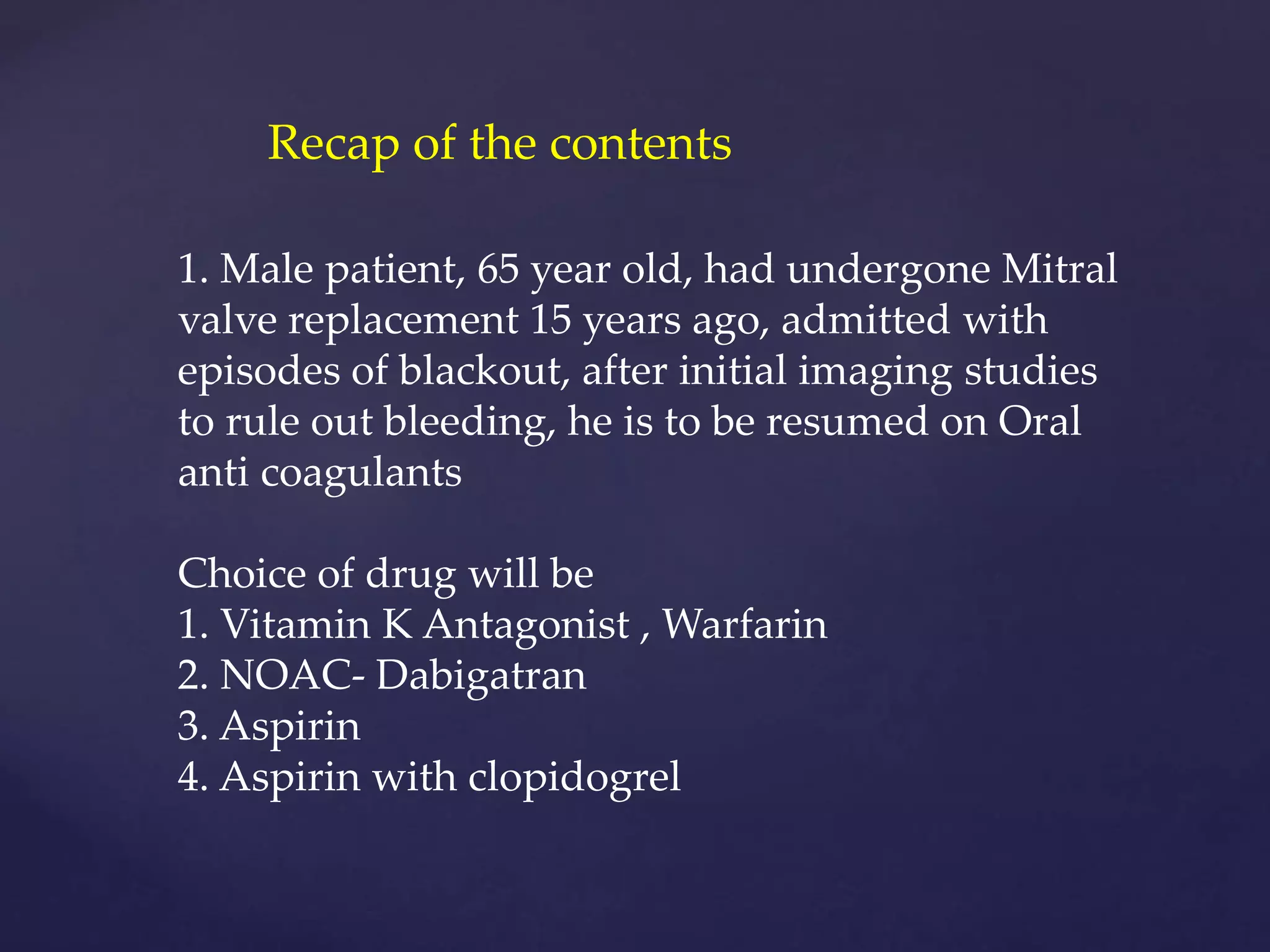
1. Male patient, 65 year old, had undergone Mitral
valve replacement 15 years ago, admitted with
episodes of blackout, after initial imaging studies
to rule out bleeding, he is to be resumed on Oral
anti coagulants
Choice of drug will be
1. Vitamin K Antagonist , Warfarin
2. NOAC- Dabigatran
3. Aspirin
4. Aspirin with clopidogrel
Recap of the contents
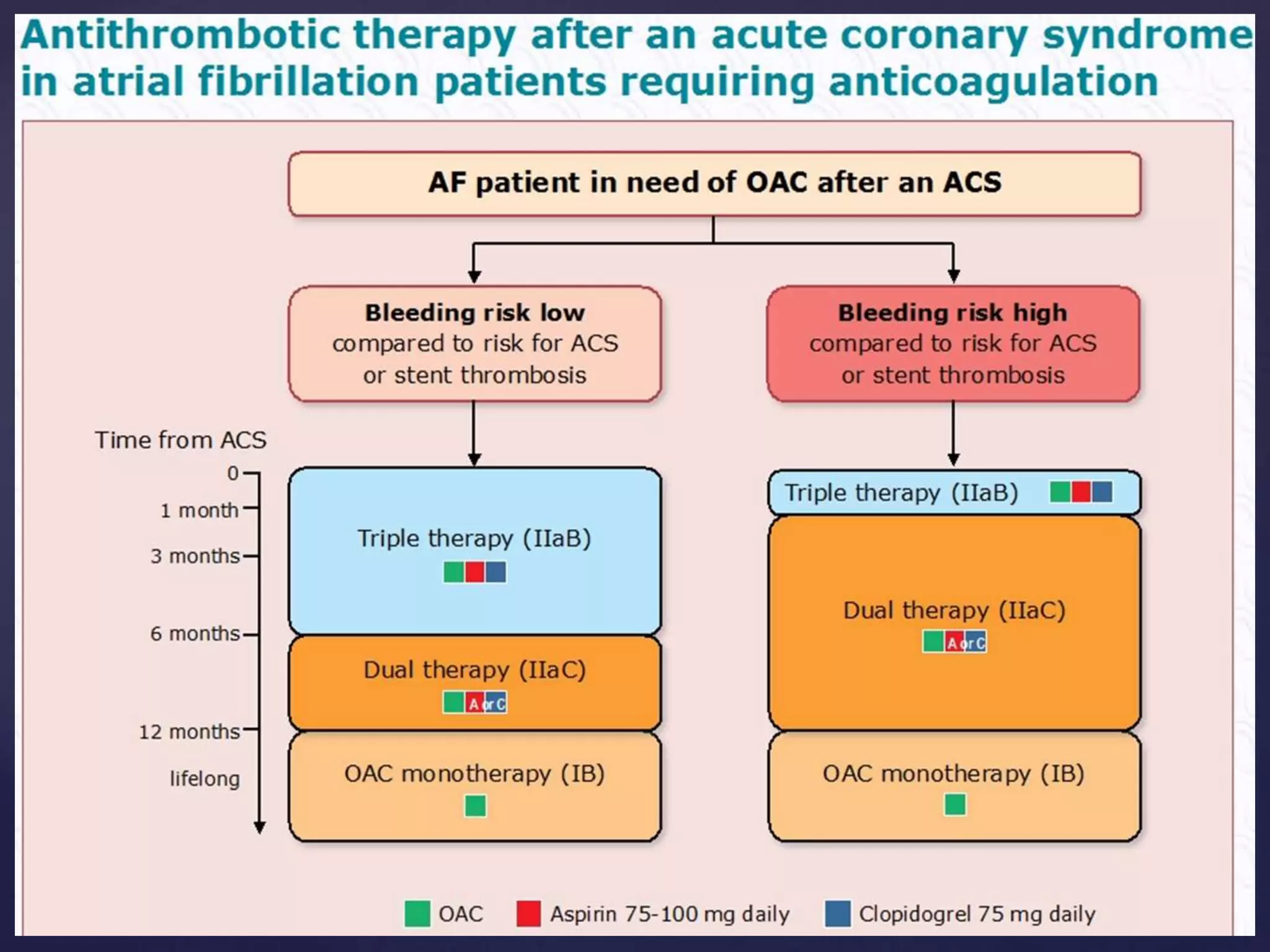
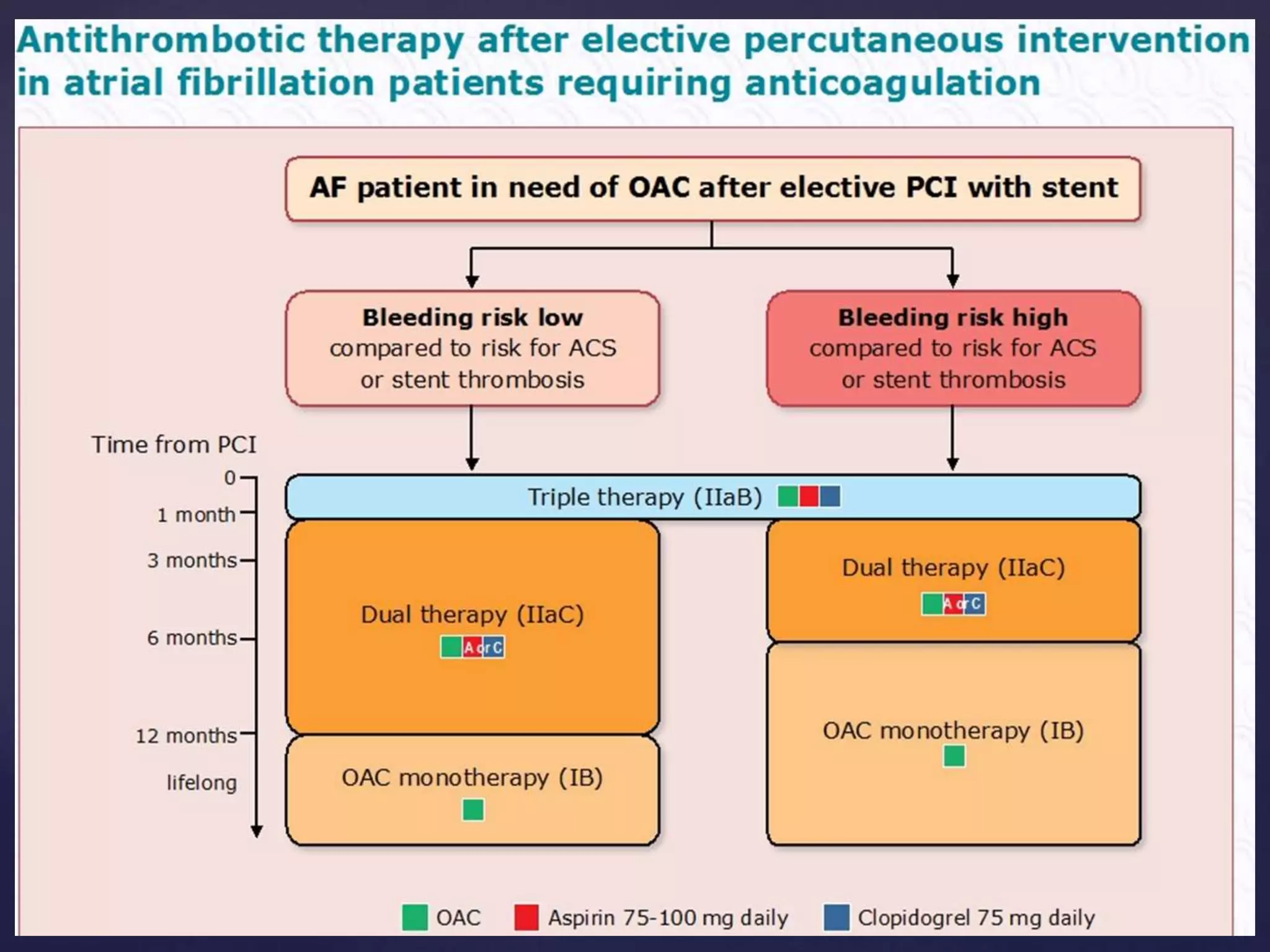
2. Female patient aged 62 years sedentary lifestyle,
hypertensive, known case of atrial fibrillation,
presented with ACS, underwent PCI, the three drug
regimen of dual antiplatelets and NOAC to be
considered for
1. 1 year
2. Lifelong
3. 1 to 6 months
4. None of the above
Thank you.. Have a great
day..
This lecture is given by me as part of series of lectures at Sheikh Jaber Al Ahmed hospital, during 2019

Guidelines on anticoagulation in Atrial Fibrillation

  • 1.
    ATRIAL FIBRILLATION –LECTURE SERIES GUIDELINES ON ANTICOAGULATION IN ATRIAL FIBRILLATION Dr RAJA MOHAMMED, MD, MESC Specialist in Cardiology, Sheikh Jaber Al Ahmed Hospital, Ministry of Health, KUWAIT
  • 2.
    FOREWORD Medical science isan ever changing science. Practitioners must always rely on their own experience and latest scientific evidence before prescribing. Sincere thanks to European Society of Cardiology for the contents related to guidelines. Though the content is taken from authenticated source and standard books the typing error and content misquotes if any are solely mine.
  • 3.
    ESC LEVELS OFEVIDENCE
  • 4.
    ESC CLASS OFRECOMMENDATION
  • 6.
    TIMELINE AND FINDINGSOF LANDMARK TRIALS
  • 16.
    D Prior Alcoholor Drug Usage History ( ≥ 8 drinks / week) 1 also Medication usage Predisposing to Bleeding (Antiplatelet agents, NSAID) 1 E Elderly: Age > 65 years 1 L Labile INR: (Unstable/ high INR),Time in therapeutic range < 60 % 1 B Bleeding: Prior major bleeding / predisposition to bleeding 1 S Stroke : Prior history of stroke 1 A Abnormal renal function: Dialysis, transplant, Cr > 2.26 mg/ dL or 200 µmol/L 1 also Abnormal liver function : Cirrhosis or Bilirubin > 2 × Normal or AST/ ALT/ AP > 3 × Normal 1 H Hypertension(uncontrolled, >160 mmHg systolic ) 1 HAS BLED risk score – condition & points to assess 1 year risk of major bleeding
  • 32.
    1. Male patient,65 year old, had undergone Mitral valve replacement 15 years ago, admitted with episodes of blackout, after initial imaging studies to rule out bleeding, he is to be resumed on Oral anti coagulants Choice of drug will be 1. Vitamin K Antagonist , Warfarin 2. NOAC- Dabigatran 3. Aspirin 4. Aspirin with clopidogrel Recap of the contents
  • 33.
    2. Female patientaged 62 years sedentary lifestyle, hypertensive, known case of atrial fibrillation, presented with ACS, underwent PCI, the three drug regimen of dual antiplatelets and NOAC to be considered for 1. 1 year 2. Lifelong 3. 1 to 6 months 4. None of the above
  • 34.
    Thank you.. Havea great day.. This lecture is given by me as part of series of lectures at Sheikh Jaber Al Ahmed hospital, during 2019