GUIDE DOGS FOR THE BLIND
Troop 4670
WHY ARE GUIDE DOGS IMPORTANT?

Over 11.3 million people in
 America are blind or visually
 impaired.
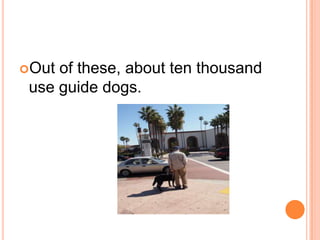
Out of these, about ten thousand
 use guide dogs.
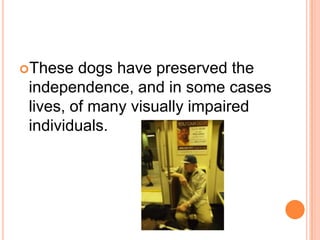
These   dogs have preserved the
 independence, and in some cases
 lives, of many visually impaired
 individuals.
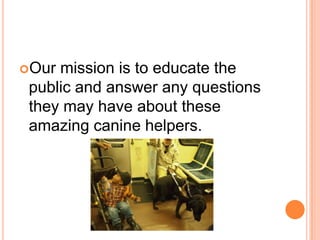
Our mission is to educate the
 public and answer any questions
 they may have about these
 amazing canine helpers.
RULES FOR INTERACTION WITH
GUIDE DOGS
1. DON’T DISTRACT GUIDE DOGS WHILE
THEY’RE WORKING.

   Guide dogs have to be constantly on the lookout for
    dangers and traps. Calling out to one or trying to
    pet one is very distracting to them. However, many
    handlers are happy to let you pet their guides-
    WHEN they’re off duty.
2. NEVER FEED A GUIDE DOG.
   In order to keep their bodies on a predictable
    schedule, seeing eye dogs are fed at the same time
    every day, and only by their handler. In
    addition, guide dogs are on a special diet to keep
    them in top physical condition, and bites of steak or
    ham aren’t going to help that. (Don’t worry- guide
    dogs do get treats, like carrots and fruit.)
3. DON’T BE AFRAID TO ASK FOR AN ID.
   It’s okay to ask for legal identification papers
    proving that a dog is a certified service animal. Real
    guide dog owners are usually happy to show you
    their IDs
4. BLIND PERSON ADEQUATE
   Do not try to steer a blind person with a guide dog.
    This may confuse the dog and cause it to put the
    blind person in a dangerous position. In the event of
    seeing a blind person just let the dog do its job.
5. HELP OUT!
   Even though guide dogs are amazing helpers, they
    can’t do everything. So you can help, too! Open
    doors, read out menus, and inform the public of the
    correct ways to interact with service dogs.

Guide dogs for the blind powerpoint

  • 1.
    GUIDE DOGS FORTHE BLIND Troop 4670
  • 2.
    WHY ARE GUIDEDOGS IMPORTANT? Over 11.3 million people in America are blind or visually impaired.
  • 3.
    Out of these,about ten thousand use guide dogs.
  • 4.
    These dogs have preserved the independence, and in some cases lives, of many visually impaired individuals.
  • 5.
    Our mission isto educate the public and answer any questions they may have about these amazing canine helpers.
  • 6.
    RULES FOR INTERACTIONWITH GUIDE DOGS
  • 7.
    1. DON’T DISTRACTGUIDE DOGS WHILE THEY’RE WORKING.  Guide dogs have to be constantly on the lookout for dangers and traps. Calling out to one or trying to pet one is very distracting to them. However, many handlers are happy to let you pet their guides- WHEN they’re off duty.
  • 8.
    2. NEVER FEEDA GUIDE DOG.  In order to keep their bodies on a predictable schedule, seeing eye dogs are fed at the same time every day, and only by their handler. In addition, guide dogs are on a special diet to keep them in top physical condition, and bites of steak or ham aren’t going to help that. (Don’t worry- guide dogs do get treats, like carrots and fruit.)
  • 9.
    3. DON’T BEAFRAID TO ASK FOR AN ID.  It’s okay to ask for legal identification papers proving that a dog is a certified service animal. Real guide dog owners are usually happy to show you their IDs
  • 10.
    4. BLIND PERSONADEQUATE  Do not try to steer a blind person with a guide dog. This may confuse the dog and cause it to put the blind person in a dangerous position. In the event of seeing a blind person just let the dog do its job.
  • 11.
    5. HELP OUT!  Even though guide dogs are amazing helpers, they can’t do everything. So you can help, too! Open doors, read out menus, and inform the public of the correct ways to interact with service dogs.