GUIDANCE
FOR
COMPETITIVE
EXAM
PREPARATION
- PROF. NILESH DAVE
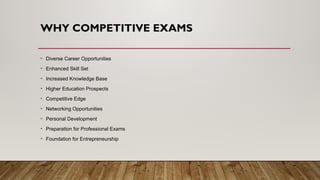
WHY COMPETITIVE EXAMS
• Diverse Career Opportunities
• Enhanced Skill Set
• Increased Knowledge Base
• Higher Education Prospects
• Competitive Edge
• Networking Opportunities
• Personal Development
• Preparation for Professional Exams
• Foundation for Entrepreneurship
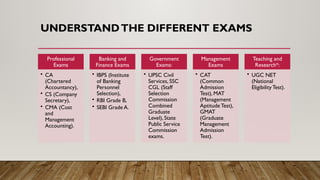
UNDERSTANDTHE DIFFERENT EXAMS
Professional
Exams
• CA
(Chartered
Accountancy),
• CS (Company
Secretary),
• CMA (Cost
and
Management
Accounting).
Banking and
Finance Exams
• IBPS (Institute
of Banking
Personnel
Selection),
• RBI Grade B,
• SEBI Grade A.
Government
Exams:
• UPSC Civil
Services, SSC
CGL (Staff
Selection
Commission
Combined
Graduate
Level), State
Public Service
Commission
exams.
Management
Exams
• CAT
(Common
Admission
Test), MAT
(Management
Aptitude Test),
GMAT
(Graduate
Management
Admission
Test).
Teaching and
Research*:
• UGC NET
(National
Eligibility Test).
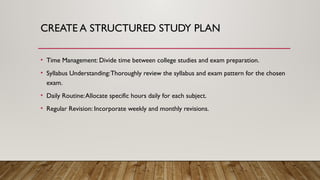
CREATE A STRUCTURED STUDY PLAN
• Time Management: Divide time between college studies and exam preparation.
• Syllabus Understanding:Thoroughly review the syllabus and exam pattern for the chosen
exam.
• Daily Routine:Allocate specific hours daily for each subject.
• Regular Revision: Incorporate weekly and monthly revisions.
STUDY RESOURCES
• Recommended textbooks and reference materials
• - Online resources:
• - Websites and educational platforms (e.g., Khan Academy,
Coursera)
• -YouTube channels focused on commerce subjects
• - Past exam papers and sample questions
SUBJECT-WISE FOCUS
Common subjects for commerce undergraduates:
• Accounting
• Business Studies
• Economics
• Quantitative Aptitude
• Logical Reasoning
EFFECTIVE STUDY TECHNIQUES
• Active learning methods:
- Mind mapping, flashcards, and summarization
• Practice and revision strategies:
- Regular quizzes and mock tests
- Group study for collaborative learning
TIME MANAGEMENT SKILLS
Techniques for effective time management
• - The Pomodoro technique: Study intervals and
breaks
• - Prioritizing tasks based on deadlines and difficulty
STAY UPDATED WITH CURRENT AFFAIRS
• Read Newspapers: Focus on business and economic news.
• Magazines: Subscribe to business and finance magazines like
The Economist, Business Today, etc.
• Online Platforms: Use apps and websites dedicated to
competitive exam preparation for current affairs.
FOCUS ON MENTAL HEALTH
• Stress management strategies: Mindfulness meditation,
exercise, and hobbies
• Maintain a balanced lifestyle
• Seeking help when needed
TIME FOR QUESTION
& ANSWER
THANKYOU

GUIDANCE FOR COMPETITIVE EXAM PREPARATION.pptx

  • 1.
  • 2.
    WHY COMPETITIVE EXAMS •Diverse Career Opportunities • Enhanced Skill Set • Increased Knowledge Base • Higher Education Prospects • Competitive Edge • Networking Opportunities • Personal Development • Preparation for Professional Exams • Foundation for Entrepreneurship
  • 3.
    UNDERSTANDTHE DIFFERENT EXAMS Professional Exams •CA (Chartered Accountancy), • CS (Company Secretary), • CMA (Cost and Management Accounting). Banking and Finance Exams • IBPS (Institute of Banking Personnel Selection), • RBI Grade B, • SEBI Grade A. Government Exams: • UPSC Civil Services, SSC CGL (Staff Selection Commission Combined Graduate Level), State Public Service Commission exams. Management Exams • CAT (Common Admission Test), MAT (Management Aptitude Test), GMAT (Graduate Management Admission Test). Teaching and Research*: • UGC NET (National Eligibility Test).
  • 4.
    CREATE A STRUCTUREDSTUDY PLAN • Time Management: Divide time between college studies and exam preparation. • Syllabus Understanding:Thoroughly review the syllabus and exam pattern for the chosen exam. • Daily Routine:Allocate specific hours daily for each subject. • Regular Revision: Incorporate weekly and monthly revisions.
  • 5.
    STUDY RESOURCES • Recommendedtextbooks and reference materials • - Online resources: • - Websites and educational platforms (e.g., Khan Academy, Coursera) • -YouTube channels focused on commerce subjects • - Past exam papers and sample questions
  • 6.
    SUBJECT-WISE FOCUS Common subjectsfor commerce undergraduates: • Accounting • Business Studies • Economics • Quantitative Aptitude • Logical Reasoning
  • 7.
    EFFECTIVE STUDY TECHNIQUES •Active learning methods: - Mind mapping, flashcards, and summarization • Practice and revision strategies: - Regular quizzes and mock tests - Group study for collaborative learning
  • 8.
    TIME MANAGEMENT SKILLS Techniquesfor effective time management • - The Pomodoro technique: Study intervals and breaks • - Prioritizing tasks based on deadlines and difficulty
  • 9.
    STAY UPDATED WITHCURRENT AFFAIRS • Read Newspapers: Focus on business and economic news. • Magazines: Subscribe to business and finance magazines like The Economist, Business Today, etc. • Online Platforms: Use apps and websites dedicated to competitive exam preparation for current affairs.
  • 10.
    FOCUS ON MENTALHEALTH • Stress management strategies: Mindfulness meditation, exercise, and hobbies • Maintain a balanced lifestyle • Seeking help when needed
  • 12.
  • 13.