FROG DISSECTION:
Integumentary System
Group 1 | SCE137
A. EXTERNAL
FEATURES:
1. Color and texture:
Light brown and black
pigmented bumps; rough;
5. Visible
adaptations:
Camouflaging; webbed feet;
pigmented bumps
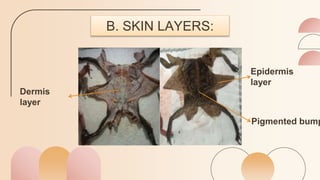
B. SKIN LAYERS:
Dermis
layer
Epidermis
layer
Pigmented bump
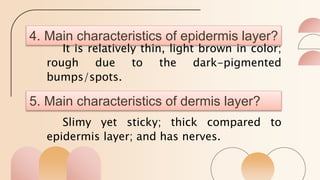
4. Main characteristics of epidermis layer?
It is relatively thin, light brown in color;
rough due to the dark-pigmented
bumps/spots.
5. Main characteristics of dermis layer?
Slimy yet sticky; thick compared to
epidermis layer; and has nerves.
6. Specialized structures related to sensory
functions.
Answer here!
C. EPIDERMAL
ADAPTATIONS:
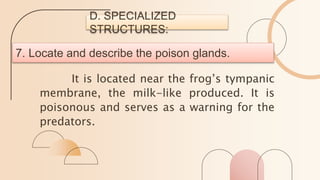
7. Locate and describe the poison glands.
It is located near the frog’s tympanic
membrane, the milk-like produced. It is
poisonous and serves as a warning for the
predators.
D. SPECIALIZED
STRUCTURES:
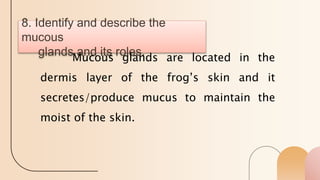
8. Identify and describe the
mucous
glands and its roles.
Mucous glands are located in the
dermis layer of the frog’s skin and it
secretes/produce mucus to maintain the
moist of the skin.
9. Summary of the main function
of
. frog’s integumentary system:
Frogs can breathe and drink through their
skin which help them to survive; they can also
change their colors (camouflaging) to hide from
predators or their prey; and their integumentary
system has glands that serves as a protective
barrier.
E. SUMMARY:
10. How integumentary system of the frog
contribute . to its survival and adaptation in its
environment.
Through its skin, the frog can breathe
when it is in the water as well as drink
through it. Because of the ability of frog’s skin
to camouflage, they can hide from their
predators or find prey easily.
CONCLUSION
In conclusion, the frog’s dissection
activity gave us deeper understanding of the
looks, functions, and how important our
integumentary system is. Integumentary
system really is the first-line defense.
GROUP 1
SCE137

Group - Integumentary System.pptx

  • 1.
  • 2.
    A. EXTERNAL FEATURES: 1. Colorand texture: Light brown and black pigmented bumps; rough; 5. Visible adaptations: Camouflaging; webbed feet; pigmented bumps
  • 3.
  • 4.
    4. Main characteristicsof epidermis layer? It is relatively thin, light brown in color; rough due to the dark-pigmented bumps/spots. 5. Main characteristics of dermis layer? Slimy yet sticky; thick compared to epidermis layer; and has nerves.
  • 5.
    6. Specialized structuresrelated to sensory functions. Answer here! C. EPIDERMAL ADAPTATIONS:
  • 6.
    7. Locate anddescribe the poison glands. It is located near the frog’s tympanic membrane, the milk-like produced. It is poisonous and serves as a warning for the predators. D. SPECIALIZED STRUCTURES:
  • 7.
    8. Identify anddescribe the mucous glands and its roles. Mucous glands are located in the dermis layer of the frog’s skin and it secretes/produce mucus to maintain the moist of the skin.
  • 8.
    9. Summary ofthe main function of . frog’s integumentary system: Frogs can breathe and drink through their skin which help them to survive; they can also change their colors (camouflaging) to hide from predators or their prey; and their integumentary system has glands that serves as a protective barrier. E. SUMMARY:
  • 9.
    10. How integumentarysystem of the frog contribute . to its survival and adaptation in its environment. Through its skin, the frog can breathe when it is in the water as well as drink through it. Because of the ability of frog’s skin to camouflage, they can hide from their predators or find prey easily.
  • 10.
    CONCLUSION In conclusion, thefrog’s dissection activity gave us deeper understanding of the looks, functions, and how important our integumentary system is. Integumentary system really is the first-line defense.
  • 11.