OTHER FIRST AID
CASES
Fainting (Syncope)
Fainting is a brief loss of
consciousness caused by a temporary
decrease in blood to the brain . This
usually lasts for a few seconds or
minutes, and most fainting episodes are
harmless . However, if fainting occurs
frequently or is accompanied by other
symptoms, it’s crucial to seek medical
attention
CAUSES
OF
FAINTIN
G
Cardiac Syncope
Carotid Sinus Syncope
Vasovagal Syncope
FIRST
AID FOR
FAINTIN
G
1. Lay the person down: Help the person lie down
on their back or sit with their head between their
knees.
2. Elevate their legs: If the person is uninjured,
raise their legs 12 inches above their head to
improve blood flow to the brain.
3. Check for breathing and pulse: If the person
isn’t breathing or has no pulse, perform CPR and
call emergency services.
4. Loosen tight clothing: Ensure clothing isn’t
restricting blood flow or breathing.
 5. Stay with them: Remain with the person until
they regain consciousness and can stand up
slowly.
Convulsions (Seizures)
Convulsions, also known as seizures,
are caused by abnormal electrical
activity in the brain. Most seizures
resolve on their own within a few
minutes, and the most common
cause is epilepsy. However, some
convulsions can be triggered by
other medical conditions like head
injuries, low blood sugar, heat stroke,
poisoning, or sudden cardiac arrest.
SIGN
OF A
CONVULSION
- Muscle softening and loss of
control
- Convulsions in the arms, legs,
or the whole body
- Falling to the ground
- Unconsciousness
FIRST AID
FOR
CONVULSION
1. Ensure safety: Move objects away from the
person to prevent injury during the seizure.
2. Protect their head: Place a pillow or towel under
their head for support.
3. Call for help: Dial 911 or your local emergency
number and gather a first aid kit.
4. Monitor breathing and responsiveness: After the
seizure, check if the person is breathing and
responsive.
5. Position them on their side: If the person is
vomiting or has fluid in their mouth, turn them onto
their side to prevent choking.
 6. Control bleeding: If the person bites their
tongue or lips, apply pressure to the wound with
clean gauze or a towel.
Foreign Object in the Eye
A foreign object in the eye can be a
very uncomfortable and potentially
damaging experience. It's crucial to
remove the object safely and
promptly to prevent further irritation
or injury.
SYMPTOMS
OF A
FOREIGN
OBJECT IN
THE EYES
- Eye pain
- Excessive blinking
- Discomfort or pressure
- Redness
- Tearing
- Sensation of something in the eye
- Pain when looking at light
- Blurred vision
 - Eyelid swelling
FIRST AID
FOR A
FOREIGN
OBJECT IN
THE EYES
1. Wash your hands: Thoroughly wash your hands
with soap and water.
2. Flush the eye: Gently irrigate the eye with a
stream of clean, warm water using an eyecup or a
clean drinking glass.
3. Remove contact lenses: If the person is wearing
contact lenses, remove them before or during
irrigation.
4. Don’t attempt to remove embedded objects: Do
not try to remove an object that is embedded in
the eye.
 5. Seek medical attention: If the object cannot be
removed with irrigation, it is embedded, the
person has vision changes, or pain persists after
24 hours, seek immediate medical help.
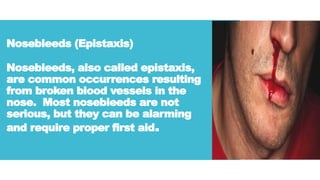
Nosebleeds (Epistaxis)
Nosebleeds, also called epistaxis,
are common occurrences resulting
from broken blood vessels in the
nose. Most nosebleeds are not
serious, but they can be alarming
and require proper first aid.
CAUSES
OF
NOSEBLEEDS
- Dry air
- Picking the nose
- Injury to the nose
- Certain medications
- High blood pressure
FIRST AID
FOR
NOSEBLEEDS
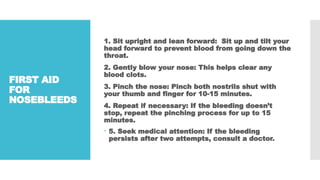
1. Sit upright and lean forward: Sit up and tilt your
head forward to prevent blood from going down the
throat.
2. Gently blow your nose: This helps clear any
blood clots.
3. Pinch the nose: Pinch both nostrils shut with
your thumb and finger for 10-15 minutes.
4. Repeat if necessary: If the bleeding doesn’t
stop, repeat the pinching process for up to 15
minutes.
 5. Seek medical attention: If the bleeding
persists after two attempts, consult a doctor.
Nausea and Vomiting
Nausea and vomiting are
common symptoms that can
be caused by various factors,
ranging from mild to serious.
It’s essential to determine
the underlying cause and
provide appropriate first aid.
CAUSES
OF
NAUSEA
AND
VOMITING
- Viral and bacterial infections
- Food poisoning
- Overeating
- Certain smells
- Pain
- Fever
- Emotional stress
- Motion sickness
- Pregnancy
- Cancer treatments
- Exposure to toxins
- Blocked intestine
- Appendicitis
 - Head injuries
FIRST AID
FOR
NAUSEA
AND
VOMITING
1. Rest: Avoid activities after eating and
rest with your head elevated.
2. Hydrate: Drink small amounts of clear,
cool liquids like ginger ale or fruit juice.
3. Avoid fatty foods: Opt for bland foods
and avoid fatty or spicy meals.
 4. Seek medical attention: If vomiting
persists for a long time, is accompanied
by blood, or is accompanied by other
symptoms like fever, headache, or
dizziness, consult a doctor.

group-4 presentation first aid cases topic

  • 1.
  • 2.
    Fainting (Syncope) Fainting isa brief loss of consciousness caused by a temporary decrease in blood to the brain . This usually lasts for a few seconds or minutes, and most fainting episodes are harmless . However, if fainting occurs frequently or is accompanied by other symptoms, it’s crucial to seek medical attention
  • 3.
  • 4.
    FIRST AID FOR FAINTIN G 1. Laythe person down: Help the person lie down on their back or sit with their head between their knees. 2. Elevate their legs: If the person is uninjured, raise their legs 12 inches above their head to improve blood flow to the brain. 3. Check for breathing and pulse: If the person isn’t breathing or has no pulse, perform CPR and call emergency services. 4. Loosen tight clothing: Ensure clothing isn’t restricting blood flow or breathing.  5. Stay with them: Remain with the person until they regain consciousness and can stand up slowly.
  • 5.
    Convulsions (Seizures) Convulsions, alsoknown as seizures, are caused by abnormal electrical activity in the brain. Most seizures resolve on their own within a few minutes, and the most common cause is epilepsy. However, some convulsions can be triggered by other medical conditions like head injuries, low blood sugar, heat stroke, poisoning, or sudden cardiac arrest.
  • 6.
    SIGN OF A CONVULSION - Musclesoftening and loss of control - Convulsions in the arms, legs, or the whole body - Falling to the ground - Unconsciousness
  • 7.
    FIRST AID FOR CONVULSION 1. Ensuresafety: Move objects away from the person to prevent injury during the seizure. 2. Protect their head: Place a pillow or towel under their head for support. 3. Call for help: Dial 911 or your local emergency number and gather a first aid kit. 4. Monitor breathing and responsiveness: After the seizure, check if the person is breathing and responsive. 5. Position them on their side: If the person is vomiting or has fluid in their mouth, turn them onto their side to prevent choking.  6. Control bleeding: If the person bites their tongue or lips, apply pressure to the wound with clean gauze or a towel.
  • 8.
    Foreign Object inthe Eye A foreign object in the eye can be a very uncomfortable and potentially damaging experience. It's crucial to remove the object safely and promptly to prevent further irritation or injury.
  • 9.
    SYMPTOMS OF A FOREIGN OBJECT IN THEEYES - Eye pain - Excessive blinking - Discomfort or pressure - Redness - Tearing - Sensation of something in the eye - Pain when looking at light - Blurred vision  - Eyelid swelling
  • 10.
    FIRST AID FOR A FOREIGN OBJECTIN THE EYES 1. Wash your hands: Thoroughly wash your hands with soap and water. 2. Flush the eye: Gently irrigate the eye with a stream of clean, warm water using an eyecup or a clean drinking glass. 3. Remove contact lenses: If the person is wearing contact lenses, remove them before or during irrigation. 4. Don’t attempt to remove embedded objects: Do not try to remove an object that is embedded in the eye.  5. Seek medical attention: If the object cannot be removed with irrigation, it is embedded, the person has vision changes, or pain persists after 24 hours, seek immediate medical help.
  • 11.
    Nosebleeds (Epistaxis) Nosebleeds, alsocalled epistaxis, are common occurrences resulting from broken blood vessels in the nose. Most nosebleeds are not serious, but they can be alarming and require proper first aid.
  • 12.
    CAUSES OF NOSEBLEEDS - Dry air -Picking the nose - Injury to the nose - Certain medications - High blood pressure
  • 13.
    FIRST AID FOR NOSEBLEEDS 1. Situpright and lean forward: Sit up and tilt your head forward to prevent blood from going down the throat. 2. Gently blow your nose: This helps clear any blood clots. 3. Pinch the nose: Pinch both nostrils shut with your thumb and finger for 10-15 minutes. 4. Repeat if necessary: If the bleeding doesn’t stop, repeat the pinching process for up to 15 minutes.  5. Seek medical attention: If the bleeding persists after two attempts, consult a doctor.
  • 14.
    Nausea and Vomiting Nauseaand vomiting are common symptoms that can be caused by various factors, ranging from mild to serious. It’s essential to determine the underlying cause and provide appropriate first aid.
  • 15.
    CAUSES OF NAUSEA AND VOMITING - Viral andbacterial infections - Food poisoning - Overeating - Certain smells - Pain - Fever - Emotional stress - Motion sickness - Pregnancy - Cancer treatments - Exposure to toxins - Blocked intestine - Appendicitis  - Head injuries
  • 16.
    FIRST AID FOR NAUSEA AND VOMITING 1. Rest:Avoid activities after eating and rest with your head elevated. 2. Hydrate: Drink small amounts of clear, cool liquids like ginger ale or fruit juice. 3. Avoid fatty foods: Opt for bland foods and avoid fatty or spicy meals.  4. Seek medical attention: If vomiting persists for a long time, is accompanied by blood, or is accompanied by other symptoms like fever, headache, or dizziness, consult a doctor.