Cardinal utility theory states that utility or satisfaction derived from consuming goods can be measured numerically. Total utility is the aggregate satisfaction from consuming all units of a good, while marginal utility is the satisfaction from an additional unit. The law of diminishing marginal utility posits that additional units of a good provide less additional satisfaction.
Ordinal utility theory argues that utility cannot be measured, but preferences can be ranked or compared. Indifference curves depict combinations of goods that provide equal satisfaction. Budget constraints show combinations of goods that can be purchased given an income level. Consumer equilibrium occurs when a consumer maximizes satisfaction given prices and income.
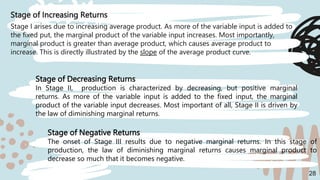
Production involves inputs like labor, capital and land. The production function shows the relationship between inputs




![Week 4 slides 1 [core]](https://cdn.slidesharecdn.com/ss_thumbnails/week4slides1core-130606133329-phpapp01-thumbnail.jpg?width=640&height=640&fit=bounds)


