Content:-
• Literature Review
• Terminologies
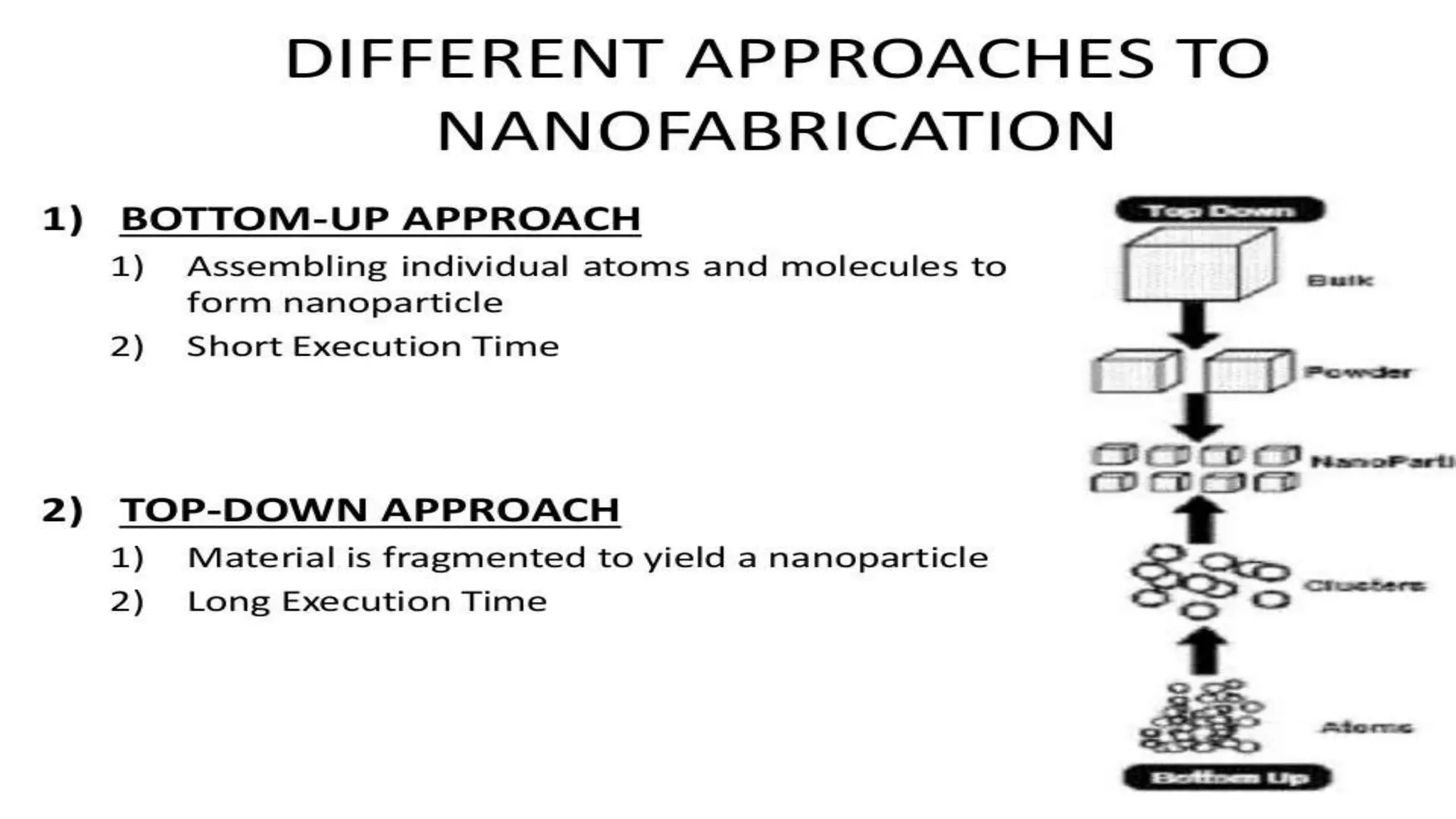
• Different approaches
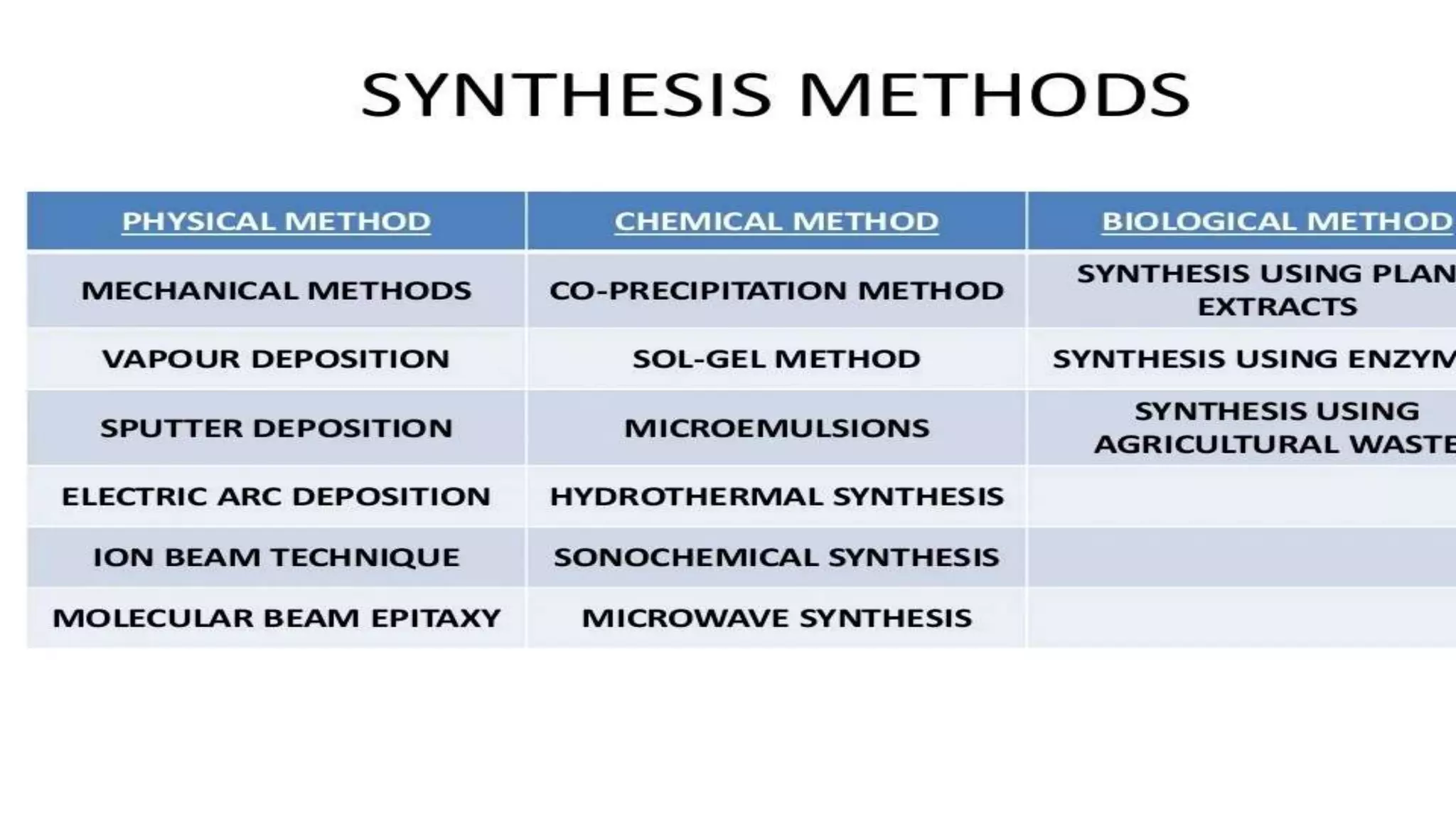
• Synthesis Methods
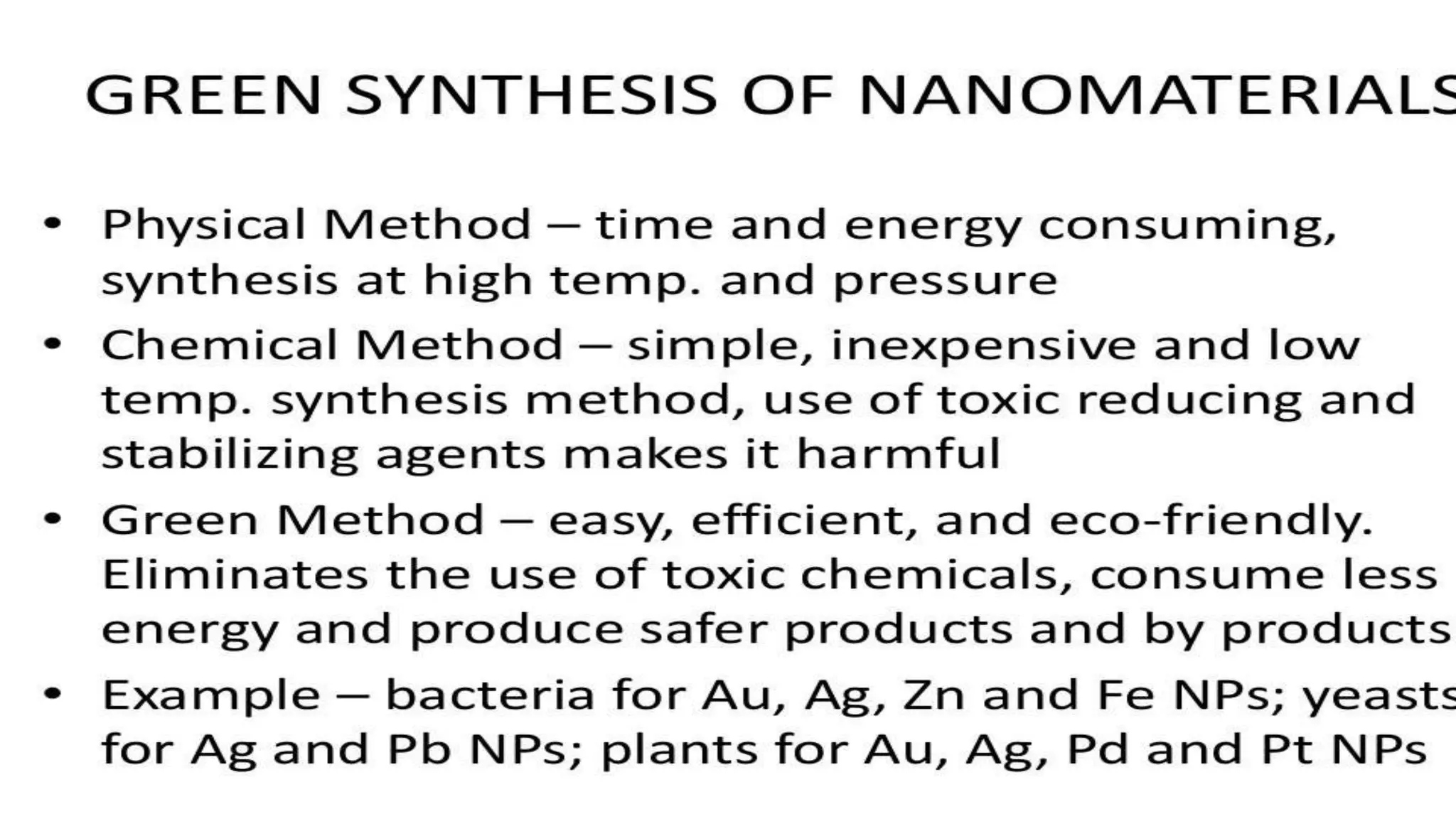
• Green Synthesis of Nanomaterials
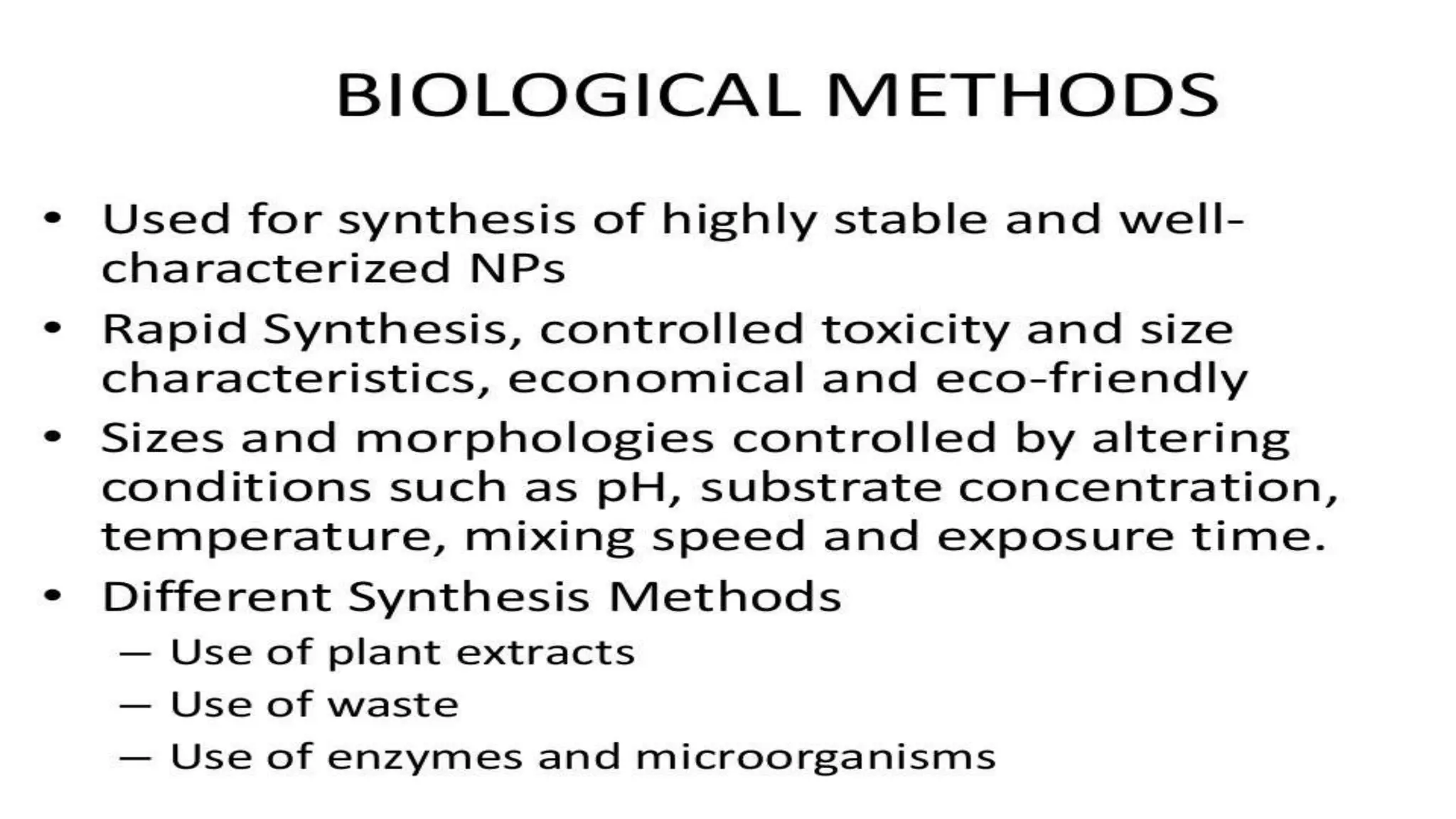
• Biological Methods
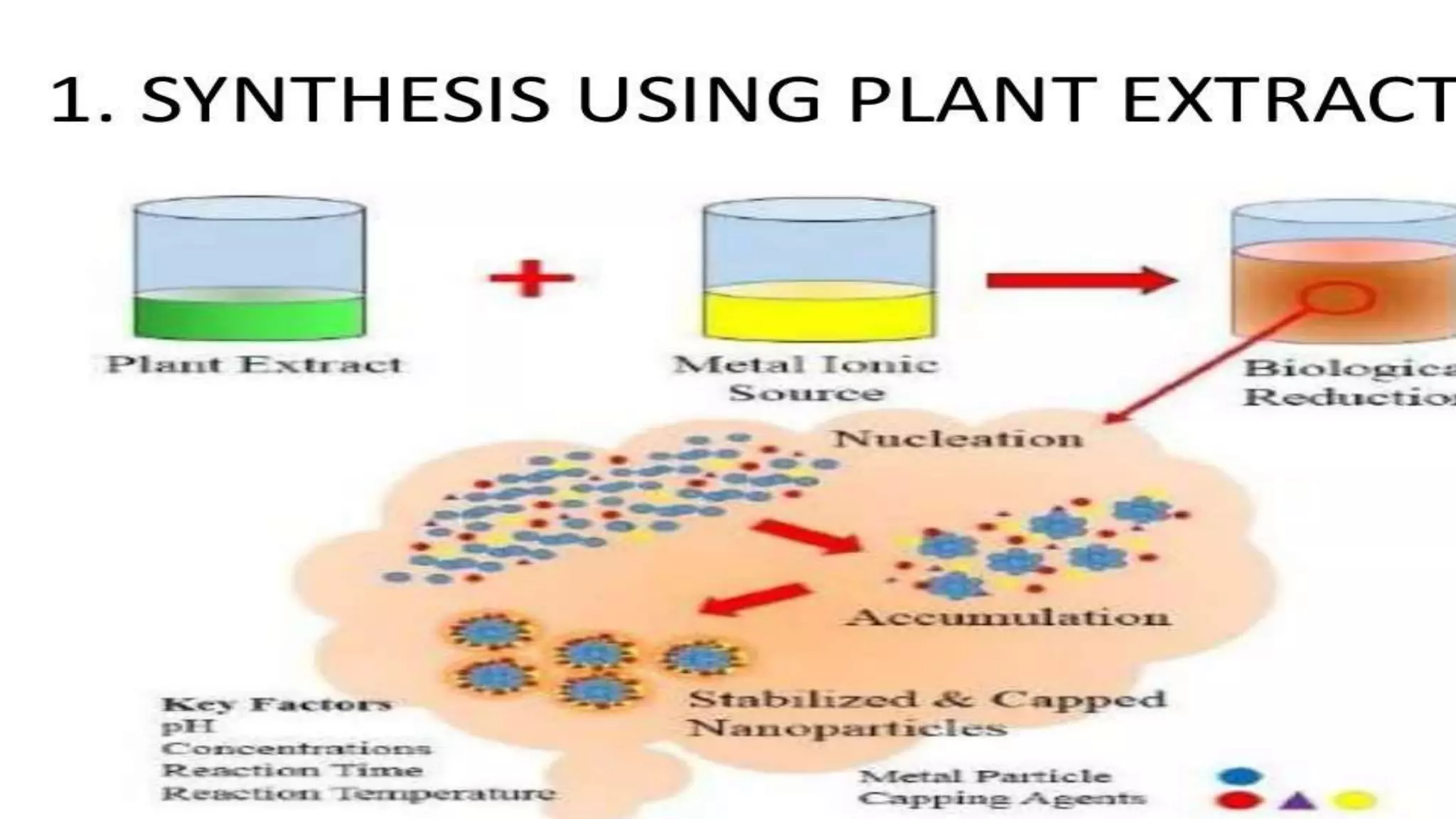
• Synthesis using Plant Extract
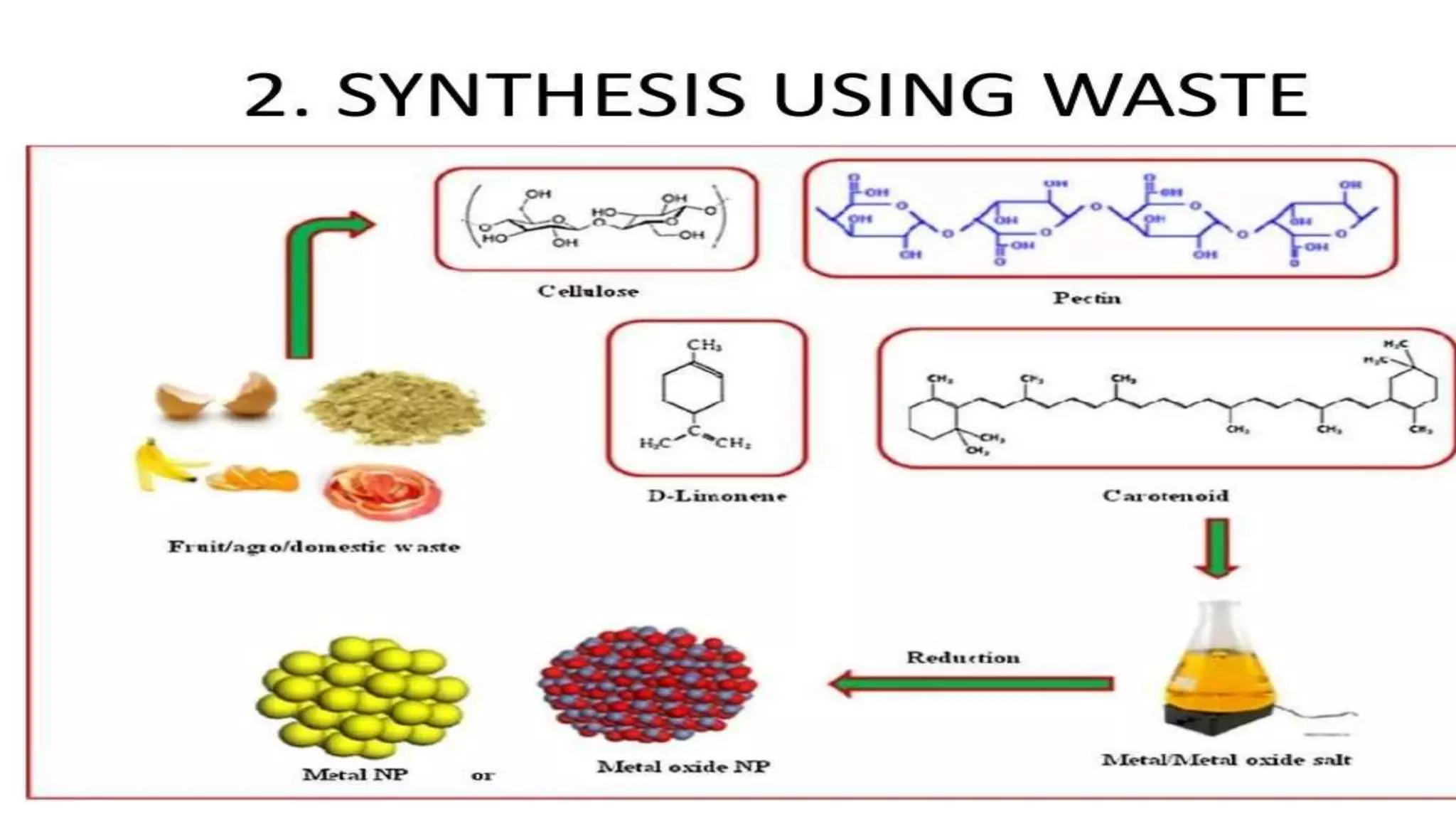
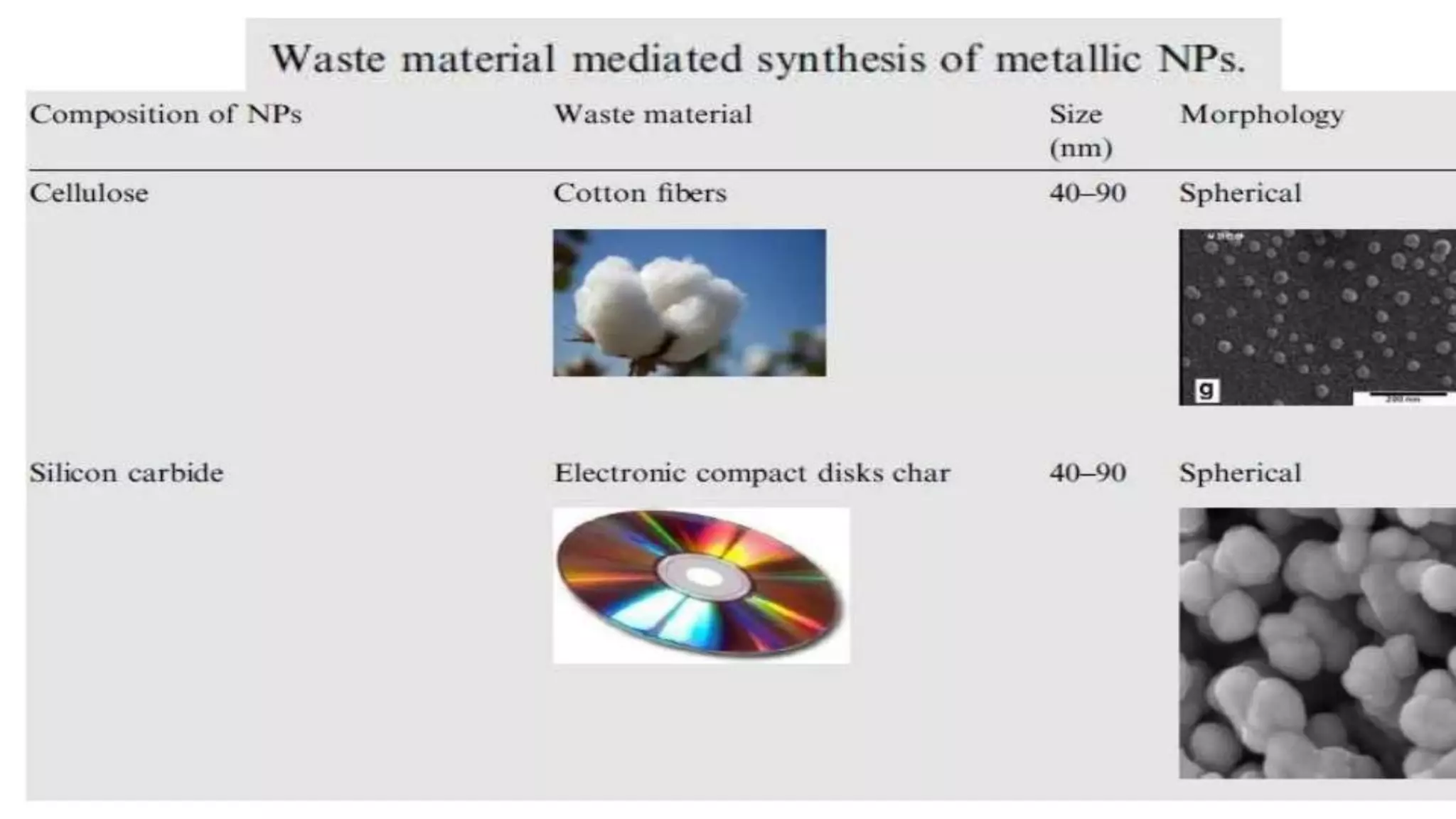
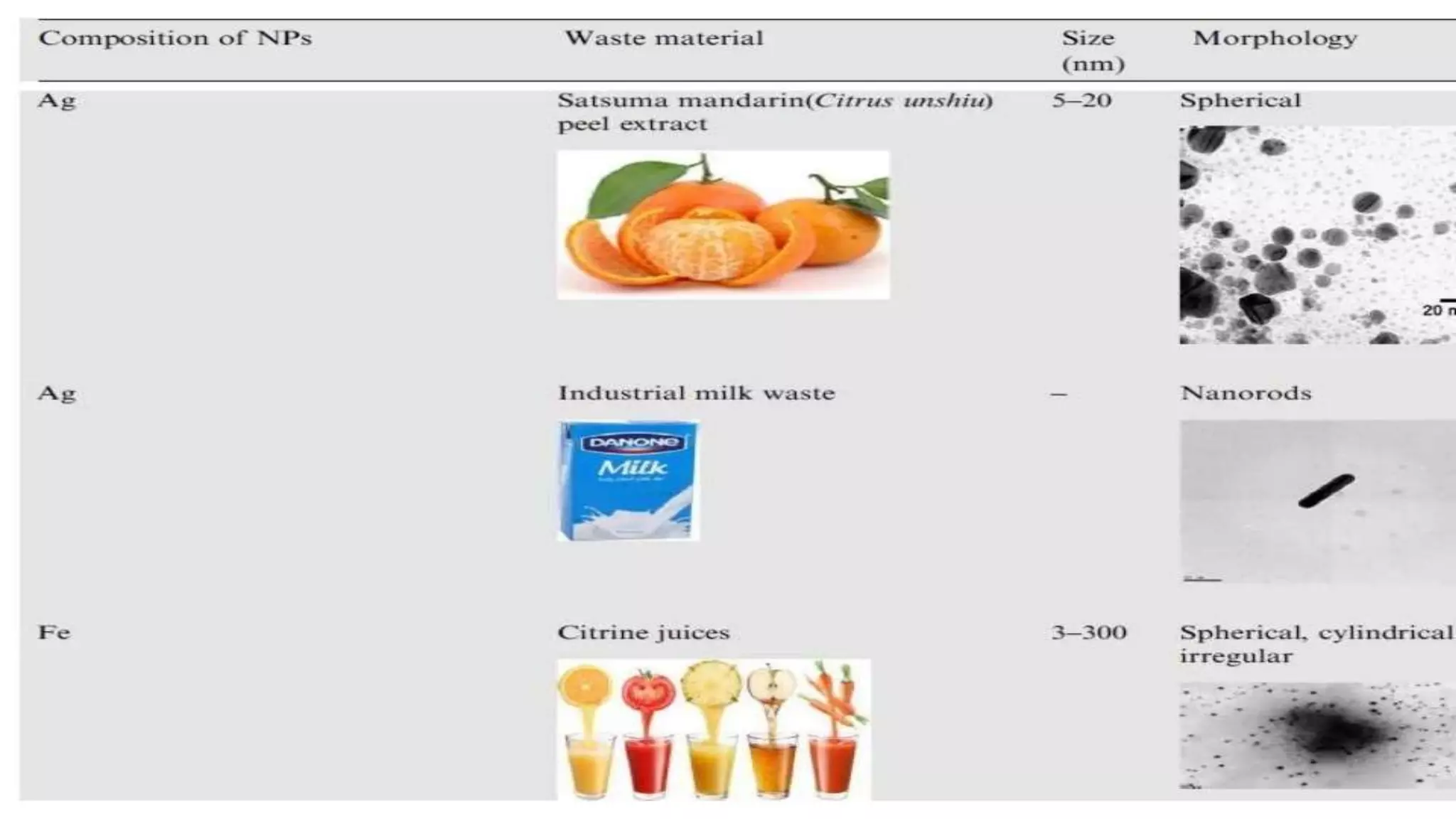
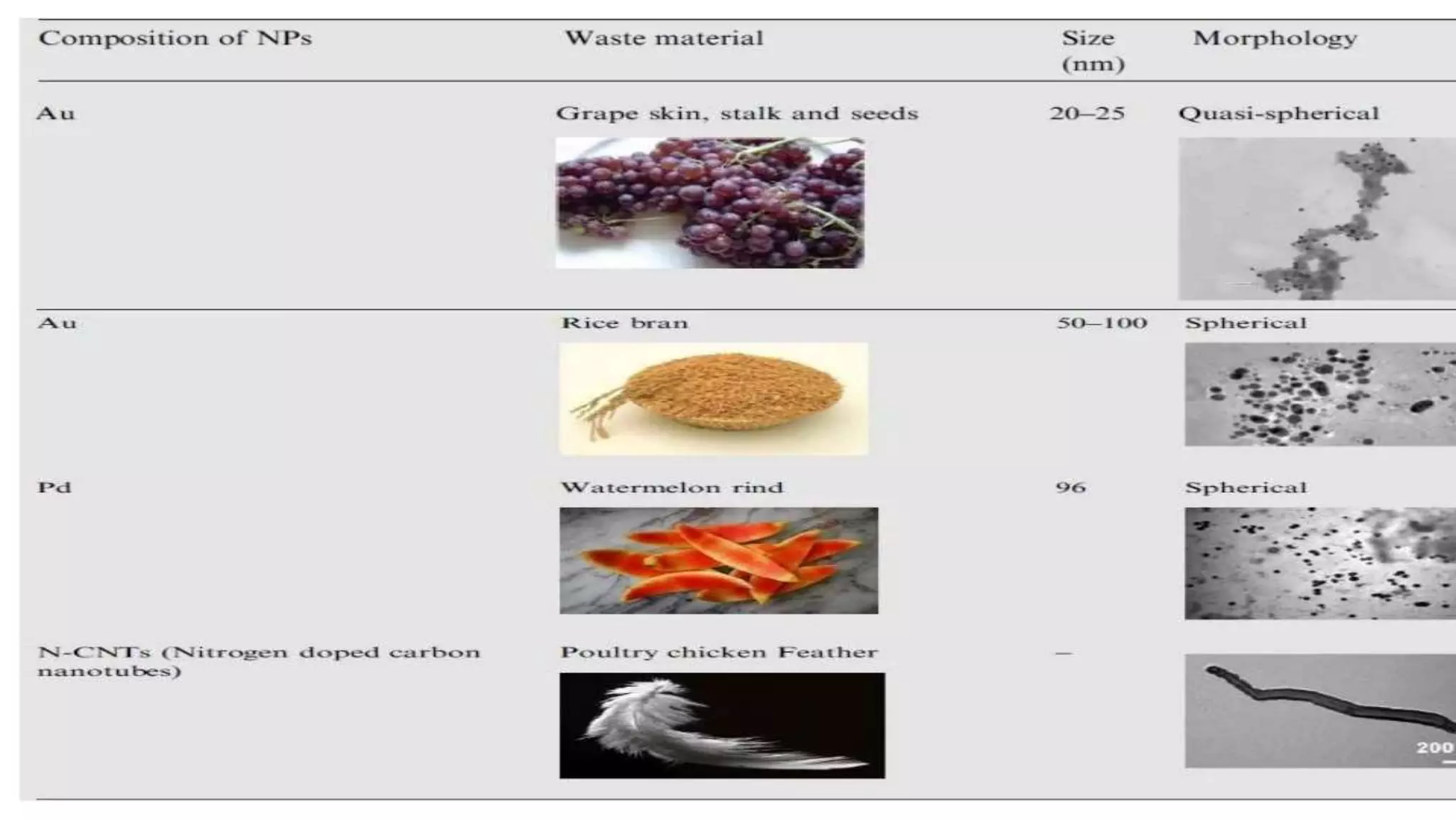
• Synthesis using waste
• Conclusion
• Reference
Nanoparticles are the spearheads of the rapidly expanding field of nanotechnology. An
array of physical and chemical methods is used for the synthesis of nanoparticles. The
development of immaculate protocols for the synthesis of highly monodisperse
nanoparticles of various sizes, geometries and chemical composition is one of the most
challenging obstructions in the field of nanotechnology. The use of toxic chemicals and
non-polar solvents in synthesis leads to the inability to use nanoparticles in clinical fields.
Therefore, development of clean, non-toxic, biocompatible and eco-friendly method for
synthesis of nanoparticles deserves recognition. Silver nanoparticles are of interest
because of the unique properties (e.g., size and shape depending optical, electrical and
magnetic properties) which can be incorporated into antimicrobial applications,
biosensor materials, composite fibers, cryogenic superconducting materials, cosmetic
products, and electronic components. Several physical and chemical methods have
been used for synthesizing and stabilizing silver nanoparticles. The present review
explores the immense plant diversity to be employed towards rapid and single step
protocol preparatory method with green principles over the conventional ones and
describes the antimicrobial activities of silver nanoparticles.
Literature Review
Green Synthesis of Nano Particles

Green Synthesis of Nano Particles

  • 2.
    Content:- • Literature Review •Terminologies • Different approaches • Synthesis Methods • Green Synthesis of Nanomaterials • Biological Methods • Synthesis using Plant Extract • Synthesis using waste • Conclusion • Reference
  • 3.
    Nanoparticles are thespearheads of the rapidly expanding field of nanotechnology. An array of physical and chemical methods is used for the synthesis of nanoparticles. The development of immaculate protocols for the synthesis of highly monodisperse nanoparticles of various sizes, geometries and chemical composition is one of the most challenging obstructions in the field of nanotechnology. The use of toxic chemicals and non-polar solvents in synthesis leads to the inability to use nanoparticles in clinical fields. Therefore, development of clean, non-toxic, biocompatible and eco-friendly method for synthesis of nanoparticles deserves recognition. Silver nanoparticles are of interest because of the unique properties (e.g., size and shape depending optical, electrical and magnetic properties) which can be incorporated into antimicrobial applications, biosensor materials, composite fibers, cryogenic superconducting materials, cosmetic products, and electronic components. Several physical and chemical methods have been used for synthesizing and stabilizing silver nanoparticles. The present review explores the immense plant diversity to be employed towards rapid and single step protocol preparatory method with green principles over the conventional ones and describes the antimicrobial activities of silver nanoparticles. Literature Review