Google algorithm
The Google algorithm refers to the
complex system of rules and
processes that Google uses to
determine the relevance and ranking
of web pages in its search results.
Google's algorithm is designed to
provide users with the most relevant
and high-quality content in response
to their search queries.
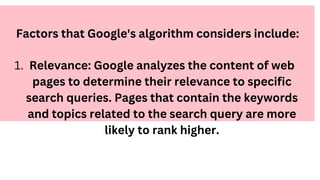
Factors that Google's algorithm considers include:
Relevance: Google analyzes the content of web
pages to determine their relevance to specific
search queries. Pages that contain the keywords
and topics related to the search query are more
likely to rank higher.
1.
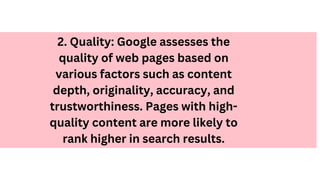
2. Quality: Google assesses the
quality of web pages based on
various factors such as content
depth, originality, accuracy, and
trustworthiness. Pages with high-
quality content are more likely to
rank higher in search results.
3. Authority: Google considers the authority of a web
page based on the number and quality of inbound links
it receives from other websites. Pages with a high
number of authoritative backlinks are considered more
trustworthy and may rank higher in search results.
4. User Experience: Google evaluates the user
experience of web pages, including factors such as
page speed, mobile-friendliness, and usability. Pages
that provide a positive user experience are more
likely to rank higher in search results.
5. Freshness: Google considers the freshness
of content when ranking web pages, especially
for queries related to recent events or topics.
Fresh and up-to-date content may receive a
ranking boost in search results.
conclusion
Google regularly updates its algorithm to improve
search quality and combat spammy or low-quality
content. These updates can have a significant impact on
website rankings, and webmasters and SEO
professionals closely monitor algorithm changes to
adjust their strategies accordingly.

Google algorithim in search engine optimization

  • 1.
  • 2.
    The Google algorithmrefers to the complex system of rules and processes that Google uses to determine the relevance and ranking of web pages in its search results. Google's algorithm is designed to provide users with the most relevant and high-quality content in response to their search queries.
  • 3.
    Factors that Google'salgorithm considers include: Relevance: Google analyzes the content of web pages to determine their relevance to specific search queries. Pages that contain the keywords and topics related to the search query are more likely to rank higher. 1.
  • 4.
    2. Quality: Googleassesses the quality of web pages based on various factors such as content depth, originality, accuracy, and trustworthiness. Pages with high- quality content are more likely to rank higher in search results.
  • 5.
    3. Authority: Googleconsiders the authority of a web page based on the number and quality of inbound links it receives from other websites. Pages with a high number of authoritative backlinks are considered more trustworthy and may rank higher in search results.
  • 6.
    4. User Experience:Google evaluates the user experience of web pages, including factors such as page speed, mobile-friendliness, and usability. Pages that provide a positive user experience are more likely to rank higher in search results.
  • 7.
    5. Freshness: Googleconsiders the freshness of content when ranking web pages, especially for queries related to recent events or topics. Fresh and up-to-date content may receive a ranking boost in search results.
  • 8.
    conclusion Google regularly updatesits algorithm to improve search quality and combat spammy or low-quality content. These updates can have a significant impact on website rankings, and webmasters and SEO professionals closely monitor algorithm changes to adjust their strategies accordingly.