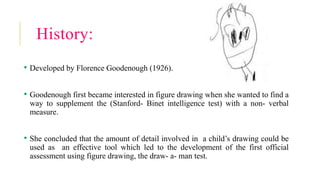
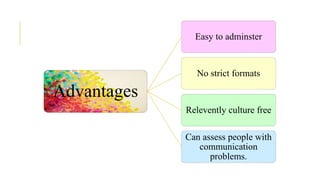
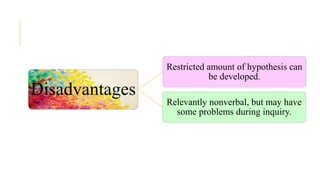
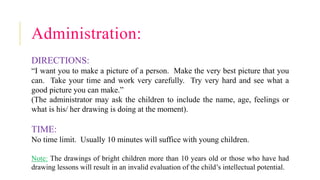
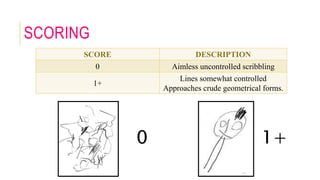
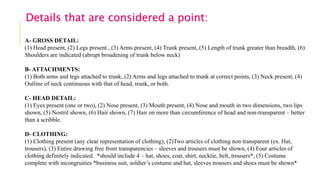
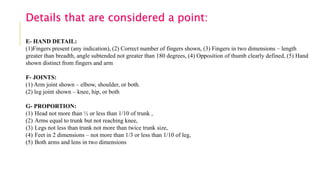
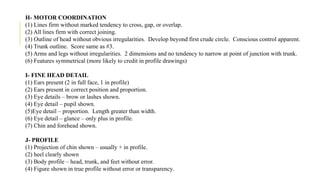
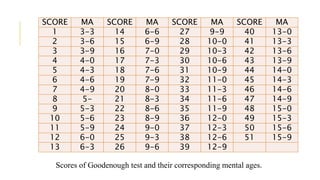
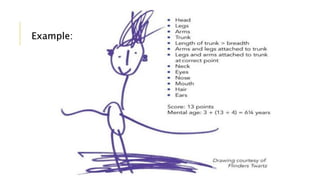
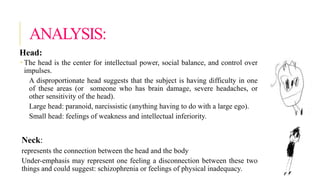
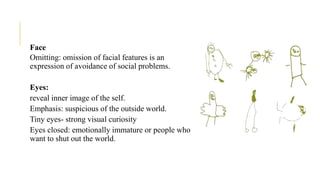
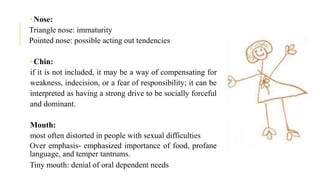
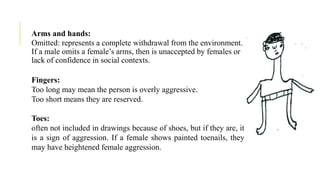
The Goodenough test is a psychological evaluation method used to assess children's nonverbal intelligence and emotional health through their drawings of human figures. Developed by Florence Goodenough in 1926, it involves analyzing details in the drawings to derive insights about the child's cognitive and emotional state. While the test is easy to administer and culturally relevant, it has limitations regarding the depth of hypotheses that can be drawn and may yield invalid results for children with advanced drawing skills.