1. Sustainable Water Management
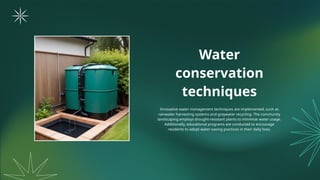
Rainwater Harvesting: Every home is equipped with systems to collect and store rainwater, reducing dependence on external water sources.
Greywater Recycling: Used water from bathrooms and kitchens is treated and reused for flushing and landscape irrigation.
Recharge Pits : This feature help replenish groundwater naturally.
☀️ 2. Renewable Energy Integration
Solar Power: Solar water heaters and solar lighting reduce reliance on grid electricity.
Low Energy Consumption: The architecture promotes natural lighting and ventilation, minimizing the need for artificial cooling or heating.
🧱 3. Eco-Friendly Building Materials
Locally Sourced Materials: Compressed Stabilized Earth Blocks (CSEBs), natural stone, and reclaimed wood are used extensively.
Minimal Embodied Energy: Materials with low environmental cost are preferred to reduce the carbon footprint.
🌳 4. Community-Centric Planning
Shared Green Spaces: Instead of isolated gardens, the community features interconnected courtyards, walking trails, and gathering zones.
No Compound Walls: Homes are connected by pathways and landscaping, encouraging interaction and a sense of belonging.
Car-Free Zones: Vehicular movement is restricted to designated areas, promoting walkability and safety for children.
🥬 5. Food and Organic Living
Kitchen Gardens & Urban Farming: Residents are encouraged to grow their own vegetables and herbs in personal or shared garden patches.
Composting Units: Organic waste is processed into compost and reused for gardening.
🔁 6. Waste Management
Solid Waste Segregation: At source segregation of biodegradable, recyclable, and reject waste.
On-site Composting: Community-managed composting units help convert kitchen waste into manure.


![History and development
Good Earth Malhar Medley was conceptualized in response to growing environmental concerns. Its development
began in [year], focusing on integrating sustainable practices within architectural design. Community-driven
initiatives have played a crucial role in shaping its evolution, aiming for a harmonious balance with nature.](https://image.slidesharecdn.com/goodearthmalharmedley-250406131043-3645a09f/85/Good-Earth-Malhar-Medley-self-sustaining-5-320.jpg)