Global Population Dynamics
The global population is experiencing unprecedented growth, posing significant social, economic, and environmental challenges. This rapid
increase necessitates a comprehensive understanding of its causes and implications to promote sustainable development and effective resource
management. Addressing these challenges is crucial for ensuring a balanced future.
Current Population Trends
Global Population Surge
The world population surpassed 8 billion in
2022, driven by improved healthcare and
living conditions.
Regional Disparities
Countries in Africa and Asia see the highest
increases, while many Western nations face
stagnation or decline.
Urbanization
Over half the world's population now lives
in urban areas, leading to increased
demand for housing and infrastructure.
Causes of Population Increase
Declining Mortality Rates
Advances in medicine and public
health have significantly reduced
mortality rates.
1
2
Fertility Rates
High fertility rates in regions like sub-
Saharan Africa drive population increases.
3
Migration
Economic opportunities and conflicts lead
to migration, influencing population
dynamics.
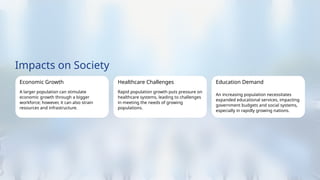
Impacts on Society
Economic Growth
A larger population can stimulate
economic growth through a bigger
workforce; however, it can also strain
resources and infrastructure.
Healthcare Challenges
Rapid population growth puts pressure on
healthcare systems, leading to challenges
in meeting the needs of growing
populations.
Education Demand
An increasing population necessitates
expanded educational services, impacting
government budgets and social systems,
especially in rapidly growing nations.
Environmental Consequences
1 Resource Depletion
Higher populations increase demand for essential resources such as water, food, and energy, leading to unsustainable exploitation.
2 Climate Change
Population growth contributes to higher greenhouse gas emissions, intensifying climate change effects and necessitating urgent action
for mitigation.
3 Biodiversity Loss
Expanding human populations lead to habitat destruction and biodiversity loss, disrupting ecosystems and threatening species survival.
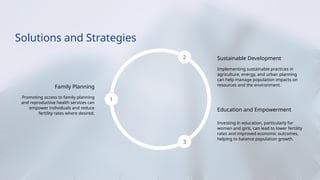
Solutions and Strategies
Family Planning
Promoting access to family planning
and reproductive health services can
empower individuals and reduce
fertility rates where desired.
1
2 Sustainable Development
Implementing sustainable practices in
agriculture, energy, and urban planning
can help manage population impacts on
resources and the environment.
3
Education and Empowerment
Investing in education, particularly for
women and girls, can lead to lower fertility
rates and improved economic outcomes,
helping to balance population growth.
Future Projections
Population Stabilization
Projections indicate that global population
growth may stabilize by 2100, depending
on fertility rate trends and socioeconomic
development.
Aging Populations
Many countries will face challenges
associated with aging populations,
requiring adjustments in healthcare,
pensions, and workforce policies.
Technological Innovations
Advances in technology may play a crucial
role in managing the impacts of population
growth, particularly in agriculture and
energy efficiency.
Conclusion on Population Increase Challenges
Global Collaboration
Working together to tackle
the challenges
Sustainable Practices
Implementing eco-friendly
methods for resource use
Education Focus
Enhancing awareness and
understanding of population
dynamics
Resource Management
Efficiently using resources to
support growing populations

Global Population Dynamics.pptx hello........

  • 1.
    Global Population Dynamics Theglobal population is experiencing unprecedented growth, posing significant social, economic, and environmental challenges. This rapid increase necessitates a comprehensive understanding of its causes and implications to promote sustainable development and effective resource management. Addressing these challenges is crucial for ensuring a balanced future.
  • 2.
    Current Population Trends GlobalPopulation Surge The world population surpassed 8 billion in 2022, driven by improved healthcare and living conditions. Regional Disparities Countries in Africa and Asia see the highest increases, while many Western nations face stagnation or decline. Urbanization Over half the world's population now lives in urban areas, leading to increased demand for housing and infrastructure.
  • 3.
    Causes of PopulationIncrease Declining Mortality Rates Advances in medicine and public health have significantly reduced mortality rates. 1 2 Fertility Rates High fertility rates in regions like sub- Saharan Africa drive population increases. 3 Migration Economic opportunities and conflicts lead to migration, influencing population dynamics.
  • 4.
    Impacts on Society EconomicGrowth A larger population can stimulate economic growth through a bigger workforce; however, it can also strain resources and infrastructure. Healthcare Challenges Rapid population growth puts pressure on healthcare systems, leading to challenges in meeting the needs of growing populations. Education Demand An increasing population necessitates expanded educational services, impacting government budgets and social systems, especially in rapidly growing nations.
  • 5.
    Environmental Consequences 1 ResourceDepletion Higher populations increase demand for essential resources such as water, food, and energy, leading to unsustainable exploitation. 2 Climate Change Population growth contributes to higher greenhouse gas emissions, intensifying climate change effects and necessitating urgent action for mitigation. 3 Biodiversity Loss Expanding human populations lead to habitat destruction and biodiversity loss, disrupting ecosystems and threatening species survival.
  • 6.
    Solutions and Strategies FamilyPlanning Promoting access to family planning and reproductive health services can empower individuals and reduce fertility rates where desired. 1 2 Sustainable Development Implementing sustainable practices in agriculture, energy, and urban planning can help manage population impacts on resources and the environment. 3 Education and Empowerment Investing in education, particularly for women and girls, can lead to lower fertility rates and improved economic outcomes, helping to balance population growth.
  • 7.
    Future Projections Population Stabilization Projectionsindicate that global population growth may stabilize by 2100, depending on fertility rate trends and socioeconomic development. Aging Populations Many countries will face challenges associated with aging populations, requiring adjustments in healthcare, pensions, and workforce policies. Technological Innovations Advances in technology may play a crucial role in managing the impacts of population growth, particularly in agriculture and energy efficiency.
  • 8.
    Conclusion on PopulationIncrease Challenges Global Collaboration Working together to tackle the challenges Sustainable Practices Implementing eco-friendly methods for resource use Education Focus Enhancing awareness and understanding of population dynamics Resource Management Efficiently using resources to support growing populations