Getting a BOLD Edge:
Student Readiness for
Learning in a Digital World
Professor Mark Brown
National Institute for Digital Learning
Dublin City University
13th April 2022
[ Blended | On-line | Digital ]
B O L D
@mbrownz
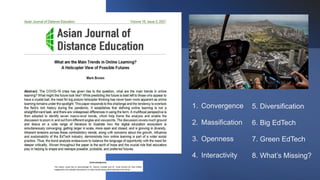
1. Convergence
2. Massification
3. Openness
4. Interactivity
5. Diversification
6. Big EdTech
7. Green EdTech
8. What’s Missing?
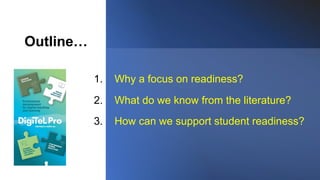
Outline…
1. Why a focus on readiness?
2. What do we know from the literature?
3. How can we support student readiness?
Photo by Hadija Saidi on Unsplash
1. Why a focus on readiness?
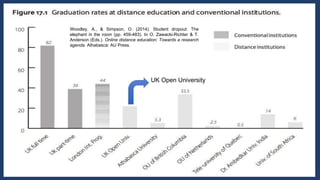
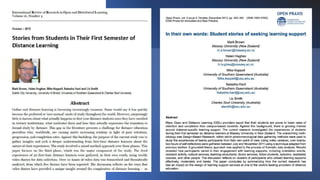
Woodley, A., & Simpson, O. (2014). Student dropout: The
elephant in the room (pp. 459-483). In O. Zawacki-Richter & T.
Anderson (Eds.). Online distance education: Towards a research
agenda. Athabasca: AU Press.
UK Open University
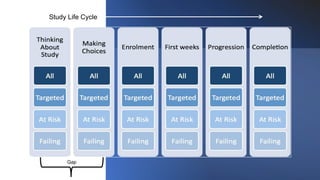
Study Life Cycle
Gap
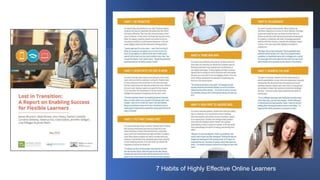
7 Habits of Highly Effective Online Learners
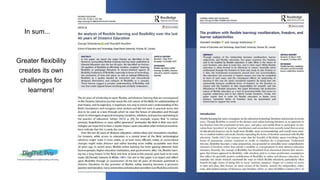
Greater flexibility
creates its own
challenges for
learners!
In sum...
Photo by Hadija Saidi on Unsplash
2012
2. What do we know from the literature?
First conceived in 1998 by Warner, Christie, and Choy.
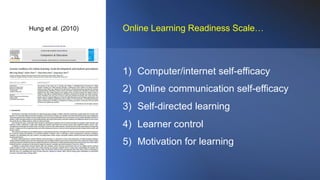
Hung et al. (2010)
1) Computer/internet self-efficacy
2) Online communication self-efficacy
3) Self-directed learning
4) Learner control
5) Motivation for learning
Online Learning Readiness Scale…
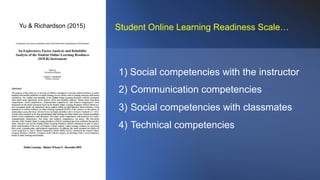
Yu & Richardson (2015)
1) Social competencies with the instructor
2) Communication competencies
3) Social competencies with classmates
4) Technical competencies
Student Online Learning Readiness Scale…
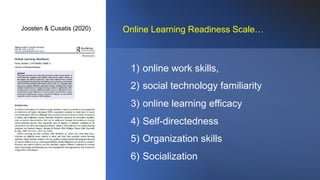
Joosten & Cusatis (2020)
1) online work skills,
2) social technology familiarity
3) online learning efficacy
4) Self-directedness
5) Organization skills
6) Socialization
Online Learning Readiness Scale…
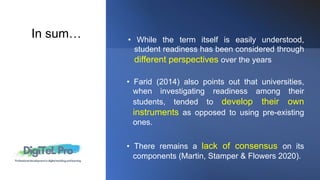
• Farid (2014) also points out that universities,
when investigating readiness among their
students, tended to develop their own
instruments as opposed to using pre-existing
ones.
• There remains a lack of consensus on its
components (Martin, Stamper & Flowers 2020).
• While the term itself is easily understood,
student readiness has been considered through
different perspectives over the years
In sum…
2012
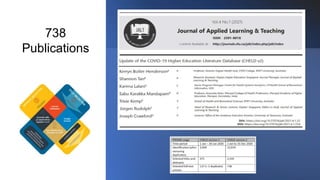
738
Publications
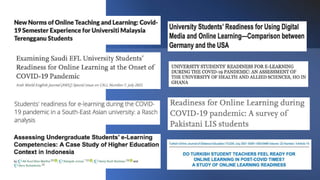
1. What research has been published
reporting student readiness for online
distance learning during the COVID
crisis?
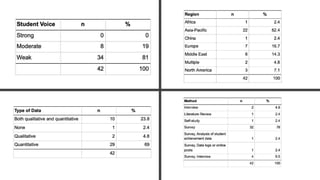
2. How strong is the “learner voice” in
COVID-related research reporting on
student readiness for online distance
learning?
3. What lessons can be taken from the
COVID-related literature on student
readiness for new models of digital
education?
Research
questions
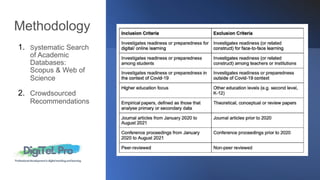
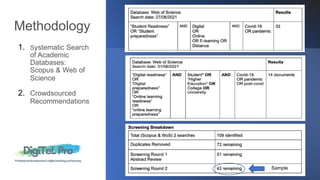
Methodology
1. Systematic Search
of Academic
Databases:
Scopus & Web of
Science
2. Crowdsourced
Recommendations
Methodology
1. Systematic Search
of Academic
Databases:
Scopus & Web of
Science
2. Crowdsourced
Recommendations
Sample
Hybrid
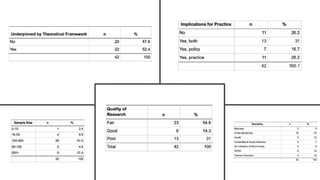
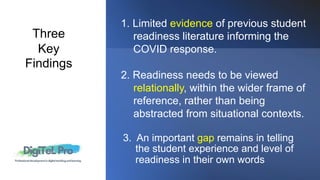
1. Limited evidence of previous student
readiness literature informing the
COVID response.
3. An important gap remains in telling
the student experience and level of
readiness in their own words
Three
Key
Findings
2. Readiness needs to be viewed
relationally, within the wider frame of
reference, rather than being
abstracted from situational contexts.
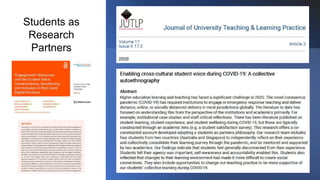
Students as
Research
Partners
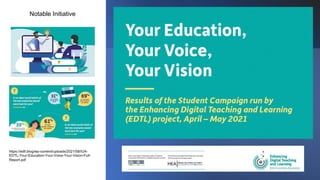
https://edtl.blog/wp-content/uploads/2021/08/IUA-
EDTL-Your-Education-Your-Voice-Your-Vision-Full-
Report.pdf
Notable Initiative
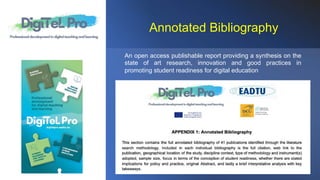
Annotated Bibliography
An open access publishable report providing a synthesis on the
state of art research, innovation and good practices in
promoting student readiness for digital education
Photo by Hadija Saidi on Unsplash
2012
3. How can we support student
readiness?
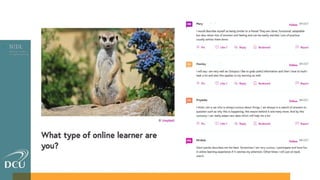
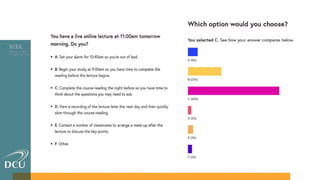
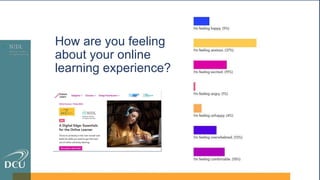
How are you feeling
about your online
learning experience?
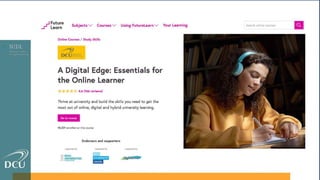
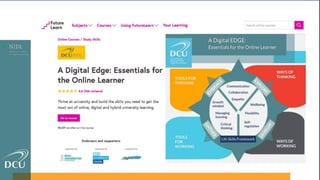
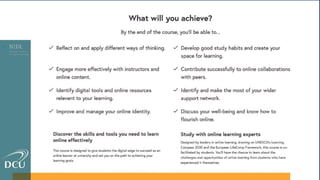
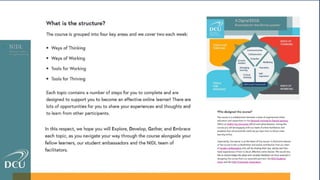
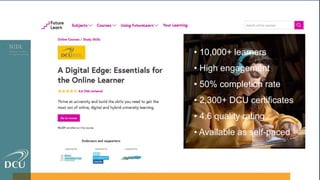
• 10,000+ learners
• High engagement
• 50% completion rate
• 2,300+ DCU certificates
• 4.6 quality rating
• Available as self-paced
Conclusion
Conclusion
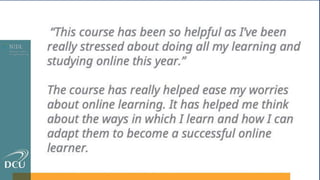
Students are absolutely central to
the learning design process and
their ‘voice’ and ‘readiness needs
to be woven throughout the fabric
of the way you go about
developing, delivering and
evaluating BOLD courses.
Go raibh maith
agaibh!
Thank you
Photo by Hadija Saidi on Unsplash

Getting a BOLD Edge: Student Readiness for Learning in a Digital World

  • 1.
    Getting a BOLDEdge: Student Readiness for Learning in a Digital World Professor Mark Brown National Institute for Digital Learning Dublin City University 13th April 2022
  • 2.
    [ Blended |On-line | Digital ] B O L D
  • 3.
  • 5.
    1. Convergence 2. Massification 3.Openness 4. Interactivity 5. Diversification 6. Big EdTech 7. Green EdTech 8. What’s Missing?
  • 6.
    Outline… 1. Why afocus on readiness? 2. What do we know from the literature? 3. How can we support student readiness?
  • 7.
    Photo by HadijaSaidi on Unsplash
  • 8.
    1. Why afocus on readiness?
  • 11.
    Woodley, A., &Simpson, O. (2014). Student dropout: The elephant in the room (pp. 459-483). In O. Zawacki-Richter & T. Anderson (Eds.). Online distance education: Towards a research agenda. Athabasca: AU Press. UK Open University
  • 14.
  • 16.
    7 Habits ofHighly Effective Online Learners
  • 17.
    Greater flexibility creates itsown challenges for learners! In sum...
  • 18.
    Photo by HadijaSaidi on Unsplash
  • 19.
    2012 2. What dowe know from the literature? First conceived in 1998 by Warner, Christie, and Choy.
  • 20.
    Hung et al.(2010) 1) Computer/internet self-efficacy 2) Online communication self-efficacy 3) Self-directed learning 4) Learner control 5) Motivation for learning Online Learning Readiness Scale…
  • 21.
    Yu & Richardson(2015) 1) Social competencies with the instructor 2) Communication competencies 3) Social competencies with classmates 4) Technical competencies Student Online Learning Readiness Scale…
  • 22.
    Joosten & Cusatis(2020) 1) online work skills, 2) social technology familiarity 3) online learning efficacy 4) Self-directedness 5) Organization skills 6) Socialization Online Learning Readiness Scale…
  • 23.
    • Farid (2014)also points out that universities, when investigating readiness among their students, tended to develop their own instruments as opposed to using pre-existing ones. • There remains a lack of consensus on its components (Martin, Stamper & Flowers 2020). • While the term itself is easily understood, student readiness has been considered through different perspectives over the years In sum…
  • 24.
  • 25.
    1. What researchhas been published reporting student readiness for online distance learning during the COVID crisis? 2. How strong is the “learner voice” in COVID-related research reporting on student readiness for online distance learning? 3. What lessons can be taken from the COVID-related literature on student readiness for new models of digital education? Research questions
  • 26.
    Methodology 1. Systematic Search ofAcademic Databases: Scopus & Web of Science 2. Crowdsourced Recommendations
  • 27.
    Methodology 1. Systematic Search ofAcademic Databases: Scopus & Web of Science 2. Crowdsourced Recommendations Sample
  • 31.
    Hybrid 1. Limited evidenceof previous student readiness literature informing the COVID response. 3. An important gap remains in telling the student experience and level of readiness in their own words Three Key Findings 2. Readiness needs to be viewed relationally, within the wider frame of reference, rather than being abstracted from situational contexts.
  • 32.
  • 33.
  • 34.
    Annotated Bibliography An openaccess publishable report providing a synthesis on the state of art research, innovation and good practices in promoting student readiness for digital education
  • 35.
    Photo by HadijaSaidi on Unsplash
  • 36.
    2012 3. How canwe support student readiness?
  • 41.
    How are youfeeling about your online learning experience?
  • 45.
    • 10,000+ learners •High engagement • 50% completion rate • 2,300+ DCU certificates • 4.6 quality rating • Available as self-paced
  • 46.
  • 47.
    Conclusion Students are absolutelycentral to the learning design process and their ‘voice’ and ‘readiness needs to be woven throughout the fabric of the way you go about developing, delivering and evaluating BOLD courses.
  • 49.
  • 50.
    Photo by HadijaSaidi on Unsplash