JAI HIND
Virendra Kumar Maurya
Assistant Professor
CAEHS COLLEGE ,MEERUT
Course – BMRIT 1st
sem
Subject- Applied Physics
Topic- Germanium and silicon diodes
• Germanium Diodes and Silicon Diodes are
two types of semiconductor diodes, primarily
distinguished by the materials used to
manufacture them. Here's a short
comparison:
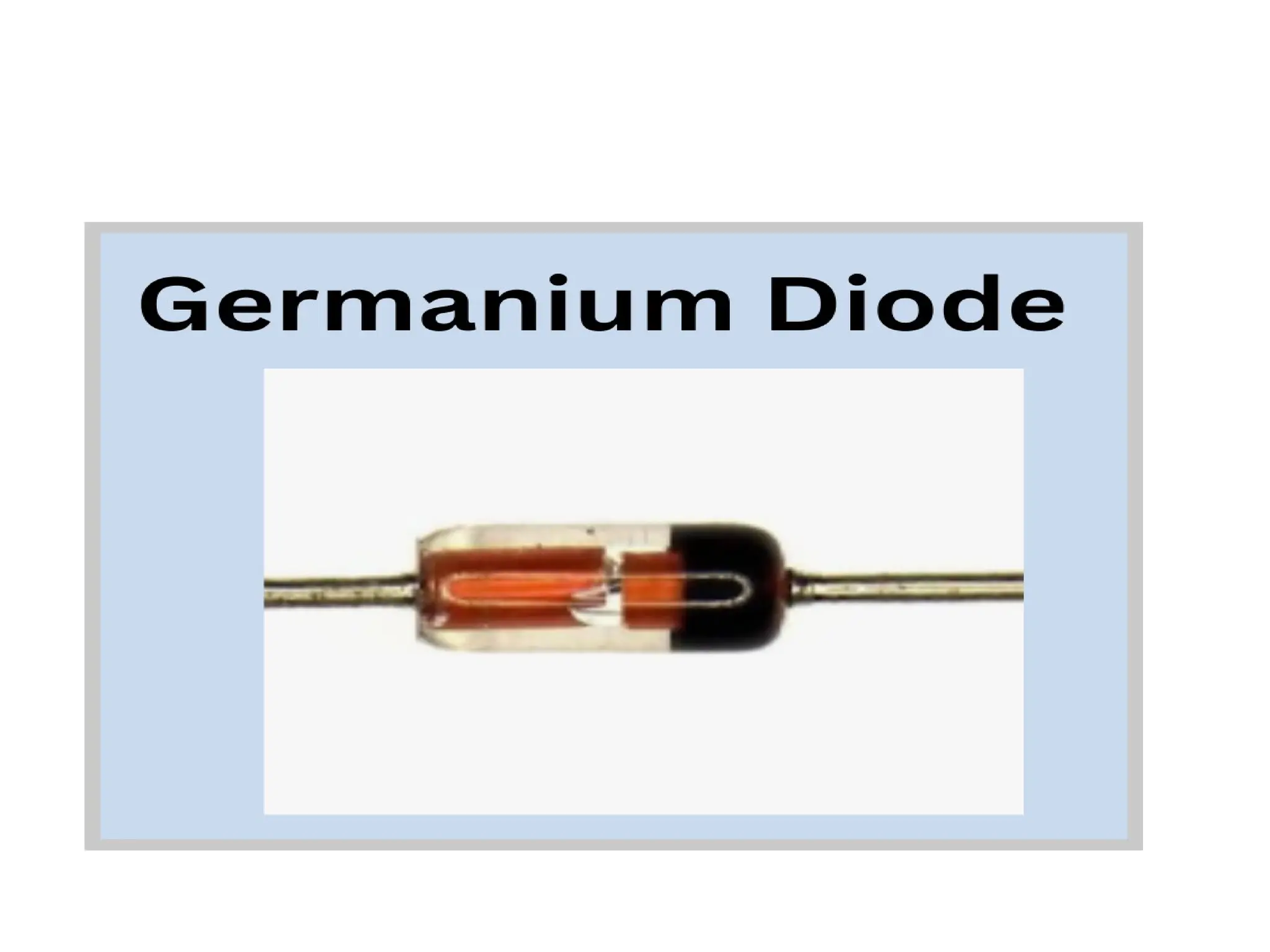
Germanium Diodes
• Material: Made from germanium (Ge), a semiconductor
element.
• Forward Voltage Drop: Lower forward voltage drop (around
0.3V), which makes them efficient in low-voltage applications.
• Speed: Faster response time, ideal for high-frequency
applications.
• Temperature Sensitivity: More sensitive to temperature
changes, leading to performance degradation at higher
temperatures.
• Usage: Commonly used in low-voltage and low-power
applications like early radios and audio equipment.
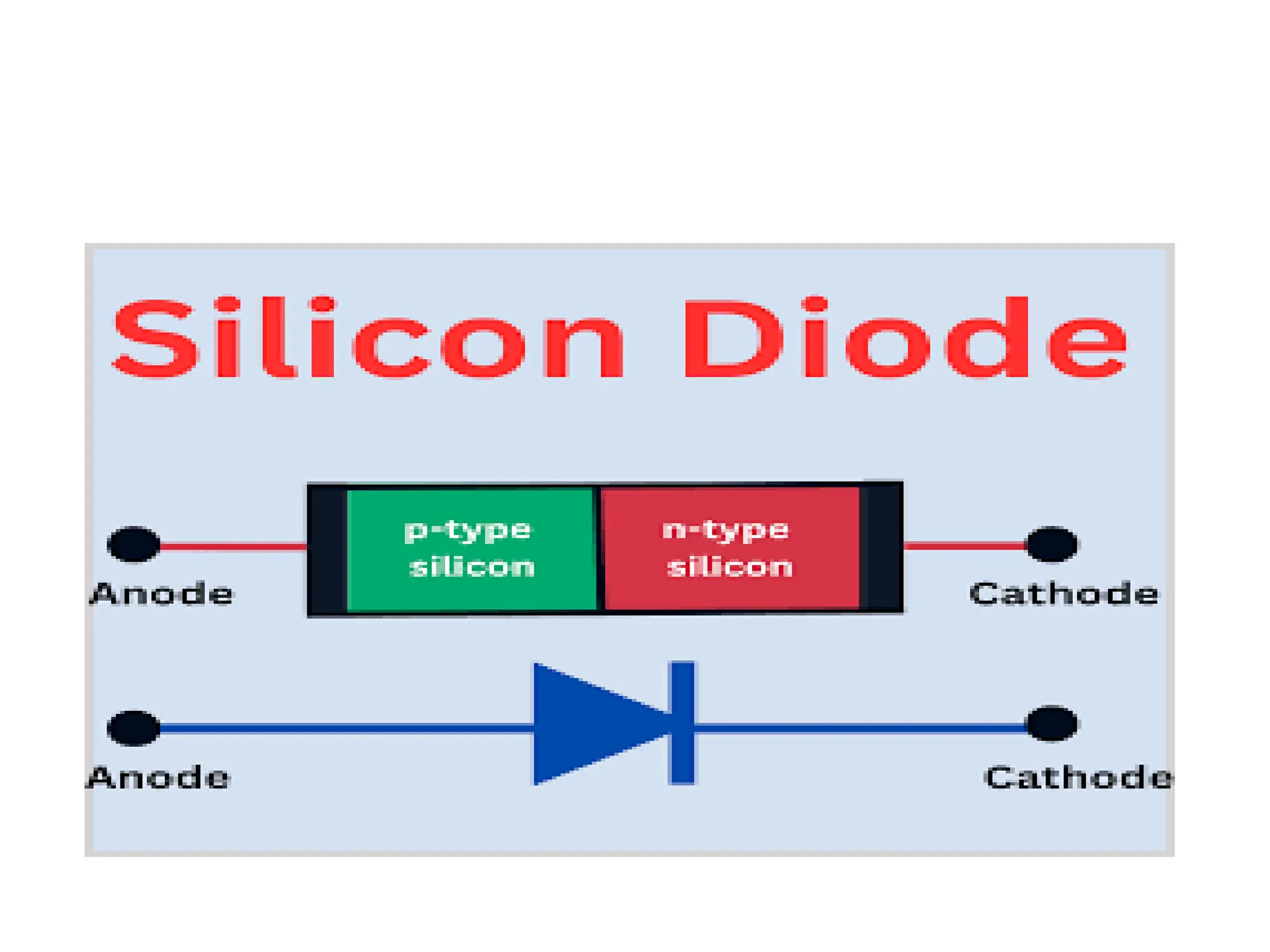
Silicon Diodes
• Material: Made from silicon (Si), the most widely used
semiconductor material.
• Forward Voltage Drop: Higher forward voltage drop (around
0.7V), which makes them suitable for general-purpose use in
higher voltage circuits.
• Speed: Slower response than germanium diodes but still suitable
for most common applications.
• Temperature Stability: More stable at higher temperatures,
making them reliable in a wider range of conditions.
• Usage: Used extensively in power rectification, signal processing,
and most modern electronic devices due to their robustness and
availability.
• Voltage Drop: Germanium (0.3V) vs. Silicon
(0.7V)
• Temperature Sensitivity: Germanium is more
sensitive; Silicon is more stable.
• Cost: Germanium diodes are generally more
expensive than silicon.
• Applications: Germanium for low-voltage, high-
speed applications; Silicon for general-purpose
use and power electronics.
Thanks

Germanium and silicon diodes With images

  • 1.
    JAI HIND Virendra KumarMaurya Assistant Professor CAEHS COLLEGE ,MEERUT Course – BMRIT 1st sem Subject- Applied Physics Topic- Germanium and silicon diodes
  • 2.
    • Germanium Diodesand Silicon Diodes are two types of semiconductor diodes, primarily distinguished by the materials used to manufacture them. Here's a short comparison:
  • 3.
    Germanium Diodes • Material:Made from germanium (Ge), a semiconductor element. • Forward Voltage Drop: Lower forward voltage drop (around 0.3V), which makes them efficient in low-voltage applications. • Speed: Faster response time, ideal for high-frequency applications. • Temperature Sensitivity: More sensitive to temperature changes, leading to performance degradation at higher temperatures. • Usage: Commonly used in low-voltage and low-power applications like early radios and audio equipment.
  • 5.
    Silicon Diodes • Material:Made from silicon (Si), the most widely used semiconductor material. • Forward Voltage Drop: Higher forward voltage drop (around 0.7V), which makes them suitable for general-purpose use in higher voltage circuits. • Speed: Slower response than germanium diodes but still suitable for most common applications. • Temperature Stability: More stable at higher temperatures, making them reliable in a wider range of conditions. • Usage: Used extensively in power rectification, signal processing, and most modern electronic devices due to their robustness and availability.
  • 7.
    • Voltage Drop:Germanium (0.3V) vs. Silicon (0.7V) • Temperature Sensitivity: Germanium is more sensitive; Silicon is more stable. • Cost: Germanium diodes are generally more expensive than silicon. • Applications: Germanium for low-voltage, high- speed applications; Silicon for general-purpose use and power electronics.
  • 8.