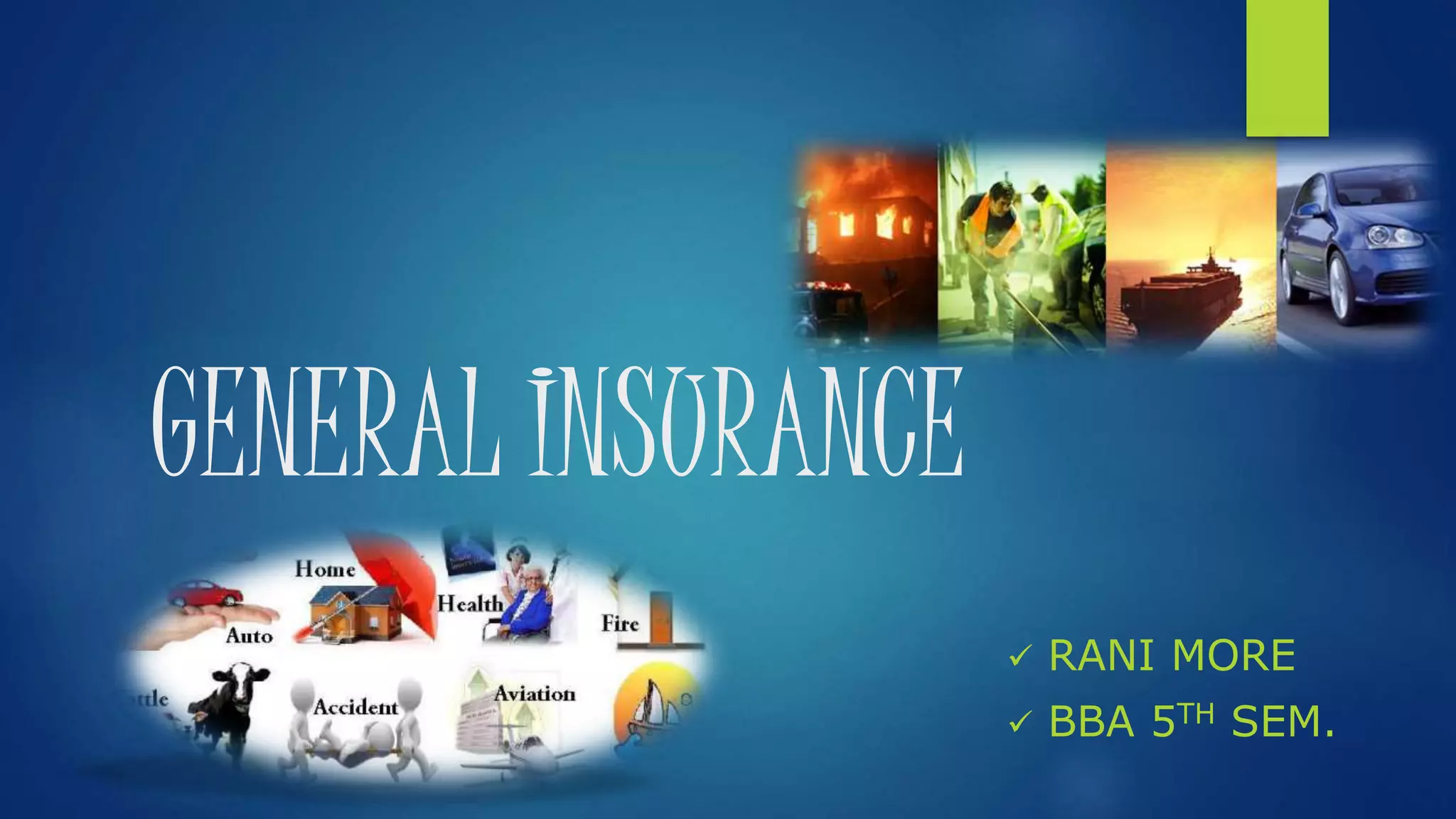
GENERAL INSURANCE
 RANI MORE
 BBA 5TH SEM.
Insurance
Insurance is defined as the equitable
transfer of the risk of a loss, from one
entity to another, in exchange for a
premium, and can be thought of a
guaranteed small loss to prevent a
large, possibly devastating loss.
Principles of Insurance
Utmost Good Faith,
Insurable Interest,
Principle of Indemnity,
Principle of Contribution,
Principle of Subrogation,
Principle of Loss Minimization,
Principle of ‘CAUSA PROXIMA’
General Insurance
 General insurance or non-life insurance policies, including
automobile and homeowners policies, provide payments
depending on the loss from a particular financial event.
 Insurance that is not determined to be Life Insurance.
 U.S. and Canada= Property and Casualty Insurance &
Continental Europe= Non-Life Insurance
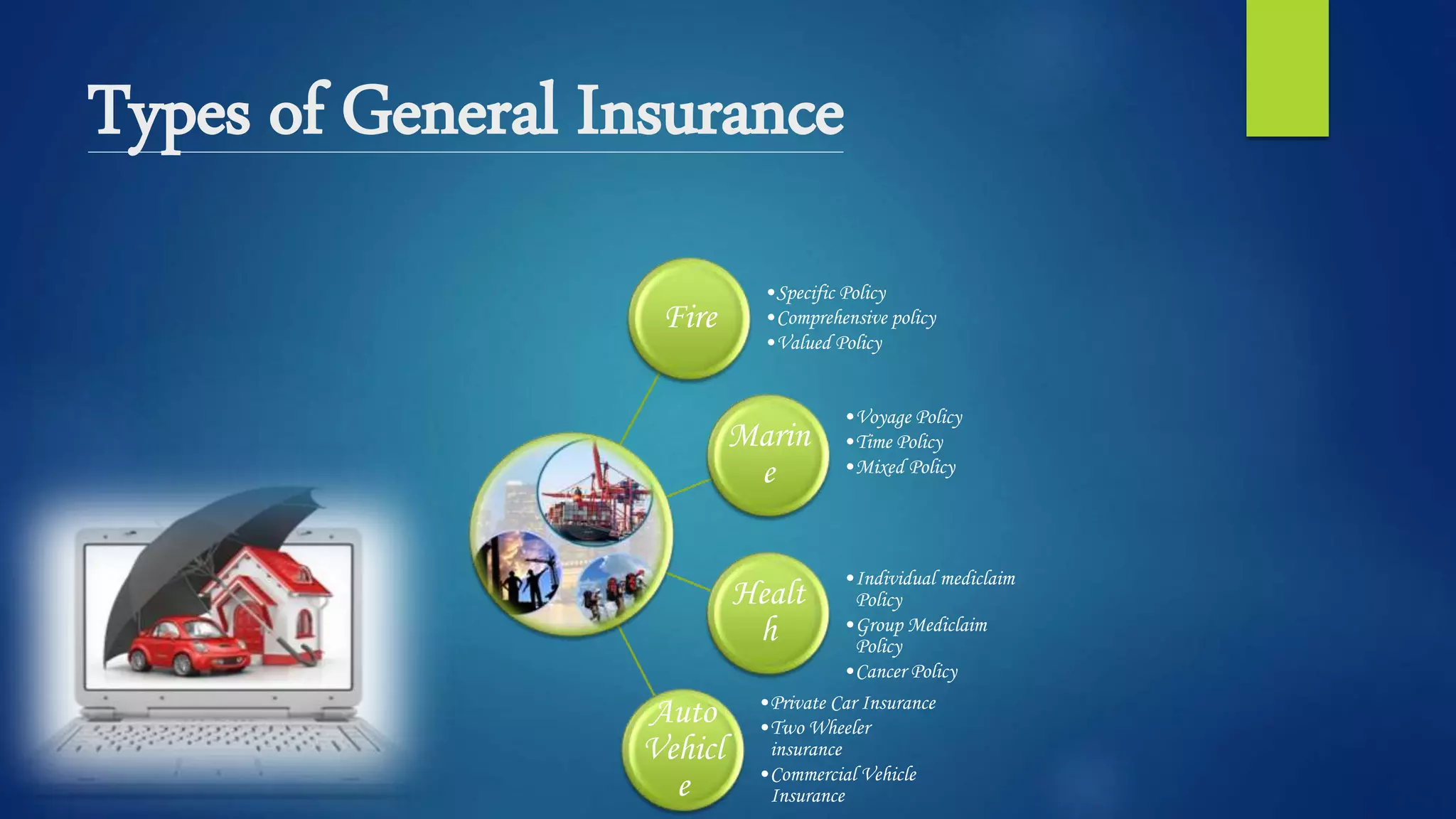
Types of General Insurance
Fire
•Specific Policy
•Comprehensive policy
•Valued Policy
Marin
e
•Voyage Policy
•Time Policy
•Mixed Policy
Healt
h
•Individual mediclaim
Policy
•Group Mediclaim
Policy
•Cancer Policy
Auto
Vehicl
e
•Private Car Insurance
•Two Wheeler
insurance
•Commercial Vehicle
Insurance
Fire Insurance
Fire Insurance is a cover against the risk of loss of
property due to fire accident.
When a structure is covered by fire insurance, the
insurance policy will pay out in the event that the
structure is damaged or destroyed by fire.
Health Insurance
Health Insurance covers all medical expenses
following hospitalized from sudden illness or
expenses from any kind of accident.
It’s an insurance against loss by illness or bodily
injury.
Marine Insurance
Coverage against loss of or damage to a
ship; and in-transit cargo loss or damage
over waterways.
Auto Insurance
Auto Insurance (also known as vehicle insurance,
car insurance, or motor insurance) is insurance
purchased for cars, trucks, and other vehicles. Its
primary use is to provide protection against losses
incurred as a result of traffic accidents and against
liability that could be incurred in an accident.
GENERAL INSURANCE

GENERAL INSURANCE

  • 1.
    GENERAL INSURANCE  RANIMORE  BBA 5TH SEM.
  • 2.
    Insurance Insurance is definedas the equitable transfer of the risk of a loss, from one entity to another, in exchange for a premium, and can be thought of a guaranteed small loss to prevent a large, possibly devastating loss.
  • 3.
    Principles of Insurance UtmostGood Faith, Insurable Interest, Principle of Indemnity, Principle of Contribution, Principle of Subrogation, Principle of Loss Minimization, Principle of ‘CAUSA PROXIMA’
  • 4.
    General Insurance  Generalinsurance or non-life insurance policies, including automobile and homeowners policies, provide payments depending on the loss from a particular financial event.  Insurance that is not determined to be Life Insurance.  U.S. and Canada= Property and Casualty Insurance & Continental Europe= Non-Life Insurance
  • 5.
    Types of GeneralInsurance Fire •Specific Policy •Comprehensive policy •Valued Policy Marin e •Voyage Policy •Time Policy •Mixed Policy Healt h •Individual mediclaim Policy •Group Mediclaim Policy •Cancer Policy Auto Vehicl e •Private Car Insurance •Two Wheeler insurance •Commercial Vehicle Insurance
  • 6.
    Fire Insurance Fire Insuranceis a cover against the risk of loss of property due to fire accident. When a structure is covered by fire insurance, the insurance policy will pay out in the event that the structure is damaged or destroyed by fire.
  • 7.
    Health Insurance Health Insurancecovers all medical expenses following hospitalized from sudden illness or expenses from any kind of accident. It’s an insurance against loss by illness or bodily injury.
  • 8.
    Marine Insurance Coverage againstloss of or damage to a ship; and in-transit cargo loss or damage over waterways.
  • 9.
    Auto Insurance Auto Insurance(also known as vehicle insurance, car insurance, or motor insurance) is insurance purchased for cars, trucks, and other vehicles. Its primary use is to provide protection against losses incurred as a result of traffic accidents and against liability that could be incurred in an accident.