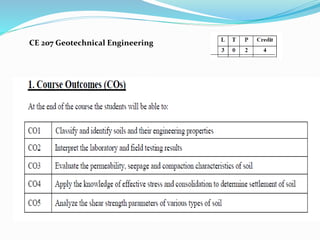
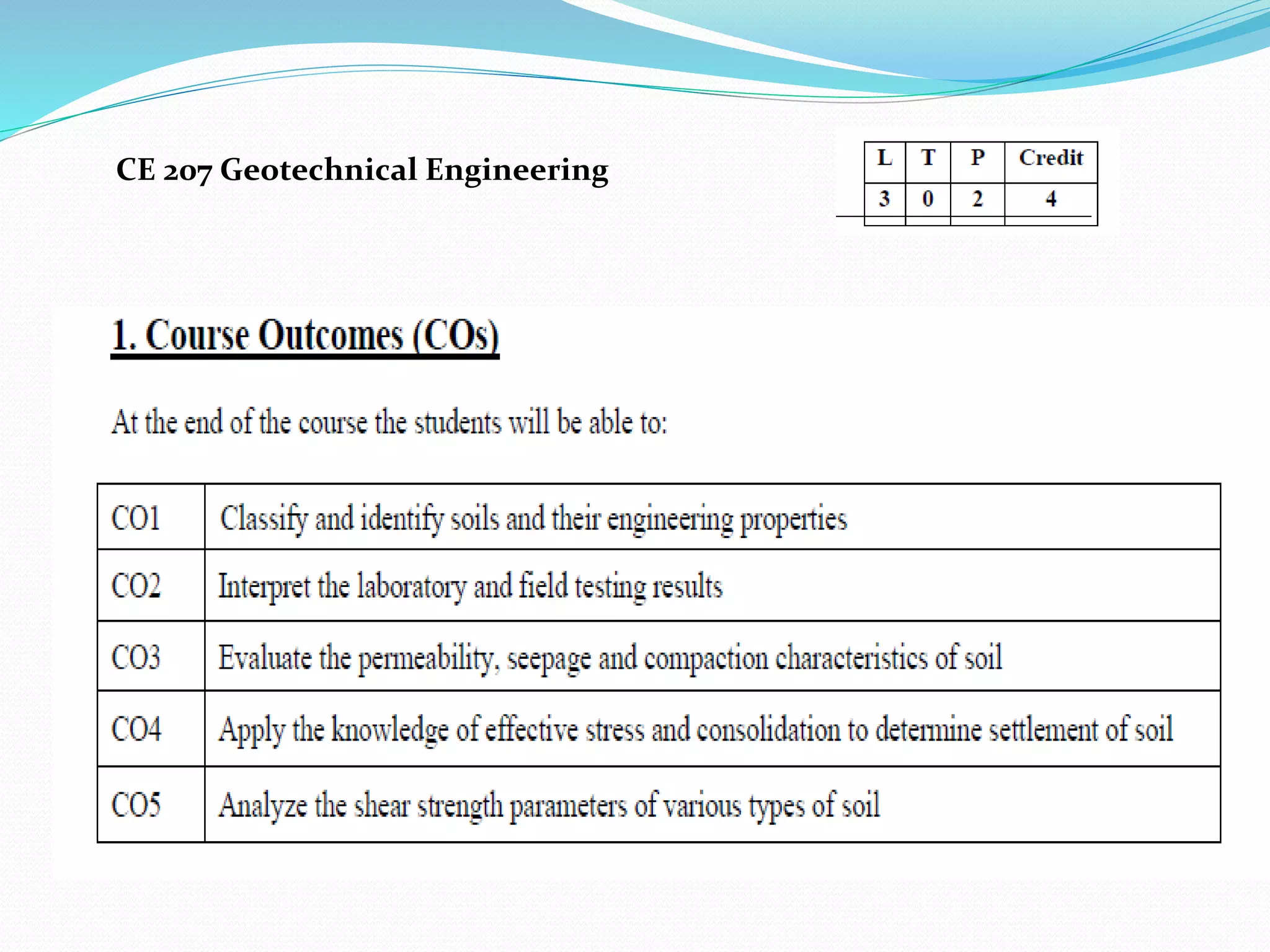
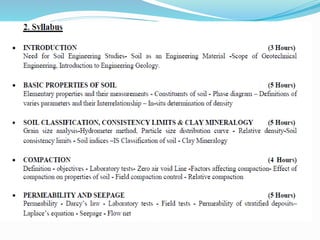
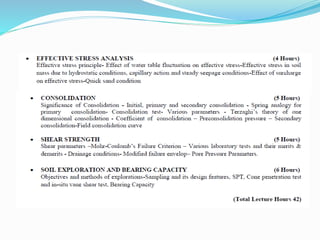
CE 207 Geotechnical Engineering
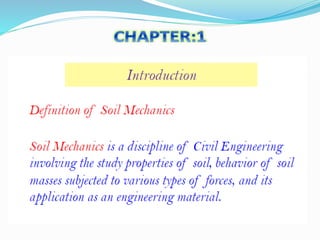
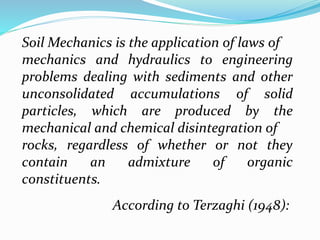
Soil Mechanics is the application of laws of
mechanics and hydraulics to engineering
problems dealing with sediments and other
unconsolidated accumulations of solid
particles, which are produced by the
mechanical and chemical disintegration of
rocks, regardless of whether or not they
contain an admixture of organic
constituents.
According to Terzaghi (1948):
1. Foundation to support Structures and
Embankments
2. Construction Material
3. Slopes and Landslides
4. Earth Retaining Structures
5. Special Problems Various reasons to study
the properties of Soil:
Why do you need to learn about soils
Who must be concerned with soils?
Civil engineers (structural, environmental
and geotechnical) must have basic
understanding of the soil properties in order to
use them effectively in construction.
 Soil engineering is the engineering dealing with the
application of principles of soil mechanics to practical
problems.
 Where as Geotechnical Engineering is a broader term
which includes soil engineering, rock mechanics.
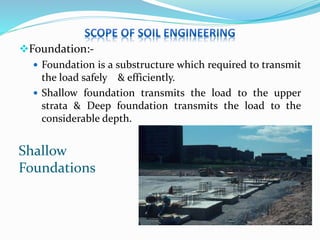
Foundation:-
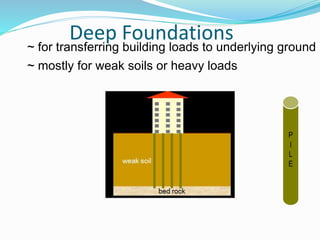
 Foundation is a substructure which required to transmit
the load safely & efficiently.
 Shallow foundation transmits the load to the upper
strata & Deep foundation transmits the load to the
considerable depth.
Shallow
Foundations
Deep Foundations
P
I
L
E
~ for transferring building loads to underlying ground
~ mostly for weak soils or heavy loads
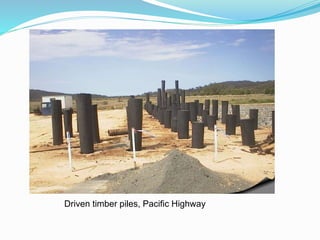
Driven timber piles, Pacific Highway
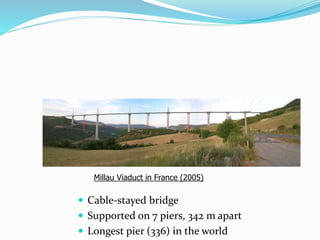
Millau Viaduct in France (2005)
 Cable-stayed bridge
 Supported on 7 piers, 342 m apart
 Longest pier (336) in the world
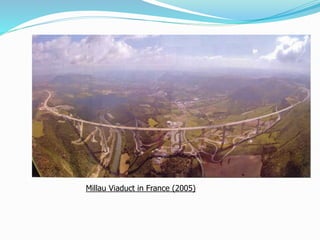
Millau Viaduct in France (2005)
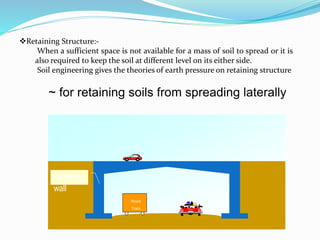
Retaining Structure:-
When a sufficient space is not available for a mass of soil to spread or it is
also required to keep the soil at different level on its either side.
Soil engineering gives the theories of earth pressure on retaining structure
Road
Train
retaining
wall
~ for retaining soils from spreading laterally
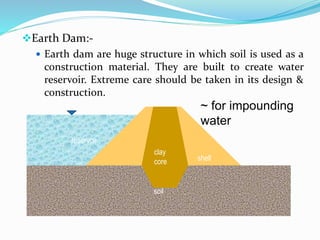
Earth Dam:-
 Earth dam are huge structure in which soil is used as a
construction material. They are built to create water
reservoir. Extreme care should be taken in its design &
construction.
soil
reservoir
clay
core shell
~ for impounding
water
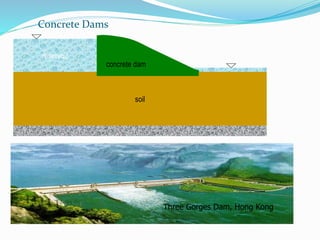
reservoir
soil
concrete dam
Concrete Dams
Three Gorges Dam, Hong Kong
Stability of Slopes:-
 If a soil surface is not horizontal, there is a component of
weight of soil which tends to move it downward thus causes
instability of slopes.
 Soil engineering provides the methods for checking the
stability of slopes.
Underground Structure:-
 The design & construction of underground structure such as
tunnels, shafts, conduits require evolution of forces exerted by
the soil on these structure.
Pavement Design:-
 A pavement is hard crust placed on soil for the purpose of
providing a smooth & strong surface on which the vehicle may
move.
Earth dam are huge structure in which soil is
used as a construction material. Extreme care
is required to be carried out in its design &
construction. It requires through knowledge
of soil engineering.
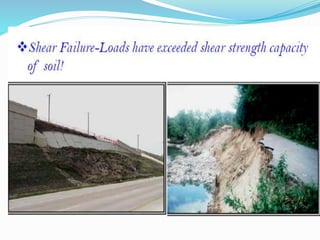
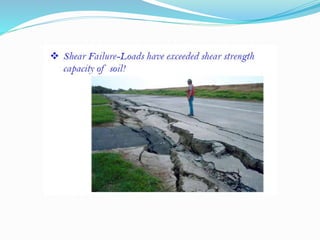
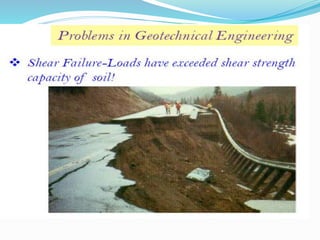
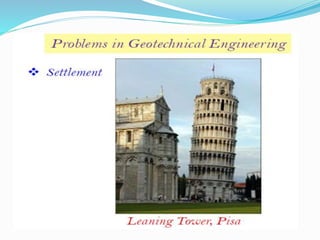
A geotechnical engineer has to deal with some
problem like soil heave, soil subsidence, frost,
shrinkage, swelling etc. which requires an in-
depth study.
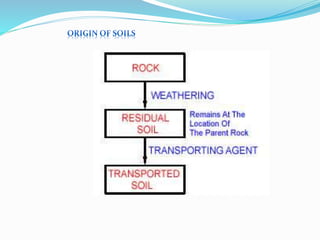
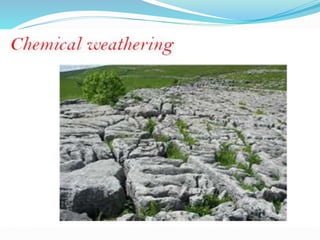
 Soil are formed by weathering of rocks due to
mechanical disintegration or chemical decomposition.
 It may considered as a material obtained from the
geologic cycle which goes on continuous in nature.
 If soil stays at the place of its formation just above the
parent rock, it is known as residual soil.
 When the soil has been deposited at a place away from
the place of its origin, it is called transported soil.
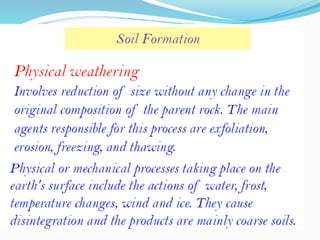
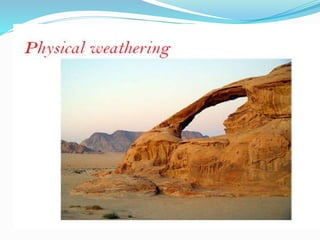
Physical Disintegration
 Temperature Changes:- Unequal expansion &
contraction of these minerals occurs due to temperature
changes. The particle get detached from the rocks due to
heavy stresses formed & soil formed.
 Wedging Action of Ice
 Spreading of roots of plants
 Abrasion:- As water, wind, glaciers move over the surface
of rock abrasion & scouring takes place it results in the
formation of soil.
Process of Chemical Decomposition
1. Hydration
2. Carbonation
3. Oxidation
4. Solution
5. Hydrolysis
 In all above chemical procedures, the chemical reaction
occurs between different contents & decomposition of rock
results.
 Chemical decomposition of rocks results in formation of clay
minerals. These clay mineral impart plastic properties to soil.

 The properties of residual soils vary considerably from
top layer to bottom layer. The bottom layer resemble
that of the parent rock in many respects, its thickness is
limited to few meters.

 The engineering properties of transported soils are
entirely different from the properties of the rock at the
place of deposition.

 Soil in which the absorbed water & particle attraction act
such that it deforms plastically at varying water contents are
known as cohesive soils or clays.
 The term cohesive soil is used for clays & plastic silt & the
term cohesionless soil for non plastic, sand & gravel.
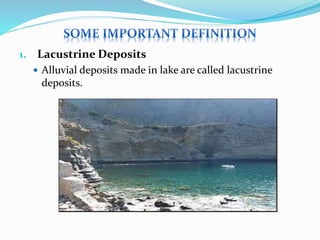
1. Lacustrine Deposits
 Alluvial deposits made in lake are called lacustrine
deposits.
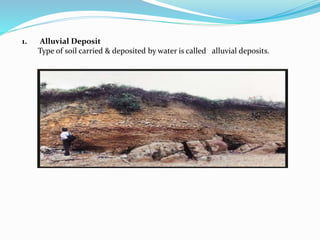
1. Alluvial Deposit
Type of soil carried & deposited by water is called alluvial deposits.
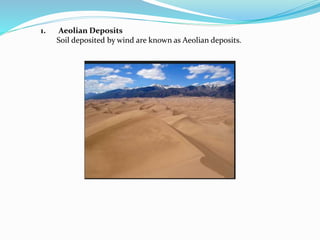
1. Aeolian Deposits
Soil deposited by wind are known as Aeolian deposits.
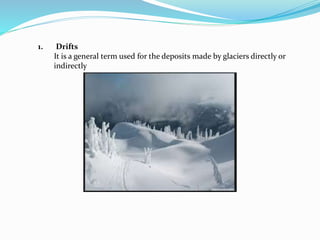
1. Drifts
It is a general term used for the deposits made by glaciers directly or
indirectly
5. Till:-
 Deposits directly made by melting of glaciers are called till.
6. Black Cotton Soil:-
 It is a residual soil containing high % of clay mineral. It has very
low bearing capacity & high swelling & shrinkage properties.
7. Dune Sands:-
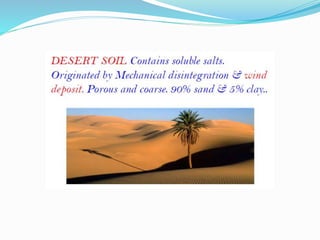
 These are wind transported soil. There are composed of
relatively uniform particles of fine to medium sand.
8. Hardpans:-
 It is a type of Soil that offer great resistance to the penetration
of drilling tools during soil exploration. They are generally
dense, well-graded cohesive aggregates of mineral particles.
Thank you

Ge ch.1 introduction.pptx

  • 1.
  • 7.
    Soil Mechanics isthe application of laws of mechanics and hydraulics to engineering problems dealing with sediments and other unconsolidated accumulations of solid particles, which are produced by the mechanical and chemical disintegration of rocks, regardless of whether or not they contain an admixture of organic constituents. According to Terzaghi (1948):
  • 8.
    1. Foundation tosupport Structures and Embankments 2. Construction Material 3. Slopes and Landslides 4. Earth Retaining Structures 5. Special Problems Various reasons to study the properties of Soil: Why do you need to learn about soils
  • 9.
    Who must beconcerned with soils? Civil engineers (structural, environmental and geotechnical) must have basic understanding of the soil properties in order to use them effectively in construction.
  • 10.
     Soil engineeringis the engineering dealing with the application of principles of soil mechanics to practical problems.  Where as Geotechnical Engineering is a broader term which includes soil engineering, rock mechanics.
  • 19.
    Foundation:-  Foundation isa substructure which required to transmit the load safely & efficiently.  Shallow foundation transmits the load to the upper strata & Deep foundation transmits the load to the considerable depth. Shallow Foundations
  • 20.
    Deep Foundations P I L E ~ fortransferring building loads to underlying ground ~ mostly for weak soils or heavy loads
  • 21.
    Driven timber piles,Pacific Highway
  • 22.
    Millau Viaduct inFrance (2005)  Cable-stayed bridge  Supported on 7 piers, 342 m apart  Longest pier (336) in the world
  • 23.
    Millau Viaduct inFrance (2005)
  • 24.
    Retaining Structure:- When asufficient space is not available for a mass of soil to spread or it is also required to keep the soil at different level on its either side. Soil engineering gives the theories of earth pressure on retaining structure Road Train retaining wall ~ for retaining soils from spreading laterally
  • 25.
    Earth Dam:-  Earthdam are huge structure in which soil is used as a construction material. They are built to create water reservoir. Extreme care should be taken in its design & construction. soil reservoir clay core shell ~ for impounding water
  • 26.
  • 27.
    Stability of Slopes:- If a soil surface is not horizontal, there is a component of weight of soil which tends to move it downward thus causes instability of slopes.  Soil engineering provides the methods for checking the stability of slopes. Underground Structure:-  The design & construction of underground structure such as tunnels, shafts, conduits require evolution of forces exerted by the soil on these structure. Pavement Design:-  A pavement is hard crust placed on soil for the purpose of providing a smooth & strong surface on which the vehicle may move.
  • 28.
    Earth dam arehuge structure in which soil is used as a construction material. Extreme care is required to be carried out in its design & construction. It requires through knowledge of soil engineering.
  • 29.
    A geotechnical engineerhas to deal with some problem like soil heave, soil subsidence, frost, shrinkage, swelling etc. which requires an in- depth study.
  • 30.
     Soil areformed by weathering of rocks due to mechanical disintegration or chemical decomposition.  It may considered as a material obtained from the geologic cycle which goes on continuous in nature.  If soil stays at the place of its formation just above the parent rock, it is known as residual soil.  When the soil has been deposited at a place away from the place of its origin, it is called transported soil.
  • 35.
    Physical Disintegration  TemperatureChanges:- Unequal expansion & contraction of these minerals occurs due to temperature changes. The particle get detached from the rocks due to heavy stresses formed & soil formed.  Wedging Action of Ice  Spreading of roots of plants  Abrasion:- As water, wind, glaciers move over the surface of rock abrasion & scouring takes place it results in the formation of soil.
  • 38.
    Process of ChemicalDecomposition 1. Hydration 2. Carbonation 3. Oxidation 4. Solution 5. Hydrolysis  In all above chemical procedures, the chemical reaction occurs between different contents & decomposition of rock results.  Chemical decomposition of rocks results in formation of clay minerals. These clay mineral impart plastic properties to soil.
  • 39.
      The propertiesof residual soils vary considerably from top layer to bottom layer. The bottom layer resemble that of the parent rock in many respects, its thickness is limited to few meters.   The engineering properties of transported soils are entirely different from the properties of the rock at the place of deposition.
  • 46.
      Soil inwhich the absorbed water & particle attraction act such that it deforms plastically at varying water contents are known as cohesive soils or clays.  The term cohesive soil is used for clays & plastic silt & the term cohesionless soil for non plastic, sand & gravel.
  • 47.
    1. Lacustrine Deposits Alluvial deposits made in lake are called lacustrine deposits.
  • 48.
    1. Alluvial Deposit Typeof soil carried & deposited by water is called alluvial deposits.
  • 49.
    1. Aeolian Deposits Soildeposited by wind are known as Aeolian deposits.
  • 50.
    1. Drifts It isa general term used for the deposits made by glaciers directly or indirectly
  • 51.
    5. Till:-  Depositsdirectly made by melting of glaciers are called till. 6. Black Cotton Soil:-  It is a residual soil containing high % of clay mineral. It has very low bearing capacity & high swelling & shrinkage properties. 7. Dune Sands:-  These are wind transported soil. There are composed of relatively uniform particles of fine to medium sand. 8. Hardpans:-  It is a type of Soil that offer great resistance to the penetration of drilling tools during soil exploration. They are generally dense, well-graded cohesive aggregates of mineral particles.
  • 52.